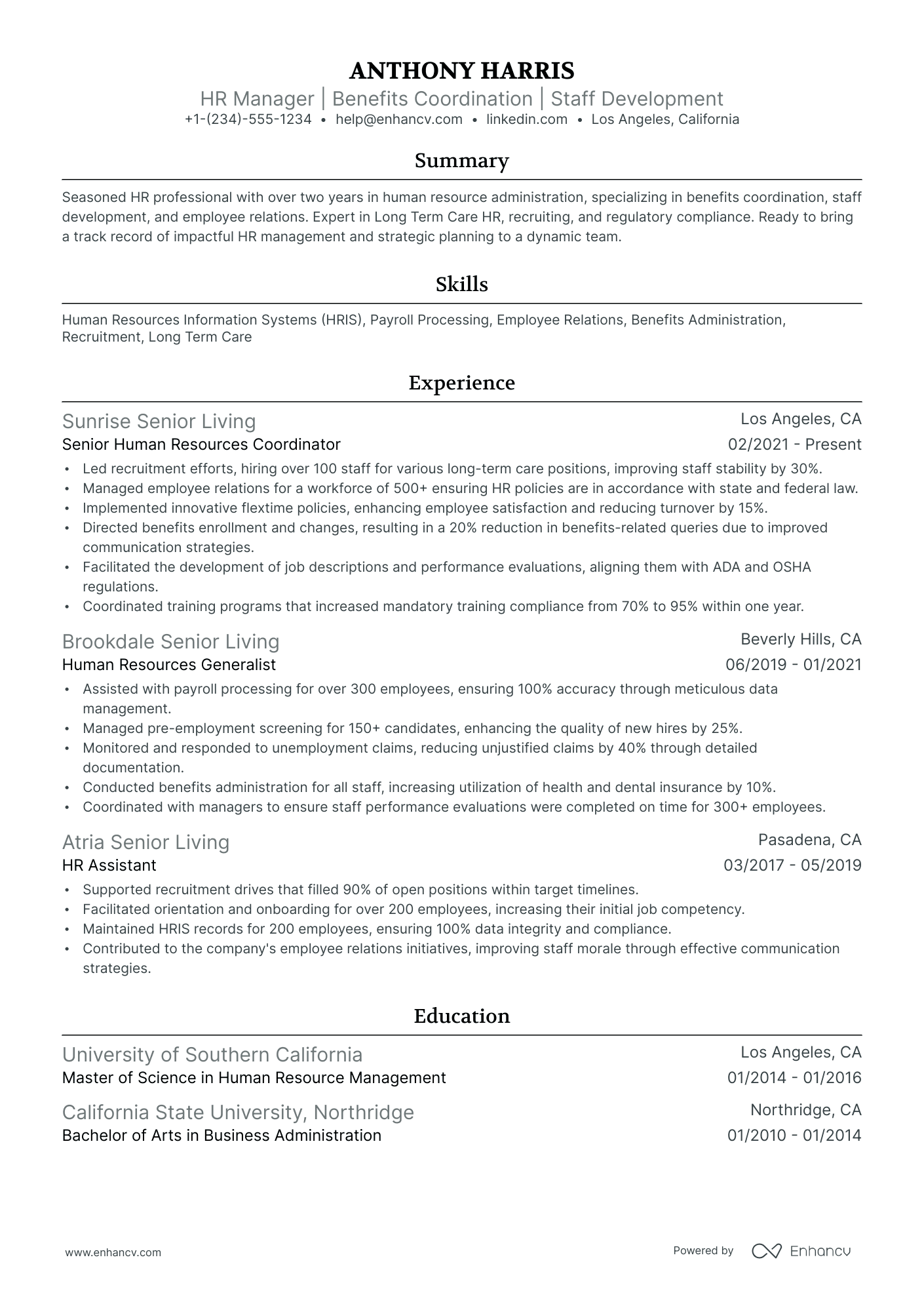
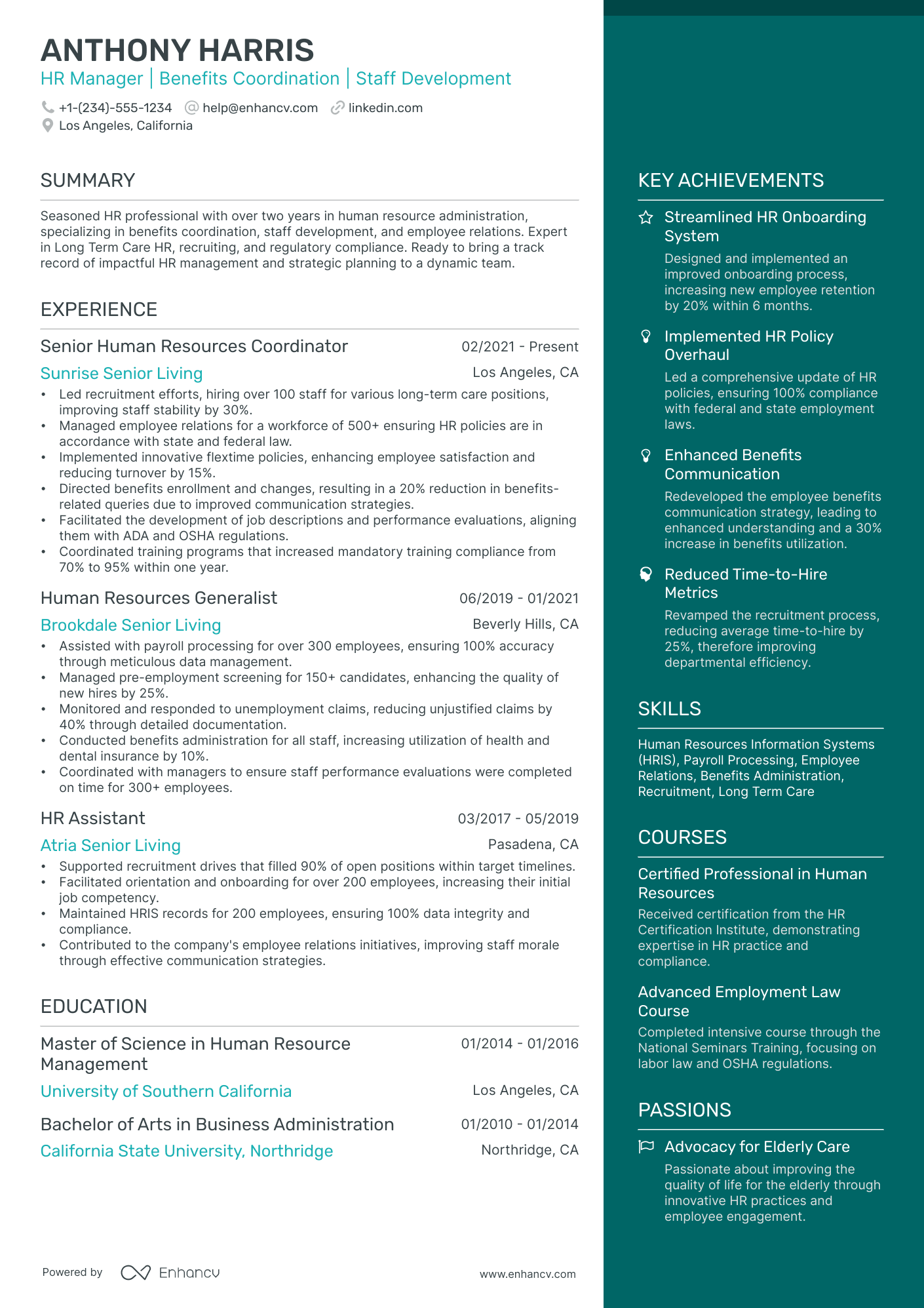
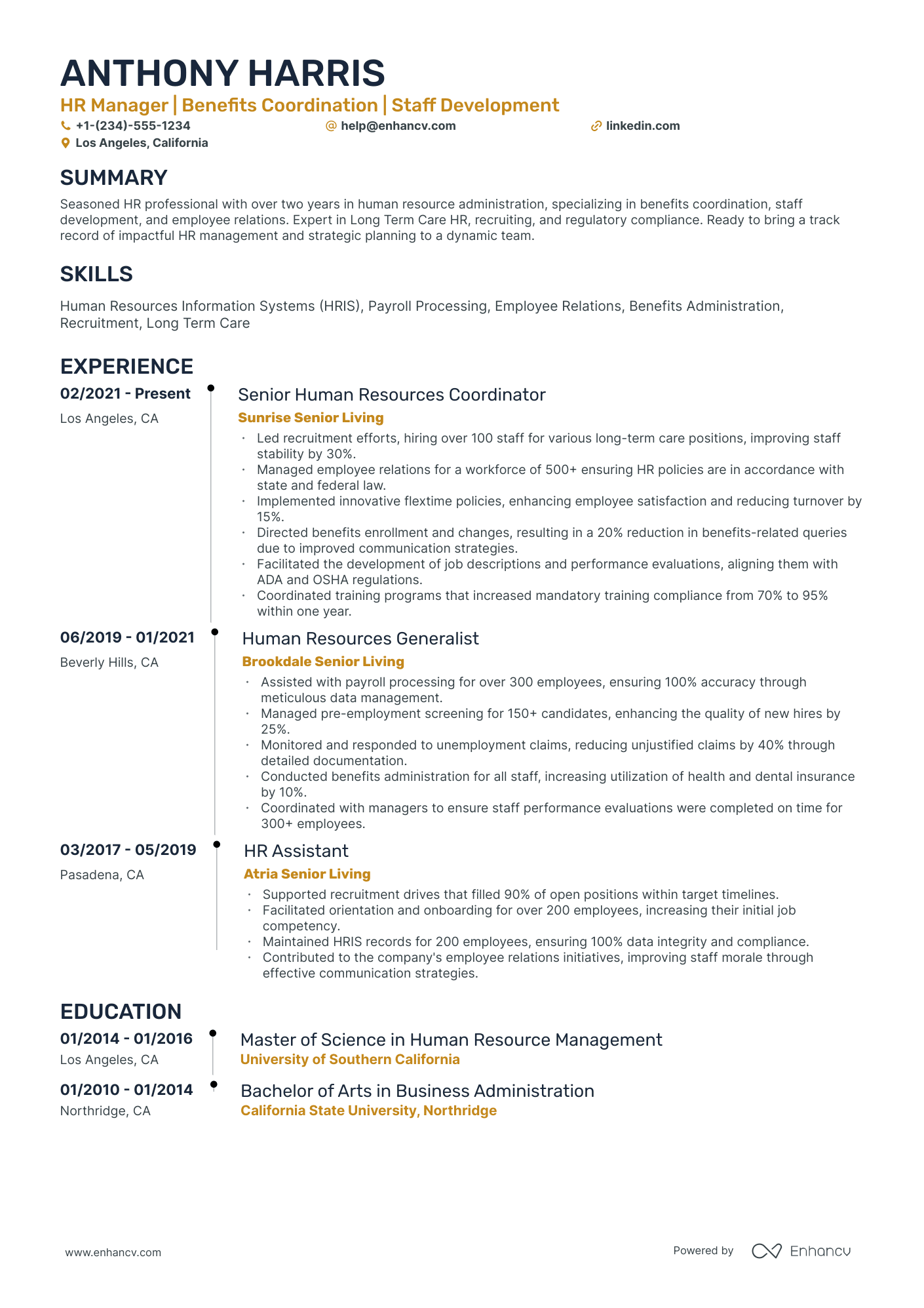
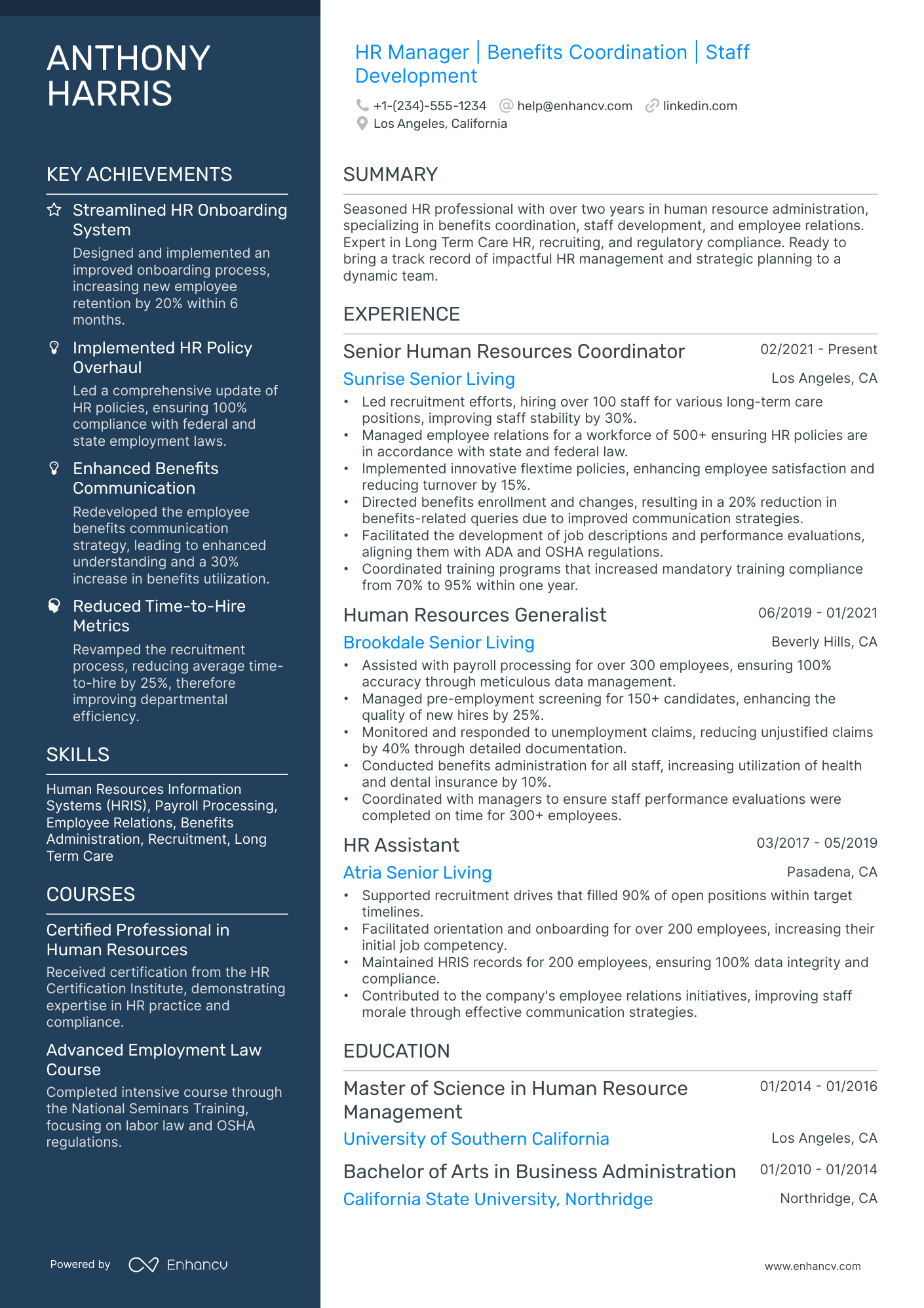
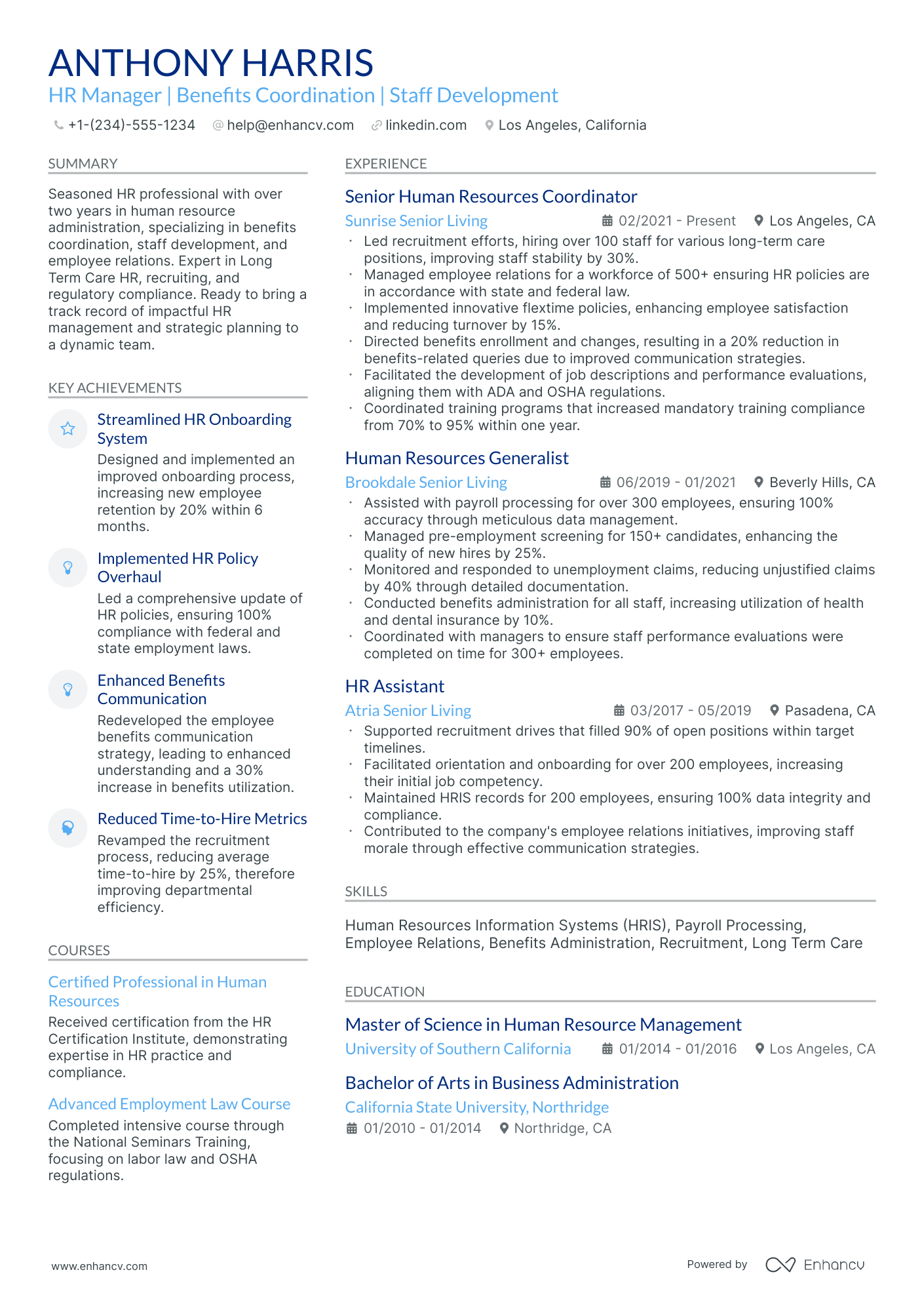
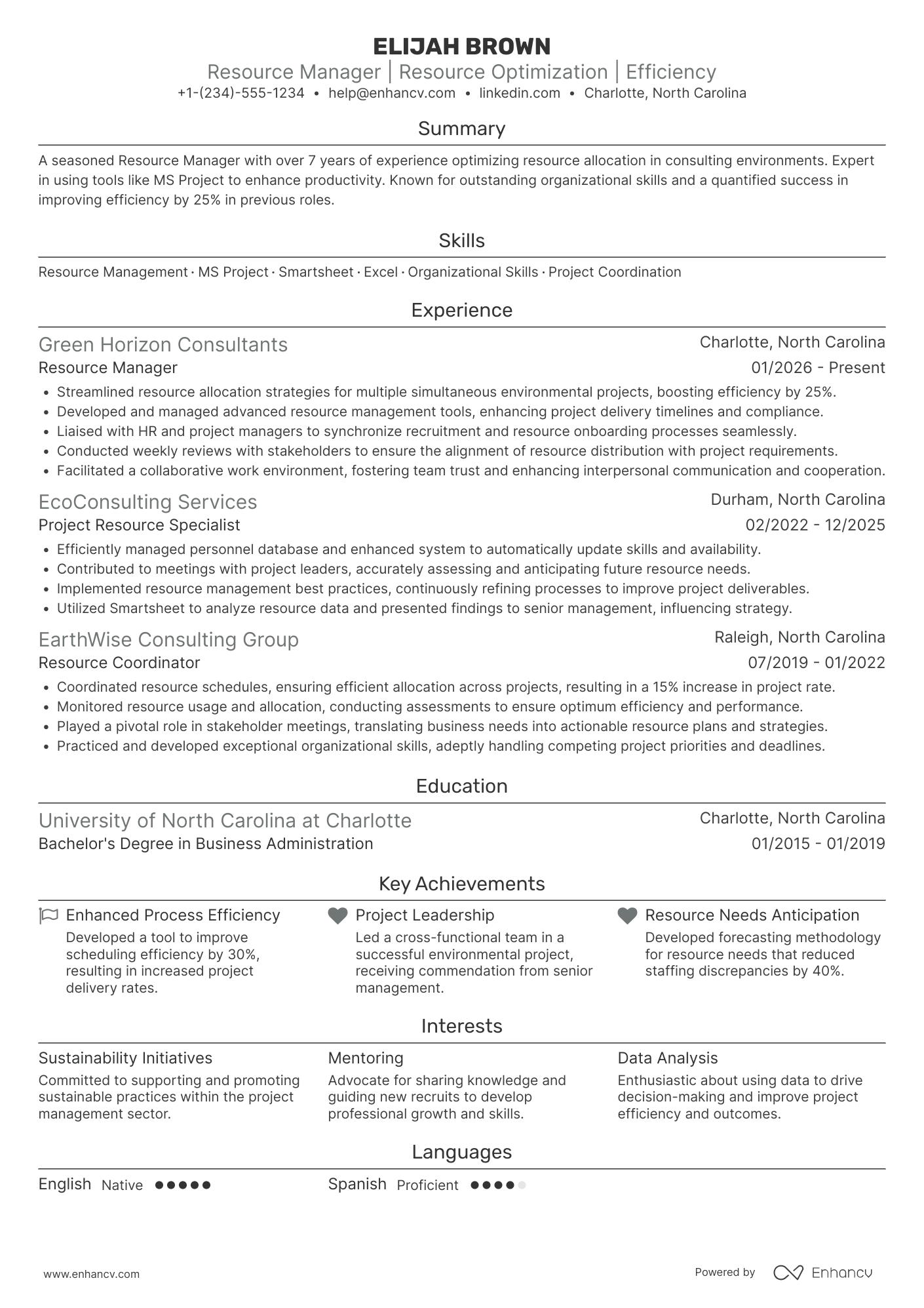
Many resource manager resumes fail because they don't show allocation decisions, tradeoffs, and capacity planning outcomes. This resource manager resume guide helps you pass ATS filtering and win fast recruiter scans in a crowded applicant pool.
A strong resume shows what changed because of you, not what software you used. Knowing how to make your resume stand out means highlighting utilization gains, reduced bench time, on-time delivery rates, budget variance, forecast accuracy, team coverage across projects, and stakeholder satisfaction improvements.

Key takeaways
- Quantify resource management impact with metrics like utilization rates, bench time, and delivery predictability.
- Use reverse-chronological format for experienced candidates and hybrid format for career switchers.
- Tailor every experience bullet to match the job posting's tools, KPIs, and terminology.
- Structure accomplishments using ownership scope, execution approach, and measurable value delivered.
- Place skills above experience if you're junior, below experience if you're senior.
- Stop using AI once your resume accurately reflects real experience—never fabricate claims.
- Enhancv can help you turn vague duties into measurable, recruiter-ready bullet points faster.
Job market snapshot for resource managers
We analyzed 638 recent resource manager job ads across major US job boards. These numbers help you understand salary landscape, experience requirements, top companies hiring at a glance.
What level of experience employers are looking for resource managers
| Years of Experience | Percentage found in job ads |
|---|---|
| 1–2 years | 10.2% (65) |
| 3–4 years | 11.1% (71) |
| 5–6 years | 14.4% (92) |
| 7–8 years | 4.2% (27) |
| 9–10 years | 2.0% (13) |
| 10+ years | 3.3% (21) |
| Not specified | 56.7% (362) |
Resource manager ads by area of specialization (industry)
| Industry (Area) | Percentage found in job ads |
|---|---|
| Finance & Banking | 49.2% (314) |
| Government | 17.4% (111) |
| Healthcare | 15.7% (100) |
| Education | 7.7% (49) |
| Manufacturing | 5.2% (33) |
| Retail & E-commerce | 1.9% (12) |
Top companies hiring resource managers
| Company | Percentage found in job ads |
|---|---|
| State of Florida | 9.2% (59) |
| Armanino McKenna Certified Public Accountants & Consultants | 4.1% (26) |
| Sodexo S A | 3.4% (22) |
| Department of the Air Force | 1.7% (11) |
| Highgate Hotels | 1.7% (11) |
| Uline, Inc. | 1.7% (11) |
Role overview stats
These tables show the most common responsibilities and employment types for resource manager roles. Use them to align your resume with what employers expect and to understand how the role is structured across the market.
Day-to-day activities and top responsibilities for a resource manager
| Responsibility | Percentage found in job ads |
|---|---|
| Microsoft office | 24.0% (153) |
| Excel | 20.2% (129) |
| Hris | 15.0% (96) |
| Word | 14.3% (91) |
| Powerpoint | 13.8% (88) |
| Employee relations | 13.5% (86) |
| Outlook | 12.4% (79) |
| Performance management | 11.6% (74) |
| Workday | 10.5% (67) |
| Access | 8.8% (56) |
| Human resources | 7.1% (45) |
| Project management | 7.1% (45) |
Type of employment (remote vs on-site vs hybrid)
| Employment type | Percentage found in job ads |
|---|---|
| On-site | 80.3% (512) |
| Hybrid | 16.3% (104) |
| Remote | 3.4% (22) |
How to format a resource manager resume
Recruiters evaluating resource manager candidates prioritize evidence of cross-functional resource allocation, capacity planning accuracy, and measurable improvements to utilization rates or project delivery timelines. A clean, progression-focused resume format ensures these signals surface quickly during both automated screening and the six-to-ten-second initial recruiter scan.

I have significant experience in this role—which format should I use?
Use a reverse-chronological format—it's the strongest choice for showcasing your depth of resource management experience. Do:
- Lead each role entry with the scope of resources you managed, including headcount, budget authority, and number of concurrent projects or business units supported.
- Highlight domain-specific expertise such as resource planning platforms (e.g., Smartsheet, Microsoft Project, Planview), demand forecasting models, and workforce analytics tools.
- Quantify outcomes tied to business impact—utilization rate improvements, cost savings from reallocation, or reductions in bench time and project delays.
I'm junior or switching into this role—what format works best?
A hybrid format works best because it lets you lead with transferable skills while still showing a clear work history. Do:
- Place a dedicated skills section near the top featuring resource planning, scheduling, capacity modeling, and relevant tools like Excel, SAP, or resource management software.
- Include project-based experience, internships, or cross-functional coordination work that demonstrates your ability to balance competing resource demands.
- Connect every listed skill or project to a concrete action and a measurable or observable result.
Why not use a functional resume?
A functional format strips away the timeline and context recruiters need to verify that your coordination skills were applied in real, accountable work environments—making it harder to trust your claims.
- A functional format may be acceptable if you're transitioning from a related coordination or project support role with no direct resource management titles, but only if every listed skill is anchored to a specific project, outcome, or measurable contribution.
Once you've established a clean, readable format, the next step is determining which sections to include so each one reinforces your qualifications.
What sections should go on a resource manager resume
Recruiters expect a resource manager resume to clearly show how you plan, allocate, and optimize people and capacity to deliver projects on time and within budget. Understanding which resume sections to include ensures you present this information effectively.
Use this structure for maximum clarity:
- Header
- Summary
- Experience
- Skills
- Projects
- Education
- Certifications
- Optional sections: Awards, Leadership, Languages
Strong experience bullets should emphasize measurable impact, delivery outcomes, scope of teams and portfolios managed, and resource utilization improvements.
Is your resume good enough?
Drop your resume here or choose a file. PDF & DOCX only. Max 2MB file size.
Once you’ve chosen the right resume components, the next step is to build your experience section so it supports them with clear, relevant detail.
How to write your resource manager resume experience
Your work experience section should prove you can plan, allocate, and optimize resources—whether people, budgets, or assets—using tools and methods that drive measurable results. Hiring managers prioritize demonstrated impact over descriptive task lists, so every bullet should connect what you did to what changed.
Each entry should include:
- Job title
- Company and location (or remote)
- Dates of employment (month and year)
Three to five concise bullet points showing what you owned, how you executed, and what outcomes you delivered:
- Ownership scope: the resource pools, workforce plans, capacity models, project portfolios, or operational teams you were directly accountable for as a resource manager.
- Execution approach: the scheduling platforms, forecasting frameworks, enterprise resource planning systems, or allocation methods you used to make staffing and budgeting decisions.
- Value improved: changes to utilization rates, bench time, project delivery timelines, cost efficiency, workforce availability, or risk exposure that resulted from your resource management strategies.
- Collaboration context: how you partnered with project managers, department heads, finance teams, HR, or external vendors to align resource supply with organizational demand.
- Impact delivered: outcomes expressed through business results—such as improved capacity coverage, reduced overhead, faster project throughput, or stronger alignment between resource investment and strategic priorities—rather than routine activity.
Experience bullet formula
A resource manager experience example
✅ Right example - modern, quantified, specific.
Resource Manager
Brightline Digital | Austin, TX (Remote)
2022–Present
SaaS product studio delivering enterprise web and mobile builds for financial services and healthcare clients across North America.
- Built and maintained an eighteen-month capacity plan in Smartsheet and Jira using skills matrices and utilization targets, improving forecast accuracy from 70% to 92% and cutting last-minute staffing changes by 35%.
- Implemented a standardized intake and prioritization workflow (ServiceNow requests, RACI, and weekly resourcing reviews) with product managers and delivery leads, reducing average time-to-staff from ten days to six days.
- Optimized allocation across eighty-five billable and non-billable roles using Tableau dashboards and rate-card analysis, raising billable utilization from 78% to 86% and adding $1.2M in quarterly services revenue.
- Led weekly resource risk reviews with engineering managers, designers, and client stakeholders, lowering schedule slippage on fixed-scope projects by 22% through proactive backfills and cross-training plans.
- Established a contractor bench strategy and vendor pipeline in Greenhouse and Workday, cutting contractor onboarding time by 30% and reducing premium-rate spend by 18% while maintaining on-time project starts.
Now that you've seen how to structure a strong experience entry, let's look at how to adjust it based on the specific role you're targeting.
How to tailor your resource manager resume experience
Recruiters evaluate your resource manager resume through both human review and applicant tracking systems, so alignment with the job posting matters. Tailoring your resume to the job description increases your chances of passing both filters.
Ways to tailor your resource manager experience:
- Match resource planning tools and systems named in the job description.
- Mirror the exact terminology used for allocation and forecasting processes.
- Reflect KPIs or success criteria the posting highlights for utilization.
- Include industry or domain experience when the role specifies it.
- Emphasize capacity planning or workforce optimization if the listing mentions them.
- Highlight cross-functional collaboration models referenced in the job posting.
- Align your experience with compliance or governance standards they require.
- Feature scheduling frameworks or methodologies the employer specifically values.
Tailoring means aligning your real accomplishments with what the role demands, not forcing keywords where they don't belong.
Resume tailoring examples for resource manager
| Job description excerpt | Untailored | Tailored |
|---|---|---|
| "Manage resource allocation across multiple project teams using Smartsheet and coordinate with PMO to optimize workforce utilization rates." | Helped assign team members to different projects as needed. | Managed resource allocation across 12 concurrent project teams in Smartsheet, partnering with the PMO to increase workforce utilization rates from 74% to 91% within two quarters. |
| "Forecast staffing needs based on project pipeline data, identify skill gaps, and develop capacity plans to support delivery timelines in an Agile environment." | Assisted with staffing plans and helped fill open roles on various teams. | Built quarterly capacity plans using project pipeline data to forecast staffing needs across eight Agile delivery teams, proactively identifying skill gaps that reduced project delays by 30%. |
| "Partner with finance and department leads to manage labor budgets, track contractor spend, and report on resource costs using SAP and Power BI dashboards." | Tracked budgets and reported on project costs to leadership. | Collaborated with finance and department leads to manage a $4.2M annual labor budget, tracking contractor spend in SAP and building Power BI dashboards that improved cost-reporting accuracy by 25%. |
Once your experience aligns with the role’s priorities, quantify your achievements to show the impact of that work with clear, measurable results.
How to quantify your resource manager achievements
Quantifying your achievements proves you improved delivery, cost, and risk, not just coordination. Focus on utilization, staffing cycle time, forecast accuracy, budget variance, and delivery predictability across teams and portfolios.
Quantifying examples for resource manager
| Metric | Example |
|---|---|
| Utilization rate | "Raised billable utilization from 72% to 84% in two quarters by rebalancing capacity in Smartsheet and weekly demand reviews across a forty-person PMO." |
| Staffing cycle time | "Cut time-to-fill project roles from fourteen days to six by standardizing intake, using Workday reports, and building a pre-vetted bench for critical skills." |
| Forecast accuracy | "Improved quarterly capacity forecast accuracy from 65% to 90% by implementing a rolling twelve-week forecast and variance tracking in Power BI." |
| Budget variance | "Reduced labor budget variance from 9% over plan to 2% under plan by tightening rate-card governance and preventing unapproved contractor extensions." |
| Delivery predictability | "Increased on-time milestone delivery from 78% to 92% by aligning resource plans to sprint schedules and resolving cross-team conflicts within forty-eight hours." |
Turn vague job duties into measurable, recruiter-ready resume bullets in seconds with Enhancv's Bullet Point Generator.
Once you've crafted strong, results-driven bullet points, the next step is ensuring your skills section highlights the right mix of hard and soft skills for a resource manager role.
How to list your hard and soft skills on a resource manager resume
Your skills section shows you can forecast demand, allocate capacity, and remove bottlenecks—recruiters scan them for role fit, and an ATS (applicant tracking system) matches them to keywords—so aim for a balanced mix of hard skills in scheduling and planning plus execution-focused soft skills. resource manager roles require a blend of:
- Product strategy and discovery skills.
- Data, analytics, and experimentation skills.
- Delivery, execution, and go-to-market discipline.
- Soft skills.
Your skills section should be:
- Scannable (bullet-style grouping).
- Relevant to the job post.
- Backed by proof in experience bullets.
- Updated with current tools.
Place your skills section:
- Above experience if you're junior or switching careers.
- Below experience if you're mid/senior with strong achievements.

Hard skills
- Capacity planning
- Resource forecasting
- Demand intake management
- Skills matrix development
- Portfolio prioritization
- Scenario modeling
- Utilization and burn tracking
- Jira, Confluence
- Smartsheet, Microsoft Project
- Microsoft Excel, Power BI
- Workday, SAP
- Agile and waterfall delivery
Soft skills
- Stakeholder alignment
- Cross-functional coordination
- Scope and priority negotiation
- Risk and dependency escalation
- Data-driven decision-making
- Clear status communication
- Meeting facilitation
- Conflict resolution
- Rapid trade-off evaluation
- Ownership of delivery outcomes
- Process improvement mindset
- Calm execution under pressure
How to show your resource manager skills in context
Skills shouldn't live only in a skills section. Explore resume skills examples to see how they can be woven throughout your application.
They should be demonstrated in:
- Your summary (high-level professional identity)
- Your experience (proof through outcomes)
Here's what strong resource manager examples look like in practice.
Summary example
Senior resource manager with 10+ years in IT services, skilled in capacity planning, Smartsheet, and cross-functional negotiation. Reduced project staffing gaps by 34% while improving workforce utilization across a 200-person consulting division.
- Signals senior-level expertise immediately
- Names specific tools and methods
- Leads with a measurable outcome
- Highlights negotiation as a soft skill
Experience example
Senior Resource Manager
Meridian Consulting Group | Remote
March 2019–Present
- Redesigned capacity planning workflows in Smartsheet, cutting allocation conflicts by 41% across six concurrent programs.
- Partnered with delivery leads and HR to build a skills-based staffing model, improving billable utilization from 74% to 88%.
- Introduced monthly resource forecasting reviews using Power BI dashboards, reducing last-minute staffing escalations by 27%.
- Every bullet includes measurable proof.
- Skills surface naturally through real outcomes.
Once you’ve anchored your abilities in concrete examples and outcomes, the next step is translating that approach into a resource manager resume when you don’t have direct experience.
How do I write a resource manager resume with no experience
Even without full-time experience, you can demonstrate readiness through transferable work. If you're building a resume without work experience, focus on projects, coursework, and volunteer roles that showcase resource management skills:
- Class scheduling and workload planning
- Volunteer shift coverage and rostering
- Capstone project resource allocation plan
- Internship staffing and capacity tracking
- Student organization event staffing
- Freelance project timeline and resourcing
- Lab or studio equipment scheduling
- Operations coursework with case analysis
Focus on:
- Capacity planning with clear metrics
- Scheduling tools and clean calendars
- Resource forecasts and utilization reports
- Stakeholder updates with documented outcomes
Resume format tip for entry-level resource manager
Use a hybrid resume format because it highlights project-based scheduling, tools, and metrics while still showing education and any work history. Do:
- Lead with a projects section.
- Quantify utilization, coverage, and on-time delivery.
- Name tools: Microsoft Excel, Smartsheet, Jira.
- Add a simple scheduling workflow you used.
- Mirror resource manager keywords from postings.
- Built a Smartsheet staffing plan for a student organization event, balancing twenty volunteers across six roles, cutting shift gaps from eight to zero.
Even without direct experience, your education section can demonstrate the foundational knowledge and relevant coursework that qualify you for a resource manager role.
How to list your education on a resource manager resume
Your education section helps hiring teams confirm you have the foundational knowledge needed. It validates your understanding of project management, operations, and organizational principles relevant to the resource manager role.
Include:
- Degree name
- Institution
- Location
- Graduation year
- Relevant coursework (for juniors or entry-level candidates)
- Honors & GPA (if 3.5 or higher)
Skip month and day details—list the graduation year only.
Here's a strong education entry tailored to the resource manager role.
Example education entry
Bachelor of Science in Business Administration
University of Michigan, Ann Arbor, MI
Graduated 2019
GPA: 3.7/4.0
- Relevant Coursework: Operations Management, Organizational Behavior, Resource Planning, and Workforce Analytics
- Honors: Magna Cum Laude, Dean's List (six consecutive semesters)
How to list your certifications on a resource manager resume
Certifications on a resume show a resource manager's commitment to learning, proficiency with planning tools, and alignment with industry standards. They also help validate skills that hiring teams want to see quickly.
Include:
- Certificate name
- Issuing organization
- Year
- Optional: credential ID or URL
- Place certifications below education when your degree is recent and the certifications are older or only loosely related to resource manager work.
- Place certifications above education when they are recent, highly relevant, or required for the resource manager roles you target.
Best certifications for your resource manager resume
- Project Management Professional (PMP)
- Certified Associate in Project Management (CAPM)
- PMI Scheduling Professional (PMI-SP)
- PRINCE2 Practitioner
- Certified ScrumMaster (CSM)
- ITIL 4 Foundation
- Microsoft Certified: Power BI Data Analyst Associate
Once you’ve positioned your certifications to reinforce your qualifications, shift to your resource manager resume summary to highlight those strengths upfront.
How to write your resource manager resume summary
Your resume summary is the first thing a recruiter reads, so it needs to earn their attention fast. A strong opening frames you as the right fit for the resource manager role before they scan any further.
Keep it to three to four lines, with:
- Your title and total years of experience in resource or workforce management.
- The domain or industry where you've managed resources, such as IT, construction, or consulting.
- Core tools and skills like resource planning software, capacity modeling, or forecasting.
- One or two quantified achievements that show real operational impact.
- Soft skills tied to outcomes, such as cross-functional communication that reduced scheduling conflicts.

PRO TIP
At this level, focus on clarity and relevance over broad claims. Highlight specific tools you've used and early wins that prove you can manage competing priorities. Avoid vague descriptors like "passionate" or "hardworking." Instead, tie every detail back to measurable contributions or concrete skills recruiters can verify.
Example summary for a resource manager
Resource manager with three years of experience optimizing workforce allocation across IT consulting teams. Skilled in Smartsheet and capacity planning, improving utilization rates by 18% while reducing project staffing gaps.
Optimize your resume summary and objective for ATS
Drop your resume here or choose a file.
PDF & DOCX only. Max 2MB file size.
Now that your summary captures the value you bring, make sure the header above it presents your contact details and professional title correctly so recruiters can instantly identify and reach you.
What to include in a resource manager resume header
A resume header is the top section with your identity and contact details, and it boosts visibility, credibility, and recruiter screening for a resource manager.
Essential resume header elements
- Full name
- Tailored job title and headline
- Location
- Phone number
- Professional email
- GitHub link
- Portfolio link
A LinkedIn link helps recruiters confirm your work history fast and supports quick screening.
Don't include a photo on a resource manager resume unless the role is explicitly front-facing or appearance-dependent.
Match your header title to the job posting and keep every link current, readable, and consistent with your resume details.
Example
Resource manager resume header
Jordan Lee
Resource Manager | Capacity Planning, Utilization Reporting, Stakeholder Coordination
Austin, TX
(512) 555-01XX
your.name@enhancv.com
github.com/yourname
yourwebsite.com
linkedin.com/in/yourname
Once your contact details and role identifiers are clear at the top, you can strengthen the rest of your application by adding the most relevant additional sections for resource manager resumes.
Additional sections for resource manager resumes
When your core sections don't fully capture your qualifications, additional sections help you stand out and reinforce your resource management credibility. For example, listing language skills on your resume can be a differentiator when managing global or multilingual teams.
- Languages
- Certifications and licenses
- Professional affiliations
- Volunteer experience
- Publications
- Awards and recognitions
- Continuing education
Once you've rounded out your resume with the right supplementary sections, it's worth turning your attention to the cover letter—a companion document that can reinforce and contextualize everything your resume presents.
Do resource manager resumes need a cover letter
A cover letter isn't required for most resource manager roles, but it often helps. If you're unsure what a cover letter is and how it complements your resume, it's a companion document that adds context beyond your bullet points. It makes a difference in competitive searches or when hiring managers expect context beyond your resume.
Use your cover letter to add details your resume can't:
- Explain role and team fit by tying your planning approach to the organization's delivery model, stakeholders, and constraints.
- Highlight one or two projects with clear outcomes, such as improving utilization, reducing bench time, or preventing schedule conflicts.
- Show understanding of the product, users, or business context by referencing priorities, seasonality, service levels, or revenue drivers.
- Address career transitions or non-obvious experience by connecting past roles to resource manager skills, tools, and decision-making.
Drop your resume here or choose a file.
PDF & DOCX only. Max 2MB file size.
Whether you include a cover letter depends on the role and hiring process, and the next section shows how using AI can strengthen your resource manager resume regardless of that choice.
Using AI to improve your resource manager resume
AI can sharpen your resume's clarity, structure, and overall impact. It helps tighten language and highlight measurable results. But overuse dulls authenticity. Once your content feels clear and role-aligned, step away from AI entirely. If you're wondering which AI is best for writing resumes, the answer depends on your specific needs—but the principles below apply regardless of the tool you choose.
Here are 10 practical prompts to strengthen specific sections of your resource manager resume:
- Strengthen your summary. "Rewrite my resource manager resume summary to highlight leadership scope, team size, and measurable resource optimization results in three sentences or fewer."
- Quantify experience bullets. "Review my resource manager experience bullets and suggest where I can add specific metrics like utilization rates, cost savings, or project delivery timelines."
- Tighten action verbs. "Replace weak or passive verbs in my resource manager experience section with strong, specific action verbs tied to allocation and planning outcomes."
- Align skills strategically. "Compare my resource manager skills section against this job description and identify missing keywords related to capacity planning and workforce management."
- Clarify project contributions. "Rewrite my resource manager project descriptions to clearly state my role, the resources I managed, and the business outcome delivered."
- Refine certification details. "Improve how my certifications are presented on my resource manager resume so each entry connects to a relevant competency or industry standard."
- Eliminate redundant phrasing. "Scan my resource manager resume for repetitive language and suggest concise alternatives that maintain meaning without filler words."
- Improve education relevance. "Rewrite my education section to emphasize coursework and achievements most relevant to a resource manager role in project-driven environments."
- Sharpen accomplishment statements. "Turn my resource manager responsibility descriptions into accomplishment statements using a clear challenge-action-result structure."
- Tailor for industry fit. "Adjust the tone and terminology across my resource manager resume to better match this specific industry and job posting."
Stop using AI once your resume sounds accurate, specific, and aligned with real experience. AI should never invent experience or inflate claims—if it didn't happen, it doesn't belong here.
Conclusion
A strong resource manager resume proves impact with measurable outcomes, like improved utilization, reduced bench time, and on-time delivery. It highlights role-specific skills, including capacity planning, forecasting, stakeholder communication, and risk management, supported by clear, relevant examples.
Keep the structure clean and easy to scan, with focused sections and consistent formatting. This clarity shows you can manage competing priorities and deliver results, which hiring teams expect in today’s and near-future market.