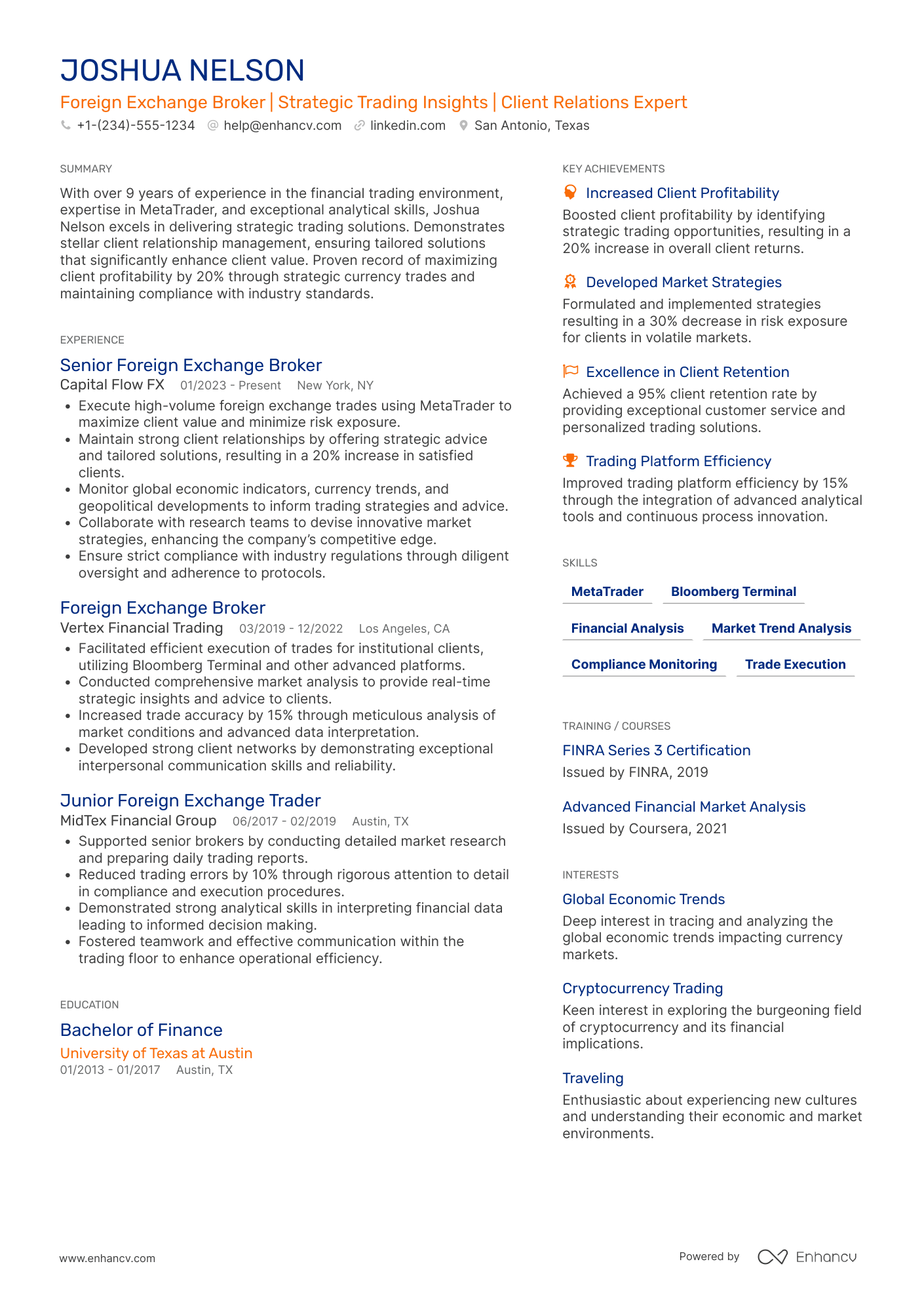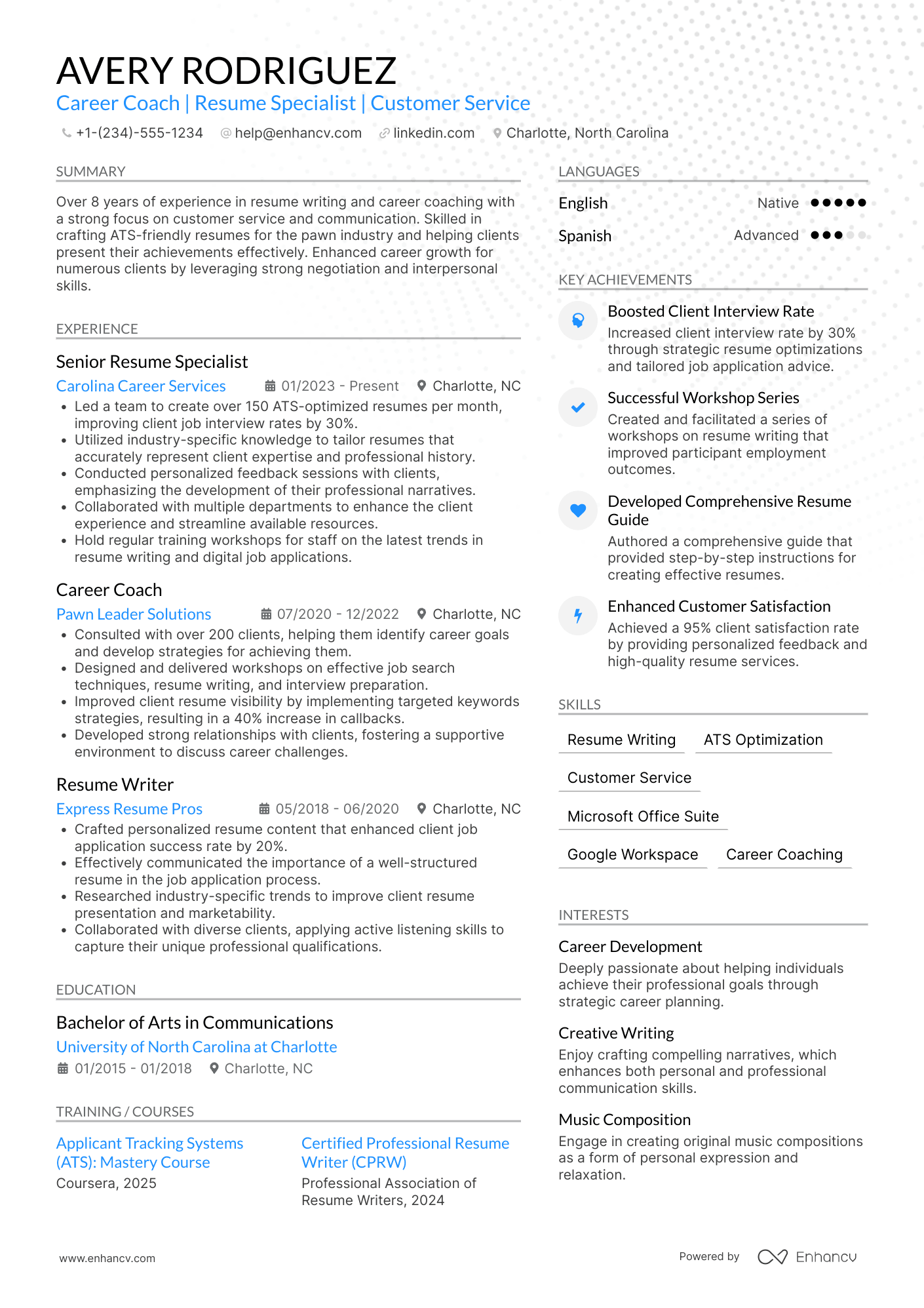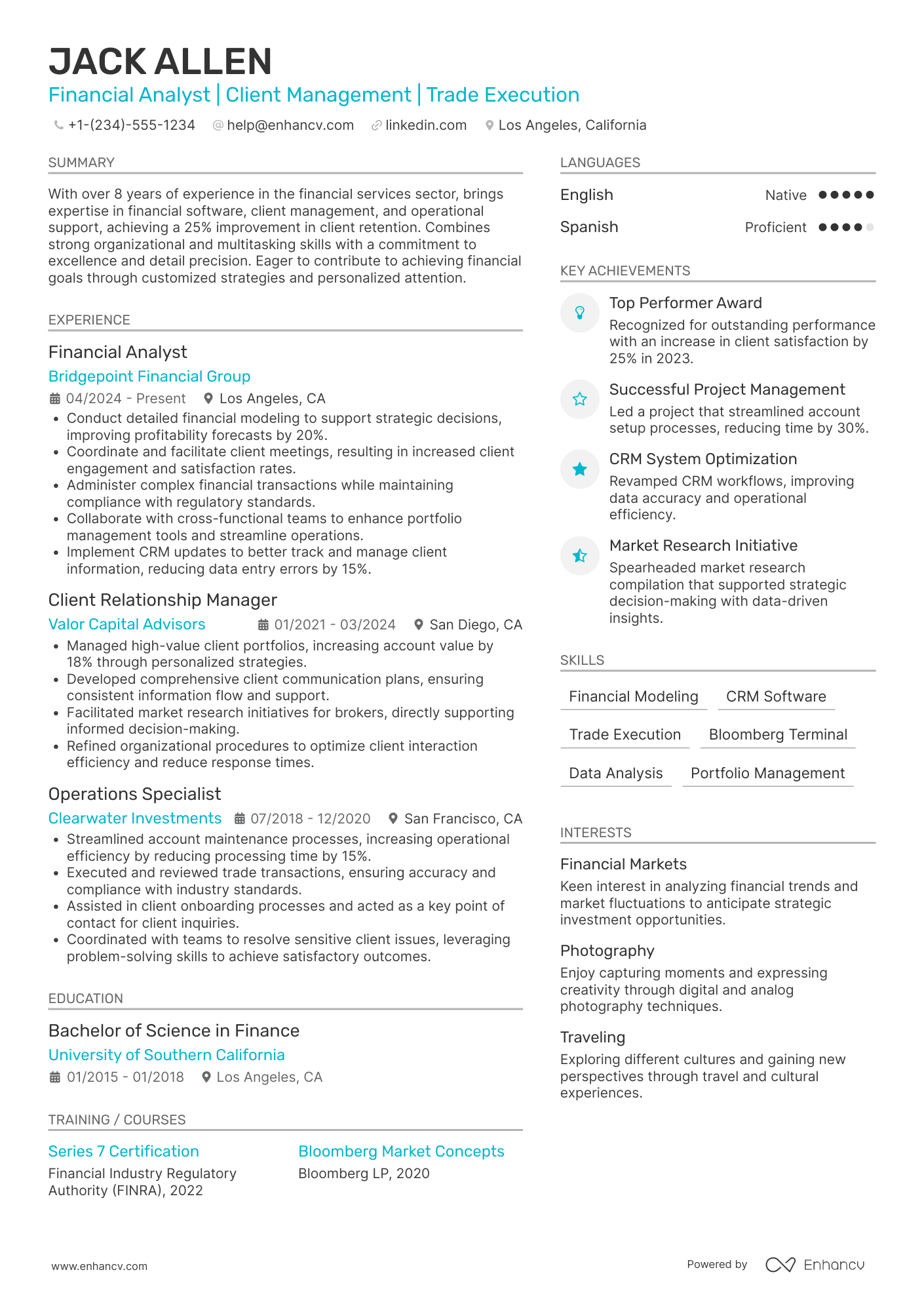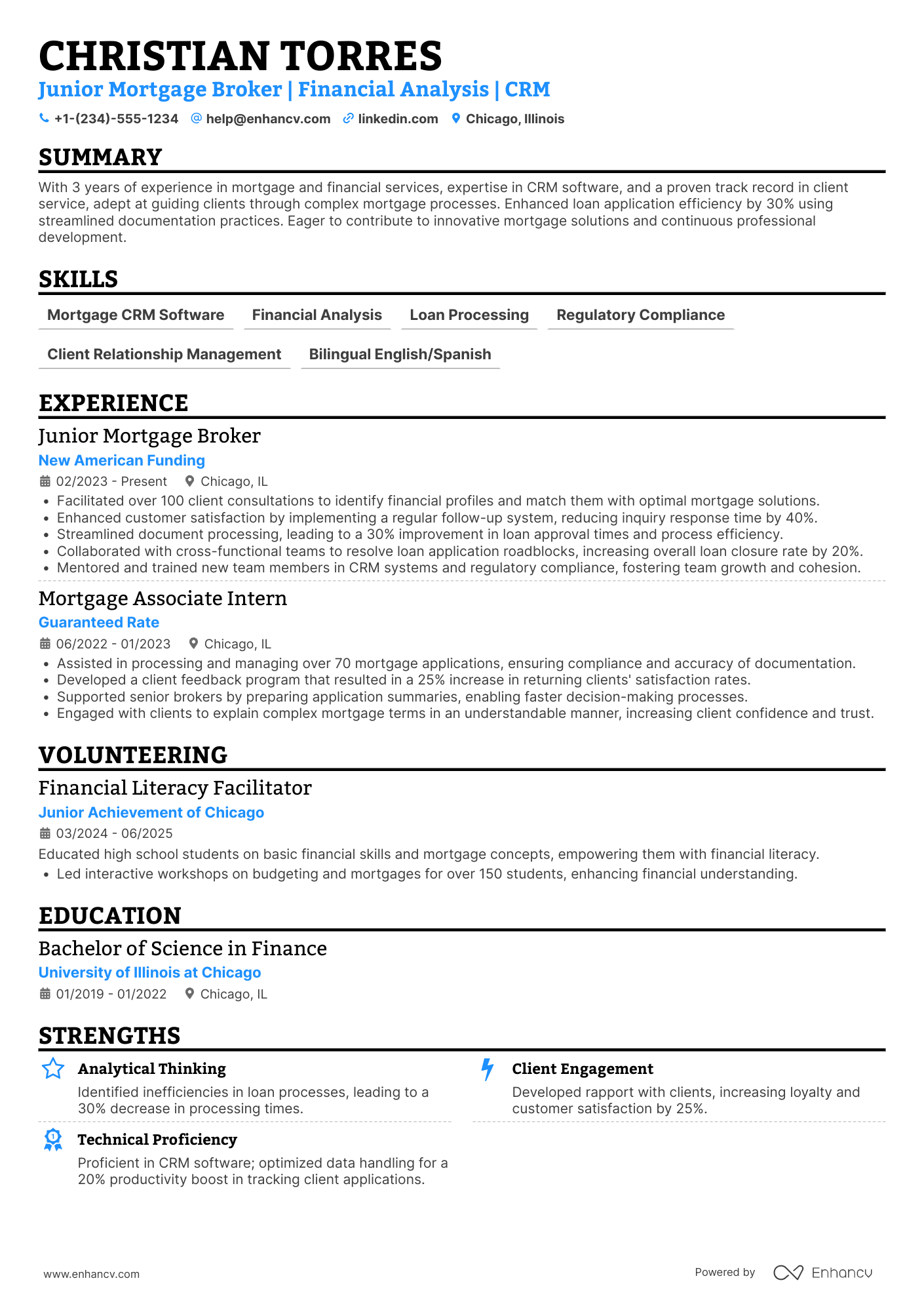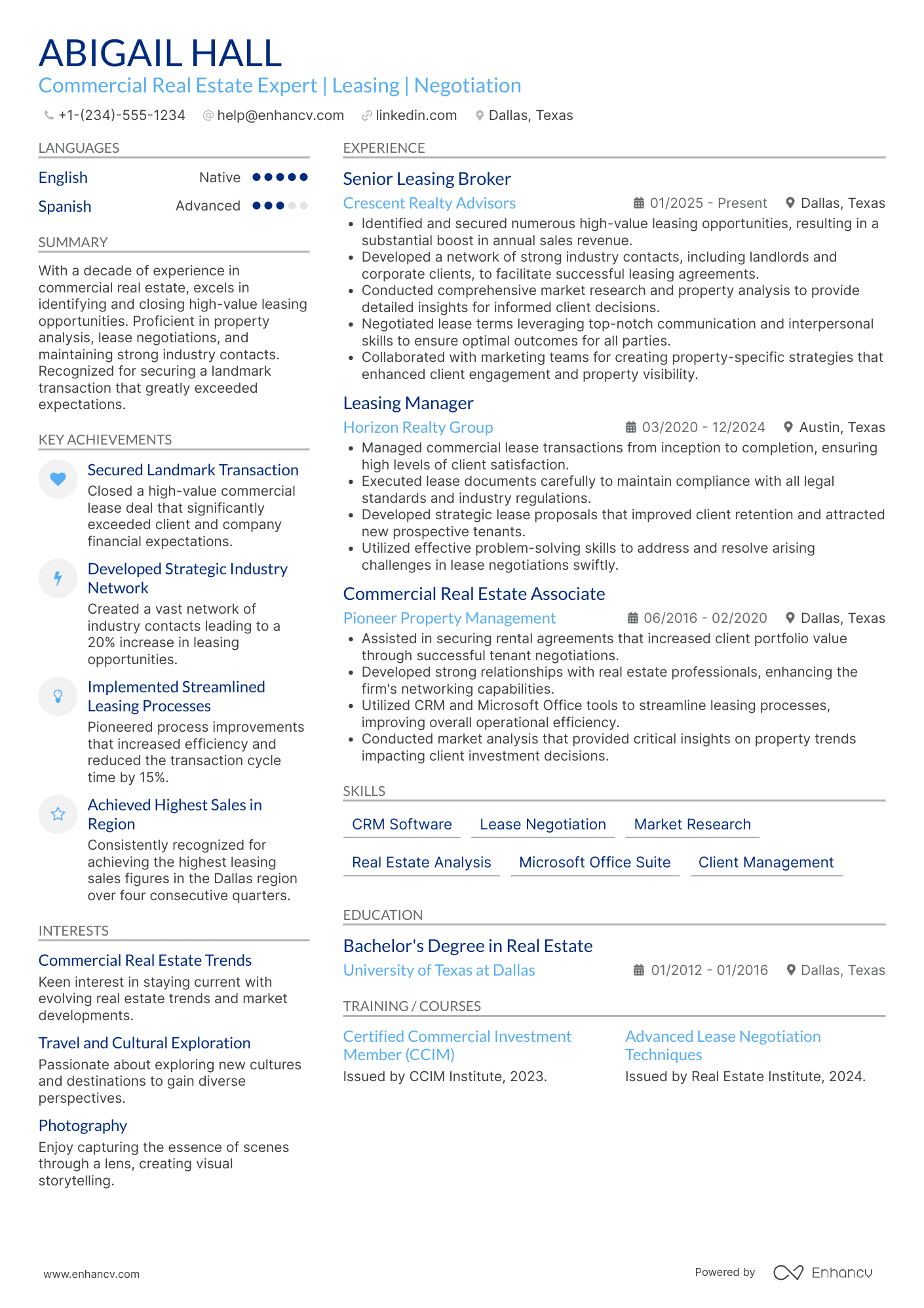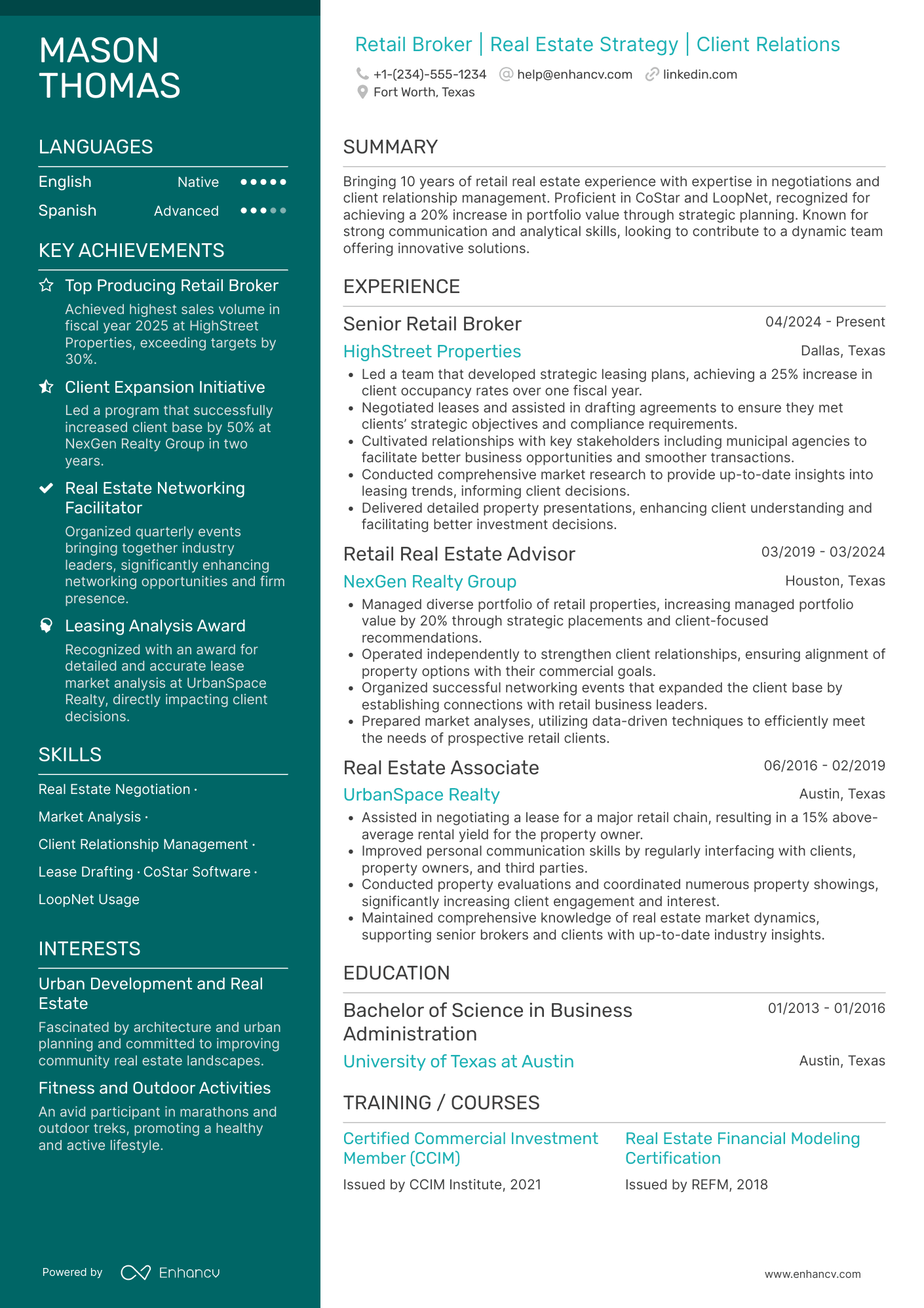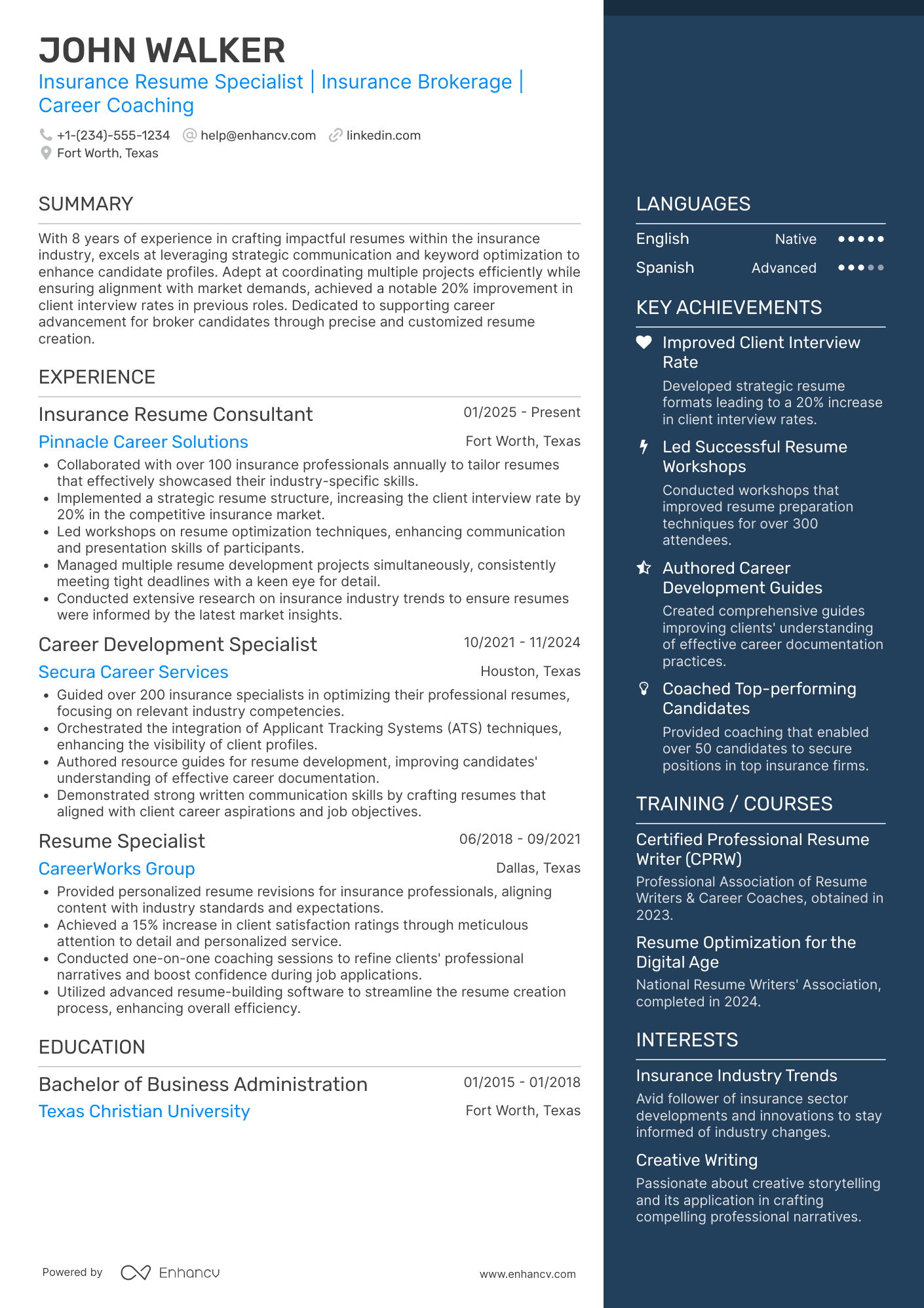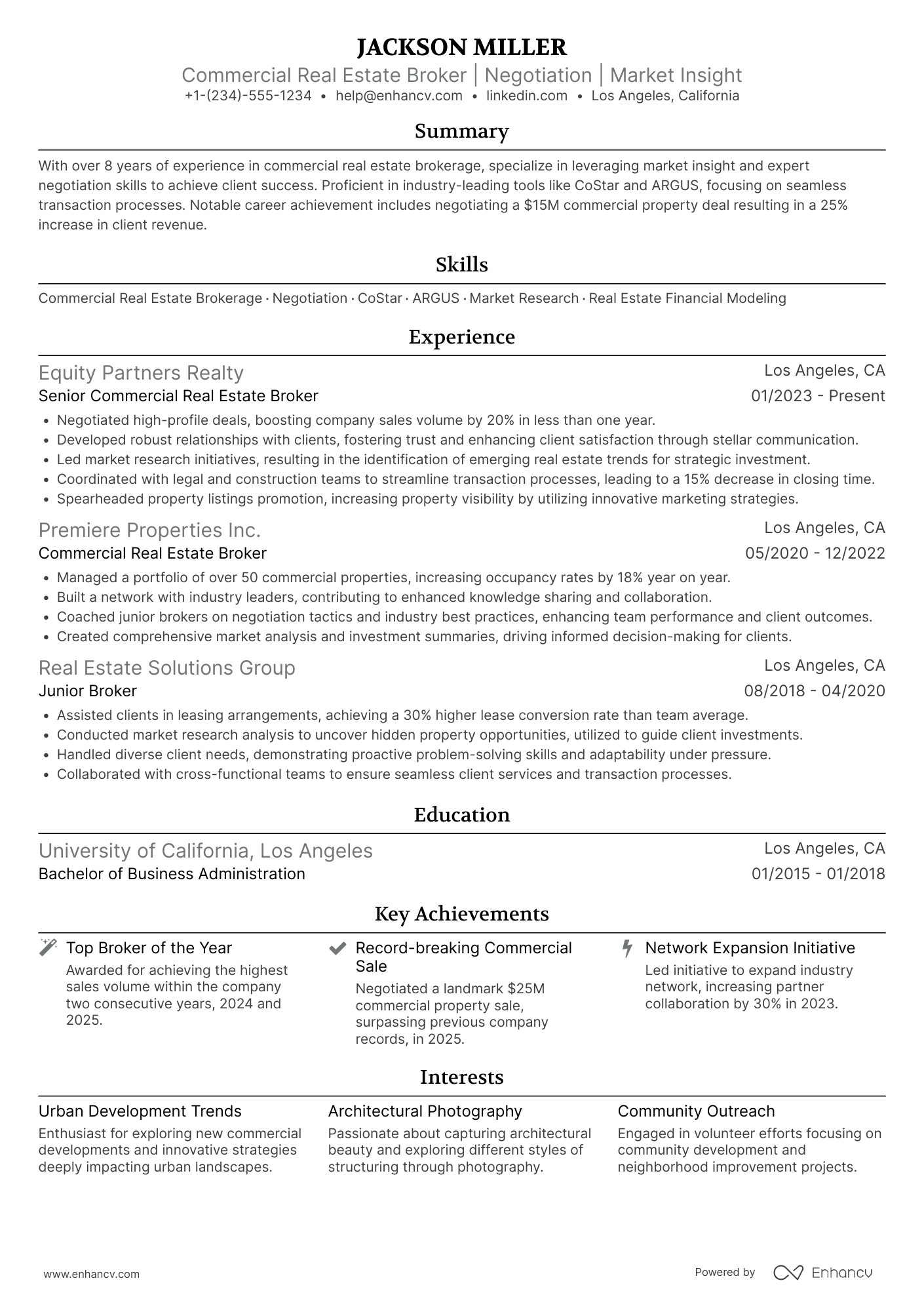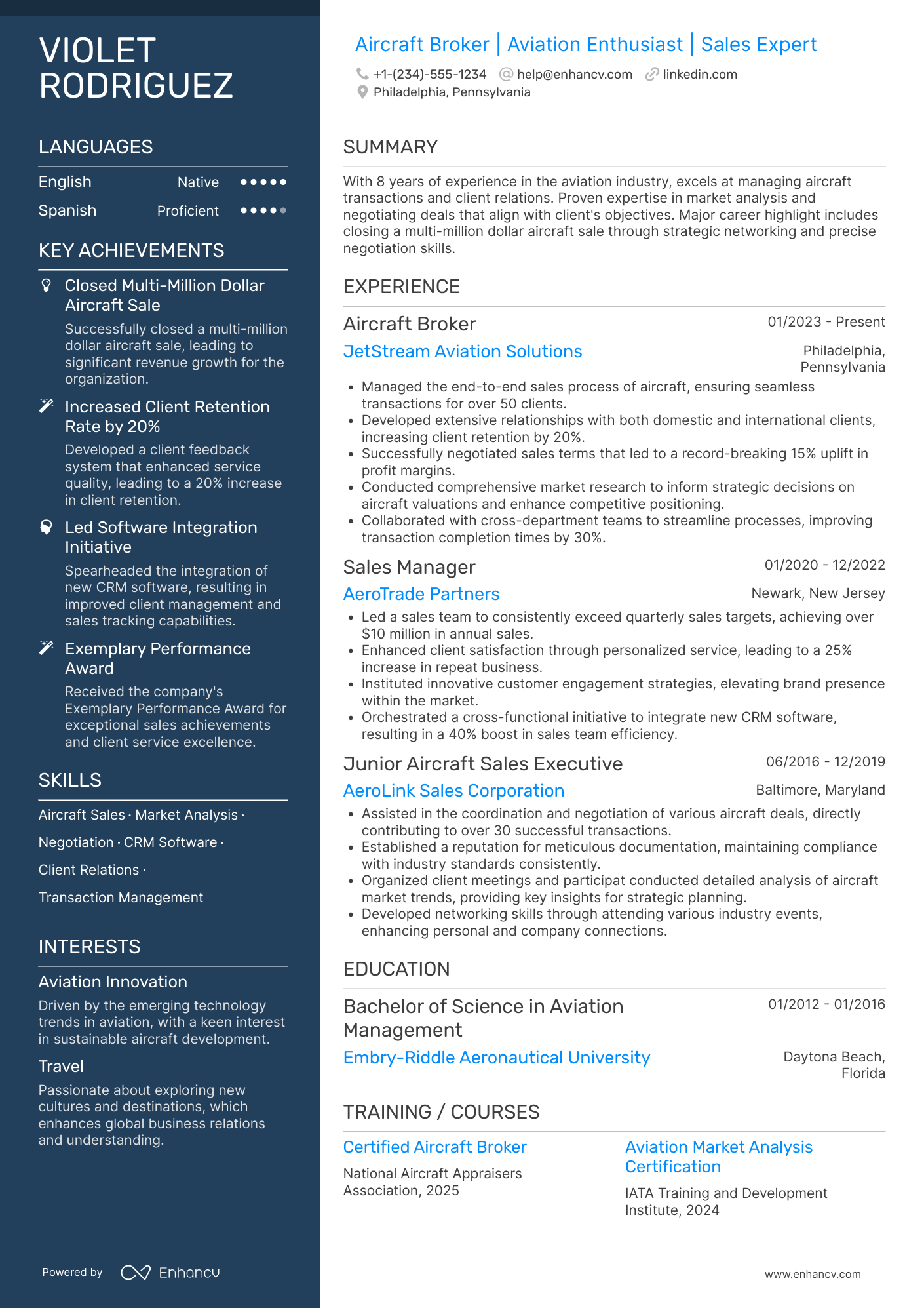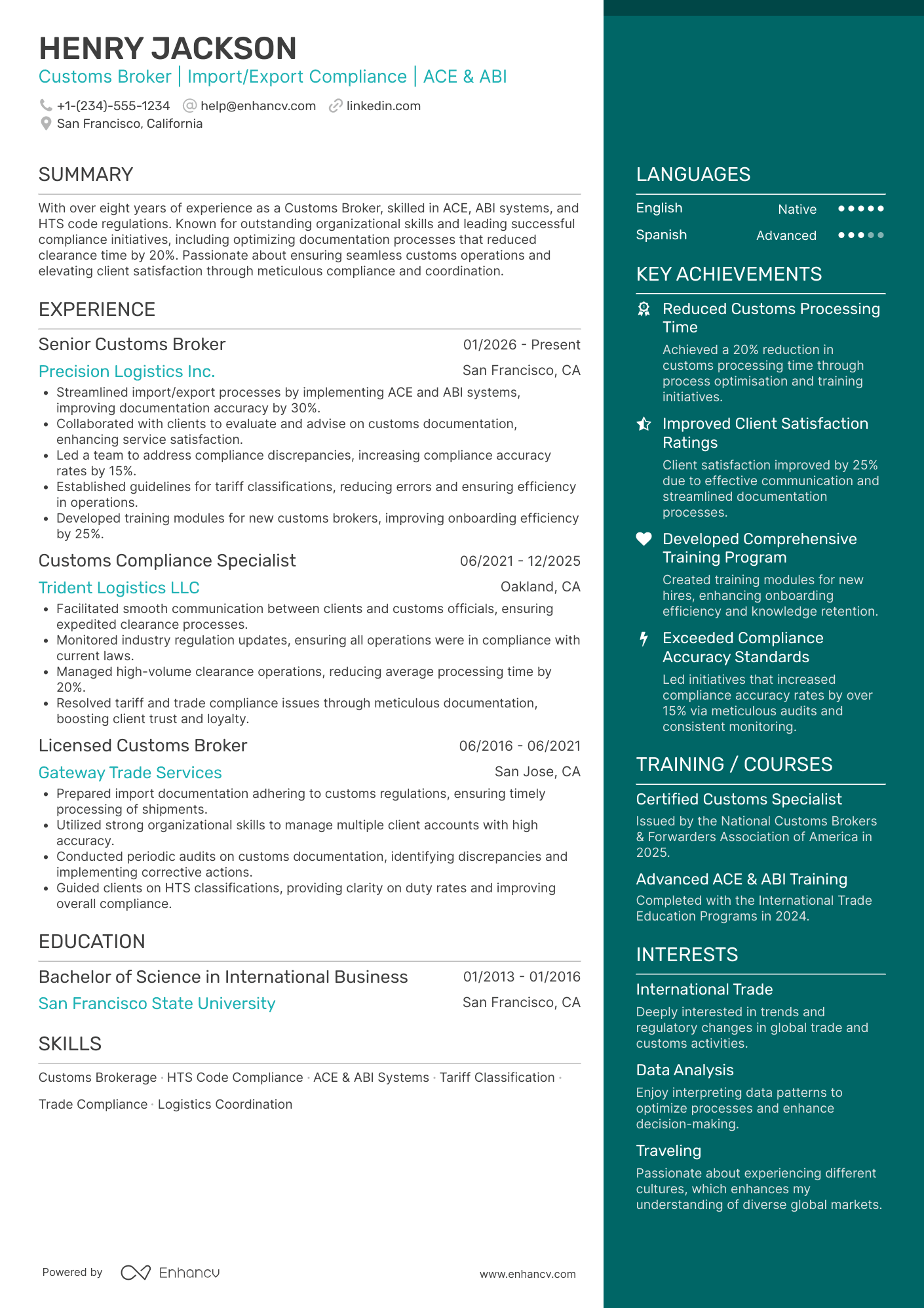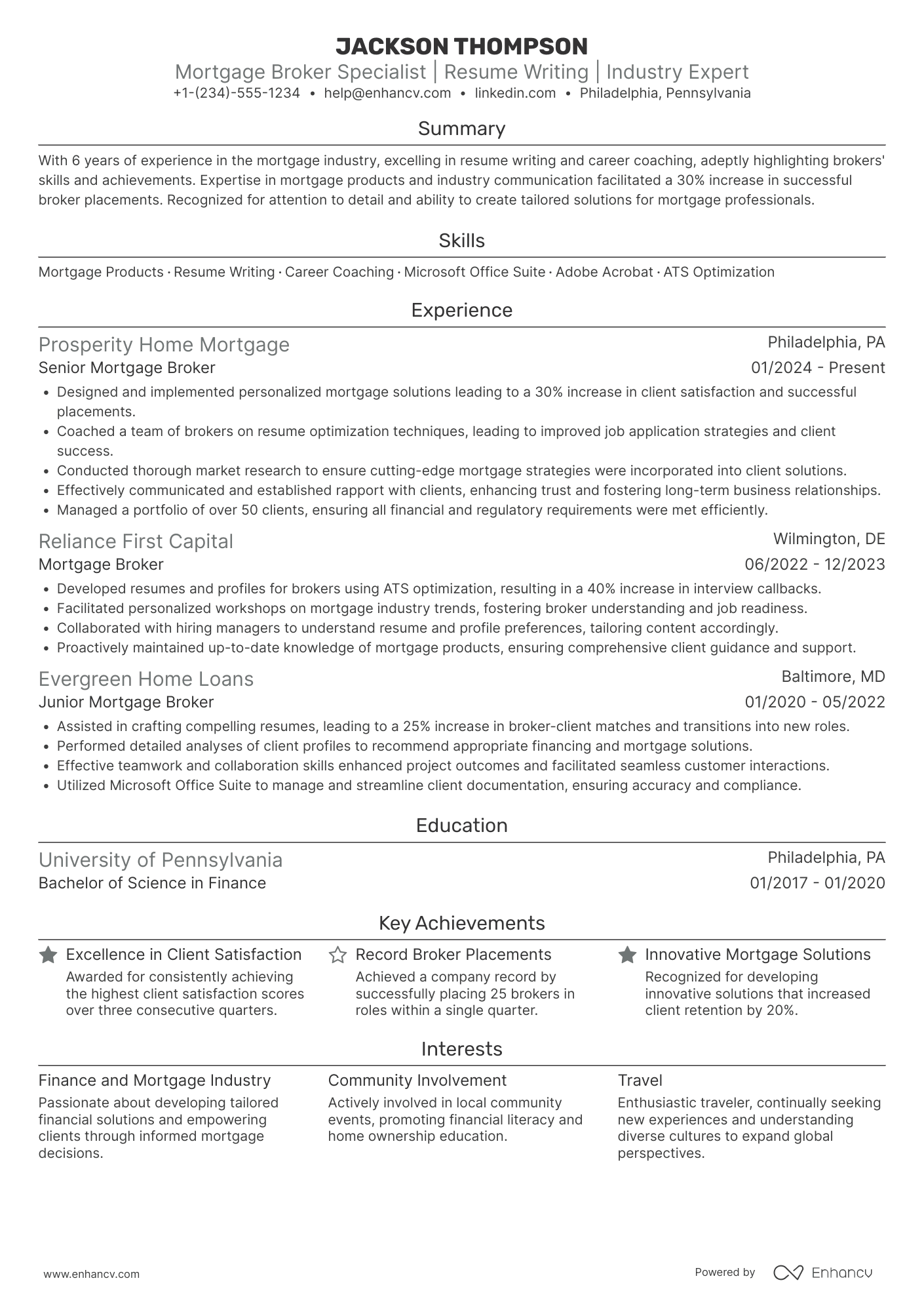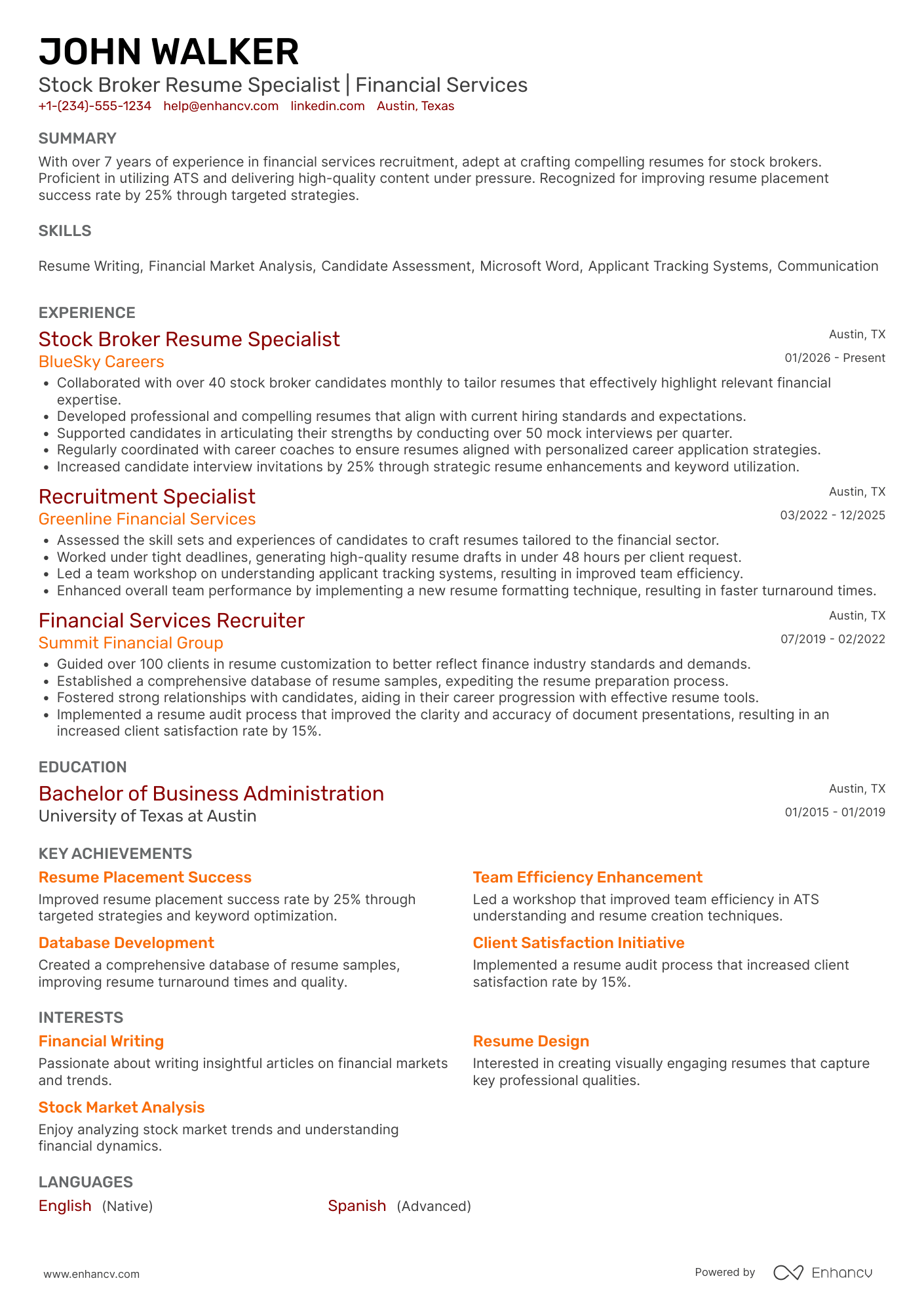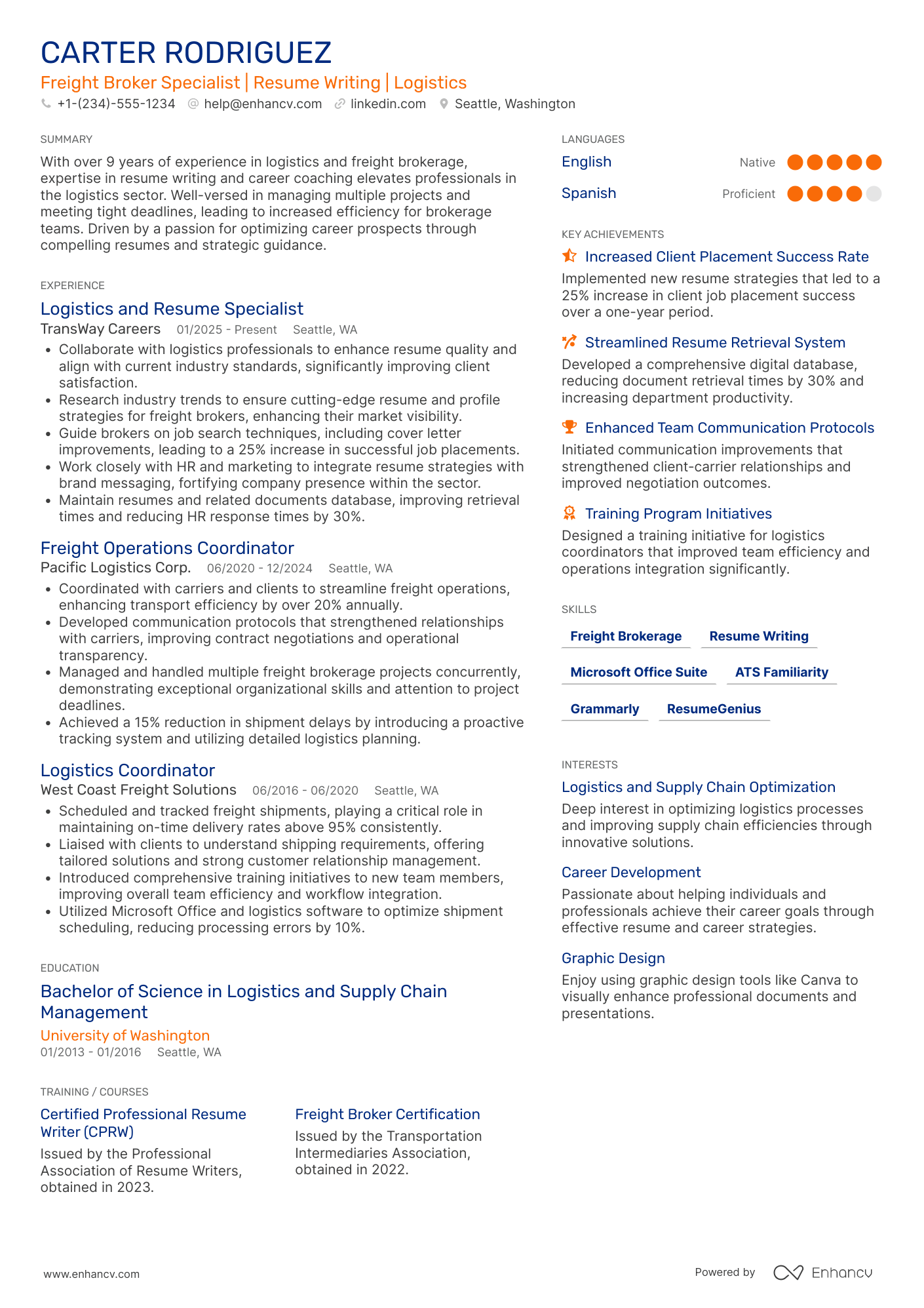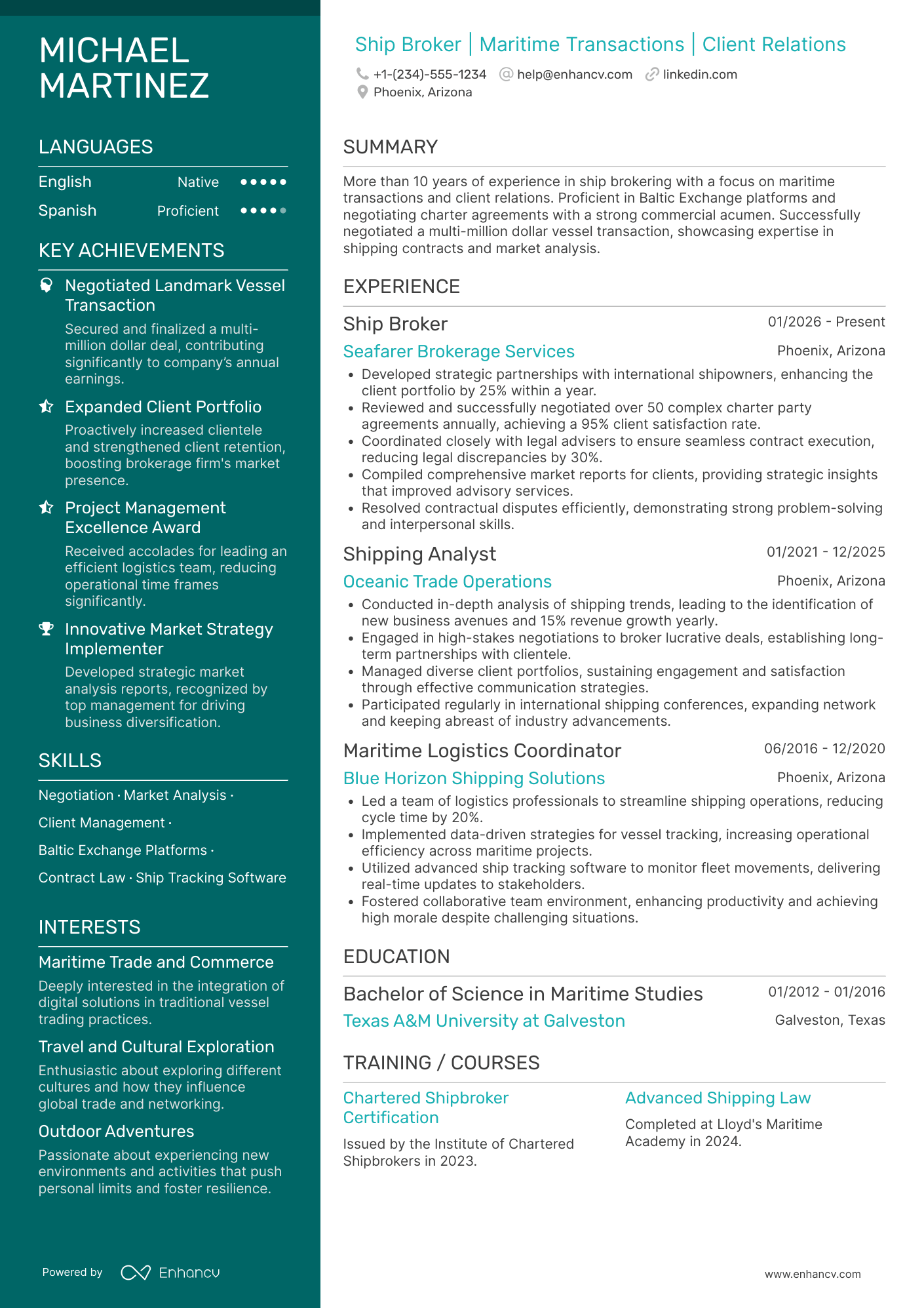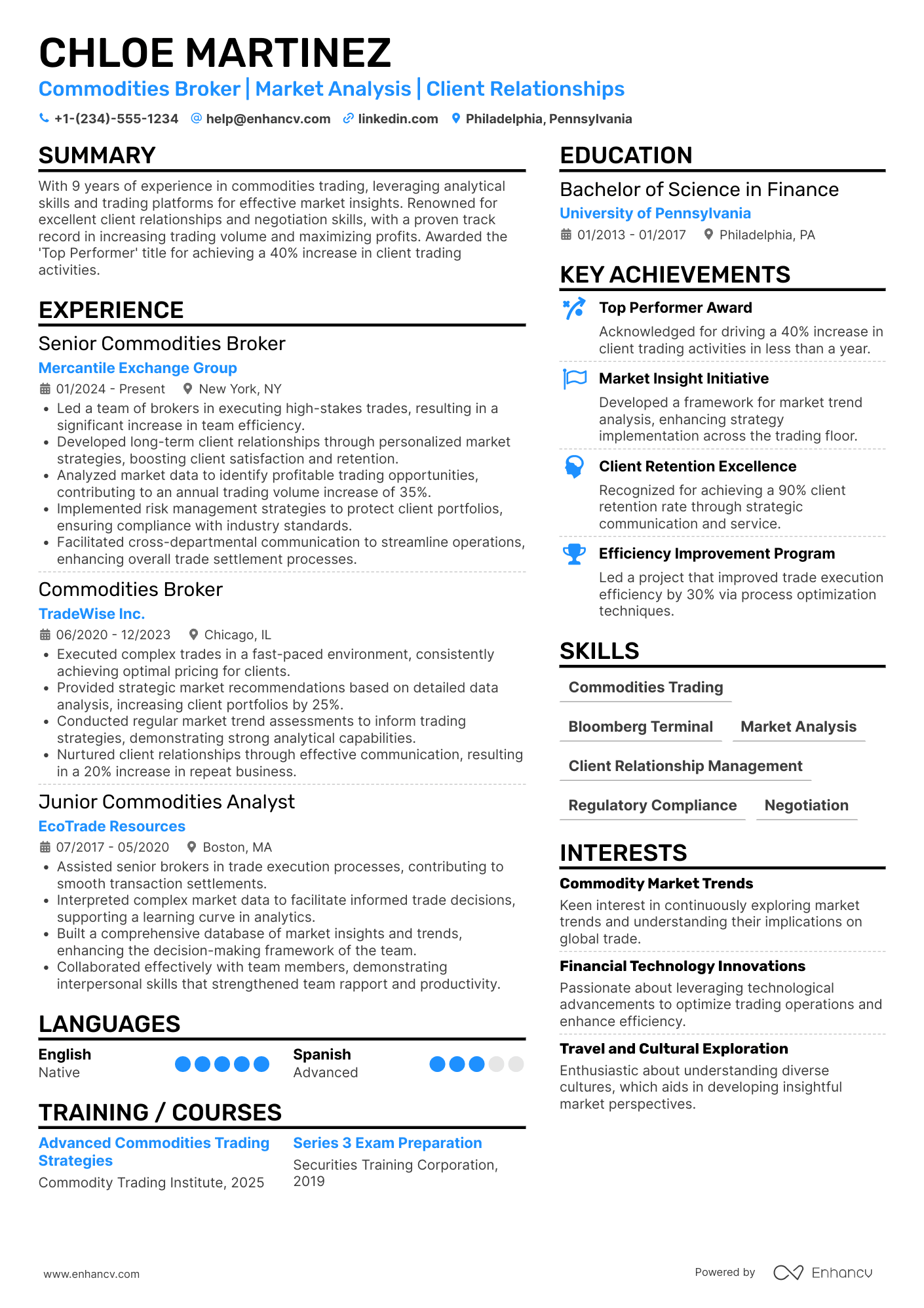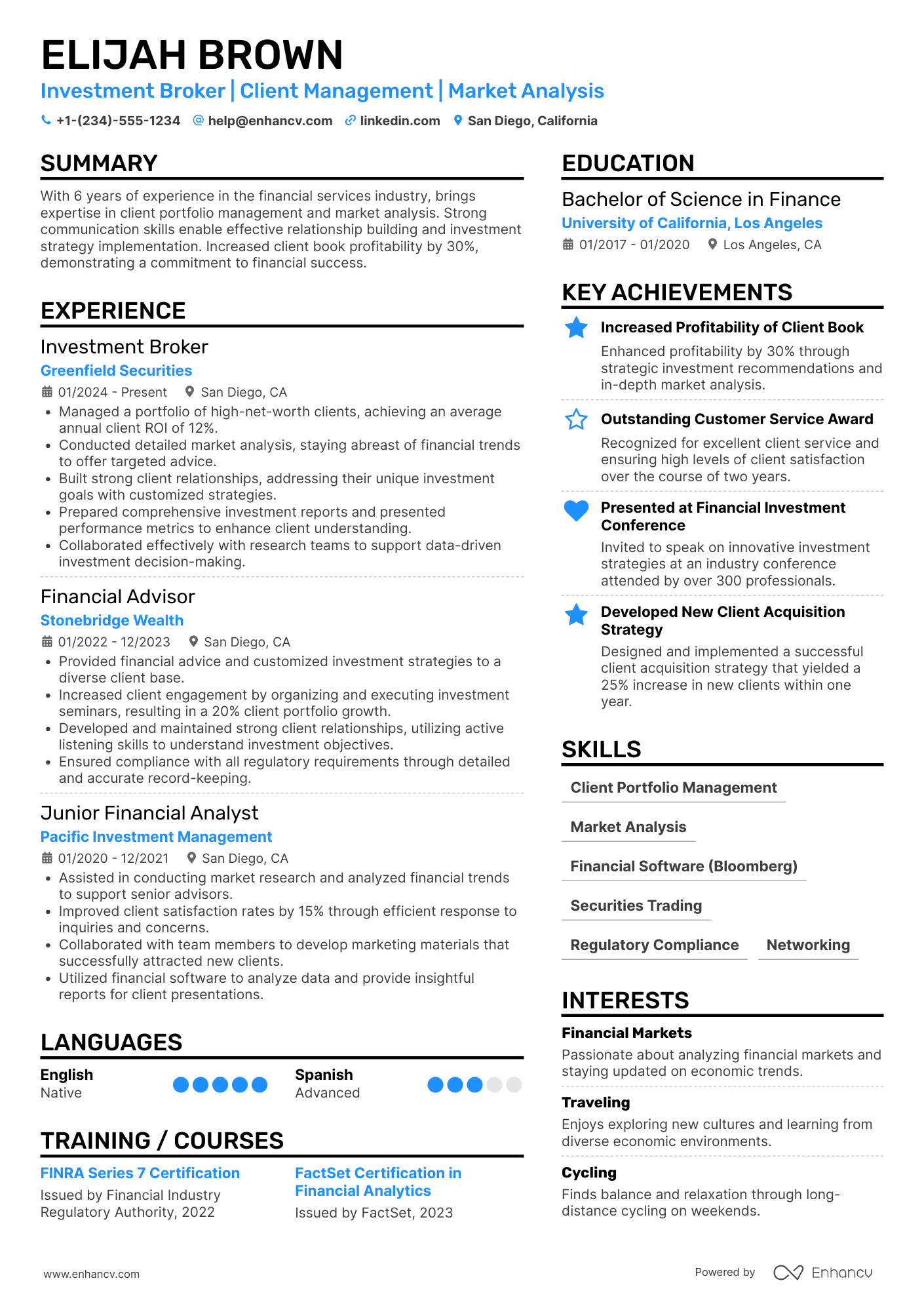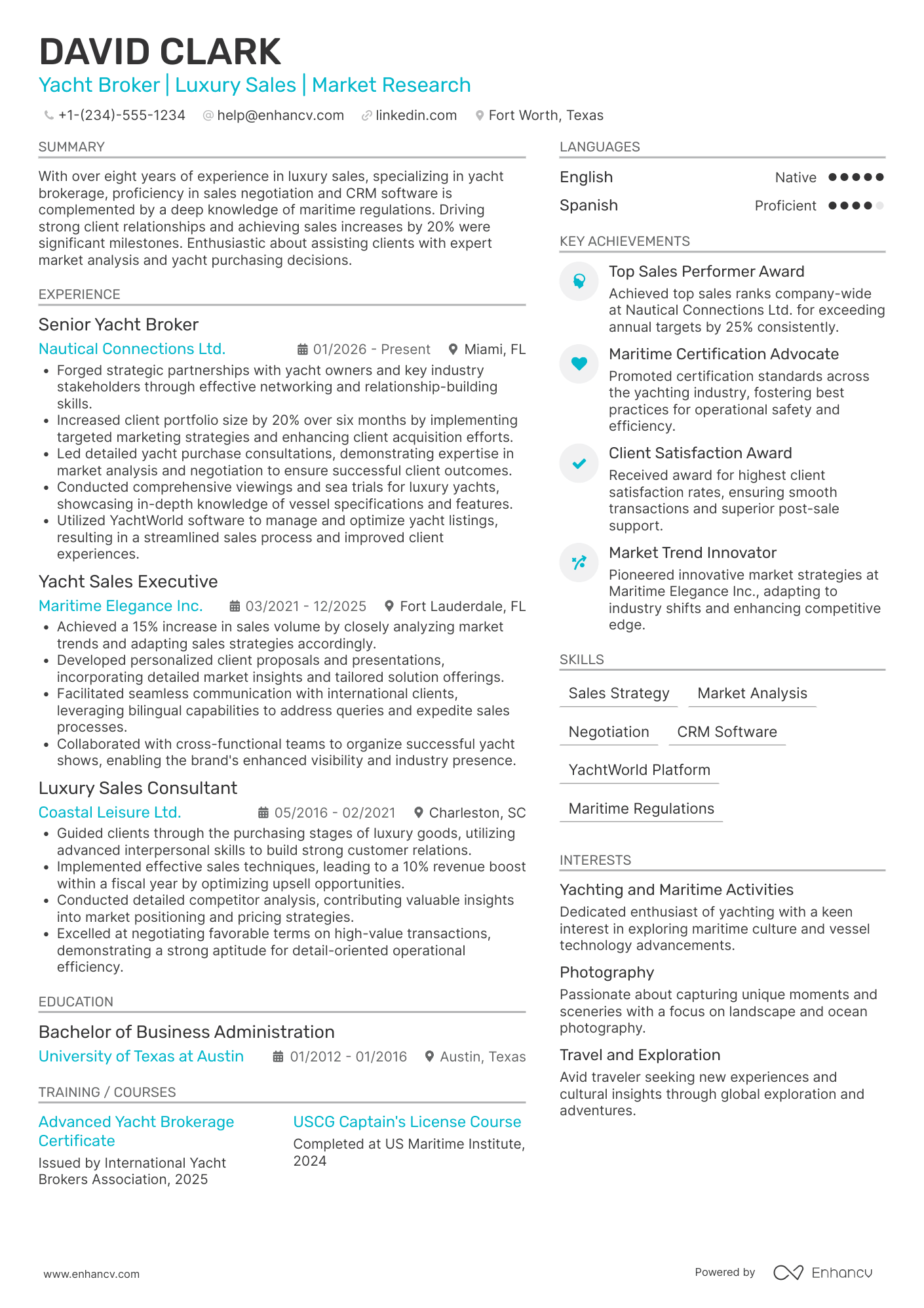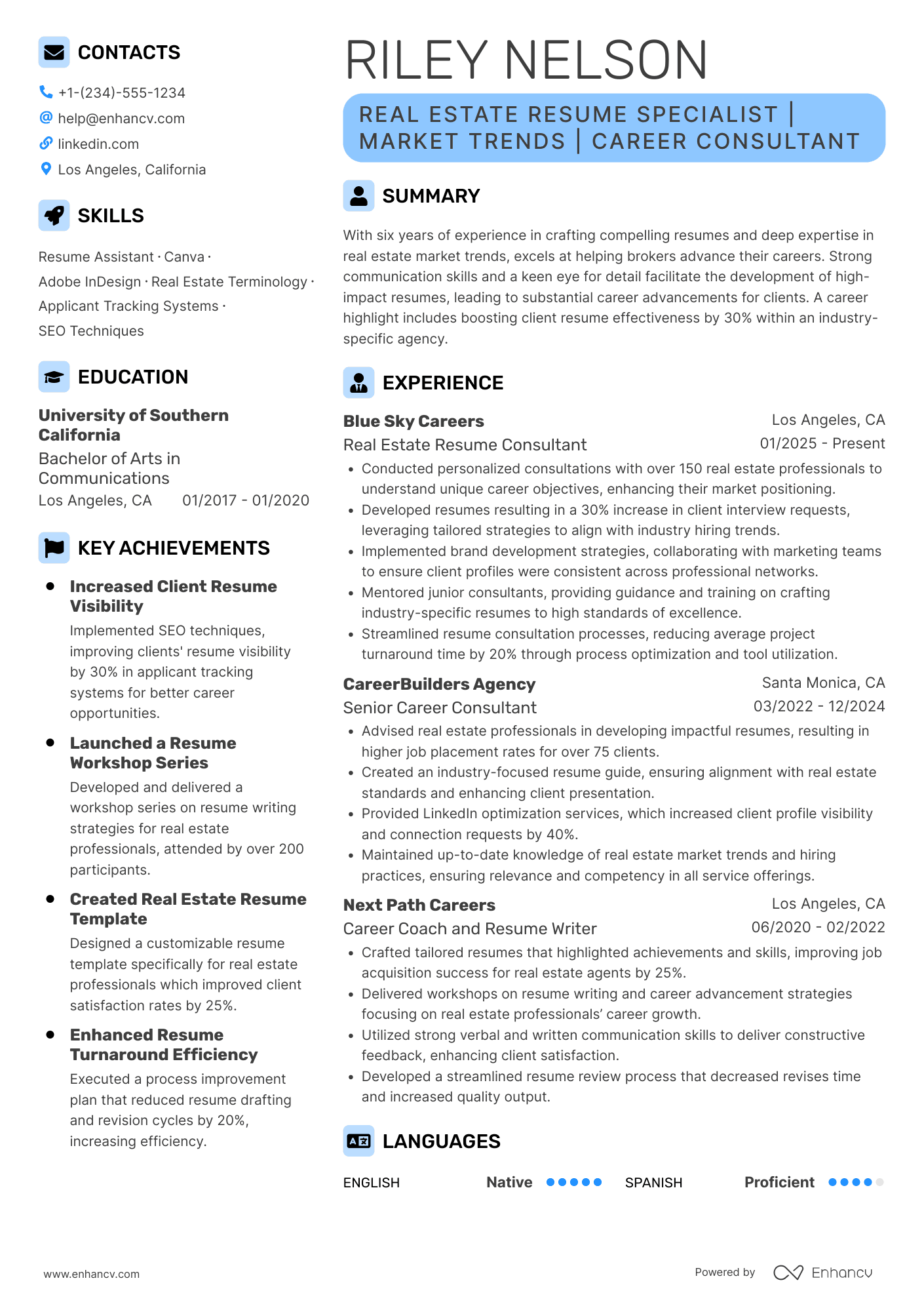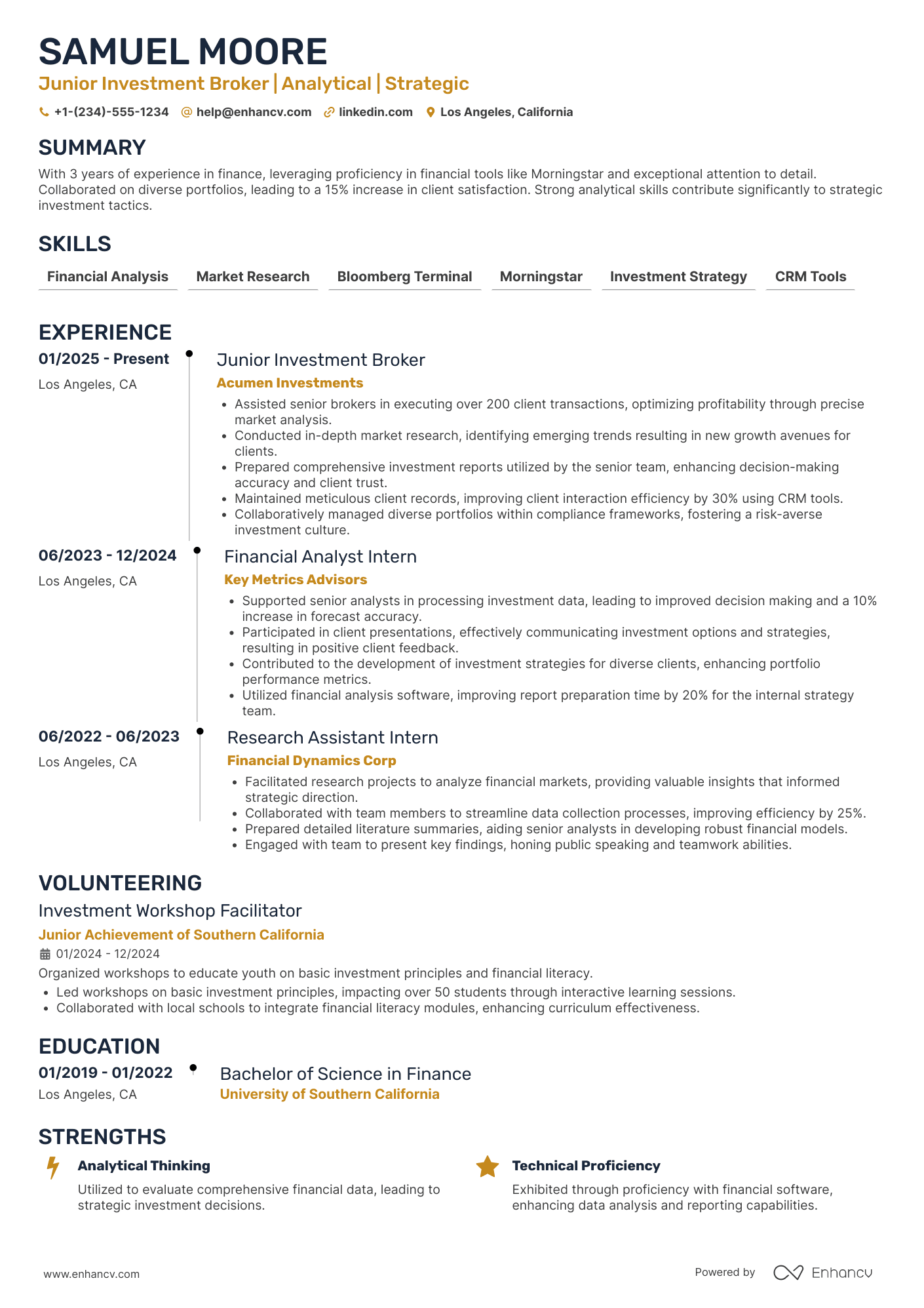
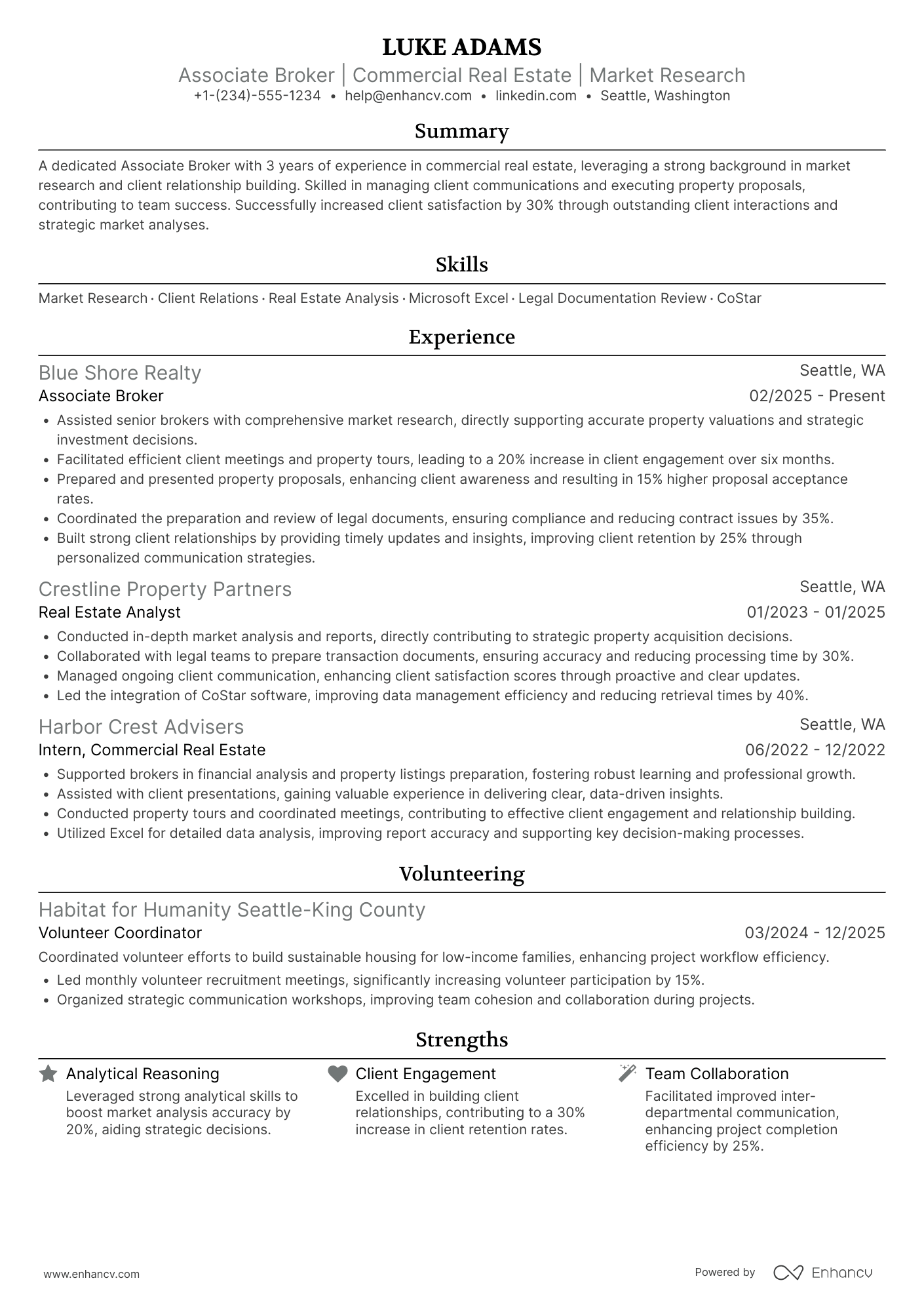
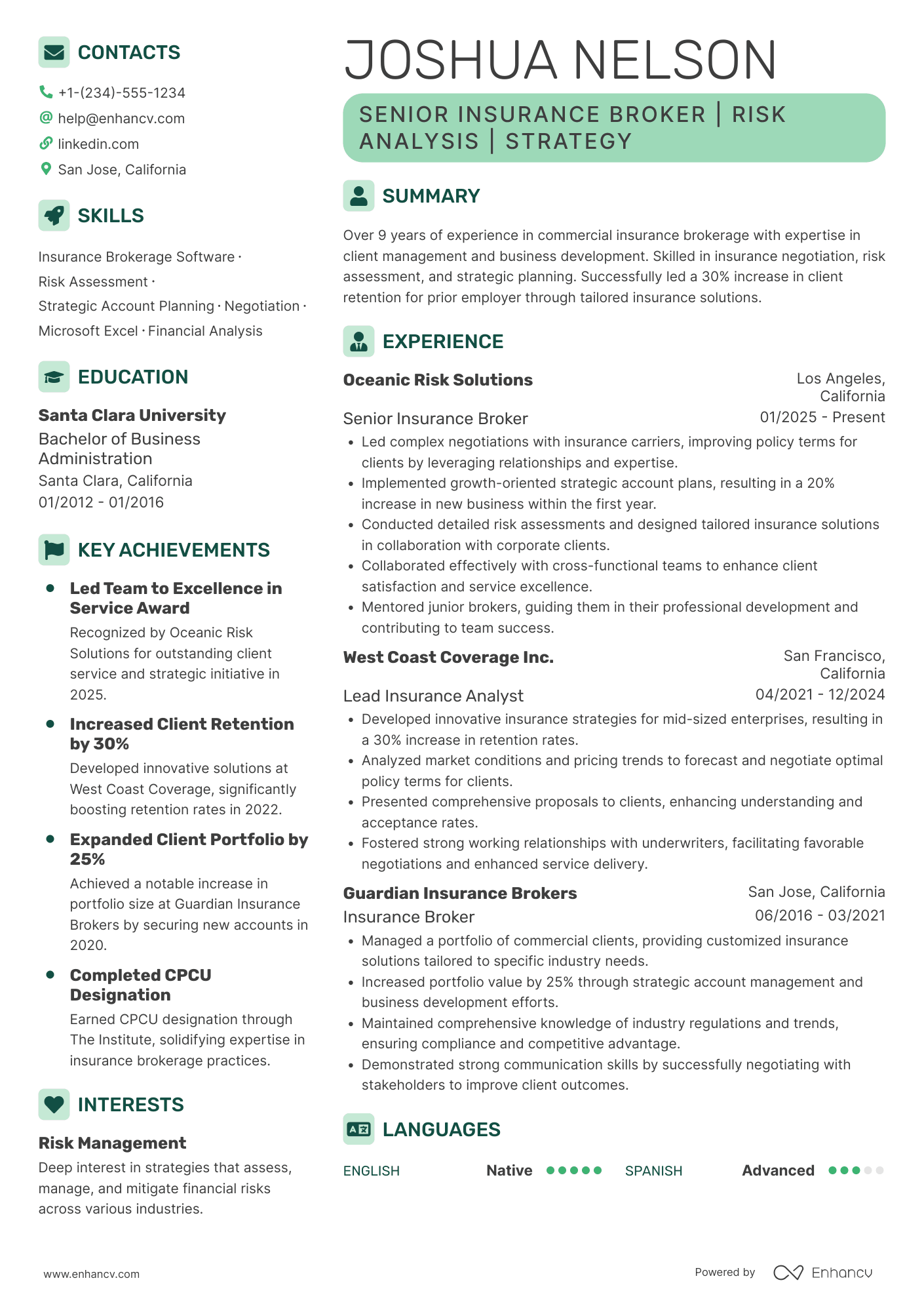
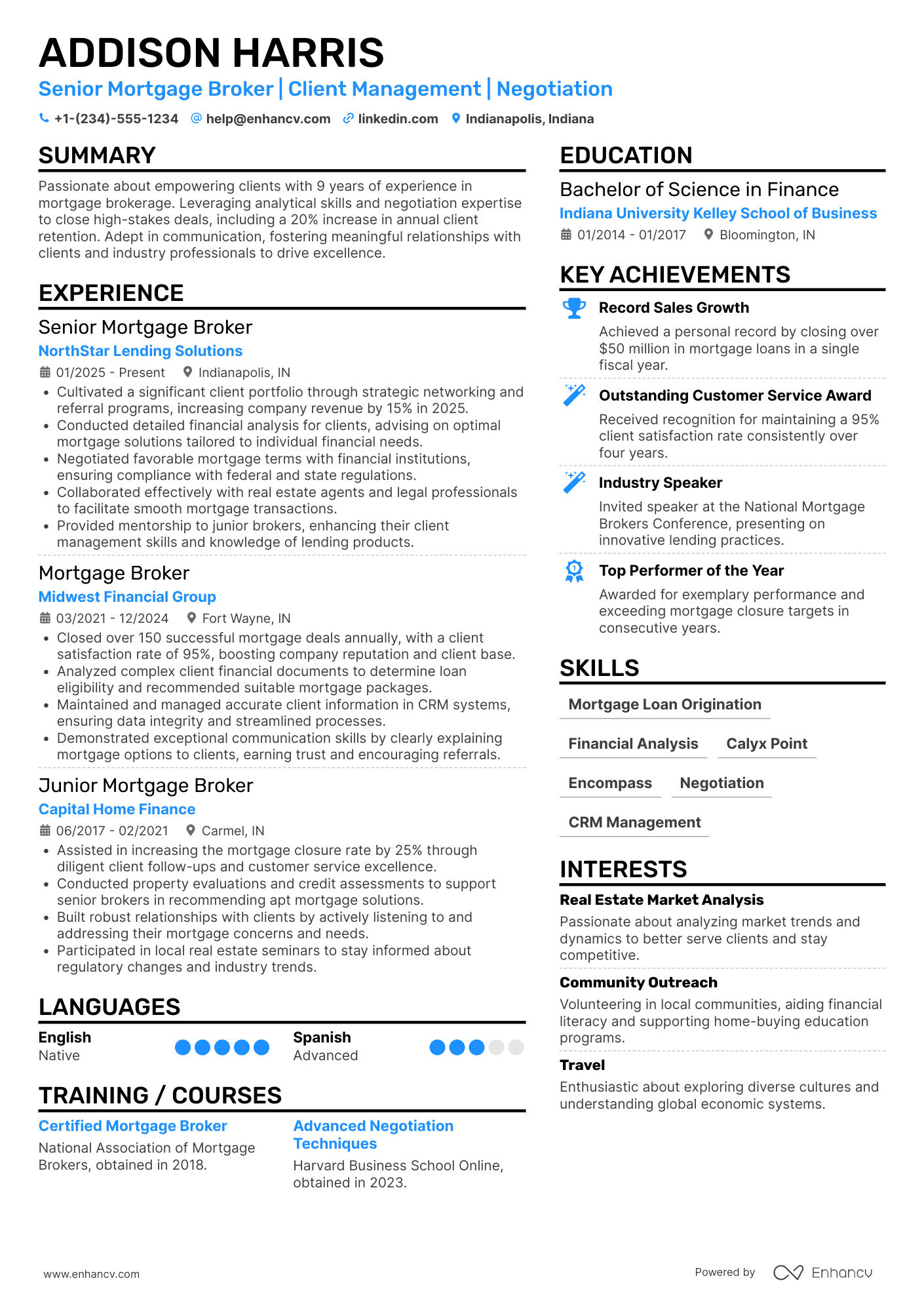
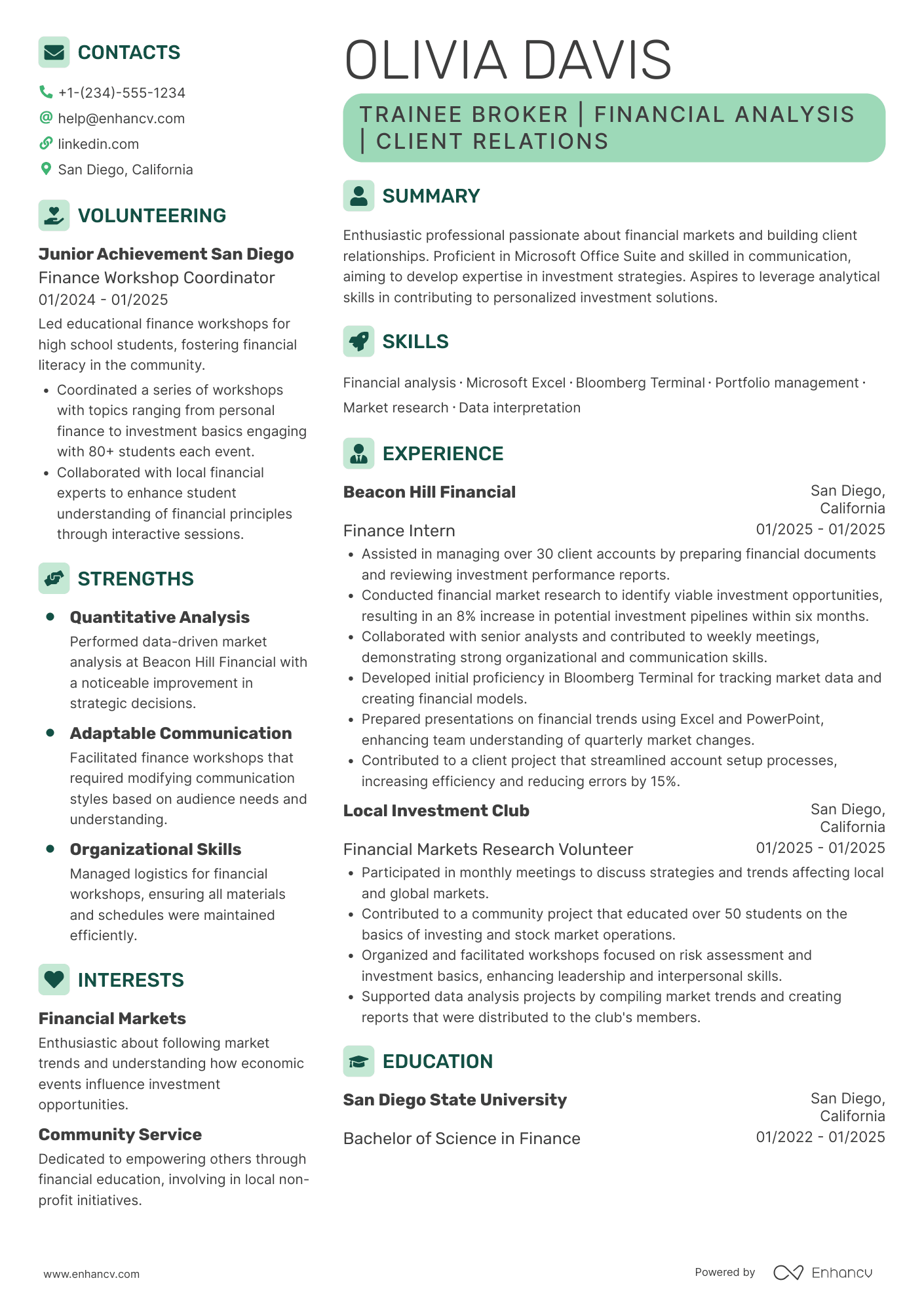
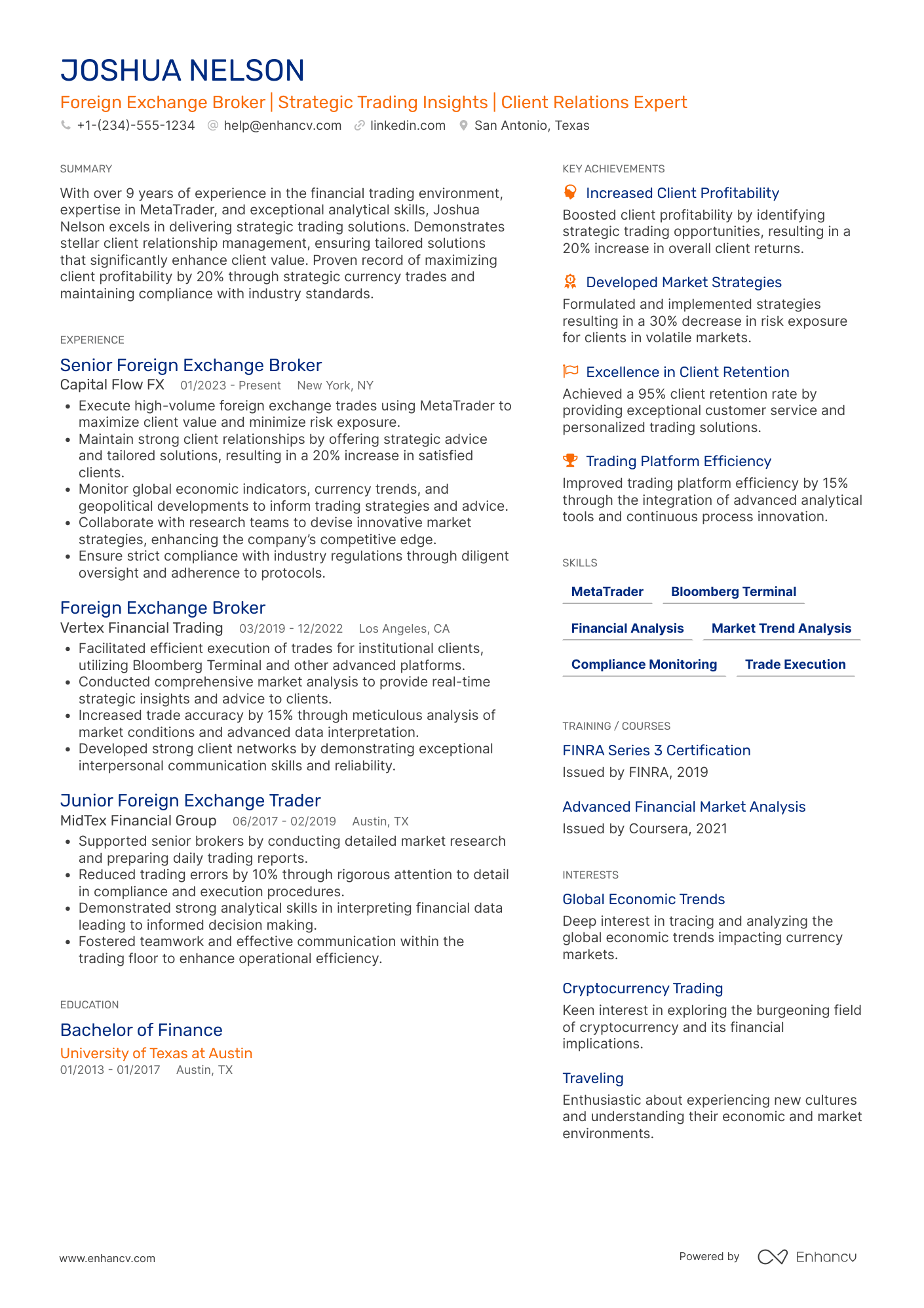
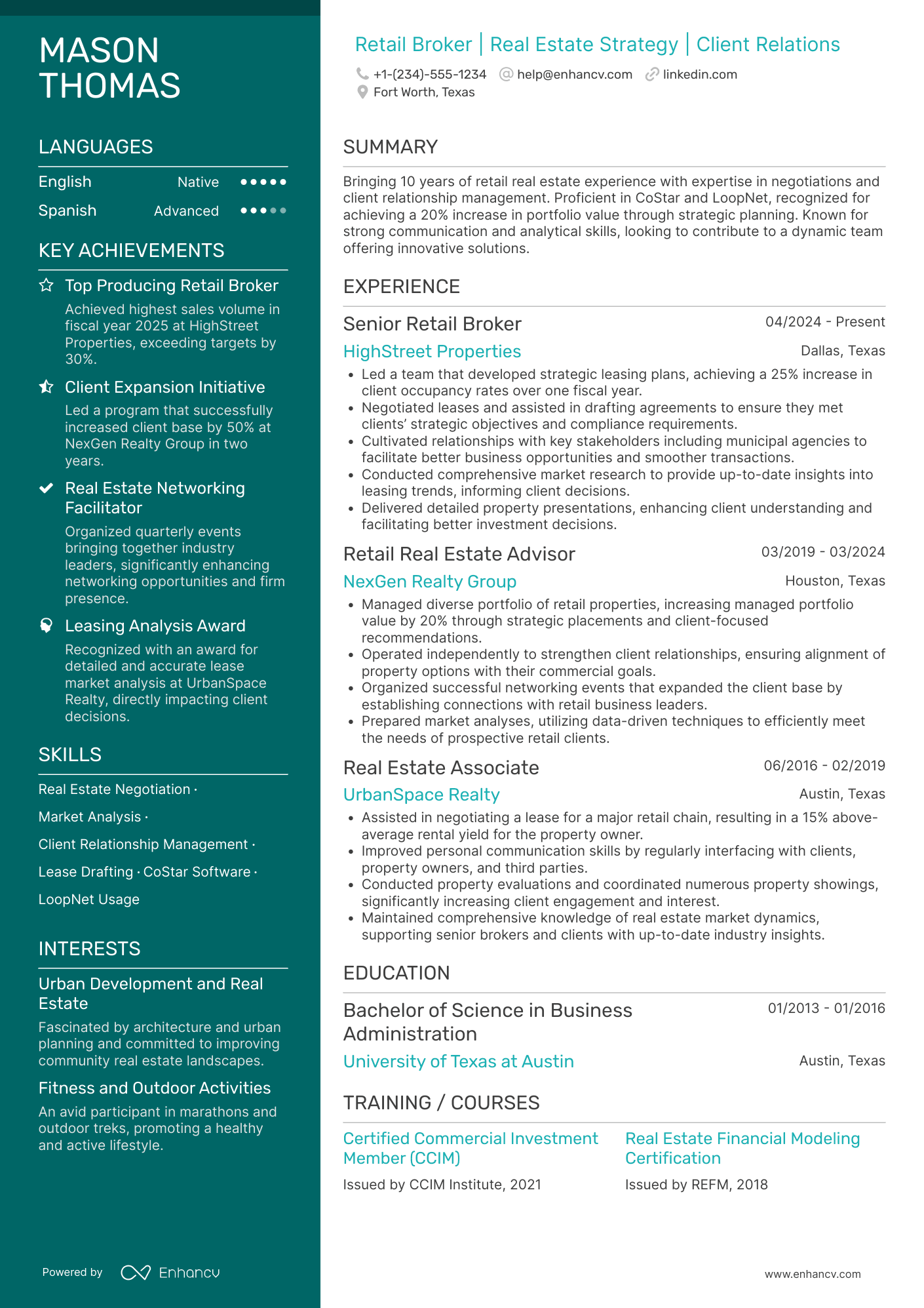
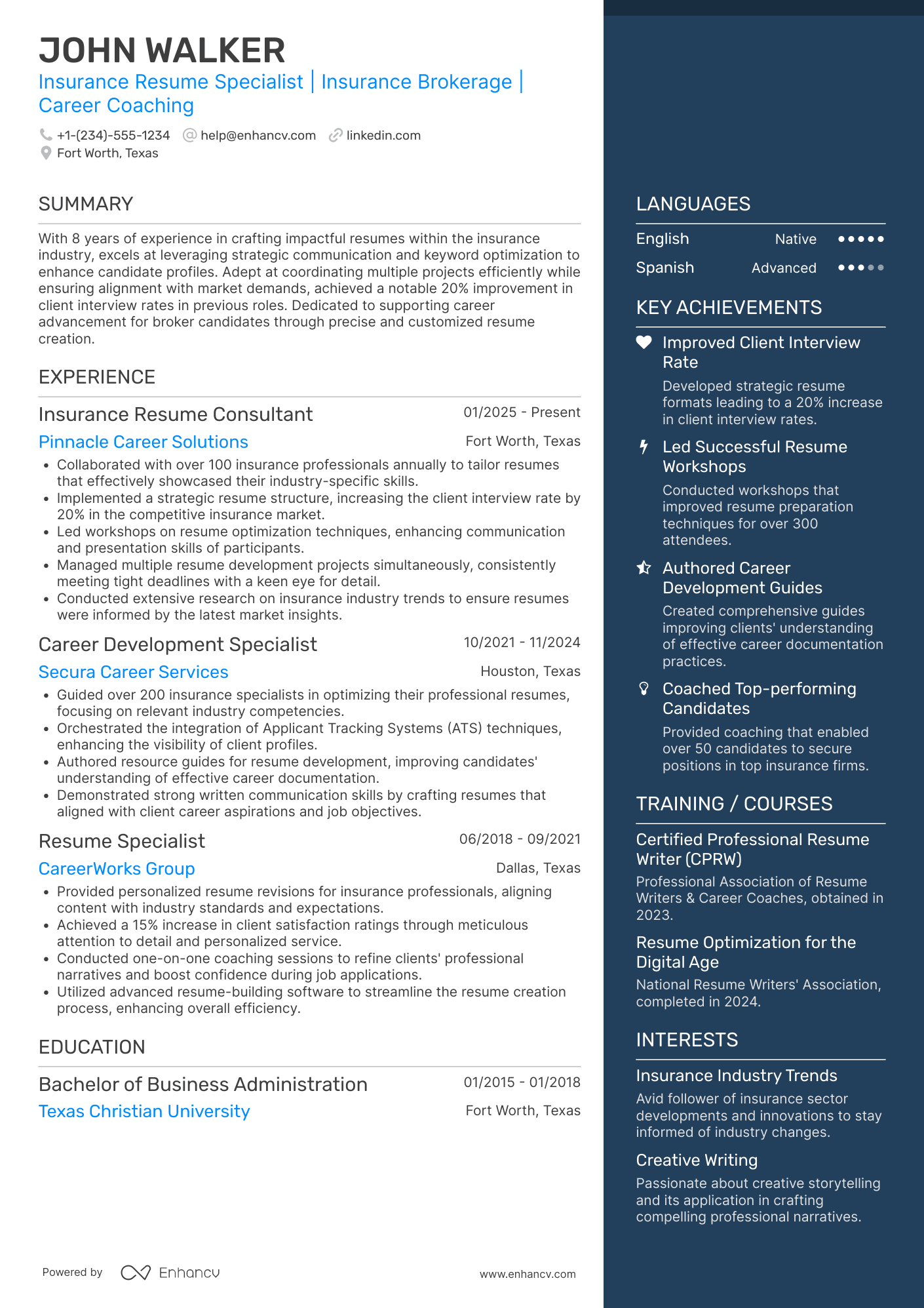
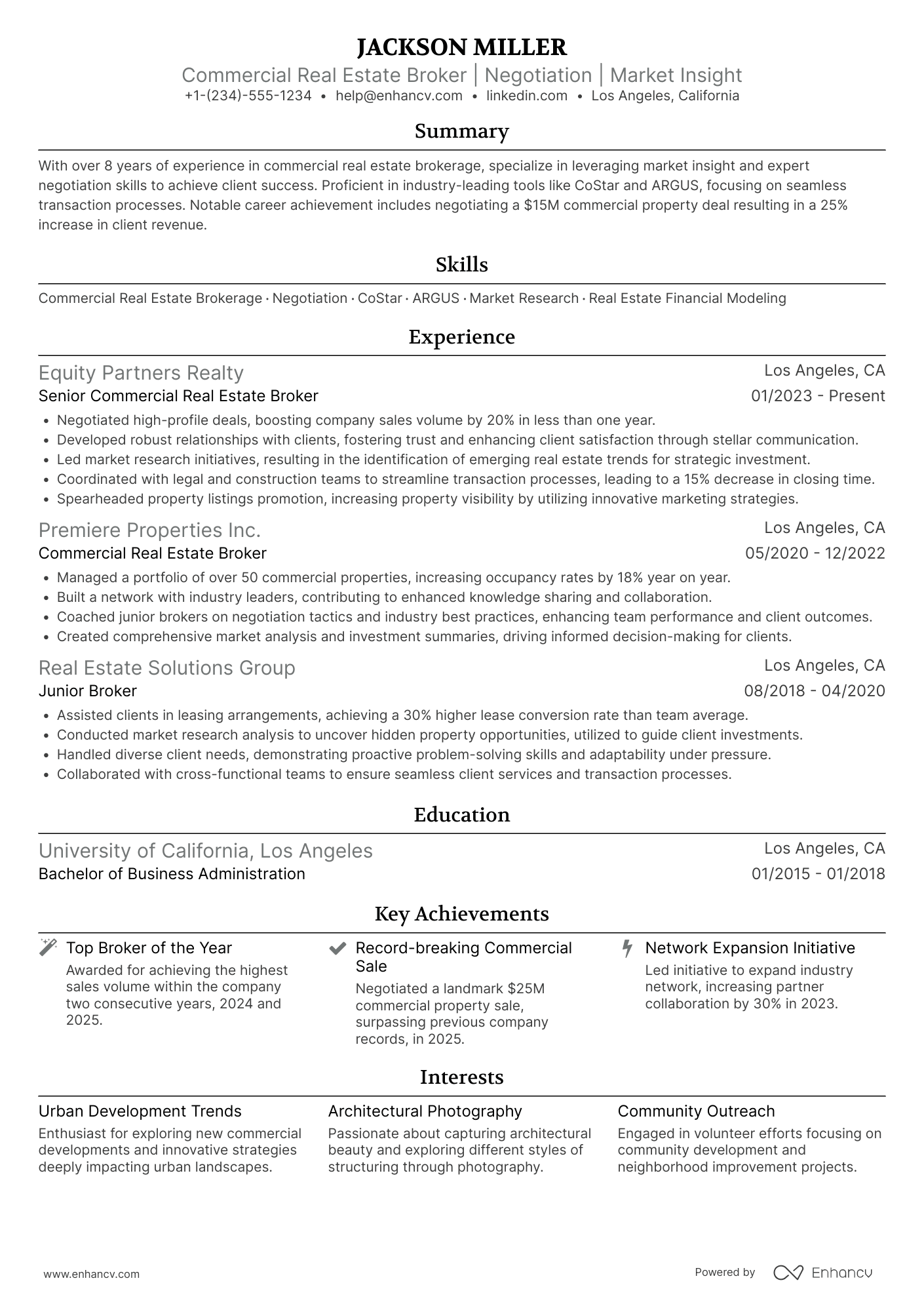
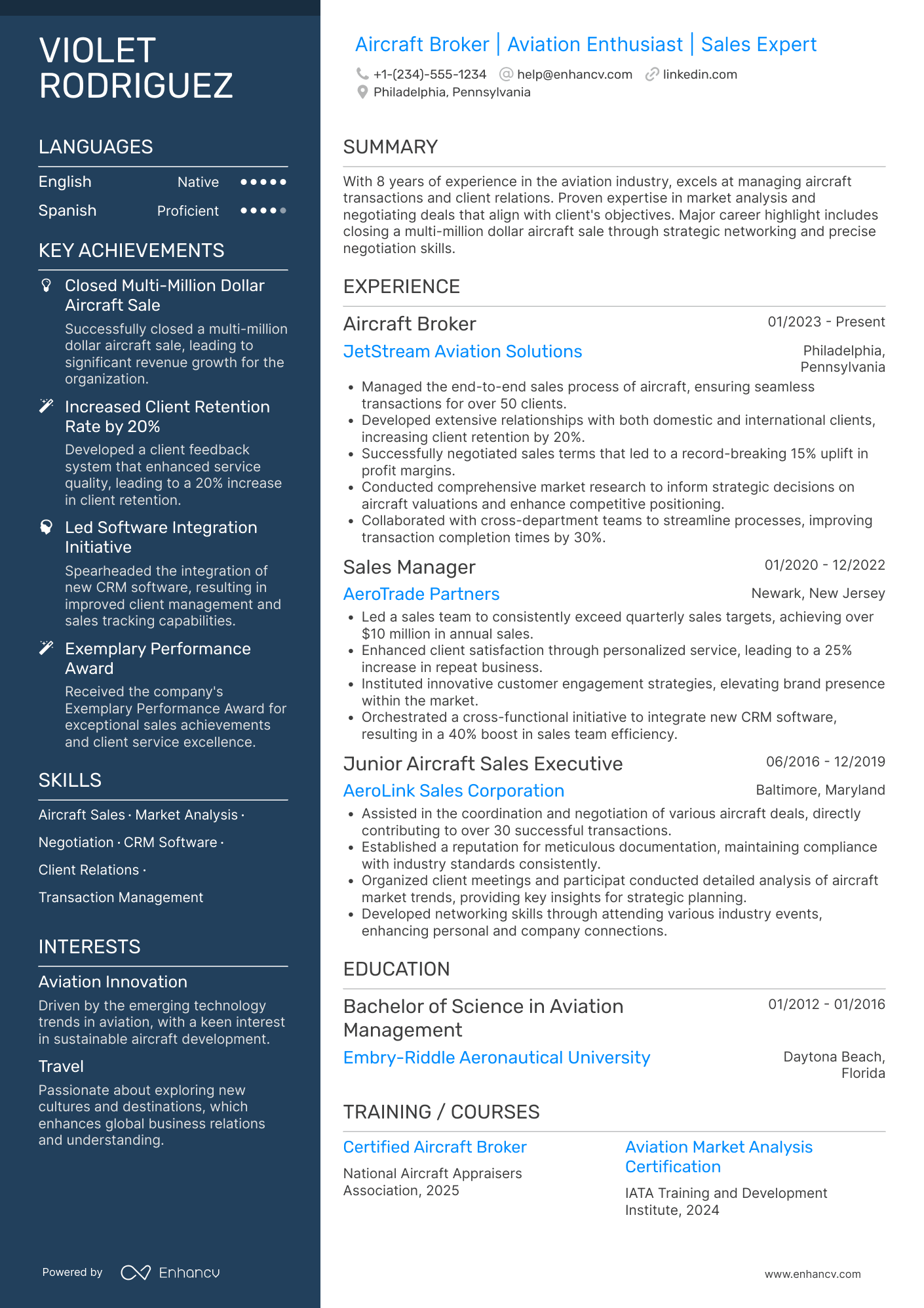
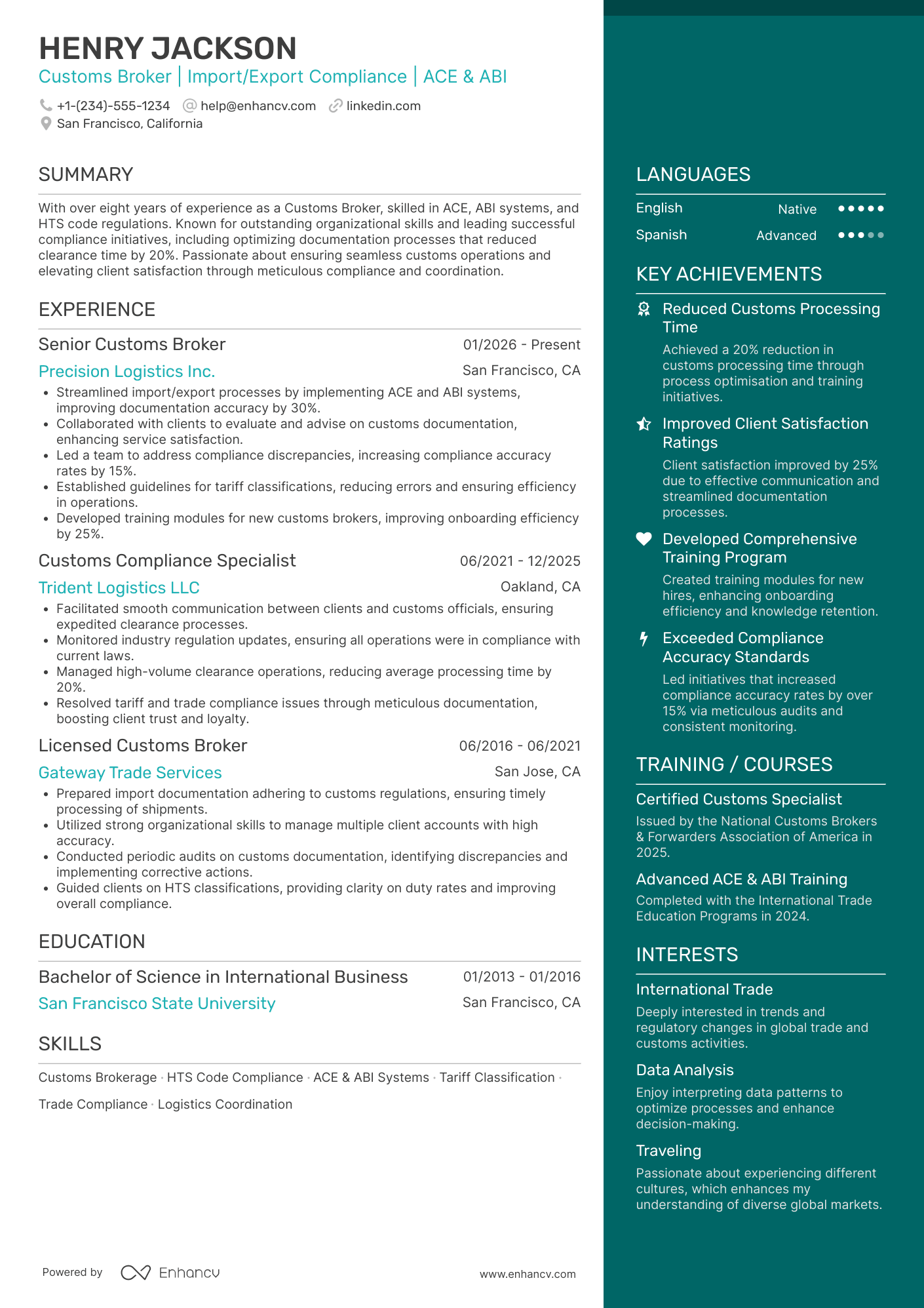
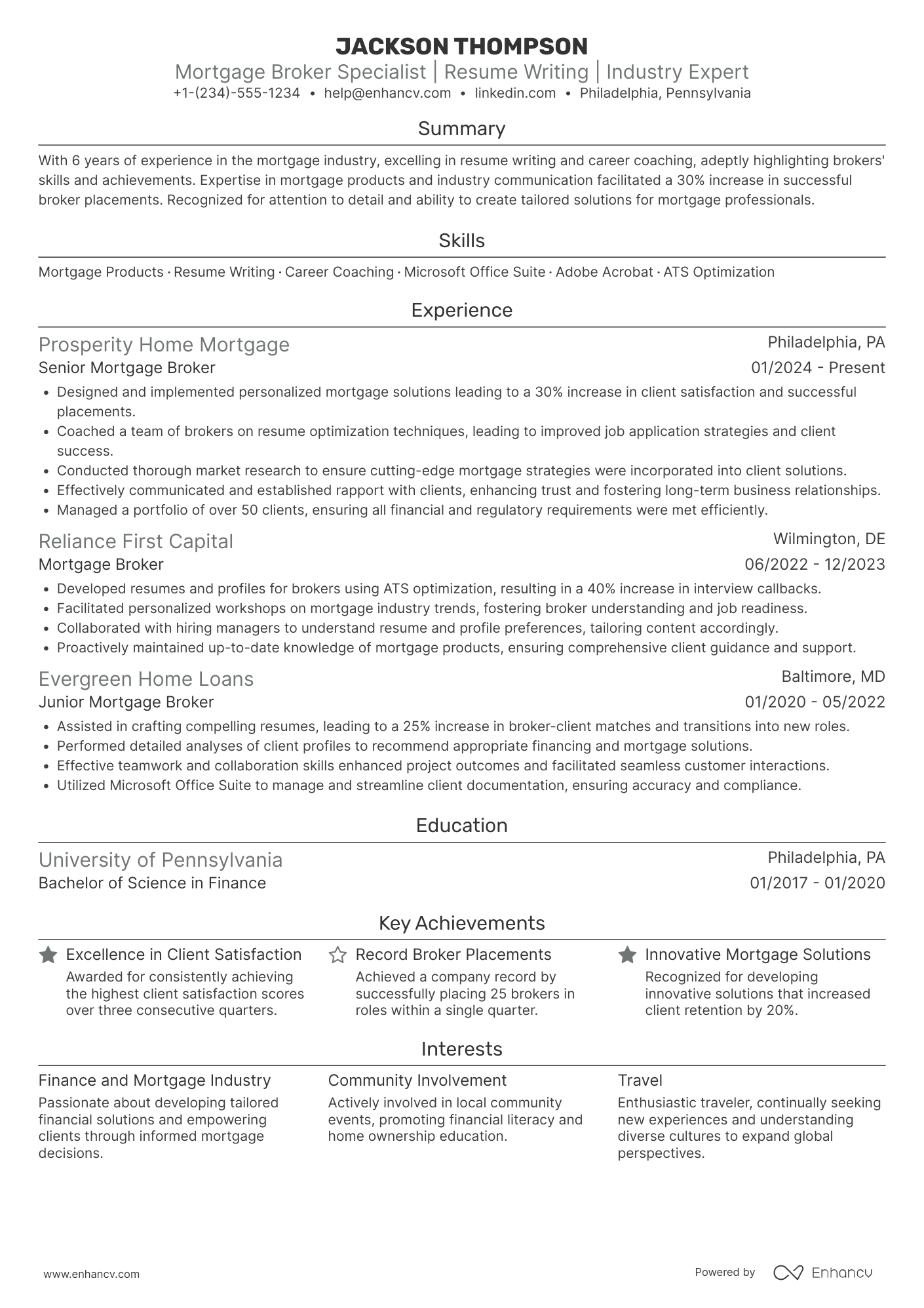
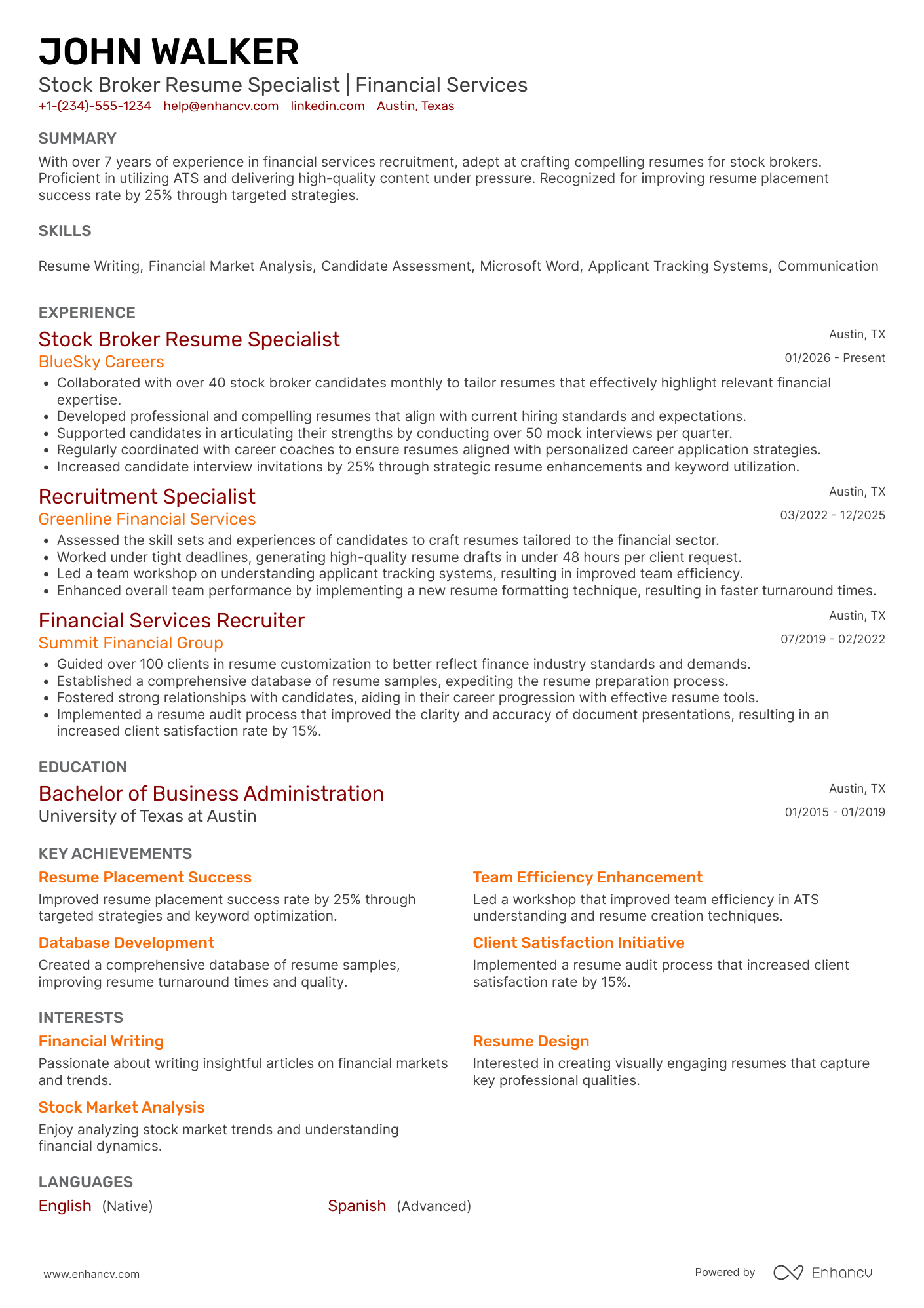
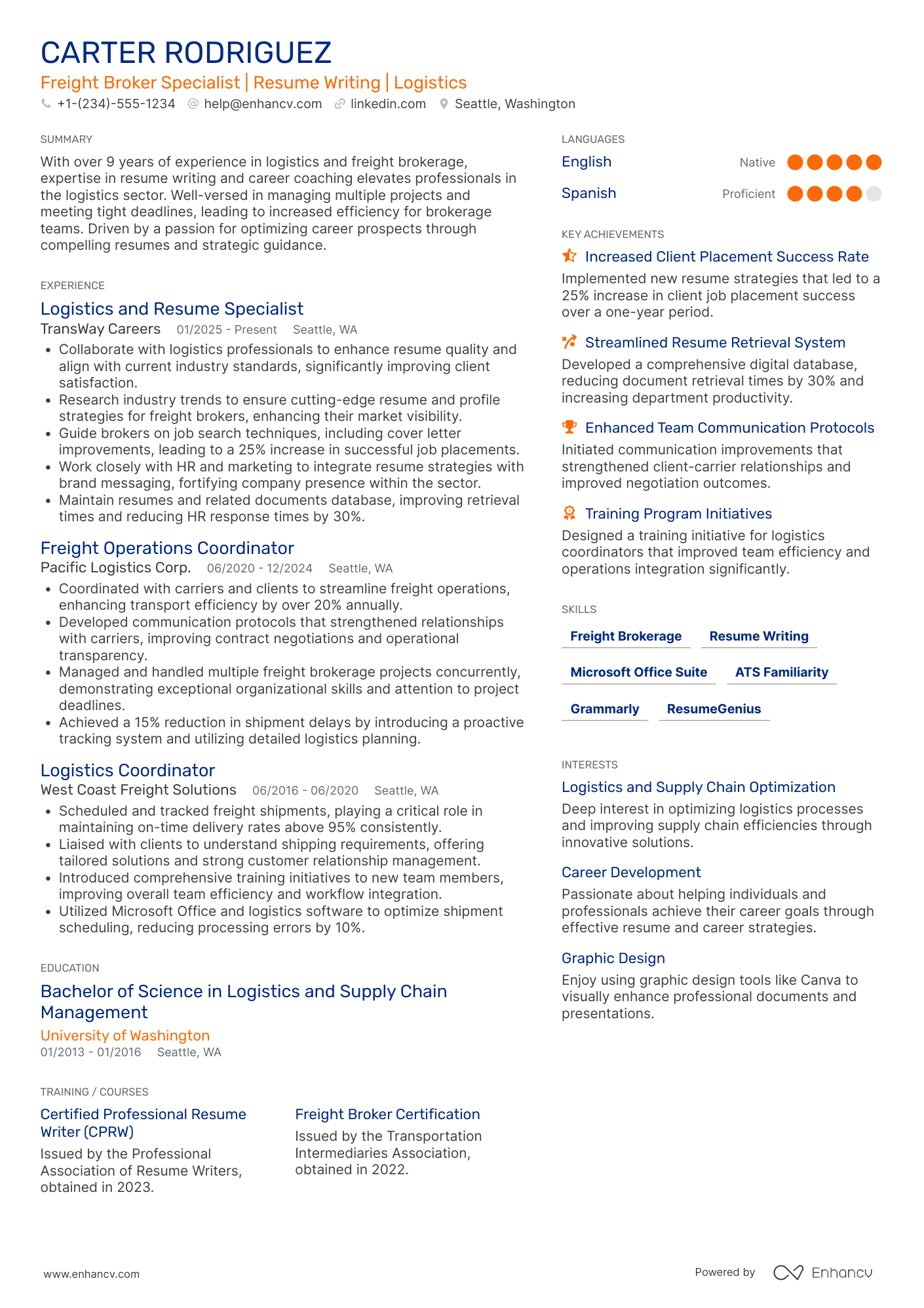
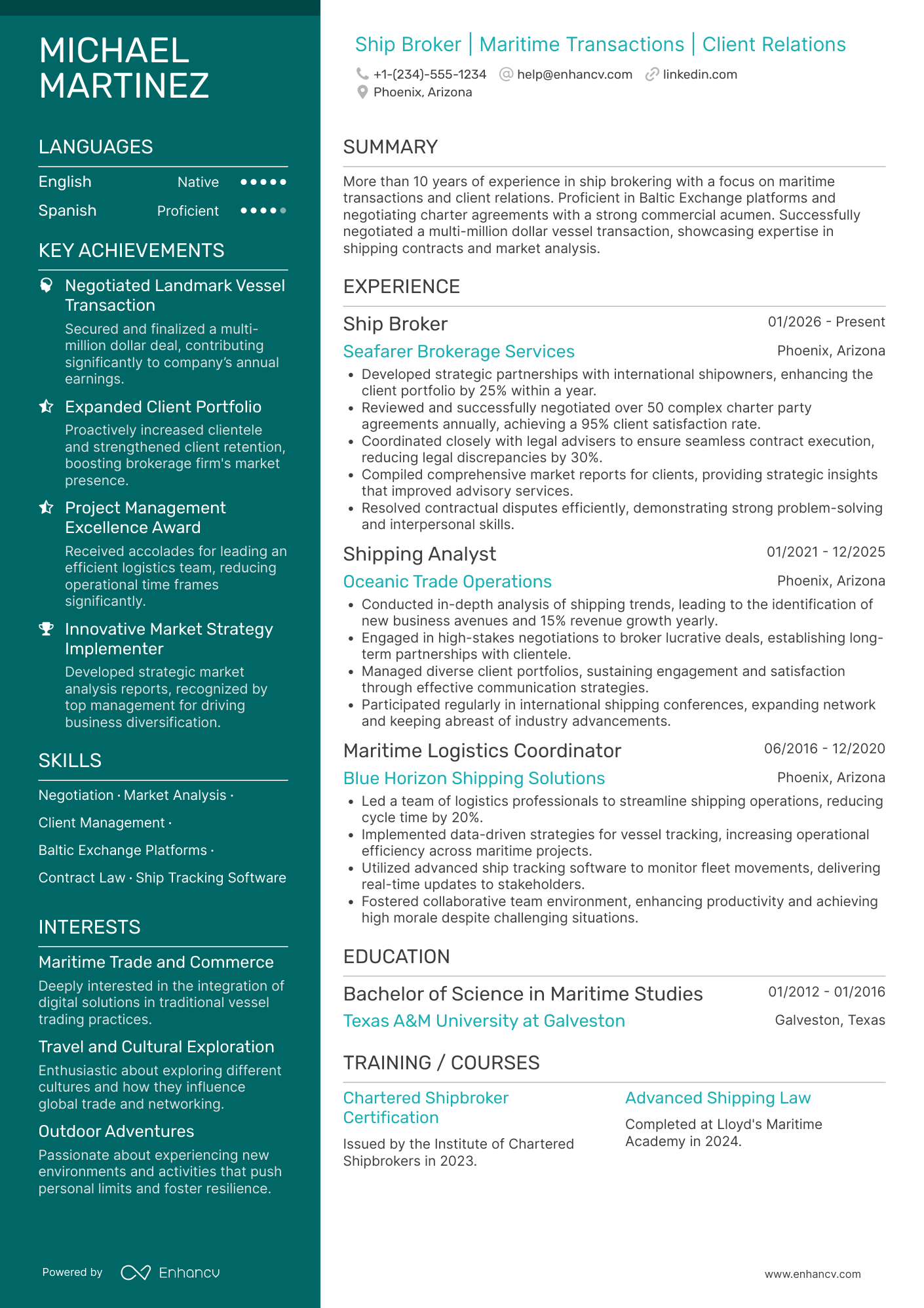
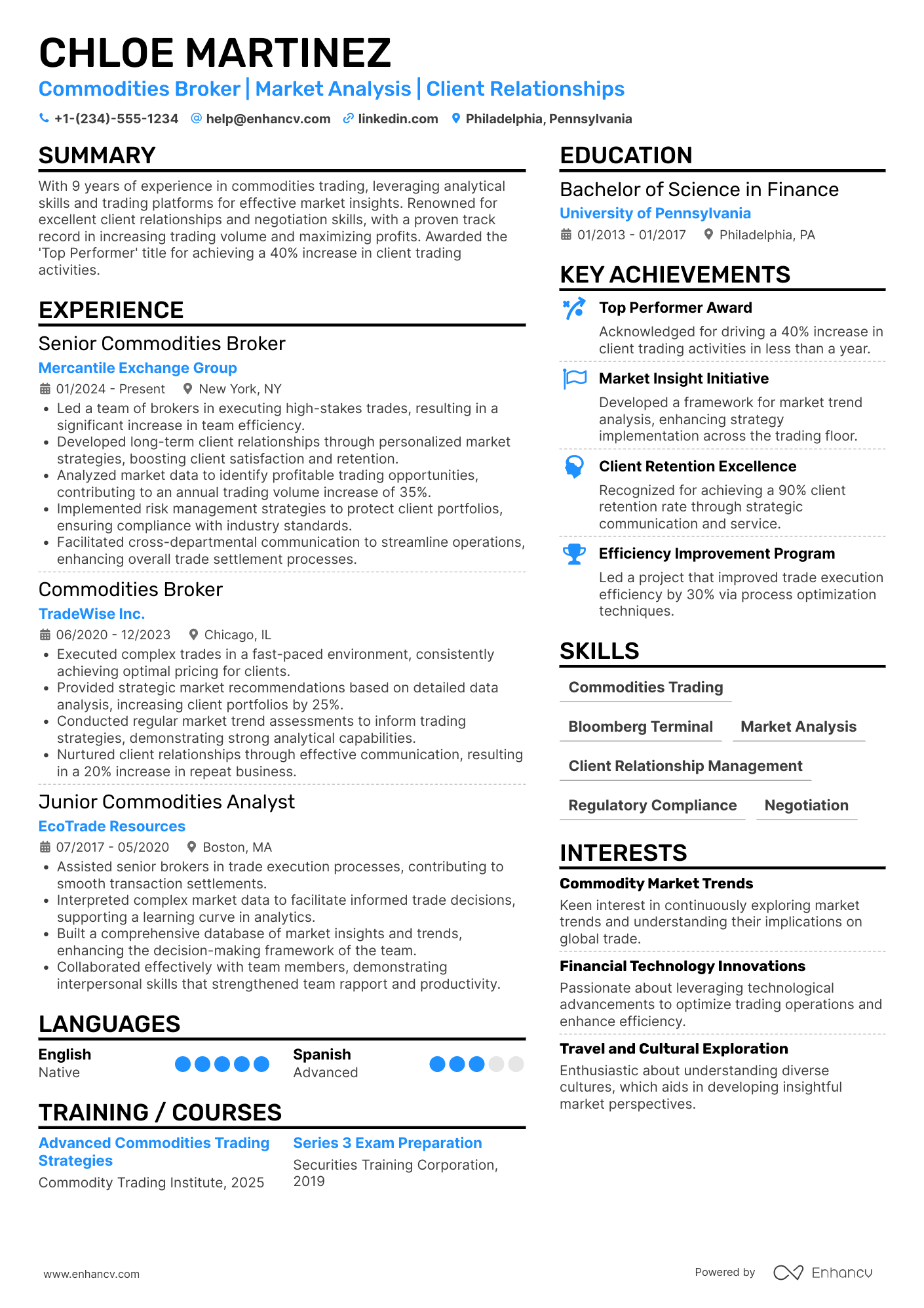
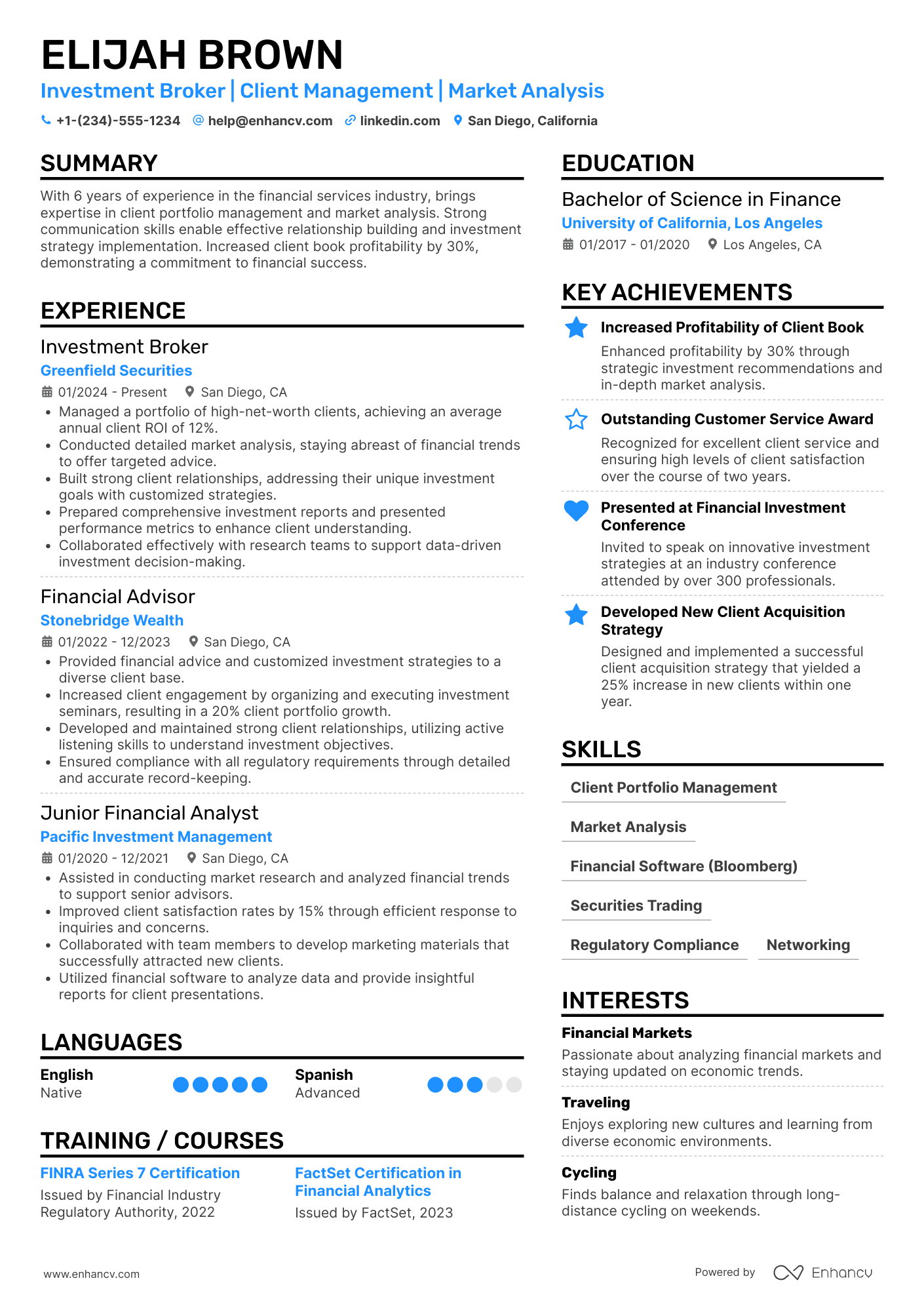
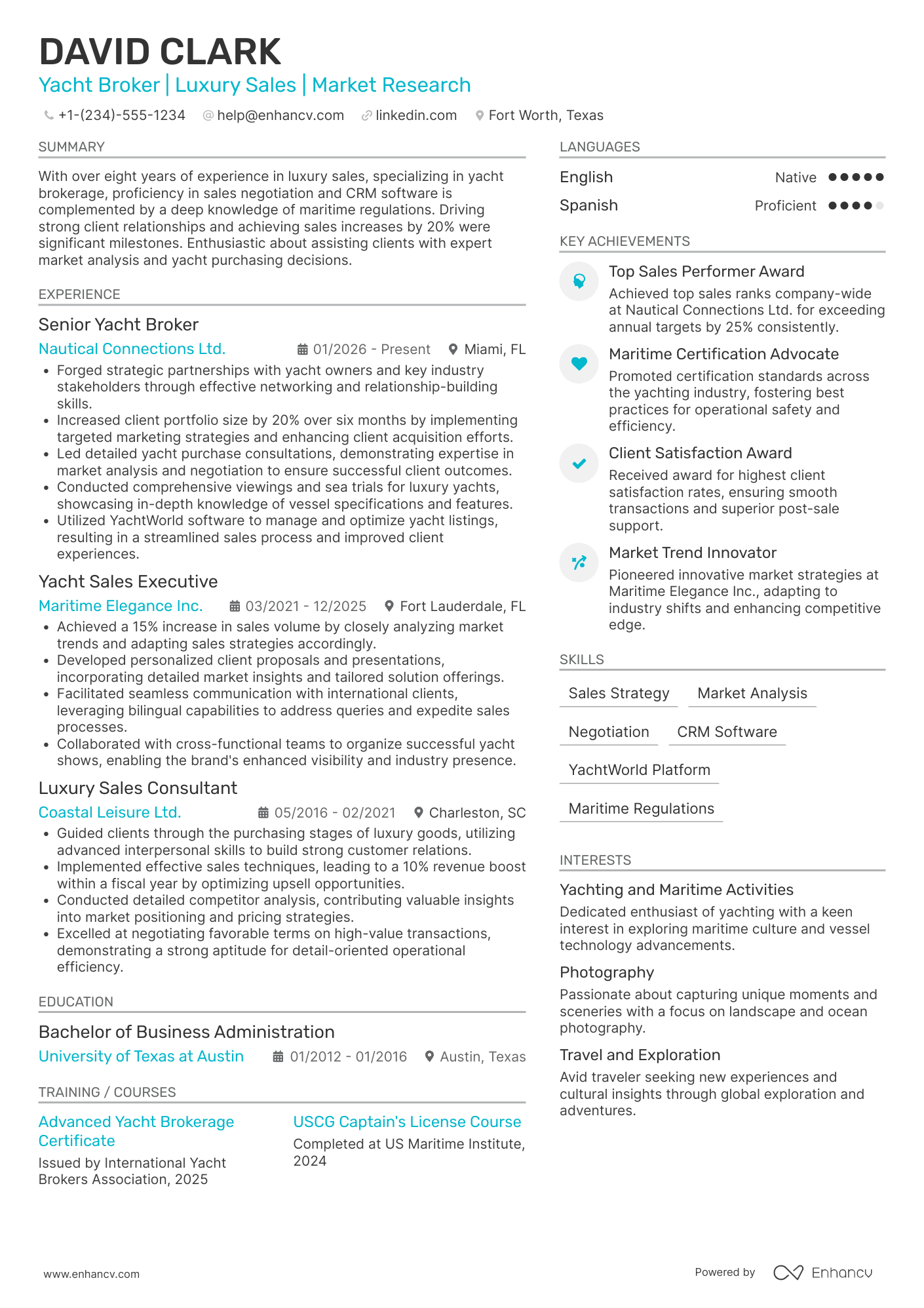
Most broker resume drafts fail because they list licenses, platforms, and duties but don't prove revenue impact or risk control. That leaves your broker resume invisible in ATS filters and easy to skip in fast recruiter scans.
A strong resume shows what you delivered and why it mattered. Knowing how to make your resume stand out starts with highlighting assets gathered, premium or commission growth, close rates, retention gains, compliance audit results, and reduced exposure or cycle time across a defined book.

Key takeaways
- Quantify deal volume, revenue, retention, and cycle time in every experience bullet.
- Use reverse-chronological format for established careers and hybrid format for career changers.
- Tailor each resume to the job posting's exact tools, terminology, and KPIs.
- Anchor every listed skill to a measurable outcome in your summary or experience section.
- Place certifications like Series 7 or CFA where they'll be scanned first for your level.
- Pair your resume with a cover letter when the role is competitive or needs context.
- Use Enhancv to turn routine broker tasks into sharp, metric-driven bullet points faster.
Job market snapshot for brokers
We analyzed 409 recent broker job ads across major US job boards. These numbers help you understand employer expectations, employment type trends, salary landscape at a glance.
What level of experience employers are looking for brokers
| Years of Experience | Percentage found in job ads |
|---|---|
| 1–2 years | 7.6% (31) |
| 3–4 years | 9.8% (40) |
| 5–6 years | 12.7% (52) |
| 7–8 years | 13.2% (54) |
| 9–10 years | 5.1% (21) |
| 10+ years | 6.1% (25) |
| Not specified | 49.4% (202) |
Broker ads by area of specialization (industry)
| Industry (Area) | Percentage found in job ads |
|---|---|
| Finance & Banking | 90.5% (370) |
| Healthcare | 3.9% (16) |
| Real Estate & Construction | 3.9% (16) |
Top companies hiring brokers
| Company | Percentage found in job ads |
|---|---|
| Aon Corporation | 13.4% (55) |
| Arthur J Gallagher & Co. | 12.5% (51) |
| Hub International | 12.2% (50) |
| Savills plc | 4.4% (18) |
| Ryan Specialty Group | 3.7% (15) |
| Willis Towers Watson | 3.4% (14) |
| Colliers International | 2.7% (11) |
| Exit Factor | 2.4% (10) |
Role overview stats
These tables show the most common responsibilities and employment types for broker roles. Use them to align your resume with what employers expect and to understand how the role is structured across the market.
Day-to-day activities and top responsibilities for a broker
| Responsibility | Percentage found in job ads |
|---|---|
| Microsoft office | 29.3% (120) |
| Negotiation | 13.9% (57) |
| Crm | 12.0% (49) |
| Excel | 11.7% (48) |
| Media liability | 10.5% (43) |
| Miscellaneous professional liability | 10.5% (43) |
| Network security | 10.5% (43) |
| Privacy liability | 10.5% (43) |
| Technical writing | 10.5% (43) |
| Technology errors & omissions | 10.5% (43) |
| Verbal presentations | 10.5% (43) |
| Insurance brokerage | 9.0% (37) |
Type of employment (remote vs on-site vs hybrid)
| Employment type | Percentage found in job ads |
|---|---|
| On-site | 62.6% (256) |
| Hybrid | 25.7% (105) |
| Remote | 11.7% (48) |
How to format a broker resume
Recruiters evaluating broker resumes prioritize evidence of deal volume, client portfolio growth, revenue generation, and market expertise. Choosing the right resume format ensures these performance signals surface quickly during both automated screening and the initial human scan.

I have significant experience in this role—which format should I use?
Use a reverse-chronological format to present your brokerage career in a clear, progression-driven timeline. Do:
- Lead each role entry with scope indicators: deal size, client tier, territory, and team oversight responsibilities.
- Highlight platform and domain fluency—CRM systems, MLS databases, trading platforms, regulatory frameworks, or asset classes relevant to your brokerage specialty.
- Quantify outcomes tied to revenue, portfolio growth, or market share in every position.
I'm junior or switching into this role—what format works best?
A hybrid format works best, placing a focused skills section above a concise work history to bridge experience gaps. Do:
- Position core brokerage competencies—negotiation, market analysis, client acquisition, compliance knowledge—at the top of the resume where recruiters and applicant tracking systems scan first.
- Include internships, licensing coursework, simulated trading projects, or transitional roles that demonstrate relevant exposure.
- Connect each listed skill or experience to a concrete action and a measurable or observable result.
Why not use a functional resume?
A functional format strips away the timeline context that recruiters need to verify deal history, client relationship tenure, and progressive responsibility in brokerage roles.
- Career changers with no brokerage history who hold transferable skills in sales, finance, or analytics and need to foreground competencies over unrelated job titles.
- Recent graduates or newly licensed brokers whose credentials and coursework outweigh their limited professional experience.
- Candidates with extended resume gaps who completed relevant certifications, independent consulting, or freelance deal work during time away from full-time employment.
With your format established, the next step is filling it with the right sections to give recruiters exactly what they're looking for.
What sections should go on a broker resume
Recruiters expect you to present a clear track record of client acquisition, deal execution, and revenue impact. Understanding which resume sections to include helps you organize that track record effectively.
Use this structure for maximum clarity:
- Header
- Summary
- Experience
- Skills
- Projects
- Education
- Certifications
- Optional sections: Awards, Leadership, Languages
Strong experience bullets should emphasize measurable results, deal volume and size, client outcomes, and your scope of responsibility.
Is your resume good enough?
Drop your resume here or choose a file. PDF & DOCX only. Max 2MB file size.
Now that you’ve chosen the resume elements that present your qualifications clearly, the next step is to write your broker experience section to support them with specific, relevant details.
How to write your broker resume experience
Your experience section is where you prove you can deliver results—not just describe responsibilities. Hiring managers reviewing broker resumes prioritize demonstrated impact, including deals closed, client portfolios managed, market strategies executed, and measurable outcomes achieved using industry-relevant tools and methods. Building a targeted resume ensures each entry speaks directly to the role you're pursuing.
Each entry should include:
- Job title
- Company and location (or remote)
- Dates of employment (month and year)
Three to five concise bullet points showing what you owned, how you executed, and what outcomes you delivered:
- Ownership scope: the client accounts, asset classes, market segments, transaction pipelines, or brokerage teams you were directly accountable for.
- Execution approach: the trading platforms, CRM systems, market analysis frameworks, compliance protocols, or negotiation methods you used to evaluate opportunities and close deals.
- Value improved: changes to portfolio performance, client retention, transaction speed, risk mitigation, regulatory compliance, or revenue generation tied to your brokerage work.
- Collaboration context: how you coordinated with underwriters, legal counsel, financial analysts, compliance officers, or institutional clients to structure and finalize transactions.
- Impact delivered: outcomes expressed through business growth, client satisfaction, deal volume, market expansion, or risk reduction rather than a list of daily activities.
Experience bullet formula
A broker experience example
✅ Right example - modern, quantified, specific.
Commercial Insurance Broker
HarborPoint Risk Advisors | Chicago, IL
2022–Present
Independent brokerage serving mid-market manufacturing, logistics, and construction clients across the Midwest.
- Won $1.8M in new annualized commission by building a targeted pipeline in HubSpot, qualifying leads with a structured risk intake, and presenting layered quotes from five-plus carriers per account.
- Reduced premium spend by 12% across a $9.6M book by running exposure analyses in Applied Epic, benchmarking carrier loss-cost trends, and negotiating manuscript endorsements with underwriters.
- Cut quote-to-bind cycle time by 28% by standardizing submission packages, automating renewal workflows in Applied Epic, and coordinating daily with account managers and carrier reps.
- Improved loss ratio from 54% to 46% for a key logistics client by partnering with a risk engineer to implement driver telematics, updating fleet schedules, and tightening claims triage with the third-party administrator.
- Increased cross-sell penetration from 1.4 to 2.1 policies per client by using Power BI to identify coverage gaps, aligning proposals with client finance stakeholders, and closing umbrella and cyber placements.
Now that you've seen how a strong experience section comes together, let's look at how to adjust yours to match the specific broker role you're targeting.
How to tailor your broker resume experience
Recruiters evaluate your broker resume through applicant tracking systems and manual review, scanning for alignment between your background and the job posting. Tailoring your resume to the job description ensures the right skills, tools, and achievements surface immediately.
Ways to tailor your broker experience:
- Mirror the exact financial platforms or CRM tools listed in the posting.
- Match terminology for transaction types like acquisitions or lease negotiations.
- Reflect specific compliance standards or regulatory frameworks the employer names.
- Quantify deal volume or portfolio size using the same KPIs referenced.
- Highlight relevant industry focus such as commercial residential or insurance brokerage.
- Incorporate client relationship management methods described in the job description.
- Emphasize risk assessment or market analysis techniques the role prioritizes.
- Align your collaboration language with their team structure or workflow model.
Tailoring means translating your real accomplishments into the language and priorities of each specific role, not forcing disconnected keywords into your experience.
Resume tailoring examples for broker
| Job description excerpt | Untailored | Tailored |
|---|---|---|
| "Manage a portfolio of commercial real estate transactions using CoStar and Argus Enterprise, targeting $50M+ annual deal volume across office and industrial asset classes." | Handled various real estate deals and worked with clients on property transactions. | Managed a $62M commercial real estate portfolio across office and industrial assets, leveraging CoStar for market analysis and Argus Enterprise for cash flow modeling to support acquisition and disposition decisions. |
| "Negotiate and structure insurance policies for mid-market clients ($10M–$100M revenue), specializing in excess and surplus lines placement through Lloyd's of London and domestic carriers." | Assisted with insurance policy placement and maintained relationships with carriers. | Negotiated and structured excess and surplus lines policies for 40+ mid-market clients with $10M–$100M in revenue, placing coverage through Lloyd's of London syndicates and three domestic carriers while reducing average premium costs by 14%. |
| "Source and execute equity and fixed-income trades for high-net-worth clients using Bloomberg Terminal and Charles River IMS, ensuring compliance with SEC and FINRA regulations." | Executed trades and helped clients with their investment portfolios. | Sourced and executed 1,200+ equity and fixed-income trades annually for high-net-worth clients via Bloomberg Terminal and Charles River IMS, maintaining full compliance with SEC and FINRA regulations and achieving a 97% same-day settlement rate. |
Once you’ve aligned your experience with the role’s priorities, quantify your broker achievements to show the measurable impact of that work.
How to quantify your broker achievements
Quantifying your achievements shows how you improved client outcomes and reduced risk. Focus on revenue generated, volume handled, cycle time, compliance accuracy, and retention tied to specific products, territories, and platforms.
Quantifying examples for broker
| Metric | Example |
|---|---|
| Revenue generated | "Generated $1.8M in annualized premium across 145 commercial accounts by cross-selling umbrella coverage in Applied Epic and Salesforce." |
| Cycle time | "Cut quote-to-bind time from five days to two by standardizing submissions and using DocuSign templates for required disclosures." |
| Compliance accuracy | "Maintained 99.6% documentation accuracy across 320 policy files, passing three internal audits with zero high-severity findings." |
| Client retention | "Improved renewal retention from 88% to 93% for a 110-account book by running quarterly coverage reviews and proactive claims check-ins." |
| Risk reduction | "Reduced E&O exposure by 40% by implementing a two-step coverage confirmation checklist and tracking exceptions in a shared compliance log." |
Turn your everyday tasks into measurable, recruiter-ready resume bullets in seconds with Enhancv's Bullet Point Generator.
Once you've crafted strong bullet points for your experience section, you'll want to apply that same precision to presenting your hard and soft skills throughout your broker resume.
How to list your hard and soft skills on a broker resume
Your skills section shows you can source clients, structure deals, and manage risk, and recruiters and an ATS (applicant tracking system) scan this section to match keywords fast—aim for a balanced mix of role-specific hard skills and execution-focused soft skills. broker roles require a blend of:
- Product strategy and discovery skills.
- Data, analytics, and experimentation skills.
- Delivery, execution, and go-to-market discipline.
- Soft skills.
Your skills section should be:
- Scannable (bullet-style grouping).
- Relevant to the job post.
- Backed by proof in experience bullets.
- Updated with current tools.
Place your skills section:
- Above experience if you're junior or switching careers.
- Below experience if you're mid/senior with strong achievements.

Hard skills
- Client onboarding, KYC
- Anti-money laundering compliance
- Suitability and best execution
- Order types and routing
- Trade lifecycle management
- Portfolio rebalancing workflows
- Margin and options mechanics
- Credit analysis, underwriting
- Market and liquidity analysis
- Bloomberg Terminal, Refinitiv Eikon
- Customer relationship management systems
- Excel modeling, SQL reporting
Soft skills
- Consultative discovery questioning
- Clear risk and fee explanations
- Objection handling and negotiation
- Calm execution under volatility
- Prioritizing client needs by value
- Cross-team coordination with compliance
- Proactive follow-ups and pipeline hygiene
- Tight documentation and audit readiness
- Fast, informed decision-making
- Managing sensitive client conversations
- Ownership of client outcomes
- Relationship building with stakeholders
How to show your broker skills in context
Skills shouldn't live only in a dedicated skills list. Explore our resume skills resource for more ways to present your capabilities effectively.
They should be demonstrated in:
- Your summary (high-level professional identity)
- Your experience (proof through outcomes)
Here's how that looks in practice.
Summary example
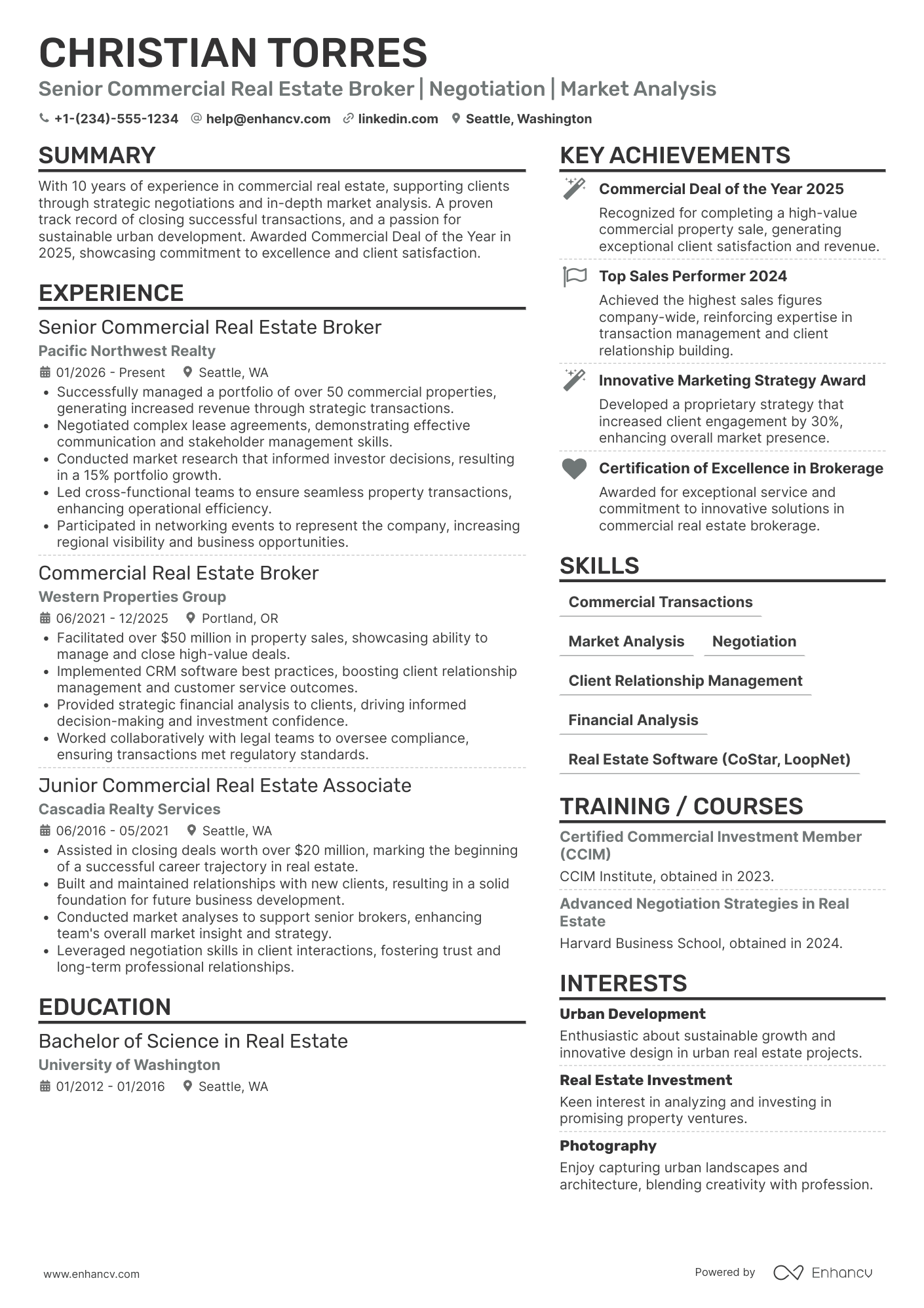
Senior commercial real estate broker with 12 years negotiating complex lease and sale transactions. Skilled in market analysis, Argus Enterprise, and client advisory. Closed $180M in deals last year while maintaining a 94% client retention rate.
- Signals senior-level experience immediately
- Names role-relevant tools and methods
- Leads with a concrete revenue metric
- Highlights client relationship soft skills
Experience example
Senior Commercial Broker
Caldwell & Associates Realty | Chicago, IL
March 2018–Present
- Negotiated 60+ lease agreements annually using comparative market analysis, generating $42M in cumulative client savings over five years.
- Partnered with legal and finance teams to streamline due diligence workflows, reducing average closing timelines by 18%.
- Leveraged CoStar and Argus Enterprise to build investment models that helped clients achieve a 12% average return on acquisitions.
- Every bullet includes measurable proof.
- Skills appear naturally within real outcomes.
Once you’ve tied your broker capabilities to measurable outcomes and real scenarios, the next step is applying that same approach to build a broker resume with no experience.
How do I write a broker resume with no experience
Even without full-time experience, you can demonstrate readiness through: Our guide on writing a resume without work experience covers additional strategies for building a compelling application.
- Series Seven exam prep coursework
- Mock trade tickets and order logs
- Personal portfolio with documented thesis
- Finance internship in operations support
- Client intake role in banking
- University investment club analyst projects
- Market research reports with citations
Focus on:
- Licensing progress and exam dates
- Trade workflow knowledge and compliance
- Quantified results from finance projects
- Tools: Bloomberg Terminal, Excel
Resume format tip for entry-level broker
Use a combination resume format because it highlights licensing, tools, and projects before limited work history. Do:
- Put licensing status at the top.
- Add a "Broker Projects" section.
- Quantify results with dollars, percentages, or counts.
- List tools, platforms, and order types.
- Mirror the job posting keywords.
- Built a paper-trading portfolio in Excel, logged one hundred trades with limit orders and stop-loss rules, and improved risk-adjusted return by twelve percent over eight weeks.
Even without direct experience, your educational background can serve as a strong foundation for your broker resume, so presenting it effectively is essential.
How to list your education on a broker resume
Your education section helps hiring teams confirm you have the foundational knowledge brokers need. It validates your understanding of finance, markets, and regulatory principles.
Include:
- Degree name
- Institution
- Location
- Graduation year
- Relevant coursework (for juniors or entry-level candidates)
- Honors & GPA (if 3.5 or higher)
Skip month and day details—list the graduation year only.
Here's a strong education entry tailored for a broker resume.
Example education entry
Bachelor of Science in Finance
University of Michigan, Ann Arbor, MI
Graduated 2021
GPA: 3.7/4.0
- Relevant Coursework: Securities Analysis, Portfolio Management, Financial Derivatives, Real Estate Economics
- Honors: Dean's List (six semesters), Beta Gamma Sigma Honor Society
How to list your certifications on a broker resume
Certifications on your resume show a broker's commitment to learning, proficiency with key tools, and up-to-date industry knowledge that supports client trust and compliance.
Include:
- Certificate name
- Issuing organization
- Year
- Optional: credential ID or URL
- Place certifications below education when your degree is recent and more relevant than older credentials.
- Place certifications above education when they are recent, role-specific, or required for the broker roles you target.
Best certifications for your broker resume
- FINRA Series 7
- FINRA Series 63
- FINRA Series 66
- Chartered Financial Analyst (CFA)
- Certified Financial Planner (CFP)
- Financial Risk Manager (FRM)
- Chartered Alternative Investment Analyst (CAIA)
Once you’ve positioned your credentials where hiring managers can quickly confirm them, shift to your broker resume summary to frame those qualifications in a clear value statement.
How to write your broker resume summary
Your resume summary is the first thing a recruiter reads. A strong opening instantly signals you're qualified and worth interviewing for a broker role. Keep it to three to four lines, with:
- Your title and total years of brokerage experience.
- The domain you specialize in, such as real estate, insurance, or financial securities.
- Core skills like market analysis, client acquisition, negotiation, or CRM platforms.
- One or two quantified achievements, such as revenue generated or deals closed.
- Soft skills tied to real outcomes, like relationship building that improved client retention.

PRO TIP
At the entry or mid-level, emphasize specific skills, relevant licenses, and early wins that prove your ability to deliver. Highlight the types of transactions you've handled and tools you've used daily. Avoid vague phrases like "passionate self-starter" or "motivated team player." Every word should point to a concrete skill or measurable result.
Example summary for a broker
Licensed real estate broker with four years of experience closing residential transactions. Generated $12M in sales volume annually using MLS and Salesforce. Known for client relationship management that drove 85% repeat business.
Optimize your resume summary and objective for ATS
Drop your resume here or choose a file.
PDF & DOCX only. Max 2MB file size.
Now that your summary captures the value you bring, make sure the header above it presents your contact details and professional identity just as effectively.
What to include in a broker resume header
A resume header is the top section with your key details, and it matters for a broker because it boosts visibility, builds credibility, and speeds recruiter screening.
Essential resume header elements
- Full name
- Tailored job title and headline
- Location
- Phone number
- Professional email
- GitHub link
- Portfolio link
A LinkedIn link helps recruiters verify your experience quickly and supports screening.
Do not include photos on a broker resume unless the role is explicitly front-facing or appearance-dependent.
Keep your broker header on one or two lines, match the job posting's wording, and use links that open to updated, public profiles.
Example
Broker resume header
Jordan Blake
Commercial Real Estate Broker | Tenant Representation & Lease Negotiation
Austin, TX
(512) 555-01XX your.name@enhancv.com github.com/yourname yourwebsite.com linkedin.com/in/yourname
Once your contact details and key identifiers are in place at the top of your resume, you can strengthen the rest of your application with additional sections that support your broker qualifications.
Additional sections for broker resumes
When your core qualifications match other candidates, additional sections can set you apart by showcasing unique strengths and relevant expertise. For example, listing language skills on your resume can be a differentiator when working with diverse client bases.
- Languages
- Professional affiliations and memberships
- Licenses and certifications
- Publications and market commentary
- Awards and sales achievements
- Volunteer experience
- Hobbies and interests
Once you've strengthened your resume with relevant additional sections, it's worth pairing it with a cover letter to maximize your impact.
Do broker resumes need a cover letter
A cover letter isn't required for a broker, but it helps when roles are competitive or hiring managers expect one. If you're unsure where to start, learning what a cover letter is and how it complements your resume can give you a clear advantage. It can make a difference when your resume needs context, or when you want to show clear fit fast.
Use a cover letter to add details your broker resume can't show at a glance:
- Explain role and team fit by matching your book of business, territory, or client segment to the broker role's priorities.
- Highlight one or two relevant outcomes, like premium growth, retention gains, or faster quote-to-bind cycles, with clear numbers.
- Show you understand the product, users, and business context, including carrier appetite, risk profile, and how clients make buying decisions.
- Address career transitions or non-obvious experience by connecting prior work to broker skills, like negotiation, compliance, or pipeline management.
Drop your resume here or choose a file.
PDF & DOCX only. Max 2MB file size.
Whether you include a cover letter or not, AI tools can help you refine your broker resume faster and tailor it to the role.
Using AI to improve your broker resume
AI can sharpen your resume's clarity, structure, and impact. It helps tighten language and highlight measurable results. But overuse strips authenticity. Once your content reads clearly and aligns with your target role, step away from AI. For practical prompts to get started, see our guide on ChatGPT resume writing.
Here are 10 practical prompts to strengthen specific sections of your broker resume:
Strengthen your summary
Quantify deal results
Tighten bullet points
Align with postings
Clarify license details
Refine client achievements
Improve skills relevance
Showcase market expertise
Highlight education value
Eliminate filler language
Conclusion
A strong broker resume proves impact with measurable outcomes, highlights role-specific skills, and stays easy to scan. Use a clear structure, tight bullet points, and consistent formatting to keep your value obvious.
Hiring teams want brokers who can deliver results now and adapt fast. When your resume shows performance, core skills, and a clean layout, you look ready for today’s market and what comes next.
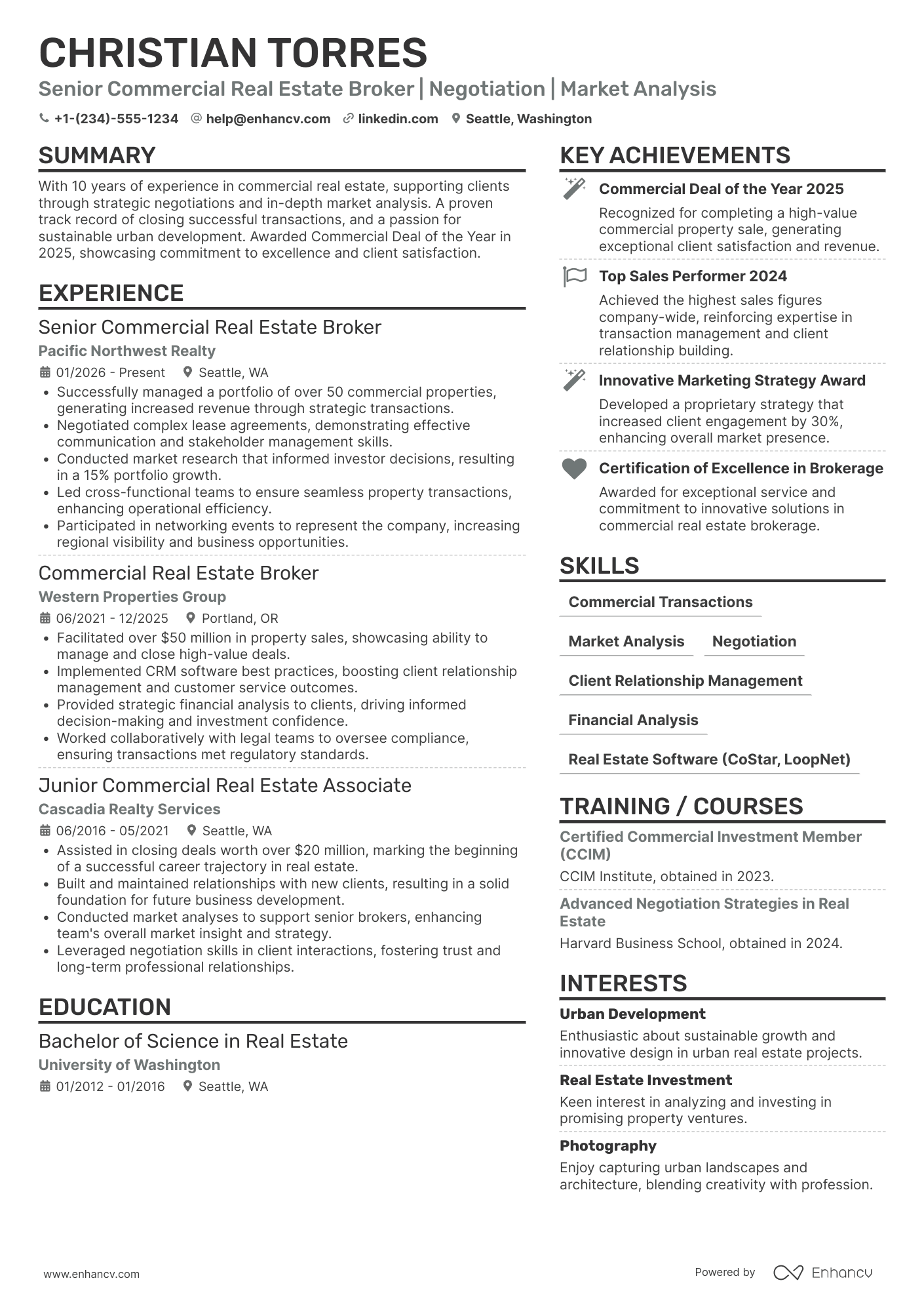
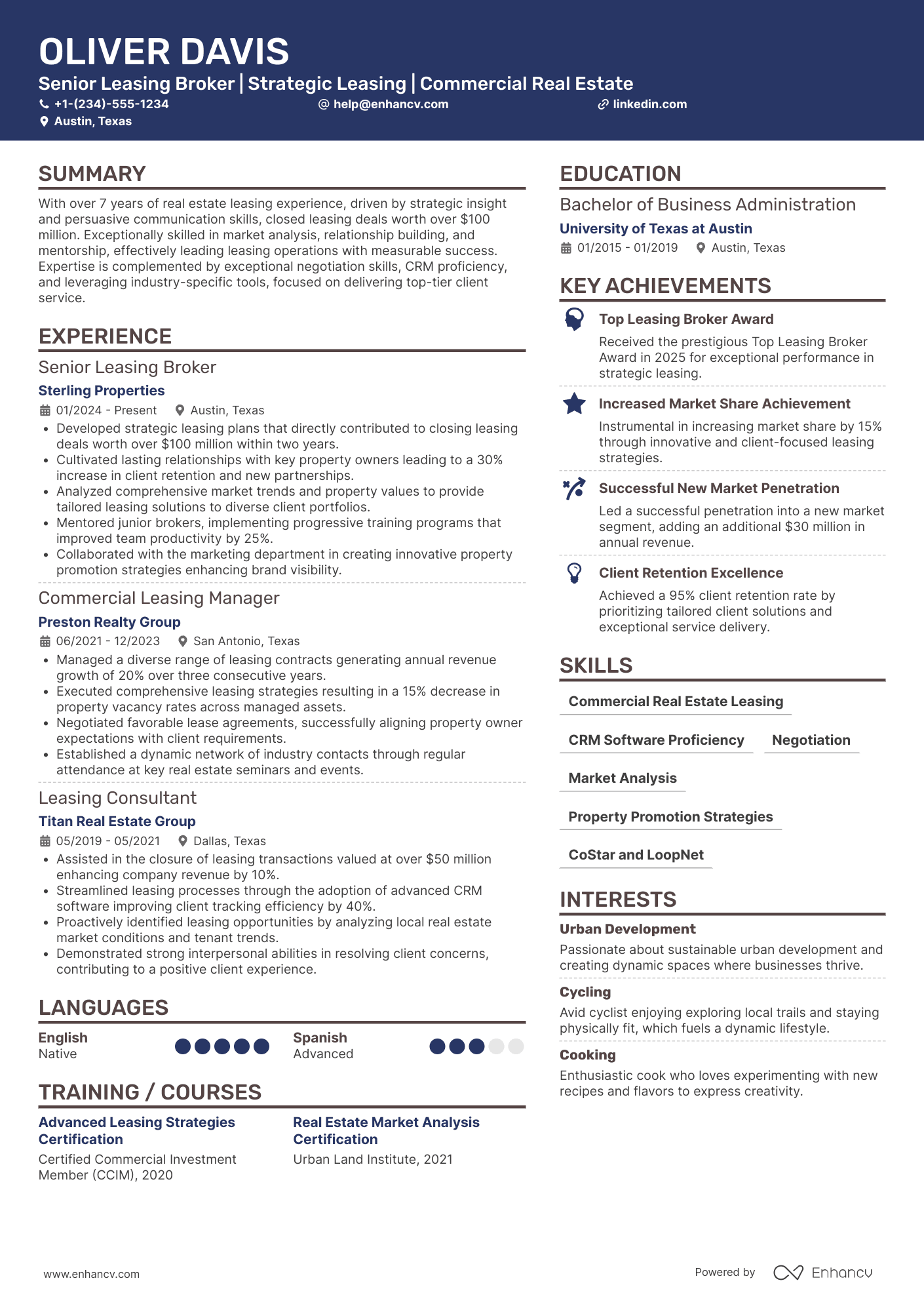
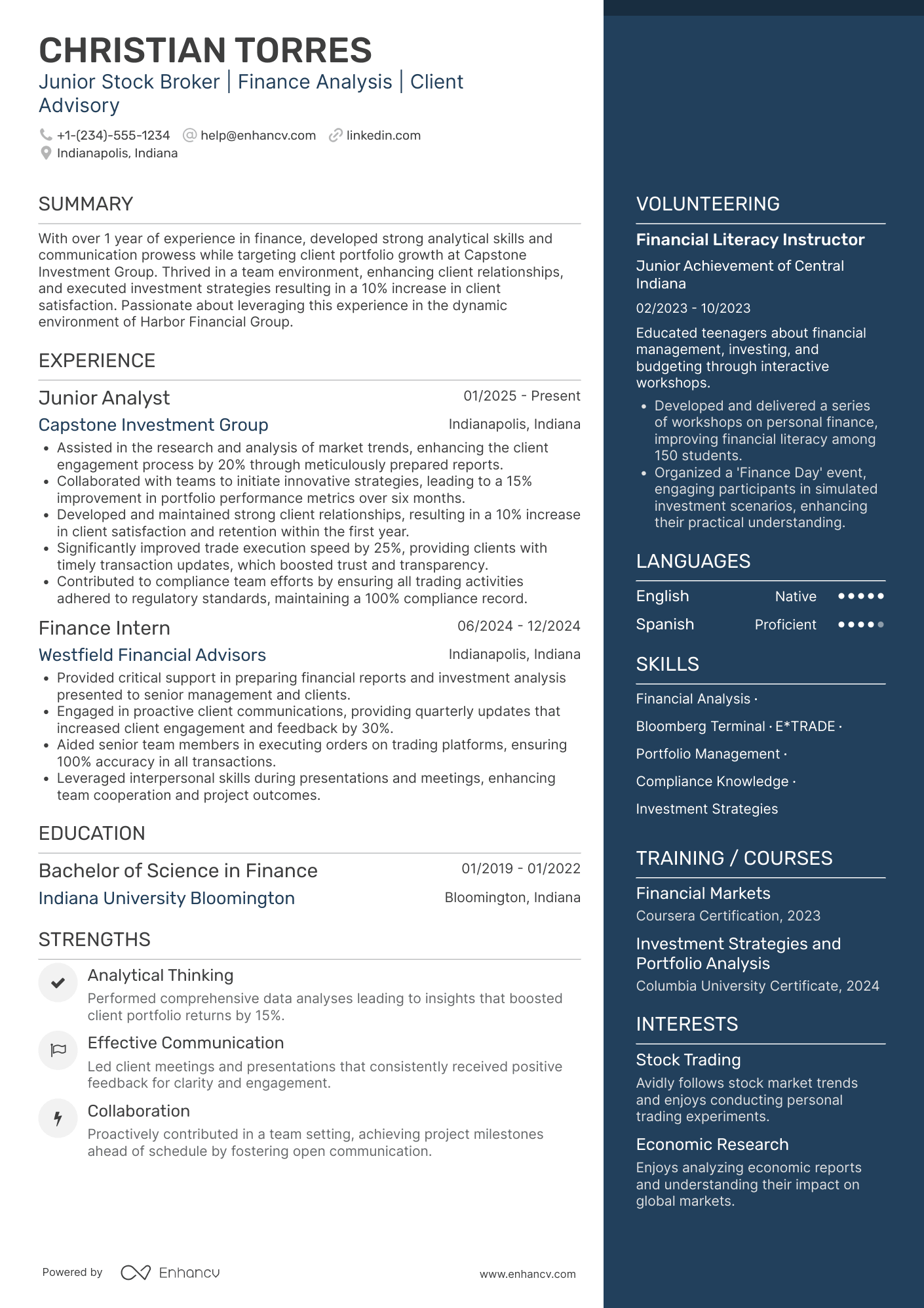
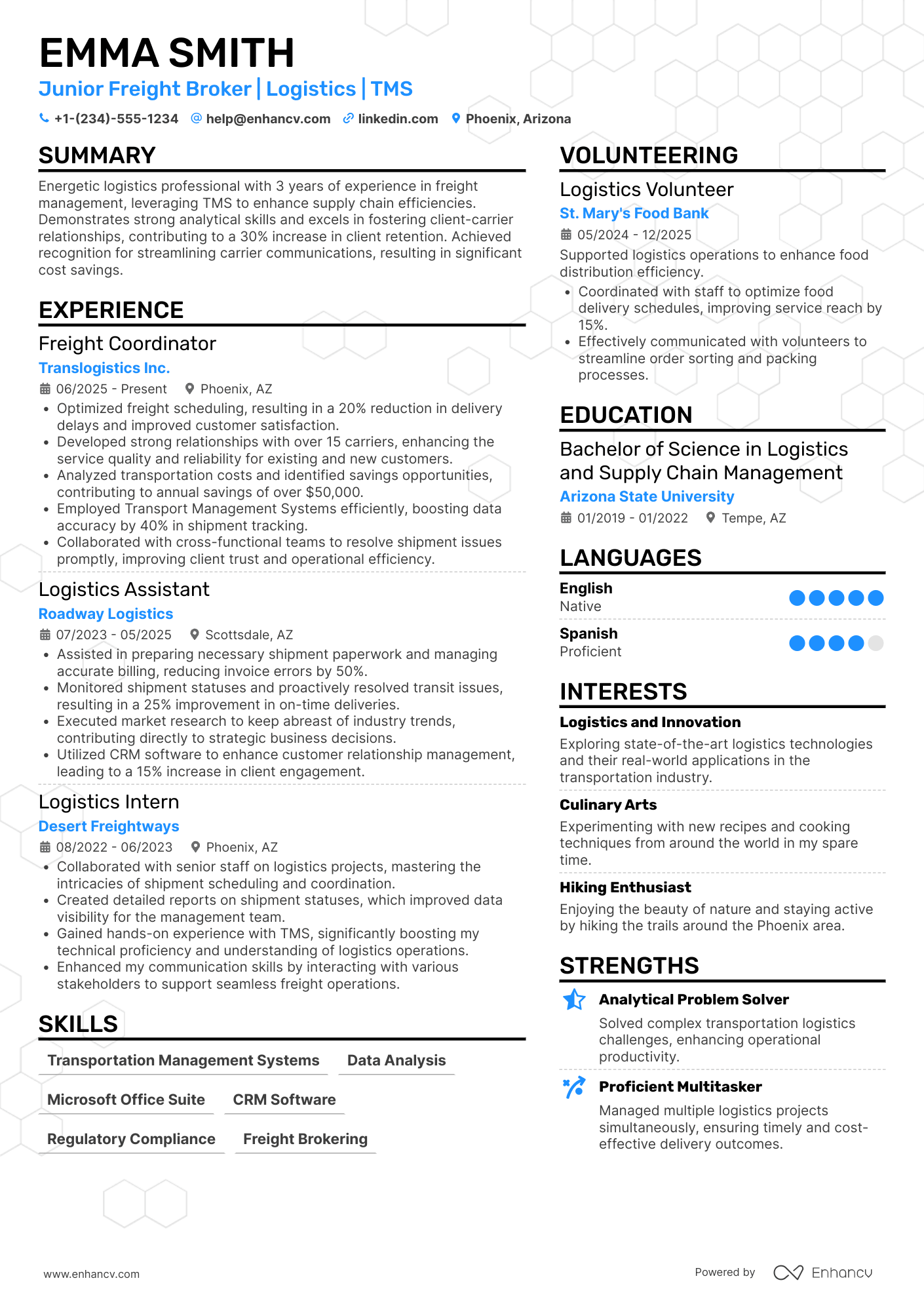
Broker resume examples
By Experience
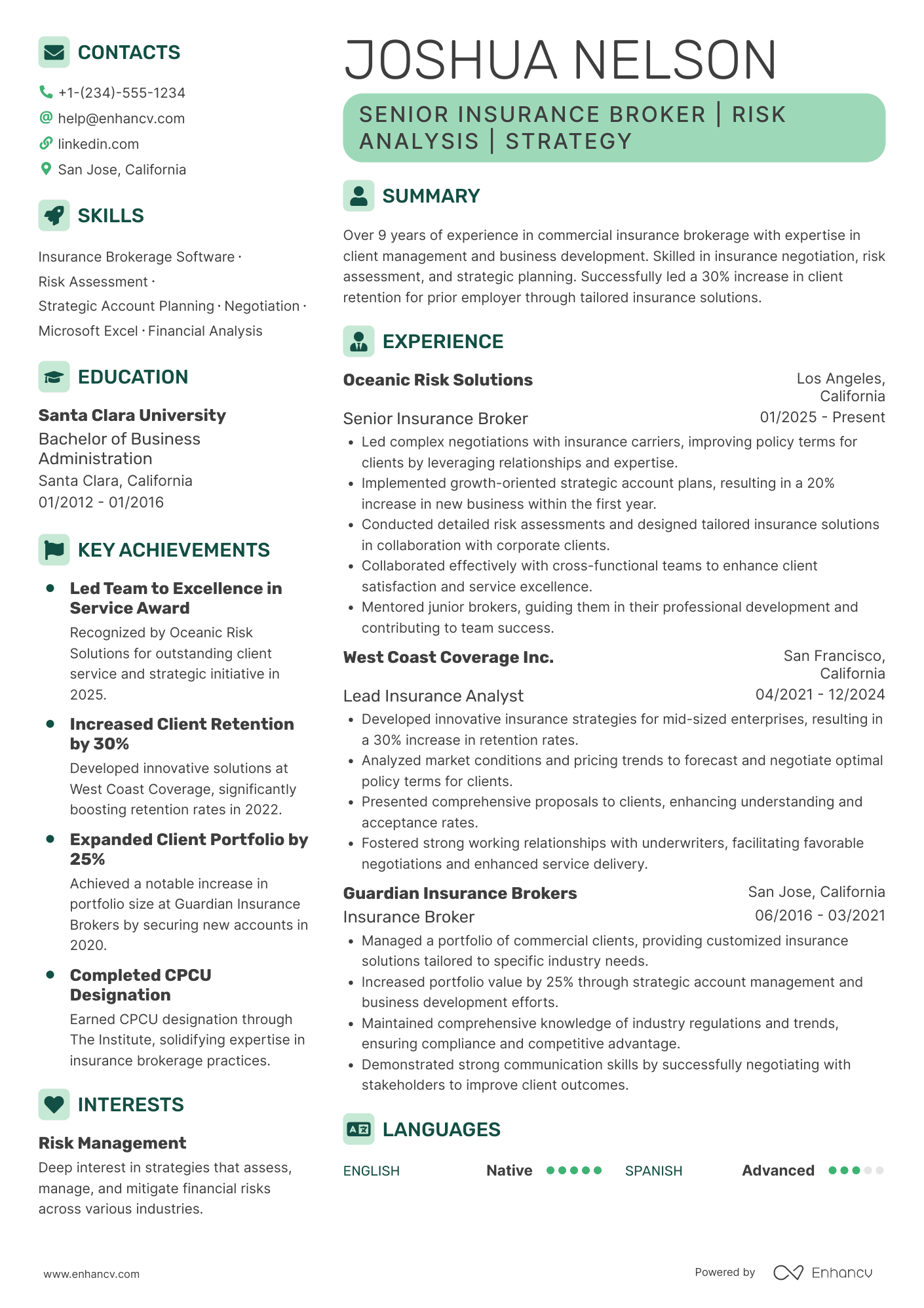
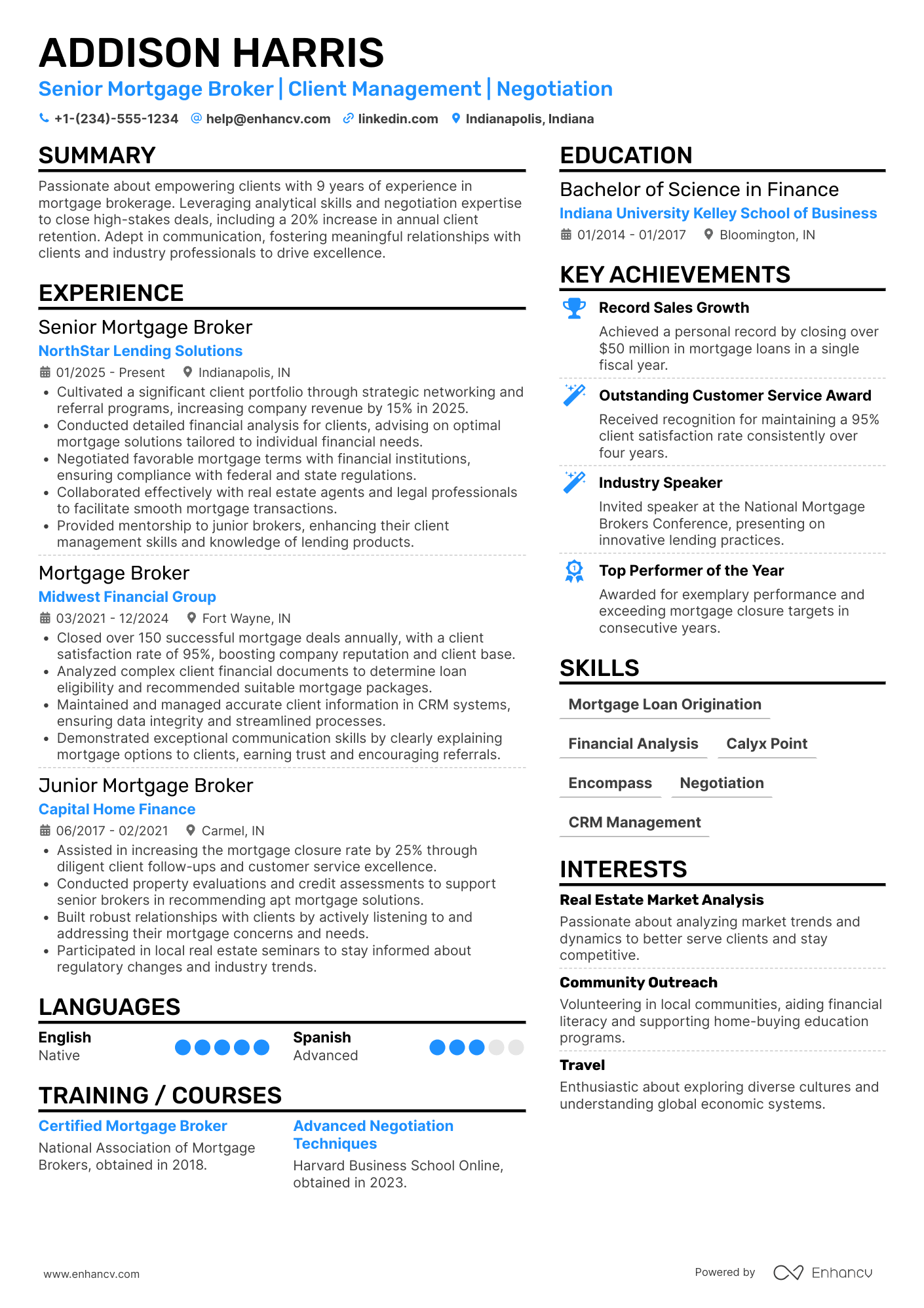
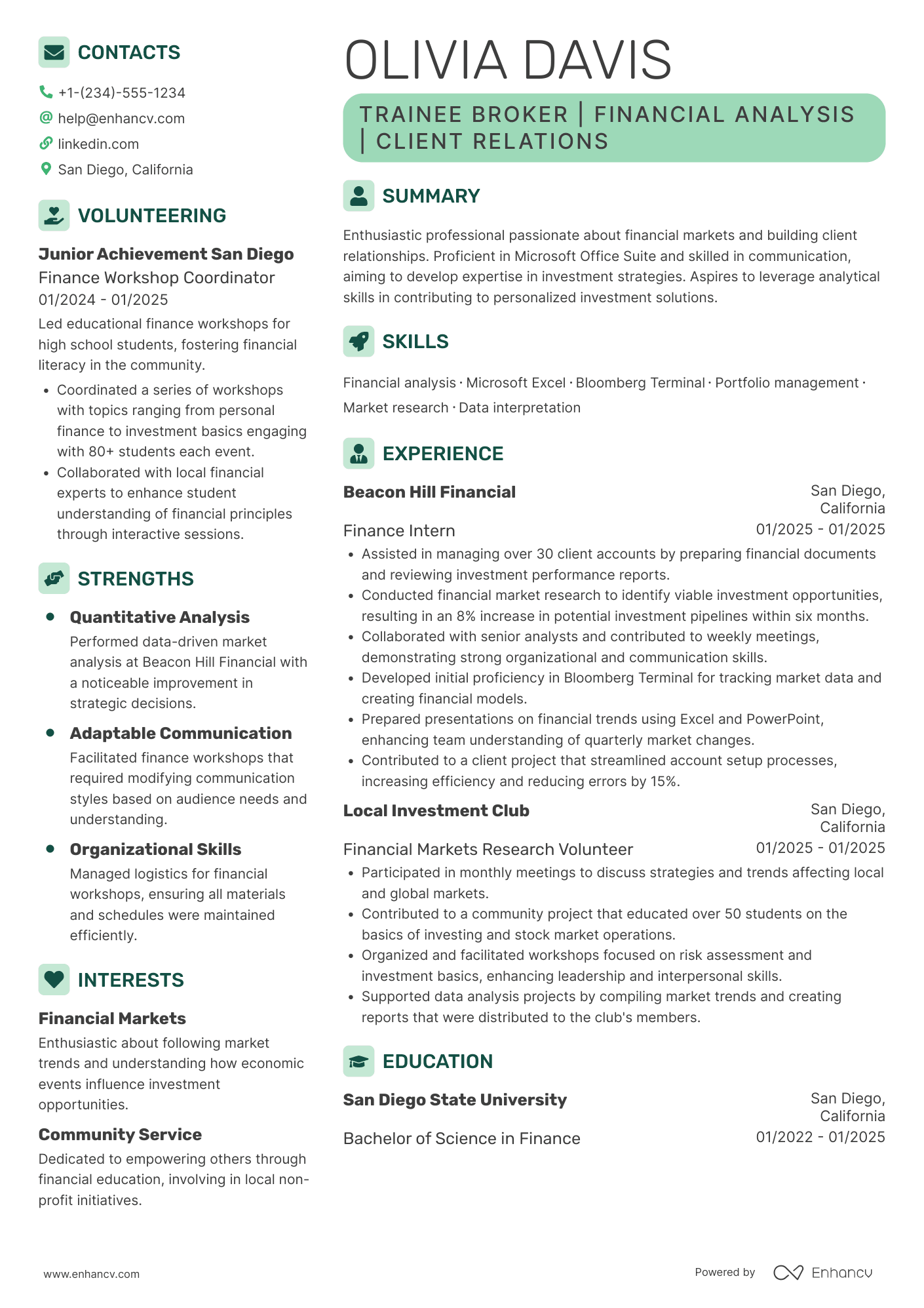
By Role