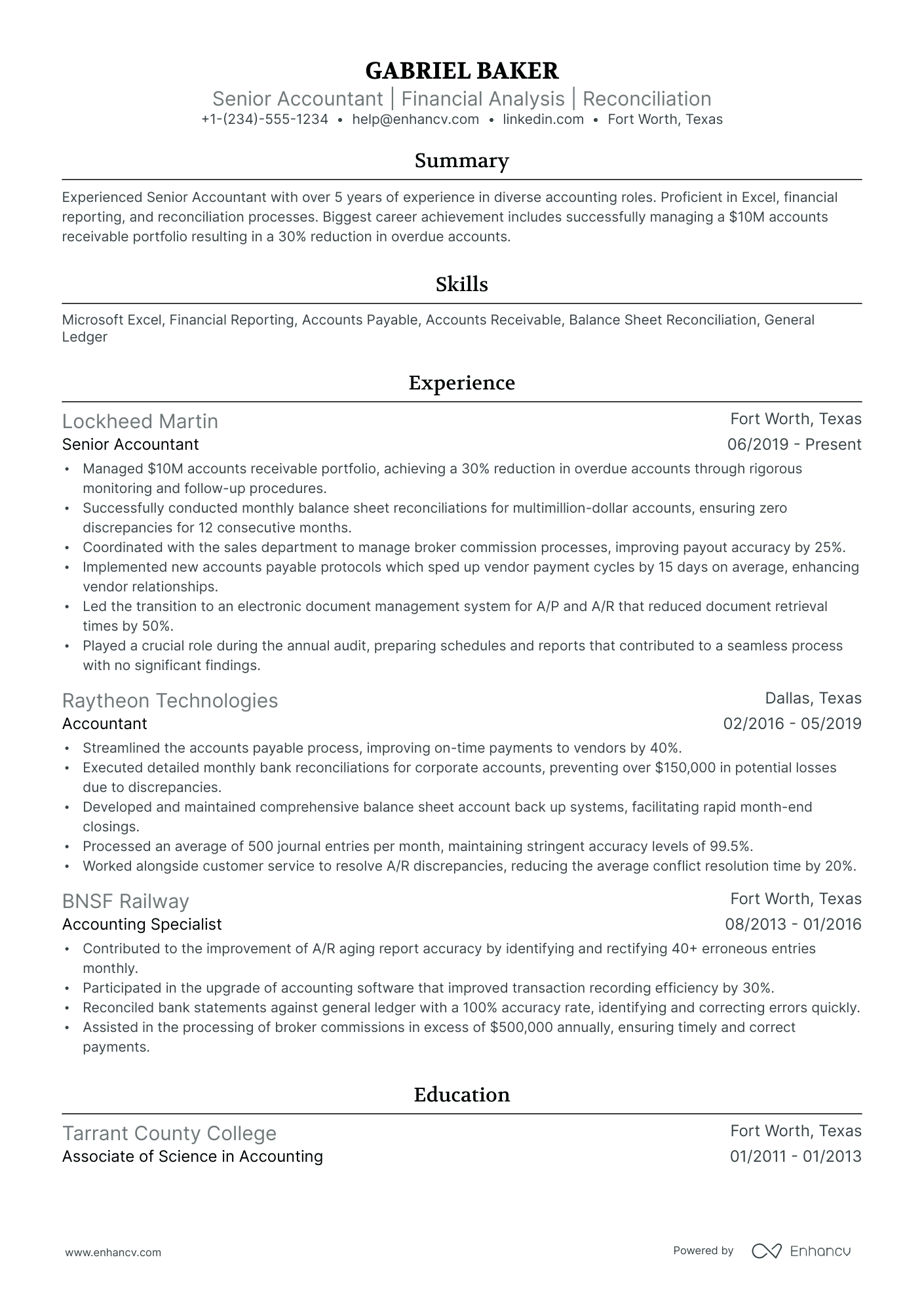
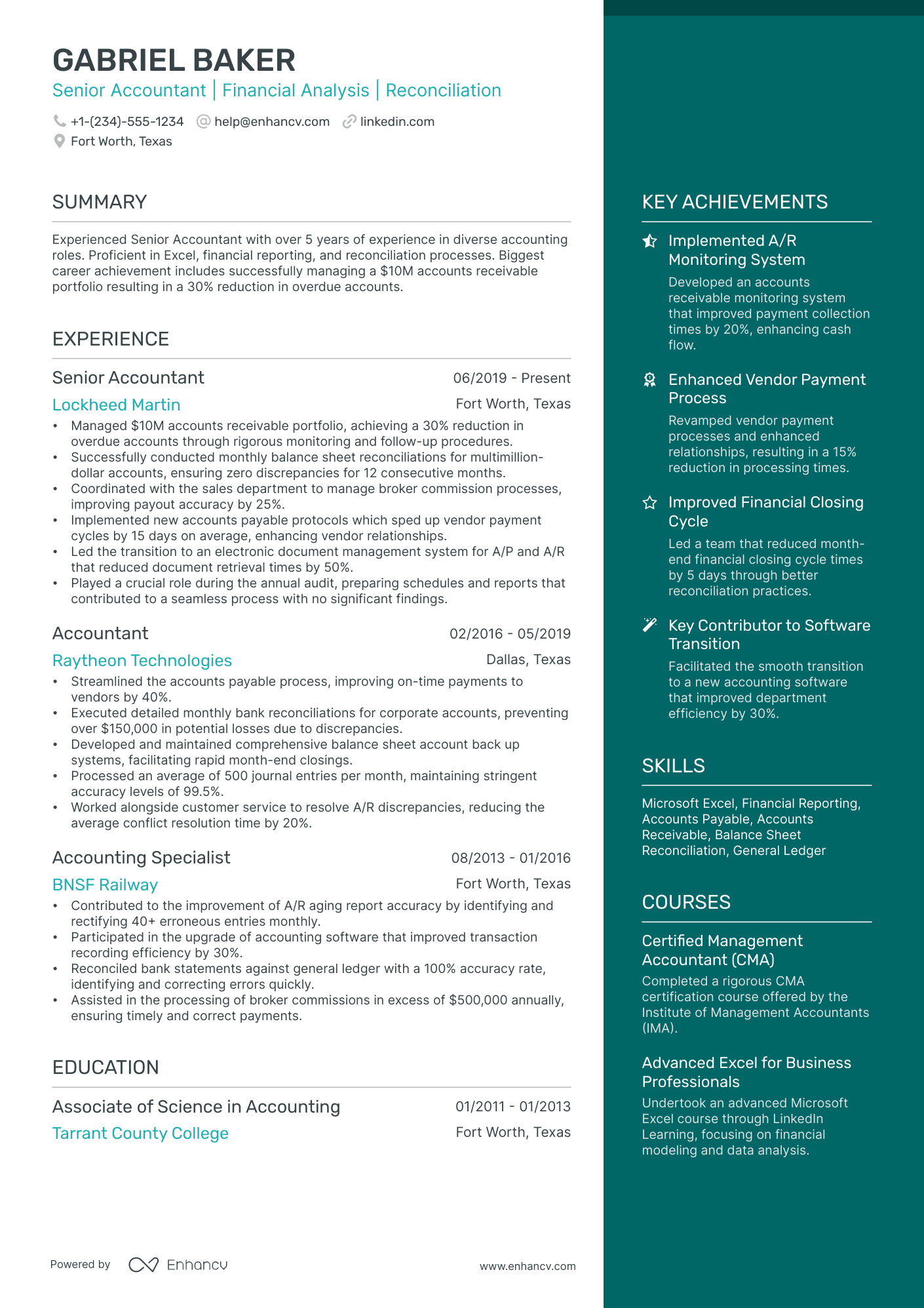
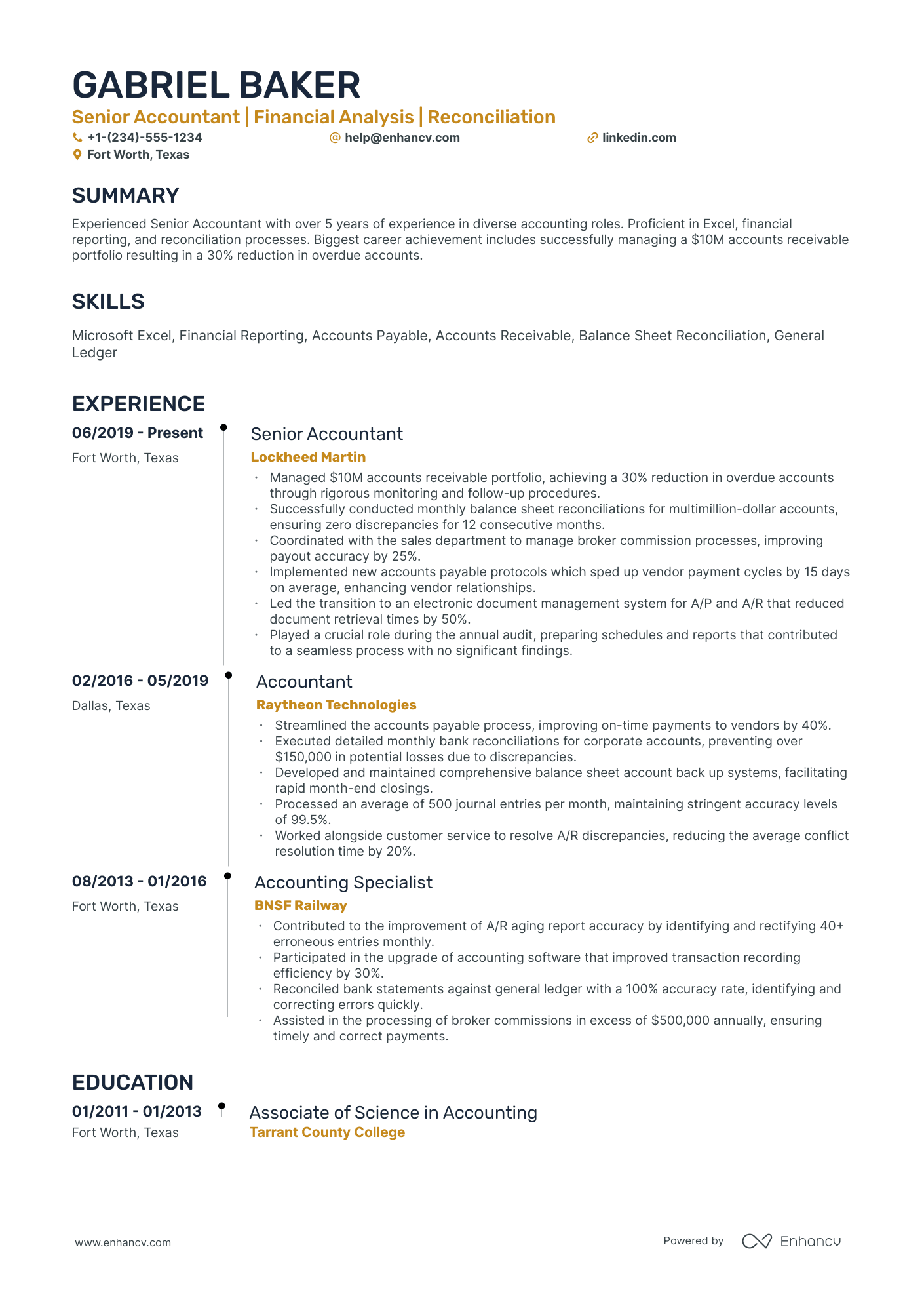
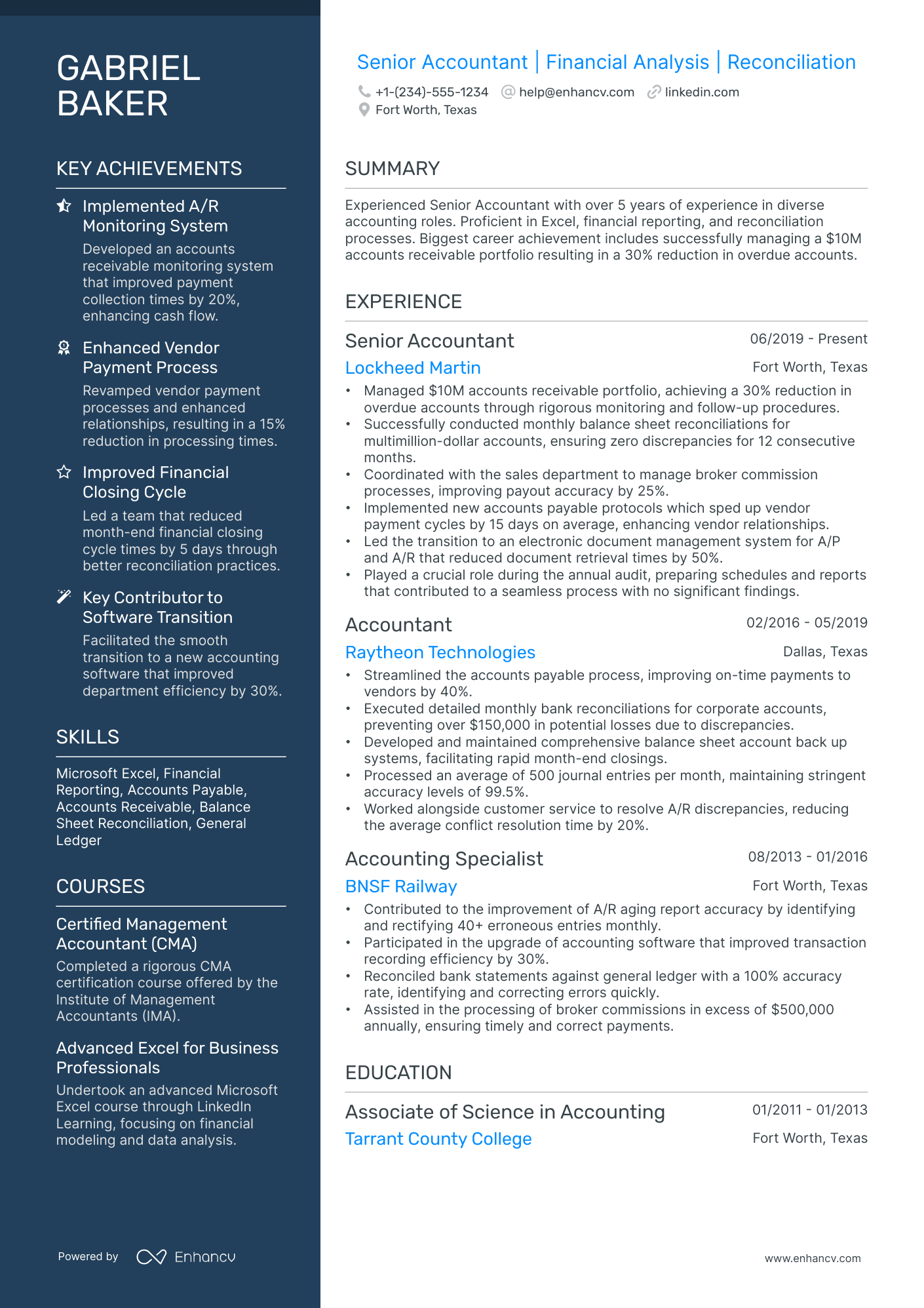
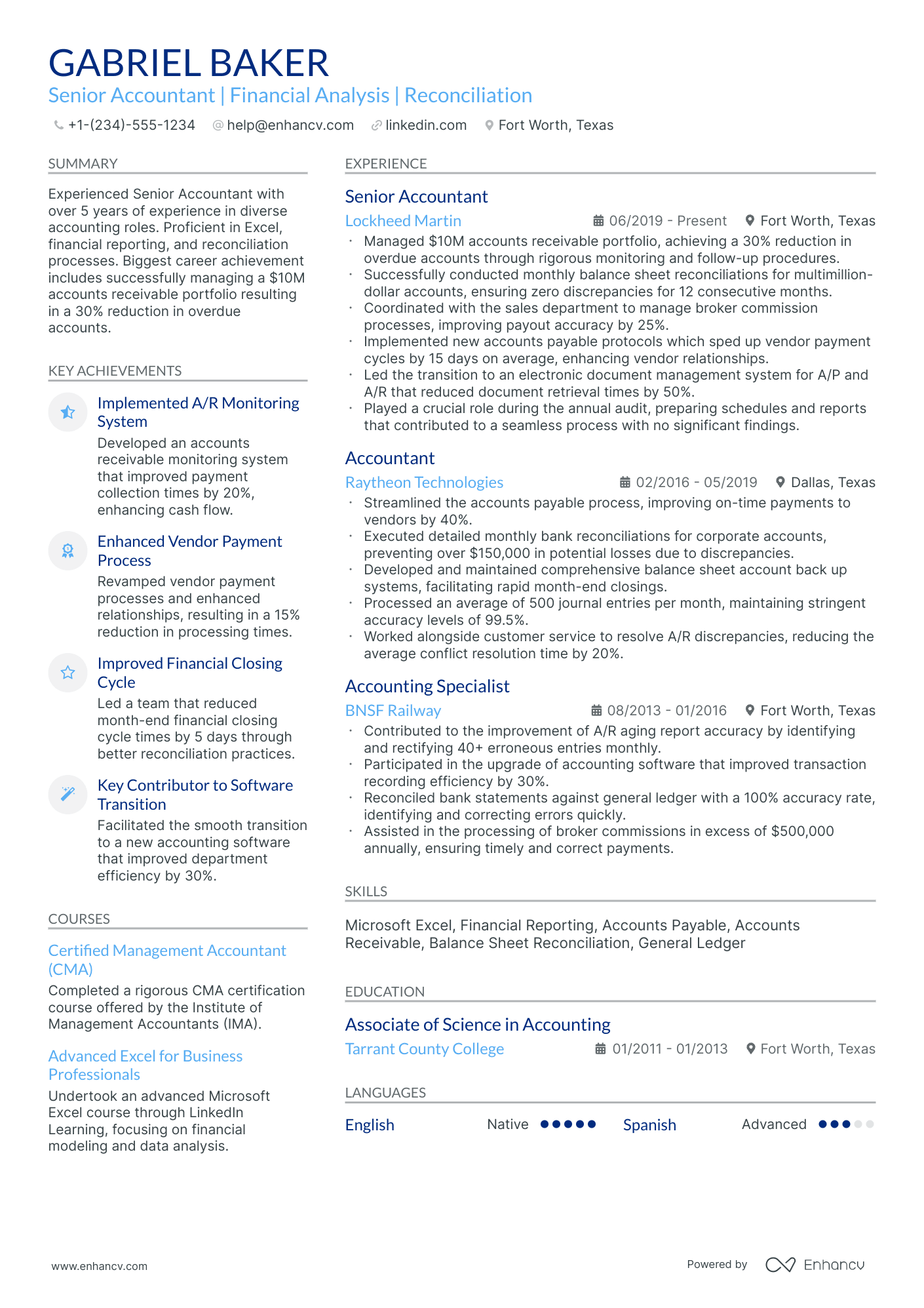
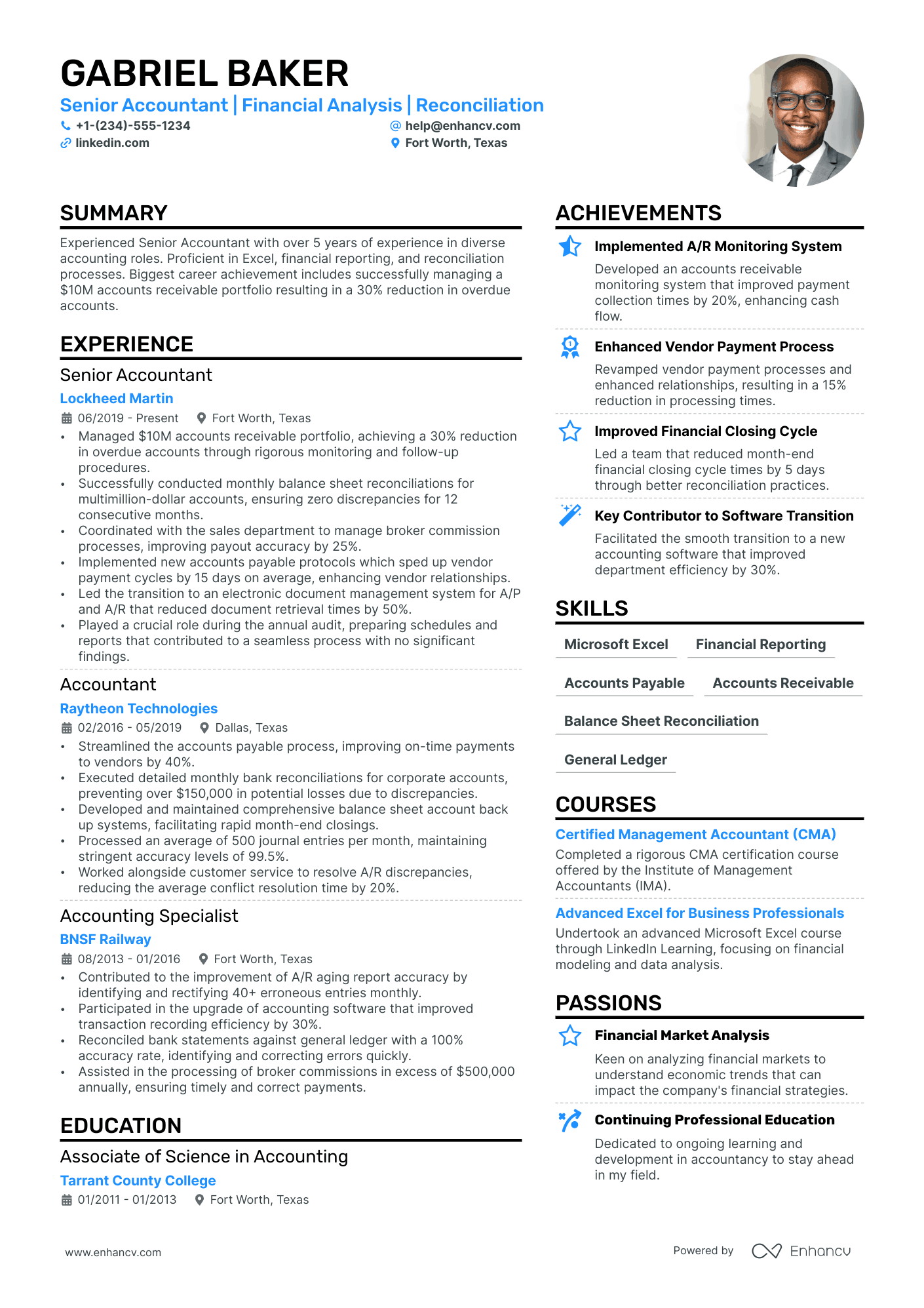
Most financial assistant resume submissions fail because they read like task lists and bury the numbers that prove accuracy and impact. That matters when an applicant tracking system filters keywords and recruiters scan fast in a crowded field.
A strong resume shows what you improved, not just what you used. Knowing how to make your resume stand out means highlighting month-end close support that cut cycle time, reconciliations that reduced variances, reports that improved cash visibility, invoice throughput, error-rate drops, audit-ready documentation, and stakeholders supported.

Key takeaways
- Quantify every experience bullet with metrics like accuracy rates, cycle times, or cost savings.
- Tailor resume language to mirror each job posting's exact tools, terms, and priorities.
- Lead with a reverse-chronological format unless you're junior or switching careers.
- Place skills above experience for entry-level resumes, below it for mid-level and senior ones.
- Anchor every listed skill to a specific outcome in your summary or experience section.
- Use Enhancv's Bullet Point Generator to turn vague duties into measurable, recruiter-ready statements.
- Stop using AI once your resume accurately reflects real experience without inflated claims.
How to format a financial assistant resume
Recruiters reviewing financial assistant resumes prioritize accuracy-oriented skills, familiarity with accounting software, and a clear track record of supporting financial operations. A clean, well-structured resume format ensures these signals surface quickly during both human review and applicant tracking system (ATS) scans.

I have significant experience in this role—which format should I use?
Use a reverse-chronological format to put your strongest and most recent financial support experience front and center. Do:
- Lead with your most recent role and clearly define the scope of your responsibilities, including the teams, departments, or accounts you supported.
- Highlight proficiency in role-specific tools such as QuickBooks, SAP, Excel (pivot tables, VLOOKUP), or enterprise resource planning (ERP) systems.
- Quantify outcomes tied to efficiency, accuracy, or cost savings to demonstrate measurable business impact.
I'm junior or switching into this role—what format works best?
A hybrid format works best because it lets you lead with relevant financial skills while still showing a concise work history. Do:
- Place a skills section near the top of your resume featuring competencies like accounts payable/receivable, data entry, reconciliation, and financial reporting.
- Include academic projects, internships, or volunteer bookkeeping work that demonstrates hands-on exposure to financial processes.
- Connect every skill or experience to a concrete action and a visible result so recruiters can assess your real-world readiness.
Why not use a functional resume?
A functional format strips away the timeline and context that recruiters need to evaluate how you've applied financial skills in real work settings, making it harder to verify your reliability and attention to detail. A functional resume may be acceptable if you're entering financial assistance from an unrelated field, have limited formal work history, or are addressing a significant resume gap—but only if you anchor every listed skill to a specific project, coursework, or outcome rather than presenting skills in isolation.
Once your format establishes a clean, readable structure, the next step is filling it with the right sections to showcase your qualifications effectively.
What sections should go on a financial assistant resume
Recruiters expect a financial assistant resume to show accurate financial support, reliable reporting, and strong coordination skills at a glance. Understanding what to put on a resume ensures you include the right details for this role.
Use this structure for maximum clarity:
- Header
- Summary
- Experience
- Skills
- Projects
- Education
- Certifications
- Optional sections: Awards, Languages, Volunteering
Your experience bullets should emphasize measurable impact, accuracy, reporting cadence, stakeholder support, and the scope of budgets, invoices, reconciliations, and timelines you handled.
Is your resume good enough?
Drop your resume here or choose a file. PDF & DOCX only. Max 2MB file size.
Once you’ve organized your resume with the right components in place, the next step is to write your financial assistant resume experience so it supports those elements with clear, role-specific proof.
How to write your financial assistant resume experience
Your work experience section should demonstrate the financial work you've shipped—reconciliations completed, reports delivered, budgets maintained—using role-relevant tools and methods that produced measurable outcomes. Hiring managers prioritize demonstrated impact over descriptive task lists, so every bullet should prove you moved a number, solved a problem, or improved a process.
Each entry should include:
- Job title
- Company and location (or remote)
- Dates of employment (month and year)
Three to five concise bullet points showing what you owned, how you executed, and what outcomes you delivered:
- Ownership scope: the accounts, ledgers, financial reports, client portfolios, or budget categories you were directly accountable for as a financial assistant.
- Execution approach: the accounting software, spreadsheet models, reconciliation frameworks, compliance protocols, or forecasting methods you used to make decisions and deliver accurate financial work.
- Value improved: changes to reporting accuracy, processing speed, audit readiness, cost efficiency, cash flow visibility, or risk reduction that resulted from your contributions.
- Collaboration context: how you worked with accountants, auditors, department heads, vendors, clients, or banking partners to align financial data, resolve discrepancies, or support organizational goals.
- Impact delivered: outcomes expressed through business results—such as faster close cycles, reduced errors, improved compliance posture, or stronger financial controls—rather than a list of daily activities.
Experience bullet formula
A financial assistant experience example
✅ Right example - modern, quantified, specific.
Financial Assistant
Redwood Capital Partners | Austin, TX
2022–Present
Supported a fifty-person private investment firm managing $850M in assets across real estate and private credit.
- Reconciled daily cash activity across twelve bank accounts in QuickBooks Online and JPMorgan Access, cutting month-end close from eight business days to five and reducing unreconciled items by 60%.
- Built Excel and Power Query reporting for accounts payable aging, expense trends, and budget vs. actuals, improving forecast accuracy by 12% and saving six hours per week for the finance manager.
- Processed 180–220 vendor invoices per month in Bill.com with three-way match and approval workflows, lowering late-payment fees by 75% and improving on-time payments from 88% to 98%.
- Prepared weekly investor and leadership dashboards in Power BI using data from Salesforce and the general ledger, enabling faster variance reviews and reducing ad hoc reporting requests by 40%.
- Coordinated audit and tax support with external accountants and internal stakeholders, organizing PBC (prepared by client) schedules in SharePoint and strengthening documentation controls that cut audit follow-ups by 30%.
Now that you've seen how to structure your experience entries, let's focus on aligning them with the specific job posting you're targeting.
How to tailor your financial assistant resume experience
Recruiters evaluate your financial assistant resume through applicant tracking systems and manual review, scoring how closely your experience matches the job posting. Tailoring your resume to the job description ensures your qualifications stand out in both screening methods.
Ways to tailor your financial assistant experience:
- Mirror the exact accounting software or ERP platforms listed in the posting.
- Match terminology for reconciliation processes or month-end close procedures referenced.
- Reflect specific financial reporting standards or compliance frameworks the role requires.
- Highlight experience with the budgeting or forecasting methods the employer uses.
- Include relevant industry experience such as banking or corporate finance operations.
- Emphasize audit support or internal controls work when the posting mentions compliance.
- Reference collaboration with departments or stakeholders described in the job description.
- Align your metrics with the KPIs or accuracy benchmarks the employer prioritizes.
Tailoring means aligning your real accomplishments with the language and priorities of each job posting, not forcing disconnected keywords into your experience section.
Resume tailoring examples for financial assistant
| Job description excerpt | Untailored | Tailored |
|---|---|---|
| "Prepare monthly bank reconciliations and assist with accounts payable processing using QuickBooks." | Helped with various financial tasks and bookkeeping duties. | Prepared monthly bank reconciliations and processed 200+ accounts payable transactions per cycle in QuickBooks, reducing reconciliation discrepancies by 15%. |
| "Support annual budget preparation by compiling departmental expense reports and variance analyses in Excel." | Assisted with budgets and created spreadsheets for the finance team. | Compiled departmental expense reports and performed variance analyses in Excel using VLOOKUP and pivot tables, supporting annual budget preparation for 12 departments. |
| "Coordinate with external auditors by organizing financial documentation and ensuring compliance with GAAP standards." | Organized files and worked with auditors during audit season. | Organized three years of financial documentation for external auditors, ensuring full compliance with GAAP standards and contributing to a clean audit opinion with zero material findings. |
Once you’ve aligned your experience with the role’s priorities, quantify your financial assistant achievements to show the scope and impact of that work.
How to quantify your financial assistant achievements
Quantifying achievements shows how your work improves accuracy, speed, compliance, and cash flow. Track invoice volume, close timelines, error rates, audit outcomes, and dollars saved or recovered across tools like Excel and enterprise resource planning systems.
Quantifying examples for financial assistant
| Metric | Example |
|---|---|
| Cycle time | "Cut month-end close tasks from five days to three by standardizing Excel templates and reconciliation checklists across eight accounts." |
| Accuracy rate | "Reduced invoice coding errors from 2.1% to 0.6% by adding three-way match checks in the enterprise resource planning system for 450 monthly invoices." |
| Compliance | "Supported two internal audits with zero findings by maintaining 100% on-time documentation for 120 expense reports and purchase approvals." |
| Cost savings | "Recovered $18,400 in duplicate vendor payments by auditing the accounts payable aging report and coordinating credits with 15 suppliers." |
| Volume handled | "Processed an average of 60 weekly expense reimbursements and 35 vendor invoices while meeting all payment deadlines and service-level agreements." |
Turn vague job duties into measurable, recruiter-ready resume bullets in seconds with Enhancv's Bullet Point Generator.
With your bullet points sharpened to highlight measurable achievements, it's time to ensure your skills section presents the right mix of hard and soft skills that reinforce your qualifications.
How to list your hard and soft skills on a financial assistant resume
Your skills section matters for financial assistants because recruiters and applicant tracking systems scan it to confirm you can support close, reporting, and compliance workflows, and most strong resumes show a heavier mix of hard skills with targeted soft skills. financial assistant roles require a blend of:
- Product strategy and discovery skills.
- Data, analytics, and experimentation skills.
- Delivery, execution, and go-to-market discipline.
- Soft skills.
Your skills section should be:
- Scannable (bullet-style grouping).
- Relevant to the job post.
- Backed by proof in experience bullets.
- Updated with current tools.
Place your skills section:
- Above experience if you're junior or switching careers.
- Below experience if you're mid/senior with strong achievements.

Hard skills
- Microsoft Excel, PivotTables, XLOOKUP
- Google Sheets, shared dashboards
- Accounts payable and receivable processing
- General ledger coding, journal entries
- Bank and credit card reconciliations
- Month-end close support
- Expense reporting systems (Concur)
- QuickBooks, NetSuite, SAP
- Budget tracking and variance analysis
- Invoice management and three-way matching
- Financial reporting, KPI tracking
- Document control, audit-ready files
Soft skills
- Prioritize close-critical tasks
- Communicate exceptions and risks early
- Clarify requirements with stakeholders
- Follow up on approvals and missing data
- Maintain confidentiality with financial data
- Resolve discrepancies with vendors
- Coordinate calendars for payment runs
- Document processes and handoffs
- Manage competing deadlines accurately
- Escalate issues with clear context
- Collaborate across finance and operations
- Maintain high attention to detail
How to show your financial assistant skills in context
Skills shouldn't live only in a dedicated skills list. Explore resume skills examples to see how finance professionals integrate competencies throughout their resumes.
They should be demonstrated in:
- Your summary (high-level professional identity)
- Your experience (proof through outcomes)
Here's what strong, skill-rich entries look like in practice.
Summary example
Senior financial assistant with 10+ years in corporate banking. Skilled in SAP, advanced Excel modeling, and cash flow forecasting. Streamlined month-end close workflows, cutting processing time by 35%. Known for cross-departmental collaboration and deadline-driven accuracy.
- Reflects senior-level expertise clearly
- Names specific tools and methods
- Leads with a measurable outcome
- Highlights collaboration as a soft skill
Experience example
Senior Financial Assistant
Redbrook Capital Partners | Chicago, IL
June 2019–Present
- Automated invoice reconciliation using Power Query and SAP, reducing monthly errors by 28% across three departments.
- Partnered with the accounting team to redesign budget tracking dashboards in Excel, improving forecast accuracy by 19%.
- Coordinated quarterly audit preparation with external firms, compressing document turnaround time from ten days to six.
- Every bullet includes measurable proof.
- Skills appear naturally through real outcomes.
Once you’ve demonstrated your finance support strengths through targeted examples, the next step is applying that same approach to a financial assistant resume with no experience so your transferable skills still stand out.
How do I write a financial assistant resume with no experience
Even without full-time experience, you can demonstrate readiness through the strategies outlined in our guide on building a resume without work experience:
- Accounting coursework with graded projects
- Student finance club treasurer duties
- Volunteer bookkeeping for nonprofits
- Personal budgeting and cash tracking
- Accounts payable simulation assignments
- Excel financial models and dashboards
- Bank reconciliation practice exercises
- Tax prep volunteer program support
Focus on:
- Excel reporting and formulas
- Reconciliation and ledger accuracy
- Invoice processing and documentation
- Familiarity with accounting software
Resume format tip for entry-level financial assistant
Use a combination resume format because it highlights relevant skills and projects first, while still showing education and any part-time work. Do:
- Add a Skills section with Excel, QuickBooks, and Google Sheets.
- Turn coursework into bullets with tools, data, and results.
- Include finance projects with scope, timeline, and metrics.
- List relevant classes, certifications, and GPA if strong.
- Use finance keywords: invoices, reconciliations, journal entries.
- Built an Excel budget and variance dashboard for a student finance club, tracking fifty transactions monthly and cutting reporting time by 30%.
Even without direct experience, your educational background can serve as a strong foundation for your financial assistant resume—so let's look at how to present it effectively.
How to list your education on a financial assistant resume
Your education section helps hiring teams confirm you have the foundational knowledge needed for a financial assistant role. It validates your academic background in finance, accounting, or related fields.
Include:
- Degree name
- Institution
- Location
- Graduation year
- Relevant coursework (for juniors or entry-level candidates)
- Honors & GPA (if 3.5 or higher)
Avoid listing specific months or days for graduation. Use the year only to keep your resume clean.
Here's a strong education entry tailored for a financial assistant resume.
Example education entry
Bachelor of Science in Finance
University of North Carolina at Charlotte, Charlotte, NC
Graduated 2022
GPA: 3.7/4.0
- Relevant Coursework: Financial Analysis, Corporate Accounting, Business Statistics, Managerial Economics
- Honors: Magna Cum Laude, Dean's List (six semesters)
How to list your certifications on a financial assistant resume
Certifications on a resume show a financial assistant's commitment to learning, proficiency with finance tools, and understanding of industry standards. They also help hiring teams trust your accuracy, compliance awareness, and readiness to support daily financial operations. Include:
- Certificate name
- Issuing organization
- Year
- Optional: credential ID or URL
- Place certifications below education when your degree is recent and more relevant than your credentials.
- Place certifications above education when the credential is recent, highly relevant, or required for the financial assistant role.
Best certifications for your financial assistant resume
- Certified Bookkeeper (CB)
- QuickBooks Certified User
- Microsoft Office Specialist: Excel Associate
- Certified Administrative Professional (CAP)
- Accredited Bookkeeper (AB)
- Xero Advisor Certification
- Certified Payroll Professional (CPP)
Once you’ve positioned your credentials where hiring managers can spot them quickly, use your financial assistant resume summary to reinforce that value upfront and set context for the rest of your resume.
How to write your financial assistant resume summary
Your resume summary is the first thing a recruiter reads. A strong one instantly signals you're qualified for the financial assistant role.
Keep it to three to four lines, with:
- Your title and relevant years of experience in finance or accounting support.
- The domain you've worked in, such as corporate finance, banking, or insurance.
- Core tools and skills like Excel, QuickBooks, SAP, or financial reporting.
- One or two quantified achievements that show your direct impact.
- Soft skills tied to real outcomes, such as accuracy that reduced reconciliation errors.

PRO TIP
At the financial assistant level, lead with specific tools and measurable contributions. Highlight accuracy, efficiency gains, and reliability in day-to-day financial operations. Avoid vague phrases like "hard worker" or "passionate about finance." Replace them with concrete results.
Example summary for a financial assistant
Detail-oriented financial assistant with two years of experience supporting accounts payable and reconciliation in corporate banking. Proficient in Excel and QuickBooks. Reduced invoice processing errors by 18% through improved tracking workflows.
Optimize your resume summary and objective for ATS
Drop your resume here or choose a file.
PDF & DOCX only. Max 2MB file size.
Now that you've crafted a summary that highlights your strongest qualifications, make sure the header above it presents your contact details correctly so recruiters can actually reach you.
What to include in a financial assistant resume header
A resume header is the top section with your key contact details, and it improves visibility, credibility, and recruiter screening for a financial assistant role.
Essential resume header elements
- Full name
- Tailored job title and headline
- Location
- Phone number
- Professional email
- GitHub link
- Portfolio link
A LinkedIn link helps recruiters verify experience quickly and supports screening.
Do not include a photo on a financial assistant resume unless the role is explicitly front-facing or appearance-dependent.
Keep your header on one to two lines, match your job title to the posting, and use links that open to updated, professional profiles.
Example
Financial assistant resume header
Jordan Lee
Financial assistant | Accounts Payable, Invoicing, and Expense Reporting
Chicago, IL
(312) 555-01XX
jordan.lee@enhancv.com github.com/jordanlee yourwebsite.com linkedin.com/in/jordanlee
Once your contact details and role identifiers are set at the top, add additional sections to reinforce the qualifications your header supports.
Additional sections for financial assistant resumes
Extra resume sections can set you apart when your core qualifications match other candidates and you need to demonstrate deeper, role-specific credibility. For example, listing language skills on your resume can be especially valuable if the role involves working with international vendors or multilingual teams.
- Languages
- Certifications
- Professional affiliations
- Volunteer experience
- Publications
- Continuing education
Once you've strengthened your resume with relevant additional sections, the next step is pairing it with a well-crafted cover letter to make an even stronger impression.
Do financial assistant resumes need a cover letter
A cover letter isn't required for every financial assistant role, but it helps in competitive searches or when hiring managers expect one. If you're unsure where to start, learn what a cover letter is and how it complements your resume. It can make a difference when your resume needs context, or when you want to show clear fit.
Use these tips to decide when to include one and what to say:
- Explain role or team fit: Match your experience to the finance team's workflows, reporting cadence, and tools, not just the job title.
- Highlight one or two relevant projects or outcomes: Share a specific result, like faster month-end close, fewer invoice errors, or cleaner reconciliations.
- Show understanding of the product, users, or business context: Connect your work to who uses the reports and why accuracy and timing matter.
- Address career transitions or non-obvious experience: Clarify how prior roles built finance-ready skills, such as budgeting support, vendor management, or audit preparation.
Drop your resume here or choose a file.
PDF & DOCX only. Max 2MB file size.
Once you’ve decided whether to include a cover letter based on the role and application requirements, the next step is using AI to improve your financial assistant resume so it matches those expectations more precisely.
Using AI to improve your financial assistant resume
AI can sharpen your resume's clarity, structure, and impact. It helps tighten language and highlight measurable results. But overuse strips authenticity fast. Once your content feels clear and role-aligned, step away from AI entirely. For practical guidance, explore these ChatGPT resume writing prompts tailored to finance roles.
Here are 10 practical prompts to strengthen specific sections of your financial assistant resume:
- Sharpen your summary: "Rewrite my financial assistant resume summary to emphasize measurable results and core competencies in under four sentences."
- Quantify experience bullets: "Add specific metrics to these financial assistant experience bullets, focusing on accuracy rates, processing volumes, or cost savings."
- Tighten skills phrasing: "Refine this financial assistant skills section so each entry clearly reflects hands-on proficiency, not vague familiarity."
- Align with postings: "Compare my financial assistant resume experience section against this job description and flag missing keywords or requirements."
- Strengthen action verbs: "Replace weak or repeated verbs in my financial assistant experience bullets with precise, finance-specific action verbs."
- Clarify project descriptions: "Rewrite this financial assistant project entry to highlight my specific role, tools used, and the outcome achieved."
- Improve education relevance: "Rephrase my education section to emphasize coursework and achievements most relevant to a financial assistant role."
- Highlight certifications clearly: "Restructure my financial assistant certifications section so each entry includes the credential name, issuer, and date earned."
- Remove redundant phrasing: "Identify and eliminate filler words or redundant phrases across my entire financial assistant resume."
- Focus accomplishment statements: "Rewrite these financial assistant bullet points using the accomplished-by-impact formula with real numbers where possible."
Stop using AI once your resume sounds accurate, specific, and aligned with real experience. AI should never invent experience or inflate claims—if it didn't happen, it doesn't belong here.
Conclusion
A strong financial assistant resume shows measurable outcomes, role-specific skills, and a clear structure. It highlights accuracy, reporting support, reconciliations, invoicing, and calendar coordination, backed by numbers. It stays easy to scan, consistent, and focused on the role.
This approach signals readiness for today’s hiring market and near-future expectations. It proves you can support finance teams, protect data quality, and keep processes on track. It helps hiring managers see fit fast and move you forward.