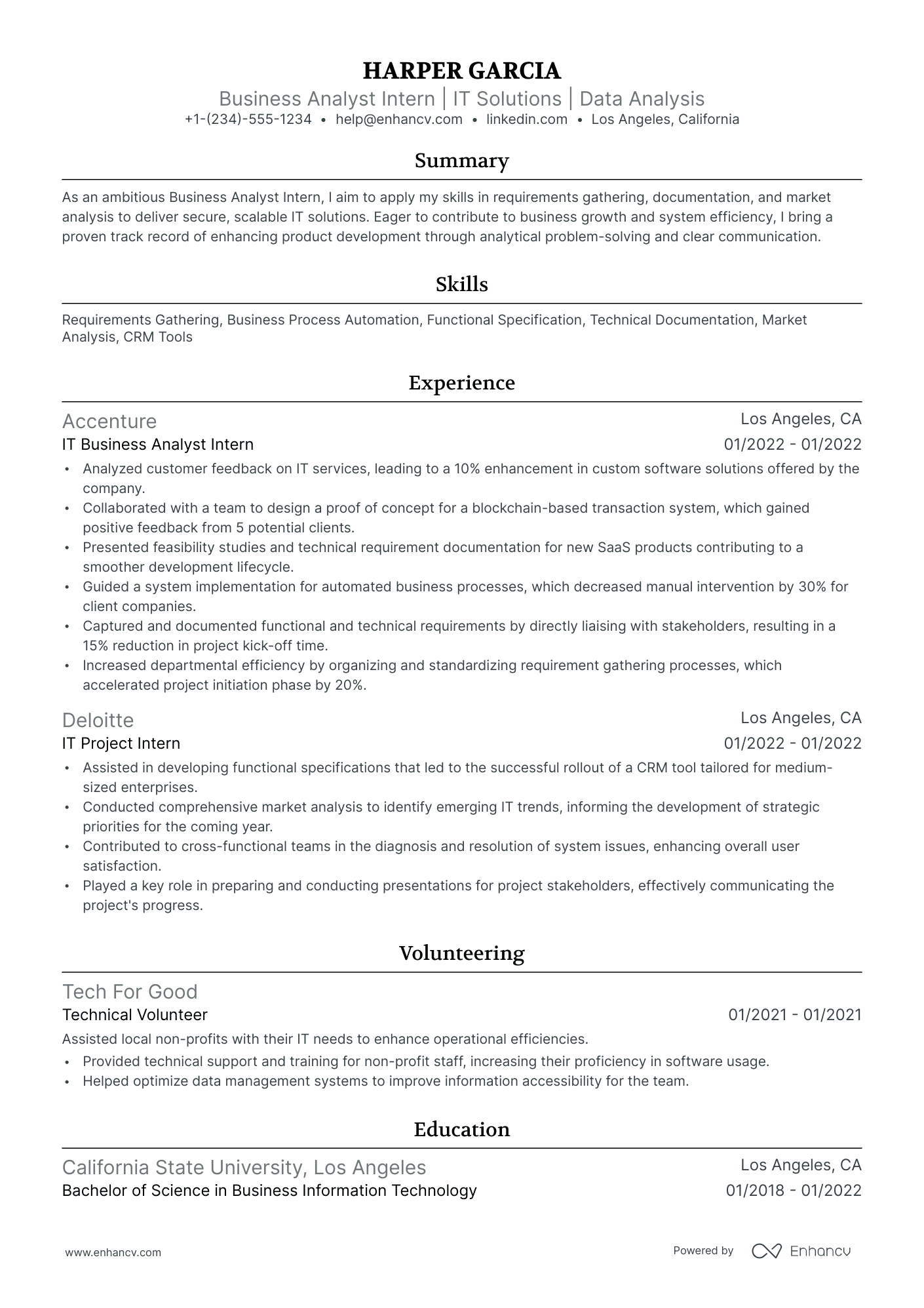
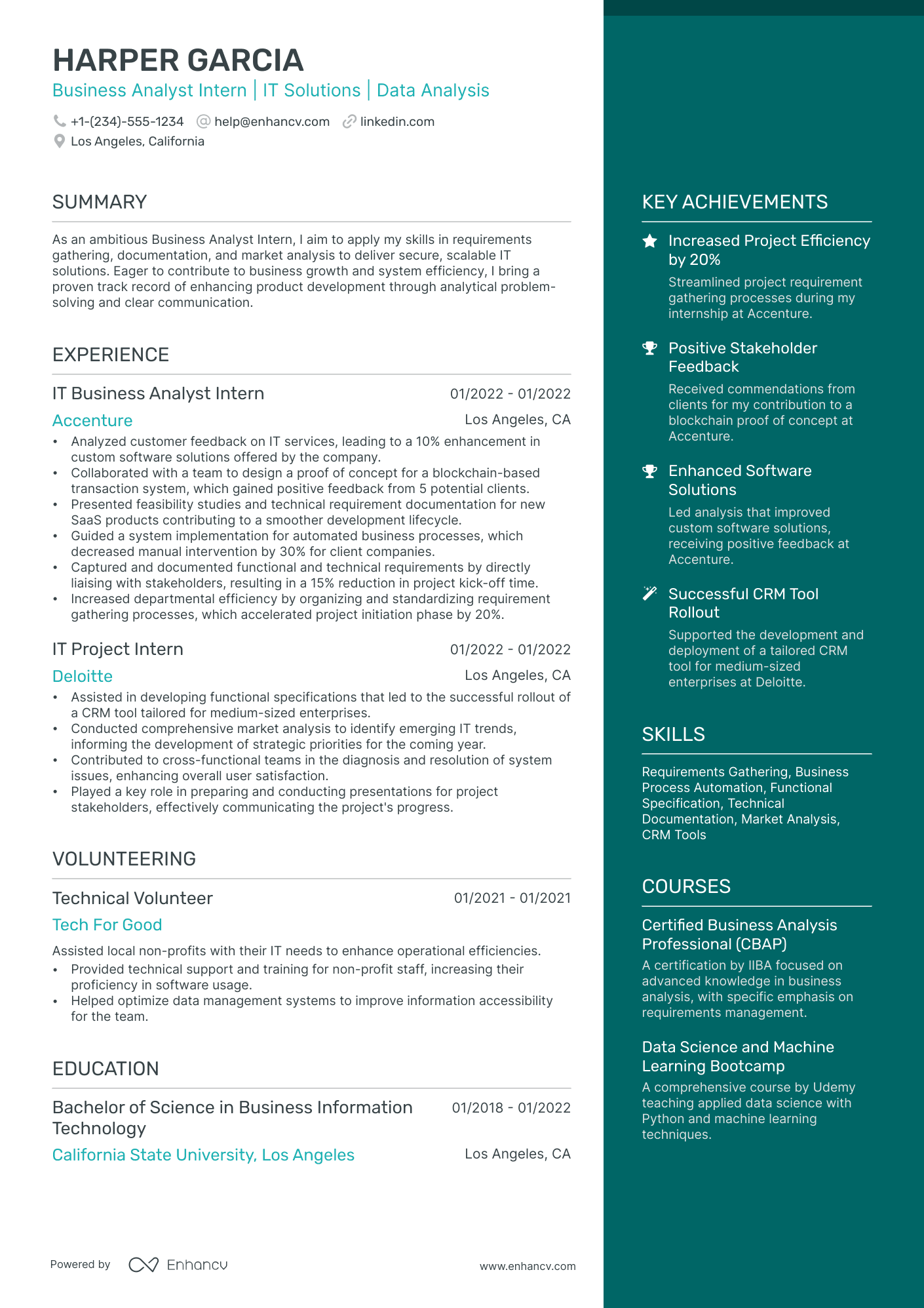
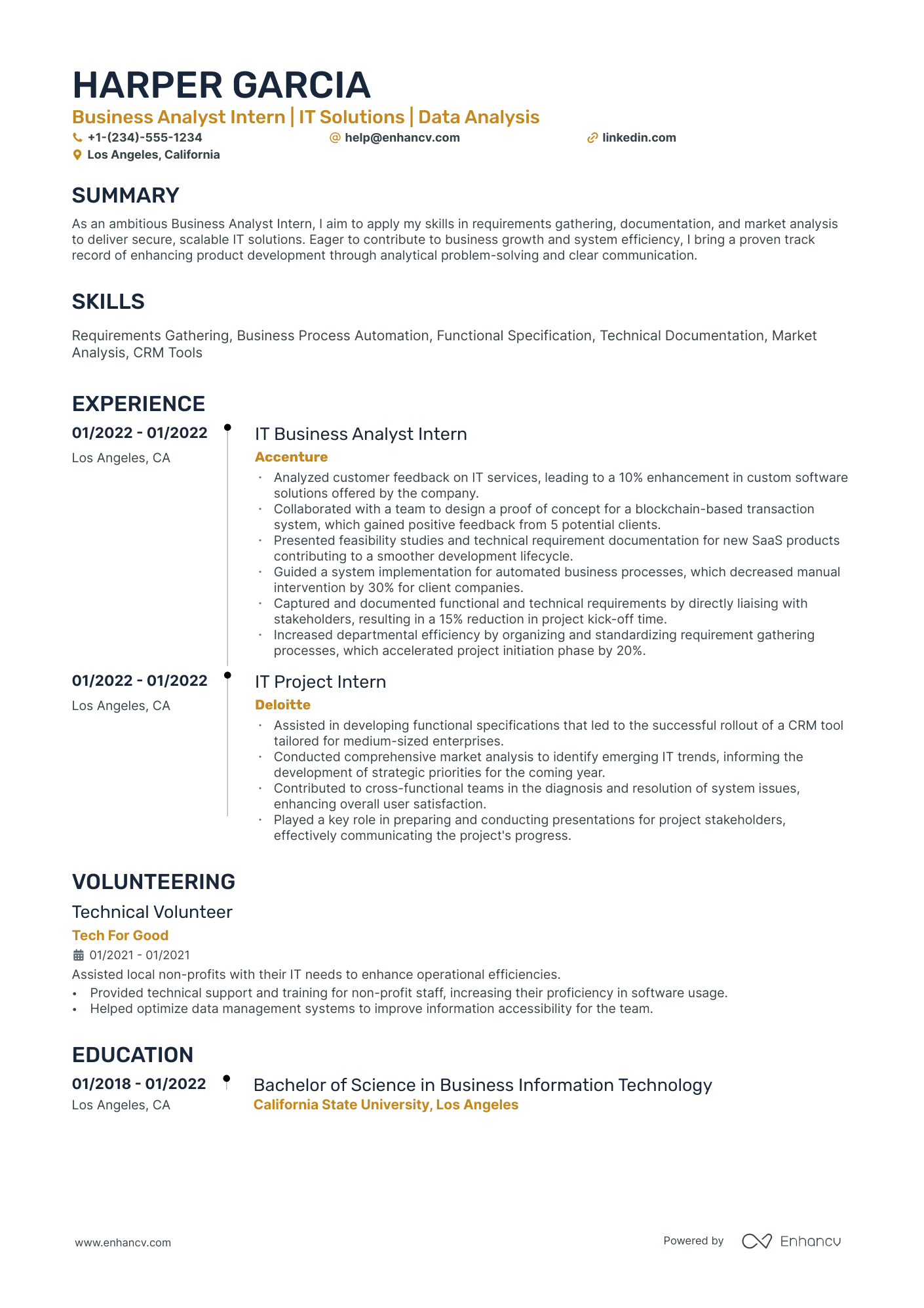
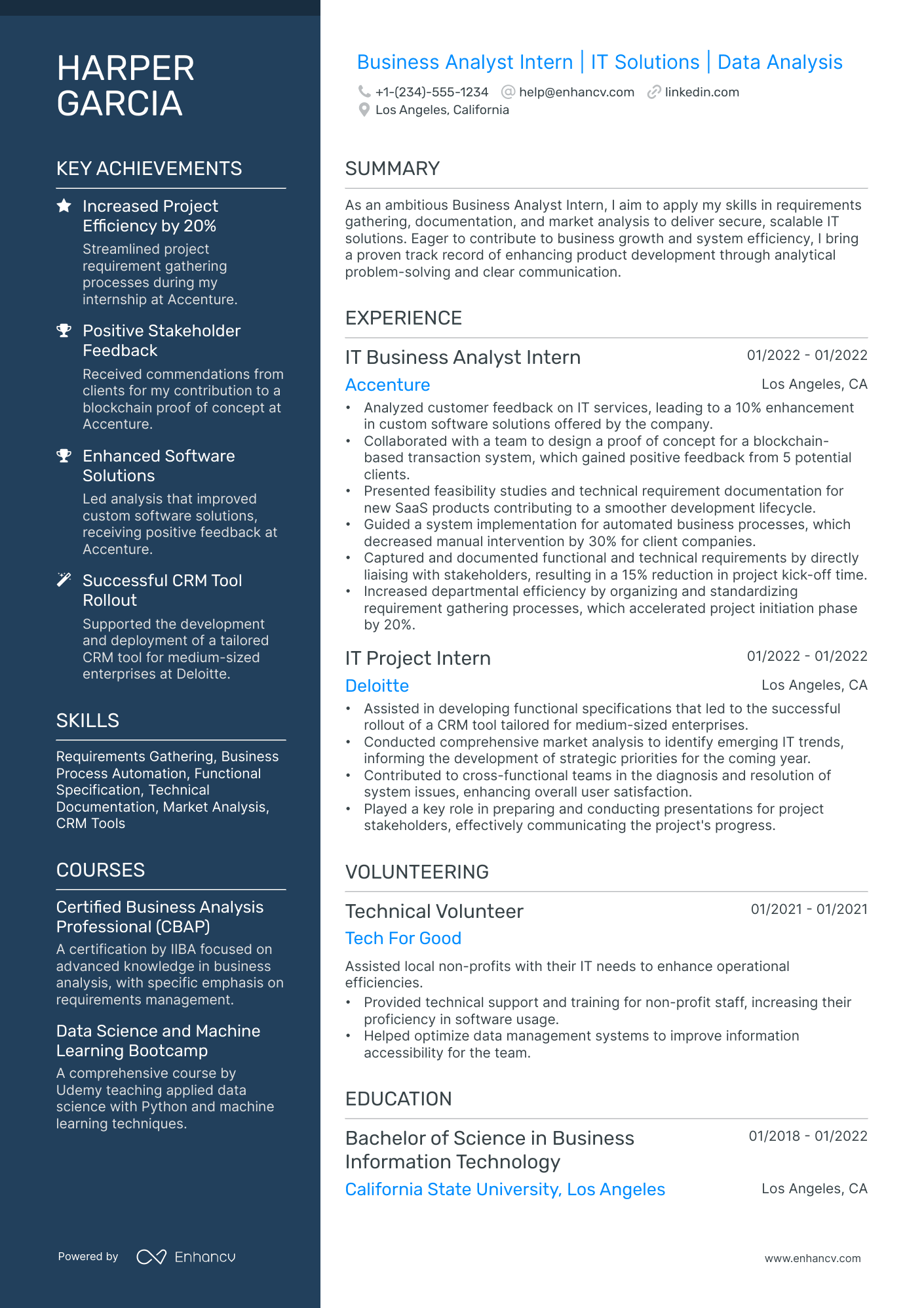
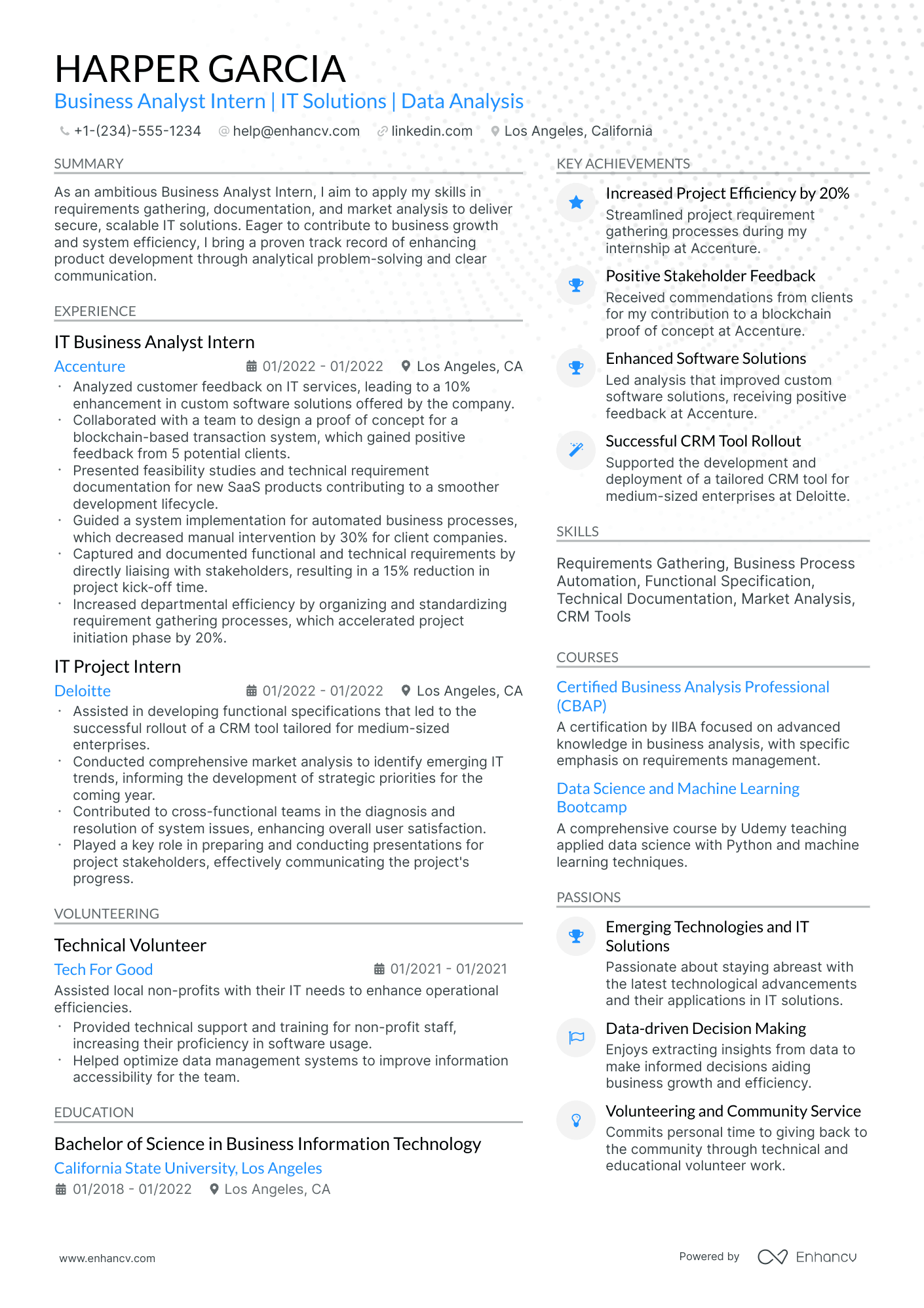
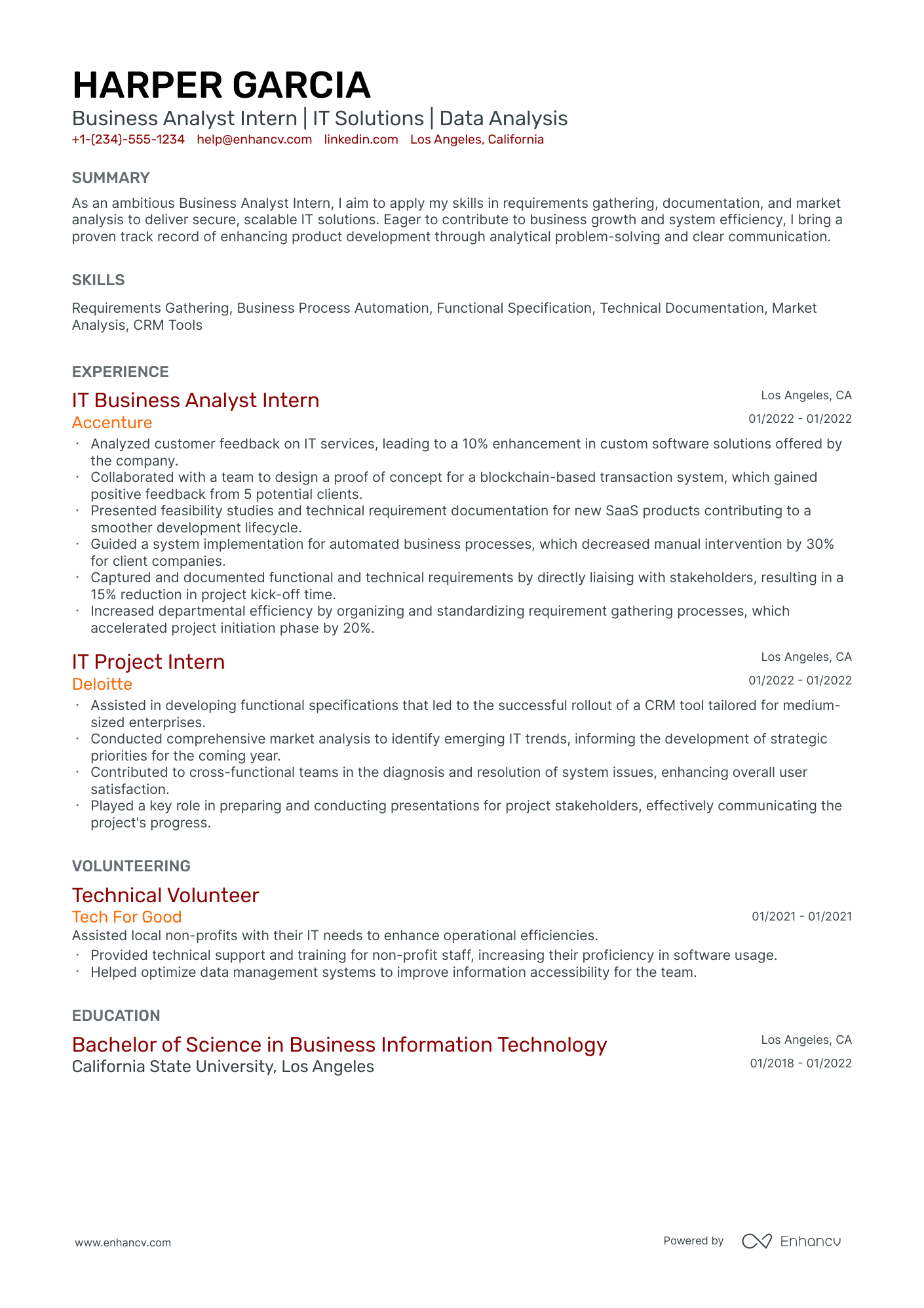
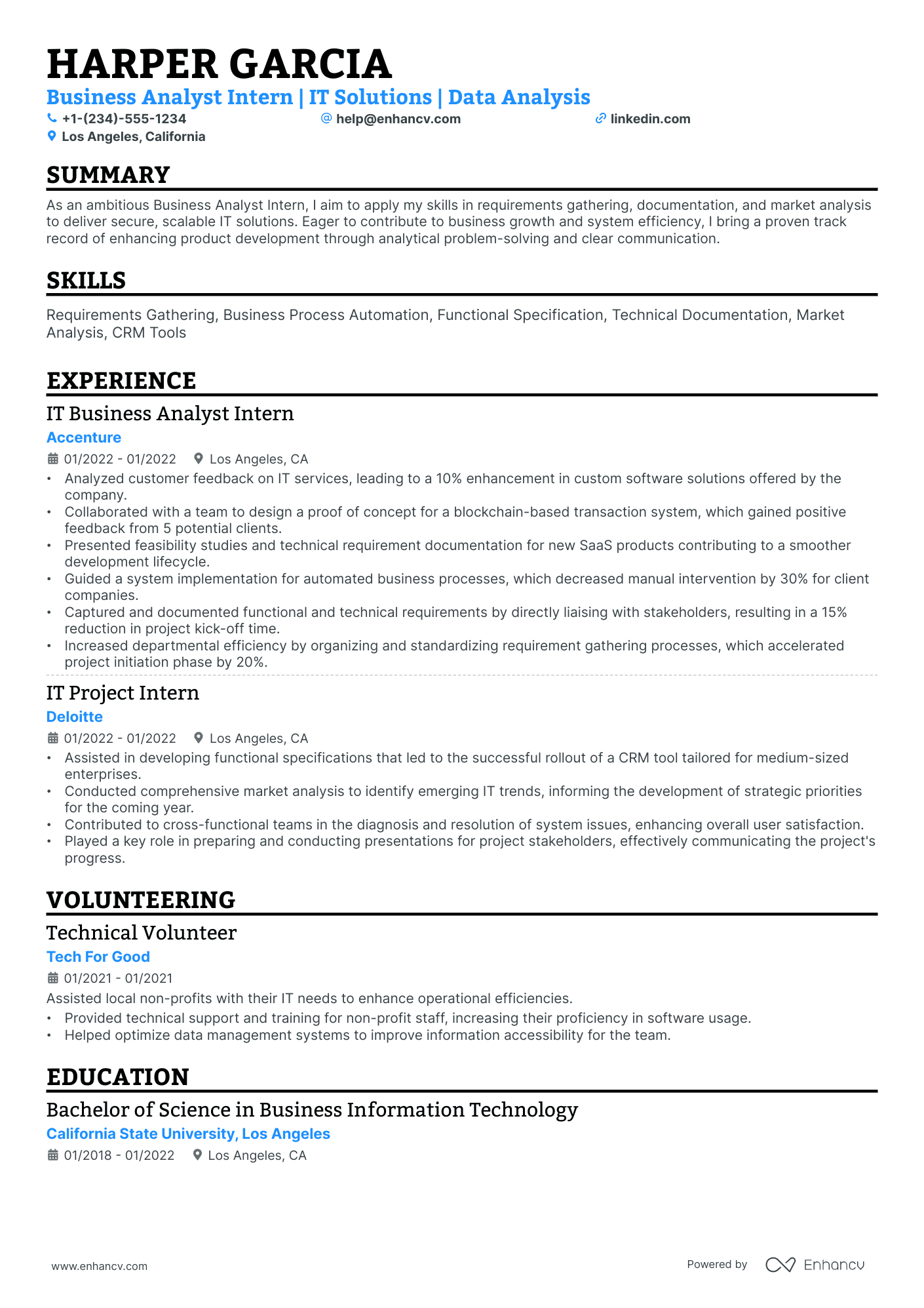
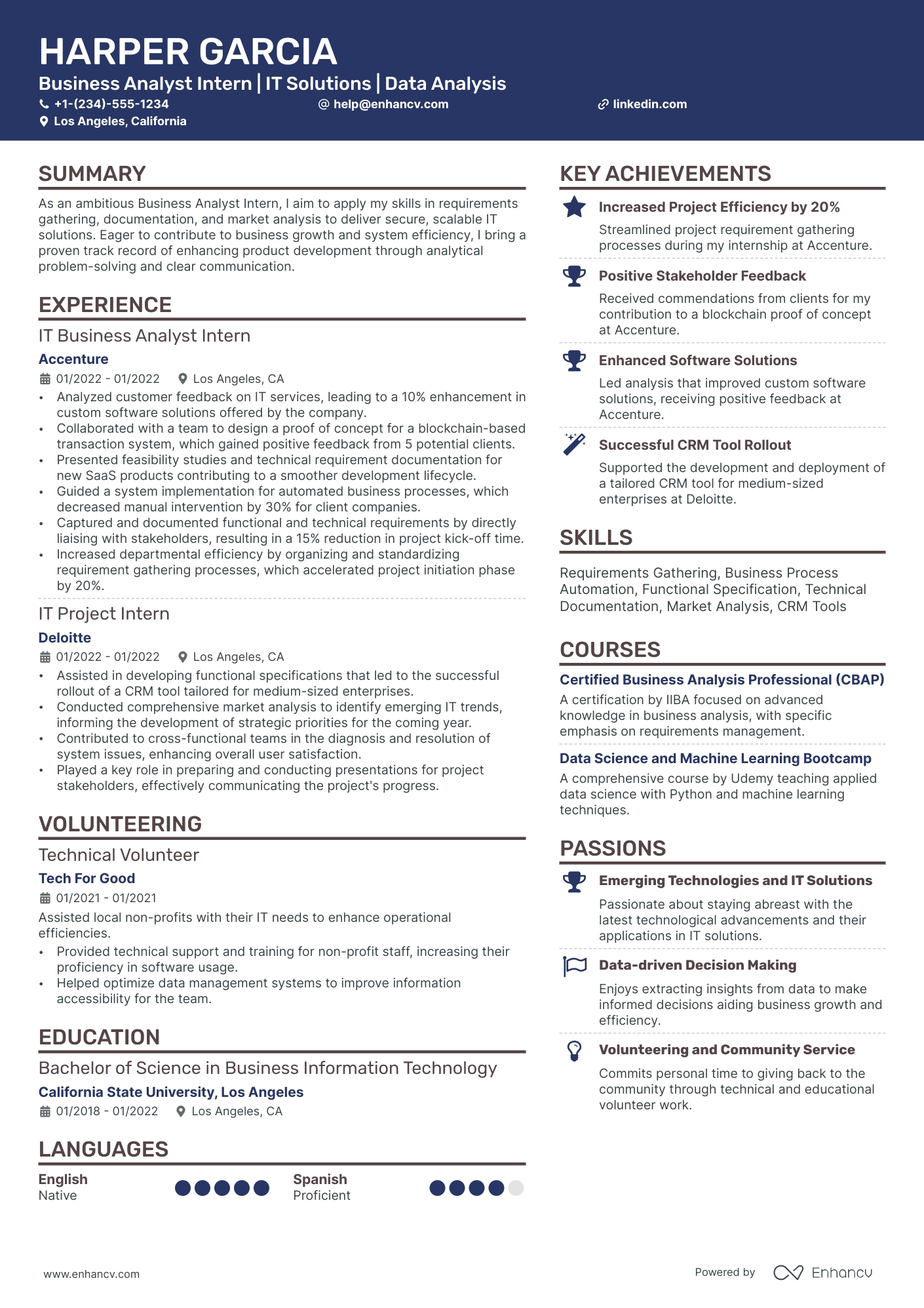
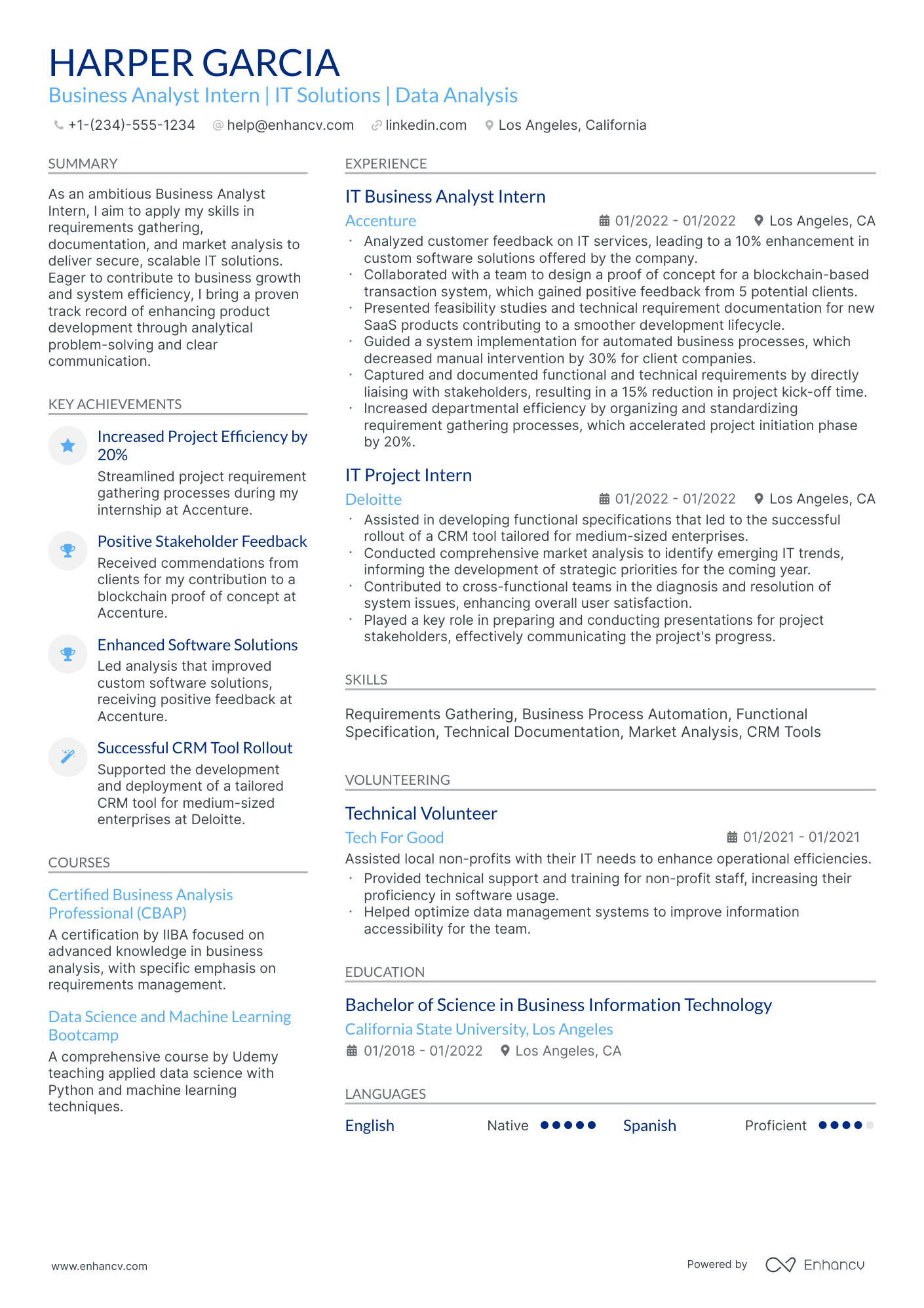
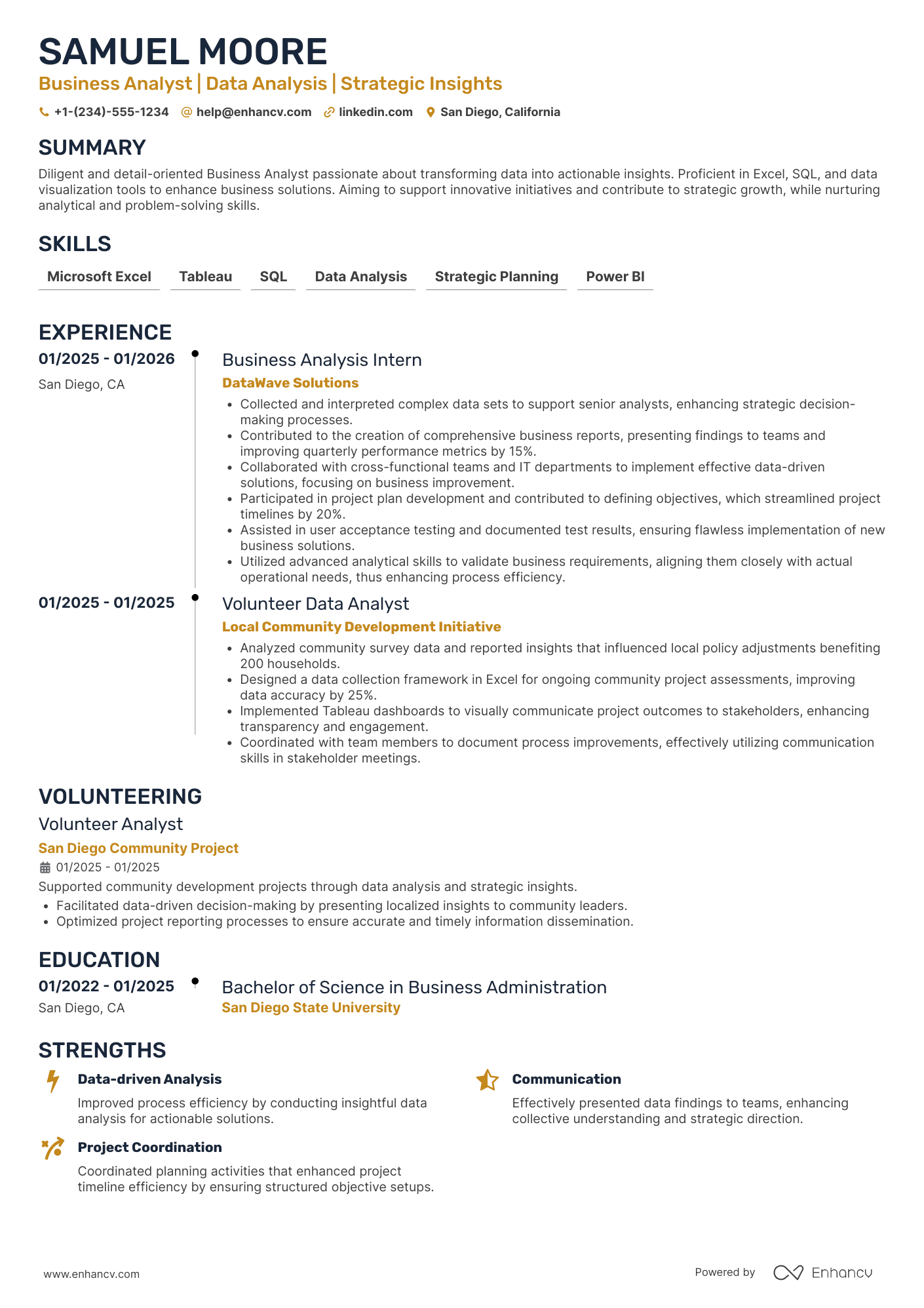
Most entry level business analyst resume drafts fail because they list coursework and tools without showing how you improved a process or decision. In an entry level business analyst resume, that gap gets you filtered by ATS keywords and missed in fast recruiter scans.
A strong resume shows outcomes and context, not task lists. If you're unsure where to begin, learning how to write a resume that highlights measurable results is the essential first step. You should highlight measurable results like reducing cycle time, improving data accuracy, shipping a dashboard used weekly, clarifying requirements that cut rework, or supporting a release that improved user adoption.

Key takeaways
- Show measurable outcomes like cycle time or cost savings, not task lists.
- Use a hybrid format to lead with skills and projects when experience is limited.
- Tailor every experience bullet to match the job posting's tools and terminology.
- Anchor each listed skill to a specific project, result, or stakeholder outcome.
- Quantify achievements using metrics like defect reduction, accuracy gains, or time saved.
- Place certifications above education when they're recent and directly relevant to the role.
- Use Enhancv to refine bullet points and align your resume with what hiring teams prioritize.
How to format a entry level business analyst resume
Recruiters screening entry-level business analyst resumes prioritize transferable analytical skills, relevant coursework or projects, and evidence that you can translate data into actionable insights. Your resume format determines how quickly a hiring manager spots these signals, so choosing the right structure ensures your strongest qualifications aren't buried.

I have significant experience in this role—which format should I use?
Use a reverse-chronological format to present your business analyst experience in a clear, linear progression that recruiters can scan in seconds. Do:
- Lead each role with your scope of ownership, such as the departments, stakeholders, or business processes you supported.
- Highlight tools and domains relevant to business analysis—SQL, Tableau, JIRA, requirements gathering, process mapping, or specific industry verticals.
- Quantify outcomes tied to your analysis, including cost savings, efficiency gains, or error reductions.
I'm junior or switching into this role—what format works best?
A hybrid format works best because it lets you lead with a focused skills section while still showing any relevant work history or projects in chronological order. Do:
- Place a skills section near the top that groups your analytical, technical, and communication competencies so applicant tracking systems and recruiters find them immediately.
- Include academic projects, internships, freelance work, or case competitions that demonstrate hands-on business analysis tasks like stakeholder interviews, data modeling, or requirements documentation.
- Connect every listed action to a measurable or observable result, even at a small scale.
When does a functional resume make sense?
A functional format is rarely the strongest choice for an entry-level business analyst, but it can work in a narrow set of circumstances:
- You're making a career change from a non-analytical field and need to foreground newly acquired BA skills from certifications, bootcamps, or volunteer projects.
- You have a gap of one year or more in your work history and want to emphasize skills over timeline.
- You have no formal work experience yet and are relying entirely on coursework, personal projects, or competitions.
- A functional format is acceptable only when you have no chronological experience to leverage—and even then, every skill listed should be anchored to a specific project, course, or outcome rather than stated in the abstract.
Once you've established a clean, readable format, the next step is determining which sections to include so each one serves a clear purpose on your resume.
What sections should go on a entry level business analyst resume
Recruiters expect to see clear evidence you can gather requirements, analyze data, and communicate insights to stakeholders in a business context. Understanding which resume sections to include ensures you present that evidence in a structure hiring teams recognize. Use this structure for maximum clarity:
- Header
- Summary
- Experience
- Skills
- Projects
- Education
- Certifications
- Optional sections: Awards, Leadership, Languages
Your strongest experience bullets should emphasize measurable impact, business outcomes, scope, and results from analysis, process improvements, and stakeholder collaboration.
Is your resume good enough?
Drop your resume here or choose a file. PDF & DOCX only. Max 2MB file size.
Now that you’ve laid out the key resume components employers expect, the next step is to write your entry level business analyst resume experience so those details translate into relevant impact.
How to write your entry level business analyst resume experience
Your experience section should highlight work you've shipped or delivered—requirements you gathered, analyses you completed, and process improvements you drove using role-relevant tools like SQL, Excel, JIRA, or business process modeling. Hiring managers prioritize demonstrated impact over descriptive task lists, so every bullet should connect your effort to a measurable outcome. Building a targeted resume for each application ensures those bullets address the specific priorities each employer cares about.
Each entry should include:
- Job title
- Company and location (or remote)
- Dates of employment (month and year)
Three to five concise bullet points showing what you owned, how you executed, and what outcomes you delivered:
- Ownership scope: the business processes, data sets, reporting systems, stakeholder requirements, or project workstreams you were directly accountable for as an entry level business analyst.
- Execution approach: the tools, frameworks, and methods you used to gather requirements, analyze data, and inform decisions—such as SQL queries, Excel modeling, process mapping, user story creation, or documentation standards.
- Value improved: changes you drove in operational efficiency, data accuracy, reporting turnaround, requirements clarity, defect reduction, or risk mitigation relevant to business analysis work.
- Collaboration context: how you partnered with cross-functional stakeholders—developers, project managers, QA teams, product owners, or end users—to validate requirements, resolve gaps, and align deliverables with business needs.
- Impact delivered: outcomes framed as tangible results, such as streamlined workflows, faster decision-making, reduced rework, improved stakeholder satisfaction, or successful project delivery, rather than a list of daily activities.
Experience bullet formula
A entry level business analyst experience example
✅ Right example - modern, quantified, specific.
Business Analyst
Northbridge Health | Austin, TX
2023–2025
Digital health company supporting appointment scheduling and billing workflows for fifty-plus clinics.
- Built and maintained requirements in Jira and Confluence, translating stakeholder interviews into twenty-five user stories per sprint and improving on-time delivery from 78% to 92%.
- Analyzed scheduling and billing data in SQL and Excel, identifying three high-impact drop-off points that reduced claim rework by 14% and cut average cycle time by two days.
- Modeled current-state and future-state workflows in Lucidchart and facilitated weekly backlog grooming with product managers, designers, and engineers, reducing scope churn by 18%.
- Defined acceptance criteria and executed user acceptance testing in TestRail, logging defects with reproducible steps that lowered post-release issues by 22% over two quarters.
- Delivered Power BI dashboards for clinic managers, automating weekly reporting and saving eight hours per week while improving forecast accuracy by 9%.
Now that you've seen how to structure a strong experience entry, the next step is adjusting that content to match the specific job posting you're targeting.
How to tailor your entry level business analyst resume experience
Recruiters evaluate your resume through both manual review and applicant tracking systems (ATS), scoring it against the job posting's specific requirements. Tailoring your resume to the job description ensures your qualifications align directly with what each employer prioritizes.
Ways to tailor your entry level business analyst experience:
- Match analytics tools like SQL or Excel listed in the posting.
- Mirror the exact methodology terms such as Agile or Waterfall.
- Highlight relevant KPIs the job description asks you to track.
- Incorporate industry or domain experience the employer specifies.
- Emphasize data validation or quality assurance tasks when mentioned.
- Reference stakeholder collaboration models described in the role.
- Align your requirements gathering language with the posting's phrasing.
- Include documentation standards or frameworks the employer references.
Tailoring means connecting your real accomplishments to each job's stated needs, not forcing unrelated keywords into your experience.
Resume tailoring examples for entry level business analyst
| Job description excerpt | Untailored | Tailored |
|---|---|---|
| "Gather and document business requirements using SQL and Excel to support data-driven decision-making across finance operations." | Helped collect information for various projects and created documents for the team. | Gathered and documented business requirements for finance operations, using SQL to query datasets and Excel pivot tables to validate findings for stakeholder review. |
| "Assist in creating process flow diagrams and performing gap analysis to identify inefficiencies in supply chain workflows." | Worked on improving company processes and identifying areas for change. | Created process flow diagrams in Visio to map supply chain workflows and performed gap analysis that identified three operational inefficiencies, reducing order processing delays by 12%. |
| "Support the QA team by writing user acceptance testing (UAT) scripts and tracking defects in Jira for a Salesforce CRM migration." | Assisted with testing software and reporting bugs to the development team. | Wrote 40+ UAT test scripts and tracked defects in Jira during a Salesforce CRM migration, collaborating with the QA team to validate data integrity across 15 migrated modules. |
Once you’ve aligned your experience with the role’s priorities, the next step is to quantify your entry level business analyst achievements so hiring managers can see the measurable impact behind that fit.
How to quantify your entry level business analyst achievements
Quantifying your achievements proves you improved decisions, delivery, and risk control. For entry level business analysts, focus on cycle time, data accuracy, defect reduction, stakeholder alignment speed, and measurable cost or revenue impact.
Quantifying examples for entry level business analyst
| Metric | Example |
|---|---|
| Cycle time | "Cut requirements sign-off time from 12 to seven business days by standardizing Jira tickets and running twice-weekly stakeholder reviews." |
| Data accuracy | "Improved report accuracy from 92% to 98% by rebuilding Excel pivots, validating source fields, and adding Power BI refresh checks." |
| Defect leakage | "Reduced UAT defects by 30% by writing 45 acceptance criteria in Gherkin and partnering with QA to add edge-case test scenarios." |
| Cost savings | "Identified a $18,000 annual savings by mapping the invoice workflow and eliminating duplicate approvals across three departments." |
| Delivery predictability | "Raised on-time sprint delivery from 70% to 85% by clarifying scope, tracking dependencies in Confluence, and escalating blockers within 24 hours." |
Turn vague job duties into measurable, recruiter-ready resume bullets in seconds with Enhancv's Bullet Point Generator.
Once your bullet points clearly convey your impact, the next step is ensuring your skills section reinforces those strengths with the right mix of hard and soft skills.
How to list your hard and soft skills on a entry level business analyst resume
Your skills section shows you can translate business needs into clear requirements and data-backed recommendations, and recruiters and ATS scan this section to match keywords fast; aim for a balanced mix of hard skills and role-specific soft skills.
entry level business analyst roles require a blend of:
- Product strategy and discovery skills.
- Data, analytics, and experimentation skills.
- Delivery, execution, and go-to-market discipline.
- Soft skills.
Your skills section should be:
- Scannable (bullet-style grouping).
- Relevant to the job post.
- Backed by proof in experience bullets.
- Updated with current tools.
Place your skills section:
- Above experience if you're junior or switching careers.
- Below experience if you're mid/senior with strong achievements.

Hard skills
- SQL querying, joins
- Microsoft Excel, Power Query
- Tableau, Power BI dashboards
- Data cleaning, validation
- KPI definition, reporting
- Requirements gathering, user stories
- Process mapping, BPMN
- Agile Scrum, sprint ceremonies
- Jira, Confluence
- A/B testing basics
- Stakeholder documentation, BRD
- Wireframes, Figma
Soft skills
- Translate needs into requirements
- Ask structured clarifying questions
- Synthesize inputs into decisions
- Present insights to nontechnical teams
- Align stakeholders on scope
- Manage priorities and tradeoffs
- Write clear, concise documentation
- Follow up to unblock delivery
- Collaborate with engineers and QA
- Handle feedback and iterate fast
- Escalate risks early
- Own action items end to end
How to show your entry level business analyst skills in context
Skills shouldn't live only in a bulleted list on your resume. Explore curated resume skills examples to see how top candidates present their competencies effectively.
They should be demonstrated in:
- Your summary (high-level professional identity)
- Your experience (proof through outcomes)
Here's what strong, skills-driven examples look like in practice.
Summary example
Detail-oriented business analyst with two years of experience in retail operations. Skilled in SQL, requirements gathering, and stakeholder collaboration. Streamlined inventory reporting workflows, reducing data processing time by 30% and improving cross-team decision-making accuracy.
- Reflects realistic entry-level experience
- Names specific tools and methods
- Includes a measurable performance outcome
- Highlights collaboration as a soft skill
Experience example
Junior Business Analyst
Bridgepoint Retail Solutions | Charlotte, NC
June 2022–Present
- Gathered and documented business requirements from five departments using JIRA, reducing project scope revisions by 25%.
- Built automated Excel dashboards with pivot tables, cutting weekly reporting time from eight hours to three.
- Partnered with developers and QA teams to validate system upgrades, decreasing post-launch defects by 40%.
- Every bullet includes measurable proof
- Skills surface naturally through real tasks
Once you’ve shown your business analyst strengths through relevant projects and outcomes, the next step is translating that evidence into an entry-level business analyst resume even if you don’t have formal experience.
How do I write a entry level business analyst resume with no experience
Even without full-time experience, you can demonstrate readiness through projects and transferable work. If you're starting from scratch, this guide on writing a resume without work experience walks you through exactly how to position yourself. Consider showcasing:
- Capstone business analysis project.
- Internship in operations or analytics.
- Volunteer process mapping for nonprofit.
- Case competition business requirements write-up.
- Coursework dashboards using Excel and SQL.
- Freelance data cleanup and reporting.
- Campus club KPI tracking reports.
- Personal project analyzing public datasets.
Focus on:
- Requirements artifacts and traceability.
- Data analysis with clear metrics.
- Process maps and improvement results.
- Stakeholder outputs: decks, reports.
Resume format tip for entry-level entry level business analyst
Use a hybrid resume format that leads with projects and skills, because it proves entry level business analyst capability without relying on job history. Do:
- Add a Projects section above Experience.
- Use business analysis artifacts in bullets.
- List tools: Excel, SQL, Tableau.
- Quantify results with time or accuracy.
- Tailor keywords to each posting.
- Built an entry level business analyst dashboard in Tableau from SQL queries, tracked five KPIs, and reduced weekly reporting time by 30 percent for a campus club.
Once you've structured your resume to highlight transferable skills and relevant projects, the next step is presenting your education effectively—often your strongest asset as an entry-level candidate.
How to list your education on a entry level business analyst resume
Your education section helps hiring teams confirm you have the foundational knowledge an entry level business analyst needs. It validates your analytical training and business acumen quickly.
Include:
- Degree name
- Institution
- Location
- Graduation year
- Relevant coursework (for juniors or entry-level candidates)
- Honors & GPA (if 3.5 or higher)
Skip month and day details—list the graduation year only.
Here's a strong education entry tailored for an entry level business analyst:
Example education entry
Bachelor of Science in Business Administration
University of Illinois at Chicago, Chicago, IL
Graduated 2024
GPA: 3.7/4.0
- Relevant Coursework: Data Analysis, Business Process Modeling, Statistics, Financial Accounting, Systems Design
- Honors: Dean's List (six consecutive semesters), Beta Gamma Sigma Honor Society
How to list your certifications on a entry level business analyst resume
Certifications on your resume show an entry level business analyst's commitment to learning, proficiency with common tools, and alignment with industry standards, even without extensive work experience.
Include:
- Certificate name
- Issuing organization
- Year
- Optional: credential ID or URL
- Place certifications below Education when your degree is recent and your certifications are older or less relevant to the entry level business analyst role.
- Place certifications above Education when they are recent, highly relevant, or requested in job postings for an entry level business analyst.
Best certifications for your entry level business analyst resume
- IIBA Entry Certificate in Business Analysis (ECBA)
- PMI Professional in Business Analysis (PMI-PBA)
- Certified ScrumMaster (CSM)
- Professional Scrum Master I (PSM I)
- Microsoft Power BI Data Analyst Associate (PL-300)
- Tableau Desktop Specialist
- ITIL 4 Foundation
Once you’ve positioned your certifications to reinforce your qualifications, use your resume summary to tie those credentials to the business analyst value you bring.
How to write your entry level business analyst resume summary
Your resume summary is the first thing a recruiter reads. A focused, relevant summary can set the tone for your entire application.
Keep it to three to four lines, with:
- Your title and relevant years of experience, including internships or academic projects.
- The domain or industry you've worked in, such as finance, healthcare, or e-commerce.
- Core tools and skills like SQL, Excel, Tableau, JIRA, or requirements gathering.
- One or two quantified achievements that show early impact on real projects.
- Soft skills tied to real outcomes, such as cross-team communication that shortened delivery timelines.

PRO TIP
At the entry level, emphasize technical skills, relevant tools, and any measurable contributions from internships or coursework. Avoid vague traits like "passionate" or "hardworking." Instead, show what you did, which tools you used, and what changed as a result.
Example summary for a entry level business analyst
Entry level business analyst with SQL, Tableau, and JIRA experience. Supported requirements gathering for a CRM migration, reducing data errors by 18%. Strong communicator across technical and non-technical teams.
Optimize your resume summary and objective for ATS
Drop your resume here or choose a file.
PDF & DOCX only. Max 2MB file size.
Now that your summary is ready to showcase your value, make sure the header above it presents your contact details clearly and professionally.
What to include in a entry level business analyst resume header
A well-structured resume header lists your key identity and contact details, improving visibility, credibility, and recruiter screening for a entry level business analyst.
Essential resume header elements
- Full name
- Tailored job title and headline
- Location
- Phone number
- Professional email
- GitHub link
- Portfolio link
Including a LinkedIn link lets recruiters verify experience quickly and supports screening.
Do not include photos on a entry level business analyst resume unless the role is explicitly front-facing or appearance-dependent.
Keep your header to two lines, match your job title to the posting, and use consistent formatting so recruiters can scan it fast.
Example
Entry level business analyst resume header
Jordan Lee
Entry level business analyst | Business analysis and reporting
Austin, TX | (512) 555-01XX | your.name@enhancv.com
github.com/yourname yourwebsite.com linkedin.com/in/yourname
Once your contact details and role focus are clear at the top, add optional sections that reinforce your fit and give hiring managers more relevant context.
Additional sections for entry level business analyst resumes
When your work experience is limited, additional sections help you stand out by showcasing relevant skills and interests unique to you. For example, listing language skills can highlight your ability to work with diverse stakeholders and global teams.
- Languages
- Certifications
- Hobbies and interests
- Volunteer experience
- Professional associations
- Academic projects
- Awards and honors
Once you've strengthened your resume with relevant additional sections, it's worth pairing it with a cover letter to make an even stronger impression.
Do entry level business analyst resumes need a cover letter
A cover letter isn't required for an entry level business analyst, but it often helps in competitive roles or when recruiters expect one. If you're unfamiliar with the format, start by understanding what a cover letter is and when it adds value. It can make a difference when your resume needs context, or when you're targeting a specific team.
Use a cover letter when it adds clear information the resume can't:
- Explain role or team fit by tying your strengths to the team's goals, tools, and process, using details from the job description.
- Highlight one or two relevant projects or outcomes, focusing on your approach, the data you used, and the result you delivered.
- Show understanding of the product, users, or business context by naming a key metric, workflow, or customer pain point you'd help improve.
- Address career transitions or non-obvious experience by connecting prior work to analysis tasks, such as requirements, reporting, or stakeholder communication.
Drop your resume here or choose a file.
PDF & DOCX only. Max 2MB file size.
Even if you decide a cover letter will not add much beyond your resume, using AI to improve your entry level business analyst resume helps you strengthen what hiring teams see first and align it to the role.
Using AI to improve your entry level business analyst resume
AI can sharpen your resume's clarity, structure, and impact. It helps refine language and highlight relevant skills. But overuse creates generic, inauthentic content. If you're exploring AI tools, this guide on ChatGPT resume writing prompts offers practical starting points. Once your resume is clear and role-aligned, step away from AI.
Here are 10 practical prompts to strengthen specific sections of your entry level business analyst resume:
Strengthen your summary
Quantify experience bullets
Align skills to job posts
Improve project descriptions
Tighten wordy bullets
Refine education details
Clarify technical proficiencies
Boost action verbs
Highlight certifications
Remove filler content
Conclusion
A strong entry level business analyst resume proves impact with measurable outcomes, highlights role-specific skills, and uses a clear structure that’s easy to scan. It connects projects, internships, and coursework to results, tools, and methods employers expect.
With focused bullets, consistent formatting, and targeted keywords, your entry level business analyst resume shows you can support decisions, improve processes, and communicate clearly. This approach signals readiness for today’s hiring market and the near-future roles that build on the same fundamentals.