


Two-Column Resume Templates
Two-column resumes place your skills right next to your experience, so recruiters see both at once. They suit skills-heavy roles and experienced professionals who need to fit more on one page.Every template below keeps your content as real, selectable text, which is what applicant tracking systems (ATS) need to read a resume. Pick one, add your experience, and edit it. Applying in a conservative field like law or finance? Elegant keeps two columns restrained enough for traditional reviewers.


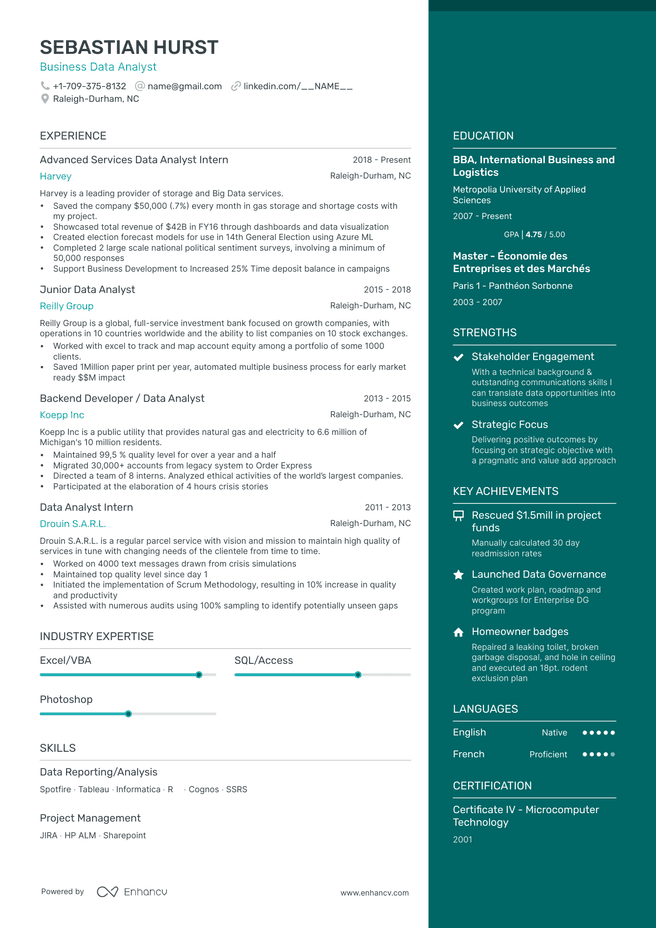
Elegant
Elegant resume template. A two-column design that's both elegant and professional, making it suitable for high-end industries such as finance, law, and consulting. Ideal for senior-level professionals.
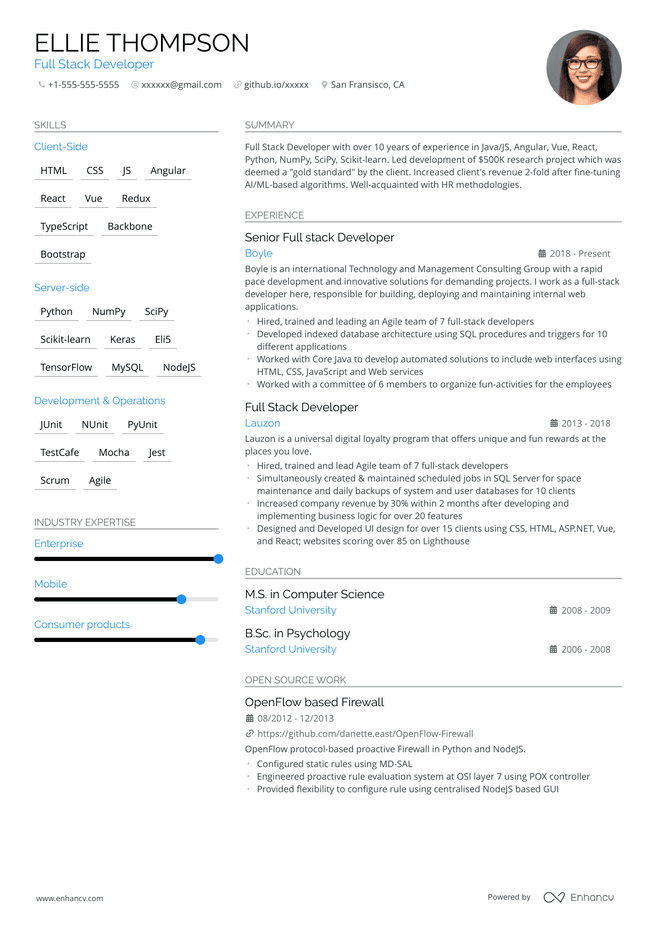
Stylish
Balanced resume template. A two-column design that balances text and white space, making it easy to read and effectively highlighting your skills and experience. Great for entry- to mid-level professionals.
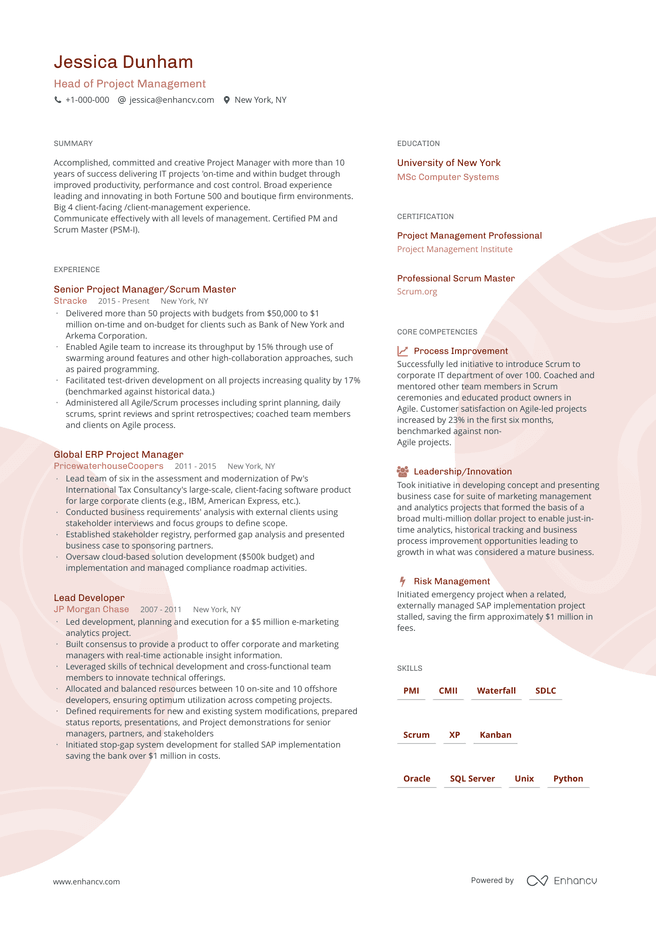
Modern
Modern resume template. A two-column design that combines a modern style with functionality, making your information easy to read and visually appealing. Ideal for creative professionals.
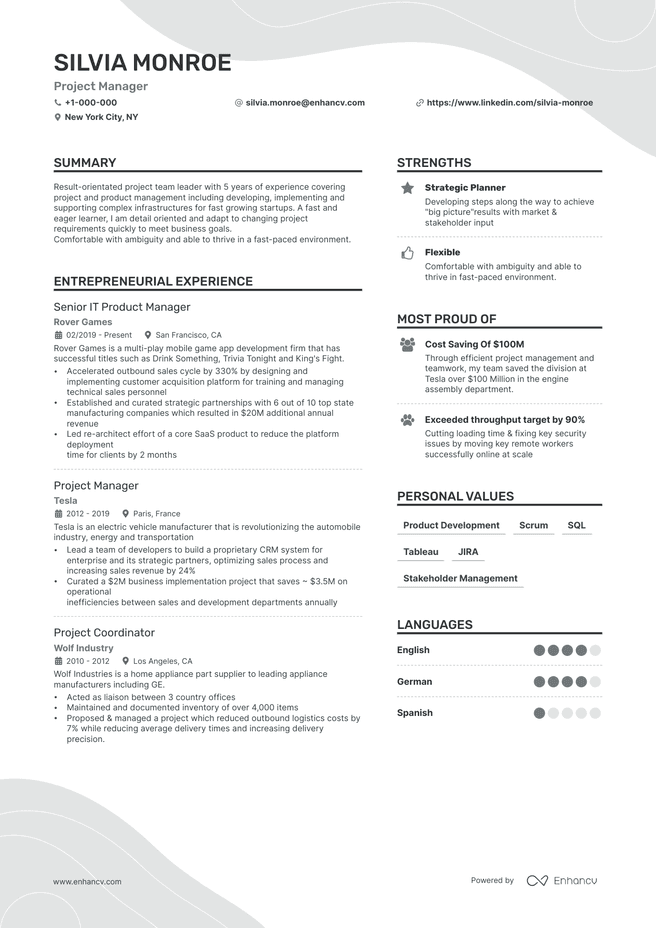
Double Column
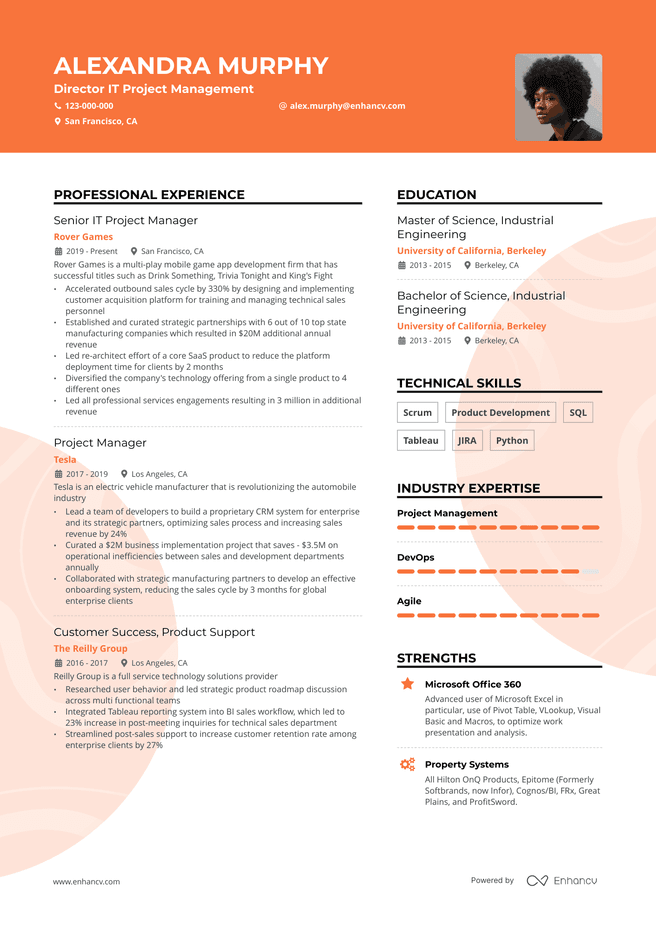
Our most popular two-column resume template. It presents your information professionally, emphasizing your skills and experience. Ideal for senior-level professionals.
Creative
Dynamic resume template. A two-column design that adds visual interest to your resume, making it easy to read and appealing to the eye. Ideal for mid-level professionals.
Compact
Compact resume template. A two-column design that efficiently presents your information in a small amount of space. Ideal for junior and mid-level professionals.
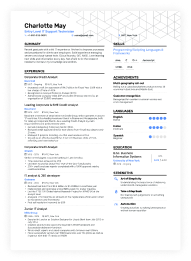
A two-column resume template splits the page into a wider column for your work history and a narrower one for skills, contact details, and highlights. That layout fits more content on a single page and lets a recruiter see what you can do next to where you've done it.
Two columns once had a reputation for confusing applicant tracking systems (ATS), but modern parsers read them correctly, so the choice comes down to your field and how much information you need to fit. These templates work best for skills-heavy roles and experienced professionals, while traditional fields like law and finance call for a more polished, understated take on the format.

Key takeaways
- A two-column resume puts your experience in a wider main column and your skills, contact details, and highlights in a narrower side column, so more fits on one page.
- Virtually every modern ATS reads two columns correctly: across 357 controlled parsing tests, Enhancv found two-column resumes kept their text within half a percentage point of single-column ones.
- The only real parsing risk comes from one older extraction method, and newer technology closes that gap almost entirely.
- Two columns suit tech, consulting, and skills-heavy roles, plus experienced professionals with a lot to fit on one page, while polished templates like Elegant work for traditional fields like law and finance.
- Two out of three resumes downloaded on Enhancv use a layout with two or more columns, and Double Column is the most popular template.
When should you use a two-column resume?
Double Column is the most popular template on Enhancv, thebest resume builder of 2026, and two out of three resumes downloaded use a layout with two or more columns.
Two-column layouts don’t hinder your chances of getting an interview. In fact, for many roles, they might actually prove more useful than a single-column resume.
Two-column designs are the go-to choice when you have a lot to show on a single page. Here’s where they work best:
- Skills-heavy roles: In tech, consulting, and data roles, the side column keeps your tools and certifications in view next to the experience that proves them.
- Experienced professionals. With 10+ years of experience, the second column frees room for skills, languages, and awards without pushing you onto page two.
- Any modern ATS. Virtually every modern applicant tracking system reads a two-column resume correctly. Column count comes down to your field, not the software.
- Conservative fields. Law, finance, and government reviewers expect a traditional read, so pick a two-column design with subtle colors and legible fonts. Ultimately, switch to a single column for the most traditional employers.

PRO TIP
Pick the layout that helps a recruiter find your strongest proof first.
What goes in each column of a two-column resume?
A common misconception is that both columns need to be the same width, but Enhancv's two-column templates pair a wider main column with a narrower side column.
In the Enhancv Builder, you can adjust the column widths to your liking, choosing between four layouts.
The wider one holds your experience, and the narrower one holds everything a recruiter checks at a glance.
Here’s what to include in each. These lists are a starting point, so reorder them to fit your story. If projects matter more than education for your role, move them up, and in Enhancv's drag-and-drop builder, you can shift any section between columns.
Main column (wider):
- Resume summary
- Work experience, with quantified results
- Education, if it's recent or the role requires it
- Projects that back up your experience
Side column (narrower):
- Contact details and LinkedIn
- Skills and tools
- Certifications
- Languages
- Awards and key achievements
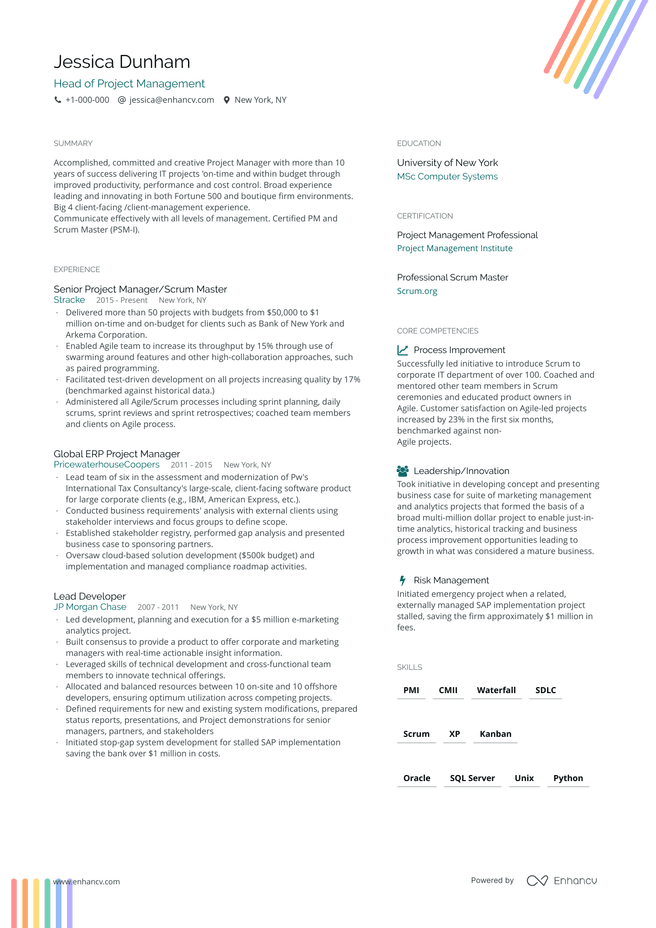
Here’s an example:
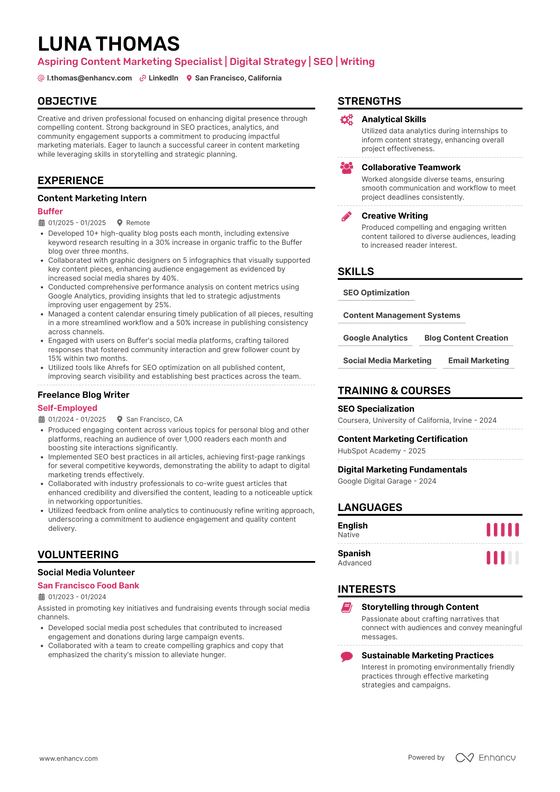
Which two-column resume template fits your role?
Each template balances experience and skills differently, from more conservative structures for traditional fields to bolder layouts for modern roles, so pick the one that matches your industry and career stage.
- Double Column. Enhancv's most popular two-column template, with room for a long career history. Ideal for senior candidates.
- Elegant. A polished, understated layout for senior leaders in traditional fields like finance, law, and consulting.
- Stylish. Balances text and white space for an easy read. Great for early- to mid-career job seekers.
- Modern. Pairs a contemporary look with a clear structure. Ideal for designers, marketers, and other creative roles.
- Creative. Helps you stand out from other candidates while staying easy to read. A strong fit at mid-career.
- Compact. Fits more information into less space. Ideal for junior and mid-level applicants with a lot to list.
Frequently asked questions about two-column resumes
What is a two-column resume?
A two-column resume usually splits the page into a wider column for your experience and a narrower one for skills, contact details, and highlights. The layout allows you to fit more content on one page and lets recruiters see your skills and experience side by side.
Are two-column resumes ATS-friendly?
Yes, virtually every modern applicant tracking system reads a two-column resume correctly. In Enhancv's study of 357 controlled parsing tests, two-column and single-column resumes lost almost the same amount of text, never more than half a percentage point apart.
The one real risk, words coming back in the wrong order, shows up only under one older extraction method and mostly disappears once AI-based parsing reads the text.
Should I use a one-column or two-column resume?
Choose based on your field and how much information you need to fit. Two columns work best for tech, consulting, and skills-heavy roles, where your skills sit right next to the experience that backs them up. For the most traditional employers in law, finance, and government, a restrained two-column template like Elegant or a single column fits better.
Is a two-column resume professional?
Yes, recruiters see two-column resumes every day across most industries. What looks unprofessional is clutter, so stick to one font, consistent headings, and enough white space.
How do I check if my two-column resume is ATS-friendly?
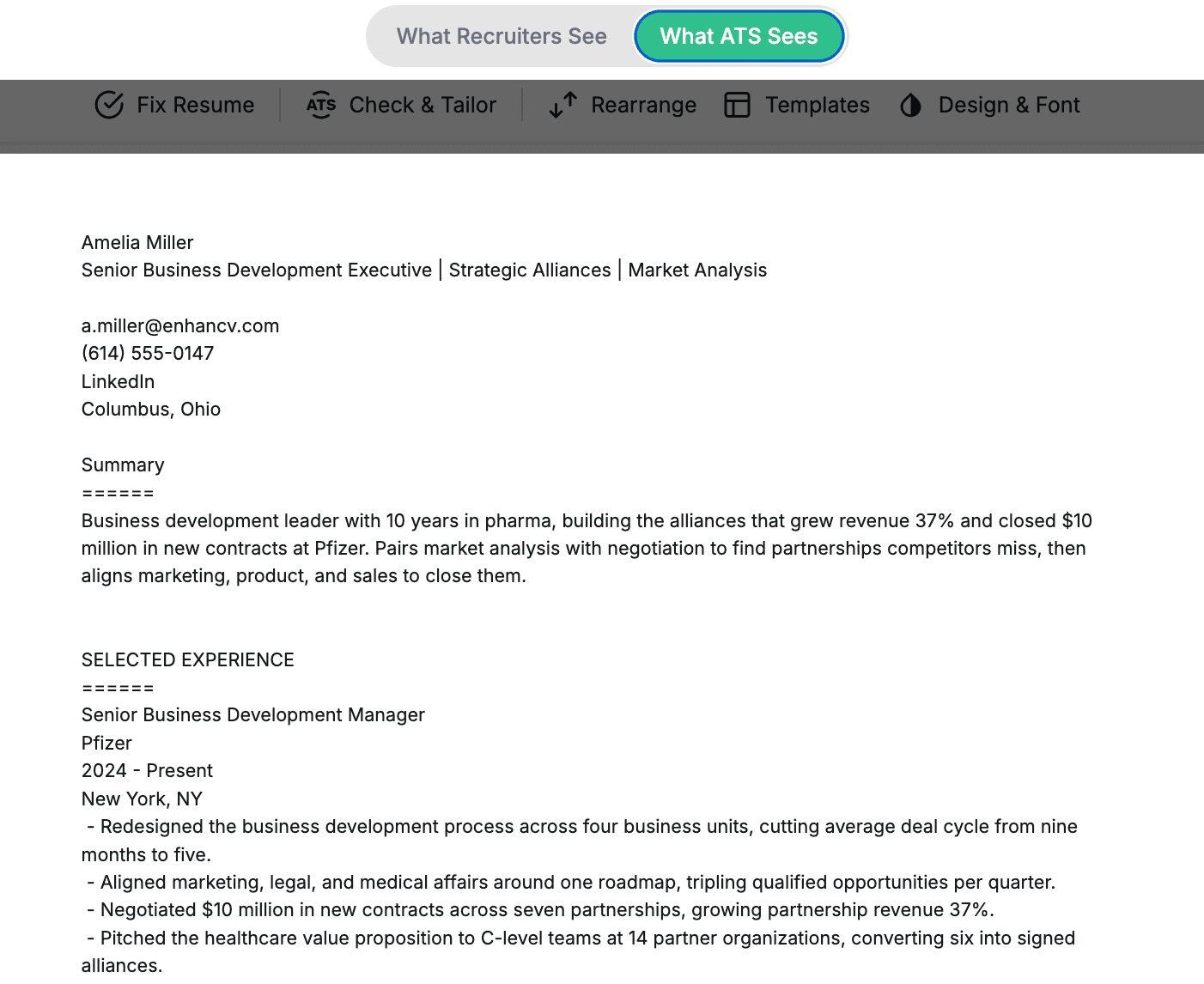
Copy the text from your PDF into a plain-text editor like Notepad and read it top to bottom. If everything comes through in order with nothing missing, a parser reads it the same way. For a faster check, Enhancv's Resume Checker confirms your resume parses and shows you what to fix.
The Enhancv Builder also shows you what the ATS sees.
Will a parsing error get my resume rejected?
No. When parsing fails, the resume stays attached to your application, and a recruiter can still enter the details by hand. The best-documented causes of automatic rejection, like long employment gaps and missing keywords, have nothing to do with column count.