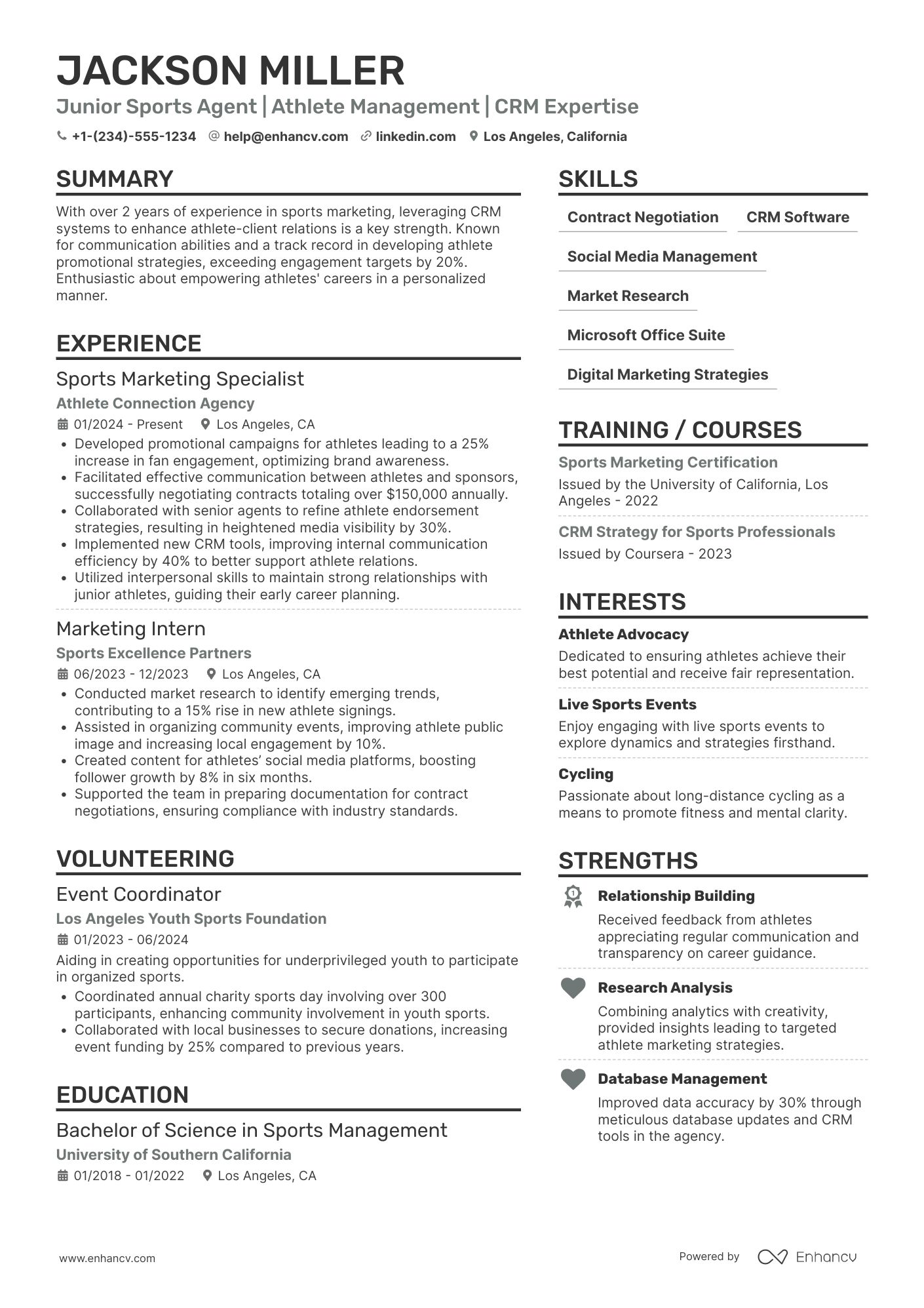
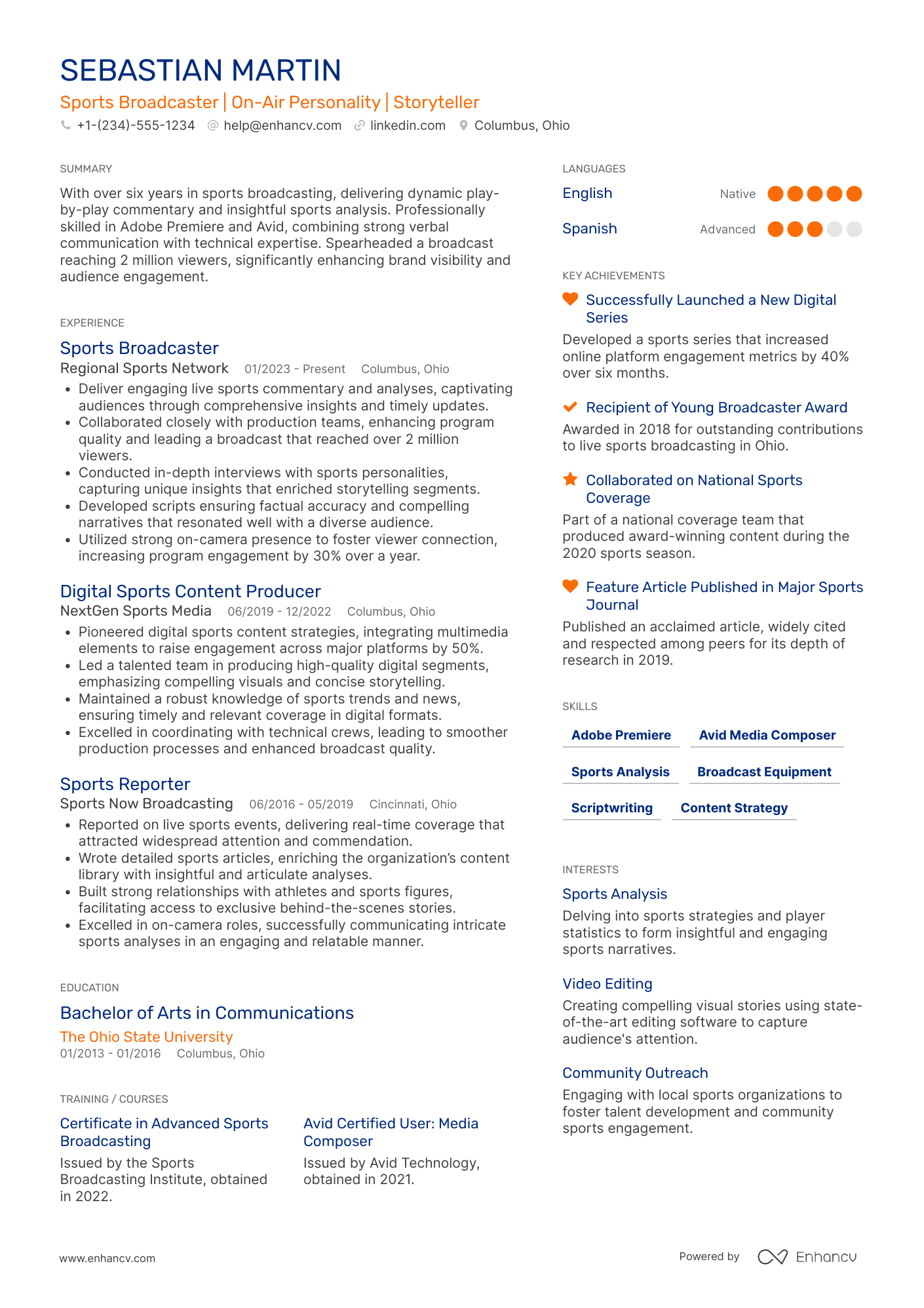
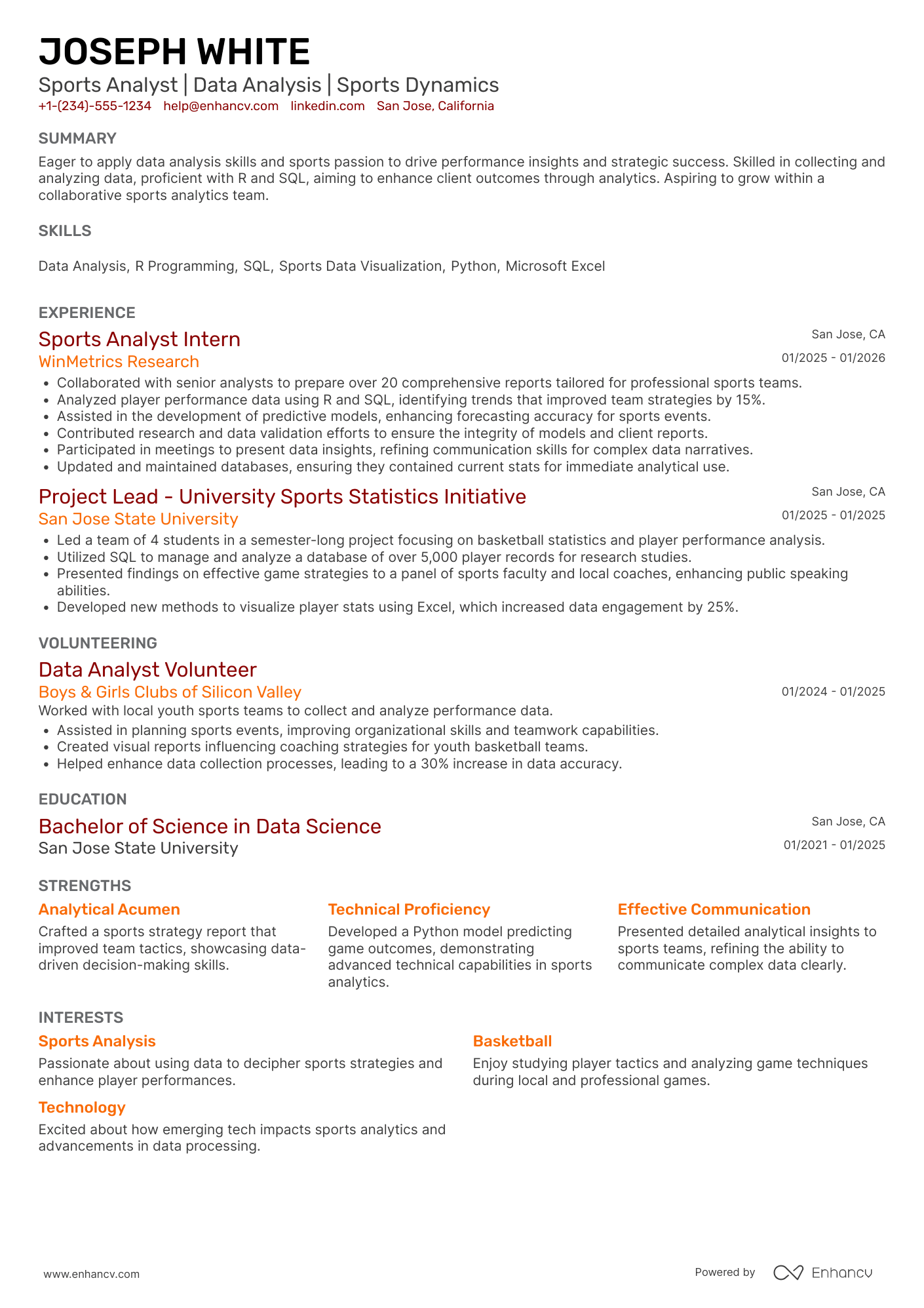
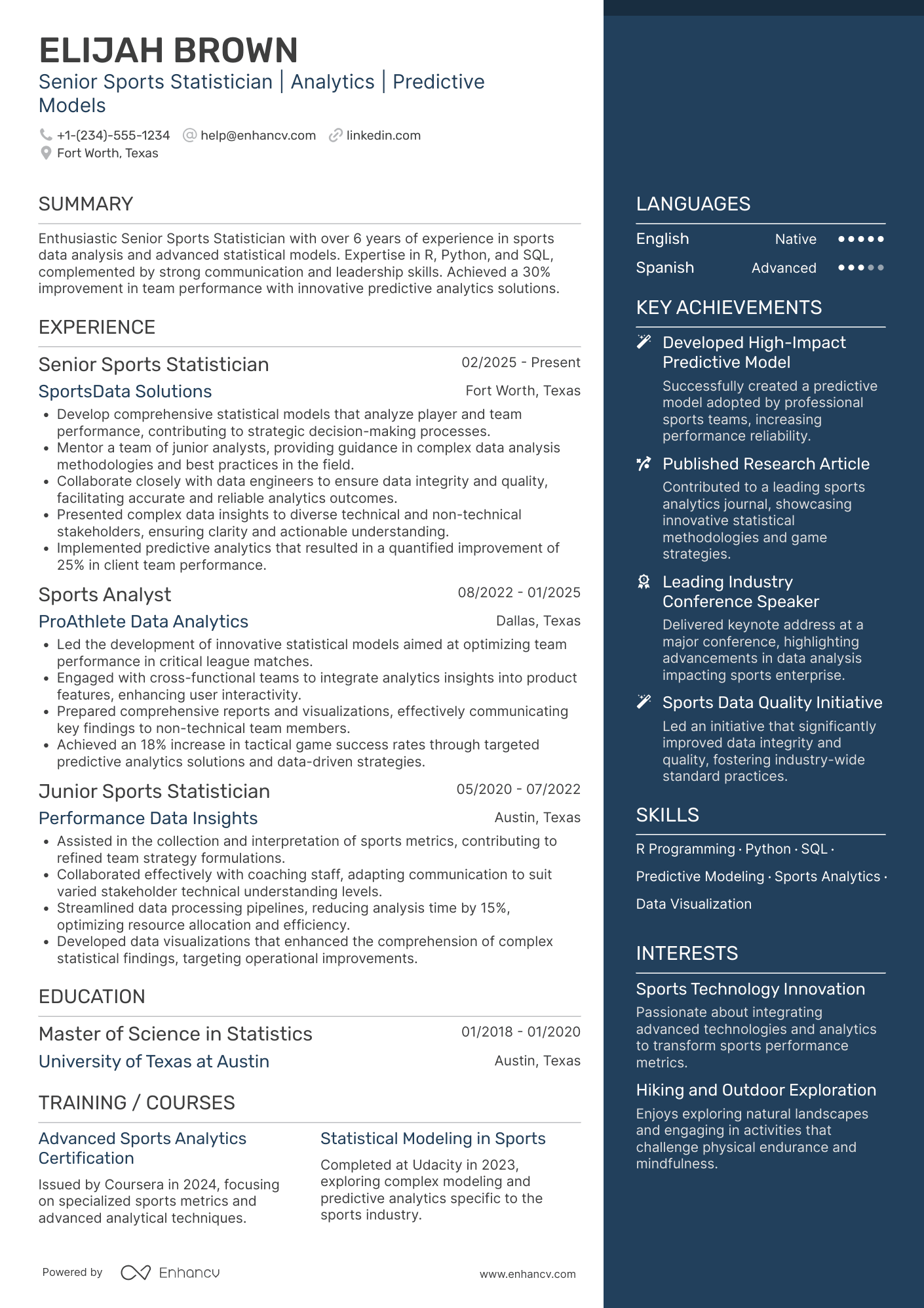
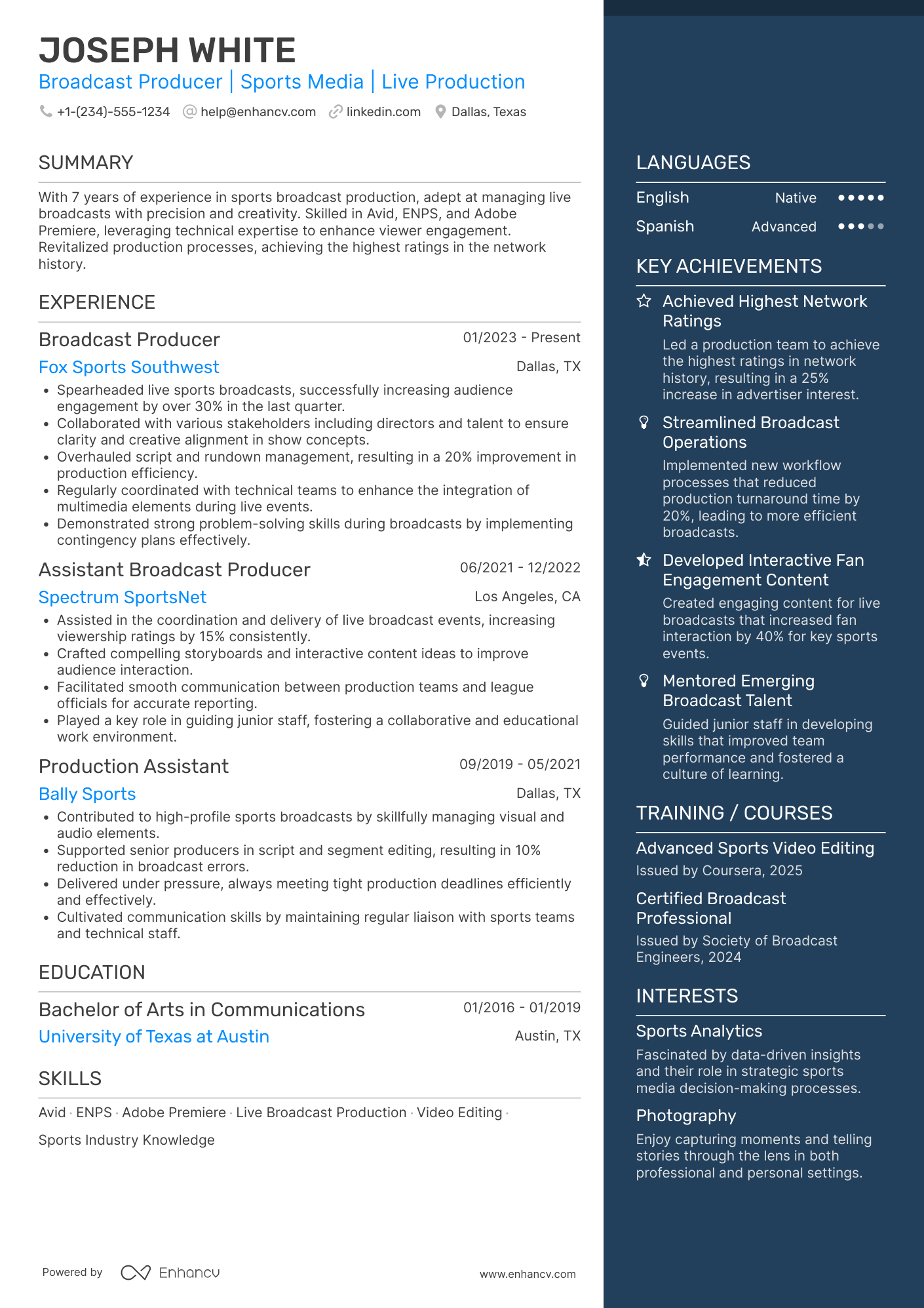
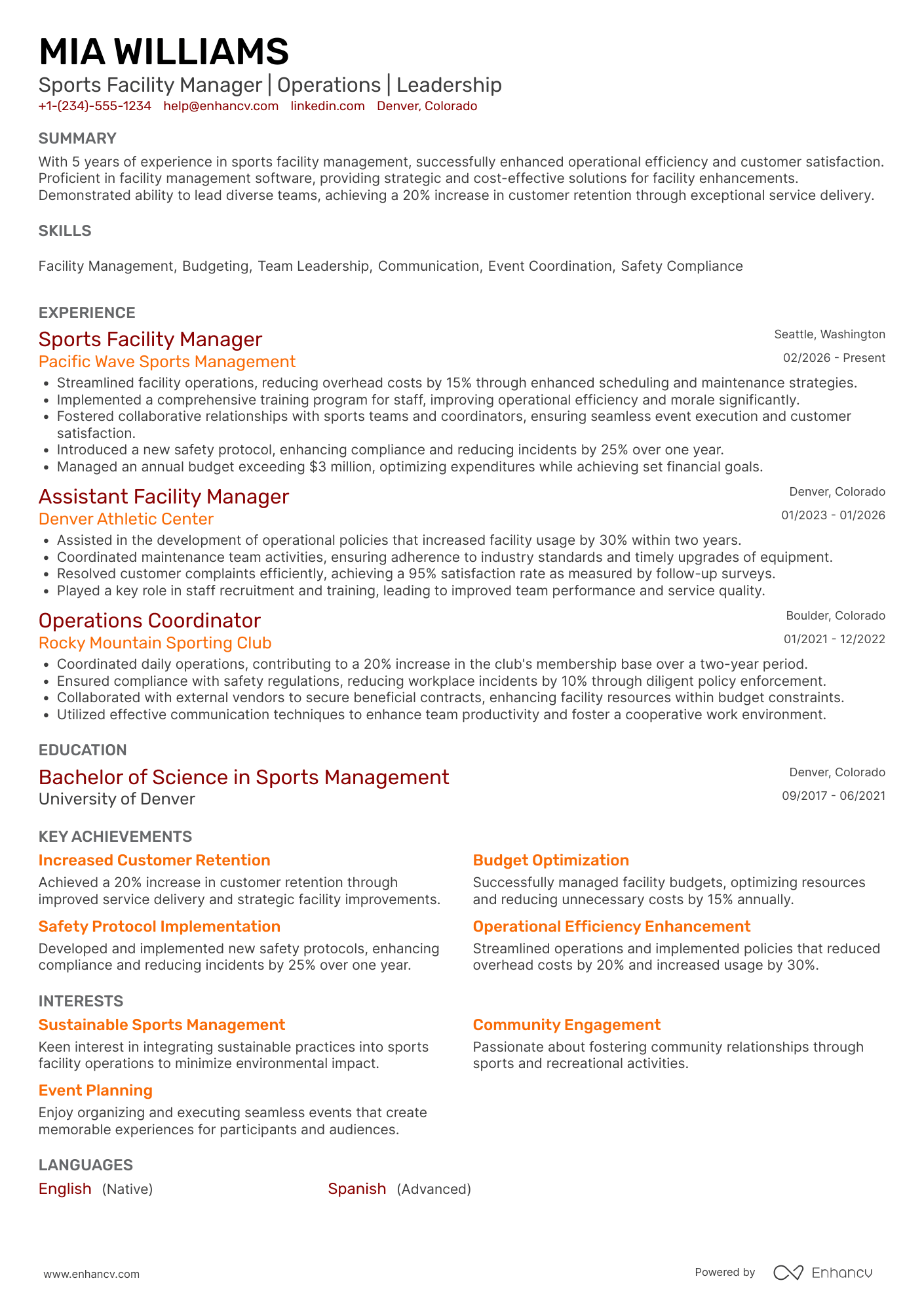
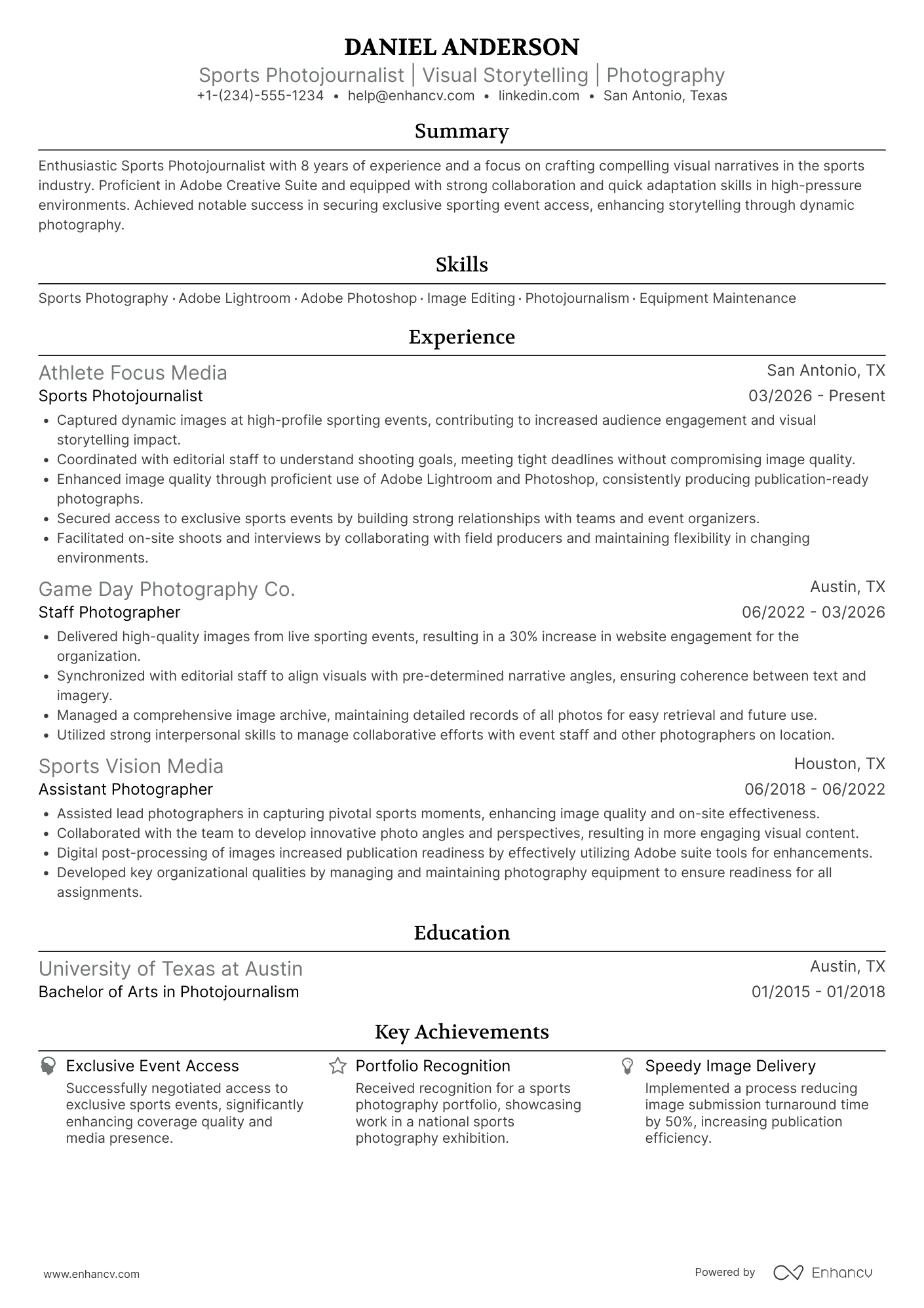
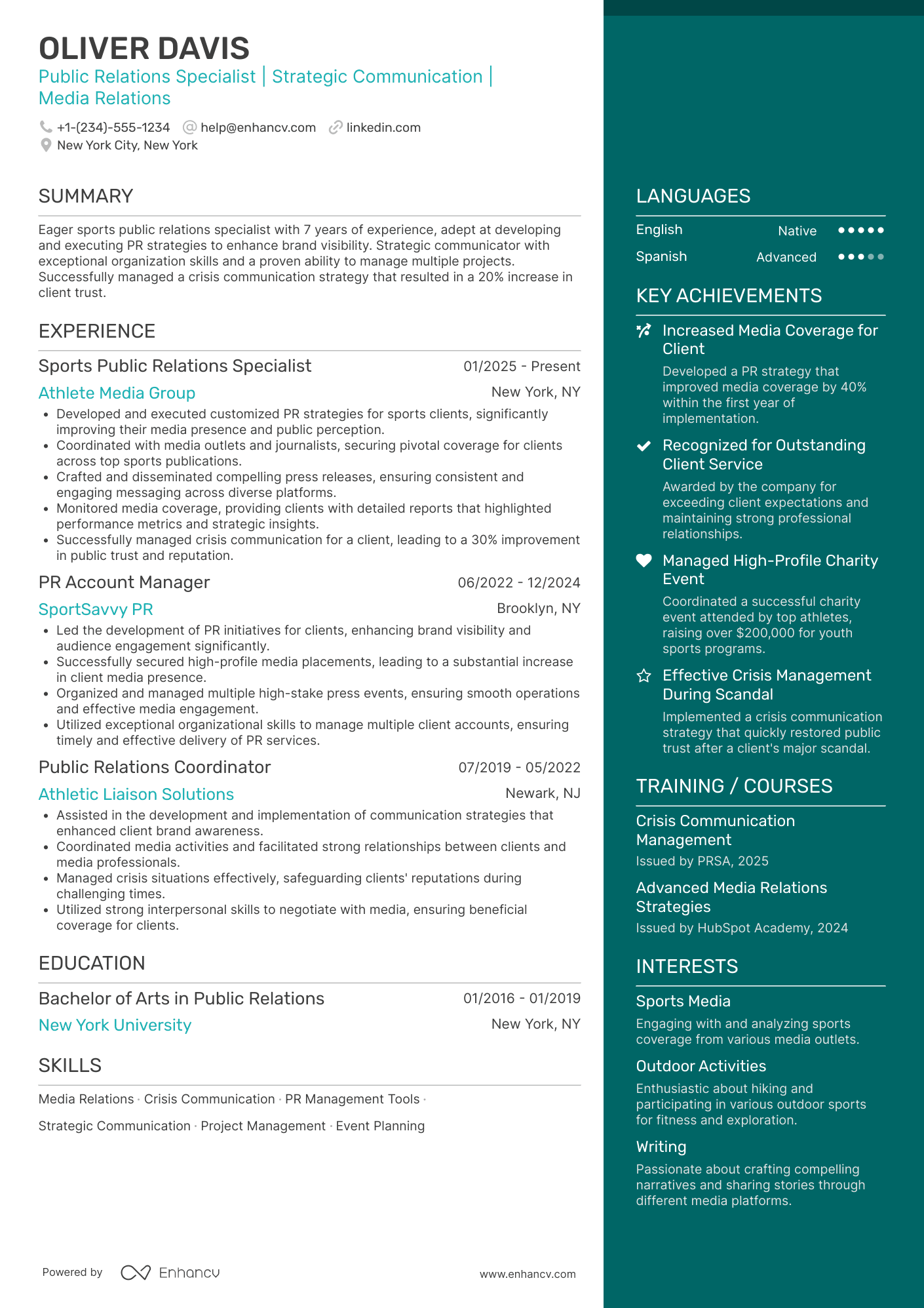
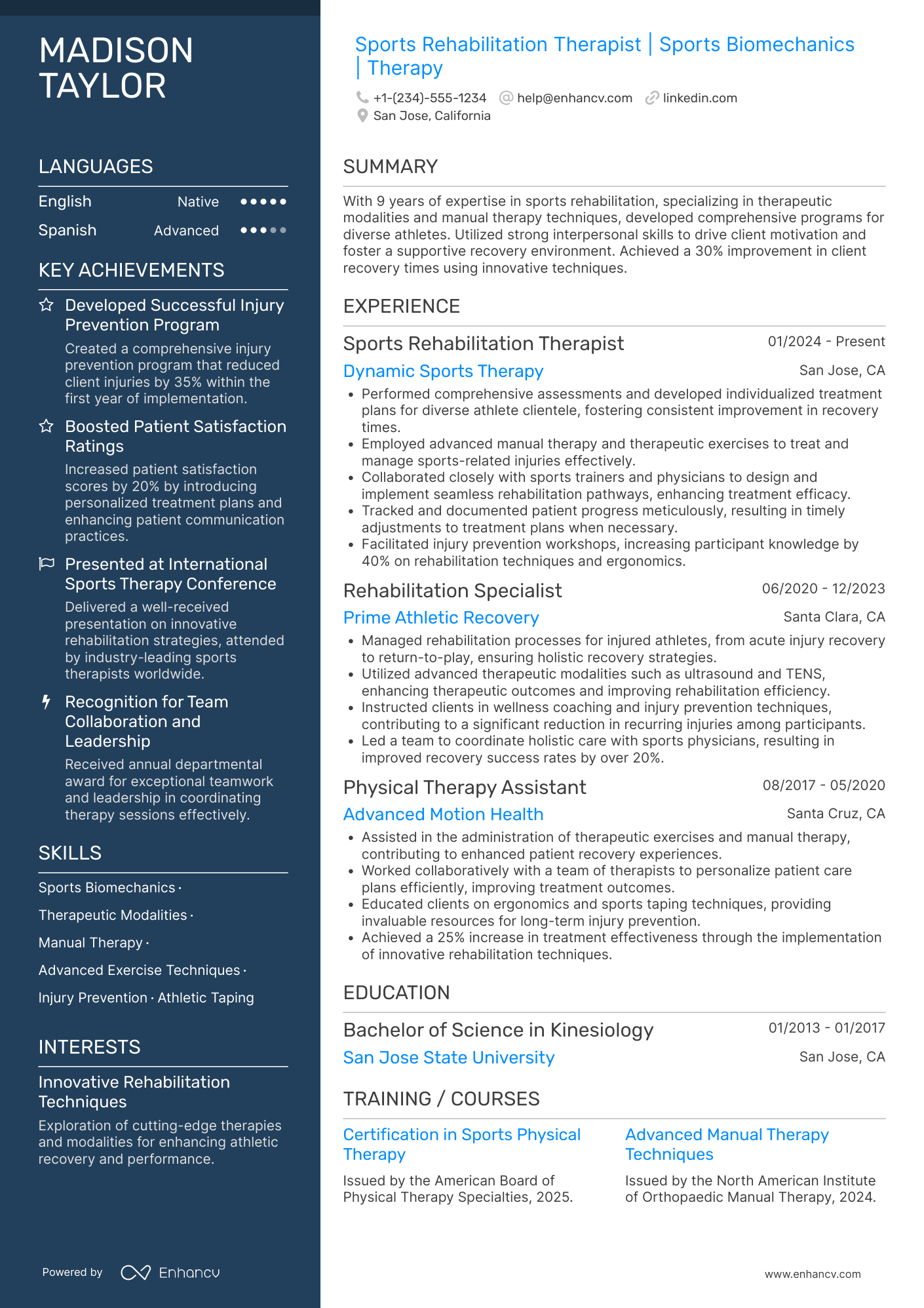
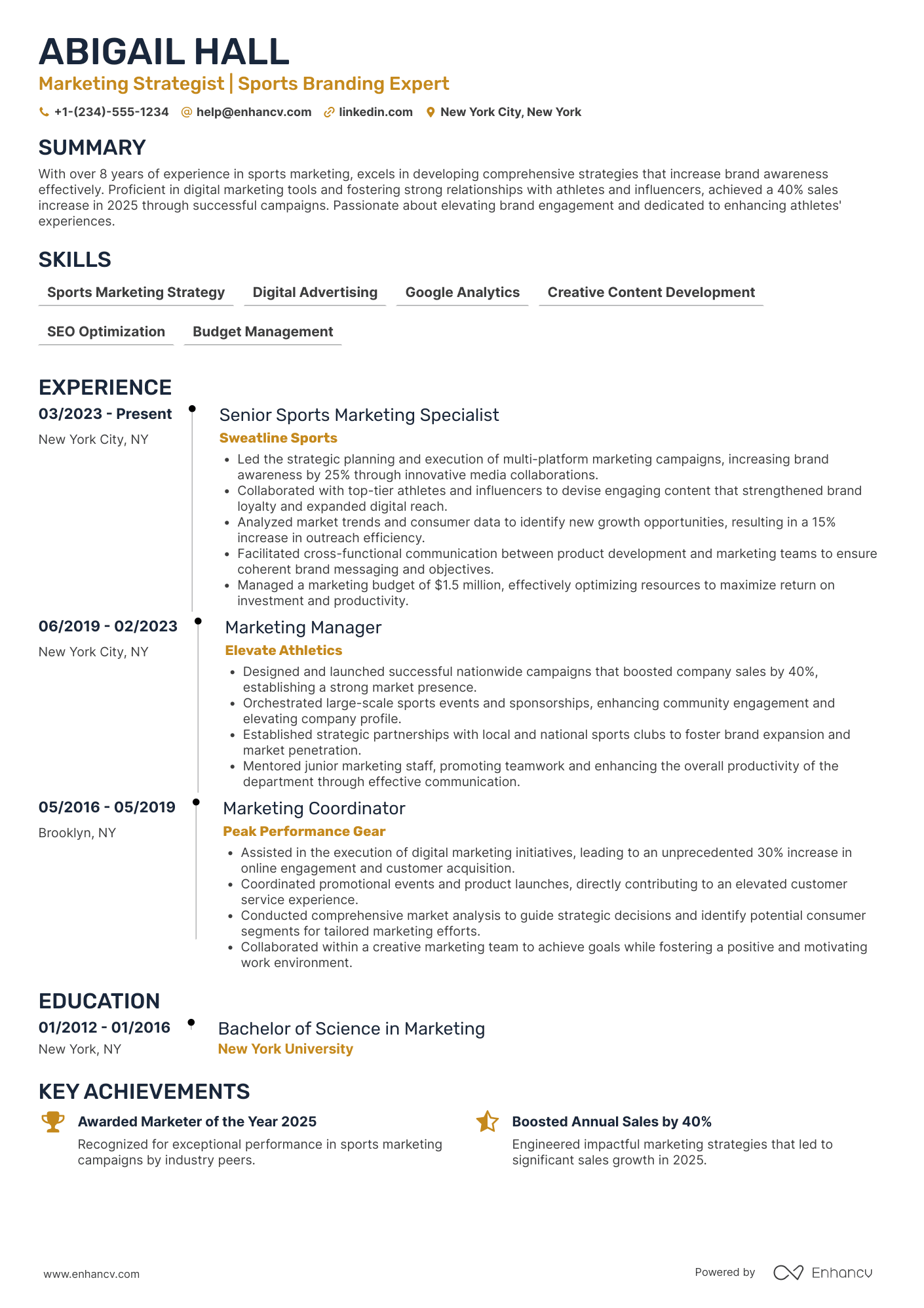
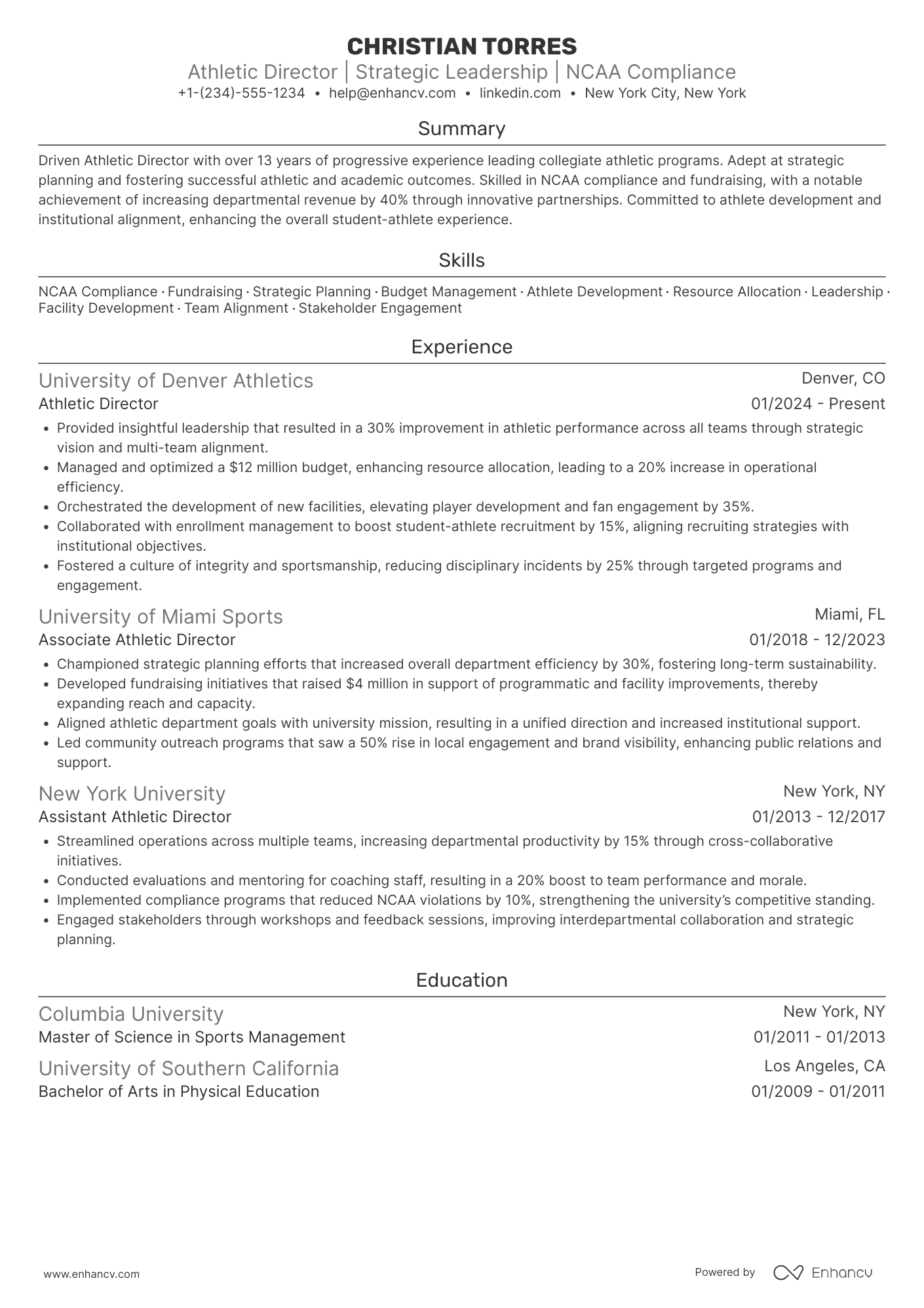
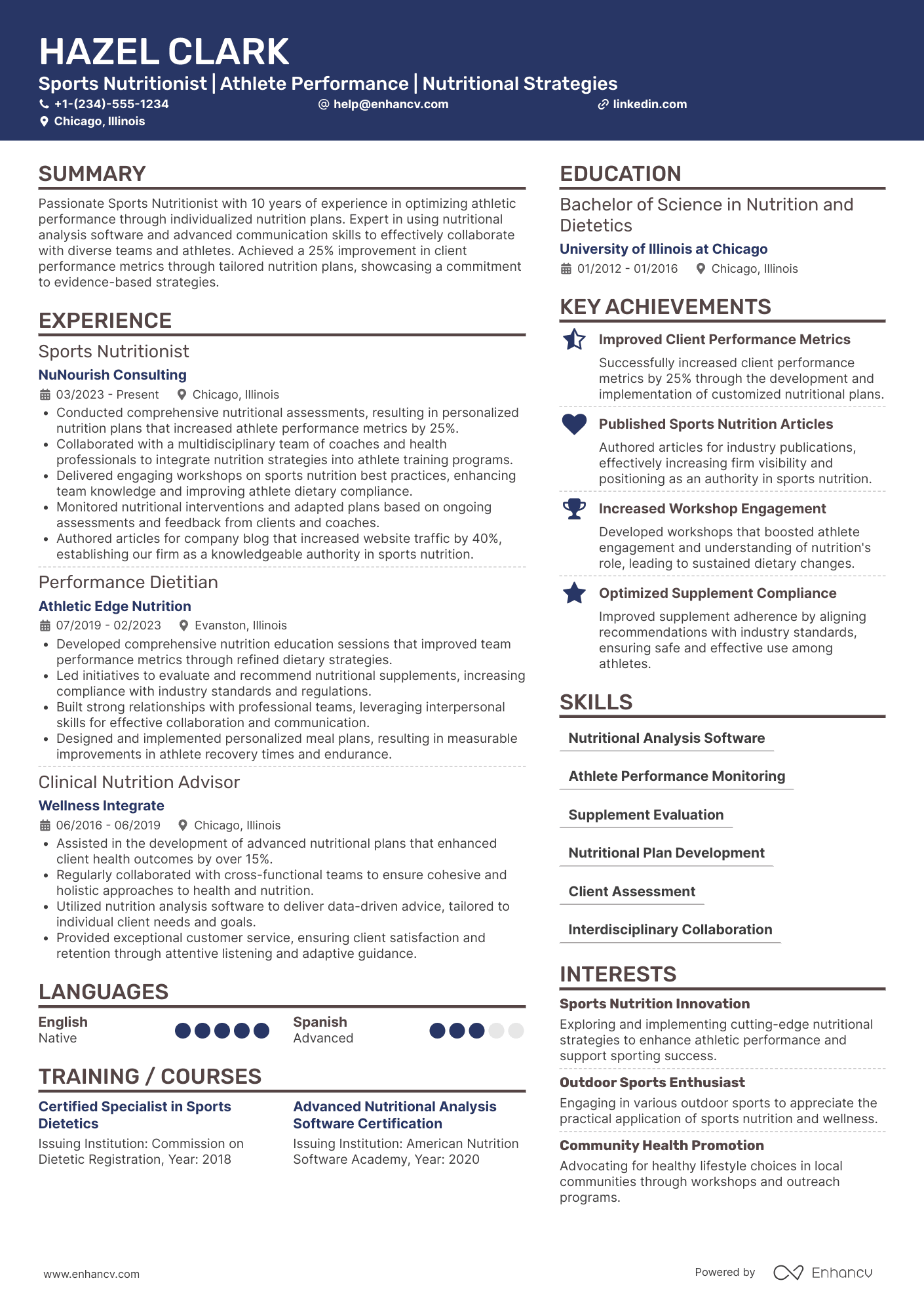
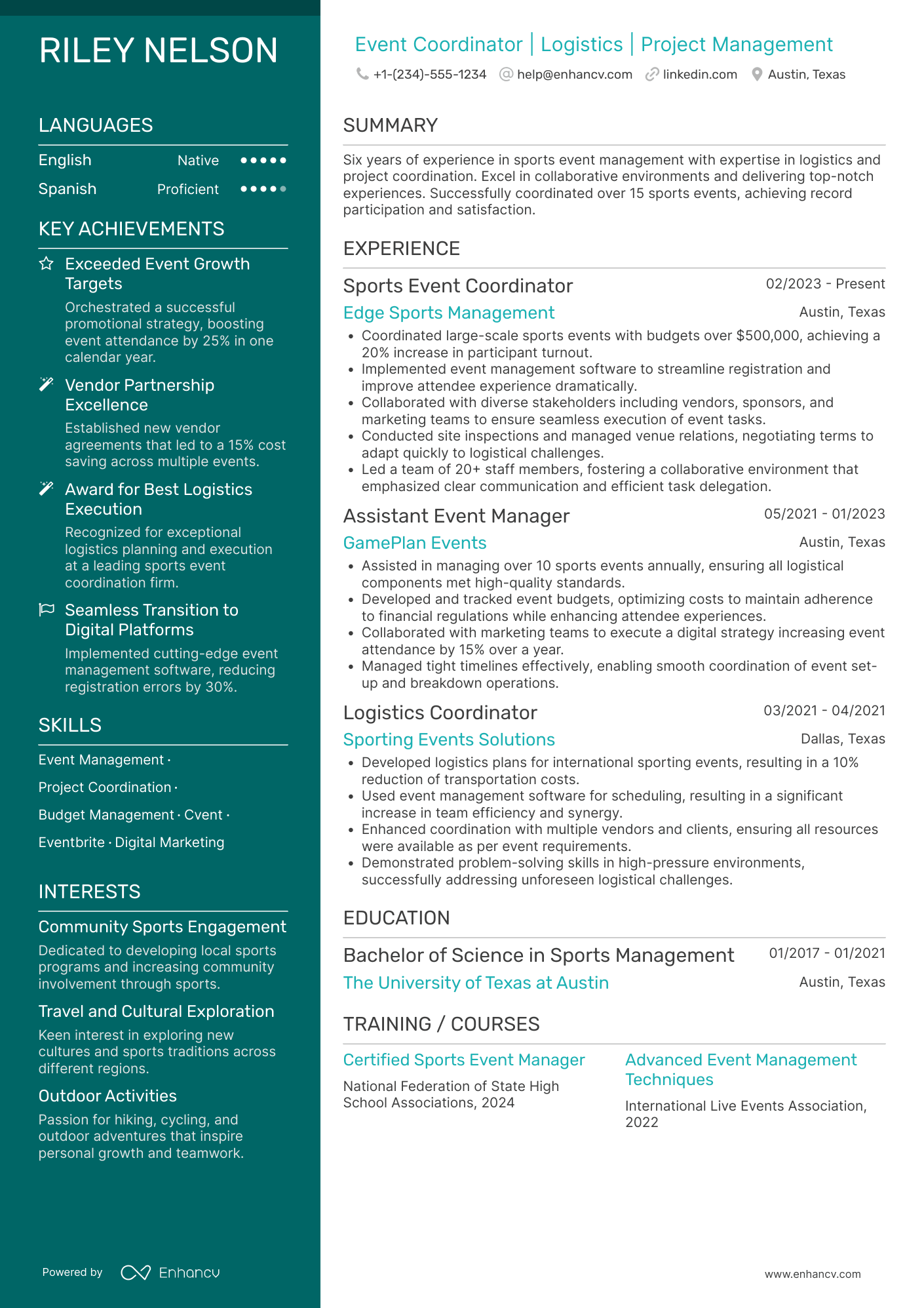
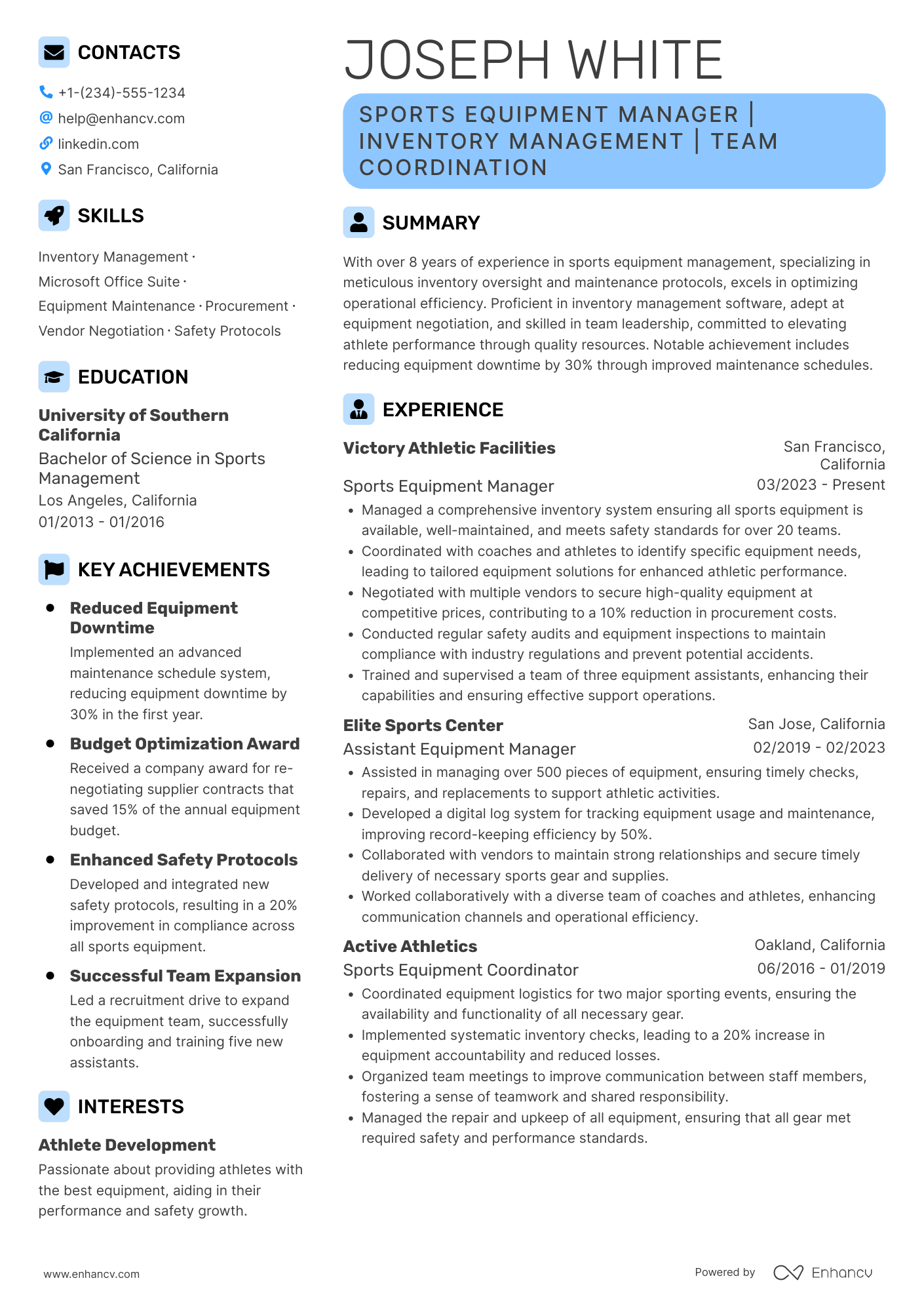
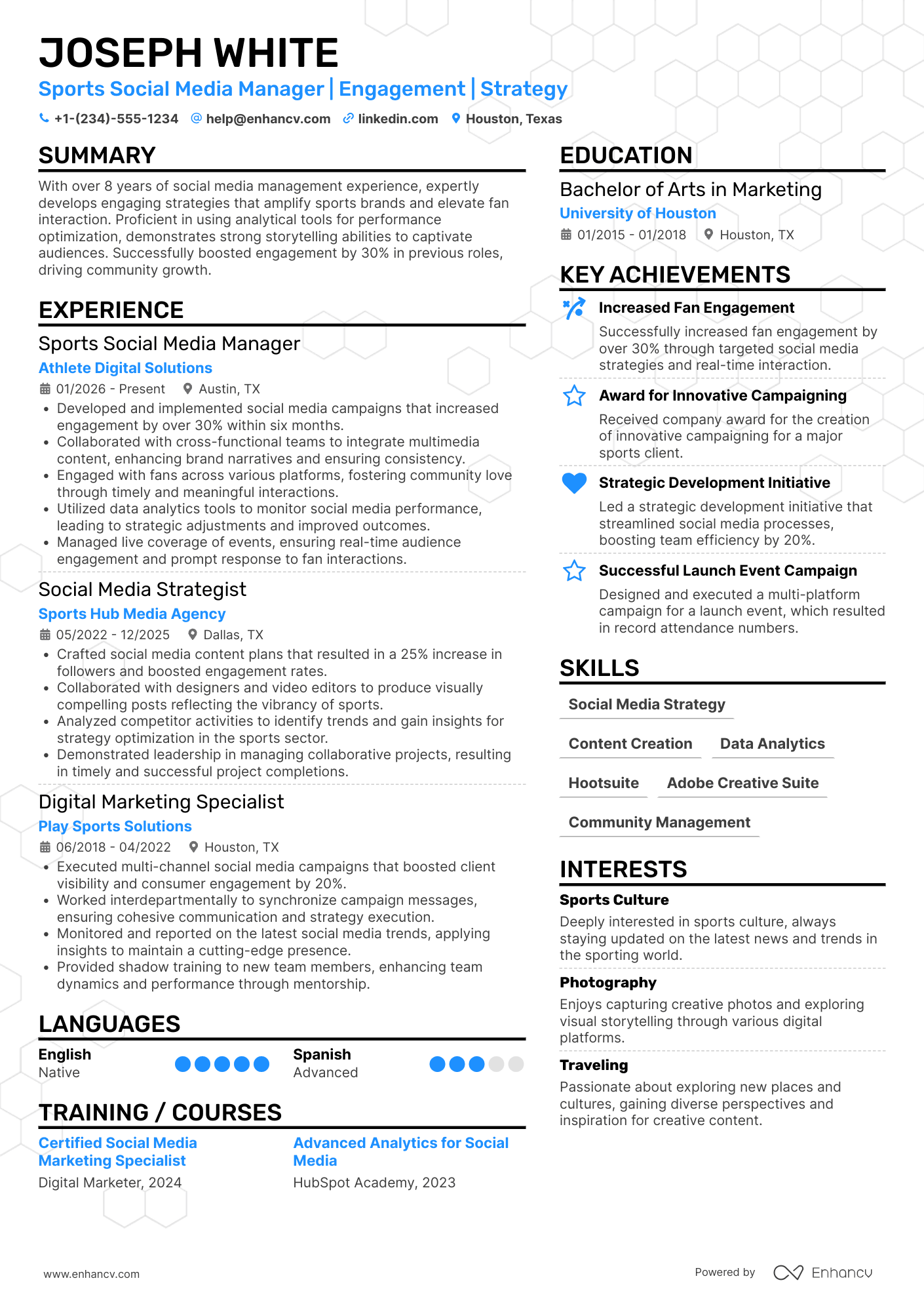
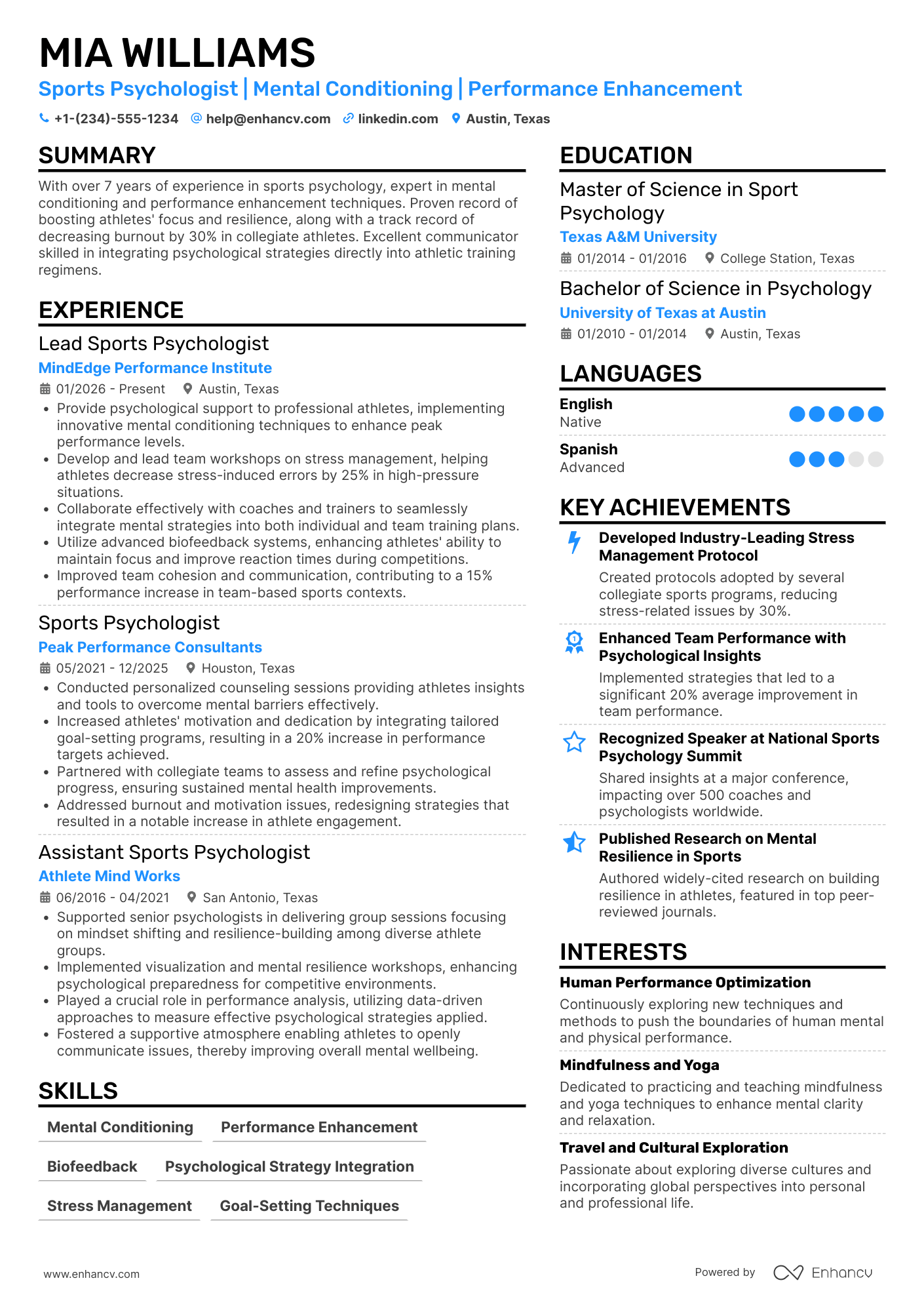
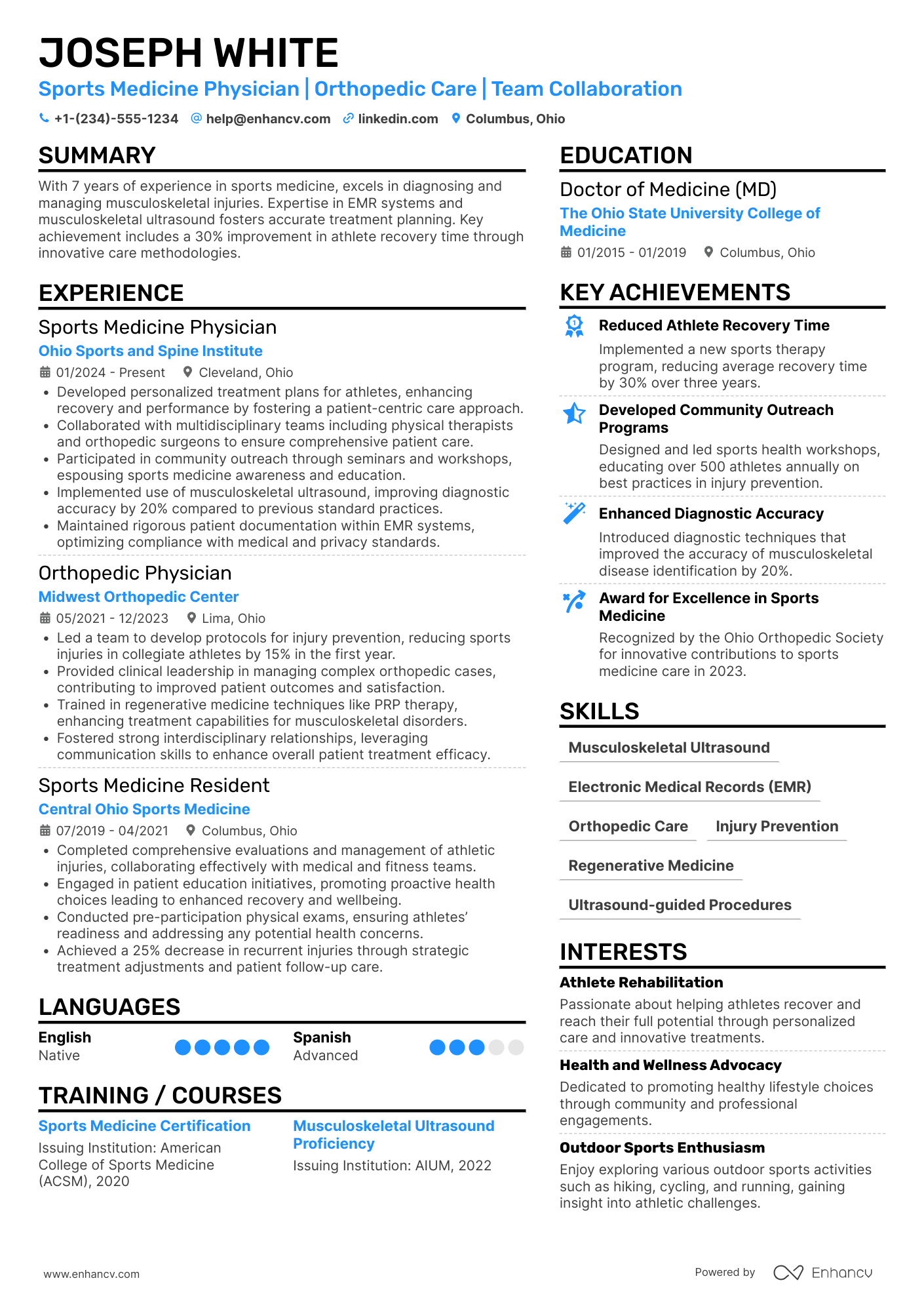
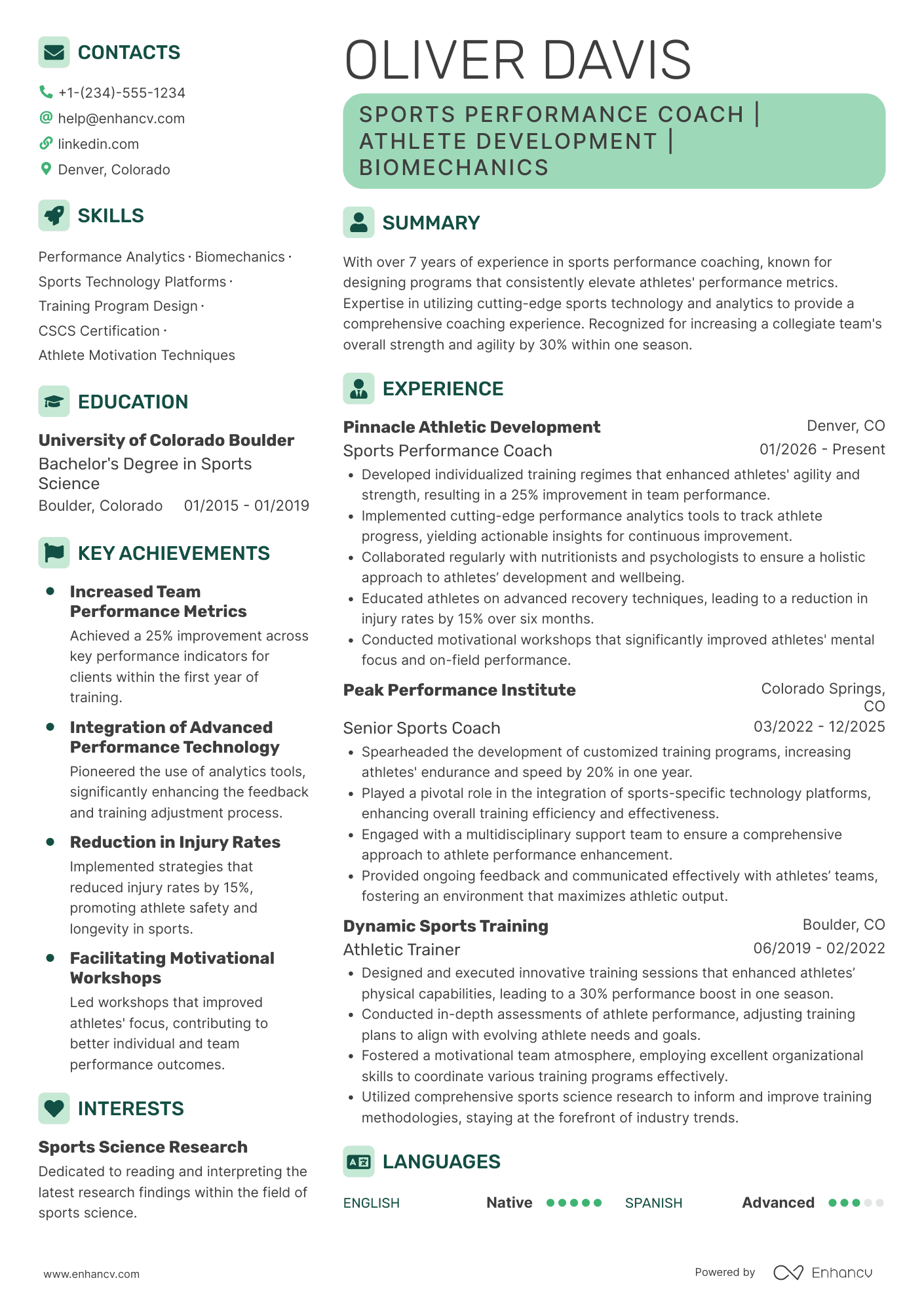
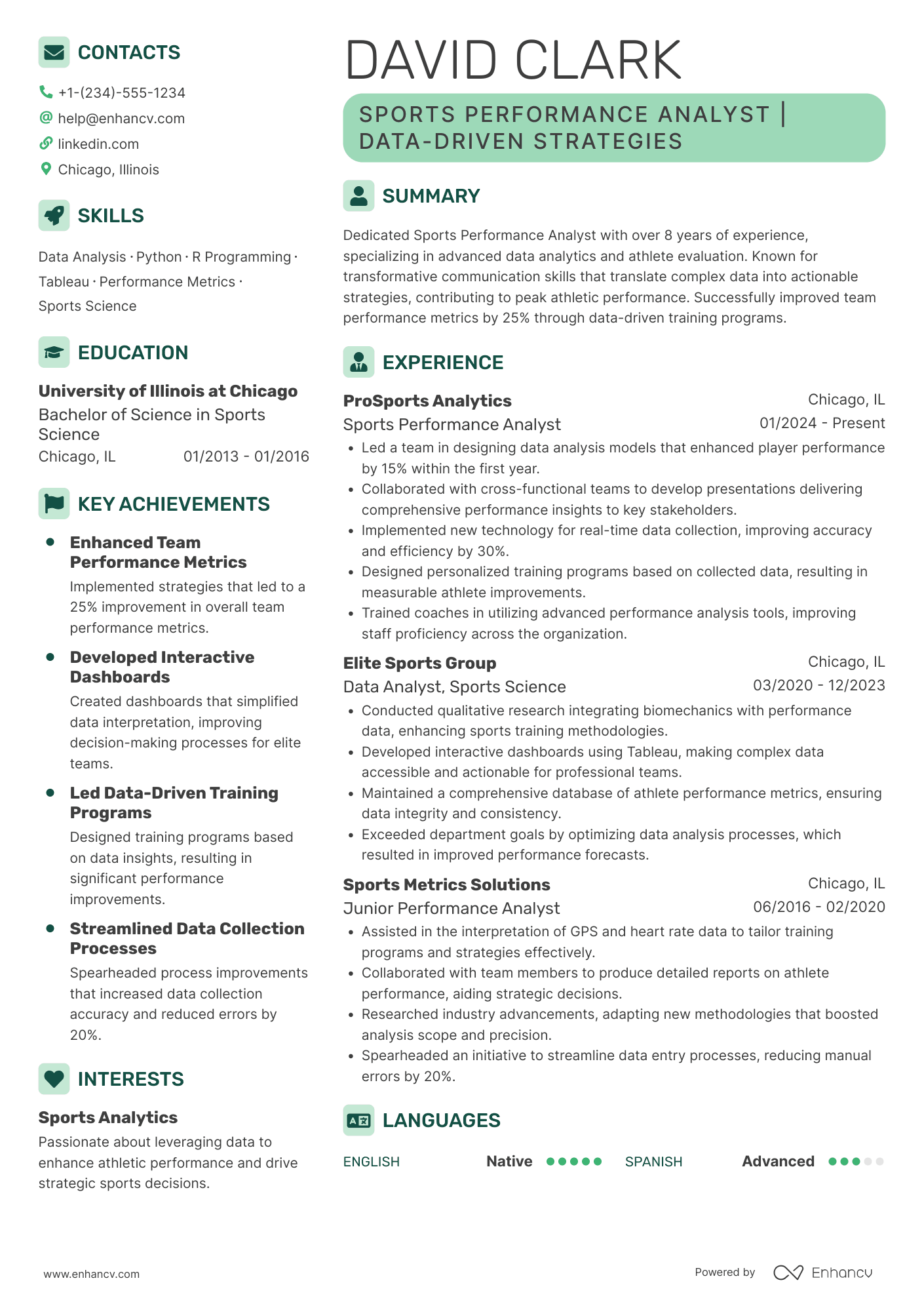
Sports marketing manager resume drafts often fail because they read like job descriptions, burying measurable results and brand impact. That hurts when an ATS (applicant tracking system) filters fast and recruiters scan in seconds in a crowded field.
Numbers in front of the GM get you the meeting — and our sports cover letter guide covers how to explain pulling off the season activation, the sponsorship renewal, or the brand pivot a hiring committee is trying to read for.
A strong resume shows what you moved, not what you used. Knowing how to make your resume stand out means you should highlight revenue influenced, campaign lift, audience growth, sponsorship value delivered, budget scope, launch timelines, retention gains, and partnerships that expanded reach.

Key takeaways
- Quantify every achievement with metrics like revenue, retention, win rates, or injury reduction.
- Use reverse-chronological format if you have relevant sports experience to show progression.
- Mirror the job posting's exact tools, platforms, and terminology in your experience bullets.
- Prove skills through measurable outcomes in your experience section, not just a skills list.
- Lead your summary with title, years of experience, domain, and one standout result.
- Entry-level candidates should highlight projects, volunteering, and certifications with specific results.
- Use Enhancv's tools to turn vague duties into concise, results-driven bullet points faster.
Job market snapshot for sports
We analyzed 1,546 recent sports job ads across major US job boards. These numbers help you understand role specialization trends, employer expectations, industry demand at a glance.
What level of experience employers are looking for sports
| Years of Experience | Percentage found in job ads |
|---|---|
| 1–2 years | 11.8% (182) |
| 3–4 years | 5.6% (87) |
| 5–6 years | 4.3% (67) |
| 7–8 years | 2.1% (32) |
| 9–10 years | 1.2% (19) |
| 10+ years | 6.5% (100) |
| Not specified | 66.6% (1029) |
Sports ads by area of specialization (industry)
| Industry (Area) | Percentage found in job ads |
|---|---|
| Healthcare | 37.0% (572) |
| Finance & Banking | 24.0% (371) |
| Education | 21.4% (331) |
| Media & Entertainment | 4.7% (73) |
| Retail & E-commerce | 4.2% (65) |
| Government | 3.1% (48) |
| Manufacturing | 1.9% (30) |
| Travel & Hospitality | 1.4% (22) |
| Other | 0.7% (11) |
Top companies hiring sports
| Company | Percentage found in job ads |
|---|---|
| Stryker Corporation | 4.7% (72) |
| Sports Facilities Company | 3.9% (61) |
| Buffalo Wild Wings | 1.9% (30) |
| Compass Group USA Inc | 1.6% (24) |
| Google LLC | 1.5% (23) |
| NBCUniversal | 1.2% (18) |
| Smith & Nephew | 1.2% (18) |
| The Bay Club Company | 1.2% (18) |
| Warner Bros Discovery Inc | 1.2% (18) |
| YMCA Metro Atlanta | 1.0% (15) |
Role overview stats
These tables show the most common responsibilities and employment types for sports roles. Use them to align your resume with what employers expect and to understand how the role is structured across the market.
Day-to-day activities and top responsibilities for a sports
| Responsibility | Percentage found in job ads |
|---|---|
| Cpr | 7.5% (116) |
| Microsoft office | 6.4% (99) |
| Excel | 5.2% (81) |
| First aid | 5.0% (78) |
| Customer service | 4.6% (71) |
| Communication | 4.3% (67) |
| Aed | 3.0% (47) |
| Project management | 3.0% (47) |
| Word | 3.0% (47) |
| Social media | 3.0% (46) |
| Basic life support | 2.7% (42) |
| Powerpoint | 2.5% (39) |
Type of employment (remote vs on-site vs hybrid)
| Employment type | Percentage found in job ads |
|---|---|
| On-site | 89.8% (1388) |
| Hybrid | 8.1% (125) |
| Remote | 2.1% (33) |
How to format a sports resume
Recruiters reviewing sports resumes prioritize athletic achievements, coaching certifications, relevant playing or training experience, and measurable contributions to team performance. A clean, well-structured format ensures these signals surface quickly during both human review and applicant tracking system (ATS) scans. Choosing the right resume format is essential to making the best first impression.

I have significant experience in this role—which format should I use?
Use a reverse-chronological format to lead with your most recent and relevant sports experience. Do:
- Highlight the scope of your roles—team size, competition level, program responsibilities, and any leadership or coordination duties.
- Feature role-specific credentials such as coaching certifications, sport-specific training methodologies, performance analysis tools, or athletic programming expertise.
- Quantify outcomes wherever possible, including win-loss records, athlete development metrics, revenue generated through programs, or participation growth.
I'm junior or switching into this role—what format works best?
A hybrid format works best, allowing you to lead with relevant skills and certifications while still showing a clear experience timeline. Do:
- Place a skills section near the top featuring sport-specific competencies, certifications (CPR, CSCS, NASM), and any relevant technology proficiency.
- Include transferable projects or volunteer experience—such as organizing intramural leagues, personal training clients, or managing community sports events—that demonstrate hands-on involvement in the field.
- Connect each experience entry to a clear action and outcome so recruiters can assess your potential impact.
Why not use a functional resume?
A functional format strips away the timeline context that recruiters need to evaluate your progression, the settings you've worked in, and the consistency of your contributions in sports roles.
- Career changers: If you're transitioning from a related field like physical therapy, recreation management, or education, and your sports experience is limited to volunteer or part-time roles.
- Limited work history: If you're a recent graduate or former athlete whose competitive career serves as your primary experience and you haven't yet held formal sports industry positions.
Now that you've established a clean, readable format, it's time to fill it with the right sections that showcase your qualifications effectively.
What sections should go on a sports resume
Recruiters expect to see a sports resume that quickly proves your performance impact, role fit, and ability to deliver results in competitive environments. Understanding which resume sections to include ensures maximum clarity:
- Header
- Summary
- Experience
- Skills
- Projects
- Education
- Certifications
- Optional sections: Awards, Leadership, Volunteering
Your strongest experience bullets should emphasize measurable impact, outcomes, scope, and results—wins, rankings, revenue, retention, efficiency, or athlete development.
Is your resume good enough?
Drop your resume here or choose a file. PDF & DOCX only. Max 2MB file size.
Once you’ve organized your sports resume with the right components, the next step is to write your experience section in a way that fits that structure and shows your impact.
How to write your sports resume experience
The experience section is where you prove you can deliver results in the sports industry—not just describe what you did day-to-day. Hiring managers in sports organizations, athletic programs, and related businesses prioritize demonstrated impact, role-relevant tools and methods, and measurable outcomes over generic task lists. Writing a targeted resume that speaks directly to the role's requirements will set you apart.
Each entry should include:
- Job title
- Company and location (or remote)
- Dates of employment (month and year)
Three to five concise bullet points showing what you owned, how you executed, and what outcomes you delivered:
- Ownership scope: the programs, teams, athlete development initiatives, facilities, events, or revenue channels you were directly accountable for within a sports organization.
- Execution approach: the sport-specific tools, performance analytics platforms, training methodologies, scouting frameworks, or event management systems you used to make decisions and deliver work.
- Value improved: changes to athlete performance, fan engagement, ticket revenue, team operations efficiency, injury prevention, recruitment pipelines, or compliance standards relevant to your role in sports.
- Collaboration context: how you worked across coaching staffs, athletic training departments, marketing teams, league officials, sponsors, agents, or community partners to achieve shared goals.
- Impact delivered: outcomes expressed through competitive results, organizational growth, audience reach, operational scale, or business performance rather than routine activity.
Experience bullet formula
A sports experience example
✅ Right example - modern, quantified, specific.
Sports Performance Data Analyst
Austin FC | Austin, TX
2022–Present
MLS club supporting first-team performance, scouting, and injury-risk reduction across training and match environments.
- Built automated match and training dashboards in Tableau using SQL and Python, cutting weekly reporting time by 60% and improving coach adoption from two to six staff groups.
- Integrated Catapult GPS, heart-rate, and wellness data into a unified athlete load model, reducing soft-tissue injuries by 18% season over season in partnership with sports medicine and strength staff.
- Developed opponent scouting workflows with Wyscout event data and video tagging in Hudl Sportscode, improving set-piece expected goals by 0.12 per match over a twelve-match span.
- Ran A/B testing on training microcycle adjustments using R and mixed-effects models, increasing high-intensity running distance by 9% while holding perceived exertion within target ranges.
- Collaborated with coaches, analysts, and engineers to productionize data pipelines in Git and Airflow, improving data freshness from forty-eight hours to four hours and reducing manual data errors by 35%.
Now that you've seen how to structure a strong experience entry, let's focus on adjusting that format to match the specific role you're targeting.
How to tailor your sports resume experience
Recruiters evaluate sports resumes through both human review and applicant tracking systems (ATS), so tailoring your resume to the job description is essential. Aligning your background with the specific role ensures your qualifications register with both audiences.
Ways to tailor your sports experience:
- Mirror the exact sport management software or platforms listed in the posting.
- Match terminology for athlete development models or training methodologies referenced.
- Reflect the specific performance metrics or KPIs the organization tracks.
- Highlight experience with league compliance standards or governing body regulations.
- Emphasize collaboration with coaching staff or cross-departmental sports operations teams.
- Include relevant sport or athletic division experience that fits the role.
- Reference scouting frameworks or player evaluation systems the organization uses.
- Align your work with game-day operations or event management workflows described.
Tailoring means connecting your real accomplishments to the language and priorities of the job posting, not forcing keywords where they don't belong.
Resume tailoring examples for sports
| Job description excerpt | Untailored | Tailored |
|---|---|---|
| "Coordinate game-day operations for NCAA Division I football, including logistics for visiting teams, officials, and broadcast crews using Teamworks scheduling platform." | Helped with event logistics and coordinated various tasks on game days. | Coordinated game-day operations for NCAA Division I football programs, managing logistics for visiting teams, officiating crews, and broadcast partners through Teamworks to ensure seamless execution across 12 home contests per season. |
| "Develop and execute sport-specific strength and conditioning programs using Volt Athletics for a roster of 30+ collegiate athletes, tracking progress through force plate testing and GPS monitoring." | Designed workout plans for athletes and tracked their performance over time. | Built and administered individualized strength and conditioning programs for 35 collegiate athletes in Volt Athletics, using force plate assessments and Catapult GPS data to reduce soft-tissue injuries by 22% over two seasons. |
| "Manage sponsorship activation and fulfillment for a minor league baseball organization, ensuring deliverables across LED signage, in-game promotions, and social media integrations tracked in KORE Software." | Assisted with sponsorship tasks and helped maintain partner relationships. | Managed end-to-end sponsorship activation for 40+ partners across a minor league baseball season, fulfilling LED signage, in-game promotions, and social media deliverables while tracking all assets and proof-of-performance reporting in KORE Software. |
Once you’ve aligned your experience with the role’s priorities, the next step is to quantify your sports achievements to show the measurable impact behind those choices.
How to quantify your sports achievements
Quantifying your sports achievements proves your impact beyond effort. Focus on performance outcomes, consistency, efficiency, and risk reduction—stats like win rate, personal bests, accuracy, availability, and time saved. For more guidance on quantifying achievements, review examples tailored to different roles.
Quantifying examples for sports
| Metric | Example |
|---|---|
| Performance results | "Improved 5K time from 19:42 to 18:55 over twelve weeks using a Garmin training plan and weekly interval tracking." |
| Consistency | "Maintained 92% practice attendance across a twenty-week season and completed 100% of assigned strength sessions in TeamBuildr." |
| Accuracy | "Raised free-throw accuracy from 71% to 80% across twenty games by logging 200 shots per week and reviewing FormShot videos." |
| Efficiency | "Cut average transition setup time from 14 seconds to 10 seconds by standardizing calls and running two timed drills per practice." |
| Risk reduction | "Reduced soft-tissue injuries from four to one season-over-season by implementing a ten-minute warmup protocol and weekly mobility screenings." |
Turn vague job duties into measurable, recruiter-ready resume bullets in seconds with Enhancv's Bullet Point Generator.
Once you've crafted strong bullet points for your experience, you'll want to apply that same precision to presenting your hard and soft skills throughout your sports resume.
How to list your hard and soft skills on a sports resume
Your skills section shows sports employers how you'll drive performance and revenue, and recruiters and an ATS (applicant tracking system) use them to screen for job-match keywords—aim for a balanced mix of role-specific hard skills and execution-focused soft skills. sports roles require a blend of:
- Product strategy and discovery skills.
- Data, analytics, and experimentation skills.
- Delivery, execution, and go-to-market discipline.
- Soft skills.
Your skills section should be:
- Scannable (bullet-style grouping).
- Relevant to the job post.
- Backed by proof in experience bullets.
- Updated with current tools.
Place your skills section:
- Above experience if you're junior or switching careers.
- Below experience if you're mid/senior with strong achievements.

Hard skills
- Ticketing platforms: Ticketmaster, SeatGeek
- Customer relationship management: Salesforce
- Marketing automation: HubSpot
- Paid media: Meta Ads, Google Ads
- Search engine optimization, content strategy
- Email and lifecycle marketing
- Sponsorship valuation, inventory packaging
- Brand partnerships activation planning
- Event operations run-of-show
- Sports analytics: Opta, Stats Perform
- Dashboarding: Tableau, Power BI
- A/B testing and experimentation
Soft skills
- Align stakeholders on priorities
- Communicate game-day decisions fast
- Run cross-functional weekly cadences
- Write clear activation briefs
- Negotiate sponsor deliverables
- Manage vendor and agency partners
- Escalate risks early and clearly
- Make data-informed trade-offs
- Own timelines and dependencies
- Coordinate with athletes and coaches
- Deliver under fixed deadlines
- Resolve conflicts with partners
How to show your sports skills in context
Skills shouldn't live only in a dedicated skills list. Browse examples of resume skills across industries to see how professionals integrate them effectively.
They should be demonstrated in:
- Your summary (high-level professional identity)
- Your experience (proof through outcomes)
Here's what this looks like in practice.
Summary example
Senior athletic performance coach with 12 years optimizing elite training programs. Skilled in periodization, Catapult GPS analytics, and injury prevention protocols. Boosted athlete return-to-play rates by 34% through data-driven recovery programming and cross-departmental collaboration.
- Reflects senior-level expertise immediately
- Names industry-specific tools and methods
- Leads with a measurable outcome
- Signals collaboration and leadership ability
Experience example
Head of Athlete Performance
Apex Sports Institute | Denver, CO
June 2019–March 2024
- Redesigned strength periodization cycles using Catapult GPS data, reducing soft-tissue injuries by 27% across three competitive seasons.
- Partnered with sports medicine and nutrition staff to build integrated recovery protocols, improving return-to-play timelines by 19%.
- Implemented Teambuildr programming for 85+ athletes, increasing training compliance rates from 71% to 94% within one year.
- Every bullet includes measurable proof.
- Skills appear naturally within achievements.
Once you’ve tied your athletic abilities to real outcomes and responsibilities, the next step is learning how to write a sports resume with no experience so you can present those strengths without relying on formal roles.
How do I write a sports resume with no experience
Even without full-time experience, you can demonstrate readiness through:
- Varsity or club team participation
- Intramural league leadership roles
- Sports analytics class projects
- Volunteer event operations support
- Athletic training room shadowing
- Coaching youth sports sessions
- Sports media content portfolio
- Campus recreation staff shifts
Focus on:
- Sports metrics, results, and impact
- Relevant tools and workflows used
- Operations responsibilities and scope
- Compliance, safety, and procedures
For a deeper guide on building a compelling resume without work experience, see how to leverage projects, volunteering, and academics effectively.
Resume format tip for entry-level sports
Use a combination resume format because it highlights sports-relevant skills first, then backs them with projects, volunteering, and campus roles. Do:
- Lead with a skills summary tied to sports roles.
- Turn substitutes into quantified bullets.
- List sports tools you used by name.
- Add links to game film or work.
- Match keywords from the job post.
- Built a Tableau dashboard from NCAA play-by-play data to track pace and efficiency, cutting weekly scouting prep time by 30%.
Even without formal experience, your academic background can demonstrate relevant knowledge and dedication, making your education section a critical part of your sports resume.
How to list your education on a sports resume
Your education section helps hiring teams confirm you have the foundational knowledge needed in sports. It validates relevant training in areas like kinesiology, sports management, or exercise science.
Include:
- Degree name
- Institution
- Location
- Graduation year
- Relevant coursework (for juniors or entry-level candidates)
- Honors & GPA (if 3.5 or higher)
Skip month and day details—list the graduation year only.
Here's a strong education entry tailored to a sports resume:
Example education entry
Bachelor of Science in Sports Management
University of Florida, Gainesville, FL
Graduated 2022
GPA: 3.7/4.0
- Relevant Coursework: Sports Marketing, Athletic Program Administration, Exercise Physiology, Sports Law, and Event Management
- Honors: Dean's List (six consecutive semesters), National Sports Management Honor Society
How to list your certifications on a sports resume
Certifications on your resume show your commitment to learning, prove tool proficiency, and signal sports industry relevance. They help recruiters trust your readiness for fast-paced roles across teams, leagues, agencies, and venues.
Include:
- Certificate name
- Issuing organization
- Year
- Optional: credential ID or URL
- Place certifications below education when your degree is recent and your certifications add minor, supporting value.
- Place certifications above education when they are recent and directly relevant to the sports role you want.
Best certifications for your sports resume
- CPR and AED Certification (American Red Cross)
- Certified Strength and Conditioning Specialist (National Strength and Conditioning Association)
- Certified Personal Trainer (National Academy of Sports Medicine)
- USA Track and Field Level One Coaching Certification
- Sports First Aid Certification (National Safety Council)
- SafeSport Trained (U.S. Center for SafeSport)
- Adobe Certified Professional (Adobe)
Once you’ve placed your credentials where recruiters can verify them quickly, focus on writing your sports resume summary to connect those qualifications to the value you bring.
How to write your sports resume summary
Your resume summary is the first thing a recruiter reads. A strong opening lines up your sports background with the role's exact needs.
Keep it to three to four lines, with:
- Your current title and total years of experience in sports or athletics.
- The domain you work in, such as collegiate athletics, sports marketing, or event operations.
- Core skills like athlete development, program coordination, or performance analysis.
- One or two measurable wins, such as revenue growth, participation increases, or win-loss improvements.
- Soft skills tied to real outcomes, like leadership that improved team retention or communication that streamlined recruiting.

PRO TIP
At an early career level, lead with relevant skills, certifications, and specific contributions you've already made. Avoid vague phrases like "passionate team player" or "motivated self-starter." Instead, name the tools you've used and the results you've delivered, even if they're modest. Recruiters want clarity and relevance, not enthusiasm without evidence.
Example summary for a sports
Sports program coordinator with two years of experience in collegiate athletics operations. Managed scheduling for 12 varsity teams and boosted event attendance by 18% through targeted campus outreach campaigns.
Optimize your resume summary and objective for ATS
Drop your resume here or choose a file.
PDF & DOCX only. Max 2MB file size.
Now that your summary captures your strongest qualifications at a glance, make sure your header presents your contact details just as clearly so recruiters can reach you without searching.
What to include in a sports resume header
A resume header sits at the top of your resume and matters in sports because it boosts visibility, builds credibility, and speeds recruiter screening.
Essential resume header elements
- Full name
- Tailored job title and headline
- Location
- Phone number
- Professional email
- GitHub link
- Portfolio link
A LinkedIn link helps recruiters verify experience quickly and supports screening.
Don't include a photo on a sports resume unless the role is explicitly front-facing or appearance-dependent.
Keep your header scannable by using one line per detail and matching your job title to the sports role's exact wording.
Sports resume header
Jordan Taylor
Sports Data Analyst | Athlete Performance Analytics
Austin, TX
(512) 555-13XX
jordan.taylor@enhancv.com github.com/jordantaylor yourwebsite.com linkedin.com/in/jordantaylor
Once your header clearly identifies you and your target role, add tailored extra sections to reinforce your qualifications and give coaches and recruiters more relevant context.
Additional sections for sports resumes
Standing out in sports hiring means showing depth beyond standard qualifications. Extra sections help prove your passion, industry involvement, and specialized credibility.
Consider adding these sections to strengthen your sports resume:
- Certifications and licenses
- Languages
- Volunteer coaching and community involvement
- Professional affiliations and memberships
- Hobbies and interests
- Awards and achievements
- Publications and media features
Once you've rounded out your resume with the right supplementary sections, it's worth ensuring your application package is complete by pairing it with a strong cover letter.
Do sports resumes need a cover letter
A cover letter isn't required for most sports roles, but it helps in competitive openings or when hiring managers expect one. If you're unsure about the basics, learn what a cover letter is and when it adds value. It can make a difference when your resume needs context or when your fit isn't obvious.
Use a cover letter to add details your sports resume can't show:
- Explain role and team fit by naming the sport, level, and environment, and matching your strengths to the job's daily needs.
- Highlight one or two relevant projects or outcomes, and include clear results like revenue, retention, attendance, or operational efficiency.
- Show understanding of the product, users, or business context by referencing the fan experience, athletes, partners, or league rules that shape decisions.
- Address career transitions or non-obvious experience by connecting past work to sports tasks, tools, and stakeholders, and clarifying why the switch works.
Drop your resume here or choose a file.
PDF & DOCX only. Max 2MB file size.
Once you’ve decided whether to include a cover letter based on the role and application requirements, you can use AI to improve your sports resume by quickly refining its wording, structure, and alignment with the job description.
Using AI to improve your sports resume
AI can sharpen your resume's clarity, structure, and impact. It helps refine bullet points, tighten language, and align content with specific roles. But overuse kills authenticity. Once your resume reads clearly and fits the role, step away from AI. For practical prompts and strategies, explore how ChatGPT can help with resume writing.
Here are 10 practical prompts you can copy and paste to strengthen specific sections of your sports resume:
- Strengthen summary focus: "Rewrite my sports resume summary to highlight relevant experience, core strengths, and the specific value I bring to this role."
- Quantify experience bullets: "Add measurable results to these sports experience bullet points using numbers, percentages, or specific outcomes wherever possible."
- Align skills with job posting: "Compare my sports resume skills section to this job description and suggest which skills to add, remove, or reorder."
- Tighten project descriptions: "Rewrite these sports project descriptions to emphasize my specific contributions, tools used, and measurable outcomes in fewer words."
- Improve action verbs: "Replace weak or repetitive verbs in my sports resume experience section with strong, specific action verbs that show direct impact."
- Refine education section: "Restructure my sports resume education section to highlight relevant coursework, honors, and athletic achievements that support this role."
- Tailor certification details: "Rewrite my sports certifications section to clearly connect each credential to the specific requirements listed in this job posting."
- Remove filler language: "Identify and remove vague or unnecessary words from my sports resume without changing the meaning of each bullet point."
- Clarify role-specific impact: "Rewrite these sports experience bullets so each one clearly shows what I did, how I did it, and what resulted."
- Check overall consistency: "Review my full sports resume for inconsistent formatting, tense shifts, and tone mismatches across all sections."
Stop using AI once your resume sounds accurate, specific, and aligned with real experience. AI should never invent experience or inflate claims—if it didn't happen, it doesn't belong here.
Conclusion
A strong sports resume highlights measurable outcomes, role-specific skills, and a clear structure. Lead with impact, support it with numbers, and match your experience to the sports role you want.
Keep every section easy to scan, consistent, and focused on results. This approach shows you’re ready for today’s sports hiring market and the next hiring cycle.