



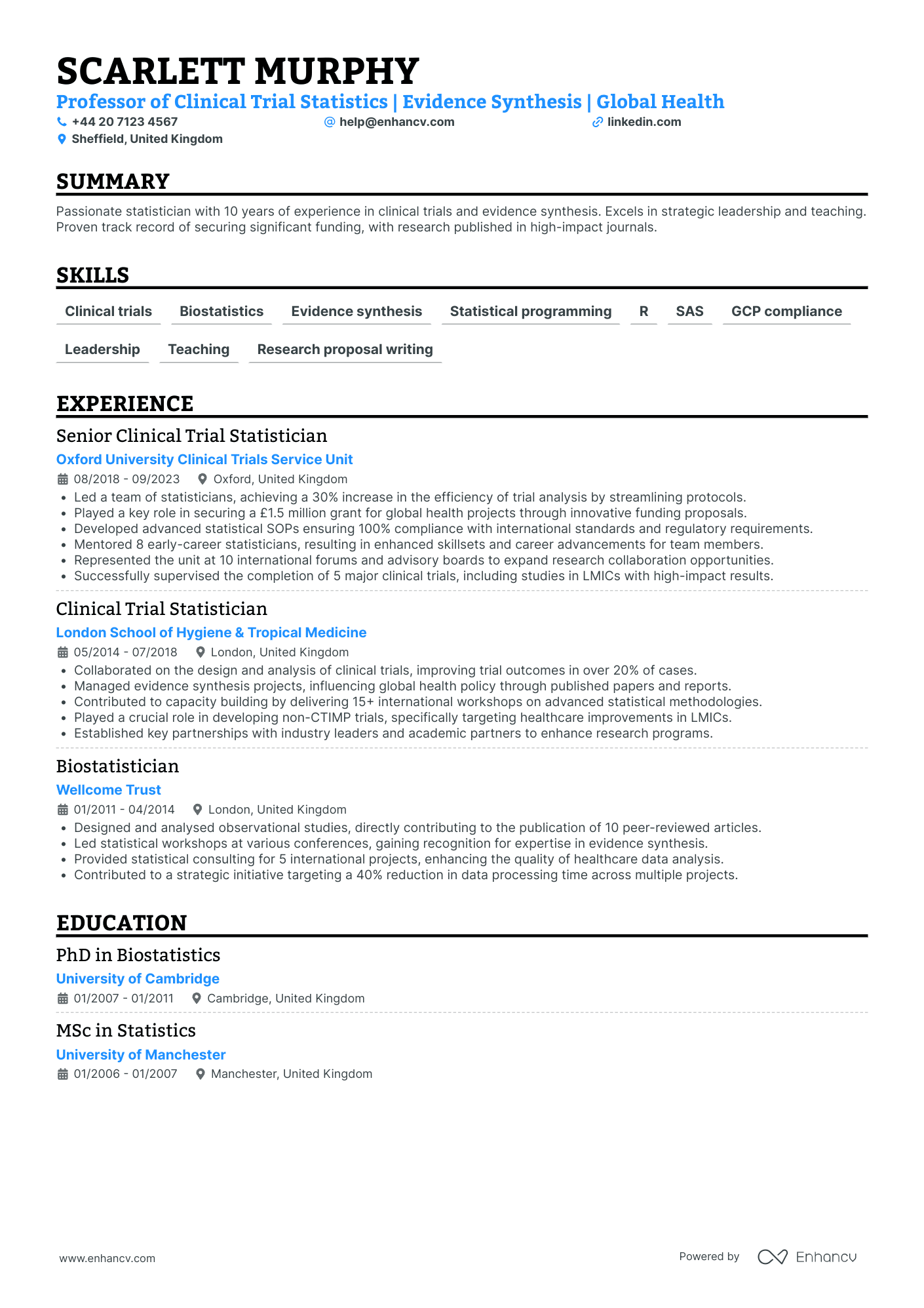
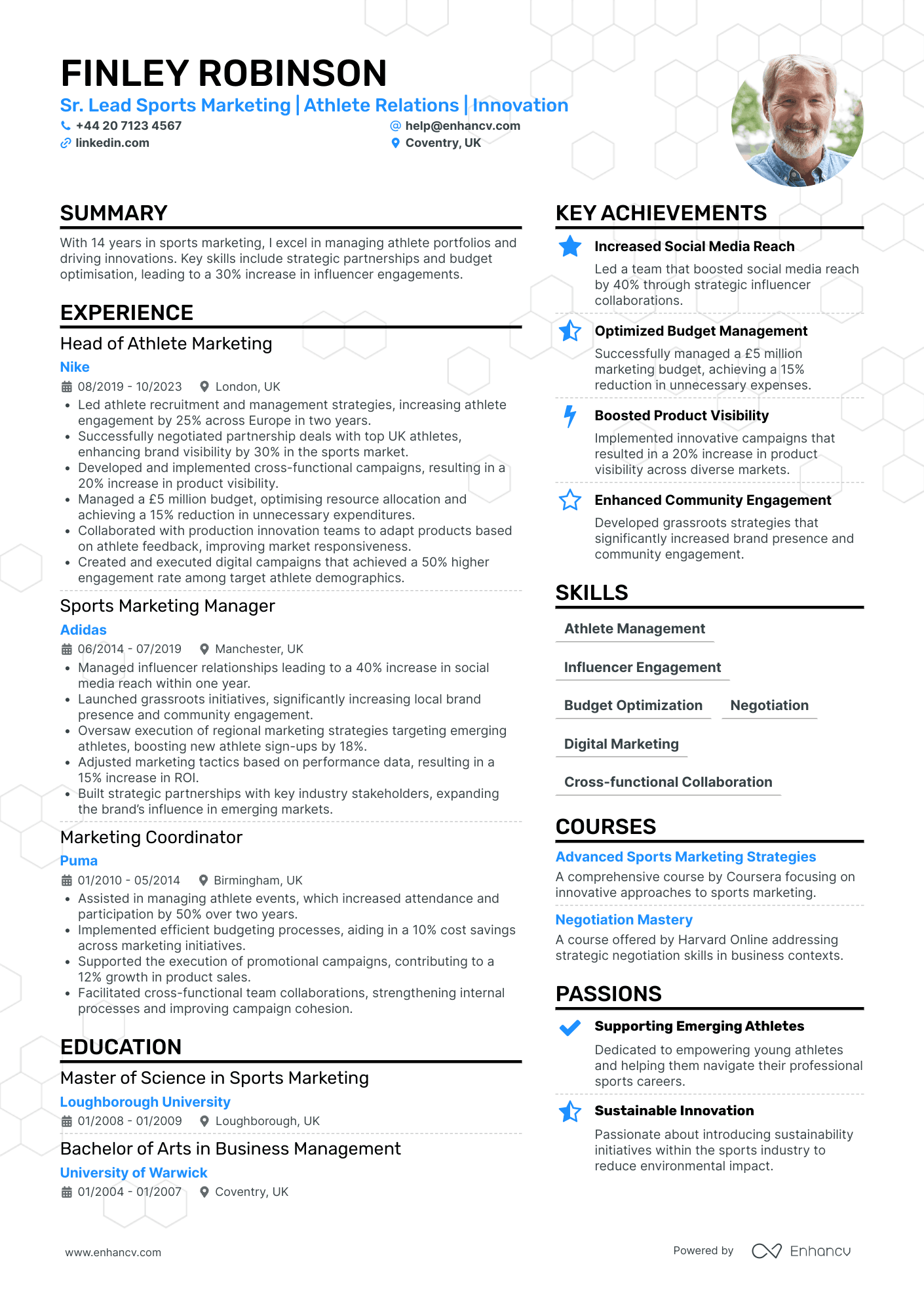
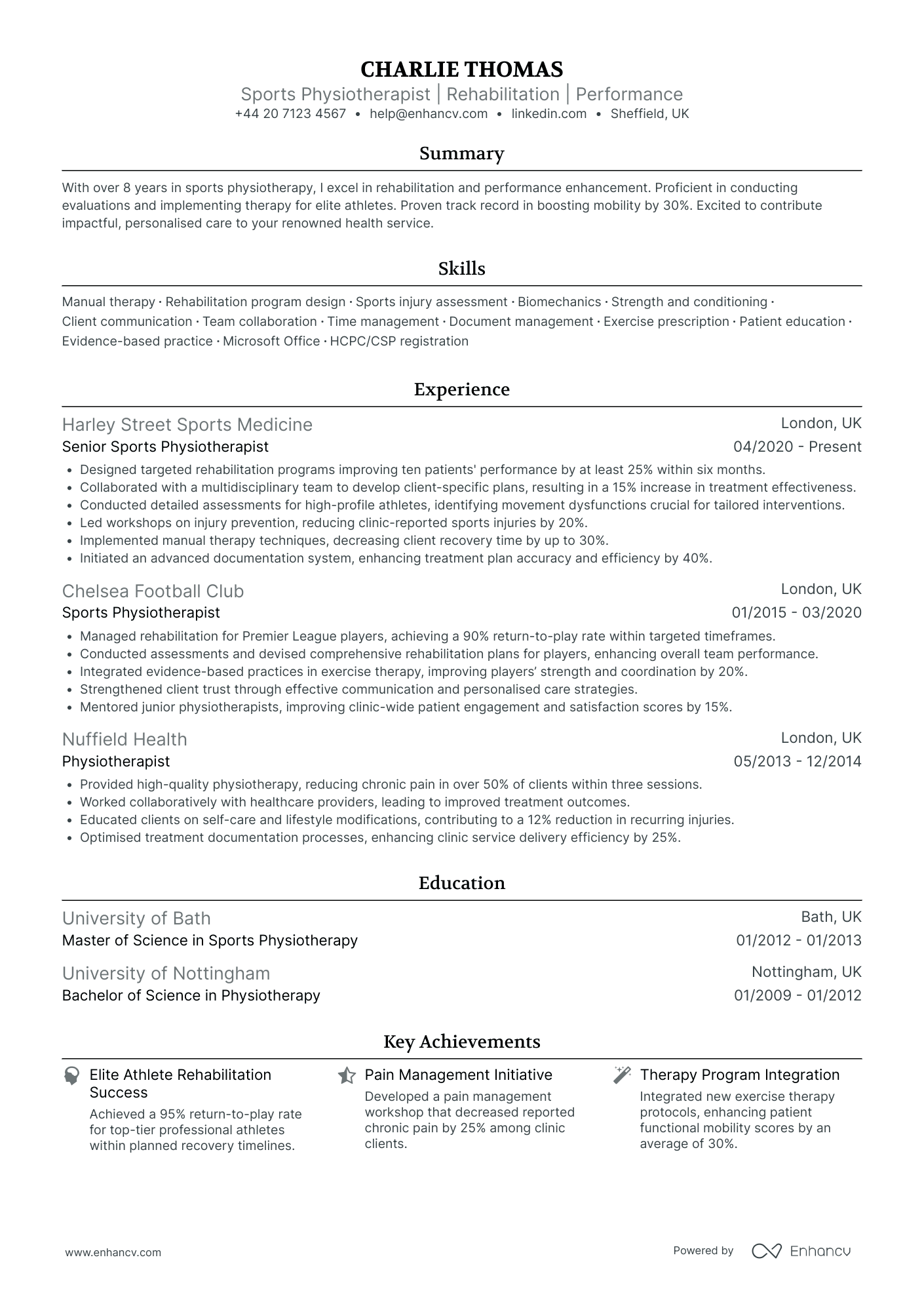
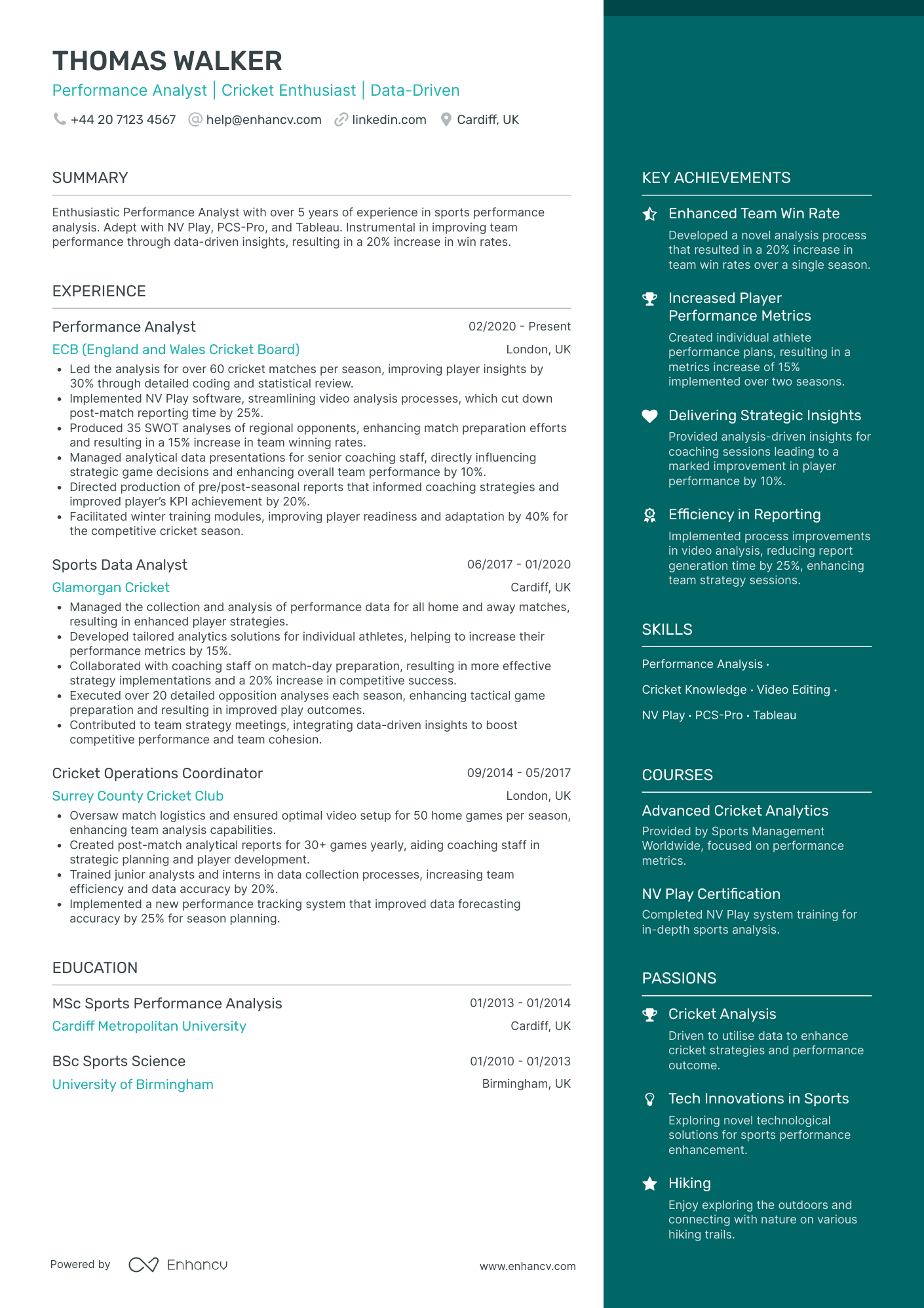
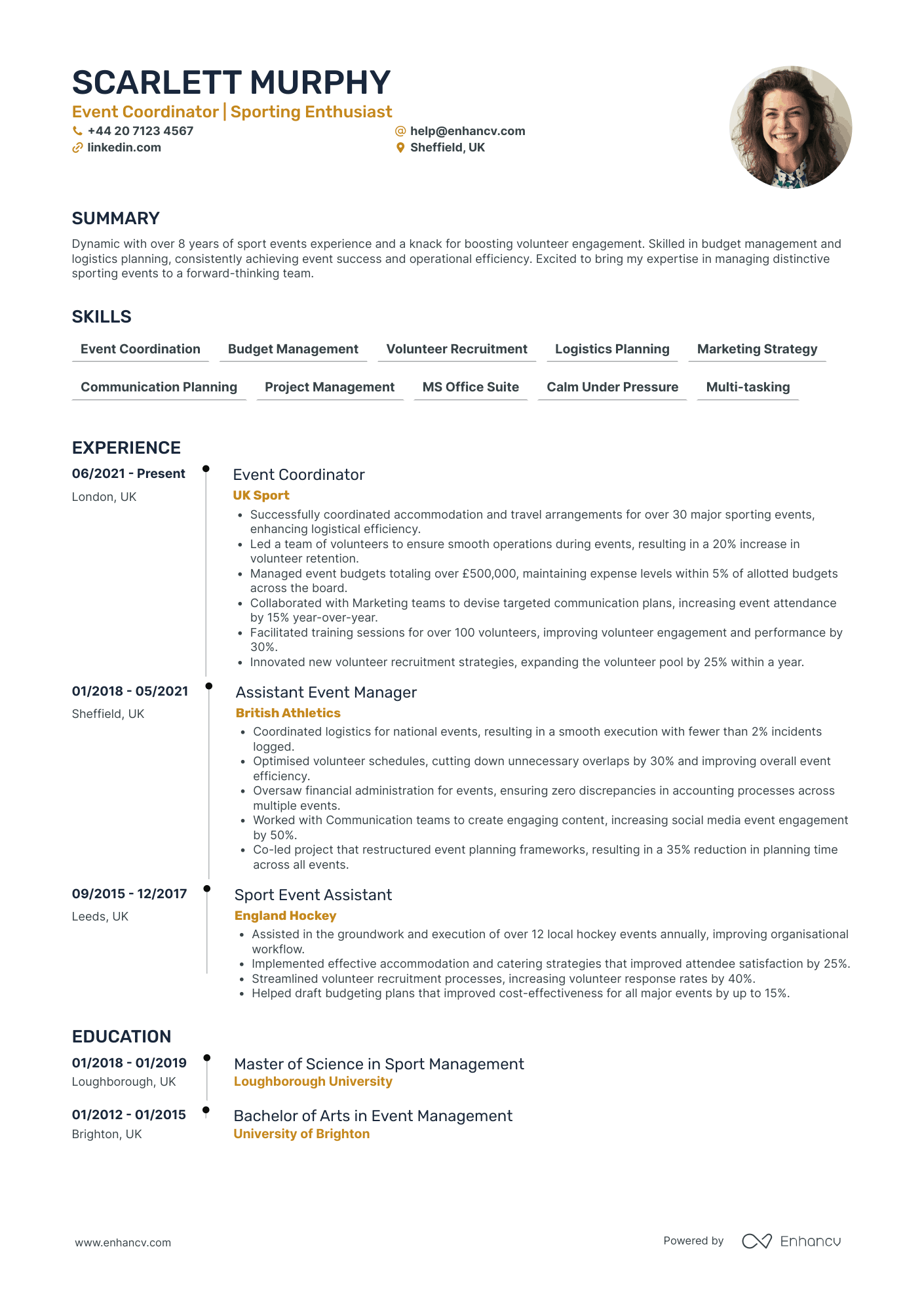
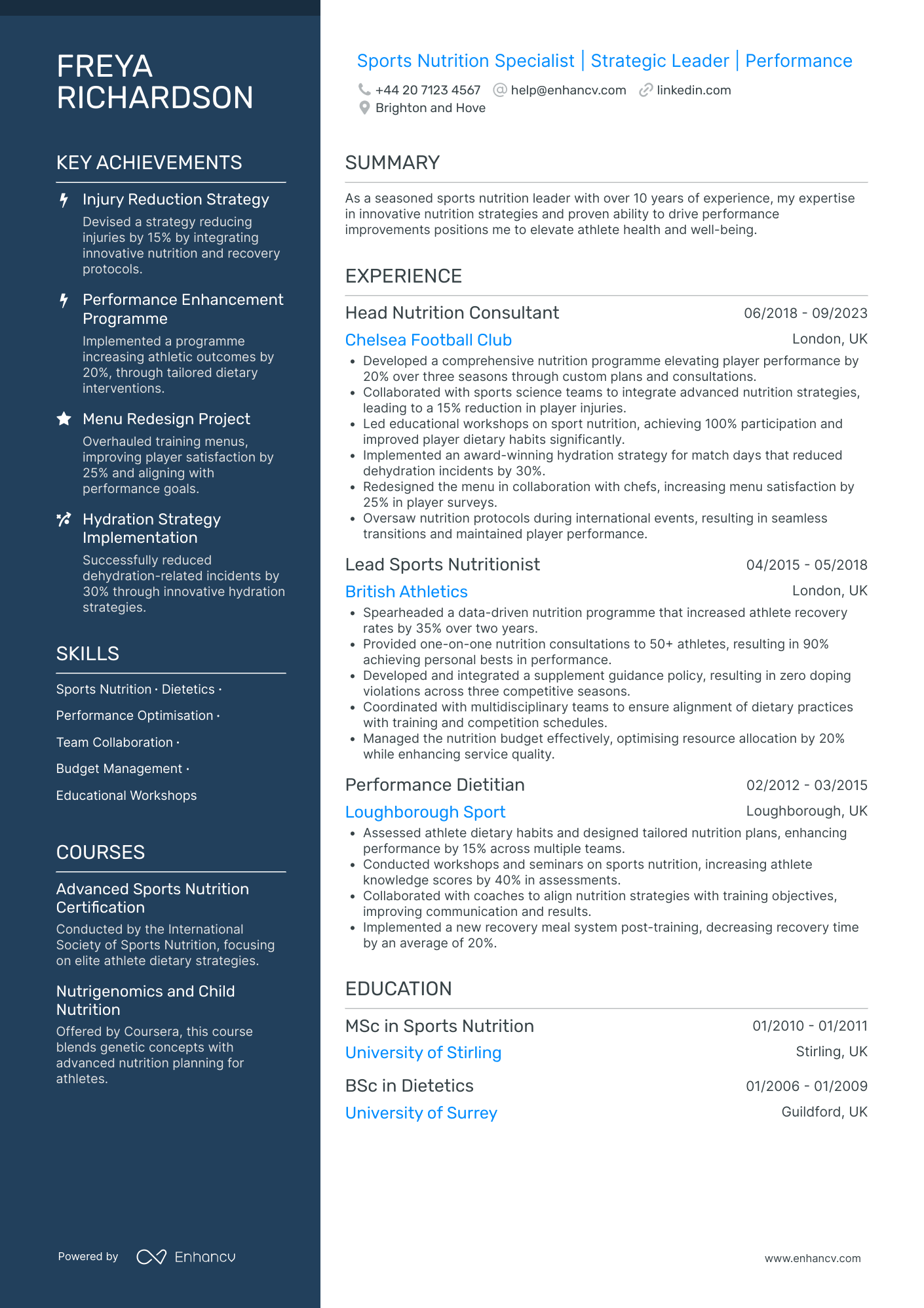
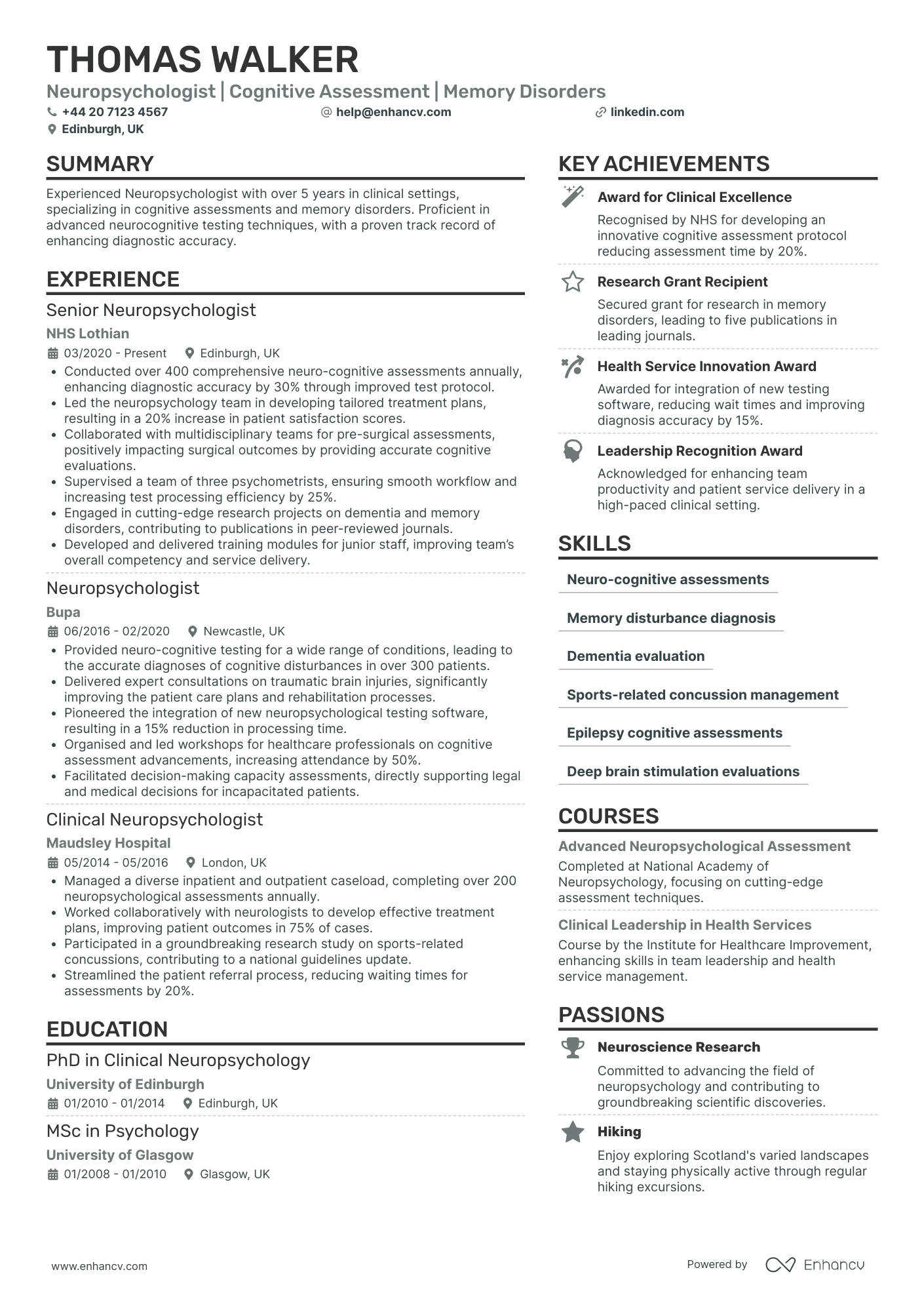
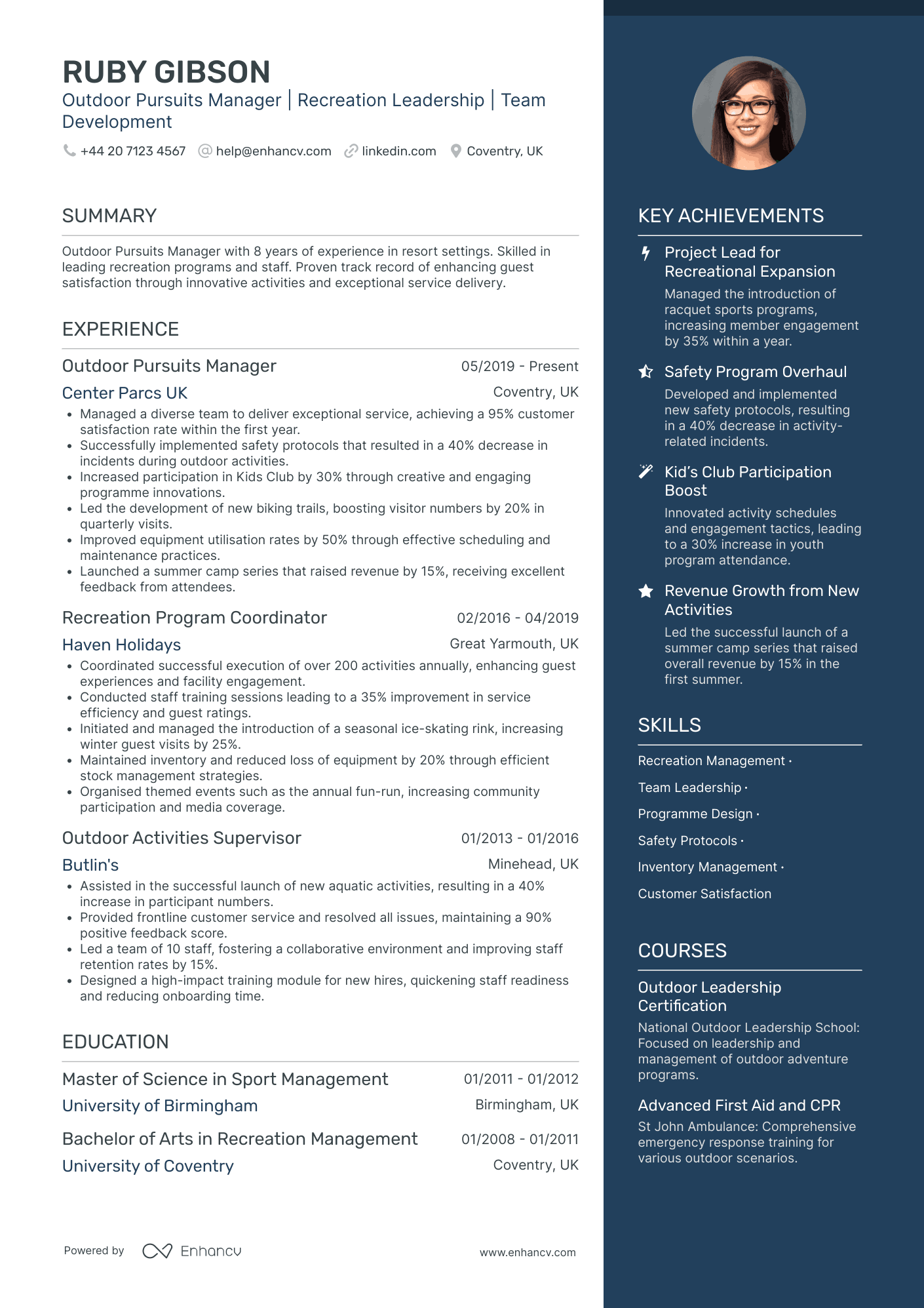
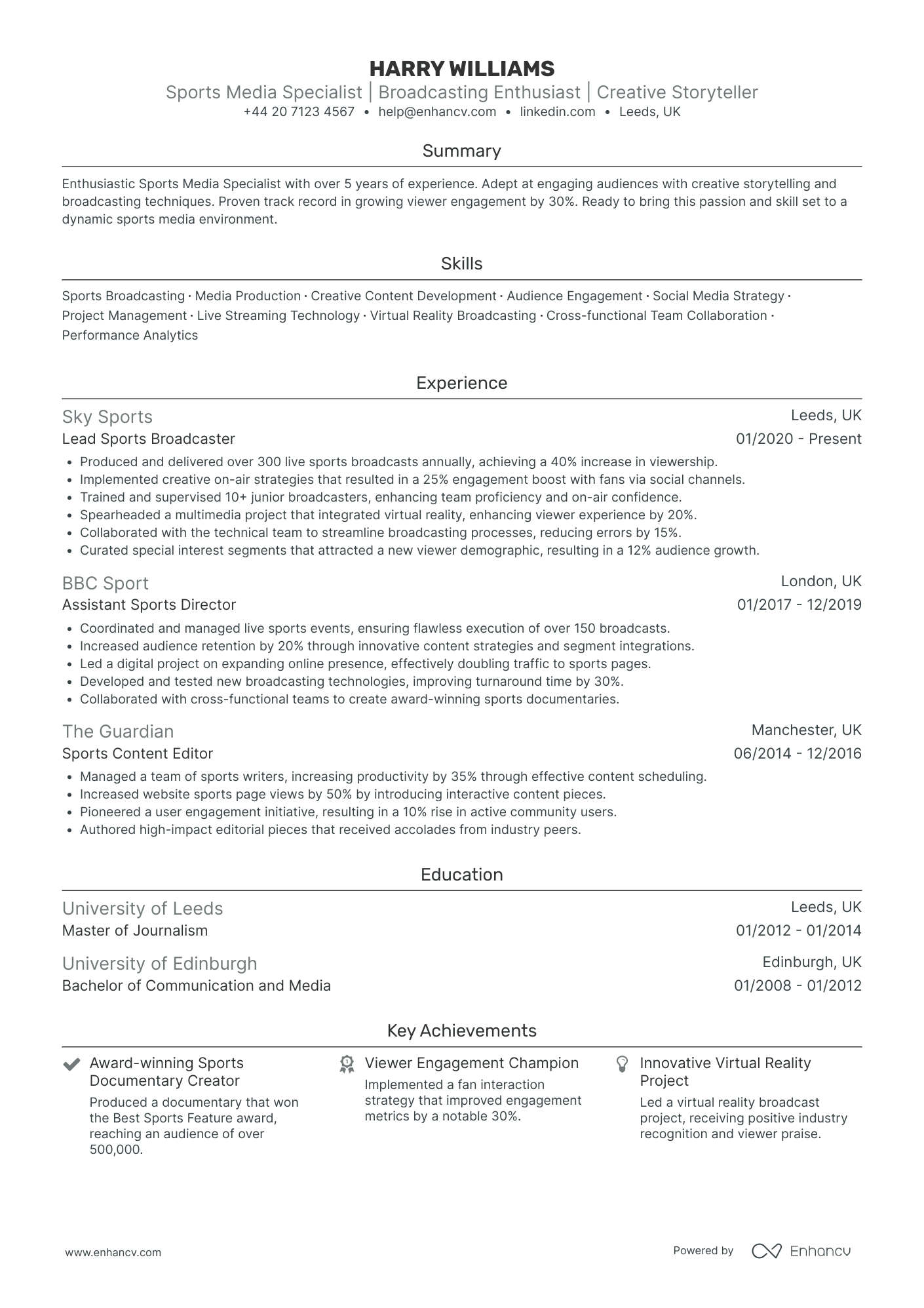
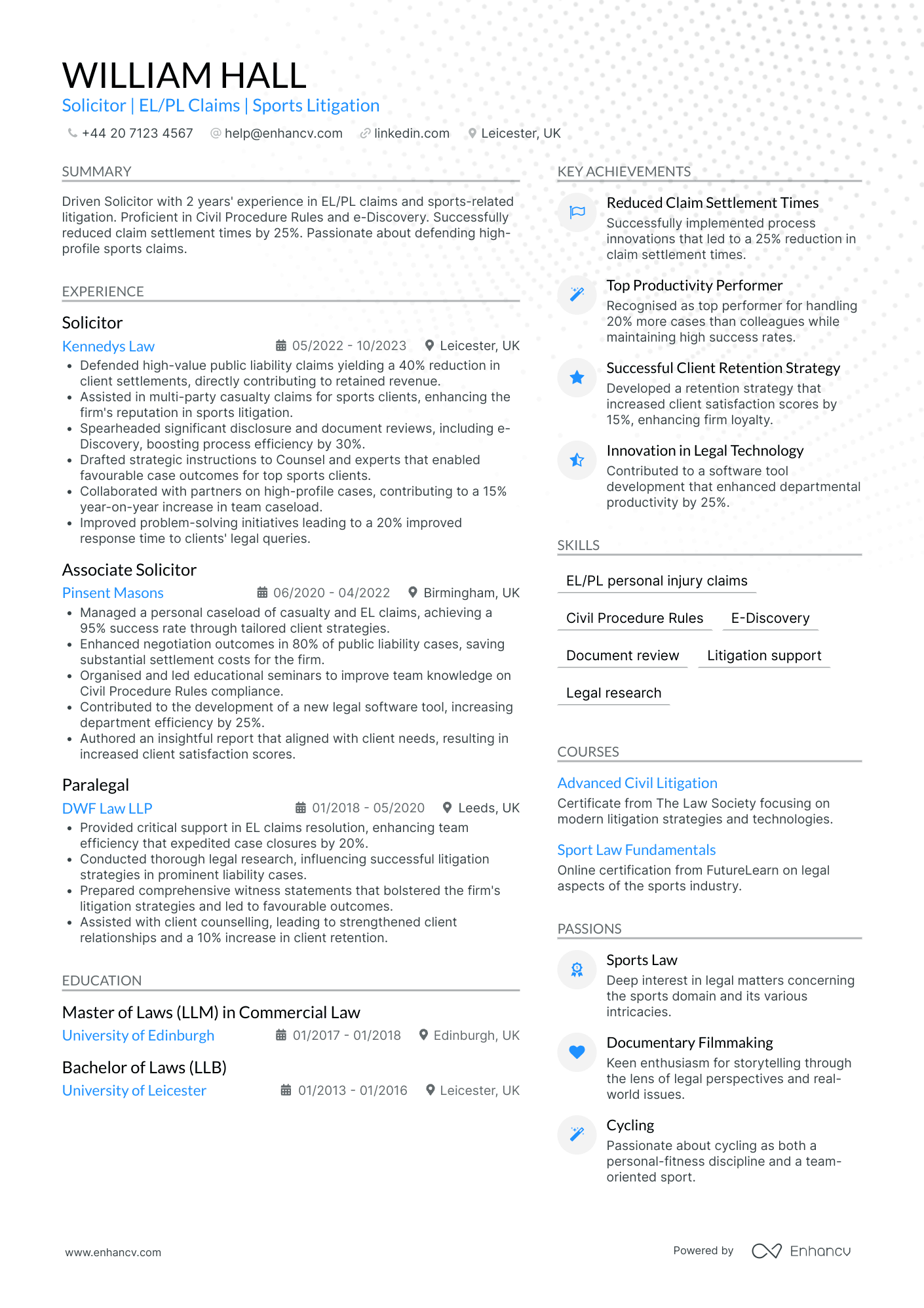
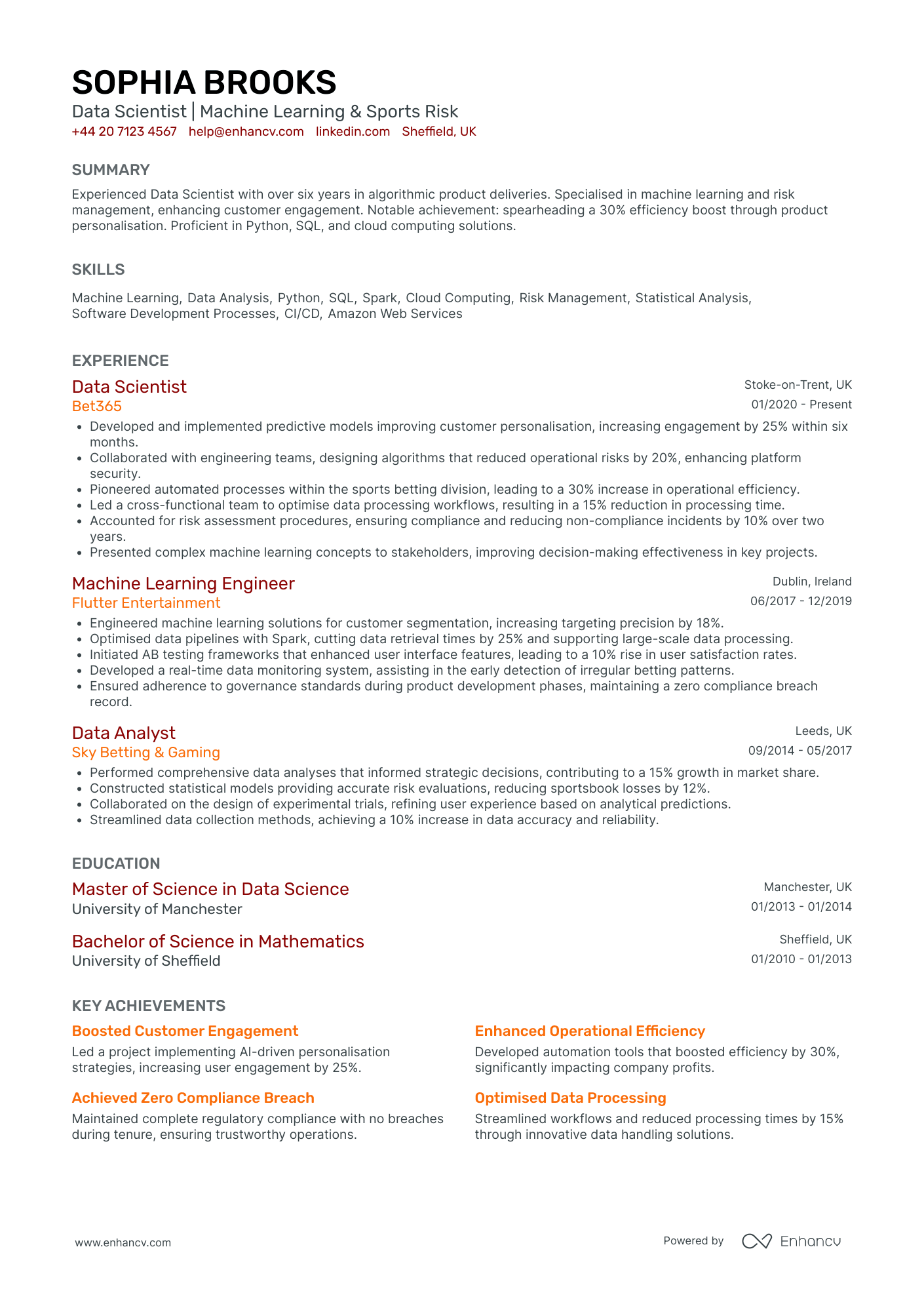
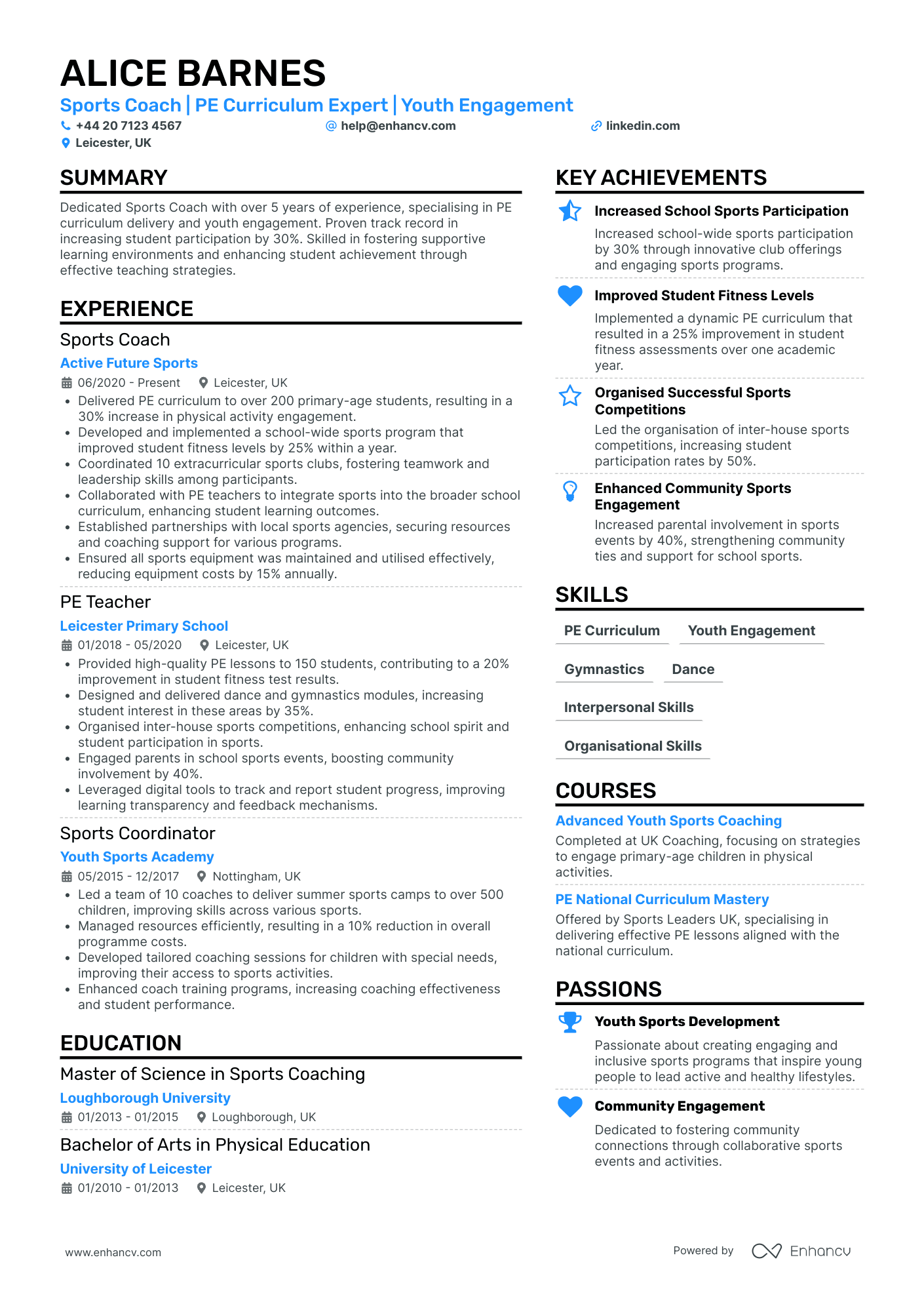
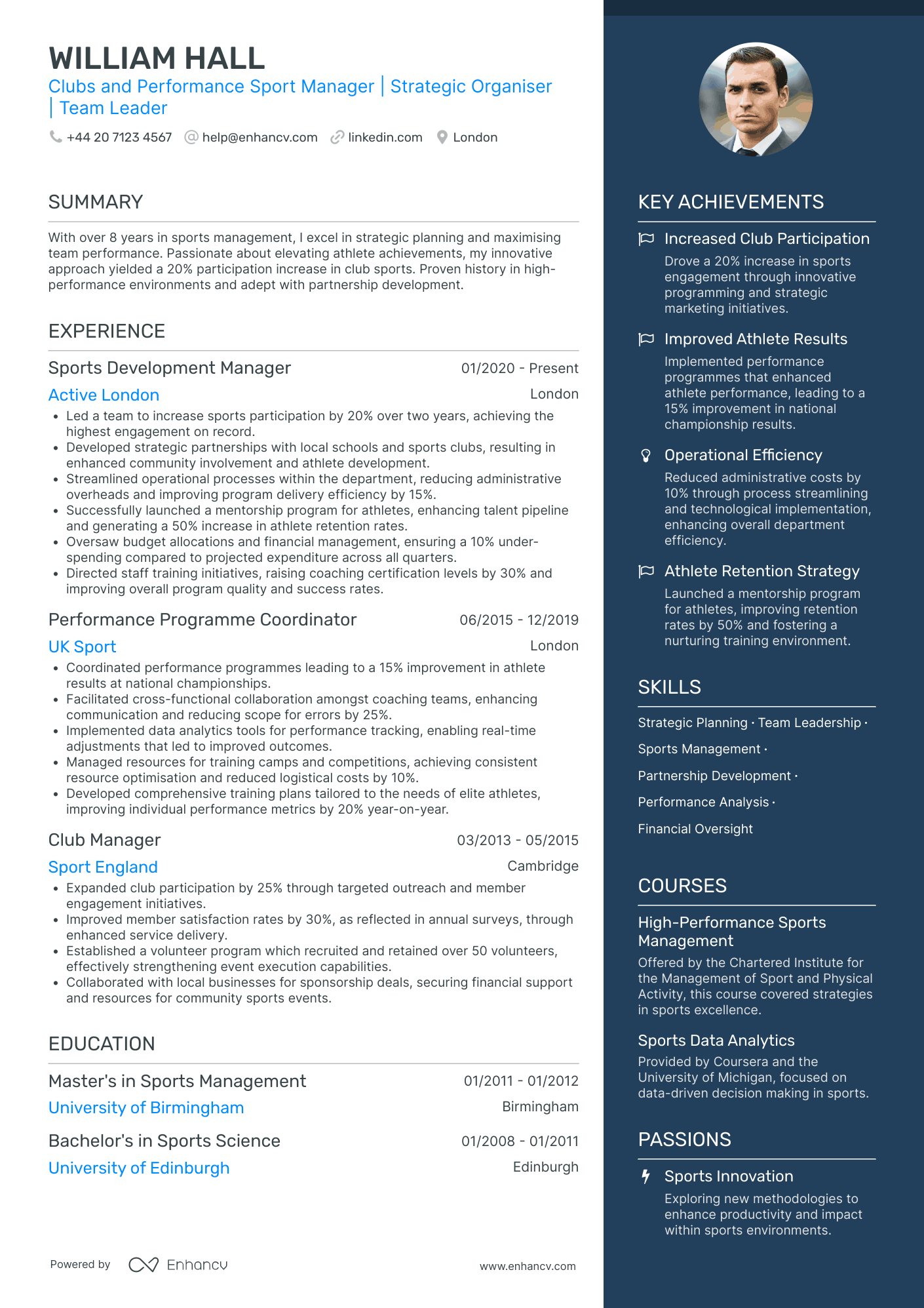
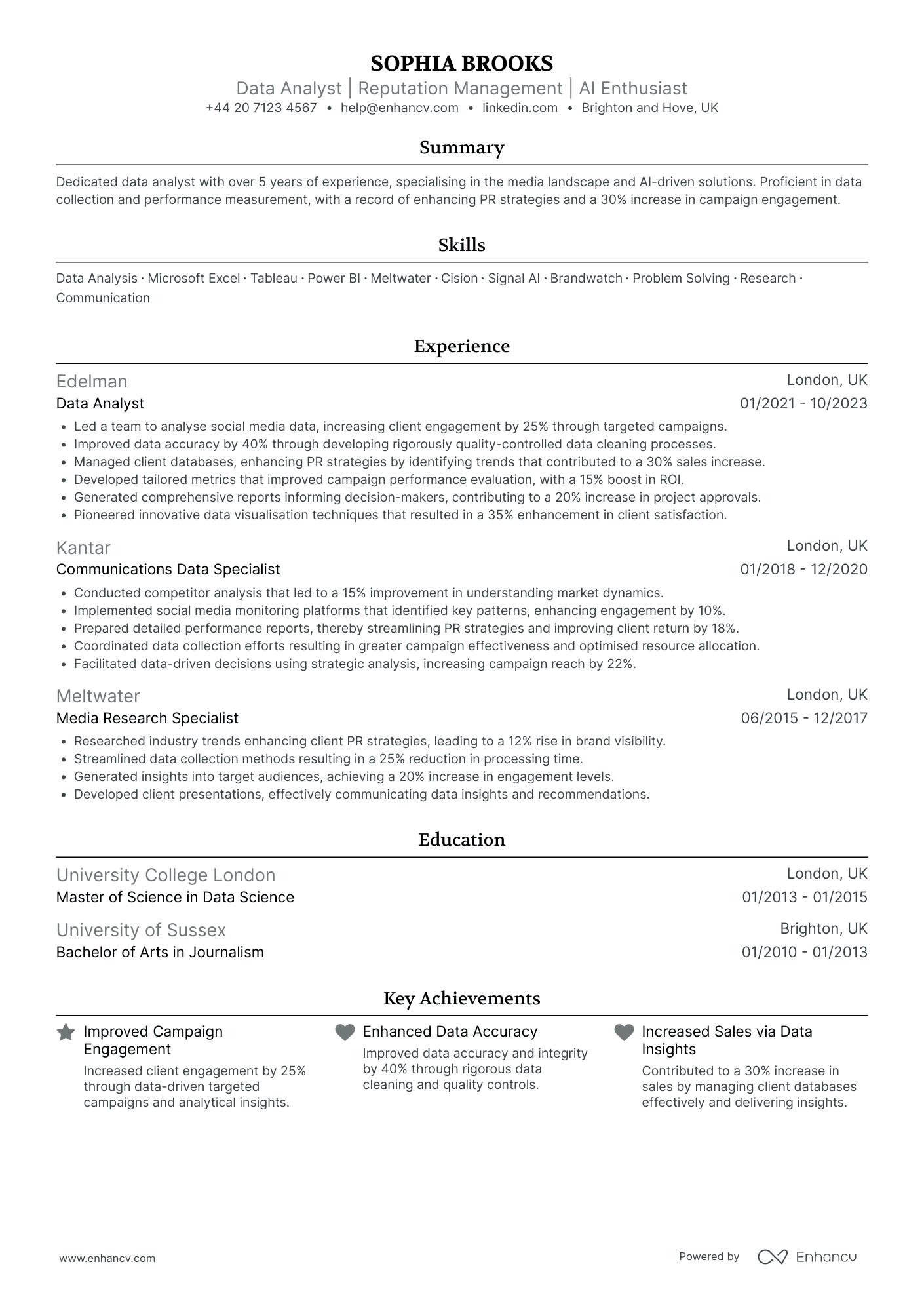
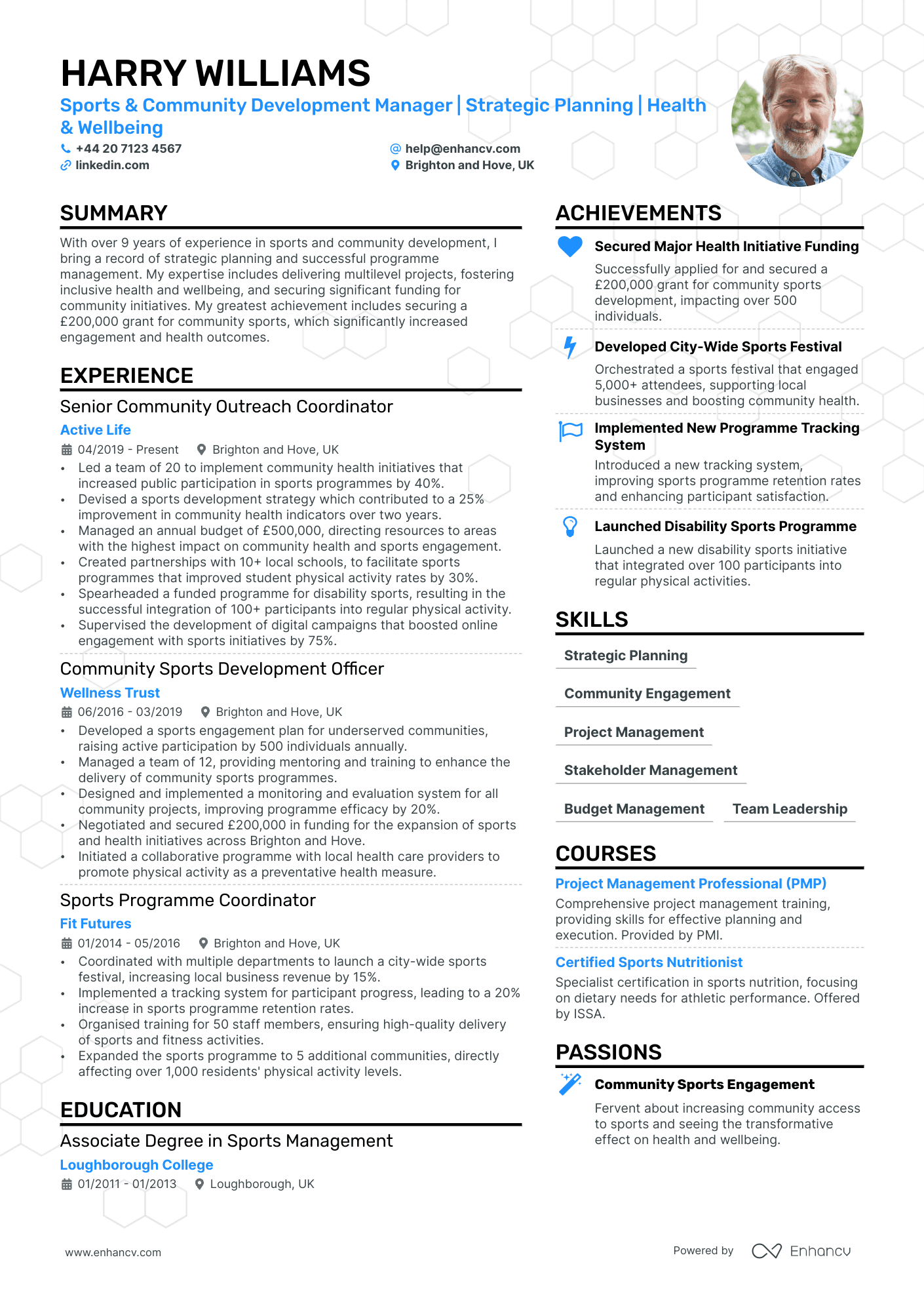
Most sports CVs read like a match report nobody asked for. A list of clubs, positions, and results, with nothing that tells a recruiter what you would actually do for their team, their leisure centre, or their academy.
The CVs that earn a callback do the opposite. They lead with evidence a coach or manager can act on, and they do it even when the person writing has never held a paid role in sport.

Key takeaways
- No paid experience is normal in sport. Lead with training, competition, and the transferable skills clubs screen for.
- Sports roles are overwhelmingly on-site, so put your location and how far you will travel near the top.
- Name the skills that recur in real UK postings: communication, customer service, and interpersonal skills.
- Open with a short personal statement built on one concrete achievement, not a row of adjectives.
- Quantify everything you can: times, distances, squad sizes, sessions run, and people coached.
- Two pages, reverse chronological, sent as a PDF unless the advert asks for a Word file.
Writing a sports CV with no experience
Sport is one of the more forgiving fields to break into, because so much of what employers want is built on the pitch rather than in an office. Clubs, academies, and leisure operators hire on attitude, reliability, and coachability, then train the rest.
So your first CV carries its weight differently. Lead with a skills-led structure: personal statement, then skills and sporting achievement, then education, with any paid or voluntary work lower down. If you want the fundamentals first, see how to write a CV.
If you are 17 and staring at a blank page, the honest answer is that you already have more material than you think. Competing in a sport is discipline, teamwork, and performance under pressure, and that is exactly the raw material a recruiter is looking for.
Recruiters in sport screen for three things before anything else: that you will turn up, that you will work hard, and that you are safe to have around members and players. Everything on a first CV should point at one of those.
Mine your sporting life for real evidence. It is almost always there:
- Competition and training: squads played for, level reached, hours trained a week, personal bests, and results.
- Captaincy or leadership: leading warm-ups, mentoring younger players, organising fixtures or kit.
- Coaching and volunteering: helping run junior sessions, refereeing, stewarding, or coaching at a summer camp.
- Part-time work with people: retail, hospitality, or a leisure-centre desk, where communication and customer service are the whole job.
Write those in the language a sports employer uses. "Ran the warm-up and drills for a squad of 18 under-12s every Saturday for a season" is a coaching bullet, even though nobody paid you for it.
If you have volunteered at a club, give it a dated entry like a job, with responsibilities and hours. Volunteering on a CV counts as experience here, not filler.
School counts too. A Sports Leaders award, running the year-group five-a-side, or representing the county at athletics all belong on the CV. So does anything that shows you organise and turn up, like a Duke of Edinburgh expedition or a part-time job around training.
Writing for a scholarship or a trial is a slightly different job. Coaches and scouts want your position, your level, your key stats, and a link to footage in the first few lines, so front-load those and keep the prose short. A tidy one or two pages with a highlights link beats a long document every time.
One line lifts a no-experience CV to the top of the pile: a national governing body coaching award in progress, an FA or UKCC Level 1, or a first-aid certificate booked in. It signals you are already on the path.

Turn a sporting moment into a CV bullet
Before: "Played football for my local club." After: "Played centre-back for Riverside FC under-18s for three seasons, captaining the side in my final year and leading matchday warm-ups for a squad of 20." Same fact, but the second version gives a recruiter something to picture and check.

PRO TIP
Numbers are your shortcut to credibility when you have no job title to lean on. A recruiter cannot argue with "5km personal best of 17:42" or "coached 30 juniors across two terms". Put the figure in, every time.
What the UK sports market looks like
Knowing the market shapes the CV. Here is where the work happens and what employers ask for most often.
| What | UK sports roles |
|---|---|
| Where the work happens | On-site (97 of 121 UK postings in the last ~30 days, Enhancv's internal job feed), around 80% |
| Experience level asked for | Entry 32% · mid 29% · lead 27% · senior 10% |
| Most-listed skills | Communication, customer service, interpersonal skills, market research, sports medicine |
| Sample | 121 UK "sports" postings, last ~30 days (Enhancv's internal job feed) |
Two things in that table should change how you write.
Sports roles are almost entirely on-site, so a recruiter needs to see you can reliably get there. Put your town and how far you will travel in the header, and mention a driving licence if you have one.
And the skills that recur most are people skills, not just physical ones. Communication, customer service, and interpersonal skills come up again and again, which is good news if your experience is part-time work rather than a pro contract.
Pay is the one number worth being honest about. Roles that fall under "sports" run from a weekend coaching assistant to a sports-medicine consultant, so there is no single reliable UK figure to quote here. Research the specific role and employer before you talk money.
Formatting your sports CV
For a first sports CV, use a skills-led structure so achievement and training come before a thin work history. Once you have paid roles behind you, switch to reverse chronological.
Keep it to two pages, one column, clear headings, and a font a busy academy manager can skim between sessions. A wall of design does not help you here.
Order the sections to suit your case. With little work history, run personal statement, then skills, then sporting achievement, then education, then any jobs. With paid roles behind you, put experience first.
Keep the header lean. Name, town, phone, email, and a licence if you drive. You do not need a date of birth or a photo on a UK CV, though athletes chasing trials may add position, playing category, and one relevant physical stat.
Put links where a recruiter expects them. A short line in the header for a Hudl highlights reel, a Strava profile, or a coaching portfolio does more than a paragraph describing it.
Send a PDF for direct applications so the layout holds on any device. Keep a Word copy for agencies and county sports partnerships, which often reformat CVs into their own template. If the advert names a file type, follow it.
Many sports applications also pass through tracking software, so keep the layout clean and the headings standard for an ATS-friendly CV. Build it from a tested layout rather than a blank page, as Enhancv's CV templates export to a clean PDF.
Writing your sports personal statement
Three or four sentences at the top: who you are, the level you compete or coach at, one concrete achievement, and what you want next. Keep it specific. See more personal statement examples if the opening line will not come.
Skip the adjective soup every other CV leans on. "Dedicated, passionate, hard-working team player" tells a recruiter nothing they can check.
Match the angle to the role. If you are applying to coach, lead with who you coach and the level. If you are an athlete seeking a place or a scholarship, lead with your discipline, your level, and a headline result. Either way, one checkable fact does more than three adjectives.
Lead with evidence instead:
Sports CV personal statement example (no experience)
Committed county-level 800m runner and volunteer coach with two seasons leading Saturday sessions for a squad of 18 under-12s. FA Level 1 in Coaching Football in progress and trained in emergency first aid. Looking to bring discipline, reliability, and strong communication to a coaching assistant role at a community club near Bristol.
Now the version to avoid, built from claims a recruiter cannot act on:
What a weak sports personal statement looks like
Passionate and motivated sports enthusiast with a lifelong love of fitness and a winning mentality. A natural leader and team player looking for an exciting opportunity to grow in a dynamic sporting environment.
The first names a level, a number, and a qualification. The second could belong to anyone, which is why it gets skimmed past.
The strongest sports CVs I see from people with no paid experience do one thing well. They treat competition and volunteering as real work. If you captained a side, coached juniors, or trained six days a week around school, write it up with dates, hours, and outcomes, exactly as you would a job. A recruiter is not comparing you to a professional. They are looking for proof you will turn up, work hard, and be safe around others, and your sport already shows all three.
The Enhancv team
Writing your sports experience section
Whether it is paid, voluntary, or competitive, write each entry the same way: a dated heading, then bullets that show what you did and what changed because of it. Lead every bullet with a verb. For the mechanics, see work experience on a CV.
Sport is more measurable than most fields, so use that. People coached, sessions run, results improved, attendance grown, and injuries avoided are all CV achievements.
Mix your entries freely. A leisure-centre job, a volunteer coaching role, and a competitive season can all sit in the same section, as long as each has dates and shows what you did. The point is to prove range, reliability, and a track record of turning up.
Tailor each application by pulling the duties and terms from the advert and mirroring the ones that are true of you. Enhancv's CV tailoring feature reads the ad and suggests the matching edits, which saves rewriting from scratch for every club.
- Plan and run the Saturday warm-up and skills drills for a squad of 18 under-12s, two hours a week across the season
- Support the head coach on matchdays with substitutions, kit, and player welfare, following the club's safeguarding policy
- Introduced a simple attendance tracker that lifted average turnout from 12 to 16 players a session
- Completed FA safeguarding and emergency first-aid training, and hold an in-date DBS check
- Handled bookings, memberships, and enquiries at a busy front desk, resolving complaints calmly during peak hours
- Set up and cleared equipment for classes and five-a-side, following the centre's health-and-safety checks
- Covered poolside as a trained lifeguard on rota, keeping incident reports clear and up to date
PRO TIP
Coaches read for safety and reliability first. If you hold a safeguarding certificate, a DBS check, or first aid, put it in the experience or training section where it cannot be missed.
Skills to put on a sports CV
Read a run of live UK sports adverts and the same demands repeat, and most of them are about people rather than personal bests. Communication, customer service, and interpersonal skills recur most often, according to Enhancv's internal job feed over the last ~30 days.
Those sit alongside the practical, checkable skills a specific role needs: coaching and session planning, strength and conditioning, first aid, and performance analysis. List the hard skills in the words the adverts use, and keep them to what you can stand behind.
Prove the soft skills in a bullet rather than claiming them. "Calmed and refocused a losing side at half-time" beats the word "leadership" on its own.
Do not pad the list to look busy. Six to eight skills you can evidence read as stronger than twenty you cannot. If you have trained in something but not used it yet, put it under training rather than skills, so nothing on the CV falls apart in an interview.
Top skills for your sports CV:
Coaching and session planning
Strength and conditioning
First aid
Performance and data analysis
Video analysis (e.g. Hudl)
Health and safety
Safeguarding
Nutrition fundamentals
Communication
Customer service
Interpersonal skills
Teamwork
Discipline
Resilience
Leadership
Education and certifications for a sports CV
You rarely need a degree to start in sport, which is why the no-experience route works. What employers do check is that you are qualified to be safe and useful around their members and players.
List these where you have them, even "in progress": national governing body coaching awards such as an FA or UKCC Level 1 or 2, a first-aid certificate, safeguarding training, and a current DBS check. Put them in your education section or a dedicated training block.
If you are studying, name it. A BTEC or degree in sport, coaching, or sports science belongs on the CV, with your predicted or achieved grade and any modules that map to the role. Naming the certificates you hold saves the employer a question.
Keep the dates and awarding bodies accurate, and mark anything unfinished as in progress with an expected date. Coaches check these, and a qualification you cannot back up costs you more trust than the gap it was meant to fill.
Conclusion
Lead with real sporting evidence, name the coaching and safety qualifications employers screen for, and quantify everything you can.
Pair the CV with a short cover letter that says why this club and this role, and you turn a thin work history into a credible first application.
Author's take - The Enhancv team
The strongest sports CVs I see from people with no paid experience do one thing well. They treat competition and volunteering as real work. If you captained a side, coached juniors, or trained six days a week around school, write it up with dates, hours, and outcomes, exactly as you would a job. A recruiter is not comparing you to a professional. They are looking for proof you will turn up, work hard, and be safe around others, and your sport already shows all three.