



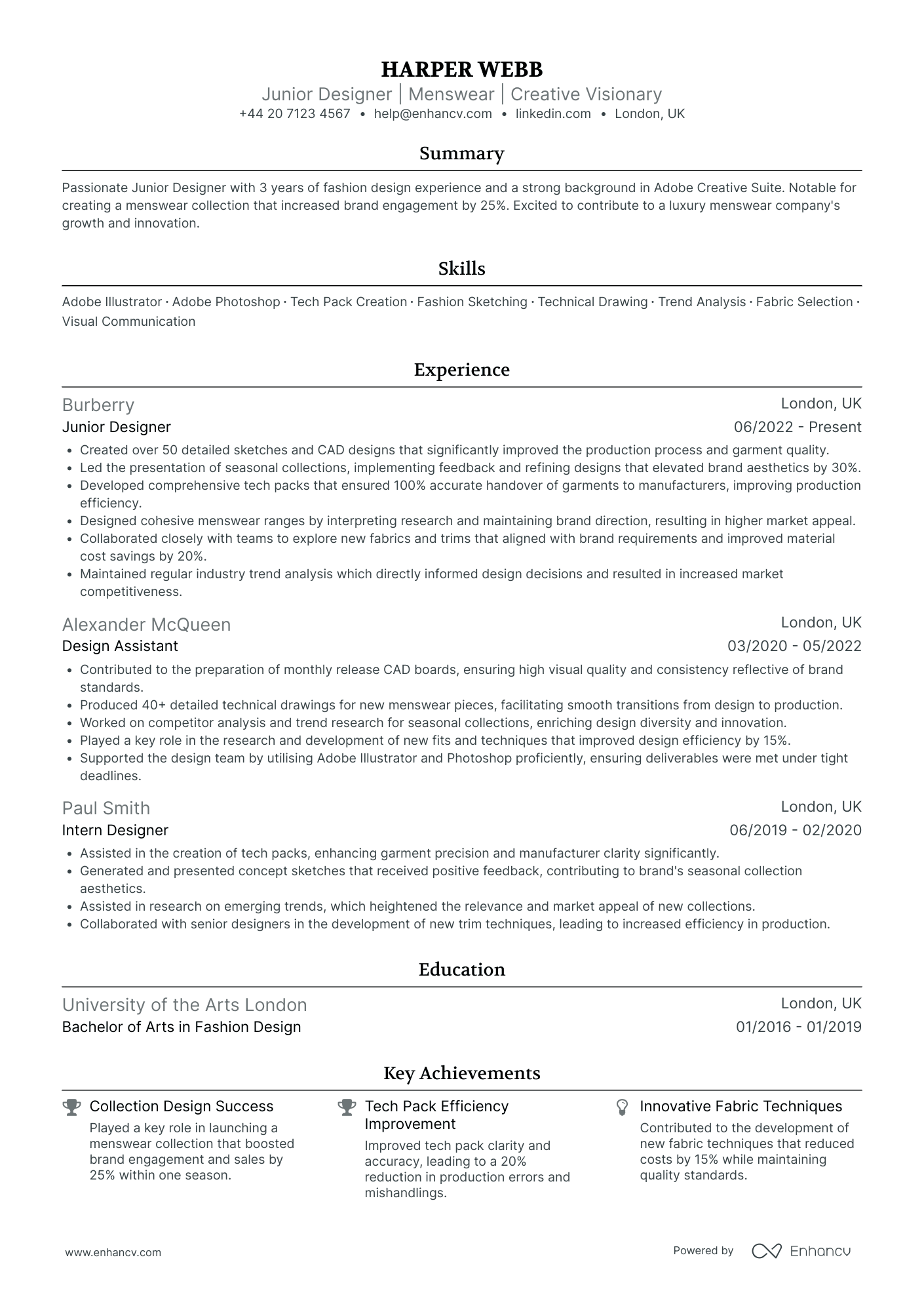
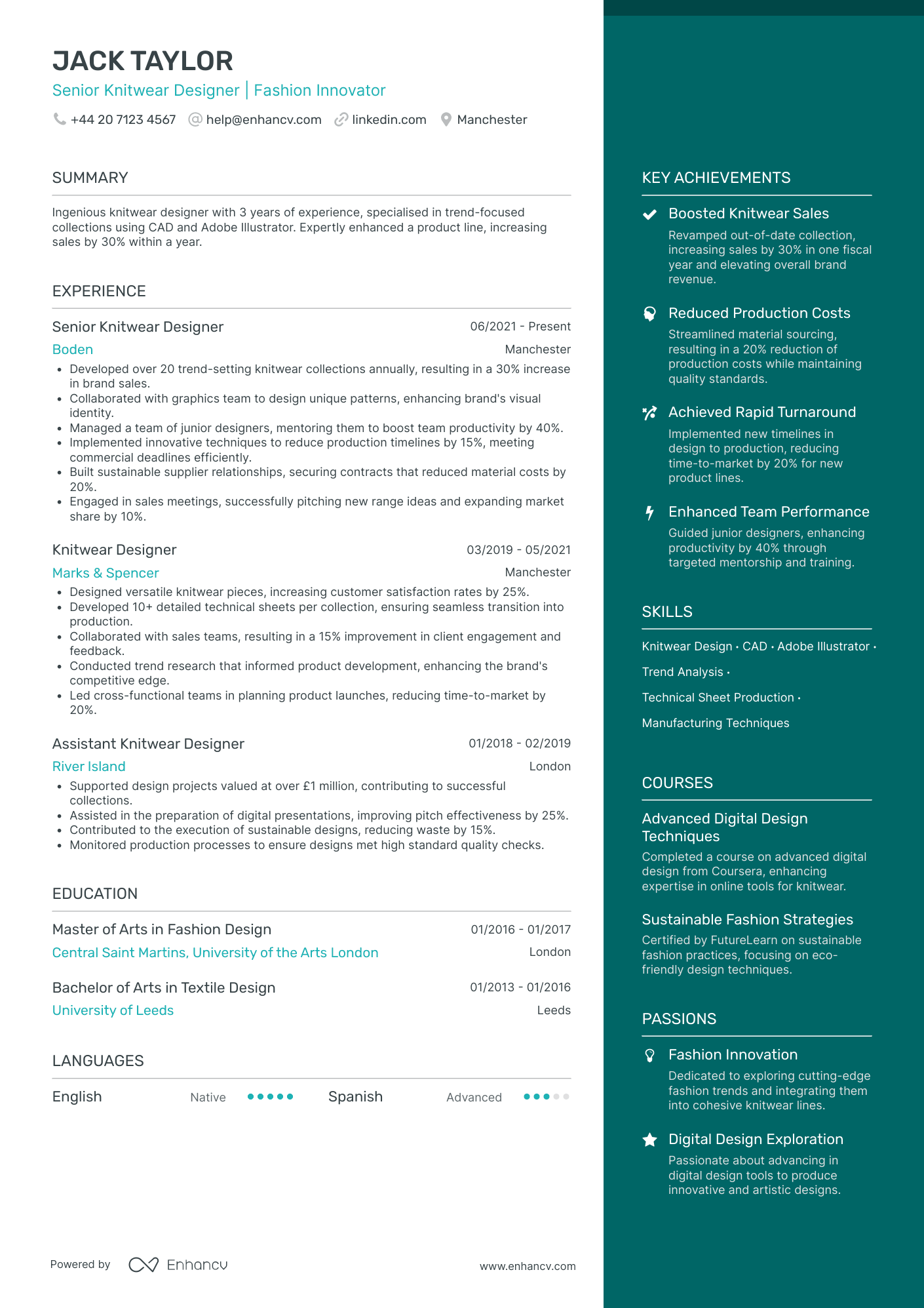
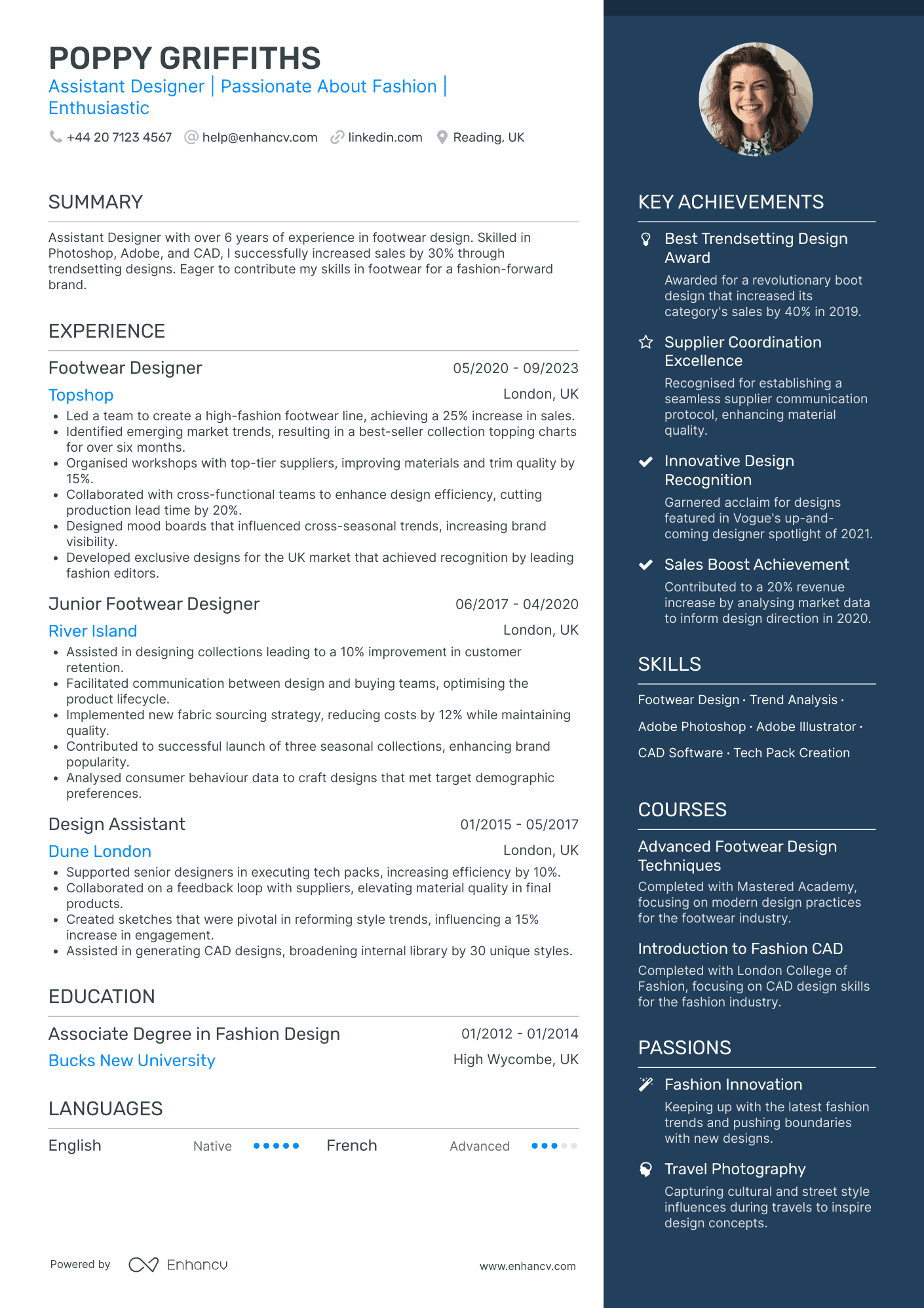
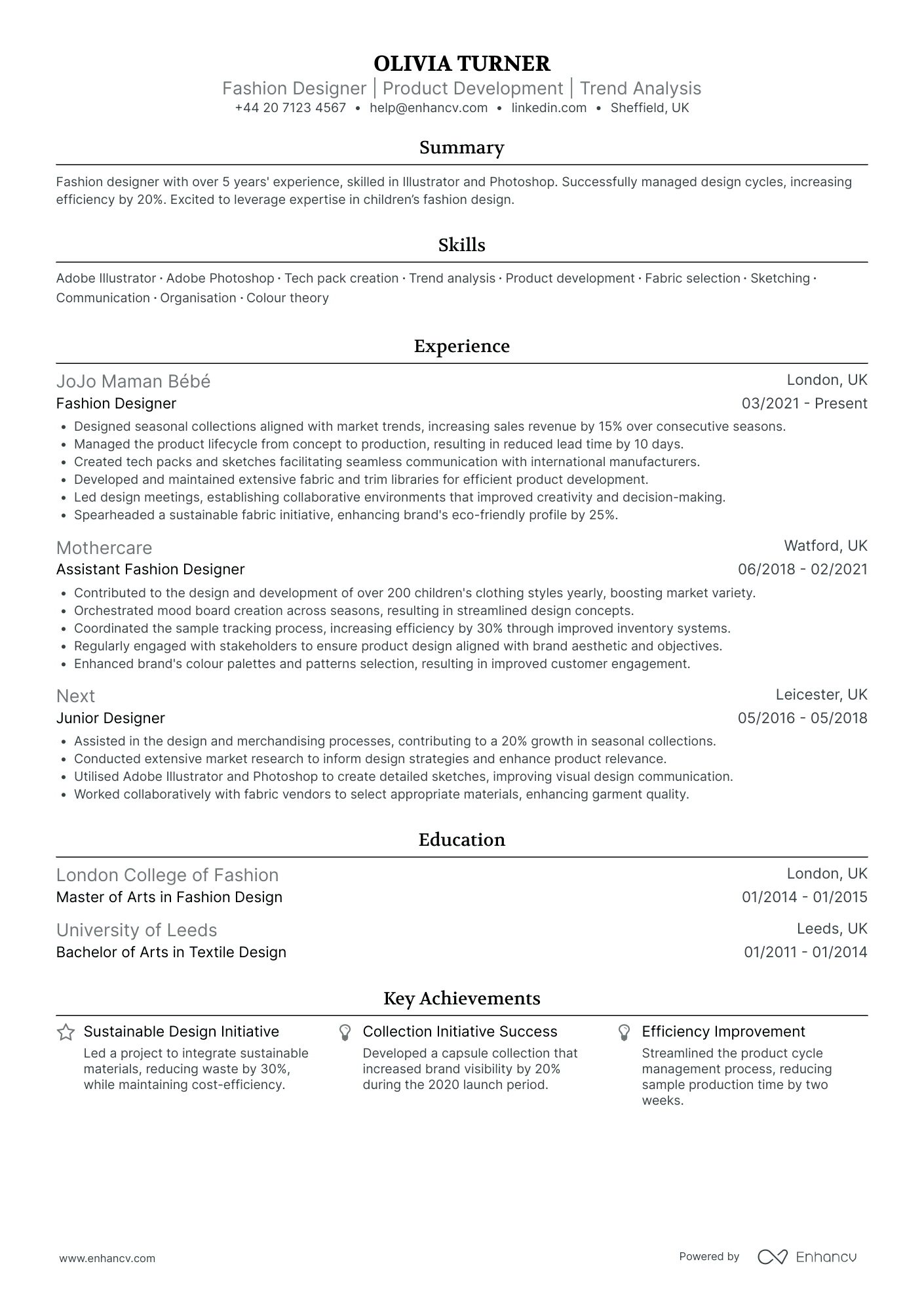
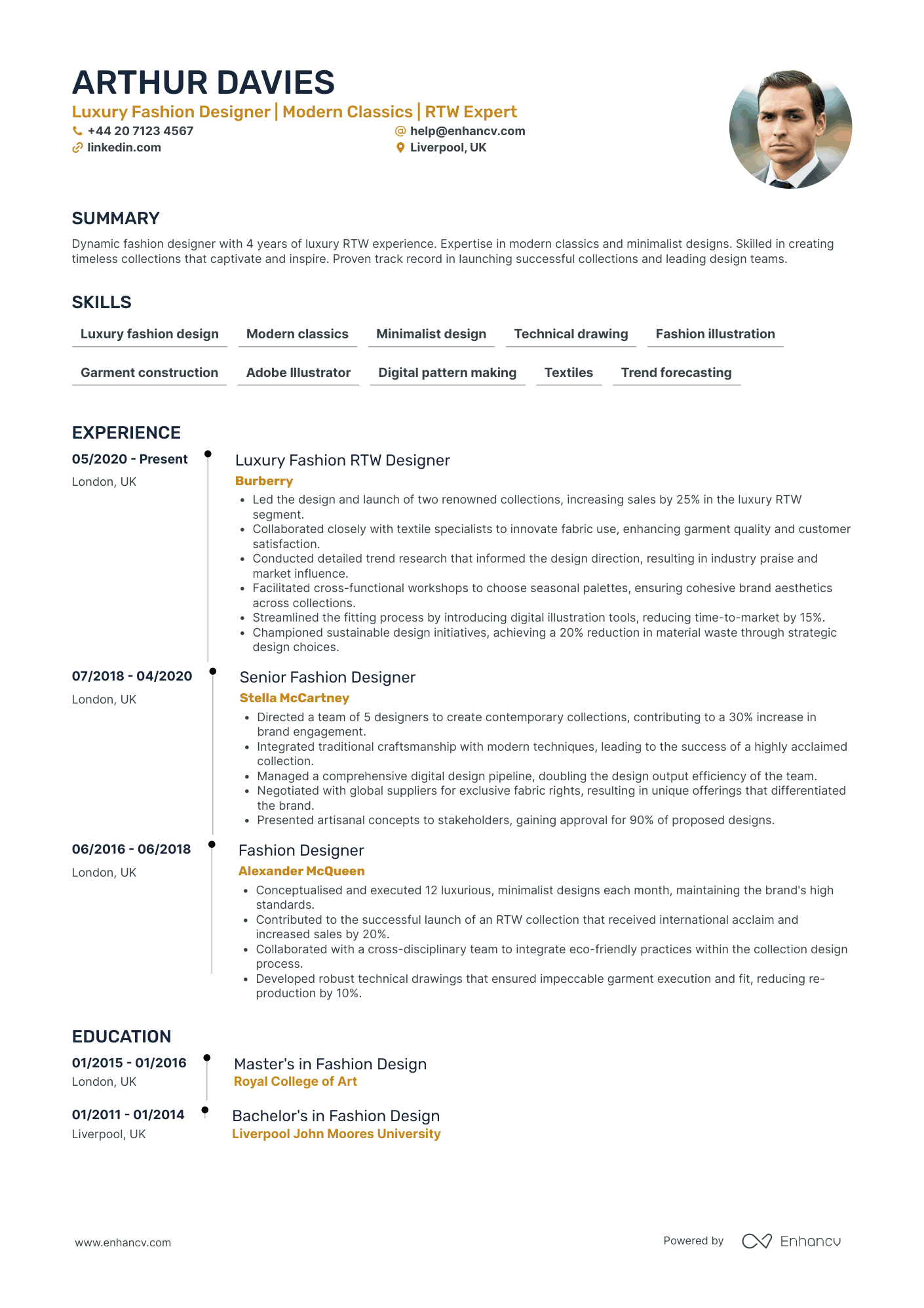
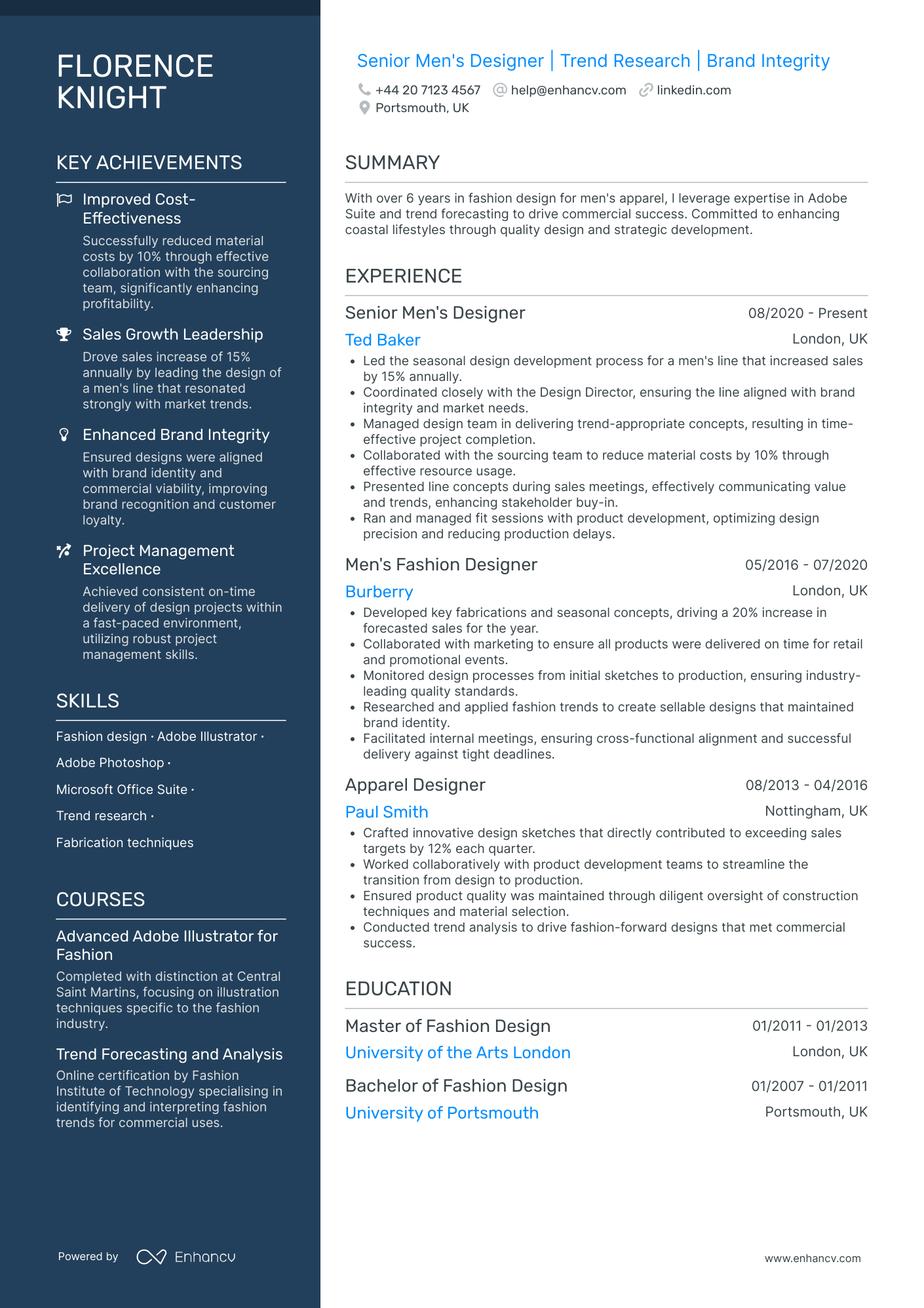
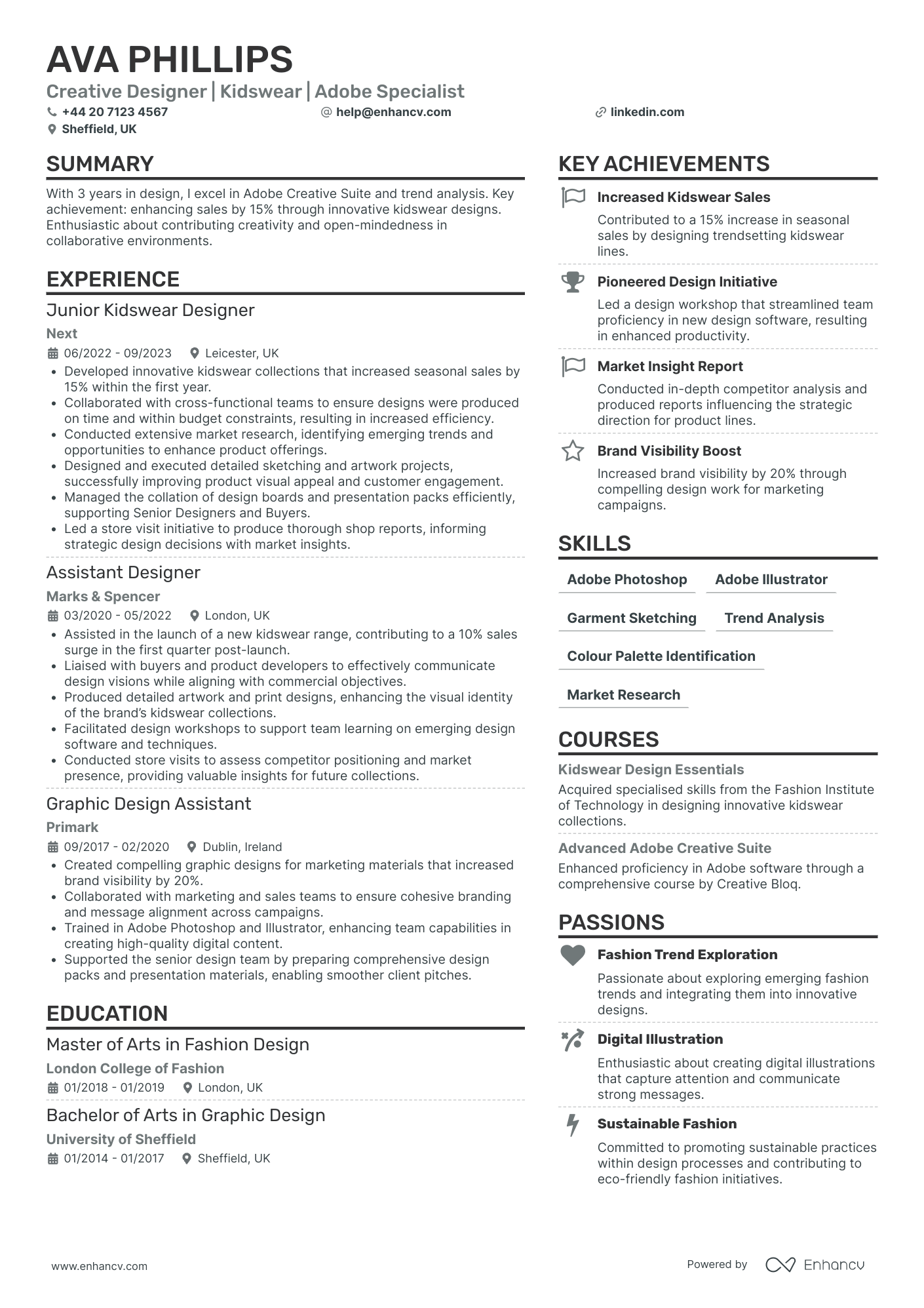
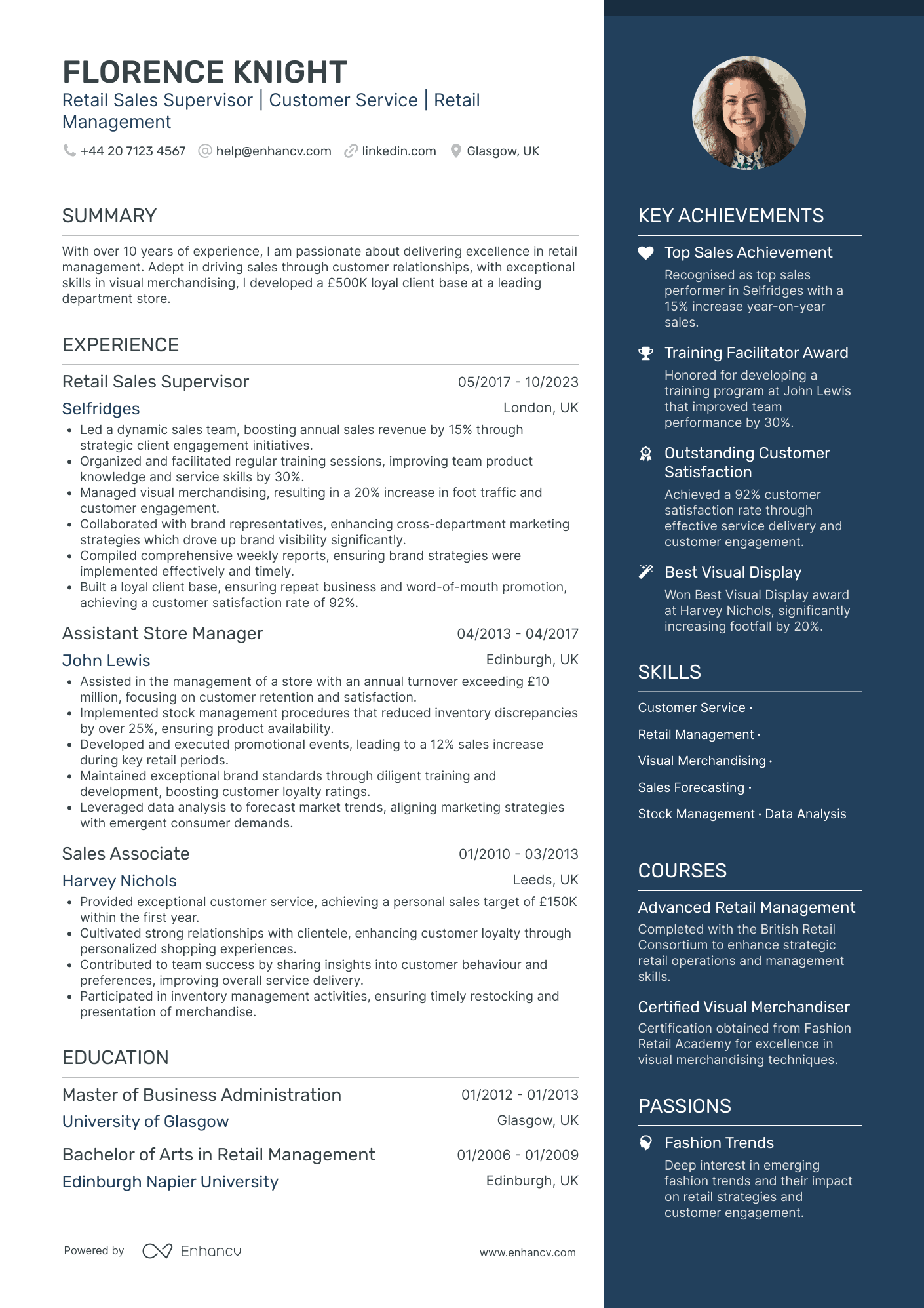
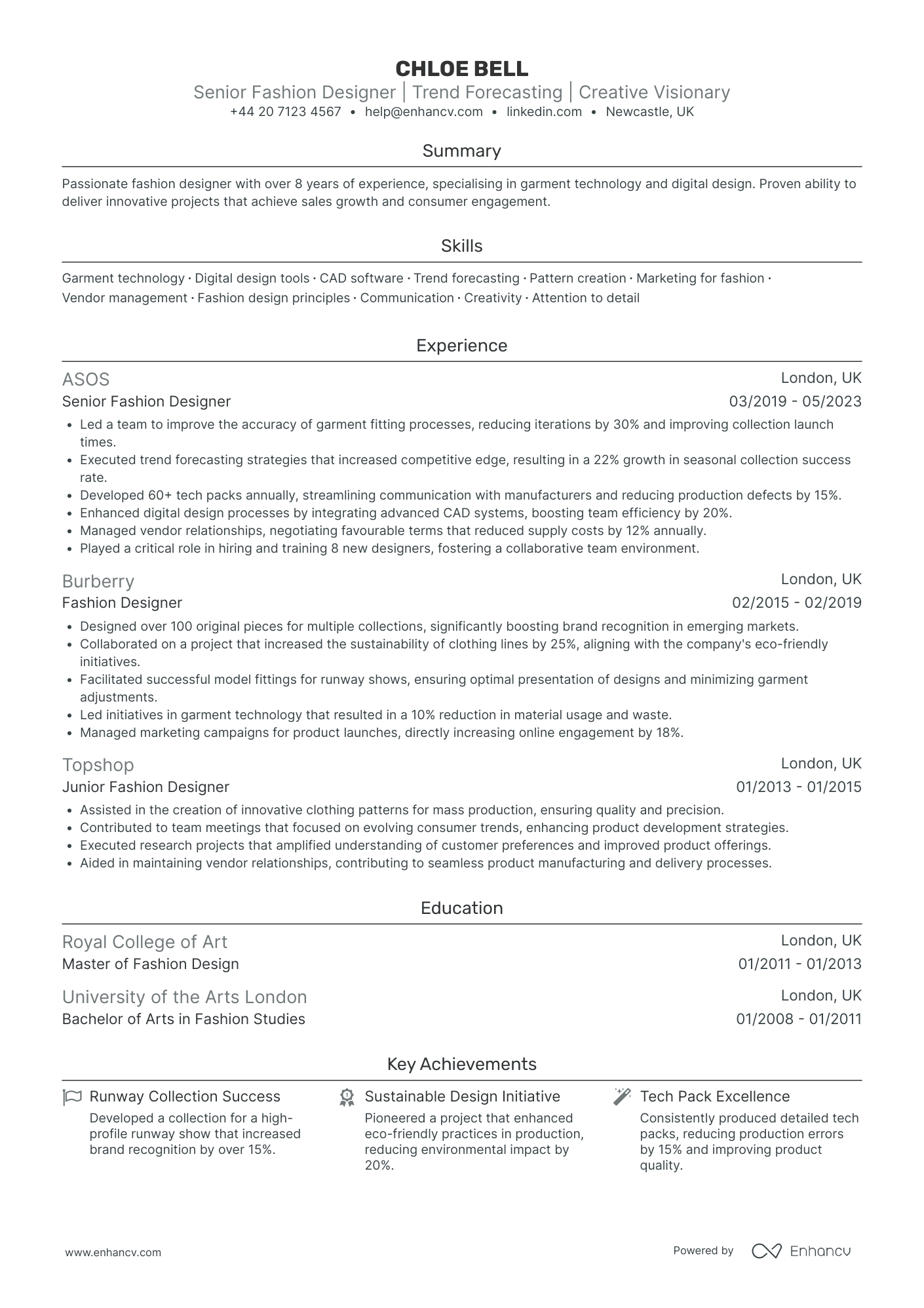
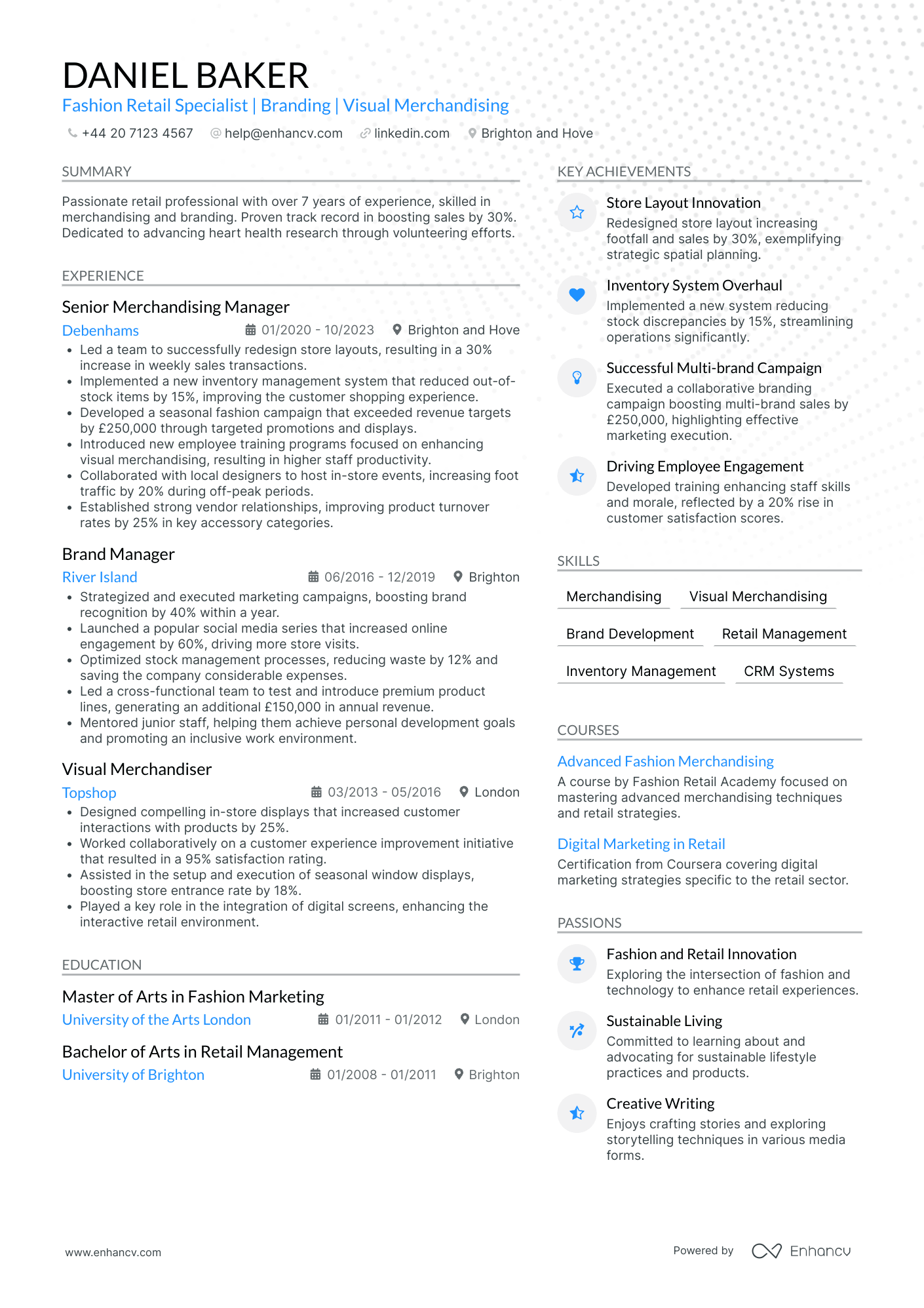
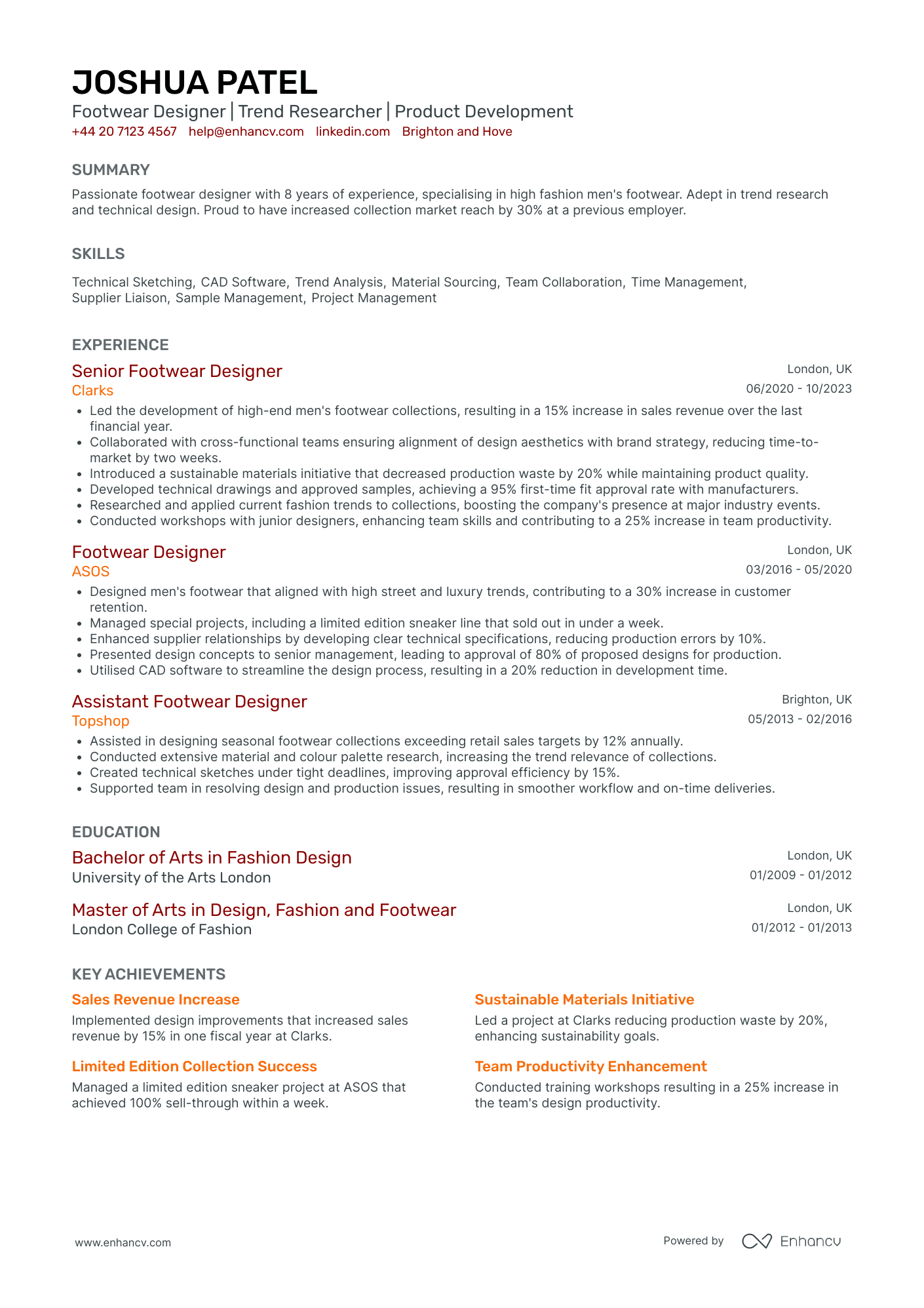
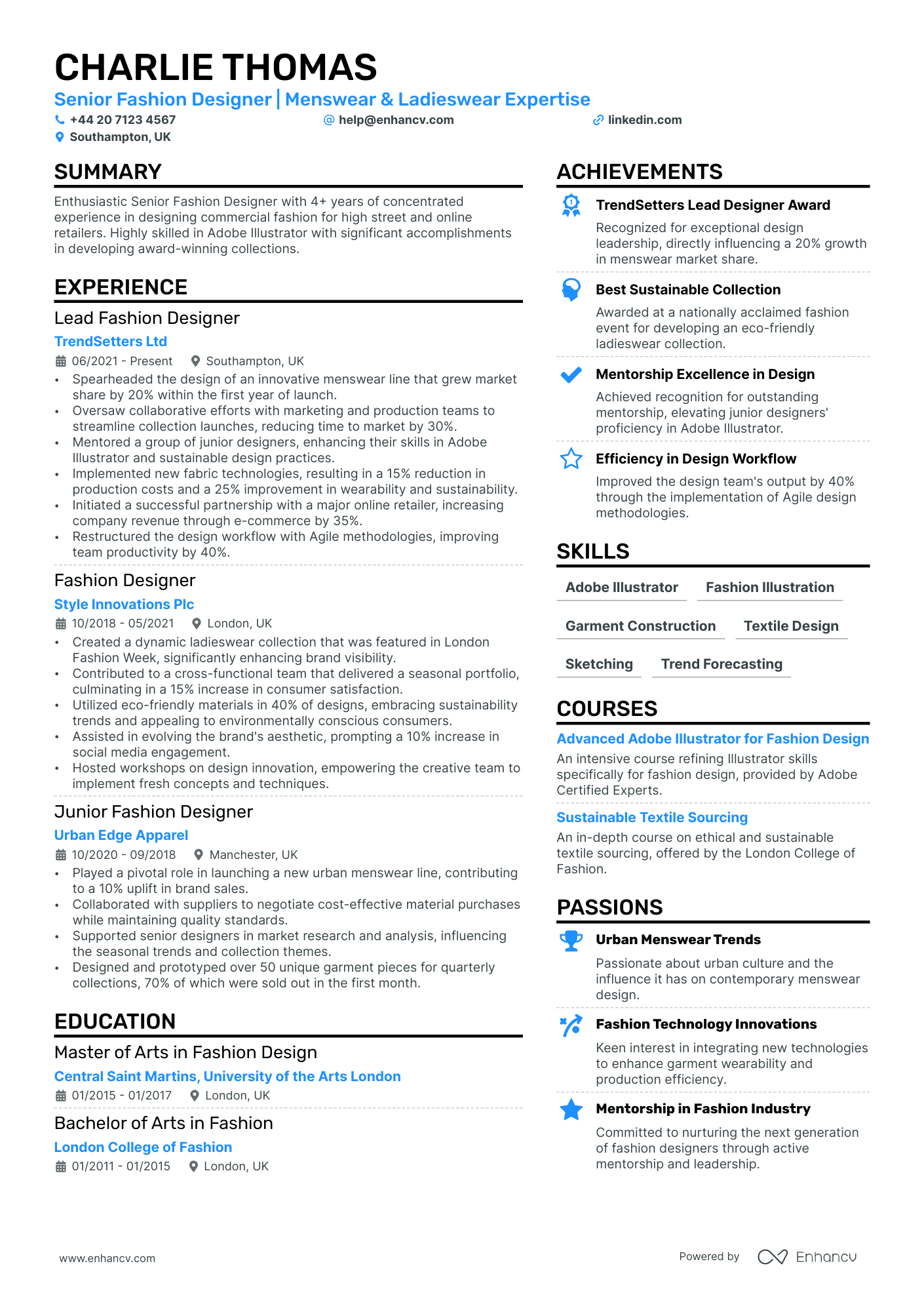
A fashion design CV is judged before anyone reads a word of it, on the portfolio link sitting at the top. Work worth clicking earns the interview. A missing or buried link ends the application, however polished the rest looks.
Most people writing this CV are students or recent graduates with little paid experience, and they hide their best work under a list of software and modules. The strong version does the opposite, leading with collections, technical craft, and a portfolio a studio actually wants to open. Since that is where most applicants stand, it is where we start, right after the basics of how to write a CV.

Key takeaways
- No paid experience is normal here. Lead with your portfolio, your final-year collection, and the technical skills a studio can use from day one.
- Put a live portfolio link in the header. It is the first thing a fashion recruiter clicks, so make it work on a phone.
- Name the technical craft employers list: pattern cutting, garment construction, CAD, Adobe Illustrator and Photoshop, and tech packs.
- Open with a short personal statement built on your specialism, your best project, and the kind of label you want to join.
- Show range with three or four projects, each with your role, the brief, and the outcome, not a wall of adjectives.
- One or two pages, reverse chronological once you have roles, sent as a PDF unless the advert asks for Word.
Writing a fashion designer CV with no experience
Fashion is a portfolio industry, so a thin work history matters far less than the work itself. A strong final collection and a clear point of view beat a list of part-time jobs.
Use a skills-led structure: personal statement, portfolio, technical skills, then education, with any paid or placement work lower down. It puts your craft in front of the reader while your job history is still short.
You have more relevant experience than you think. Mine your course and your life for it:
- Your final-year or capstone collection, with the concept, fabrics, and number of looks.
- Live briefs, competitions, and collaborations set by your course or a brand.
- Placements, internships, and studio work experience, even a week long.
- Freelance commissions, alterations, costume work, or pieces sold on Depop or at markets.
- Retail on a fashion floor, which teaches fit, trend, and how customers actually buy.
Write each one like a real entry, with dates, your role, and what you produced. "Designed and machined a six-look womenswear collection for my final year, from concept boards to finished garments" is an experience bullet that happened at university.
If you have shown work in a graduate show or placed in a competition, say so with the date and the name. It is proof someone already judged your work worth showing. Volunteering on a CV, such as dressing a charity fashion show, counts here too.
Frame each project the way a studio would read a job: the brief, the constraint you worked within, what you made, and what it taught you. "Two-week live brief for a high-street buyer, designed a capsule of six jersey styles to a set fabric budget" reads as real work, because it was.
Placements and internships carry the most weight of all, even short ones, because they prove you can work inside a studio calendar and take direction. If you have one, give it a full dated entry and pull its techniques into your skills section too.
One line lifts a graduate CV: a portfolio URL that opens to your strongest project first. See first job CV for the wider structure.

PRO TIP
Recruiters open your portfolio on a phone between meetings. Put your three best looks on the first screen, keep each image quick to load, and make sure the link in your CV header is clickable rather than typed out as plain text.
Building and linking your fashion portfolio
The portfolio is the application. The CV exists to get it opened, so treat the link as the most important line on the page.
Host it somewhere that loads fast and looks considered: a personal site, Behance, or a clean PDF under email limits. Put the URL in your header next to your name, and repeat it once in your personal statement.
Curate hard. Six to ten pieces of your strongest, most recent work beat a dump of everything you have ever drawn. Lead with the specialism you are applying for, whether that is womenswear, knitwear, print, or tailoring.
For each project, show the process, not just the final shot: research and mood boards, development, technical flats or tech packs, and the finished garment. Studios hire on how you think, and the middle of the process is where they see it.
Label every piece with the brief, your exact role, and the tools used. "Solo project, concept to final garment" and "team of four, I led print design" tell very different and useful stories.
Reorder the portfolio per application. If a knitwear label is hiring, your knitwear pieces lead, even if a print project is technically stronger. The first two screens decide whether a recruiter keeps scrolling.
Check it on a phone before you send anything. If images crawl to load or the layout breaks, fix that before you touch the CV, because a recruiter meets your work on mobile first.
Skills to put on a fashion designer CV
Read a set of UK fashion designer adverts and the same craft repeats. Studios ask for technical skills they can put to work, not a list of adjectives.
Your hard skills are the specific, checkable ones: pattern cutting, garment construction and sewing, draping, CAD, Adobe Illustrator, Photoshop and InDesign, tech pack creation, and trend and fabric research. List them in the words the adverts use.
The soft skills that matter are real and provable: creative direction, collaboration with pattern cutters and buyers, working to a critical path, and taking feedback in a review. Prove each one in a project bullet rather than claiming it.
Digital skills are worth calling out on their own. Illustrator and Photoshop are expected, InDesign helps for line sheets and portfolios, and 3D tools like Clo3D increasingly separate one junior from the next. Name your level honestly rather than implying mastery of everything.
List only what you can defend in an interview or show in the portfolio. If your CAD is stronger than your machining, order them that way. For the mechanics of the skills section of a CV, keep it scannable.
Top skills for your fashion designer CV:
Pattern cutting
Garment construction and sewing
Draping
Adobe Illustrator
Adobe Photoshop
CAD for fashion
Tech pack creation
Trend and fabric research
Textile and print design
Creative direction
Collaboration
Attention to detail
Working to a critical path
Receiving feedback
Writing your fashion designer personal statement
Three or four sentences at the top: who you are as a designer, your specialism, your strongest project, and the kind of label you want to join. Name your aesthetic in concrete terms. See more personal statement examples if the opening line will not come.
Skip the adjective soup. "Creative, passionate and hard-working designer" tells a studio nothing it can picture or check.
Rewrite the statement for each label. A heritage tailoring house and a fast-moving streetwear brand want to hear different things, so name the specialism and the reference points that fit the studio you are writing to.
Lead with the work instead:
Fashion designer CV personal statement example (graduate)
Womenswear graduate from Manchester School of Art with a final collection in sustainable tailoring, shown at the 2026 graduate showcase. Confident in pattern cutting, draping, and CAD, and comfortable taking a look from research boards to a finished garment. Looking to join a contemporary womenswear label as a junior designer, with a portfolio focused on considered construction and low-waste cutting.
When a fashion CV crosses my desk with no paid experience, I go straight to the portfolio link. If it opens to a considered collection with the process shown, the thin job history stops mattering. Name the brief, your exact role, and the techniques you used on each project. A graduate who shows how they cut, drape, and develop an idea beats a polished CV with nothing to click.
The Enhancv team
Writing your fashion designer experience section
Paid, placement, or freelance, write every entry the same way: a dated heading, then bullets that show what you designed and what happened. Lead each bullet with a verb. For the mechanics, see work experience on a CV.
Fashion work is more measurable than it feels. Looks produced, ranges delivered, a fabric cost brought down, a sample turned around before a deadline, a print picked up for production. Those are your CV achievements.
Freelance and self-initiated work belongs here too, written the same way. "Designed and sold 40 made-to-order pieces through Depop over a year" is a business result, not a hobby, and it shows you can take an idea all the way to a paying customer.
Tailor each application to the label. Pull the techniques and product areas from the advert and mirror the ones that are true of you. Enhancv's CV tailoring feature reads the ad and suggests the matching edits, which saves rewriting from scratch for every studio.
- Developed flats and tech packs for a 20-piece SS26 range, working alongside the senior designer and pattern cutter
- Cut and toiled first samples for eight looks, cutting fitting corrections by preparing accurate spec sheets in advance
- Researched trend and fabric directions each season and built mood boards that fed the range plan
- Prepared CAD print artwork in Illustrator and Photoshop for three styles that reached production
PRO TIP
Fashion adverts name techniques, not buzzwords. Mirror the ones you can back: "pattern cutting", "tech packs", "CAD", "grading", "draping", "critical path". If you have used it on a real project, name it exactly as the advert does and point to the portfolio piece that proves it.
What UK fashion employers look for
No two fashion roles read the same, but the CV signals that move a junior application are consistent. Here is what a UK studio scans for and where it belongs on the page.
Junior pay varies widely by city, by label, and by whether the role sits in design, garment technology, or a buying-adjacent function, so check current listings for the exact title before you set expectations.
| What a studio scans for | Where to put it on your CV |
|---|---|
| A live portfolio link | In the header next to your name, repeated once in the personal statement |
| Technical craft | A skills section naming pattern cutting, construction, CAD, and tech packs |
| A clear specialism | The personal statement and the first project in your portfolio |
| Software fluency | Skills section: Illustrator, Photoshop, InDesign, and any CAD or 3D tools |
| Evidence of finishing | Experience and project bullets showing collections taken to a finished garment |
Formatting your fashion designer CV
Keep the CV itself clean and let the portfolio carry the visual weight. A busy, over-designed CV fights the work rather than framing it.
One page as a graduate, two once you have placements and roles behind you. Use a reverse chronological order for experience once it is worth leading with, and a readable layout a recruiter can skim in seconds.
Your header does a lot of quiet work. Put your name, city, phone, email, and the portfolio URL on the first two lines, plus an Instagram handle only if it is a working design account rather than a personal one.
Give the page room to breathe. Generous margins, one or two typefaces, and clear section headings read as considered, which is exactly the taste a design studio is checking for.
Send a PDF so your layout and fonts hold on any screen. Keep a Word copy for agencies that ask for one. If the advert names a file type, follow it.
Applications often pass through tracking software first, so keep the structure standard and the headings plain for an ATS-friendly CV, and never lock text inside images. Build it from a tested layout rather than a blank page: Enhancv's CV templates export to a clean PDF that keeps your portfolio link live.
Education and short courses for a fashion designer CV
For a graduate, education earns more space than it will later. Lead with your degree, your classification, and the modules or projects that map to the job.
List your degree with the institution and dates, then the final collection or major project underneath as a short bullet. A 2:1 in Fashion Design with a menswear specialism says more than the grade alone.
Short courses count when they are relevant: pattern cutting at a studio, CAD or Clo3D, a machine-knit workshop, or a textiles intensive. Put courses and any certificates in a dedicated block so they do not clutter the degree entry.
Conclusion
Lead with the portfolio, name the technical craft studios ask for, and let a clean CV point straight at the work.
Treat every project as evidence, not decoration, and a first CV with no paid roles behind it still reads like a designer worth interviewing.
Pair it with a short cover letter that says why this label and what you would bring, and a thin job history stops being the thing anyone notices.

Author's take - The Enhancv team
When a fashion CV crosses my desk with no paid experience, I go straight to the portfolio link. If it opens to a considered collection with the process shown, the thin job history stops mattering. Name the brief, your exact role, and the techniques you used on each project. A graduate who shows how they cut, drape, and develop an idea beats a polished CV with nothing to click.