



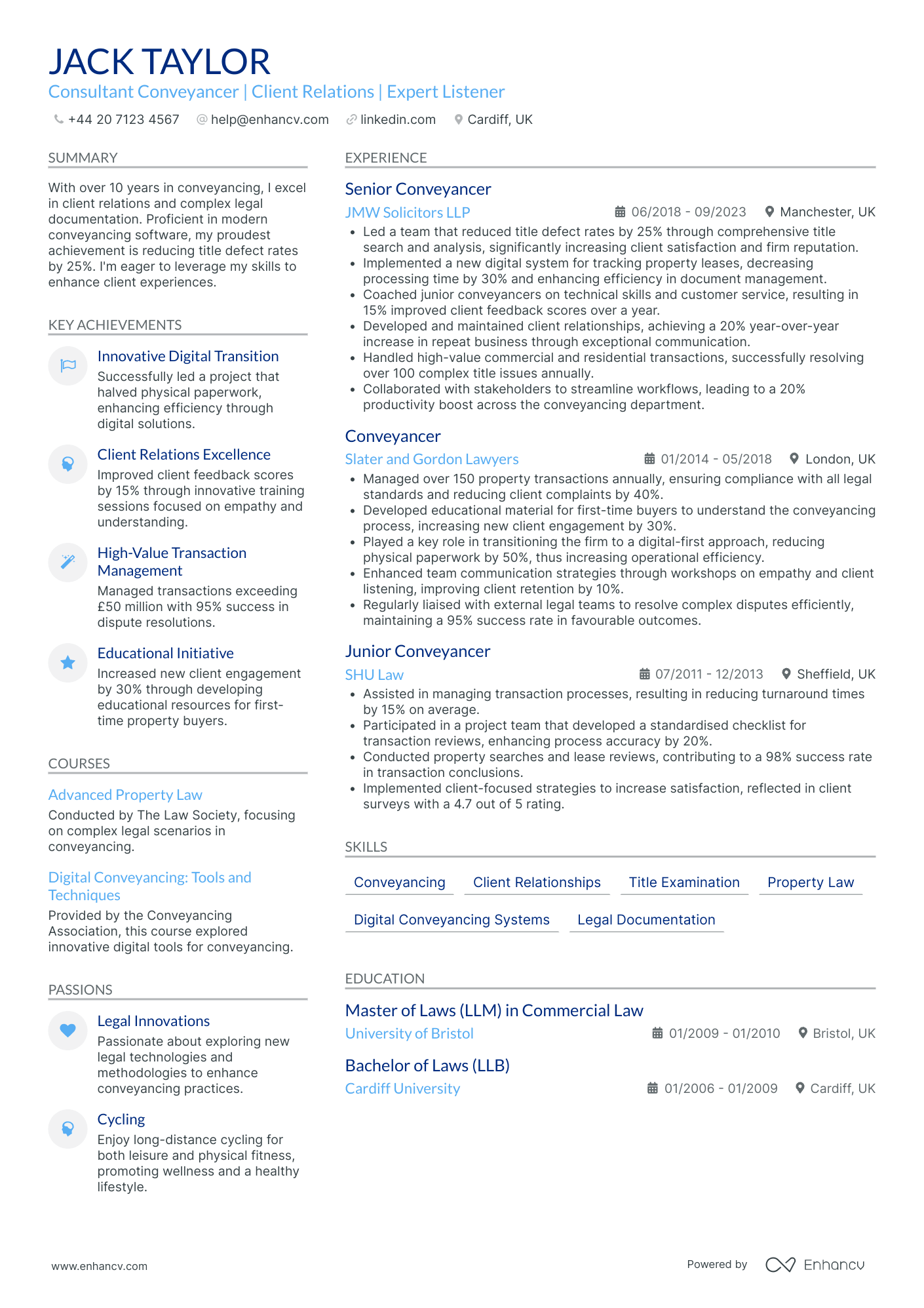
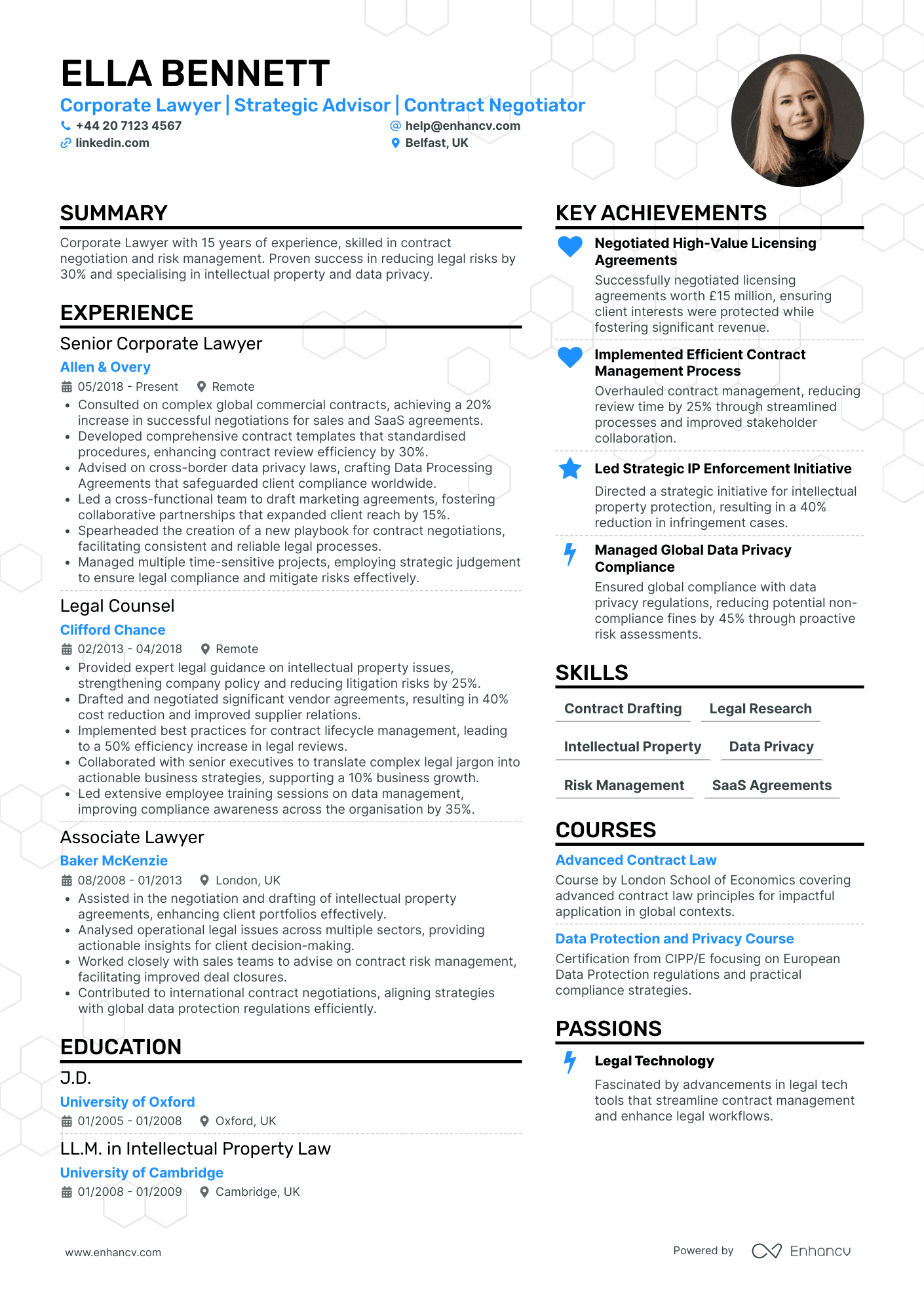
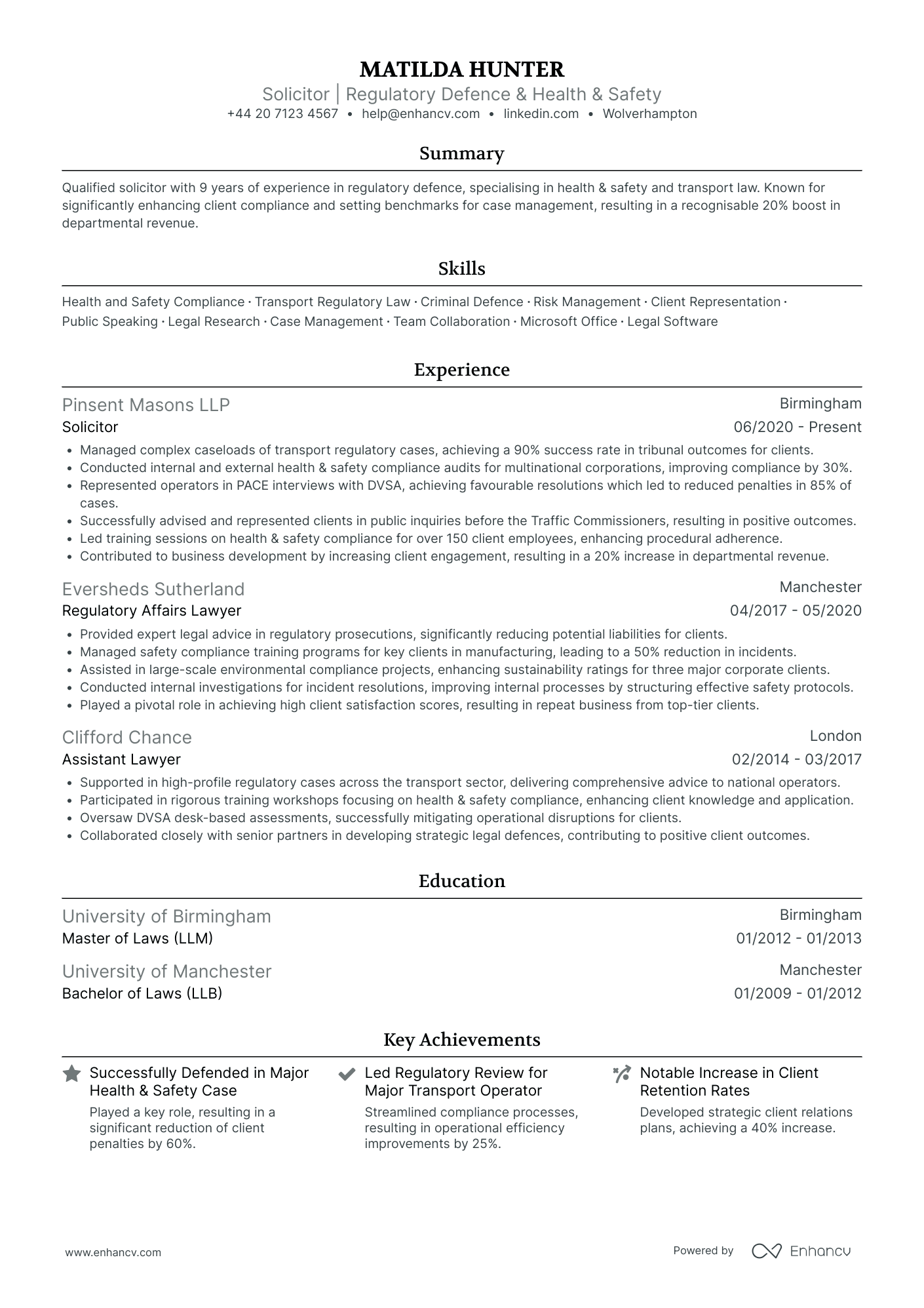
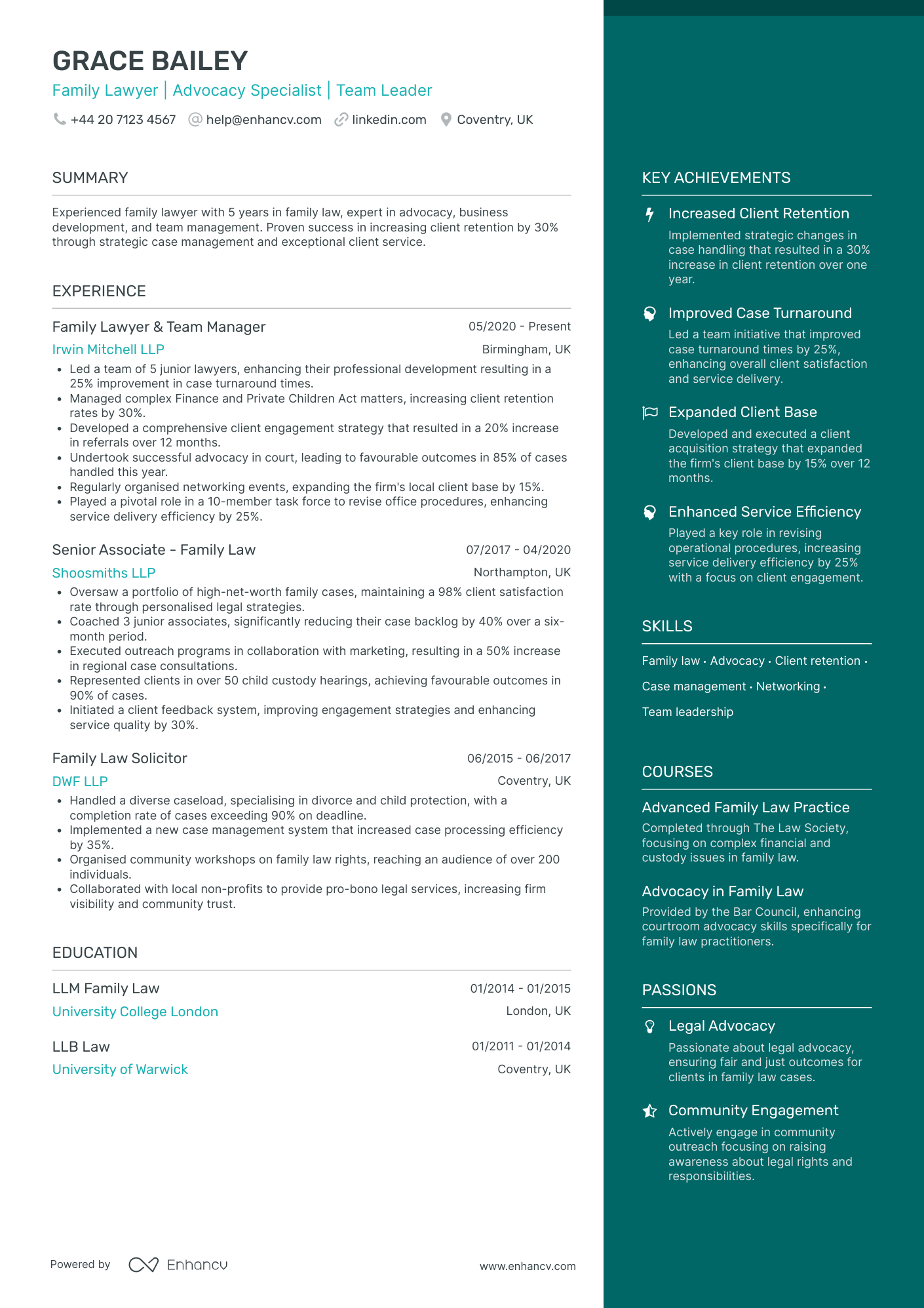
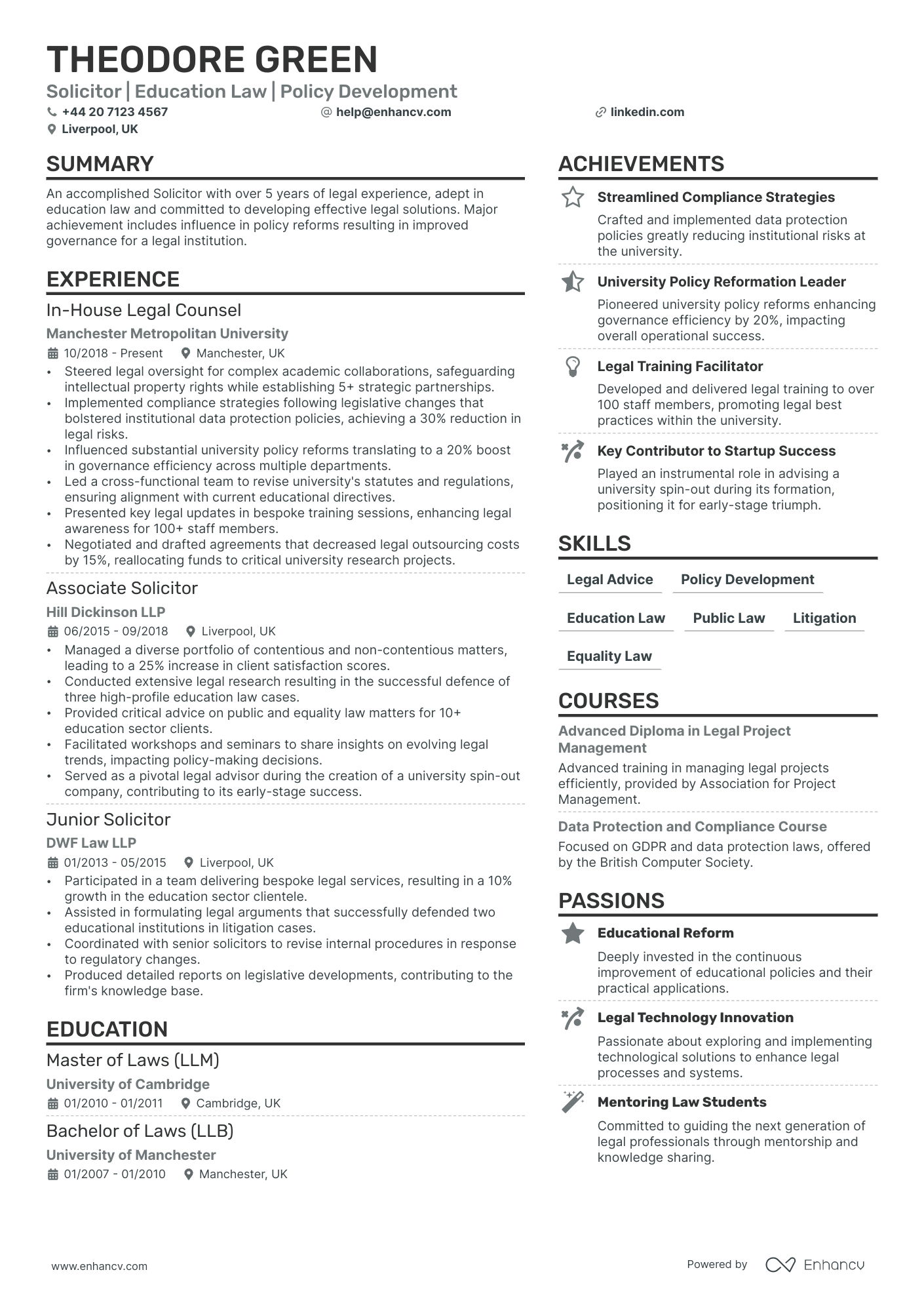
Most lawyer CVs read like a matter list: every deal, every case, and every statute, with no signal about which ones mattered. A hiring partner sifting forty applications for one seat will not wade through that. They scan for the two or three points that prove you can do the work in front of them.
Structure is what surfaces those points. Get the order, the length, and the format right and a busy reader finds your strongest evidence in the first fifteen seconds. Get it wrong and your best case sits on page two, where nobody reaches it.

Key takeaways
- Lead with a tight structure: personal statement, key skills, experience, then education and admission status. A reader should place your practice area in seconds.
- Two pages, reverse chronological, sent as a PDF unless the advert asks for a Word file.
- State your practising status plainly: SRA or BSB admission, year of qualification, or your SQE or LPC stage. Employers screen for it.
- Name the matters you have run, not a generic list of legal duties. Deal values, caseloads, and billable hours all count.
- UK lawyer roles split roughly evenly between hybrid and on-site work, so put your location near the top.
- One real number beats a paragraph of adjectives. Quantify wherever the work allows it.
Formatting and structuring your lawyer CV
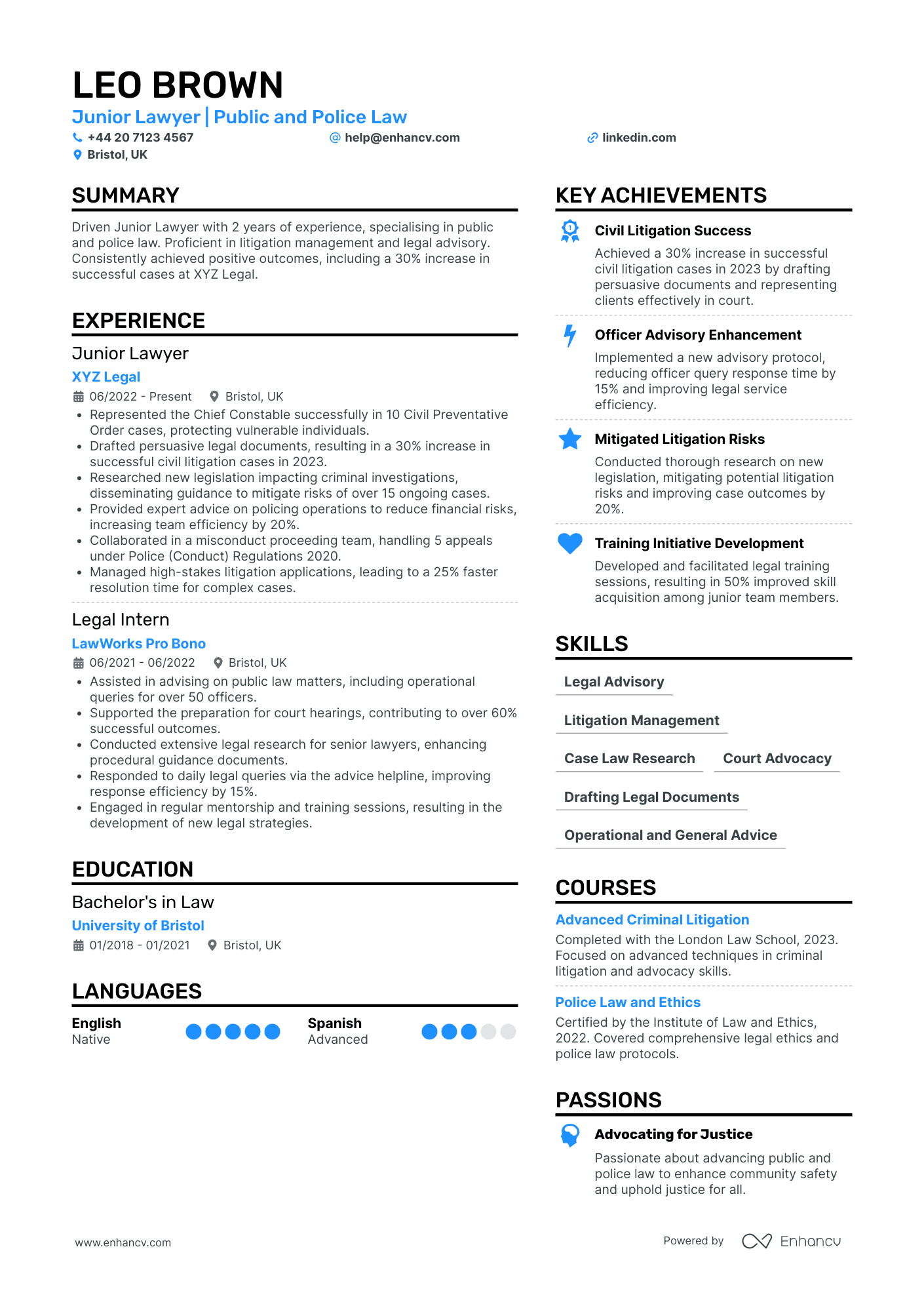
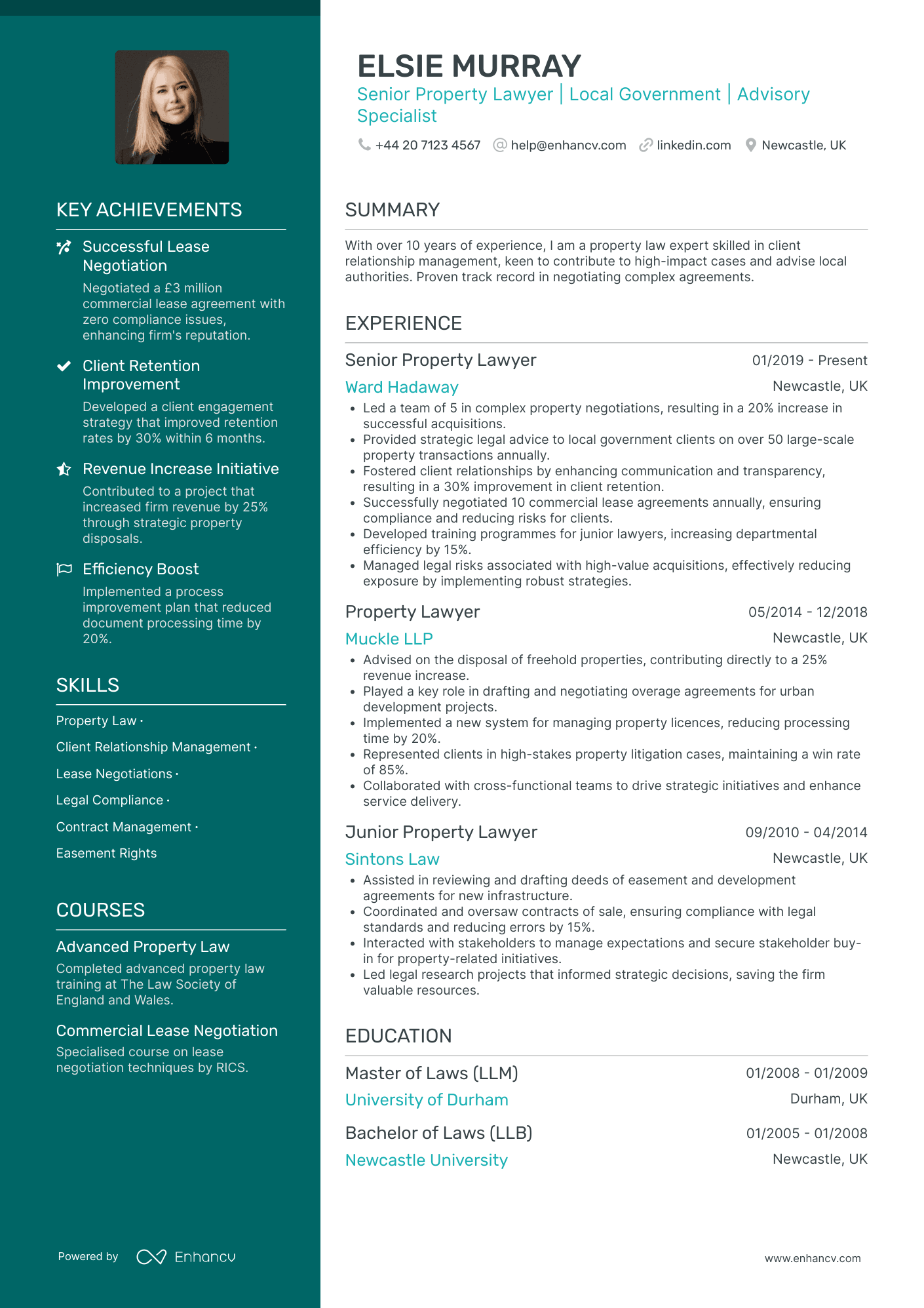
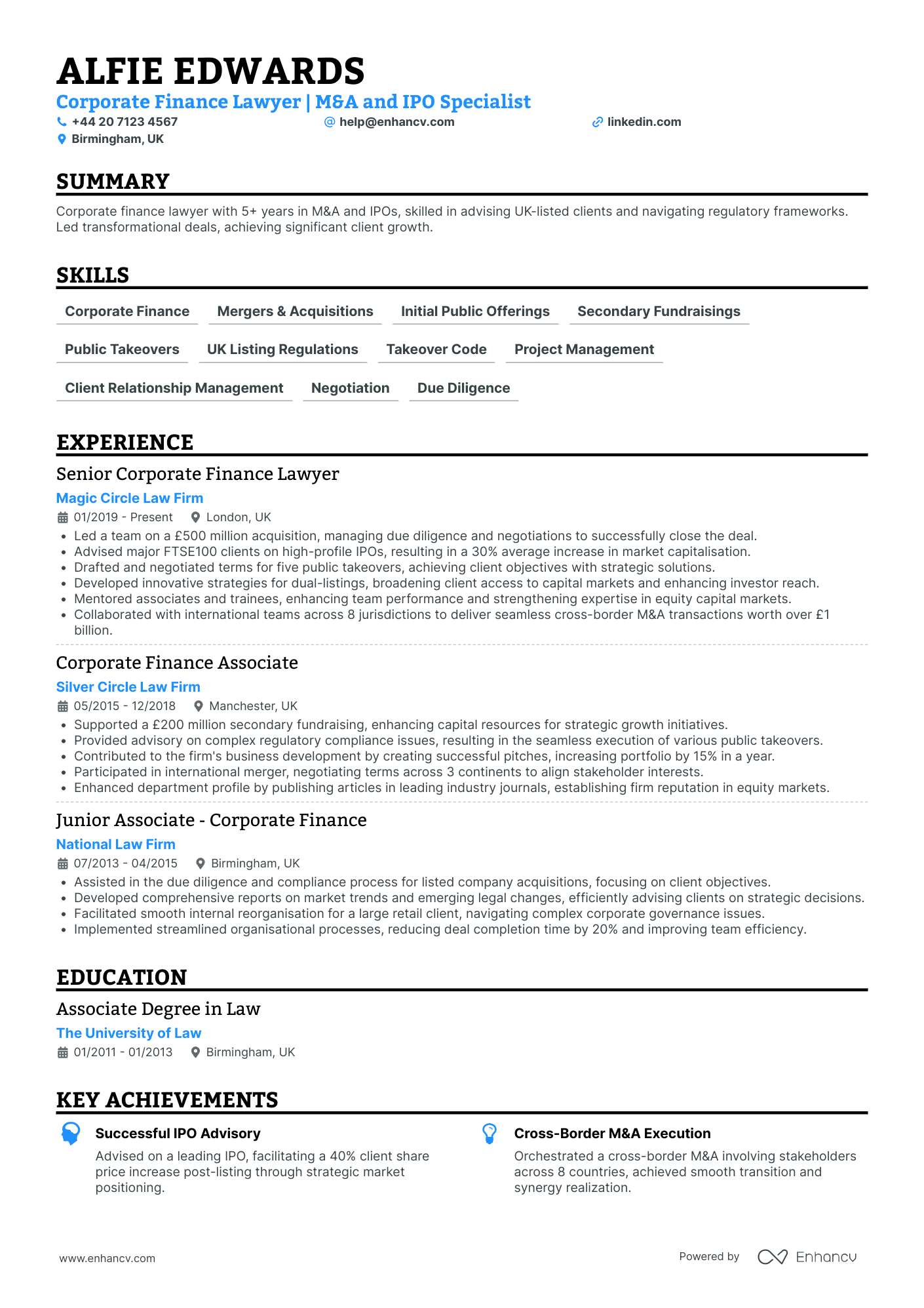
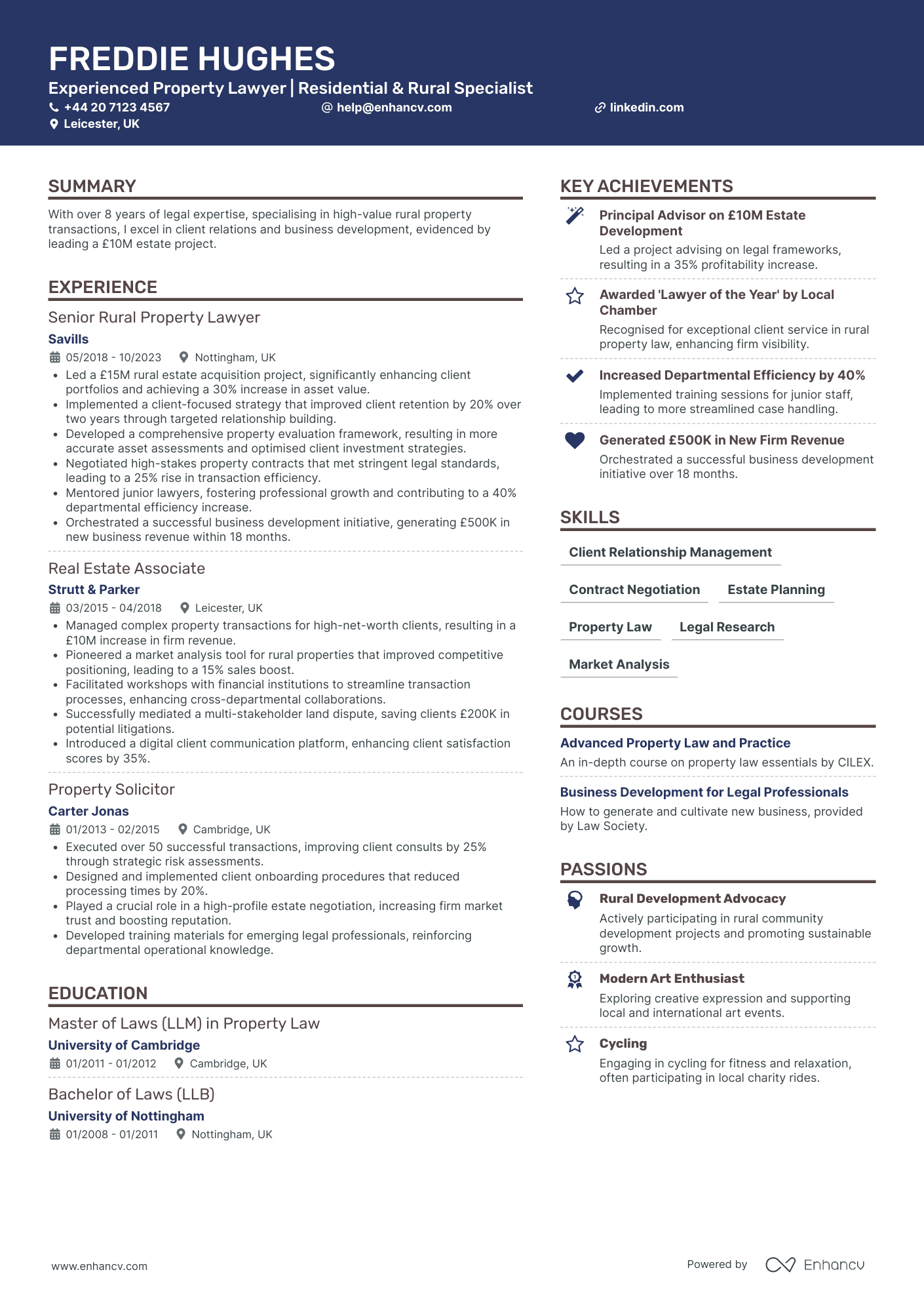
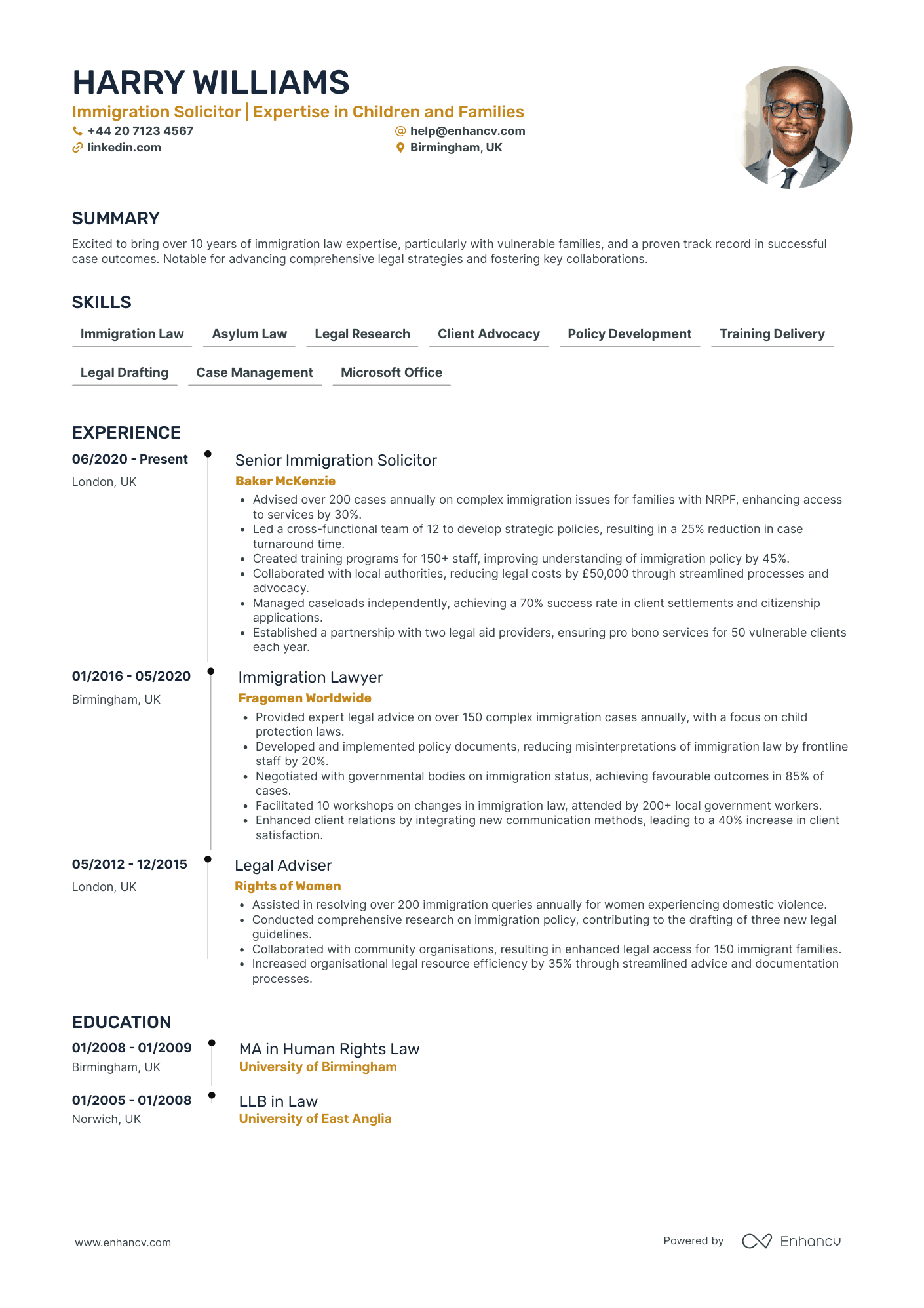
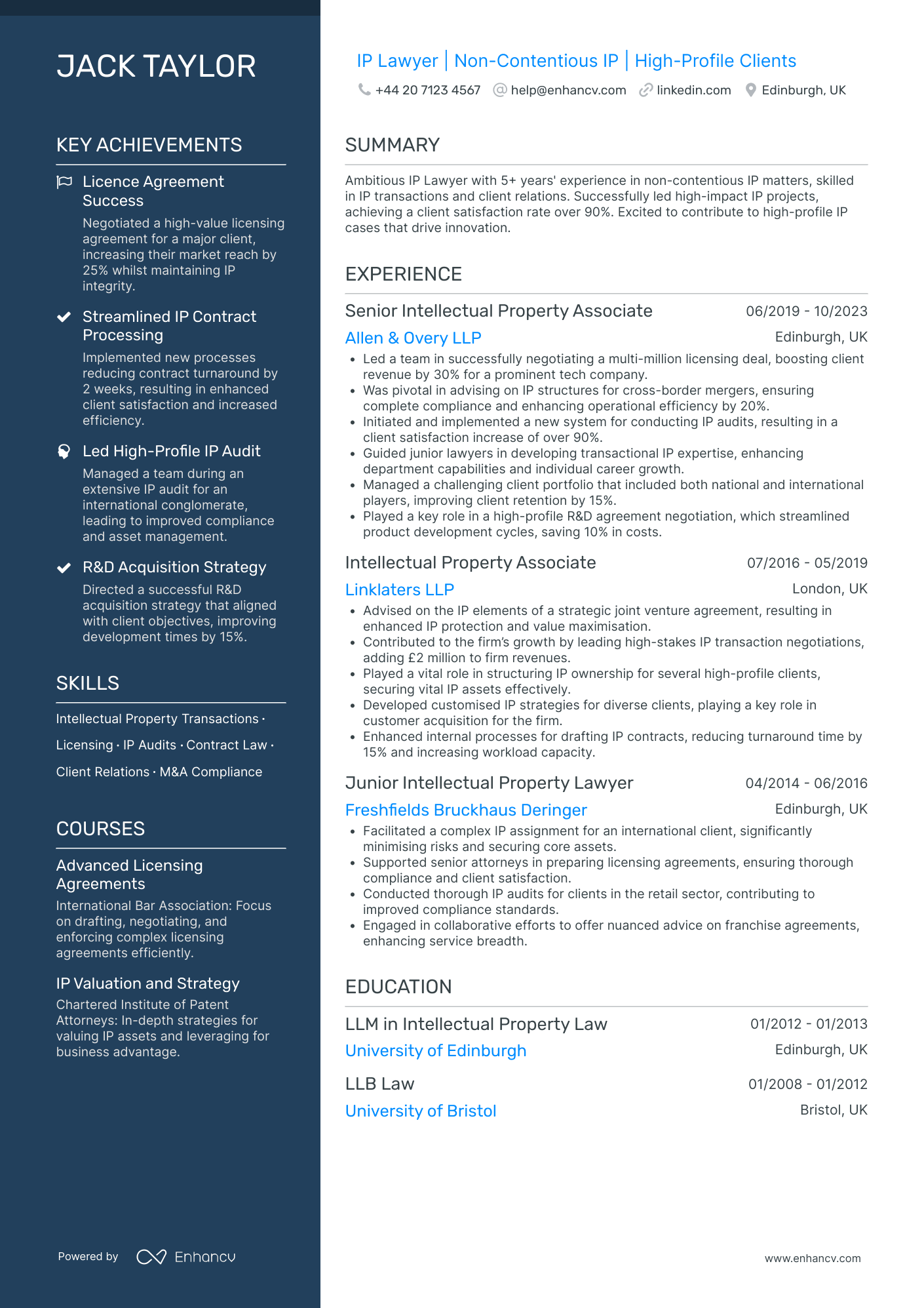
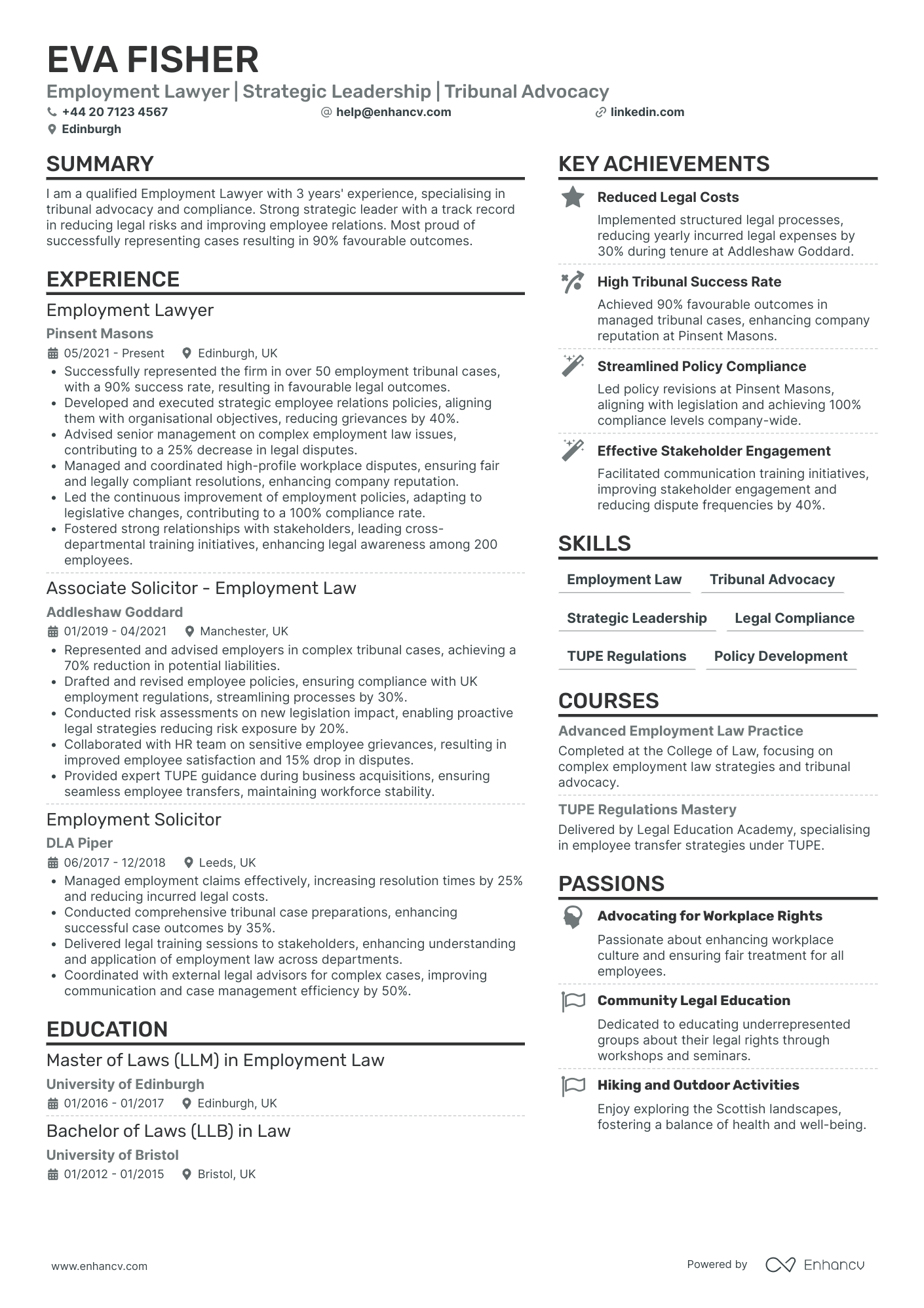
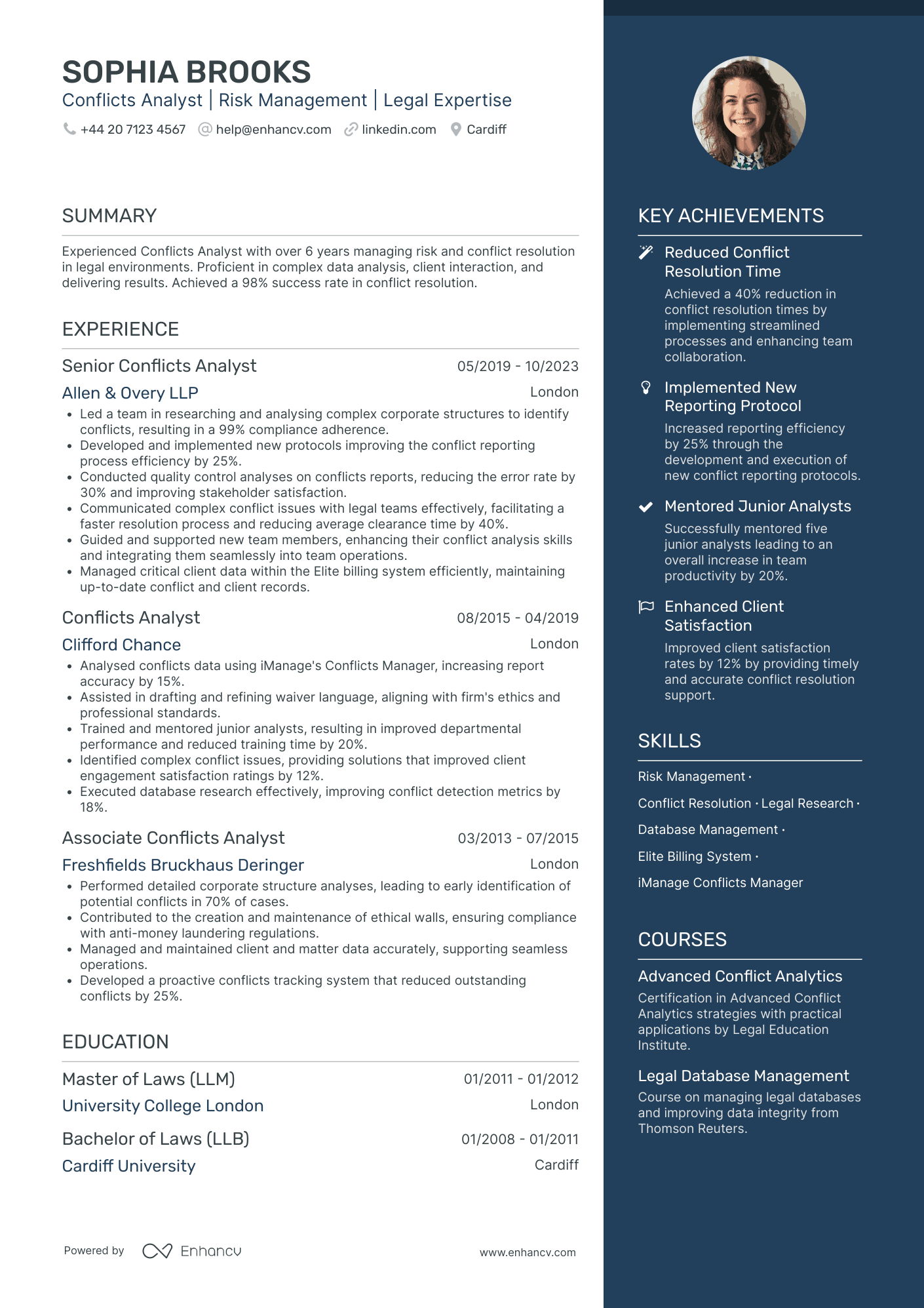
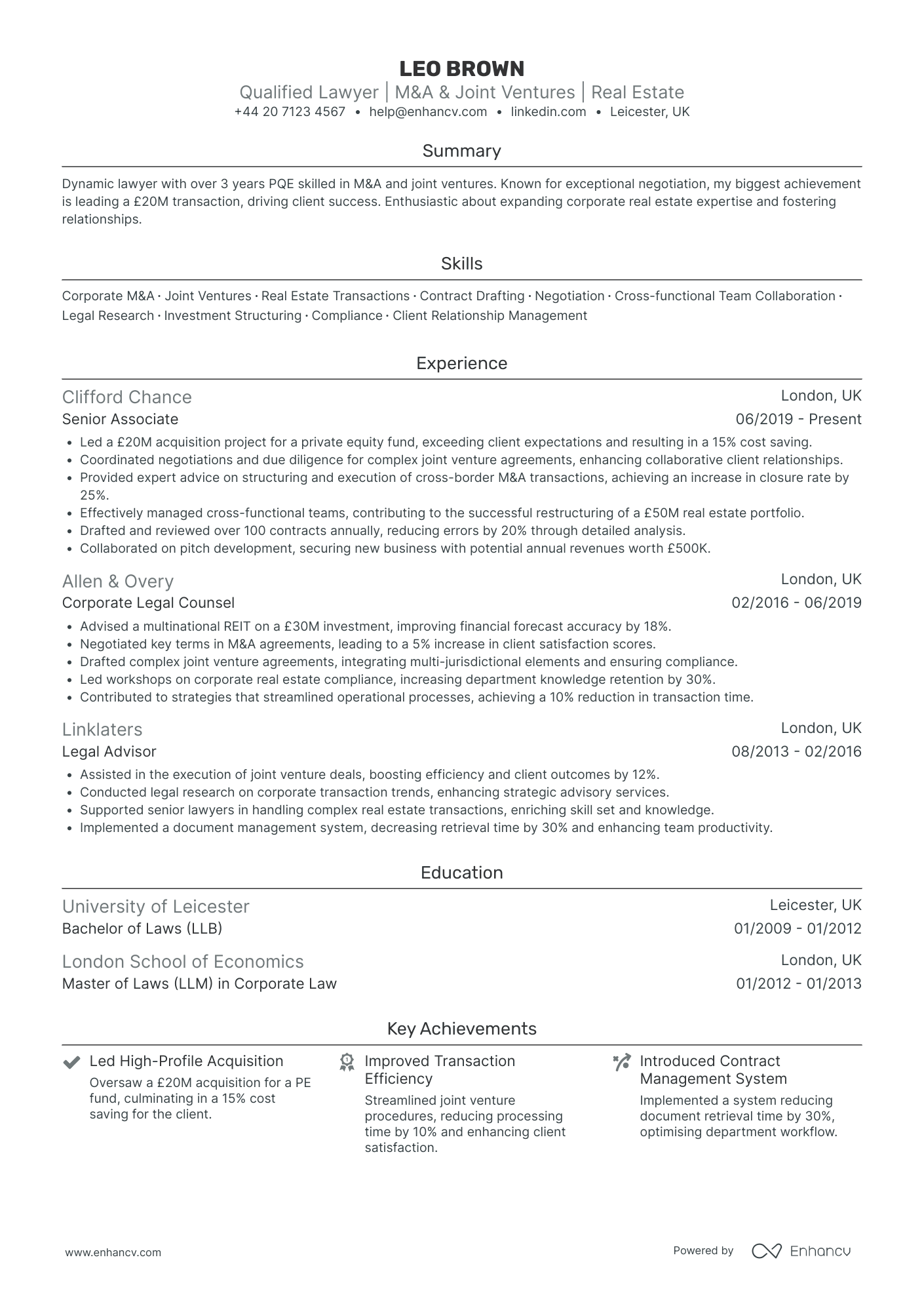
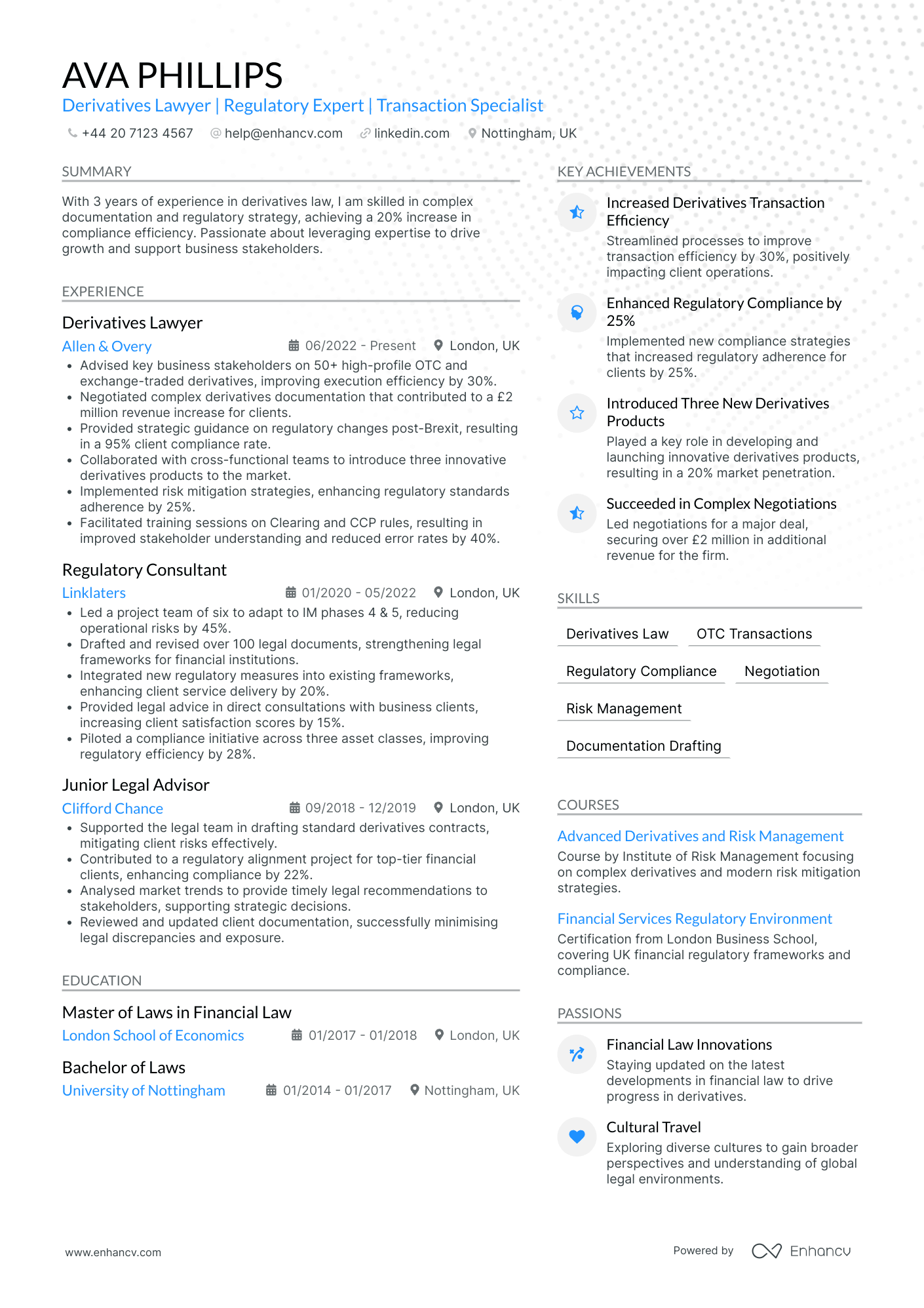
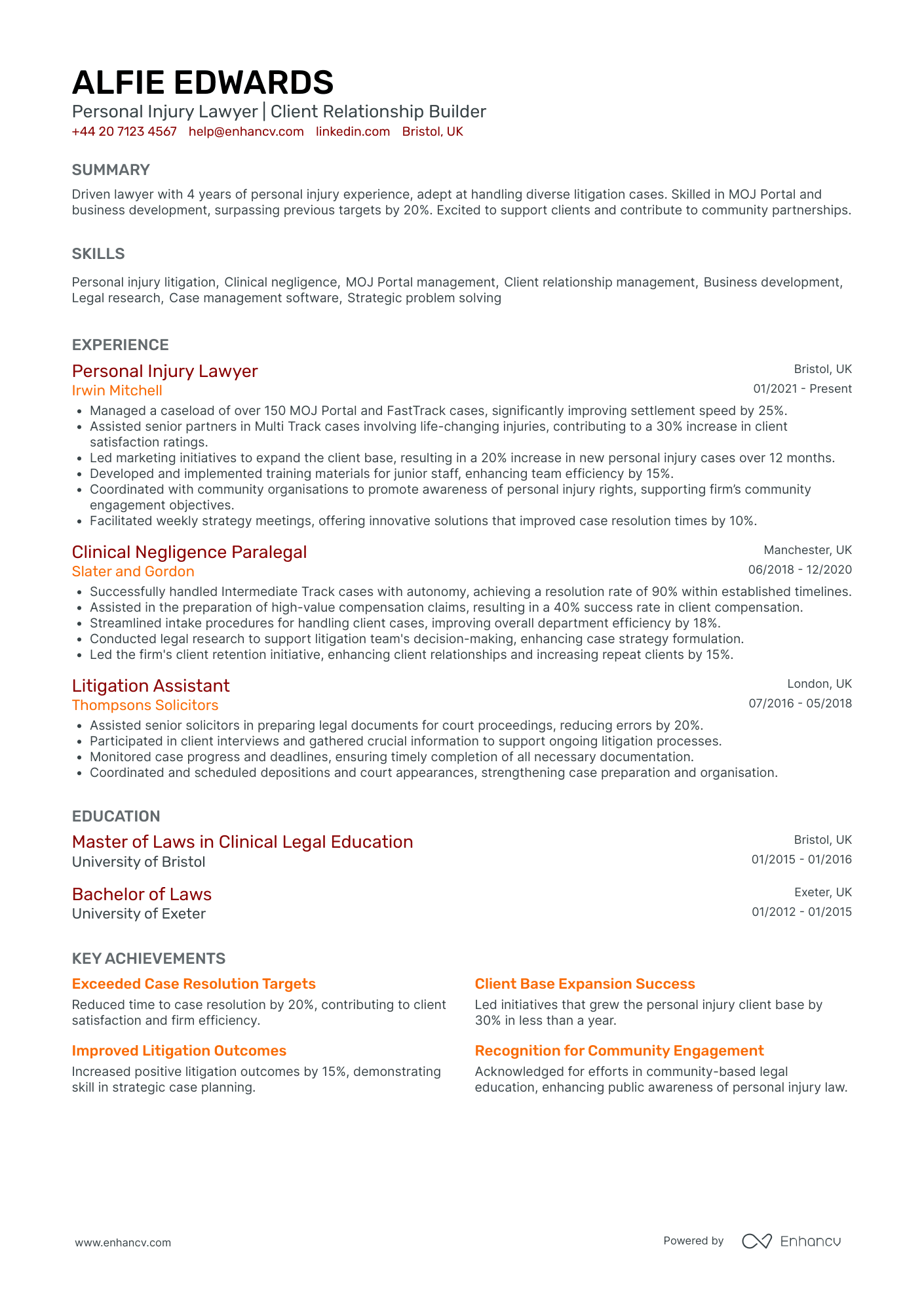
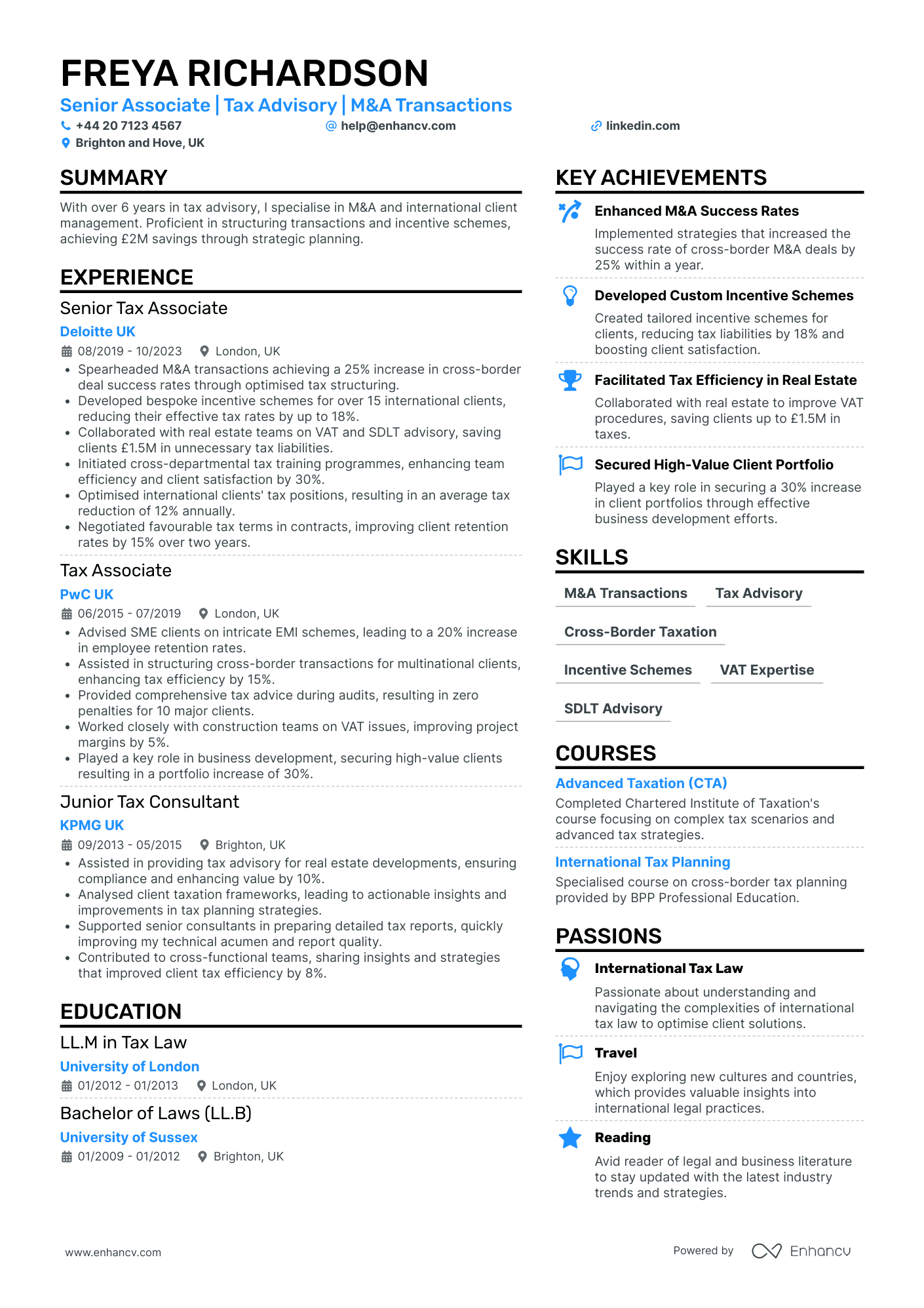
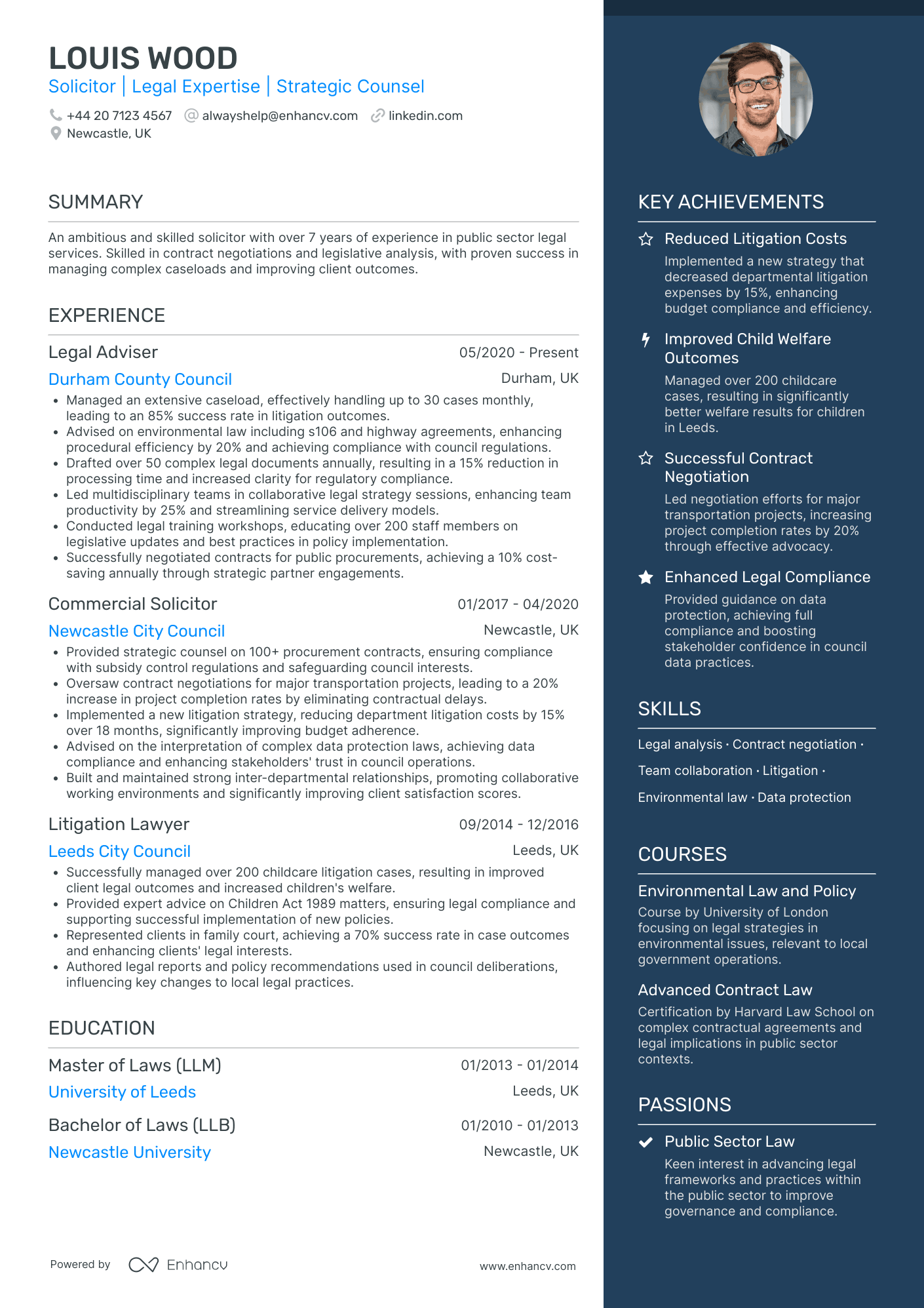
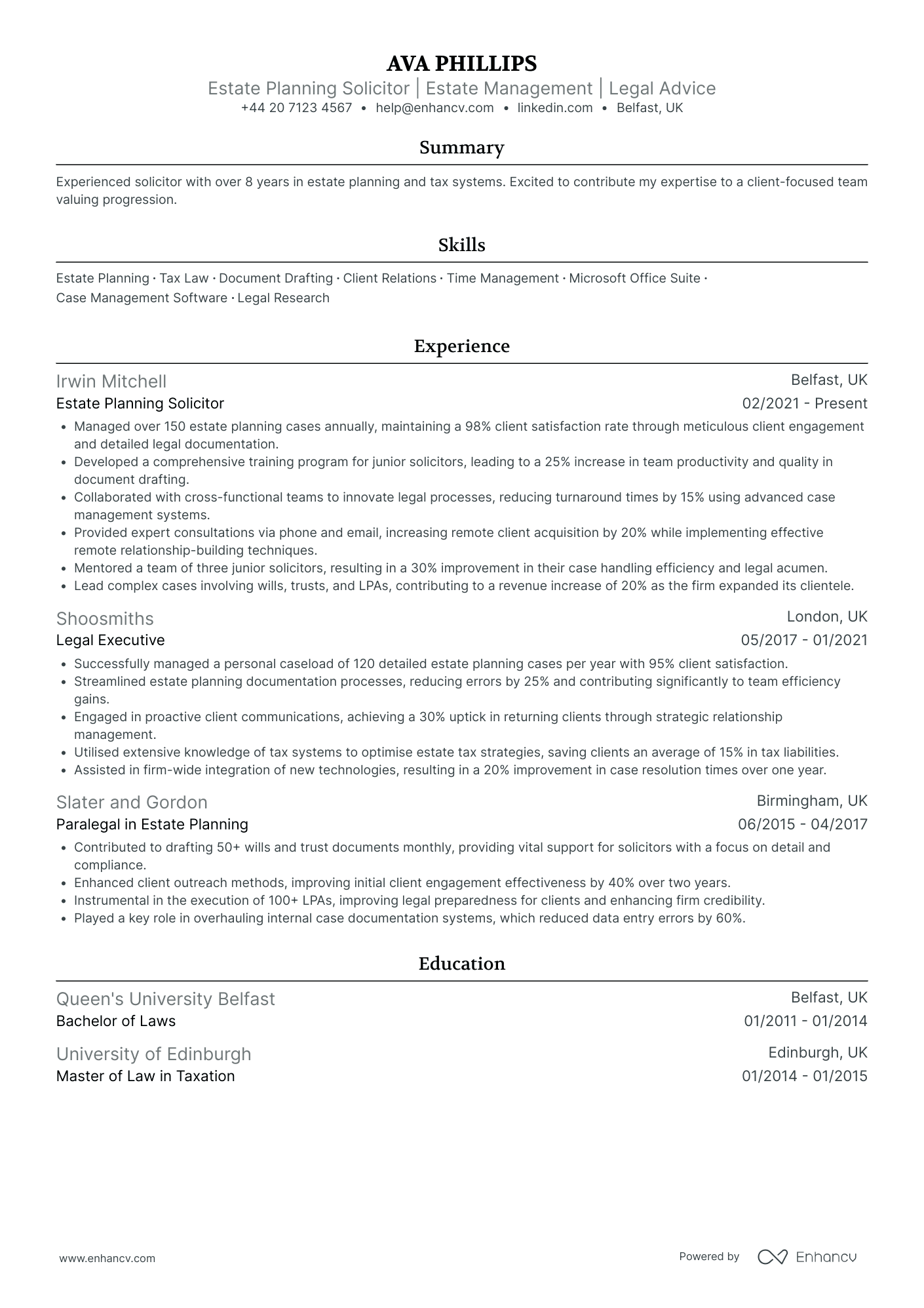
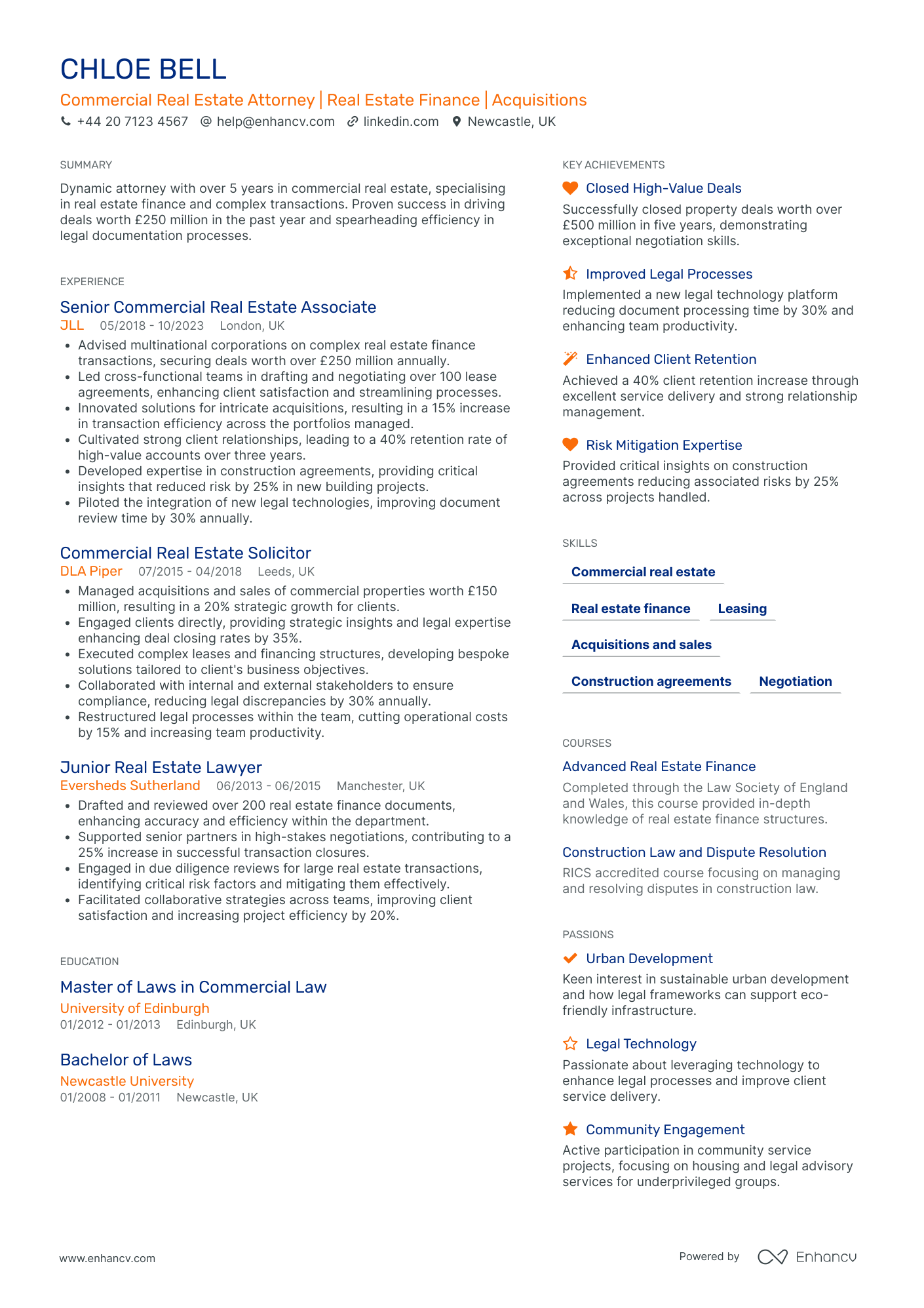
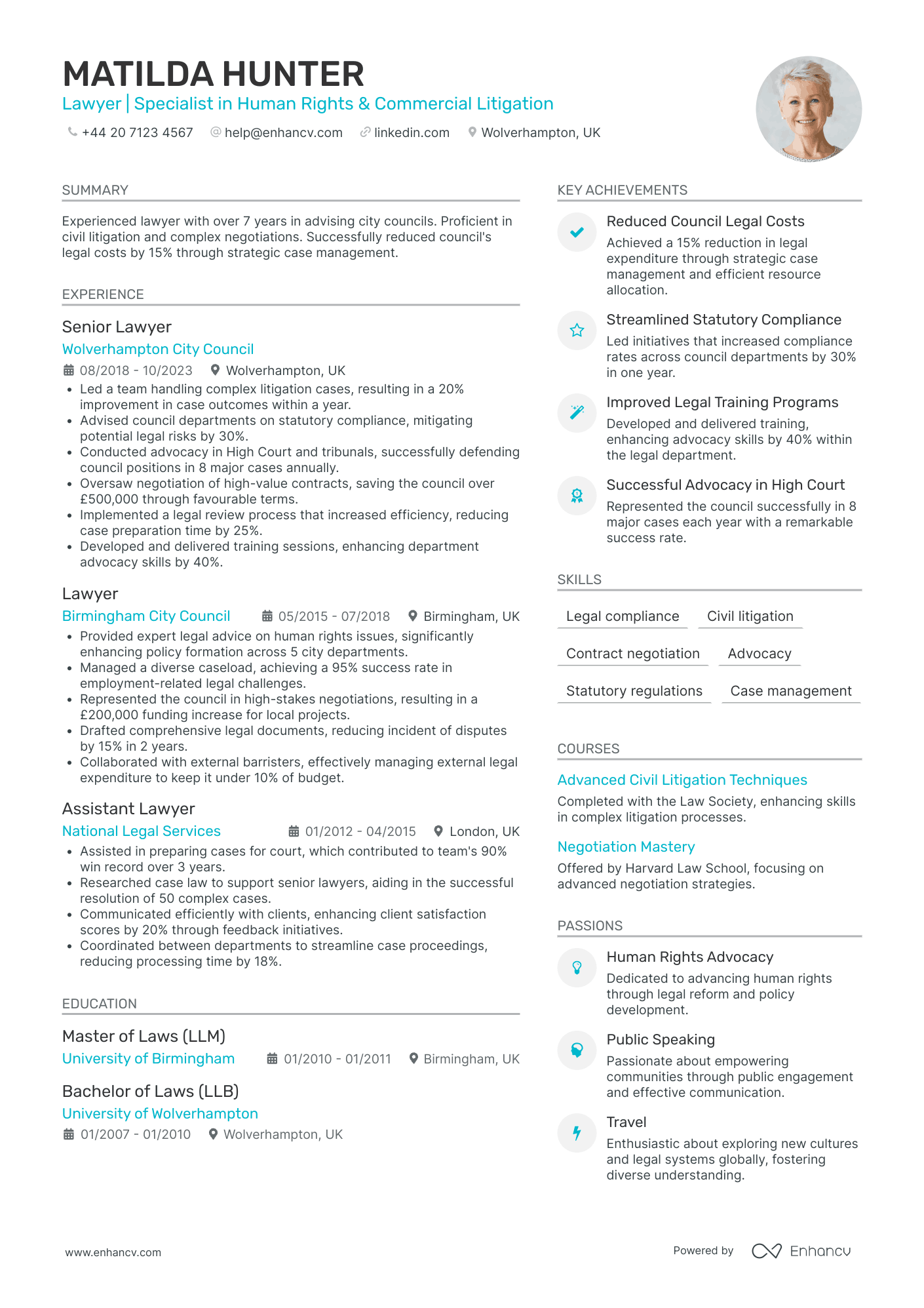
A qualified lawyer's CV follows a standard structure, in reverse chronological order: personal statement first, then key skills, work experience, and education and qualifications last. Admission status sits near the top, either in the header or the opening line.
Those are the five blocks a UK legal recruiter expects to find, in that order. Anything else, such as publications, pro bono, languages, or notable matters, is a supporting section rather than a headline one.
Signal your practice area early and everywhere. A corporate seat, a criminal defence role, and an in-house compliance job reward completely different CVs, so a reader should know within one line which one you are applying for. Put the practice area in your header title, your personal statement, and the first bullet of your most relevant role.
Order your experience by relevance to the seat, not by prestige. A recruiter for a family law role cares more about your family matters than a single high-value corporate deal, so lead the section with the work that maps onto the advert.
Keep it to two pages. Partners and in-house hiring leads skim fast, and a third page signals you cannot prioritise. Trainees and paralegals can run to one.
Use one column, standard headings, and a readable font. Legal CVs are read on screen far more than on paper, so leave white space and avoid dense blocks of text.
Send a PDF for direct applications so the layout holds. Keep a Word copy for legal recruitment agencies, which place a large share of private-practice roles and reformat CVs into their own template. If the advert names a file type, follow it exactly.
Firms and in-house teams often screen applications through tracking software, so keep the layout ATS-friendly: clear headings, no text buried in images, and job titles that read straight. Build it from a tested layout rather than a blank page. Enhancv's CV templates export to a clean PDF that holds its structure.
Your header carries your name, the practice area or job title you are targeting, a professional email, a phone number, and your city. See personal details on a CV for what belongs there and what does not.
Leave off a photo, your age, and marital status. UK legal employers do not expect them, and they invite bias rather than help you. "References available on request" can go too, since everyone assumes it and the line only wastes space you could give to a matter.

PRO TIP
Put your admission details where a recruiter looks first. A single line under your name, such as "Solicitor, admitted England and Wales 2021, current practising certificate", answers the first question every legal employer has before they read a word of your experience.
What the UK lawyer market looks like
Knowing who is hiring, and how, shapes what you put near the top. Here is what UK lawyer postings actually show.
| What | UK lawyer roles |
|---|---|
| Where the work happens | Hybrid 50% and on-site 47% (67 and 64 of 135 UK lawyer postings in the last ~30 days, Enhancv's internal job feed). Fully remote roles are rare. |
| Experience level asked for | Skews senior: lead 41% and mid-level 35%, with entry-level a small share (135 UK postings, last ~30 days, Enhancv's internal job feed). |
| Skills that recur most | Legal research, legal advice, regulatory compliance, legal risk management, and contract negotiation. |
Two of those signals should shape your CV.
Half of UK lawyer roles are hybrid and just under half are on-site, so a recruiter needs to place you geographically. Put your city near the top and say which days you can be in the office or chambers.
The market leans towards experienced hires, with lead and mid-level seats making up most postings. If you are early in your career, that is exactly why the no-experience approach below leans on your qualification route and any paralegal or vacation scheme work.
On pay, no single figure fits a high-street solicitor and a City associate, so treat any headline salary with caution and research the firm, the practice area, and the region before you name a number in an interview.
Writing your lawyer personal statement
Three or four sentences at the top: who you are, your practice area and year of qualification, your strongest piece of evidence, and the role you want. See more personal statement examples if the opening line is not coming.
Skip the adjective soup that opens most legal CVs. "Hard-working, commercially aware, and detail-oriented" is a claim a recruiter cannot check, and every other applicant has already made it.
Lead with evidence instead:
Lawyer CV personal statement example (qualified)
Corporate solicitor with four years' post-qualification experience in M&A and private equity, admitted in England and Wales in 2021. Led the buy-side legal workstream on 11 acquisitions worth a combined £180m over two years, running due diligence, disclosure, and completion. Looking to bring that deal experience to a mid-market corporate team in Manchester.
Adjust the emphasis to your stage. A newly qualified or in-house lawyer leads on their route and the business they support rather than years of deals:
Lawyer CV personal statement example (newly qualified, in-house)
Newly qualified solicitor, admitted in 2024, moving in-house after commercial and data protection seats. Advised three business units on 40+ commercial contracts and supported the firm's UK GDPR compliance during my training contract. Looking to be an early legal hire in a scaling technology company and build its contract and privacy processes from the ground up.
What to avoid
A hard-working and passionate lawyer with excellent attention to detail and strong communication skills, seeking a challenging and rewarding role in a dynamic firm where I can develop my career and add value to the team.
The weak version names no practice area, no year of qualification, and no matter. It could belong to any lawyer at any level, which is why a recruiter skims straight past it.
When I read a lawyer's personal statement, I skip the adjectives and look for three things: your practice area, your year of qualification, and one matter you can actually talk about. A line like "ran the disclosure exercise on a £40m warranty dispute" tells me more than a paragraph of "commercial and detail-oriented". Name the work, put a number on it, and say where you want to go next.
Writing your lawyer experience section
Give each role a dated heading, then bullets that lead with a verb and land on an outcome. For the mechanics, see work experience on a CV.
Legal work is more measurable than most lawyers admit. Deal values, caseloads, billable hours, matters closed, cost savings, and win rates are all fair game, and they turn duties into real achievements.
Frame each entry for the reader you want. Private-practice CVs lead on matters, deal values, and clients by sector. In-house CVs lead on the business you supported, the risk you managed, and the stakeholders you advised. Same career, two different emphases.
Own your verbs. "Led", "drafted", "negotiated", and "advised" tell a partner you carried the file. "Assisted with" and "was involved in" tell them you watched someone else carry it. Choose action verbs that match what you actually did.
Tailor every application. Pull the practice area and the matters the advert describes and mirror them where they are true of you. Enhancv's CV tailoring feature reads the advert and suggests the edits that match, which saves rewriting from scratch for each firm.
- Led the legal workstream on 14 M&A and reorganisation matters worth £5m to £60m each, drafting share purchase agreements and running due diligence
- Ran the disclosure exercise on a £22m warranty dispute, keeping the review in-house and cutting external counsel spend by 18%
- Managed 25 to 30 live matters at a time while consistently recording 1,500+ billable hours a year
- Supervised two trainees and a paralegal, reviewing their drafts and owning the team's know-how updates
PRO TIP
Anonymise where you must, but keep the number. "Advised a FTSE 250 client on a £30m refinancing" works even when you cannot name the client. The value and the sector carry the weight, and no confidentiality is breached.
Skills to put on a lawyer CV
Across UK lawyer postings, the same demands repeat. Legal research, legal advice, and regulatory compliance recur most often in the adverts, on Enhancv's internal job feed over the last ~30 days, closely followed by legal risk management and contract negotiation. Those are your hard skills, written in the words firms use.
The soft skills that matter here are checkable, not decorative: judgement, drafting, negotiation, and client management. Prove each one in an experience bullet rather than listing it and hoping.
List only what you can stand behind in an interview. If you have run regulatory matters, say so. If you have only shadowed them, that belongs under experience, not in your key skills.
Order the list by relevance to the seat and add the tools you actually use, whether that is a case management system, e-disclosure software, or a legal research service. Naming them signals you can be productive from week one rather than trained from scratch.
Top skills for your lawyer CV:
Legal research
Legal advice
Regulatory compliance
Legal risk management
Contract negotiation
Contract drafting and review
Due diligence
Policy development
Judgement
Attention to detail
Written communication
Negotiation
Client management
Stakeholder management
Qualifications and practising status on a lawyer CV
This is where a lawyer's CV differs from every other. A legal employer needs to know, quickly, whether you are qualified, by which route, and whether you hold a current practising certificate.
For solicitors, set out the full route: your degree or GDL, the LPC or SQE, your training contract or qualifying work experience, and your admission by the SRA with the year. Add that you hold a current practising certificate.
For barristers, name the Bar course, your Inn, pupillage, and your call to the Bar with the year, regulated by the BSB. CILEX members should state their grade and route in the same plain way.
Overseas-qualified lawyers should name their home jurisdiction and admission, then the requalification route they are taking, such as the SQE. If you trained before 2021 under the LPC and a training contract, say so plainly. Both routes qualify you, and a recruiter simply wants to see which one you took.
Put the headline in your education section and, if you are qualified, repeat the admission line near the top. In-progress counts too: "SQE1 passed, SQE2 scheduled" or "LPC completed, seeking a training contract" both tell a reader exactly where you are. Naming the qualifications you hold saves the employer a question.
Writing a lawyer CV with no experience
Law students, paralegals, and career changers face the same problem: a thin work history against a field that prizes experience. The fix is a skills-led structure that leads with your qualification route and legal exposure before your job history.
Mine your record for real legal evidence. It is usually there:
- Vacation schemes, mini-pupillages, and placement work, dated like jobs.
- Law clinic, pro bono, or Citizens Advice work, with the matters you handled.
- Mooting, negotiation, or client-interviewing competitions, with results.
- Paralegal, legal assistant, or legal admin roles, however short.
Write these in legal language. "Drafted client care letters and first-draft particulars of claim under solicitor supervision at the university law clinic" is an experience bullet, not filler.
One line lifts a student CV: "SQE1 passed" or "LPC completed, seeking a training contract from September". It shows you are already on the path. If this is your first proper CV, keep it to one page and let the qualification route lead.
If you are chasing a training contract or pupillage, treat the applications as a campaign. Keep one master CV, then tailor the practice-area emphasis and the matters you highlight to each firm. A commercial firm and a legal aid practice want to see different things from the same record.
Conclusion
Lead with a clean structure, state your practising status up front, and quantify the matters you have run. That is what moves a lawyer's CV to the top of the pile.
Pair it with a targeted cover letter that names the firm and the practice area, and you give a busy partner every reason to read on and call you in.

Author's take - The Enhancv team
When I read a lawyer's personal statement, I skip the adjectives and look for three things: your practice area, your year of qualification, and one matter you can actually talk about. A line like "ran the disclosure exercise on a £40m warranty dispute" tells me more than a paragraph of "commercial and detail-oriented". Name the work, put a number on it, and say where you want to go next.