



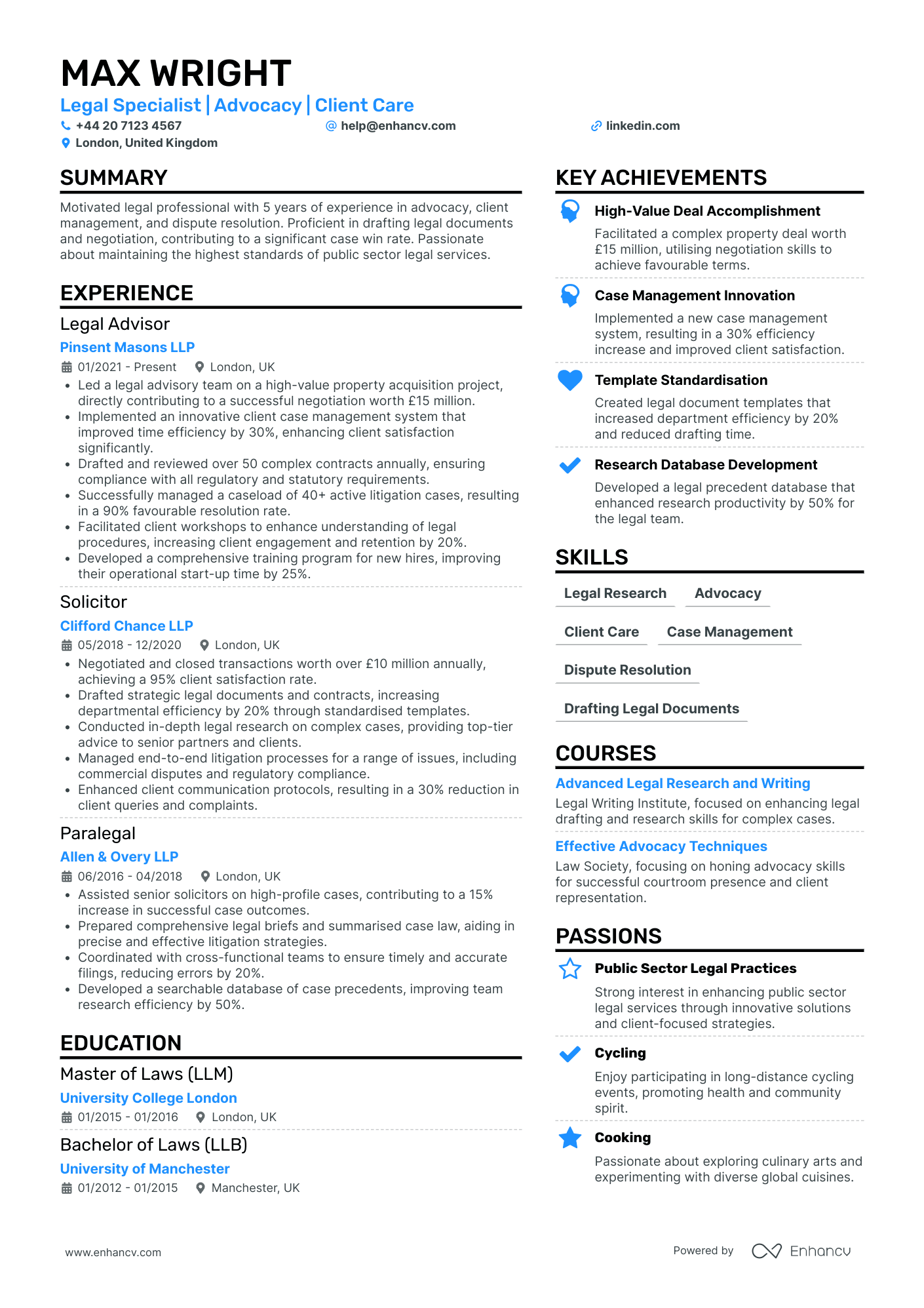
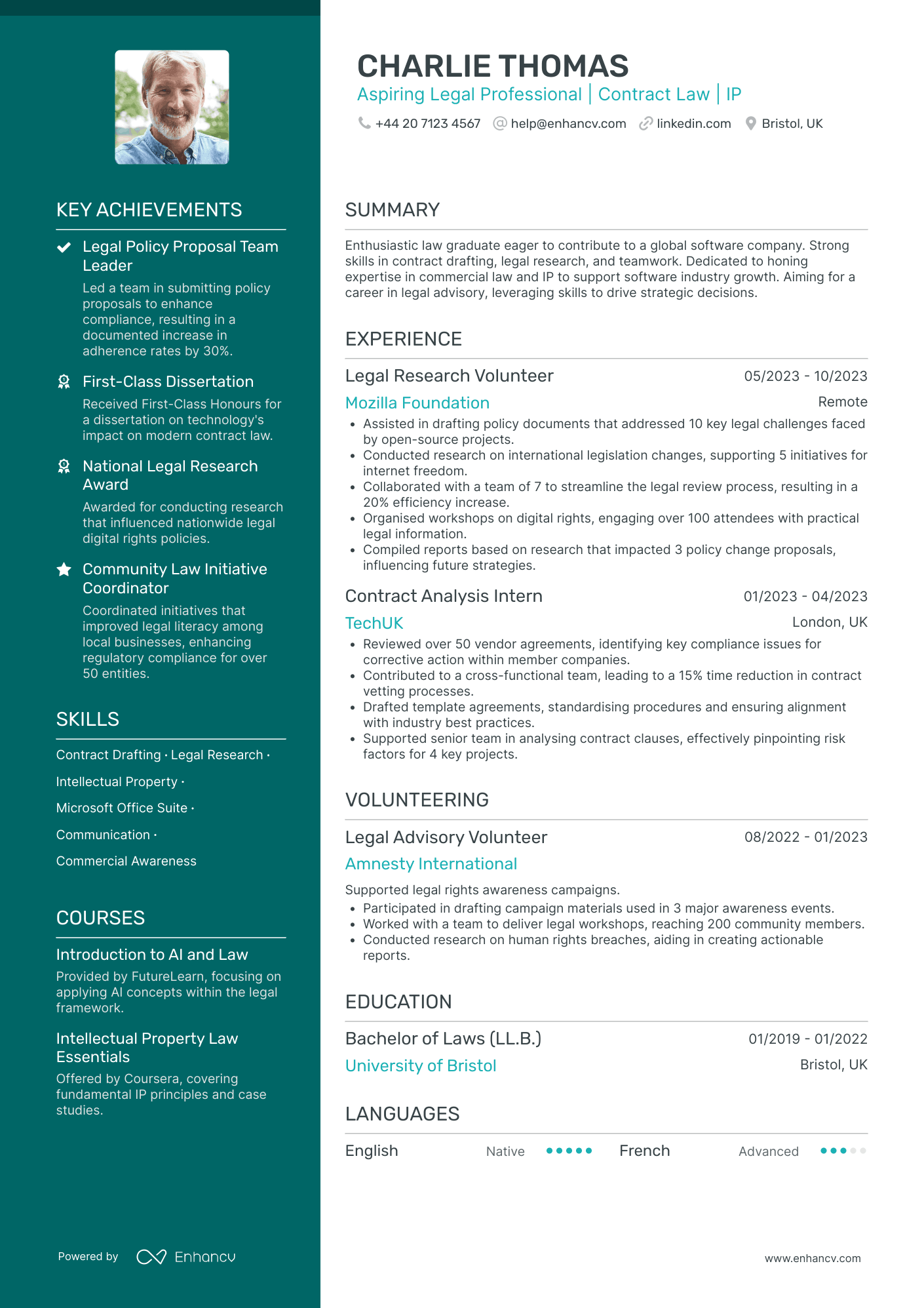
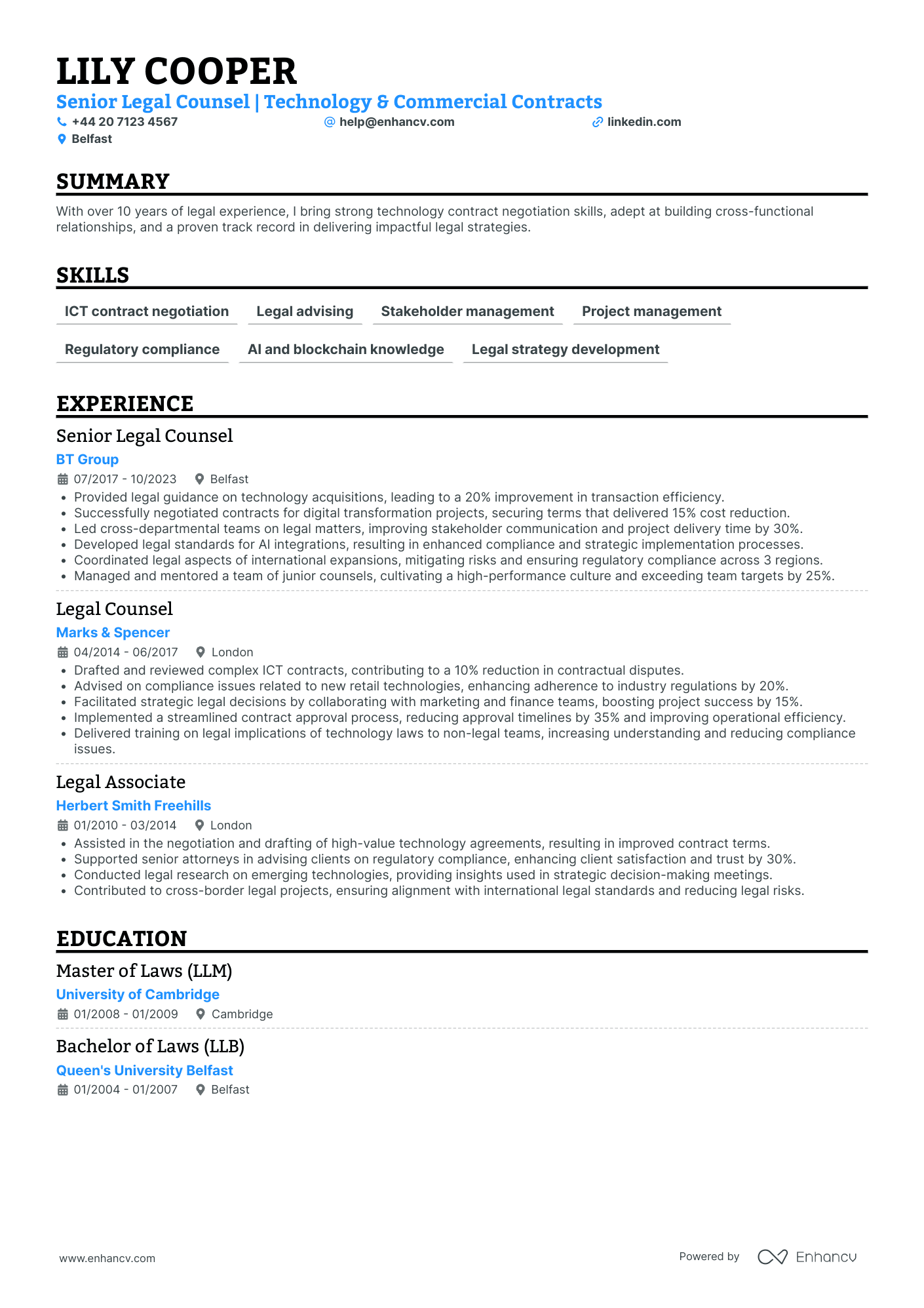
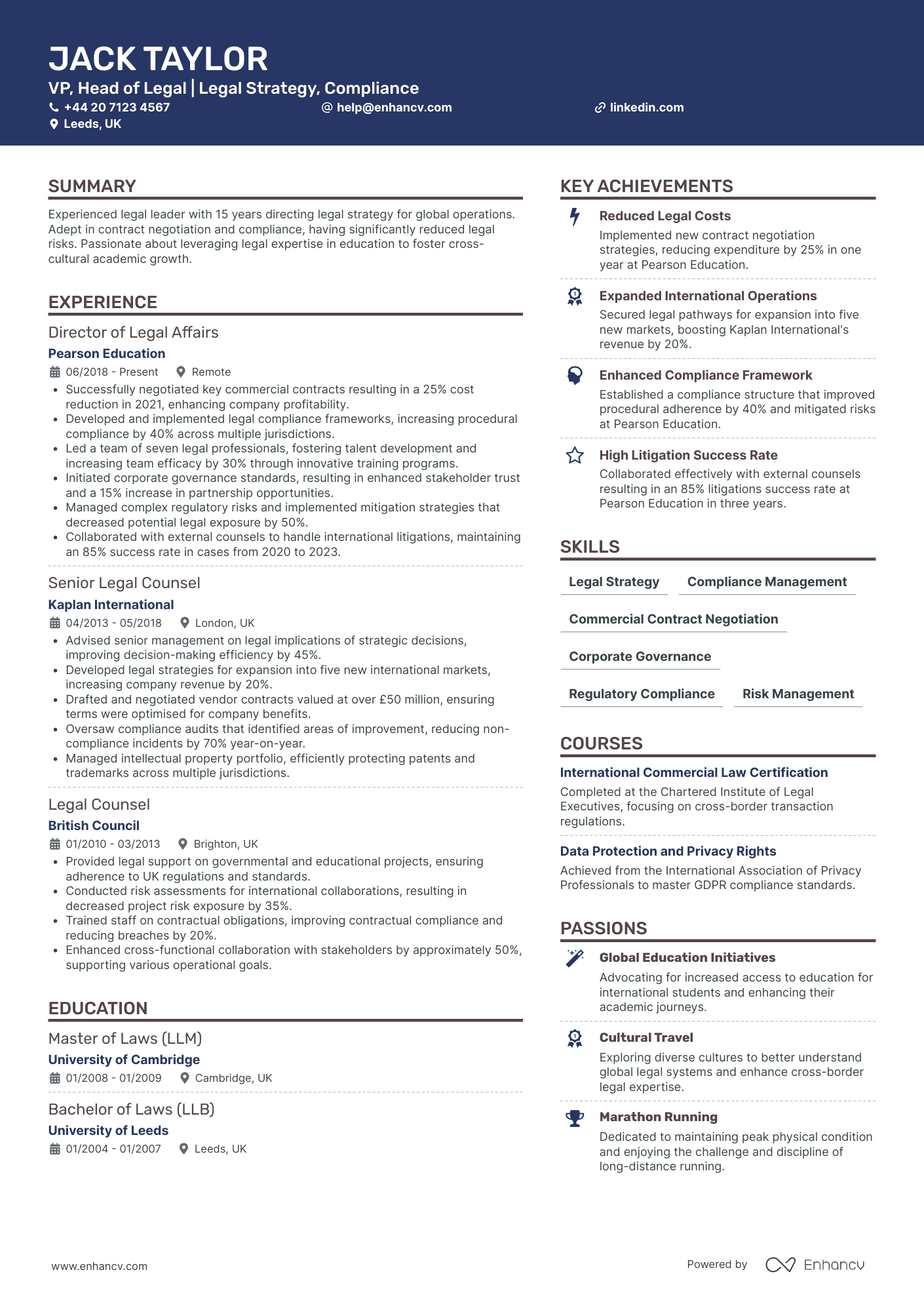
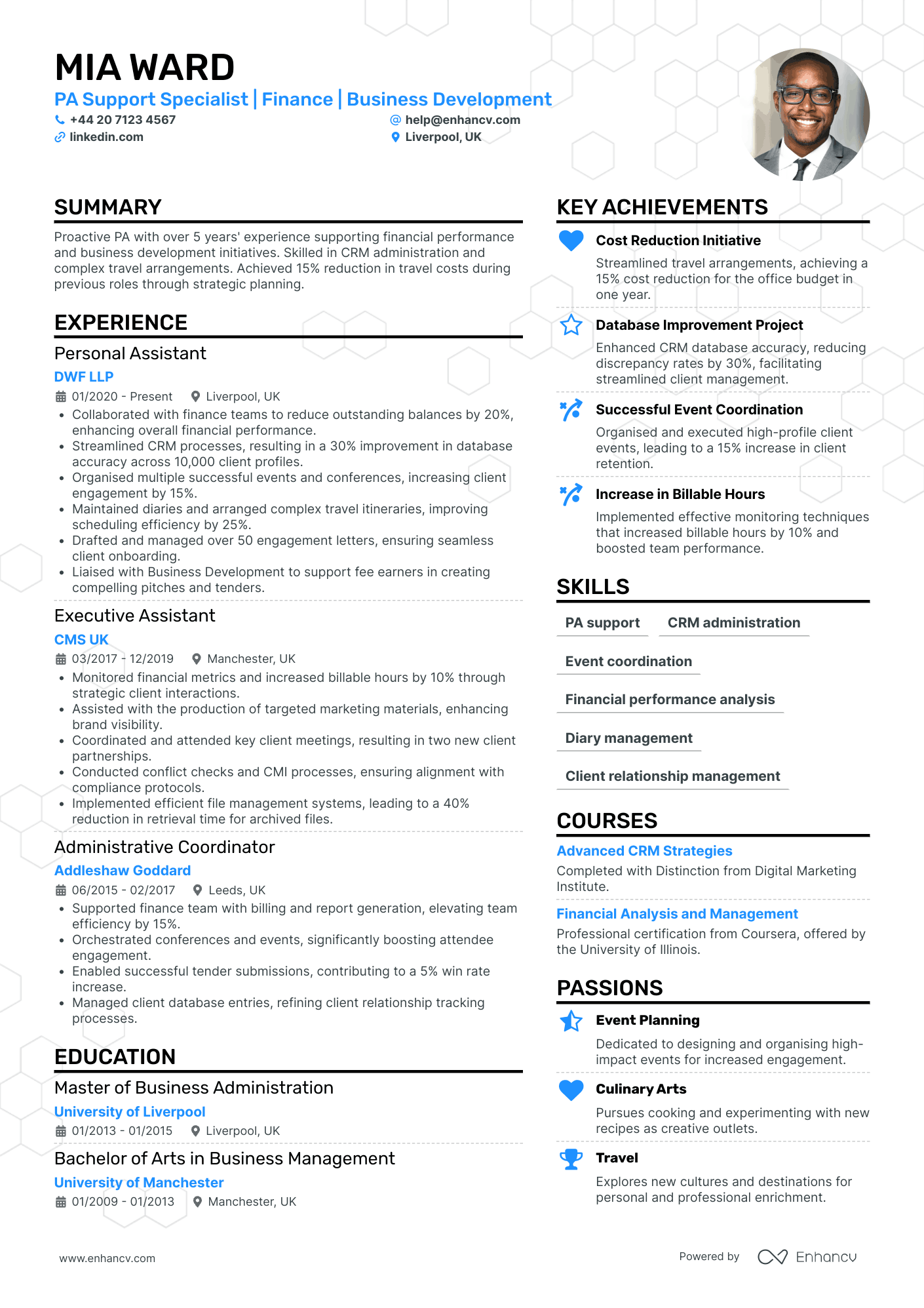
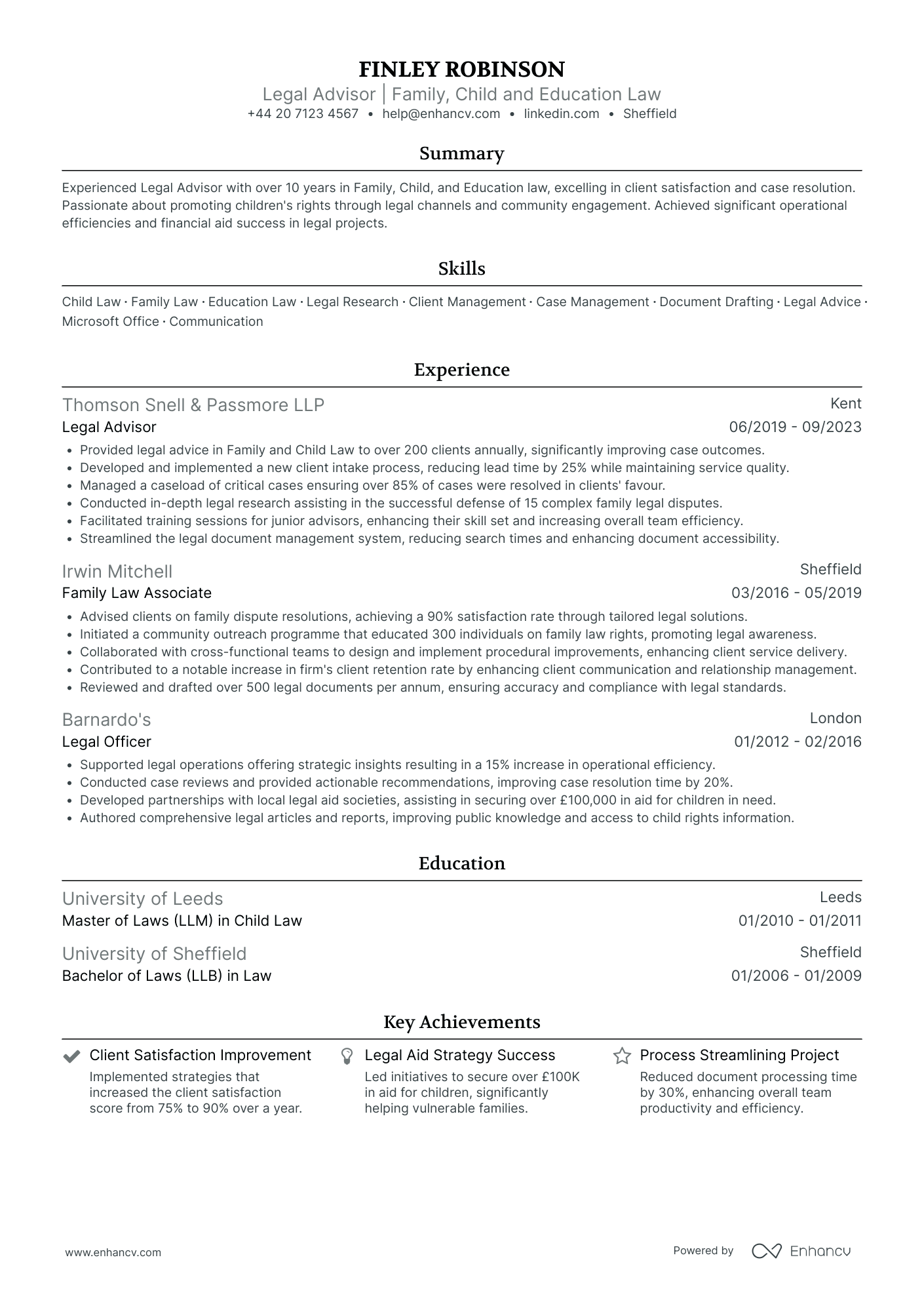
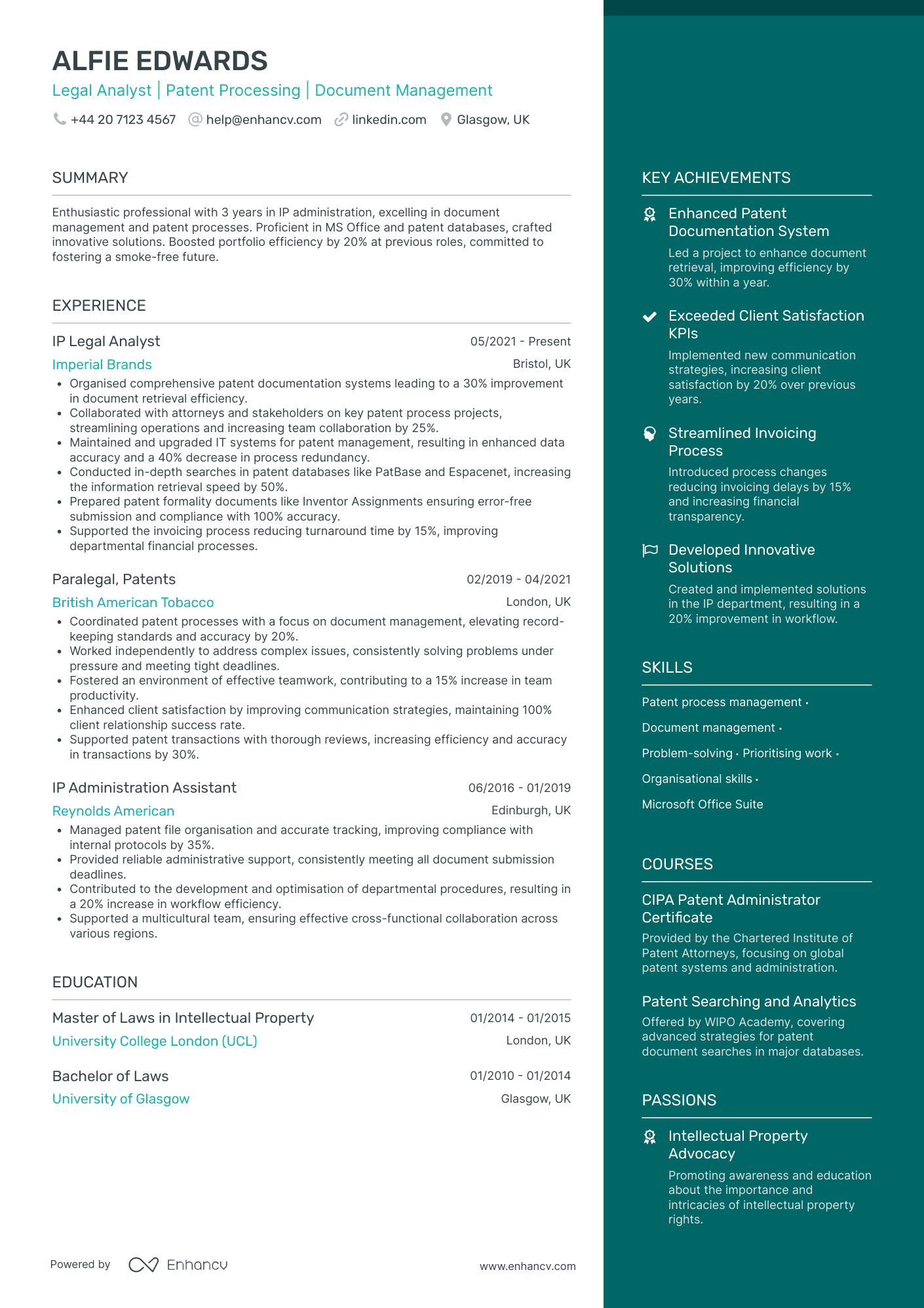
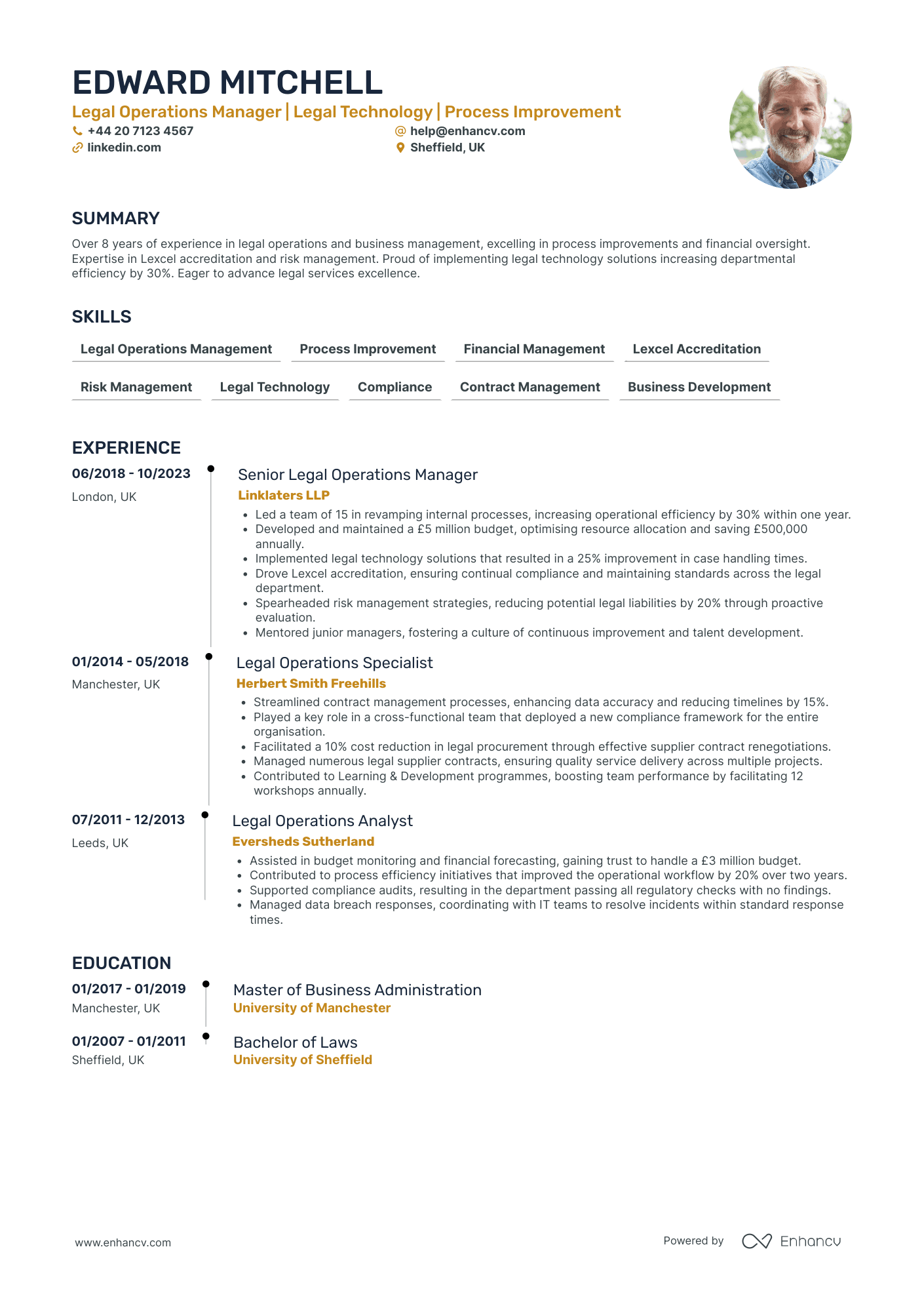
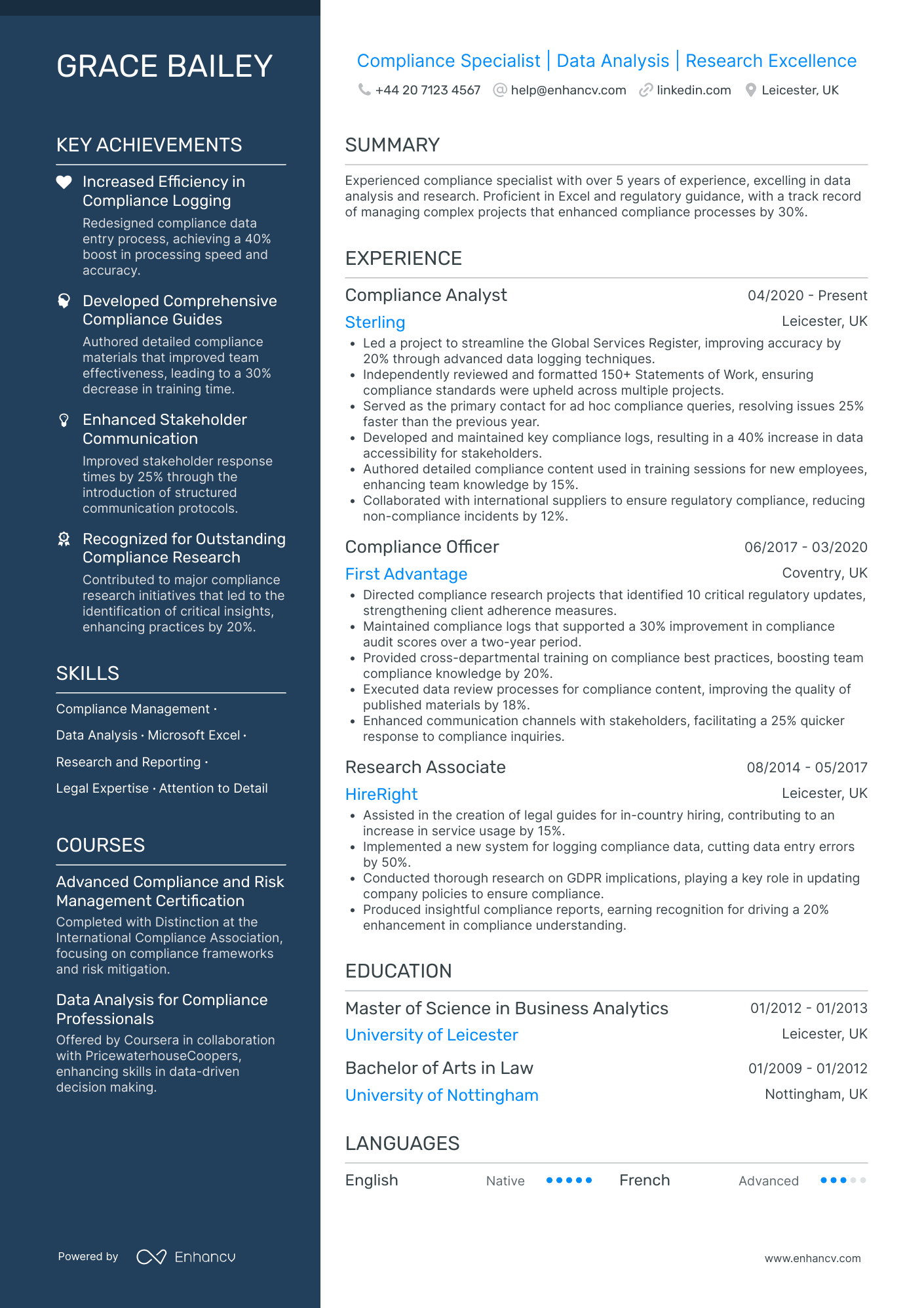
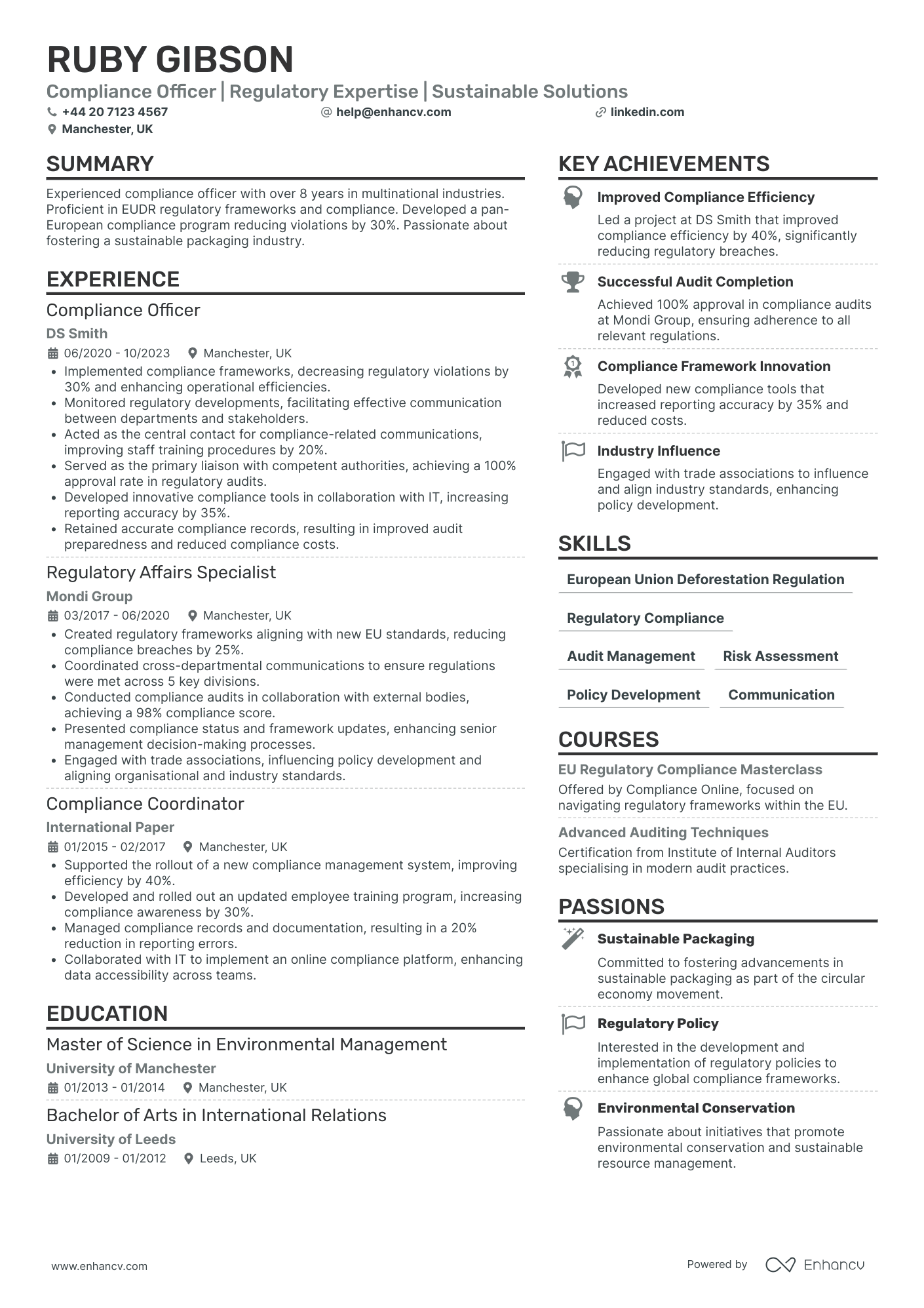
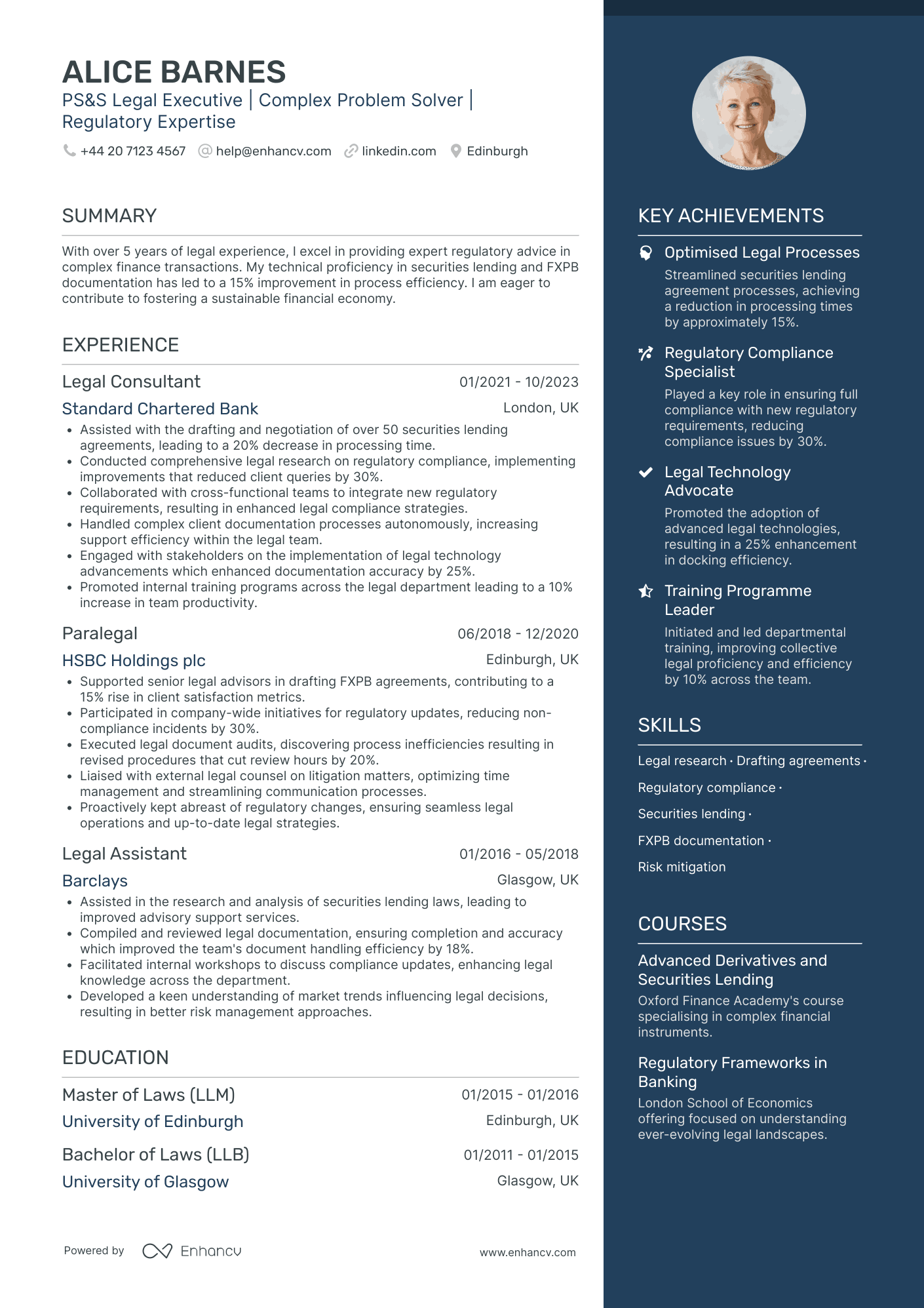
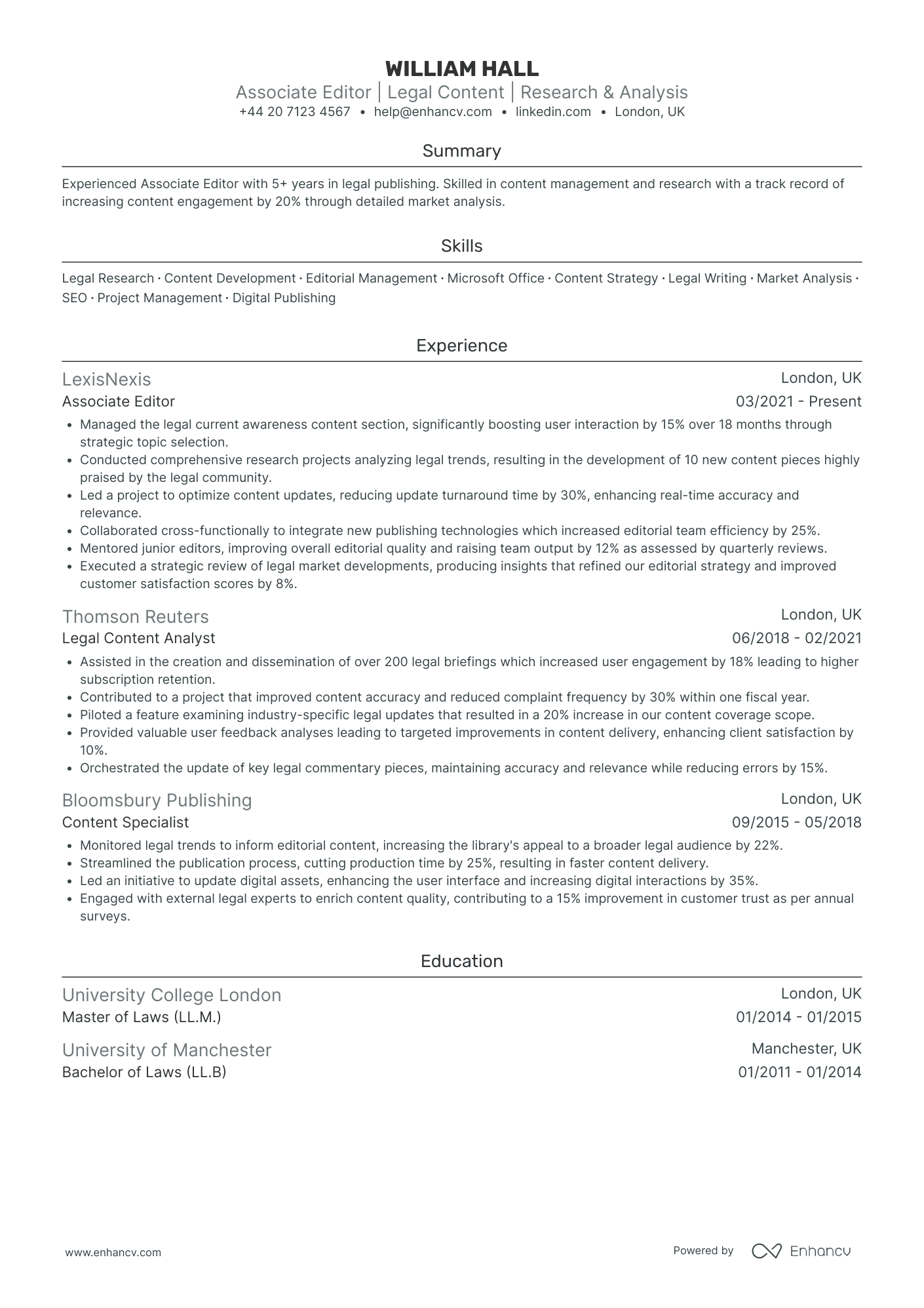
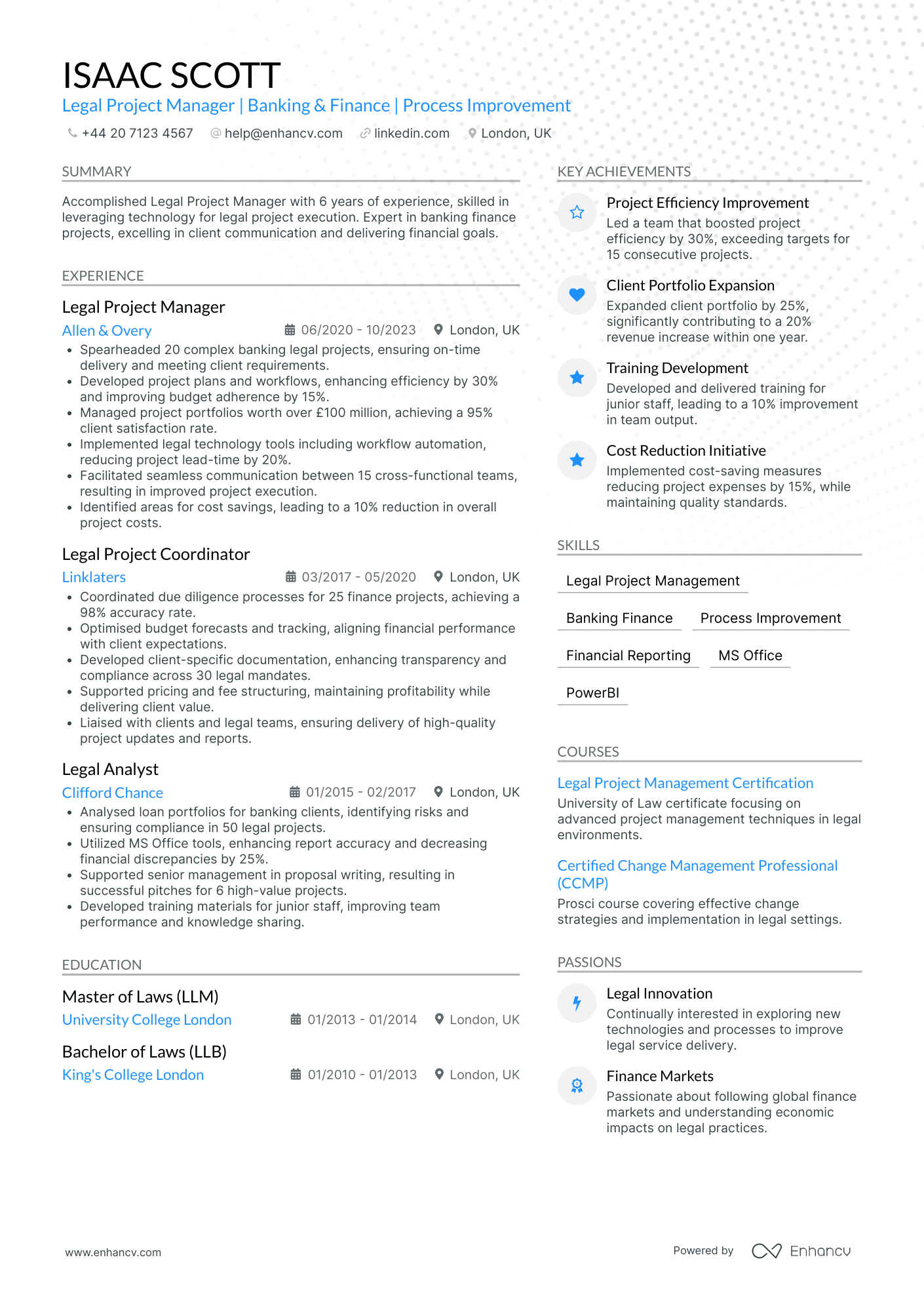
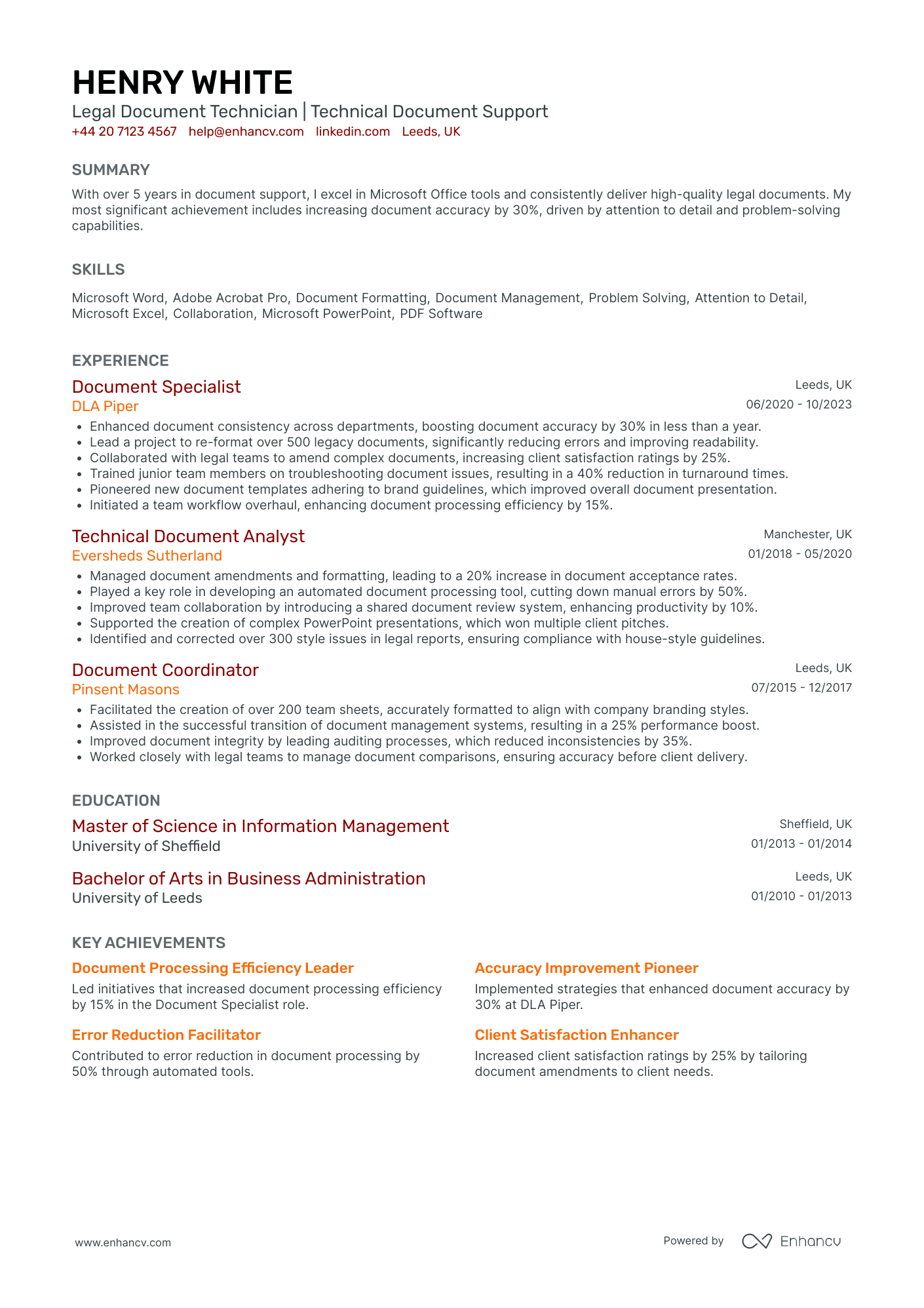
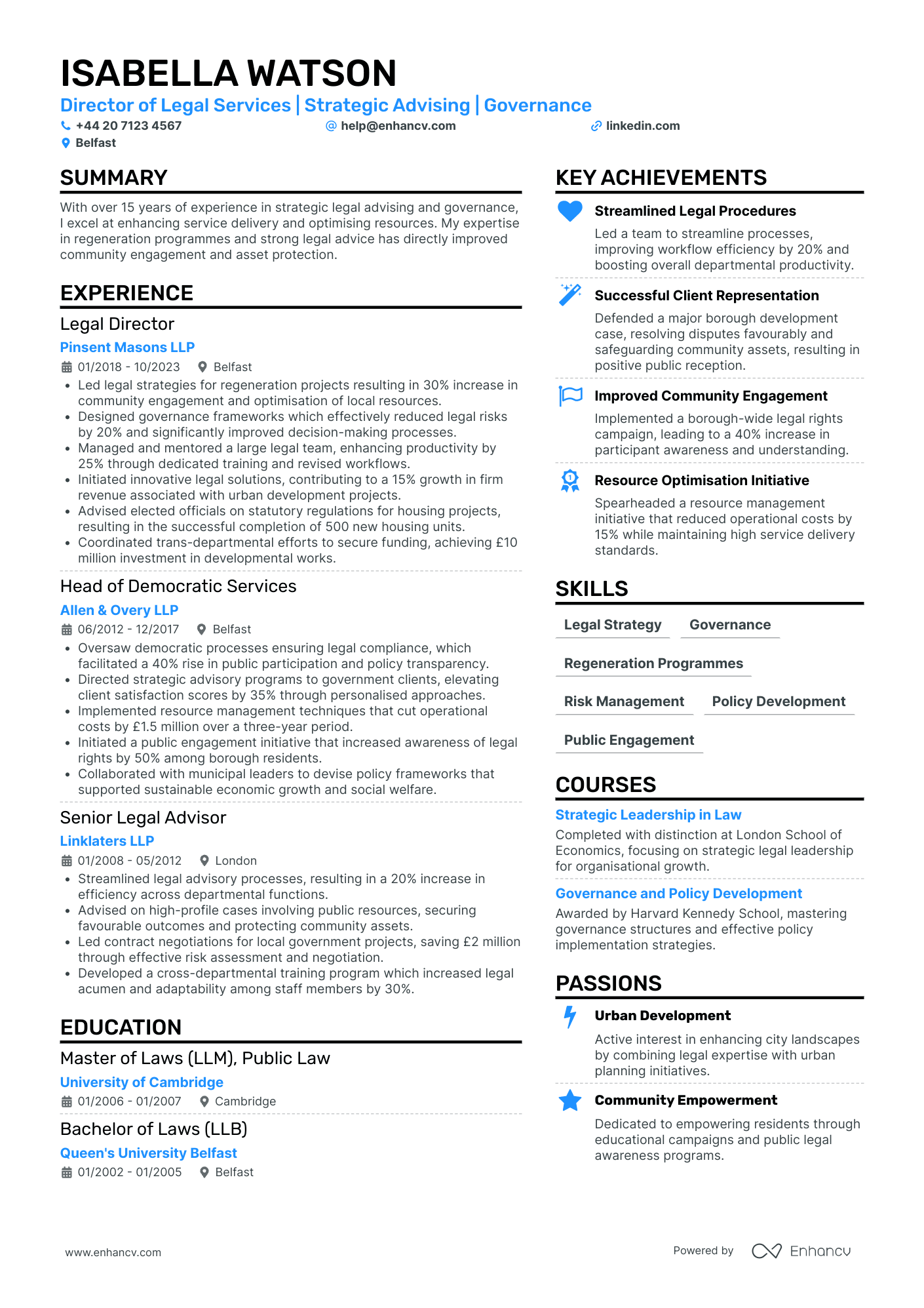
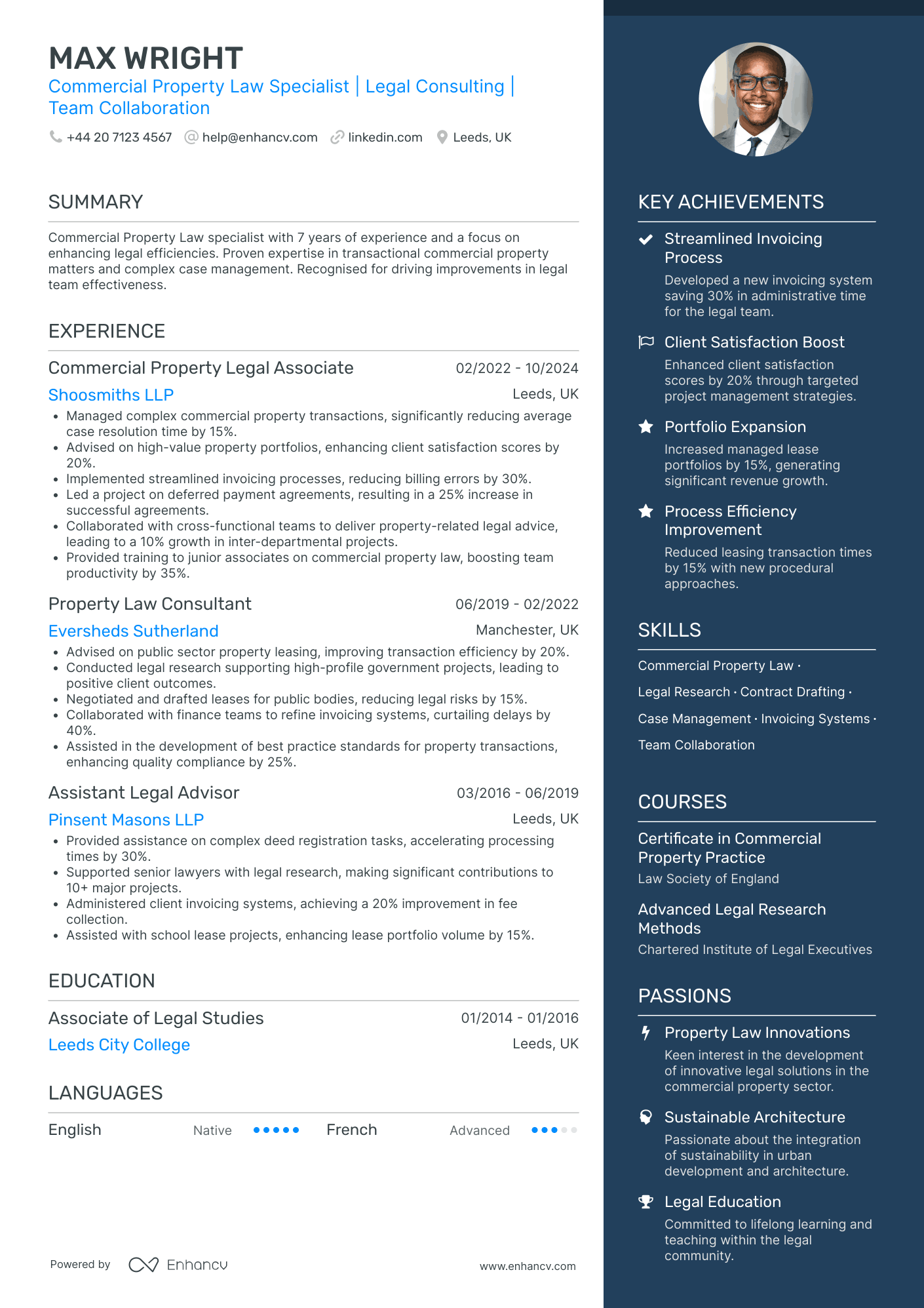
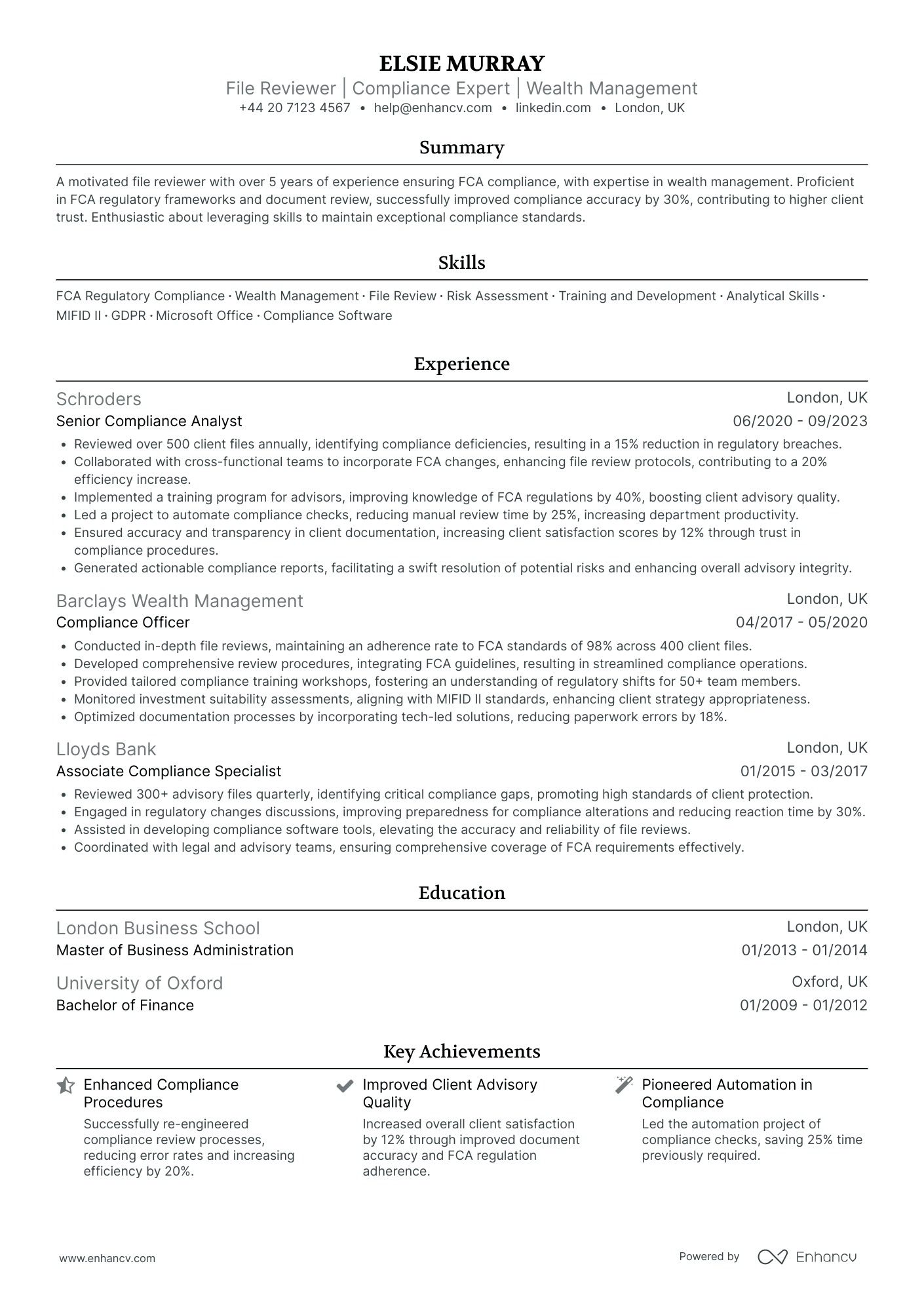
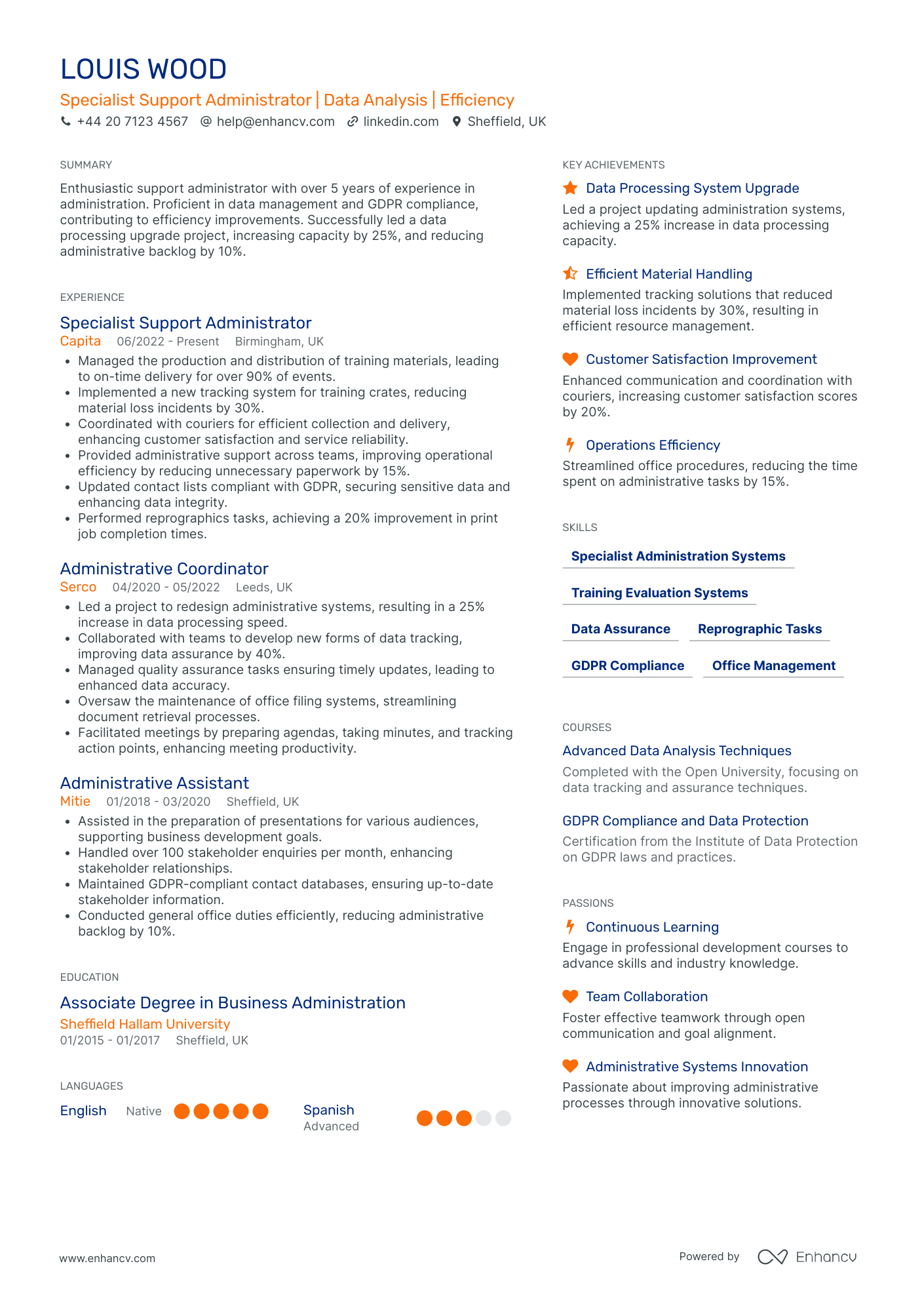
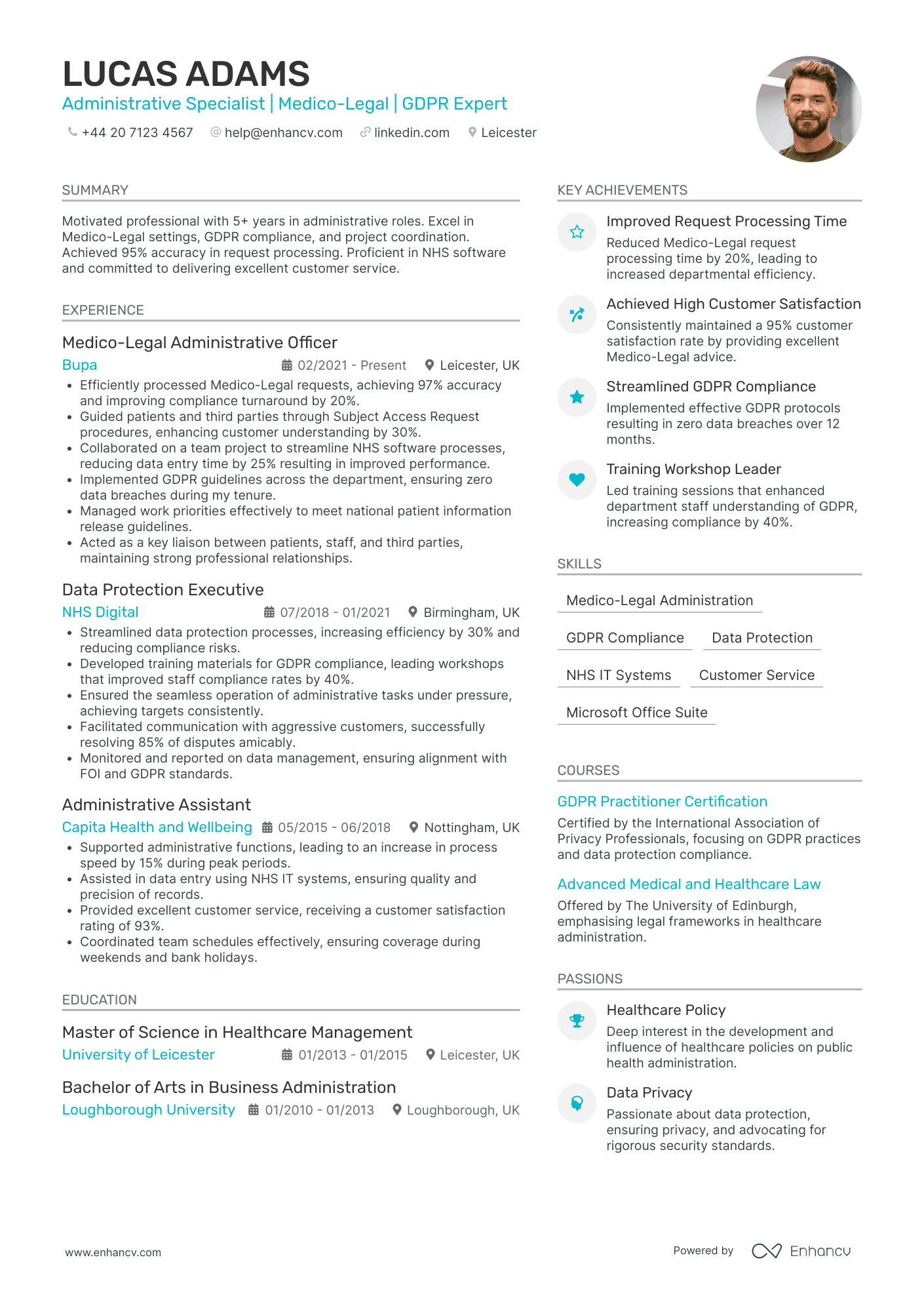
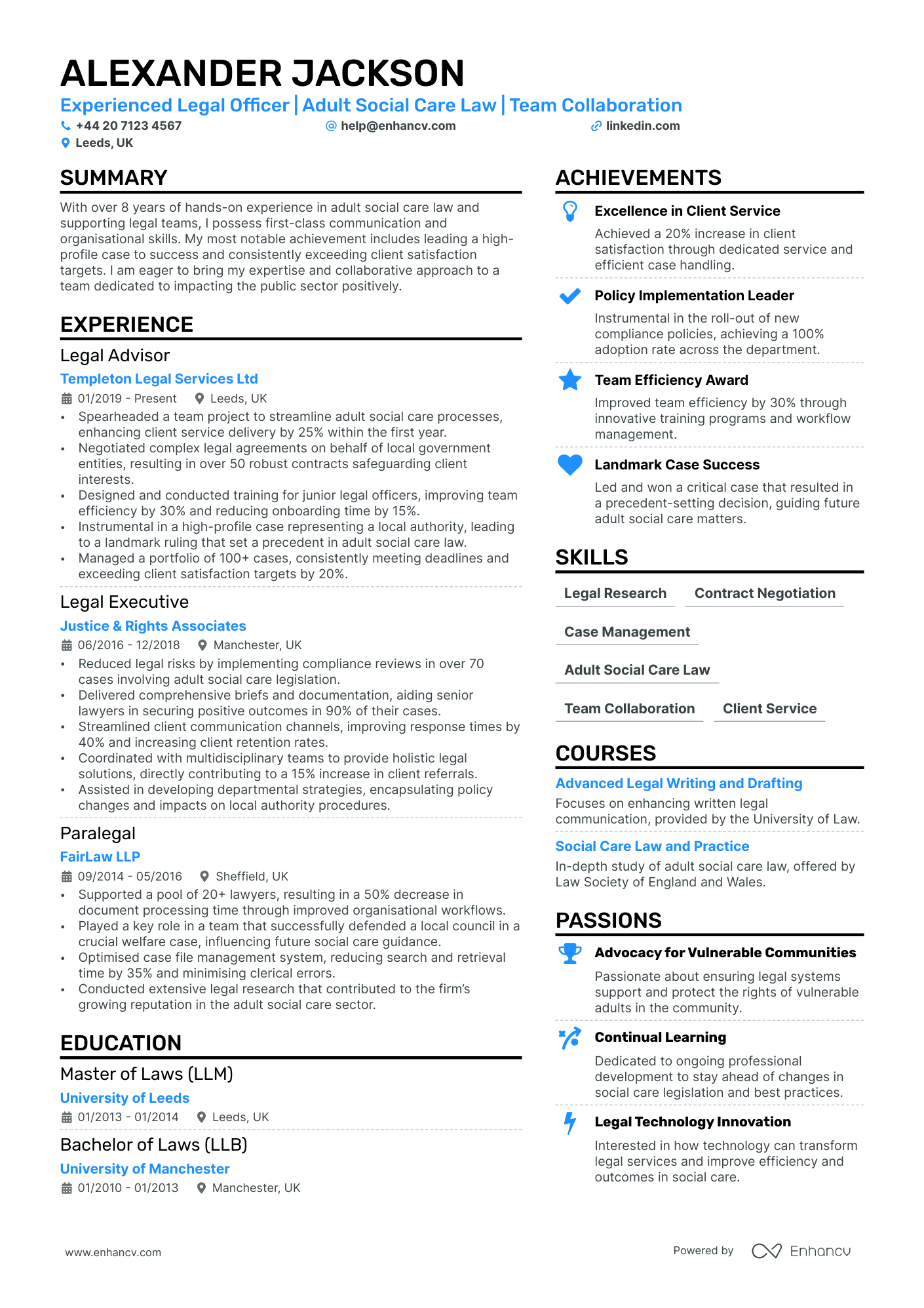
A legal CV is judged on precision before anyone reads it for content. A recruiter who spots a stray date, a PQE they have to hunt for, or a table that has collapsed in transit assumes the same carelessness will turn up in your drafting.
Most legal CVs are built in Word from a template that fights back, with body tables that break in an applicant tracking system and headers that vanish the moment the file opens in a different version. Get the format right first and the content has somewhere solid to sit. If you want the fundamentals before the legal specifics, start with how to write a CV.

Key takeaways
- Lead with format. A clean, ATS-safe layout and a PDF that holds together signal the precision legal work demands.
- Keep an editable Word copy. Recruitment agencies reformat CVs onto their own letterhead before sending you to a client.
- Two pages, reverse chronological, standard headings. UK legal employers expect it and skim fast.
- Put your qualification and PQE at the top. It is the first thing a legal recruiter filters on.
- Name the practice-area skills the adverts list: contract negotiation, drafting, legal research, and commercial contracts.
- Anchor the personal statement in evidence, a real matter and a real number, not adjectives.
Formatting your legal CV
Use a reverse chronological structure. Legal hiring rewards a clear, linear career story, so lead with your most recent role and work backwards. Only a career changer or a returning solicitor needs a different CV format.
Two pages is the UK standard for a qualified lawyer. A paralegal or trainee can land on one. A third page reads as an inability to edit, which is a poor signal to send a profession built on concision.
Keep the layout to a single column with standard section headings: personal statement, experience, education, qualifications, and skills. Legal recruiters and their tracking software both read top to bottom, and a two-column design scrambles the order for an ATS-friendly CV. A reverse chronological CV keeps that order intact.
Set the whole thing in a conservative, readable font. This is not the profession for a decorative typeface, so a clean serif or sans at 10 to 12 point does the job. Check the best font for a CV if you are unsure.
Give the page room to breathe. Generous margins and consistent spacing read as controlled, and a legal reader notices control. Cramming a second page of dense text to the edges to avoid a third page usually backfires.
Be ruthless about consistency in the details a lawyer is trained to catch. Dates in one format throughout, tenses that match, punctuation that behaves, and firm names spelled correctly. One slip in your own document undercuts every claim you make about accuracy.
Keep the header lean and professional: name, a single phone number, a professional email, your location, and a LinkedIn URL if it is current. Skip the photo, the date of birth, and the marital status, none of which belong on a UK CV.
Send a CV in PDF for any direct application so the formatting holds on every screen. Build it from a tested layout rather than a blank document: Enhancv's CV templates export to a clean PDF and a matching Word file.

PRO TIP
Legal recruiters and agencies often want an editable Word copy so they can add their letterhead before sending you to a client. Keep a clean .docx with no text boxes or body tables, and send a PDF for direct applications. Name the file Firstname-Surname-CV.pdf, never CV-final-v3.pdf.
Legal CV templates: Word or PDF?
The searches for a legal CV template in Word and a free download are asking the right question, because legal applications run on both formats.
Send a PDF when you apply directly to a firm or through its careers portal. It locks the layout so your carefully aligned dates and headings arrive exactly as you set them.
Keep an editable .docx for recruitment agencies, which place a large share of legal roles and routinely strip your details onto their own branded template before a client sees them. A Word file they can edit keeps you in the running, and a locked PDF they cannot reformat sometimes never gets sent.
Whichever template you start from, gut the decorative parts. Body tables, text boxes, and sidebars are the usual culprits behind a CV that looks fine to you and arrives scrambled to the reader. A plain, single-column template survives the trip.
Free download templates are fine as a starting point, but test the one you choose before you trust it. Open the file on a different machine, run it through a PDF export, and paste it into a plain-text editor to see what an ATS actually reads. If your name ends up in the middle of your job history, the template is working against you.
Is your CV good enough?
Drop your CV here or choose a file. PDF & DOCX only. Max 2MB file size.
What the UK legal market looks like
Knowing what legal employers ask for shapes what belongs near the top of your CV. Here is what the current UK postings show.
| What | UK legal roles |
|---|---|
| Where the work happens | Split between onsite (49%) and hybrid (47%), with fully remote rare (5%), across 436 UK legal postings in the last ~30 days on Enhancv's internal job feed |
| Experience level asked for | Mid 32% · entry 26% · lead 23% · senior 13% · executive 5% |
| Skills that recur most | Contract negotiation, stakeholder management, Excel, legal research, and Word |
Two things in that table should change your CV.
Legal work is overwhelmingly office-based or hybrid, with fully remote roles rare, so a recruiter needs to see you are within a sensible commute. Put your location in the header and do not hide it.
And the demand sits at mid and entry level, which is why a well-built trainee or paralegal CV competes. Match your personal statement to the level in the advert rather than reaching two rungs above it.
The skills that recur most often across those postings are contract negotiation, stakeholder management, and legal research, so if you have genuinely done them, they belong in your top few bullets rather than a skills list at the foot of page two.
On pay, legal salaries swing enormously by qualification, practice area, and firm, so we will not attach a single figure here. What matters for the CV is stating your PQE and qualification clearly, because that is the band a legal recruiter screens on first.
Writing your legal CV personal statement
Three or four sentences at the top: who you are, your qualification and PQE, the practice area you work in, and one matter that proves it. Keep it concrete. There are more personal statement examples if the opening line is not coming.
Skip the adjective pile every other CV opens with. "Hard-working and detail-oriented legal professional with excellent communication skills and a passion for the law" tells a recruiter nothing they can check, and they have read it four hundred times this week.
Tailor the statement to the type of firm. A City firm wants deal exposure and technical depth, a high street practice wants breadth and client contact, and an in-house team wants commercial judgement and a sense of the business. The same career reads differently depending on which you are applying to.
Lead with evidence instead, naming the qualification, the practice area, and a real matter:
Legal CV personal statement example (newly qualified)
Newly qualified solicitor (September 2024, SQE route) with two years of paralegal experience in commercial contracts at a Legal 500 firm. Drafted and negotiated over 40 supplier agreements and ran first-pass due diligence on a £12m acquisition alongside the corporate team. Strong on contract drafting, legal research, and stakeholder management, looking to build a commercial contracts practice at a City firm.
When I screen a legal CV, the format tells me almost as much as the content. Inconsistent dates, a broken table, a PQE I have to search for, and I have formed a view before I read a single achievement. Legal work is precision under deadline, so a CV that is precise and easy to navigate is itself evidence you can do the job.
The Enhancv team
Writing your legal experience section
Write each role as a dated heading followed by bullets that show what you did and what changed. Lead every bullet with a verb. For the mechanics, see work experience on a CV.
Legal work is more measurable than it feels: matters handled, contracts drafted, the value of deals supported, turnaround times, issues caught in review. Those are the CV achievements that separate you from a job description.
Quantify without breaking confidentiality. You can give the shape of a matter, the deal value, the size of the portfolio, the turnaround you cut, without naming a client or leaking anything privileged. "Ran due diligence on a £12m acquisition" is safe and specific. A client name is neither.
Mirror the language of the advert where it is true of you. If a role asks for commercial contracts and due diligence, and you have done both, use those exact words. Enhancv's CV tailoring feature reads the advert and suggests the matching edits, which saves rewriting from scratch for every application. Open each line with a strong action verb and let the outcome carry it.
- Draft and review commercial contracts, including NDAs, supply agreements, and SaaS terms, holding a caseload of around 25 live matters at a time
- Ran first-pass due diligence on a £12m acquisition, flagging three liability issues that reshaped the warranty schedule
- Cut standard contract turnaround from five days to two by building a clause bank the team of eight now uses
- Support two partners on contract negotiation, preparing issues lists and tracking amendments across counterparties
PRO TIP
Put your PQE and qualification date where a recruiter sees them in three seconds, at the top of the CV and against your current role. It is the first thing they filter on, and burying it costs you the shortlist.
Skills to put on a legal CV
Across current UK legal postings on Enhancv's internal job feed, the skills that recur most often are contract negotiation, stakeholder management, Excel, legal research, and Word. List the ones that are true of you in the words the adverts use.
Split them the way a recruiter reads them: technical legal skills up front, the hard skills that prove you can do the work, then the soft skills that show how you operate in a team. Keep the skills section tight and back the important ones in your bullets.
List only what you can defend in an interview. A skill on a legal CV is a claim you may be asked to evidence on the spot.
Top skills for your legal CV:
Contract negotiation
Contract drafting
Legal research
Commercial contracts
Due diligence
Regulatory compliance
Case and matter management
Microsoft Excel
Microsoft Word
Stakeholder management
Attention to detail
Written communication
Client care
Commercial awareness
Project management
Qualifications and professional registration for a legal CV
Legal is a regulated profession, so your route to qualification belongs high on the CV, not buried at the bottom. State it plainly.
For a solicitor: your LLB or a non-law degree plus the GDL, then the LPC or the SQE, your training contract or qualifying work experience, and your admission date to the roll. Give your qualifications with dates so a recruiter can read your PQE at a glance.
For other routes, name the equivalent: CILEX for chartered legal executives, the Bar course and pupillage for barristers, or a recognised paralegal qualification. If you hold a current practising certificate, say so.
Keep your education section lean below that. Recent certificates in a relevant area, data protection or anti-money laundering training, earn their place. Your A levels rarely do once you are qualified.
Legal CV with no experience
A law student or a career changer breaking in writes the CV differently, leading with capability rather than a thin work history. This is the first job CV problem, and it is solvable.
Mine your degree and your extracurriculars for real legal evidence. Mooting, a pro bono clinic, a law society committee, a dissertation on a live area of law, a vacation scheme, all of it counts and belongs in dated entries.
Any volunteering with a Citizens Advice bureau or a legal charity is genuine experience for this field, not filler. Write it up with what you did and what it taught you about client care.
A paralegal role is the most common way into a legal career without a training contract, so treat it as the real thing on the CV. Legal research, bundle preparation, first-draft contracts, and file management are all evidence you can do the work, and they translate directly into the skills a qualified role asks for.
Put your qualification in progress where it shows: "SQE1 passed, sitting SQE2 in 2026" or "LPC completed 2025". A clear career objective that names the practice area you are aiming for finishes the picture.
Conclusion
Get the format right first, because in law it is the first evidence of your judgement. Two pages, a clean single column, a PDF for firms and a Word copy for agencies.
Then lead with your qualification, prove your practice-area skills with real matters, and keep every claim defensible. Pair the CV with a short cover letter that says why this firm, and you have an application a legal recruiter can move forward quickly.

Author's take - the Enhancv team
When I screen a legal CV, the format tells me almost as much as the content. Inconsistent dates, a broken table, a PQE I have to search for, and I have formed a view before I read a single achievement. Legal work is precision under deadline, so a CV that is precise and easy to navigate is itself evidence you can do the job.