



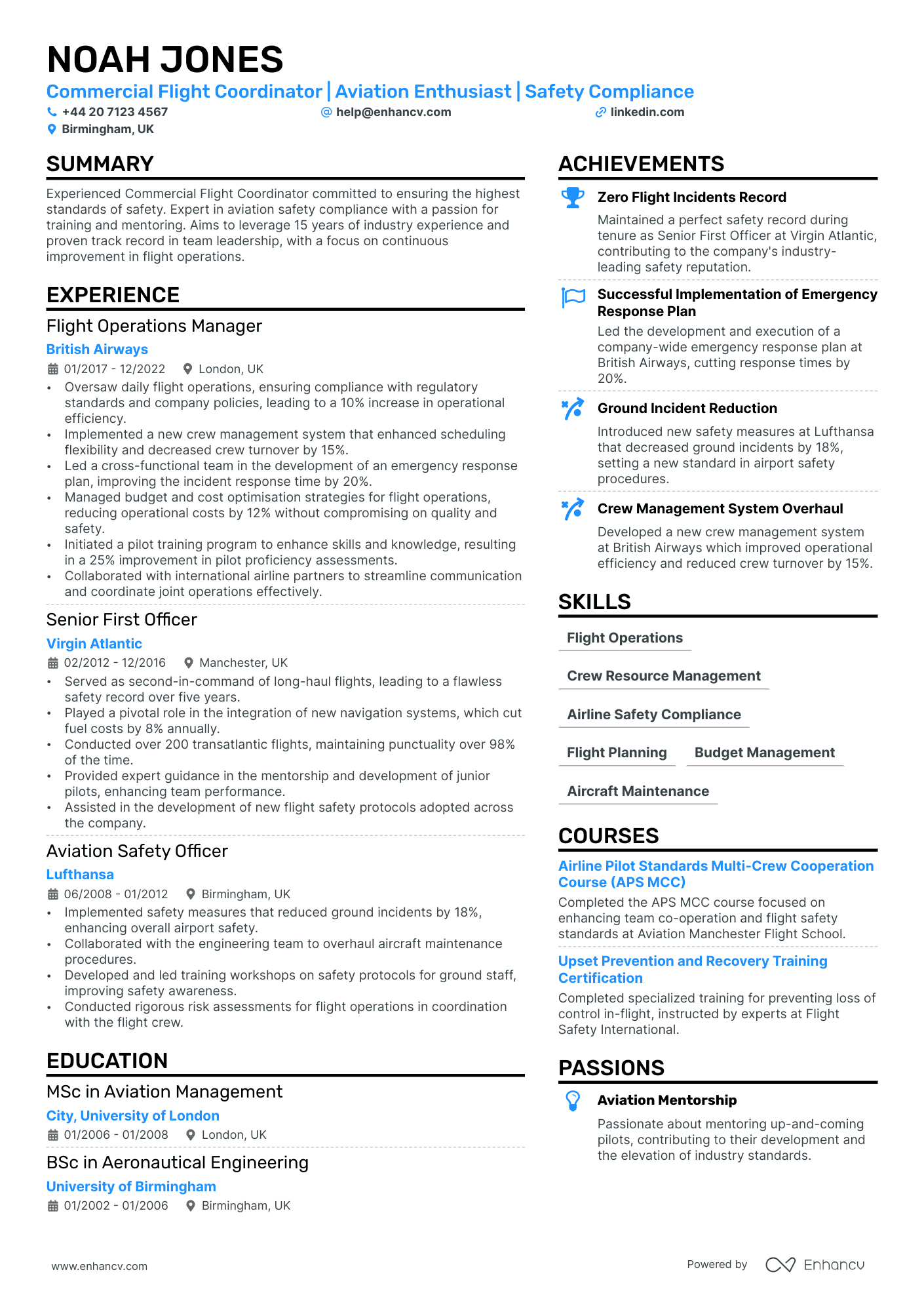
Most airline pilot CVs open with a paragraph about a lifelong love of flying and bury the one thing a recruiter needs first: your licences, your hours, and your ratings. The ones that get called for a sim assessment do the opposite.
Airline recruitment runs on fast, rule-based screening. A crewing or recruitment team checks that you hold the right licence, a valid medical, and enough of the right hours before they read a line of prose, so a CV that hides those at the bottom gets filed. If you want the fundamentals first, see how to write a CV.

Key takeaways
- Lead with your licences, ratings, and total hours. A recruiter checks those before anything else on the page.
- Put a flight-hours summary near the top: total time, pilot in command, multi-engine, instrument, and hours on type.
- Name your type ratings and your medical status, and keep both current on the CV.
- Two pages is fine for an experienced pilot. Keep it clean, reverse chronological, with standard headings.
- Send a PDF so the layout and your hours table hold, and keep a Word copy for recruitment agencies.
- No airline experience yet? Lead with your frozen ATPL, your training record, and any hour-building or instructing.
Formatting your airline pilot CV
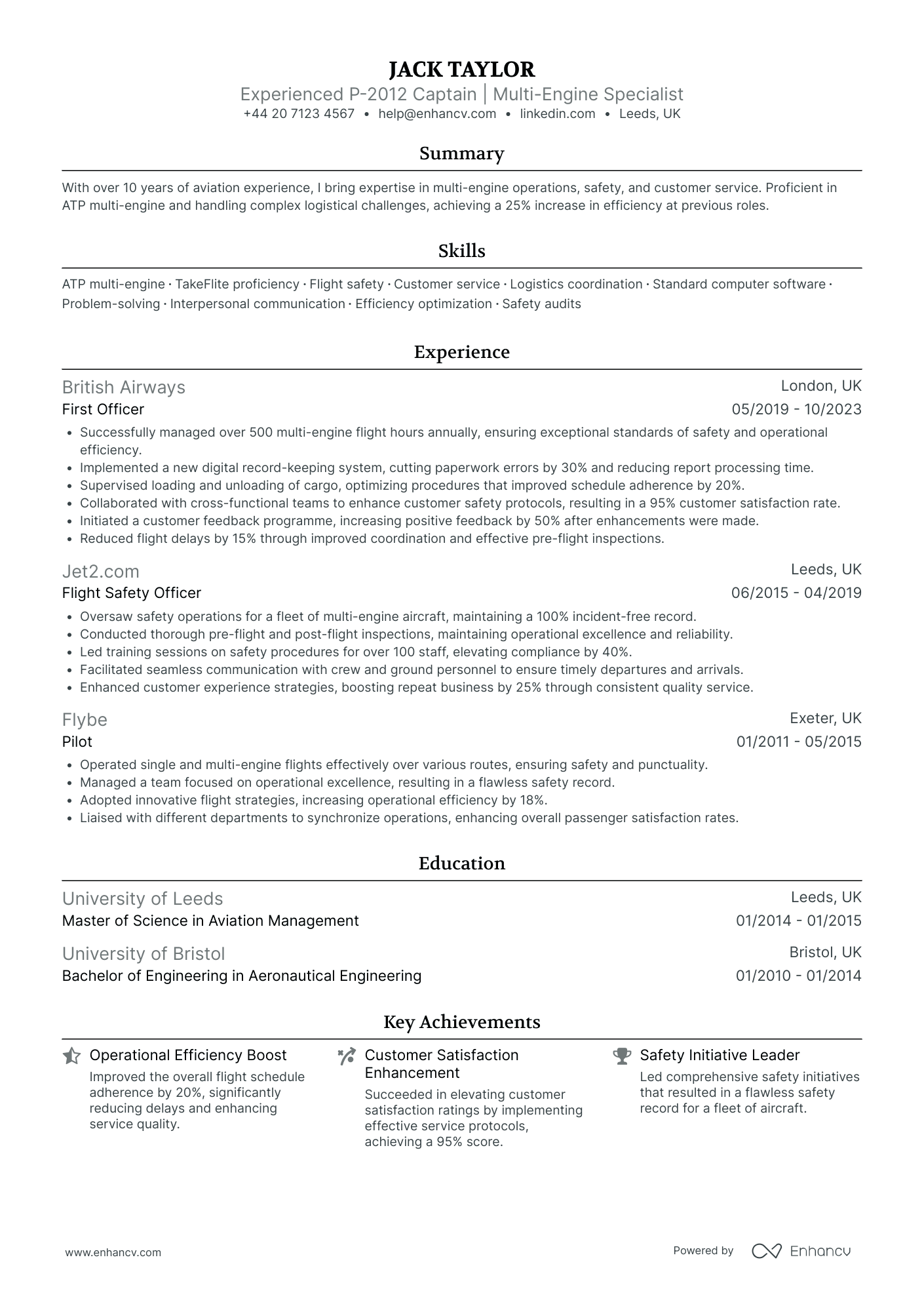
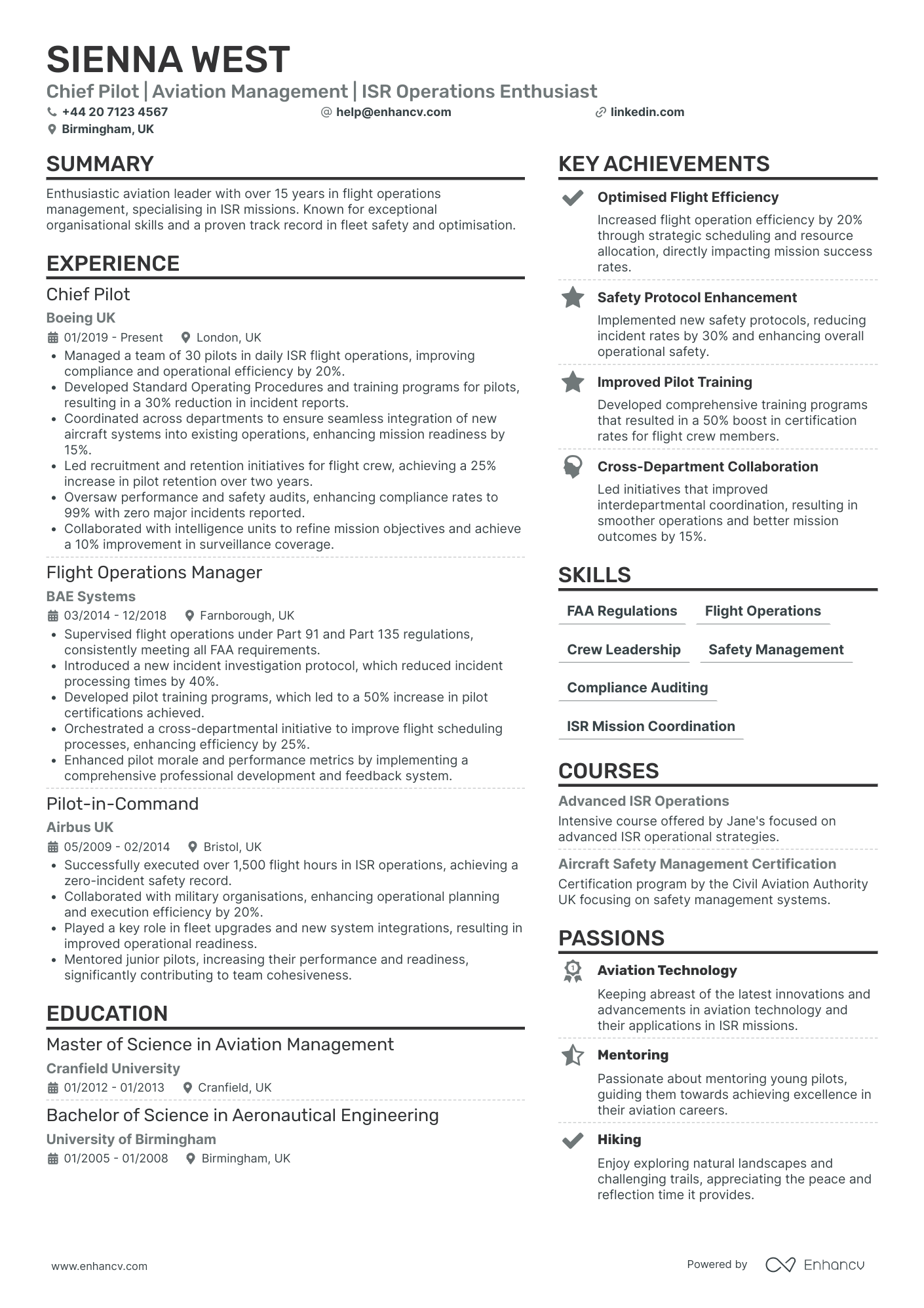
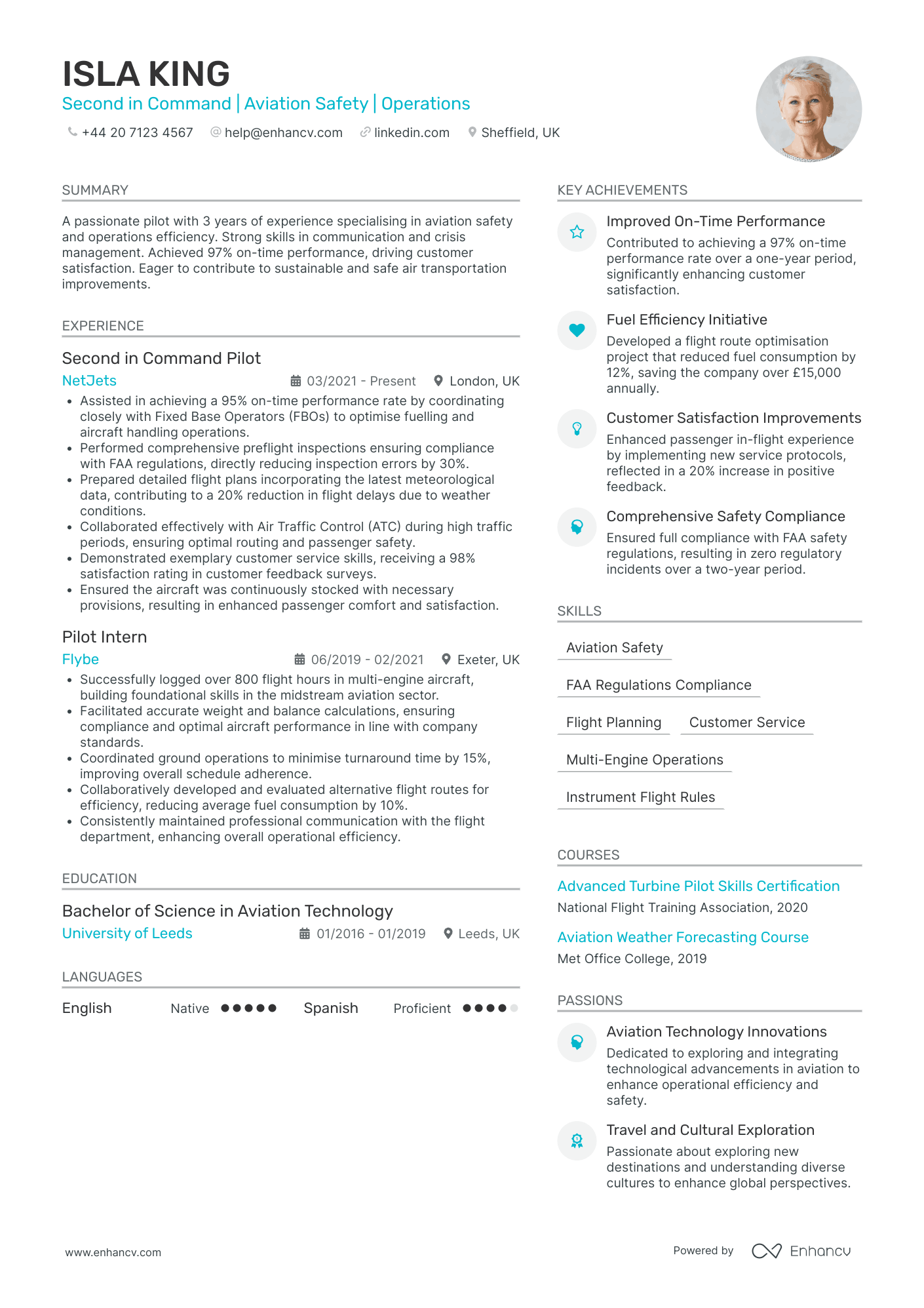
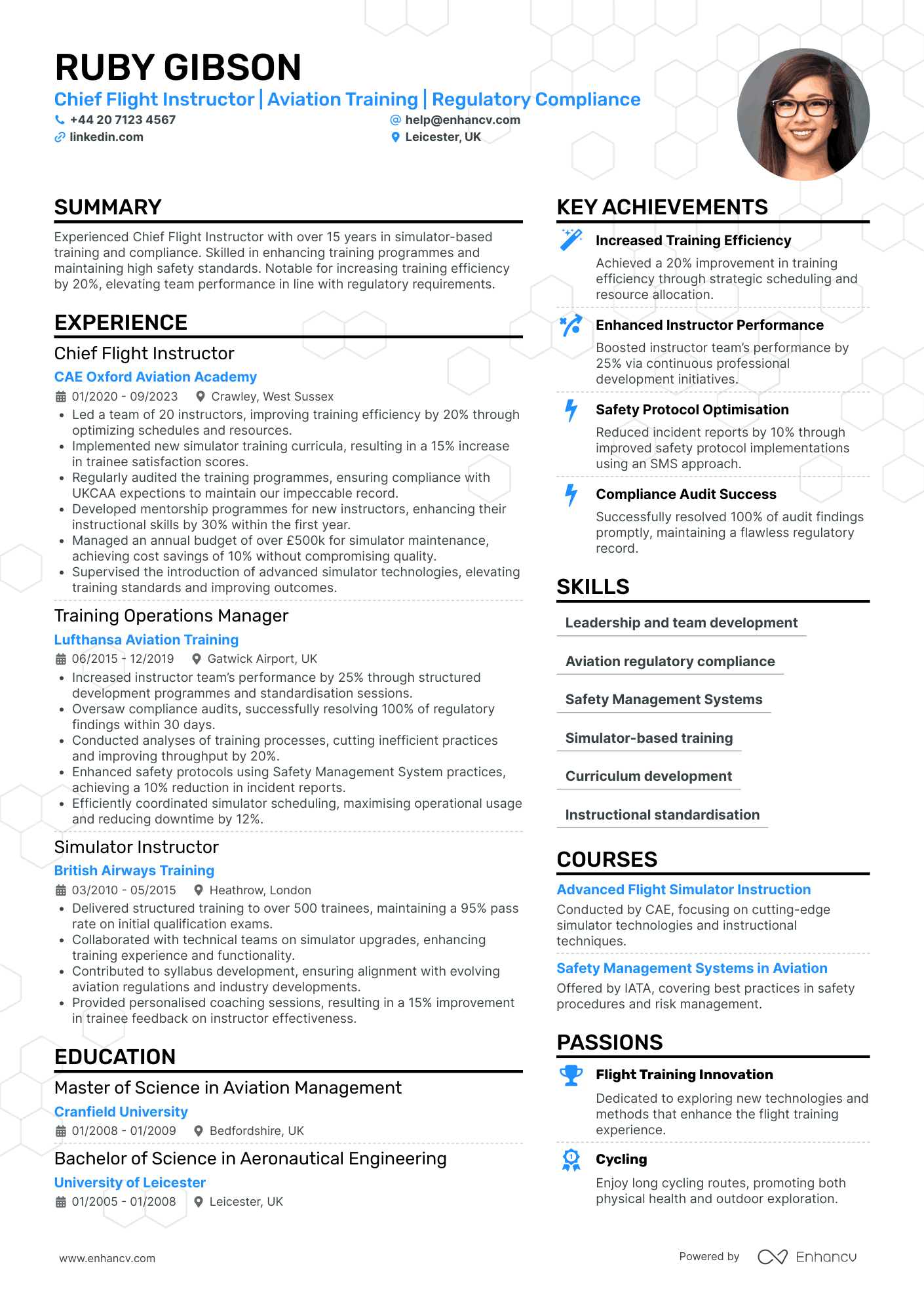
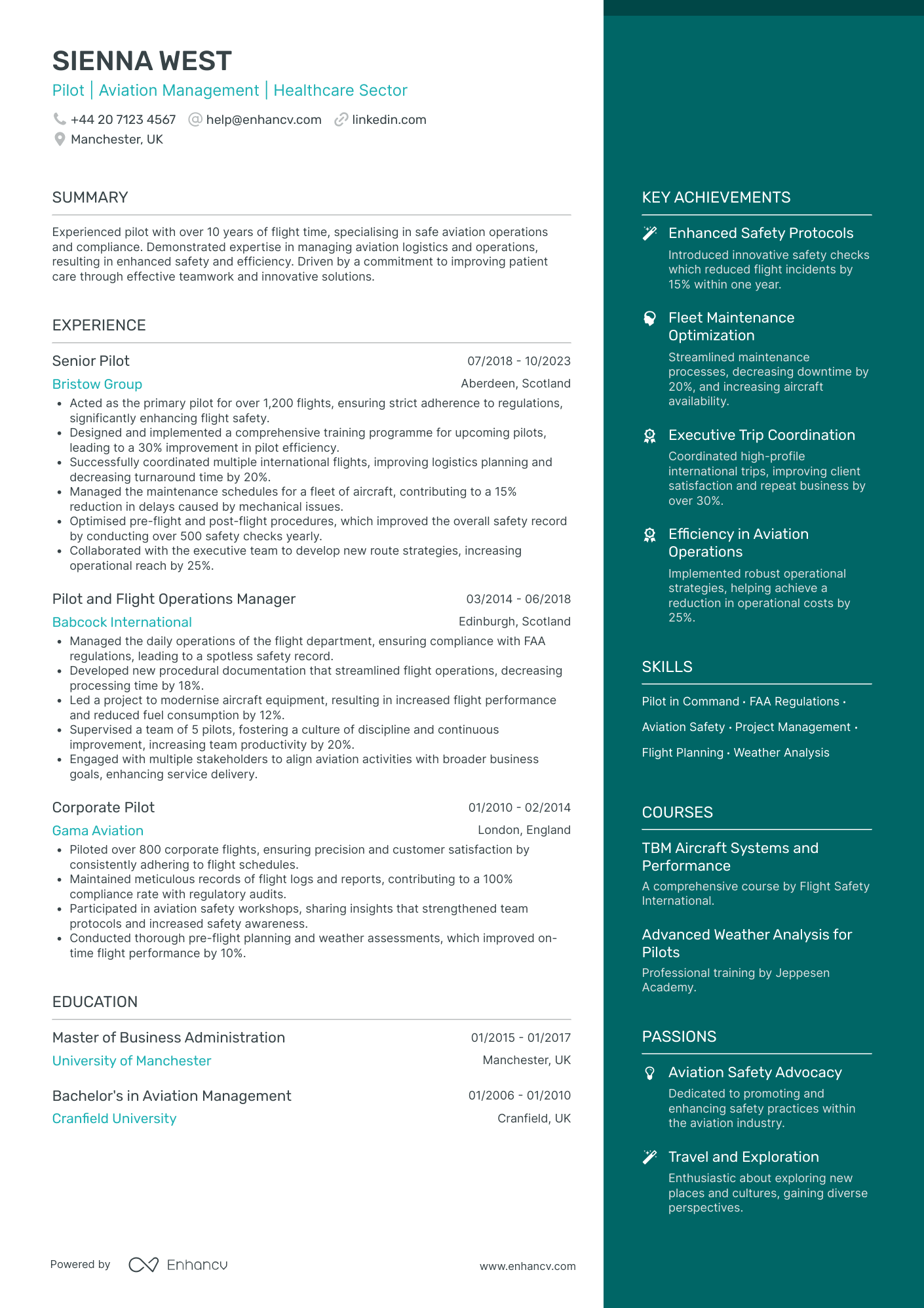
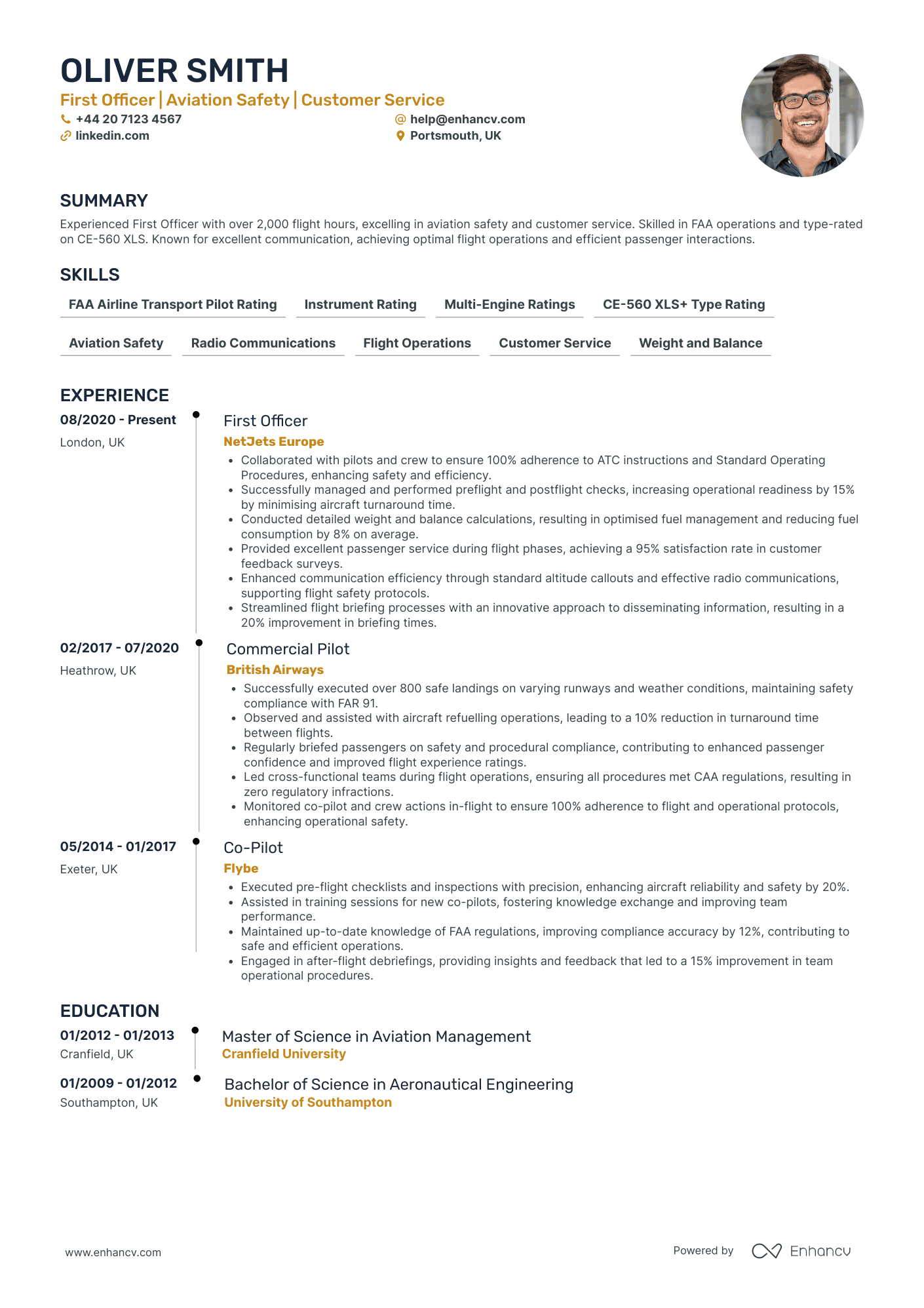
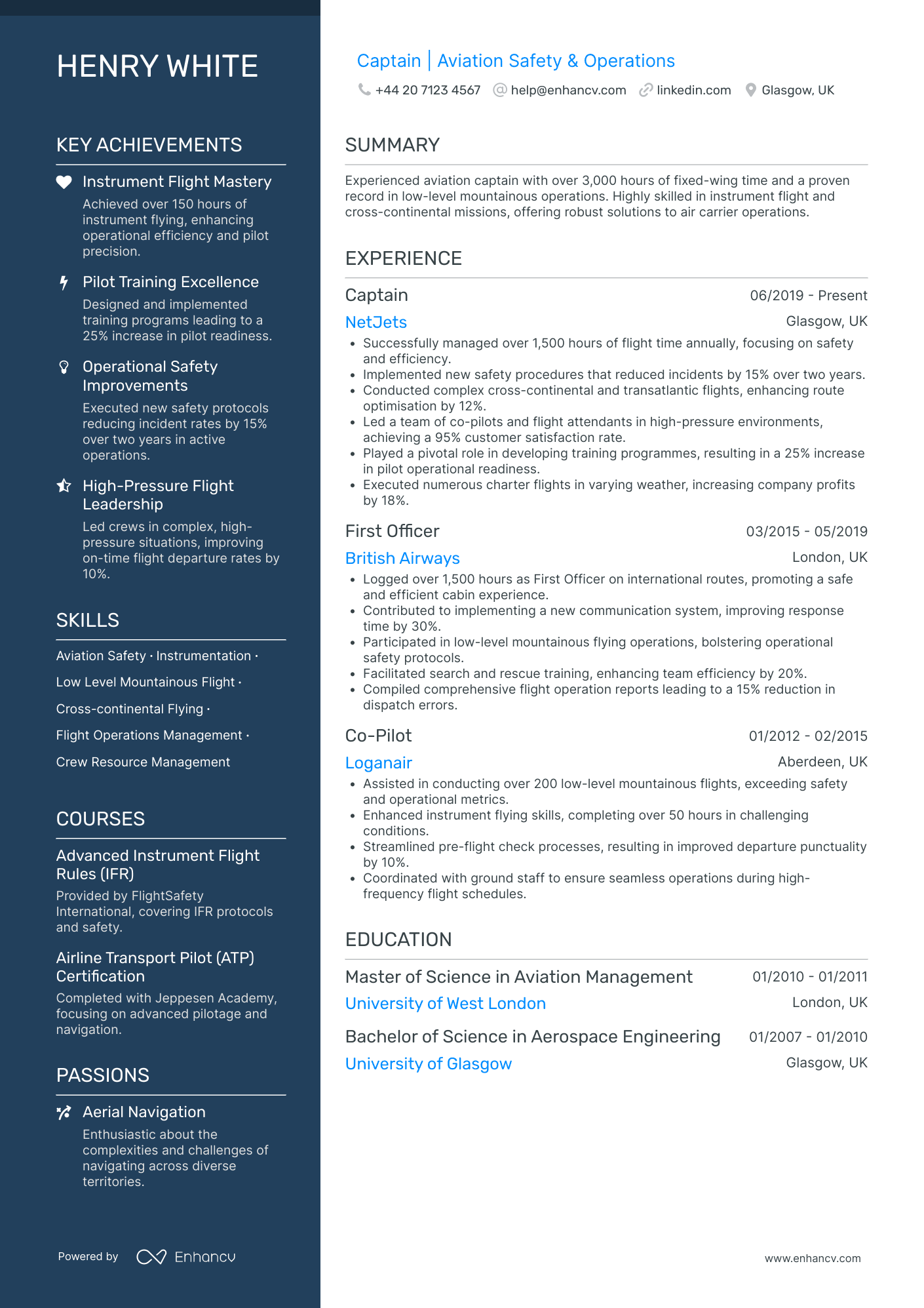
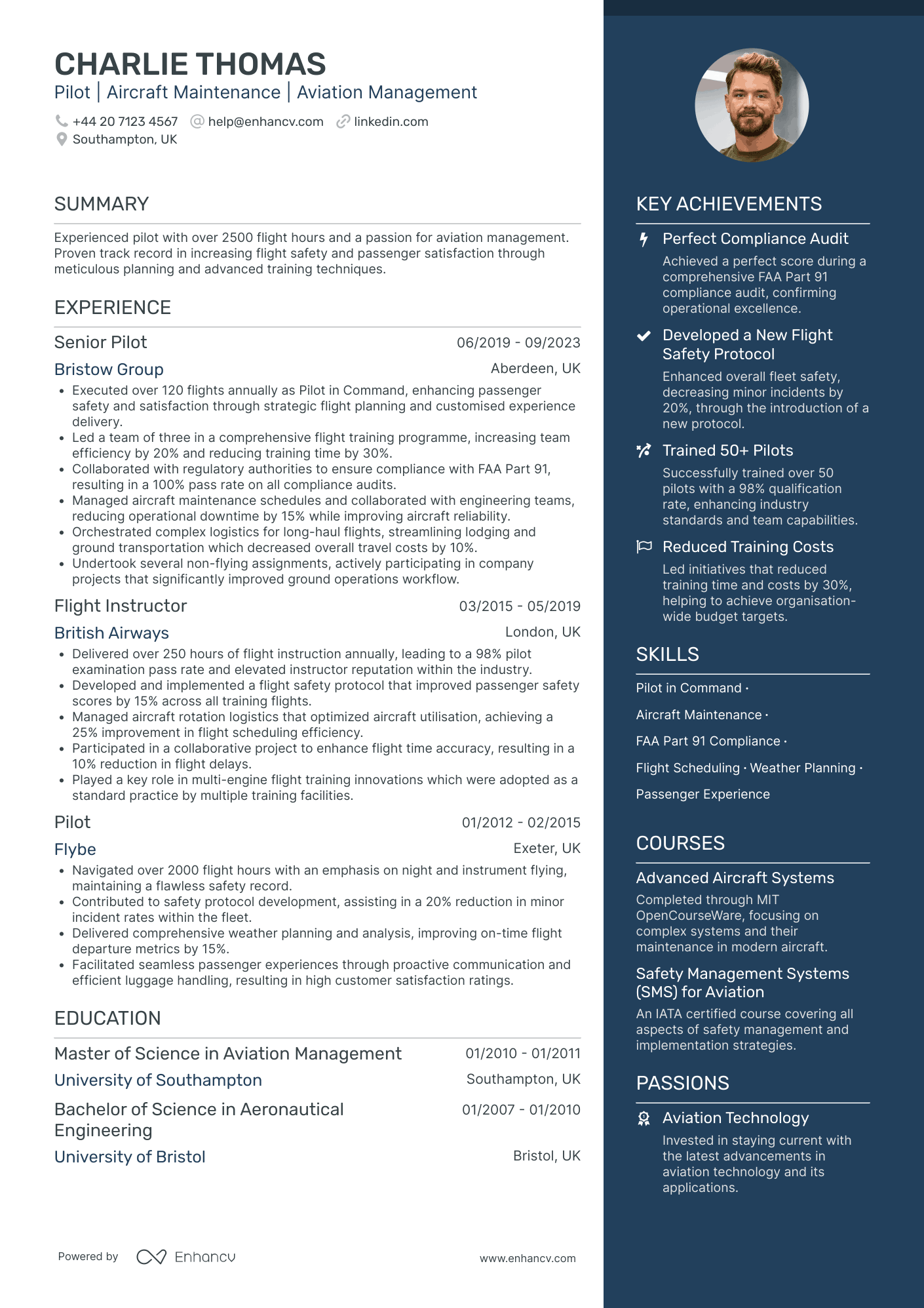
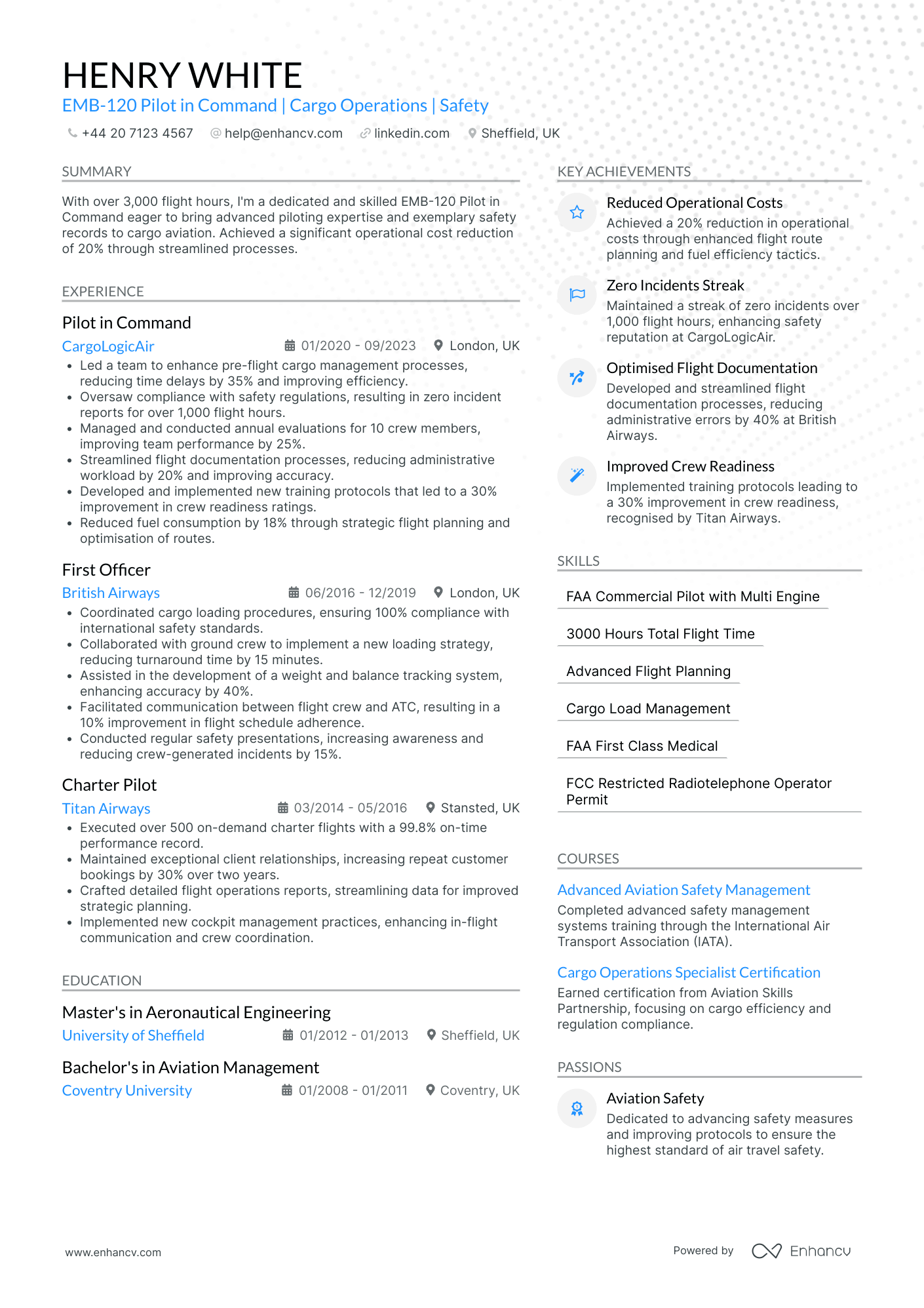
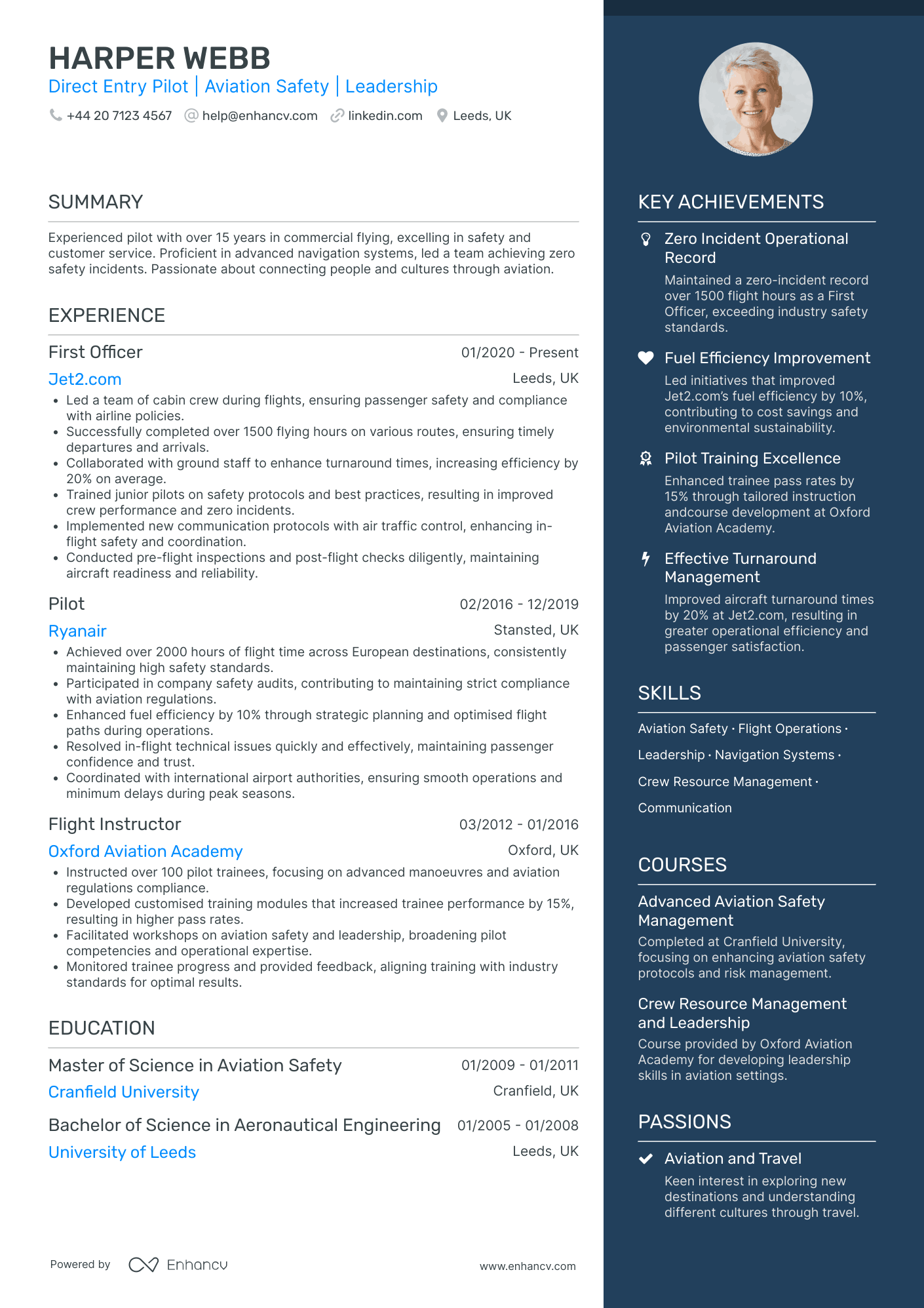
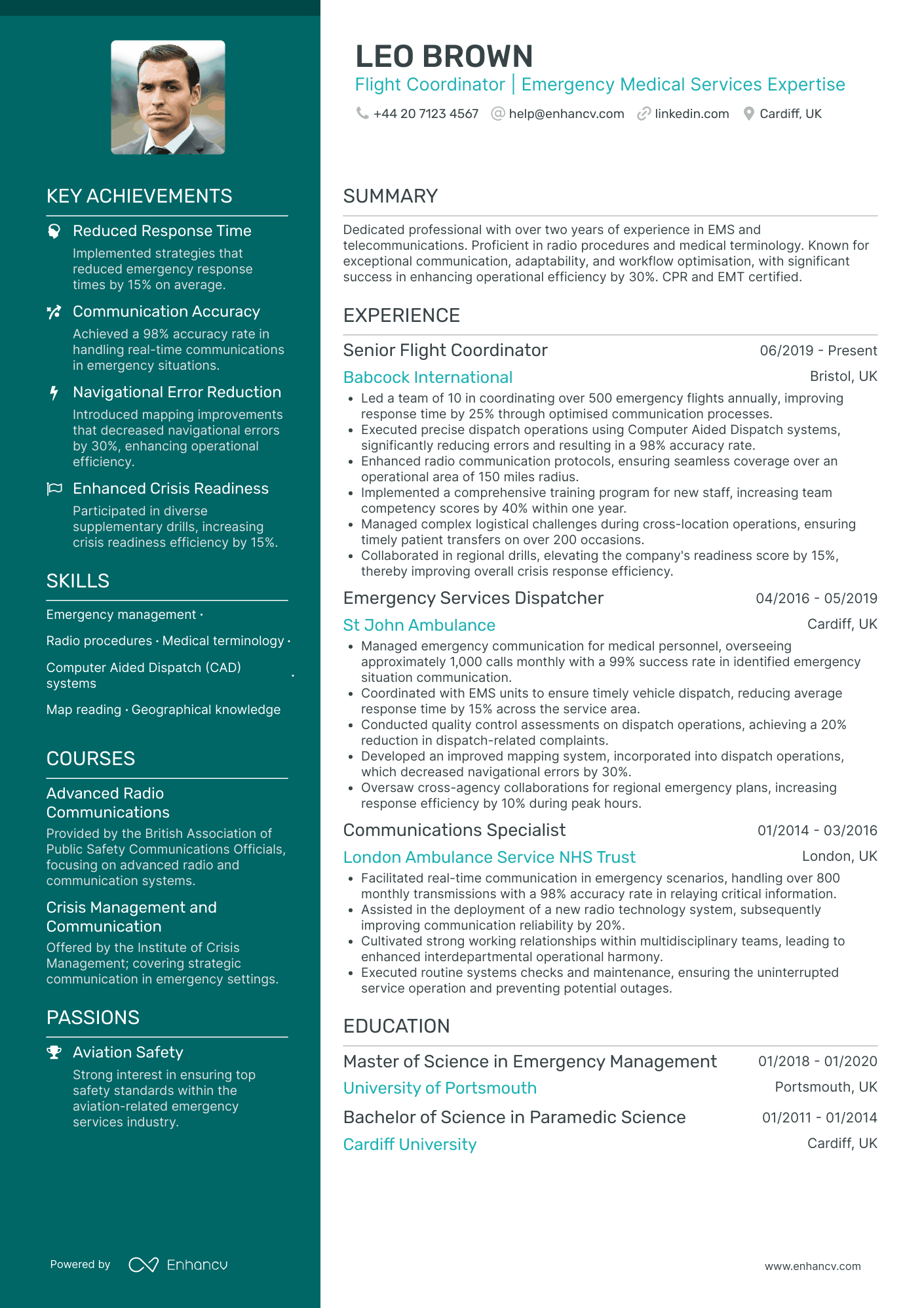
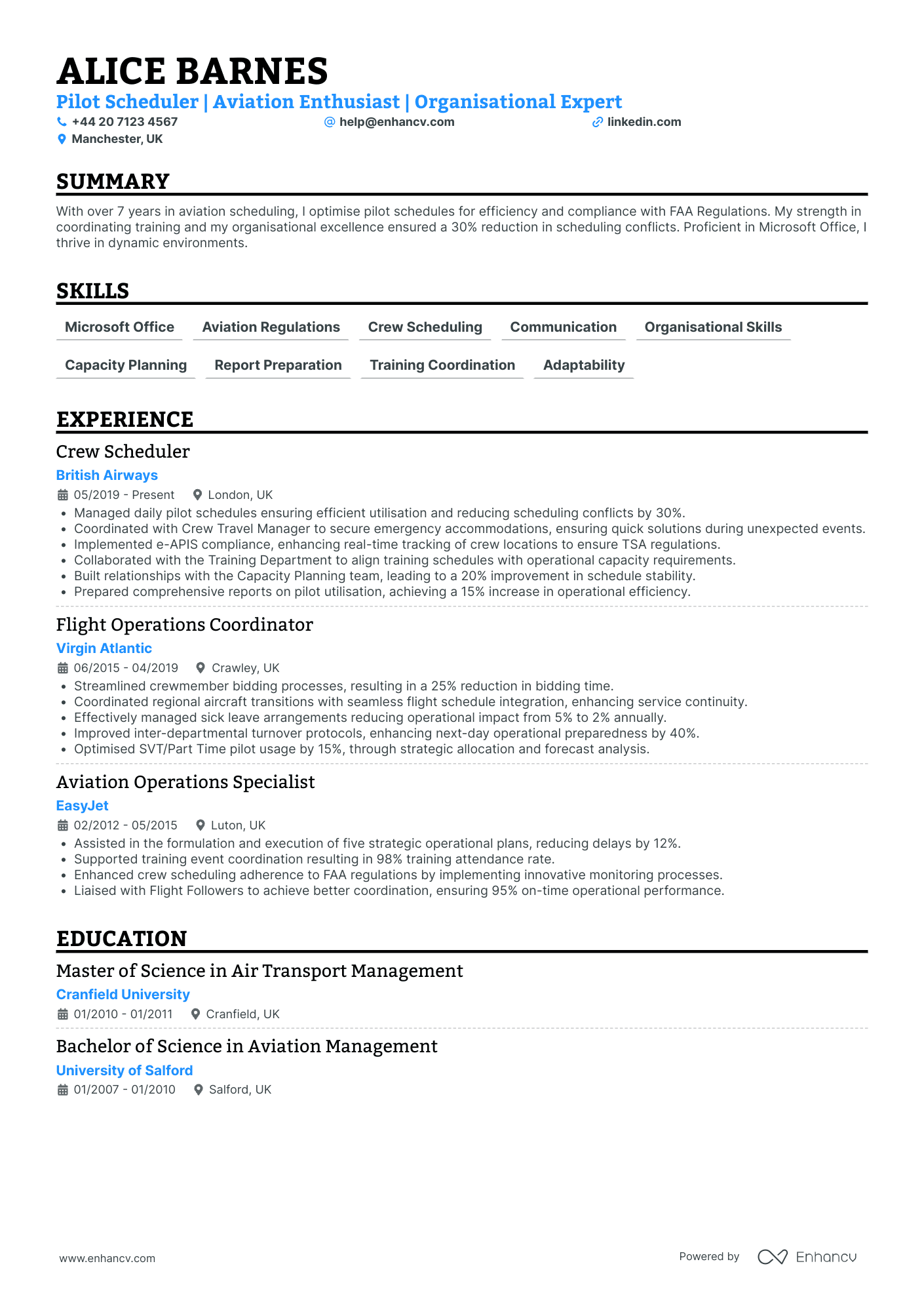
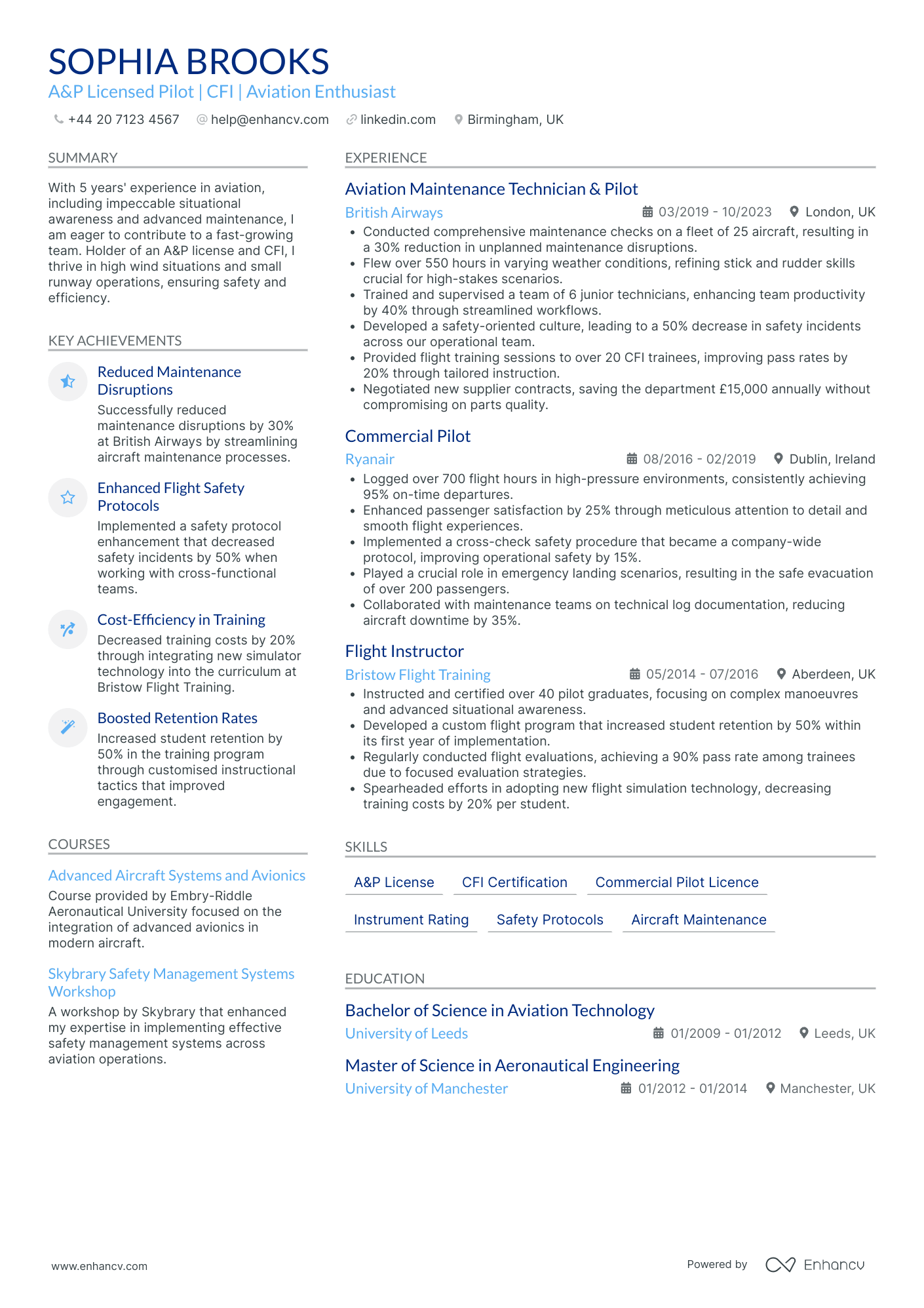
A pilot CV is a document a recruiter has to verify, not just read. So the format has one job before anything else: make your licence, medical, ratings, and hours findable in the first few seconds. Build it from a tested CV template rather than a blank page, and keep the structure boringly standard.
Two pages is the right length for an experienced pilot. Type history, hours, and check records add up, and a two-page CV carries them comfortably. Early on, before you have a fleet of type ratings, one clean page is enough, so let the content decide rather than padding to fill space. If you are unsure, see how long a CV should be.
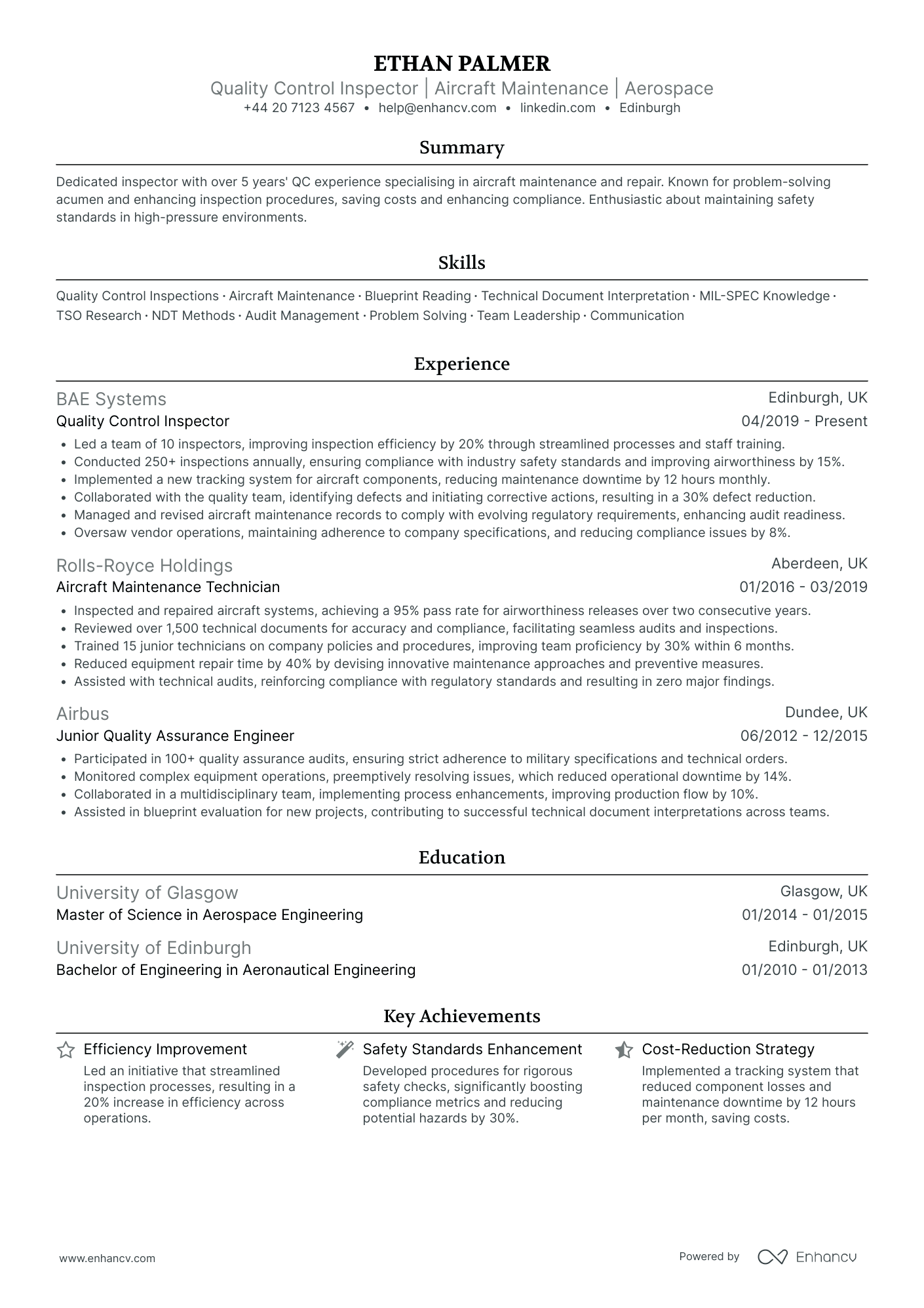
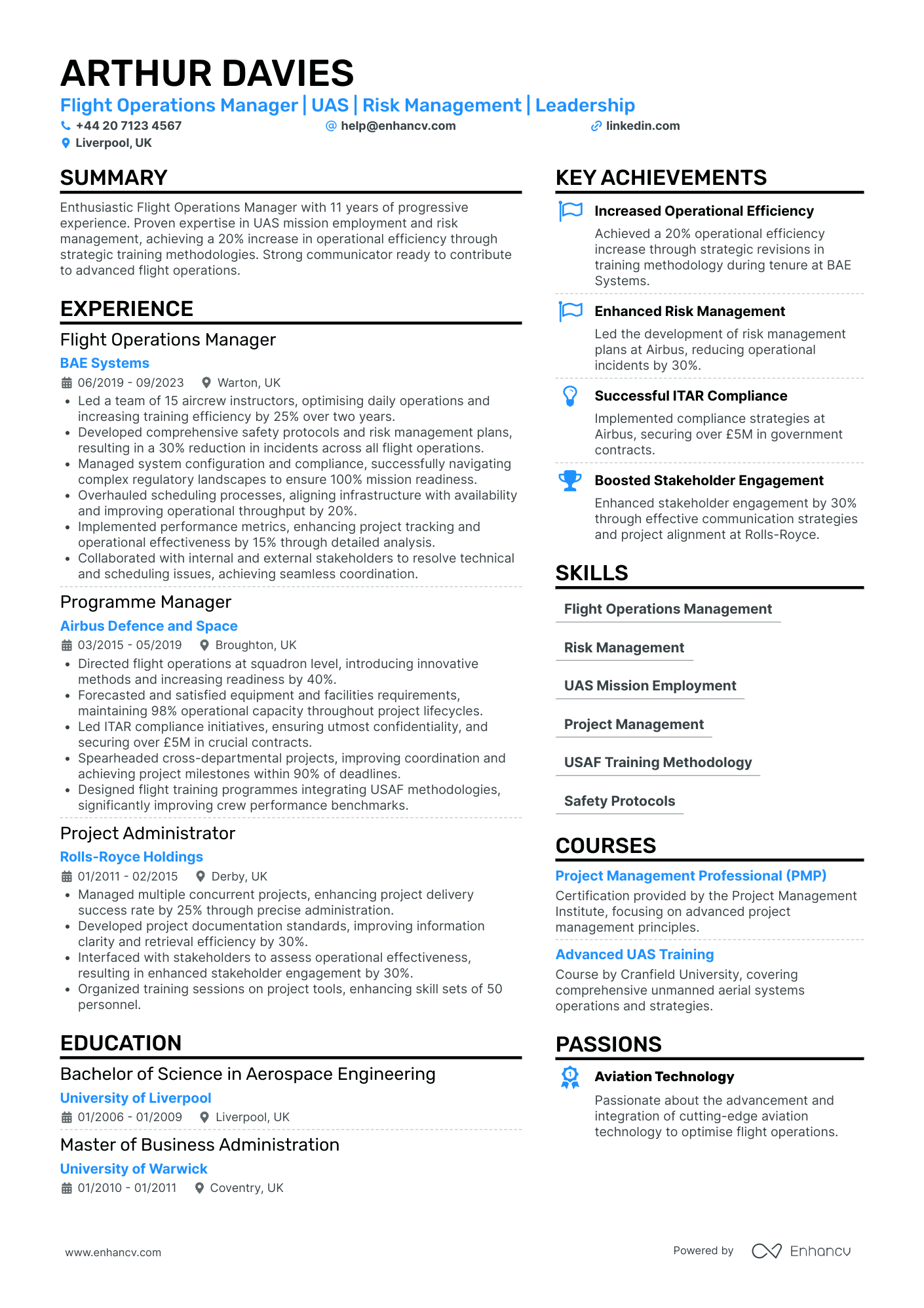
Use a reverse chronological structure, a single column, and standard headings. A recruiter should find your latest role, your ratings, and your total hours without scrolling through a clever layout that hides the basics.
The move that separates a pilot CV from a generic one is a flight-hours summary near the top. A small, clearly labelled block with your total time and the key breakdowns lets a recruiter confirm you meet the minimums at a glance, before they read a single job entry.
Put your licence and medical status high up too, either in the header alongside your location or in a short profile block. A recruiter reading a stack of applications is filtering on exactly those lines, so they should not have to hunt.
Give it a plain, professional font and clean margins so a dense two pages still breathes. Keep dates aligned down one edge and start every bullet with a verb. Ragged formatting reads as carelessness, and carelessness is the last thing an airline wants in a flight deck.

An airline pilot CV, top to bottom
- Header: name, base or location, phone, email, and a LinkedIn URL.
- Profile: two or three lines with your licence, type ratings, medical status, and total hours.
- Flight-hours summary: total time, pilot in command, multi-engine, instrument, and hours on type.
- Licences and ratings: ATPL or frozen ATPL, type ratings, and any instructor or examiner ratings.
- Work experience: flying roles most recent first, with the aircraft, the operation, and your hours.
- Education and training: type-rating courses, MCC and jet orientation, and your flight-training provider.
- Additional: languages with ICAO level, and a current medical and any security or airport ID status.
Send a PDF for direct applications so the spacing, alignment, and your hours table hold on any screen. Keep a Word copy for recruitment agencies, which place a large share of contract and airline roles and often reformat CVs into their own template. If the advert or portal names a file type, follow it.
Airline application portals usually parse your CV with software first, so keep the headings standard and the layout clean for an ATS-friendly CV. Enhancv's CV templates export to a clean PDF that keeps your hours block readable rather than collapsing it into a wall of text.

PRO TIP
Keep your hours current and honest. Recruiters cross-check the totals on your CV against your logbook and licence, so round down rather than up and update the figures every time you apply. One inflated number in the hours block can end an application on the spot.
What UK airlines expect on a pilot CV
Knowing what the role is gated on tells you what to put first. A pilot CV is screened against a short list of hard requirements before anything about you as a candidate matters.
| What | UK airline pilot roles |
|---|---|
| Licence checked first | An ATPL, held frozen while you fly as a first officer and unfrozen with the hours and command time needed for the left seat |
| Medical required | A current UK CAA Class 1 medical, renewed at least once a year and more often as you get older |
| What recruiters count | Total hours, pilot in command, multi-engine, instrument, and hours on the specific aircraft type |
| Where the work is based | Rostered from an airline base rather than a fixed office, so shift patterns, standby, and mobility all matter |
| What it pays | No single verified UK figure was available for this search, so anchor your CV on aircraft type, hours, and command rather than a headline number |
Two things in that table should shape the CV directly.
The licence and medical are pass or fail gates, so they belong in the top third of the page where a recruiter is looking for them. Bury them below your work history and you risk being screened out before your experience is ever read.
And because recruiters count hours by category, a single "5,000 hours total" line is weaker than a proper breakdown. Show pilot in command, multi-engine, instrument, and time on type separately, because the mix is what tells an airline whether you fit the seat they are hiring for.
Licences, ratings, and medical on your pilot CV
This is the section a recruiter reads most carefully, so give it room and keep it precise. State your licence in full, whether it is an ATPL or a frozen ATPL, and the issuing authority, because a UK CAA licence and an EASA licence are not interchangeable for a UK operator.
List your type ratings clearly, most relevant first, and note whether each is current. A recruiter hiring for an A320 fleet is scanning for that rating specifically, so "A320 type rating, current" should be easy to spot rather than folded into a paragraph.
Put a flight-hours summary where it can be checked at a glance. Break out total time, pilot in command, multi-engine, instrument, and hours on type, and keep the figures consistent with your logbook.
A flight-hours summary block a recruiter can scan
- Total time: the single headline figure, rounded down to be safe.
- Pilot in command: command hours matter most for upgrade and captain roles.
- Multi-engine and turbine or jet time: the mix that shows you fit an airline flight deck.
- Instrument time: your IFR and actual instrument hours.
- Hours on type: time on each aircraft you are rated on, listed against the rating.
State your medical plainly: a current UK CAA Class 1 medical, with the class and the fact that it is valid. You do not need to publish the expiry date on the CV, but be ready to confirm it, because it is one of the first things a recruiter verifies.
Add the supporting tickets that airlines expect: MCC and jet orientation, your ICAO English language level, and any UPRT, dangerous goods, or CRM training. List your genuine certificates rather than padding the block, because one clear line per real qualification says more than a long list of short courses.
Top skills for your airline pilot CV
A pilot's real skills are the ones the flight deck and the training checks actually assess, and they map closely to the EASA pilot core competency framework. Manual and automated flight path management, standard operating procedures, and threat and error management are your hard skills, listed in the language the industry uses.
The soft skills that matter here are the crew-resource-management ones the sim assessors watch for: communication, leadership and teamwork, decision-making, situational awareness, and workload management. Prove each one in a bullet rather than just claiming it.
List only what you can defend in a sim ride and an interview. If you fly a busy short-haul roster to low minima, say so. Keep aspirational skills off the skills section until they are backed by real hours.
Top skills for your airline pilot CV:
Manual flight path management
Automated flight path management
Standard operating procedures (SOPs)
Instrument flying (IFR)
Multi-crew cooperation (MCC)
Flight planning and fuel management
Radio telephony (RT)
Threat and error management (TEM)
Type rating (e.g. A320 or B737)
Communication
Leadership and teamwork
Decision-making
Situational awareness
Workload management
Writing your airline pilot personal statement
Two or three lines at the top: your licence and rating, your headline hours, and the seat or operator you are targeting. Keep it factual and short. See more personal statement examples if the opening line is holding you up.
Name the specifics. The aircraft type, the kind of operation, and your check record all tell a recruiter you fit the role rather than sending the same paragraph to every airline.
Avoid the adjective soup that fills most aviation applications. "Passionate" and "dynamic" tell a recruiter nothing they can verify, and they have read them a thousand times.
Lead with evidence instead:
Airline pilot CV personal statement example
A320-rated First Officer with 3,200 total hours, 2,600 on type, and a current UK CAA Class 1 medical. Four years of short-haul line experience across a busy European network, with a clean check record and MCC and jet orientation completed. Looking to bring reliable, standardised line flying to a First Officer role with a UK short-haul operator.
What to avoid
Passionate aviator who has dreamed of flying since childhood and thrives in fast-paced, dynamic environments, seeking an exciting opportunity to take my career to new heights with a forward-thinking airline where I can make a real difference.
When we read an airline pilot CV, the first thing we look for is the numbers that make you legal to fly: your licence, your medical, your ratings, and your hours broken down by type and command. A line like "2,600 hours on the A320 with a clean check record" tells us more than any paragraph about a passion for aviation. Put those facts at the top, keep them current, and let your line experience do the talking underneath.
the Enhancv team
Writing your airline pilot experience section
Write each flying role the same way: a dated heading with the operator and the aircraft, then bullets that show the operation, your hours, and what you were responsible for. For the mechanics, see work experience on a CV.
Flying is measurable, so use the numbers. Sectors flown, hours a year, the aircraft and the network, and your check and standardisation record are your CV achievements, and they beat a list of duties every time. Open each line with a strong action verb.
Give each role three or four bullets and put your strongest line flying first. A recruiter reads the top of each entry, so the routine roster detail can go and the demanding approaches, diversions, and command experience should lead.
Non-flying and ground roles still count when you frame them for the flight deck. Dispatch, operations, or cabin crew experience shows you understand the operation, so write it as evidence of airmanship and procedure rather than filler.
Tailor every application to the airline and the fleet you are applying to, mirroring the aircraft type and the operation named in the advert where they are true of you. Enhancv's CV tailoring feature reads the advert and suggests the matching edits, which saves rewriting from a blank page each time.
- Operate as First Officer on the A320 family across short-haul European sectors, flying roughly 700 hours a year on a mixed roster
- Fly to low minima into busy hubs, managing high-tempo approaches and go-arounds within standard operating procedures
- Handled two in-flight technical diversions to the relevant checklists, coordinating with the captain, cabin crew, and ATC throughout
- Completed every recurrent simulator check and line check first time, with consistently strong standardisation and CRM scores
PRO TIP
Lead every bullet with the flying, then the number. "Flew 700 short-haul sectors a year on the A320" says far more than "responsible for operating the aircraft safely". Airlines hire pilots who can point to specific operations on specific types, not a restated job description.
Writing an airline pilot CV with no airline experience
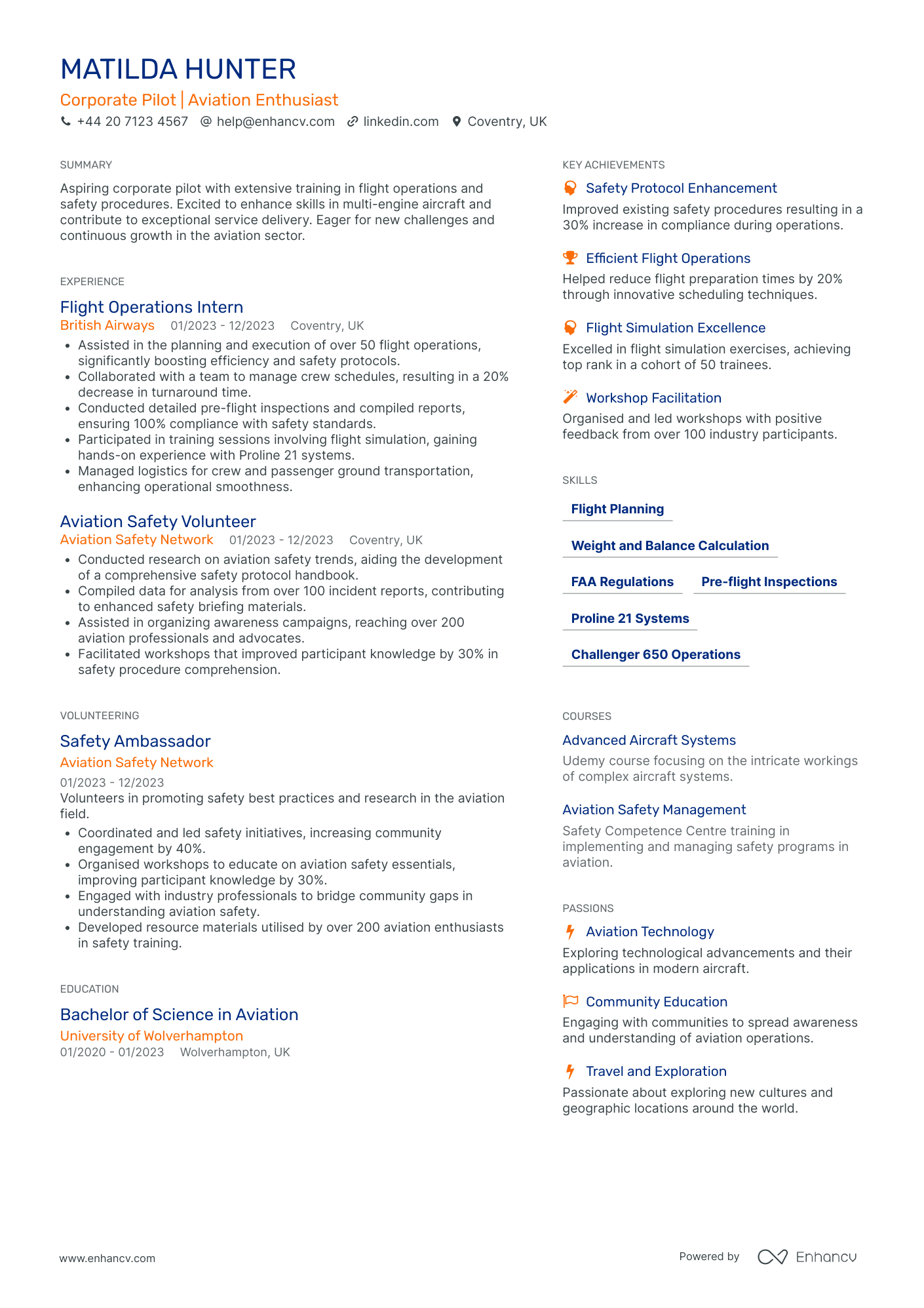
Almost nobody walks into an airline with airline hours already logged. The route in runs through a frozen ATPL, hour-building, and often a cadet programme or an instructing job, so a first CV has to make the most of your training record and every hour you do have. If this is your first serious application, start from CV examples for a first job.
Lead with the licence. A frozen ATPL, with the ATPL theory exams passed and your CPL and multi-engine instrument rating held, is the single most important line on the page, so put it first rather than at the bottom.
Then show the hours you have, honestly broken down. Training hours, pilot in command from hour-building, and any instructing all count, so present them the same way an airline pilot would and let the totals speak for themselves.
Instructing is worth its own entry. A flight instructor rating and the hours that come with it show command, teaching, and decision-making under pressure, so give it a dated role with real numbers rather than a single line.
Use a skills-led structure while your experience is thin, leading with licence, ratings, and hours, then switch to a role-led one once you have line flying behind you. Add your language skills with your ICAO level, because they matter more in aviation than in most fields.
Conclusion
Put your licence, medical, ratings, and hours where a recruiter can verify them in seconds, then let quantified line flying carry the rest. That is what an airline screens for.
Pair the CV with a short cover letter that names the operator, the fleet, and why you, and you turn a strong CV into a sim assessment.
Author's take - the Enhancv team
When we read an airline pilot CV, the first thing we look for is the numbers that make you legal to fly: your licence, your medical, your ratings, and your hours broken down by type and command. A line like "2,600 hours on the A320 with a clean check record" tells us more than any paragraph about a passion for aviation. Put those facts at the top, keep them current, and let your line experience do the talking underneath.