



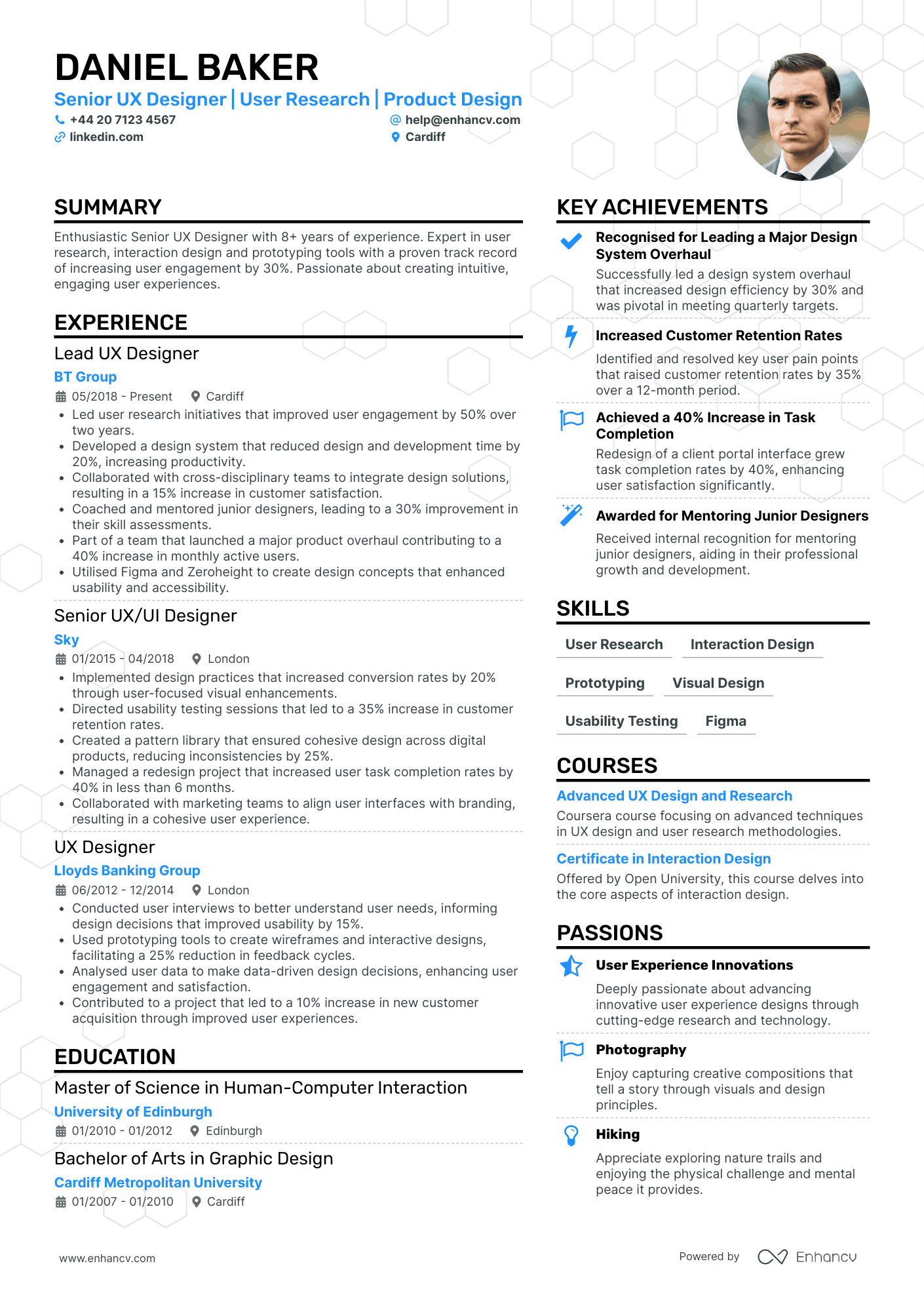
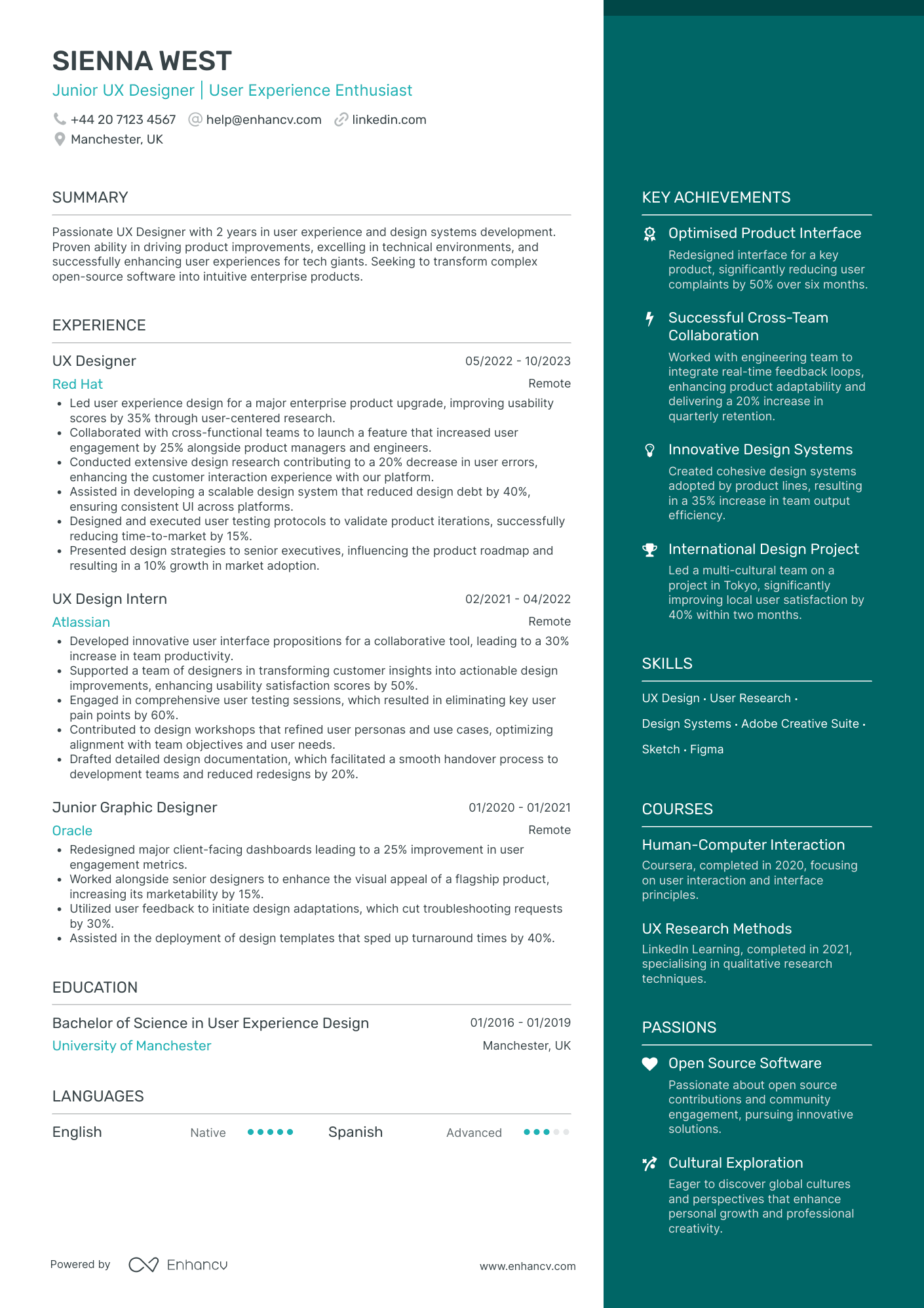
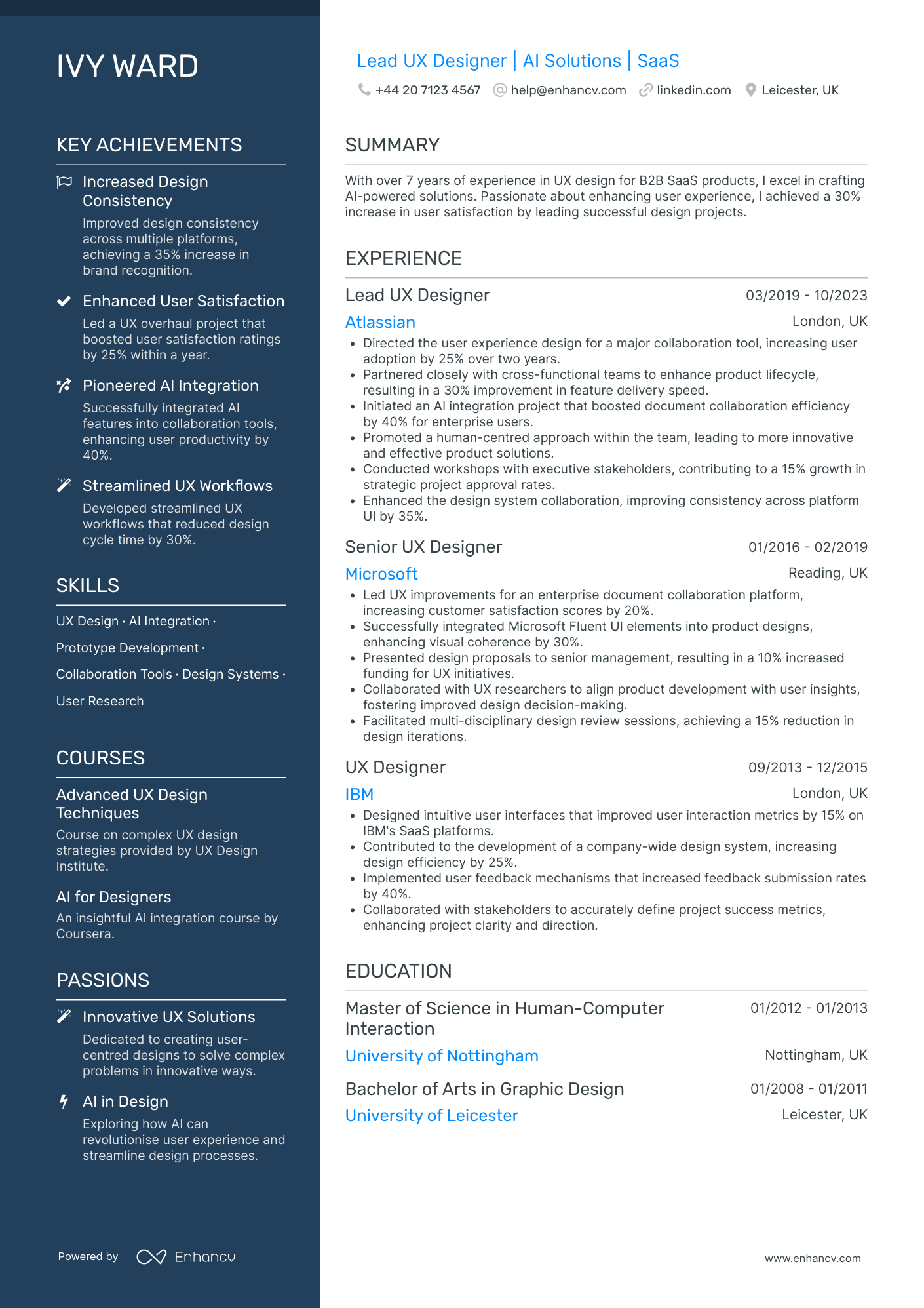
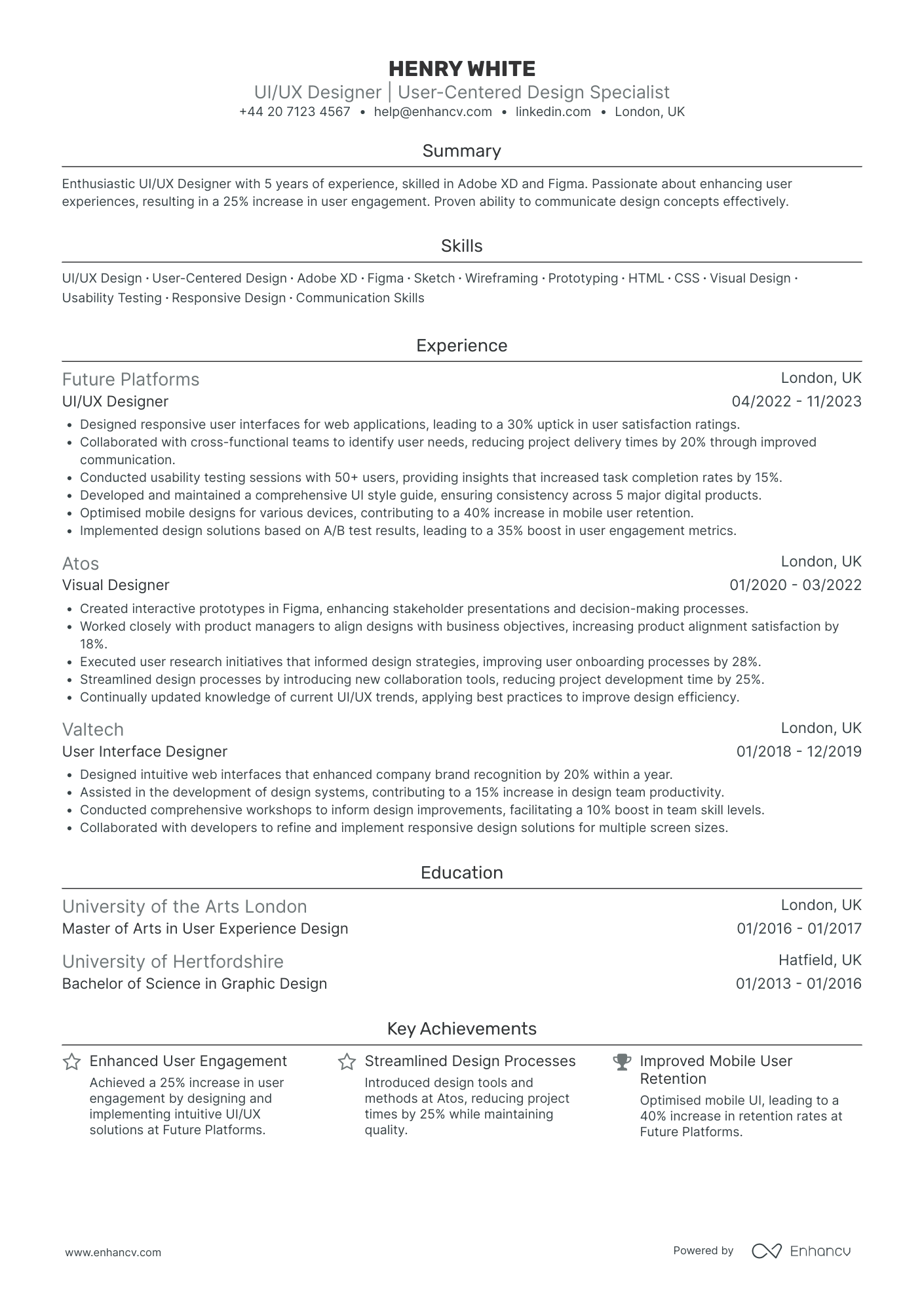
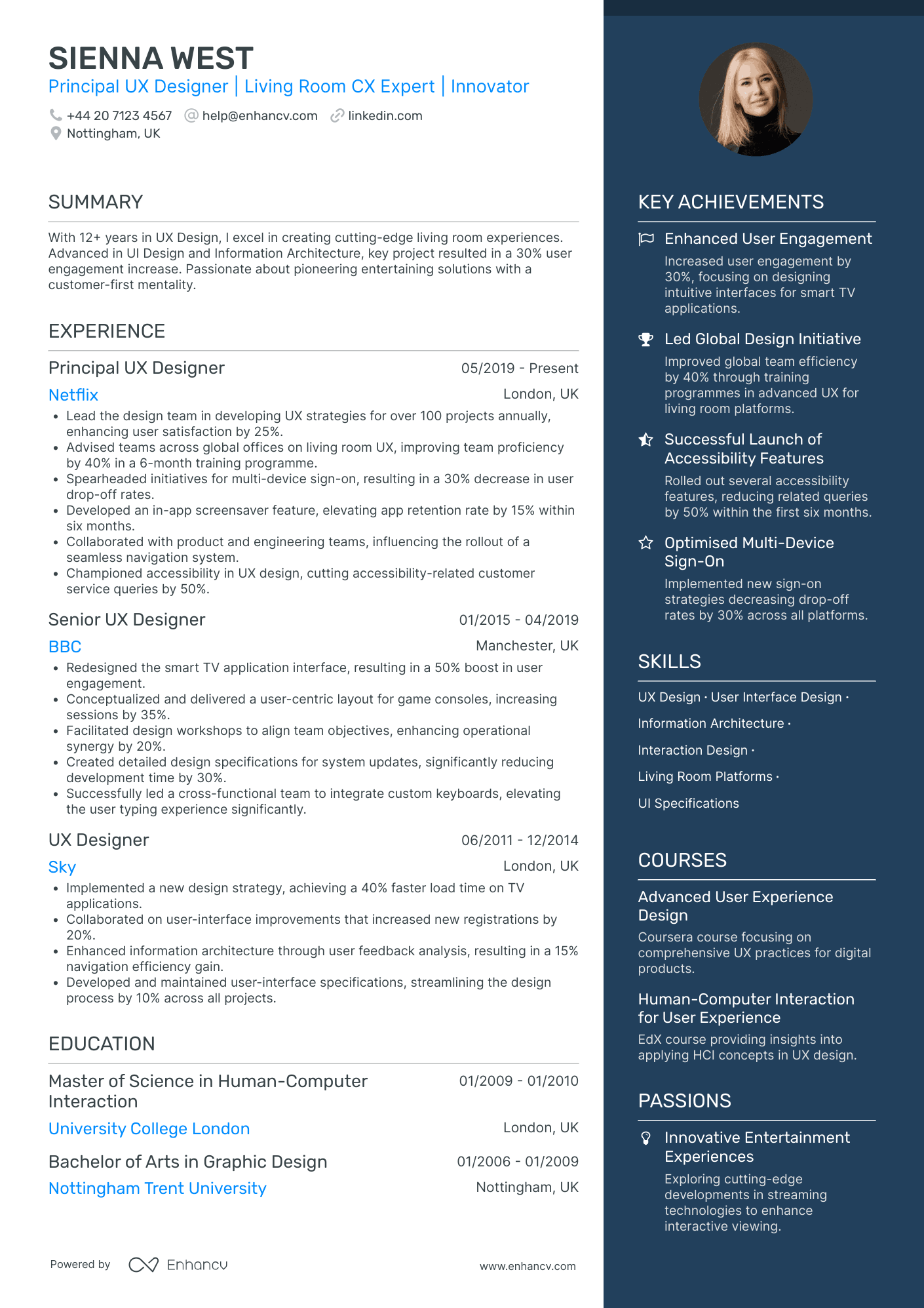
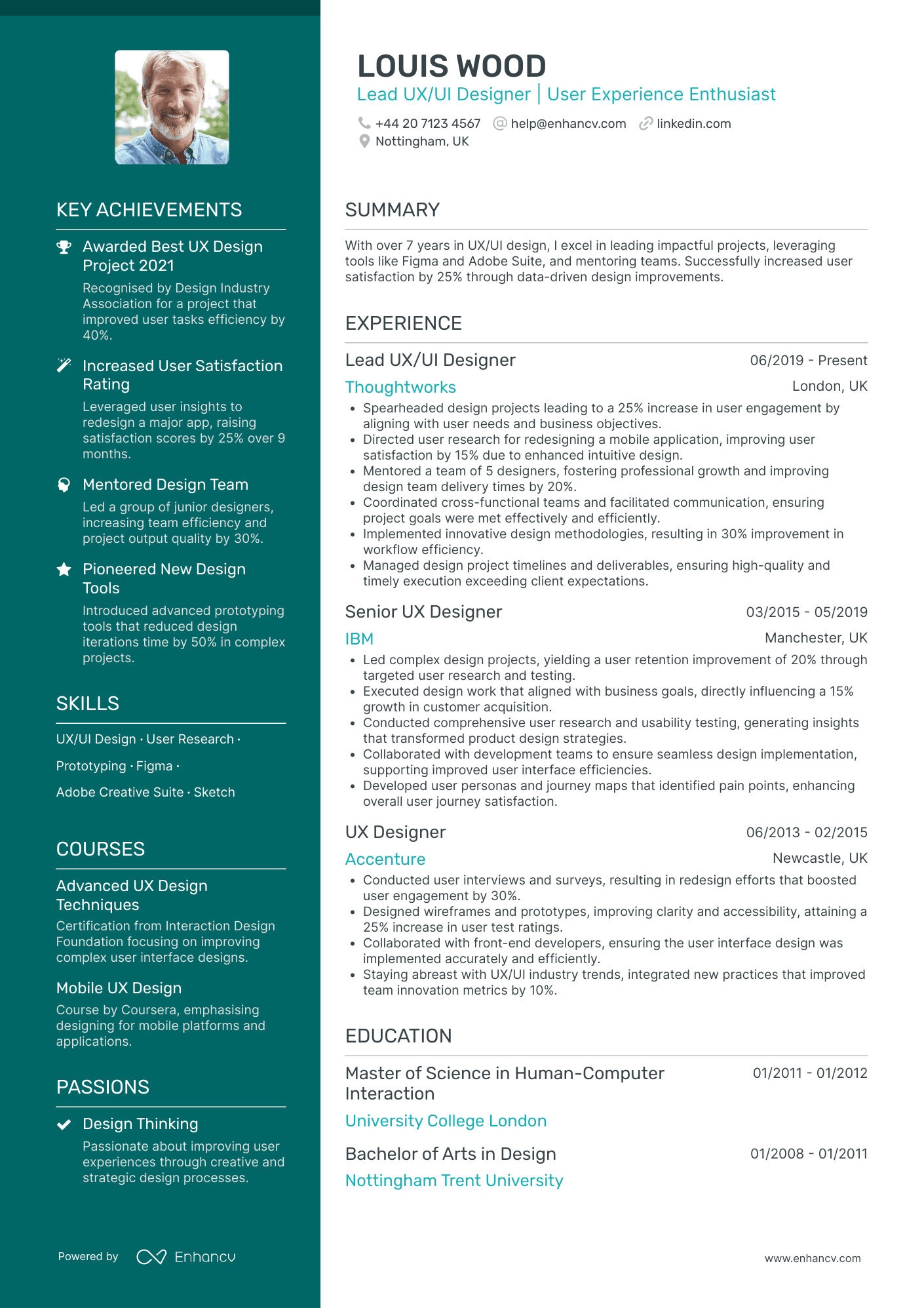
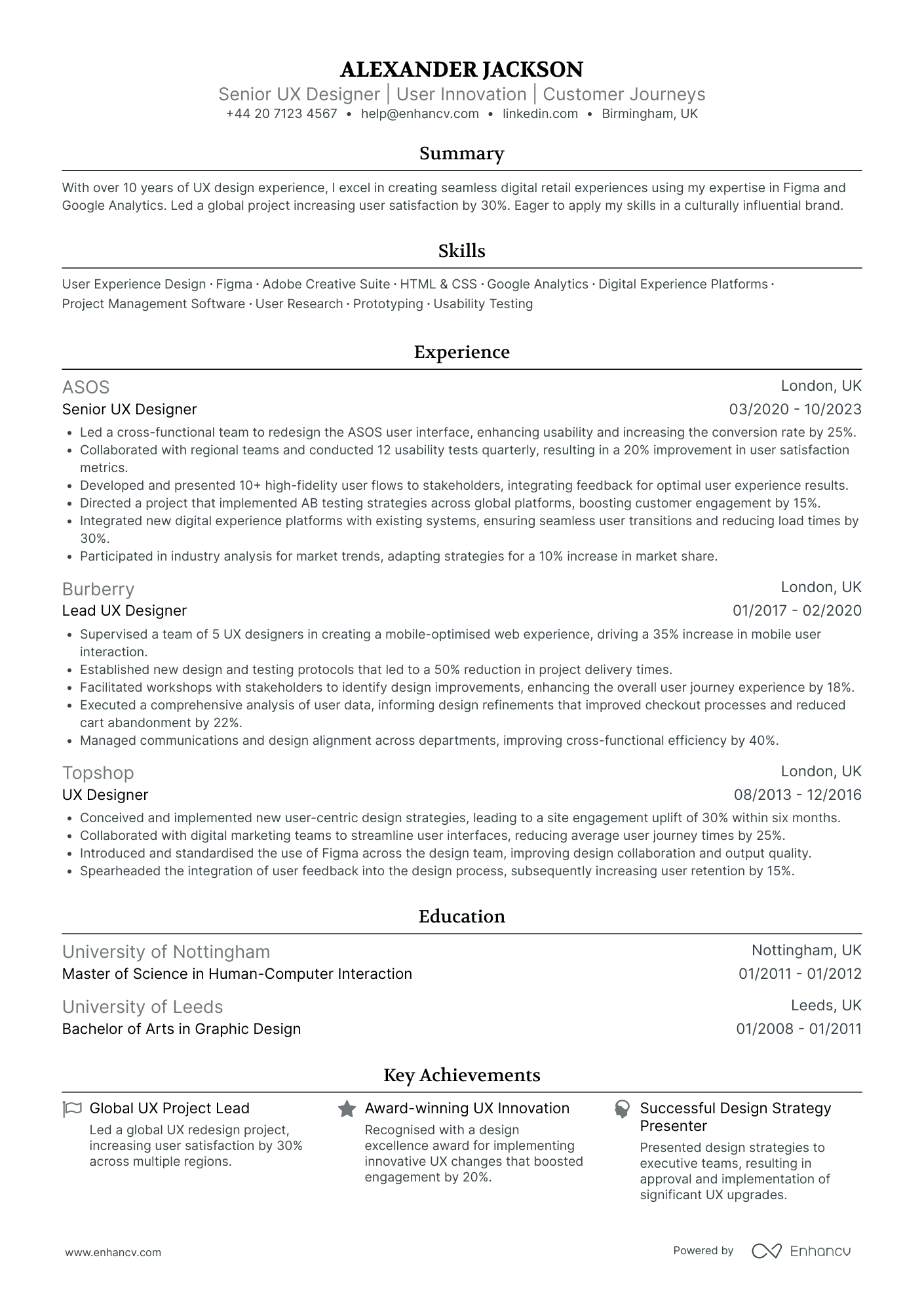
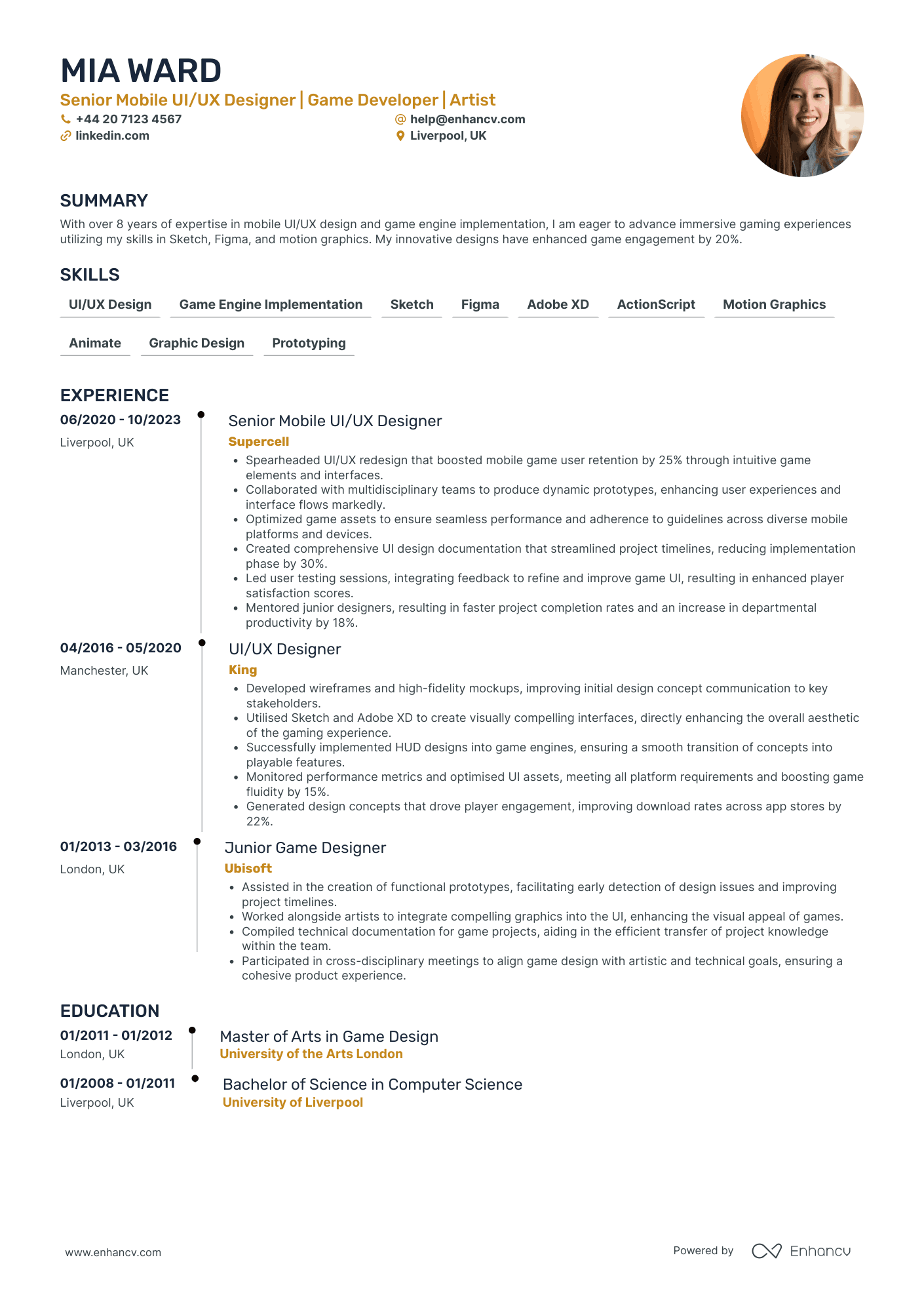
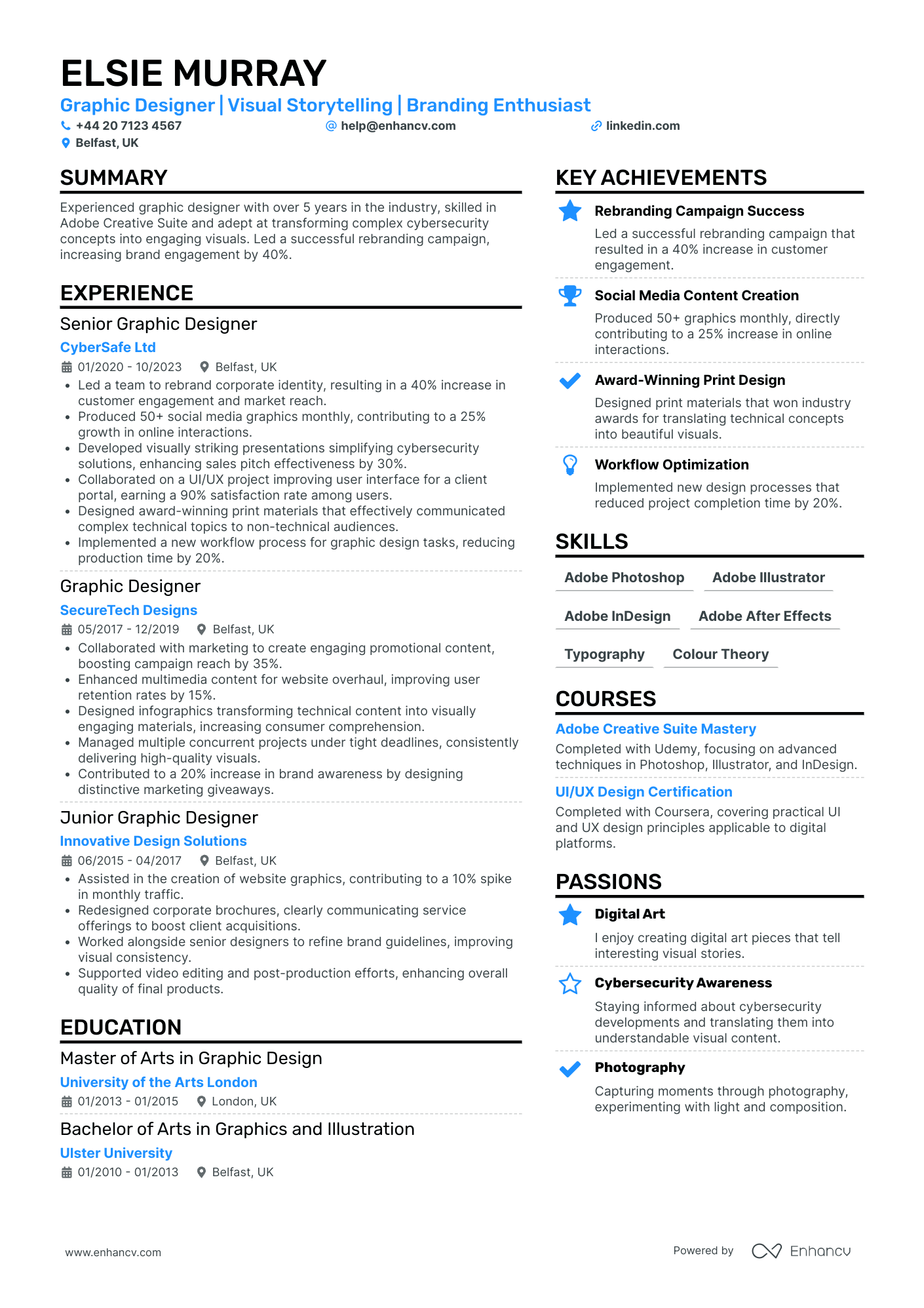
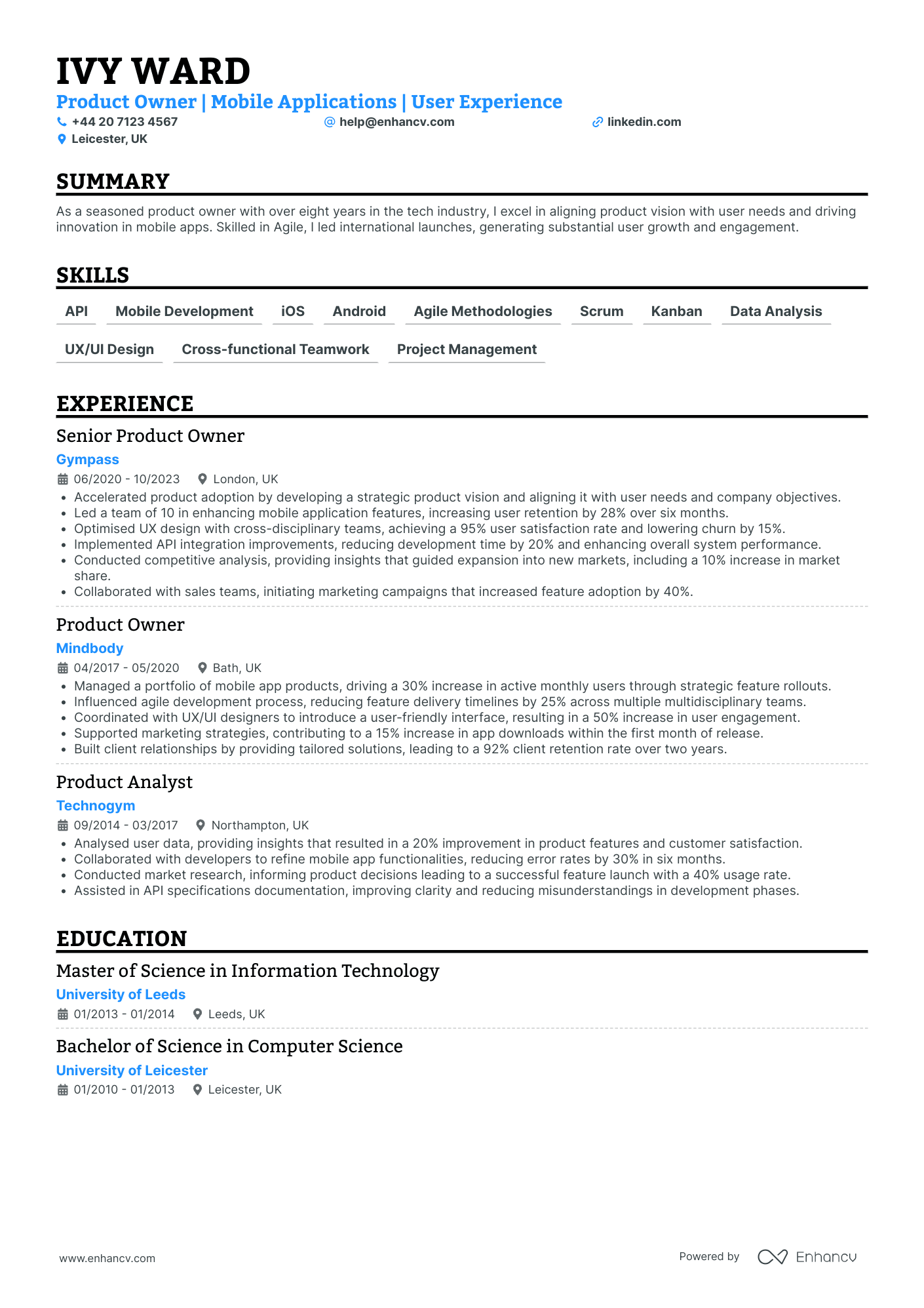
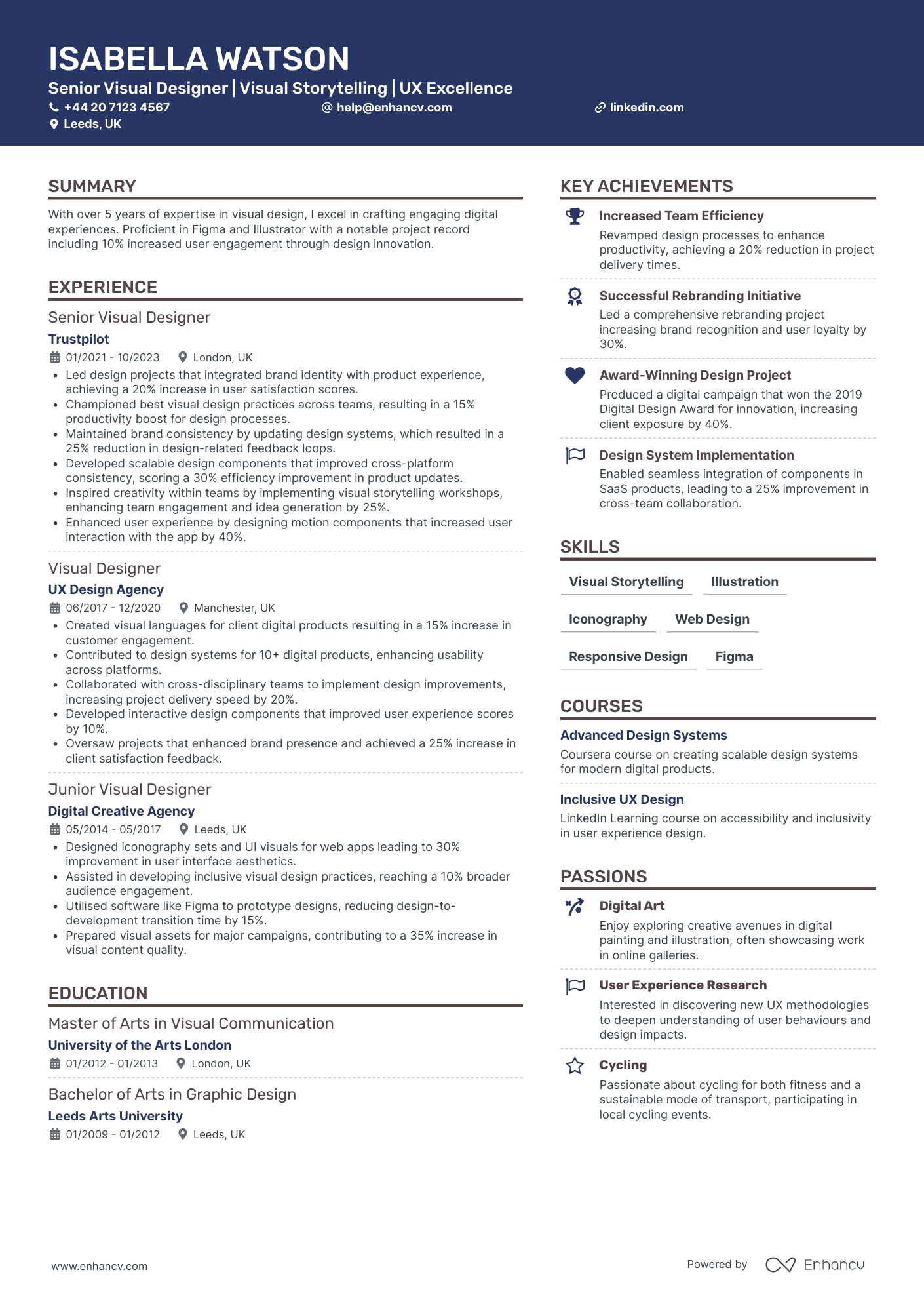
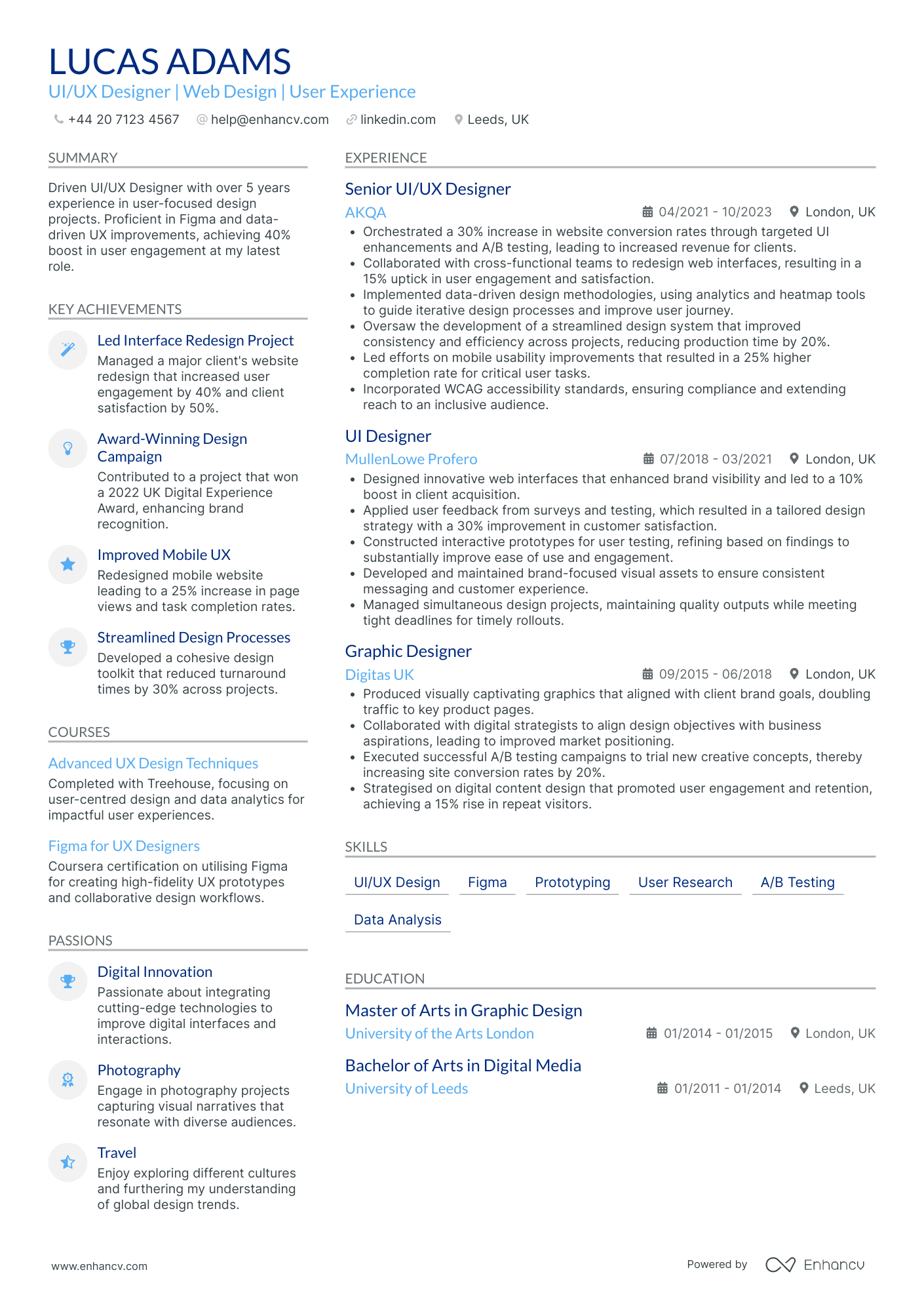
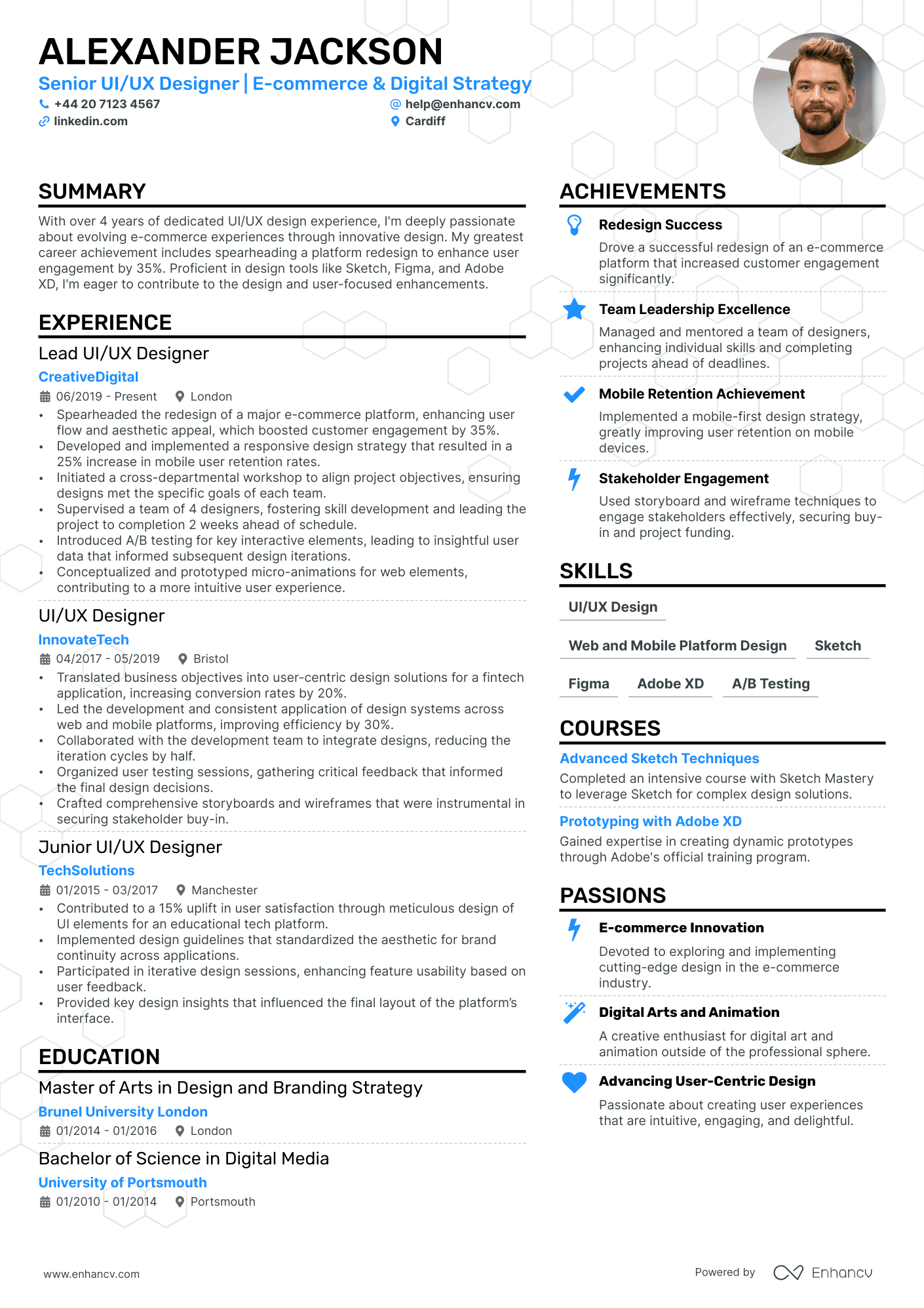
A junior UX designer CV and a mid-level one are not the same document with a few years bolted on. They make two different arguments to a hiring manager.
A junior proves they can think like a designer and ship inside a team. A mid-level proves they own outcomes. Pitch it at the wrong level and even strong work reads as a mismatch. If you want the underlying mechanics first, see how to write a CV.

Key takeaways
- Decide your level before you write a word. Junior CVs lead with process and portfolio, mid-level CVs lead with outcomes you owned.
- Your portfolio link is the most important line on the page. Put it in the header and make sure every case study loads.
- UK UX roles split between hybrid and onsite, so name your location and how you work near the top.
- Figma, user research, and design systems are the skills employers list most. Put the ones you can evidence first.
- Two pages, reverse chronological once you have experience, sent as a PDF unless the advert asks for a Word file.
- Quantify the work: adoption, task completion, support tickets, time saved. One real number beats a paragraph of adjectives.
Junior or mid-level: which UX designer CV are you writing?
The line between the two is evidence of ownership, not years on the clock.
If you are early career, a bootcamp graduate, or one or two years in, write a skills-led CV. Open with a short personal statement, then skills, then two or three portfolio projects, then education and any work history.
Your job at this level is to prove you can run the process end to end: research, wireframes, prototypes, a usability test, and a clean handoff to engineering. Show the judgement behind each decision, not just the screens.
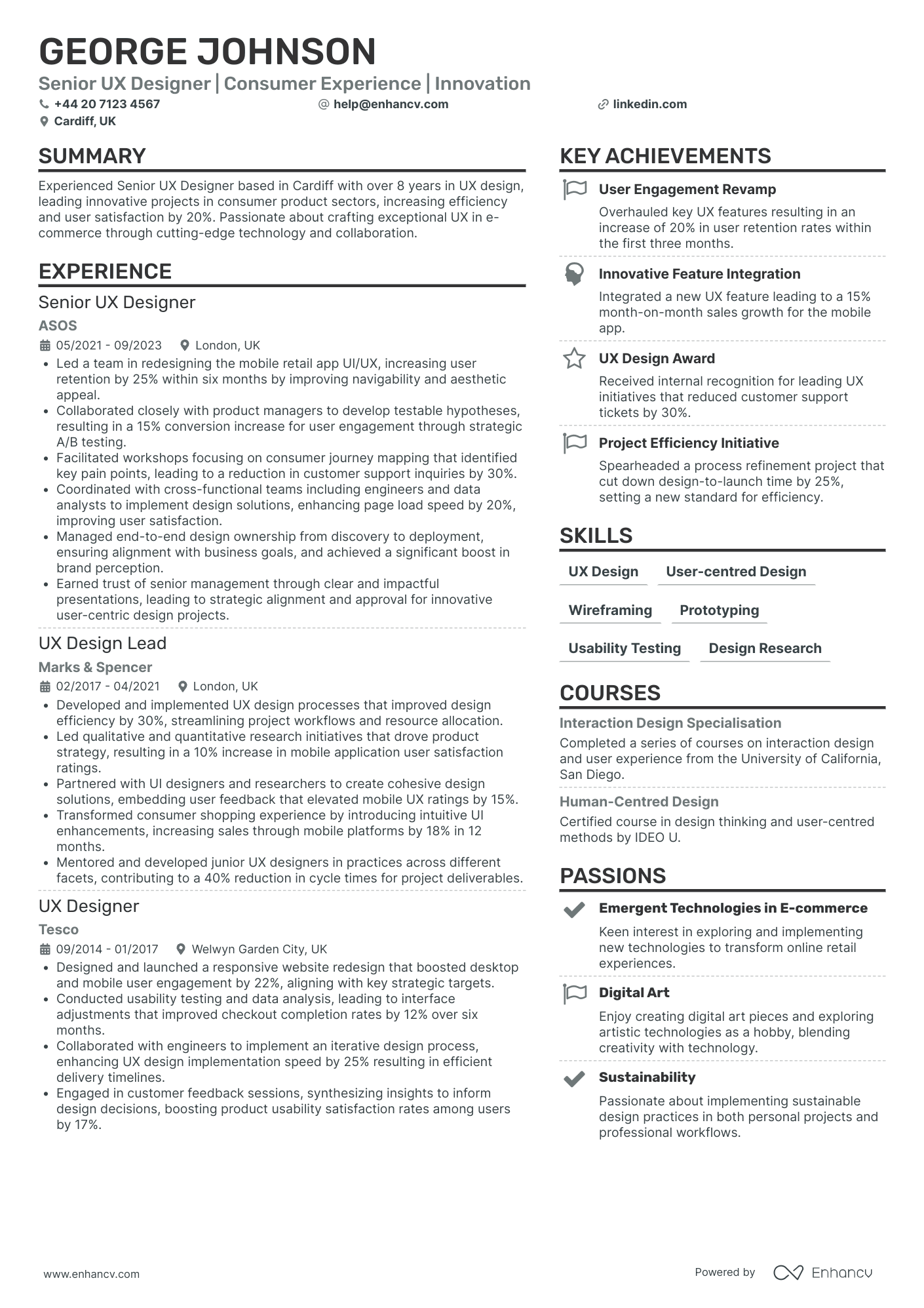
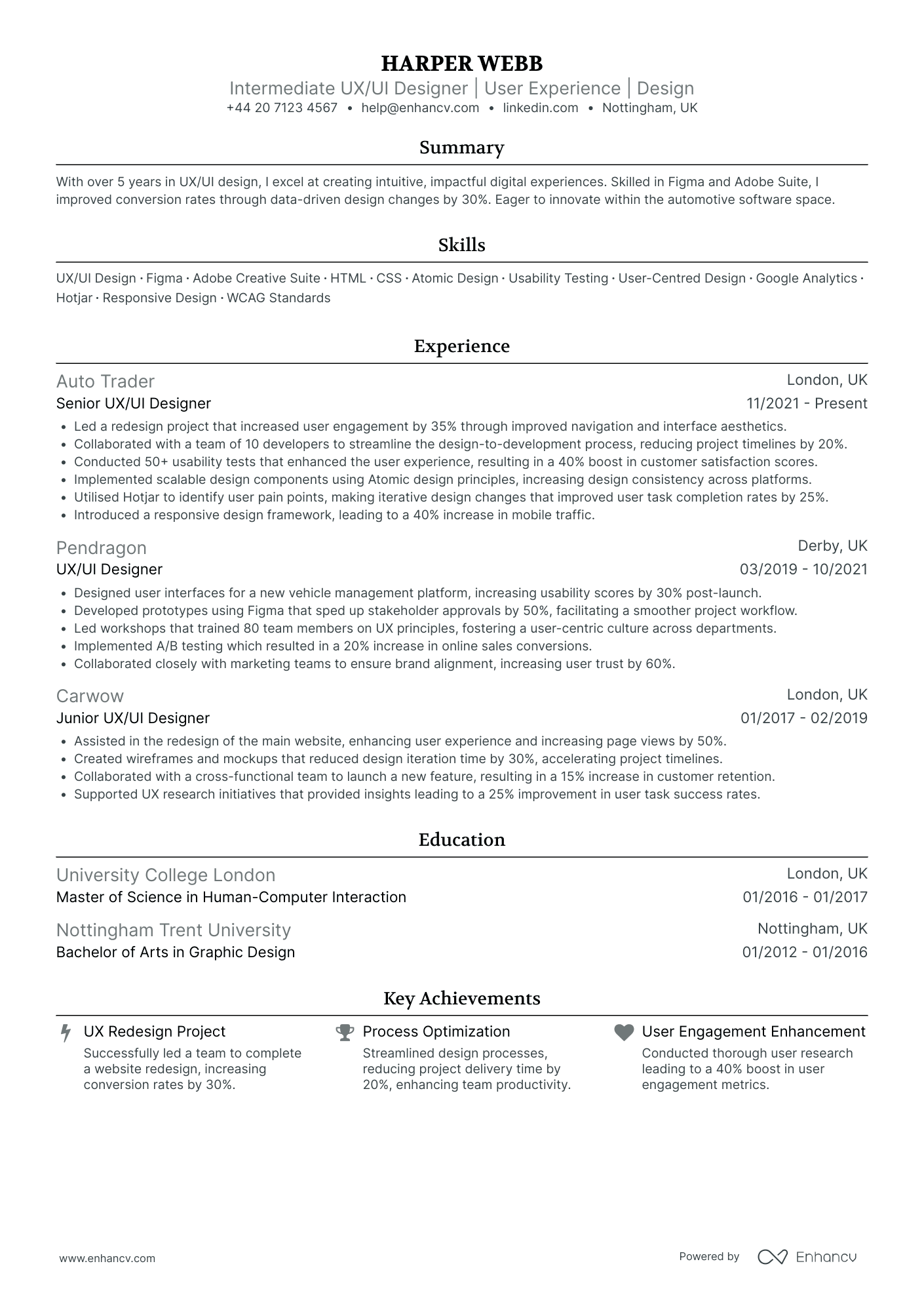
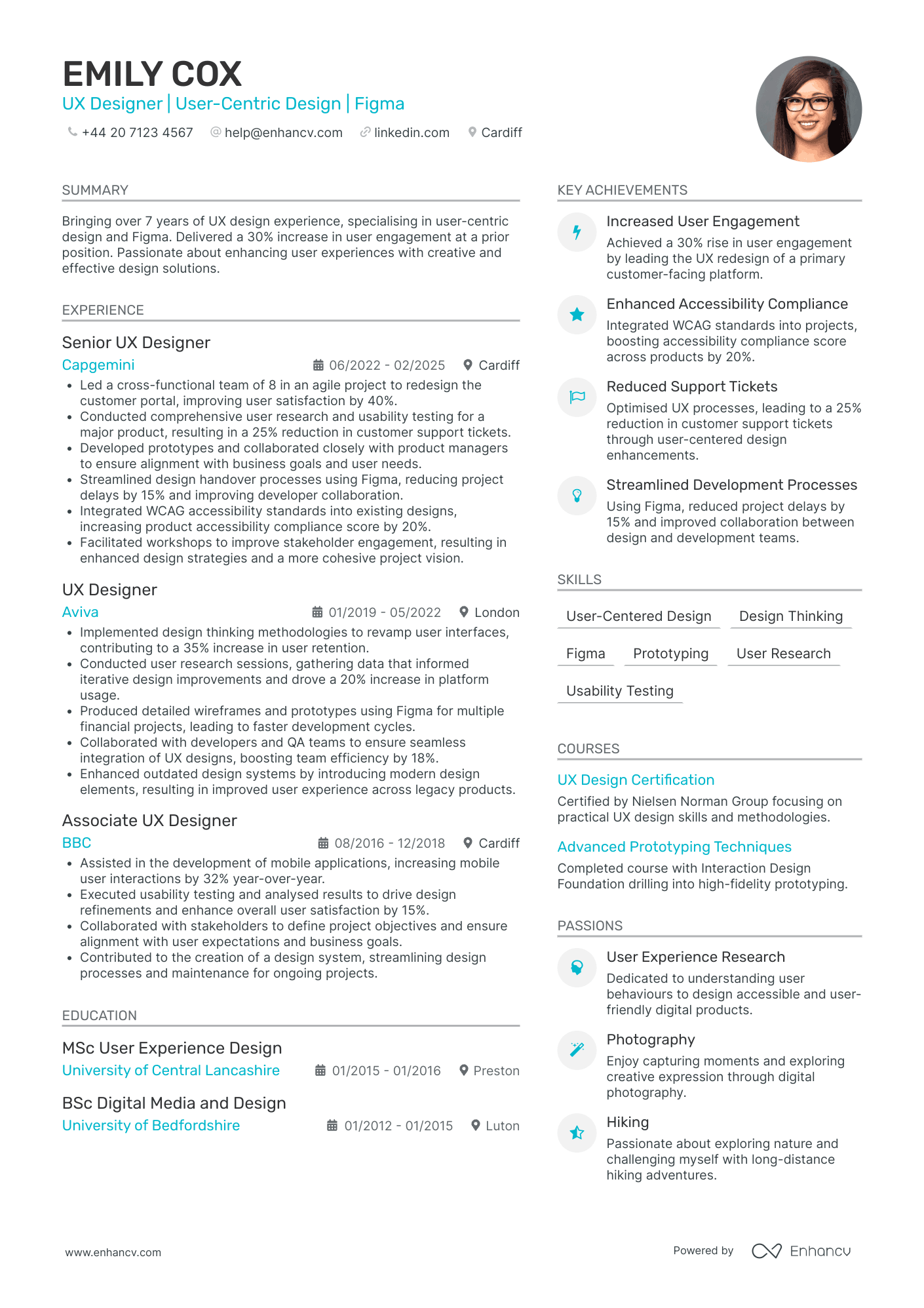
From roughly three years in, switch to reverse chronological and lead with impact. You are no longer proving you know the tools. You are proving you owned features, shaped a design system, and moved a metric the business cared about.
The tell a recruiter looks for at mid-level is scope. Did you run the research, decide what to build, and defend it to stakeholders, or were you handed tickets? Write to that question.
The most common junior mistake is hiding behind tools. A skills list ten items long and a personal statement full of adjectives says less than one project explained well.
The most common mid-level mistake is staying in task mode. If your bullets read like a list of screens delivered, rewrite them around the decision you made and the result it produced.
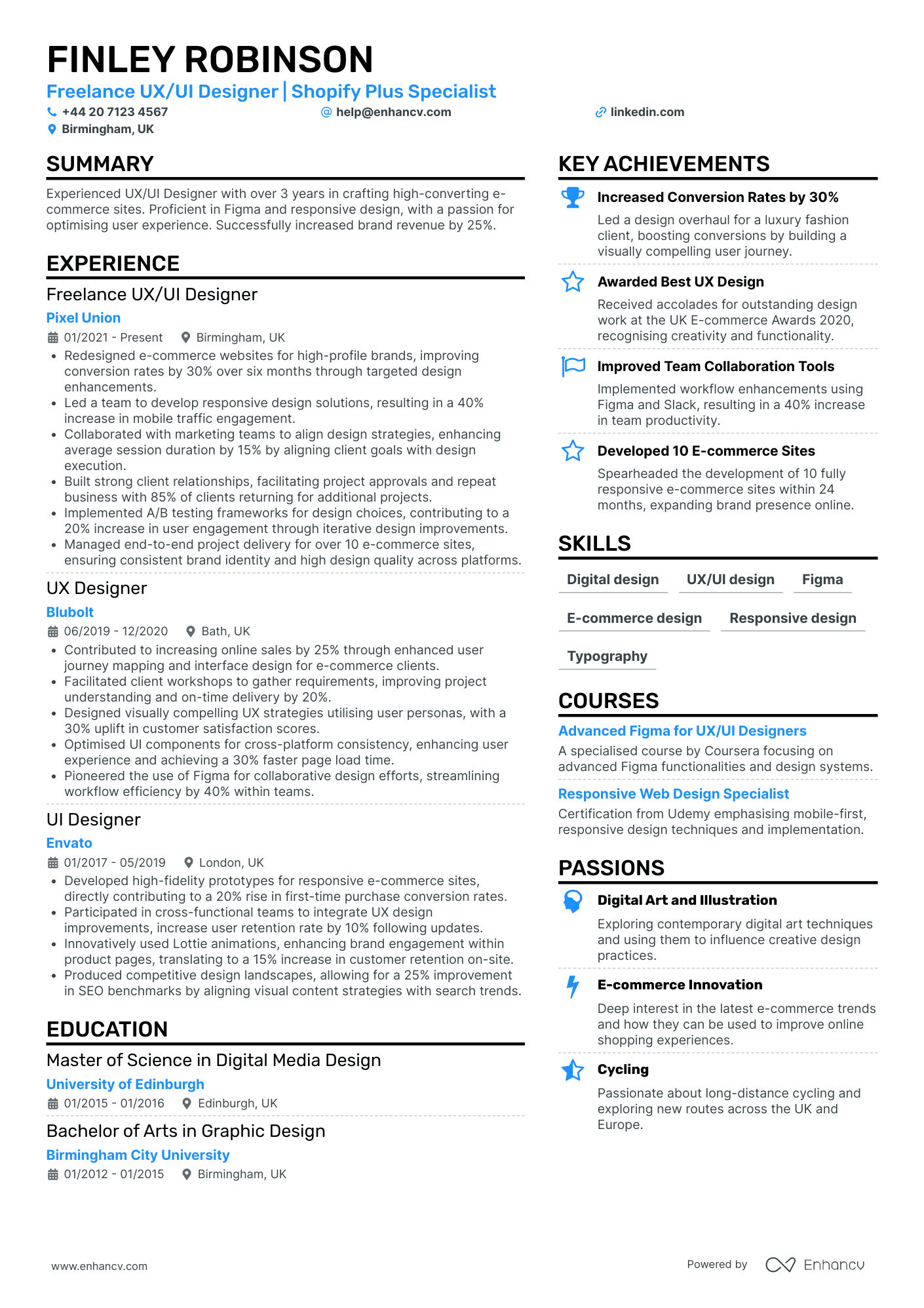
The same project reads very differently at each level. A junior writes "designed and prototyped a new checkout flow in Figma". A mid-level writes "identified the drop-off in checkout through session analysis, redesigned the flow, and ran the A/B test that recovered lost conversions". Same work, but the second version shows who owned the outcome.

What each level should lead with
Junior: a skills-led layout, a portfolio with two or three guided projects, and process you can talk through in an interview.
Mid-level: a reverse-chronological layout, outcomes you owned, and the stakeholders you worked with to get there.
What the UK UX designer market looks like
Knowing the market shapes the CV. Here is what the role pays and what employers keep asking for.
| What | UK UX designer roles |
|---|---|
| Typical pay | £32,000 to £65,000 a year (National Careers Service, gov.uk) |
| Where the work happens | Split between hybrid and onsite (18 hybrid and 10 onsite of 28 UK postings in the last ~30 days, Enhancv's internal job feed) |
| Seniority most asked for | Mostly mid and senior, with fewer lead roles (12 mid, 10 senior, 6 lead of 28) |
| Skills listed most | Figma, user research, design systems, usability testing, prototyping |
Two rows should change how you write.
UK UX work is split between hybrid and onsite, so a recruiter needs to see where you are based and how you work. Put your city and your working preference in the header rather than making them hunt for it.
Most postings sit at mid and senior level, with far fewer lead roles. If you are junior, that is the bar to read towards: frame your projects so they show mid-level judgement, not just finished screens. And Figma, user research, and design systems are the skills that recur most often, so lead with the ones you can back.
Formatting your UX designer CV
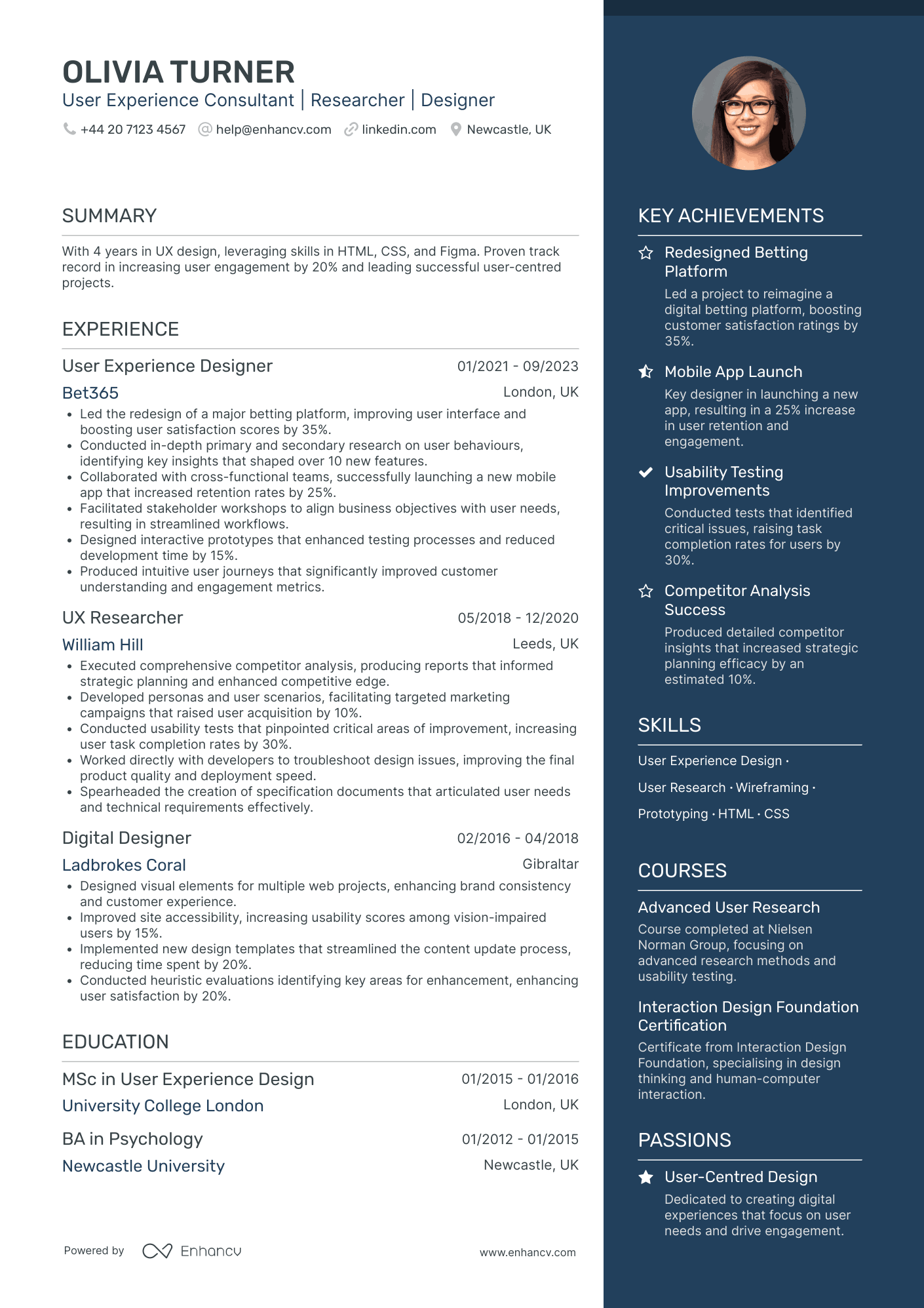
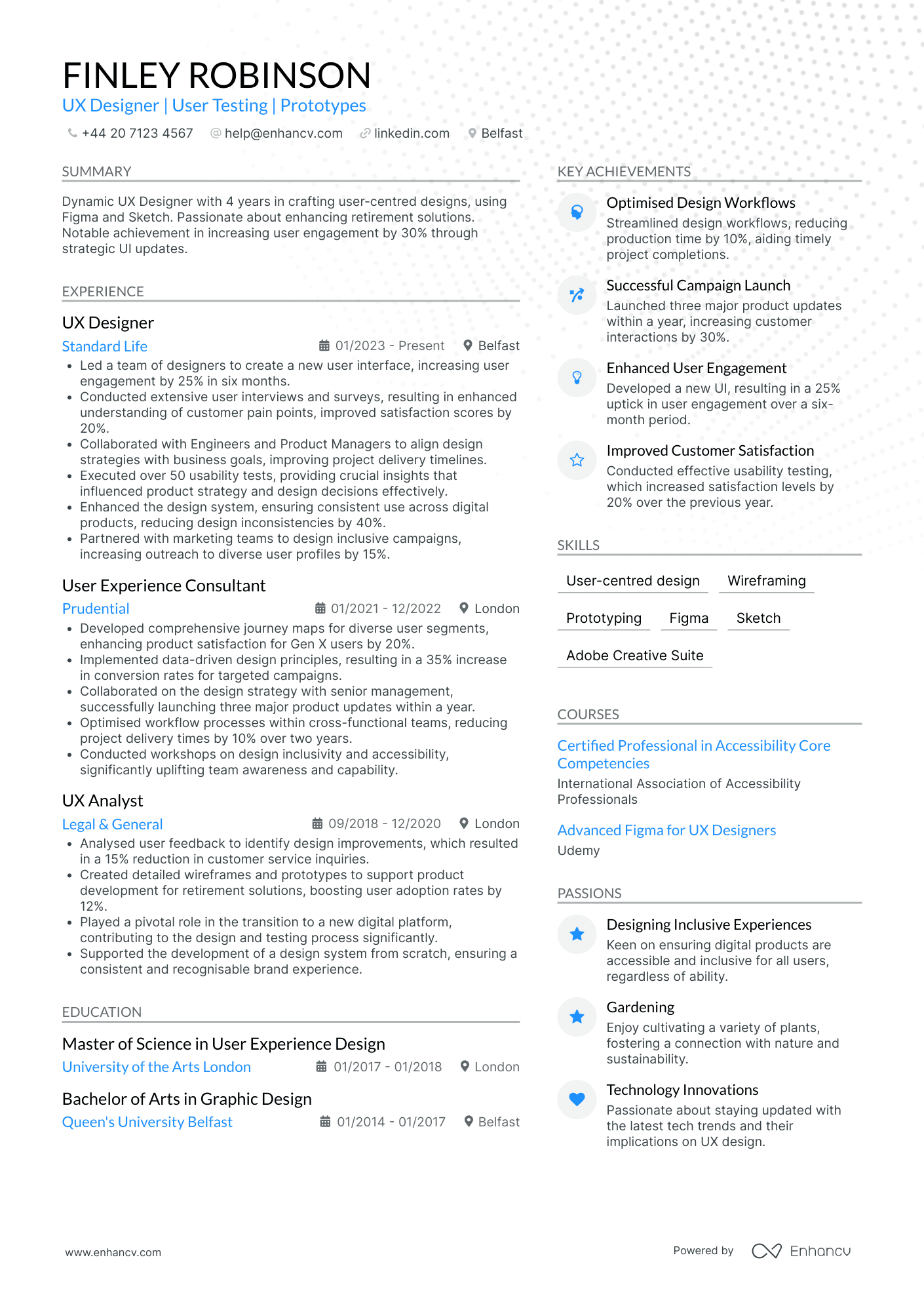
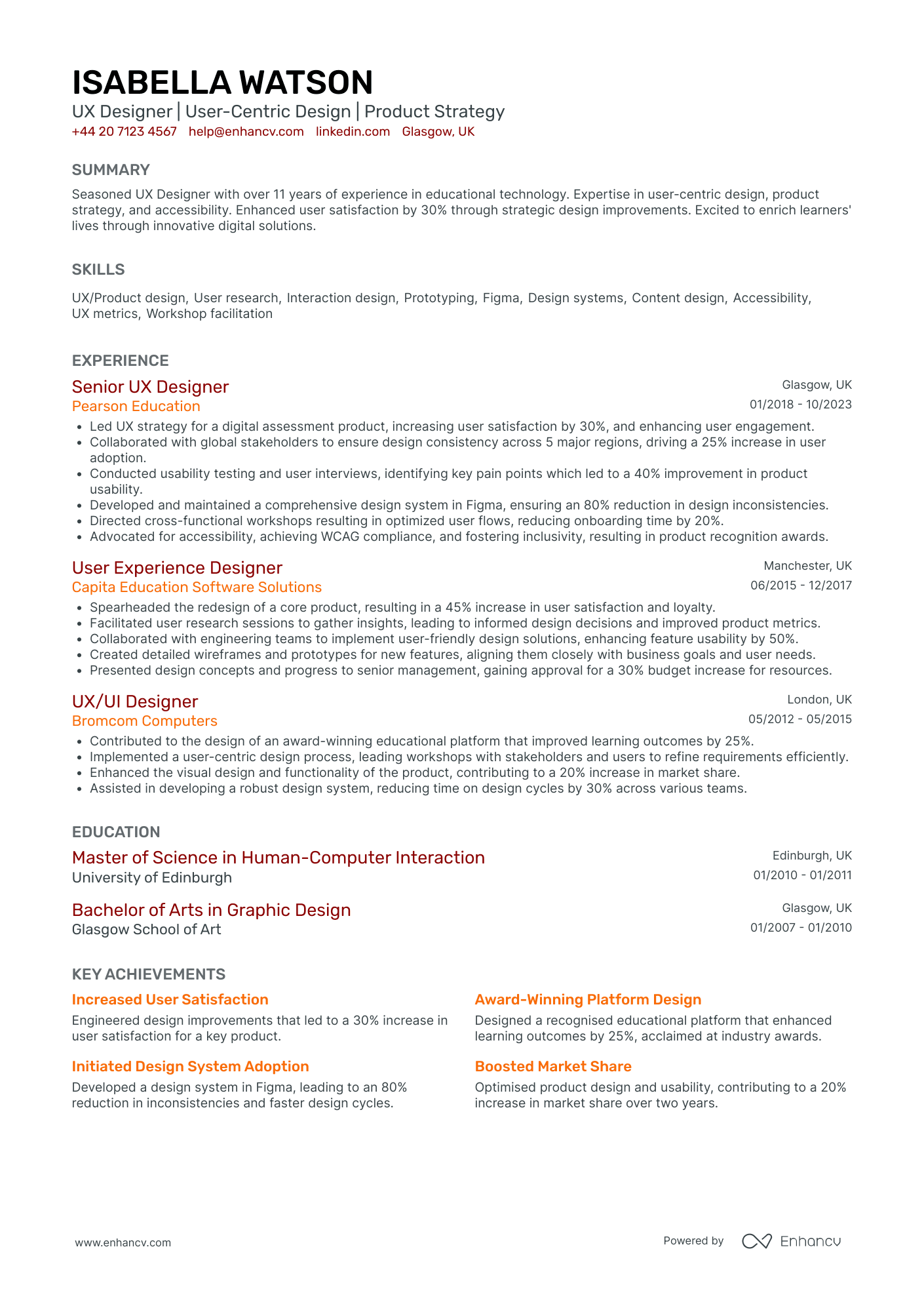
Pick the CV format that matches your level. Skills-led while your portfolio is doing the heavy lifting, reverse chronological once you have owned real work.
Keep it to two pages, one column, standard headings, and a readable font. A hiring manager skims a UX CV in seconds, so the layout itself is a small usability test you do not want to fail.
Put the portfolio URL in the header next to your email, not buried at the bottom. It is the first thing a UX reviewer clicks.
Send a PDF for direct applications so the layout holds, and keep a Word copy for agencies that reformat into their own template. If the advert names a file type, follow it.
Design applications still pass through tracking software, so keep the structure clean and the headings standard for an ATS-friendly CV. Build from a tested layout rather than a blank page: Enhancv's CV templates export to a clean PDF that keeps your portfolio link clickable.
Building and linking your UX portfolio
For a UX role, the portfolio is the deliverable that gets screened hardest. The CV earns the click, the portfolio earns the interview.
Link to two or three deep case studies, not a wall of dribbbled shots. Each one should walk through the problem, your research, the decisions you made, and what changed as a result.
Show the messy middle. Reviewers want the wireframes you rejected and the usability findings that forced a rethink, because that is where your thinking shows.
Order the case studies to match the job. If the role is research-heavy, lead with the project where your research changed the direction, not the prettiest interface.
Make the link work. A dead portfolio URL, a login wall, or a case study that will not load ends the application on the spot. If a project sits under an NDA, say so and describe the work in general terms.

PRO TIP
Structure every case study the way you would frame a CV bullet: the problem, what you did, and the outcome. "Redesigned the onboarding flow, cutting drop-off from 40% to 22% over two releases" tells a reviewer more than ten polished mockups.
Writing your UX designer personal statement
Three or four sentences at the top: your level, your domain, one outcome or process signal you are proud of, and what you want next. See more personal statement examples if the opening line will not come.
Skip the adjective soup. "Passionate, creative, user-obsessed designer" is on a thousand other CVs and tells a recruiter nothing they can check.
Lead with evidence instead:
UX designer personal statement example (mid-level)
Mid-level UX designer with four years designing B2B SaaS products, focused on complex data workflows. Led the research and redesign of a reporting tool that lifted task completion from 61% to 88% and cut support tickets by a third. Comfortable owning a feature from discovery through to handoff in Figma, and looking to bring that end-to-end ownership to a product team working on analytics.
UX designer personal statement example (junior)
Junior UX designer and recent conversion-course graduate with a portfolio of three end-to-end projects, including a charity booking flow redesigned after five rounds of usability testing. Confident running research, wireframing, and prototyping in Figma, and eager to learn inside an experienced product team. Based in Leeds and open to hybrid work.
What to avoid
Passionate and creative UX/UI designer with a keen eye for detail and a love of solving problems for users. Proficient in Figma, Adobe XD, and Sketch. Seeking a challenging role at a forward-thinking company where I can grow and make an impact.
Writing your UX designer experience section
Write each role as a dated heading followed by bullets that show what you did and what changed. Lead every bullet with a verb, and see work experience on a CV for the mechanics.
UX work is more measurable than designers think. Task completion, drop-off, adoption, time on task, support tickets, and release cadence are all achievements you can quantify.
Name the stakeholders and the scope. "Ran fortnightly usability sessions and presented findings to product and engineering" shows ownership that "created wireframes" never will.
No paid UX role yet? Write course briefs, freelance jobs, and self-directed projects in exactly this format, because a hiring manager reads outcomes, not job titles.
Tailor each application to the advert. Enhancv's CV tailoring feature reads the job ad and suggests the matching skills and phrasing, which saves rewriting from scratch and helps with getting interviews.
- Owned the research and redesign of the core reporting dashboard, lifting task completion from 61% to 88% across two releases
- Ran fortnightly usability tests with six to eight users and turned findings into a prioritised backlog with product and engineering
- Built and maintained the shared Figma component library, cutting design-to-development handoff time by around 30%
- Introduced an accessibility pass against WCAG 2.1 AA, closing 40-plus issues before release
PRO TIP
Do not claim a tool you cannot open in an interview. If "Figma" is on your CV, expect to be asked to walk through a real file. List the four or five tools and methods you can defend, and drop the rest.
Skills for your UX designer CV
The same demands repeat across UK UX adverts, and they are specific, not generic. Figma, user research, design systems, usability testing, prototyping, and interaction design come up again and again. Those are your hard skills, written in the words the adverts use.
The soft skills that matter here are the ones that get a design shipped: communication, stakeholder management, facilitation, and collaboration. Prove each in a bullet rather than listing it as a trait.
List only what you can defend in an interview. A tool in your skills section is an invitation to be tested on it, so keep the ones you would happily open live.
Top skills for your UX designer CV:
Figma
User research
Design systems
Prototyping
Usability testing
Interaction design
Wireframing
Accessibility (WCAG)
Communication
Stakeholder management
Facilitation
Collaboration
Problem-solving
Writing a UX designer CV with no experience
Plenty of strong UX designers start from a bootcamp, a conversion course, or a self-taught portfolio. The route in is the same: show the work, not the wish.
Lead with a skills-led first CV. Two or three projects carry it, whether they came from a course brief, a freelance job, or a problem you set yourself and solved properly.
Write those projects like real experience, with a dated heading and outcome-led bullets. A redesign you ran end to end, tested with five users, and iterated on is evidence, even if nobody paid you for it.
Mine adjacent work for transferable proof. Research, stakeholder wrangling, and data analysis from a previous career all count when you frame them in UX language.
One honest line about how you learned the craft also helps: a design challenge you volunteered for, a real charity or local business you redesigned something for, or a mentor whose feedback shaped your process. It signals you can take direction and iterate, which is exactly what a first employer is buying.
On education, a relevant degree helps but is rarely required. A recognised course, such as a Google UX certificate or an Interaction Design Foundation track, belongs in a dedicated certificates section, listed with the year.
Conclusion
Decide your level, then build the CV to match: process and portfolio for a junior, owned outcomes for a mid-level.
Put the portfolio link where it gets clicked, quantify the work, and pair the CV with a short cover letter that says why this team and this product.
Author's take - The Enhancv team
The fastest way to date a UX CV is to lead with tools. Any designer can list Figma. What we look for is scope: did you own the research, make the call on what to build, and defend it to stakeholders, or were you handed screens to push. Answer that in your top two bullets and your level speaks for itself.