



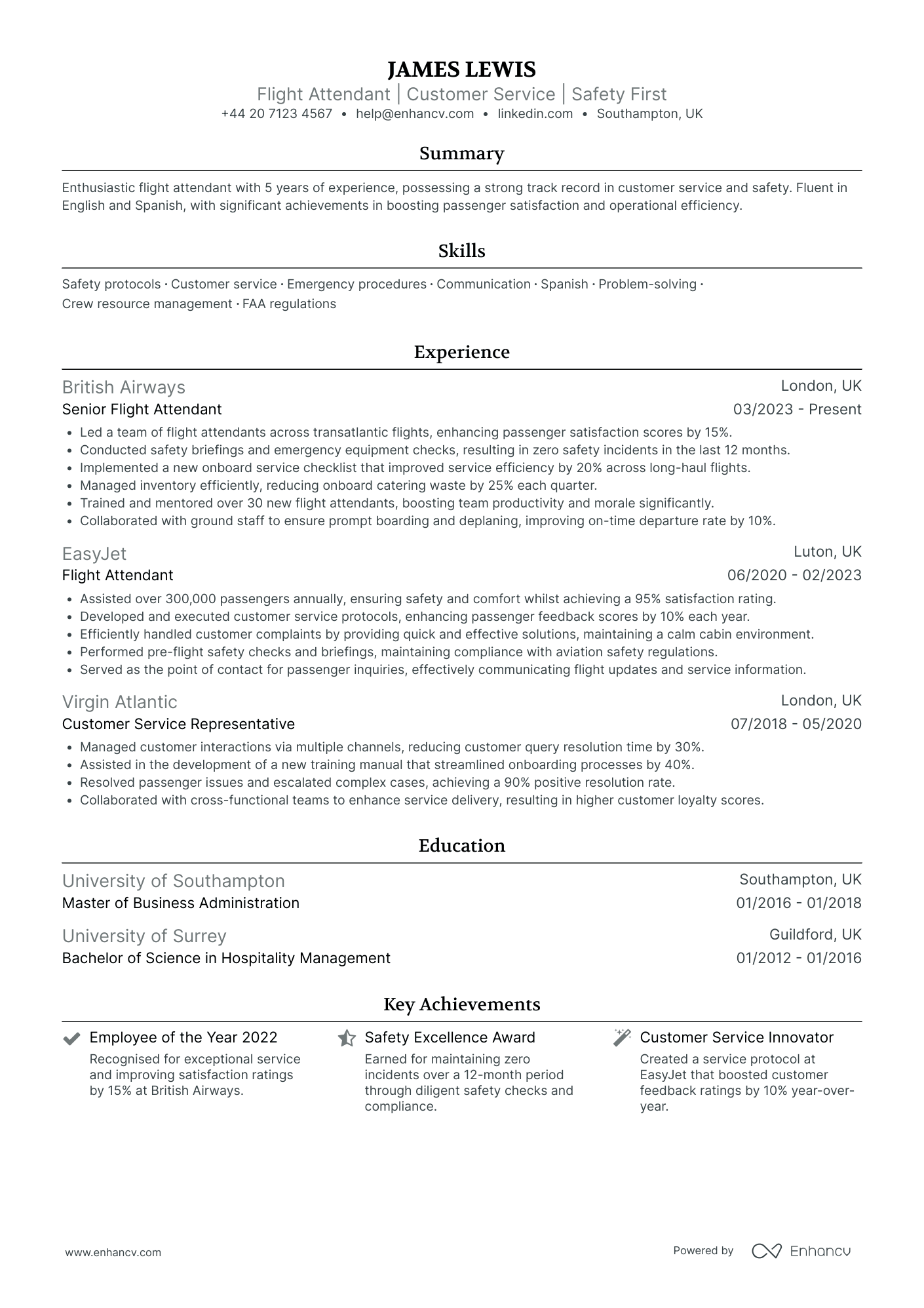
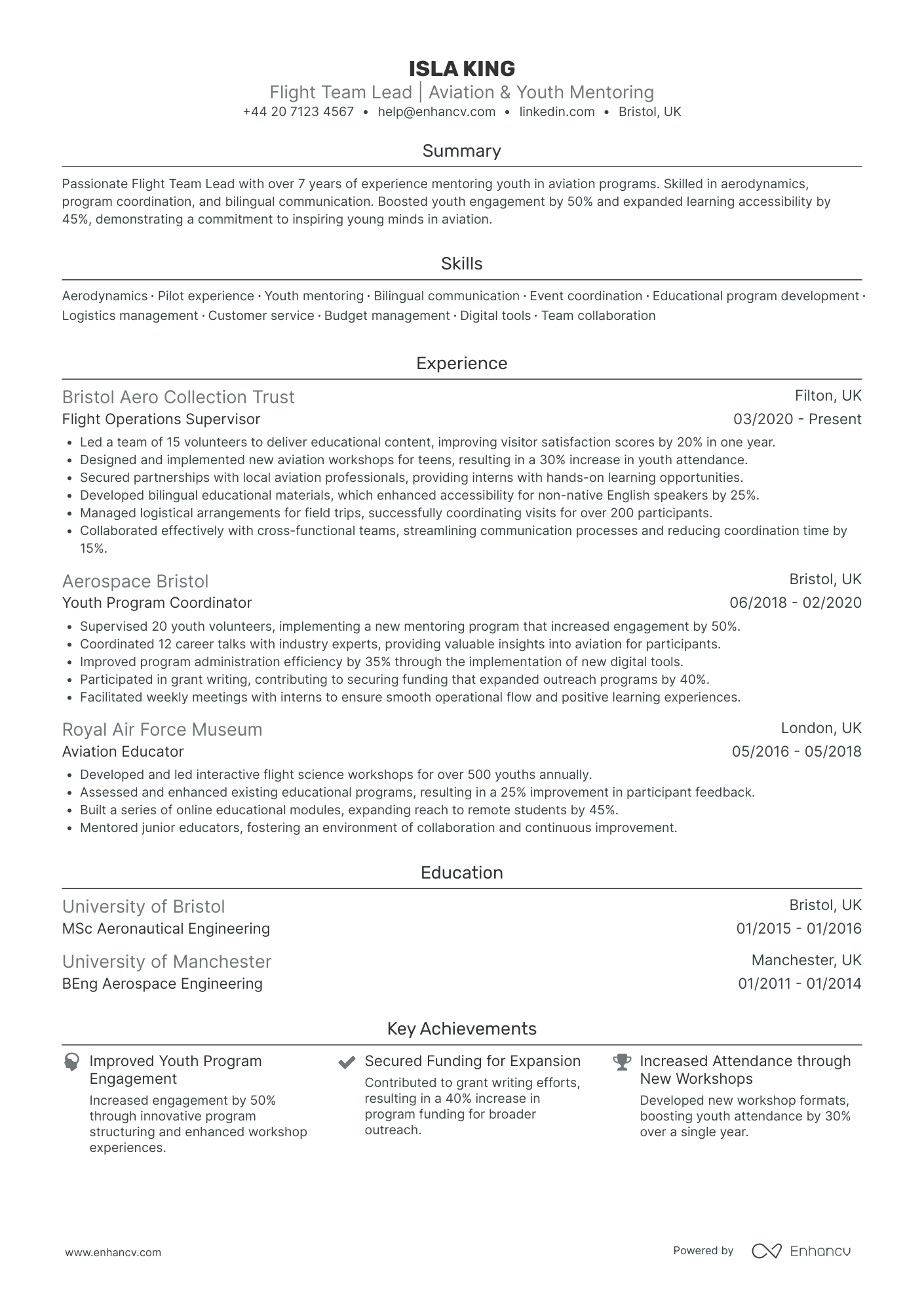
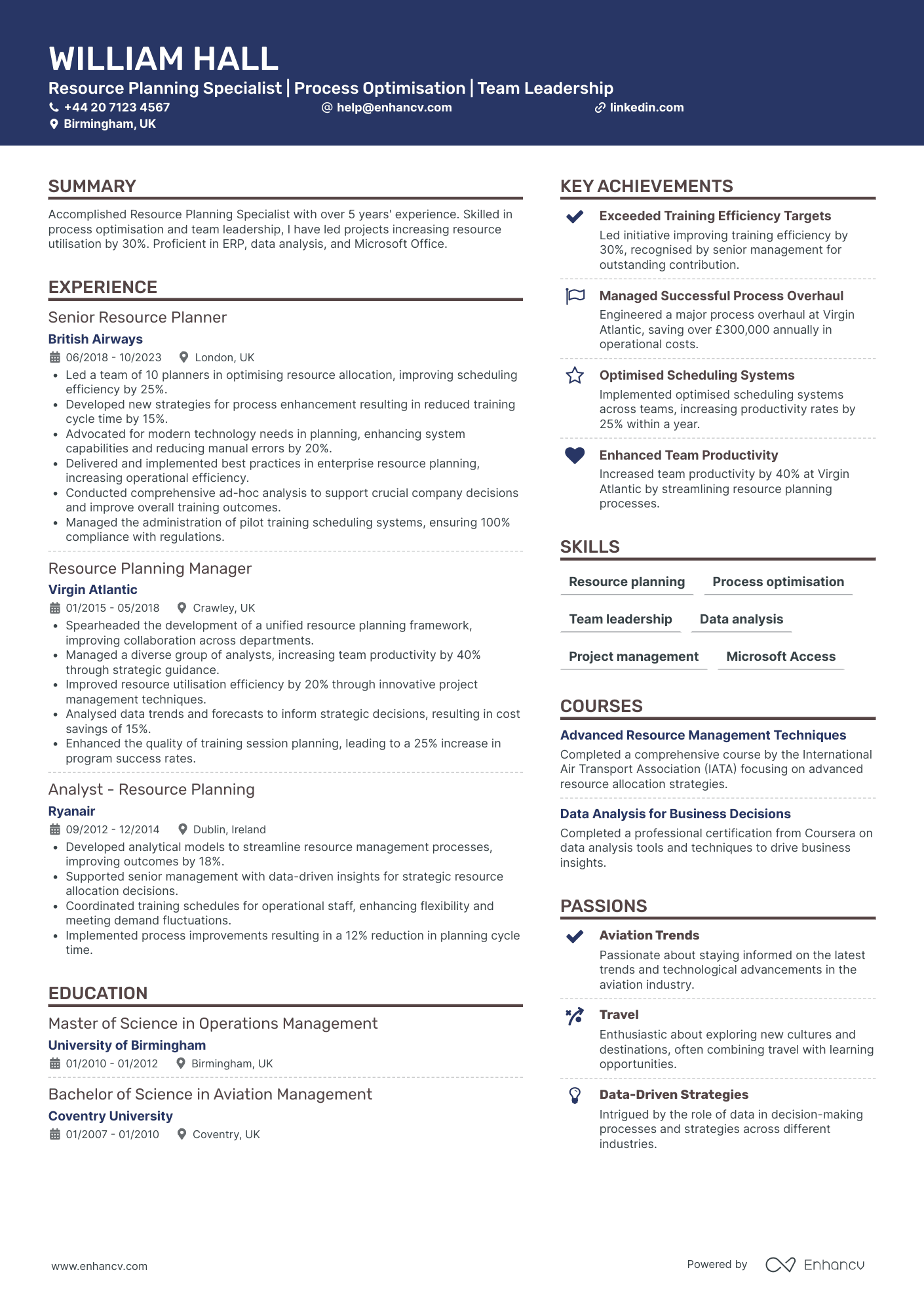
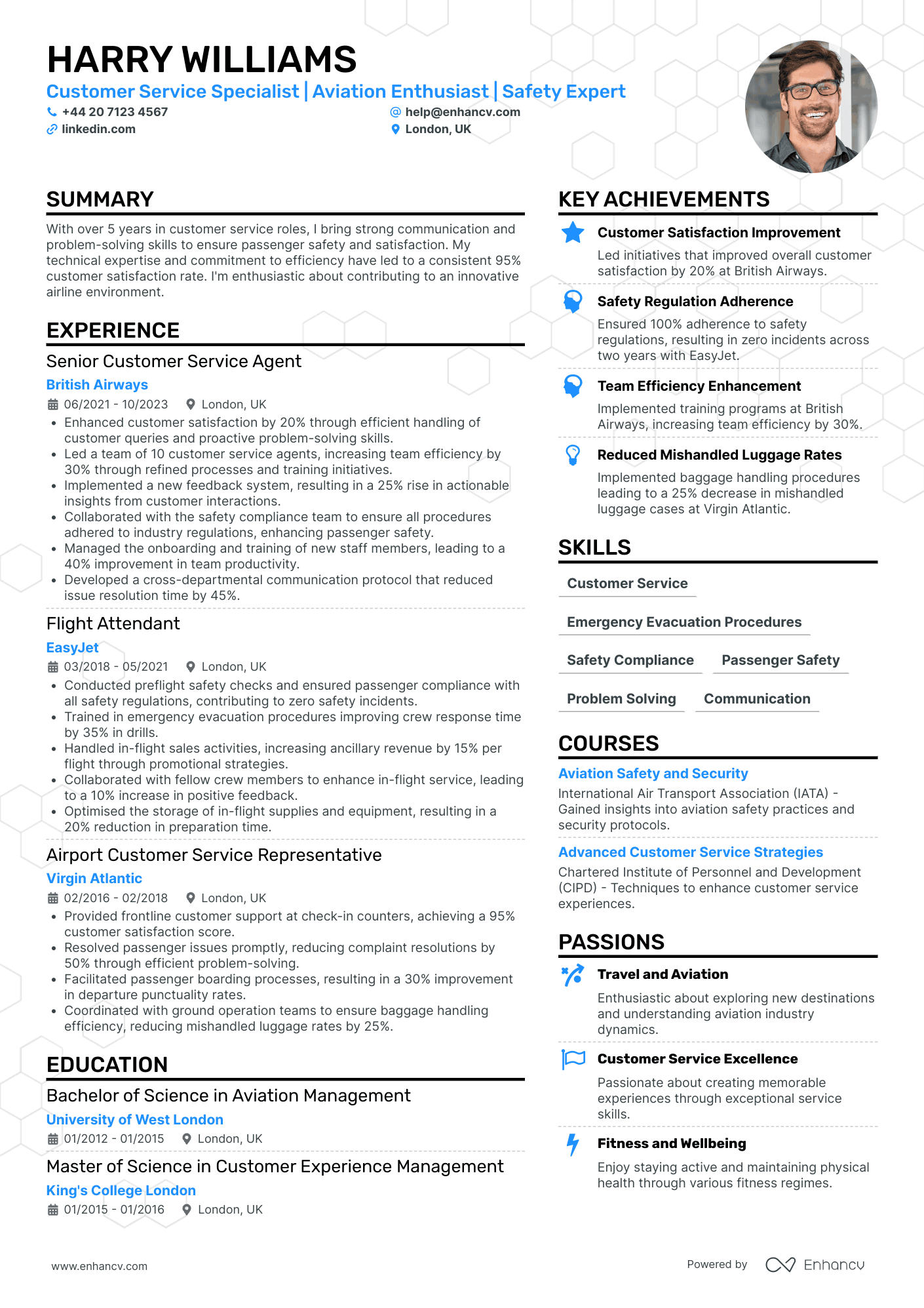
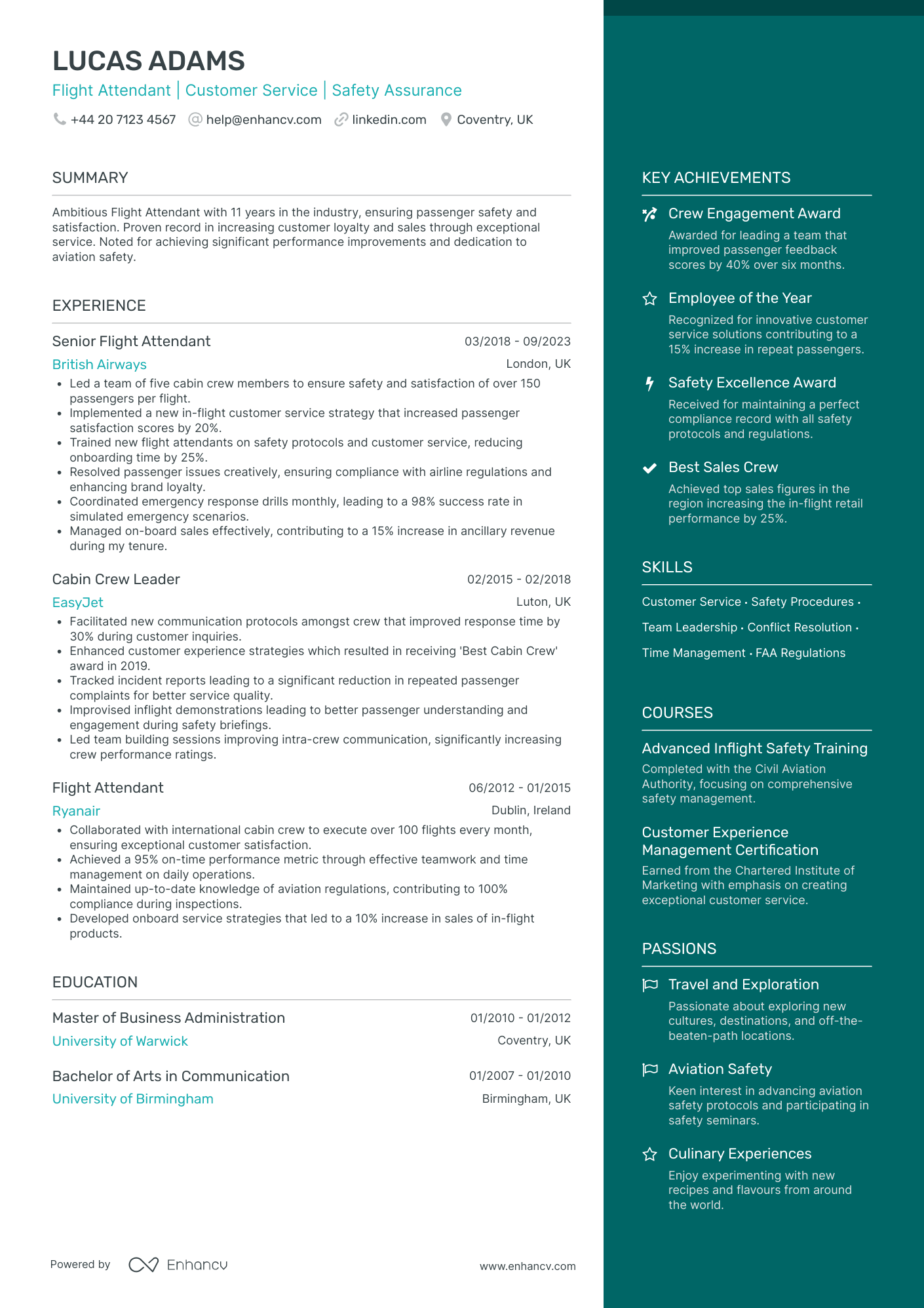
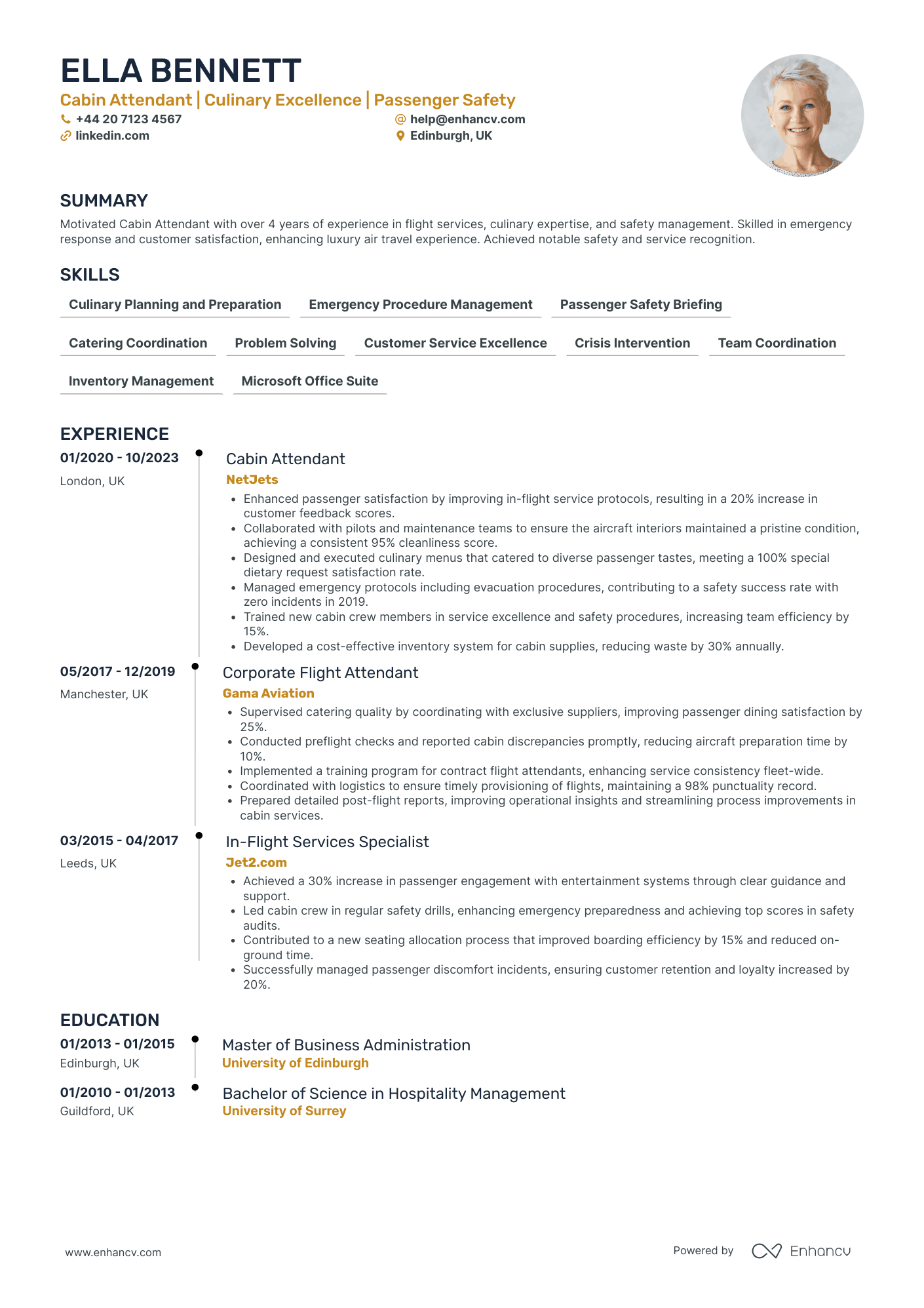
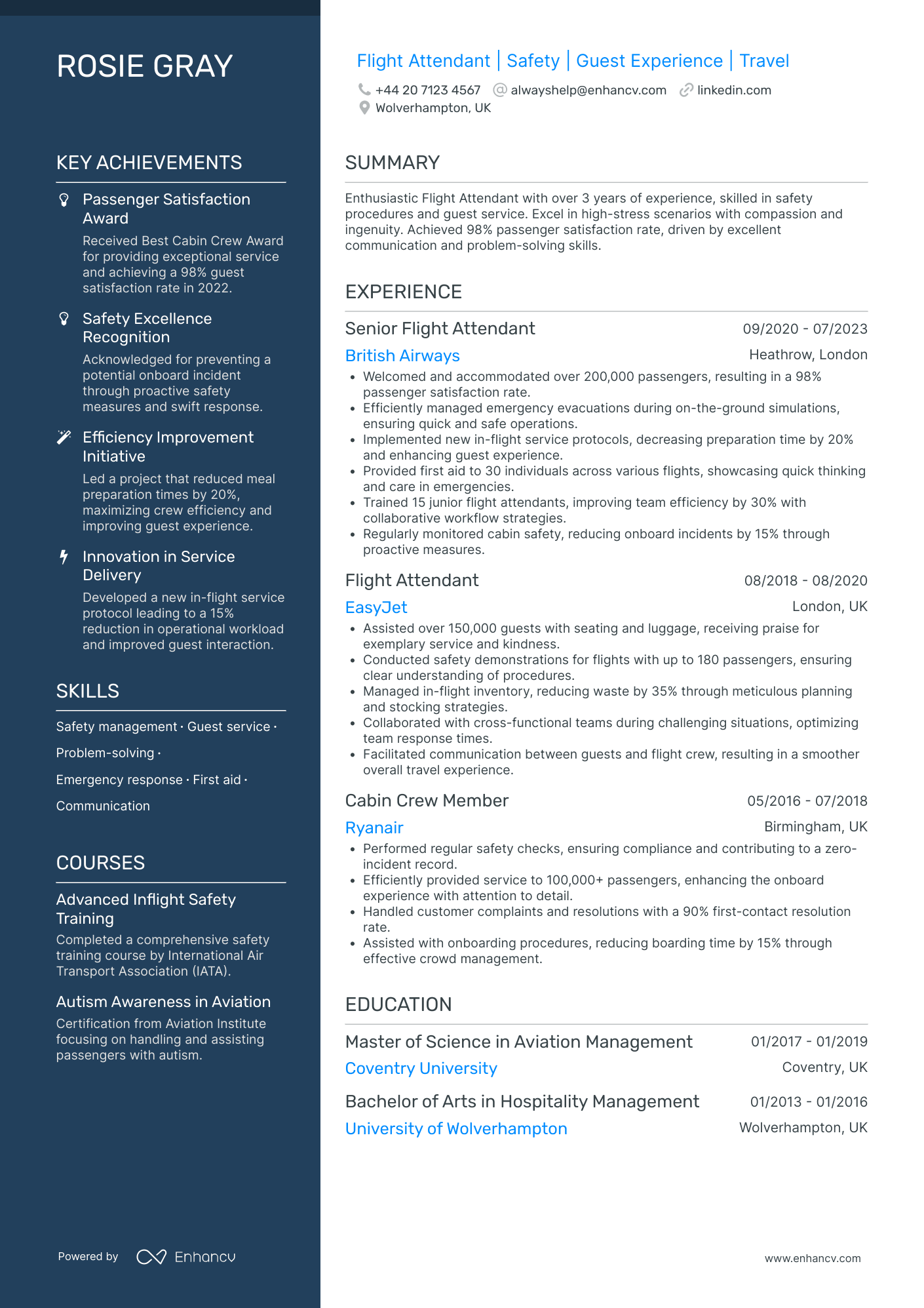
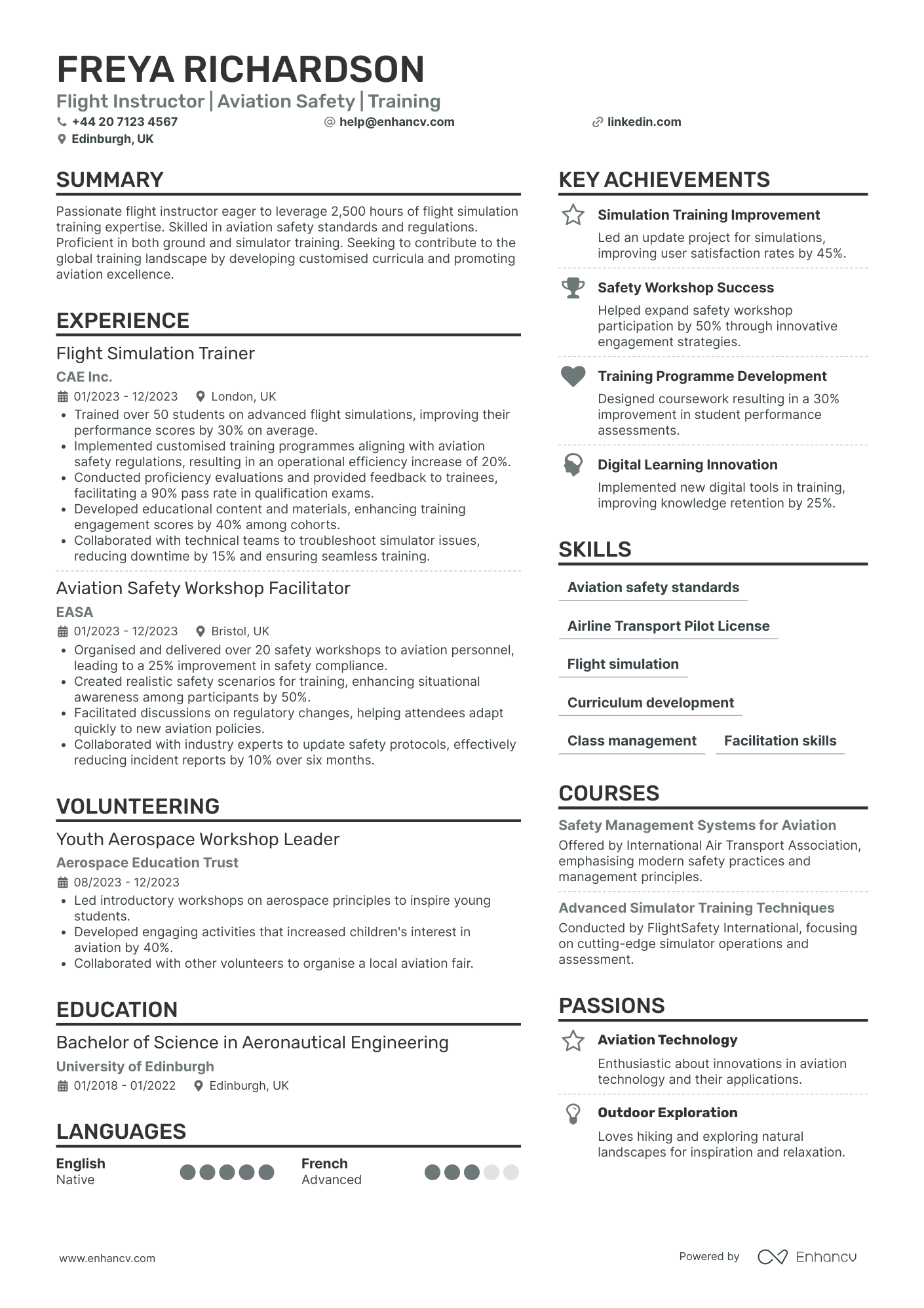
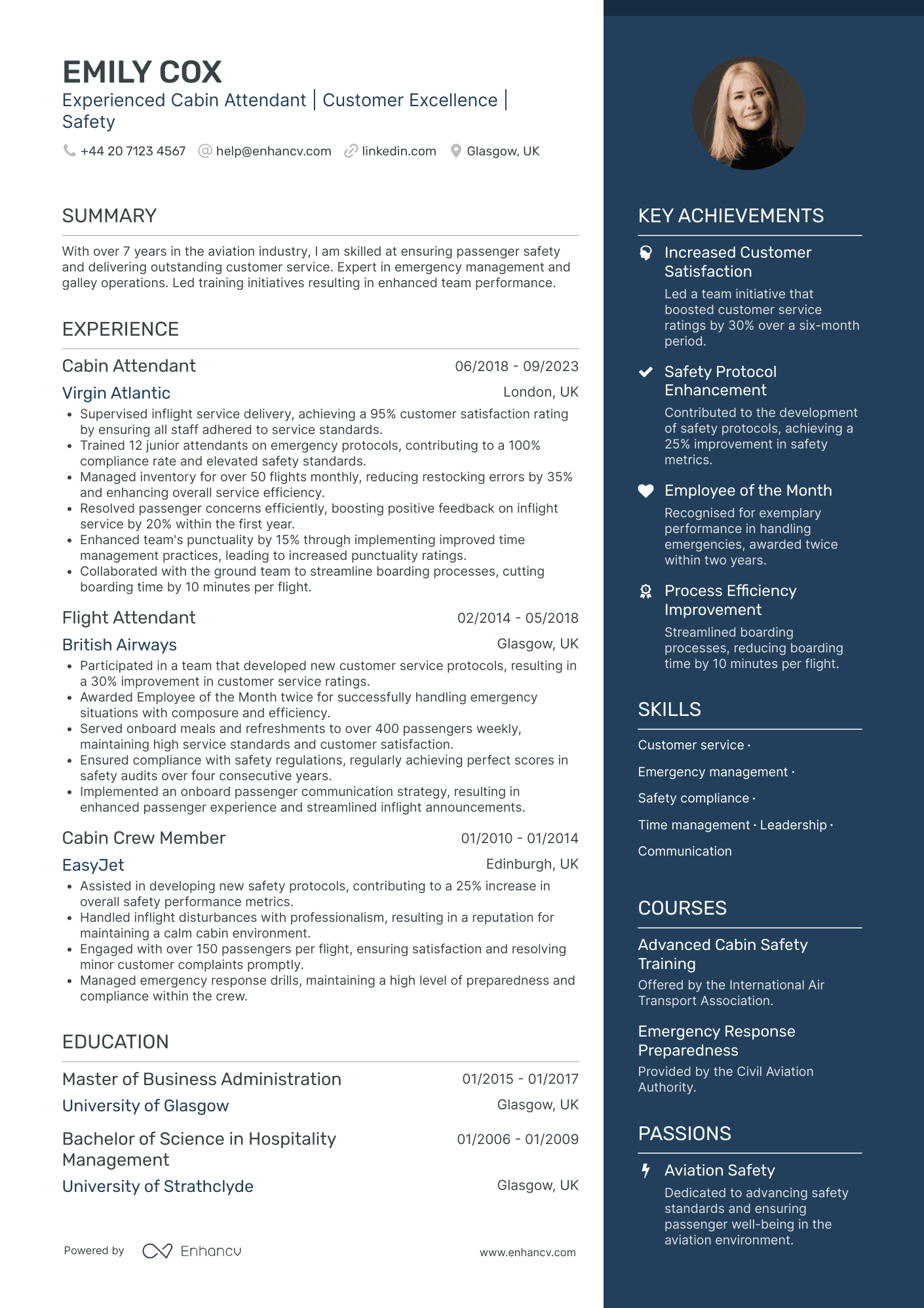
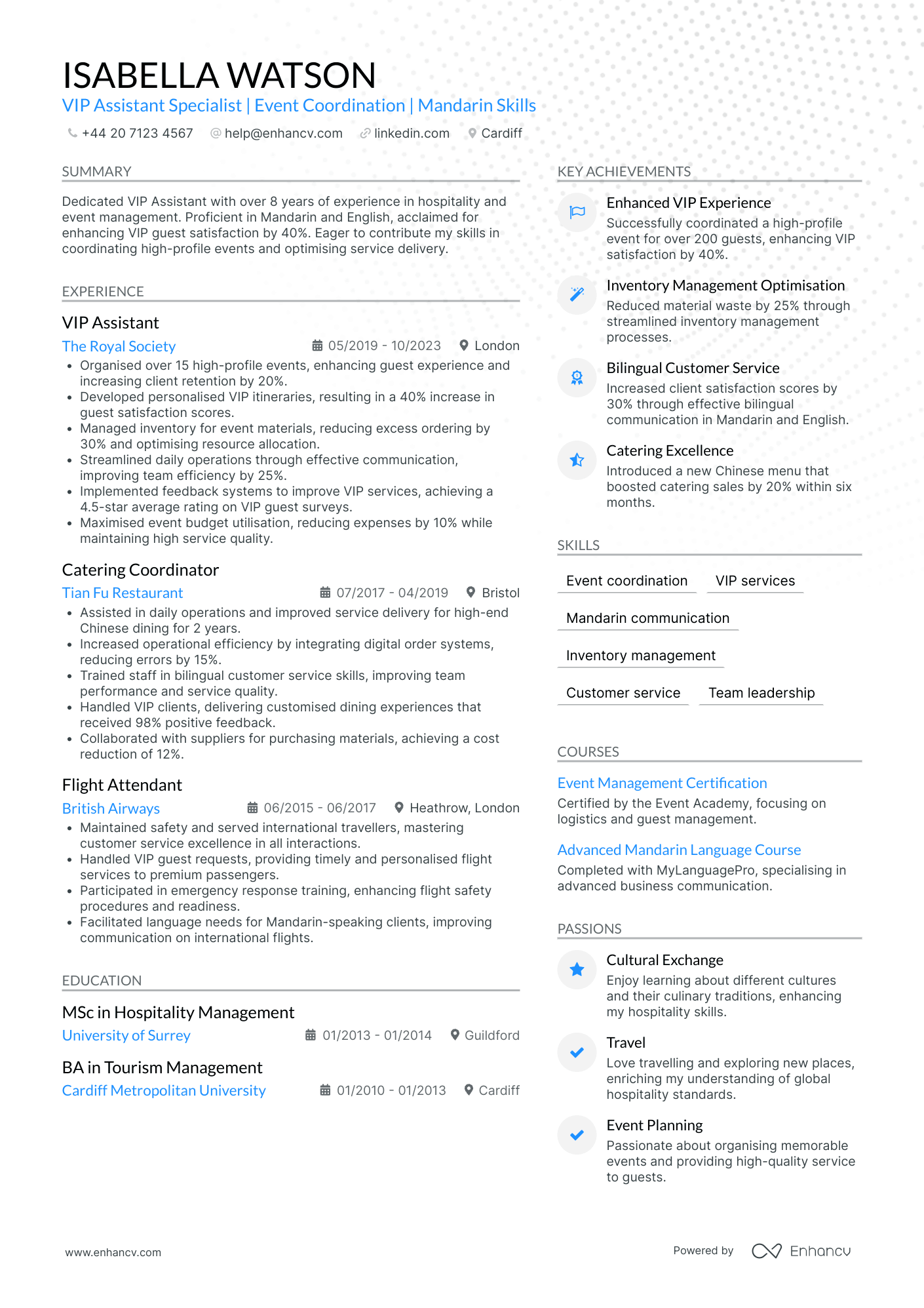
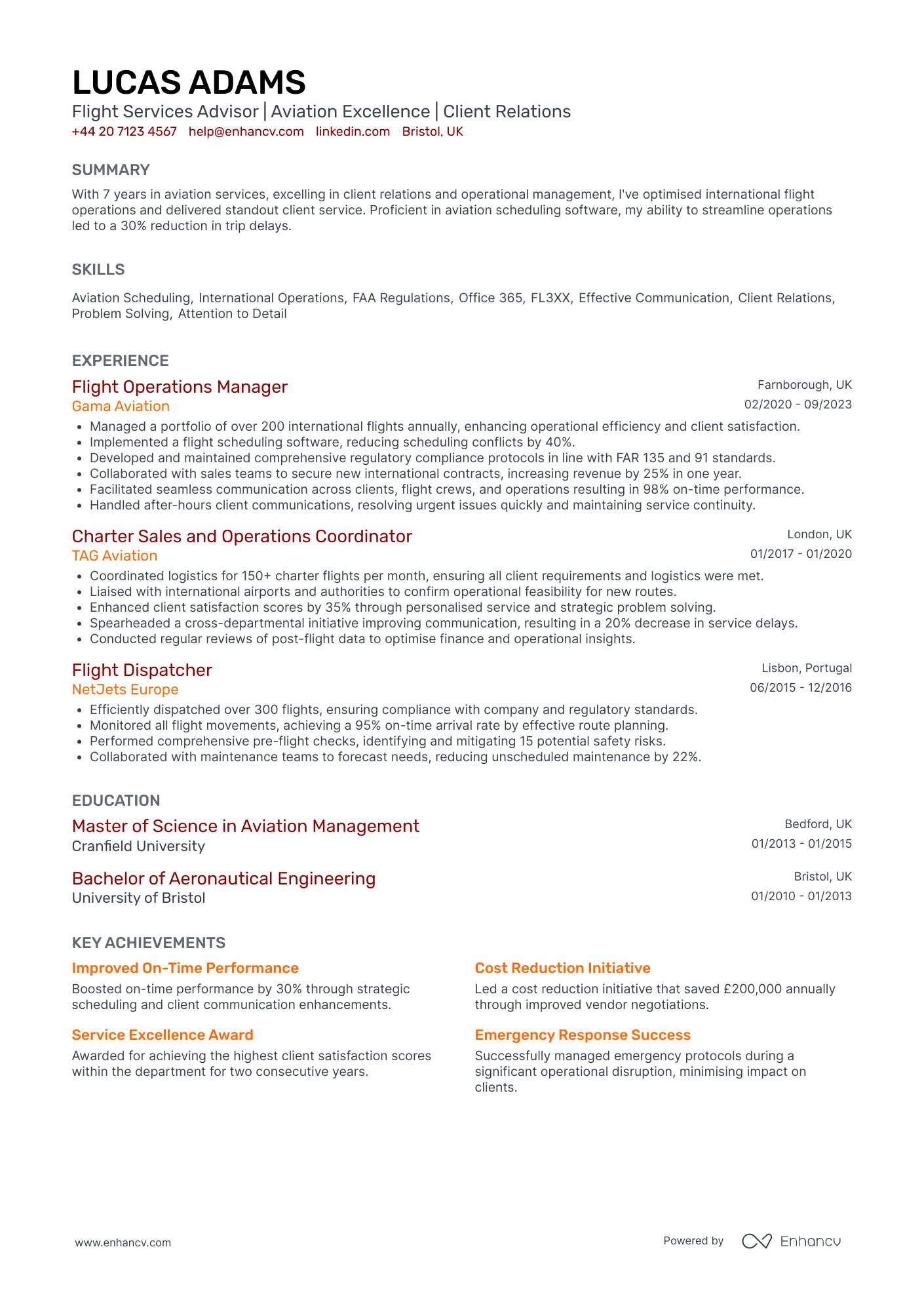
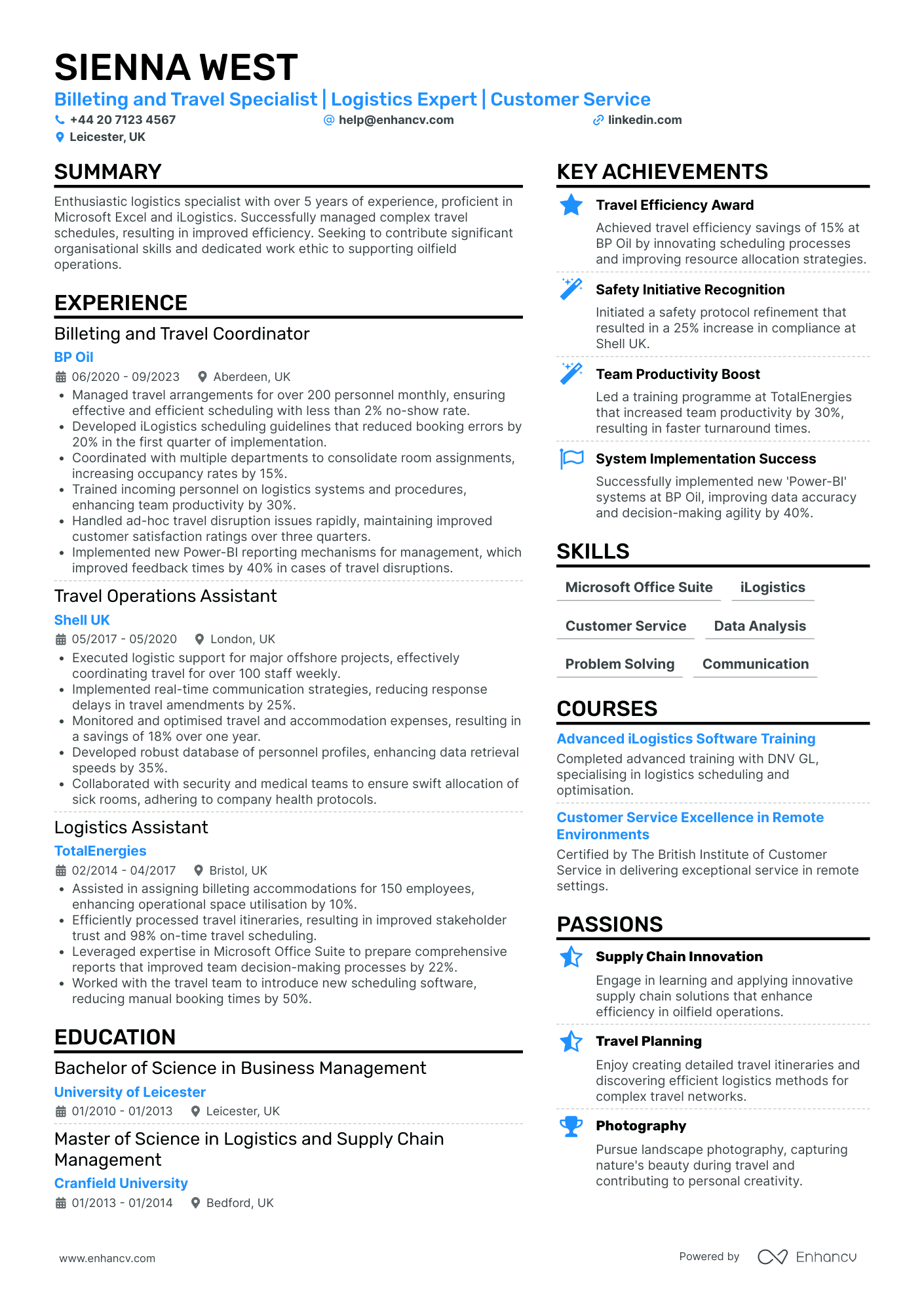
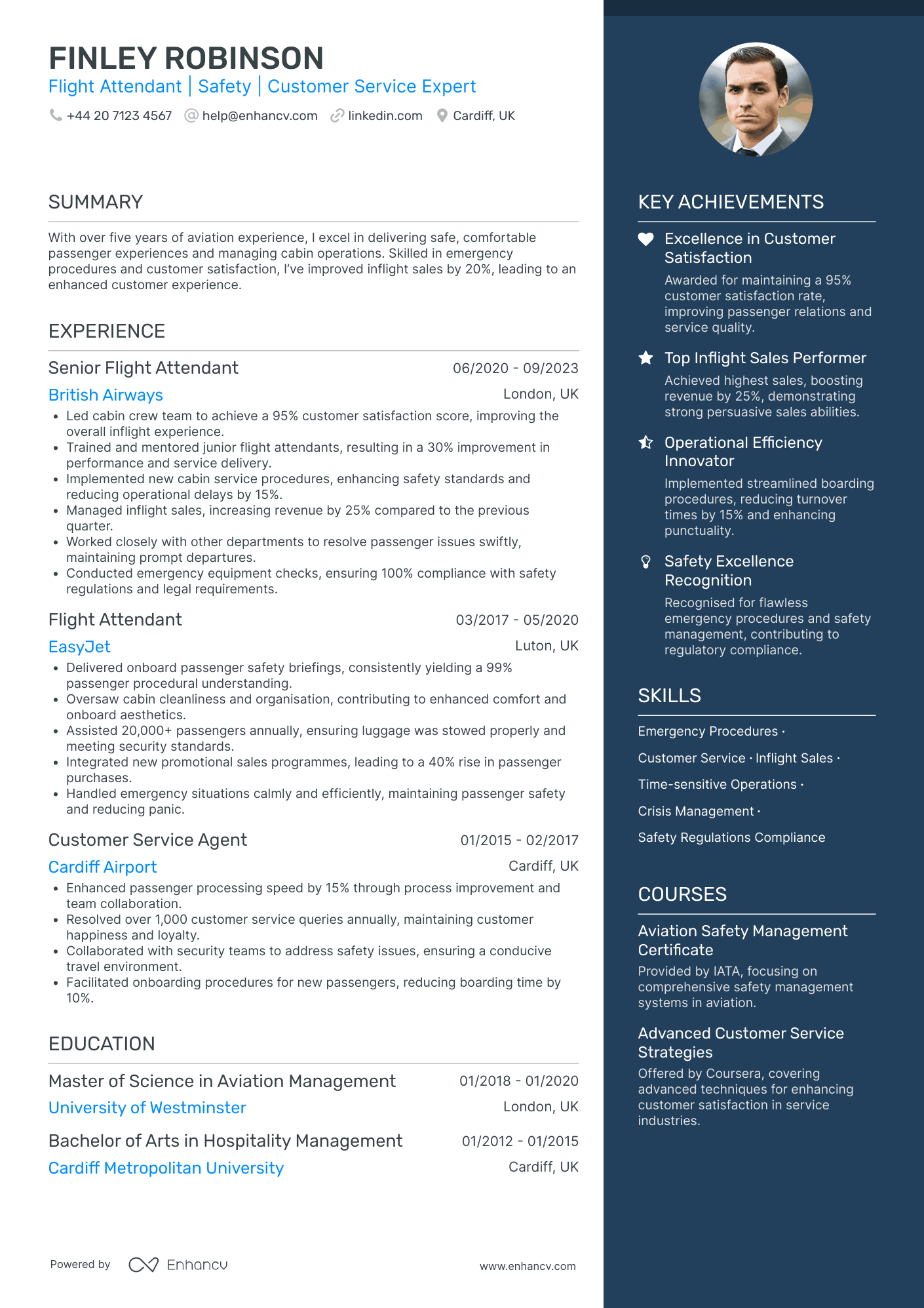
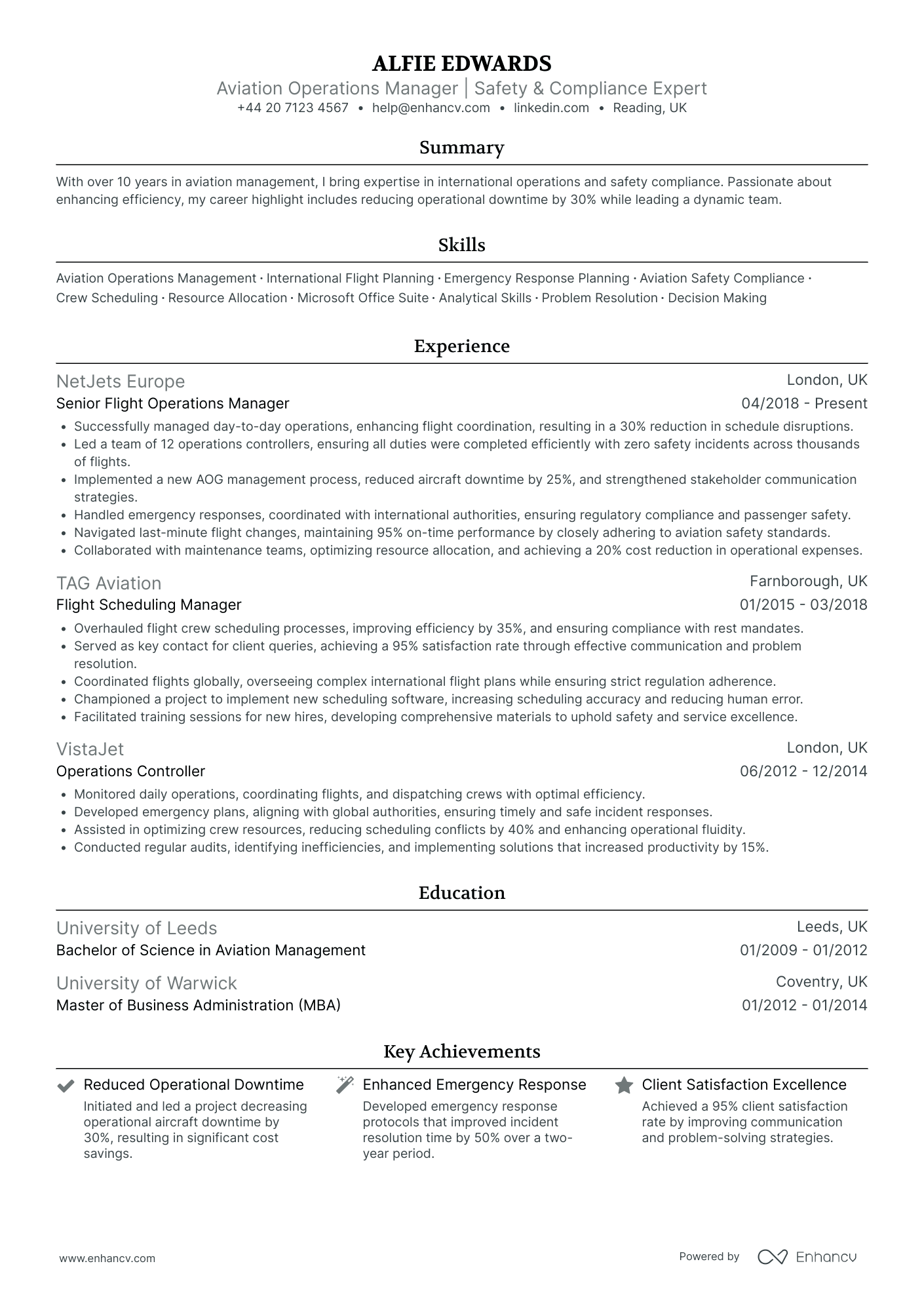
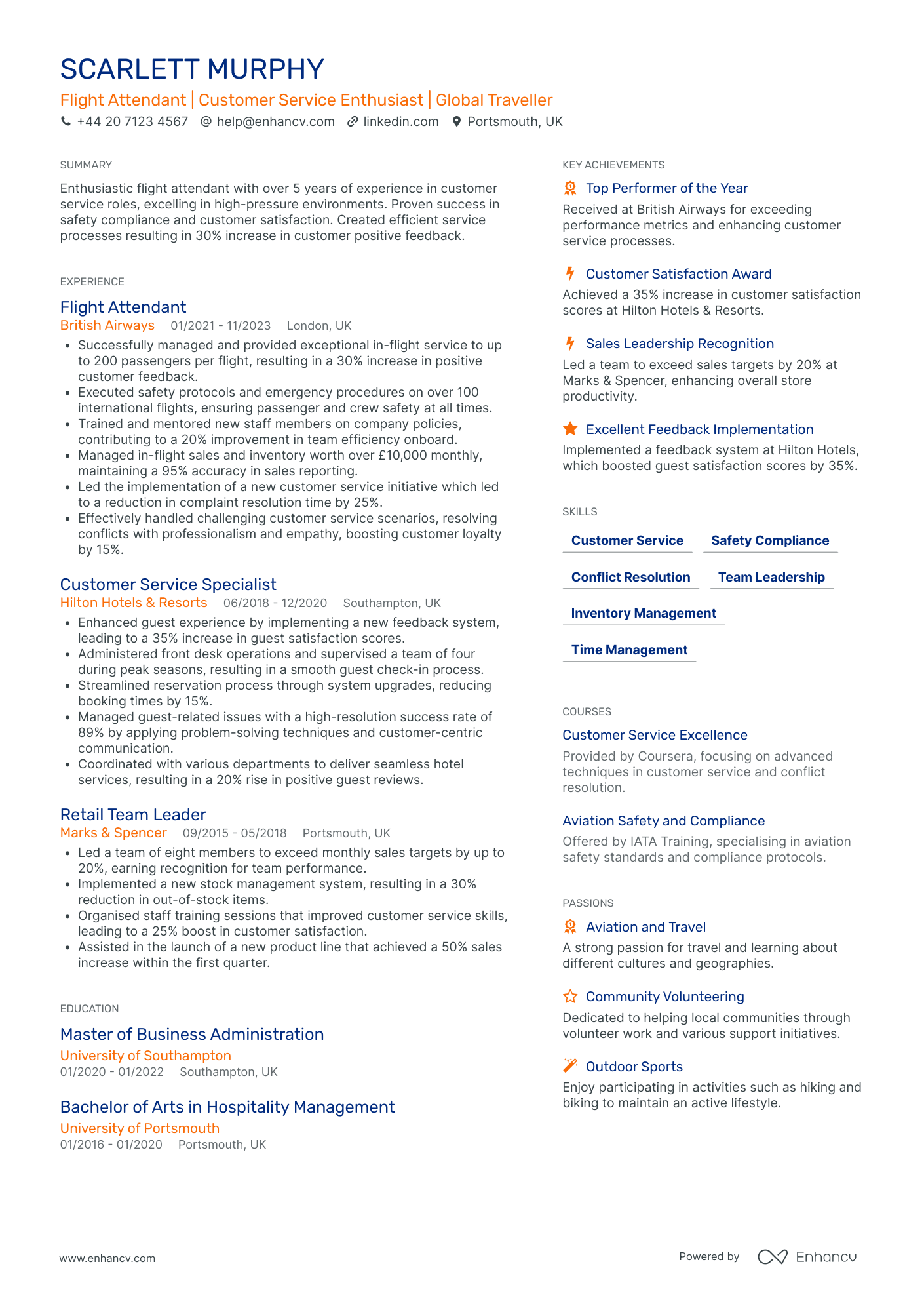
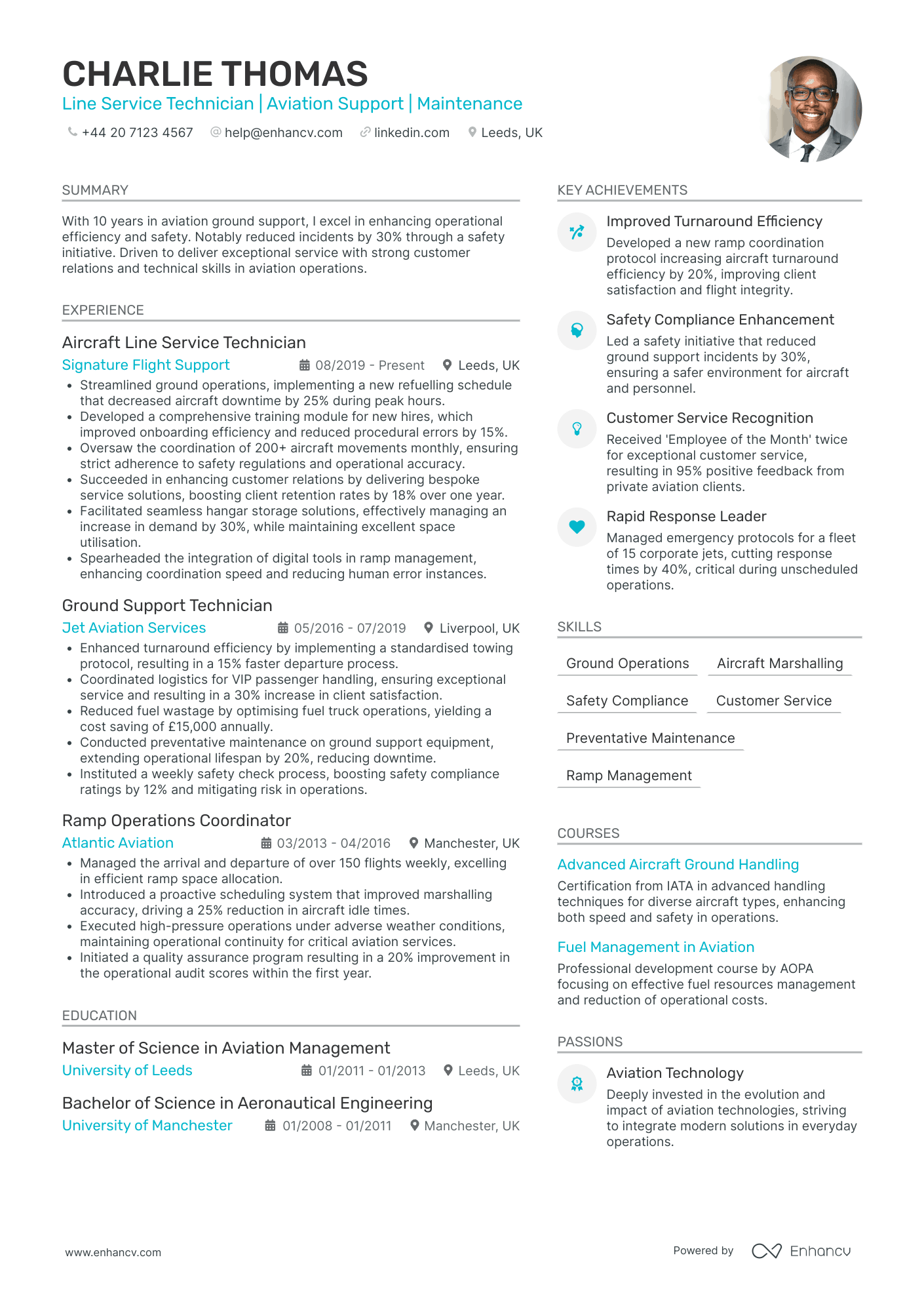
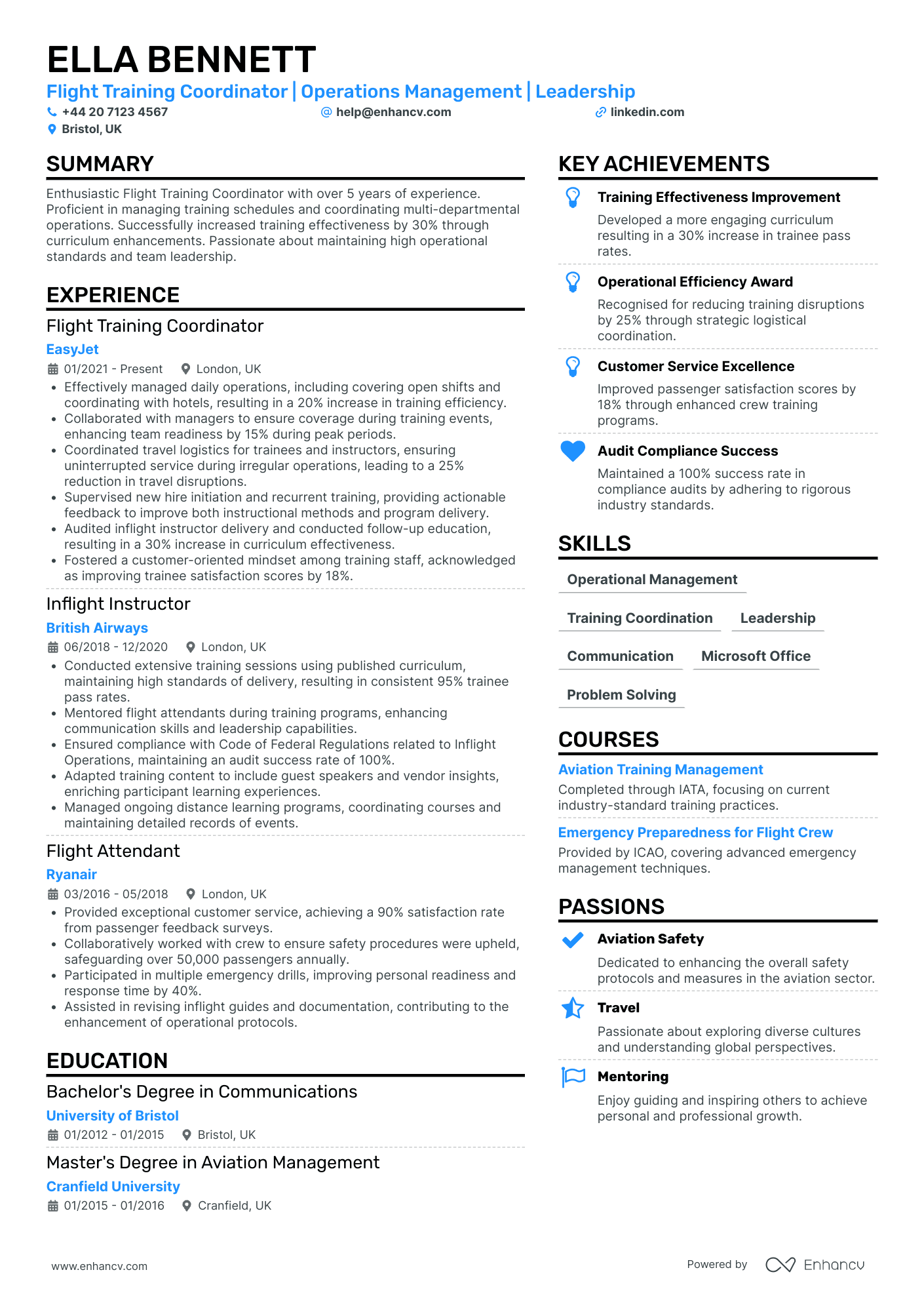
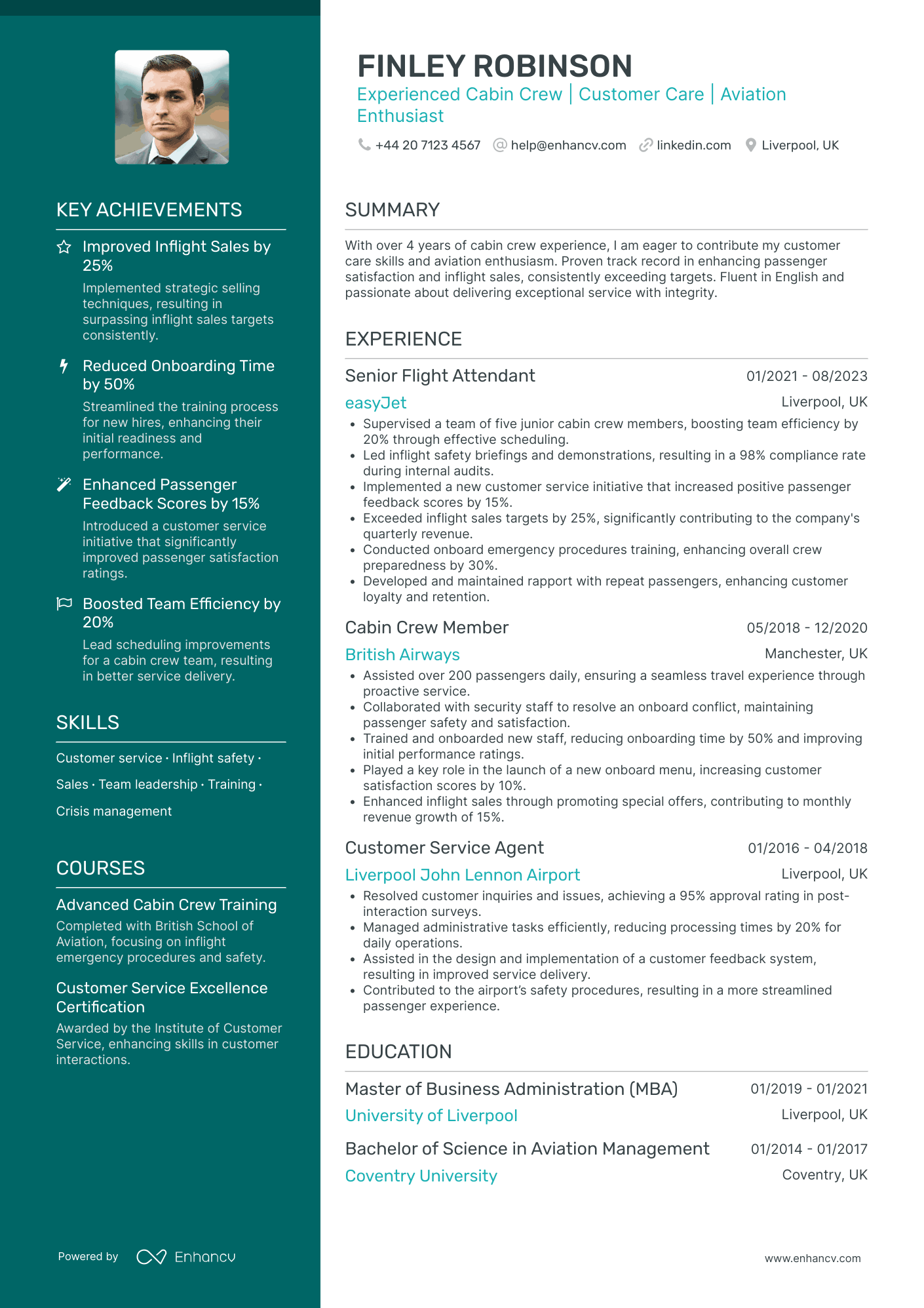
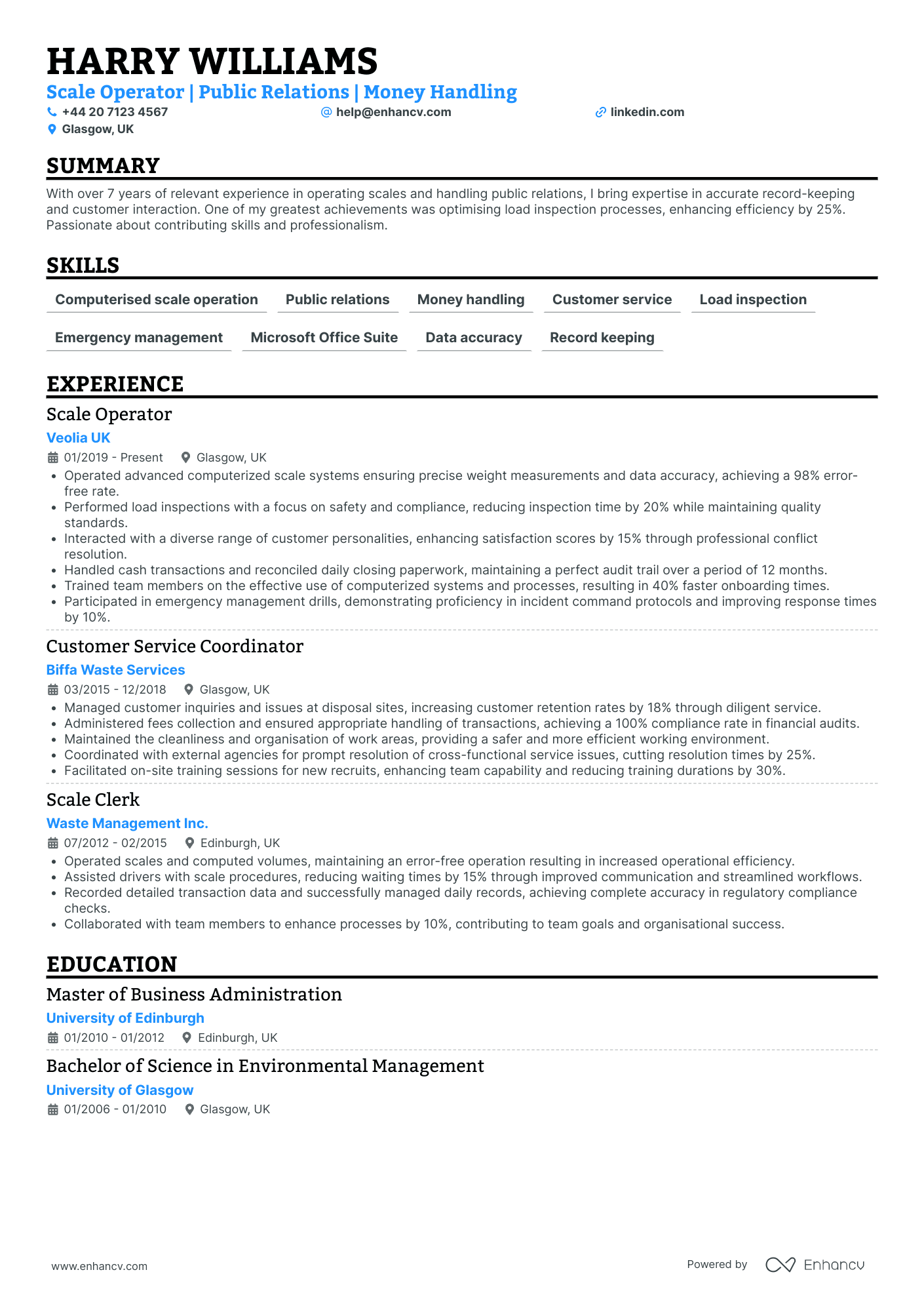
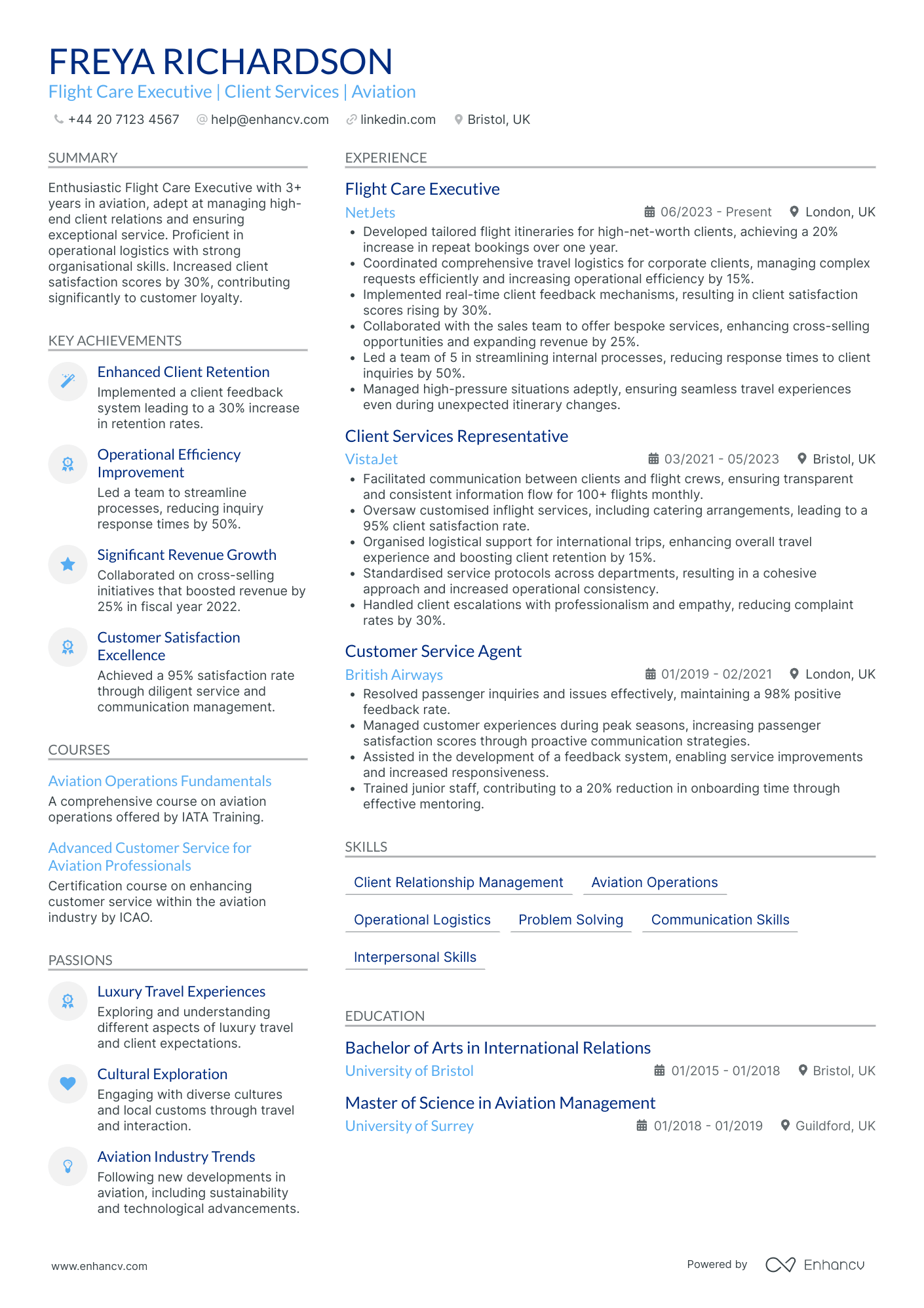
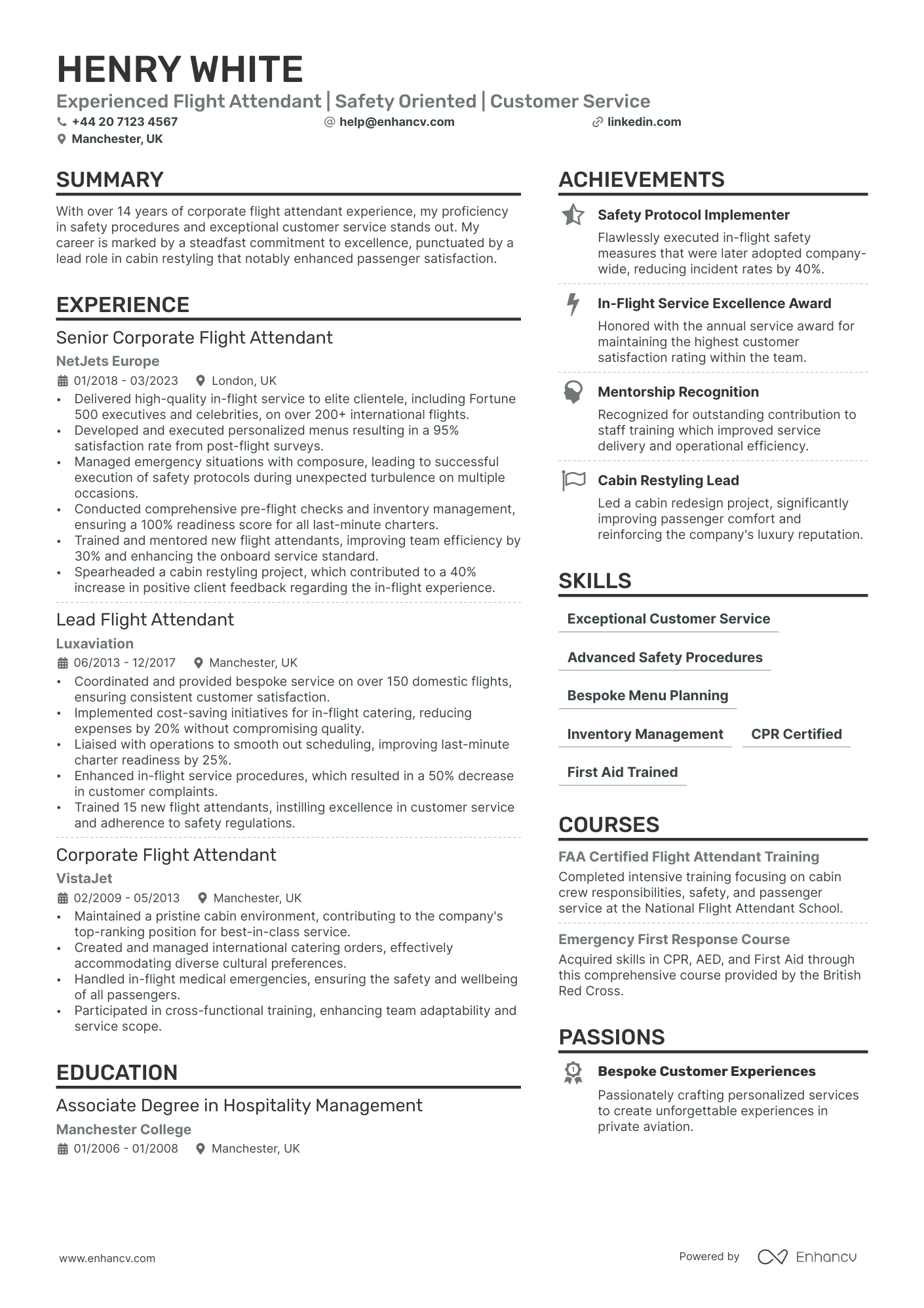
Most flight attendant CVs read like the pre-flight safety briefing, a flat list of duties every cabin crew member already performs. The ones that get shortlisted lead with service, composure, and the exact standard the airline hires against.
For the Gulf carriers, and Emirates in particular, that standard is precise. Fluent English, an arm reach of 212cm, a year of customer-facing work, and a photograph that meets the grooming code all get checked before a recruiter reaches your first bullet. Put those on the page early and the rest of your CV has room to sell you. If you want the fundamentals first, see how to write a CV.

Key takeaways
- Lead with customer service and safety awareness, the two things every airline screens for, not a duty list.
- For Emirates and the other Gulf carriers, put the checkable basics up top: fluent English, an arm reach of 212cm, and at least a year of customer-facing work.
- Gulf and most international carriers expect a professional photo and grooming that matches their uniform code. UK airlines usually do not want a photo.
- Open with a short personal statement built on service evidence and one concrete result, not adjectives.
- Two pages, reverse chronological, sent as a PDF unless the advert asks for a Word file.
- Name your safety and service training: SEP, first aid, food hygiene, and any languages you speak.
Writing an Emirates cabin crew CV
Emirates and the other Gulf carriers recruit to a fixed set of requirements, and your CV is the first place they check you meet them. Reflect them plainly and you move to the assessment day.
Lead with customer service. A year or more in hospitality, retail, or any five-star service role is the baseline Emirates asks for, so it belongs near the top, written in service language rather than as a job title alone.
Think about the standard behind the airline, not only the tasks. Emirates sells a premium experience, so a recruiter reads for warmth, poise, and the judgement to look after a demanding cabin without losing composure. Every bullet should quietly answer whether the airline would trust you with its most valuable passengers.
State your English clearly, along with any other languages you speak. Fluent written and spoken English is mandatory, and a second language is a genuine advantage on international routes. Give them a dedicated language skills line.
Add the physical basics without making them the whole story. Emirates asks cabin crew to reach 212cm on tiptoes to work the overhead safety equipment, and to be at least 21 at the point of application. A line in your profile or skills section covers it.
Then there is the photo. Gulf carriers expect a professional, well-groomed photograph and grooming that matches their uniform code, including no visible tattoos while in uniform. That is the opposite of UK convention, so keep a separate version of your CV for Gulf applications.
Remember what the CV is for. Emirates and its peers run an open day and assessment centre, and your CV is the document that gets you invited and the reference the recruiter holds during the reach test, the group exercises, and the final interview. It has to be accurate to the day, so never list a language you cannot hold a conversation in or a certificate you do not have.
The same CV works for Qatar Airways, Etihad, and the wider Gulf market with light edits, because the core standard is shared. Change the airline name in your personal statement, match each carrier's grooming and reach specifics, and keep the service evidence doing the heavy lifting underneath.
What Gulf carriers and airlines look for
Requirements vary by airline, but the published Emirates cabin crew criteria are a useful benchmark for any Gulf or long-haul application. Here is what most fleets check before your experience even gets a proper read.
| What | What airlines check |
|---|---|
| Customer service | Usually at least one year in a customer-facing role for Gulf carriers such as Emirates |
| English | Fluent written and spoken English, mandatory for Emirates and most international fleets, with a second language an advantage |
| Reach and mobility | Emirates asks for an arm reach of 212cm on tiptoes to operate the overhead safety equipment |
| Minimum age | 21 at the point of application for Emirates cabin crew |
| Photo and grooming | Gulf carriers expect a professional photo and grooming that meets the uniform code. UK airlines usually do not |
| Safety training | Airlines deliver Safety and Emergency Procedures training after hire, so willingness to certify matters more than holding it upfront |
Two of these decide most rejections before the interview: the customer service minimum, and for Gulf carriers the reach and grooming standards. Meet them on the page and the recruiter can spend their time on your service record instead of hunting for the basics.

UK airlines and Gulf carriers want different CVs
For a UK carrier such as British Airways, easyJet, or Jet2, leave the photo off, keep to two clean pages, and lead with UK service experience and your right to work. For Emirates, Qatar Airways, or Etihad, add a professional photo, state the reach and English requirements early, and make grooming and presentation obvious. Keep both versions saved and send the right one.
Formatting your flight attendant CV
Use reverse chronological order once you have cabin crew or service roles behind you, with your most recent job first.
Keep it to two pages, one column, standard headings, and a clean, readable font. Cabin crew recruiters screen high volumes at speed.
Send a PDF for direct applications so the layout holds, and keep a Word copy for agencies that reformat CVs into their own template. If the advert names a file type, follow it.
Put a clean header at the top: your name, phone, professional email, and location. Cabin crew is not office-based, so a travel radius or your nearest crew base helps a recruiter place you, and a line confirming your right to work saves a question. Add a link to your professional profile only if it is current.
Order the sections for the reader. Personal statement first, then experience, then skills and languages, then training and education. On a Gulf application the languages and the photo sit near the top, because they are part of the eligibility check.
On the photo question, follow the market. A CV photo is expected for Emirates and most Gulf and European carriers, and left off for UK airlines unless they ask. Build the layout from a tested template rather than a blank page. Enhancv's CV templates export to a clean, ATS-friendly PDF.
Writing your flight attendant personal statement
Three or four sentences at the top: who you are, the service you bring, your safety awareness, and the airline you are aiming at. Keep it concrete. See more personal statement examples if the opening line will not come.
Skip the adjective soup. "Passionate, hardworking team player" sits on half the CVs in the pile and tells a recruiter nothing they can check.
Anchor each claim to something real: the years of service behind you, a language you speak, a safety qualification you hold, and one moment that shows composure. Name the airline you are applying to so the statement does not read as a mass send.
Lead with evidence instead.
Flight attendant personal statement example (experienced)
Warm and unflappable customer service professional with three years in five-star hospitality and two years cabin crew on short-haul European routes. Fluent in English and Spanish, First Aid and SEP certified, with a steady record of calm problem solving during delays and medical incidents. Looking to bring polished service and a spotless safety record to a long-haul cabin crew role with Emirates.
What to avoid
Passionate and hardworking team player seeking a challenging cabin crew position where I can utilise my skills and grow with a dynamic, forward-thinking airline.
When we screen a cabin crew CV, we look past the duty list for two things: proof you can keep a cabin calm and safe, and proof you have met a real service standard before. A line like "handled a mid-flight medical incident and kept 180 passengers informed and settled" tells us more than a row of adjectives. For Emirates and the Gulf carriers, put the checkable basics early, the fluent English, the reach, the year of service, so the recruiter never has to go looking for them.
Writing your flight attendant experience section
Whether it is cabin crew, hospitality, or retail, write each role the same way: a dated heading, then bullets that show what you did and the result. Lead every bullet with a verb. For the mechanics, see work experience on a CV.
Cabin crew work is more measurable than it feels: passengers served, sectors flown, turnaround times met, complaints resolved, and incidents handled without a diversion. Those are your CV achievements.
Numbers do the persuading. Passenger loads, aircraft type, sector counts, on-time turnarounds, upsell figures, and service scores all turn a duty into a result. If a role was not flying, translate it: covers per shift in a busy restaurant, footfall on a shop floor, calls resolved in a contact centre. Strong action verbs and one figure per bullet beat a paragraph of description.
Tailor each application by pulling the service and safety terms from the advert and mirroring the ones that are true of you. Enhancv's CV tailoring feature reads the ad and suggests the matching edits, which saves rewriting from scratch for every airline.
- Deliver in-flight service and safety checks on up to six short-haul sectors a day, for cabins of up to 189 passengers
- Handle boarding, meal and duty-free service, and cash reconciliation while keeping to 25-minute turnaround times
- Resolve passenger complaints and disruptions on the spot, holding a 4.8 out of 5 crew service score across the season
- Certified in Safety and Emergency Procedures and First Aid, and led two precautionary medical responses without a diversion

PRO TIP
Airlines screen for their own words. Emirates talks about safety, service excellence, and grooming standards. Pull the exact phrases from the advert and the airline's careers page, and mirror the ones that are genuinely true of you rather than inventing a match.
Top skills for your flight attendant CV
The same demands repeat across cabin crew adverts, and they split cleanly into safety and service. Safety and Emergency Procedures, first aid, aviation security awareness, and food and beverage handling are the hard skills, listed in the words the airlines use.
The soft skills that matter are the ones a recruiter can picture in a full cabin: customer service, composure under pressure, communication, and teamwork. Prove each in a bullet rather than just claiming it.
Languages sit with the hard skills for this role, not as an afterthought. State each one with an honest level, because on a Gulf or long-haul fleet the crew is chosen partly to match the route network, and a second or third language can move you up the list.
List only what you can stand behind. If an airline trains you in SEP after hire, keep it under training rather than skills until you hold it. A recruiter would rather see six skills you can evidence than fifteen you cannot.
Top skills for your flight attendant CV:
Safety and Emergency Procedures (SEP)
First aid
In-flight service
Food and beverage handling
Duty-free and cash handling
Aviation security awareness
Foreign languages
Grooming and uniform standards
Customer service
Composure under pressure
Communication
Teamwork
Cultural awareness
Adaptability
Education, safety training, and certifications
You rarely need a degree for cabin crew. Emirates asks for the equivalent of a completed secondary education, and most airlines care more about your service record and your willingness to certify.
List what you hold in your education section or a short training block: Safety and Emergency Procedures, first aid, food hygiene, and any aviation or cabin crew course. Airlines deliver SEP training after hire, so "willing to complete" is a fair line if you are new.
Languages and customer service certificates earn their place here too. On international routes, a second language can be the detail that separates two otherwise similar CVs.
Keep this section tight and dated. One line per qualification, the awarding body, and the year is enough. Do not pad it with every short course you have taken, because a crowded education block buries the two or three items a recruiter actually wants to see.
Flight attendant CV with no experience
Airlines hire cabin crew on service instinct and trainability, so a thin flying history is not the barrier it looks like. Use a skills-led structure and lead with the customer-facing work you have done.
Mine your history for real service evidence. Retail, hospitality, healthcare, events, and call-centre work all build the same core: staying calm, reading people, and handling complaints under pressure.
Write those roles in cabin crew language, and give any volunteering a dated entry with duties and hours. A first cabin crew CV that shows a year of strong service and a genuine reason for the switch beats a padded one every time.
Prepare for the assessment day on the page. Cabin crew recruitment turns on presentation and how you handle people, so a CV that already reads as calm, warm, and organised sets the tone before you arrive. Group exercises and a reach test come next, and none of it contradicts a clean, honest CV.
One line lifts a no-experience CV: name the languages you speak, the first aid you hold, and your readiness for the airline's own safety training. Add a short, genuine reason for wanting the job, since recruiters can tell the difference between someone who wants to fly and someone who wants any job going.
Conclusion
Lead with service and safety, put the checkable requirements early, and format clean for a fast screen.
For the Gulf carriers, match the photo and grooming standard and state the basics Emirates asks for, then pair the CV with a short cover letter that says why this airline.
Keep one version for UK airlines and one for the Gulf, tailor each to the advert, and make sure every claim on the page would survive the assessment day. Do that and your CV earns the invitation, which is all it needs to do.
Author's take - the Enhancv team
When we screen a cabin crew CV, we look past the duty list for two things: proof you can keep a cabin calm and safe, and proof you have met a real service standard before. A line like "handled a mid-flight medical incident and kept 180 passengers informed and settled" tells us more than a row of adjectives. For Emirates and the Gulf carriers, put the checkable basics early, the fluent English, the reach, the year of service, so the recruiter never has to go looking for them.