



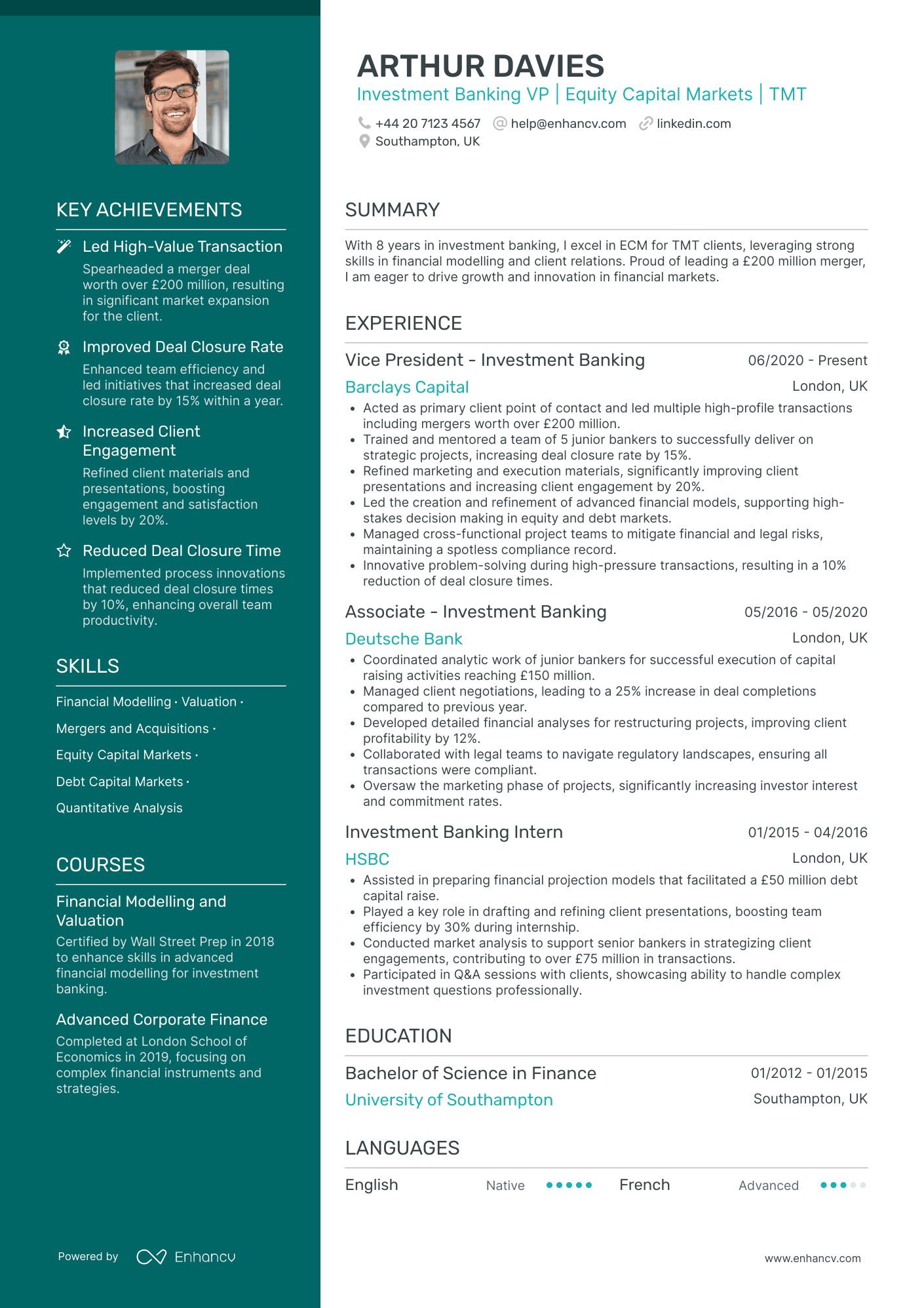
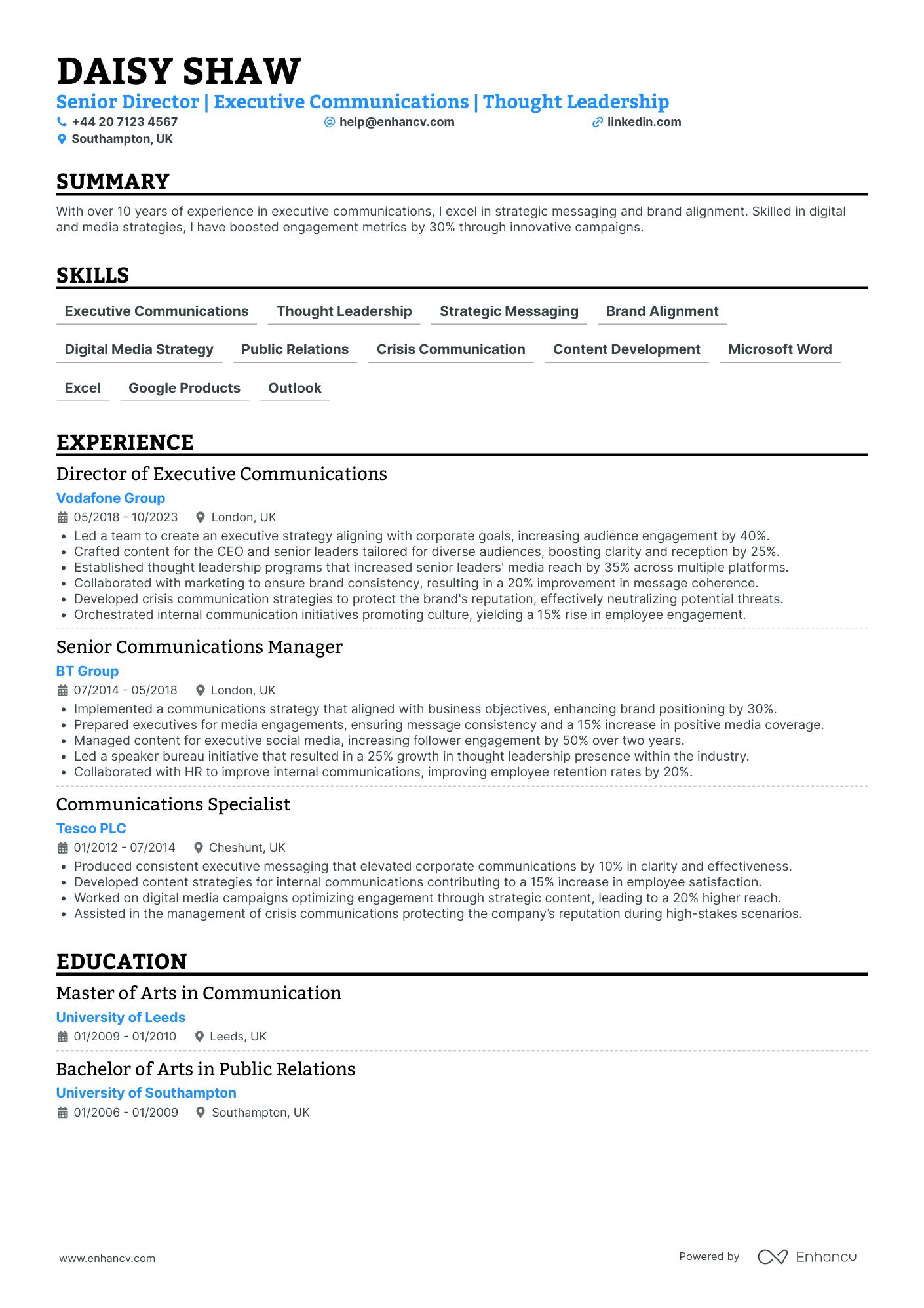
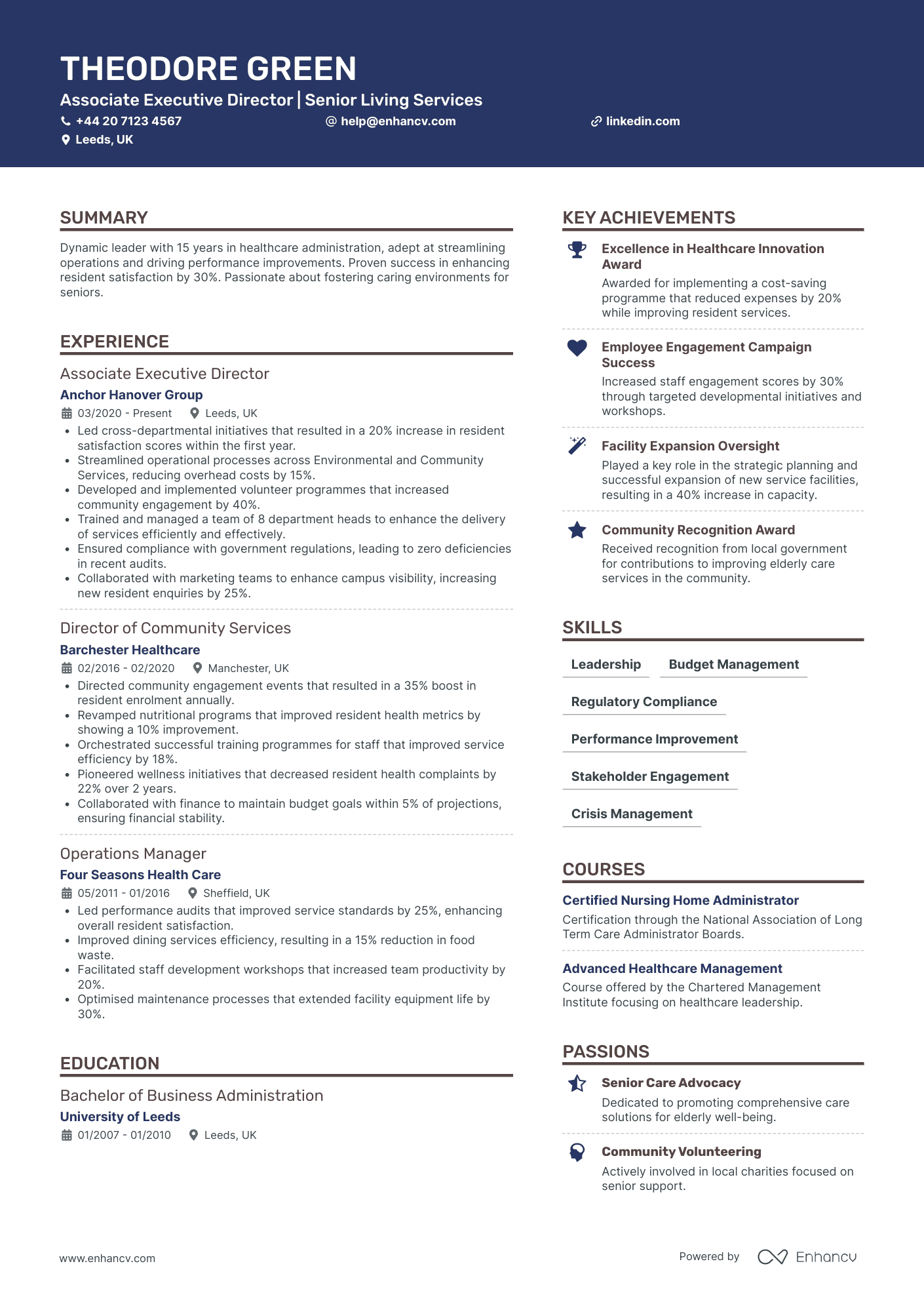
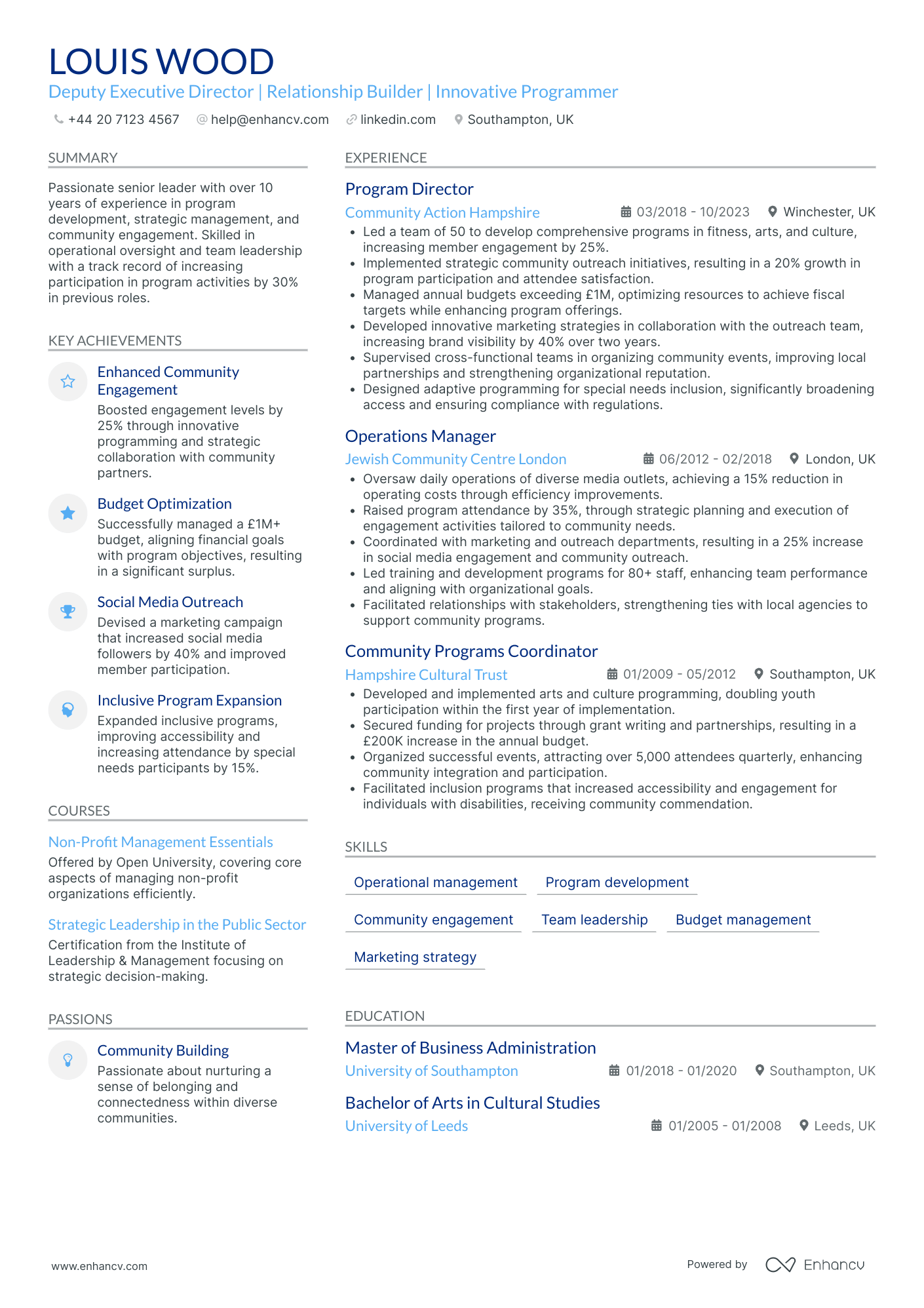
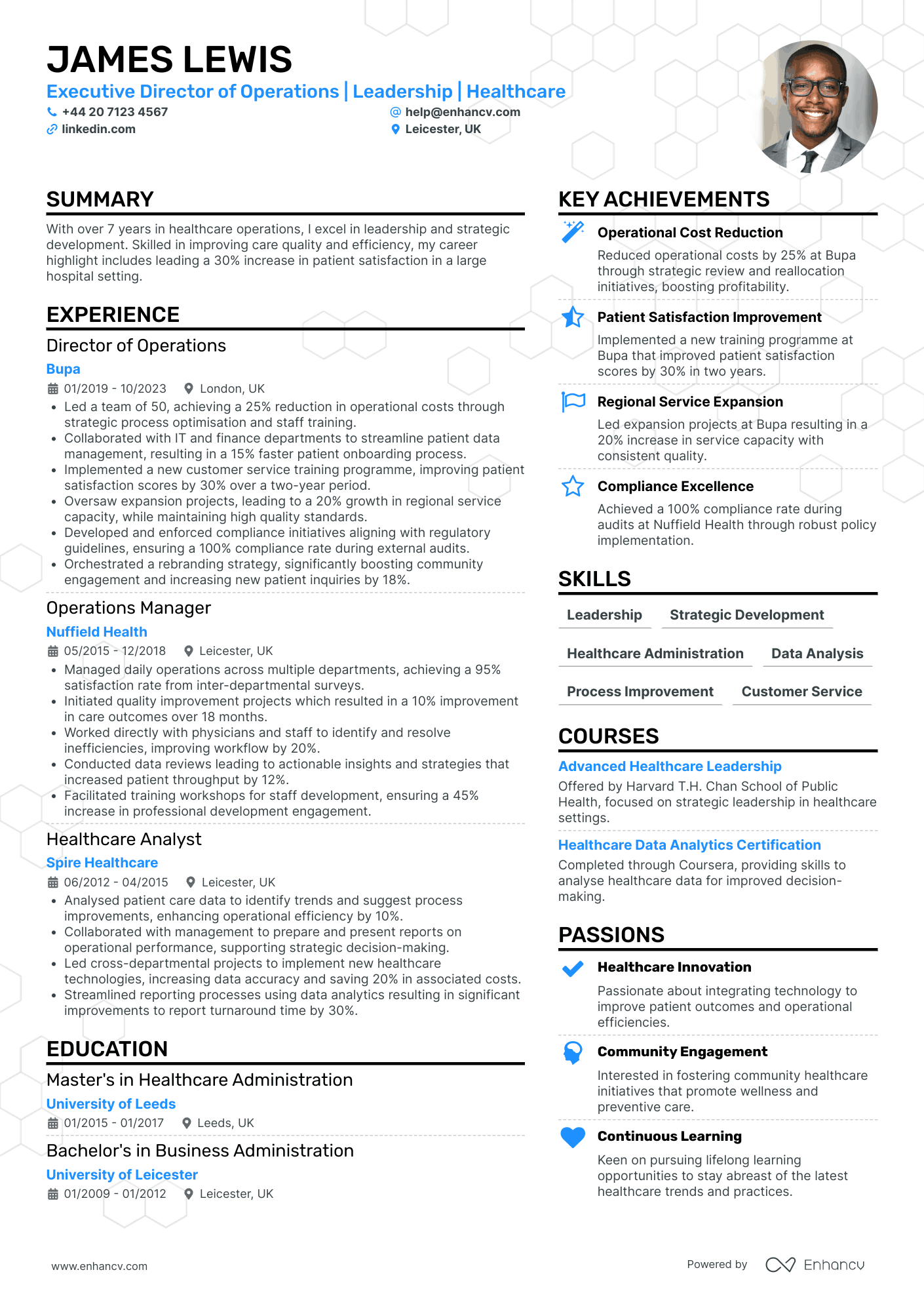
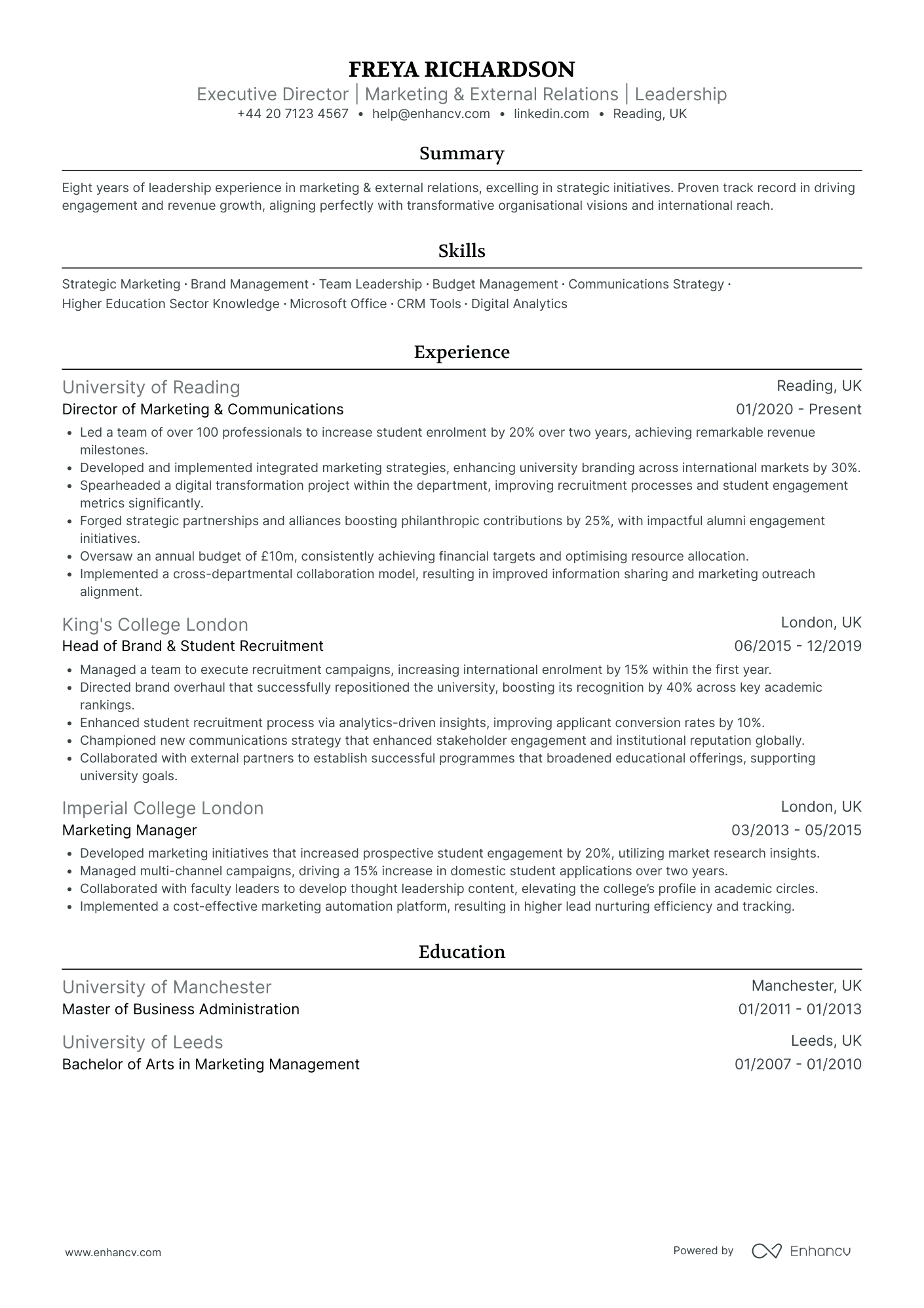
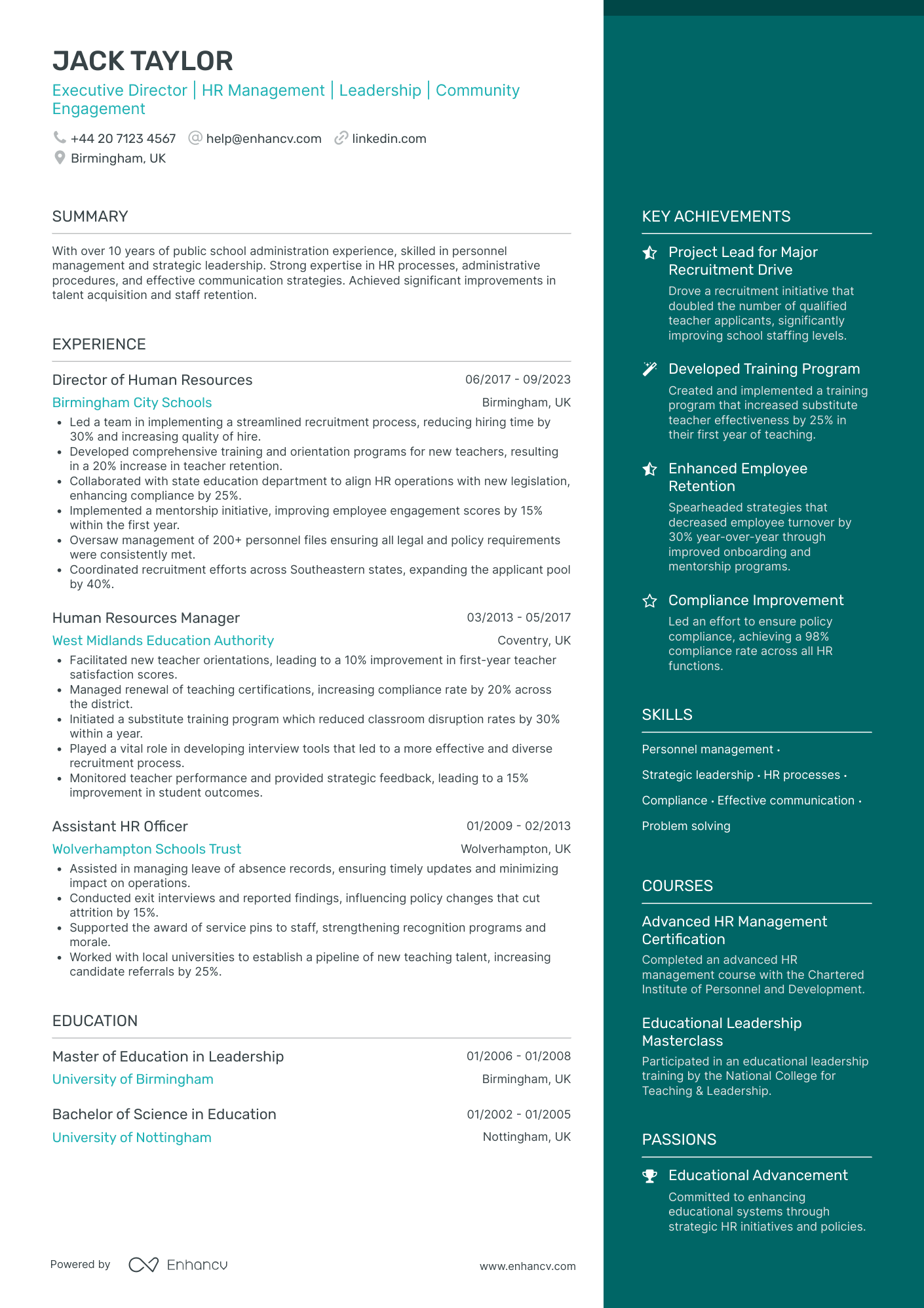
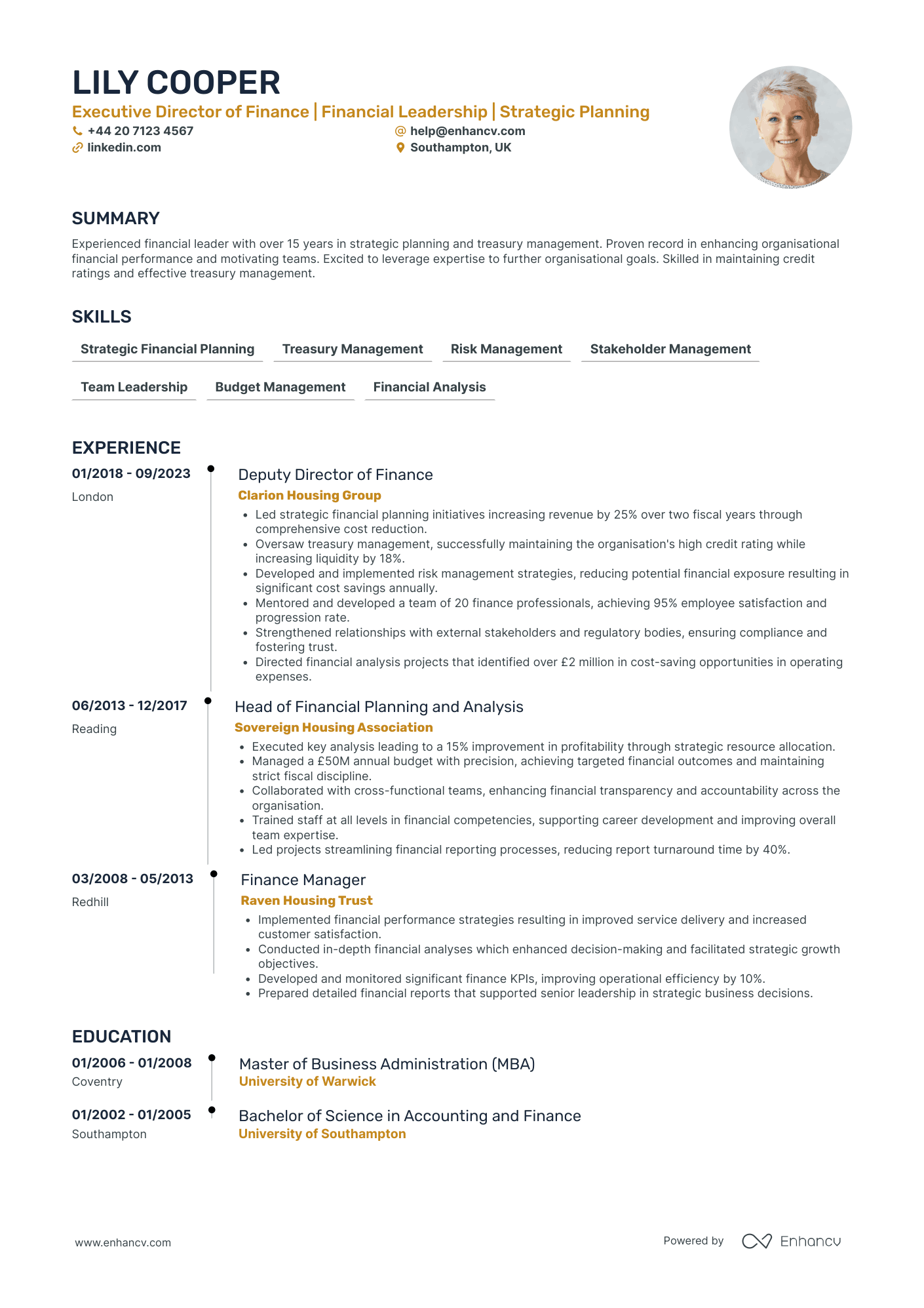
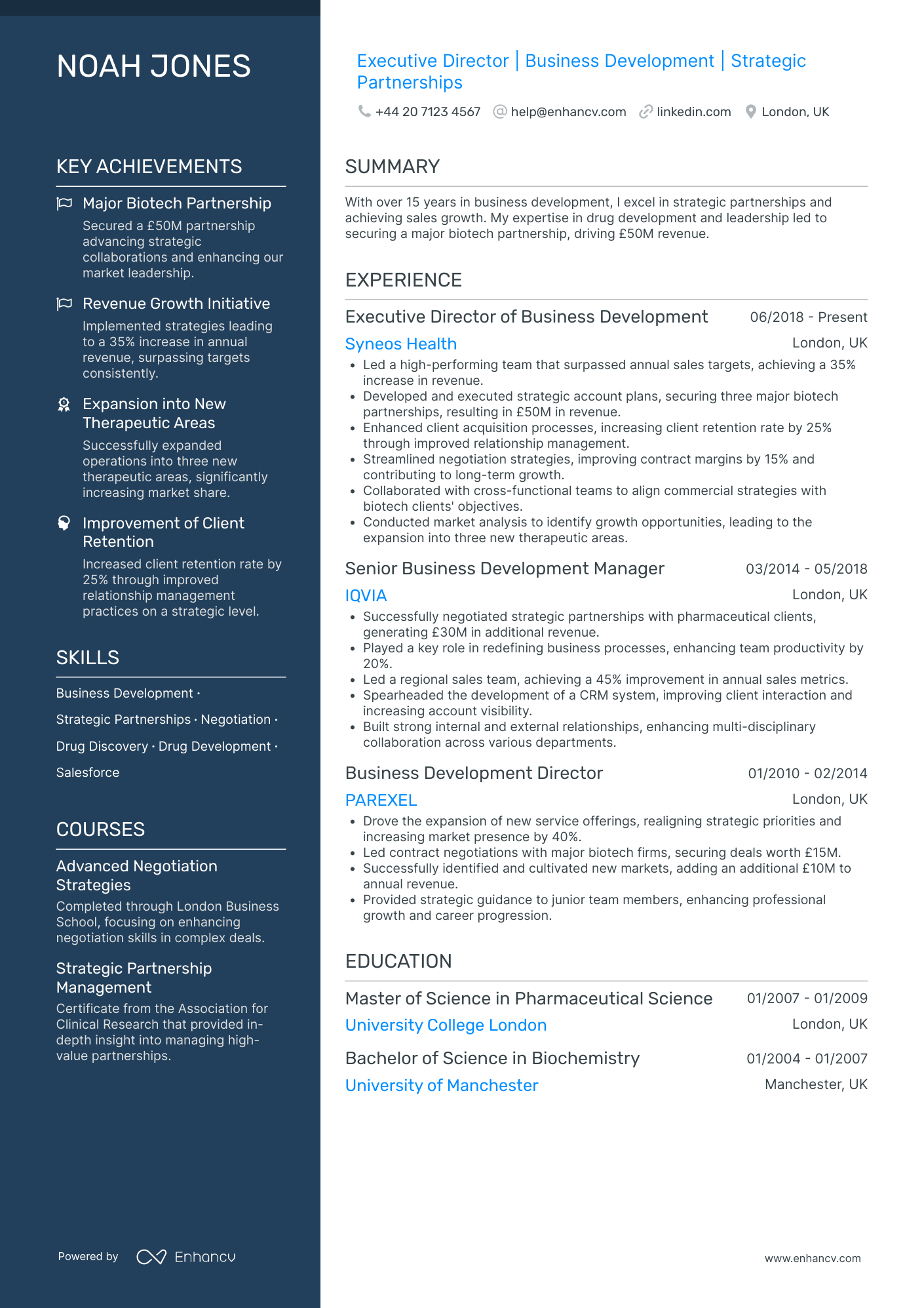
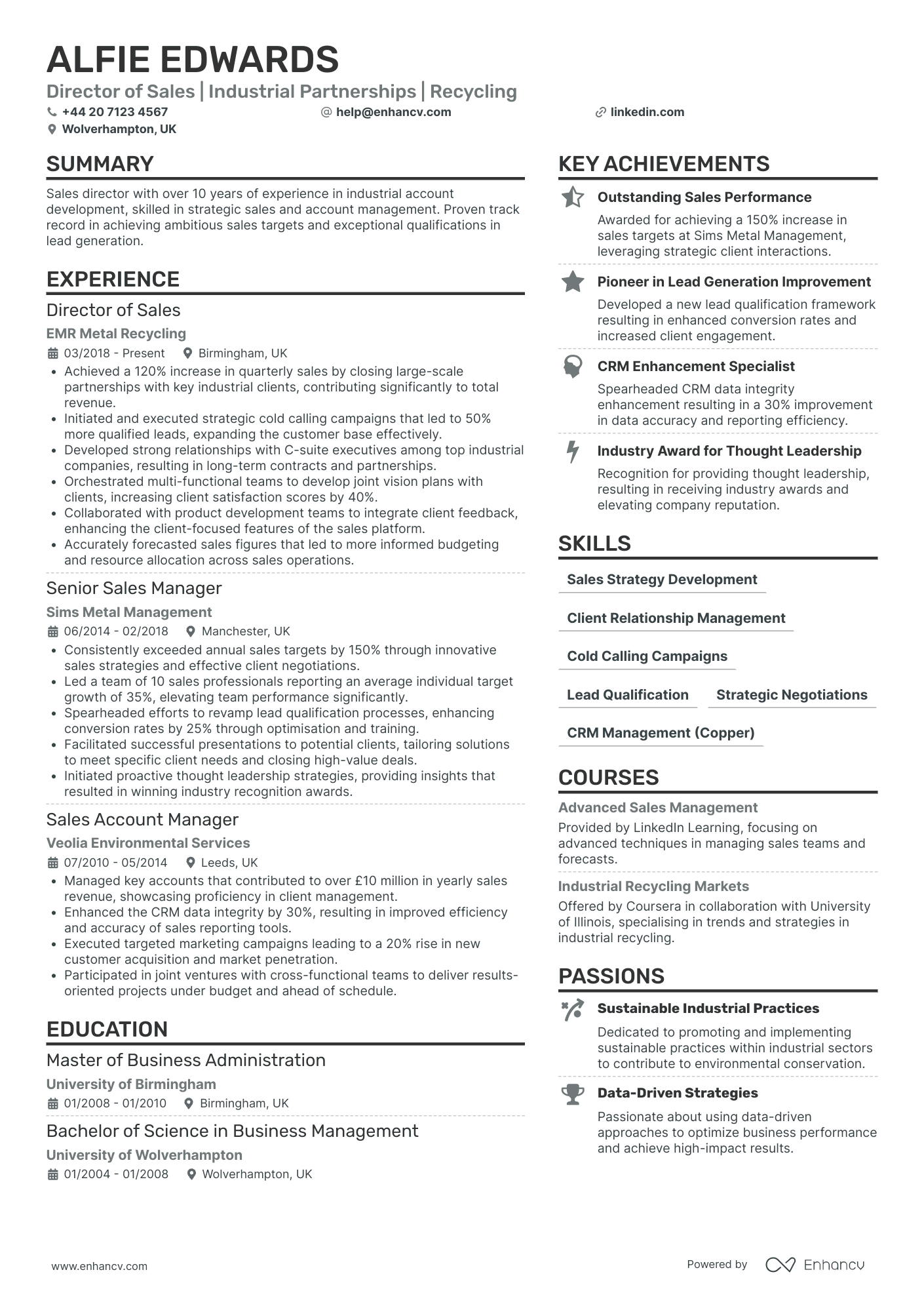
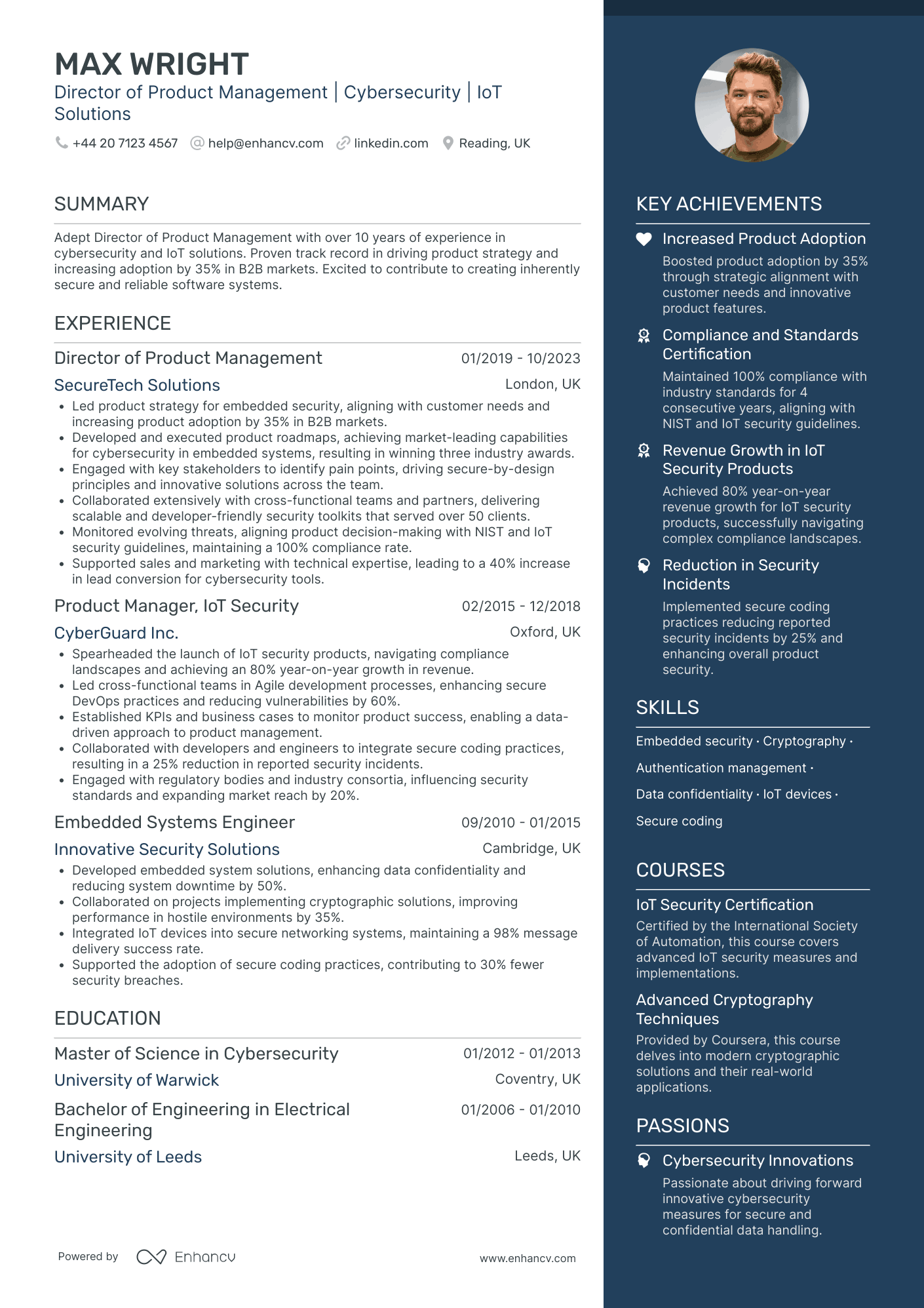
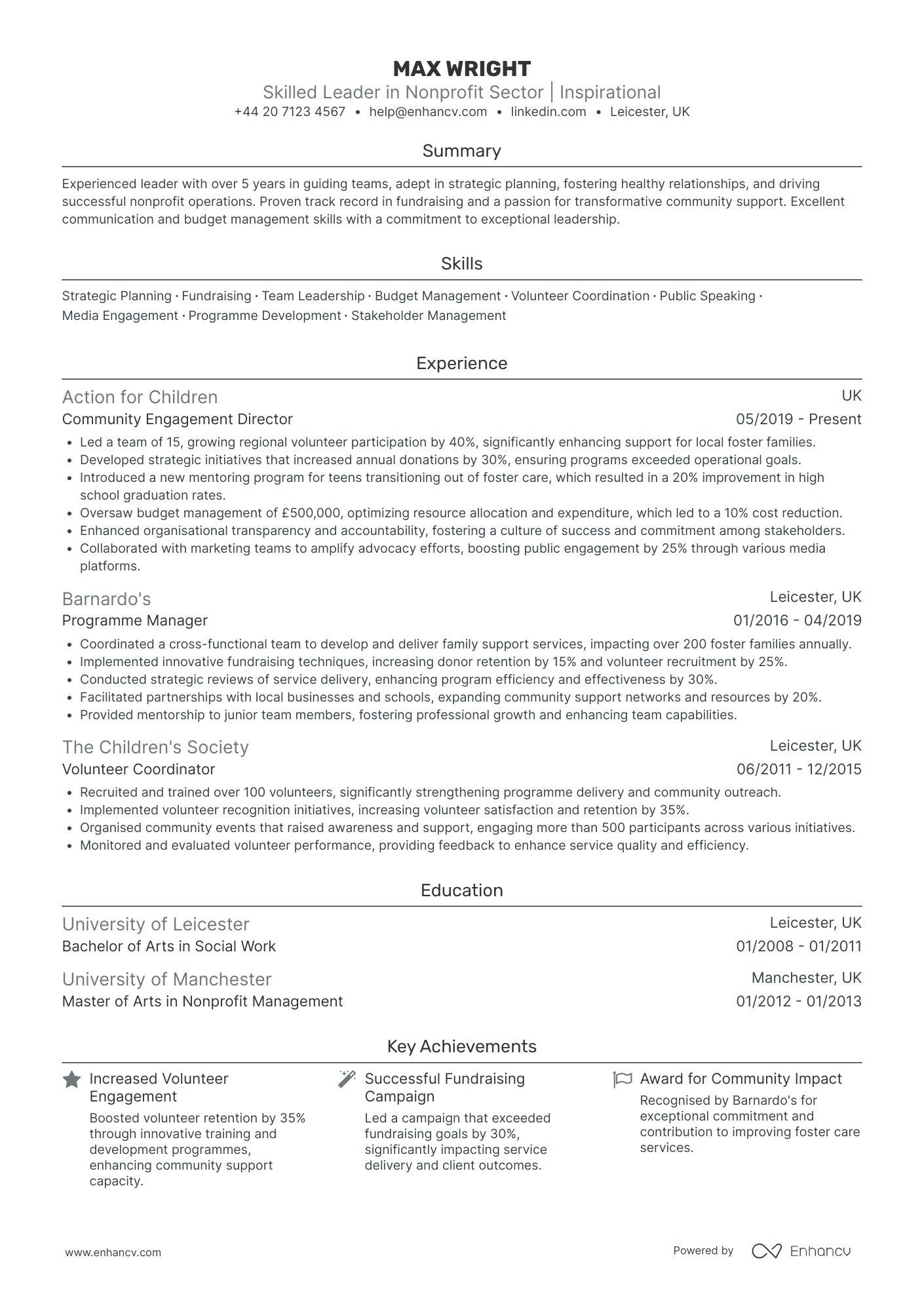
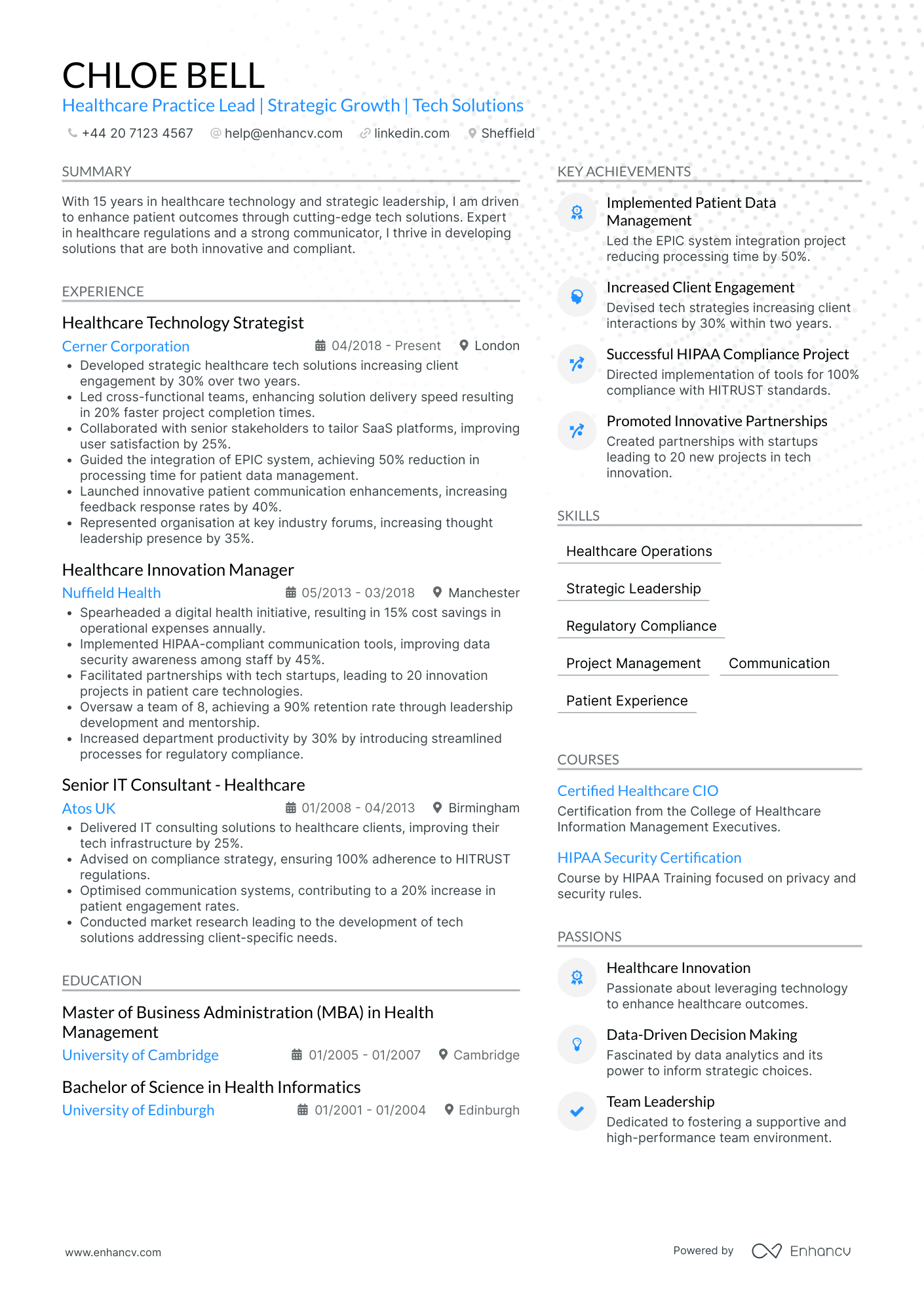
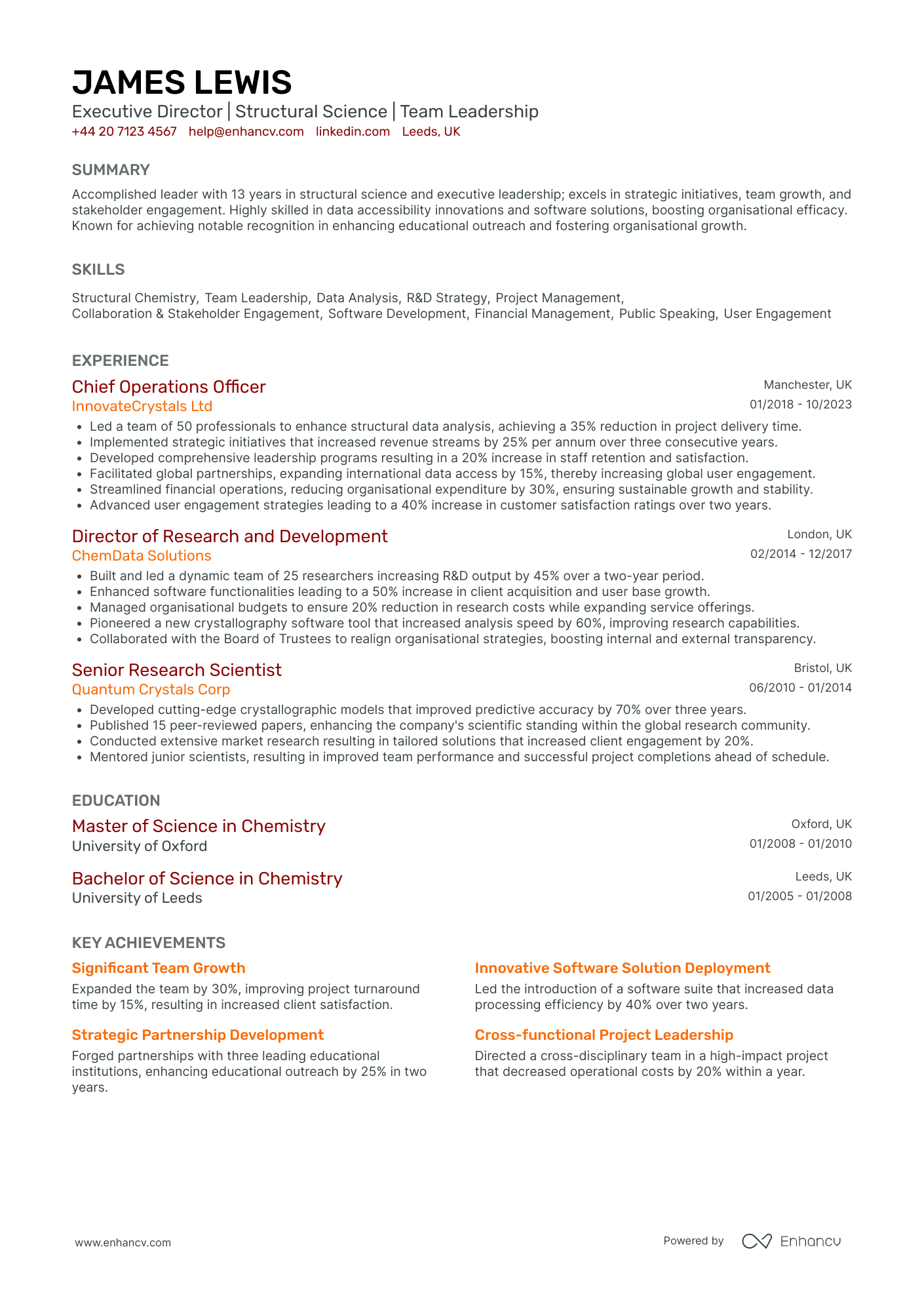
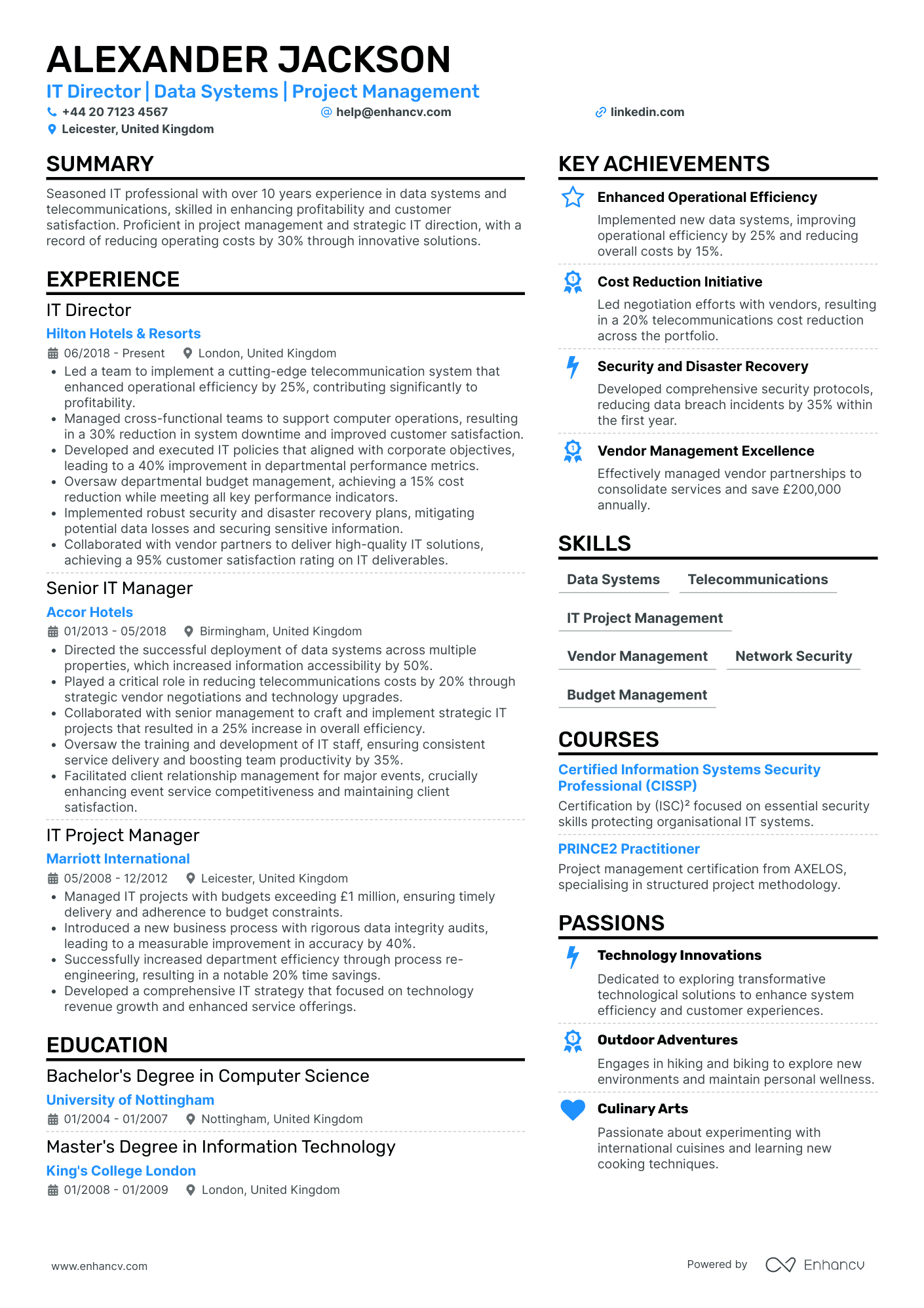
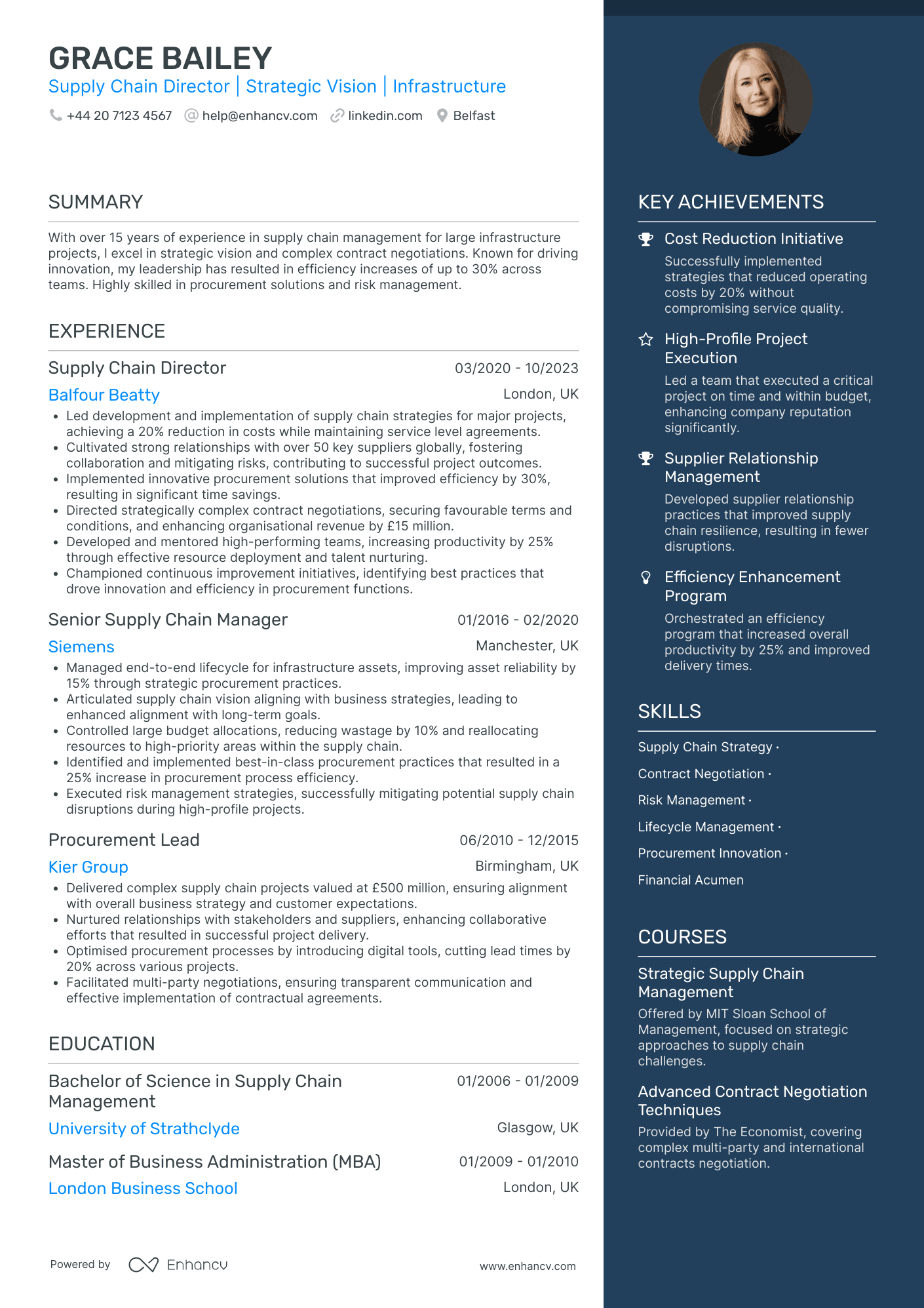
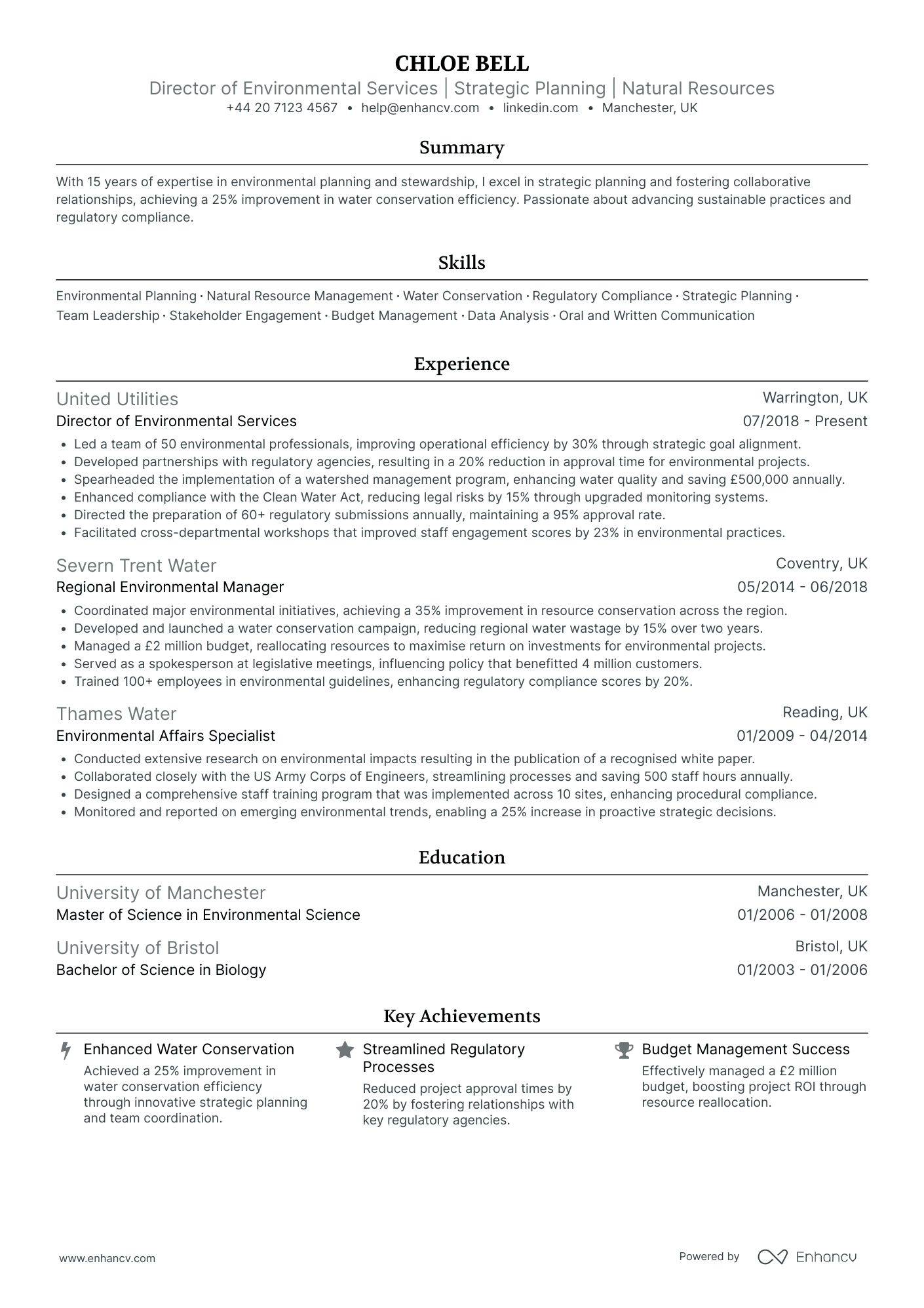
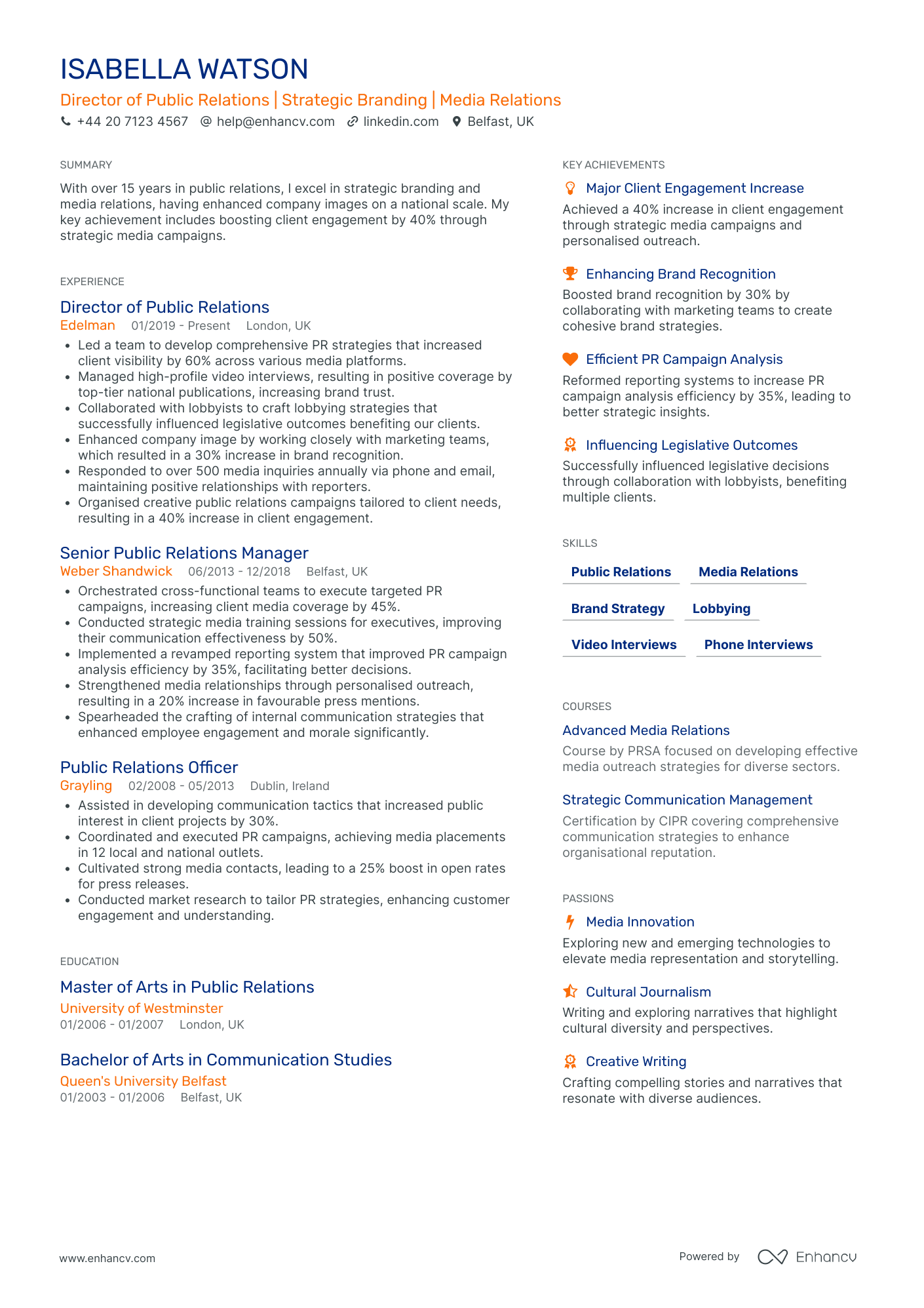
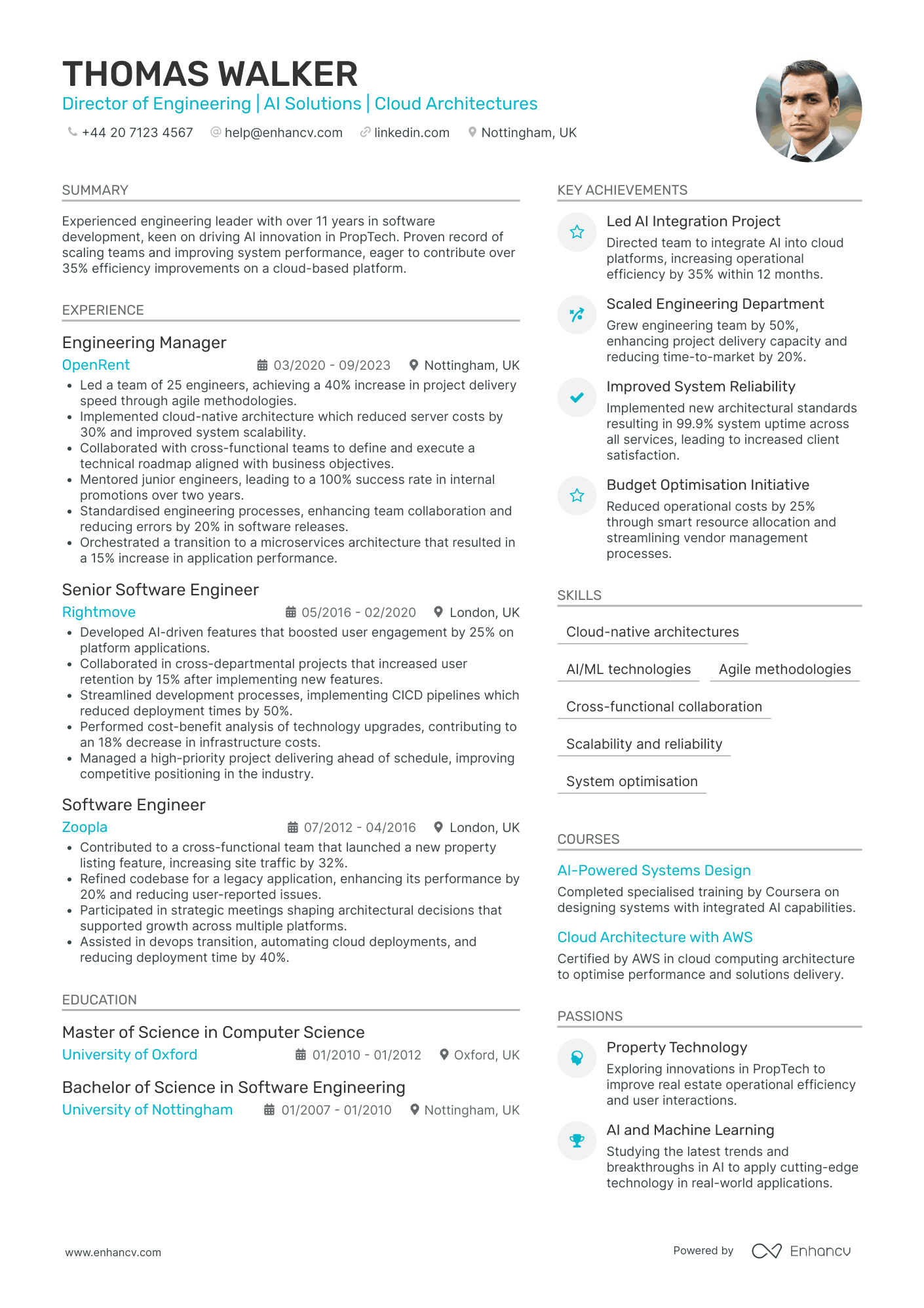
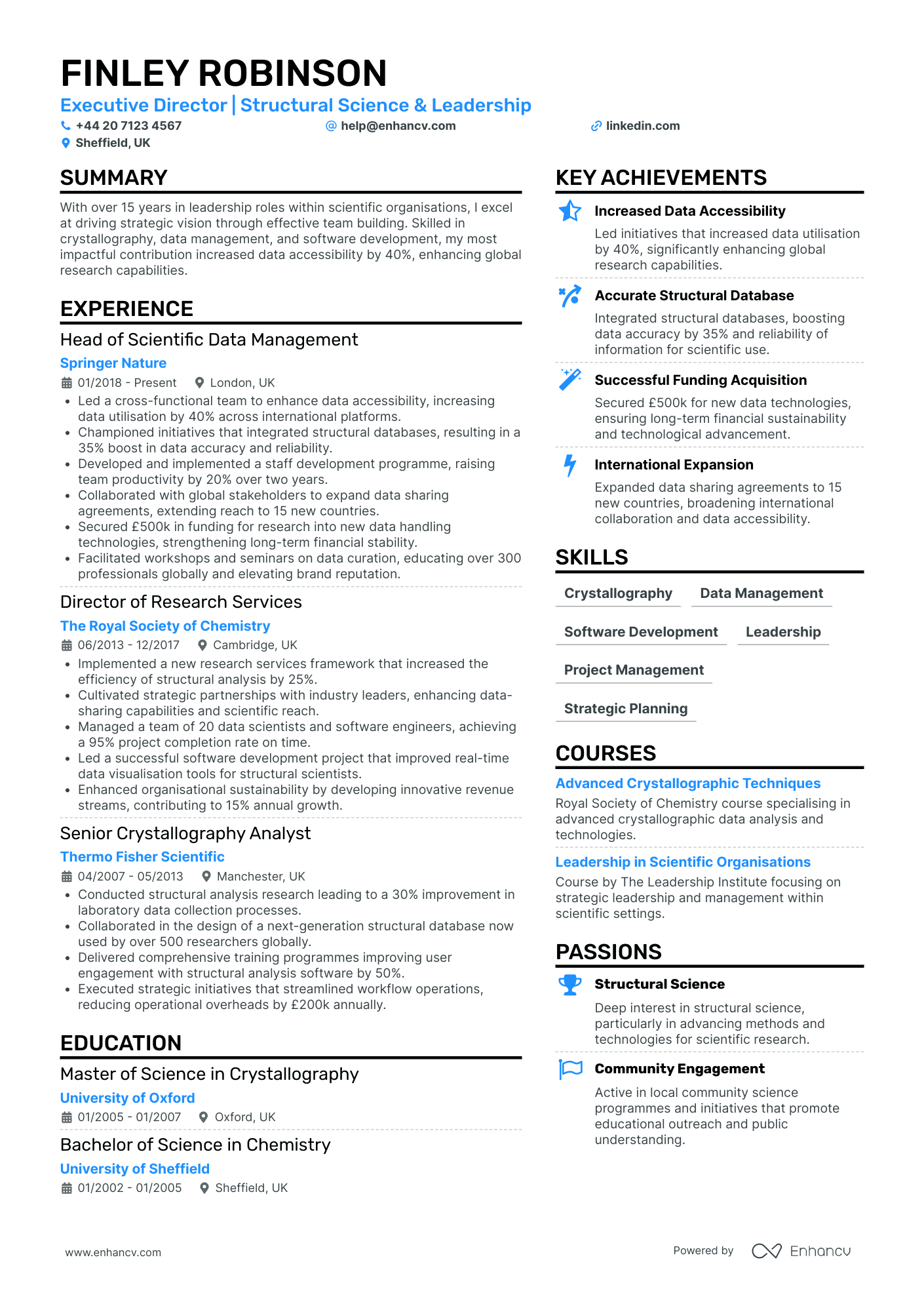
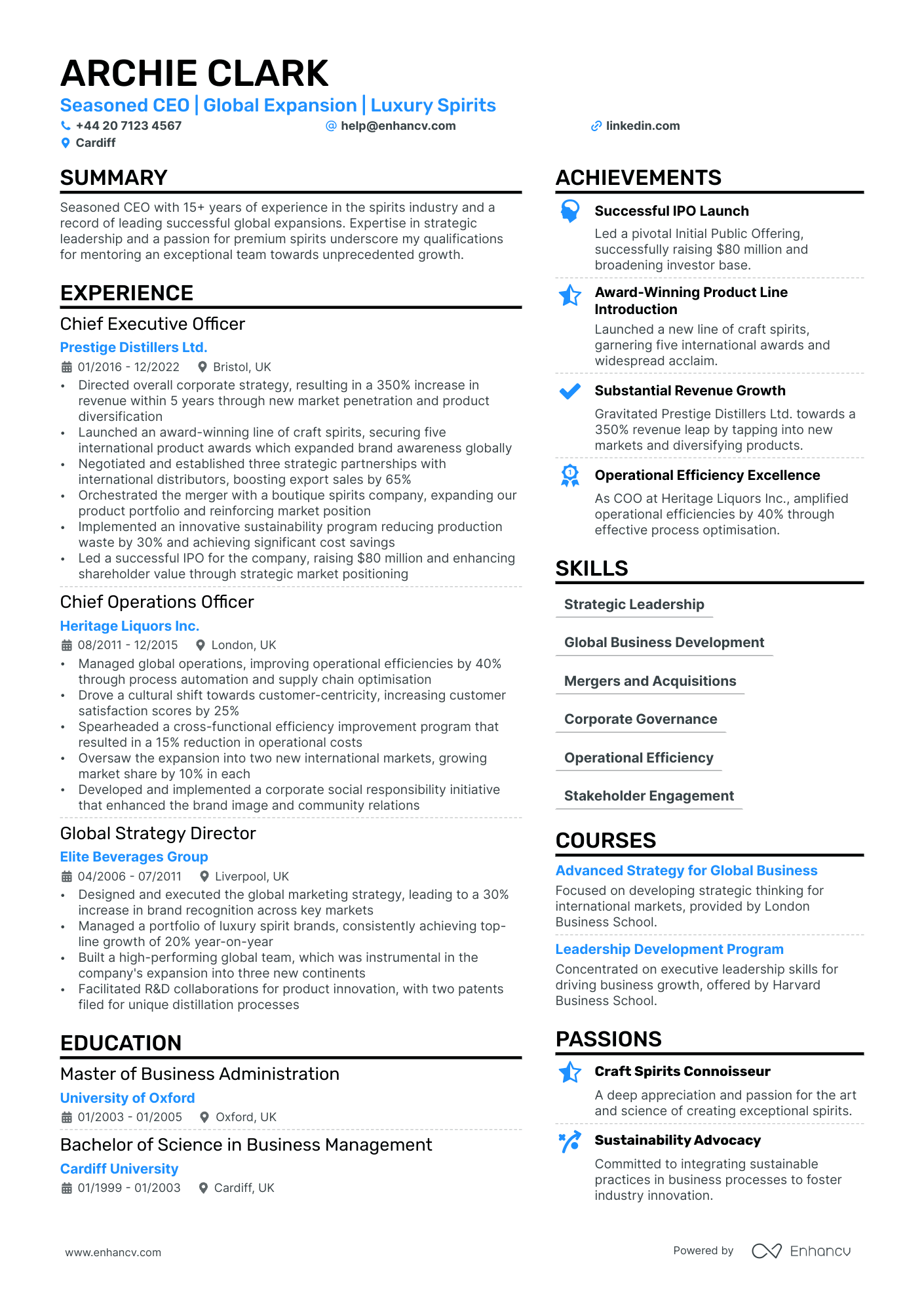
The last executive director CV that made me stop and read led with a board-level result, not a job title. At this level the first reader is a chair, a headhunter, or a nominations committee, and they scan for scale, governance, and P&L before they reach your second line.
Most executive director CVs bury that under a decade of duties and a generic profile. The strong ones treat the format as an argument in itself: a clean structure, two pages, and evidence a board can verify at a glance. If you want the fundamentals first, see how to write a CV.

Key takeaways
- Lead with scale and outcomes a board recognises: budget, headcount, P&L, and governance remit, not a list of duties.
- Format is the first credibility test at this level. Two pages, reverse chronological, a clean single-column layout, sent as a PDF.
- Use a proven executive CV template rather than a blank page, so the structure never competes with the substance.
- Open with a short personal statement built on remit and one verifiable result, not adjectives.
- Name the competencies UK boards screen for: risk management, stakeholder management, compliance, and governance.
- Kill the red flags that sink senior CVs: unexplained gaps, vague scope, and claims no board could verify.
Formatting your executive director CV
At executive level the format is the first credibility test. A board judges how you structure a page before it judges what the page says.
Use a reverse chronological structure. Your most recent role carries the most weight, so it sits first and gets the most space, with earlier roles compressing as they recede.
Keep it to two pages. Executives earn the second page a graduate does not, but a third reads as an inability to prioritise, which is the opposite of the signal you want to send a board.
Do not shrink the font to force everything onto two pages. A cramped executive CV signals you cannot edit your own case, a poor look for someone meant to set priorities for an organisation. Cut the oldest detail instead.
Lay it out as one column with standard headings, generous white space, and a readable serif or clean sans font. Board members and search consultants skim on a screen and often on a phone, and a dense two-column CV layout fights that.
Give the top third of page one to your name, a short personal statement, and a core competencies band. A board reads that band as a contents page for the rest of the CV, so load it with the governance, financial, and sector terms you can evidence below.
A good executive CV template does one job: it keeps the structure invisible so the reader focuses on your results. Avoid the heavily designed, graphic templates aimed at creative roles. At board level, restraint reads as seniority, so pick the best CV template for the job, not the busiest one.
Send a PDF for direct applications and board approaches so the layout holds exactly as you built it. Keep a Word copy for executive search firms, which often reformat candidates into their own template before presenting you to a client. If the brief names a file type, follow it.
Senior applications still pass through tracking software, especially for advertised roles, so keep the structure clean and the headings standard for an ATS-friendly CV. Build it from a tested layout rather than a blank page. Enhancv's CV templates give you an executive-ready structure that exports to a clean PDF, so your format never competes with your substance.

PRO TIP
Search consultants often skim your CV on a phone between meetings. Open the document on your own phone before you send it. If the first screen does not show your current title, your remit, and one headline result, your format is burying your strongest evidence.
What should an executive director CV include
A director's CV looks different from a manager's because the reader is different. Lead with proof of scope, then structure everything beneath it to support that scope.
Order the sections so a board sees your case in the first thirty seconds: a personal statement, a core competencies block, then experience, then education and governance credentials.
Within those sections, a board is looking for four things:
- Scope in numbers: budget owned, headcount, P&L, revenue or funding, and the size of the organisation.
- Governance remit: board roles, committee membership, regulatory relationships, and the bodies you have reported to.
- Strategic outcomes: turnarounds, growth, restructures, mergers, or transformations you led, with the result attached.
- Stakeholders managed: board, investors, regulators, unions, partners, or public bodies.
Two extra sections earn their place at executive level: a short list of non-executive, trustee, or advisory roles, and a governance or credentials block. Both tell a board you understand oversight from more than one seat.
Put your contact details and location in a tight header. A board should not have to hunt for either.

Lead with a core achievements band
Under your personal statement, add three or four one-line career highlights, each a scope plus an outcome. "Delivered a £30m cost-reduction programme across three business units" belongs here, high on page one, where a board reads before it decides whether to reach page two.
What the UK executive director market looks like
Knowing what UK boards actually advertise for tells you which evidence to put first. Here is the shape of current demand.
| What | UK executive director roles |
|---|---|
| Sample | 51 UK executive director postings in the last ~30 days (Enhancv's internal job feed) |
| Where the work happens | Mostly on-site, with hybrid and fully remote roles the exception at this level |
| Skills that recur most | Risk management, stakeholder management, and compliance, with governance close behind |
| Typical salary | Not standardised. Executive pay is negotiated by remit and organisation size, so anchor your CV to scope, not a figure |
Two signals should shape your CV.
On-site work dominates UK executive director postings on Enhancv's internal job feed over the last ~30 days, so make your location easy to find and treat relocation or travel as a point to address rather than hide.
And risk management, stakeholder management, and compliance recur most often across those same postings, with governance close behind. Those are not soft framing words. They are the competencies a board expects to see evidenced in your experience, so mirror the ones that are genuinely true of you.
Executive pay is rarely advertised and is not standardised the way it is for salaried roles, so anchor your CV to the scope you have run instead of a headline figure. Scale is what a nominations committee can benchmark.
Read the signals together and the priority is clear. A board wants proof you can carry a governance and control remit in a specific place, so put the scope, the location, and the recurring competencies where a busy reader meets them first, not on page two.
Writing your executive director personal statement
Three or four sentences at the top: who you are at board level, the remit you carry, one verifiable result, and the kind of mandate you are looking for. Keep every line checkable. See more personal statement examples if the opening line is not landing.
Avoid the adjective soup that opens most senior CVs. "Dynamic, results-driven leader with a proven track record" tells a board nothing it can verify and everything about how many CVs you have skimmed.
Name the sector and the size of organisation you are targeting. A board reading for a £50m remit needs to see you have operated at or near that scale, and a vague statement forces it to guess.
Here is the difference between a statement that gets you longlisted and one that gets skipped.
Executive director personal statement (too vague)
Dynamic and results-driven executive director with a proven track record of delivering results and driving change across a range of sectors. A strategic thinker and inspirational leader, passionate about excellence and committed to taking organisations to the next level.
Executive director personal statement (specific and verifiable)
Executive director with 15 years leading regulated organisations, currently running a £48m turnover charity with 320 staff and a board of 11. Led a three-year turnaround that returned the organisation to surplus and cleared a Charity Commission action within 12 months. Seeking an executive director or chief executive mandate in a mission-led organisation that needs governance discipline and growth.
When a nominations committee reads an executive director statement, it is looking for scope it can benchmark and results it can check. A line like "returned a £48m organisation to surplus in three years" does more than a paragraph of leadership adjectives. Name the size of what you have run, one outcome that moved, and the mandate you want next. Everything else is noise a board has read a hundred times.
The Enhancv team
Writing your executive director experience section
Each role gets a dated heading, the scope of the remit in one line, then bullets that show the decision you made and the result. Lead every bullet with a strong action verb and end it with a number wherever you honestly can. For the mechanics, see work experience on a CV.
At this level the outcome is the point. Boards read for quantified achievements: money saved or earned, risk reduced, growth delivered, a rating improved, a merger closed.
Show the remit before the wins. A bullet that says "led a team" is invisible next to "accountable to the board for a £120m budget and 1,400 staff across four sites".
Tailor each application to the brief. Pull the competencies and governance language from the advert or the search brief and mirror them where they are true of you. Enhancv's CV tailoring feature reads the brief and suggests the matching edits, which saves rewriting from scratch for every board approach.
Show progression as well as scale. A board wants to see the remit growing over time, so let each earlier role carry fewer lines while still naming the budget, the team, and the result.
- Accountable to a board of 11 for a £48m annual budget, 320 staff, and services across 14 UK sites
- Led a three-year turnaround that moved the organisation from a £2.1m deficit to a £900k surplus
- Cleared a Charity Commission regulatory action within 12 months by rebuilding governance and board reporting
- Secured £6.5m in multi-year funding by leading commissioner and investor relationships personally
- Restructured the executive team and cut overheads by 18% while protecting frontline service levels
- Ran a £22m operating budget and 180 staff across nine registered services
- Lifted the group's average CQC rating from Requires Improvement to Good within two years
- Integrated two acquired providers onto shared systems with no loss of service continuity
Skills for an executive director CV
What skills should an executive director have on a CV? Read live UK board-level adverts and the same competencies repeat, and they are governance and control competencies, not generic leadership words.
Risk management, stakeholder management, compliance, and governance come up again and again in UK executive director postings on Enhancv's internal job feed. Those are your hard skills, listed in the language boards use.
The soft skills that matter at this level are real and checkable too: leadership, negotiation, influence, and decision-making under pressure. Prove each one inside an experience bullet rather than asserting it in a list.
Group the skills so a board can scan them. Keep governance and control competencies together, financial and commercial skills together, and leadership behaviours on their own line, rather than one long alphabetical run.
List only what you can defend in a board interview. Populate the skills section with competencies your experience already evidences.
Top skills for your executive director CV:
Risk management
Stakeholder management
Compliance
Corporate governance
P&L and budget ownership
Strategic planning
Change management
Board and regulatory reporting
Leadership
Negotiation
Influencing
Decision-making
Commercial judgement
Education and credentials for an executive director CV
At executive level your degree matters less than what you have governed since. Keep education brief and let credentials and board development carry the weight.
List the qualifications a board recognises: an MBA or a relevant master's, chartered status such as a fellowship of a chartered institute, and governance training such as the IoD Chartered Director programme. Put qualifications and any non-executive or trustee roles where a board will see them quickly.
Name the certifications you actually hold and drop the ones from twenty years ago that no longer signal anything. A recent governance or risk credential says more than an old management course.
Common red flags on an executive director CV
Boards and search consultants screen out senior candidates fast, and usually on the same few signals. At this level the shortlist is short and the scrutiny is high, so a single weak signal can be the reason you do not make it. Fix these before you send.
- Vague scope. "Responsible for strategy" with no budget, headcount, or remit reads as a title without substance.
- Unexplained employment gaps. At this level a board will ask, so account for them briefly and move on.
- Duties instead of outcomes. A list of what the role involved tells a board nothing about what changed because you were there.
- Claims no one could verify. "Transformed the organisation" with no before and after invites doubt, not credit.
- Overstatement. Inflating a title or a result is the fastest way out of an executive process, where references and due diligence are thorough.
Run the whole document against the common CV mistakes one more time before it goes to a headhunter. At executive level a single unverifiable claim can end the conversation.
Key takeaways for your executive director CV
Lead with scope a board can benchmark, evidence every claim, and let a clean two-page format carry the seniority.
Pair the CV with a short cover letter that names the mandate you want, and you give a nominations committee a candidate it can picture in the room.
Author's take - The Enhancv team
When a nominations committee reads an executive director statement, it is looking for scope it can benchmark and results it can check. A line like "returned a £48m organisation to surplus in three years" does more than a paragraph of leadership adjectives. Name the size of what you have run, one outcome that moved, and the mandate you want next. Everything else is noise a board has read a hundred times.