



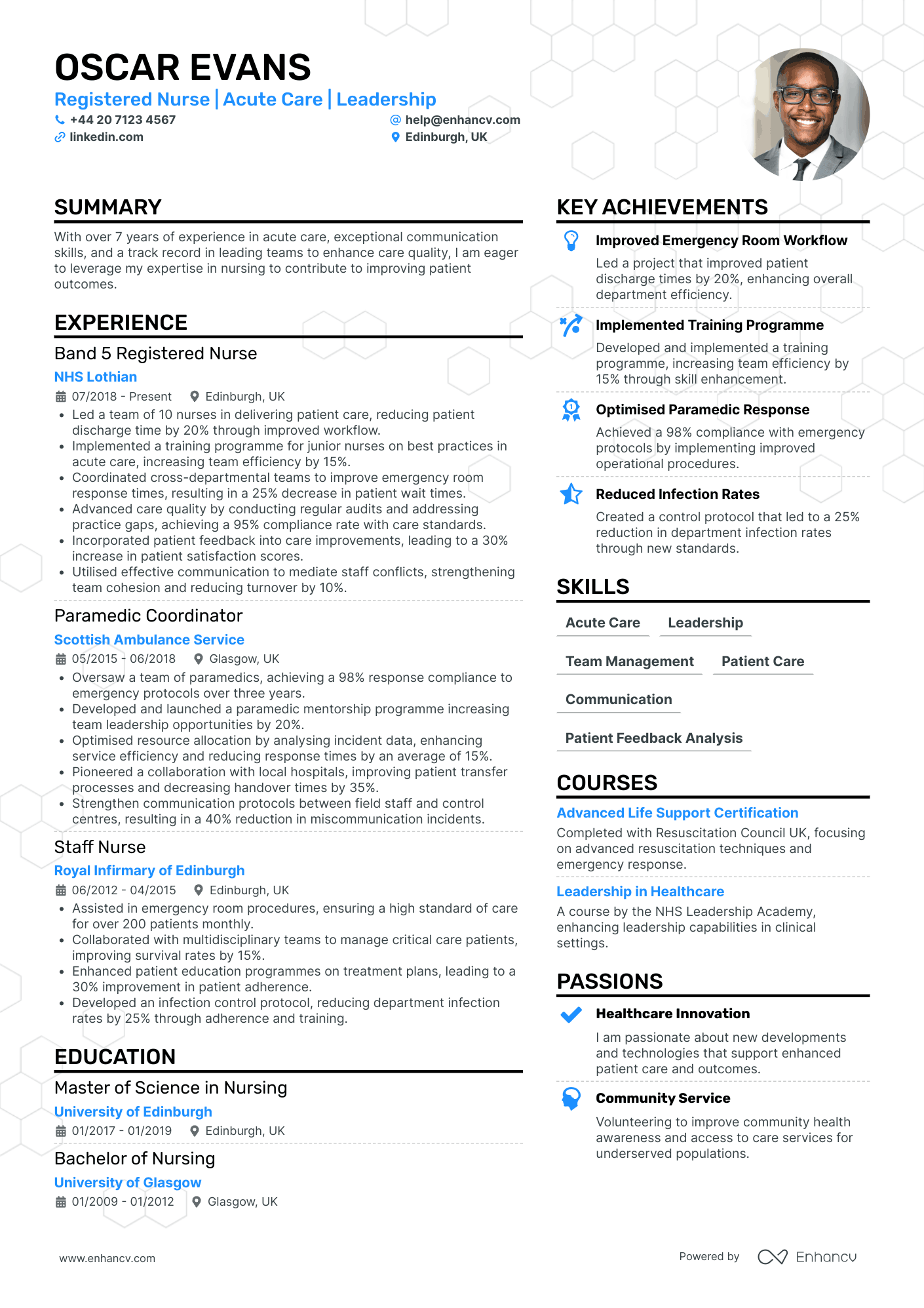
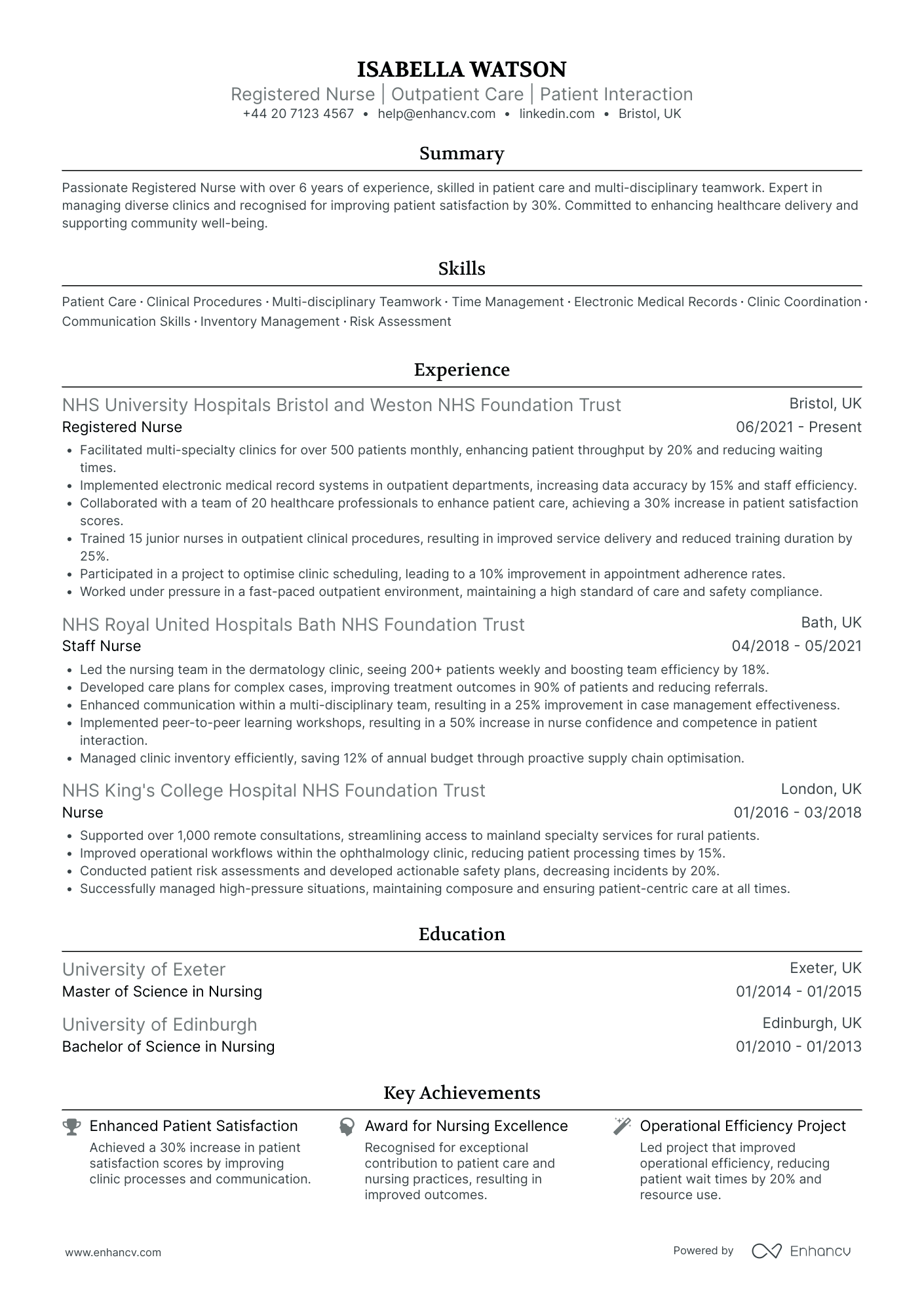
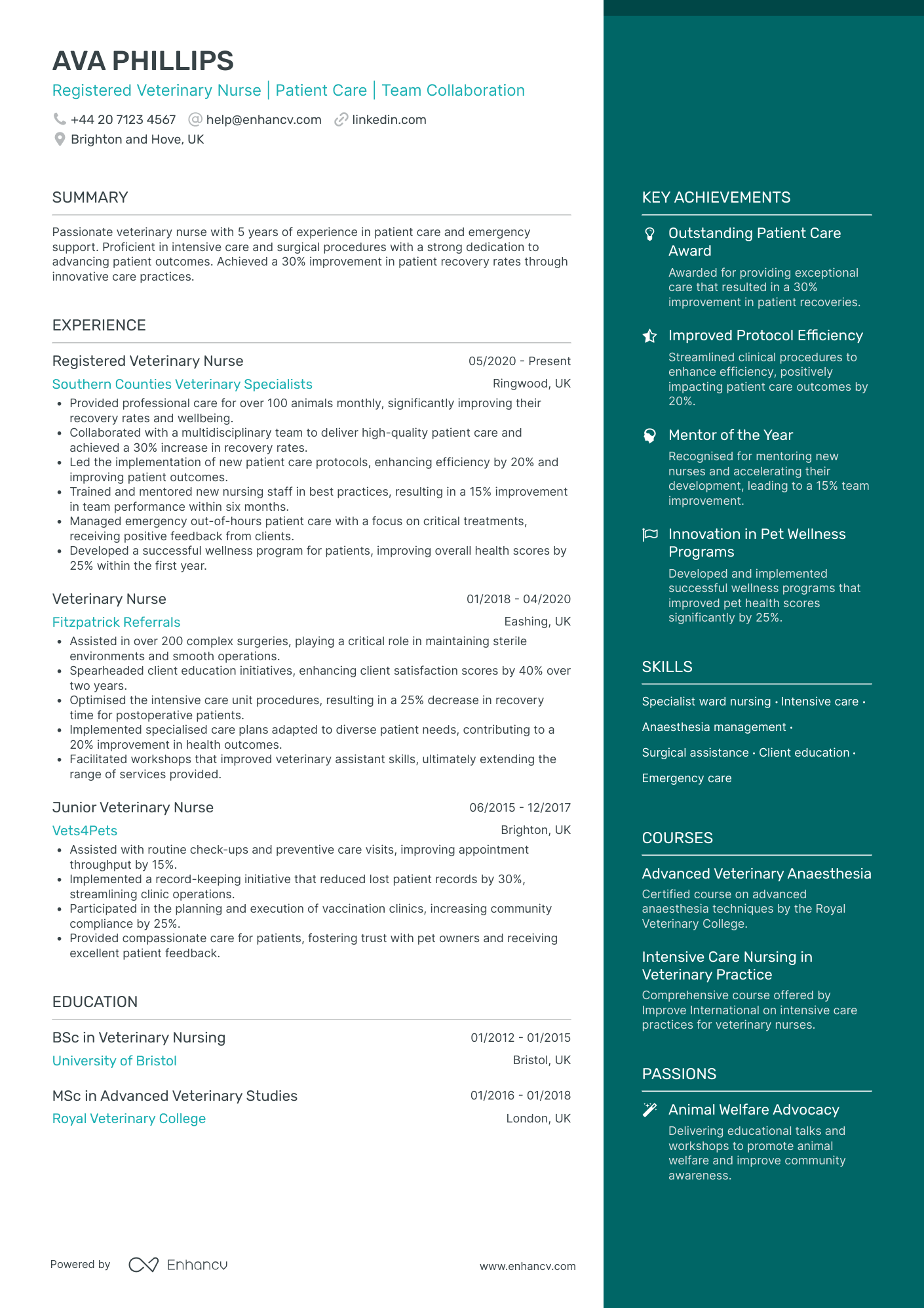
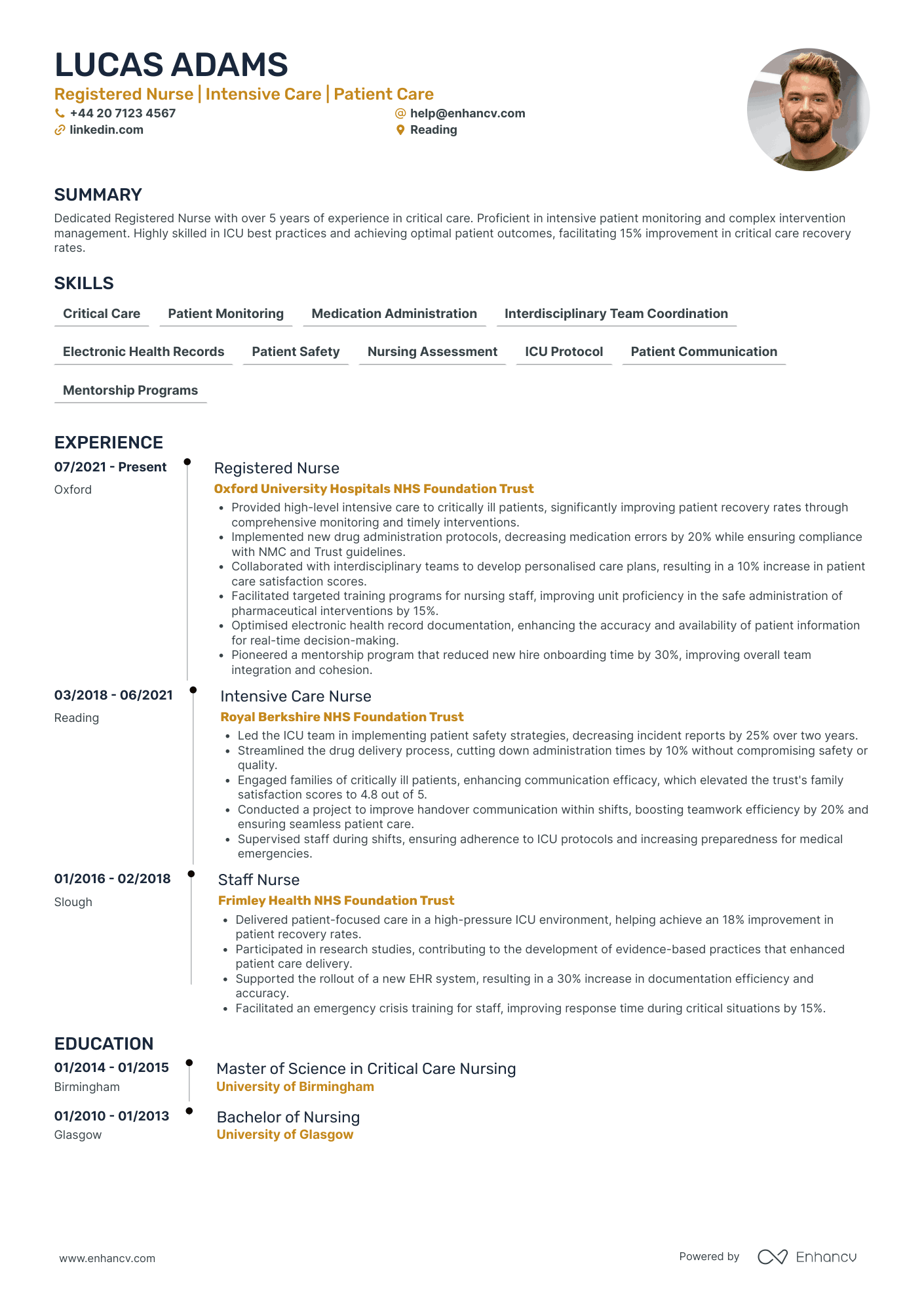
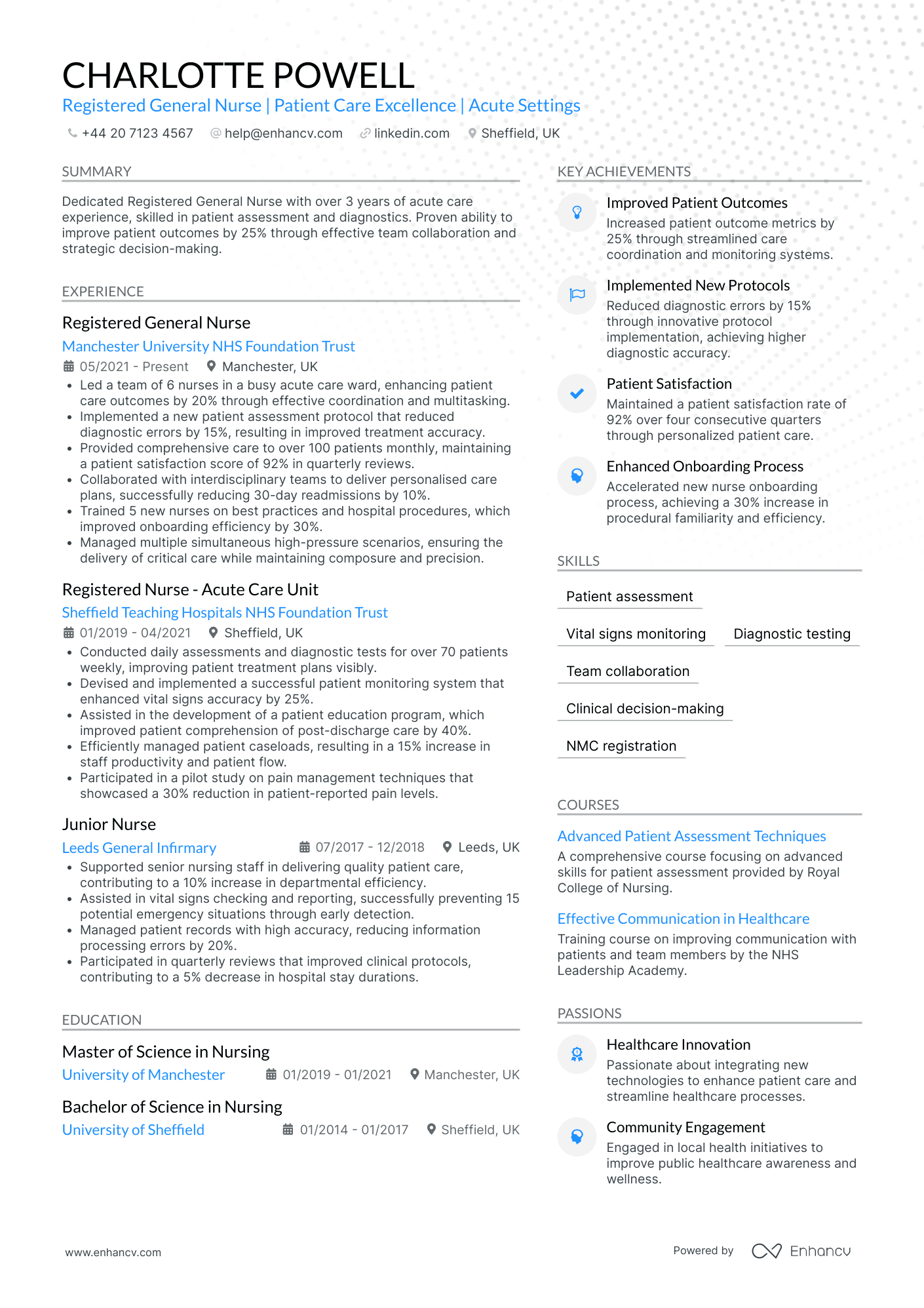
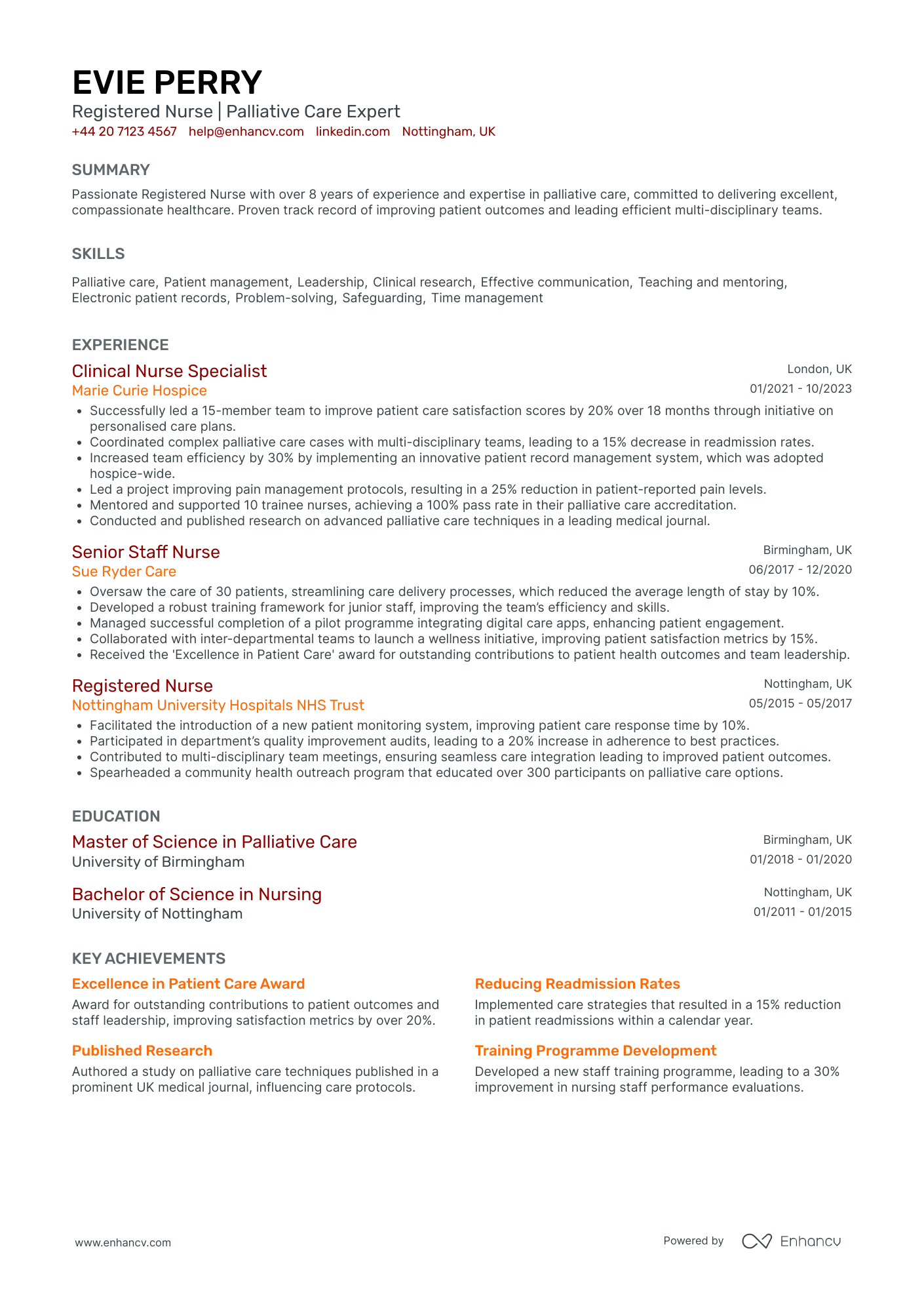
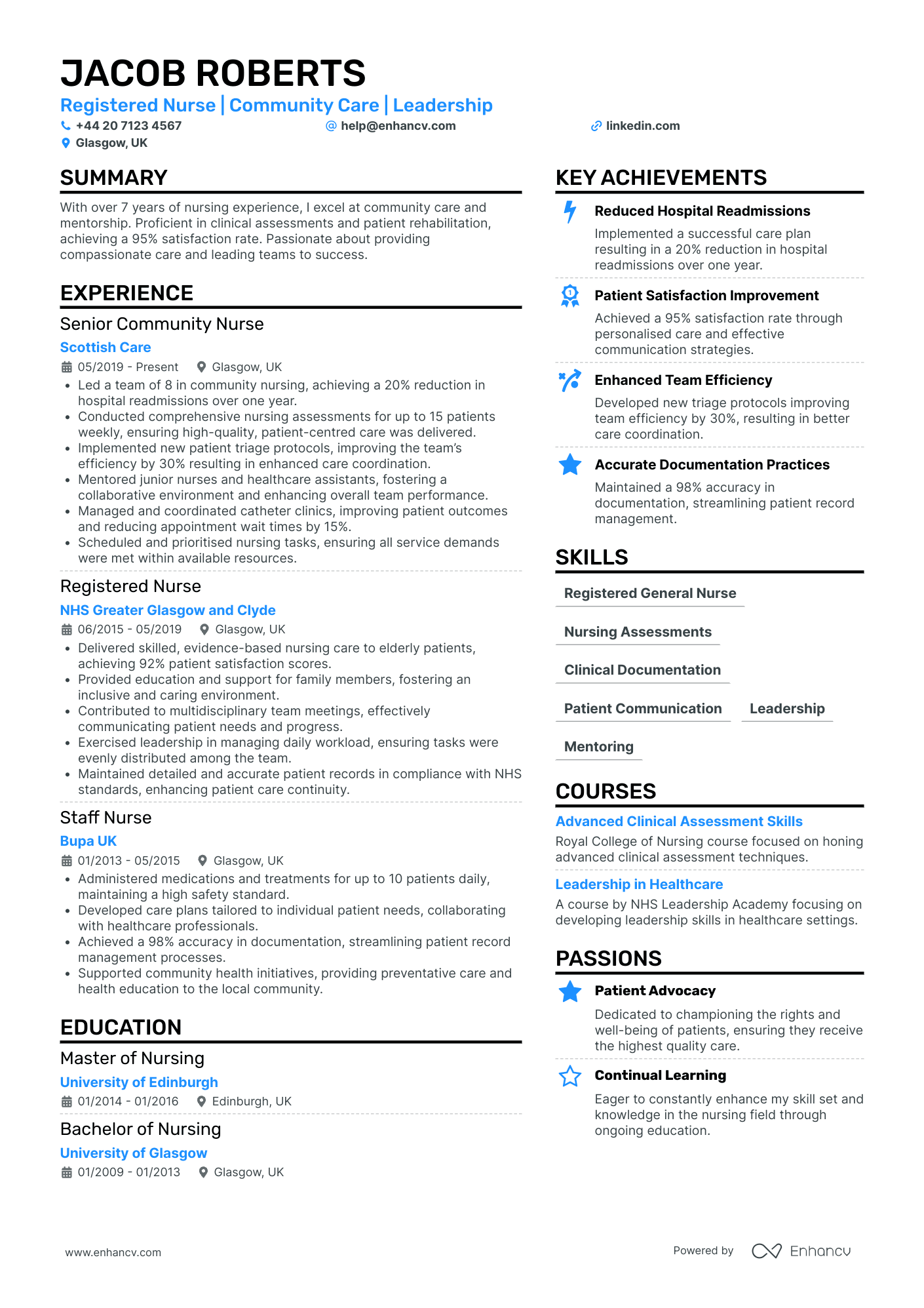
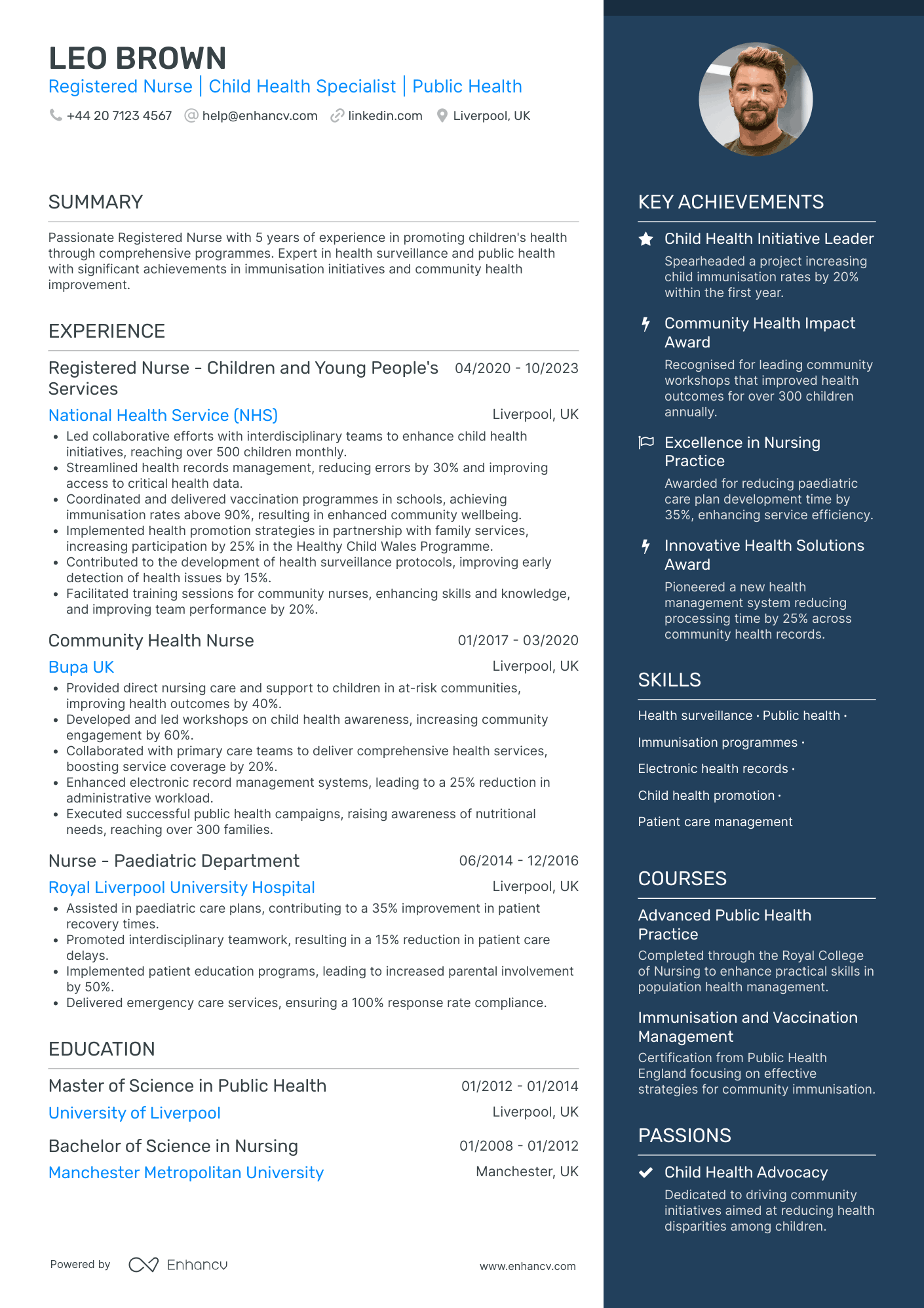
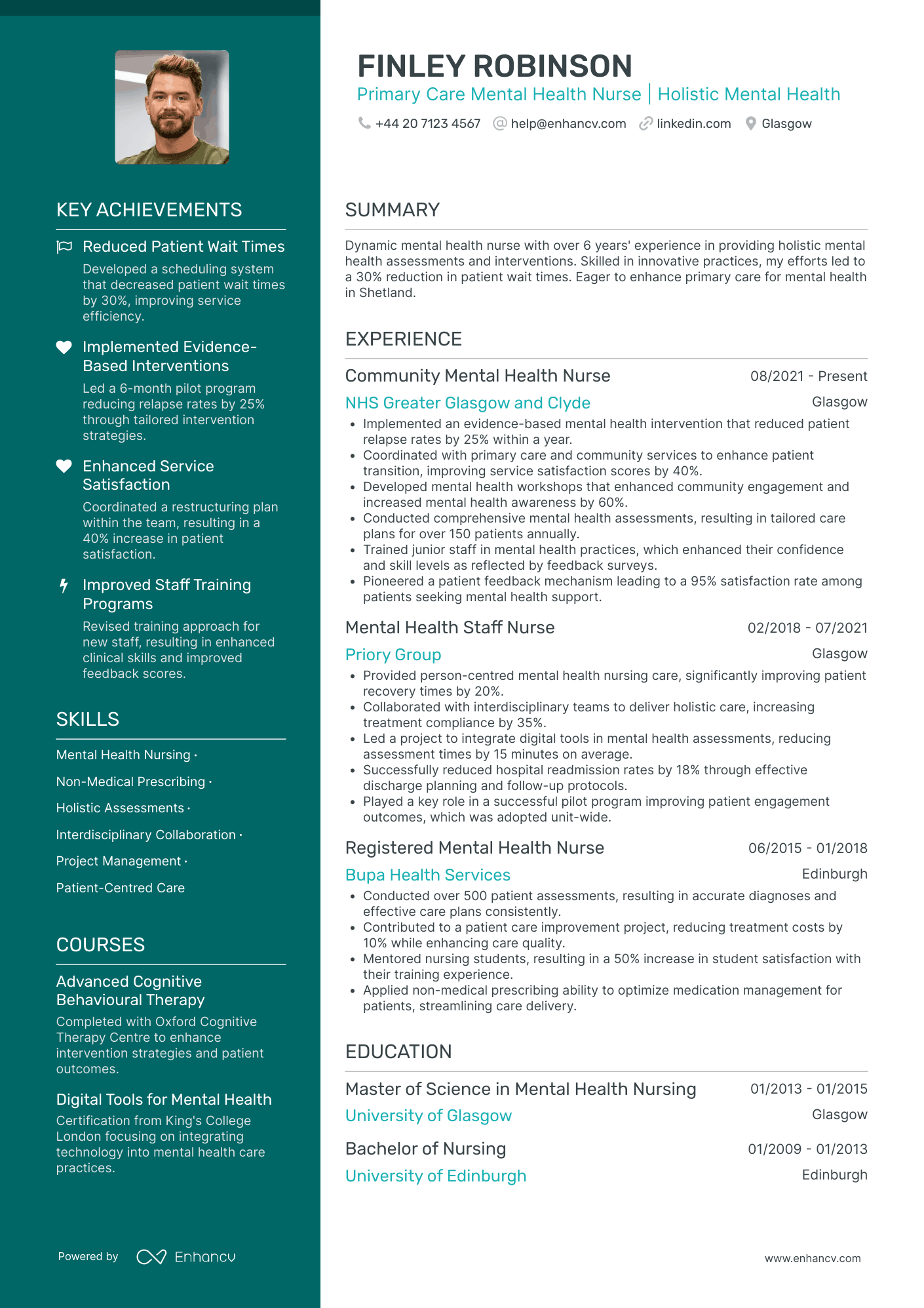
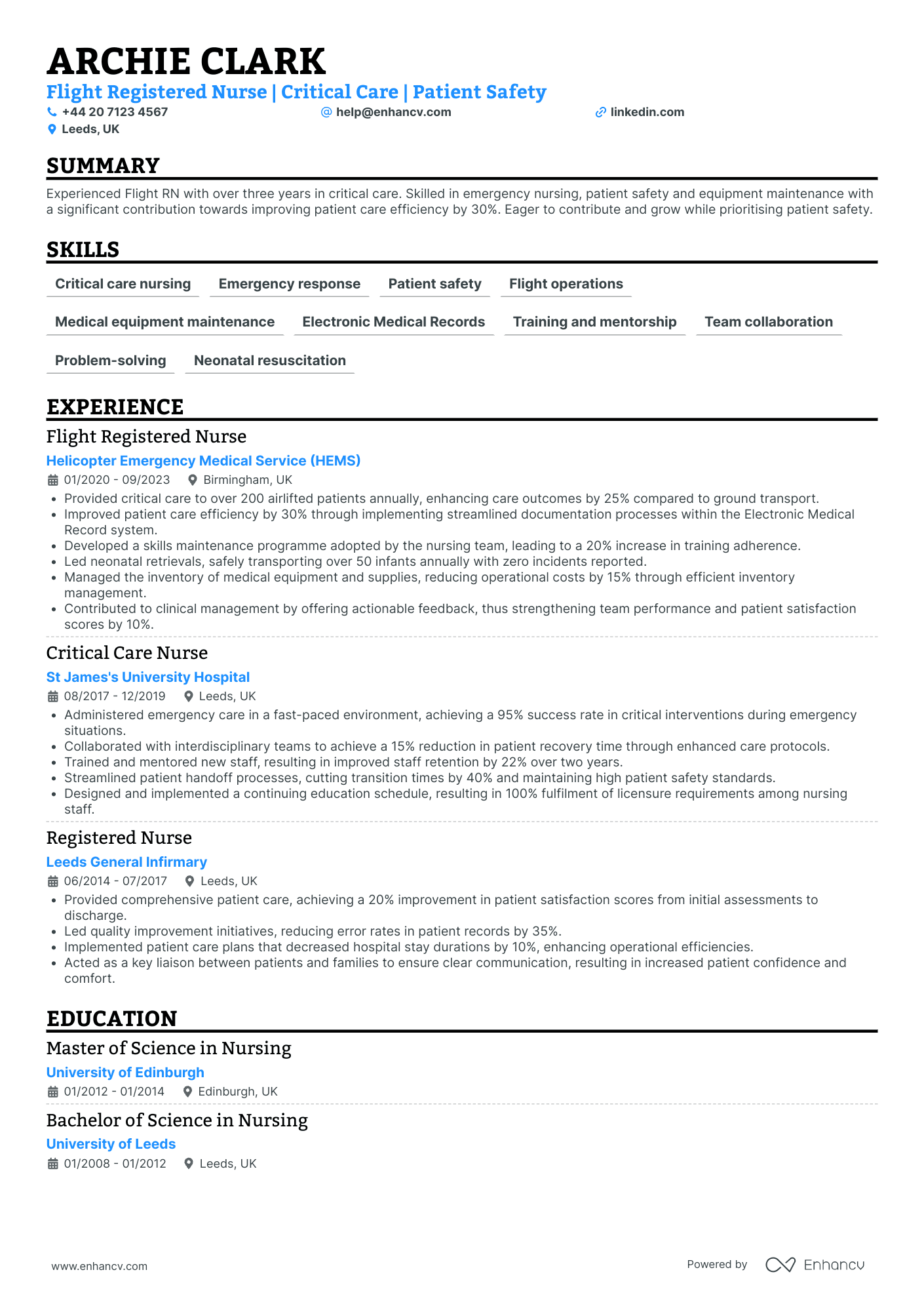
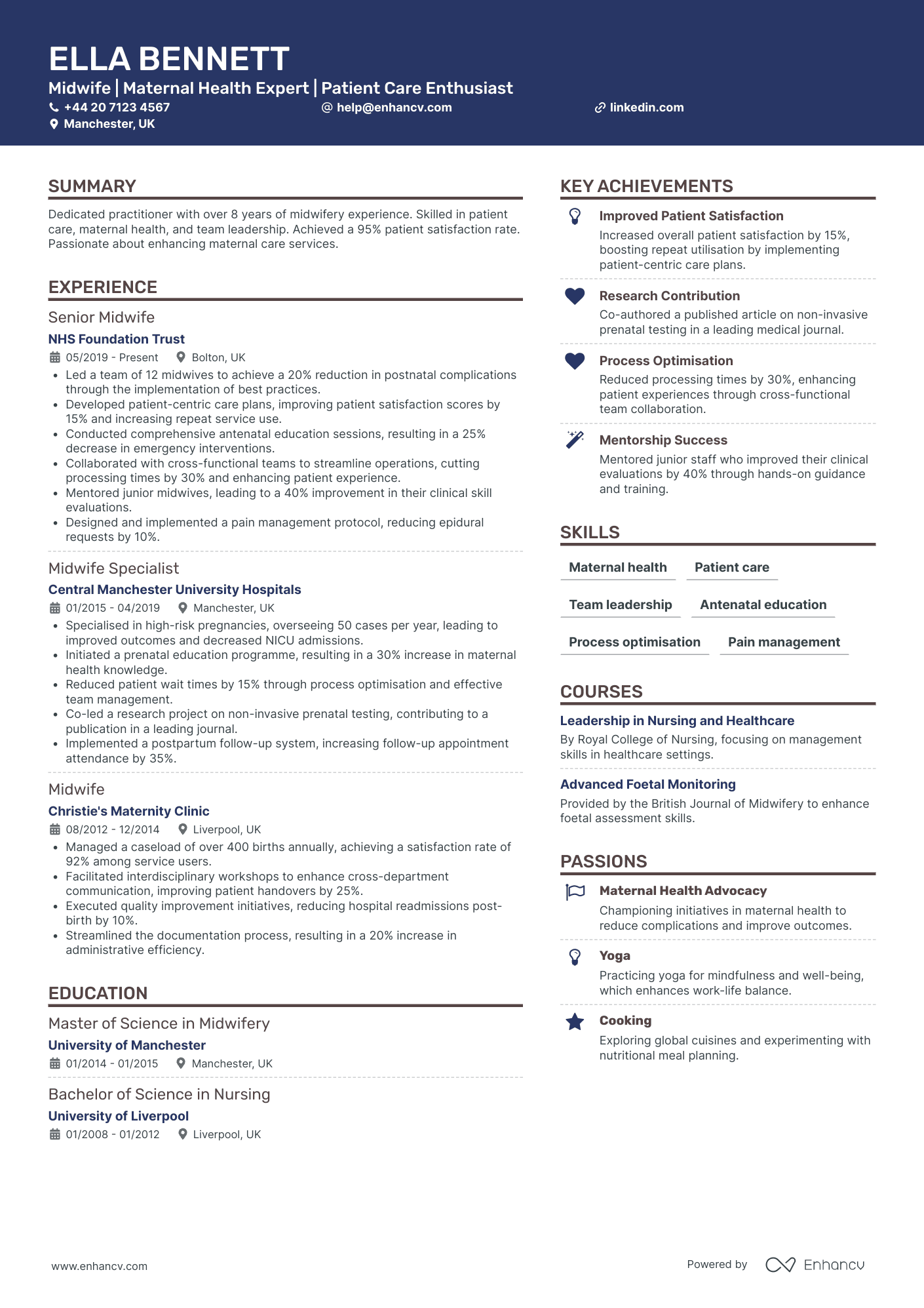
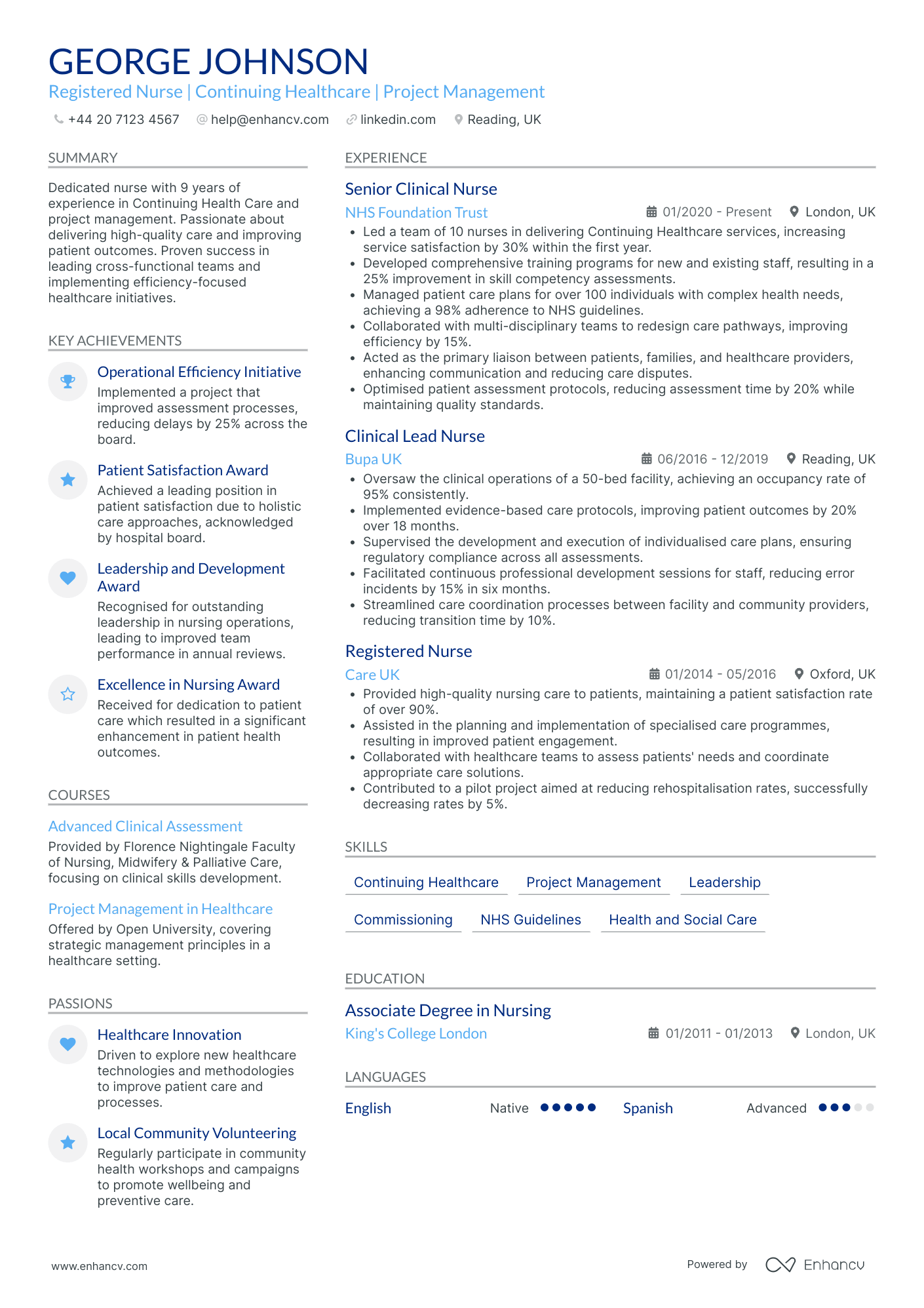
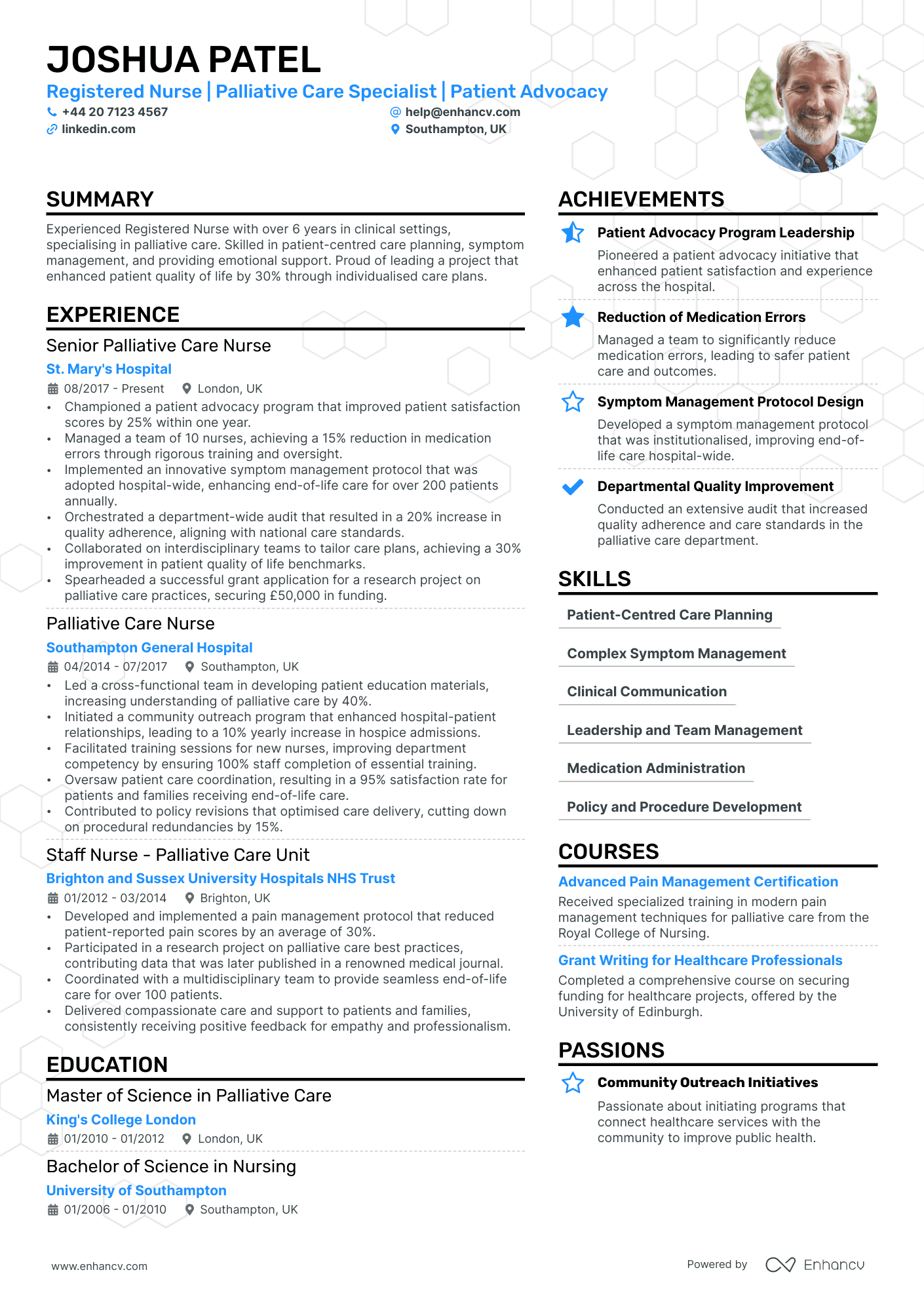
Most registered nurse CVs get the clinical part right and the format wrong. The skills are all there, buried under a layout that an NHS recruitment portal mangles before a ward manager reads a word.
Format is what gets you screened out or through. Get the file type, the length, and the structure right, and your medication administration, care planning, and assessment experience lands where it counts.

Key takeaways
- Send your CV as a PDF for direct applications so the layout holds, and keep a Word copy for agencies and portals that ask for one.
- Two pages, reverse chronological, standard headings. Ward and matron recruiters skim fast between shifts.
- Put your NMC pin and registration status near the top. It is the first thing a nursing recruiter checks.
- Name the clinical specifics employers list: medication administration, care planning, patient assessment, and clinical governance.
- Nearly all UK registered nurse roles are on-site, so lead with your location and shift availability.
- Open your personal statement with checkable evidence, not adjectives.
Formatting your registered nurse CV
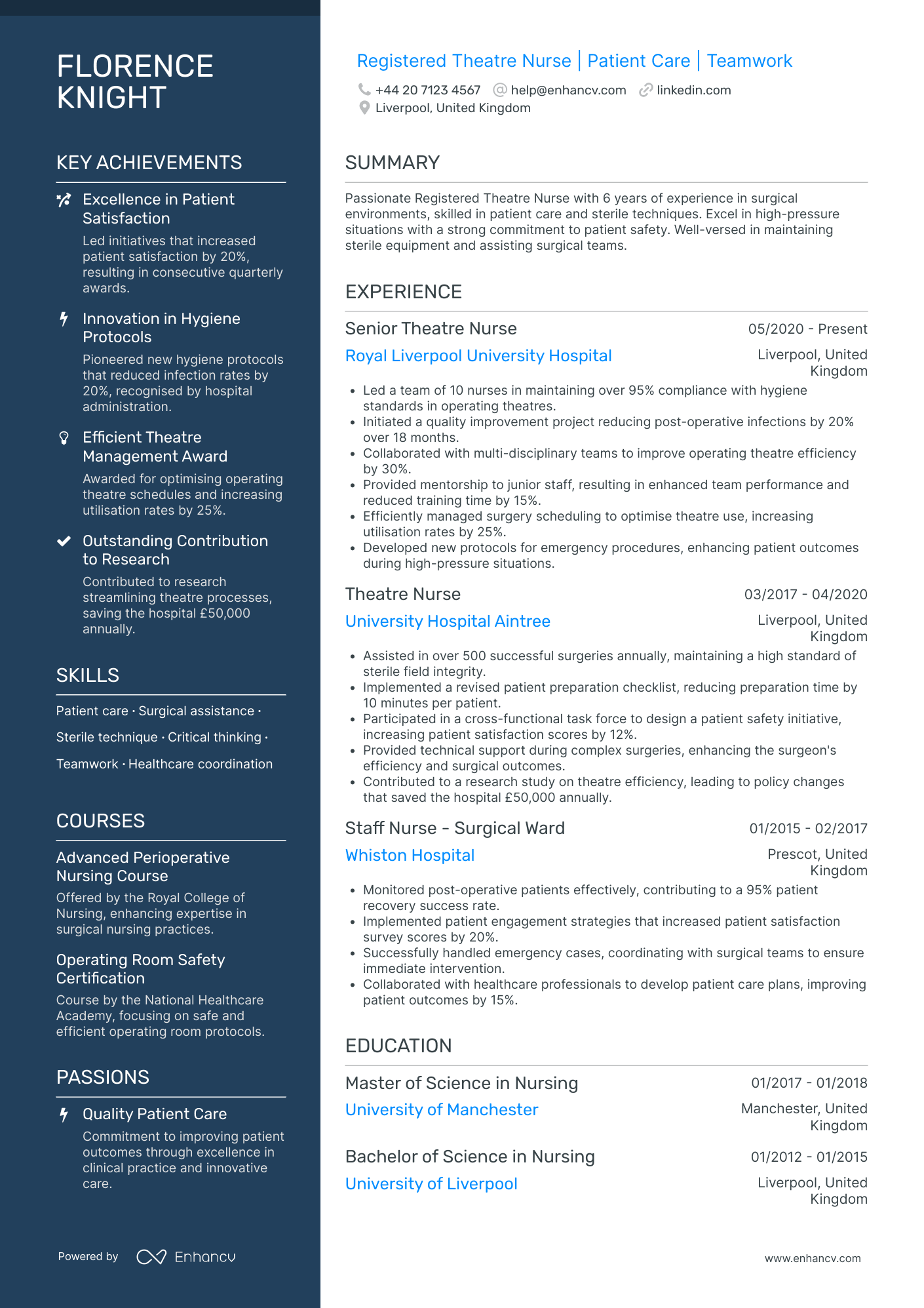
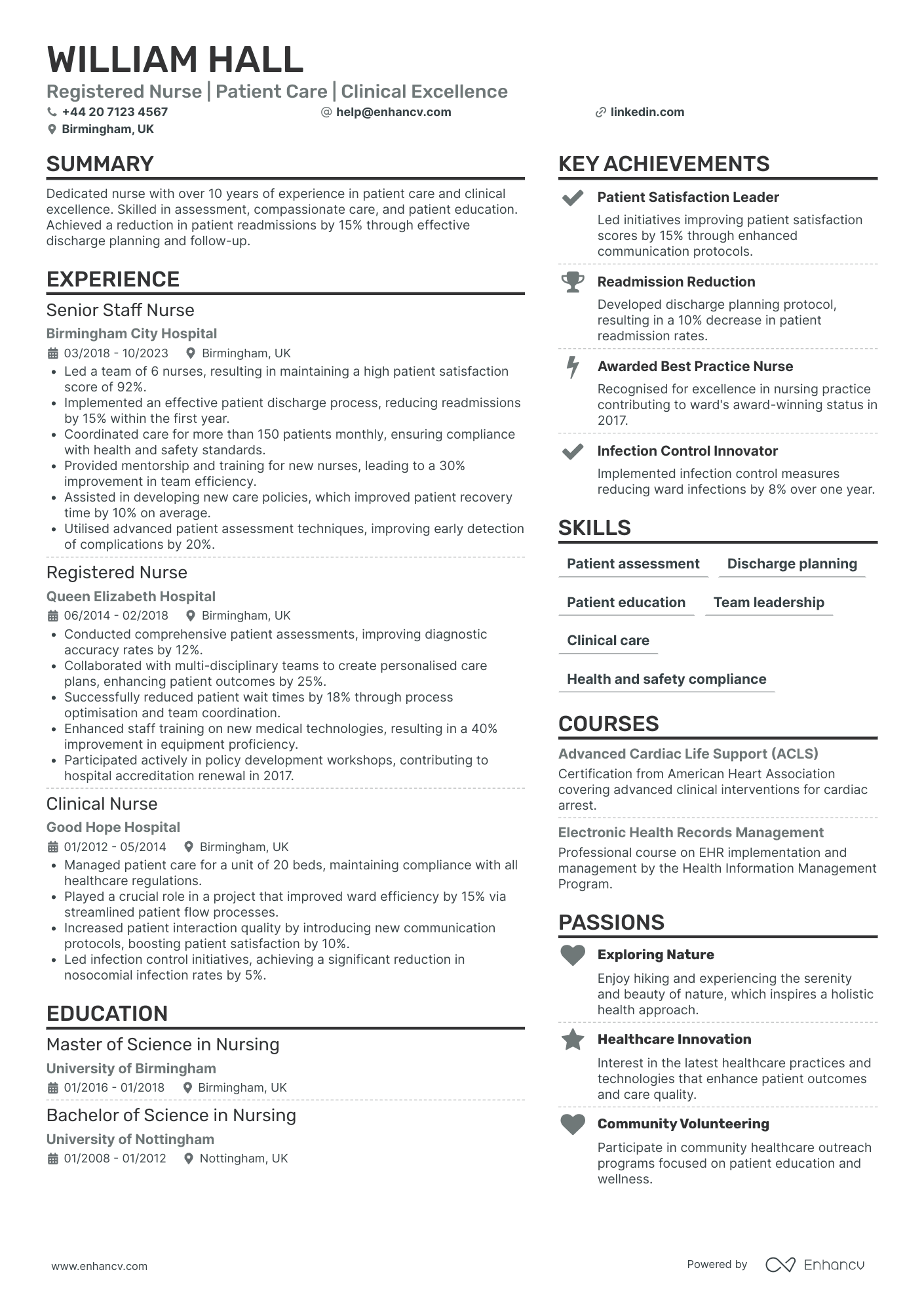
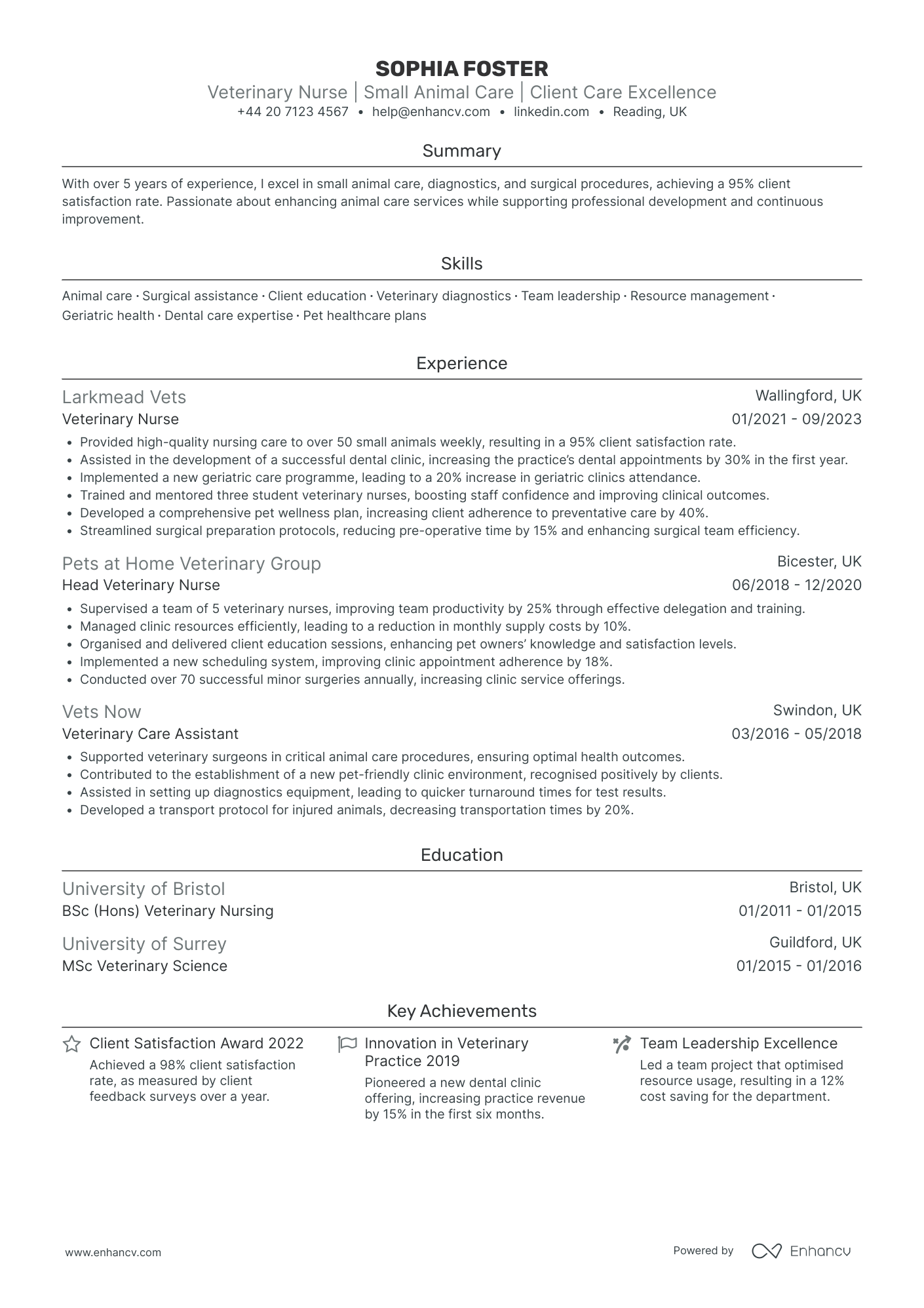
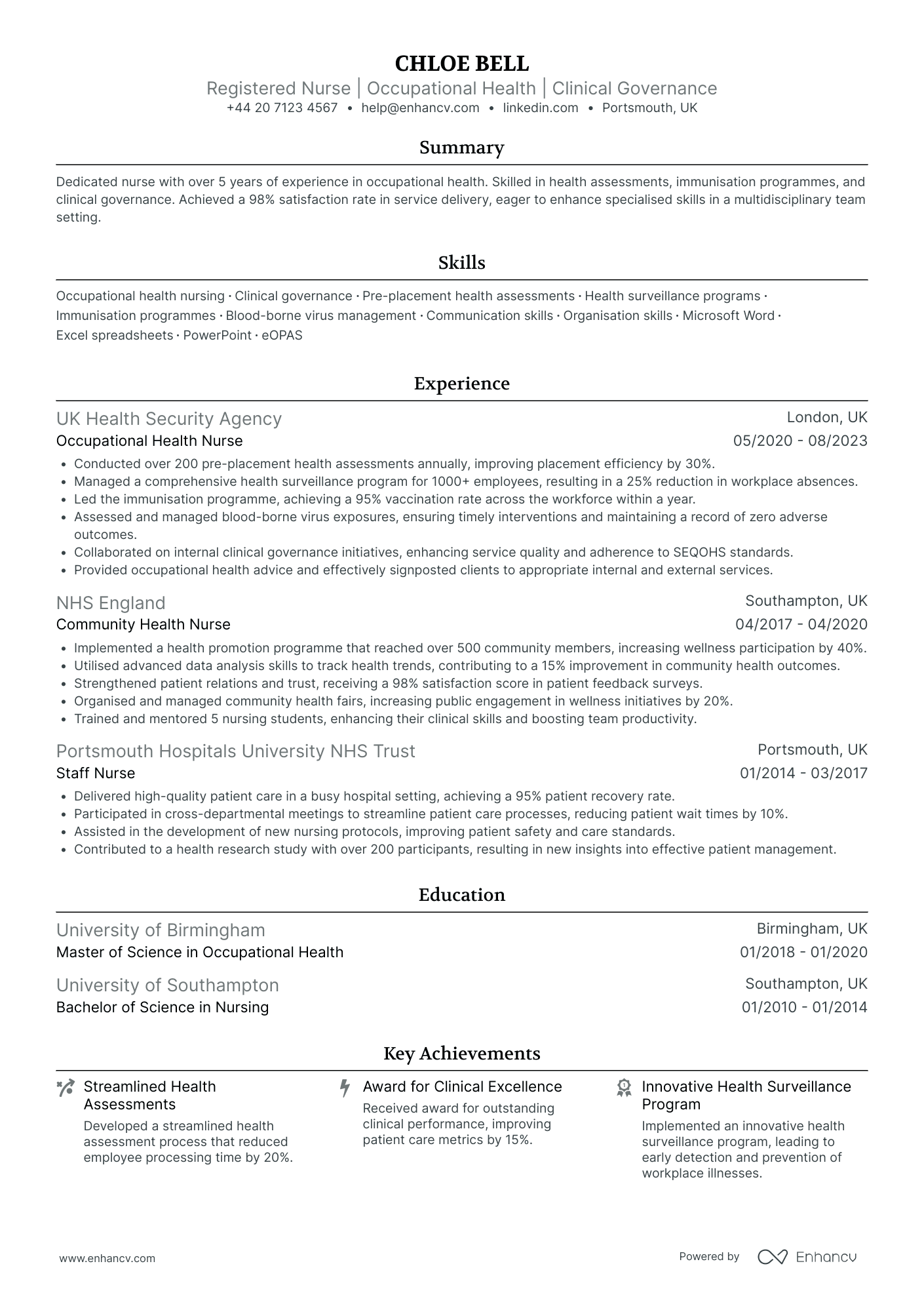
Keep it to two pages, reverse chronological, one column. Most UK registered nurse roles are mid-level, so a recruiter wants your recent posts and bands first, not a functional layout that hides them.
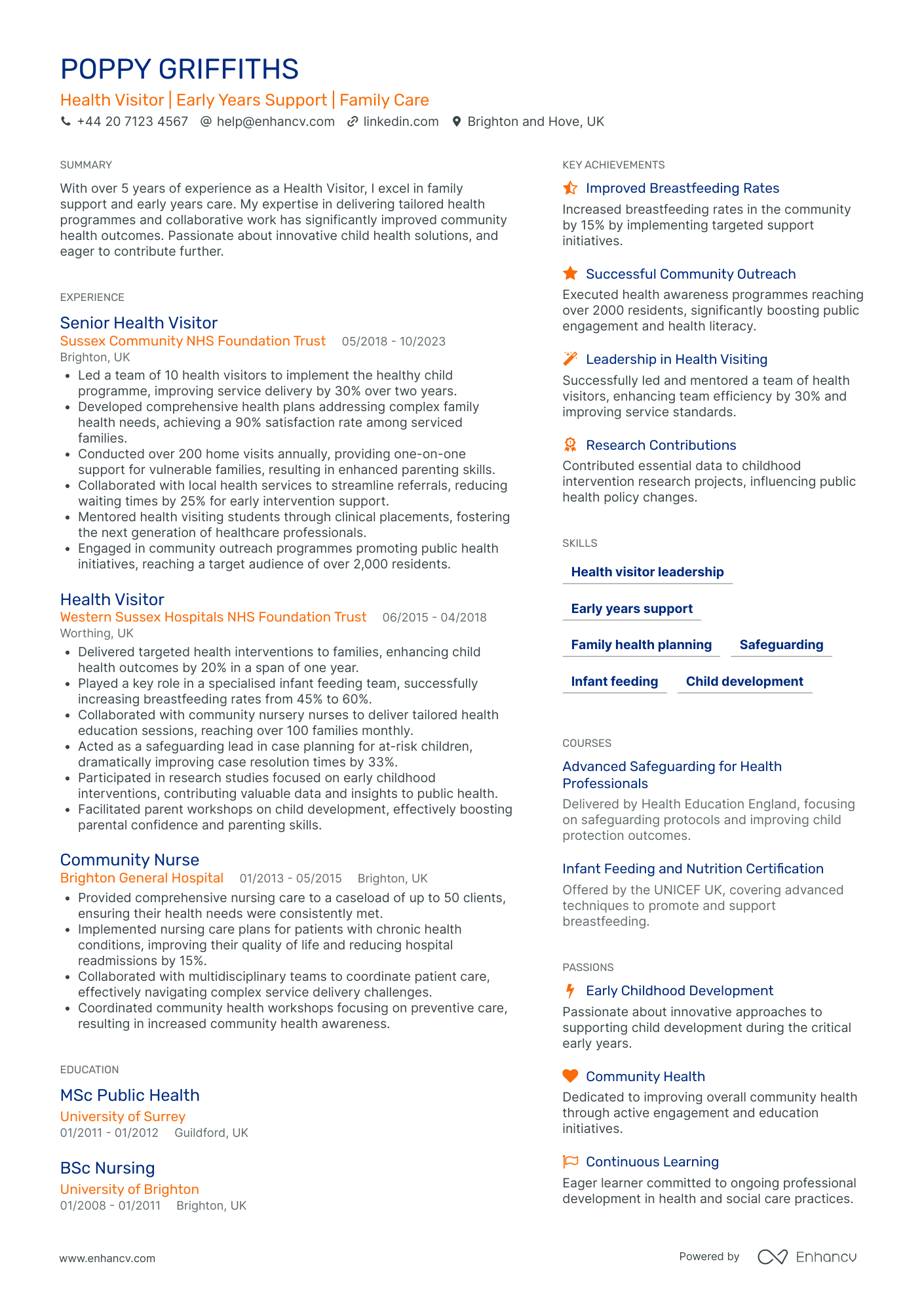
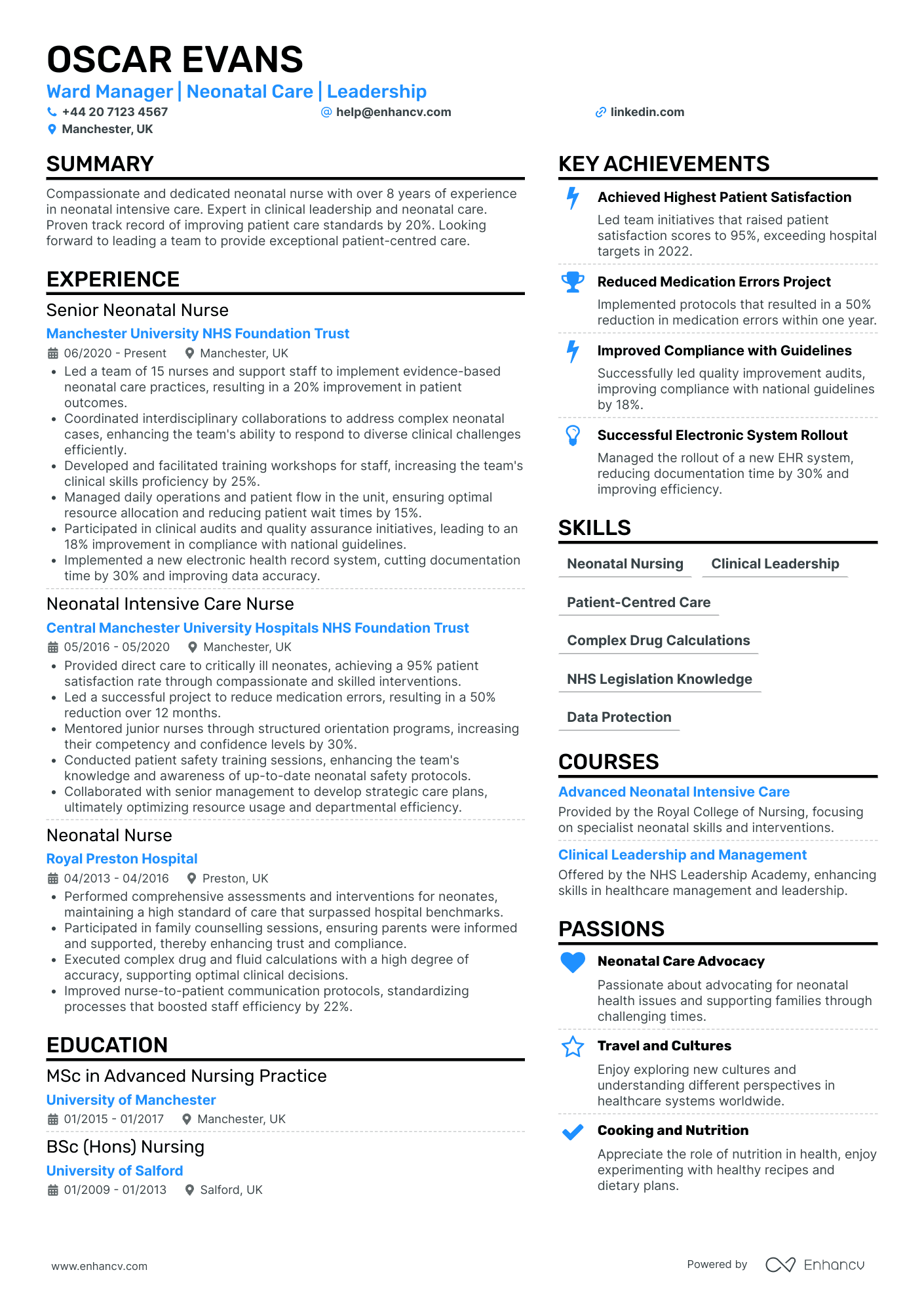
Use standard headings and a clean, readable font. Nursing applications route through NHS Jobs, Trac, and agency portals, so a plain CV format survives an ATS-friendly CV parse better than a two-column design with icons in the margins.
Send a PDF for direct applications and email so the layout holds on any screen. Keep a Word version too. NHS Jobs and many agencies ask you to paste or upload a Word file into their own template, and a locked PDF fights that.
A UK CV template you can edit in Word and then export to PDF covers both routes. Build from a tested layout rather than a blank document. Enhancv's CV templates export to a clean PDF and an editable Word file, so you have the right format ready for whichever the advert asks for.
Put your NMC pin and registration status in the header or a short registration line at the top. A nursing recruiter checks it before anything else, so do not make them hunt for it.
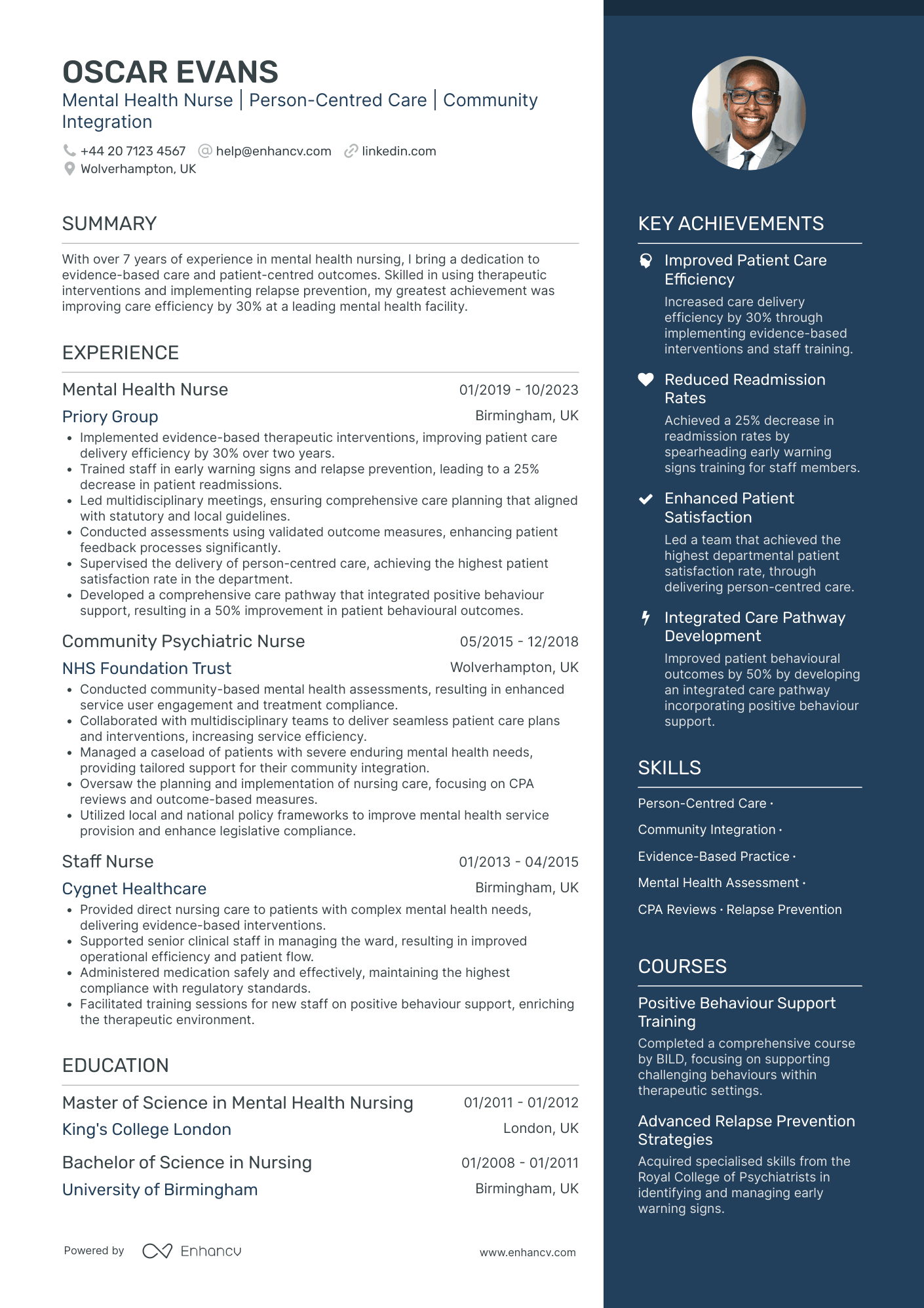
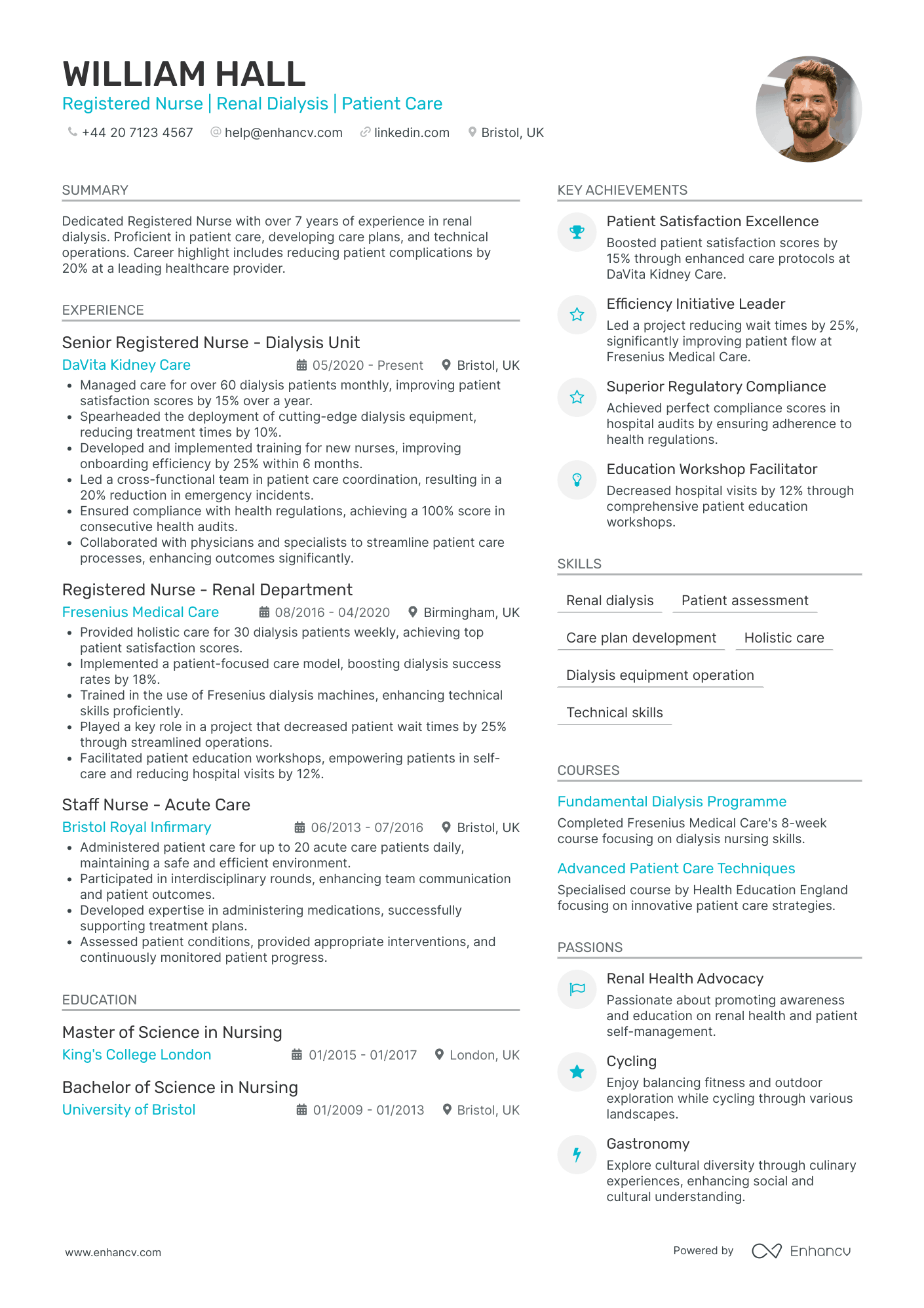
Leave off a photo, your date of birth, and marital status. UK CVs do not need them, and they only crowd out clinical detail. Your name, phone, email, town, and NMC pin are the header a nursing recruiter wants.
Keep the margins and spacing generous enough to read on a phone. A lot of shortlisting happens on a screen between other jobs, and a cramped, edge-to-edge page reads as harder work than the next candidate's.
Name the file sensibly before you send it. Your name and the role beats 'CV final v3', and a recruiter downloading a stack of applications should be able to find yours at a glance. Many NHS Jobs adverts also ask for a supporting statement alongside the CV, so keep a version of your evidence you can adapt to that box rather than starting from nothing.

A section order that works for an experienced nurse
Header with NMC pin and location. Personal statement. Clinical experience by post and band. Skills. Registration, qualifications, and mandatory training. This puts your registration and recent wards in front of a recruiter who is skimming between shifts.

PRO TIP
When an advert says 'upload your CV', send a PDF so nothing shifts. When it says 'complete the application form' or asks for a Word document, have a .docx ready that mirrors your CV word for word. Keeping both versions in sync means you are never rewriting under a deadline.
Is your resume good enough?
Drop your CV here or choose a file. PDF & DOCX only. Max 2MB file size.
What the UK registered nurse market looks like
Knowing the market shapes the CV. Here is where the work is and what employers actually ask for.
| What | UK registered nurse roles |
|---|---|
| Where the work happens | On-site, 98% (315 of 321 UK postings in the last ~30 days, Enhancv's internal job feed) |
| Experience level asked for | Mostly mid-level (286 of 321 postings), with a small number of senior, entry, and lead roles |
| Skills that recur most | Medication administration, care planning, and nursing |
| Also frequently listed | Patient safety, patient assessment, clinical governance, and evidence-based practice |
Two things in that table should shape your CV.
Nursing is almost entirely on-site, so a ward or community team needs to see you can reliably get there and cover the shift pattern. Put your town and availability in the header.
The sample skews heavily to mid-level posts, which is why a reverse-chronological CV that leads with your recent bands beats a functional one. Write for a recruiter who expects a few years behind you and wants to see progression.
The skills column is your keyword list. Mirror medication administration, care planning, and patient assessment where they are true of you, in the words the advert uses. That alignment is what a keyword scan and a human reviewer are both looking for.
The same clinical terms surface again and again because they map to the everyday work of the ward, not to a trend. Patient safety, clinical governance, and evidence-based practice are worth naming explicitly, because they signal you understand the accountability side of the role, not just the tasks.
Writing your registered nurse personal statement
Three or four sentences at the top: your registration status, your clinical strengths, the setting you work in, and the role you want. See more personal statement examples if the opening line will not come.
Skip the adjective soup. "Compassionate, dedicated, and hardworking nurse" tells a matron nothing they can check.
Aim the last sentence at the band and setting you want. A Band 5 moving to Band 6 should name the step, the specialty, and the region, so the recruiter reads intent rather than a generic hope for any nursing job.
An experienced nurse leads with years, ward type, and the responsibilities that mark seniority: mentorship, audit, shift coordination, safe staffing decisions. A newly qualified nurse leads with the registration and the strongest placement. Same structure, different evidence.
Keep it to three or four sentences and put it right under the header. It is a headline, not a cover letter, and a recruiter will read the experience section for the detail. Lead with evidence instead:
Registered nurse personal statement example
NMC-registered adult nurse with five years on a busy acute medical unit, leading medication rounds for a bay of up to eight patients and mentoring student nurses through their placements. Confident in patient assessment, care planning, and escalating the deteriorating patient using NEWS2. Looking to bring safe, evidence-based practice to a Band 6 acute care role in Greater Manchester.
Personal statement to avoid
Compassionate, dedicated, and hardworking registered nurse with a passion for patient care. A strong team player who works well under pressure and always goes the extra mile for every patient.
The weak version could describe any nurse on the register. The strong one names the setting, the patient load, the tools, and the band. Those are the details a recruiter can picture and check.
When a nursing CV crosses our desk, we read the first six lines for the registration and the clinical specifics. An NMC pin, the ward type, the patient load, the assessment tools you actually use. A line like "led medication rounds for eight acute patients with a clean administration record" tells us more than a paragraph of adjectives. Put the checkable facts first, and let a clean format keep them easy to find.
Writing your registered nurse experience section
Write each post the same way: a dated heading with your job title, ward or unit, and band, then bullets that show what you did and the outcome. Lead each bullet with an action verb. For the mechanics, see work experience on a CV.
Nursing is measurable, even when a shift does not feel like it. Patients per shift, medication rounds, audit scores, complaints avoided, students signed off, a pressure-ulcer rate brought down. Those are your CV achievements.
If your career runs through rotational posts or agency shifts, group them so the CV does not read as job-hopping. A single heading for a rotational programme with the wards listed underneath keeps the progression clear.
Show progression where you have it. Moving from a rotational Band 5 to a specialist Band 6, or picking up mentorship and audit responsibilities, tells a recruiter you grow into a role rather than sit still in it. Make the band and the scope obvious in each heading.
Write for the reader who has thirty CVs to get through before the end of a shift. Front-load the bullet with the result, keep it to one line where you can, and let the numbers do the persuading. One quantified line about a medication safety audit beats three lines listing routine duties.
Tailor each application: pull the clinical terms from the advert and mirror them where they are true of you. Enhancv's CV tailoring feature reads the advert and suggests the matching edits, which saves rewriting from scratch each time.
- Deliver direct nursing care to a bay of up to eight acute patients, leading medication administration rounds with a documented error-free record across the last 18 months
- Complete admission assessments and care plans, using NEWS2 to escalate deteriorating patients and cut time to medical review
- Mentor and sign off student nurses on placement, supporting three cohorts through their clinical competencies
- Contribute to monthly ward audits on infection control and medication safety, helping raise compliance scores at review
PRO TIP
Nursing adverts list clinical specifics, not soft-skill clouds. Mirror the ones you can back: "medication administration", "care planning", "patient assessment", "NEWS2", "clinical governance". Name each one the way the advert does, and only where it is true of you.
Skills to put on your registered nurse CV
Read a dozen live nursing adverts and the same demands repeat, and they are clinical, not generic. Medication administration, care planning, patient assessment, patient safety, and clinical governance come up again and again. Those are your hard skills, listed in the words the adverts use.
The soft skills that matter are the checkable ones: communication, compassion, teamwork, and resilience. Prove each in a bullet rather than claiming it.
Group them so a reader can scan. A short clinical-skills block and a systems block, naming the electronic patient record you use, beats one long undifferentiated list.
Name the systems by their real names. Nervecentre, SystmOne, EMIS, and the specific electronic patient record or e-prescribing tool you use tell a recruiter you will be productive faster than a generic line about computer literacy. Digital confidence is part of modern ward work, so treat it as a clinical skill, not an afterthought.
List only what you can stand behind. If you are trained and competent in a clinical task, name it. If you are still building it, put it under training rather than key skills. Overclaiming a competency is the fastest way to lose credibility at interview, where a nurse manager will ask you to talk through it.
Top skills for your registered nurse CV:
Medication administration
Care planning
Patient assessment
Patient safety
Clinical governance
Evidence-based practice
Wound care
Record keeping (digital care systems)
Communication
Compassion
Teamwork
Resilience
Attention to detail
NMC registration, qualifications, and training
Your NMC registration is the entry ticket. Put your pin and registration status where a recruiter sees it in seconds, in the header or a short registration line at the top.
List your nursing degree with the awarding university and year in your education section, then your revalidation status and post-registration qualifications: practice assessor or supervisor status, immediate life support, IV administration, and specialist courses relevant to the role.
Spell out where your registration sits. Adult, mental health, children's, or learning disability nursing are different parts of the register, and a recruiter needs to see the right one at a glance. If you hold more than one, or an overseas qualification recognised through the NMC test of competence, say so plainly.
Keep certificates current and dated. Naming your revalidation date and mandatory training saves the employer a question and signals you are ready to work. Mandatory training moves fast in nursing, so a dated basic life support or safeguarding certificate carries more weight than an undated line that could be five years old.
Registered nurse CV with no experience
A newly qualified nurse is not writing a no-experience CV. You have clinical placements, and they count as experience.
Lead with your NMC registration or pin-pending status, then write your placements like jobs: the setting, the length, and what you did. A management placement on an acute ward belongs on the CV with dated bullets, the same as a paid post. See CV examples for a first job for the structure.
Most first posts are Band 5 with preceptorship built in, so employers expect you to still be consolidating. Show the competencies you signed off and the settings you have worked in, and use a skills-based CV so your training leads. A recruiter reading a newly qualified CV is not comparing you to a nurse with ten years behind them. They want proof you are safe, keen, and ready for structured support.
Quantify the placements the same way you would a paid post. The number of patients you cared for under supervision, the medication rounds you assisted with, the assessments you completed, the multidisciplinary meetings you joined. Real placement detail beats a vague line about gaining valuable experience.
Add your dissertation topic, any bank or healthcare-assistant work, and the mandatory training you hold. Lived clinical exposure plus a clear registration path reads as ready to start, and it is exactly what a preceptorship lead is hoping to see.
Conclusion
Get the format right first: two pages, reverse chronological, a PDF for direct applications and a Word copy for the portals that ask.
Then lead with your NMC registration and the clinical specifics employers screen for, and mirror the advert's terms where they are true of you.
Pair the CV with a short cover letter that says why this ward, and you give a busy recruiter every reason to shortlist you.
Author's take - the Enhancv team
When a nursing CV crosses our desk, we read the first six lines for the registration and the clinical specifics. An NMC pin, the ward type, the patient load, the assessment tools you actually use. A line like "led medication rounds for eight acute patients with a clean administration record" tells us more than a paragraph of adjectives. Put the checkable facts first, and let a clean format keep them easy to find.