



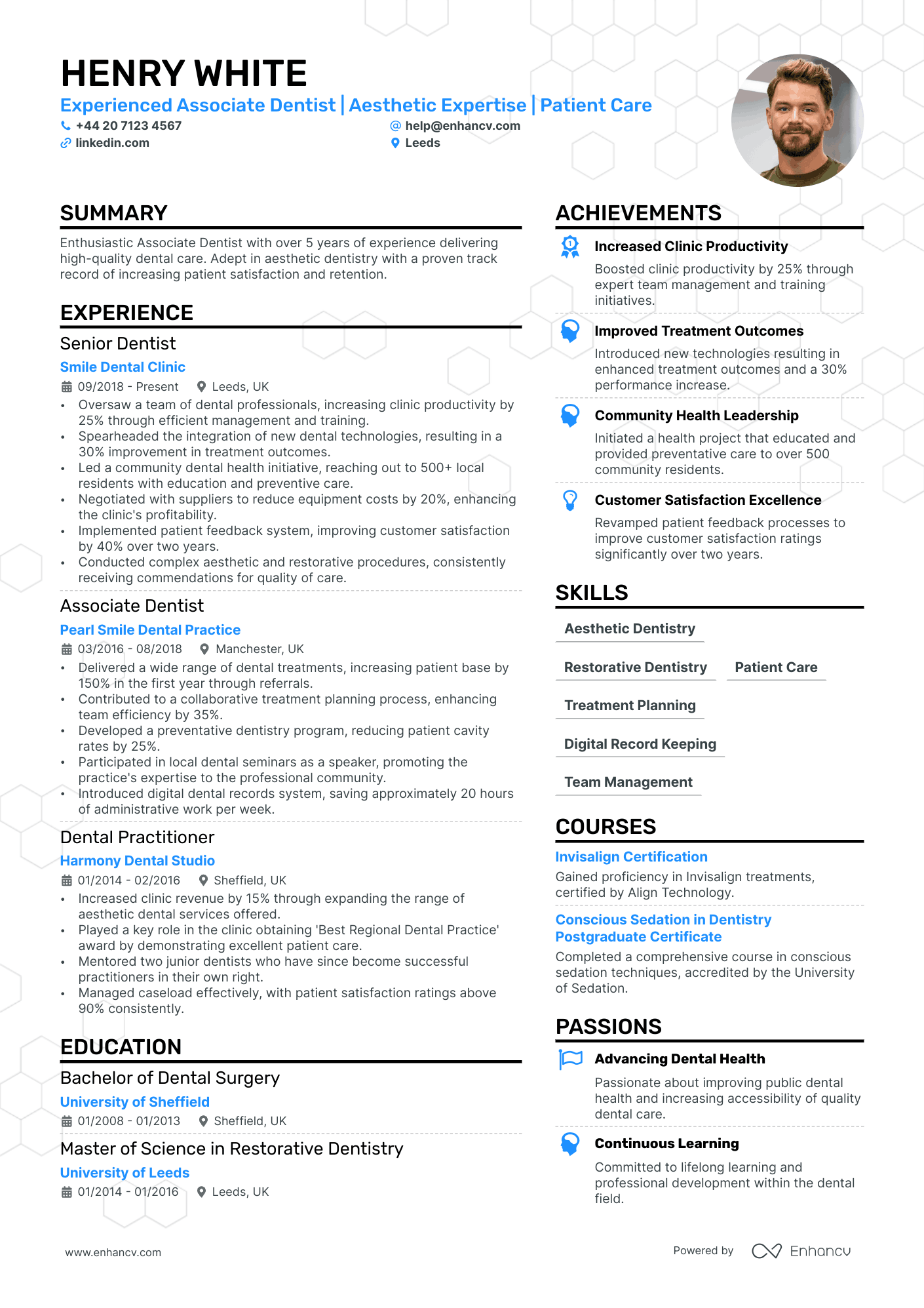
Most dentist CVs read like a duty roster. A list of procedures, a GDC number, and little sign of the clinician behind them.
The CVs that get shortlisted do two things well. They are formatted so a busy practice principal can scan them in under a minute, and they prove clinical judgement with specifics rather than a menu of treatments. If you want the fundamentals first, start with how to write a CV.

Key takeaways
- Put your GDC registration number in the header. It is the first thing a practice checks.
- Lead with a template built for clinical roles: clean, single column, standard headings a practice manager can scan fast.
- Keep it to two pages, reverse chronological, and send it as a PDF unless the advert asks for Word.
- Open with a short personal statement built on your scope of practice and one concrete result, not a list of adjectives.
- Prove your work with numbers: patients on your list, UDAs delivered, recall rates, and complaint-free audits.
- List indemnity, a current DBS check, and recent CPD. Practices screen for all three before they interview.
Choosing a dentist CV template
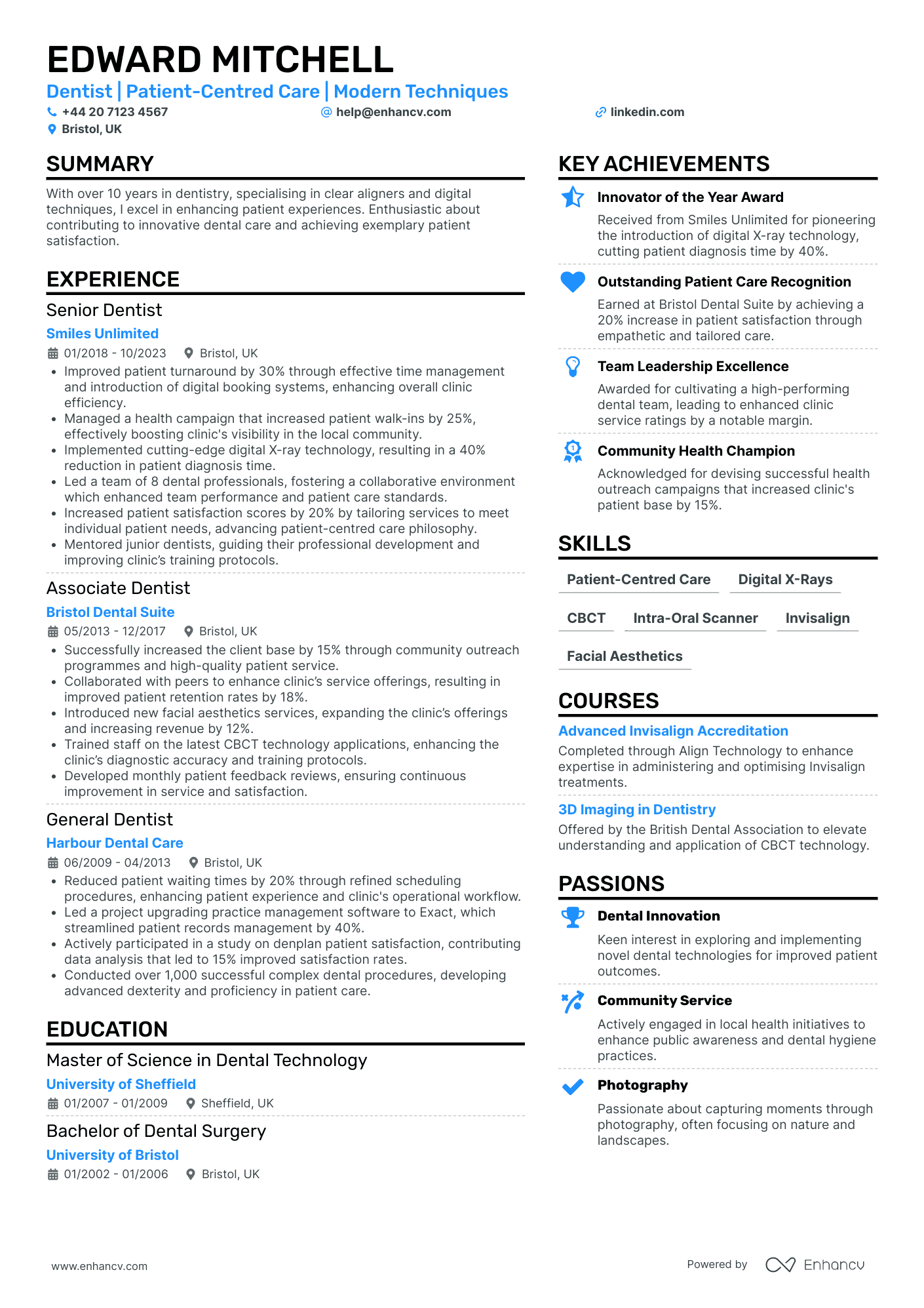
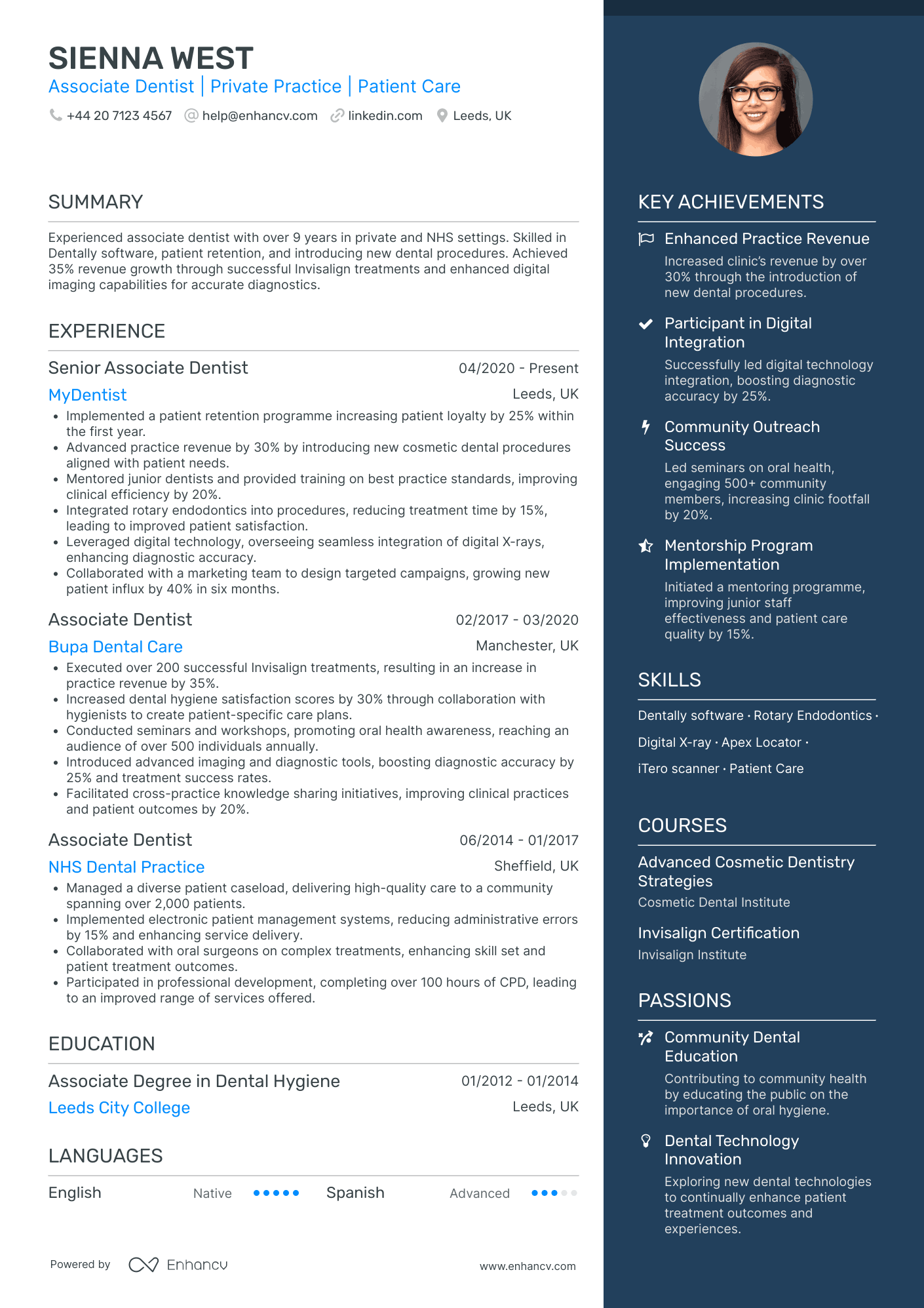
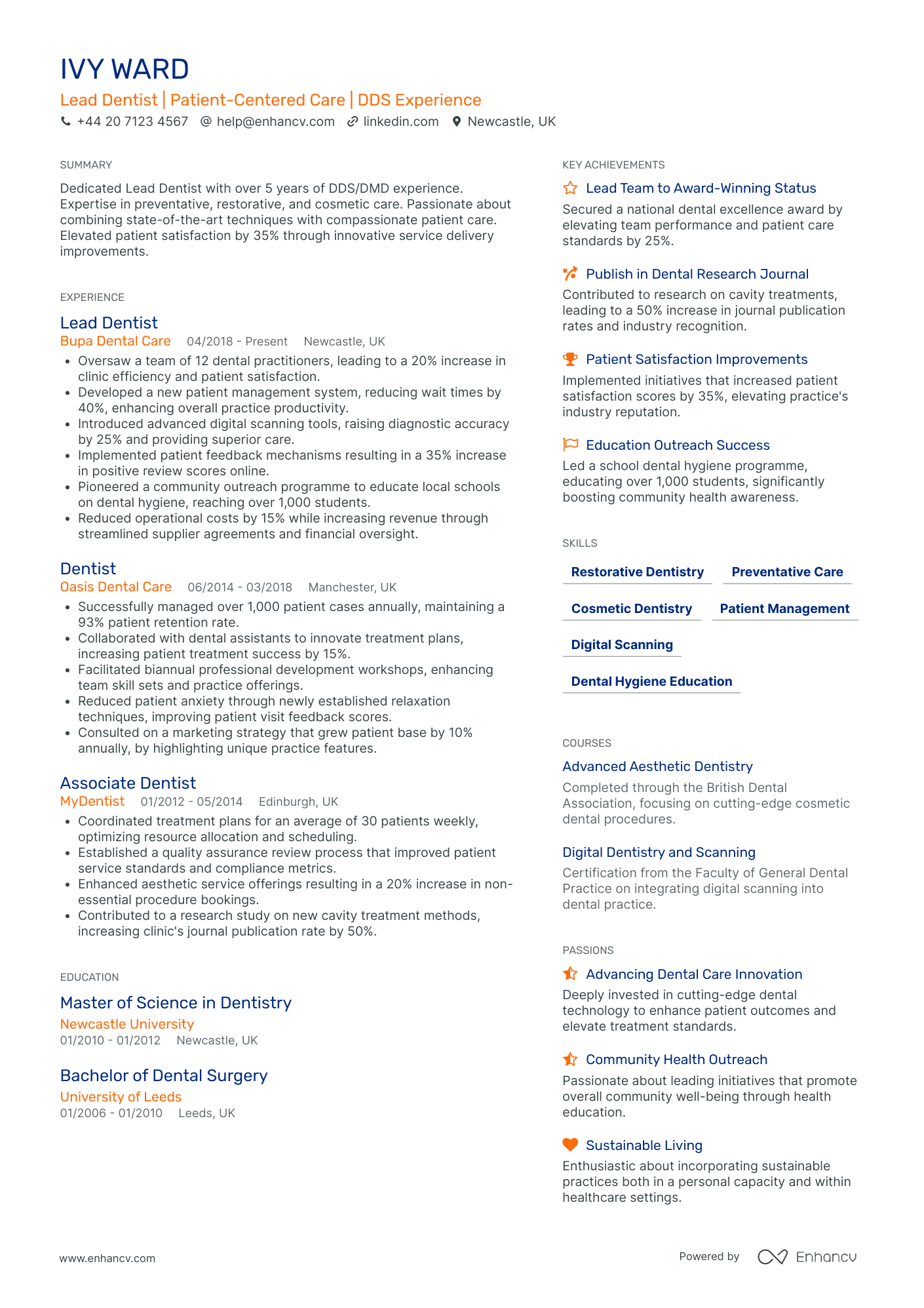
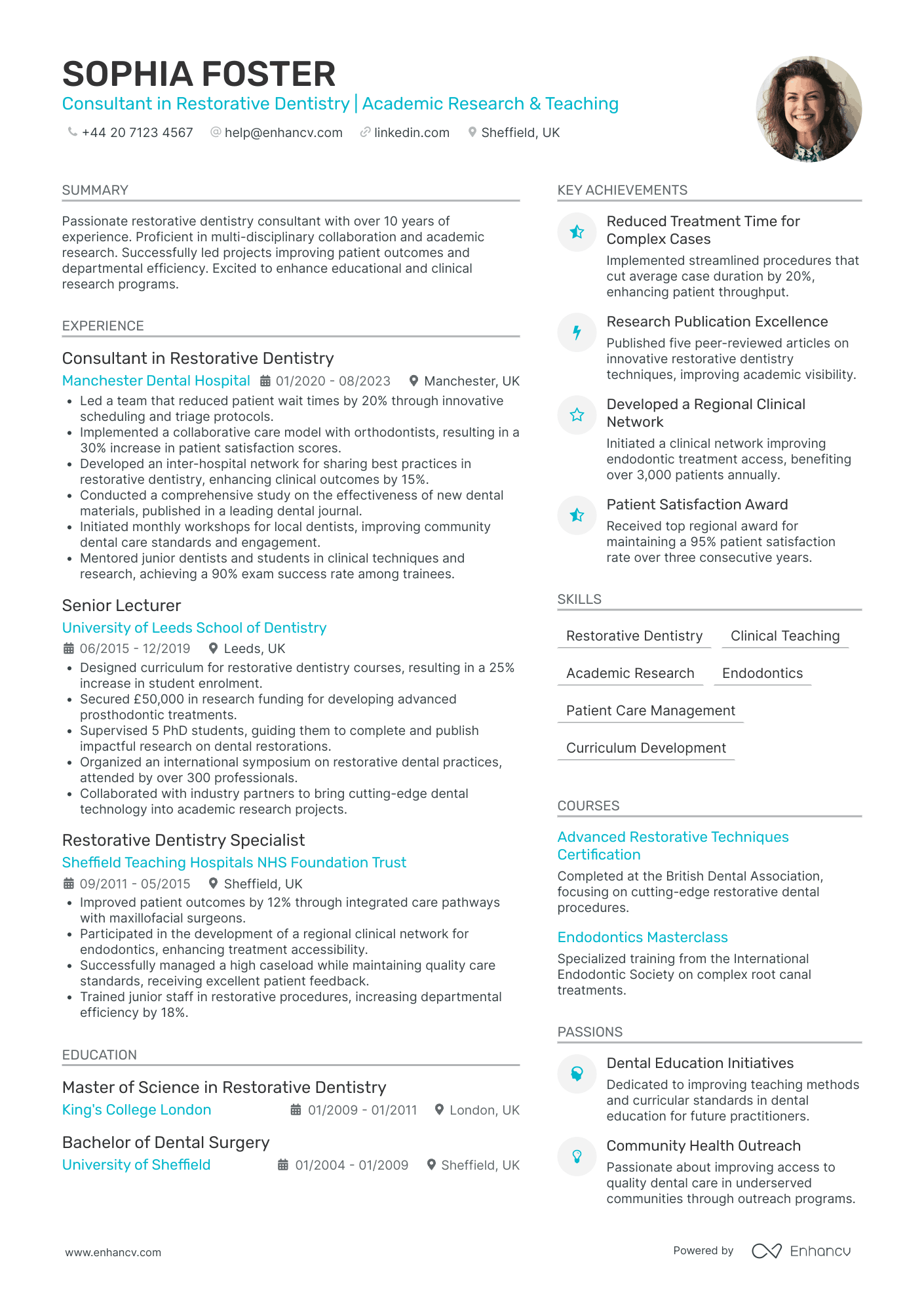
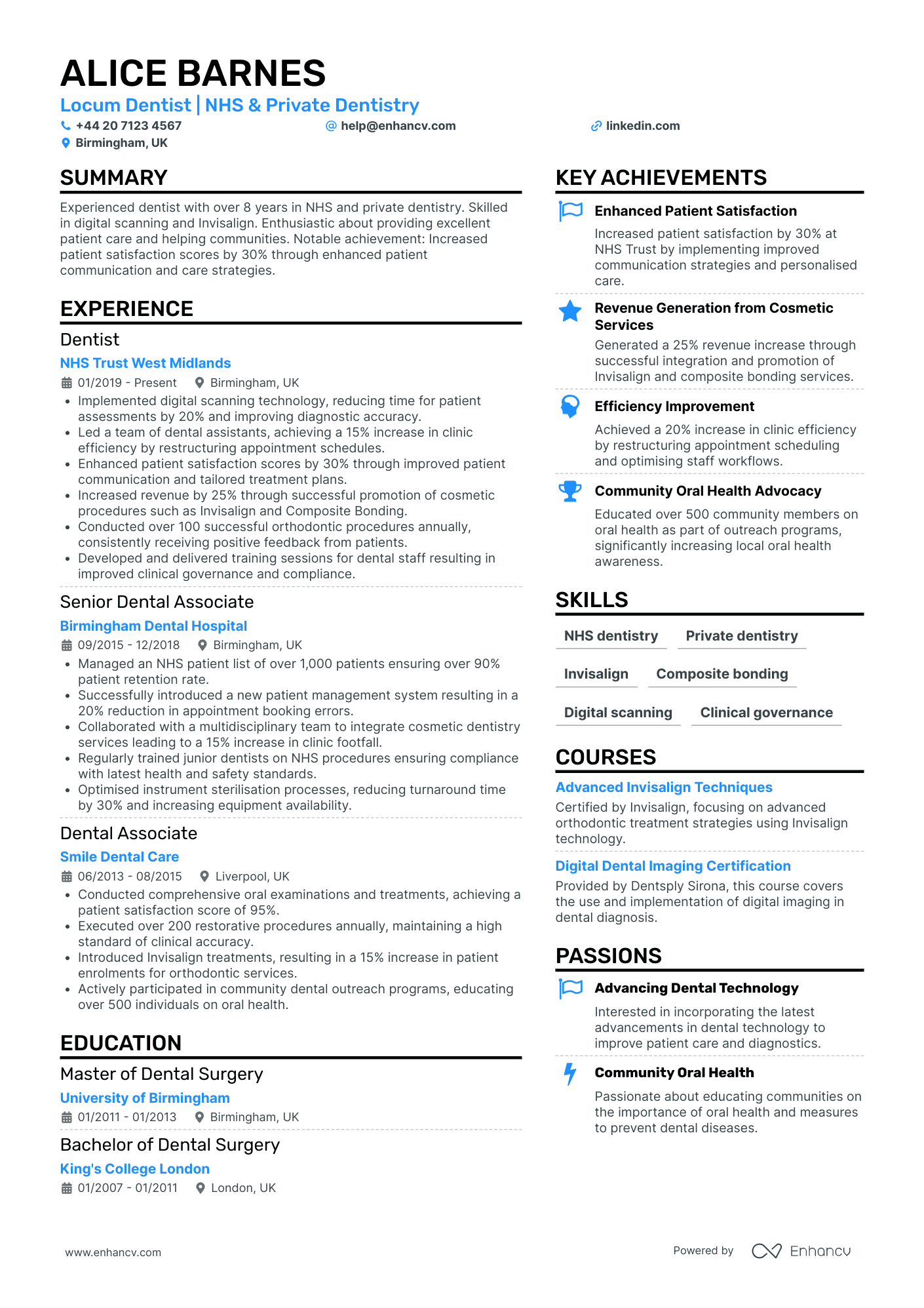
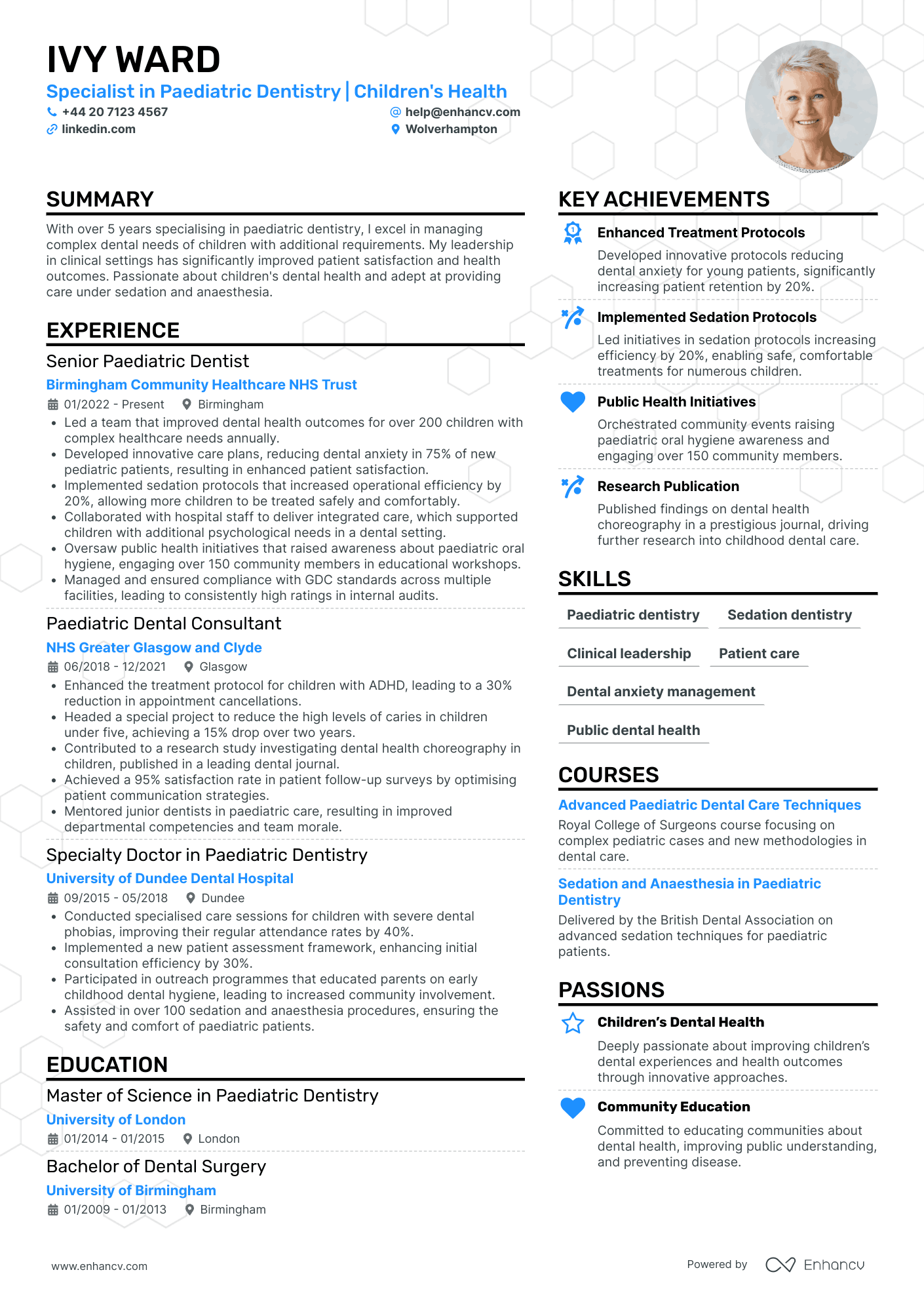
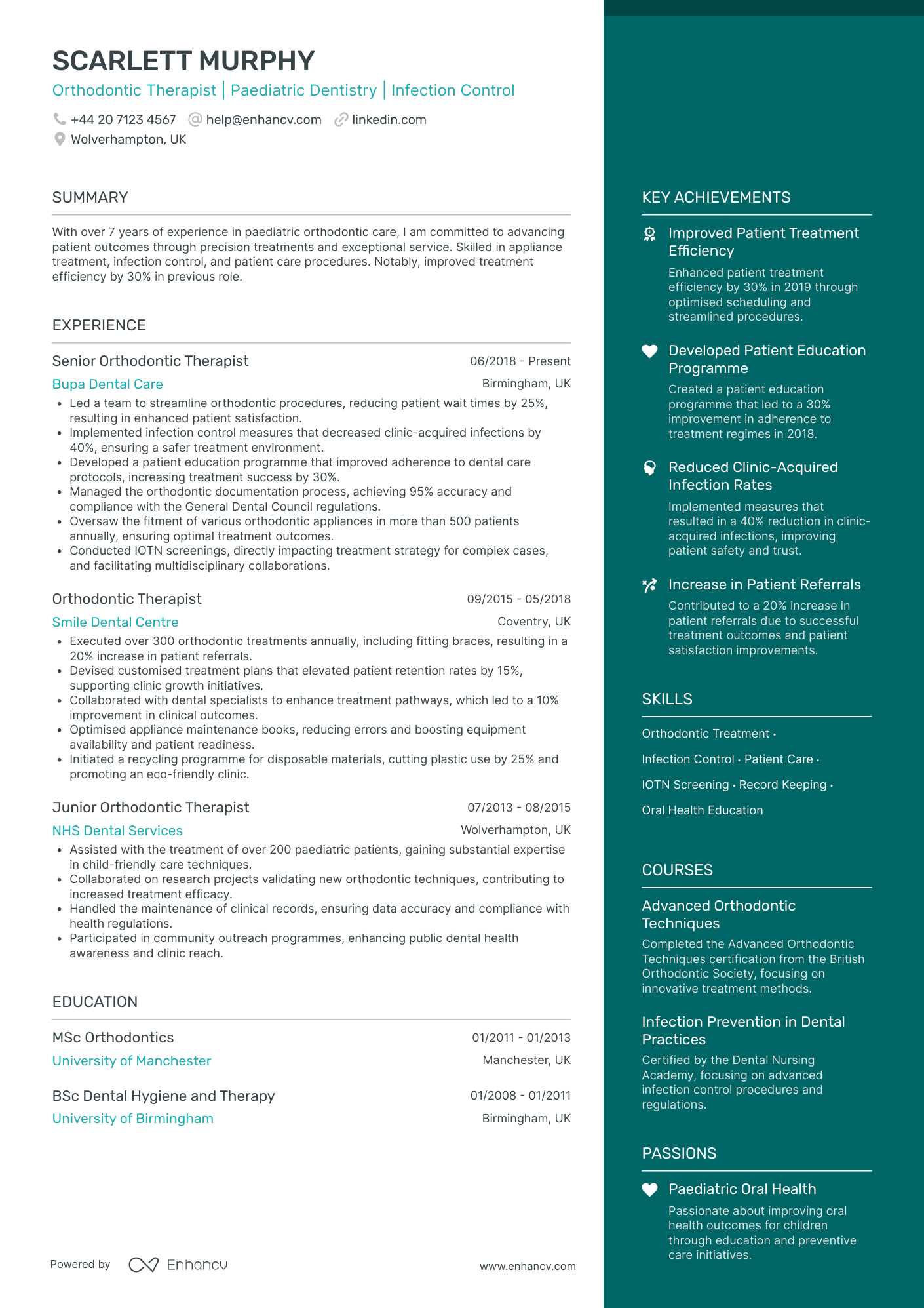
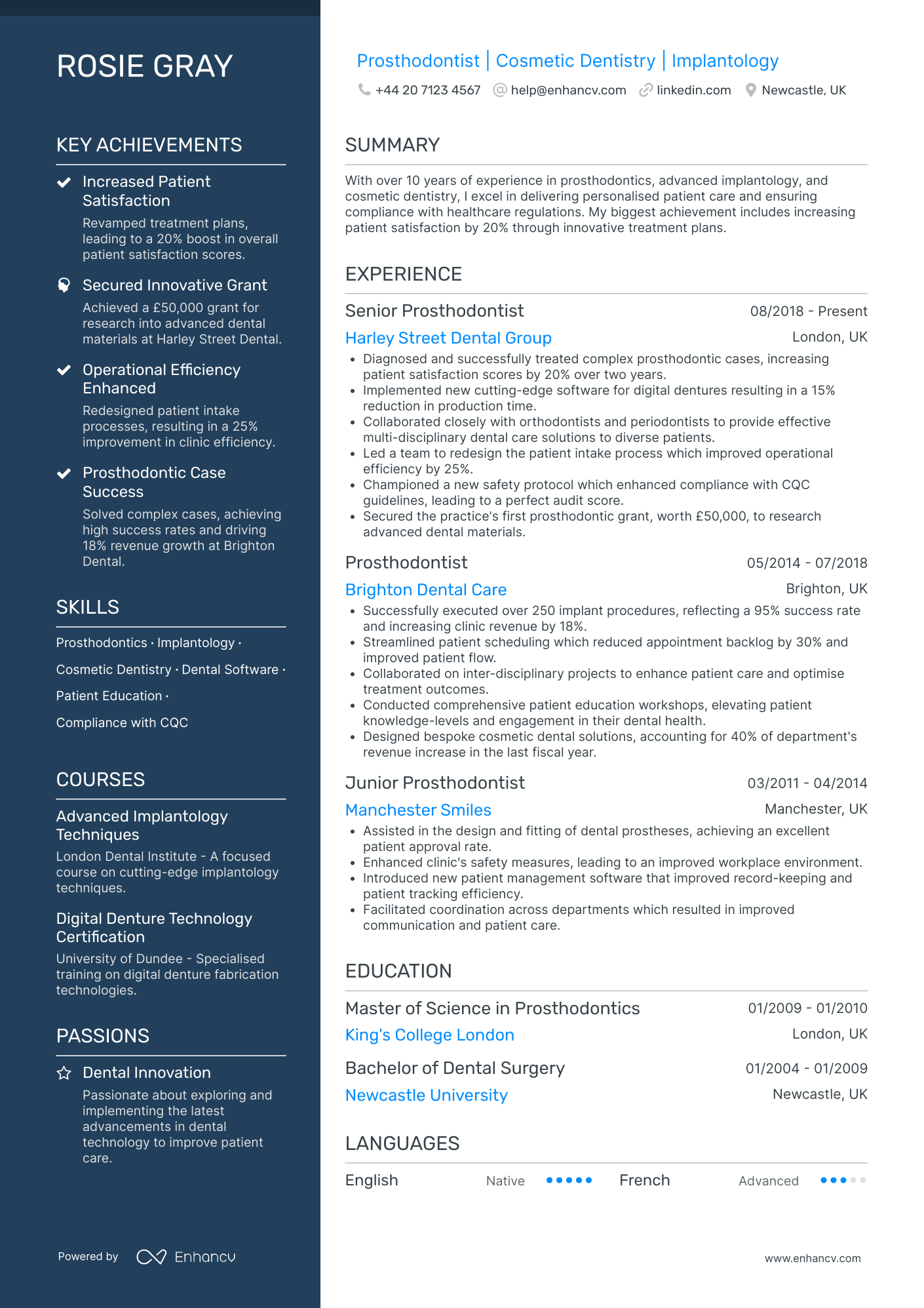
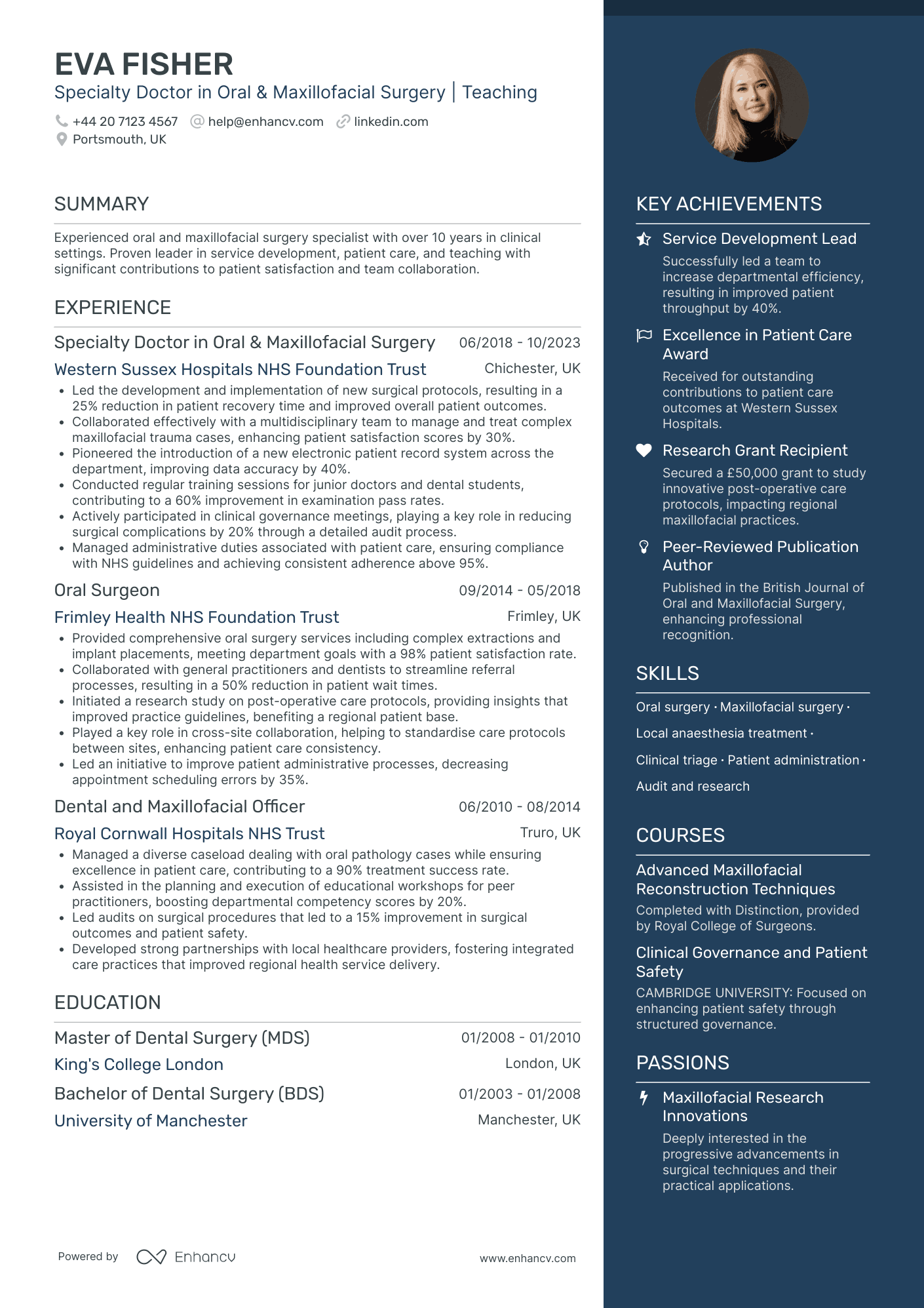
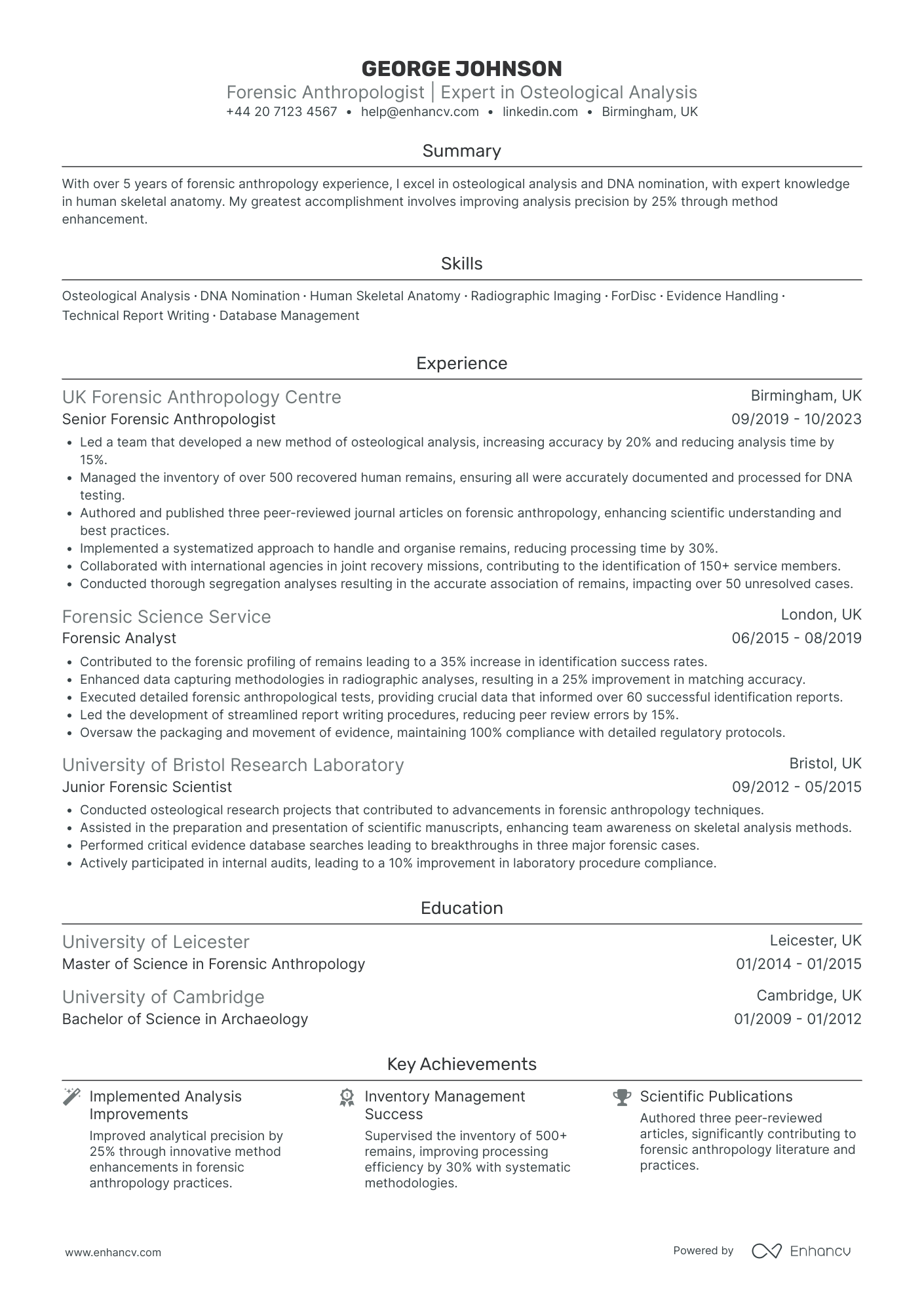
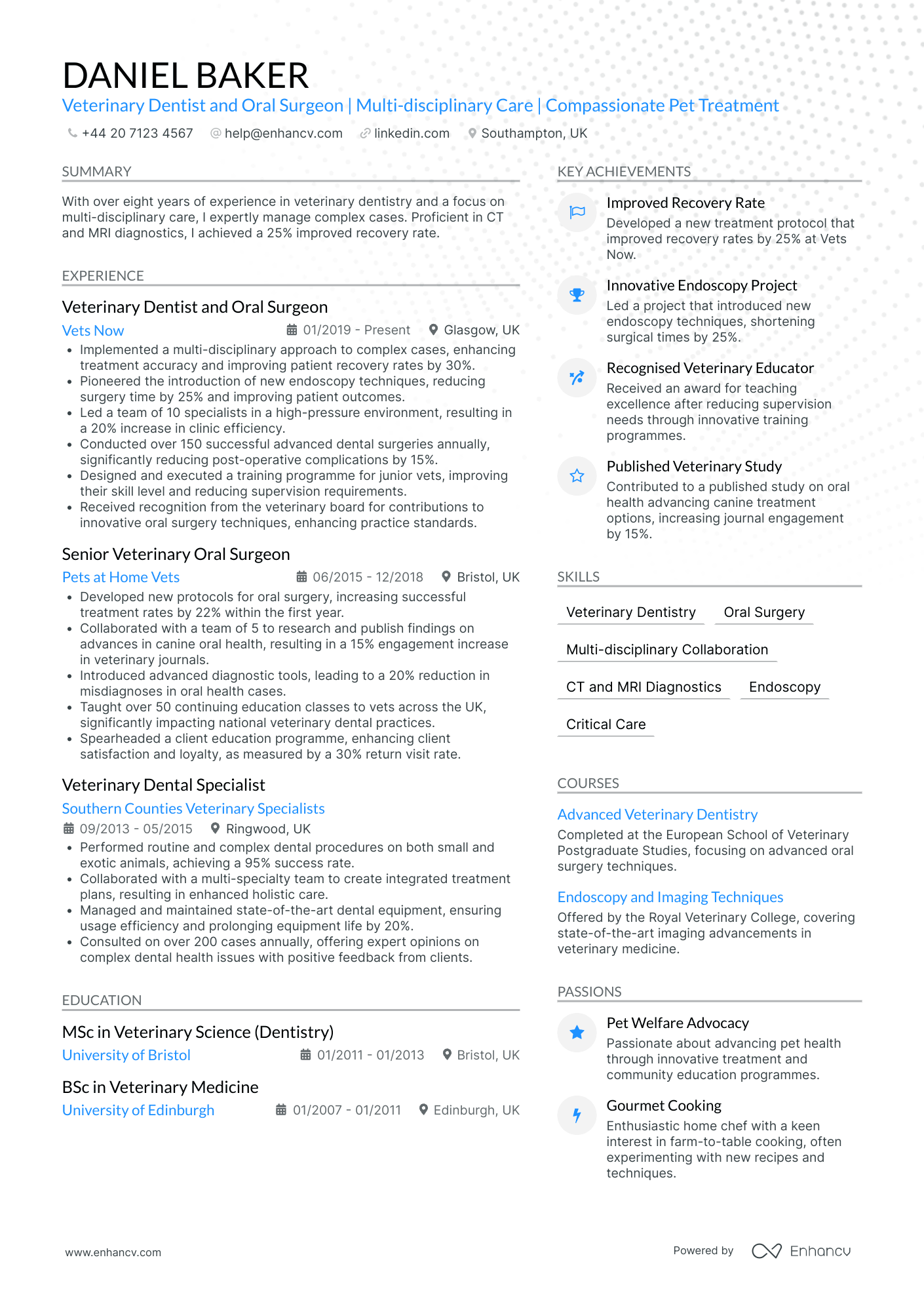
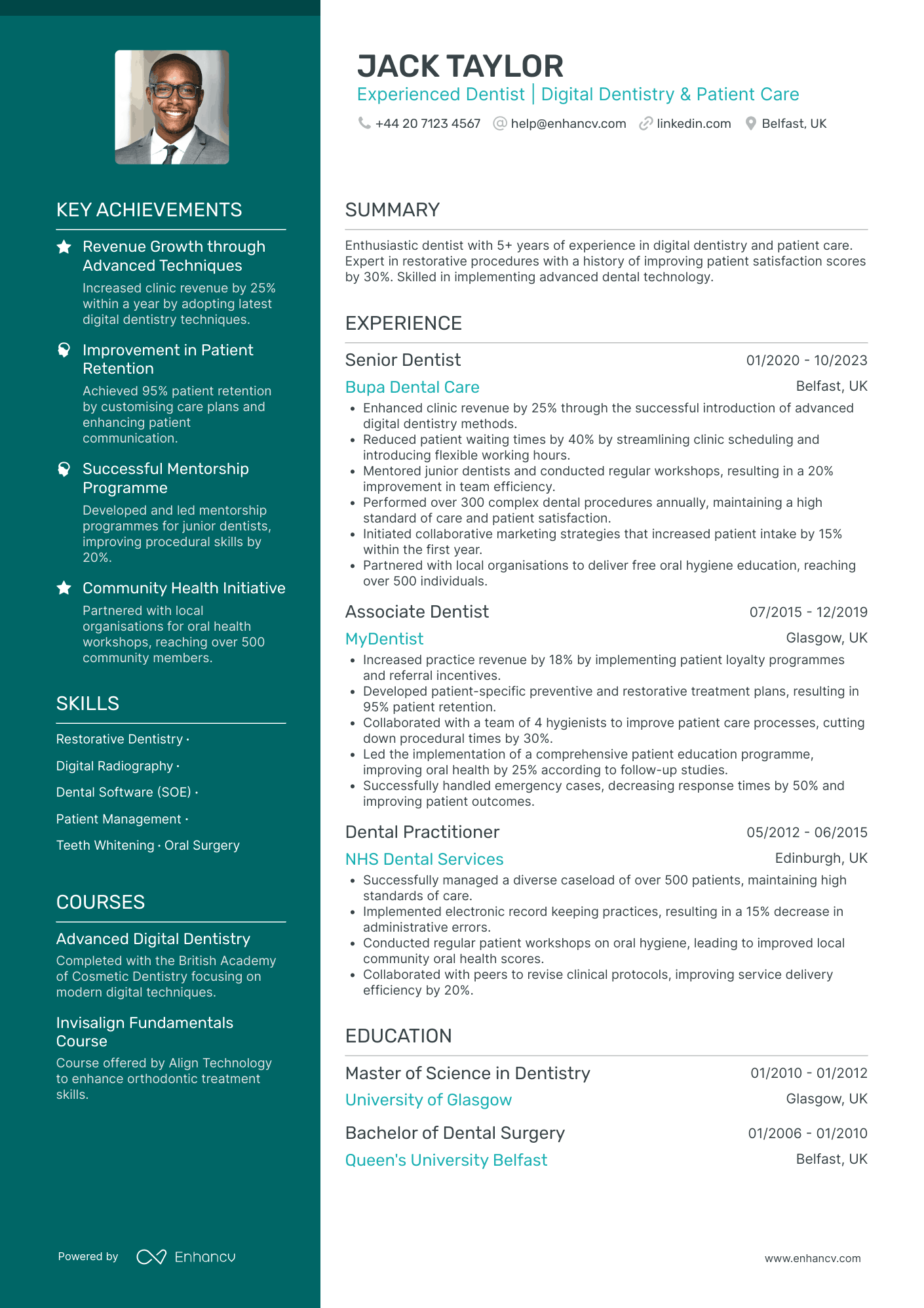
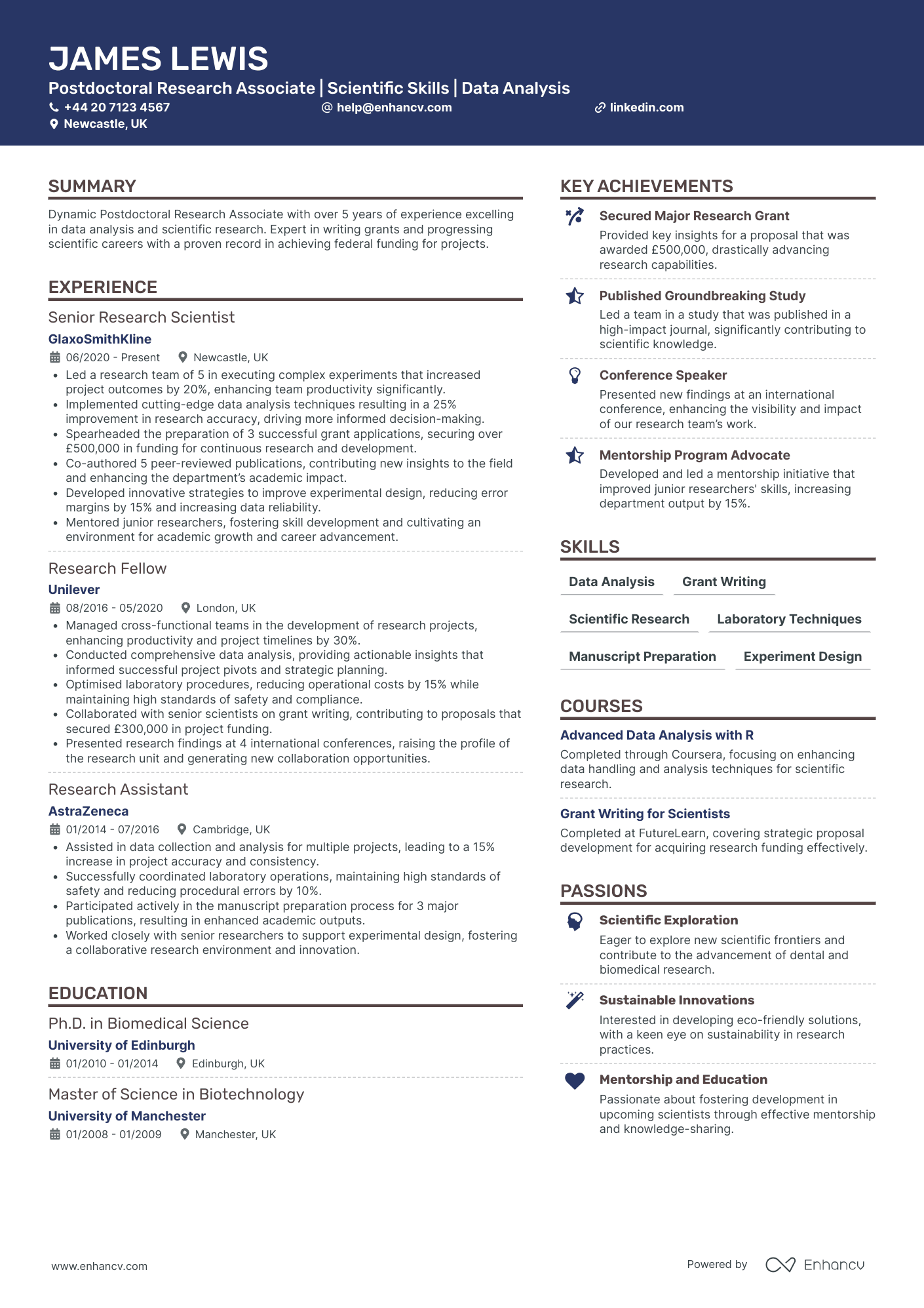
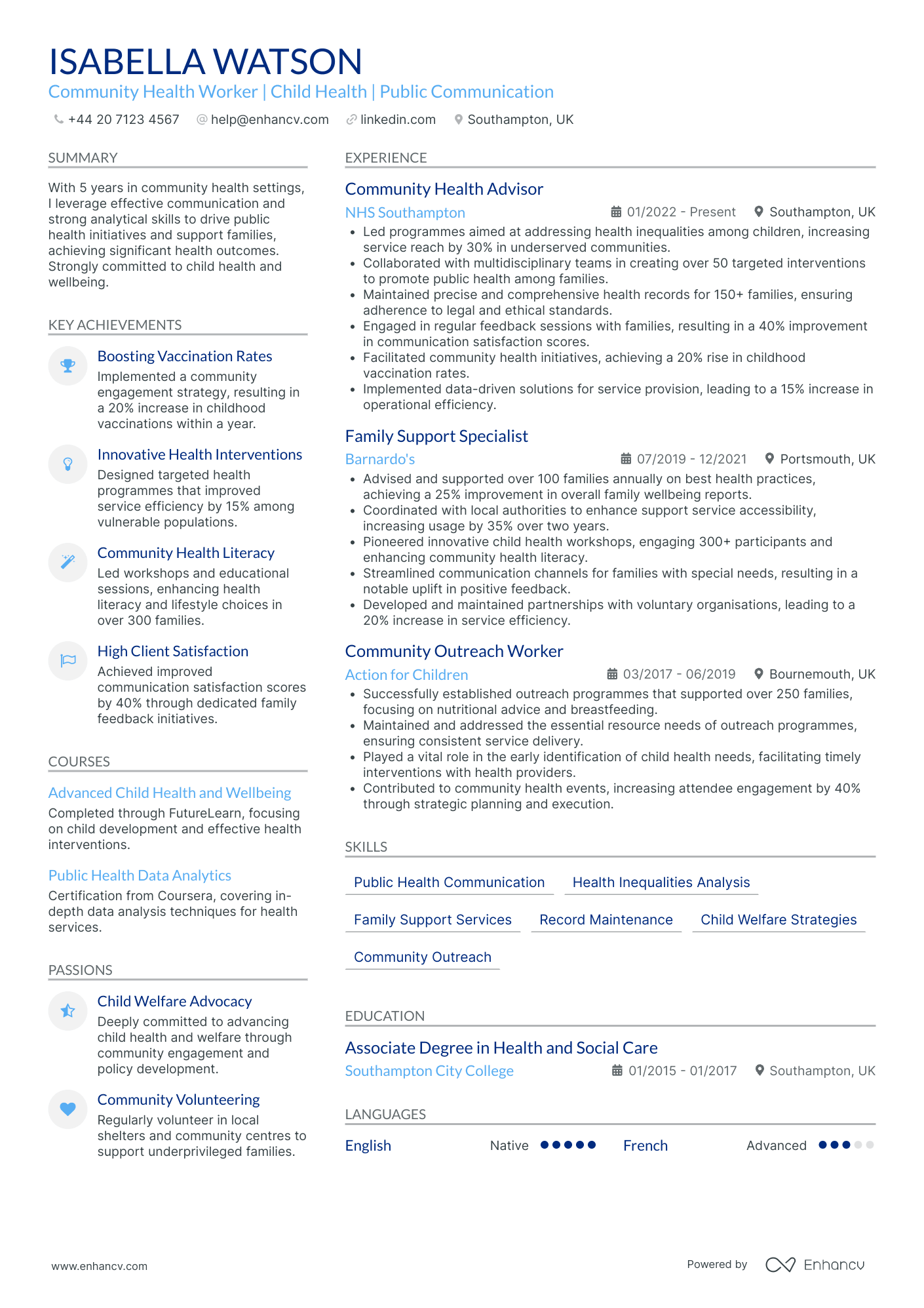
The search results are full of free dentist CV templates to download, and many of them work against you. Heavy graphics, two-column grids, and coloured sidebars look tidy on screen and break the moment a practice runs your file through recruitment software.
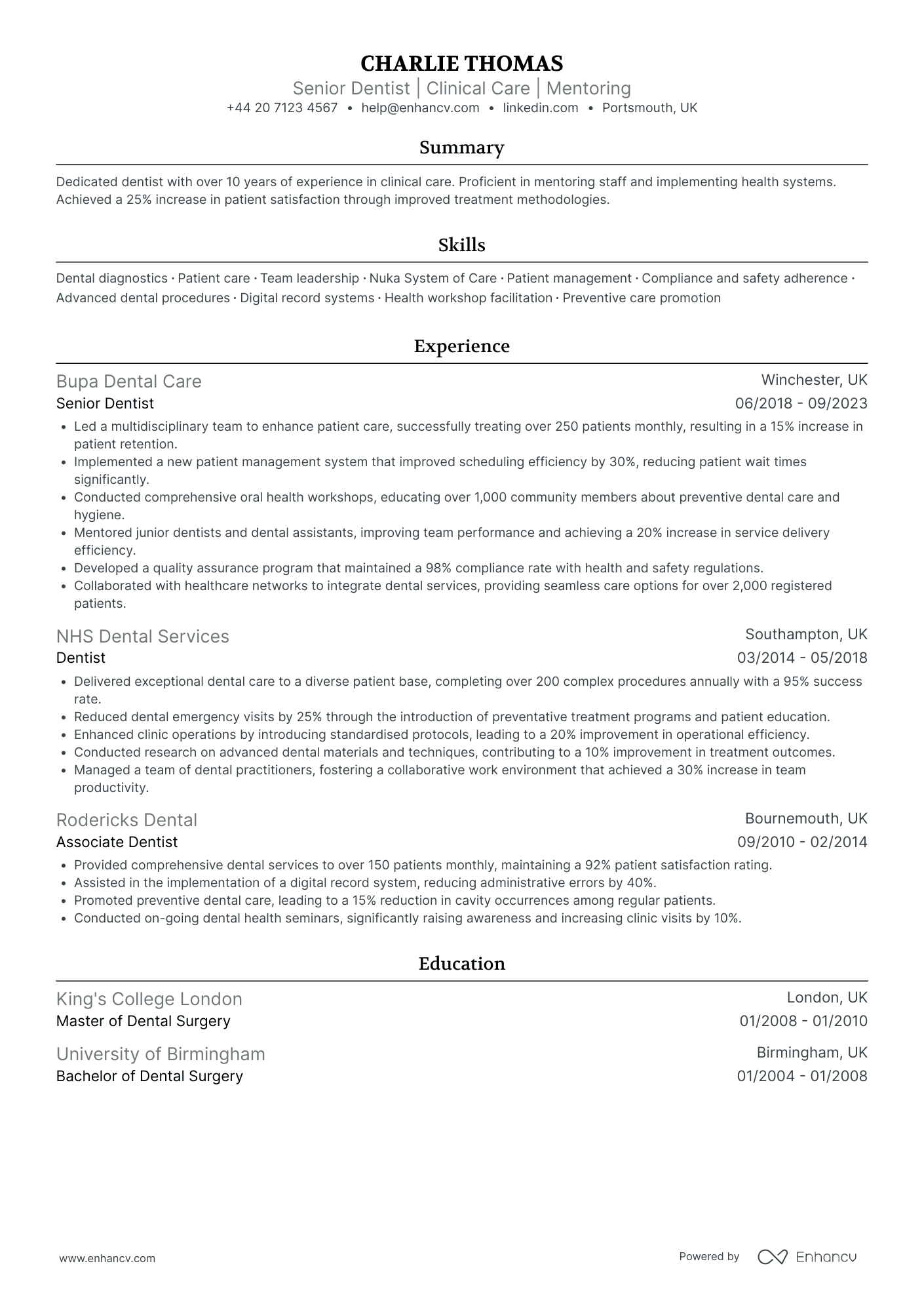
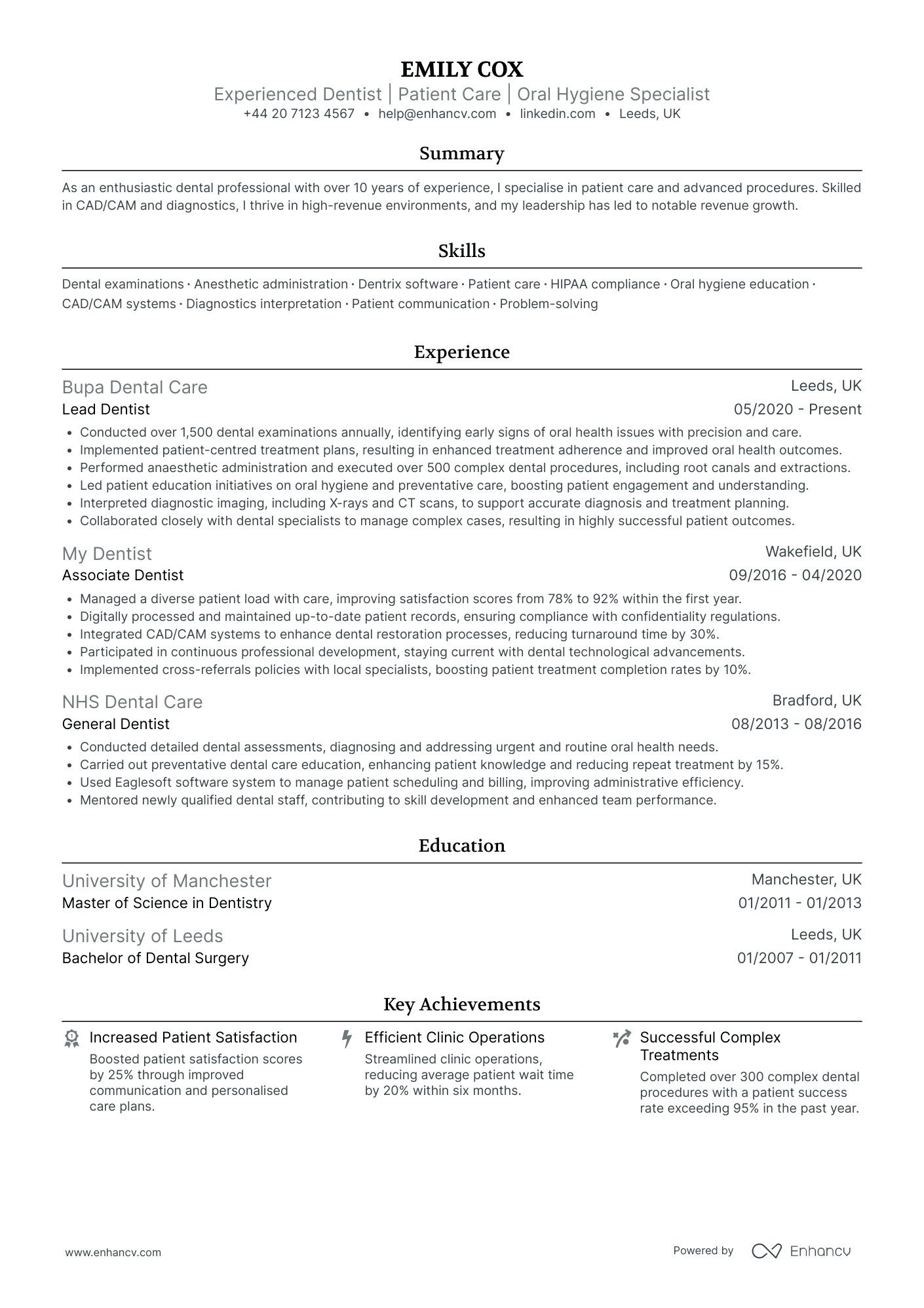
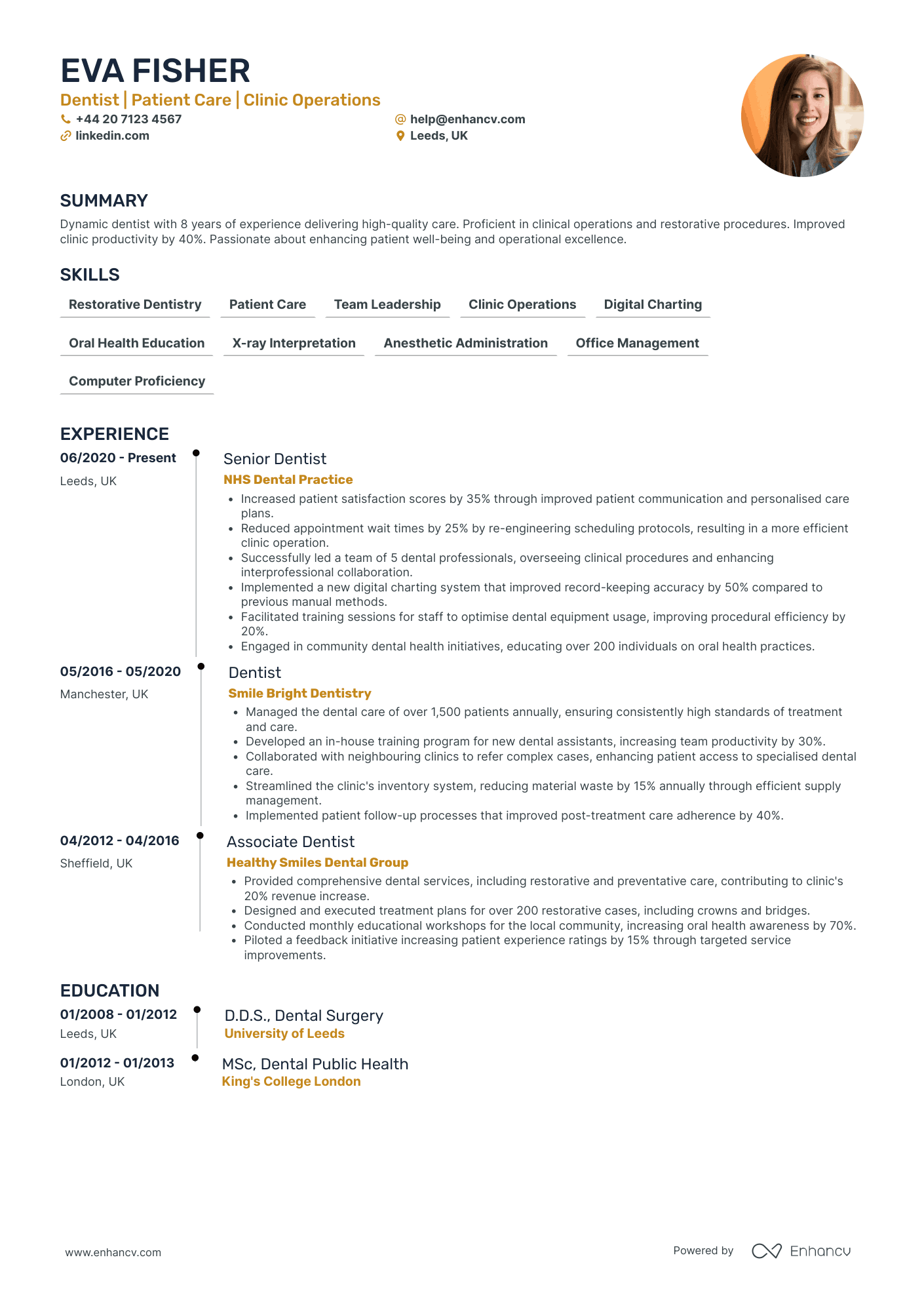
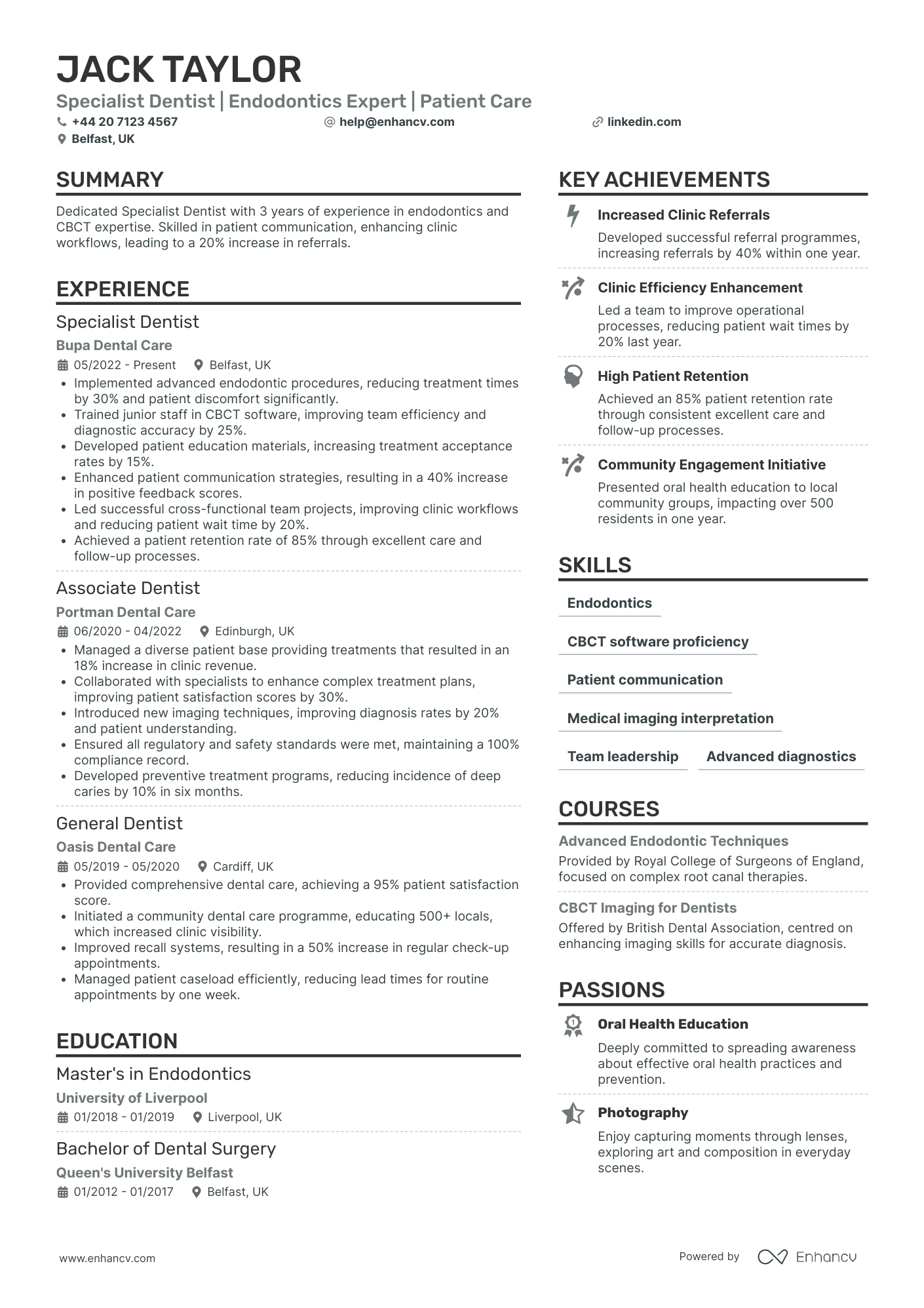
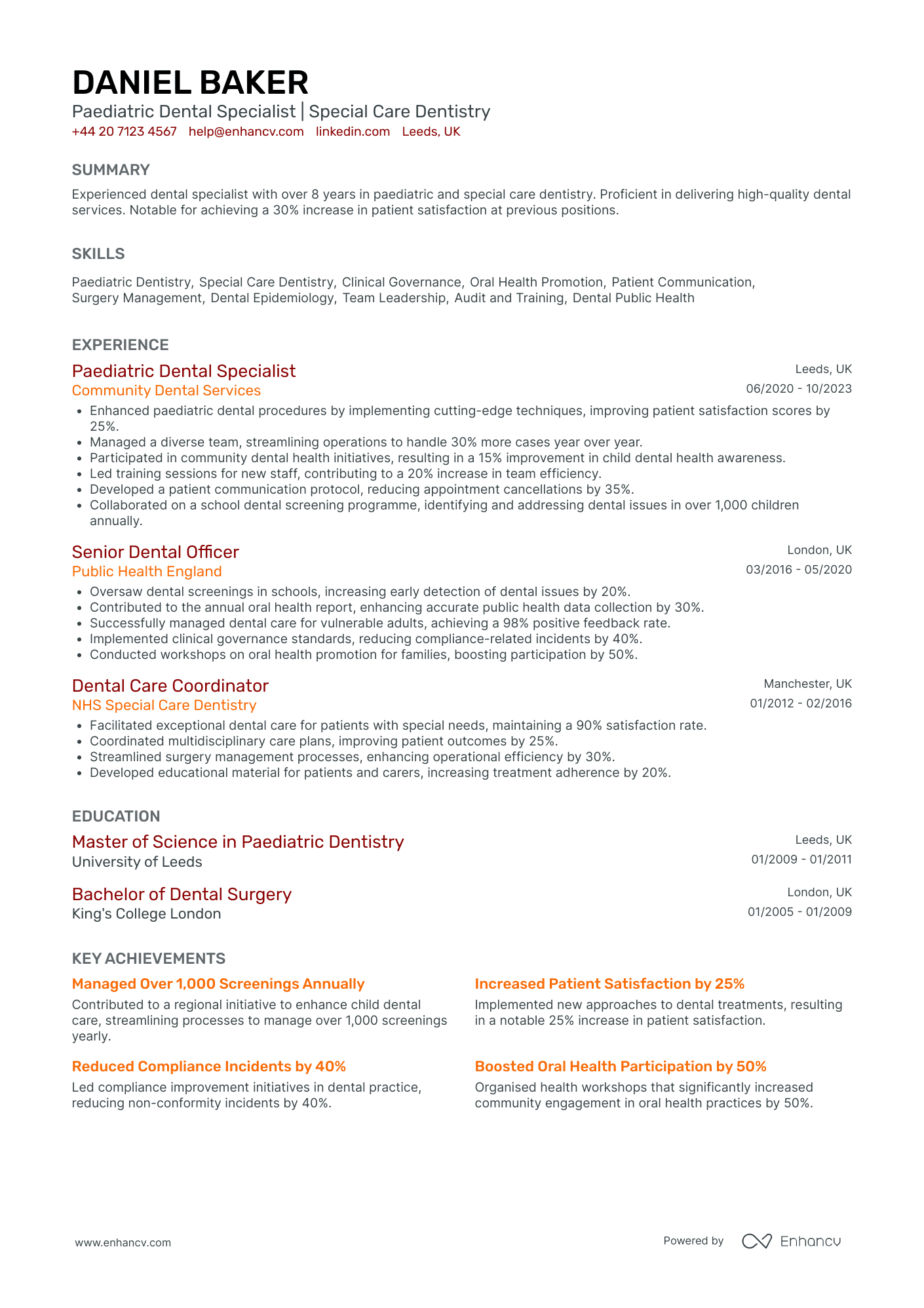
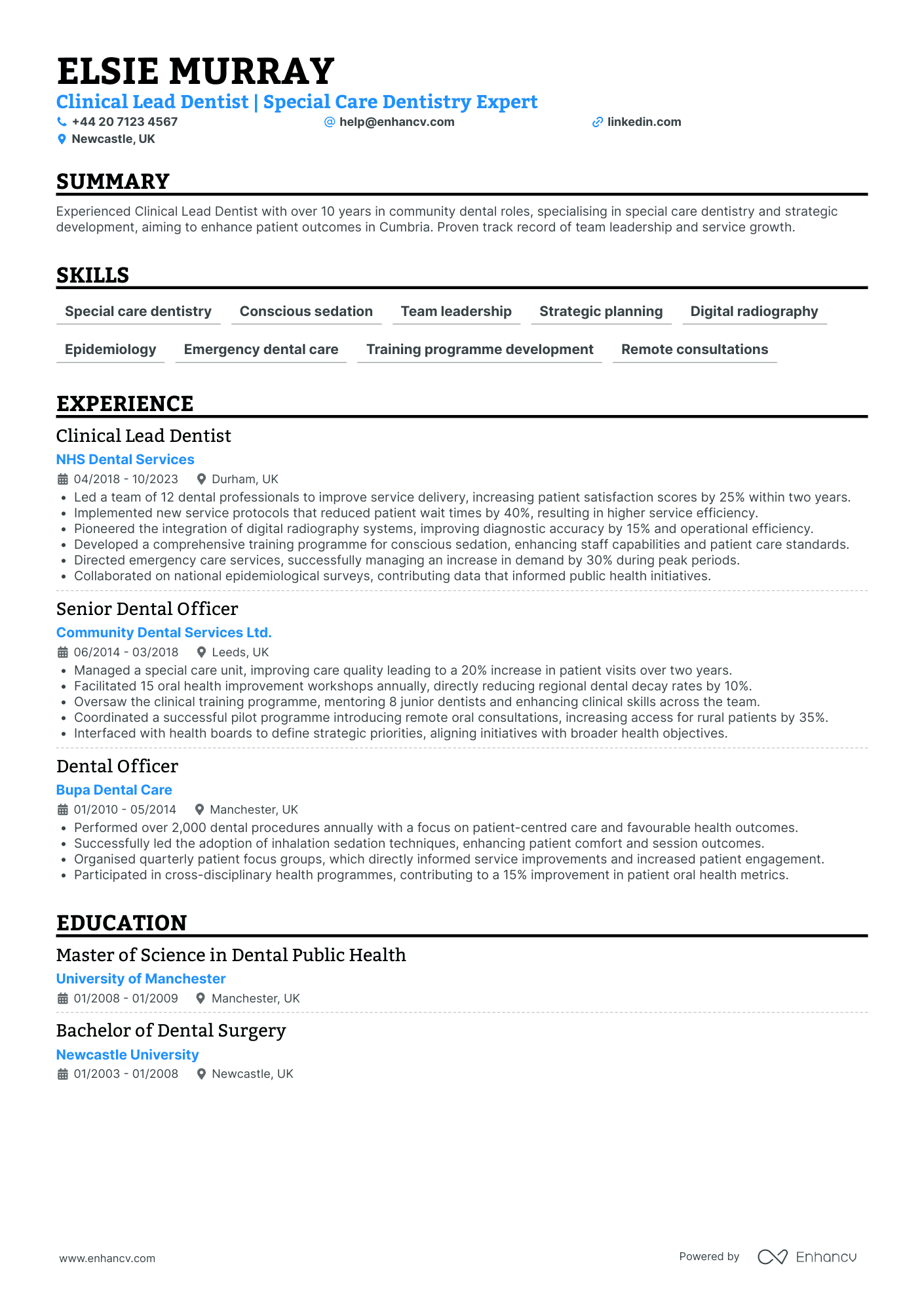
Pick a clean, single-column template with standard headings and one readable font. A principal reading between patients wants to find your GDC number, your scope of practice, and your recent roles without hunting for them.
UK dental CVs rarely need a photo, and a headshot eats space a template should spend on your clinical record. Skip it unless an advert specifically asks.
Colour is fine in small doses, a single accent on your headings at most. Anything louder competes with the content, and the content is what earns the interview. The reader is a clinician, not a design judge, and they are looking for evidence they can trust, laid out where they expect it.
Reserve the top of the template for the details that decide the first screen: your name, GDC registration number, location, and contact details. A CV that hides the registration number on page two makes the reader work, and busy readers stop working quickly.
Treat any free download as a starting frame rather than a finished CV. Replace every placeholder, delete sections you cannot fill honestly, and check that it still exports cleanly. Build from a tested layout rather than a blank page: Enhancv's CV templates export to a clean PDF that keeps its formatting on any device.

PRO TIP
List your GDC registration number exactly as it appears on the register, near the top of the CV, and add your indemnity provider and DBS status on the same line. Practices verify all three before they interview, so making them easy to find moves you forward faster.
Formatting your dentist CV
Keep a qualified dentist CV to two pages in reverse chronological order, most recent role first. A foundation dentist or new graduate can land on one page without looking thin.
Use one column, standard section headings, and a single readable font at a sensible size. Keep margins even and white space generous, because a practice manager skims a stack of applications between patients and clean spacing buys you a longer read.
Order the sections the way a clinical reader expects, so nothing sends them hunting:
- Header with your name, GDC registration number, location, and contact details.
- A short personal statement.
- Clinical experience in reverse chronological order.
- Skills, split into clinical and interpersonal.
- Education, registration, and CPD.
A predictable layout is easier to trust than a clever one. Save the creativity for your treatment planning.
Send a PDF for direct applications so the layout holds on any device. Keep a Word copy for dental recruitment agencies, which often reformat CVs into their own template. If the advert names a file type, follow it exactly.
Many practices and NHS trusts filter applications through recruitment software, so keep the structure clean and the headings standard for an ATS-friendly CV. Name the file with your name and role, for example "Jane-Okafor-Dentist-CV.pdf", so it is easy to find in a crowded inbox.
Before you send it, proofread as carefully as you would check a treatment plan. A CV with a spelling slip in a clinical term reads as carelessness to a principal whose whole job is precision. Read it once for content, once for consistency of dates and tense, and once out loud for anything clumsy.
Is your CV good enough?
Drop your CV here or choose a file. PDF & DOCX only. Max 2MB file size.
Writing your dentist personal statement
Three or four sentences at the top: who you are, your scope of practice, one concrete result, and the kind of practice you want to join. Keep it specific. See more personal statement examples if the opening line will not come.
Skip the adjective soup. "Caring, dedicated and hard-working dentist" tells a principal nothing they can verify, and every other applicant has written the same line.
What you emphasise shifts with your stage. An associate leads with scope of practice and patient numbers. A foundation dentist leads with training completed and supervised results. A dentist with a special interest leads with the treatments that set them apart. Match the opening to the role you are applying for.
Anchor it in something a principal can picture and check: a patient list size, a recall rate, a clean audit, a treatment you are known for. Numbers and named procedures do the persuading, so let them.
Name your registration, your years in practice, the treatments you deliver, and a result you can stand behind. Compare these two openings.
Dentist CV personal statement example
GDC-registered dentist with six years in mixed NHS and private practice, delivering the full range of routine and complex restorative treatment. Maintained a 98% recall attendance rate across a 2,000-patient list and passed three consecutive clinical audits with no complaints upheld. Looking to bring steady, evidence-based care to a private practice in Bristol.
What to avoid
Passionate and caring dentist who is dedicated to patient care and always willing to go the extra mile. A strong team player with excellent communication skills seeking a challenging new role in a forward-thinking practice.
When we read a dentist CV, the registration number and a single real result tell us more than a paragraph of adjectives. A line like "passed three clinical audits with no complaints upheld" proves safe practice in a way "dedicated to patient care" never will. Put your GDC number where it is easy to find, then back every claim with something a practice could check on your first day.
The Enhancv team
Writing your dentist experience section
Write each role with a dated heading, the practice and setting, then bullets that show what you did and the result. Lead every bullet with a verb. For the mechanics, see work experience on a CV.
Dental work is measurable, so use the numbers you already have: patients on your list, UDAs delivered against target, recall and attendance rates, treatment mix, audit outcomes, and complaints resolved. Those are your CV achievements, and they beat a list of procedures every time.
Start bullets with strong action verbs: delivered, restored, diagnosed, supervised, audited. Then attach the outcome.
If you completed dental foundation or vocational training, give it a dated entry like any other role, with the practice, the setting, and what you delivered. Early roles count as clinical experience, not filler.
Locum and part-time work belongs here too. Group short locum placements under one heading with the date range and the settings covered, so a run of temporary roles reads as breadth rather than instability. If you have a gap, state it plainly in a line and move on. Practices worry far more about an unexplained silence than an honest one.
Show progression where it exists. Moving from foundation dentist to associate, taking on mentoring, or building a special interest all tell a principal you are still developing, and that is exactly what a growing practice wants to see.
Tailor each application to the advert, mirroring the clinical terms the practice uses where they are true of you. Enhancv's CV tailoring feature reads the advert and suggests the matching edits, which saves rewriting from scratch for every practice.
- Deliver the full range of routine and restorative treatment to a 2,000-patient list, from examinations and fillings to crowns, bridges, and root canal therapy
- Exceeded UDA targets by 8% across three consecutive years while keeping recall attendance above 95%
- Passed three annual clinical audits and infection-control checks with no complaints upheld
- Mentor and supervise two dental foundation trainees, reviewing treatment planning and radiographs each week
PRO TIP
Dental adverts list clinical specifics, not soft-skill clouds. Mirror the ones you can back: "restorative dentistry", "endodontics", "clinical governance", "radiography", "treatment planning". Name the procedures and systems you actually use, in the words the advert uses.
Skills to put on a dentist CV
Split your skills into clinical and interpersonal, and lead with the clinical. A practice wants to see your scope of practice at a glance: the treatments you deliver, the systems you work in, and the governance you follow. Those are your hard skills, listed in the words the adverts use.
The soft skills that matter chairside are real and checkable: clear communication with anxious patients, teamwork with nurses and hygienists, and composure under pressure. Prove each one in a bullet rather than claiming it.
List only what you can stand behind at interview. If you have delivered a treatment, name it. If you are still building confidence in it, keep it off the CV until you can back it.
Name the systems too. Practice management and imaging software, digital radiography, and any CAD/CAM or intraoral scanning you use are all worth listing, because they tell a practice how quickly you will settle into their setup. A dentist who already knows the software is one less thing for the principal to train.
Keep the list tight and relevant. Eight to twelve clinical skills that match the advert do more than a wall of thirty, and they leave the reader with a clear sense of what you actually do at the chair.
Top skills for your dentist CV:
Restorative dentistry
Treatment planning
Endodontics and oral surgery
Radiography and diagnostics
Infection prevention and control
Clinical governance and audit
Critical appraisal
Clinical supervision
Chairside communication
Patient care
Attention to detail
Teamwork
Calm under pressure
GDC registration and qualifications for your dentist CV
Registration with the General Dental Council (GDC) is a legal requirement to practise dentistry in the UK, so it belongs on your CV, not buried in it. Put your GDC number in the header and confirm your registration status in a short registration block.
List your primary dental qualification with the awarding university and year, for example a BDS, along with any foundation training you have completed. Add postgraduate study, such as an MJDF, MFDS, or a diploma in a clinical area, in your education section. Keep the entries brief, with the qualification, awarding body, and year, and let the experience section carry the detail.
Practices also expect proof that you practise safely and stay current. Name your indemnity provider, a current DBS check, and your recent CPD, including verifiable hours and the required topics such as medical emergencies, radiography, and safeguarding.
If you work in NHS dentistry, add your NHS performer number so a practice knows you can start on their contract without delay. It is a small detail that removes a real administrative hurdle.
If you trained or registered overseas, state your route to GDC registration clearly, including the Overseas Registration Examination where it applies. A recruiter should never have to guess whether you can legally start.
What the UK dentist job market looks like
A few features of the UK market should shape how you present the CV.
| What | UK dentist roles |
|---|---|
| Registration | GDC registration is required to practise. List your GDC number near the top of the CV. |
| Where the work happens | On-site and chairside, so keep your location and travel range easy to find in the header. |
| Main settings | NHS, private, and mixed practices, plus community and hospital dental services. |
| What practices screen for | Safe, current practice: GDC registration, indemnity, a DBS check, and up-to-date CPD. |
Pay swings widely between NHS, private, and associate arrangements, so treat any single headline figure with caution and check a current source before you negotiate.
Because the work is on-site, a principal needs to see you can reliably get to the practice. Put your location in the header, and name the settings you have worked in so a reader can place your experience quickly.
The setting also tells a practice what kind of dentist you are. Time in NHS practice signals volume and pace, private work signals a focus on treatment quality and patient experience, and community or hospital roles signal comfort with complex needs. Make the mix clear, because a principal is reading your CV to picture how you would fit their books.
Conclusion
Lead with a clean template and your GDC number, format for a fast clinical read, and prove safe practice with real numbers rather than adjectives.
Pair the CV with a short cover letter that says why this practice, and you give a principal an easy reason to book the interview.

Author's take - The Enhancv team
When we read a dentist CV, the registration number and a single real result tell us more than a paragraph of adjectives. A line like "passed three clinical audits with no complaints upheld" proves safe practice in a way "dedicated to patient care" never will. Put your GDC number where it is easy to find, then back every claim with something a practice could check on your first day.