



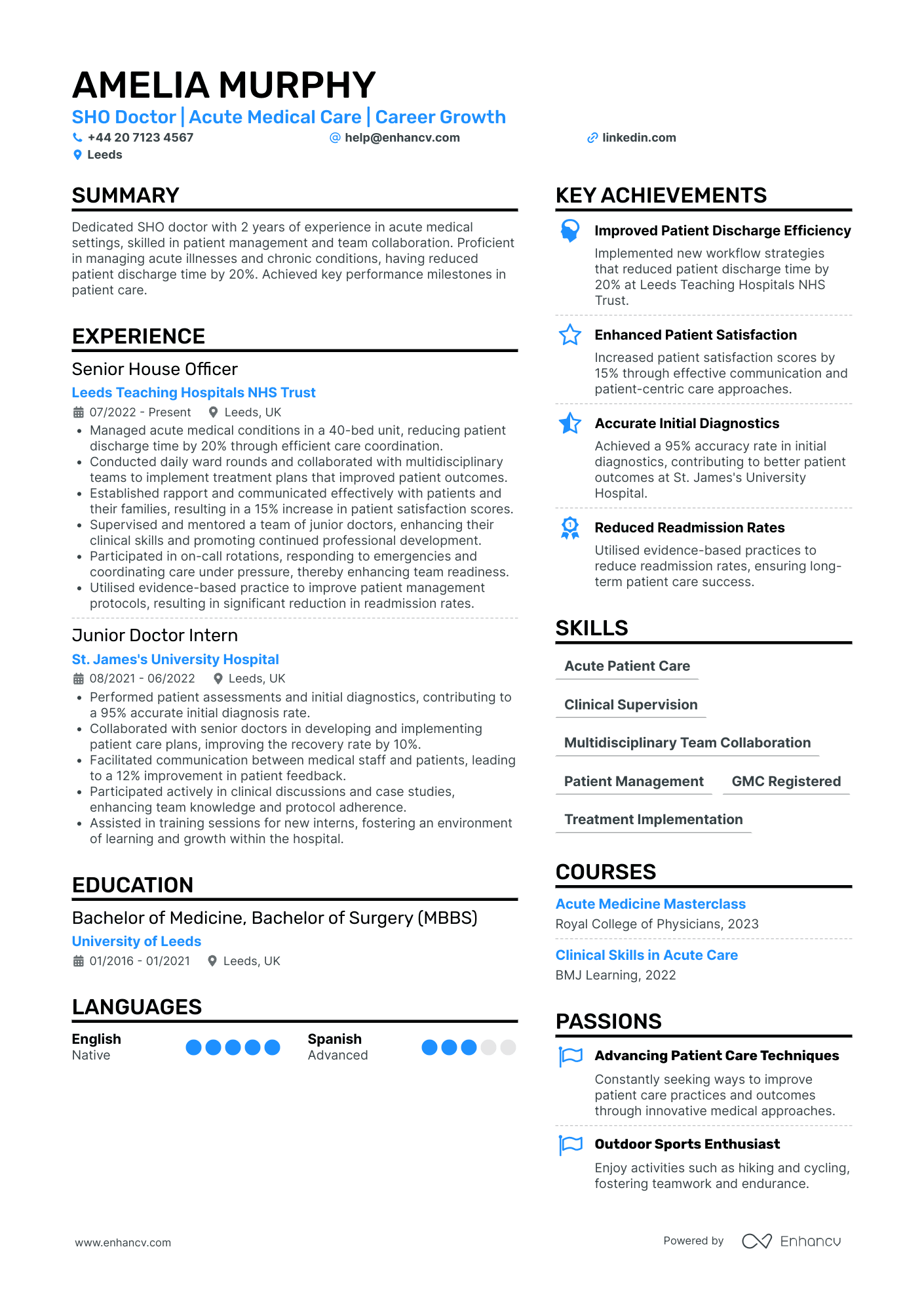
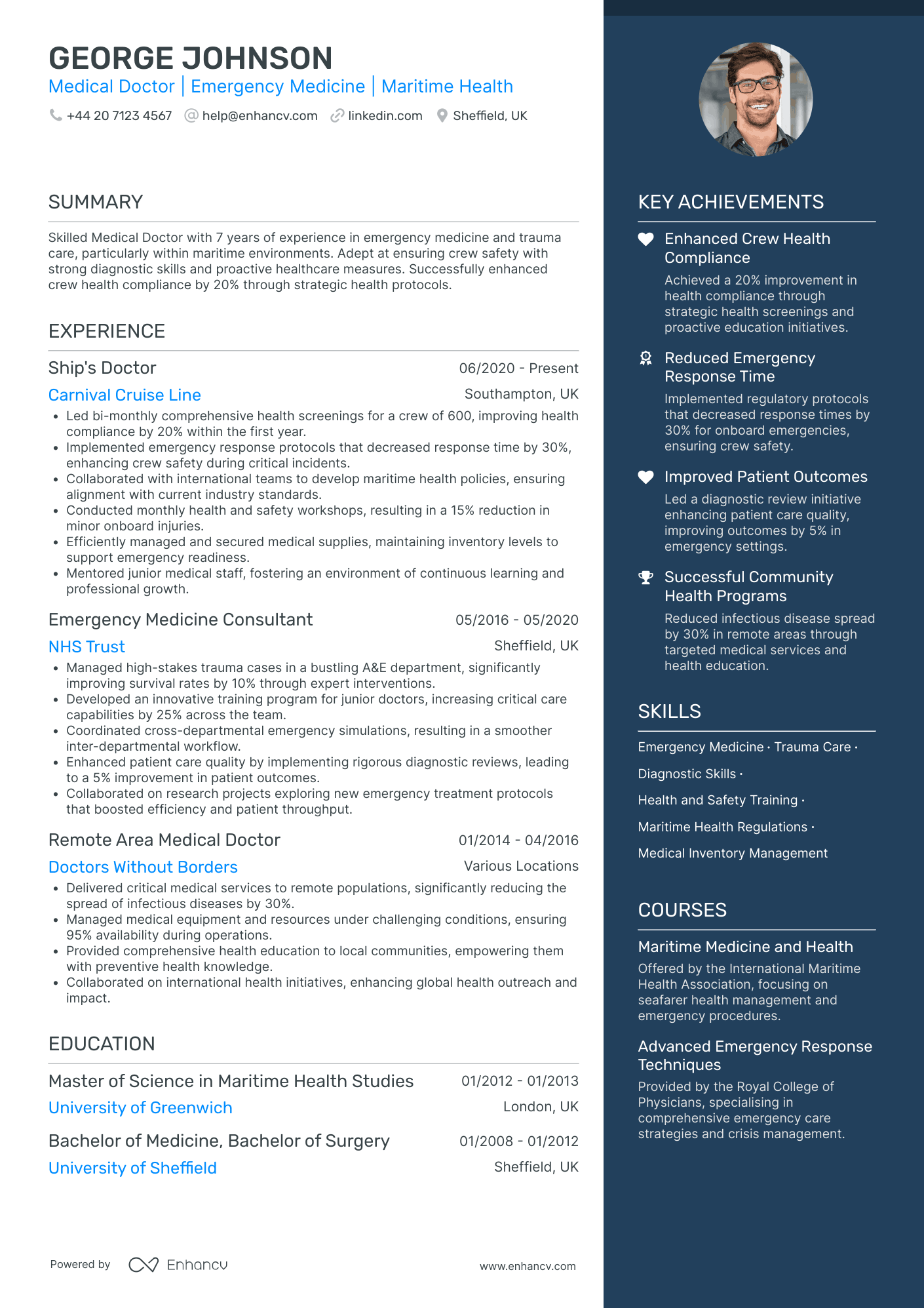
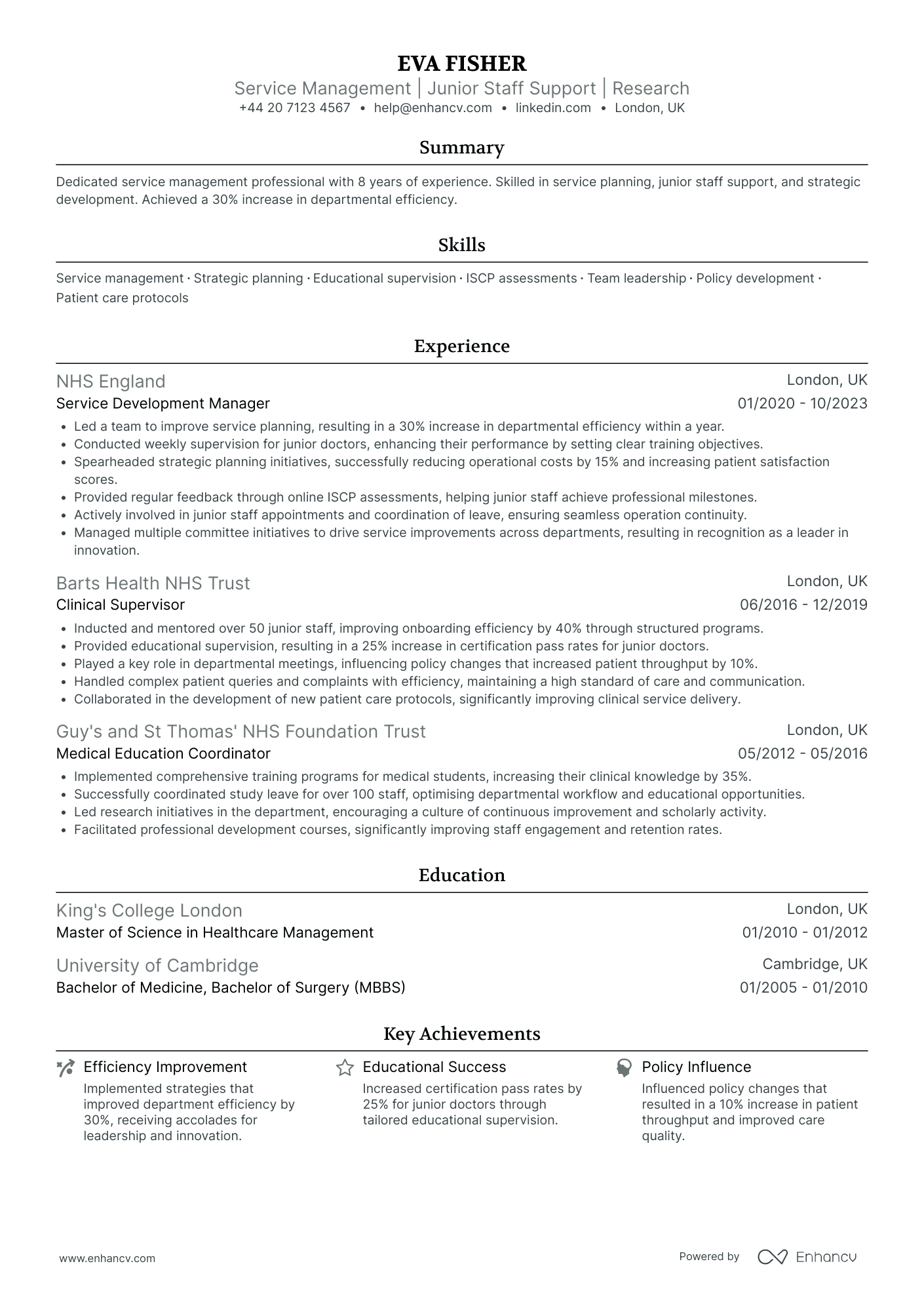
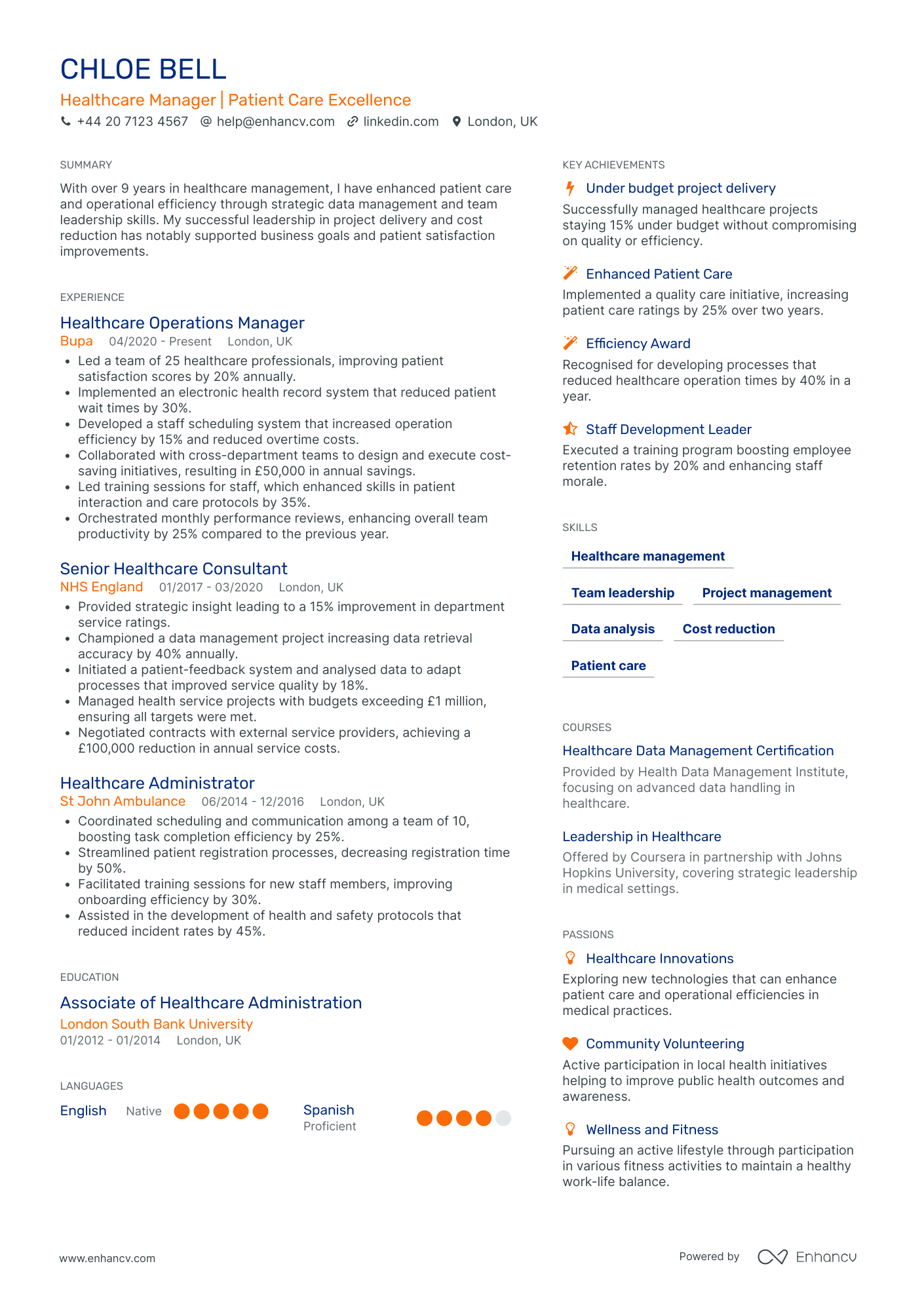
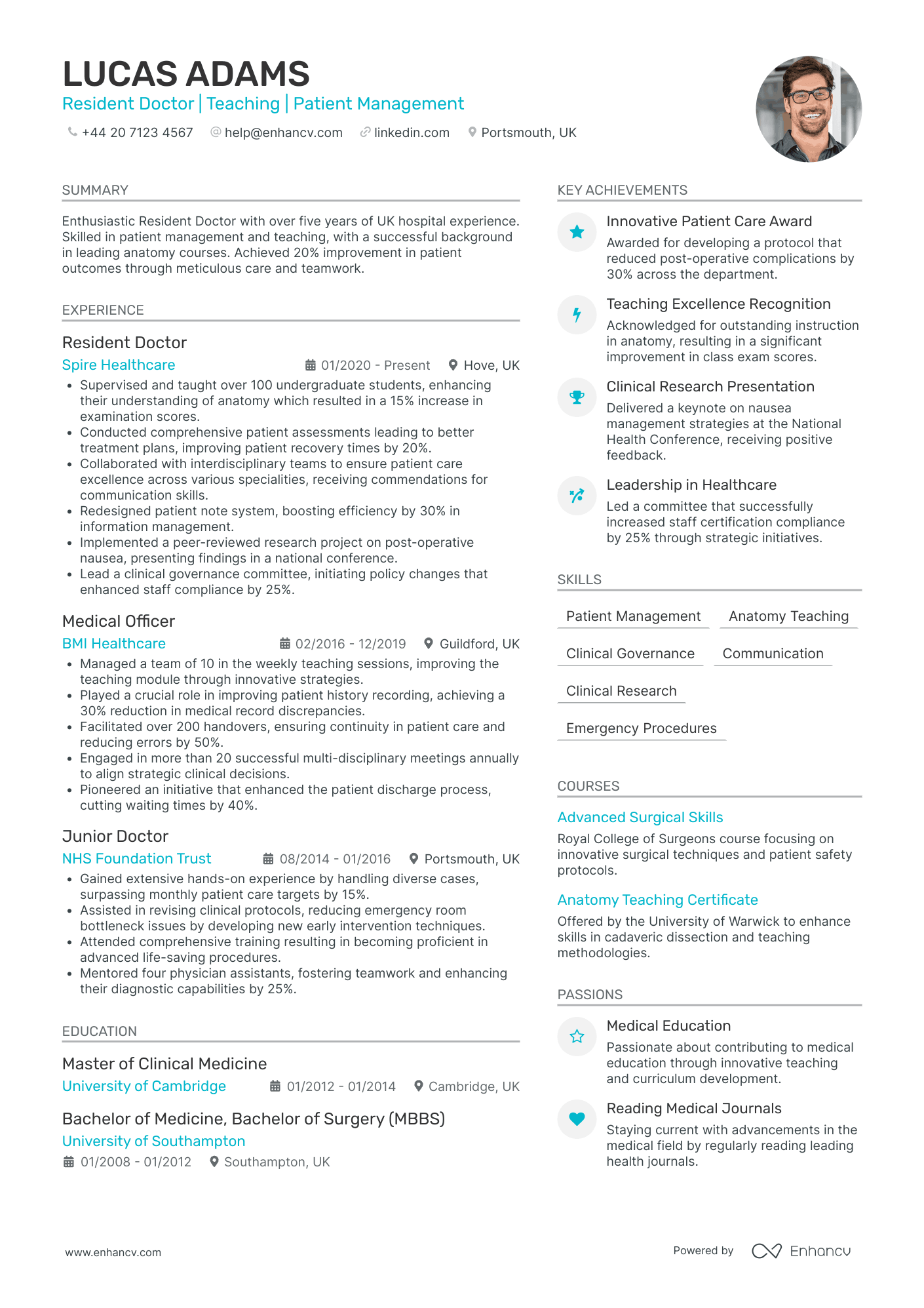
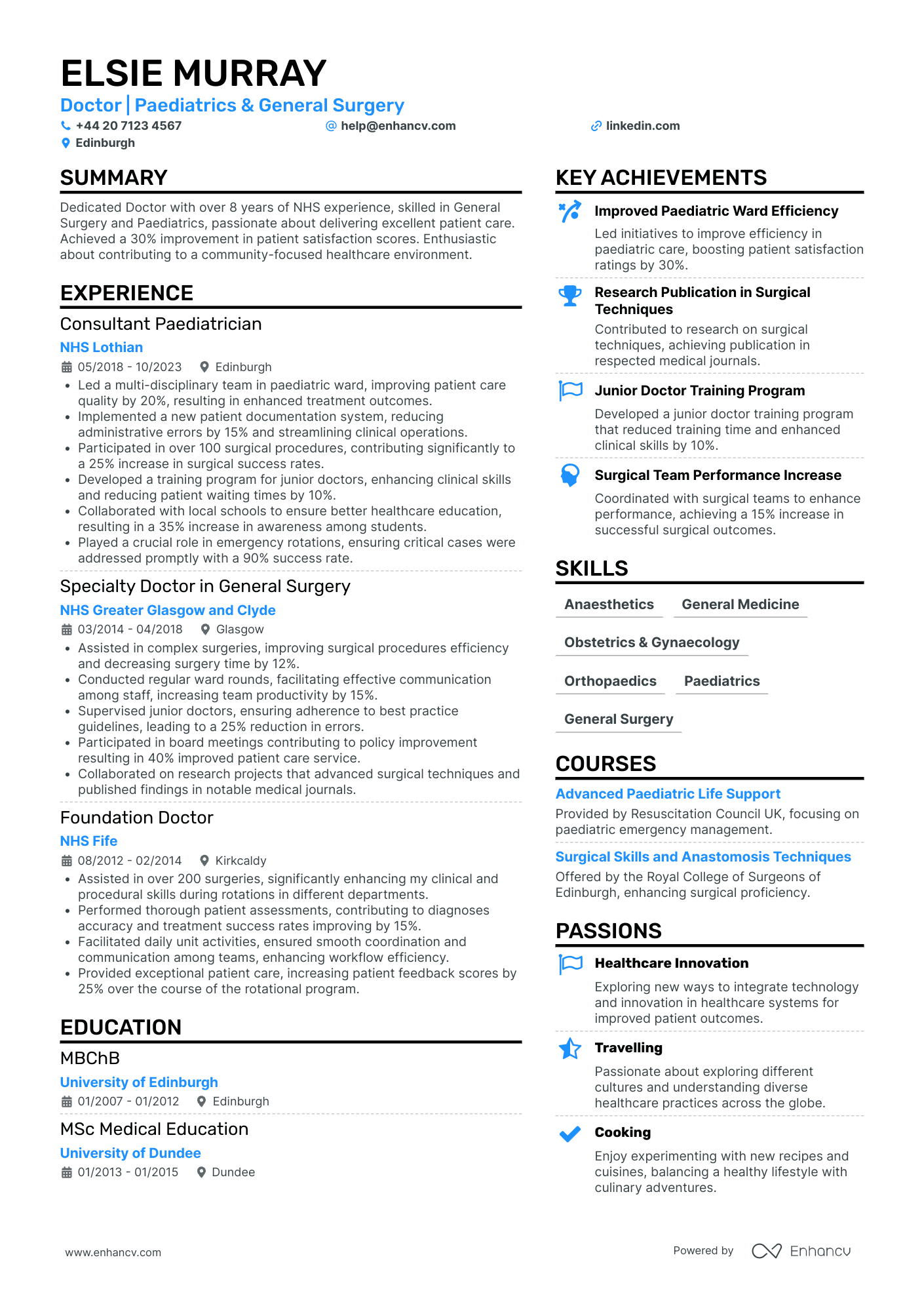
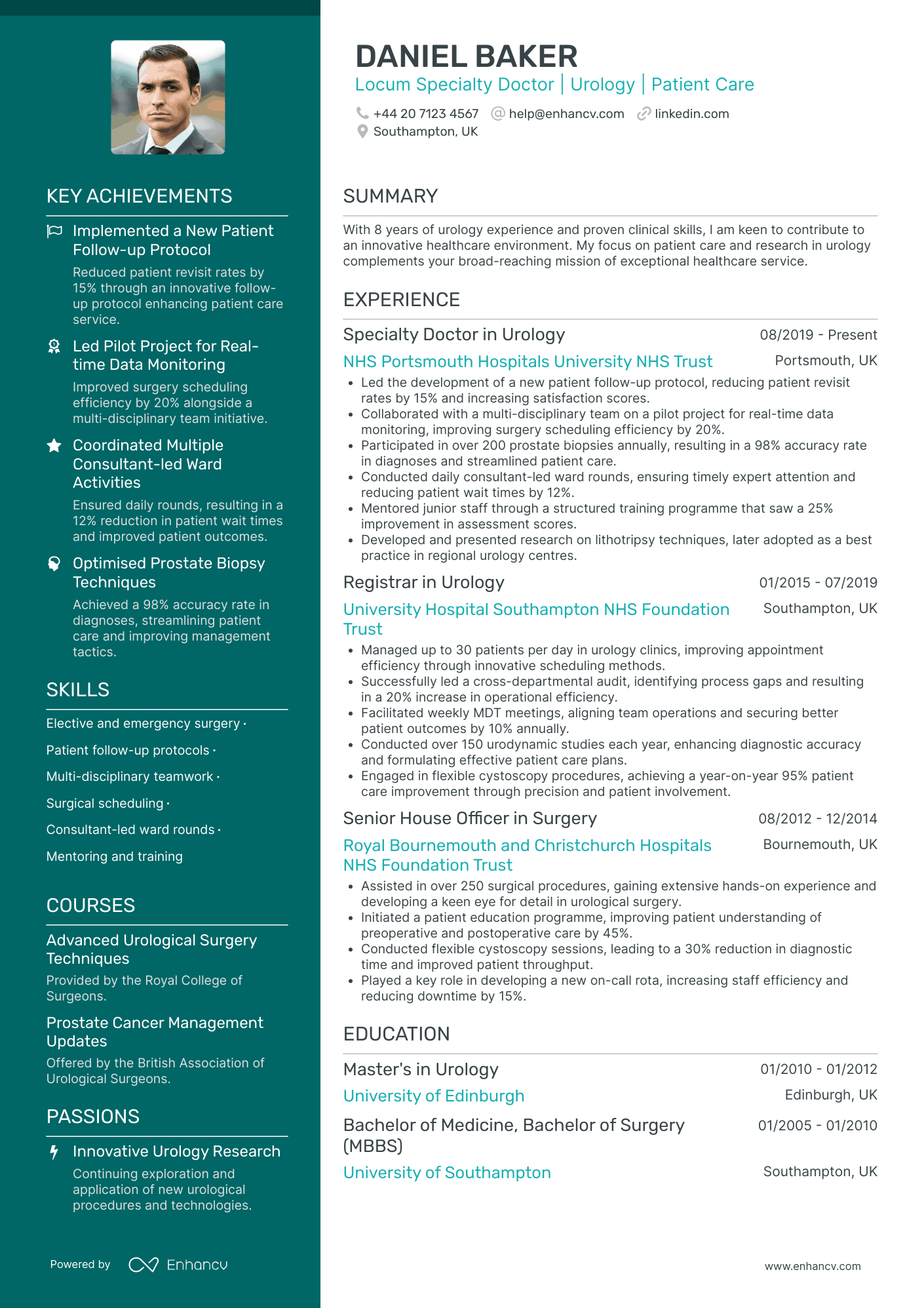
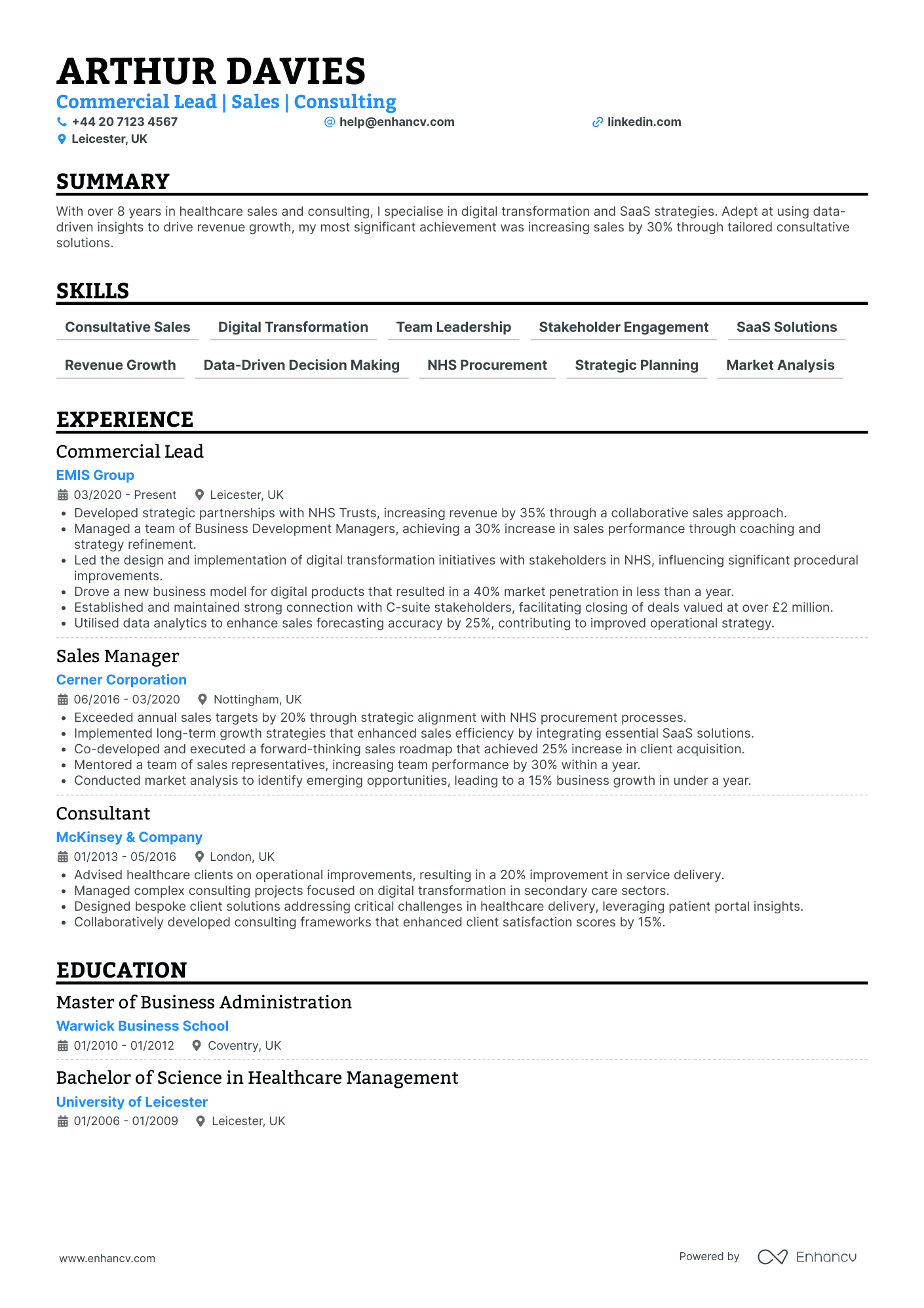
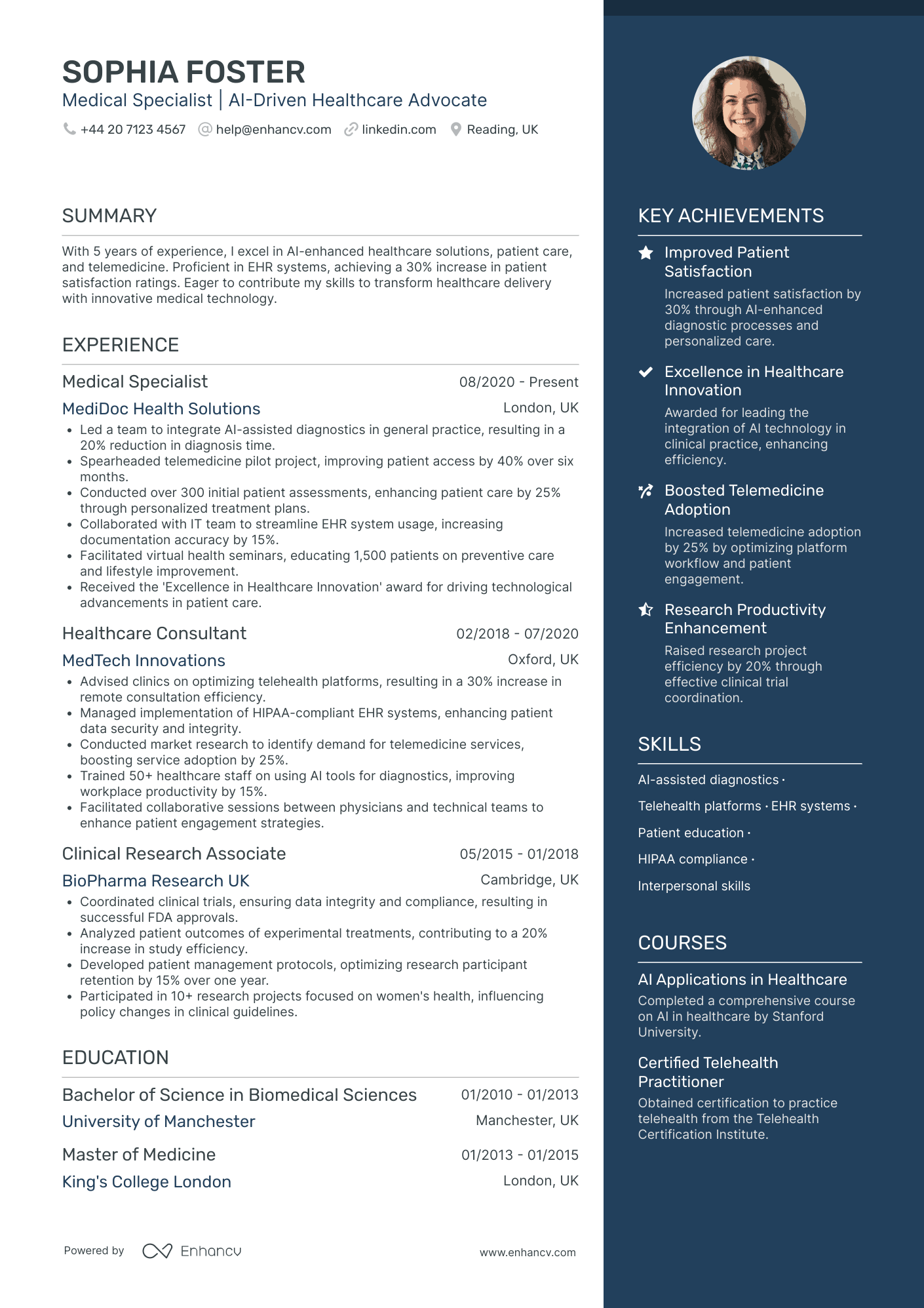
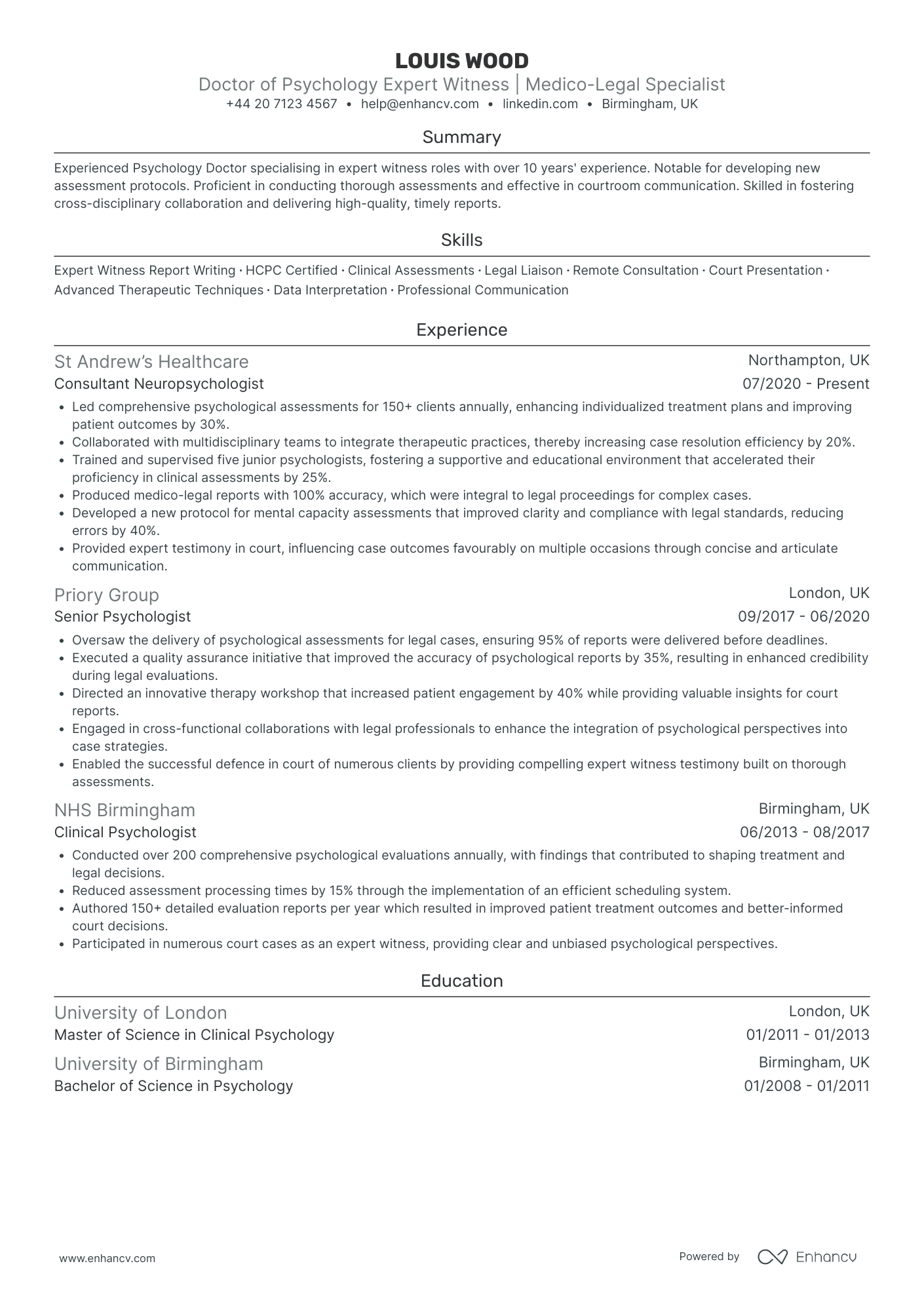
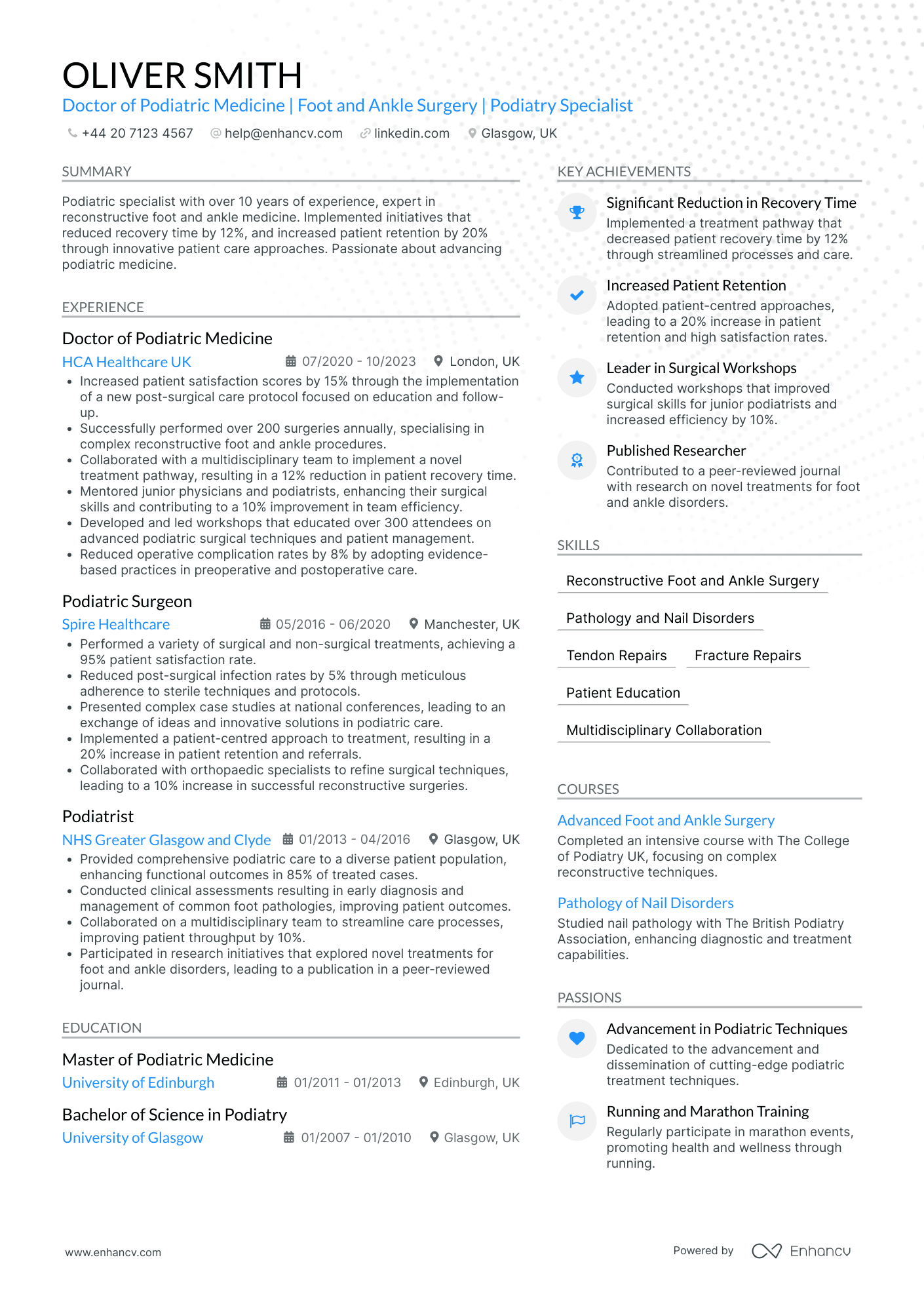
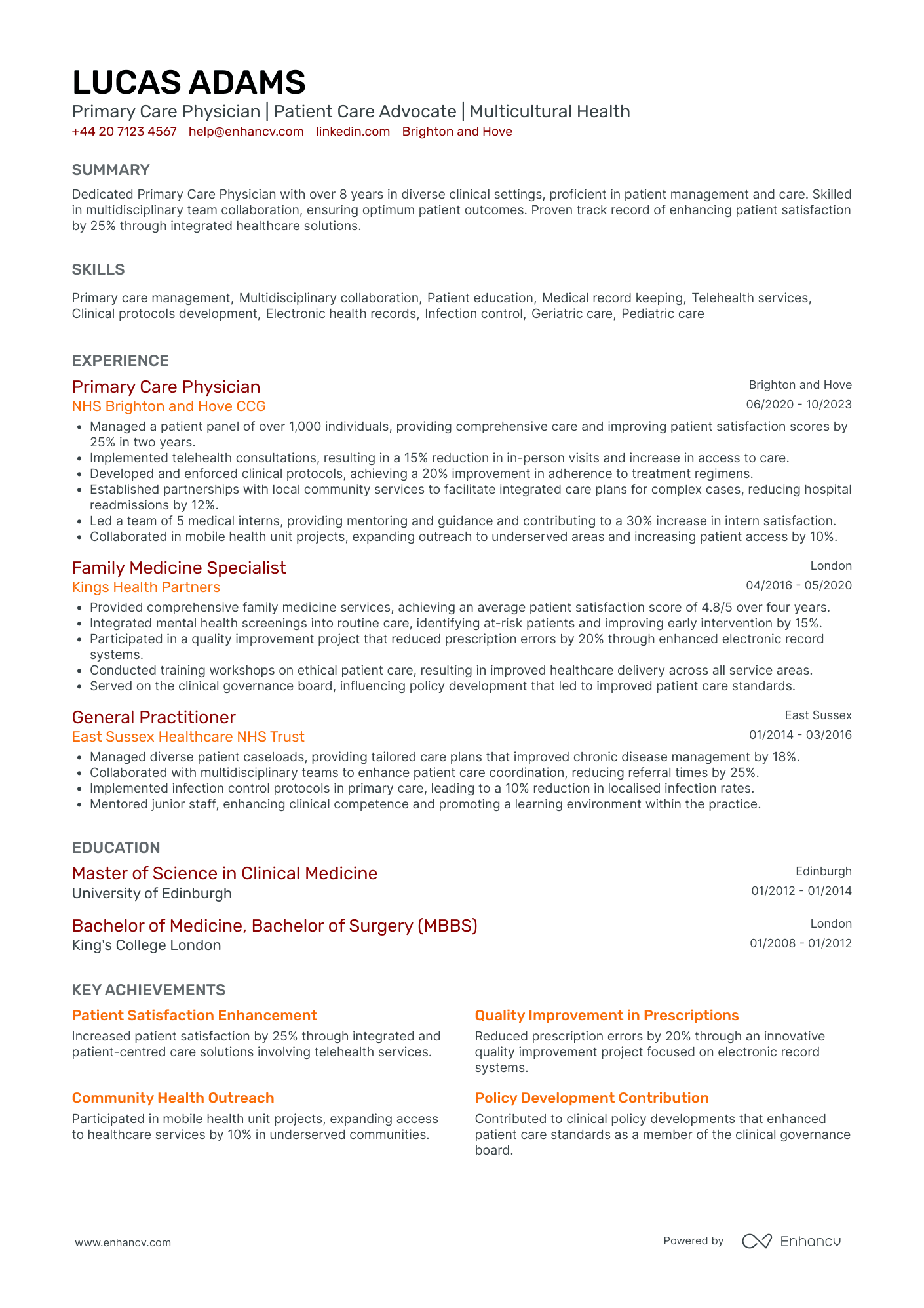
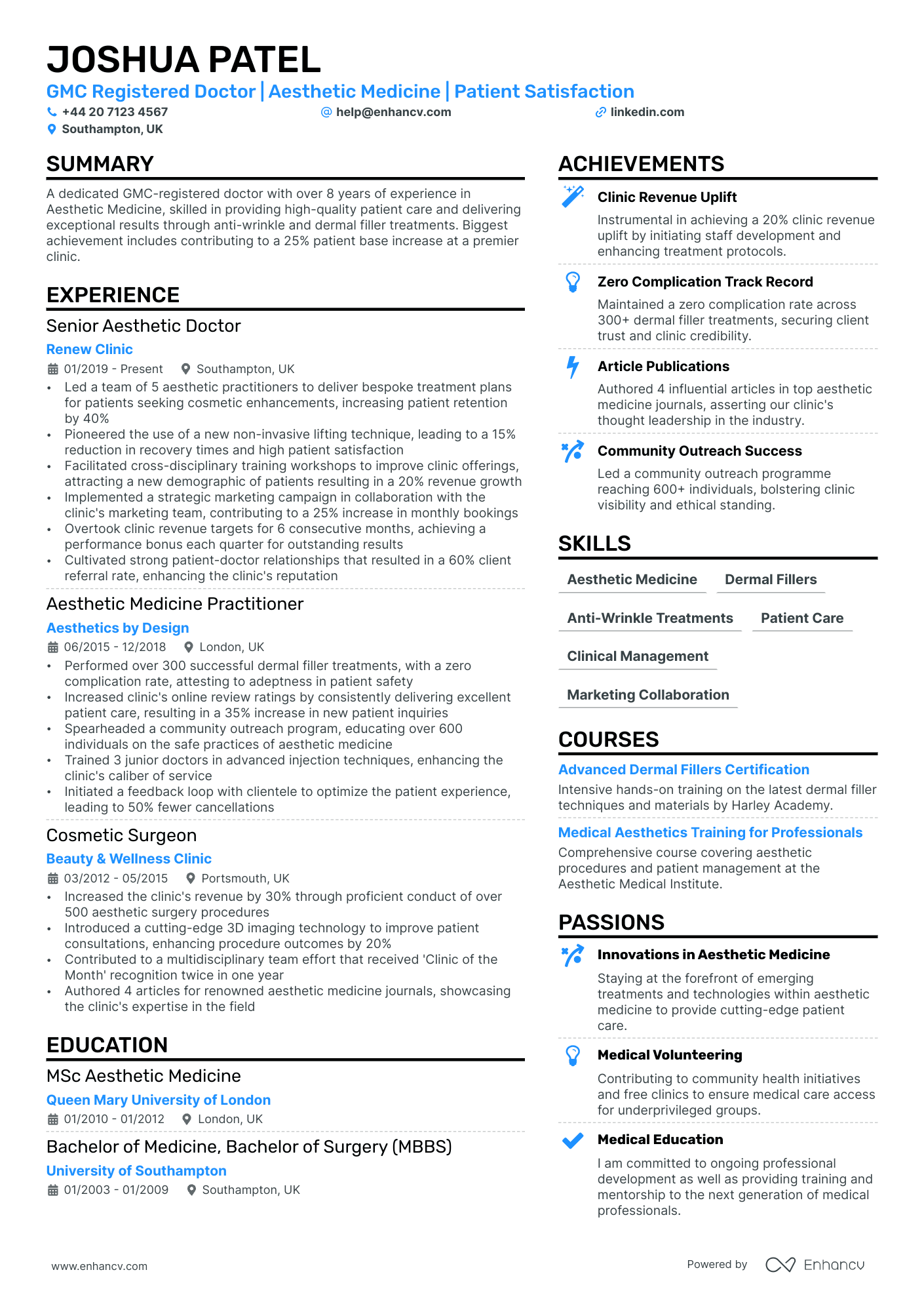
A doctor's CV is not a two-page document, and formatting it like one is the mistake I see most often. The medical CV is its own format, and the people shortlisting for NHS posts know exactly what it should contain.
Get the structure right and the rest falls into place: GMC registration near the top, clinical experience in reverse order, then your audits, publications, and teaching. If you want the general principles first, see how to write a CV, then come back for the medical specifics.

Key takeaways
- The medical CV is a distinct format. It runs longer than two pages and follows a set order NHS recruiters expect.
- Put your GMC registration number and status near the top. It is the first thing a medical recruiter checks.
- List clinical experience in reverse chronological order, with grade, specialty, and trust for each post.
- Give audits, publications, presentations, teaching, and courses their own sections. These carry real weight in medicine.
- Send a PDF so the layout holds, and keep a Word copy for agencies and portals that ask for one.
- Doctor postings are almost entirely on-site, so make your location and availability easy to find.
Formatting your NHS doctor CV
Start with length, because this is where medical CVs break the usual rule. A doctor's CV is one of the few UK CVs that should run past two pages, often to four or more, because it has to carry your full clinical record, audits, publications, and courses.
That is not licence to pad. Every line still earns its place. It means the usual CV length advice written for other professions does not apply to you.
Use a reverse chronological structure for clinical posts, most recent first, and keep one clean column with standard headings. A medical recruiter scans for grade, specialty, and dates, so make those obvious.
Choose a plain, readable font and generous margins over anything decorative. Consistency matters far more than design in a CV format a panel will read closely.
Your first page does the heavy lifting. A recruiter should see your name, GMC number, current grade, and a two or three line personal statement before anything else, so lead with those rather than a long block of personal details.
Stick to a single column. Two-column layouts look tidy but scatter a long clinical record across the page and blur the order a panel is trying to follow.
The core structure holds across specialties, but weight it to the post. A GP application leans on consultations and chronic disease management, a surgical one on logbook numbers and procedures, so lead the clinical section with what that panel scores first.
Name the file plainly, with your surname and grade, so it is easy to find in an inbox of applications. "Smith J FY2 CV" beats "CV final version 3".
Send your CV as a PDF for direct applications so the formatting holds on any screen. Keep a Word version too, because locum agencies and some application portals reformat or ask for an editable file. If the advert names a format, follow it.
Recruitment for training posts runs through Oriel and trust portals, and some applications pass through tracking software, so keep the layout clean and the headings standard for an ATS-friendly CV. Build it from a tested layout rather than a blank page: Enhancv's CV templates export to a clean PDF.

PRO TIP
A medical CV has no strict page limit, but a bloated one still loses. Put a short personal statement and your GMC details on page one so a recruiter sees the essentials before they scroll.

Leave these off a UK medical CV
UK convention is to omit a photo, your date of birth, and marital status, and to keep your address to a city rather than a full postal line. They add nothing a panel can score and can invite bias. A city and a contact email are enough, and every line you save goes to your clinical record instead.
Is your resume good enough?
Drop your CV here or choose a file. PDF & DOCX only. Max 2MB file size.
The sections every UK medical CV needs
Medical CVs follow a recognised order, and panels expect it. Deviating from it reads as inexperience, not originality.
Work through these in roughly this sequence:
- Personal details: name, GMC number, contact details, and right to work. Check what belongs in your personal details on a CV and what to leave off.
- Personal statement: three or four lines on your grade, specialty interest, and career aim.
- Qualifications: your primary medical degree, then postgraduate exams such as MRCP or MRCS, with dates and awarding bodies.
- Clinical experience: every post in reverse order, with grade, specialty, trust, and dates.
- Audit and quality improvement: the projects you led or contributed to, and what changed as a result.
- Publications and presentations: referenced properly, with your position in the author list.
- Teaching, courses, and training: Advanced Life Support, teaching you have delivered, and relevant certificates.
- Research and management roles, then references, usually two including your current or most recent consultant.
Not every section applies at every stage. A foundation doctor will have a short publications list or none, and that is expected. Keep the headings that carry real content and drop the ones that would sit empty. See how to order the sections in a CV if you are unsure.
Reference publications in a consistent style, list presentations with the meeting and date, and record audits as a full cycle where you can, including the change you made and the re-audit result. Depth here is what separates a senior CV from a junior one.
What the UK doctor market looks like
Knowing where the roles sit and what they ask for shapes what you lead with. Here is what the current UK postings show.
| What | UK doctor roles |
|---|---|
| Where the work happens | On-site (95 of 102 UK doctor postings in the last ~30 days, Enhancv's internal job feed) |
| Experience level asked for | Skews senior: about half the postings (51 of 102) sit in the top seniority band, and 14% are entry level |
| Skills that recur most | Audit, clinical governance, and data analysis |
Two things stand out for your CV.
Doctor work is almost entirely on-site, with 93% of postings based at a trust or practice rather than remote. Make your location and availability easy to find near the top.
The postings also skew senior, with half in the top seniority band. If you are early in your career, that means the way you frame limited experience matters more, not less. Lead with what you have done, not the grade you hold.
On pay, there is no single figure worth quoting. NHS doctor salaries are set by national pay scales that rise with grade, from foundation trainee through to consultant, and locum and private rates sit outside those bands. Check the current pay scale for your grade rather than trusting a headline number.
Writing your doctor personal statement
Three or four sentences at the top: your grade, your specialty interest, one or two concrete strengths, and where you are heading. Keep it specific to the post. For more openers, see these personal statement examples.
Skip the adjective soup. "Hard-working, dedicated, and caring doctor" tells a panel nothing they cannot already assume.
Lead with evidence a reader can picture instead:
Doctor CV personal statement example (ST3, general medicine)
ST3 in general internal medicine with full GMC registration and MRCP (UK), currently working in a busy district general hospital. Led a trust-wide sepsis audit that cut mean time to antibiotics by 40 minutes, and teach foundation doctors weekly. Looking for a registrar post in acute medicine that supports research and quality improvement.
What to avoid
A hard-working, dedicated, and passionate doctor with excellent communication skills and a caring nature, seeking a challenging role in a forward-thinking organisation where I can develop my skills and make a real difference to patients.
Notice the difference. The strong version names a grade, a real audit result, and a clear aim. The weak one could belong to any applicant in any field, which is exactly why panels skim past it.
Match the statement to the specialty you are applying to. A profile aimed at an acute medicine post should read differently from one for general practice or psychiatry, even when the underlying facts are the same.
When a medical CV lands in front of a panel, the first thirty seconds decide whether it gets read properly. GMC number, current grade, and specialty should be visible without scrolling. We see strong doctors bury those details on page three under a generic profile, and the panel has already moved on. Put the facts that qualify you at the top, then let your audits and clinical record do the rest.
Writing your clinical experience section
Each post gets a dated heading with your grade, specialty, and trust, then a few bullets that show what you did and what changed. Lead every bullet with a verb. For the mechanics, see work experience on a CV.
Clinical work is more measurable than it feels. Patients seen, clinics run, audits closed, a protocol you changed, a rota you coordinated. Those are your CV achievements, and numbers make them land.
Tailor each application to the post. Pull the duties and clinical terms from the job description and mirror the ones that are true of you. Enhancv's CV tailoring feature reads the advert and suggests the matching edits, which saves rewriting from scratch for every application.
Keep the record complete and continuous. If you have a gap, a period of research, parental leave, or time out of training, give it a dated line rather than leaving an unexplained jump, because panels notice missing months.
- Assess and manage up to 20 acute medical admissions per shift on the acute medical unit, escalating to the registrar and consultant as clinical need requires
- Led a trust-wide sepsis audit across 120 patient records that cut mean time to antibiotics by 40 minutes
- Deliver weekly bedside teaching to four foundation doctors and two medical students, rated 4.8 out of 5 in feedback
- Coordinate the on-call rota for a team of eight SHOs and maintain accurate records in the electronic patient record
PRO TIP
Medical adverts and person specifications list exact terms: "clinical governance", "quality improvement", "multidisciplinary team working", "audit cycle". Mirror the ones you can genuinely back, in the words the specification uses.
Skills for your doctor CV
Read a run of UK doctor adverts and the same demands surface, and they are clinical and governance-led, not generic. Audit, clinical governance, and data analysis recur most often across UK postings in the last ~30 days on Enhancv's internal job feed. Those are your hard skills, listed in the words the adverts use.
Pair them with the soft skills medicine genuinely runs on: communication, teamwork, and decision-making under pressure. Prove each one in a bullet rather than claiming it.
List only what you can defend in an interview. If you have run an audit cycle, name it. If you are still learning a skill, put it under training rather than in your skills section.
Where you can, show the skill in action rather than in a list. "Ran a closed-loop audit on discharge summaries" proves clinical governance far better than the phrase sitting on its own in a skills box.
Top skills for your doctor CV:
Clinical audit
Clinical governance
Data analysis
Patient assessment and diagnosis
Medical documentation
Research methodology
Multidisciplinary team working
Quality improvement
Communication
Teamwork
Decision-making under pressure
Empathy
Time management
Leadership
GMC registration, qualifications, and training
For a doctor, registration is not a detail, it is the gate. State your GMC number and registration status high on the CV, and note your licence to practise. A recruiter checks this before anything else.
List your primary medical qualification, then your postgraduate exams and memberships in order, with dates and the awarding body. Membership exams such as MRCP, MRCS, or MRCGP belong here, alongside your education and qualifications.
Give mandatory training and courses their own space: Advanced Life Support, safeguarding, and any specialty courses, with dates. Listing current certificates saves the panel a question and shows you are up to date.
If you are in a training programme, note your training number and recent ARCP outcomes. If you are established, a short line on appraisal and revalidation reassures a recruiter that your registration is current and in good standing.
Doctor CV tips for junior doctors
Foundation and early-training doctors worry their CV looks thin. It does not need long lists, it needs the right ones.
The postings skew senior, so a junior CV competes on clarity and evidence rather than volume. A well-ordered record of real rotations, one solid audit, and some teaching reads stronger than a long list of half-finished projects.
You already have more than you think: rotations across specialties, audits from your foundation years, teaching, and any presentations or posters. Give each a dated line, the same way you would a senior post. Our guide to a strong first CV covers the principles if you are near the start.
Frame foundation rotations as clinical experience, not a training checklist. Name the specialty, the trust, and one thing you took from each post, whether that was a procedure you became confident in or an audit you closed.
If a section is genuinely empty, leave the heading out rather than inflating it. An honest, well-ordered two or three pages beats a padded six. A clear FY2 or ST1 CV that names real audits and rotations reads as ready, not junior.
Conclusion
Lead with GMC registration, follow the medical CV order NHS panels expect, and let your audits, publications, and clinical record carry the weight.
Pair the CV with a focused cover letter that says why this post and this trust, and you give the panel every reason to shortlist you.
Author's take - the Enhancv team
When a medical CV lands in front of a panel, the first thirty seconds decide whether it gets read properly. GMC number, current grade, and specialty should be visible without scrolling. We see strong doctors bury those details on page three under a generic profile, and the panel has already moved on. Put the facts that qualify you at the top, then let your audits and clinical record do the rest.