



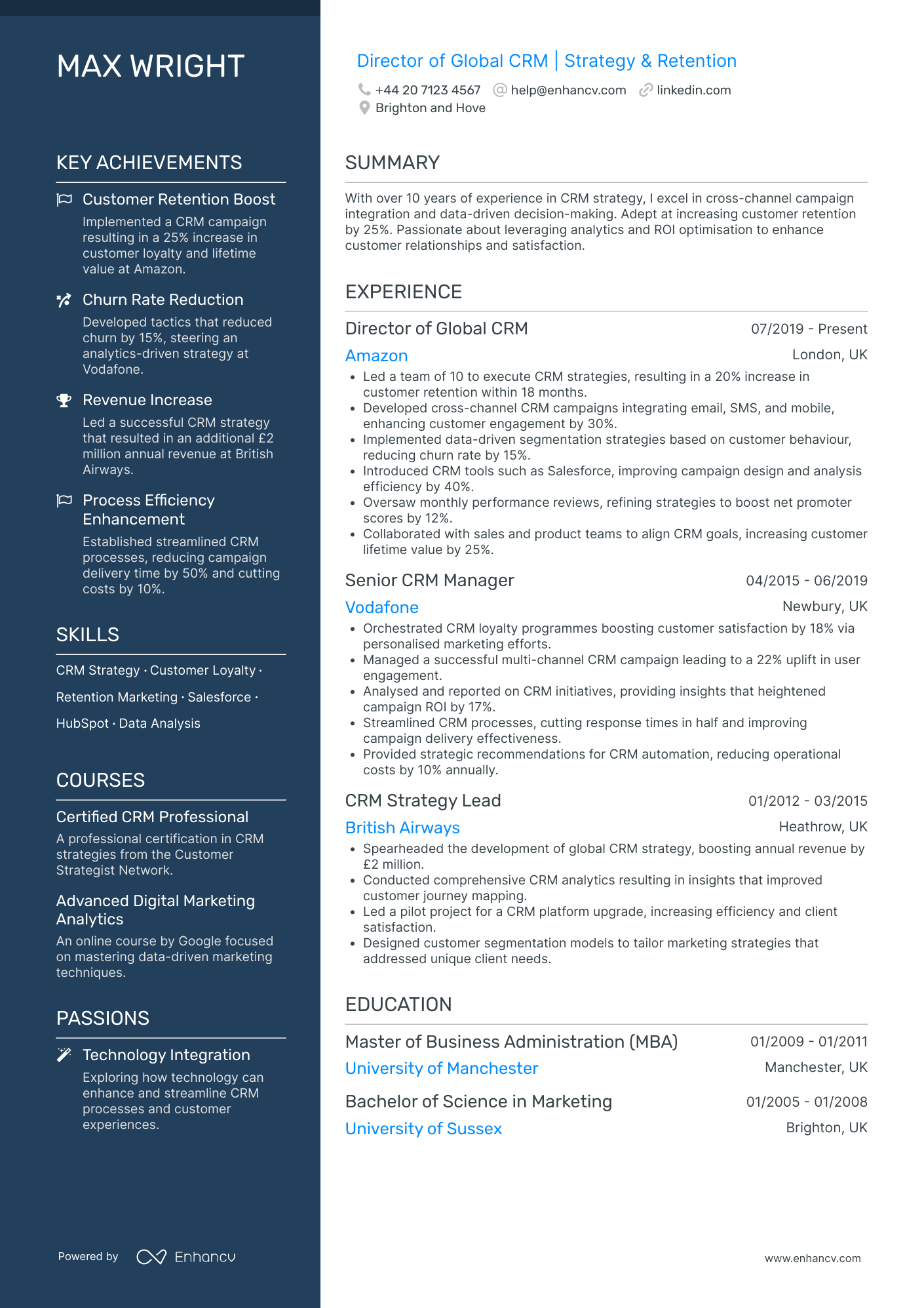
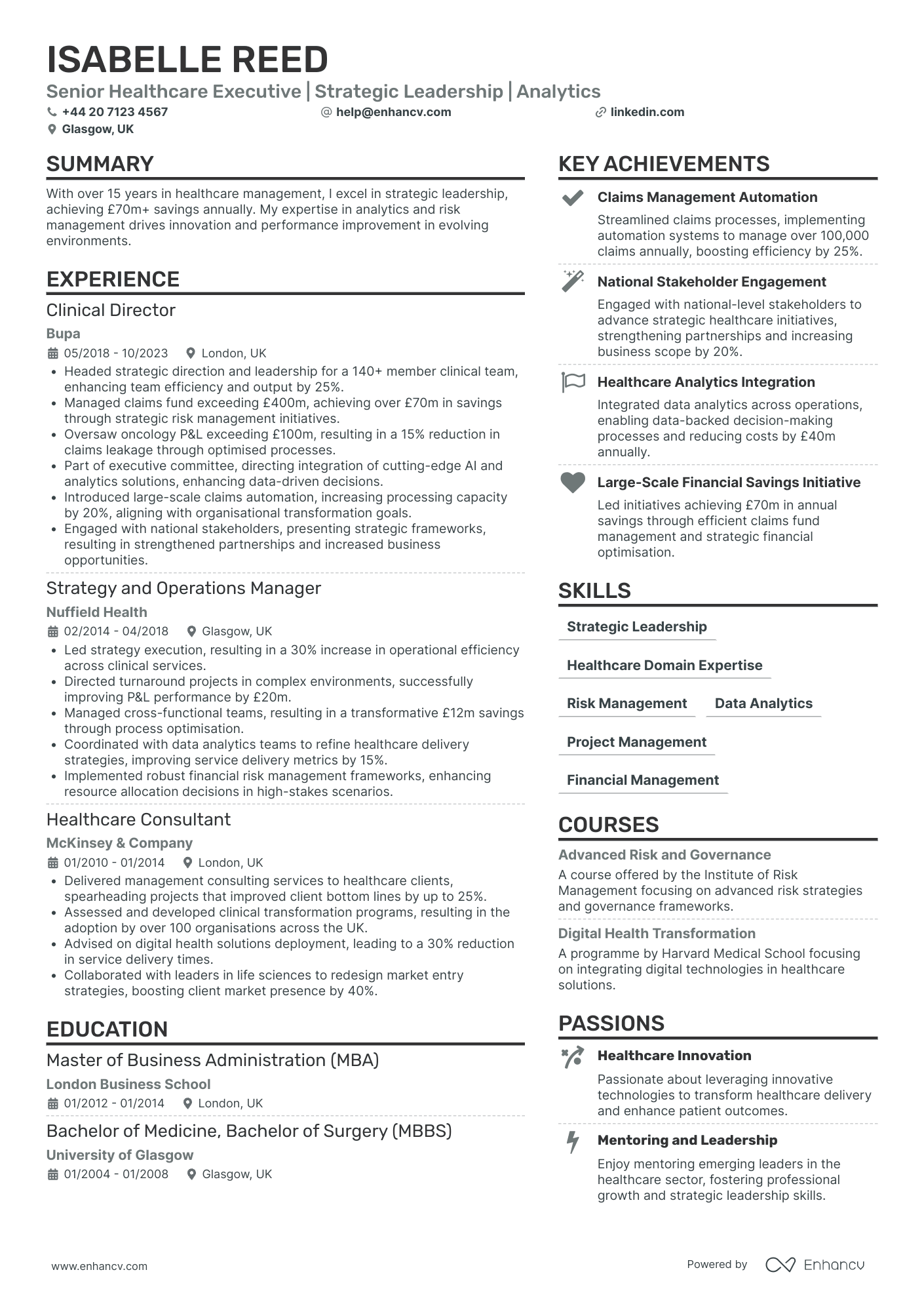
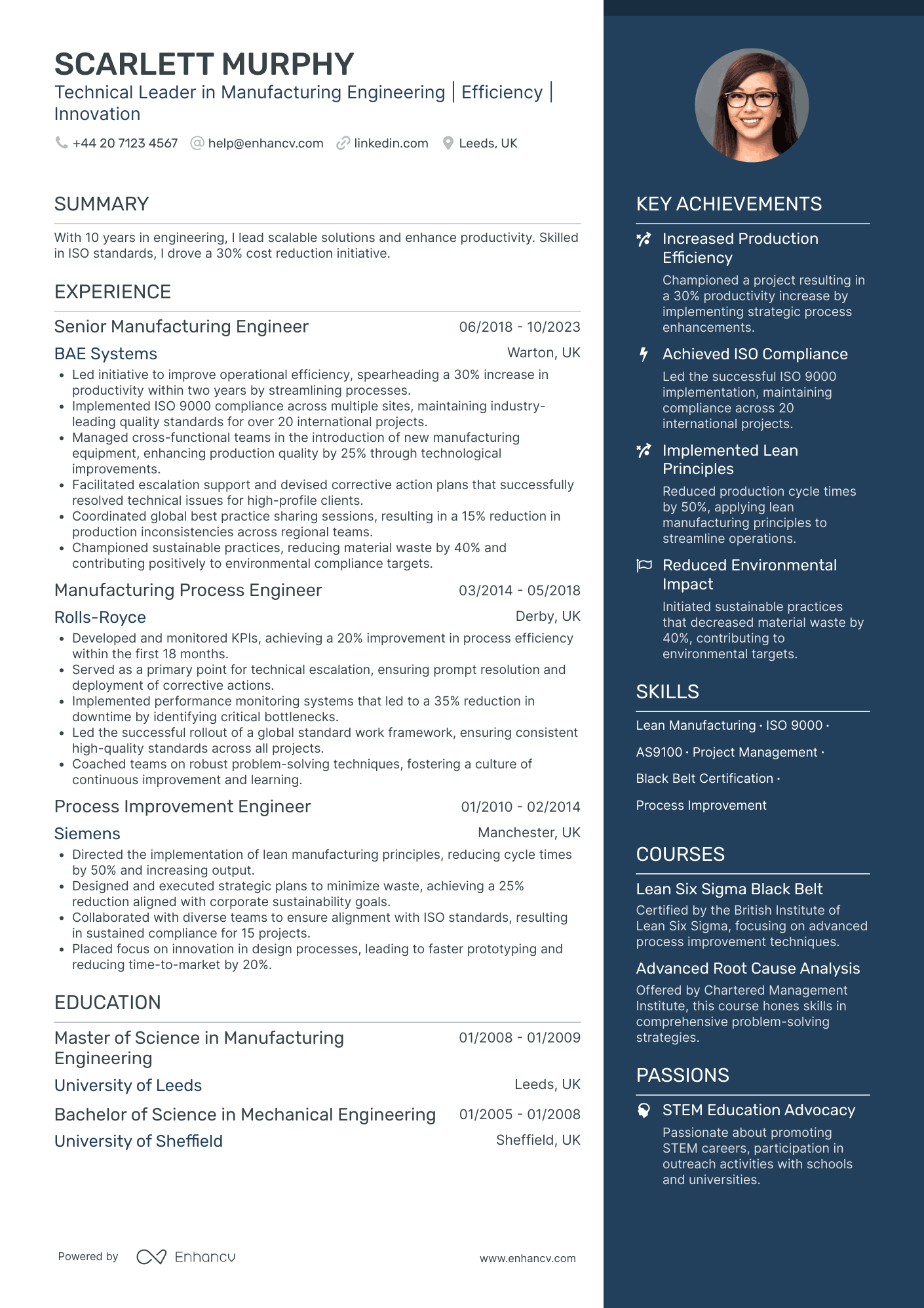
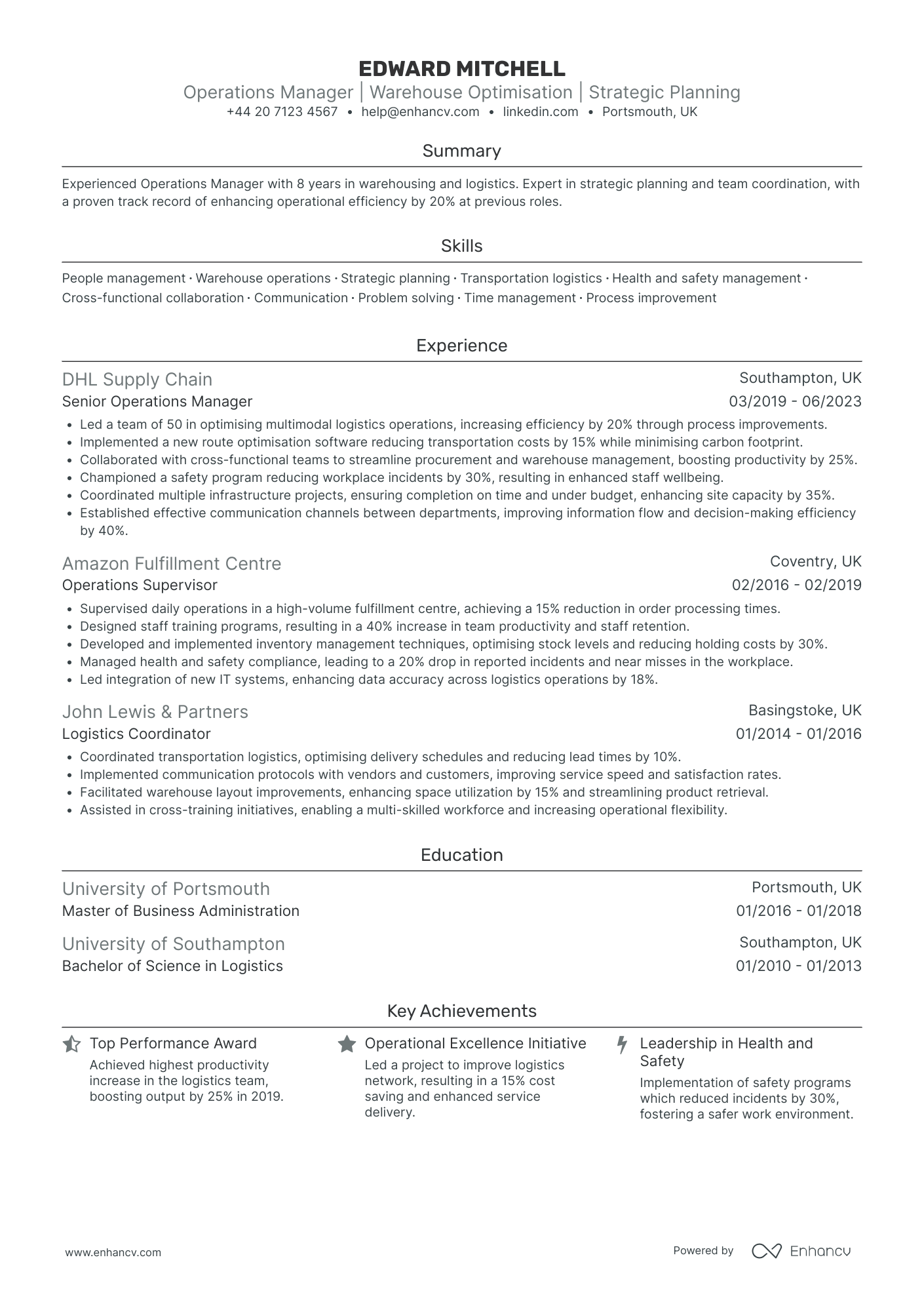
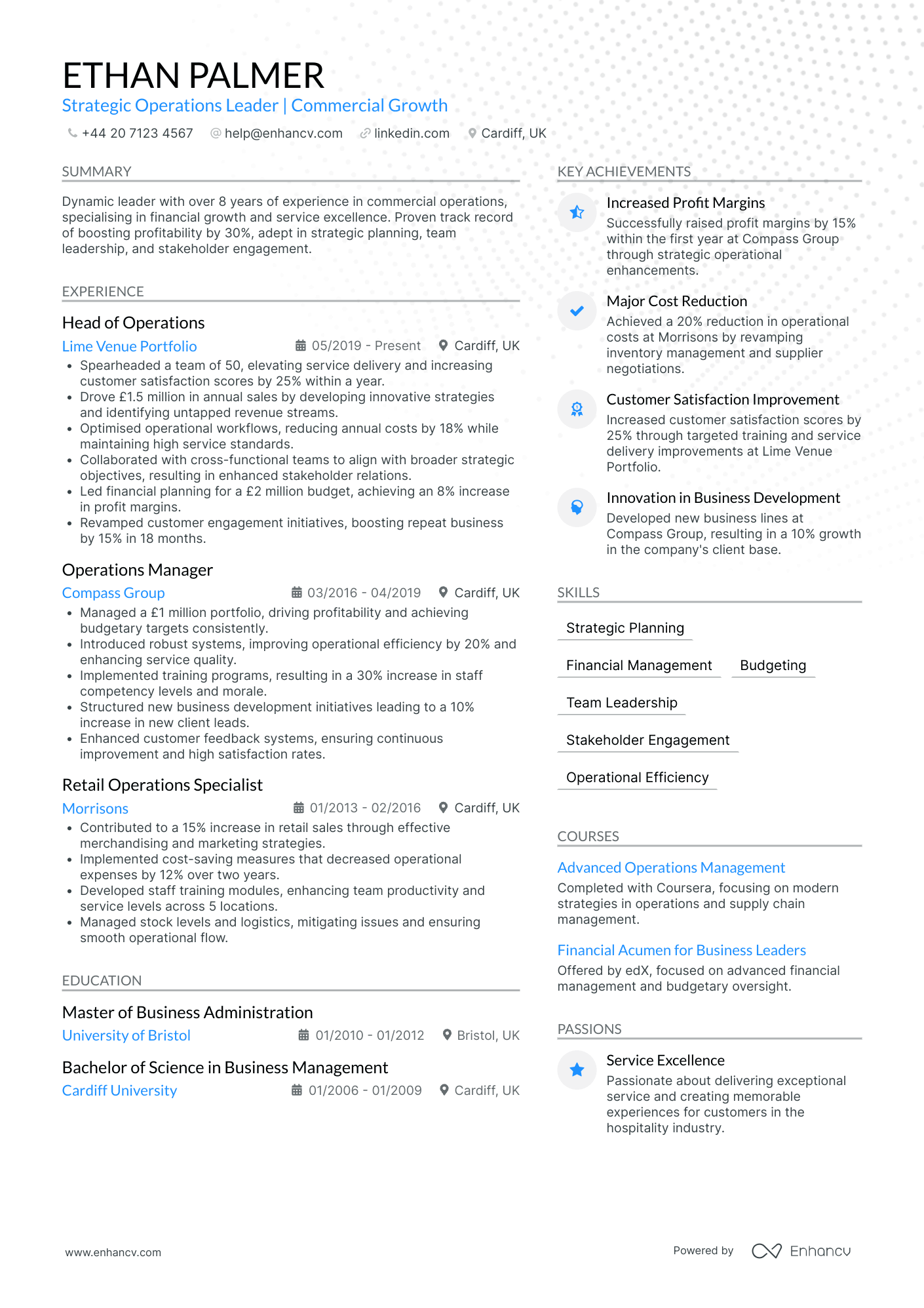
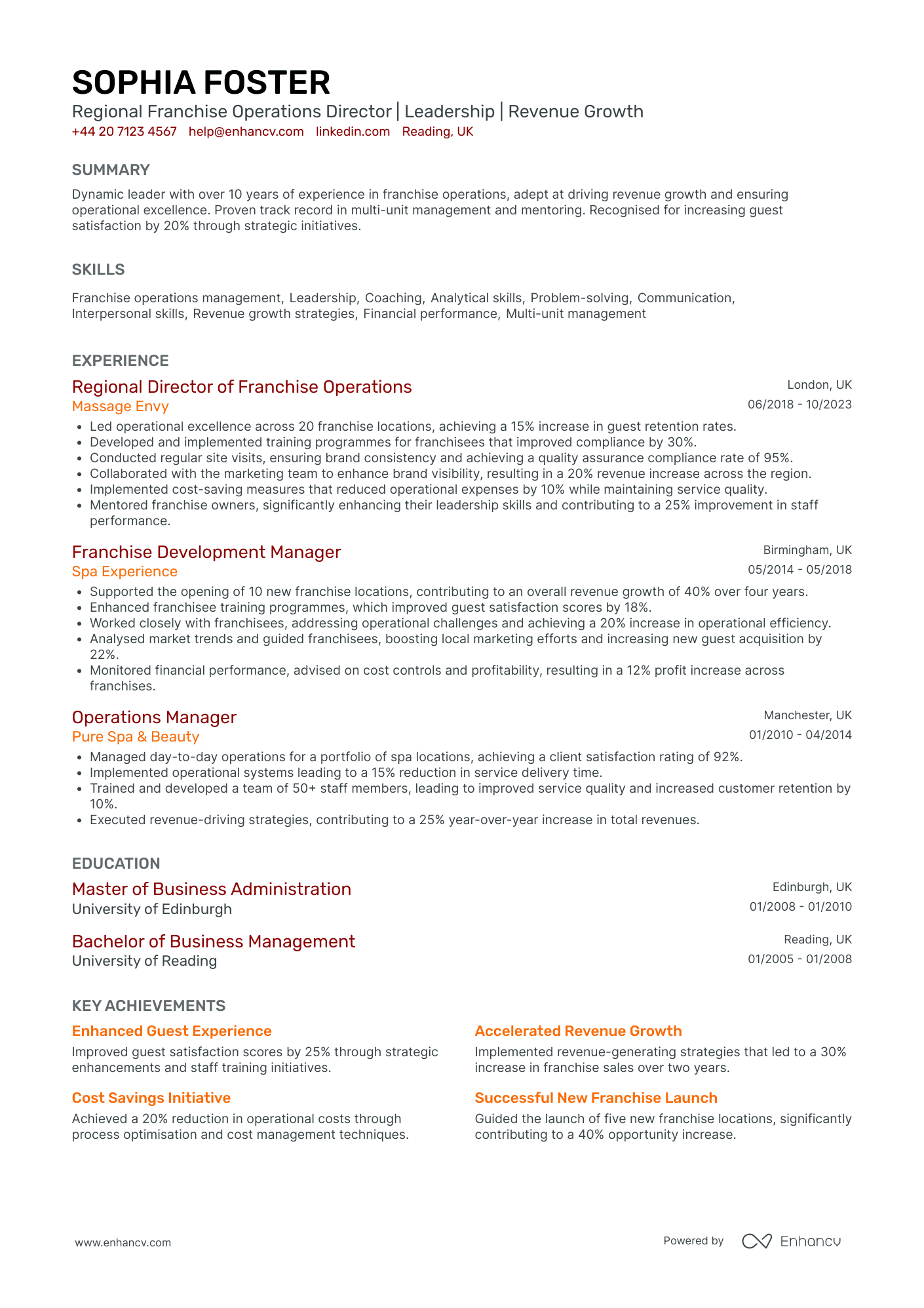
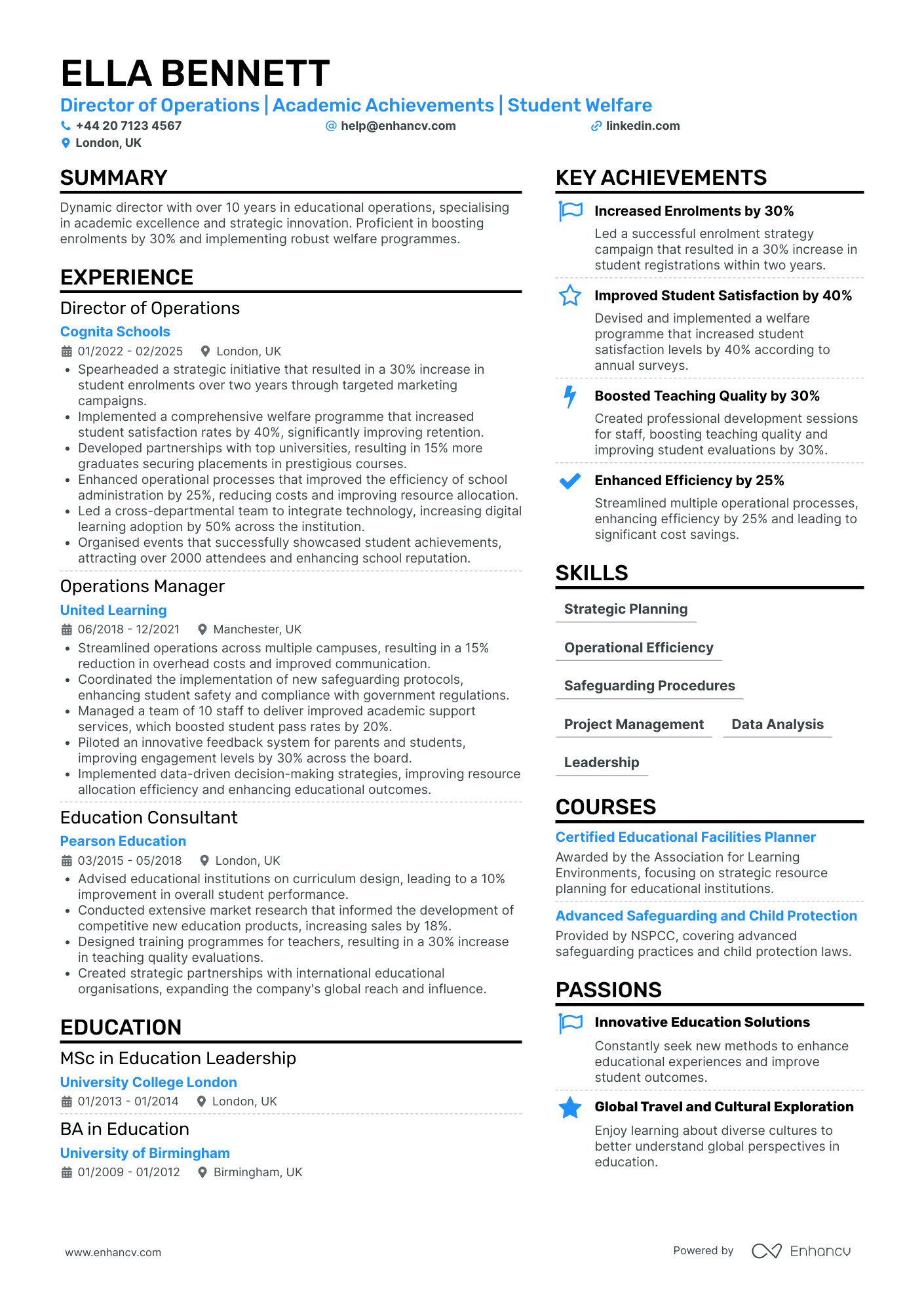
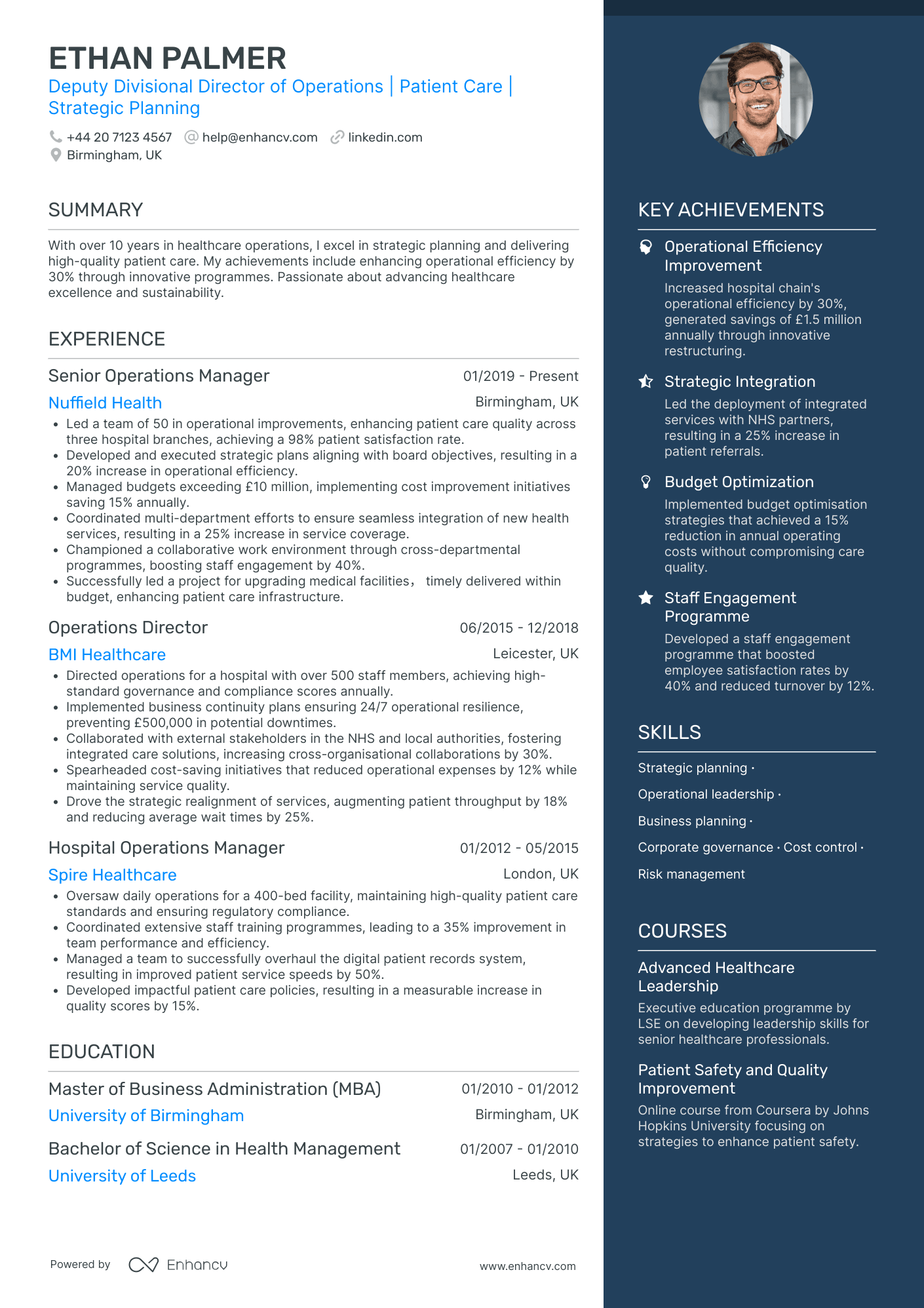
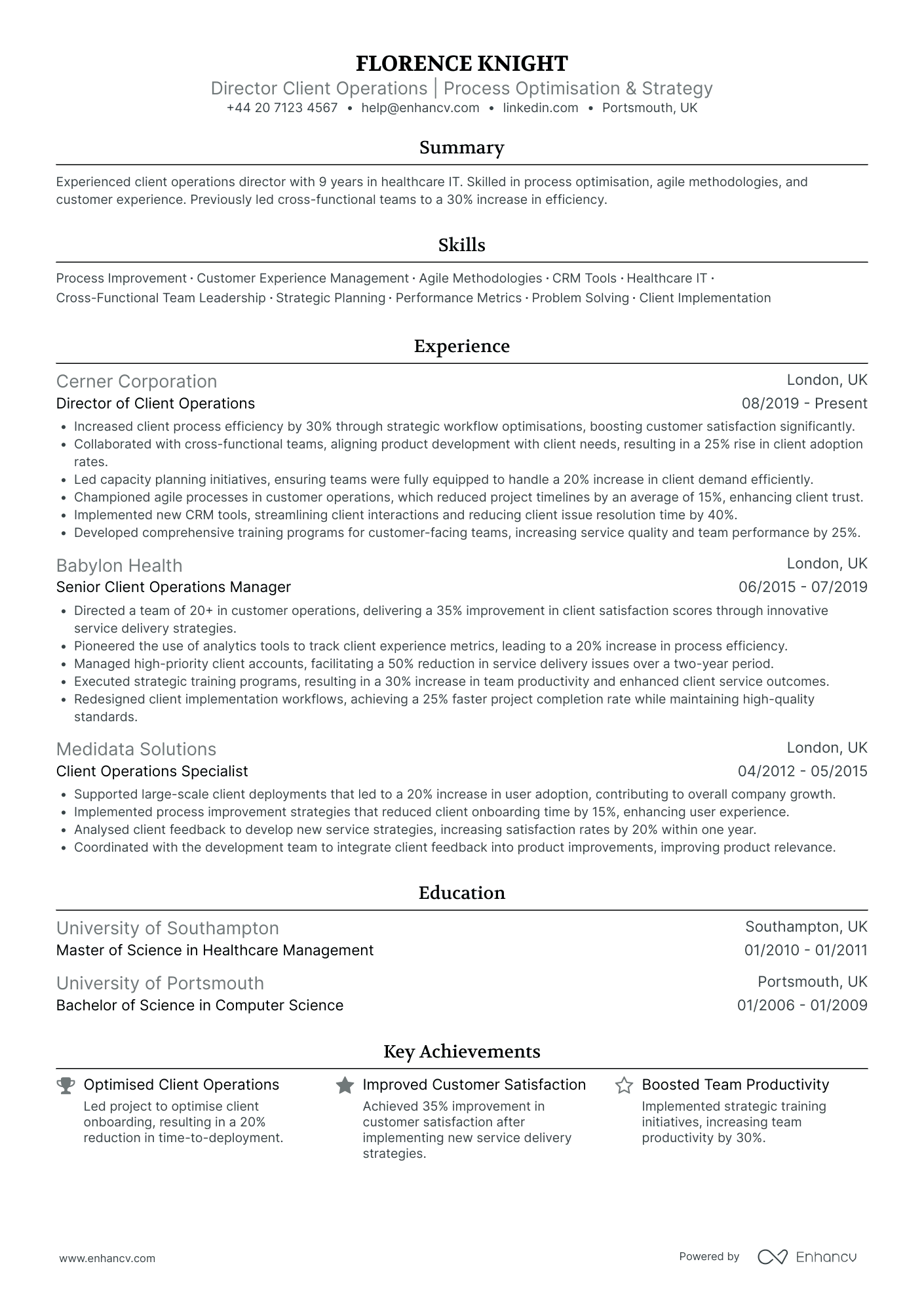
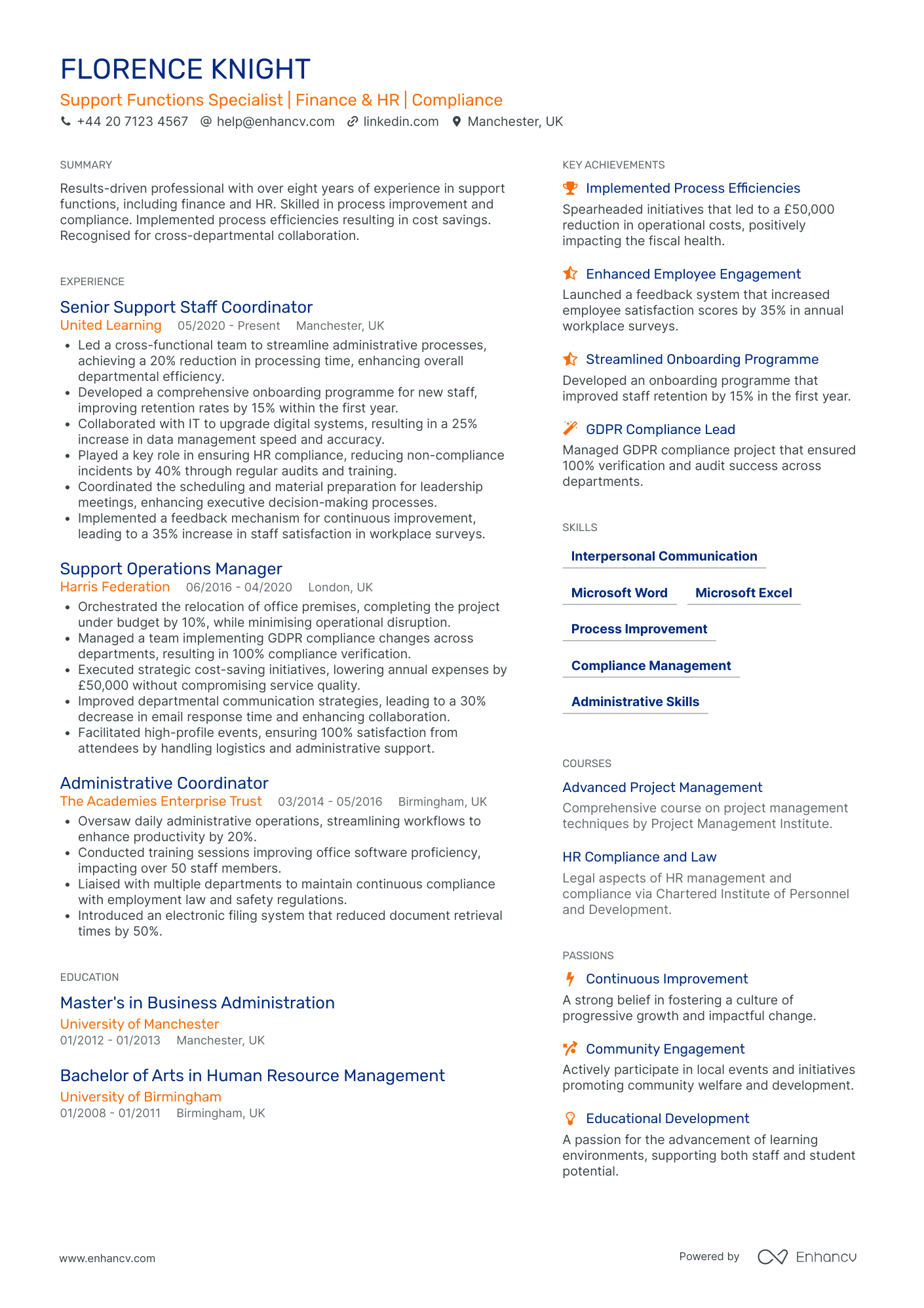
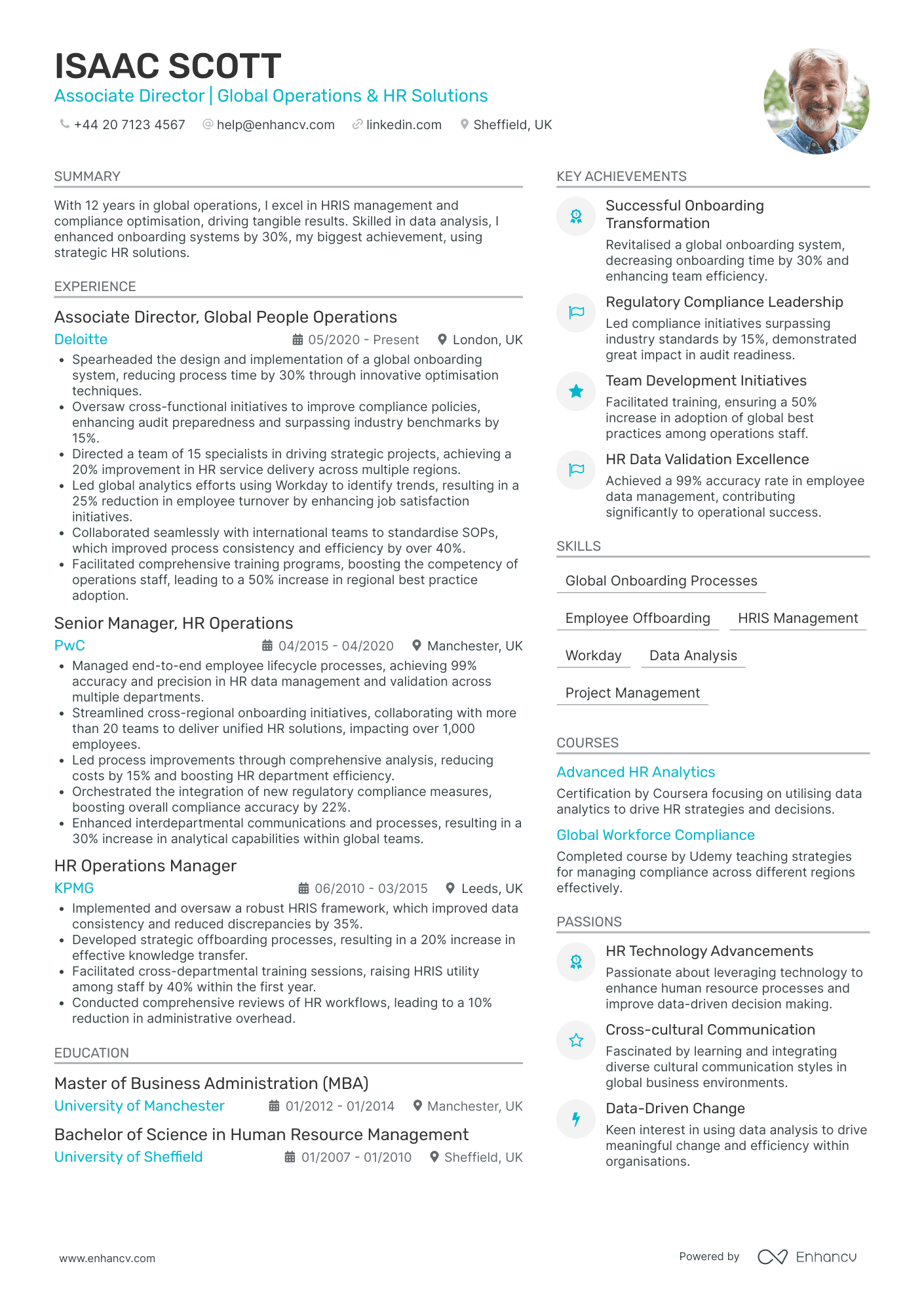
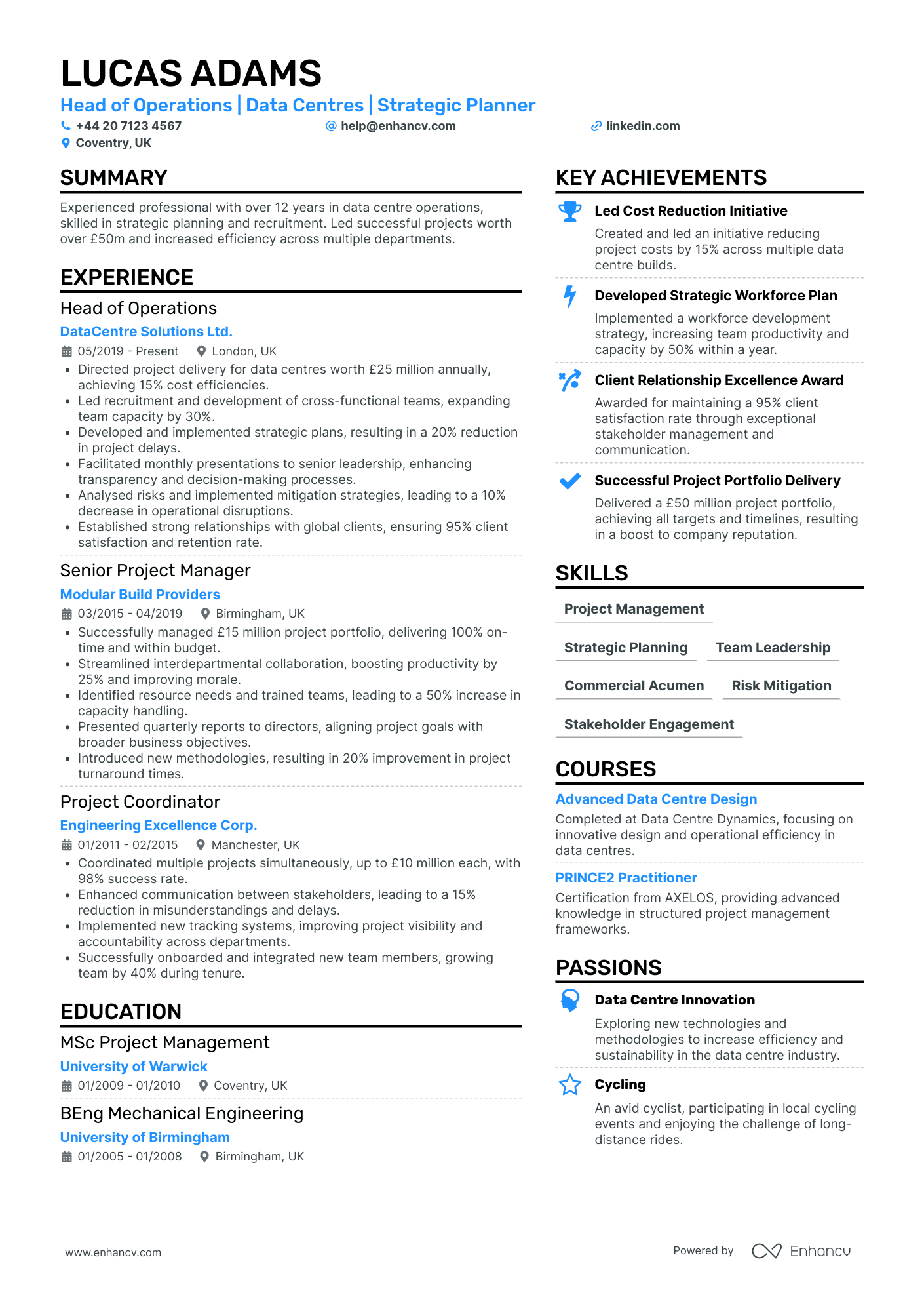
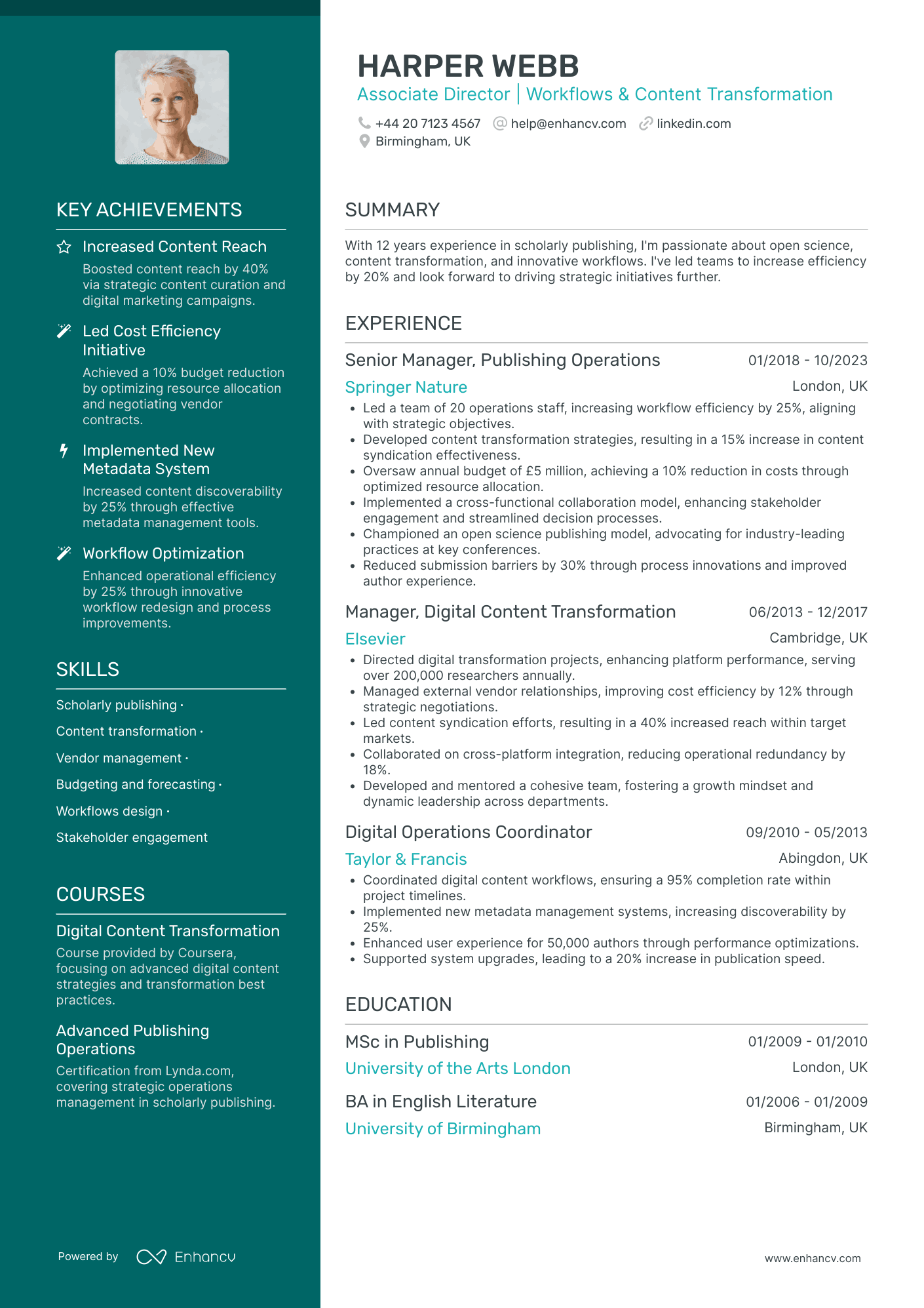
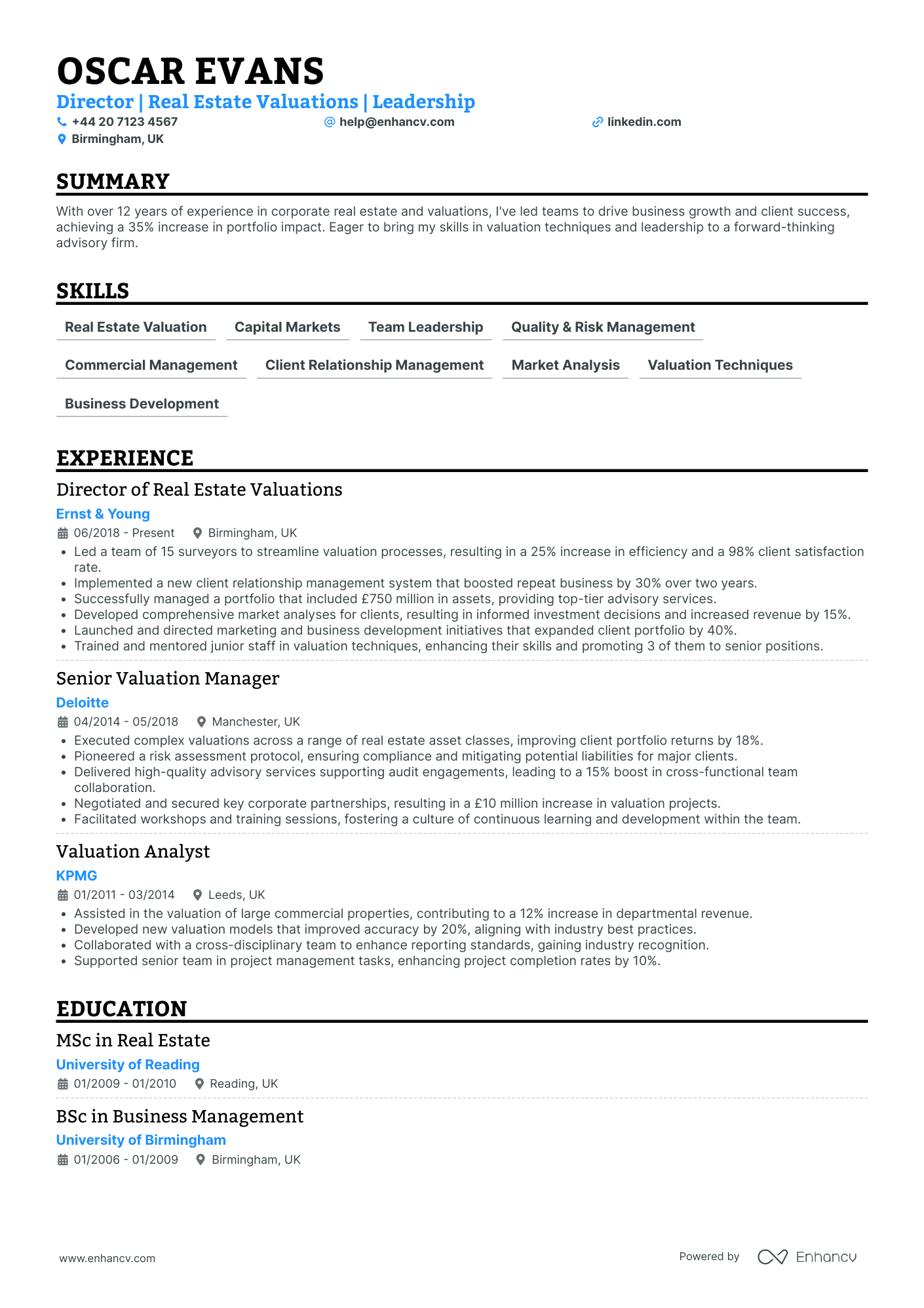
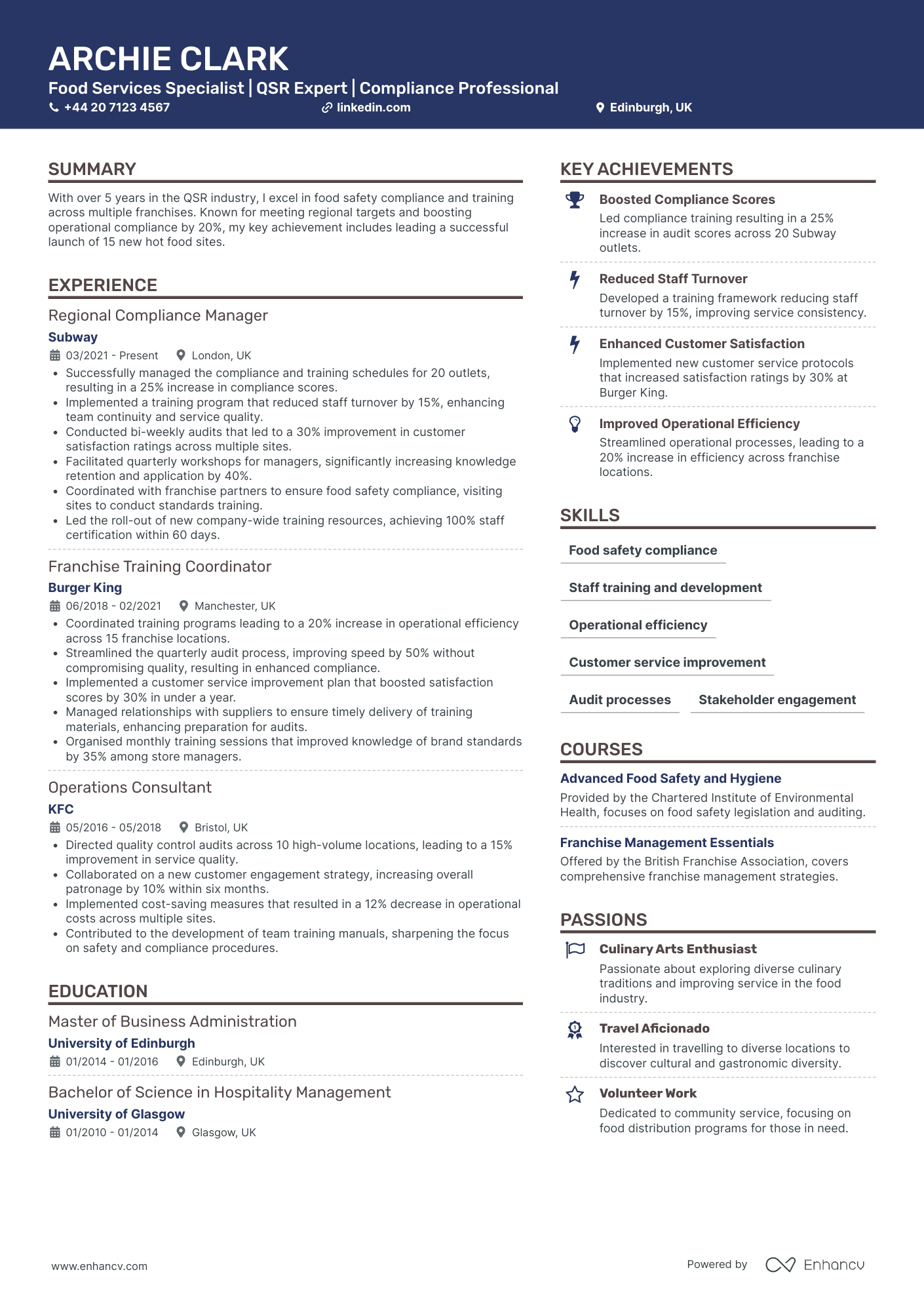
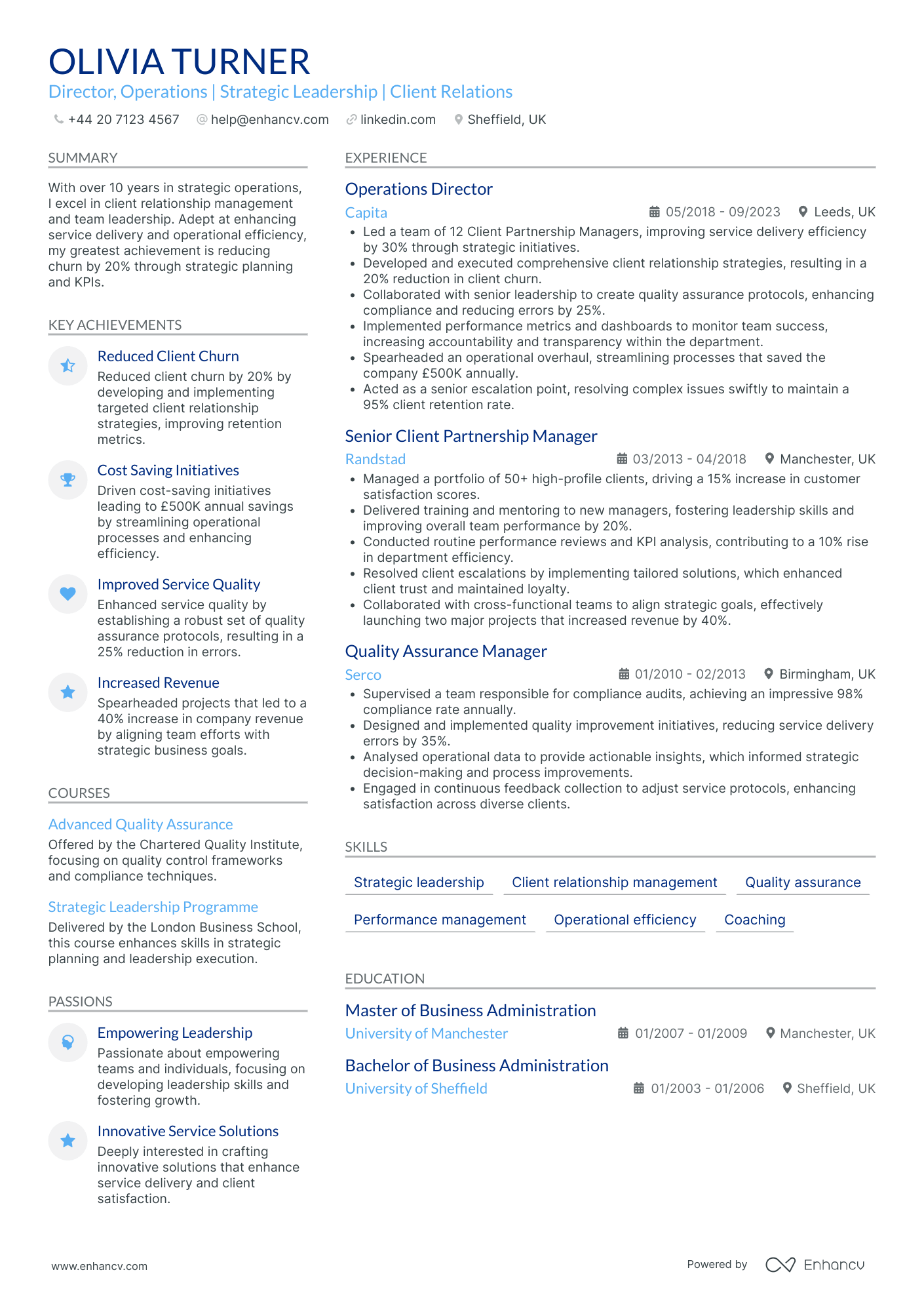
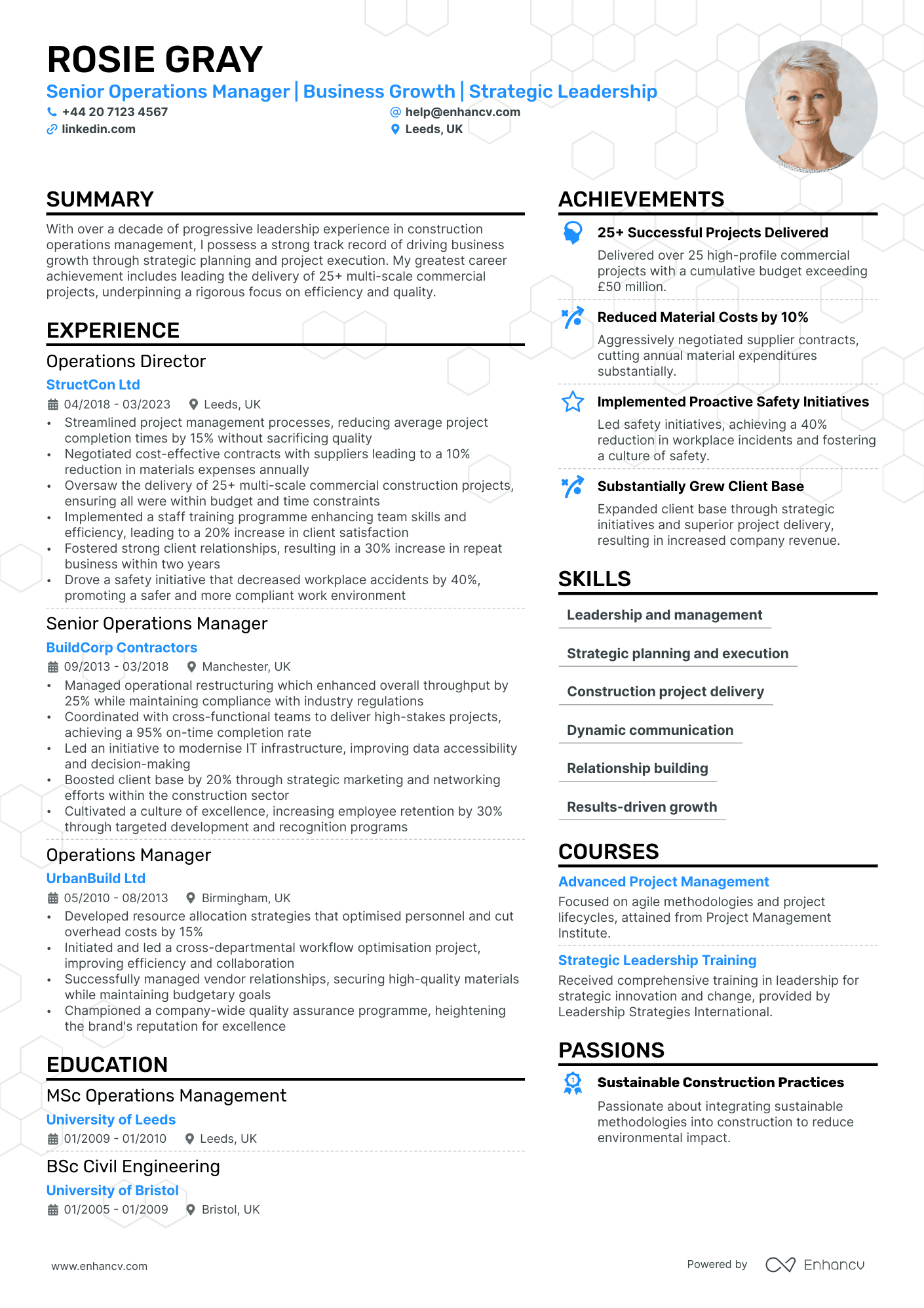
Most director of operations CVs list the size of the operation and forget to prove the operator. Headcount, budget, and number of sites mean little if a recruiter cannot see what you actually changed.
At this level, format does a lot of the work. A clean two-page structure, results near the top, and numbers a board would recognise separate the CV that earns a call from the one that gets filed. If you want the fundamentals first, see how to write a CV.

Key takeaways
- Lead with outcomes, not scope. A recruiter should see cost saved, margin gained, or a team turned around before the job titles.
- Two pages, reverse chronological, one column. At director level, clarity beats density.
- Put three or four board-level numbers in the top third of page one.
- Name the operating disciplines employers list: P&L ownership, KPI reporting, risk, compliance, and change management.
- Send a PDF unless the advert or recruiter asks for a Word file.
- Pitch the CV at the right altitude. Know whether the role sits below the COO or reports to the board.
Formatting your director of operations CV
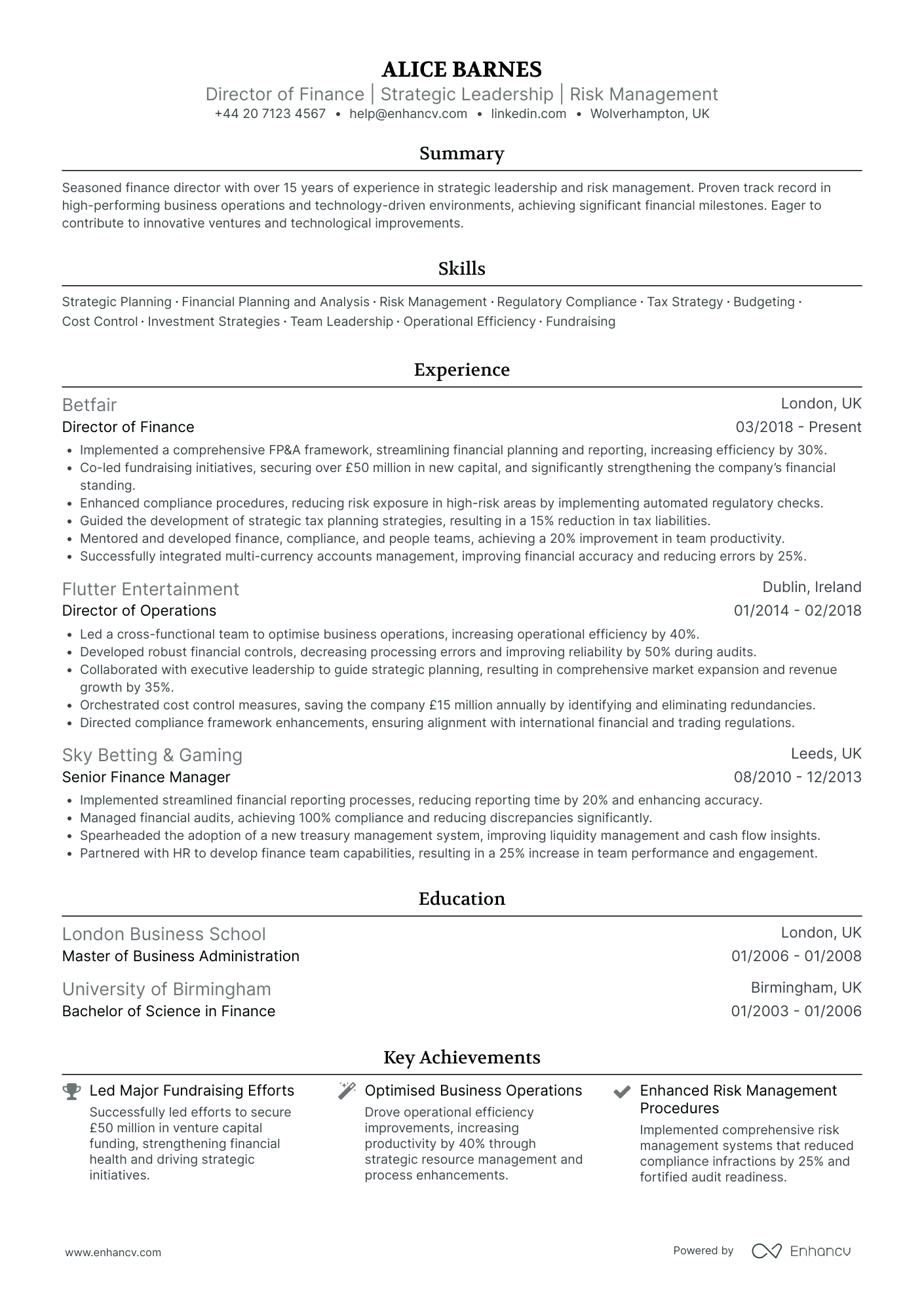
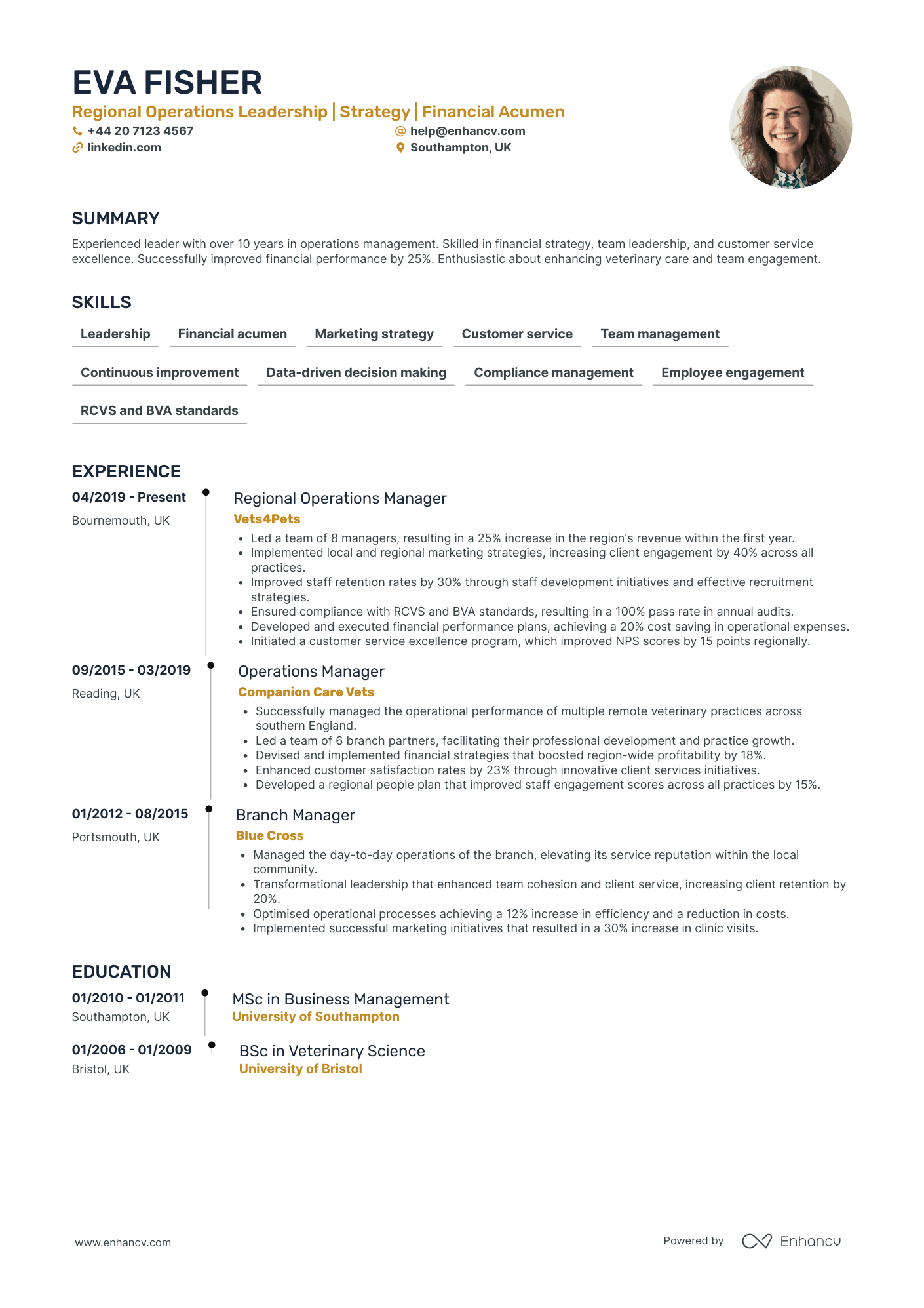
Use a reverse chronological structure. At director level your track record is the argument, so the most recent, most senior role belongs at the top of page one.
Keep it to two pages. A director of operations who cannot edit their own CV down to two pages raises the wrong question about how they run an operation. Two focused pages read as more senior than three crowded ones.
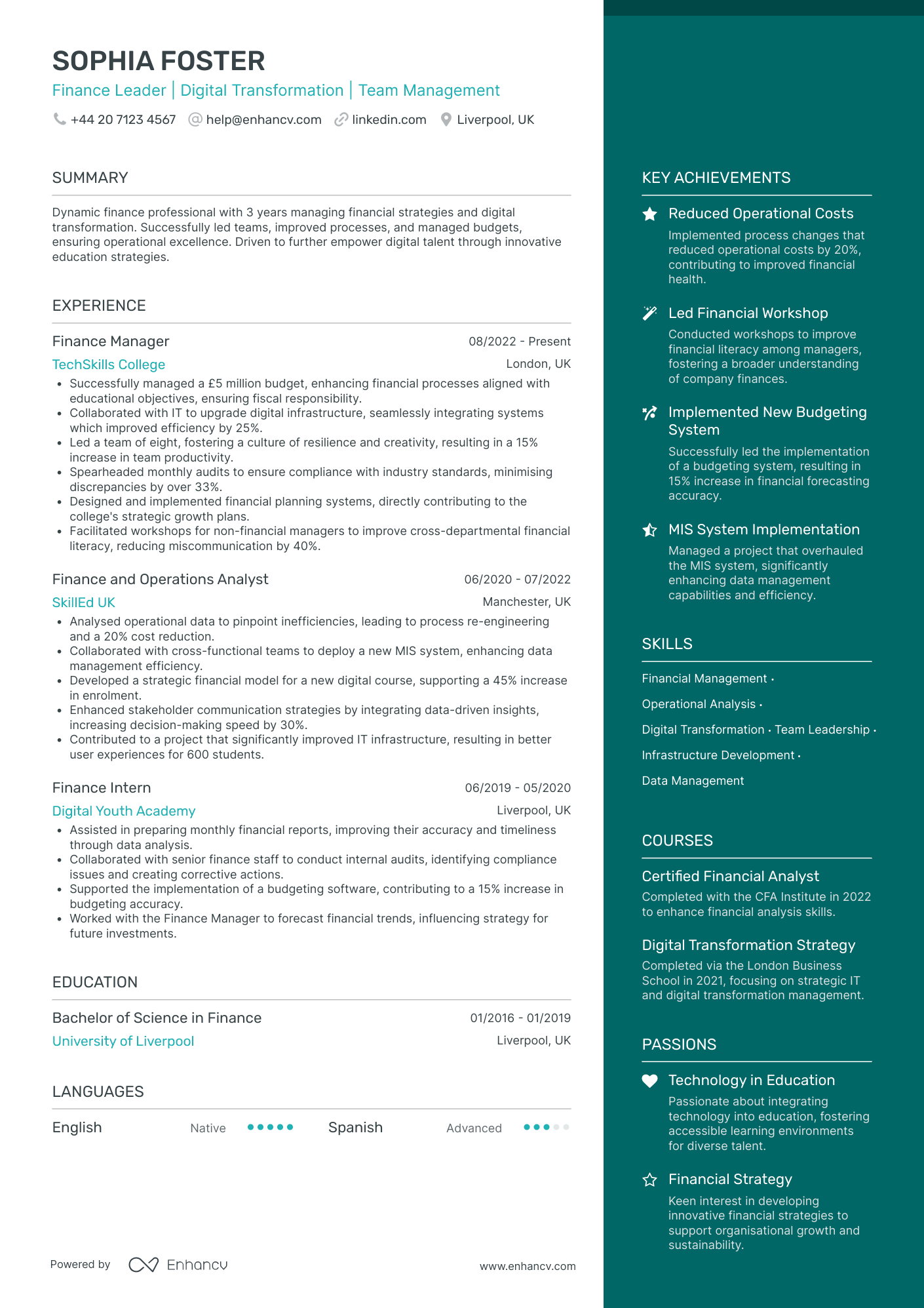
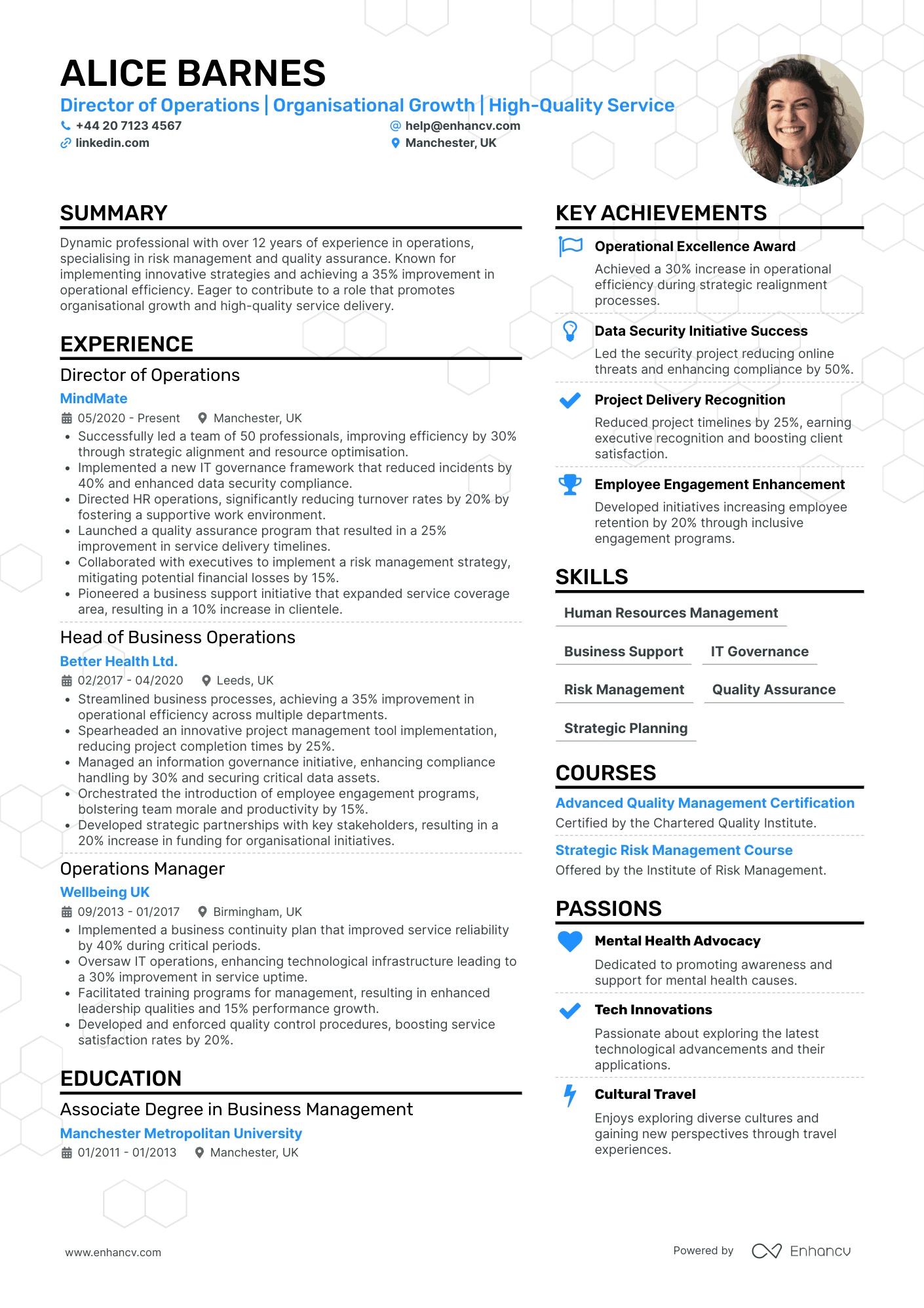
One column, standard headings, a readable font, and generous margins. Boards and executive recruiters skim on a phone between meetings, so make the structure obvious at a glance and never make them hunt for the numbers.
Order the sections for the scan: a short personal statement, then a results or key achievements block, then experience, then skills, then a brief education section. The achievements block is where you win or lose the first read, so give it four or five lines and put money and scale in every one.
Keep the header lean. Name, title, city, one phone number, a professional email, and a LinkedIn URL. Skip the photo, the date of birth, and the full postal address, none of which a UK employer needs and all of which cost space you could spend on results.
Send a PDF for direct and board-level applications so the layout holds on any screen. Keep a Word copy for executive search firms and agencies, which often reformat CVs into their own template. If the advert names a file type, follow it.
Applications still pass through tracking software at large employers, so keep the headings standard and the layout clean for an ATS-friendly CV. Avoid tables, text boxes, and headers that hide text from a parser. Build it from a tested layout rather than a blank page: Enhancv's CV templates export to a clean, single-column PDF.

PRO TIP
The top third of page one is the only part guaranteed to be read. Spend it on three or four numbers a board recognises: cost taken out, margin added, on-time delivery, headcount led. Everything below that supports those numbers.
Where a director of operations sits: COO, director, and operations manager
Pitch the CV at the right altitude and the rest gets easier. The same achievements read differently depending on the level you are claiming, so it pays to be clear about where the role sits. The three titles below overlap in practice, and one company's operations manager runs what another calls a director.
| Role | What it usually owns | Typically reports to |
|---|---|---|
| Operations Manager | Day-to-day delivery of one site, team, or function against set targets | Director of operations |
| Director of Operations | Running the operation across sites or functions, plus budgets, KPIs, and delivery | COO or managing director |
| Chief Operating Officer (COO) | Operational strategy for the whole business and a seat near the board | CEO and the board |
A director of operations usually owns the running of the operation day to day and reports into a COO or managing director. A COO sits above, owning operational strategy across the whole business.
Titles vary between companies, so let scope decide the pitch. Where the advert says P&L ownership, board reporting, or multi-site, evidence those specifically rather than leaving the reader to guess how far your remit reaches.
If you are targeting a step up, mirror the language of the advert and show the widest scope you can genuinely defend. If you are moving sideways, make the depth of your operating results the headline instead.
The same discipline applies to industry. A director of operations moving from manufacturing into healthcare or retail should lead with the transferable operating system, budget control, KPI frameworks, safety, and change, then let the sector detail sit inside the bullets. Boards hire the operator first and the sector second.
Writing your director of operations personal statement
Three or four sentences at the top: the scale you operate at, the disciplines you own, and two results that prove it. This is a leadership pitch, not a career history. For more on the opening lines, see personal statement examples.
Kill the adjective soup. "Results-driven operations leader with a proven track record" sits on ten thousand other CVs and tells a board nothing it can check.
Lead with numbers instead:
Director of operations personal statement example
Director of operations with 12 years scaling multi-site operations across manufacturing and logistics. Owned a £40m P&L and 220 staff, took £3.1m of annualised cost out of the network in two years, and lifted on-time delivery from 86% to 98%. Now looking to bring that operational rigour to a growth-stage business preparing to scale.
Weak personal statement to avoid
Results-driven and strategic operations professional with a proven track record of delivering excellence and driving continuous improvement across the business. A strong leader and team player who is passionate about operational efficiency and getting the best out of people.
The weak version could describe anyone in any operation. The strong one names a sector, a budget, a headcount, and two hard results, so a board can place you in seconds.
Rewrite the last line for each application. Point it at the specific business and the problem the advert is really trying to solve, whether that is a turnaround, a scale-up, or a cost programme. A statement aimed at everyone lands with no one.
Keep it to four sentences at most. The statement earns the reader's attention, and the achievements block and experience section keep it. If you are tempted to add a fifth sentence, it usually belongs in a bullet with a number attached instead.
Writing your director of operations experience section
Every bullet should answer one question: what was the operation like before you, and what did it look like after? Lead with a strong action verb and land on a number. If you need the mechanics, see work experience on a CV.
Own the verbs that signal command of an operation: restructured, consolidated, delivered, negotiated, turned around. Avoid the passive "responsible for", which describes a job title rather than a result.
At this level the numbers are financial and operational, not activity counts. Cost taken out, margin added, service levels, safety, retention, and the scale you did it at. Those are your CV achievements.
Show the scope in the heading, so budget, headcount, and sites frame the bullets that follow. Then pull the operating language from the advert and mirror it where it is true of you. Enhancv's CV tailoring feature reads the job ad and suggests the matching edits, which saves rewriting each application from scratch.
Go back around ten to fifteen years in detail and summarise anything older in a single line. Give your recent director roles the space and compress early jobs to a title, employer, and dates. Where you were promoted, show the progression under one employer so the reader sees the trajectory rather than a job hop.
- Own a £42m operating budget and 240 staff across four distribution sites, reporting to the COO
- Took £3.1m of annualised cost out of the network by redesigning routing and renegotiating third-party carrier contracts
- Lifted on-time-in-full delivery from 86% to 98% in 18 months by rebuilding the KPI and daily management framework
- Integrated two acquired sites with no disruption to customer service levels or delivery windows
- Cut voluntary staff turnover from 24% to 11% through a restructured shift and progression model
- Promoted from operations manager to head of operations within two years after delivering a 15% gain in line productivity
- Managed a £9m budget and 90 staff across production, warehousing, and despatch on a single site
- Led a Lean programme that cut waste by 22% and shortened order lead time from 12 days to 7
- Introduced a weekly KPI review that reduced customer complaints by a third year on year

Turn a duty into an achievement
Weak: "Responsible for managing operations across four sites." Strong: "Ran four distribution sites on a £42m budget and took £3.1m of annual cost out in two years." Same job, but the second version proves you can operate at scale.
PRO TIP
Vary how your bullets end. If every line finishes on a percentage, a board stops trusting them. Mix the currency figures, the service levels, the headcount, and the timeframe, and keep the biggest single result as the first bullet under each role.
Skills to put on a director of operations CV
Read a dozen director of operations adverts and the same operating disciplines repeat. Stakeholder management, P&L and budget ownership, KPI reporting and data analysis, project and programme management, risk, compliance, and operational excellence.
List the hard disciplines in the words the adverts use, then prove the soft ones in your bullets rather than claiming them. At director level, "strong leader" is worth nothing unless a result sits behind it.
Keep the skills section tight and scannable, not a word cloud of thirty tools. A dozen disciplines the reader can match to your bullets beats a long list that dilutes the strong ones.
List only what you can defend in an interview. Board-level panels probe skills hard, and a claim you cannot evidence costs you more than an honest gap.
Top skills for your director of operations CV:
Strategic planning
P&L and budget ownership
Operational excellence
KPI reporting and data analysis
Project and programme management
Risk management
Compliance and governance
Change management
Stakeholder management
Leadership
Decision making
Communication
Negotiation
Education and certifications for a director of operations CV
At director level your track record outranks your degree, so keep education short and near the bottom. One line each: qualification, institution, year.
Certifications earn their place when they map to the operation you run. Lean Six Sigma (Green or Black Belt), PRINCE2 or APM for programme delivery, IOSH or NEBOSH for regulated environments, and an MBA if you hold one.
List professional memberships that signal current practice, and drop anything more than fifteen years old that no longer adds to the pitch. A relevant certificate sitting next to a relevant result is worth more than a long training list.
If your degree classification is strong and recent, include it. If it is neither, the qualification and institution are enough. No board has hired a director of operations on a 2:1 from twenty years ago, so let the operating record earn the interview.
At director level the mistake is almost always the same: the CV describes the size of the operation and forgets to prove the operator. I want to see what the numbers looked like before you arrived and after you left. A line like "took £3m of annual cost out of a £40m network in two years" tells a board more than a paragraph of leadership adjectives. Lead with two or three of those, pitch them at the level of the role you want next, and the format takes care of the rest.
Conclusion
Lead with results a board recognises, format it clean across two pages, and pitch it at the right level for the role you want next.
Read it back as a hiring manager would, top third first. If the money, the scale, and the change you delivered are not visible before you scroll, move them up until they are.
Pair the CV with a short cover letter that frames the operational problem you were hired to solve, and you give an executive recruiter an easy reason to call.
Author's take - the Enhancv team
At director level the mistake is almost always the same: the CV describes the size of the operation and forgets to prove the operator. I want to see what the numbers looked like before you arrived and after you left. A line like "took £3m of annual cost out of a £40m network in two years" tells a board more than a paragraph of leadership adjectives. Lead with two or three of those, pitch them at the level of the role you want next, and the format takes care of the rest.