



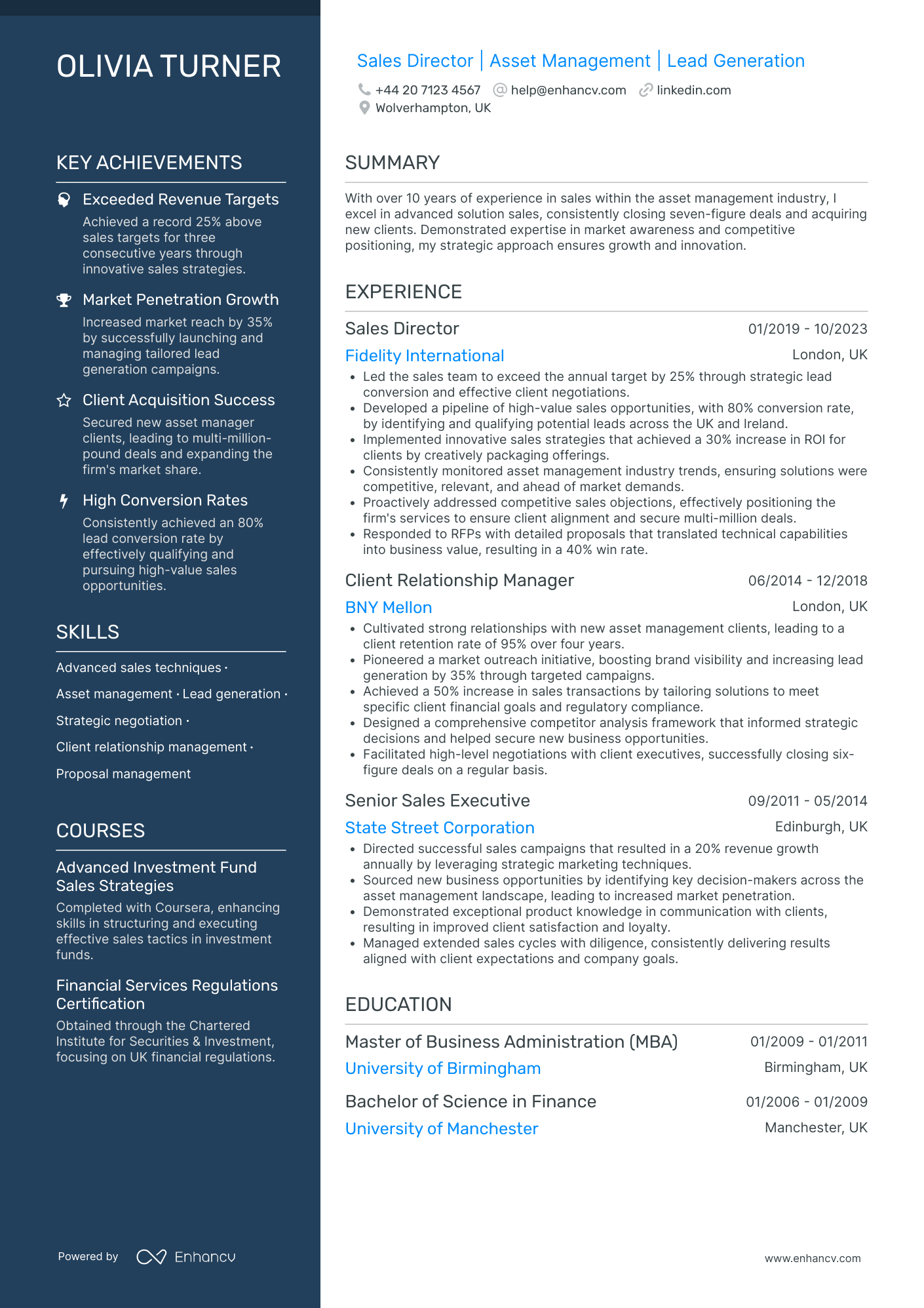
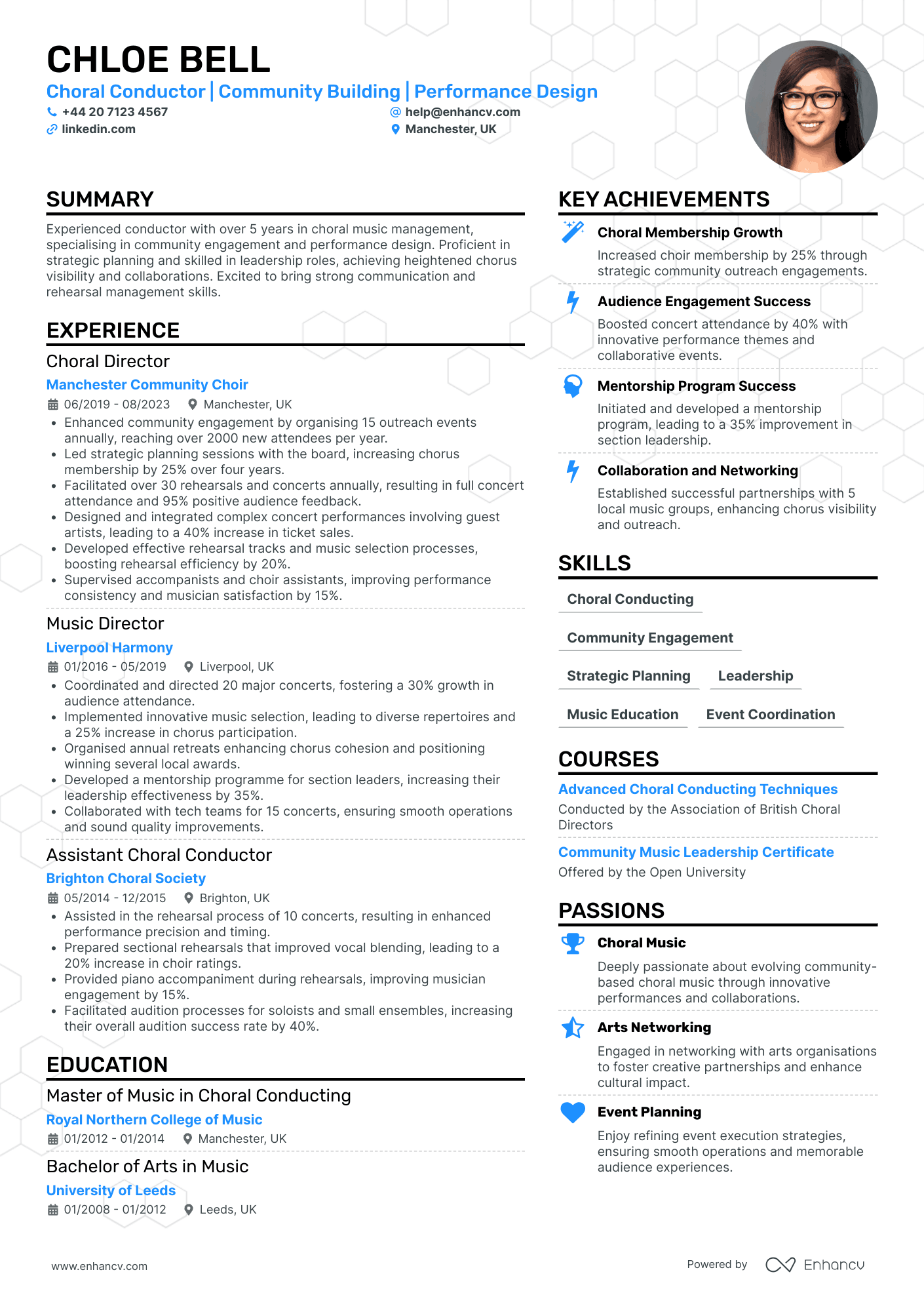
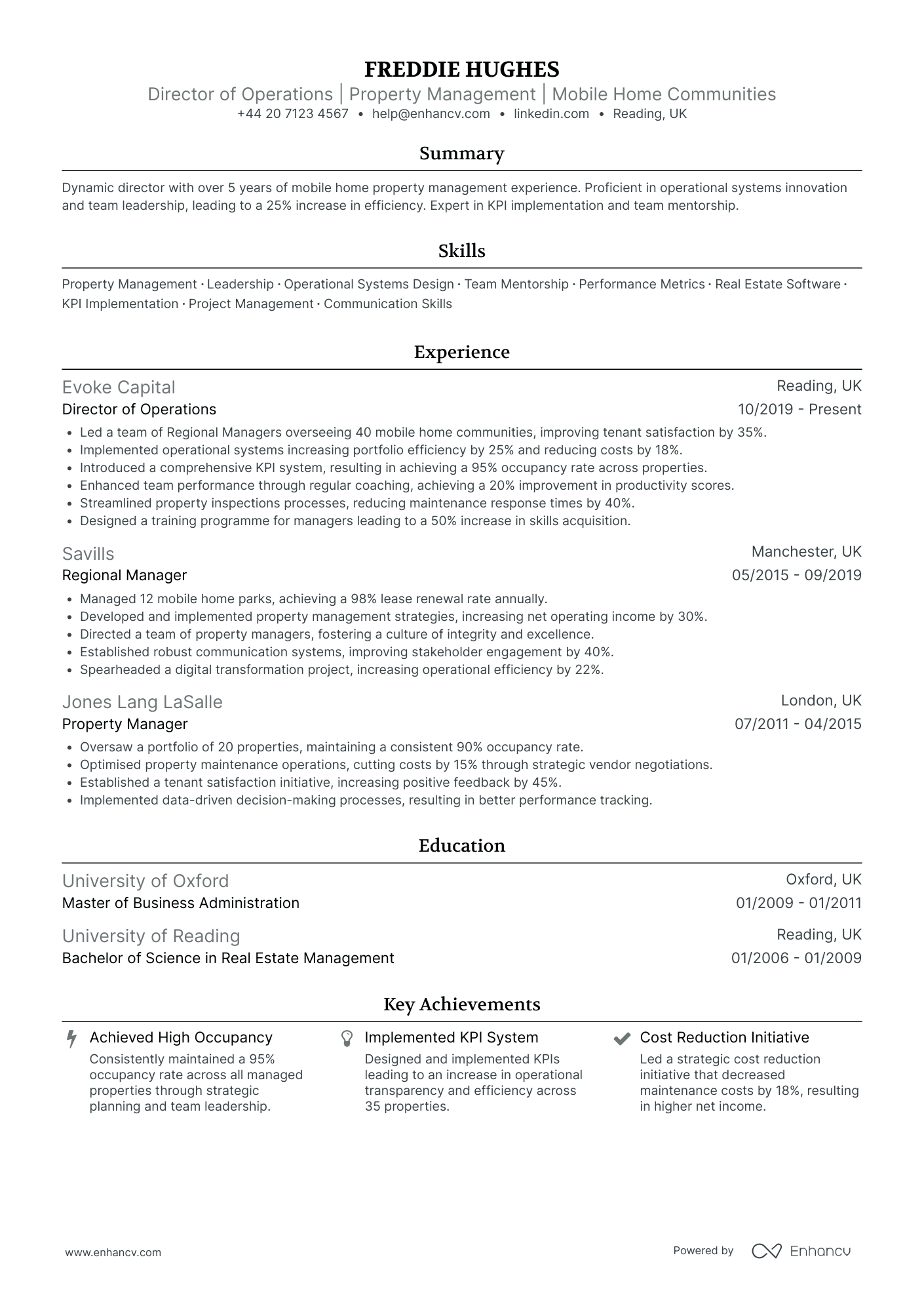
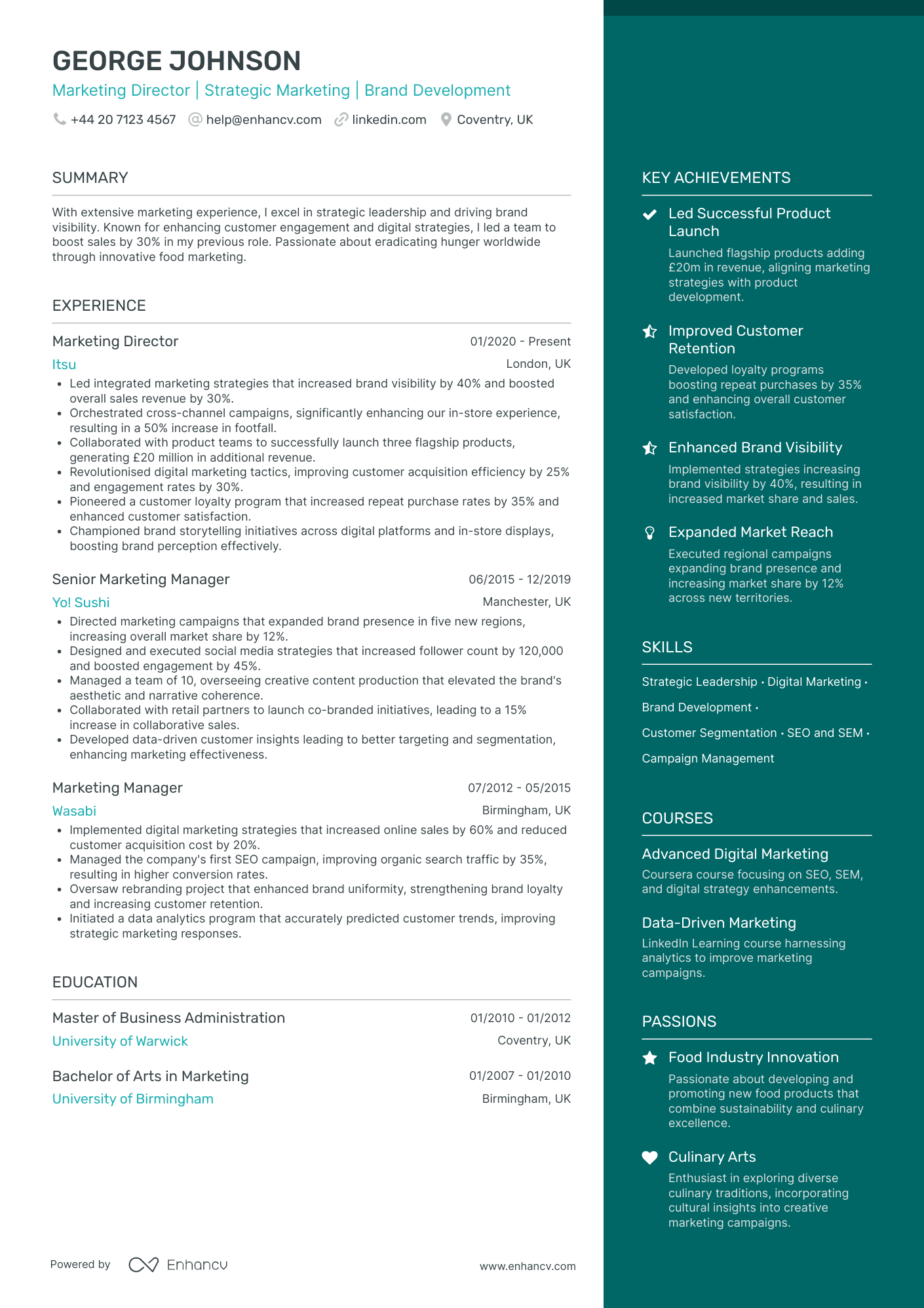
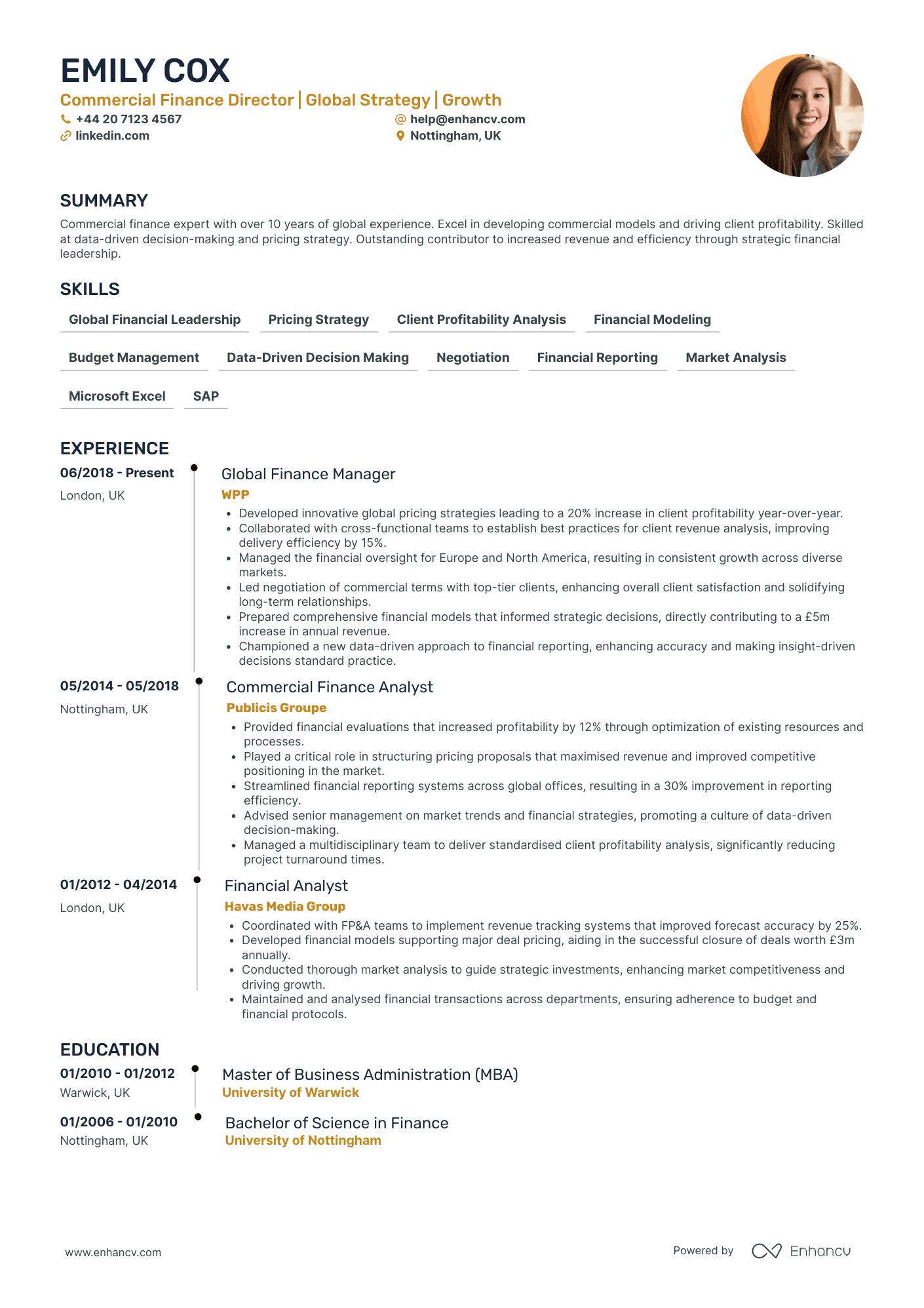
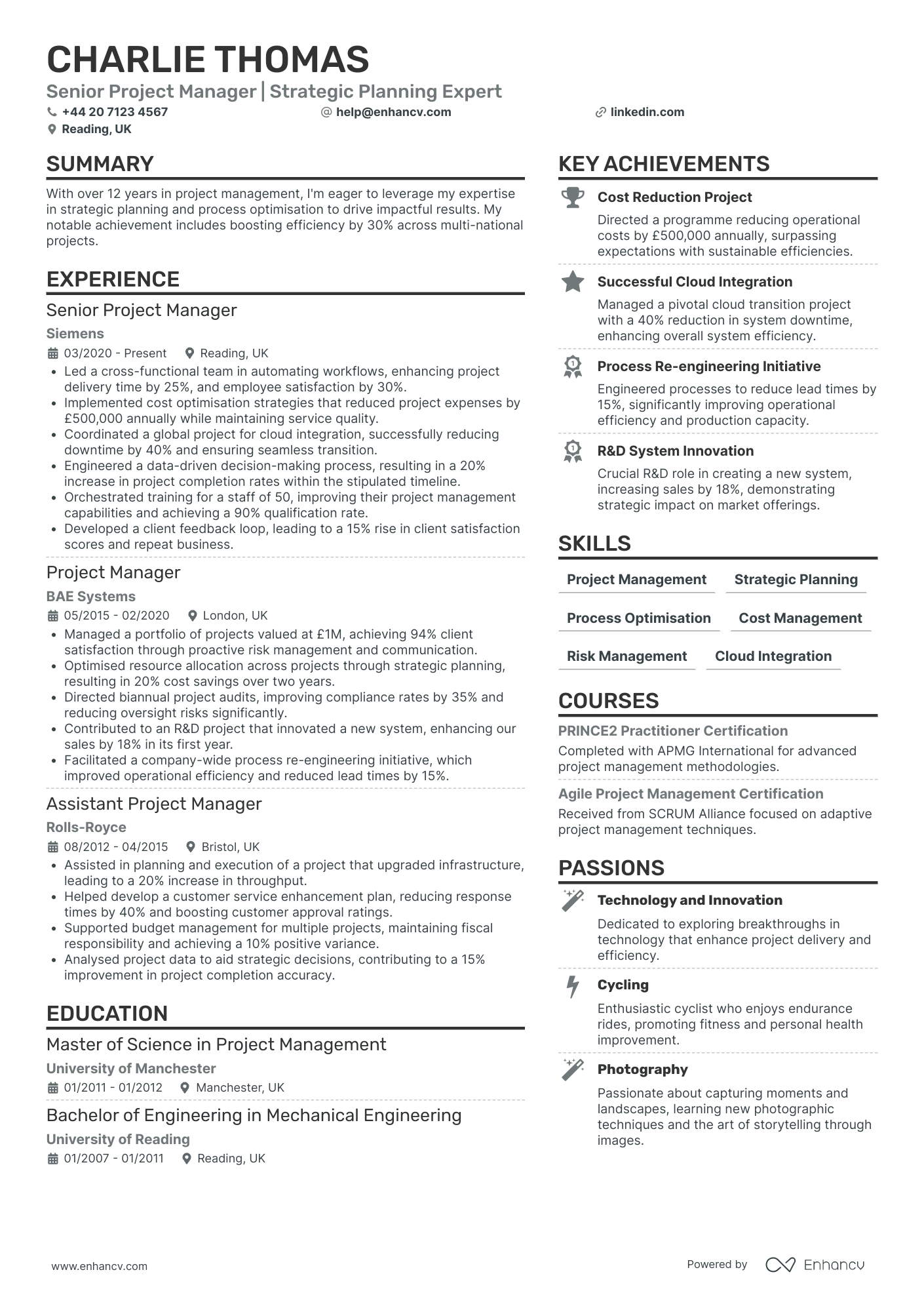
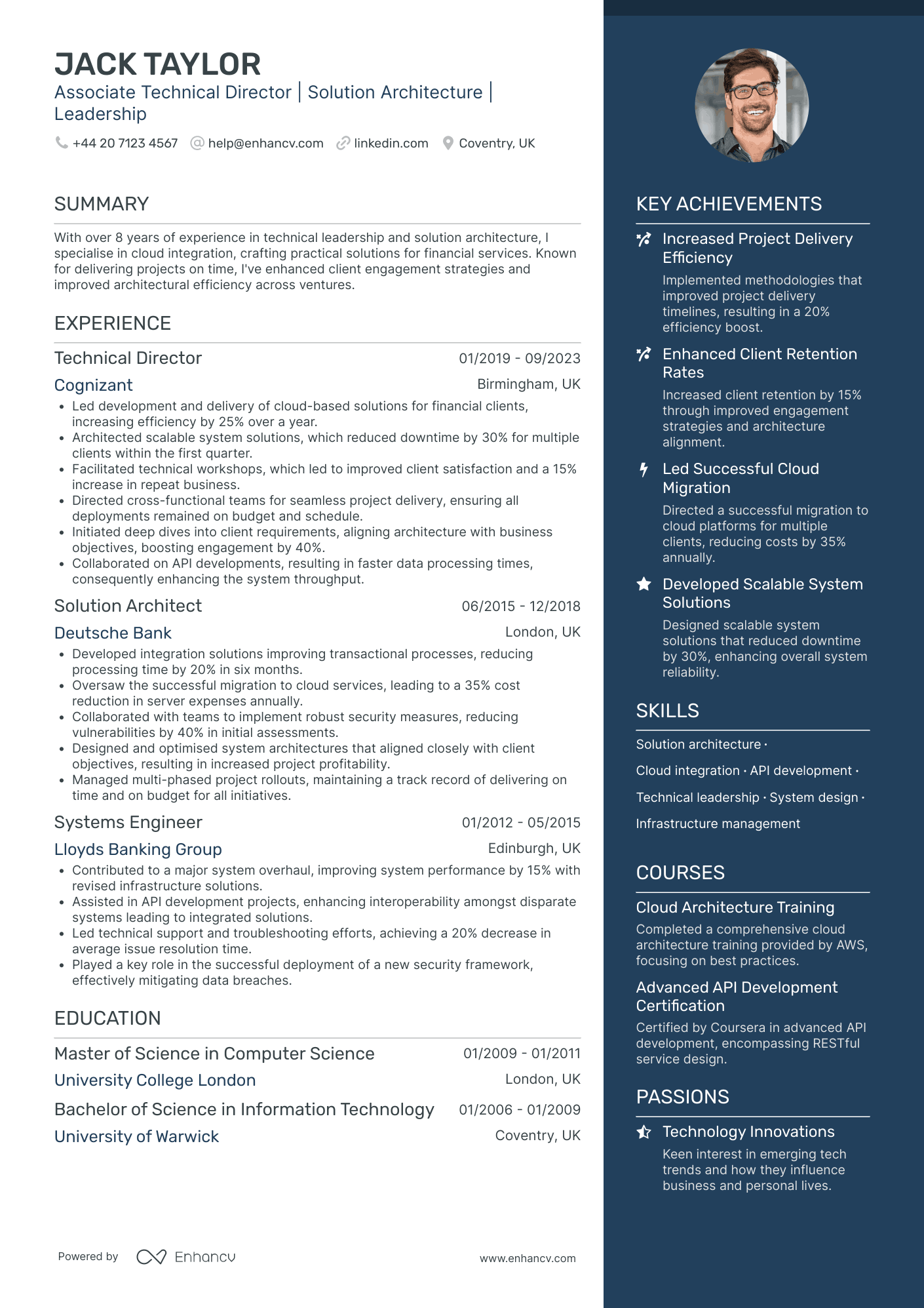
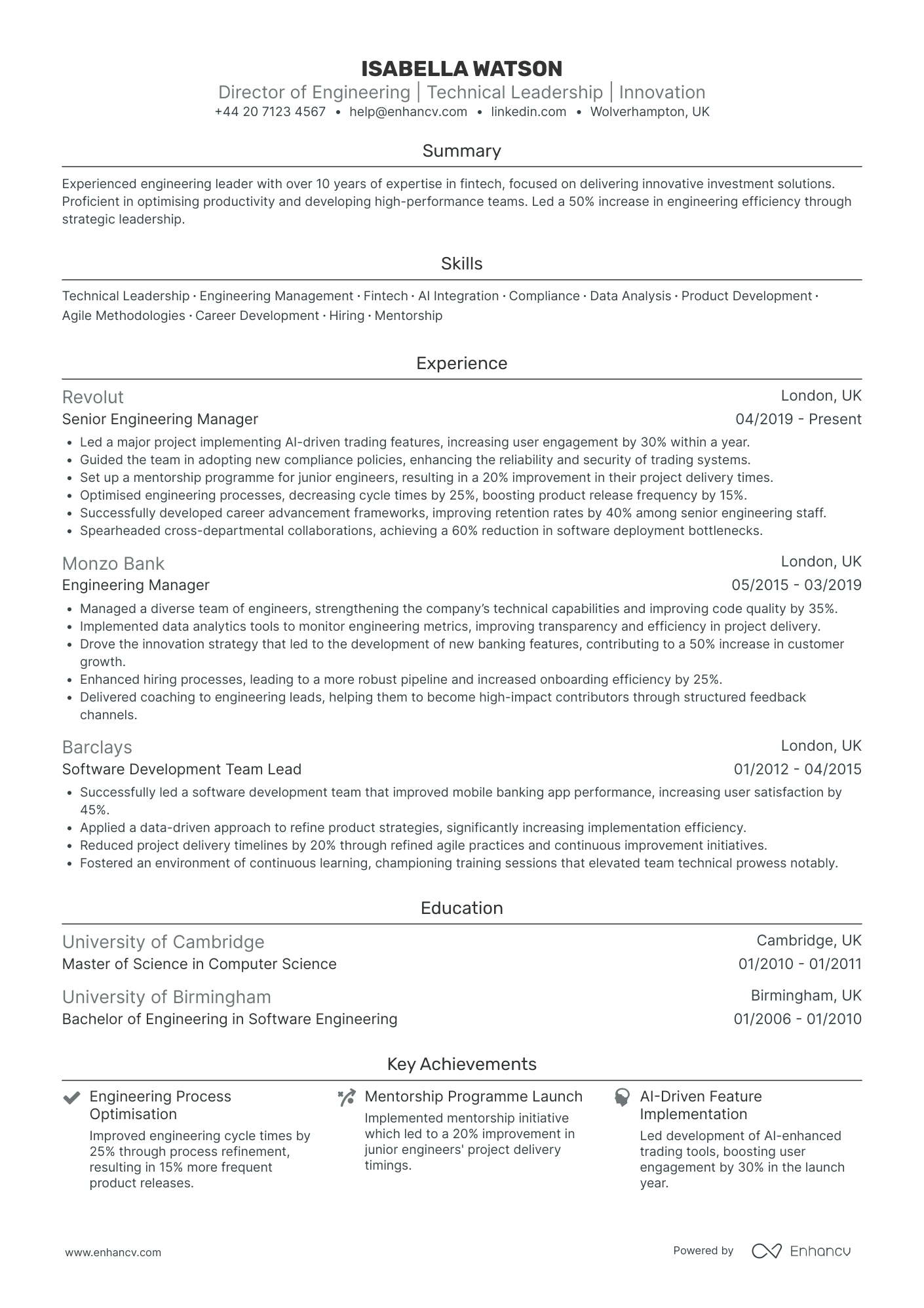
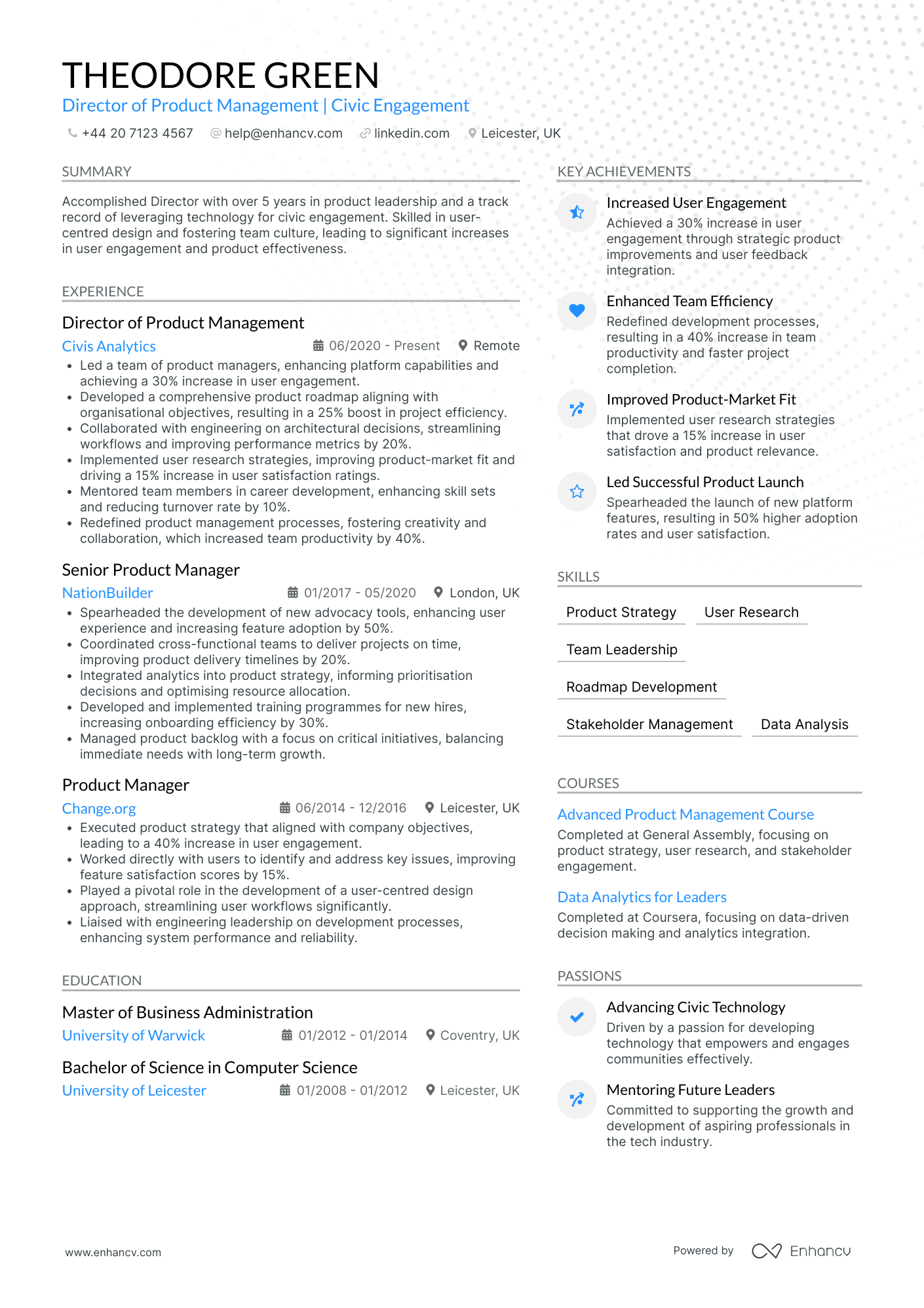
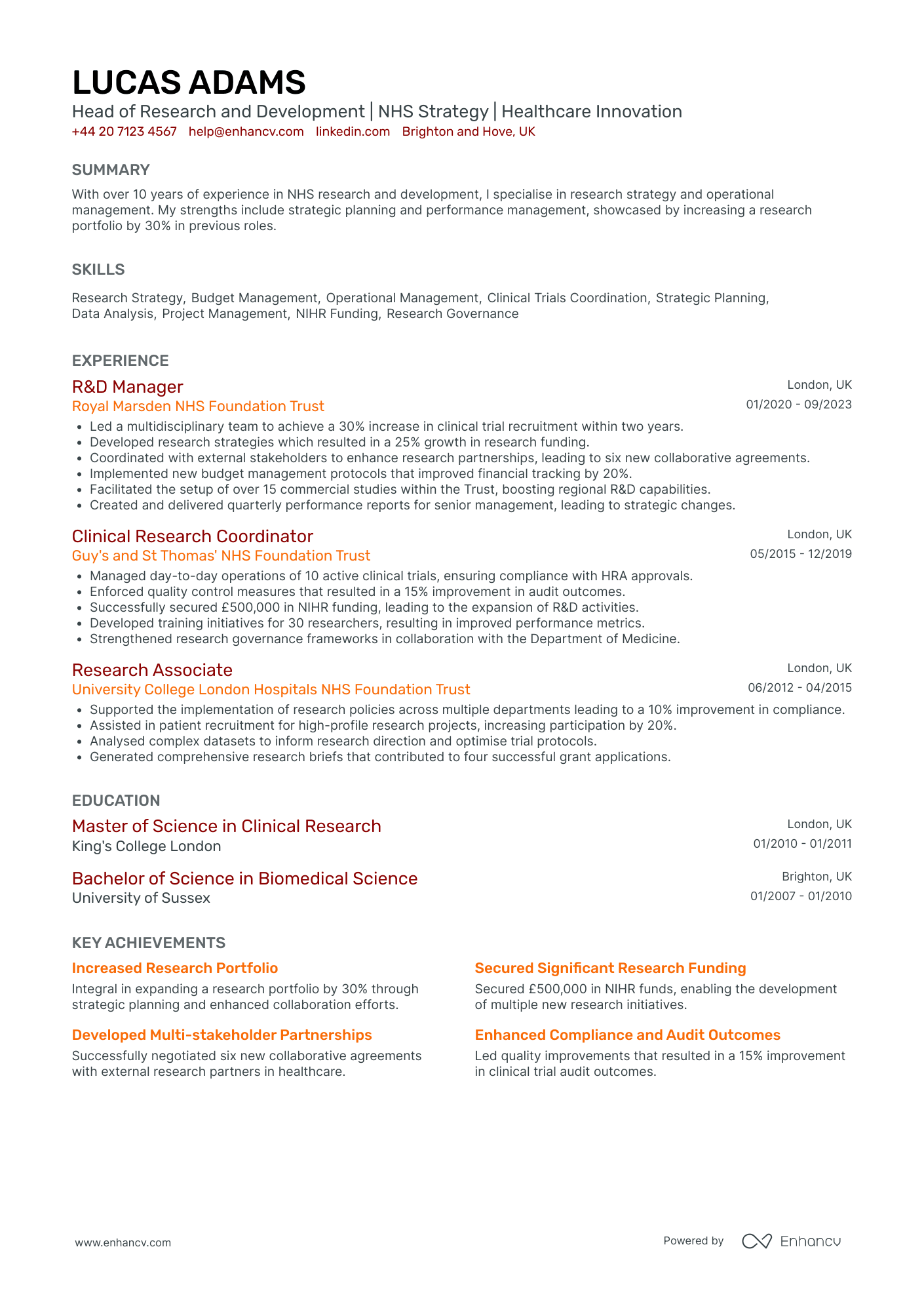
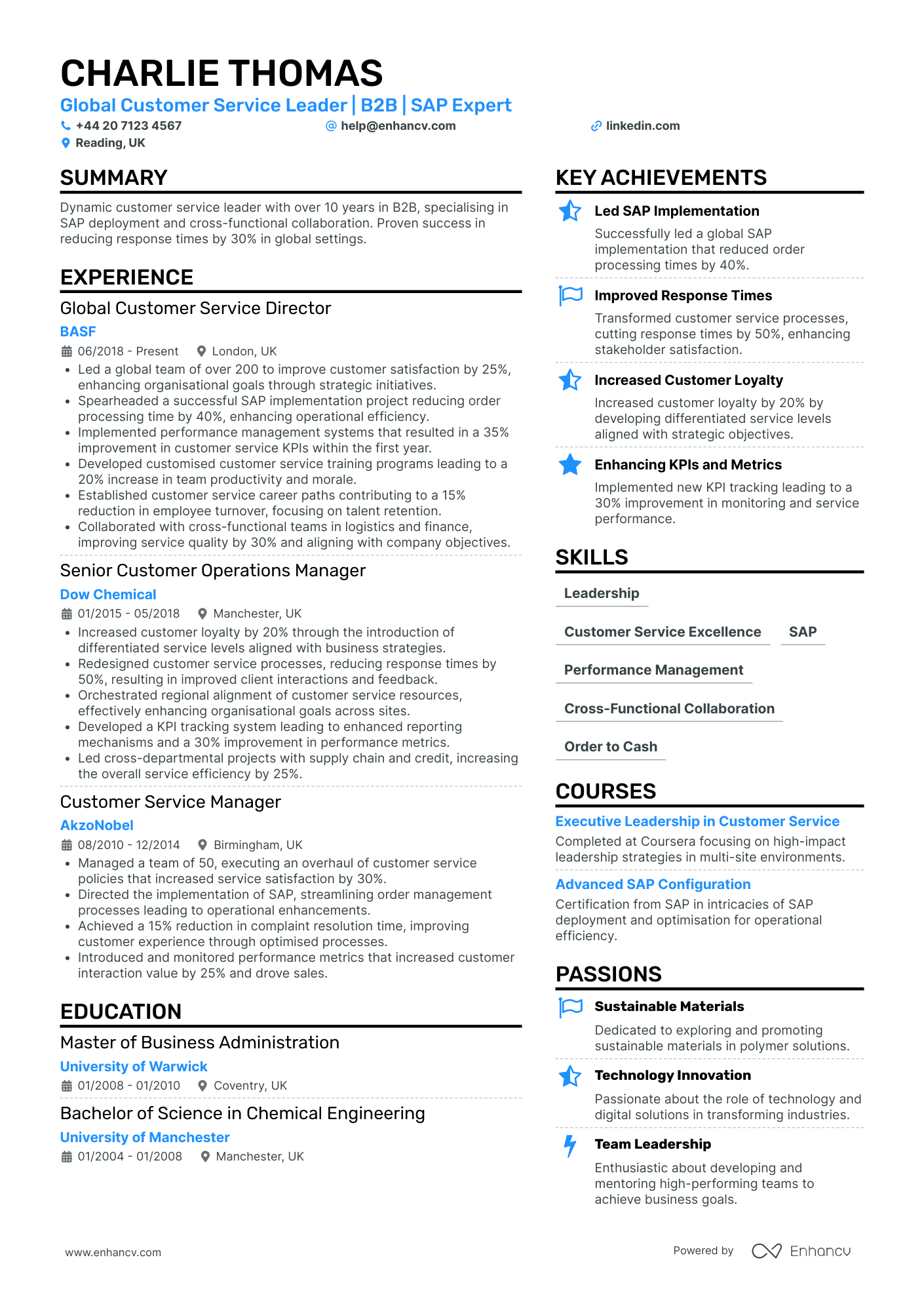
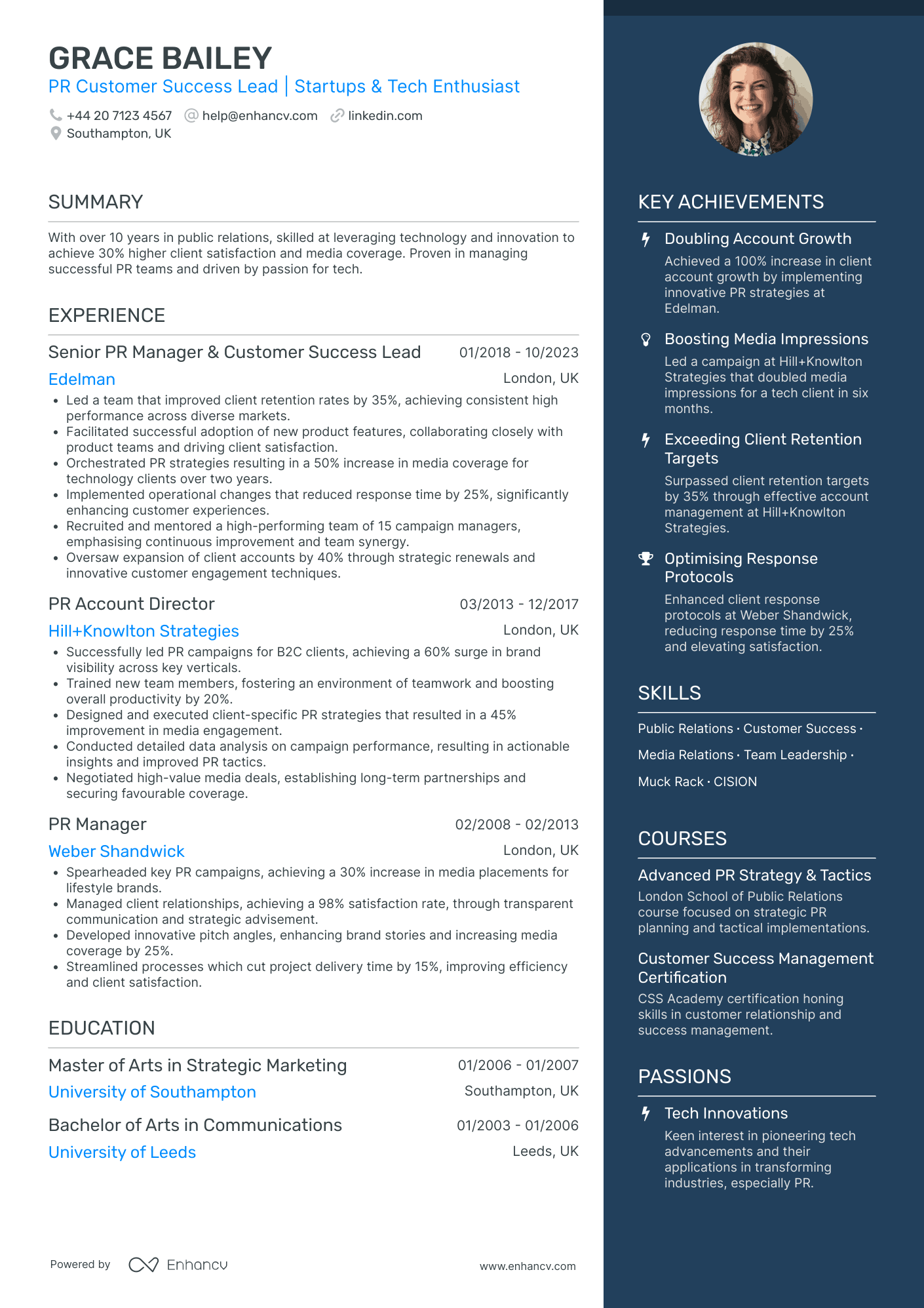
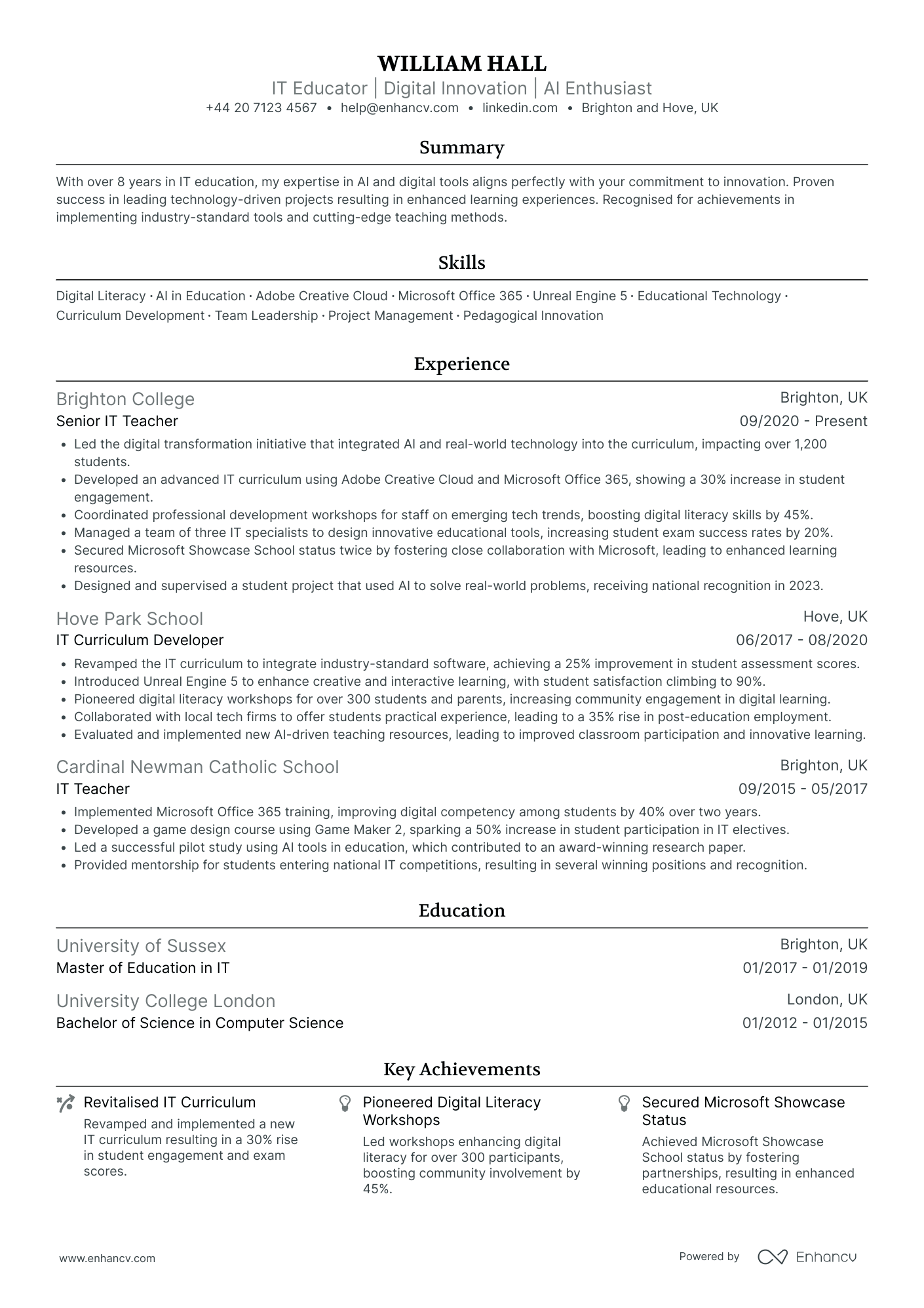
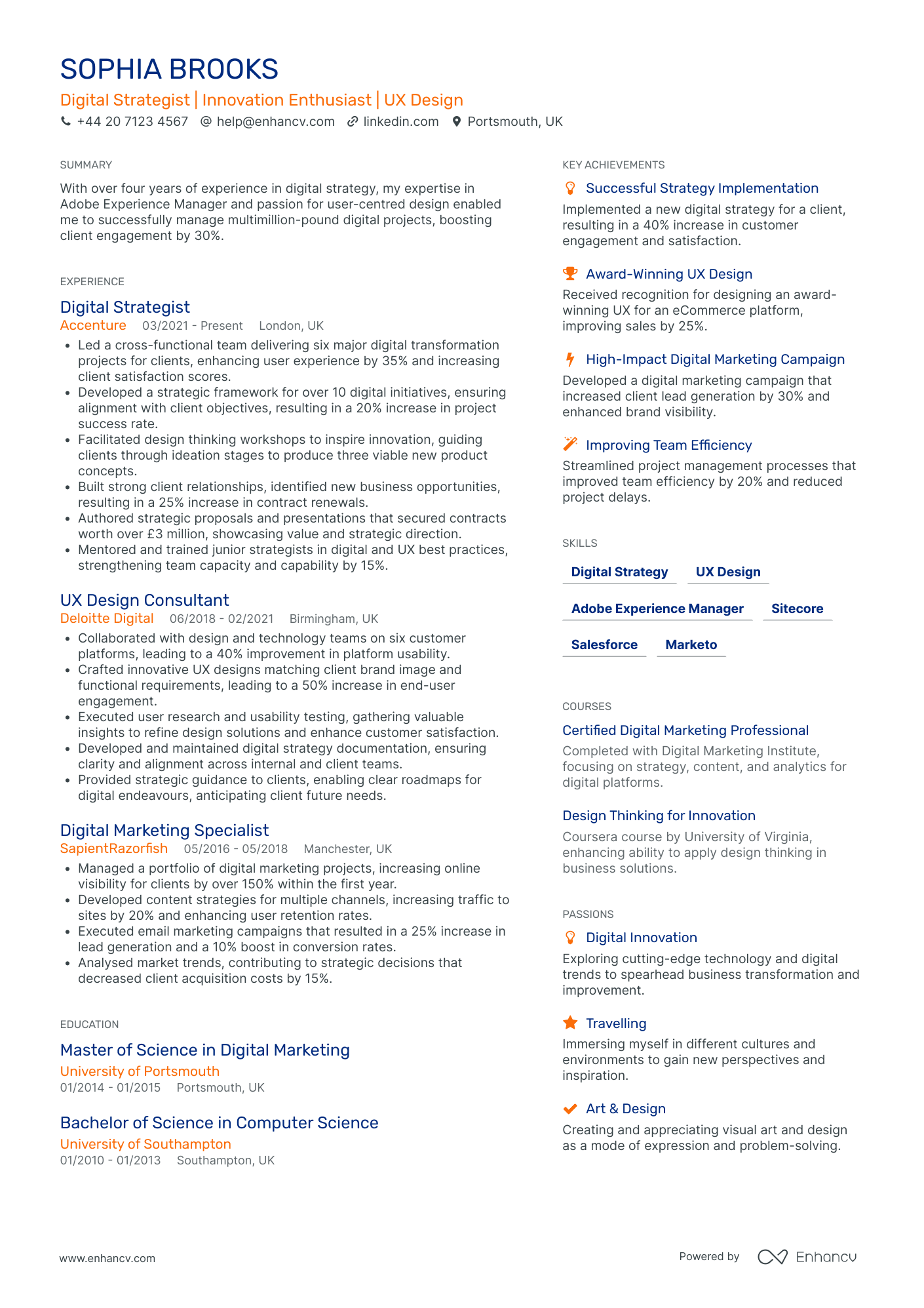
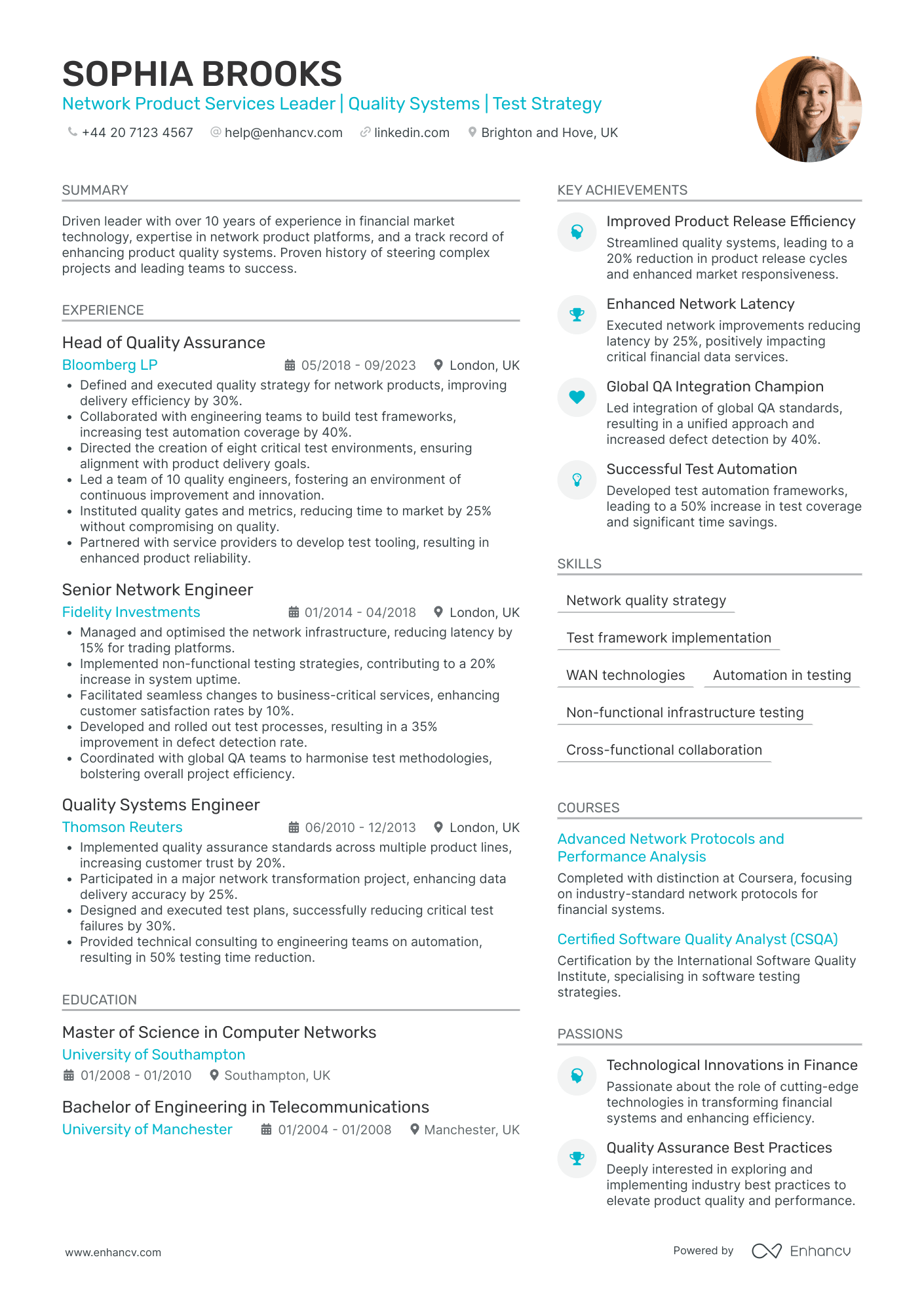
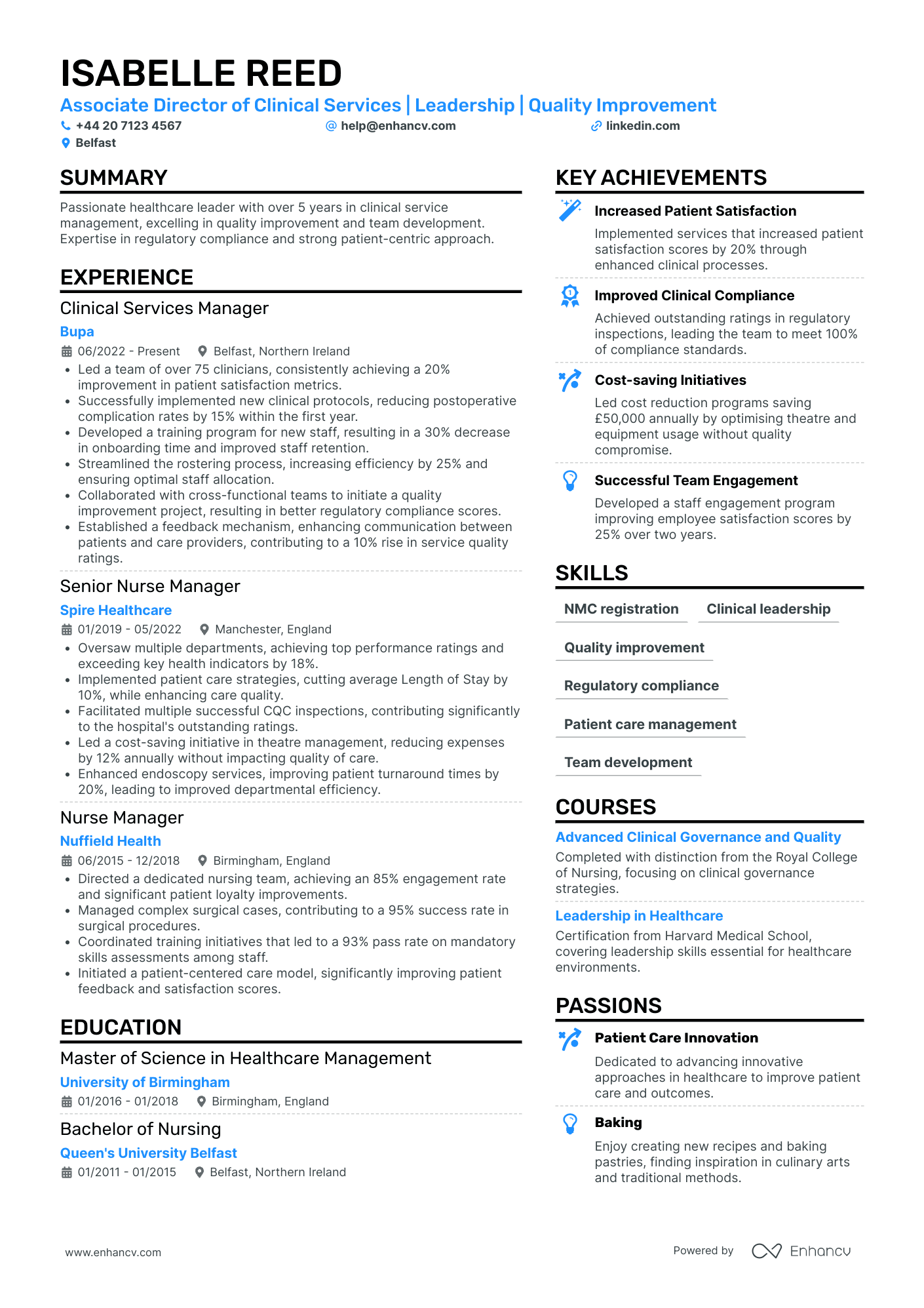
The word 'director' stretches from a managing director running a profit and loss account to a non-executive director who never touches daily operations. Same title, two very different CVs, and most applicants send the wrong one.
A board hires on judgement and track record, not on a tidy list of duties. So the CV that gets a director shortlisted leads with the decisions you owned and the results that followed, then proves the scale you operated at. If you want the mechanics first, start with how to write a CV, then come back for what changes at director level.

Key takeaways
- Decide which director you are before you write a word. A managing director CV sells profit and loss ownership, while a non-executive CV sells governance and independent judgement.
- Lead with scale and outcomes, revenue, budget, headcount, and the calls you made, not a duties list.
- Open with a short, board-ready personal statement that names your level, your sector, and one signature result.
- Keep it to two pages for an executive role, three only when board and committee history genuinely needs the room.
- Name the competencies boards screen for: strategic planning, stakeholder management, risk, and corporate governance.
- Cut the red flags, vague "responsible for" bullets, unexplained gaps, and numbers nobody could verify.
Pitch your CV at the right kind of director
The biggest mistake at this level is treating "director" as one job. It is at least three, and each wants a different CV.
A managing or executive director sits on the board and runs the business. The CV has to prove you can own a profit and loss account, set direction, and carry an organisation through it. Scale is the headline: turnover, headcount, and the results you delivered against them.
A functional director, whether in marketing, finance, operations, or people, owns one function end to end and usually sits on the executive committee. Here the CV proves deep functional mastery plus the cross-functional influence to move decisions you do not directly control.
A non-executive director brings oversight, not executive authority. The role is part-time and independent, and the CV sells board judgement, committee work across audit, remuneration and risk, and the sectors where your scrutiny adds something the executive team lacks.
Most people hold more than one of these across a career. A finance director stepping into a first non-executive seat is making a genuine pivot, and the CV has to be rebuilt around governance and challenge rather than delivery. Re-pitch it every time the type of seat changes.
Chairs and search firms read each type against a different bar. For an executive seat they test whether you have carried real accountability for results, so the CV has to show ownership rather than participation. For a non-executive seat they test independence and judgement, so which big employers you have worked for matters far less than how you challenged a board and where your sector knowledge sharpens its decisions.
This is why a generic "senior leader" CV underperforms at director level. The reader is deciding whether to trust you with a mandate, and trust comes from specifics: what you ran, what you changed, and the judgement you showed when the numbers were against you.
Before you draft anything, write one sentence at the top of a blank page: which of these three you are applying to be. Everything below it either supports that sentence or gets cut.
Stepping up to your first director role
Not every director CV comes from someone who already holds the title. Plenty are written by heads of function and senior managers making the step up, and the gap they have to close is credibility, not competence.
Lead with the director-level scope you already own, even if the job title has not caught up. A profit and loss slice, a function you run end to end, a team of teams, or a standing seat at the executive meeting all count, so put them where a board will see them first.
Show the board-facing work explicitly. Papers you wrote for the board, projects you presented to it, deputising for a director on leave, and cross-functional programmes you led are the evidence a chair uses to picture you at the table.
Frame the trajectory rather than hiding the step. A clear line showing a promotion from manager to head of function to director-designate reads as momentum, and momentum is what a first appointment is betting on.
What the UK director market looks like
Knowing where the roles sit and what they ask for shapes how you position the CV. Here is what the current UK postings show.
| What | UK director roles |
|---|---|
| Sample | 2,901 UK director postings in the last ~30 days (Enhancv's internal job feed) |
| Where the work happens | Hybrid 50%, on-site 45%, remote 5% (1,444, 1,303, and 154 of 2,901 postings) |
| Level most roles are pitched at | Lead 74%, executive 23%, with a thin mid and entry tail |
| Skills that recur most | Project management, stakeholder management, and risk management, then Agile, AI, and data analysis |
Two things there should shape your CV.
Half of these roles are hybrid and nearly as many are on-site, so location still matters at director level. Put your base and your willingness to travel or relocate in the header rather than making a board guess.
Project management, stakeholder management, and risk management recur most across the postings, and AI now appears often enough to notice. Mirror the ones you can genuinely evidence, in the language the adverts use.
On pay, resist the urge to quote a headline figure. Director salaries swing so widely by sector, company size, and remit that a single benchmark tells a board nothing, so research your specific market and let the CV argue value through results instead.
How to structure a director CV
For an executive or functional director, use a reverse chronological order and make it results-led. Boards want to see where you have been and, at each stop, what changed because you were there.
Keep it to two pages for most executive roles. A long non-executive portfolio can justify a third page for directorships and committee history, but a duties dump never earns the extra room.
The top third of page one does the heavy lifting: name, the director title you are targeting, location, and any post-nominals such as CDir or FCA. Follow it with a board-ready personal statement, then experience.
Use standard headings and a clean, single-column layout so the CV stays ATS-friendly through executive search portals, which increasingly screen even senior applications. Send it as a PDF so the formatting holds, and keep a Word copy for the search firms that reformat candidates into their own template.
Build it from a tested layout rather than a blank page. Enhancv's CV templates export to a clean PDF that survives both the portal and the boardroom printer.

PRO TIP
A board often reads only the top third of page one before deciding to keep going. Spend your best line there: your level, your sector, and the single result you are proudest of, stated as a number. Save the context for the body.
Writing your director personal statement
Three or four sentences at the very top: who you are at board level, the sector and scale you operate at, one signature result, and the kind of seat you want next. See more personal statement examples if the opening line will not come.
A chair reads this first and decides in seconds whether you are pitched at the right level. State your seniority immediately and back it with a number, not an adjective.
Lead with evidence like this:
Managing director personal statement example
Commercially focused managing director with 12 years leading consumer businesses, most recently a £40m turnover division of 220 people. Grew EBITDA from £3.1m to £7.8m in four years by restructuring the operating model and entering two new European markets. Now seeking a group managing director role in a private-equity-backed business preparing for exit.
What to avoid
Results-driven and strategic senior leader with a passion for driving growth and delivering excellence. A strong communicator and team player with a proven track record of success across multiple industries, looking for a challenging new opportunity to add value.
When a chair reads a director CV, the first question is simple: what did this person actually decide, and what happened as a result? A line like "grew EBITDA from £3.1m to £7.8m in four years" answers it. "Responsible for driving growth" does not. Name the remit, the number you moved, and the call you made when it was hard. That is the whole difference between a CV that reads like a job description and one that reads like a track record.
Building your director experience section
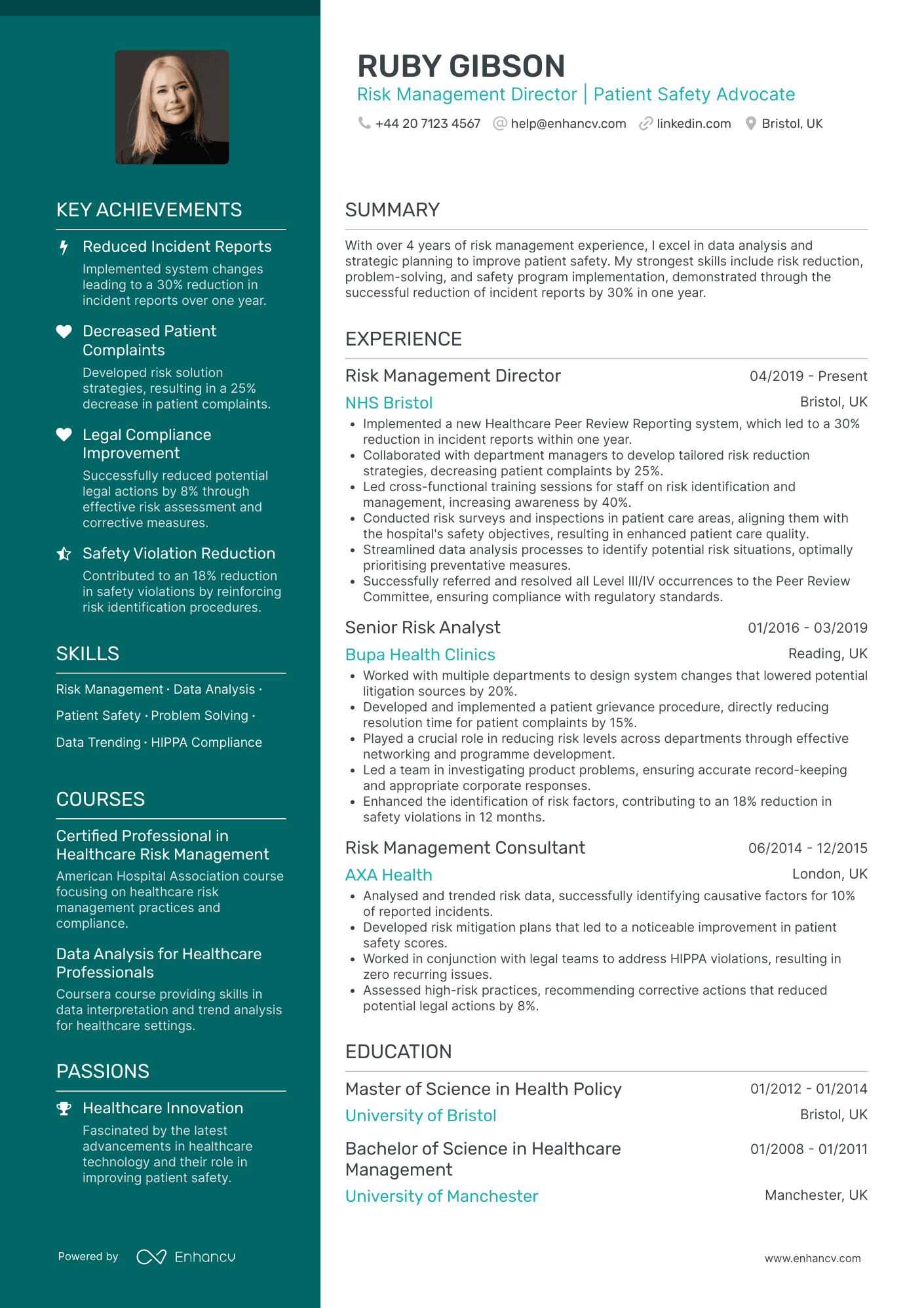
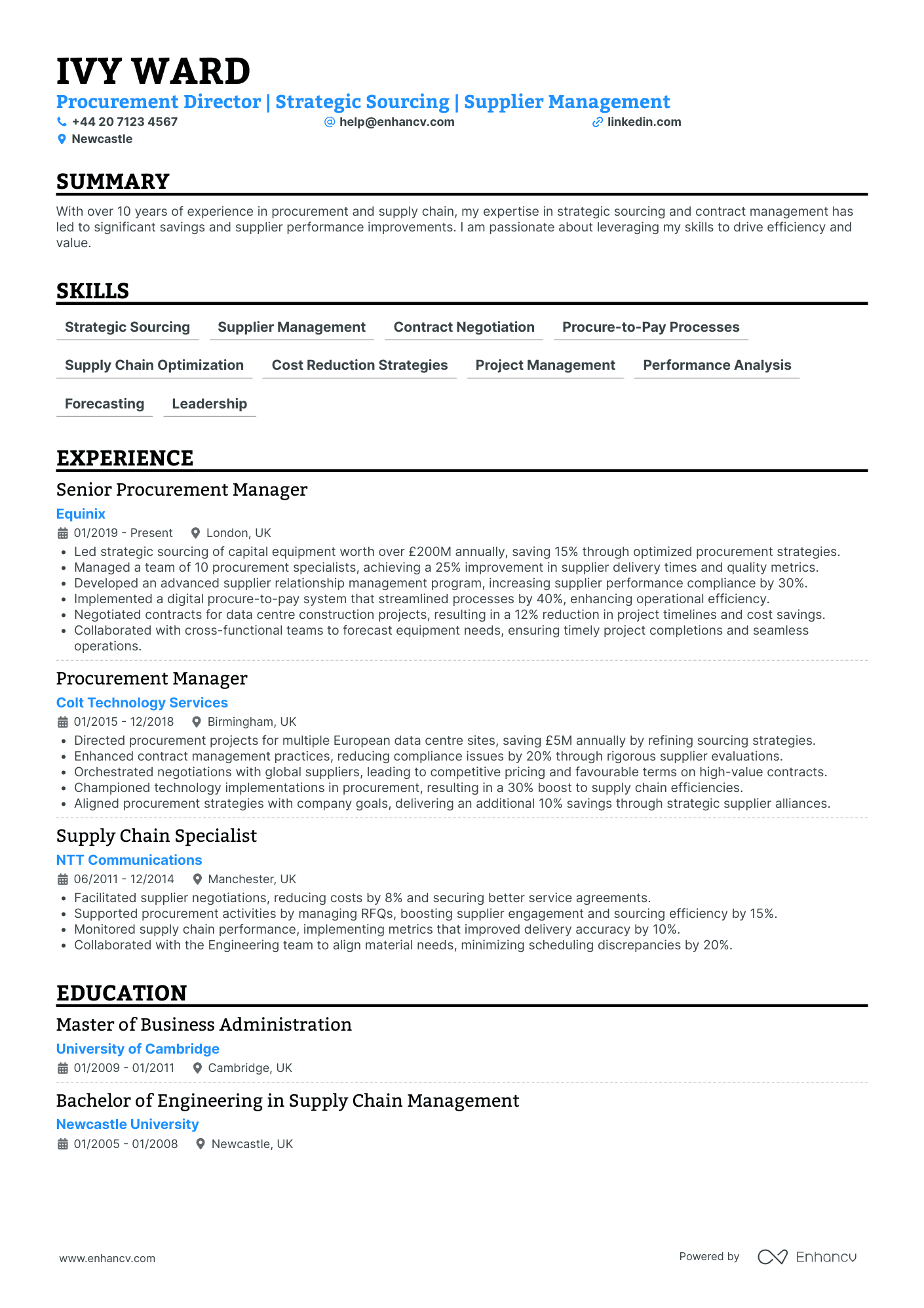
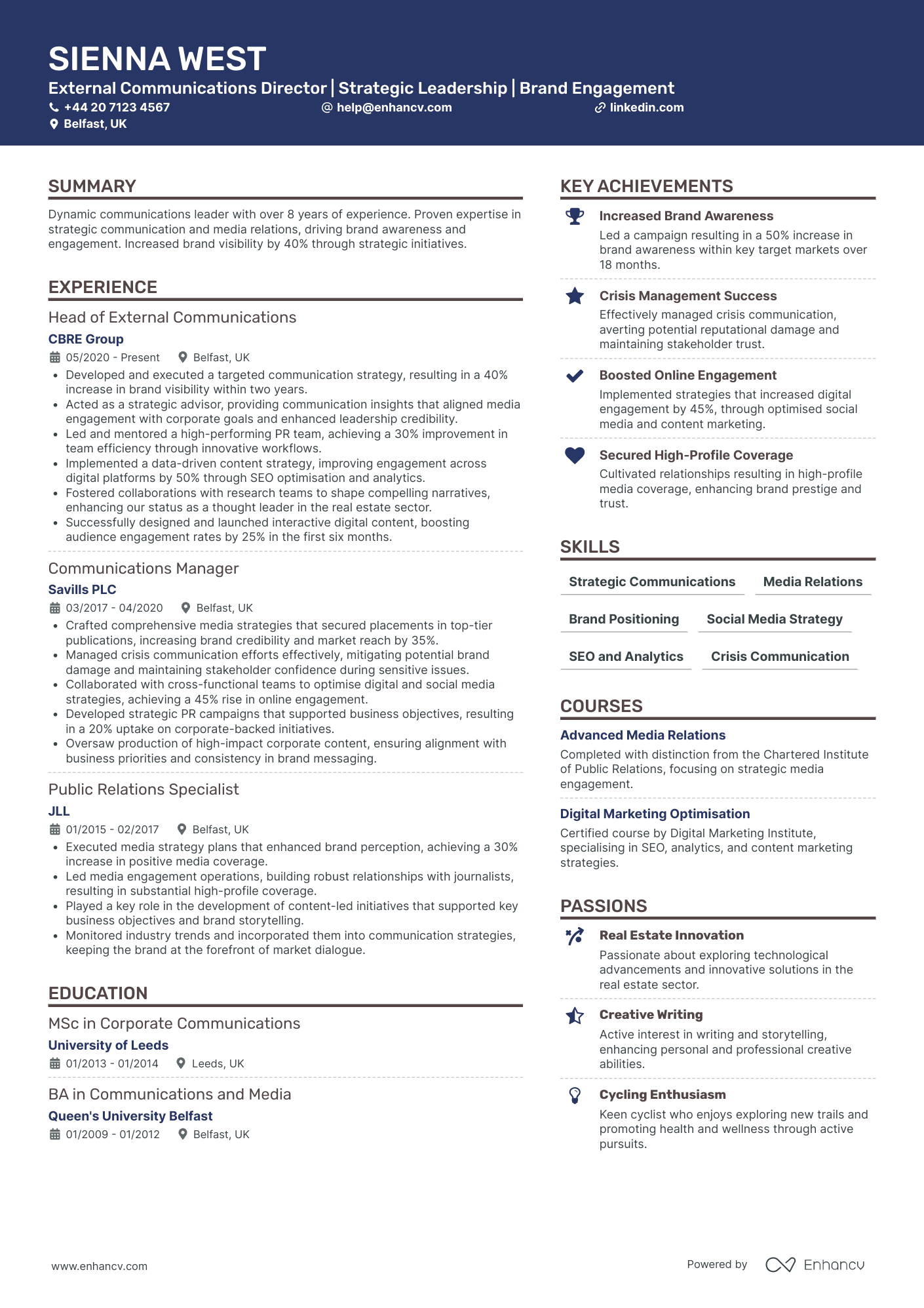
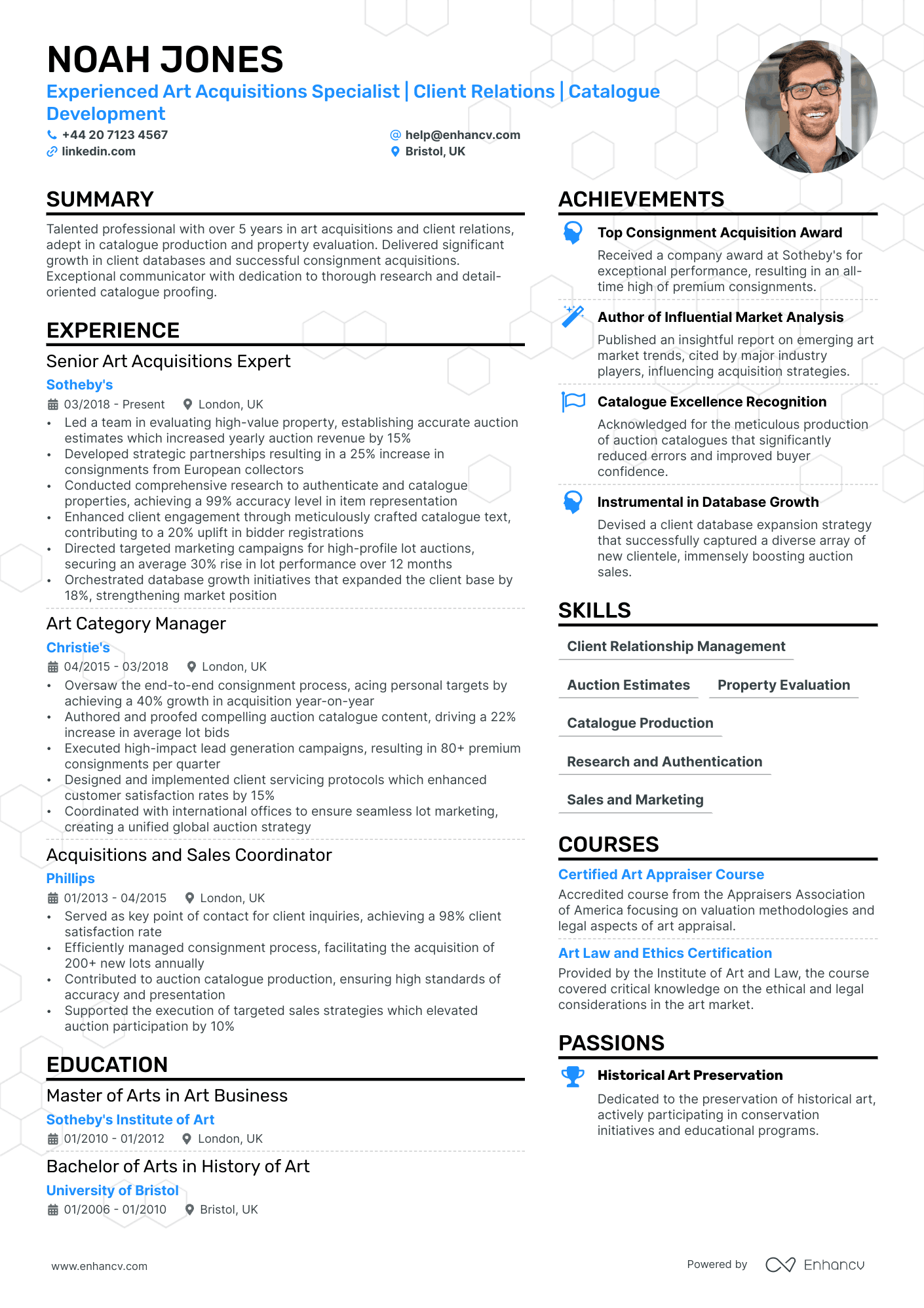
Write each role in two parts: a scope line, then outcomes. The scope line sets the scale, turnover, headcount, budget, and who you reported to. The bullets show what you decided and what moved as a result.
Lead every bullet with a strong verb and attach a number wherever you honestly can. The mechanics of a senior work experience section, and the action verbs that carry weight, still apply at director level.
Write the job description of a director as a record of judgement, not a list of responsibilities. Turn "responsible for the P&L" into the growth, margin, or turnaround you produced with it. Those quantified achievements are what a board remembers.
Go deep on the last 10 to 15 years and summarise anything earlier in a line or two. A board cares about what you have run recently and at scale, not a graduate role from three decades ago.
Tailor each application to the mandate in front of you, because a turnaround board and a growth board read for different things. Enhancv's CV tailoring feature reads the advert and suggests the edits that match, which saves rebuilding the CV for every search.
- Own the profit and loss account for a £40m consumer division of 220 staff, reporting to the group board and chairing the monthly operating review
- Grew EBITDA from £3.1m to £7.8m in four years by restructuring the operating model and closing two underperforming sites
- Led entry into two new European markets, adding £6.2m of annual revenue within 18 months
- Rebuilt the senior team and cut voluntary turnover from 22% to 9%, lifting engagement into the top quartile
- Presented quarterly performance and strategy to the group board and private-equity investors
Skills and competencies for a director CV
Boards screen for competencies, and they expect each one evidenced rather than claimed. A skills section that just lists "leadership" and "strategy" tells a chair nothing.
Your hard skills at this level are the ones the postings keep asking for, project management, stakeholder management, and risk management, alongside the director staples of profit and loss ownership, strategic planning, and corporate governance. List them in the words the adverts use.
The soft skills that matter are the ones a board can check against your bullets, leadership, sound decision-making, and the influence to carry a room you do not chair. Prove each one in the experience section, not just the skills box.
Top skills for your director CV:
Profit and loss (P&L) management
Strategic planning
Stakeholder management
Risk management
Project management
Corporate governance
Business development
Data analysis
Change and transformation
Leadership
Decision-making
Influence and negotiation
Board communication
Commercial judgement
Board experience, qualifications, and governance
For a non-executive or board CV, treat directorships as their own entries, not footnotes. Name the board, the committees you sat on, audit, remuneration, risk, or nominations, and what you contributed to each.
Your education section stays lighter and lower down. A degree, an MBA, and any professional qualifications such as chartered accountant status or the IoD Chartered Director carry real weight for governance roles, so name them plainly.
Governance training and board evaluation experience belong here too, especially for a first non-executive seat. Handle references with discretion at this level, and "available on request" is fine until a search reaches its final stages.
Red flags that sink a director CV
A board reads a senior CV as much for what is wrong as for what is right. These are the CV mistakes that end an application early.
Vague ownership is the first. "Responsible for" and "involved in" with no outcome behind them read as someone who was present while things happened, not someone who made them happen.
Numbers that cannot be stood up are the second. A chair or a search firm will probe your figures, so inflating them shades into lying on a CV and ends the process the moment it unravels.
The wrong altitude is the third. A CV that is all strategy with no evidence of delivery worries an executive board, and one that is all operational detail worries a non-executive one. Match the altitude to the seat.
Unexplained gaps are the last. At senior level a break is normal, a portfolio year, a turnaround that ended, or a deliberate pause, so account for it in a line rather than leaving a board to guess. Handle employment gaps head-on and they stop being a flag.
Conclusion
Decide which director you are, lead with scale and results, and evidence the competencies a board actually screens for. Then cut anything that reads like a duties list.
Pair the CV with a short cover letter that says why this board and this mandate, and you turn a strong track record into interviews.

Author's take - The Enhancv team
When a chair reads a director CV, the first question is simple: what did this person actually decide, and what happened as a result? A line like "grew EBITDA from £3.1m to £7.8m in four years" answers it. "Responsible for driving growth" does not. Name the remit, the number you moved, and the call you made when it was hard. That is the whole difference between a CV that reads like a job description and one that reads like a track record.