



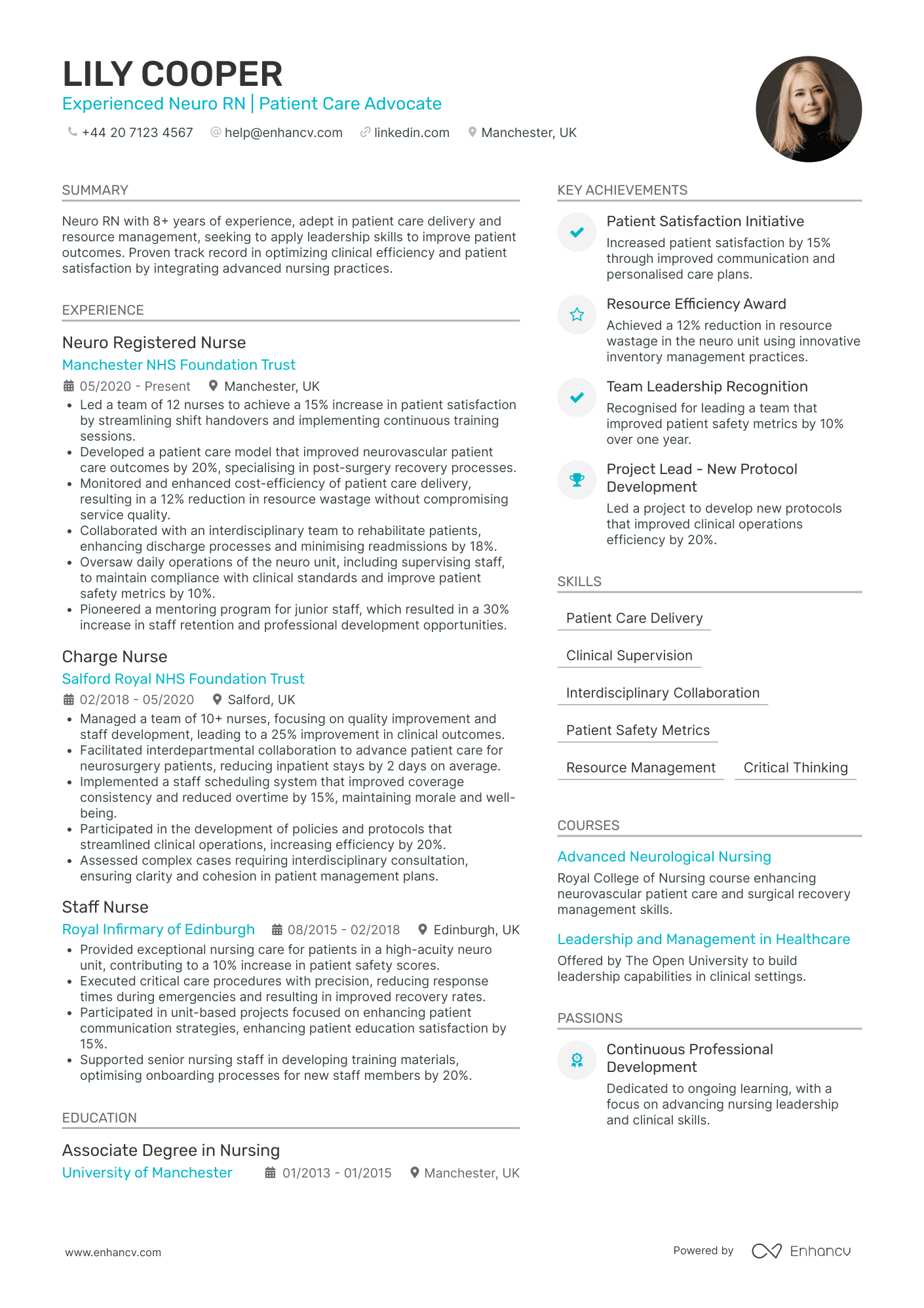
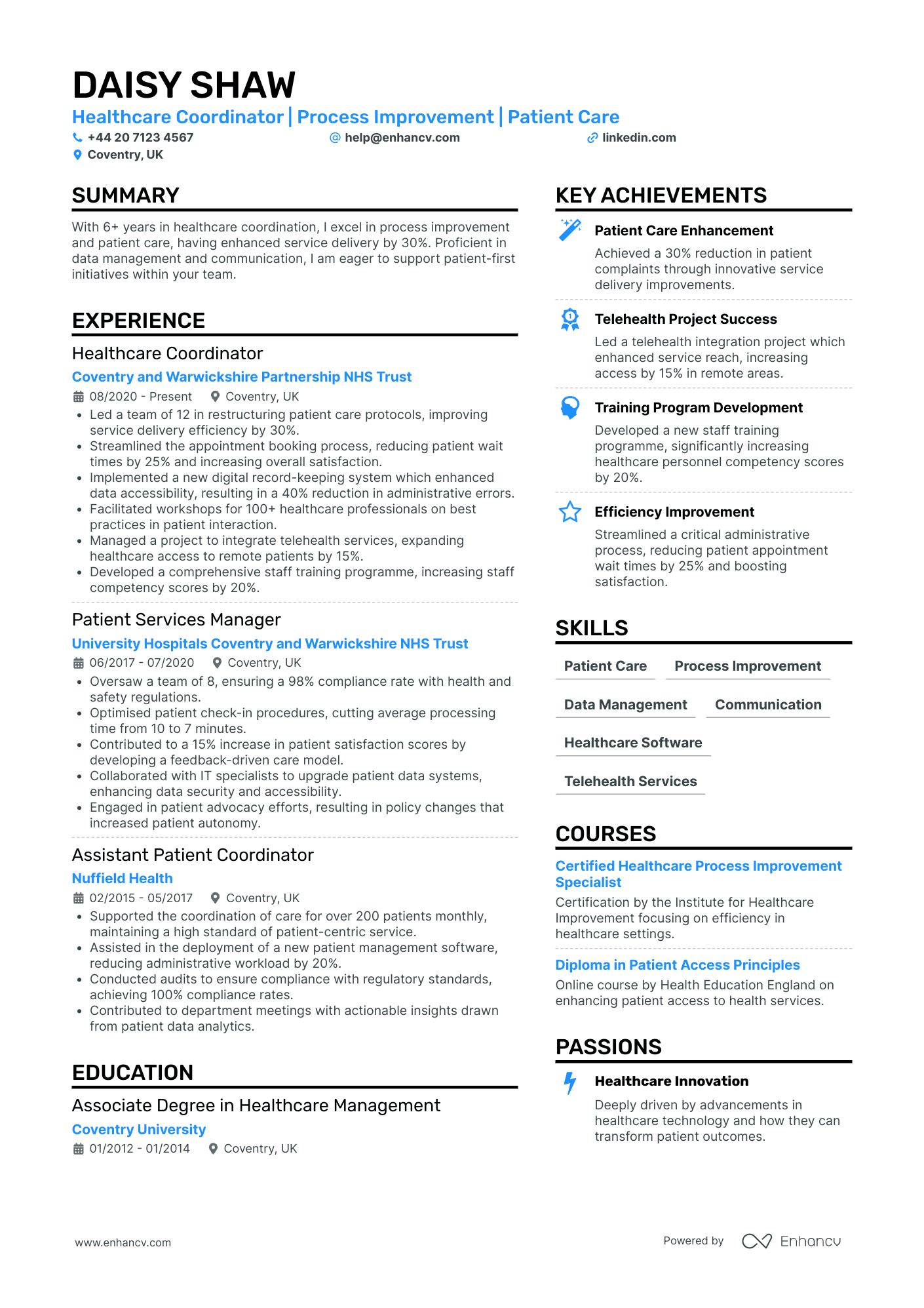
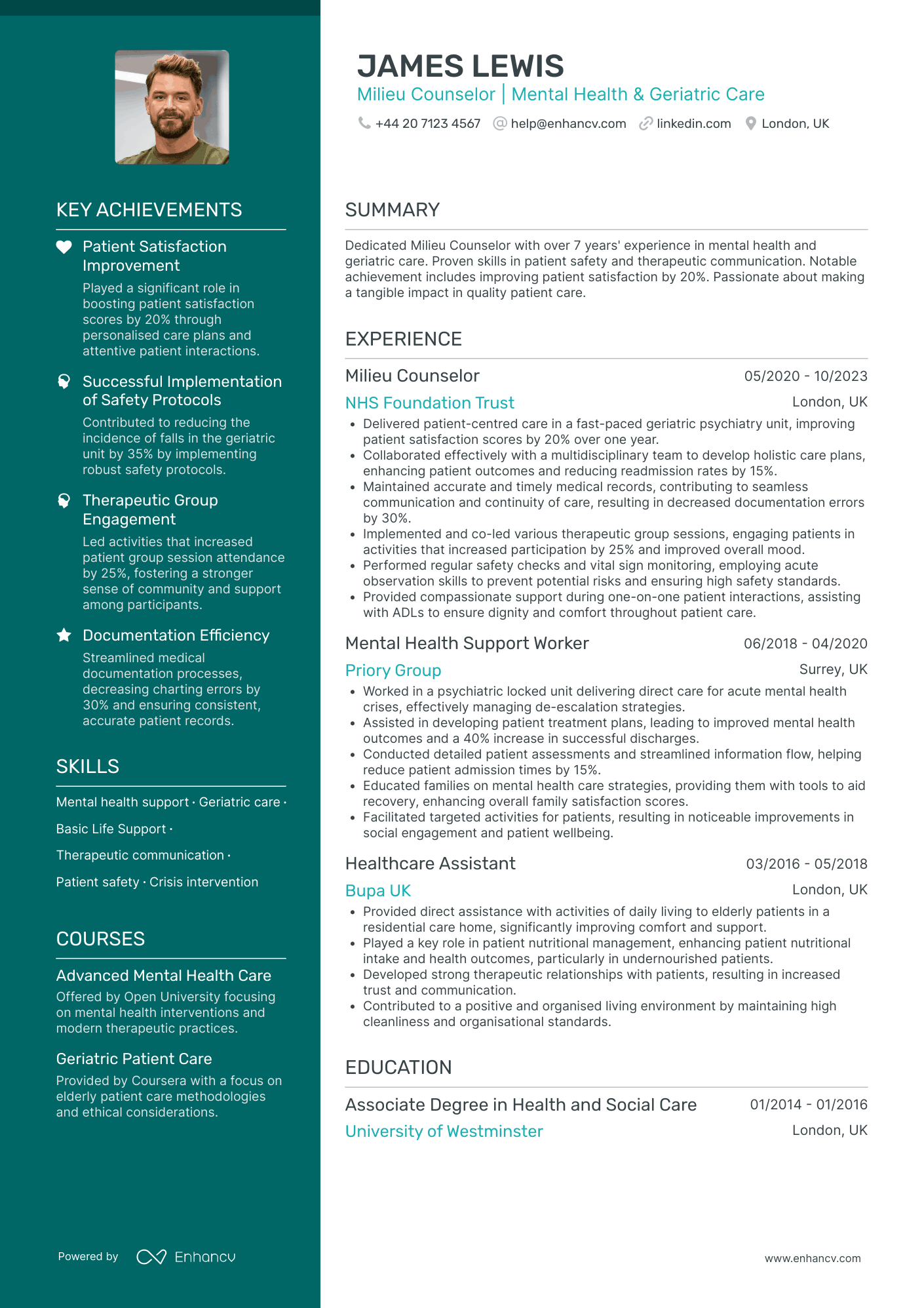
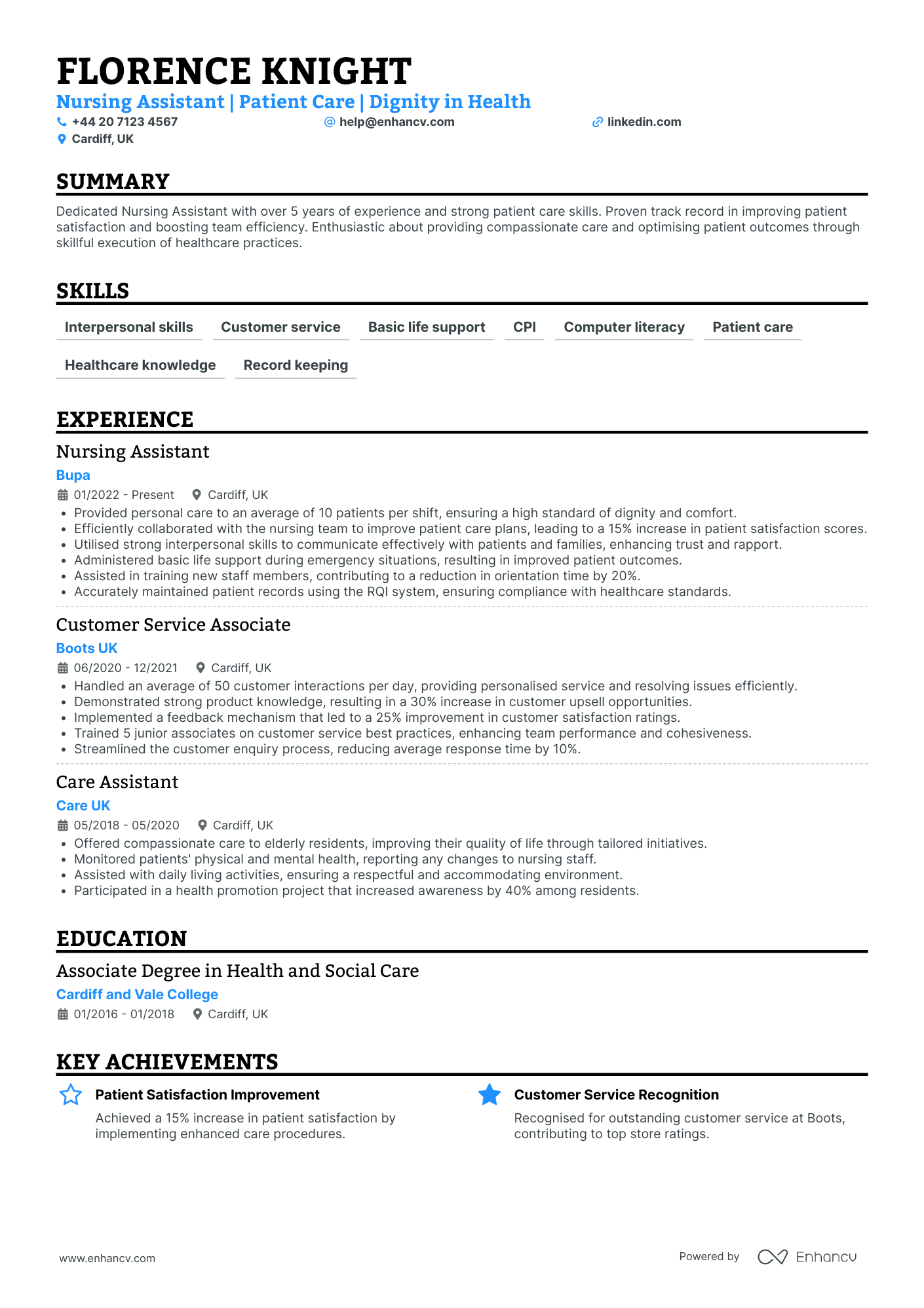
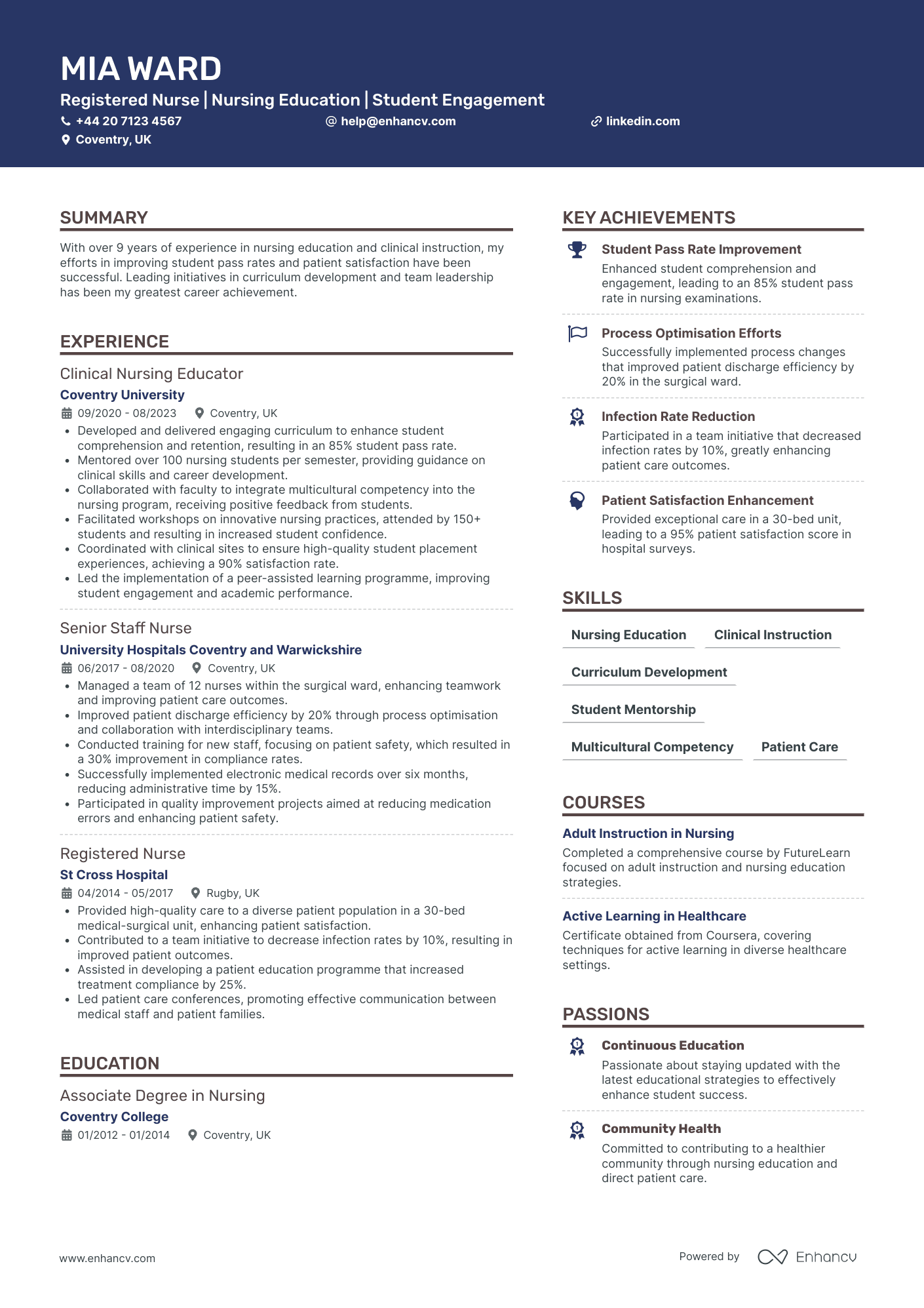
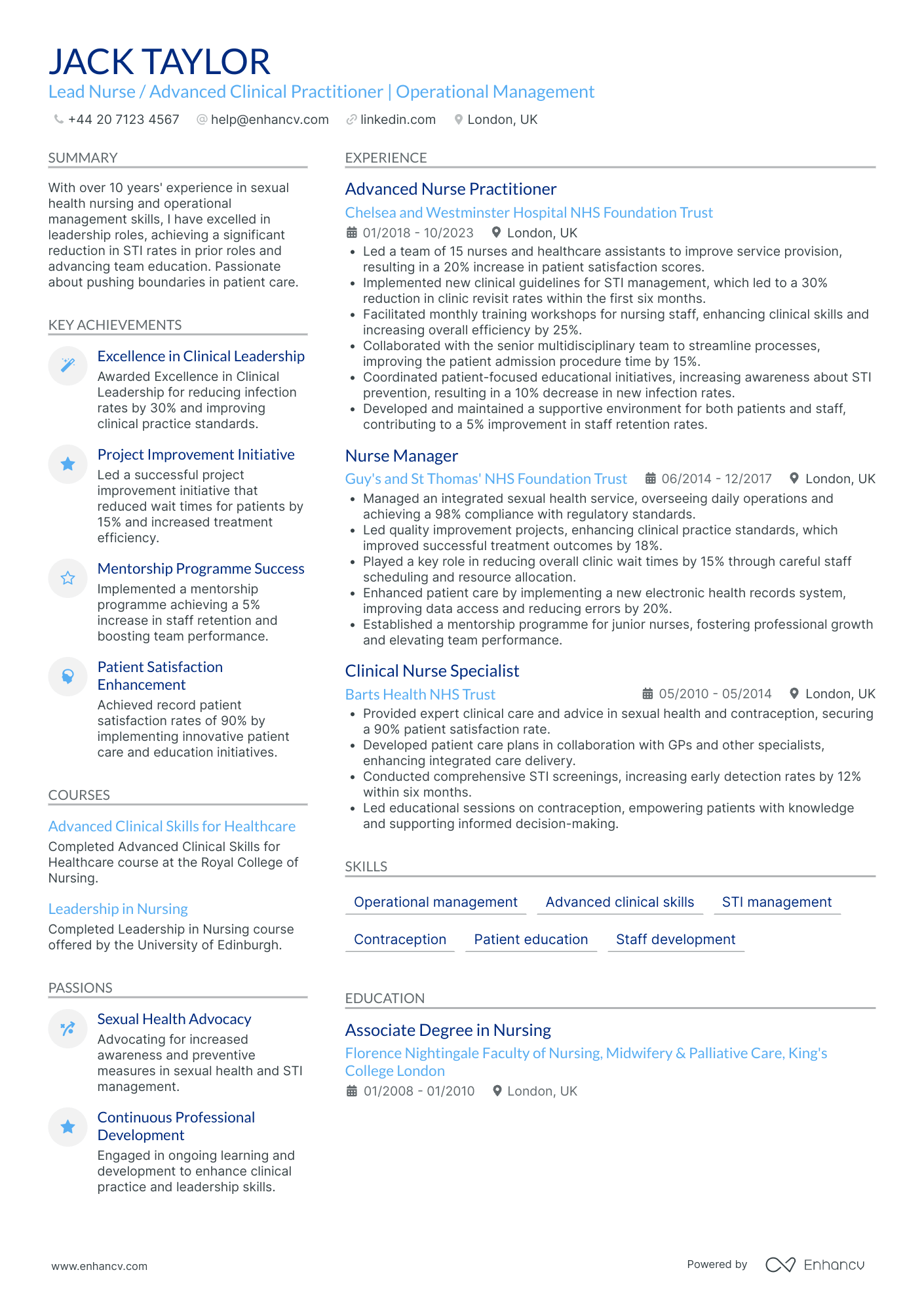
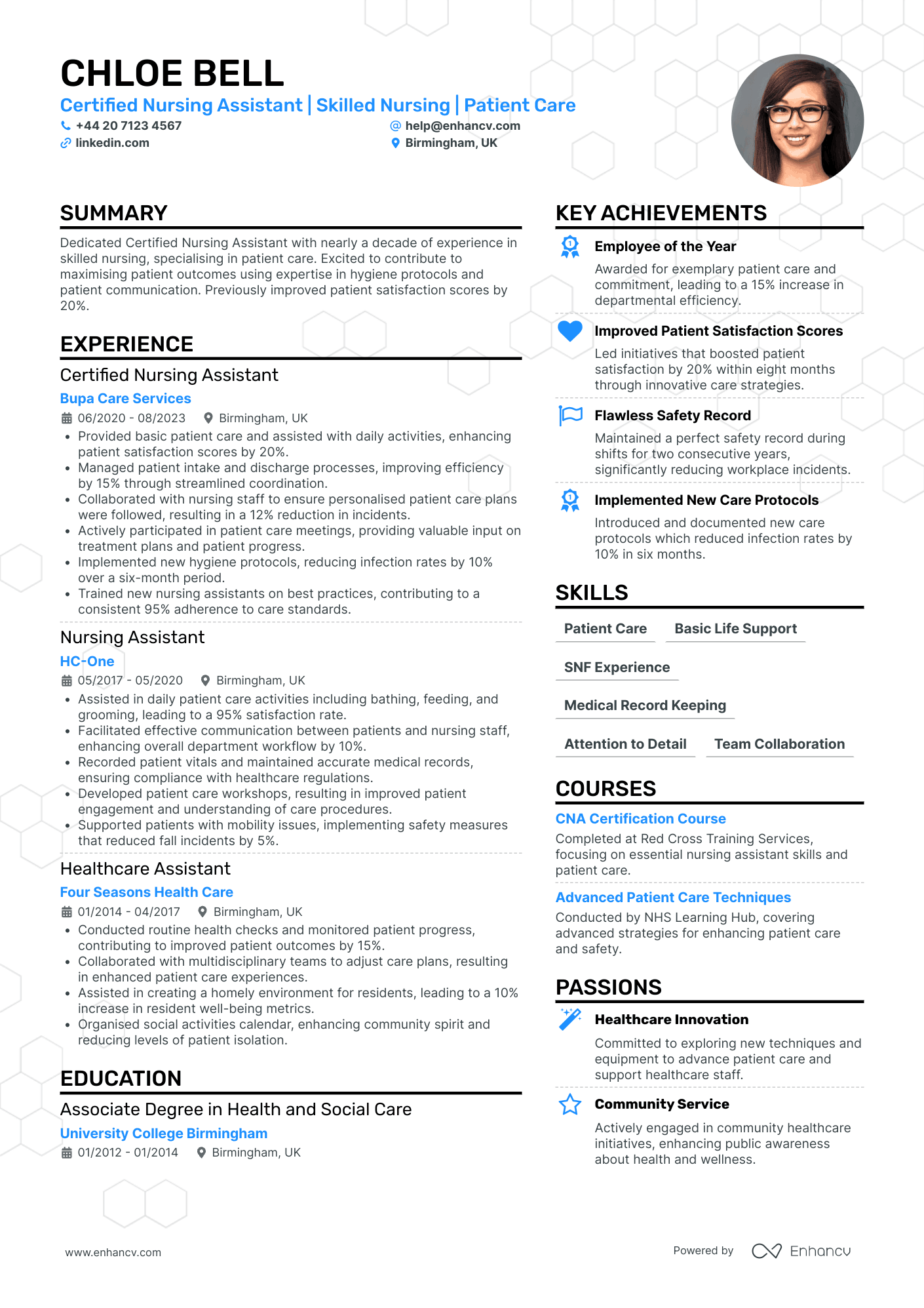
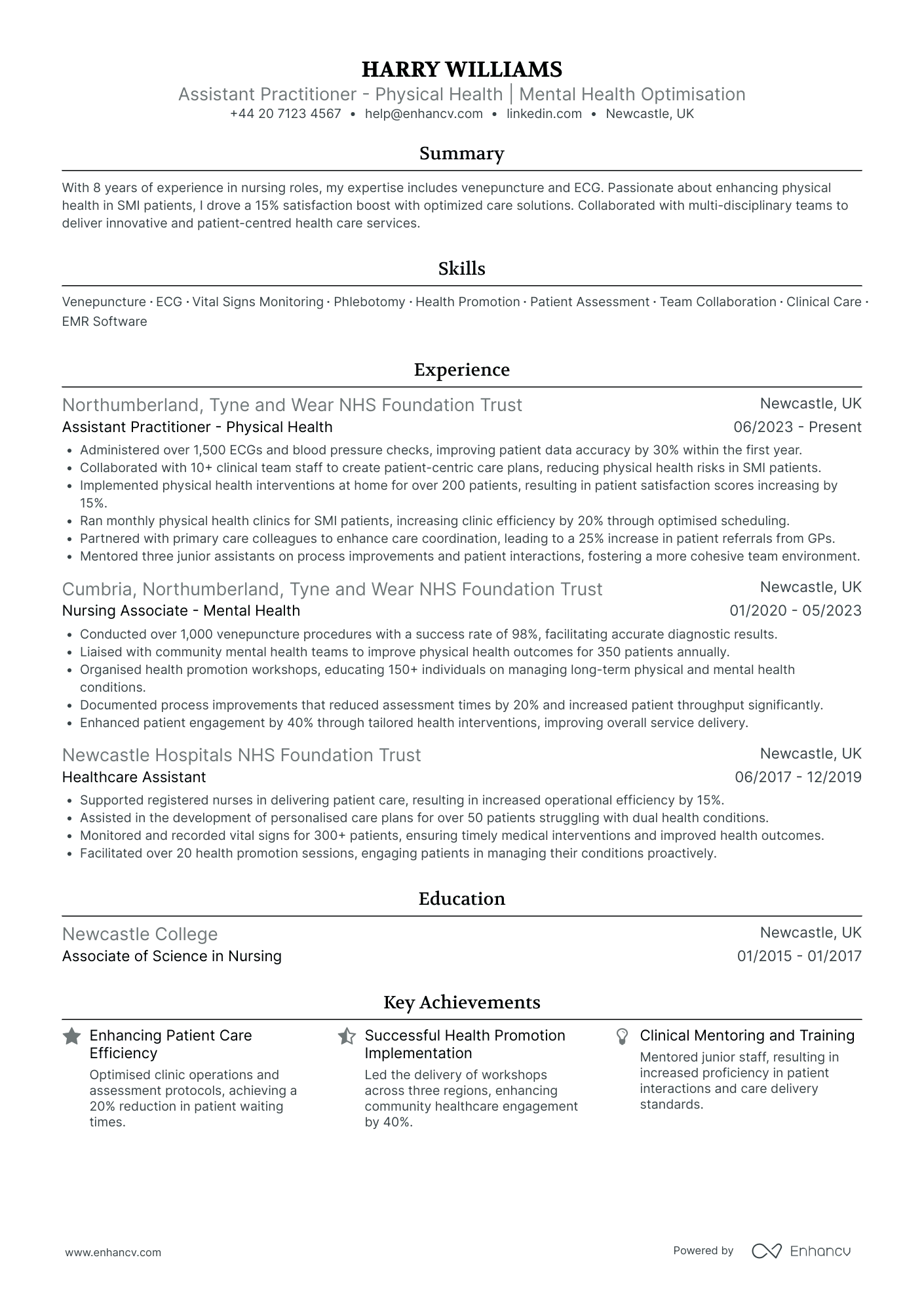
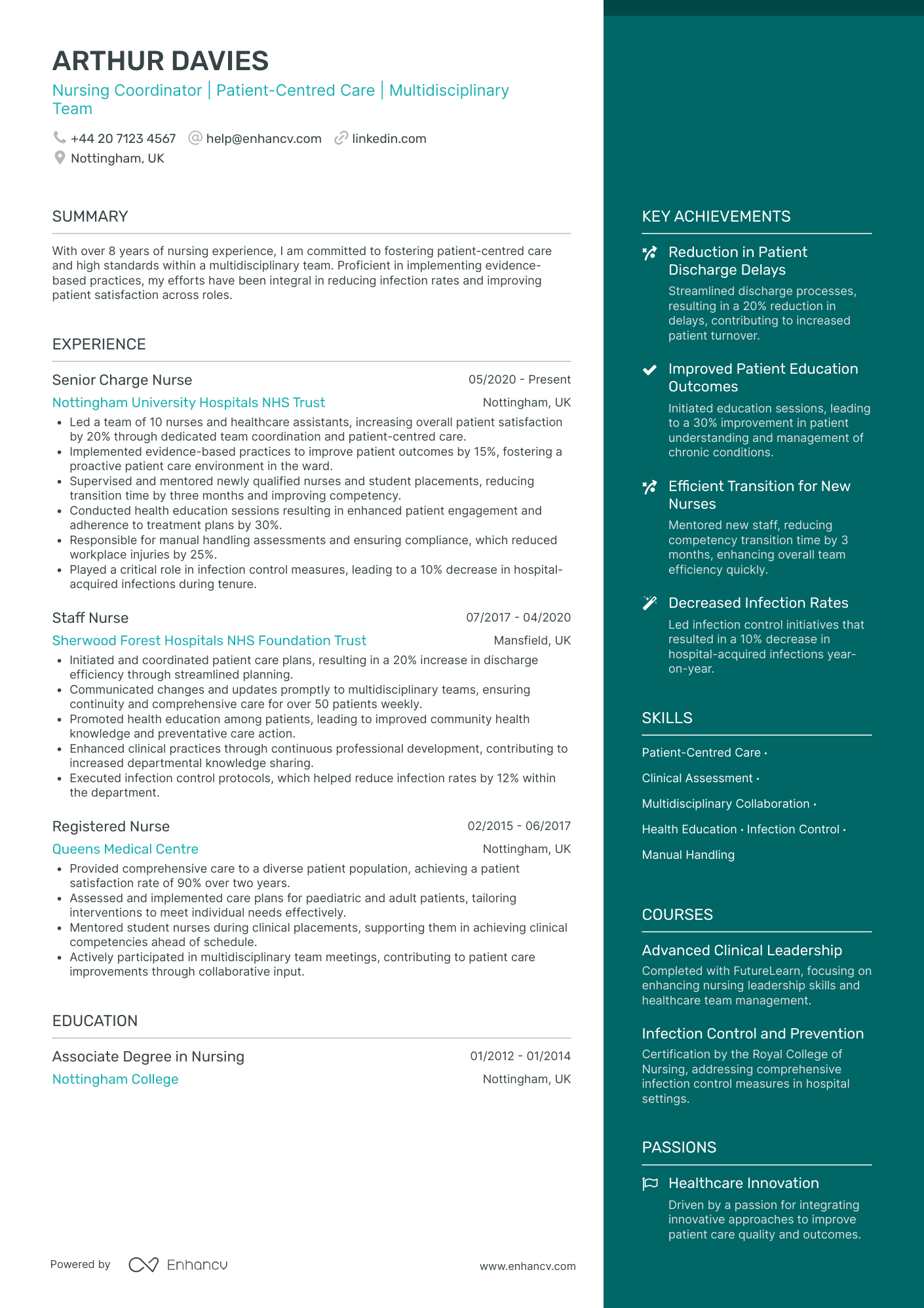
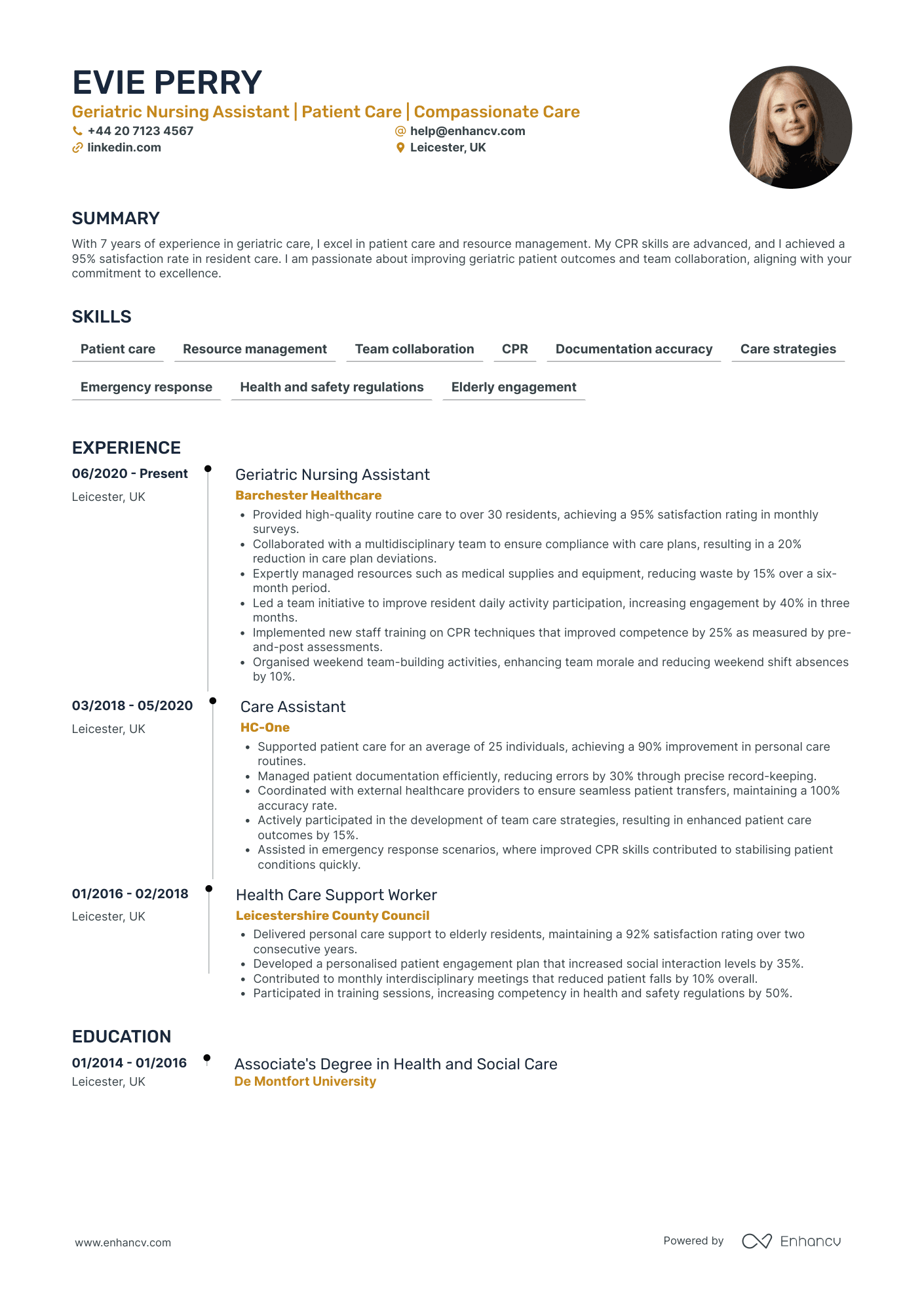
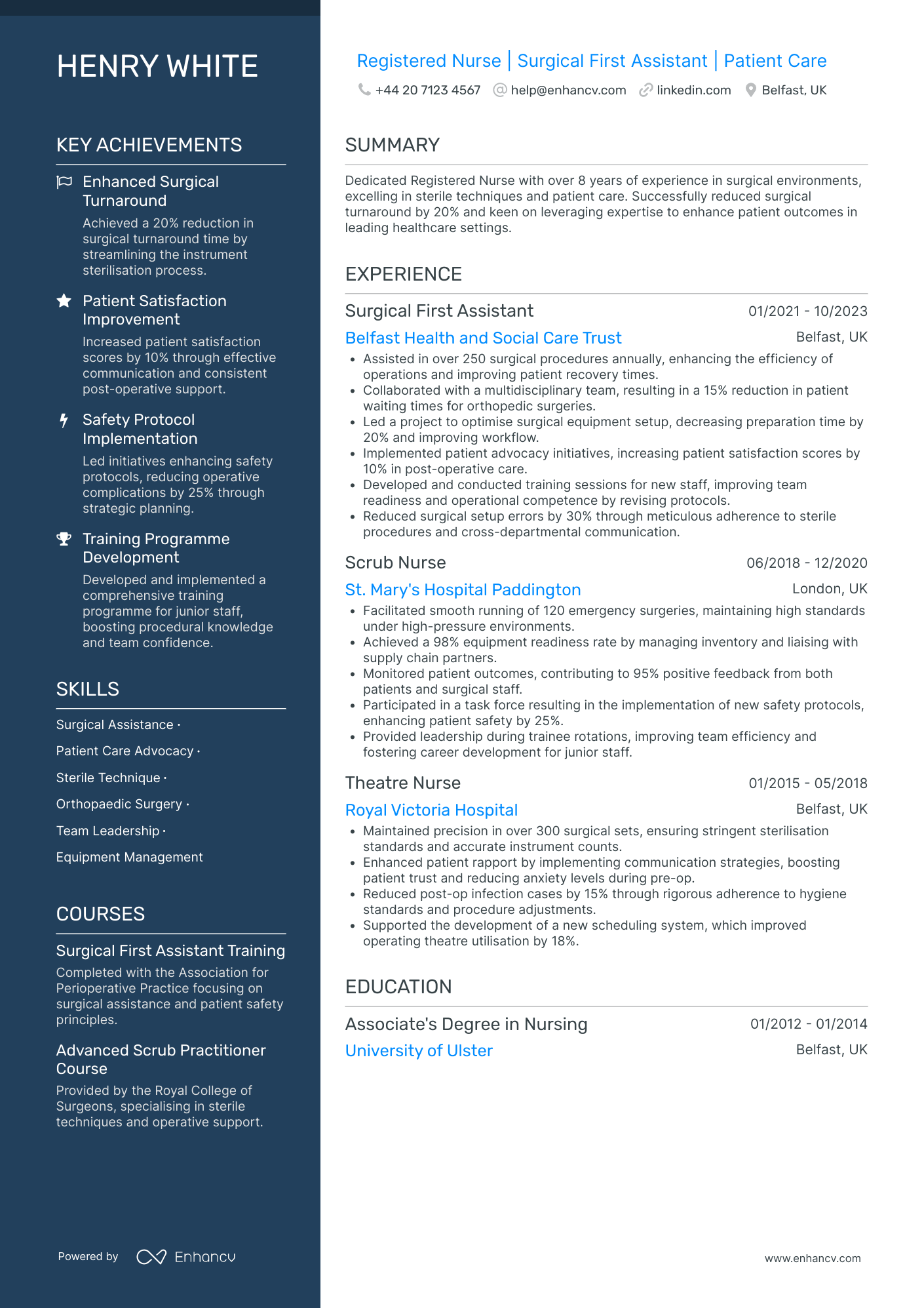
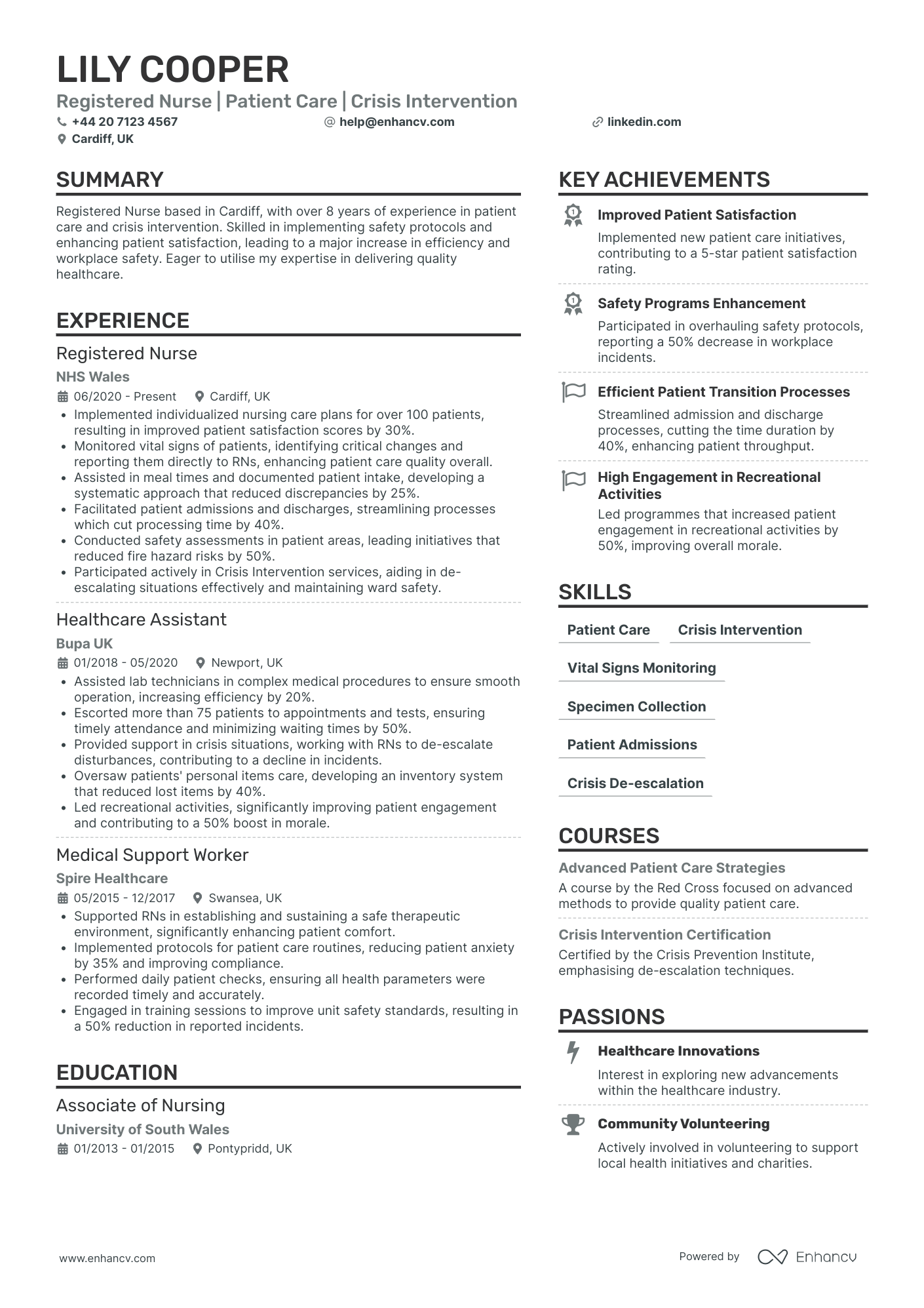
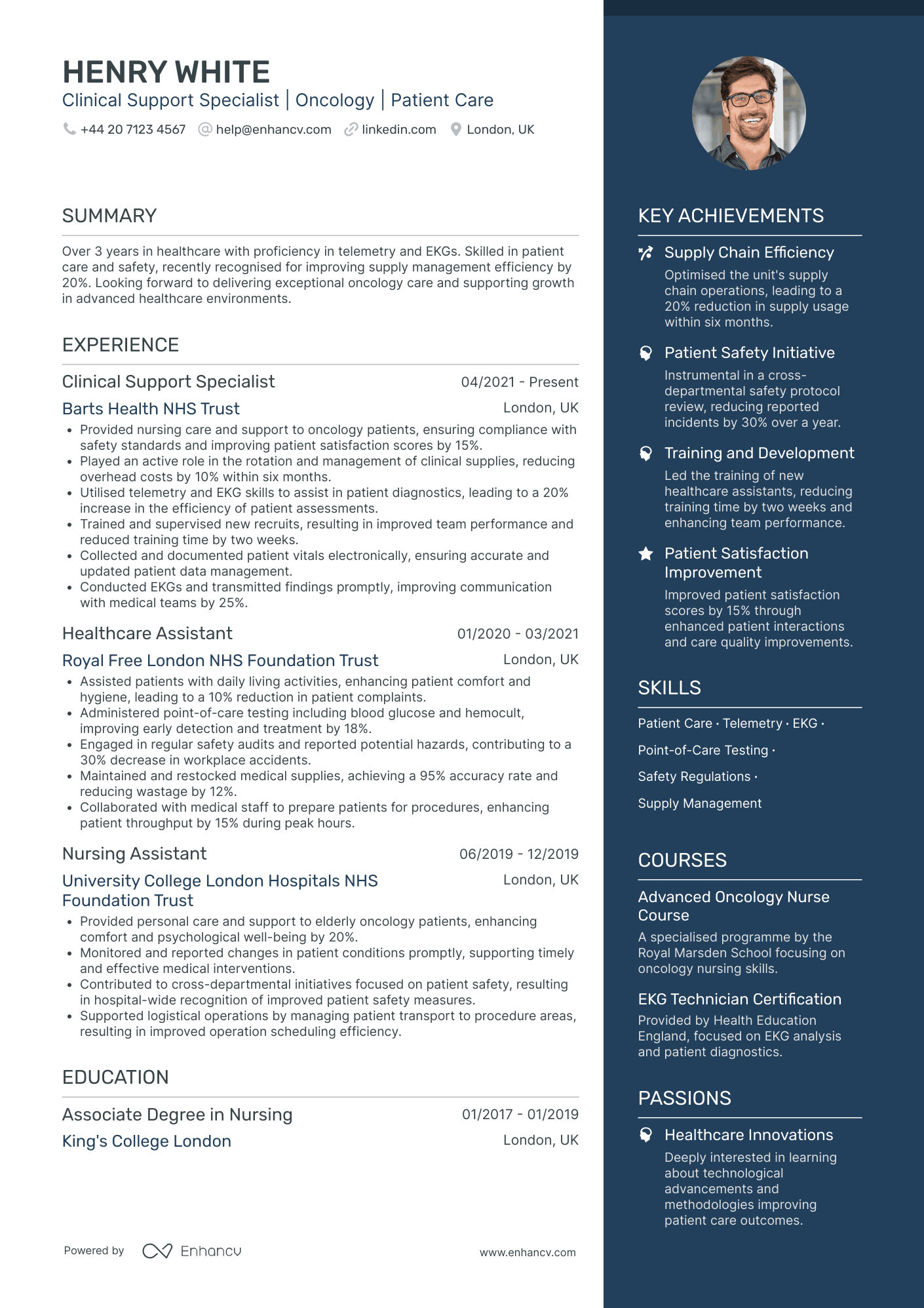
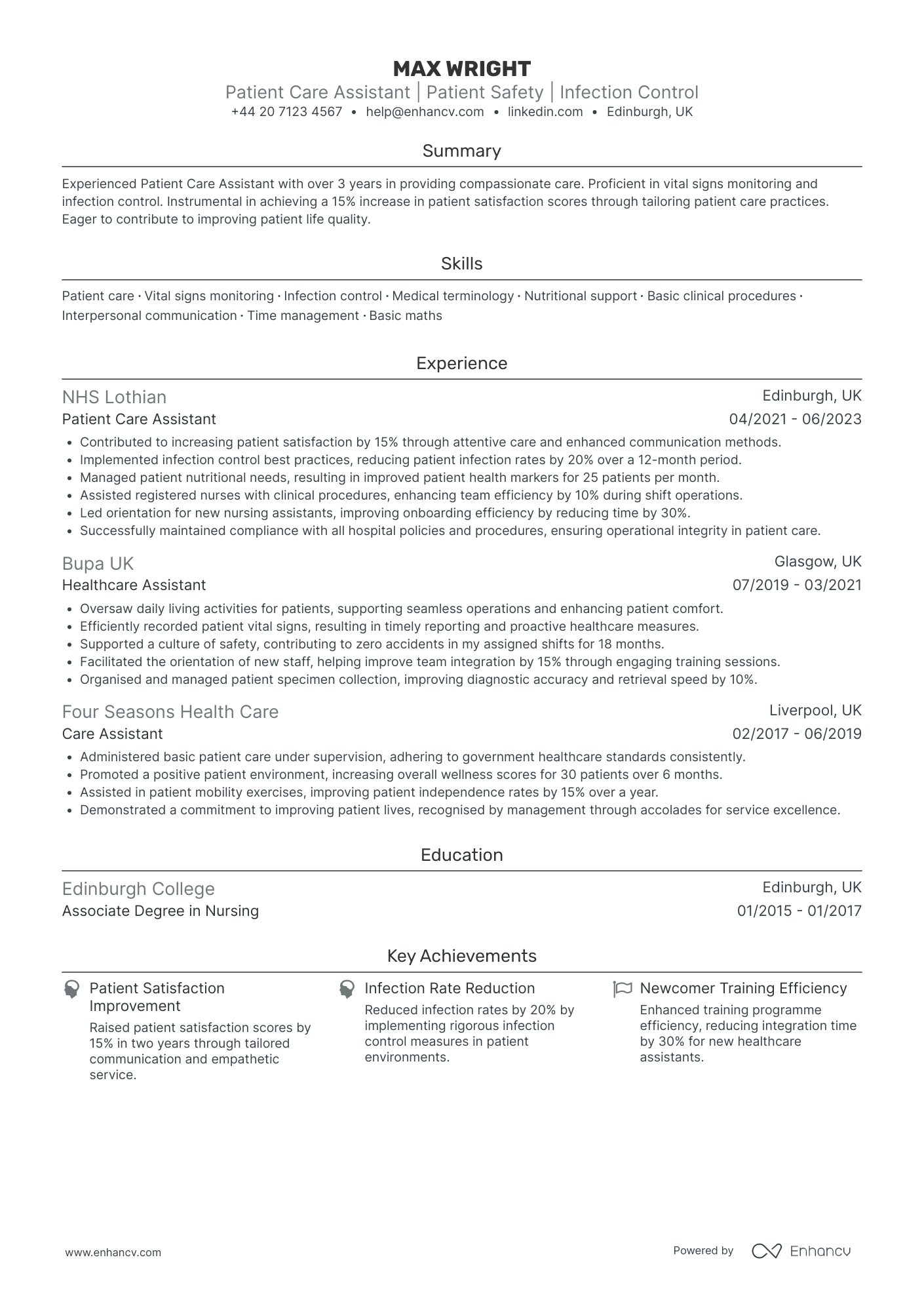
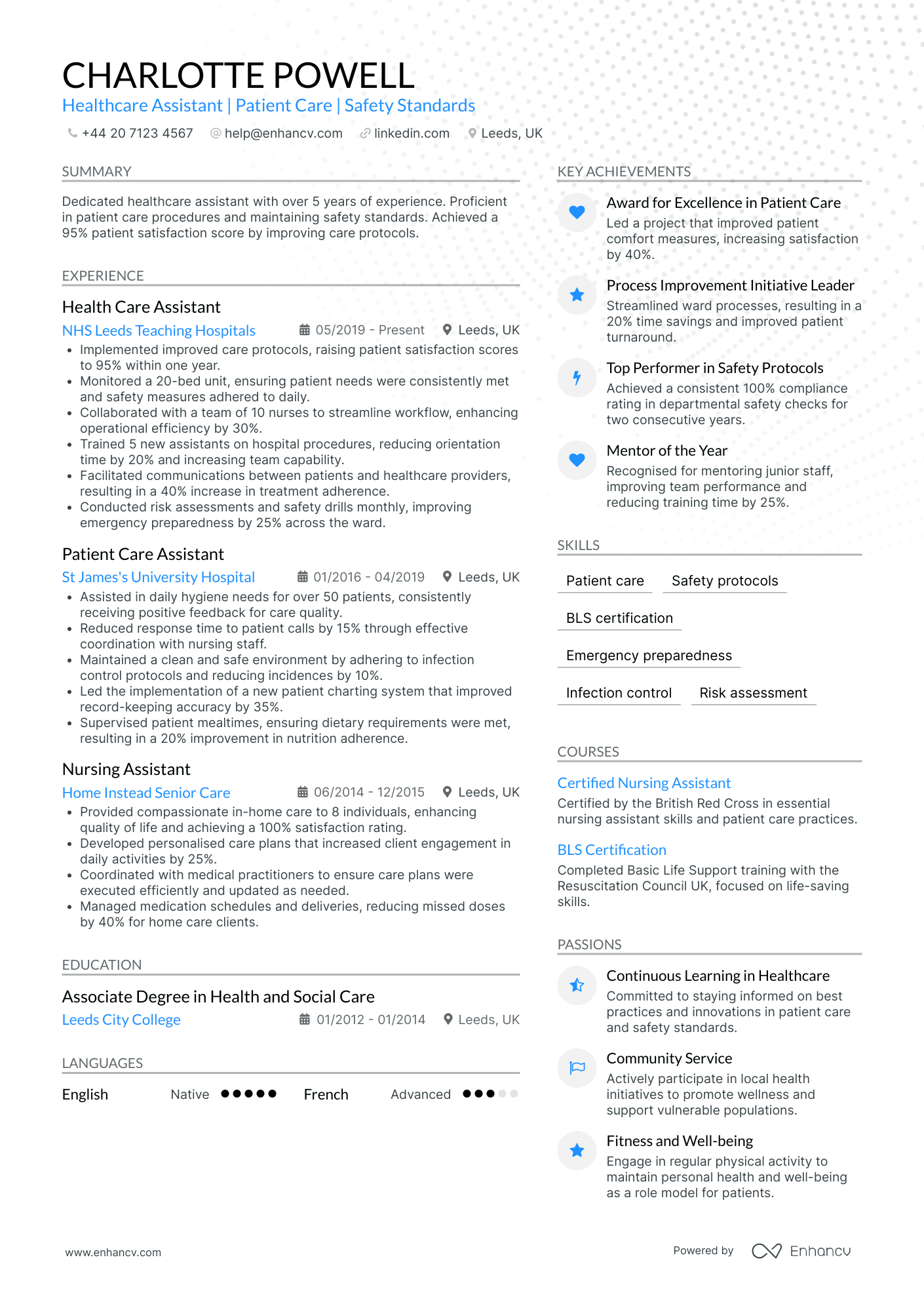
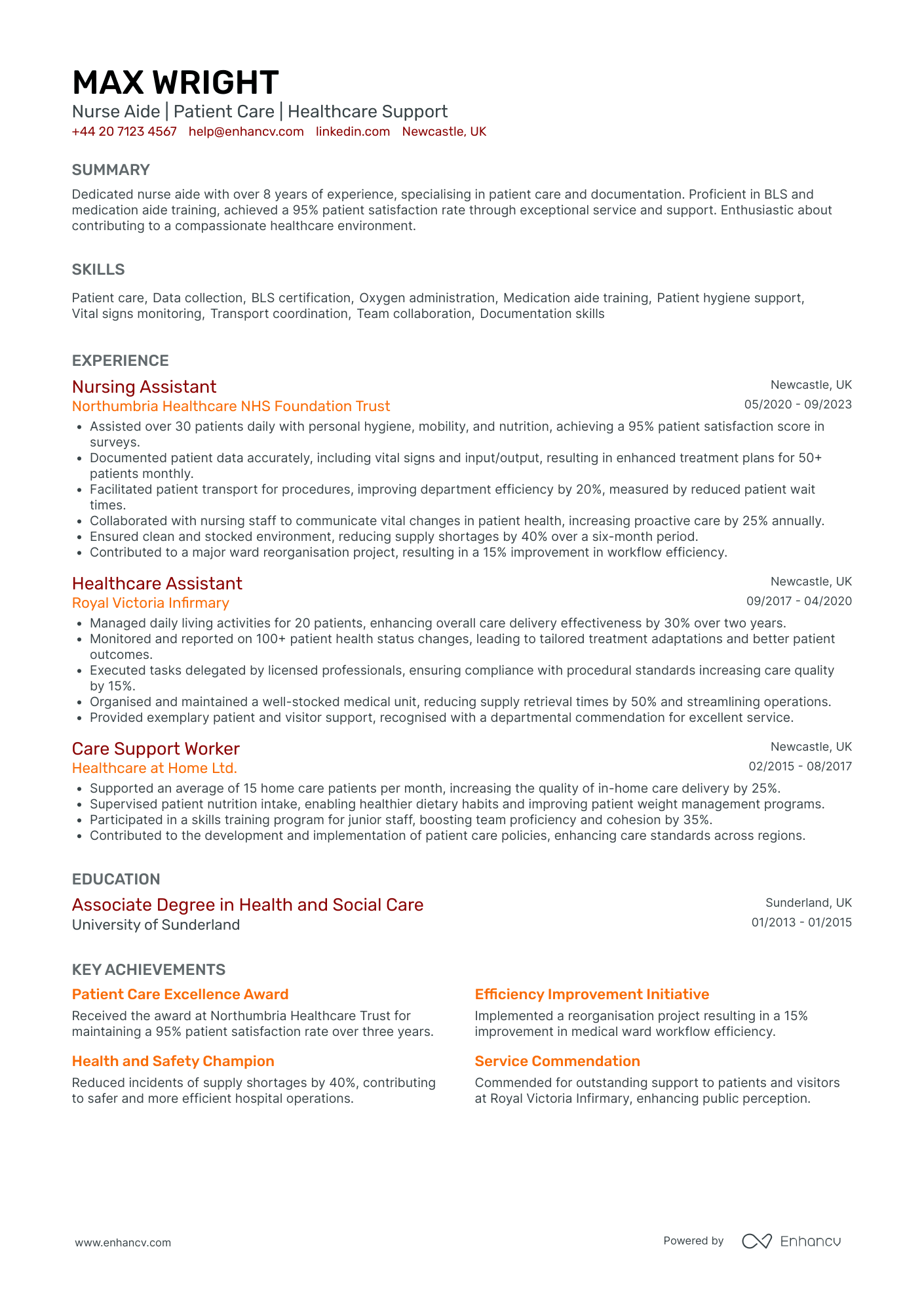
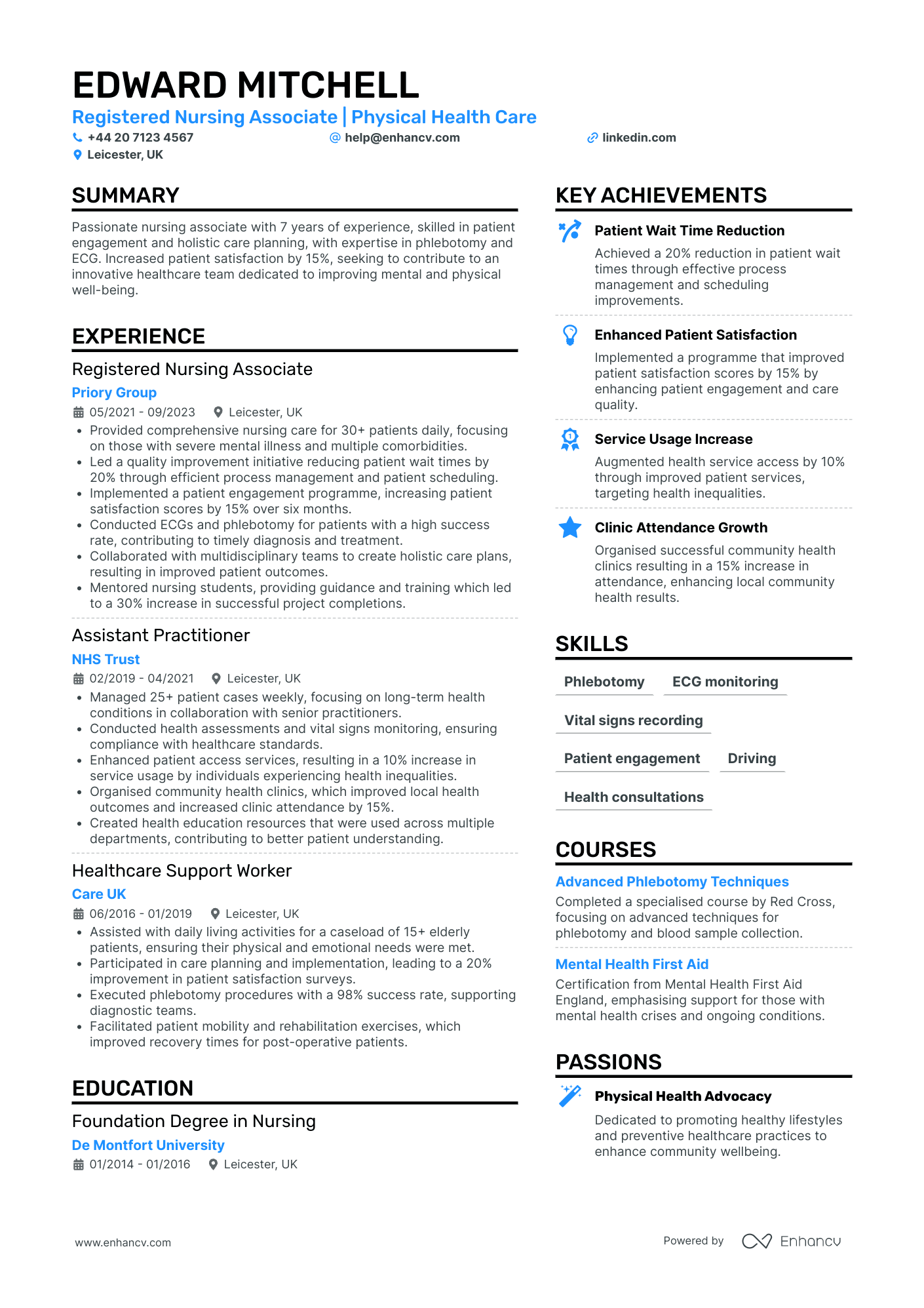
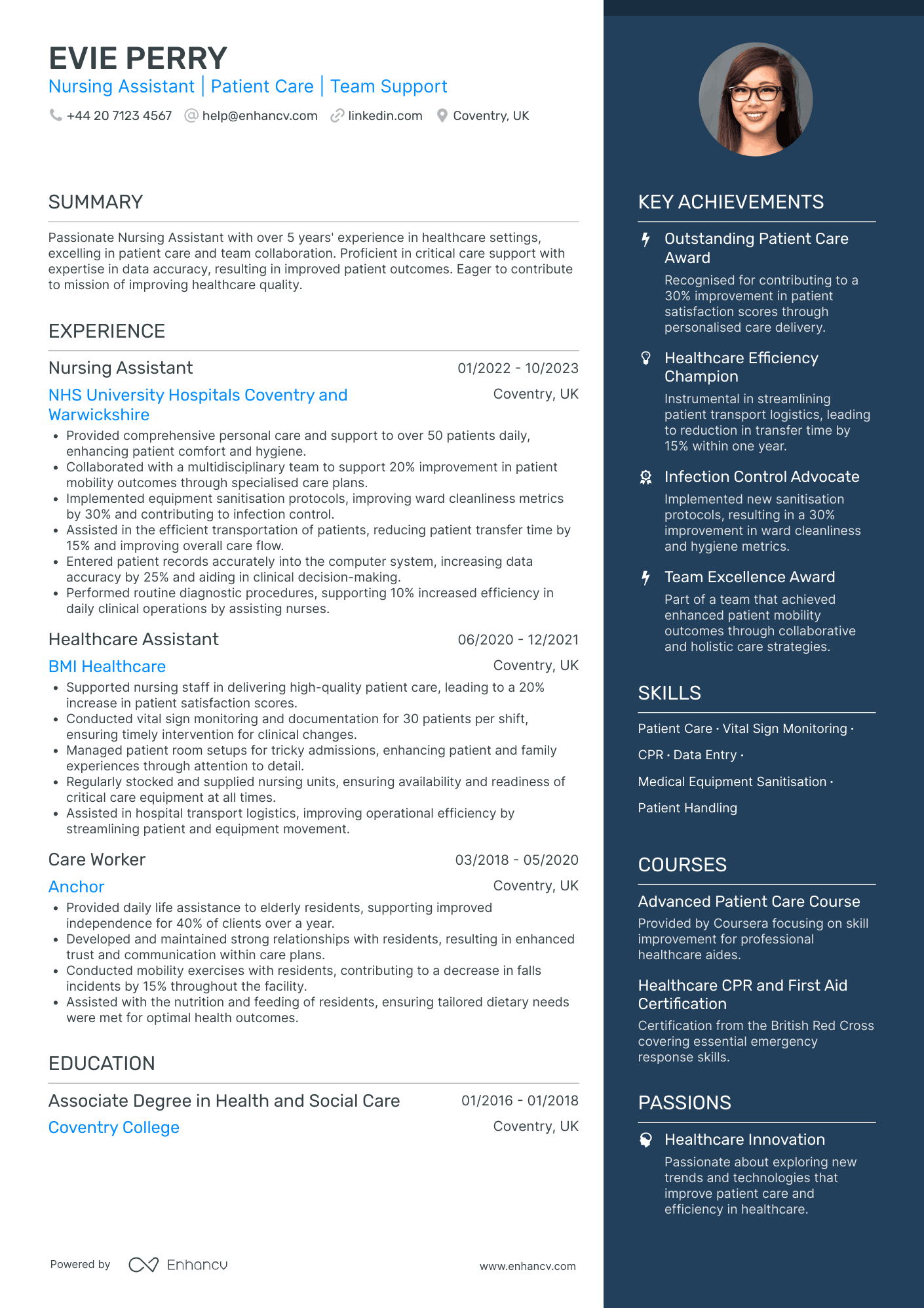
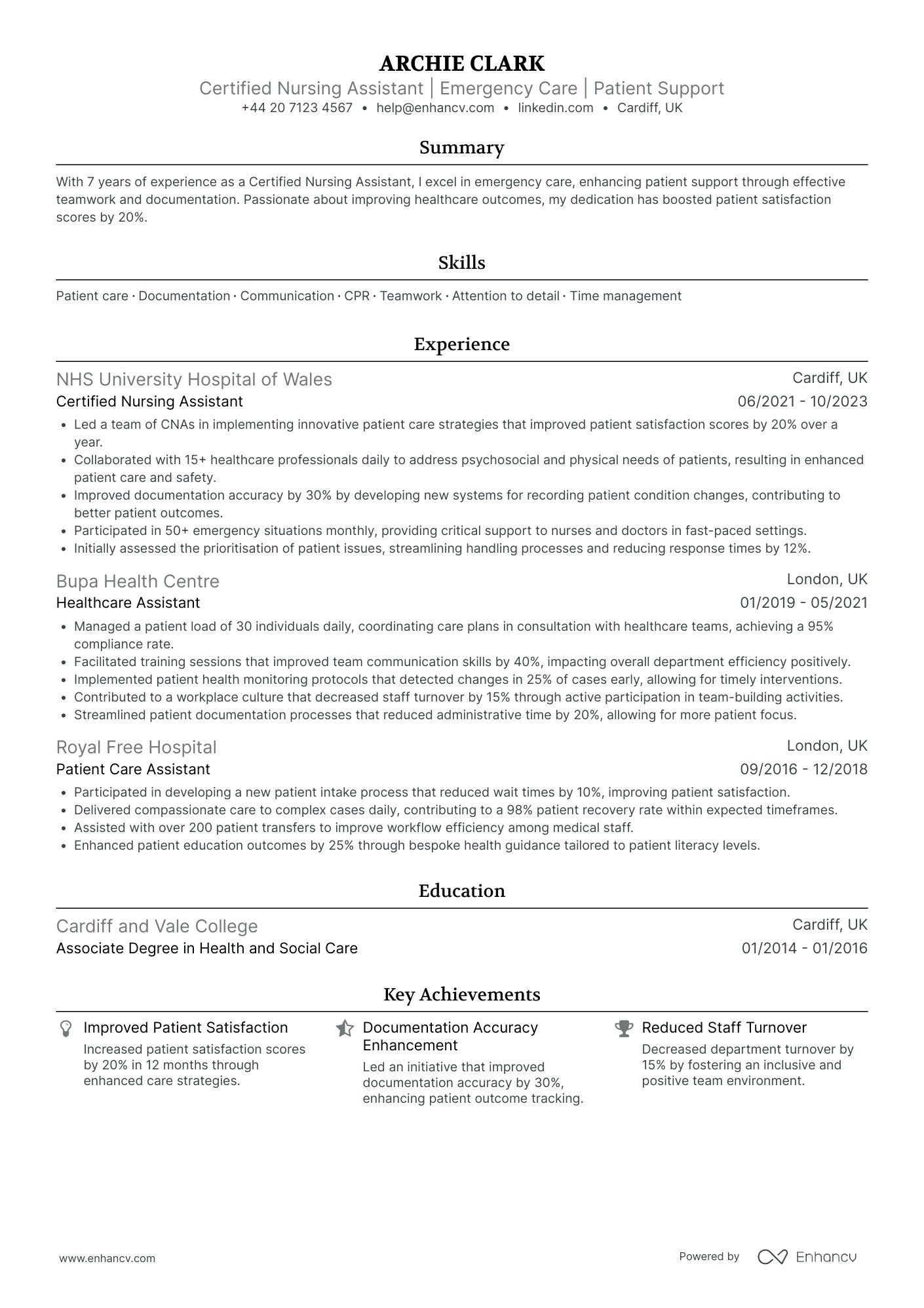
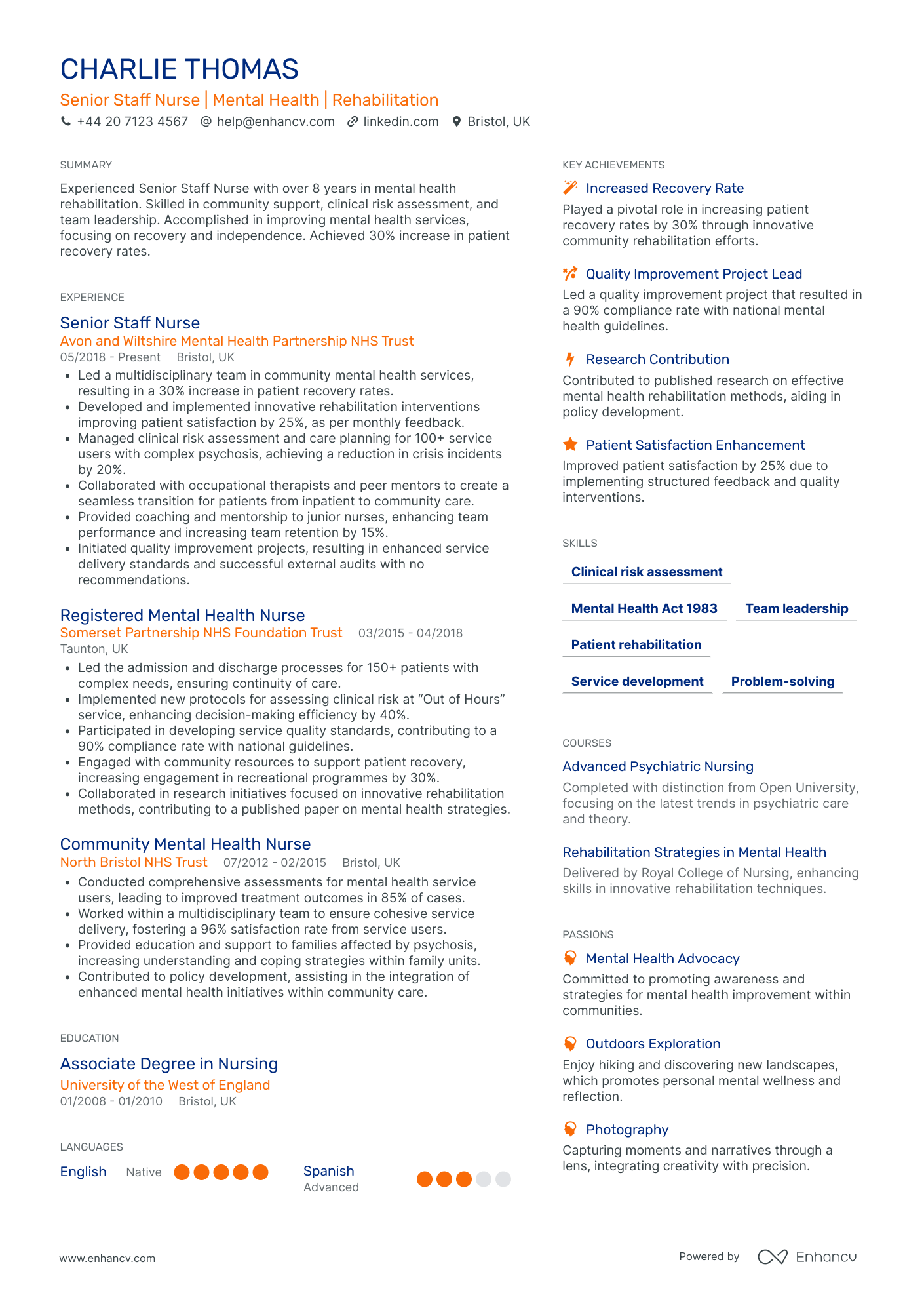
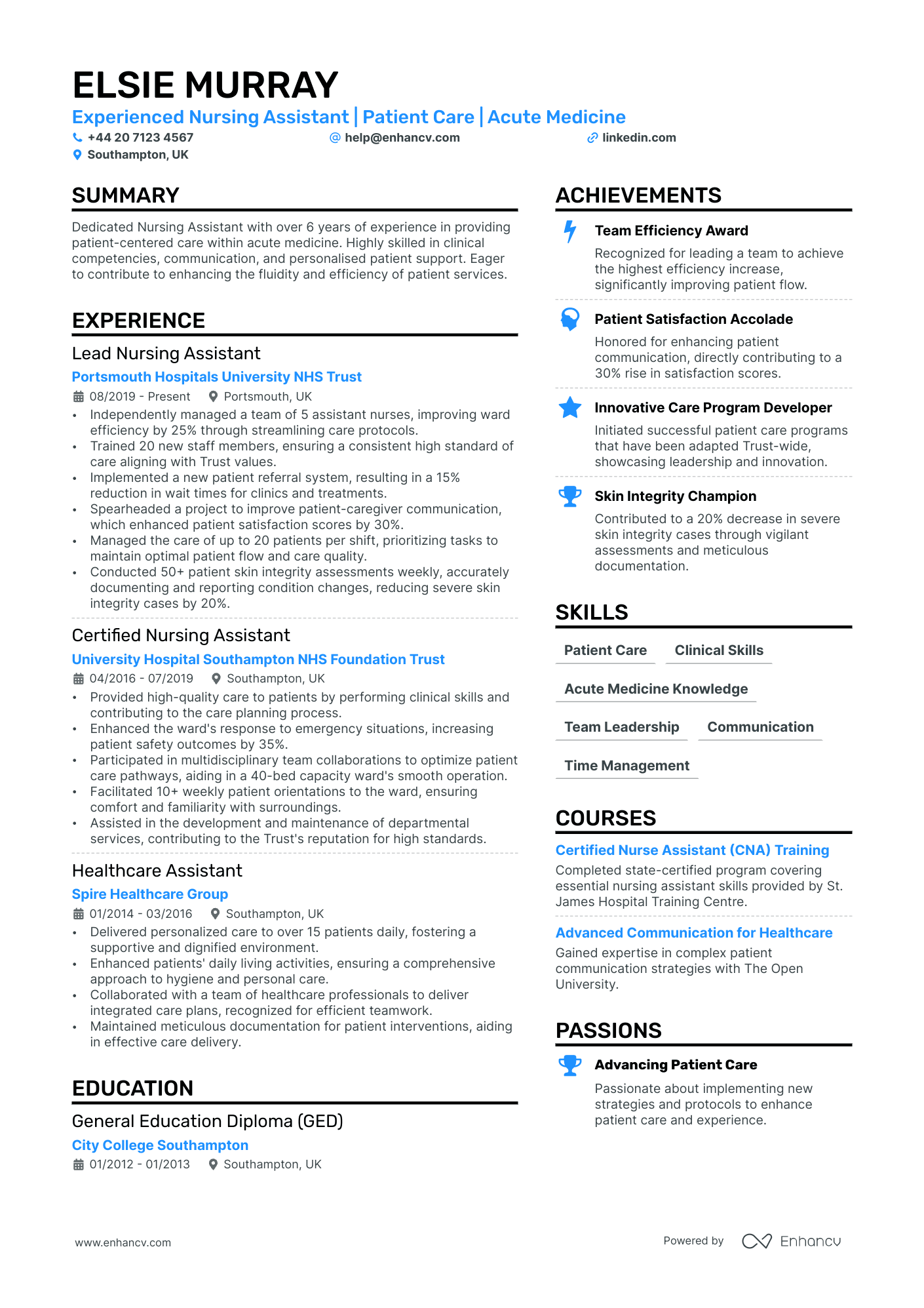
Most nursing assistant CVs open with three lines of adjectives, and a ward sister cannot use a single one of them. 'Caring, hardworking, and reliable' tells her nothing she can check before she picks up the phone.
The CVs that get read lead with proof: the patients you have supported, the observations you have recorded, and the training you have sat. Your personal statement is where that proof starts, and it does more work than any other section on the page. For the fundamentals first, see how to write a CV.

Key takeaways
- Lead with your personal statement. Three or four sentences of concrete evidence beat a paragraph of adjectives.
- Nursing assistant work is hands-on and on-site, so put your location near the top and name the settings you have worked in.
- Name the clinical basics employers screen for: personal care, patient observations, moving and handling, and infection control.
- No paid experience is common. Transferable care, volunteering, and training in progress all count.
- List a DBS check and any mandatory training, even where it is still in progress.
- Two pages, reverse chronological, sent as a PDF unless the advert asks for a Word file.
Writing your nursing assistant personal statement
A nursing assistant personal statement is the same thing many job adverts call a professional summary. Three or four sentences at the top of the CV that say who you are, the care you can give, and why this ward or home.
Four ingredients carry it: your current role or situation, the settings and patients you have worked with, one or two pieces of clinical training, and the type of role you want next. Get those in and the statement writes itself.
Keep it concrete. A recruiter reads it in seconds and decides whether the rest is worth their time. If you are stuck on the opening line, see more personal statement examples.
Avoid the adjective soup every other CV uses. 'Caring, compassionate, and hardworking' is a claim a hundred other applicants also make, and none of them prove it.
Lead with evidence instead:
Nursing assistant personal statement example
Reliable healthcare assistant with two years on a busy elderly care ward, supporting up to 14 patients a shift with personal care, feeding, and mobility. Trained in moving and handling and basic life support, and confident recording observations on the ward's digital system. Looking to bring calm, patient care to a nursing assistant role in an acute setting near Manchester.
The version to avoid
Caring, compassionate, and hardworking individual who is passionate about helping people and always goes the extra mile. A great team player looking for a rewarding role in the healthcare sector.
The first version names a setting, a patient load, and two pieces of training. The second could belong to anyone applying for any job.
Tailor the statement to the setting. An acute ward, a nursing home, and a community team each want different things emphasised, so lead with the experience that matches the advert. If the role is with older adults, put your dementia and personal care work first. On a surgical ward, lead with observations and post-operative support.
Keep it to three or four lines. An experienced applicant can point to years and a specialty, while a newer one leans on transferable care and training in progress, and neither should run past four sentences.
If you have no paid experience yet, the same rule holds. Name the real care you have given, at home or as a volunteer, and the training you are working towards.
When we read a nursing assistant personal statement, we are looking for one line that only you could have written. 'Supported my mother through chemotherapy at home for a year' or 'covered the observations round for 14 patients every shift' tells us more than a paragraph of adjectives. Name the setting, the task, and the number. Then add the training you hold or are working towards. That is a statement a ward manager can act on.
The Enhancv team
What to put on a nursing assistant CV
Keep the CV to the sections a ward manager actually reads, in this order:
- Contact details and location at the top, plus a driving licence if the role covers community visits.
- A short personal statement.
- Key skills, split into clinical and personal.
- Work experience, paid or voluntary, written as dated entries.
- Education, training, and certifications, including your DBS check.
Leave off a photo, your date of birth, and a long list of hobbies. None of them help a UK healthcare application, and some invite bias. For the full list of what belongs, see CV sections.
Order each section by relevance, not habit. If your strongest evidence is a year of caring for a relative, that belongs above a summer of retail work, even when the retail job is more recent. The reader should meet your best care evidence in the first half of the first page.
Skills for your nursing assistant CV
Ask what the five basic nursing skills are and most people land on the same list: communication, patient observation, personal care, safe moving and handling, and infection control. Those are the foundations of the role, and they belong near the top of your CV.
Split your skills into two groups. The clinical, checkable ones go under hard skills. The human ones you prove in a bullet go under soft skills.
A skill only earns its place when you can evidence it. 'Infection control' on its own is a word, while 'followed the ward's infection control protocol during a norovirus outbreak with no cross-infection on my bay' is proof. Save the fuller version for your experience bullets and keep the skills list to clean, scannable terms.
List only what you can stand behind. If you have been trained in a task, name it. If you have not yet, put it under training in progress rather than skills.
Top skills for your nursing assistant CV:
Personal care
Patient observations (temperature, pulse, blood pressure, blood sugar)
Moving and handling
Assisting with mobility and transfers
Feeding and hydration support
Infection prevention and control
Recording care notes on digital systems
Basic life support
Communication
Compassion
Patience
Teamwork
Reliability
Attention to detail
Writing your nursing assistant experience section
Ask what a nursing assistant does across a shift and you have the backbone of this section: helping patients wash and dress, serving and supporting meals, recording observations, assisting safe mobility, and keeping accurate care notes.
Write each entry with a dated heading, then bullets that lead with a verb and end with an outcome. For the mechanics, see work experience on a CV.
Nursing assistant work is measurable even when it does not feel like it: patients supported per shift, observation rounds completed, a pressure sore prevented, and a record kept clean. Those details are your CV achievements.
Bank and agency work counts. If you have covered shifts across several wards or homes, group them under one heading with the agency name and note the range of settings, rather than listing each placement as a separate job.
Translate the duties that do not sound clinical on paper. 'Sat with a distressed patient until the family arrived' shows compassion under pressure, and 'spotted a change in a patient's colour and escalated it' shows the observation skills a ward relies on.
Tailor each application. Pull the duties and clinical terms from the advert and mirror the ones that are true of you. Enhancv's CV tailoring feature reads the ad and suggests the matching edits, which saves rewriting from scratch each time.
- Support up to 14 patients each shift with personal care, feeding, and mobility, working alongside two registered nurses
- Record temperature, pulse, blood pressure, and blood sugar observations on the ward's digital system, flagging changes to the nurse in charge
- Completed moving and handling and basic life support training, and assist with safe transfers using hoists and slide sheets
- Praised by the ward sister for calm communication with patients living with dementia and their families

PRO TIP
Nursing adverts list clinical specifics, not soft-skill clouds. Mirror the ones you can back: 'personal care', 'moving and handling', 'patient observations', 'blood sugar monitoring', and 'infection control'. If you have been trained in it, name it exactly as the advert does.
What the UK nursing assistant market looks like
Knowing what UK employers screen for shapes the CV. Two things stand out for this role.
Nursing assistant work is almost entirely on-site and hands-on, so a recruiter needs to see you can get to the ward or home reliably. Put your town near the top, and mention a driving licence if the role covers community visits.
And the same practical skills come up again across recent adverts, so mirror the ones you can back rather than guessing at what to list.
| What | UK nursing assistant roles |
|---|---|
| Where the work happens | On-site: on wards, in care homes, and on community visits. Every role is face-to-face with patients. |
| Route in | An entry-friendly role. Most employers train on the job, and a DBS check is standard. |
| Skills adverts keep asking for | Patient care, communication, and helping patients move safely recur across recent UK nursing assistant adverts on Enhancv's internal job feed (last ~30 days). |
Formatting your nursing assistant CV
Once you have care roles behind you, use a reverse chronological structure so your most recent ward or home comes first. If this is your first CV, lead with a skills-led structure instead.
Keep it to two pages, one column, standard headings, and a readable font. Ward managers skim between shifts.
Use plain section labels the software can read: Personal Statement, Skills, Work Experience, Education. Skip the graphics, columns, and skills bars that break in a parser, and keep your contact details as text rather than tucked inside a header image.
Send a PDF for direct applications so the layout holds. Keep a Word copy for agencies, which place a large share of healthcare roles and reformat CVs into their own template. If the advert names a file type, follow it.
Healthcare applications often pass through tracking software, so keep the layout clean and the headings standard for an ATS-friendly CV. Build it from a tested layout rather than a blank page, and Enhancv's CV templates export to a clean PDF.
Writing a nursing assistant CV with no experience
Plenty of nursing assistant roles are open to first-time applicants, because employers hire on attitude and train the clinical skills once you start.
So your first CV carries its weight differently. Lead with a skills-led structure: personal statement, then skills and any care exposure, then education, with work history lower down.
Mine your life for real care evidence. It is almost always there:
- Caring for a family member: personal care, medication reminders, appointments, and managing a routine.
- Volunteering in a care home, hospice, hospital, or community group.
- Retail or hospitality: patience under pressure, a duty of care, and working to procedure.
- Any role with vulnerable people: SEN support, childcare, first aid, or lifeguarding.
Write those in care language. 'Supported my grandfather with daily personal care for two years' is a nursing assistant bullet that happened at home.
If you have volunteered, give it a dated entry like a job, with duties and hours. Volunteering on a CV counts as experience for this role, not filler.
One line moves a no-experience CV up the pile: 'Care Certificate in progress' or 'enrolled on an NVQ Level 2 in Health and Social Care'. It signals you are already on the path.
Close a first application with a short cover note that answers the one question a manager has about a new applicant: why care, and why now. Two honest paragraphs about what drew you to the work beat a page of borrowed phrases.
Qualifications, training, and DBS checks
You rarely need formal qualifications to start as a nursing assistant, which is why the no-experience route works. What employers check is your willingness to complete mandatory training.
List these where you have them, even in progress: the Care Certificate and its 15 standards, an NVQ or Diploma Level 2 or 3 in Health and Social Care, and core training in moving and handling, basic life support, safeguarding, and infection control. Put them in your education section or a dedicated training block.
The Care Certificate carries real weight here, because it maps directly to the standards a ward or home expects on day one. If yours is complete, say so and give the year. If it is underway, name the standards you have covered so far.
A current DBS check belongs on the CV too. It is a baseline expectation for any role with patients, and naming the certificates you hold saves the employer a question. Add the date of your check, since employers want to see it is recent.
Conclusion
Lead with a personal statement built on real evidence, name the clinical basics employers screen for, and keep the format clean and ward-friendly.
Pair the CV with a short cover letter that says why nursing, and you turn a thin work history into a credible application.

Author's take - The Enhancv team
When we read a nursing assistant personal statement, we are looking for one line that only you could have written. 'Supported my mother through chemotherapy at home for a year' or 'covered the observations round for 14 patients every shift' tells us more than a paragraph of adjectives. Name the setting, the task, and the number. Then add the training you hold or are working towards. That is a statement a ward manager can act on.