



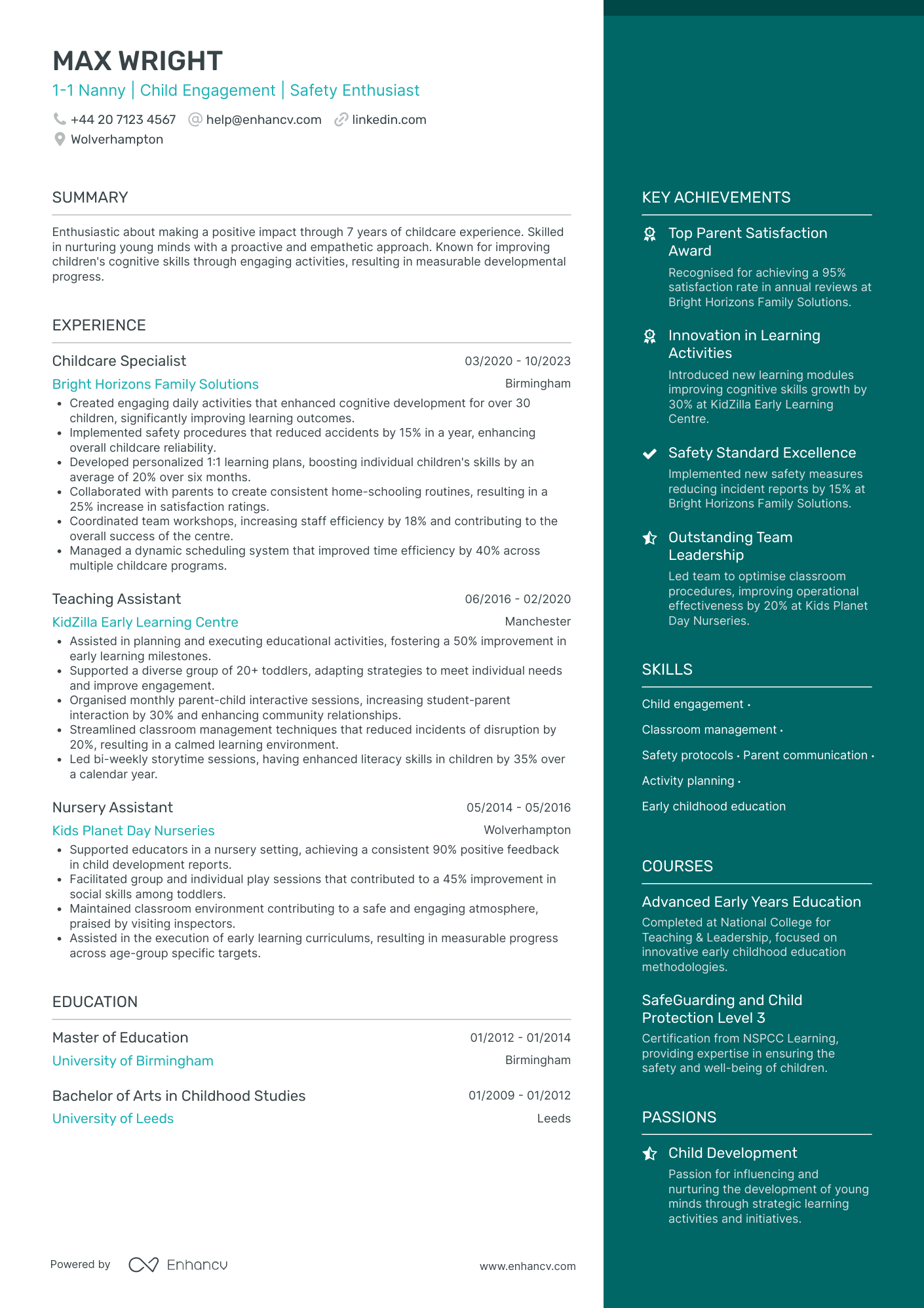
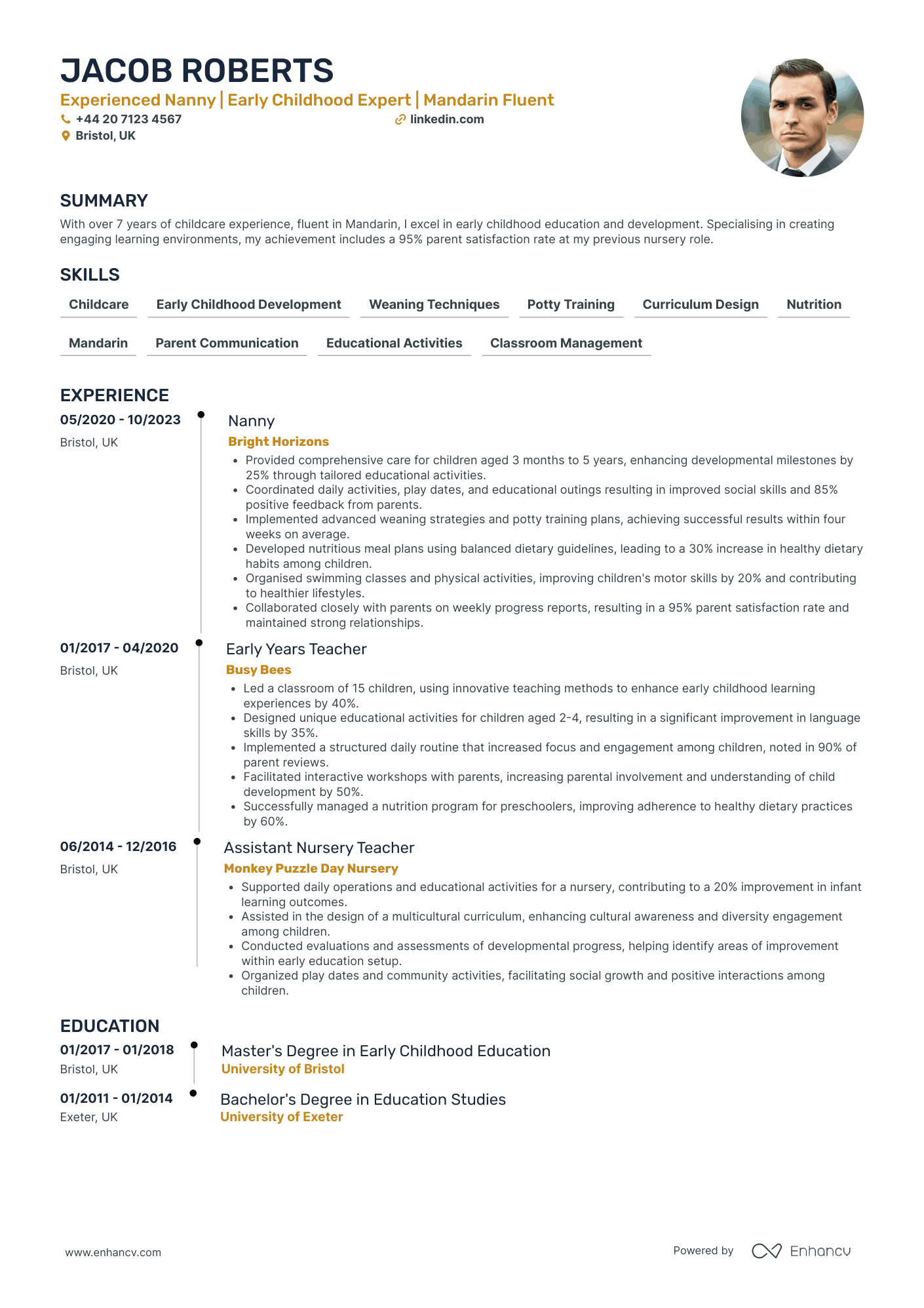
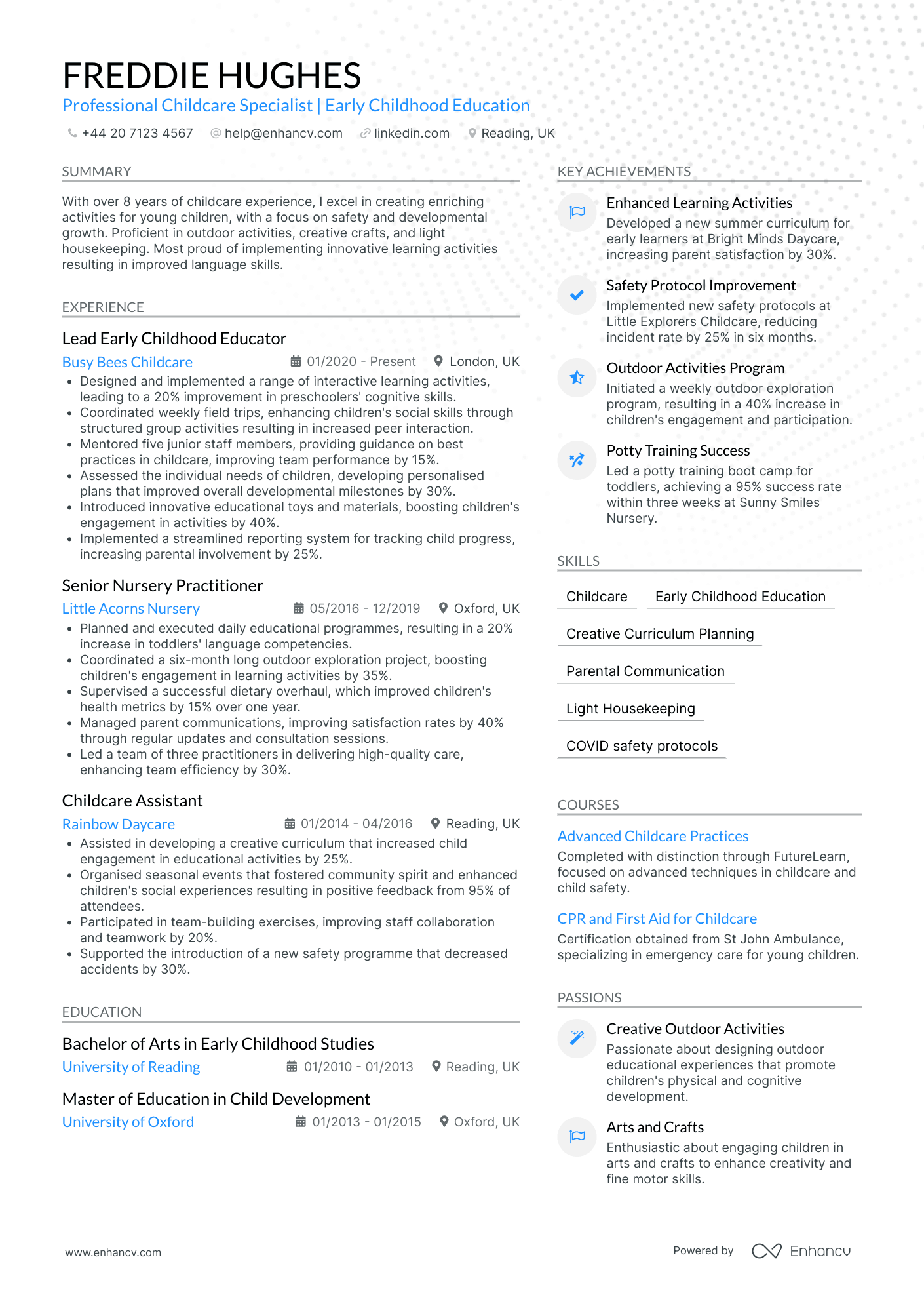
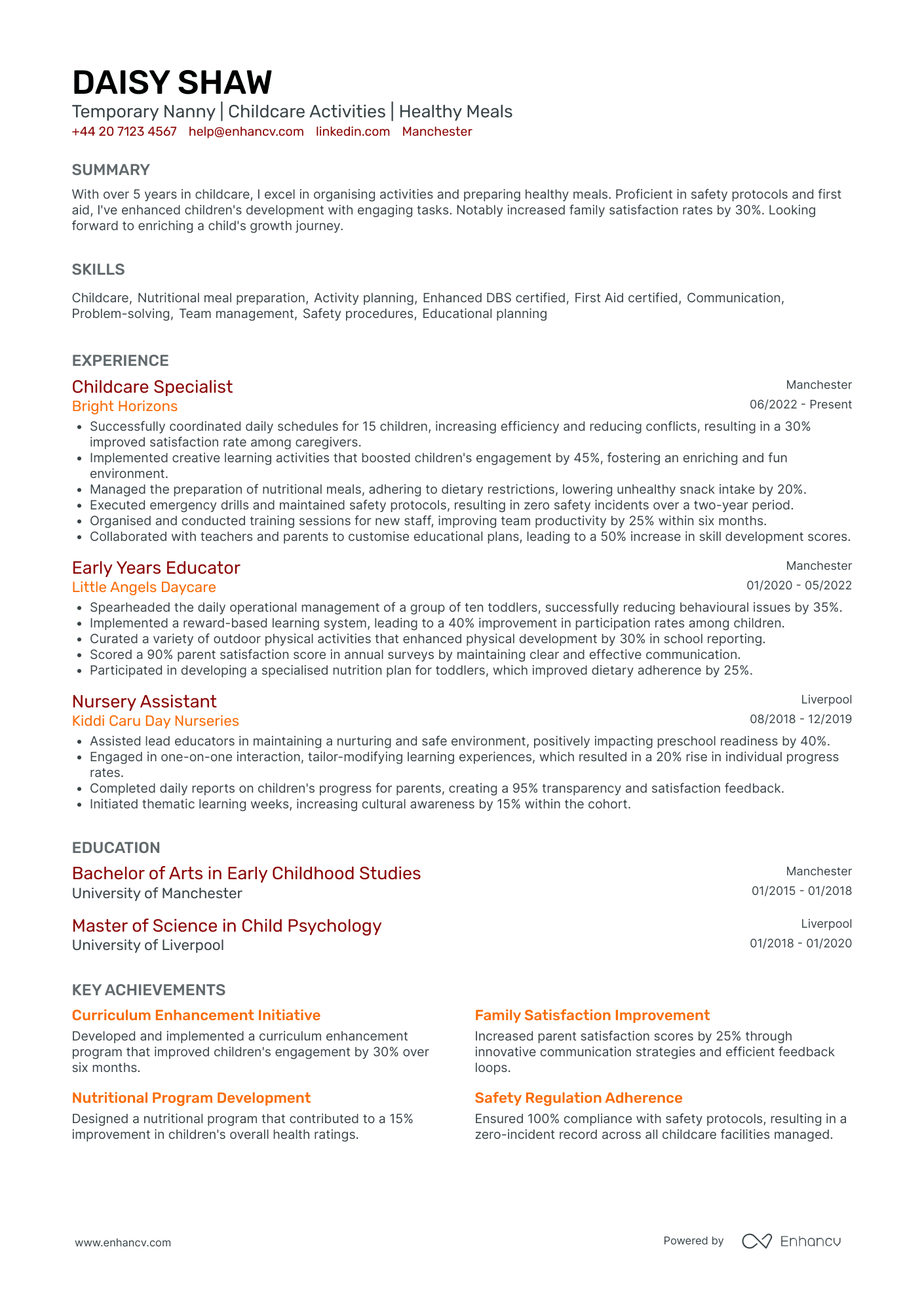
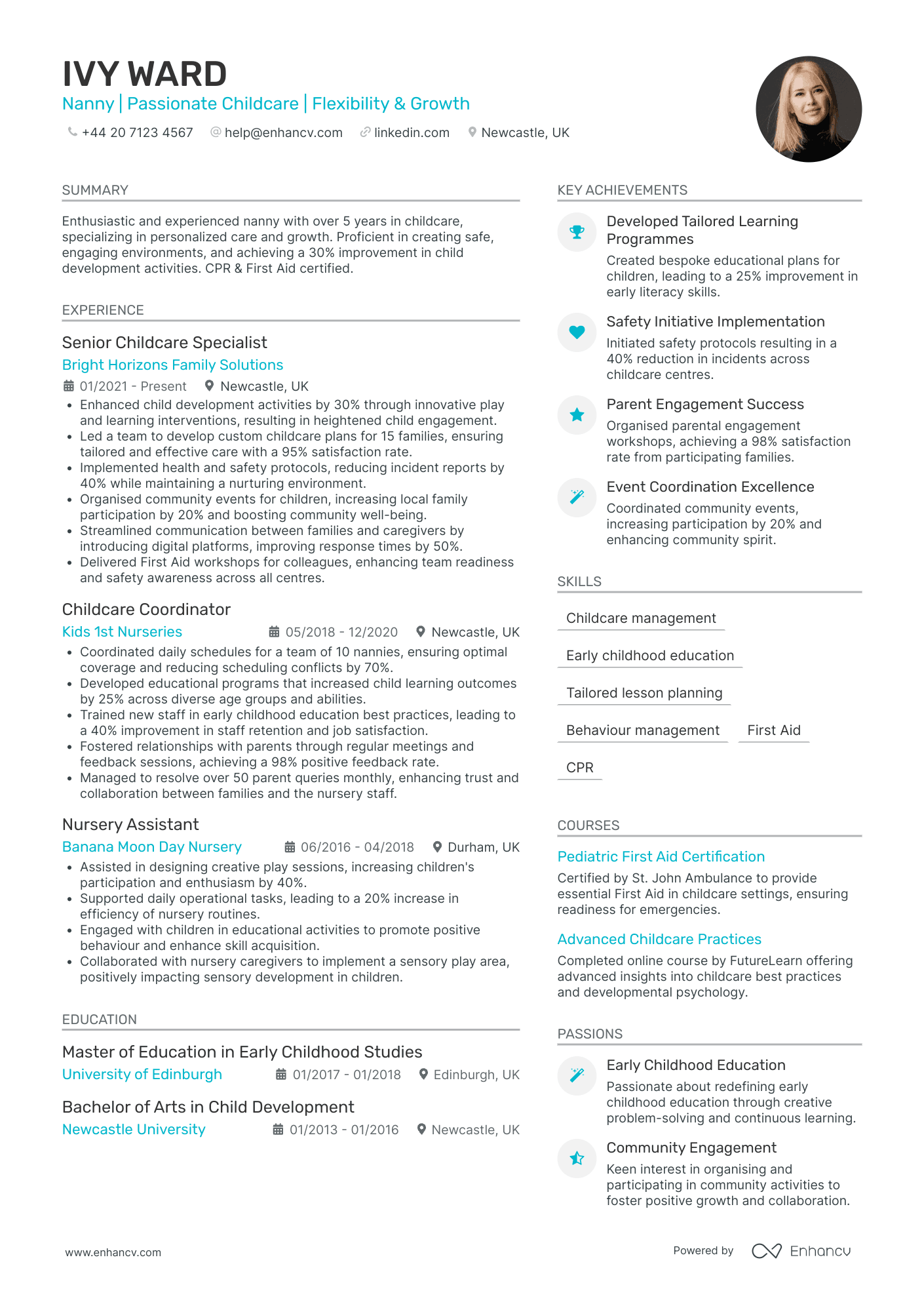
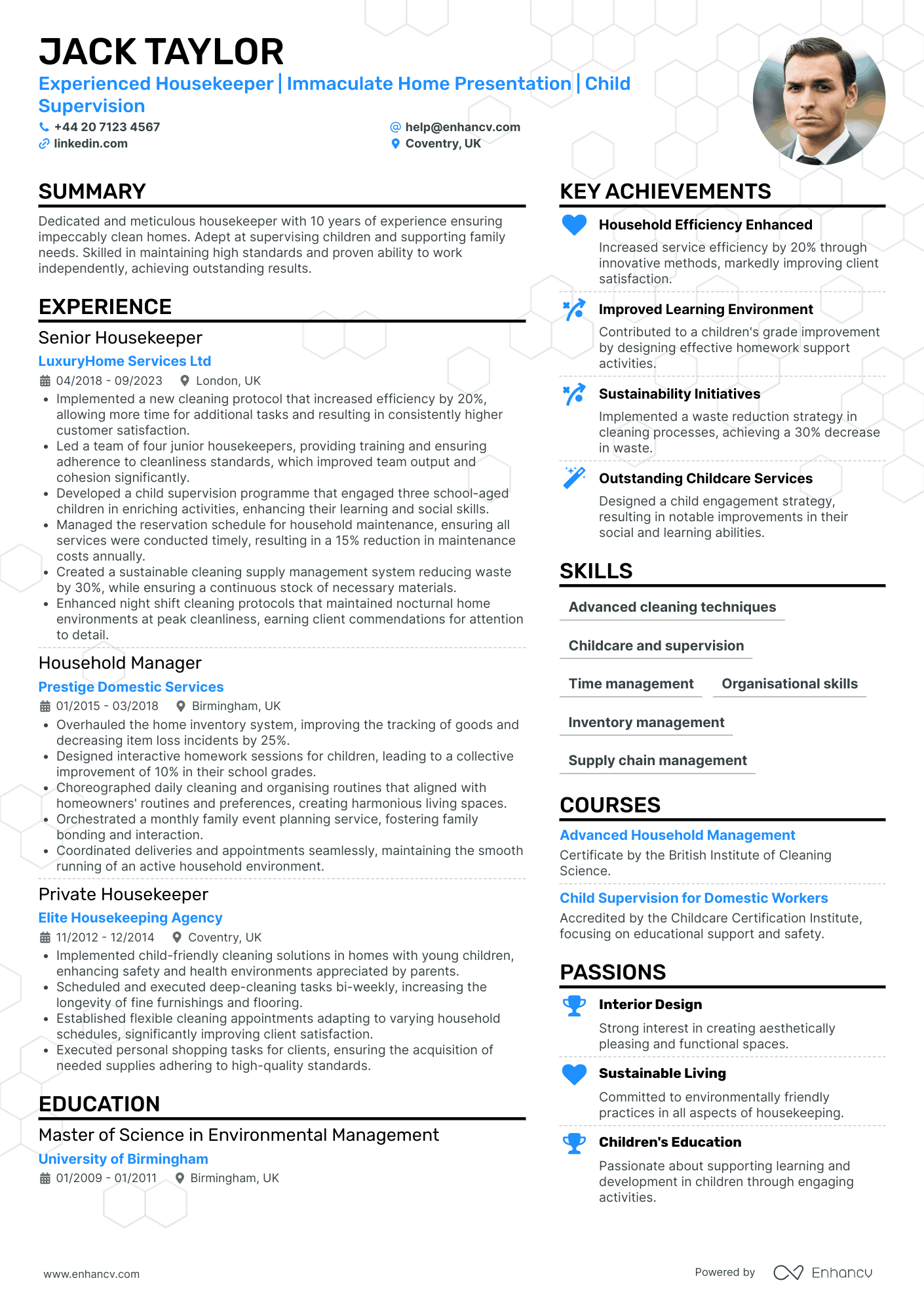
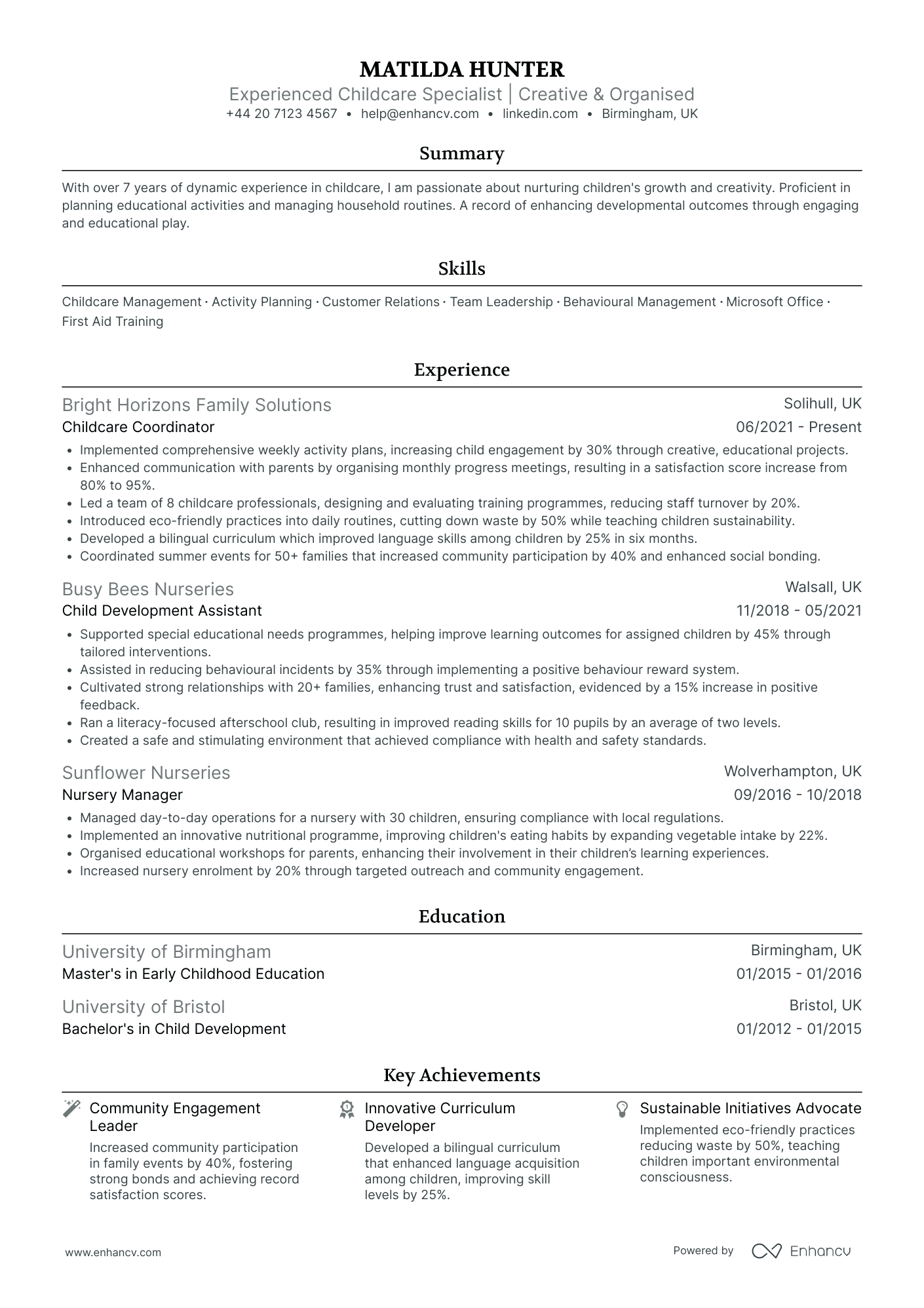
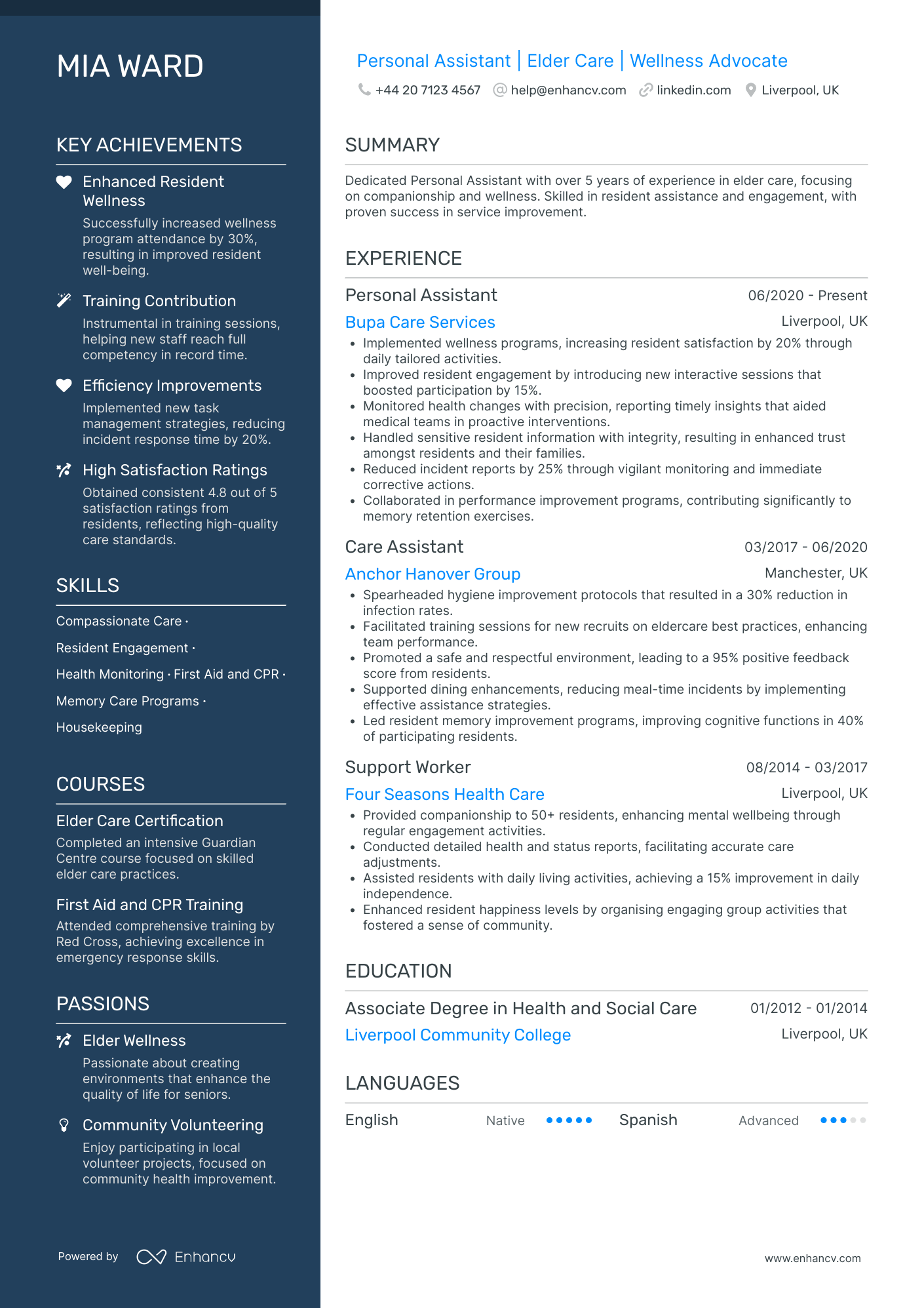
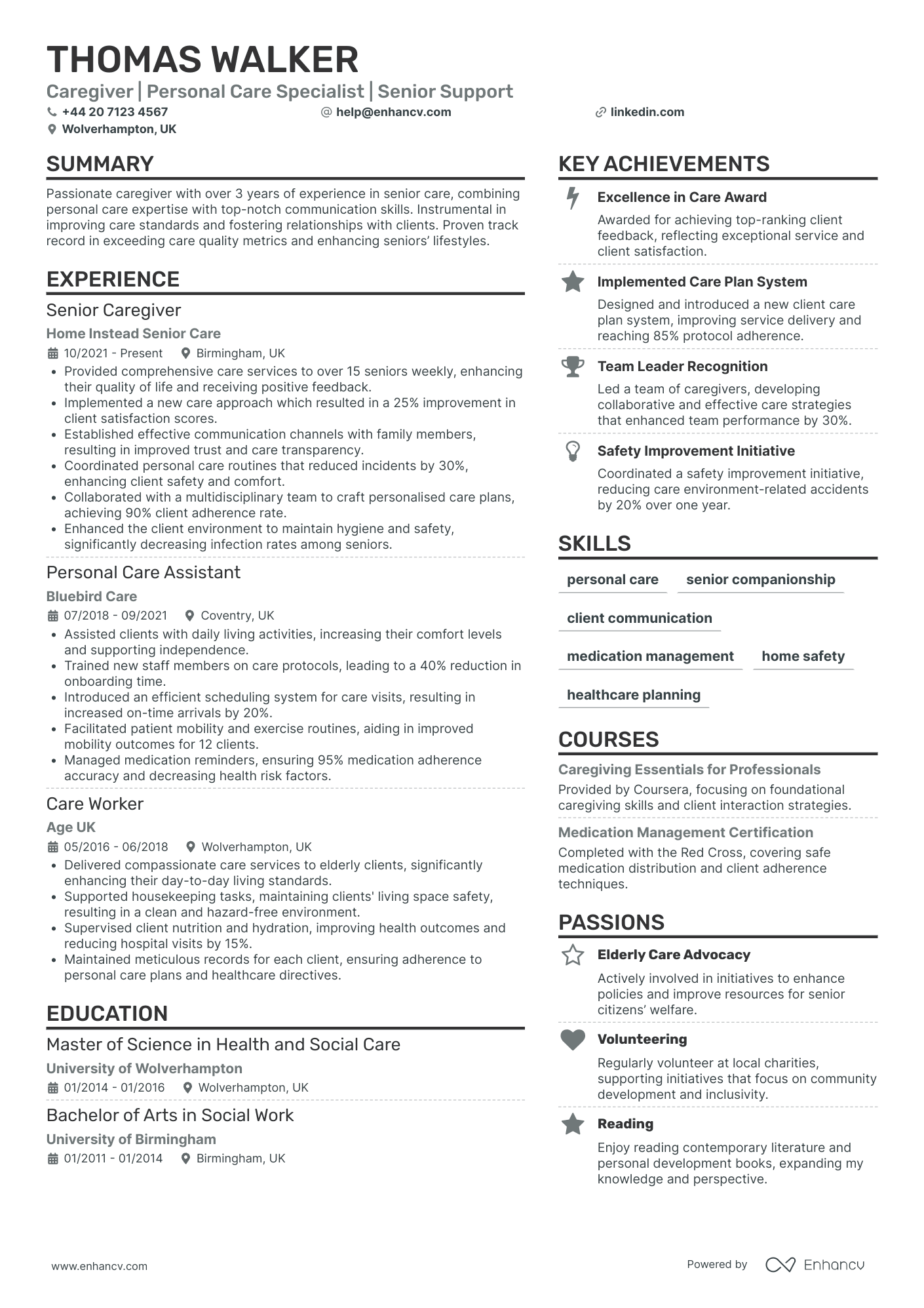
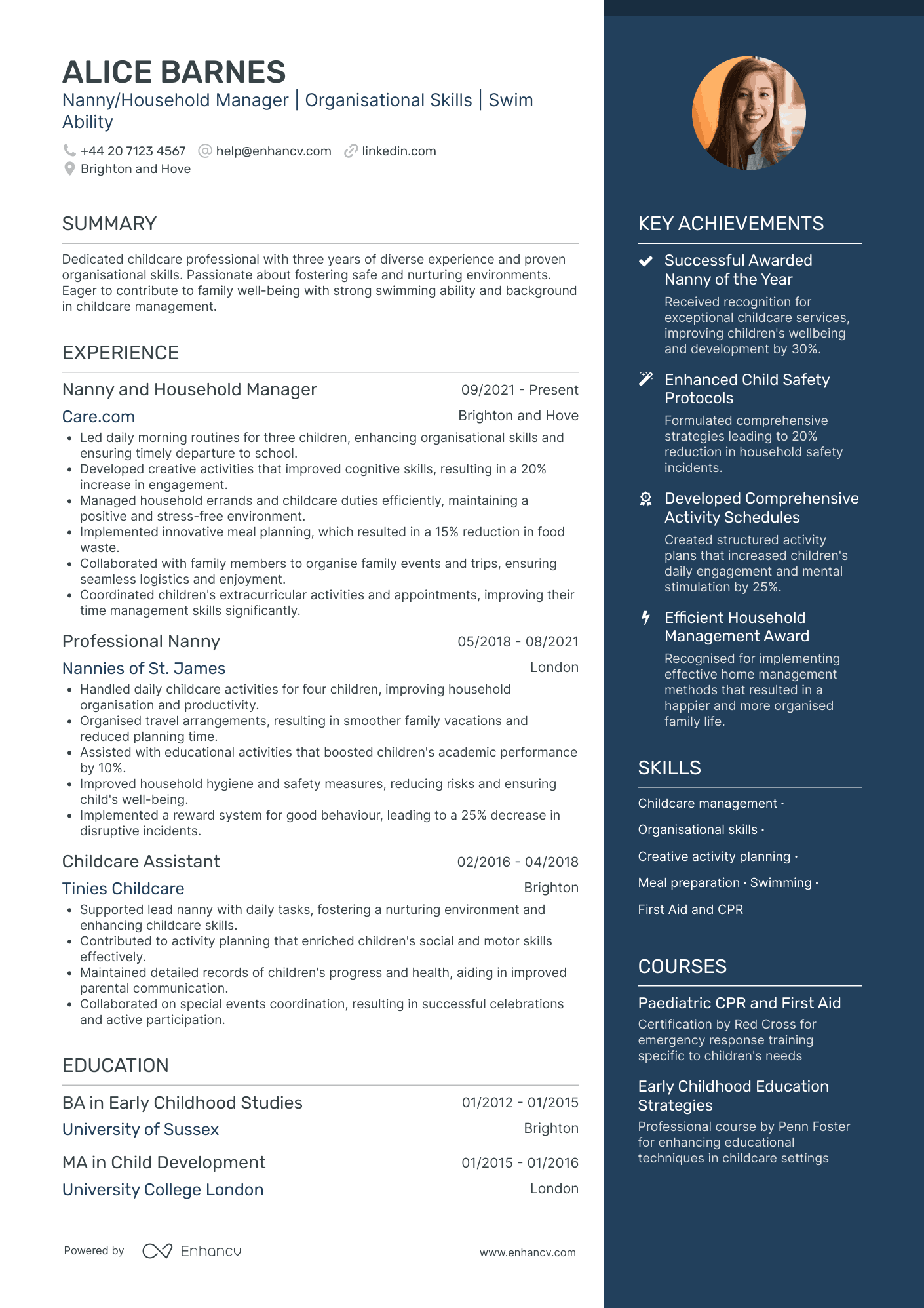
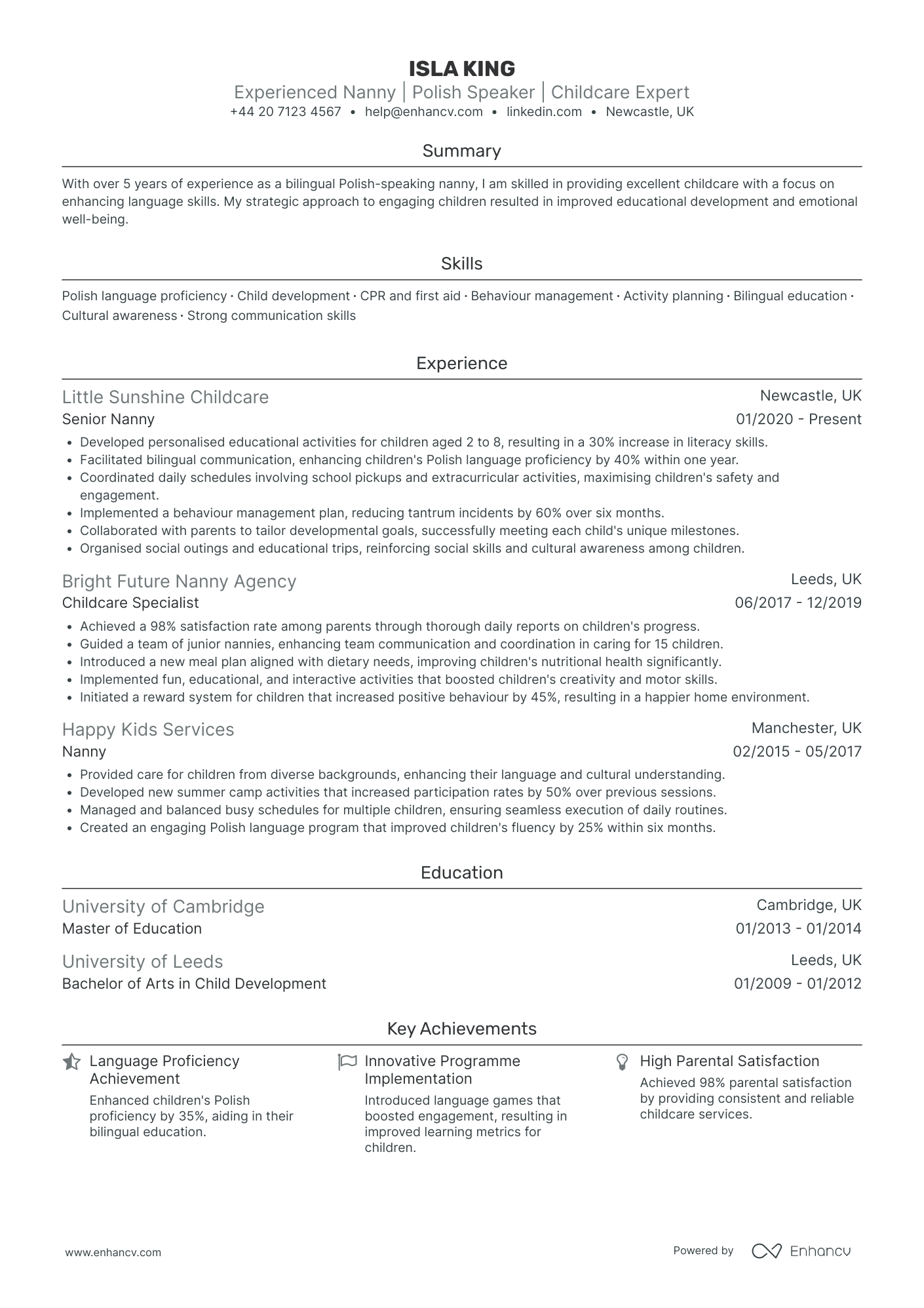
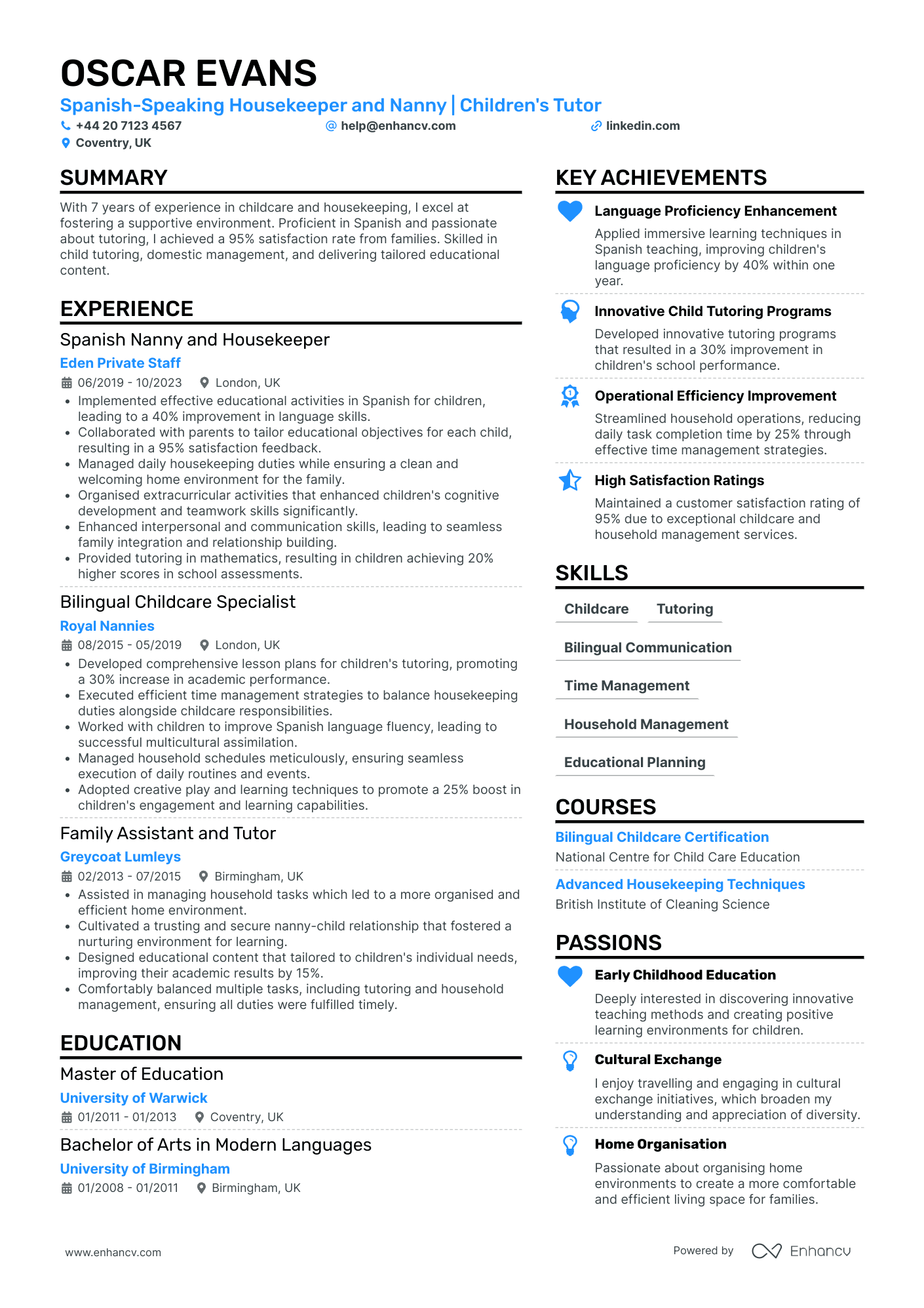
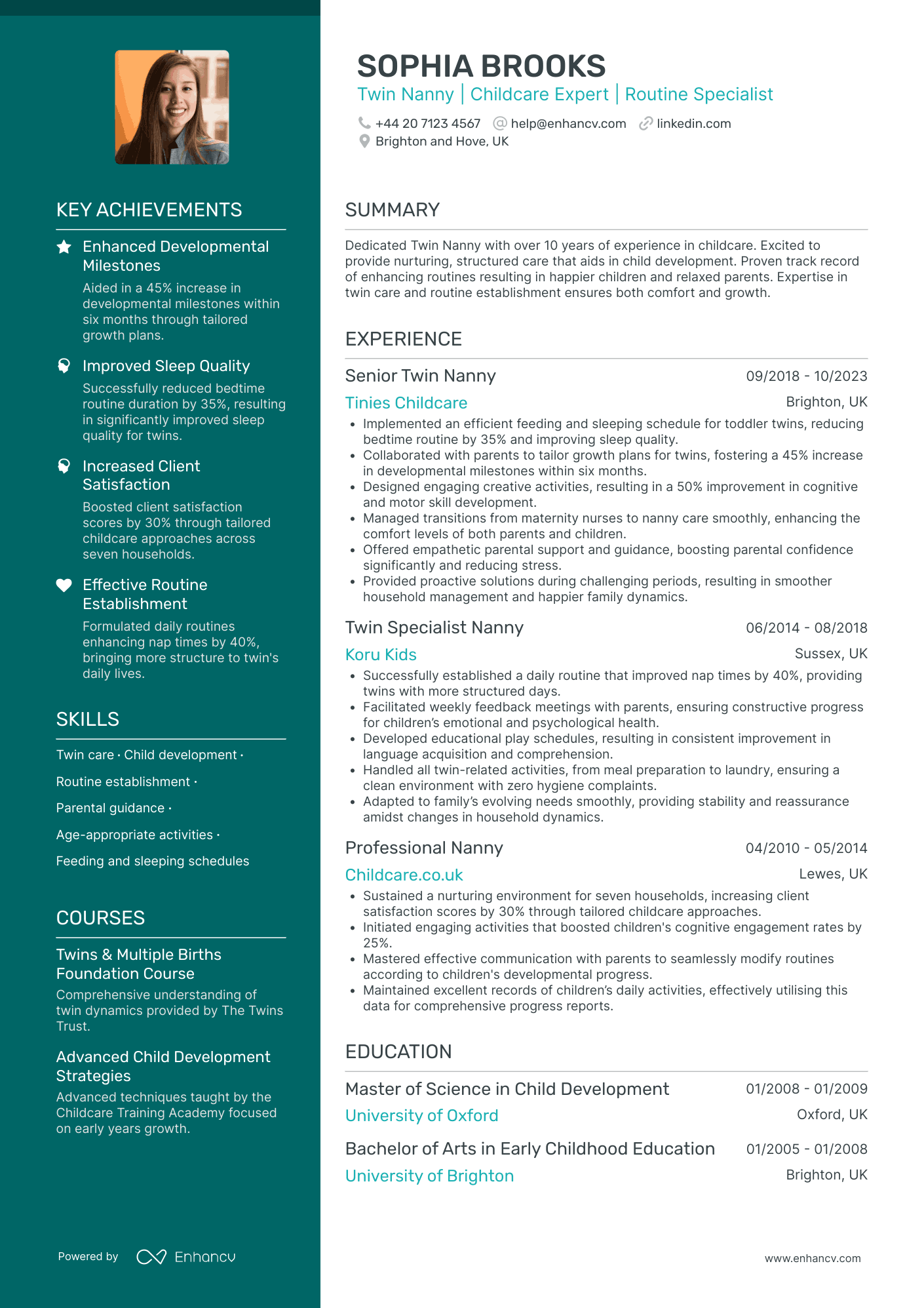
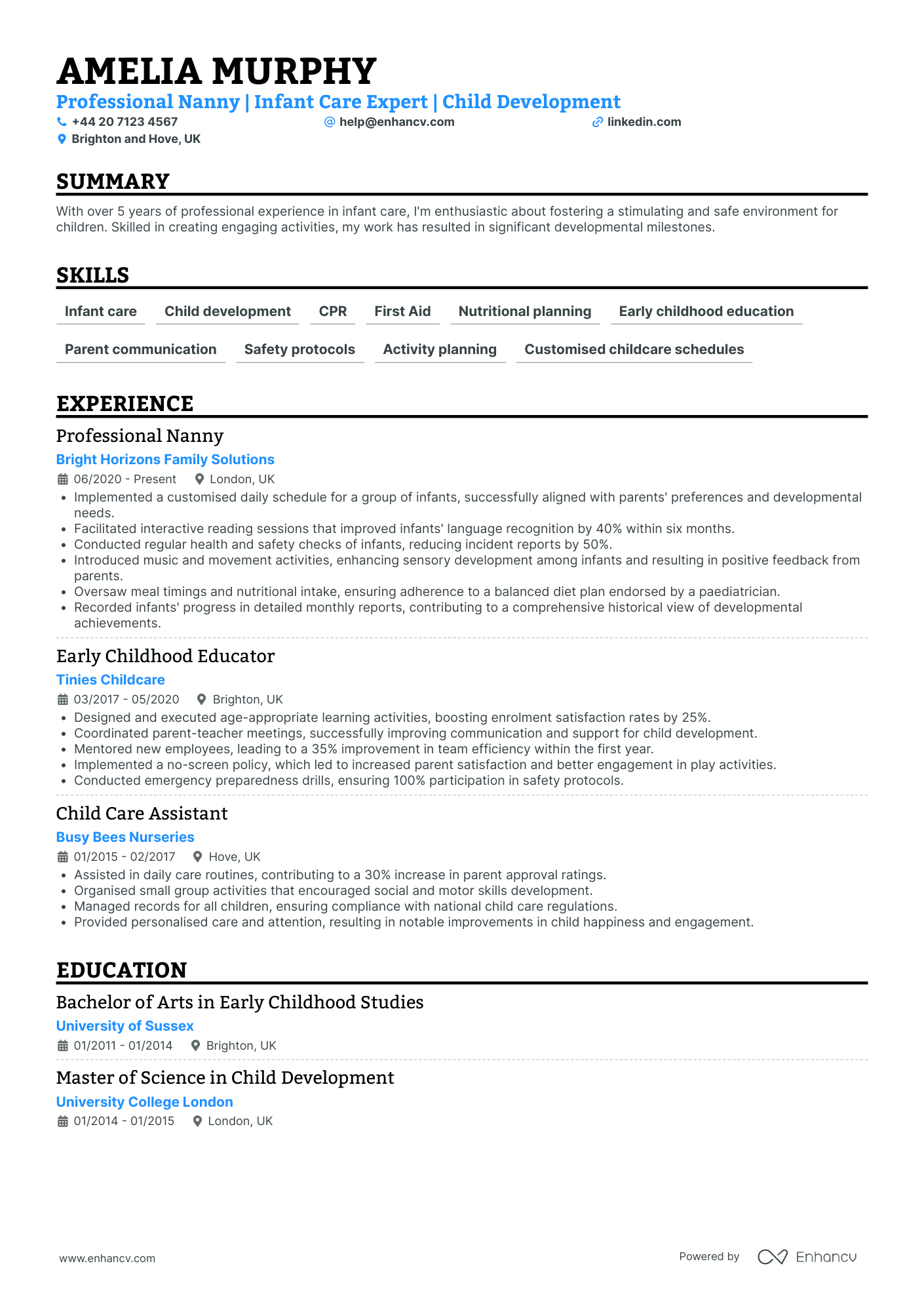
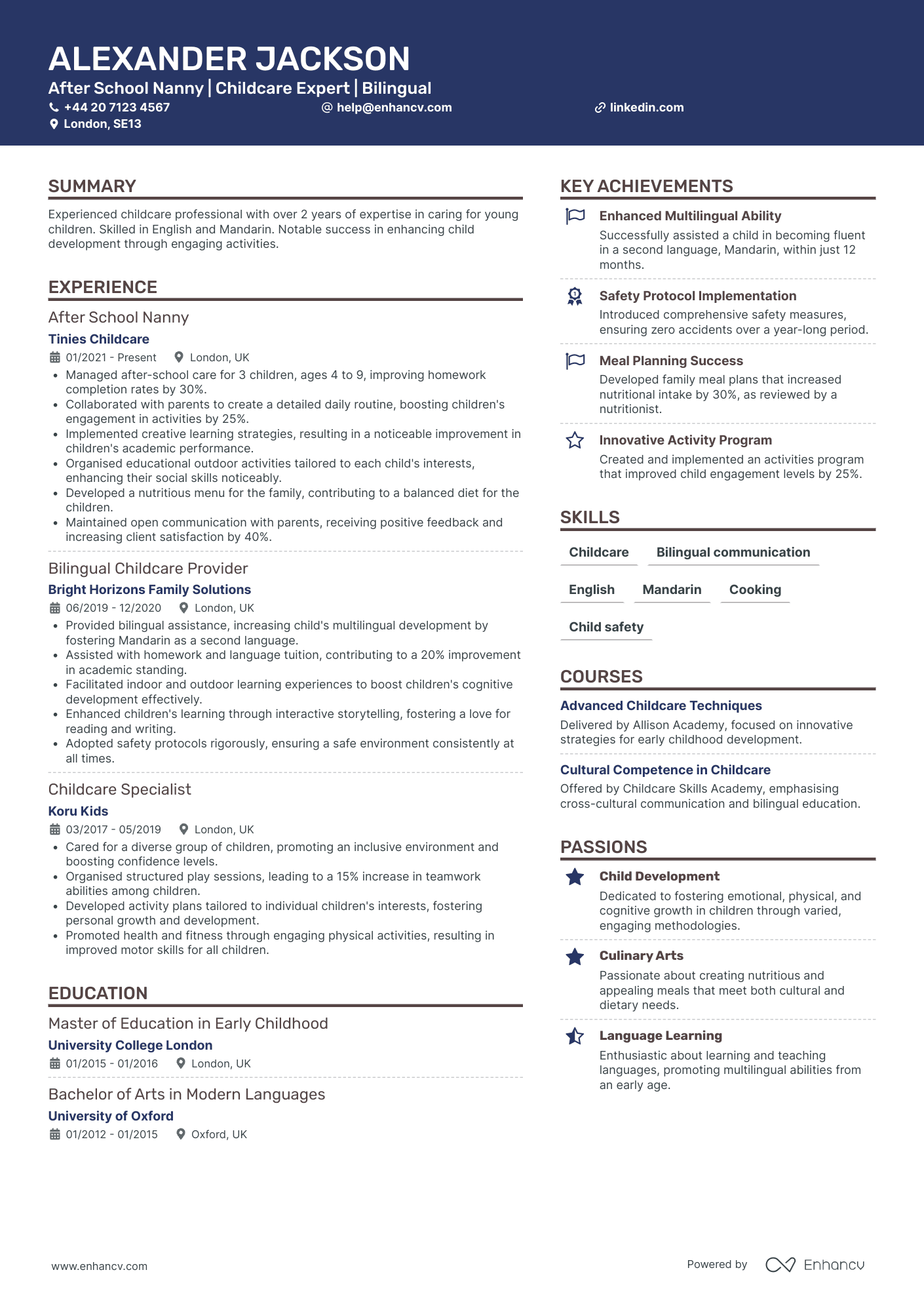
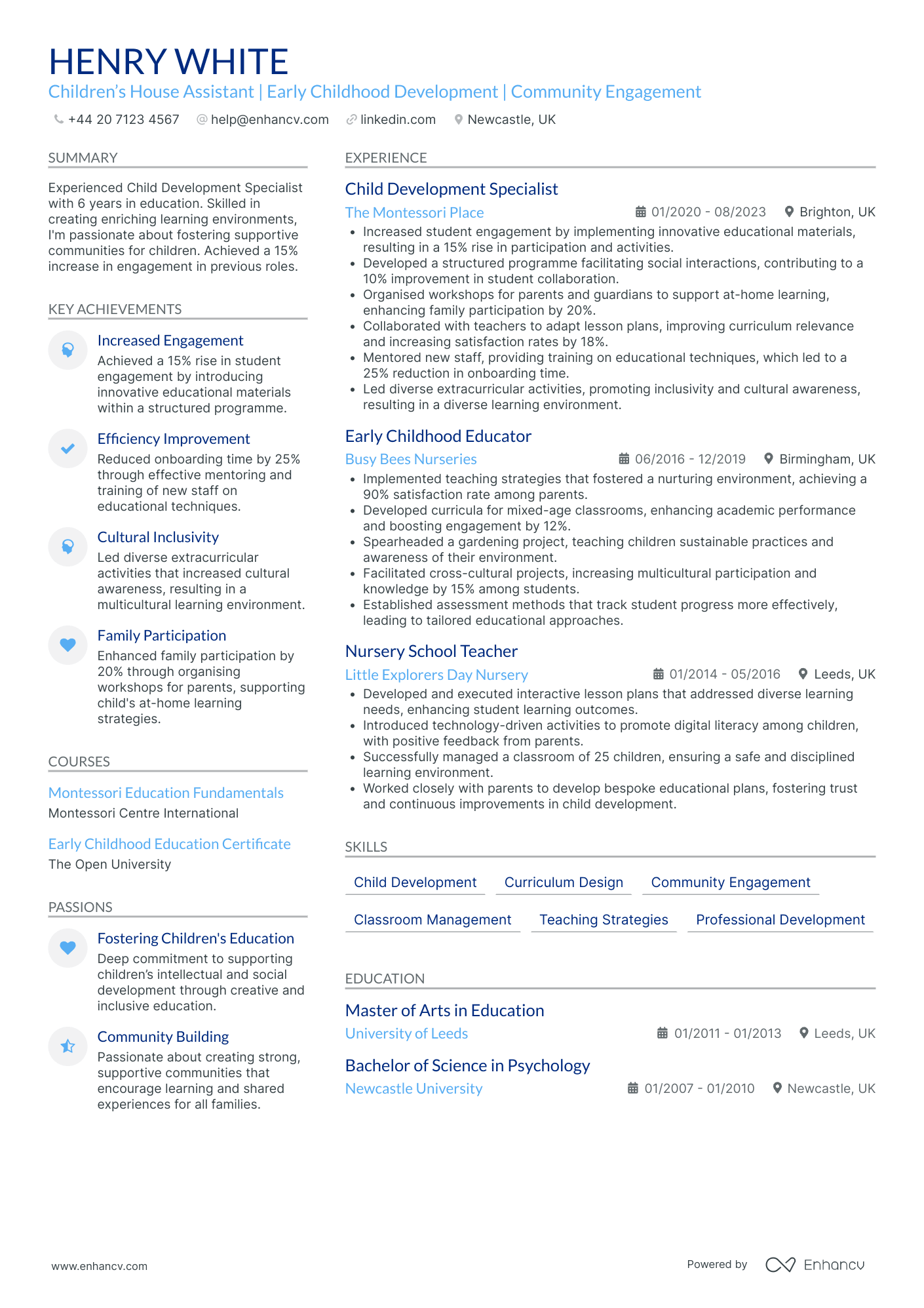
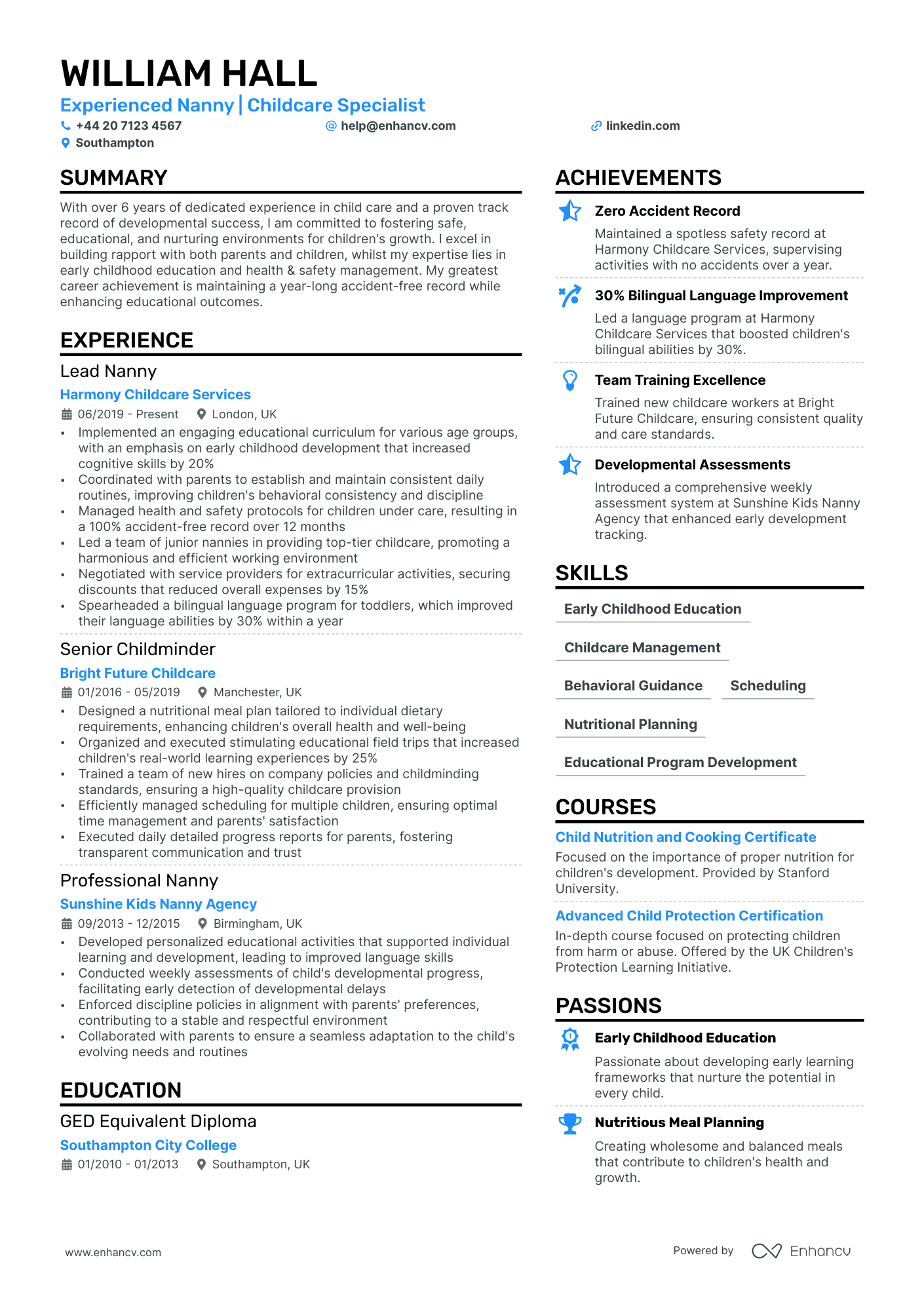
Most nanny CVs read like a childcare job description copy-pasted into bullet points: school runs, mealtimes, bath and bed. Parents already know what the job involves. What they are actually screening for is whether they can trust you alone with their children.
The nanny CVs that get a call back prove that trust fast, with the right checks near the top and a format a busy parent can read in under a minute. This is a private hire, often into someone's family home, so if you want the fundamentals first, see how to write a CV, then build in the parts specific to childcare.

Key takeaways
- Put your enhanced DBS check, paediatric first aid, and references near the top. Families screen for these before anything else.
- Keep it to two pages, reverse chronological, and send it as a PDF so the layout holds on any device.
- Open with a short personal statement built on the ages you have cared for and one concrete result.
- Name the practical things parents worry about: sole charge hours, a driving licence, allergies you have managed, and the school run.
- Write duties as outcomes, not a rota. "Settled a reluctant sleeper into a 7pm routine" beats "did bedtime".
- No paid nanny roles yet? Lead with babysitting, family childcare, and volunteering, written like real jobs.
Choosing your nanny CV format and template
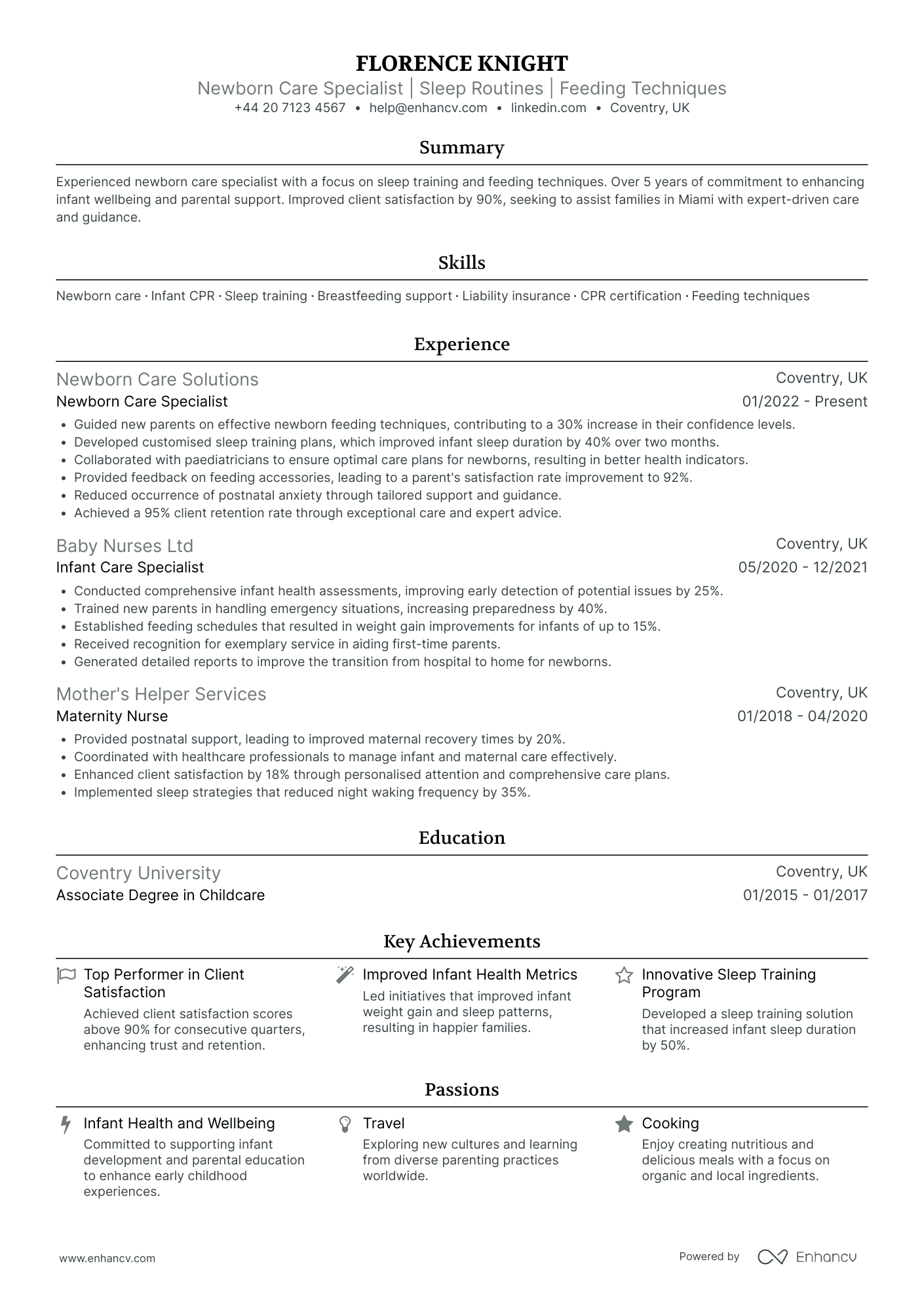
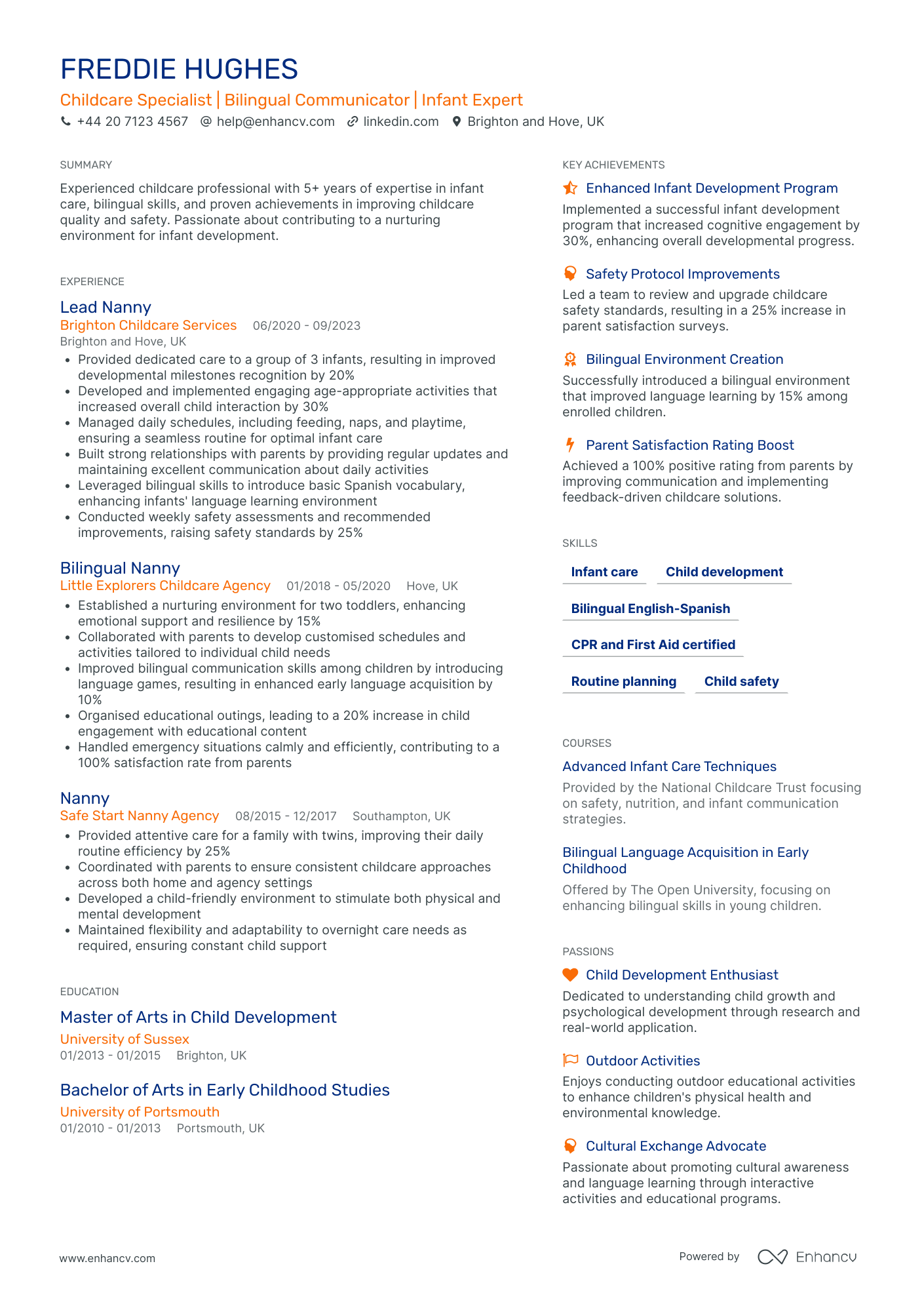
A nanny CV is a private hire document. It usually lands in a parent's inbox or an agency's pile, and it has to be readable on a phone between nursery pickups.
Use a reverse chronological format so your most recent childcare role sits at the top, where a family looks first. If you are moving into nannying, a skills-led layout works better until you have paid roles behind you.
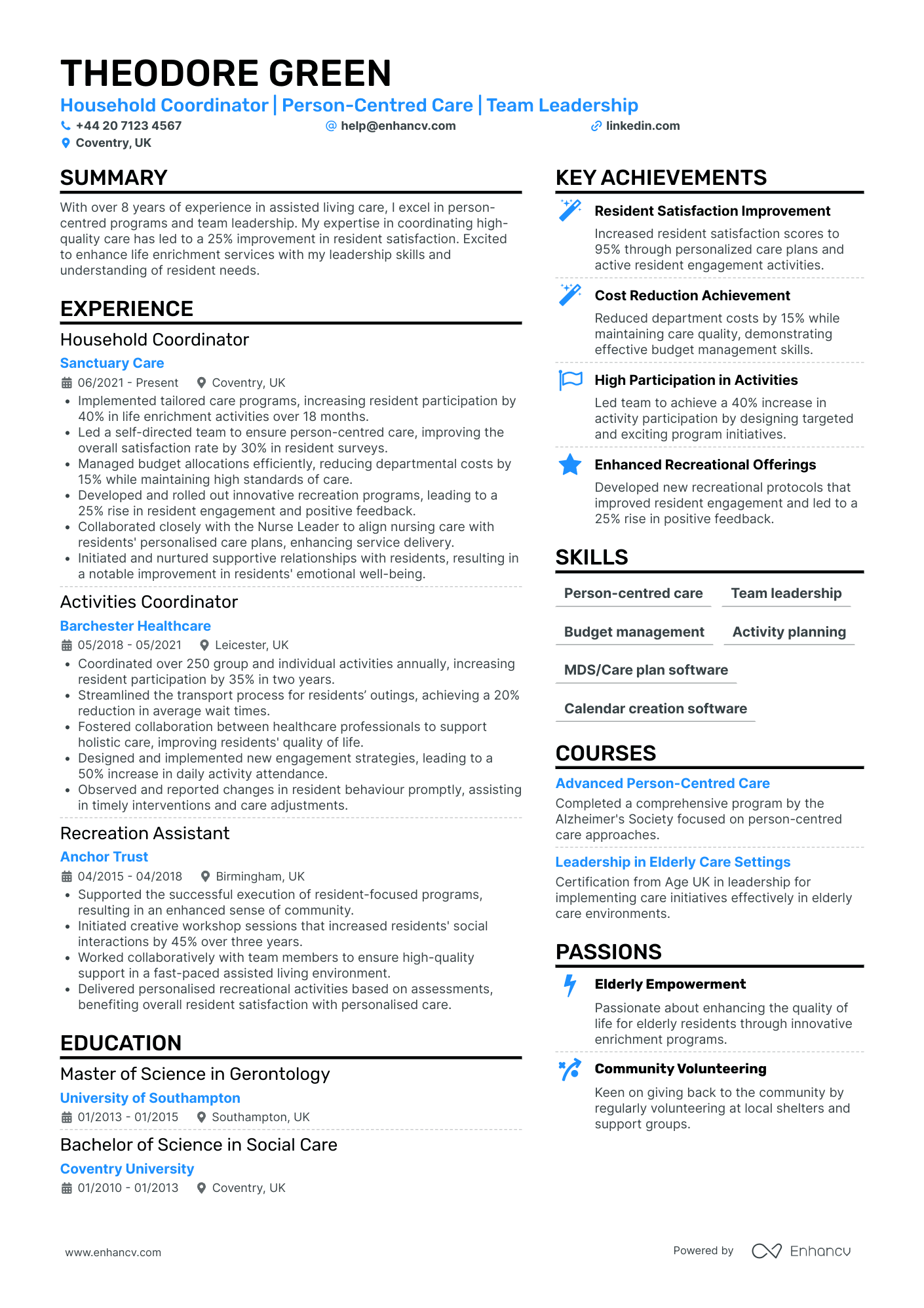
Keep it to two pages. One page can look thin for an experienced nanny, and a third page will not get read. Stick to one column, standard headings, and a clear font so nothing gets lost.
Your header does more work on a nanny CV than on most. Put your name, phone, email, and the town or borough you can work in, plus a line confirming your right to work in the UK. A family scanning on a phone needs to see straight away that you are local enough to make the school run.
Send it as a PDF for direct applications so your layout holds everywhere. Keep a Word copy for agencies, which often reformat CVs into their own branded template before sending you to families.
Nanny roles frequently come through agencies whose systems scan CVs, so keep the layout clean and the headings standard for an ATS-friendly CV. Build it from a tested layout rather than a blank page: Enhancv's CV templates export to a clean PDF.
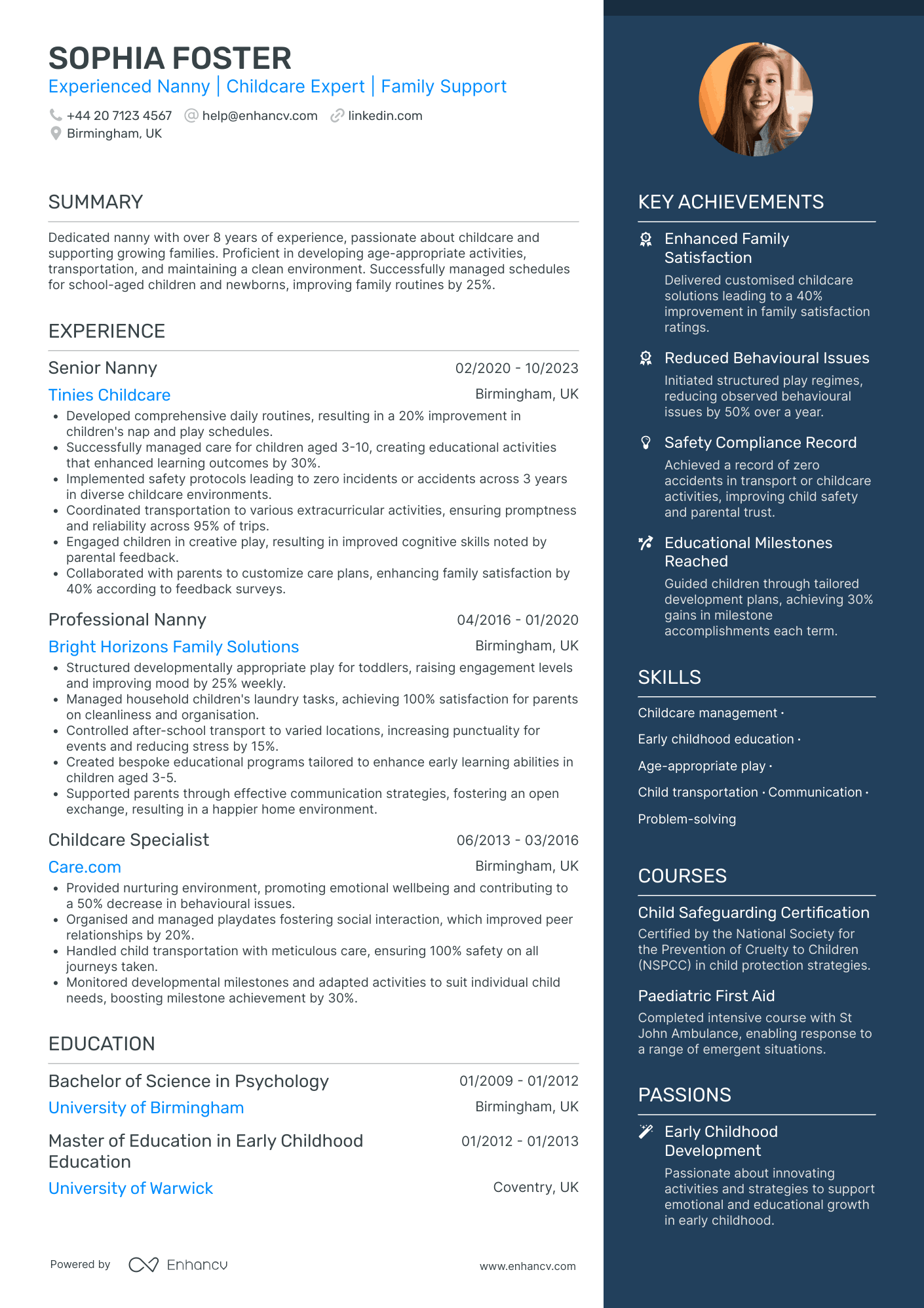
One thing is normal on a nanny CV but not on most others: a friendly headshot. Families are inviting you into their home, and many agencies ask for one, so a simple, professional photo is fine here.
Order the page for how a parent reads it. Header and personal statement first, then a short block of checks and qualifications so the reassuring detail is visible without scrolling, then your childcare roles, then education. On a two-page CV, never let your most recent role break awkwardly across the page fold.
Leave off the clutter that pads a weak CV. You do not need your full home address, a date of birth, or a wall of hobbies. Two or three named references who can speak to your childcare, ready to share on request, are worth more than any of it.

PRO TIP
If you apply through more than one agency, keep both files ready. Send the PDF when you deal with a family directly, and a Word version when an agency asks, since they drop your details into their own template. If an advert names a file type, follow it exactly.
Writing your nanny personal statement
Three or four sentences at the top: who you are, the ages you have cared for, your key checks, and the kind of family you want to work with. Keep it concrete.
Skip the adjective soup. "Caring, patient, and passionate about children" sits on every other CV, and a parent cannot check a word of it.
Match it to the specific family too. A statement for a live-in role with a newborn should read differently from one for after-school care of two teenagers, so name the setup you are applying for.
Lead with evidence a family can picture instead. See more personal statement examples if the opening line is not coming.
Nanny CV personal statement example (experienced)
Warm and reliable nanny with six years of sole charge experience caring for children from newborn to school age. Enhanced DBS on the update service, current 12-hour paediatric first aid, and a full clean driving licence. Known for settling children into calm routines and keeping parents in the loop with a daily handover. Looking for a live-out role with a family in south London supporting two or more children through the early years.
What to avoid: generic and unverifiable
Hardworking, caring, and passionate childcare professional who loves working with kids and is great with children of all ages. A team player with excellent communication skills looking for a rewarding role where I can make a difference.
The weak version could belong to anyone. It names no ages, no checks, and nothing a parent could ring a reference to confirm. Every clause is a claim about character with no evidence behind it.
When a family shortlists a nanny CV, they are hiring for their living room, not an office. The ones that get a call put the checks a parent worries about right at the top: an enhanced DBS, paediatric first aid, and references they can actually ring. Then they show one real moment of care, like settling a new baby or winning over a wary toddler. A warm, specific line about a child you have looked after does far more than a paragraph of adjectives.
Writing your nanny CV experience section
Write each role like a proper job: the family's location, the dates, the children's ages, and whether you had sole charge. Then bullets that show what you did and how it turned out. For the mechanics, see work experience on a CV.
Nannying feels hard to measure, but it is not. Ages cared for, years with one family, a sleep routine that finally stuck, a fussy eater who came round: those are your CV achievements. A family that sees you kept a role for four years reads loyalty and trust before they read a single duty.
Skip the generic rota. "Responsible for cooking, cleaning, and looking after the children" tells a parent nothing they had not already assumed. Show the judgement instead: how you handled a tantrum in a supermarket, a first day at a new nursery, or a poorly child while both parents were at work.
Lead each bullet with a verb and mirror the wording of the advert where it is true of you. Enhancv's CV tailoring feature reads the advert and suggests the wording to match, so each application starts closer to done.
- Provide sole charge care for two children aged 3 and 6, covering the full day from breakfast through to bedtime, five days a week
- Plan and cook balanced meals around a dairy allergy, keeping a food diary the parents can check each evening
- Settled the younger child into a consistent 7pm sleep routine within three weeks, cutting night wakings from most nights to rarely
- Manage the school run, after-school clubs, and playdates, coordinating a weekly schedule shared with both working parents
- Hold an enhanced DBS on the update service, a current 12-hour paediatric first aid certificate, and a full clean driving licence
- Collected two primary-age children from school four afternoons a week, supervising homework and reading before handover to parents
- Introduced a simple weekly activity plan of baking, crafts, and park visits that the older child asked to keep going at weekends
- Managed a nut-free kitchen and administered agreed medication, logging every dose for the parents
- Covered occasional overnight and weekend care during work trips, keeping both children to their usual bedtime routine
PRO TIP
Parents read for reassurance, not buzzwords. Name the practical things they worry about: sole charge hours, allergies you have managed, the school run, swimming or club drop-offs, and any special needs experience. If you have done it, say so plainly.
Skills to put on a nanny CV
A nanny CV needs two kinds of skill in its skills section, and parents read both. The hard skills are the practical, checkable ones: paediatric first aid, sole charge care, meal planning around allergies, safeguarding, and driving for the school run. List them in plain terms.
The soft skills matter just as much here, because you are trusted alone with someone's children. Patience, reliability, discretion, and clear communication with parents are the ones that keep a family calling you back. Prove each in a bullet rather than just claiming it.
Group them so a parent can scan fast: put the safety-critical ones first, then the day-to-day care, then the extras like a second language, swimming, or music. A skill list that opens with first aid and safeguarding reassures before it impresses.
List only what you can stand behind. If you have trained in something, name it. If you are still working towards it, put it under training rather than skills.
Top skills for your nanny CV:
Sole charge childcare
Paediatric first aid
Safeguarding
Newborn and infant care
Meal planning around allergies
Behaviour and routine management
School runs and driving
Homework and educational activities
Patience
Reliability
Discretion
Communication with parents
Calm under pressure
Education, qualifications, and safeguarding checks
You do not always need a formal childcare qualification to nanny in the UK, but the checks a parent expects are not optional. List them clearly, even where one is in progress.
Put an enhanced DBS check near the top, ideally on the update service so a family can verify it themselves. Add a current paediatric first aid certificate, since most families and all agencies ask for one.
List any childcare qualifications you hold in your education section, such as a CACHE or NCFE Level 3 Diploma in childcare, an Early Years qualification, or older NNEB training. Put them alongside your schooling.
If you want families to pay you through childcare vouchers or Tax-Free Childcare, mention that you are Ofsted registered on the Voluntary Childcare Register. Listing your certificates and checks in one place saves a parent asking.
Short courses count too, so add them if you have them: safeguarding awareness, food hygiene, safer sleep, or specialist training in special educational needs. Each one answers a worry a parent might otherwise raise at interview.
Keep the dates and awarding bodies on your certificates accurate. A family or agency may ask to see the original, and a first aid certificate that has lapsed is worth renewing before you apply rather than listing as current.
Writing a nanny CV with no experience
Plenty of families hire a first-time nanny, especially for part-time or after-school help. Your CV just carries its weight differently.
Lead with a skills-led structure: personal statement, then any experience with children, then education, with other work lower down. Mine your life for real childcare evidence, because it is usually there.
- Babysitting for family friends and neighbours, with the ages and how regular it was.
- Looking after younger siblings or relatives, written as sole charge care.
- Volunteering at a nursery, playgroup, Sunday school, holiday club, or Brownies and Cubs.
- Any role with children: teaching assistant, sports coaching, lifeguarding, or SEN support.
Give each one a dated entry like a job, with what you did and how often. Volunteering on a CV counts as experience for this role, not filler, and so does a well-written first job CV built on real childcare.
Write your childcare in the same plain, outcome-led way as a paid role. "Babysat for three families in my street over two years, including regular bedtimes for two under-fives" is a real credential, not a filler line.
One line lifts a first nanny CV: "Paediatric first aid certified" or "enhanced DBS on the update service". It tells a parent you are already taking the responsibility seriously, and it is worth arranging before you start applying.
Conclusion
Lead with the checks a family screens for, show one real moment of care, and keep the format clean and easy to read on a phone.
Pair the CV with a short cover letter that says why you love working with this age group, and you turn an application into an interview.

Author's take - the Enhancv team
When a family shortlists a nanny CV, they are hiring for their living room, not an office. The ones that get a call put the checks a parent worries about right at the top: an enhanced DBS, paediatric first aid, and references they can actually ring. Then they show one real moment of care, like settling a new baby or winning over a wary toddler. A warm, specific line about a child you have looked after does far more than a paragraph of adjectives.