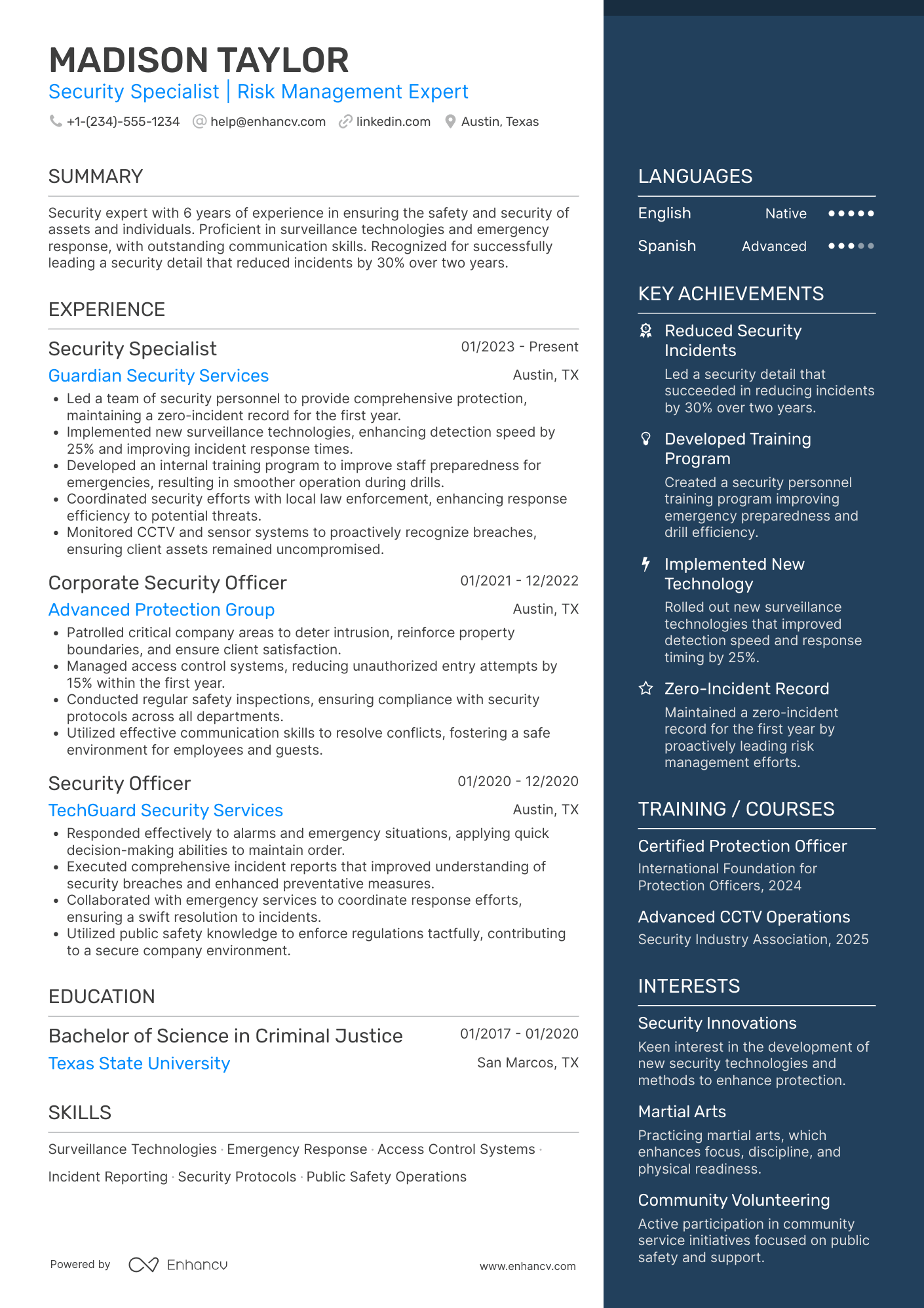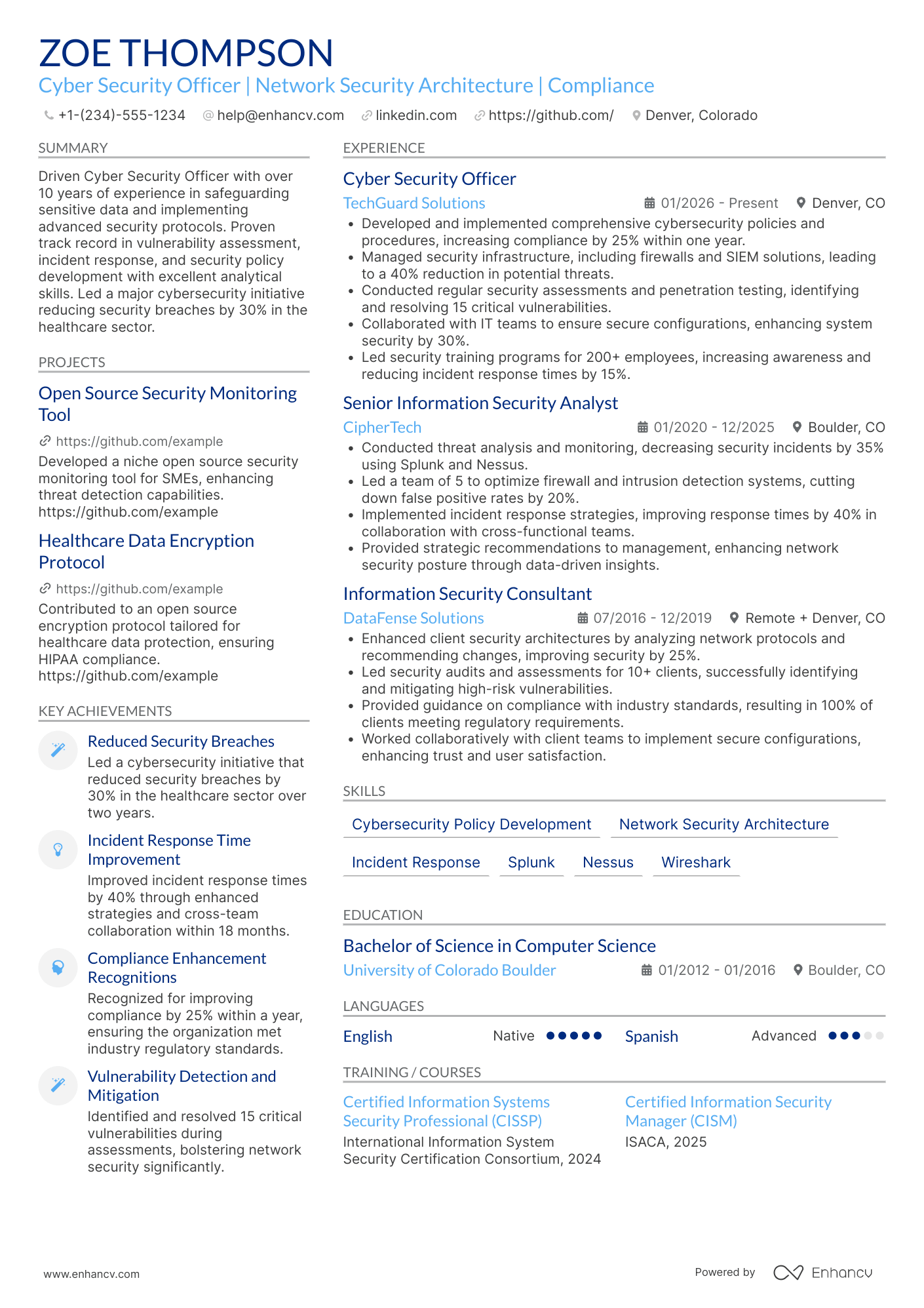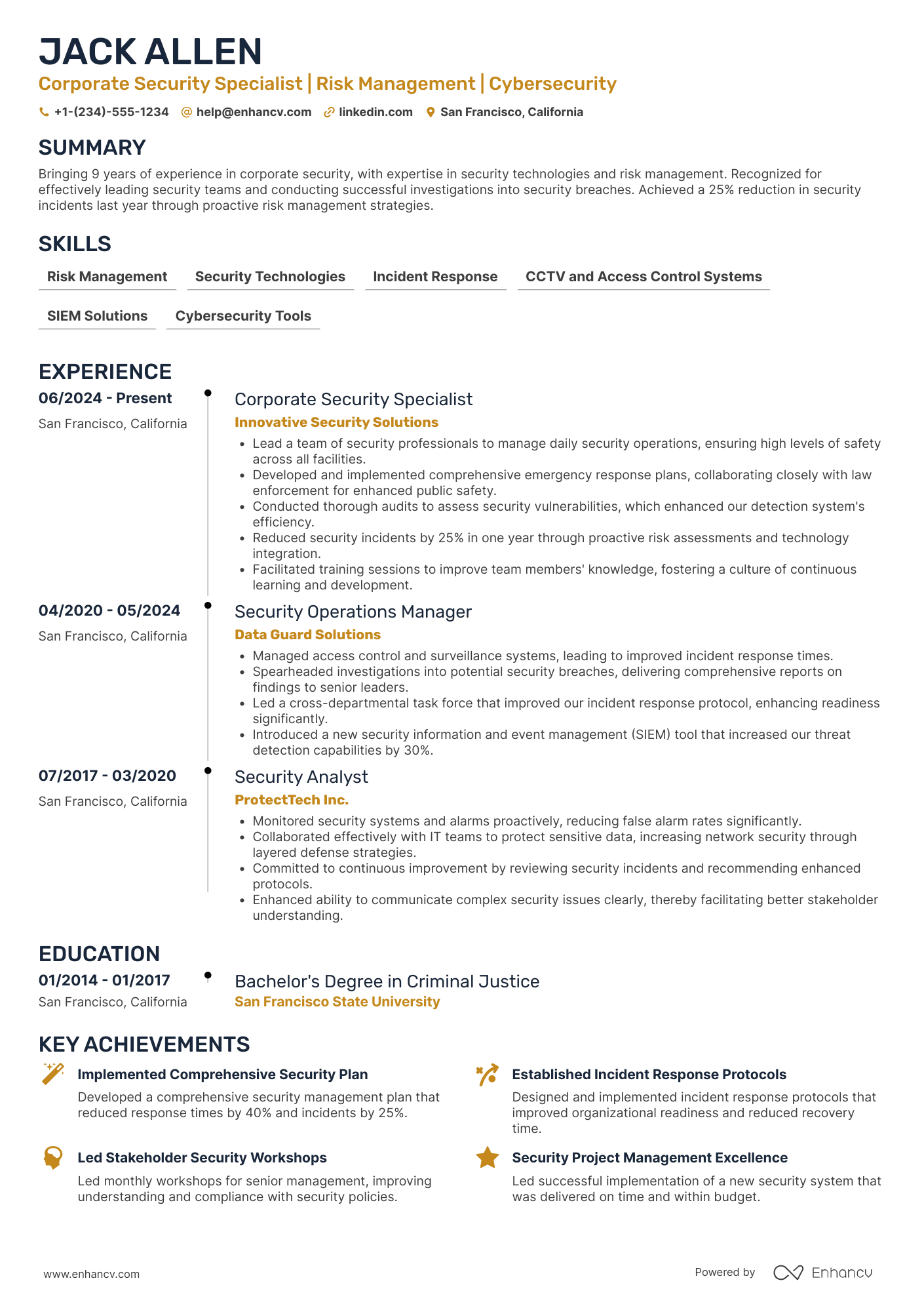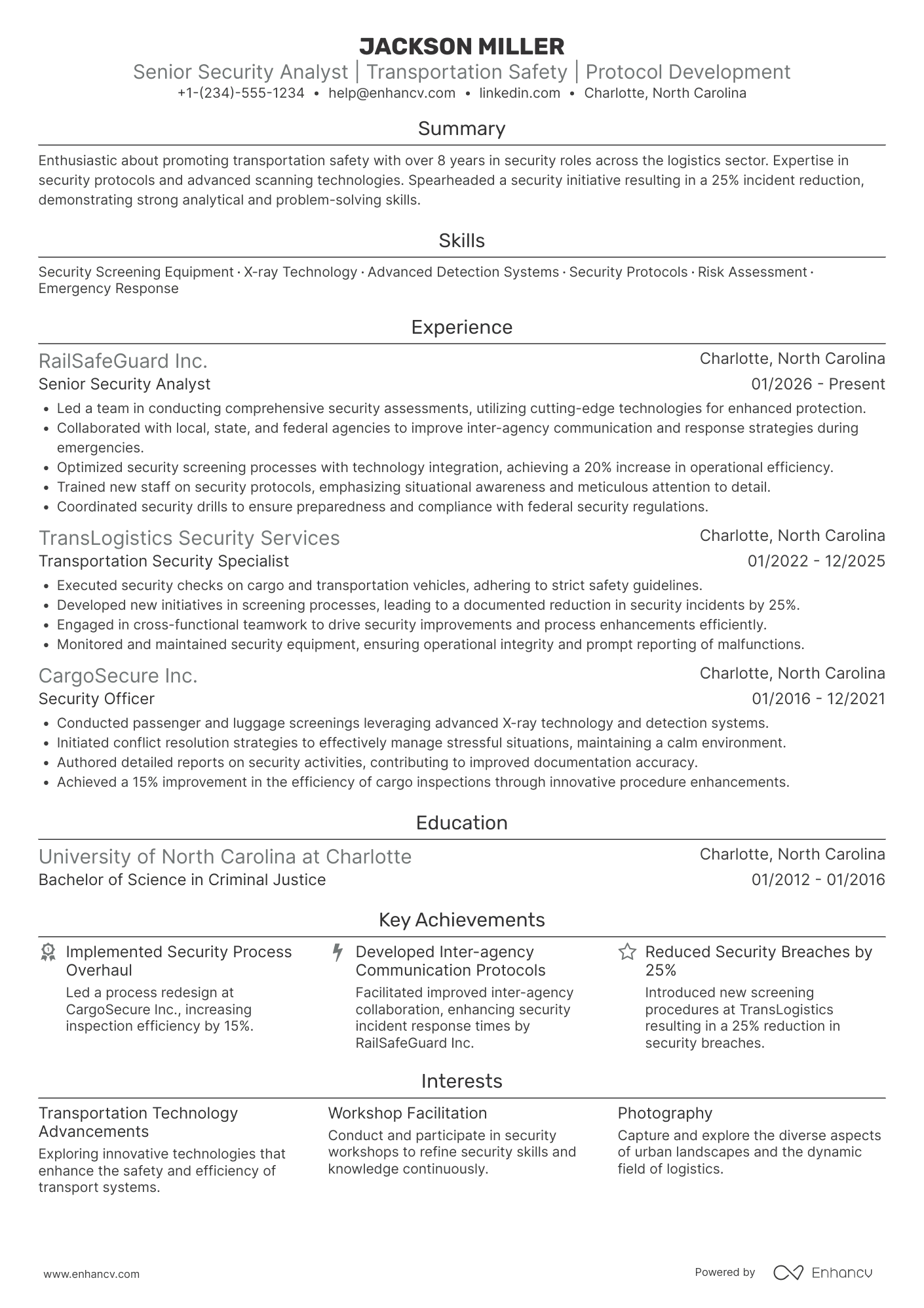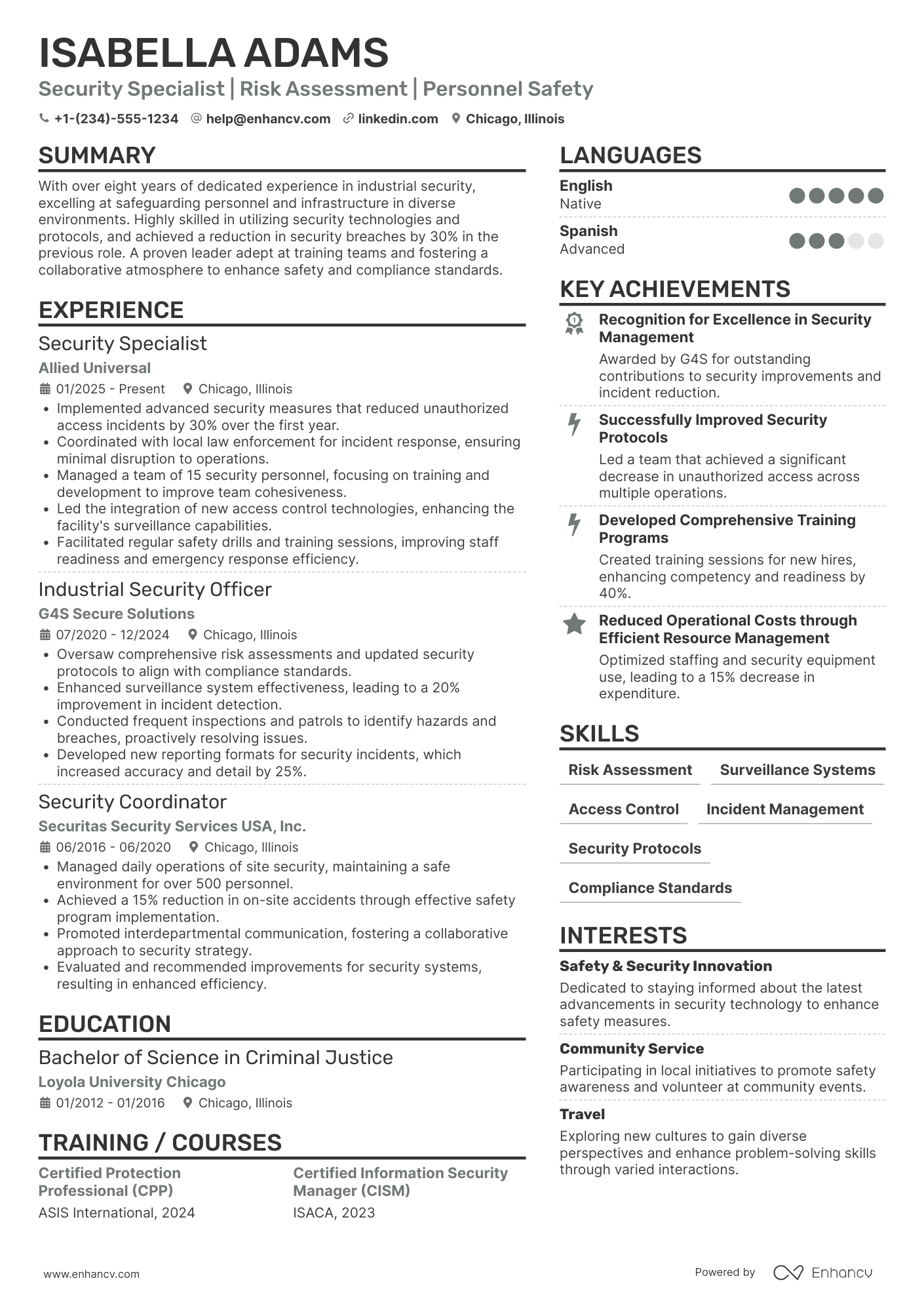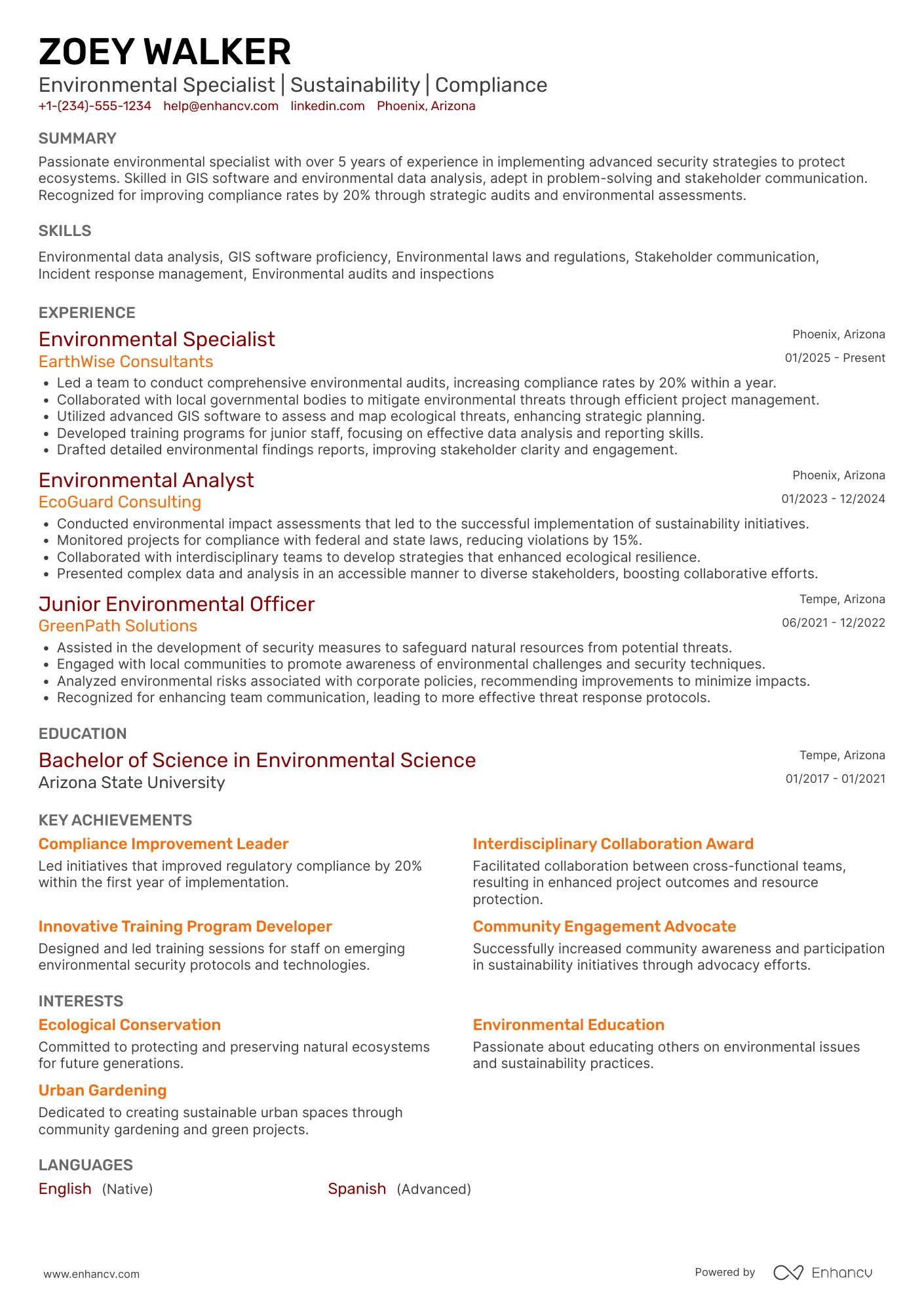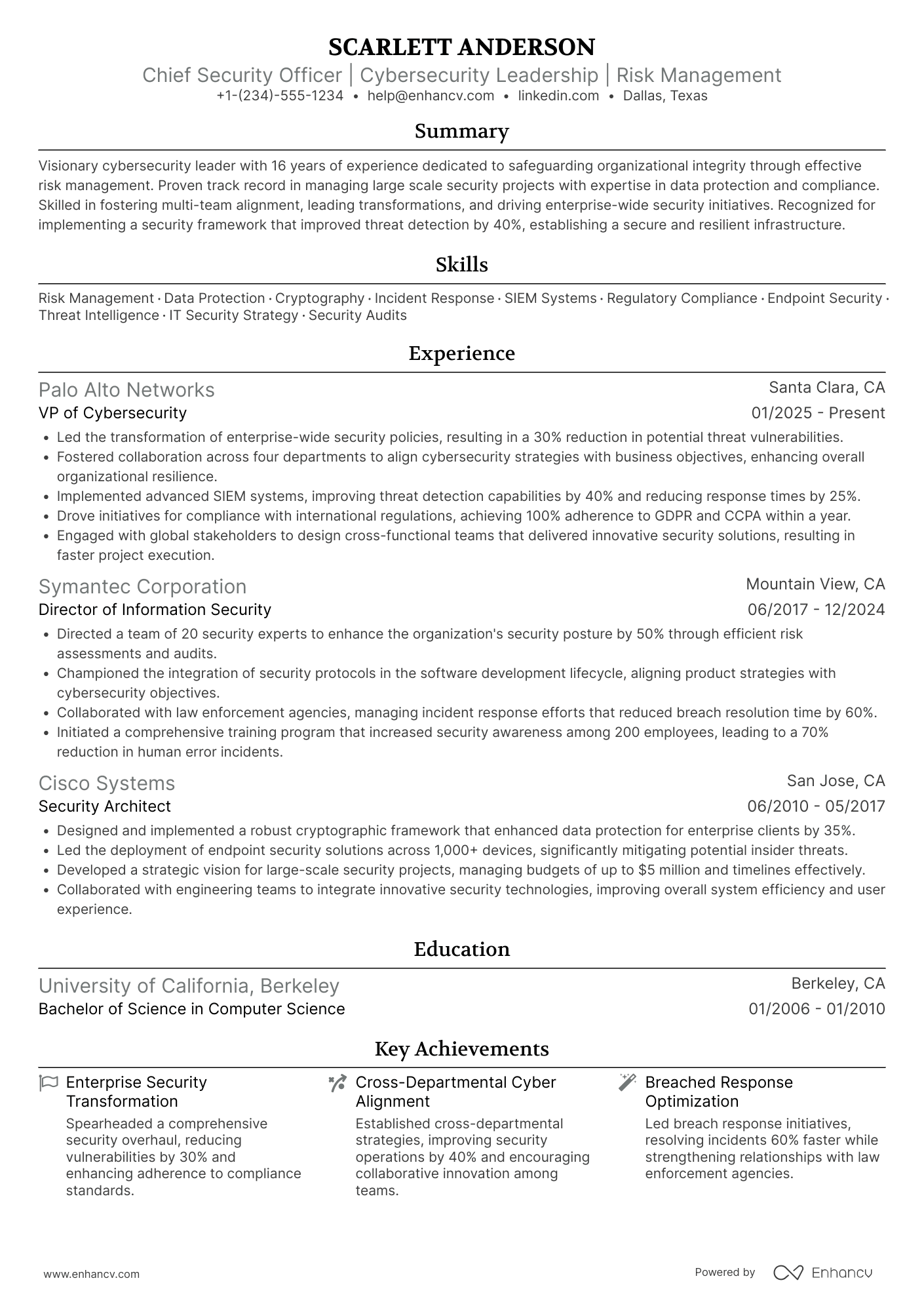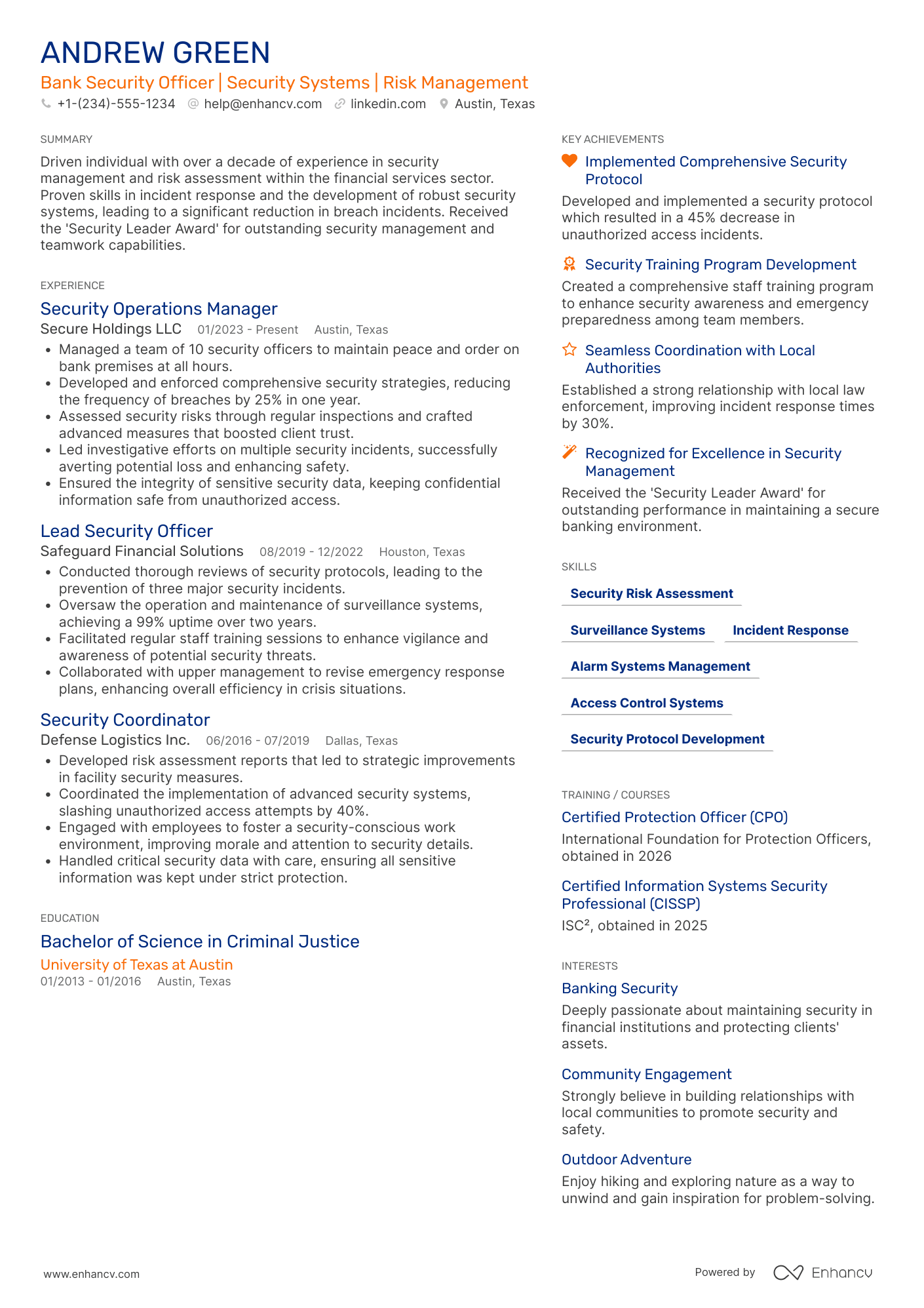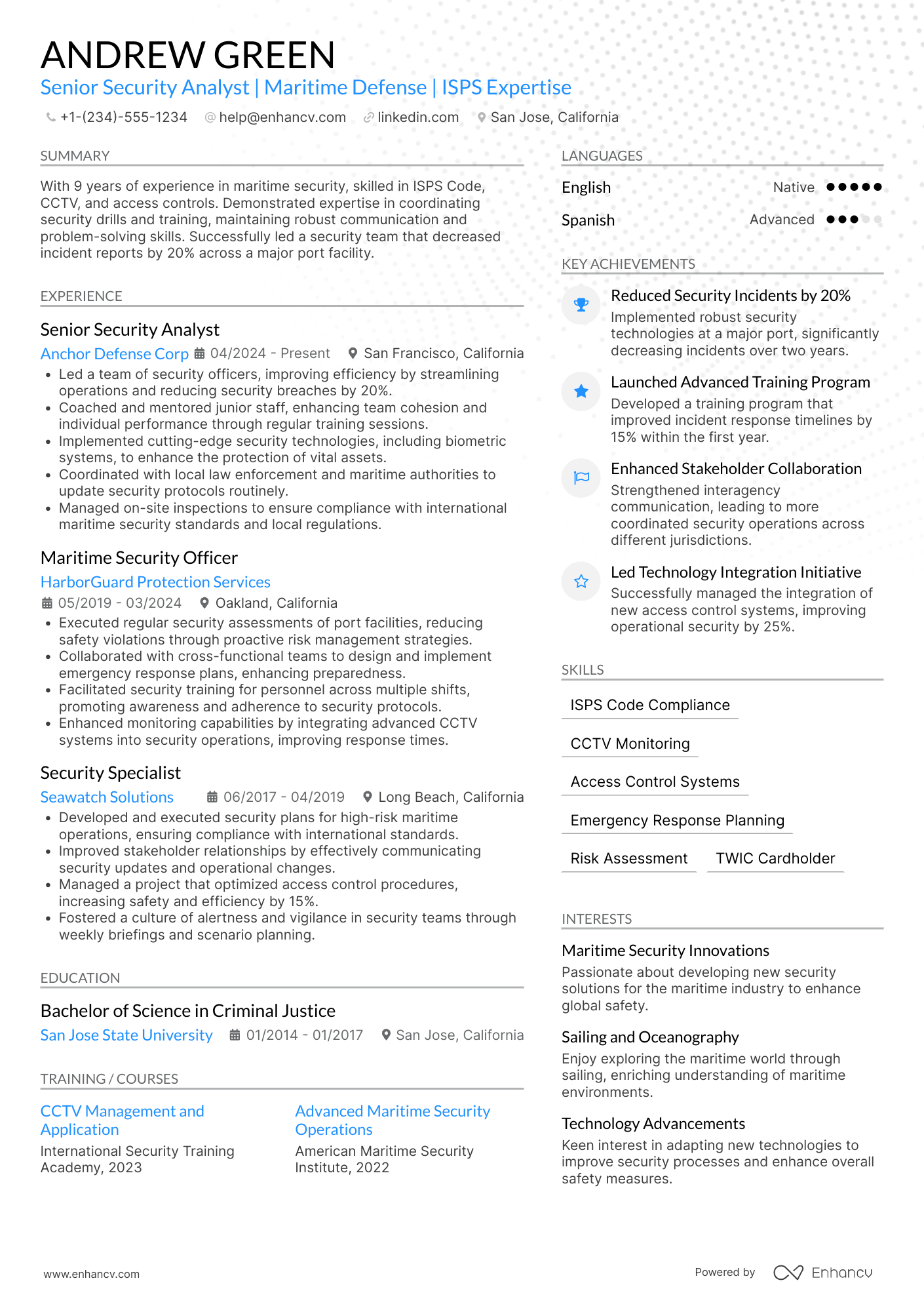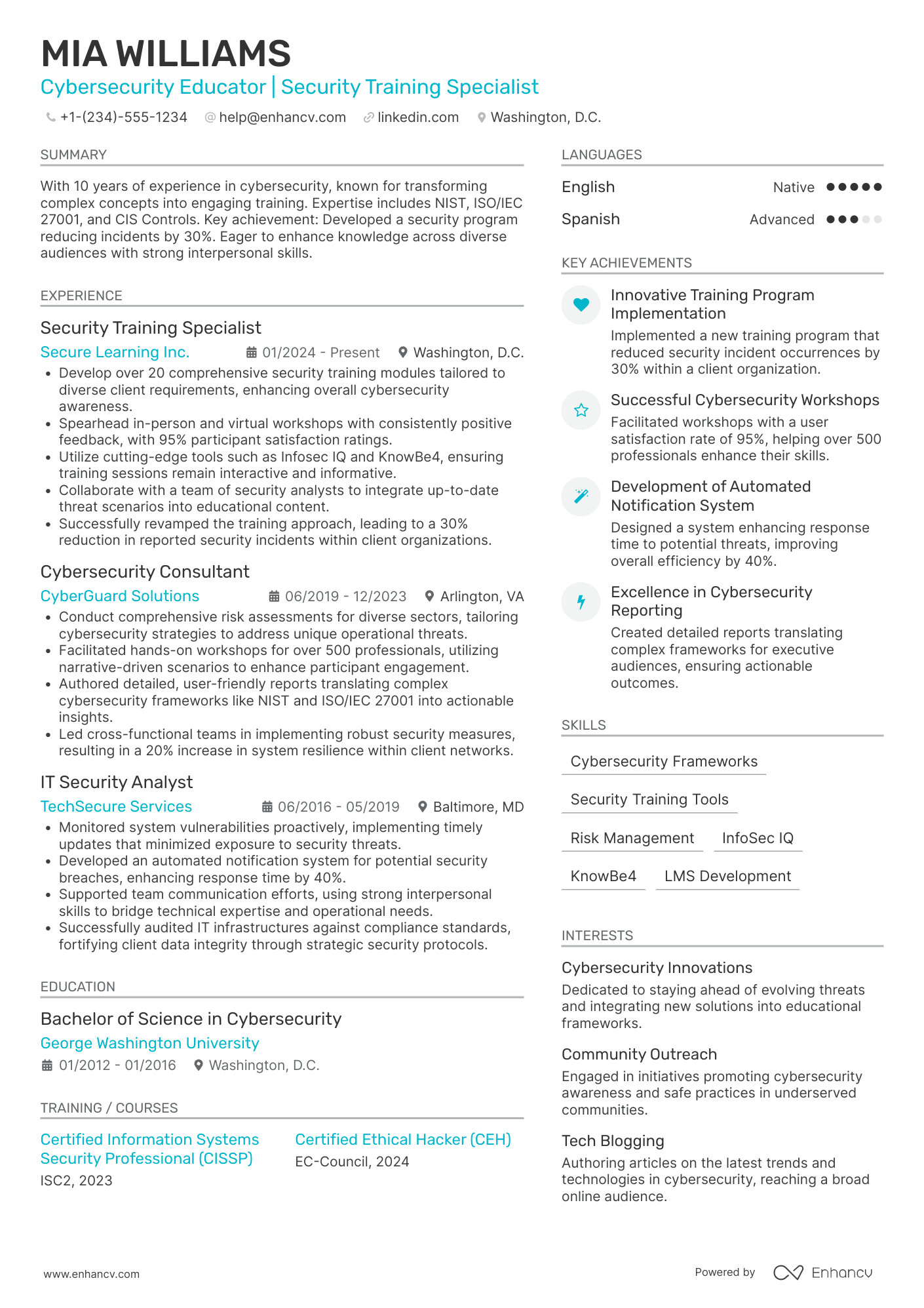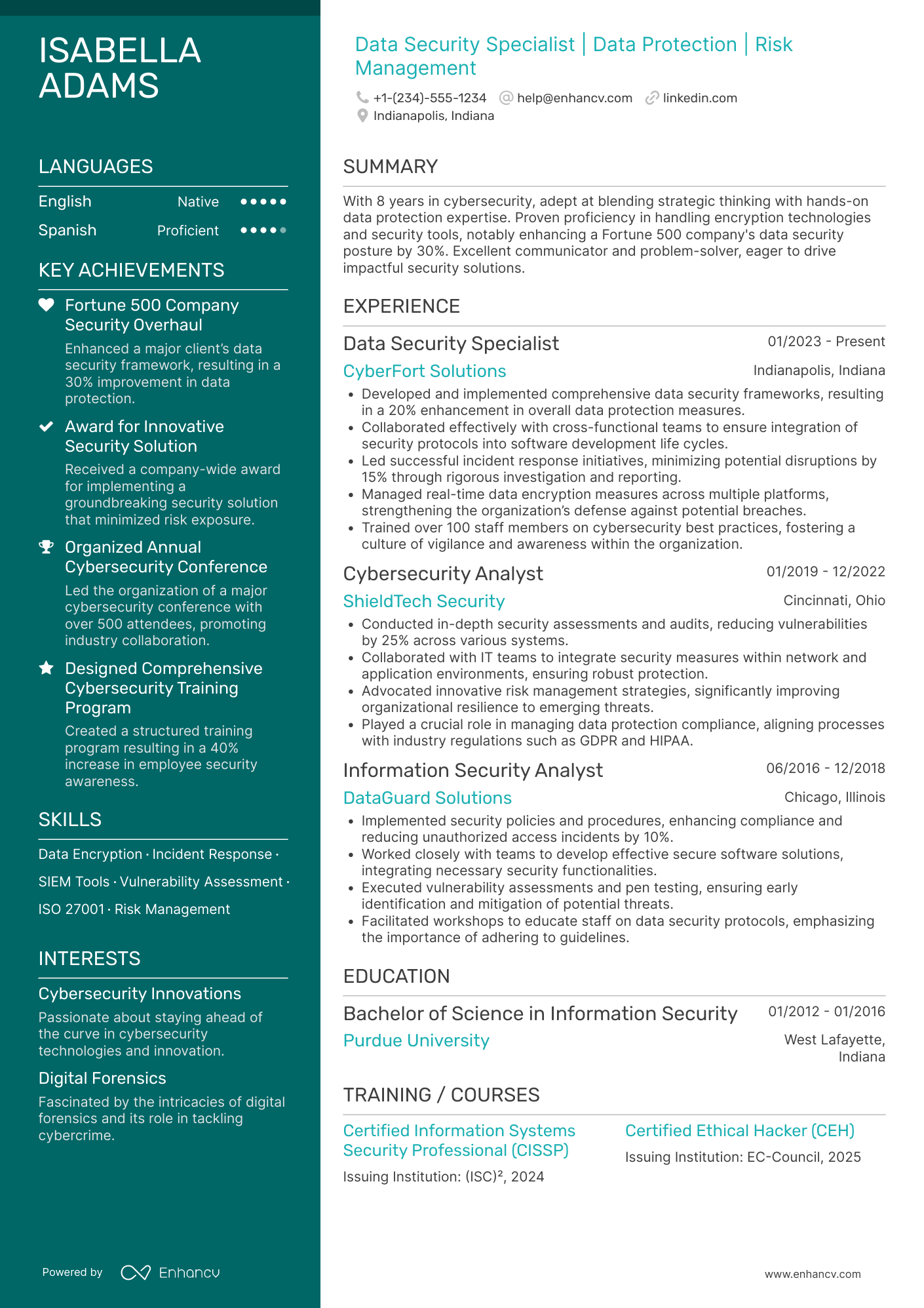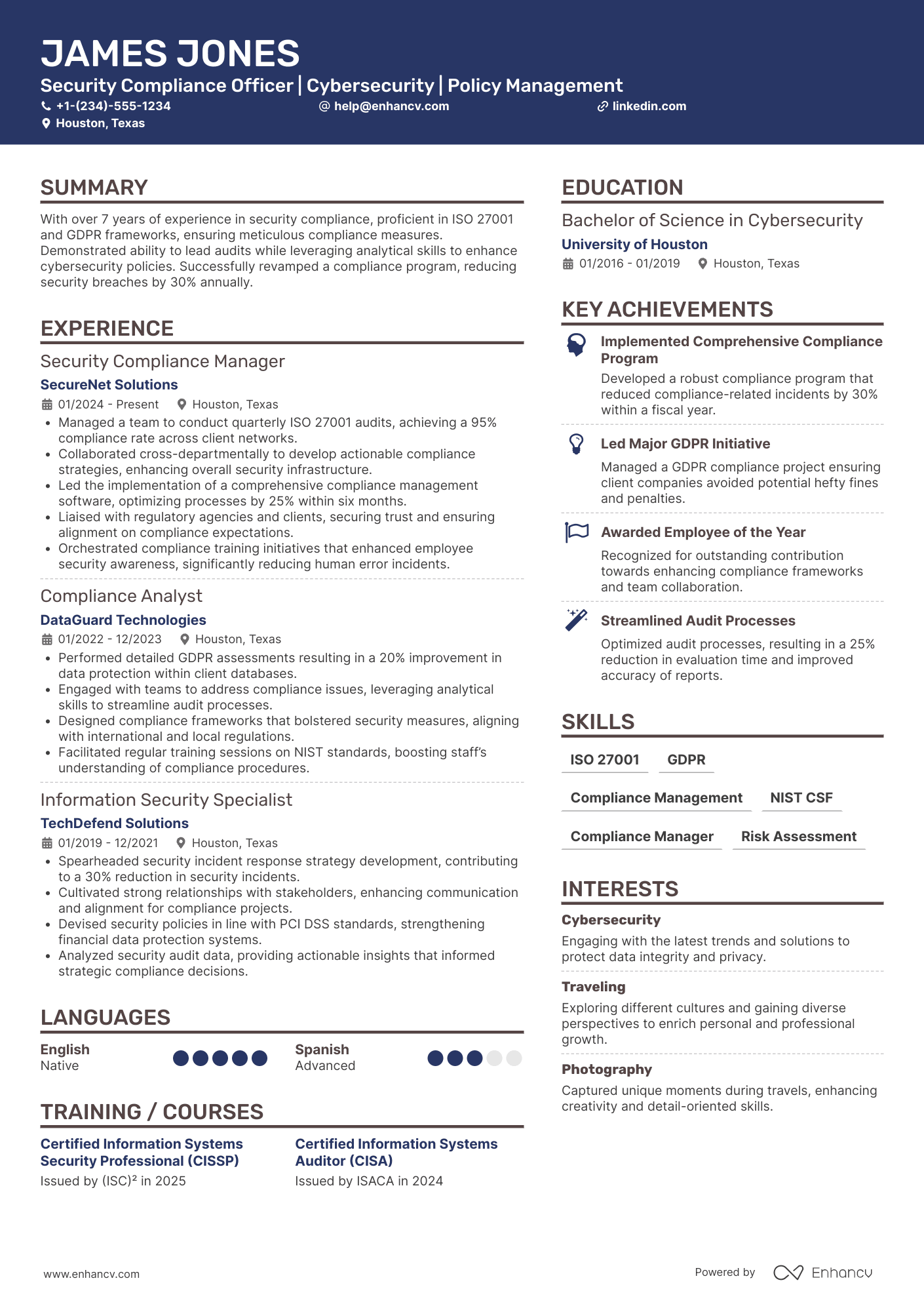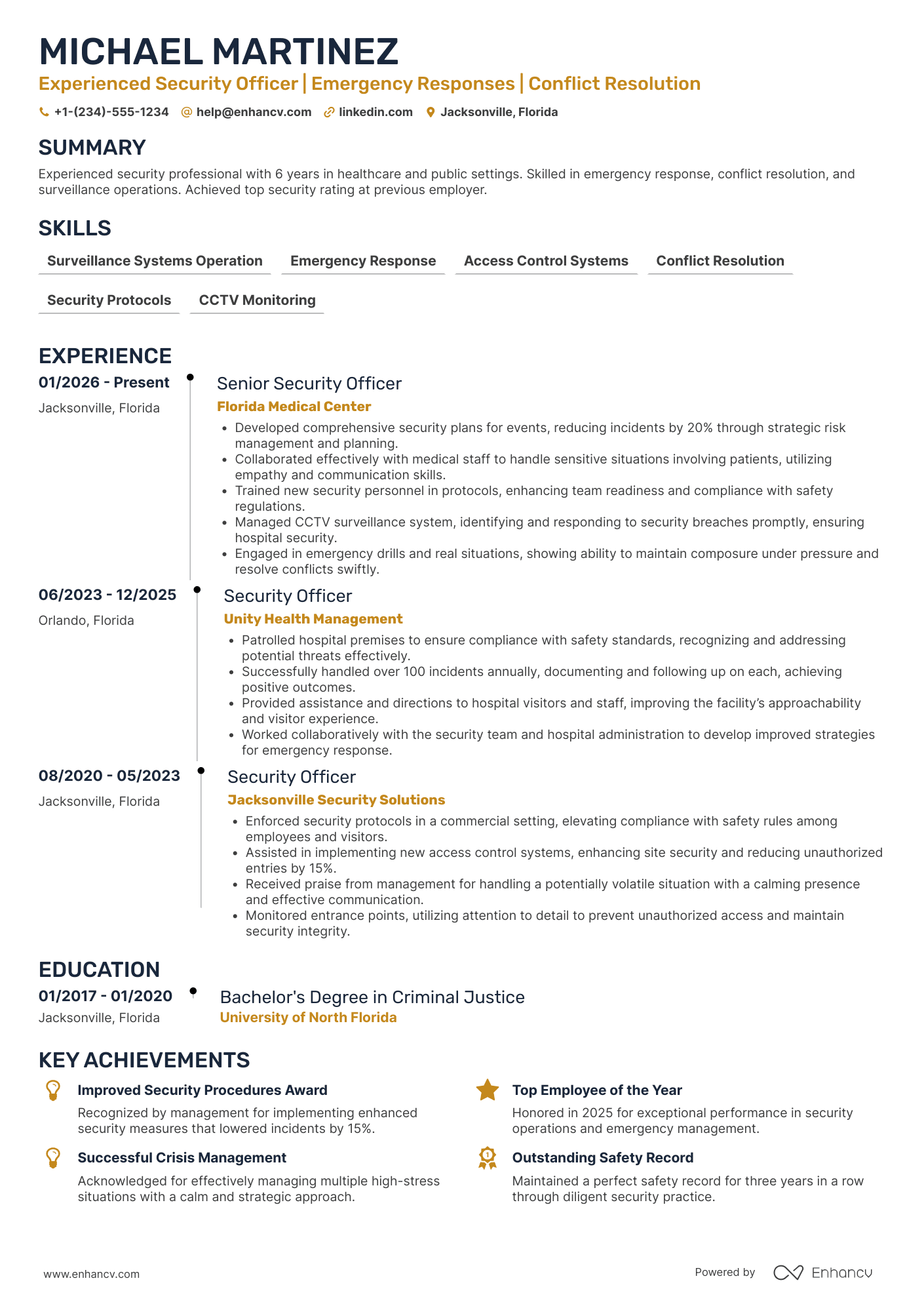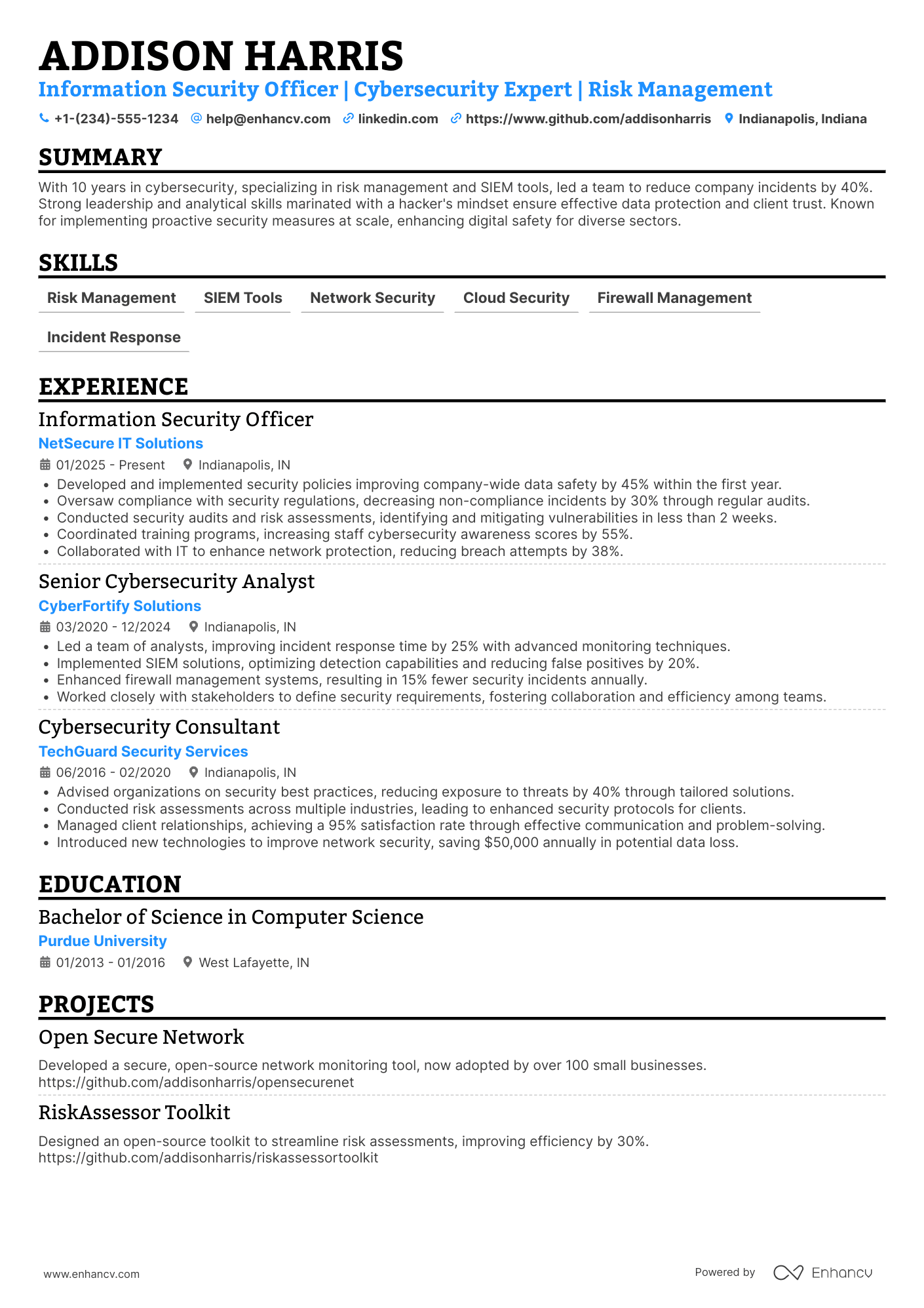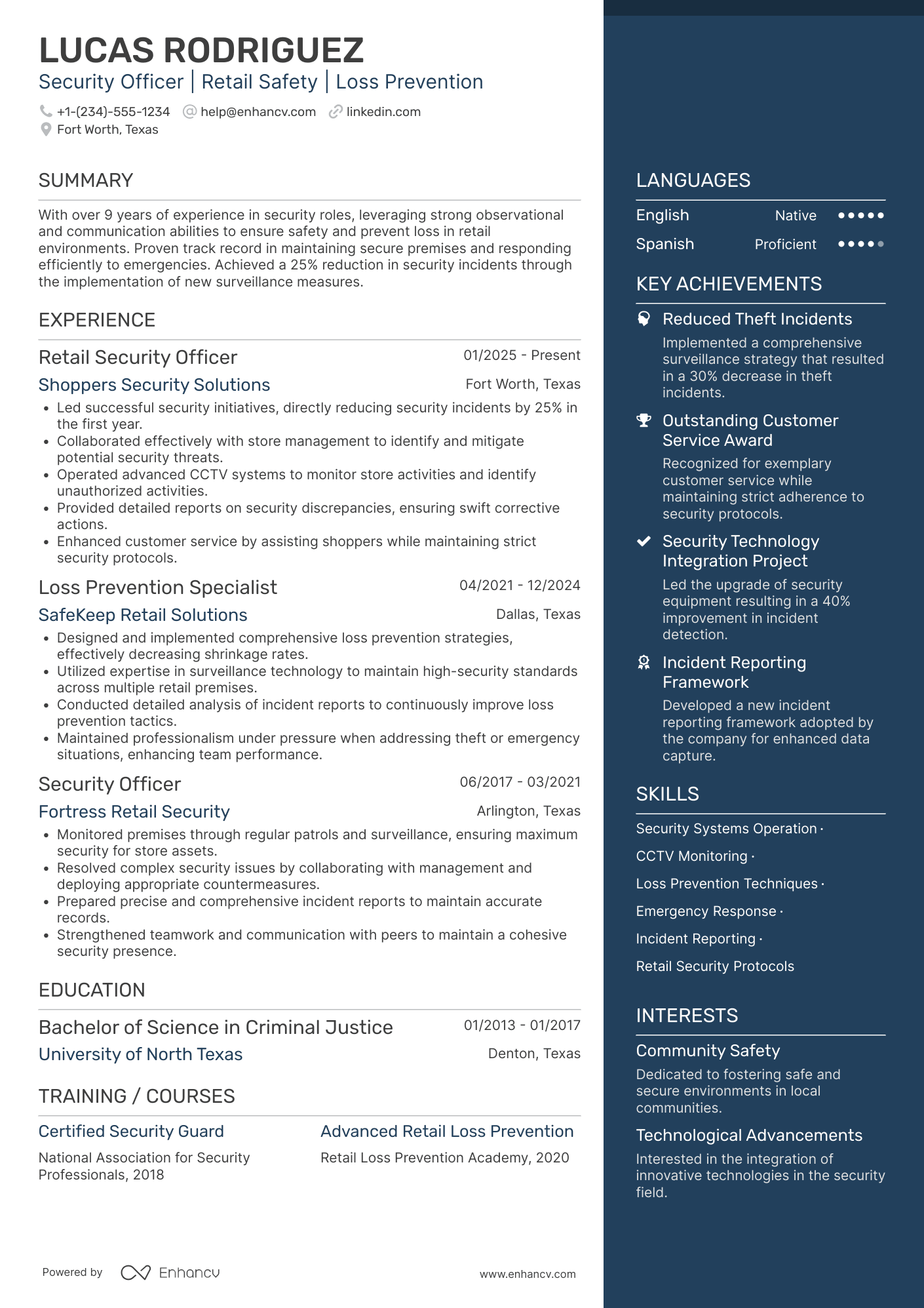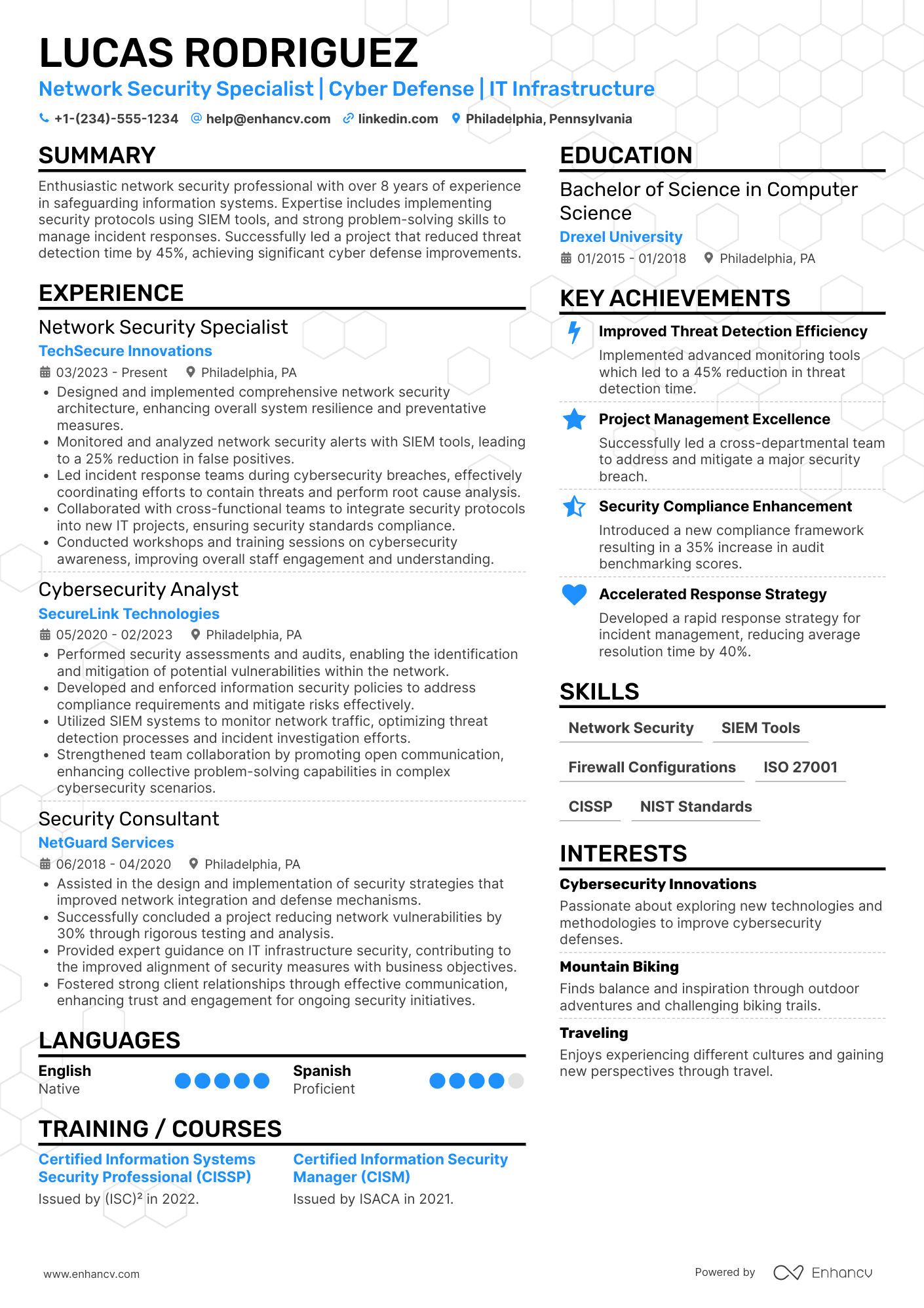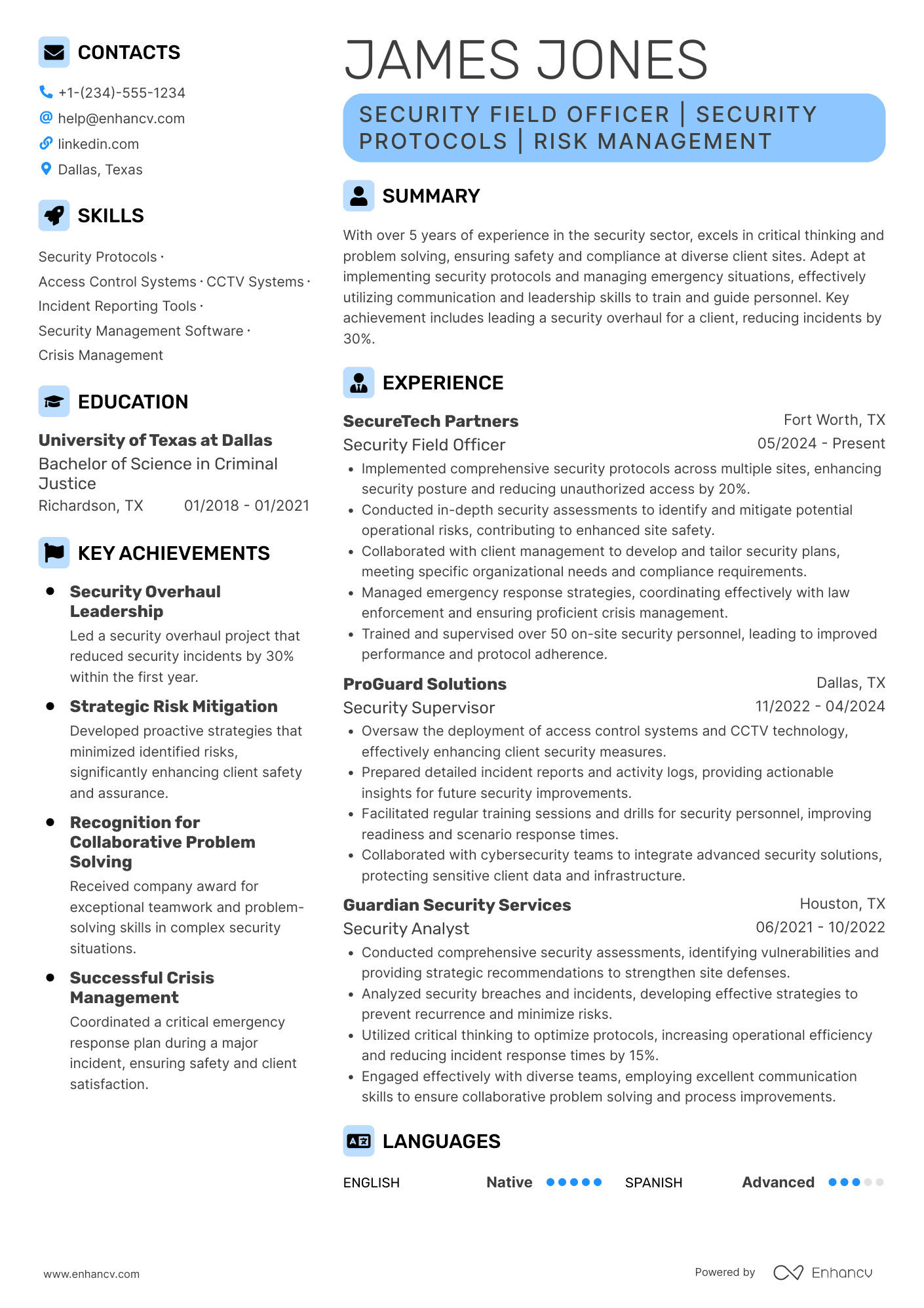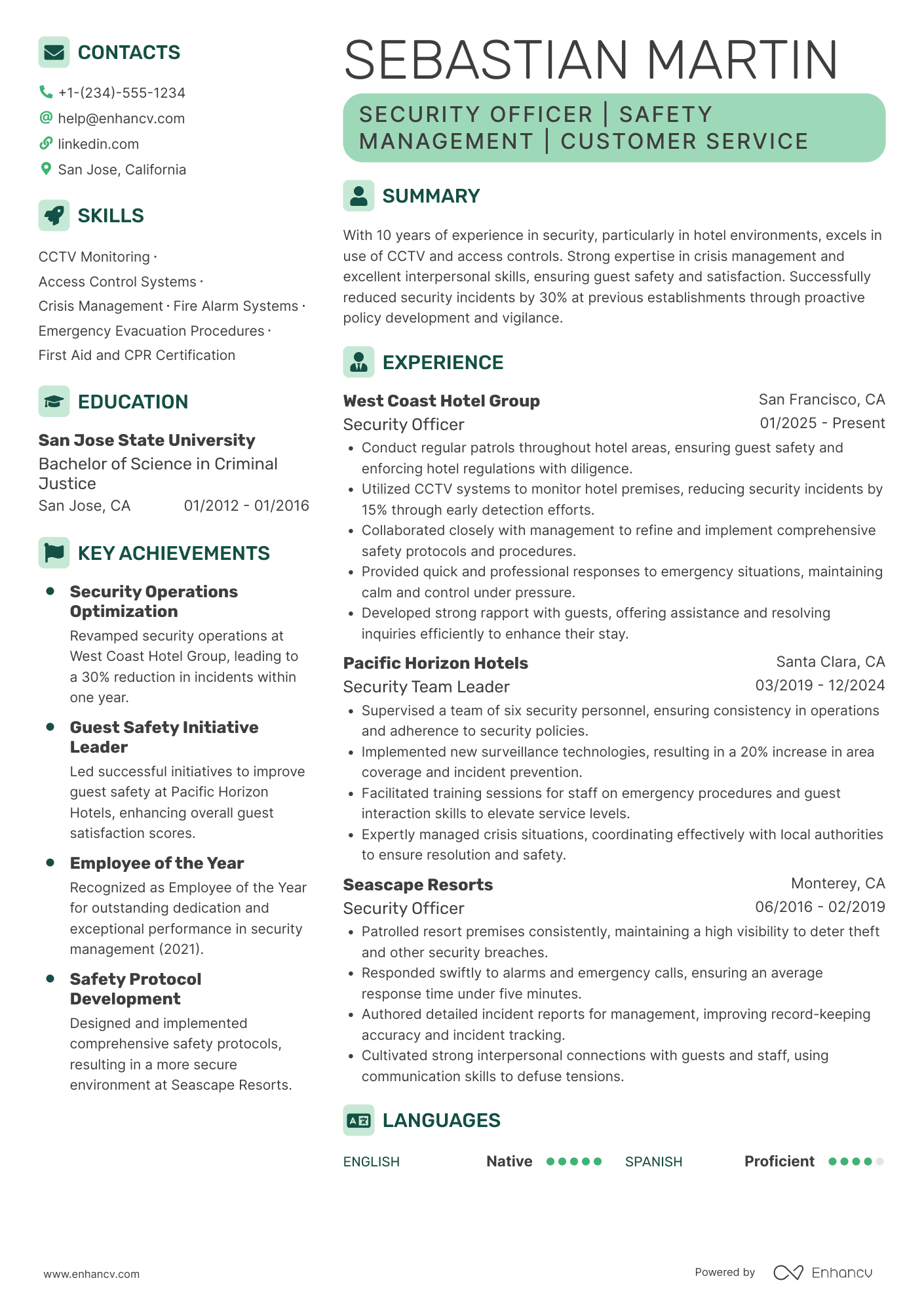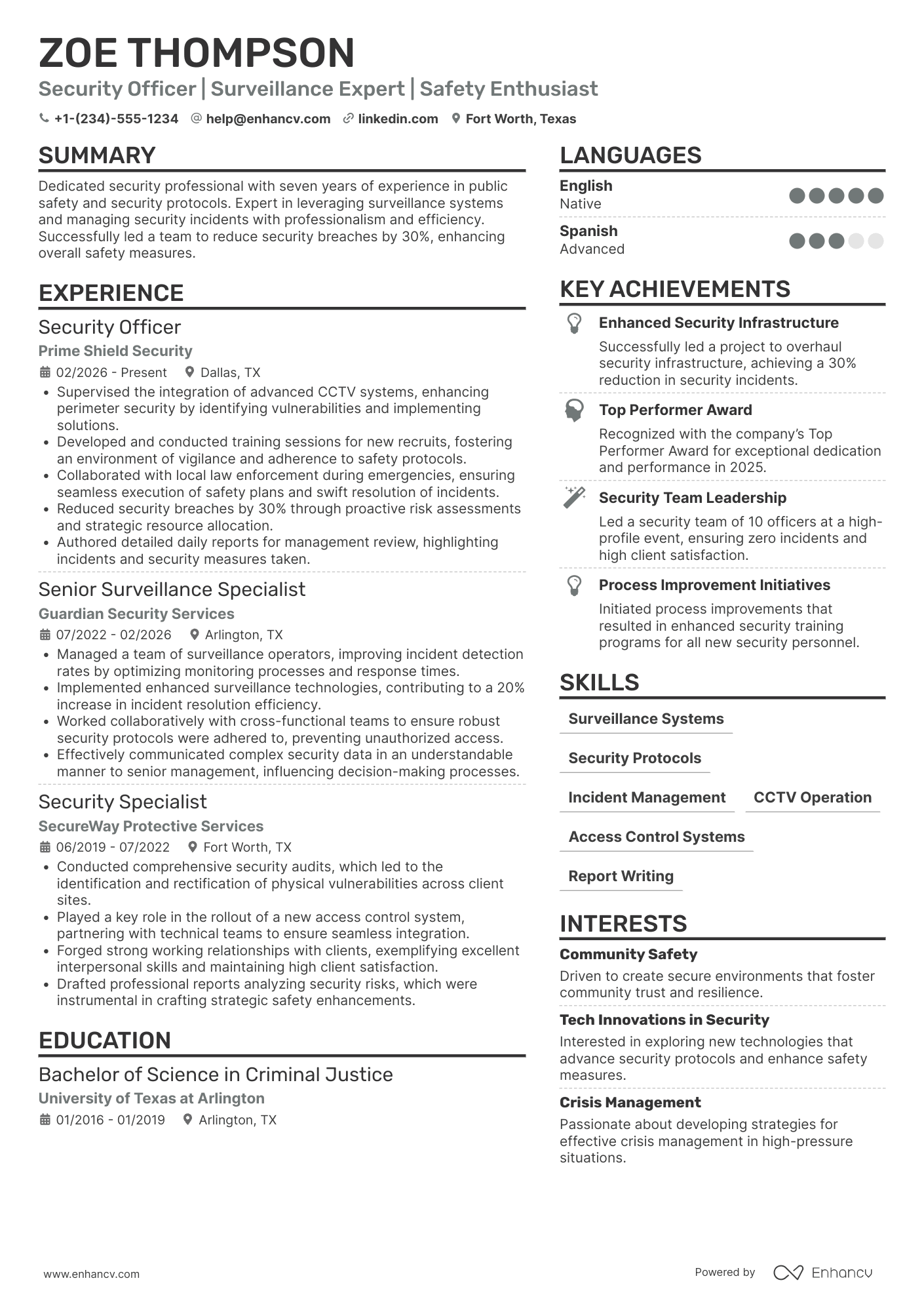


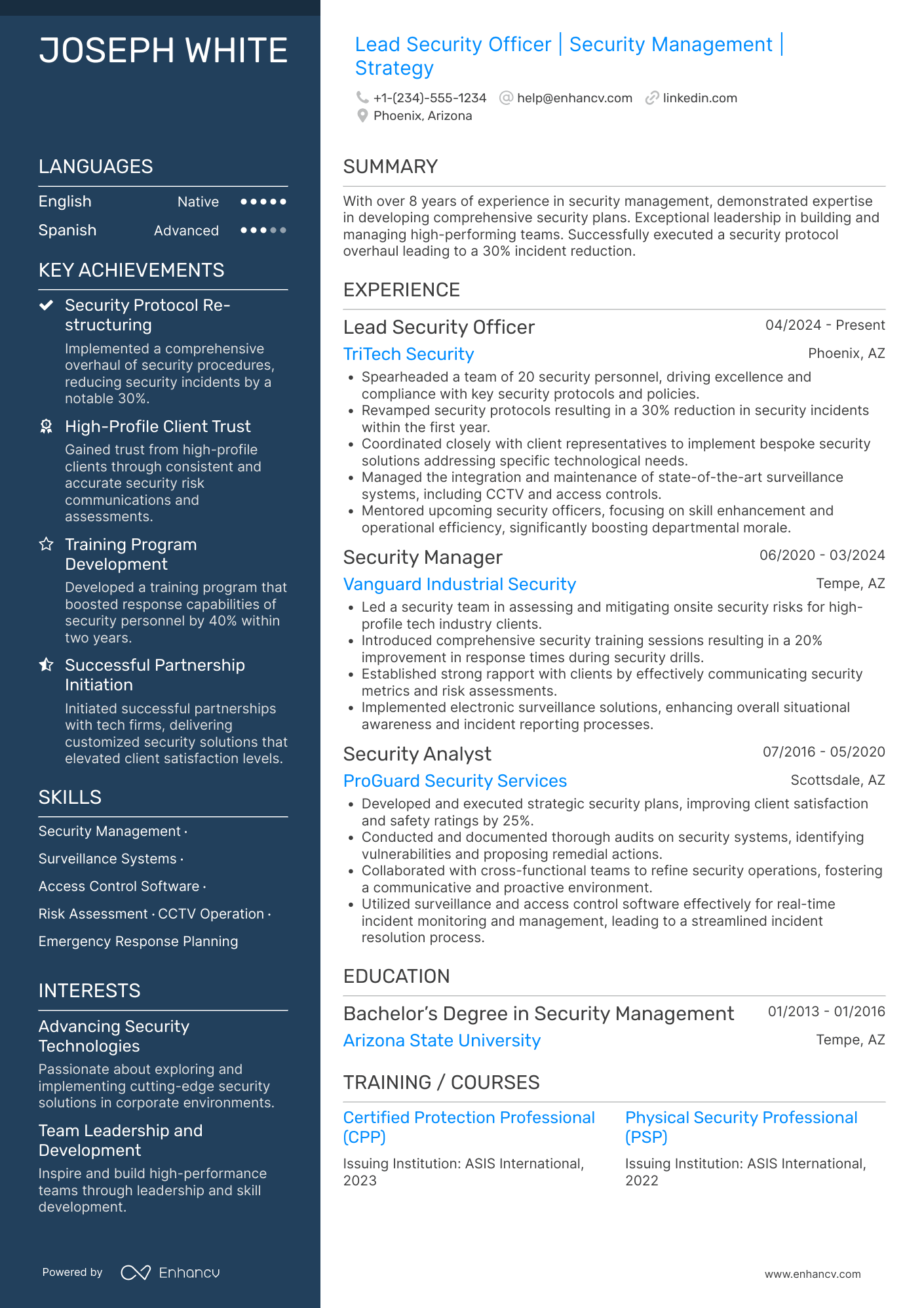
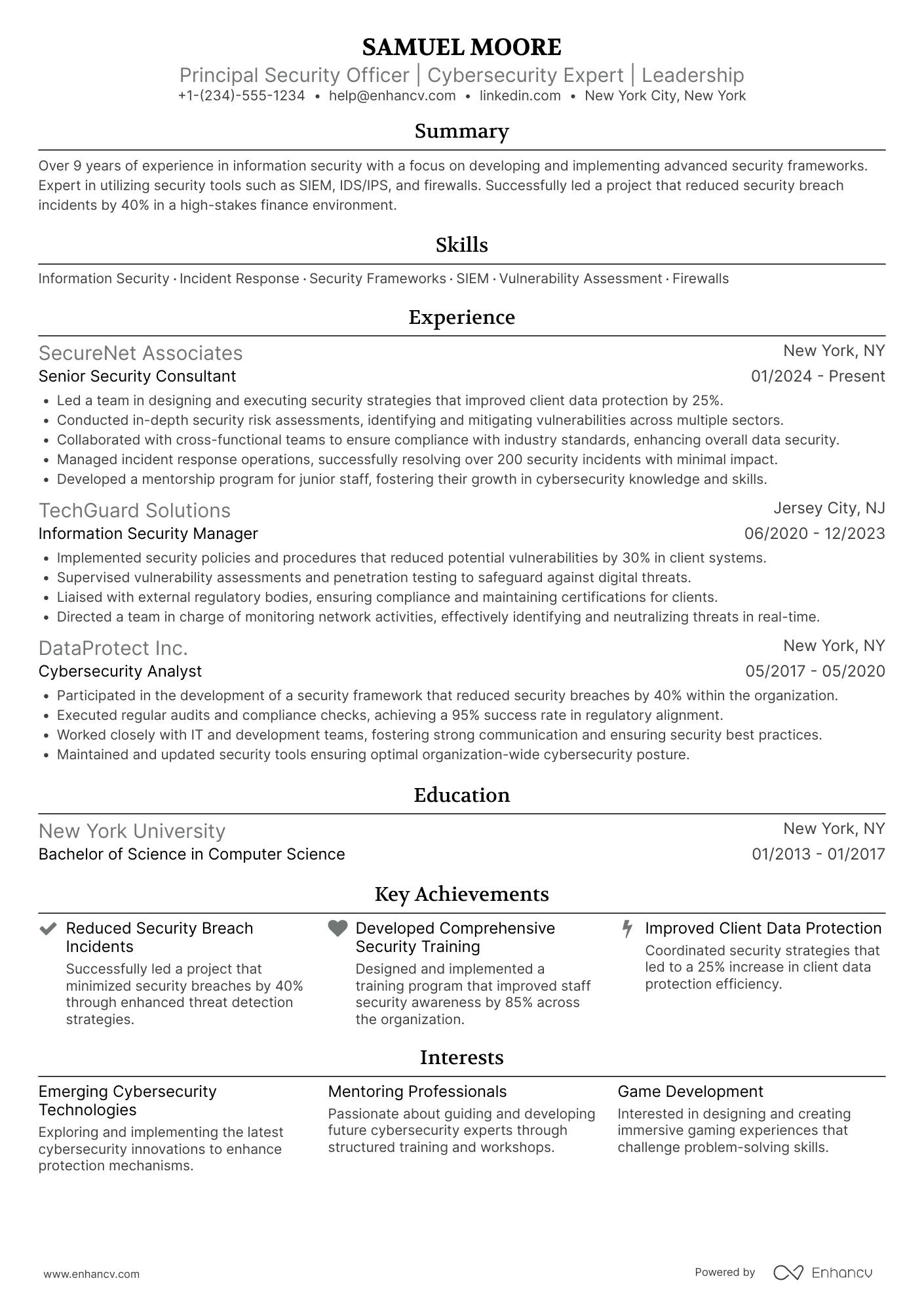
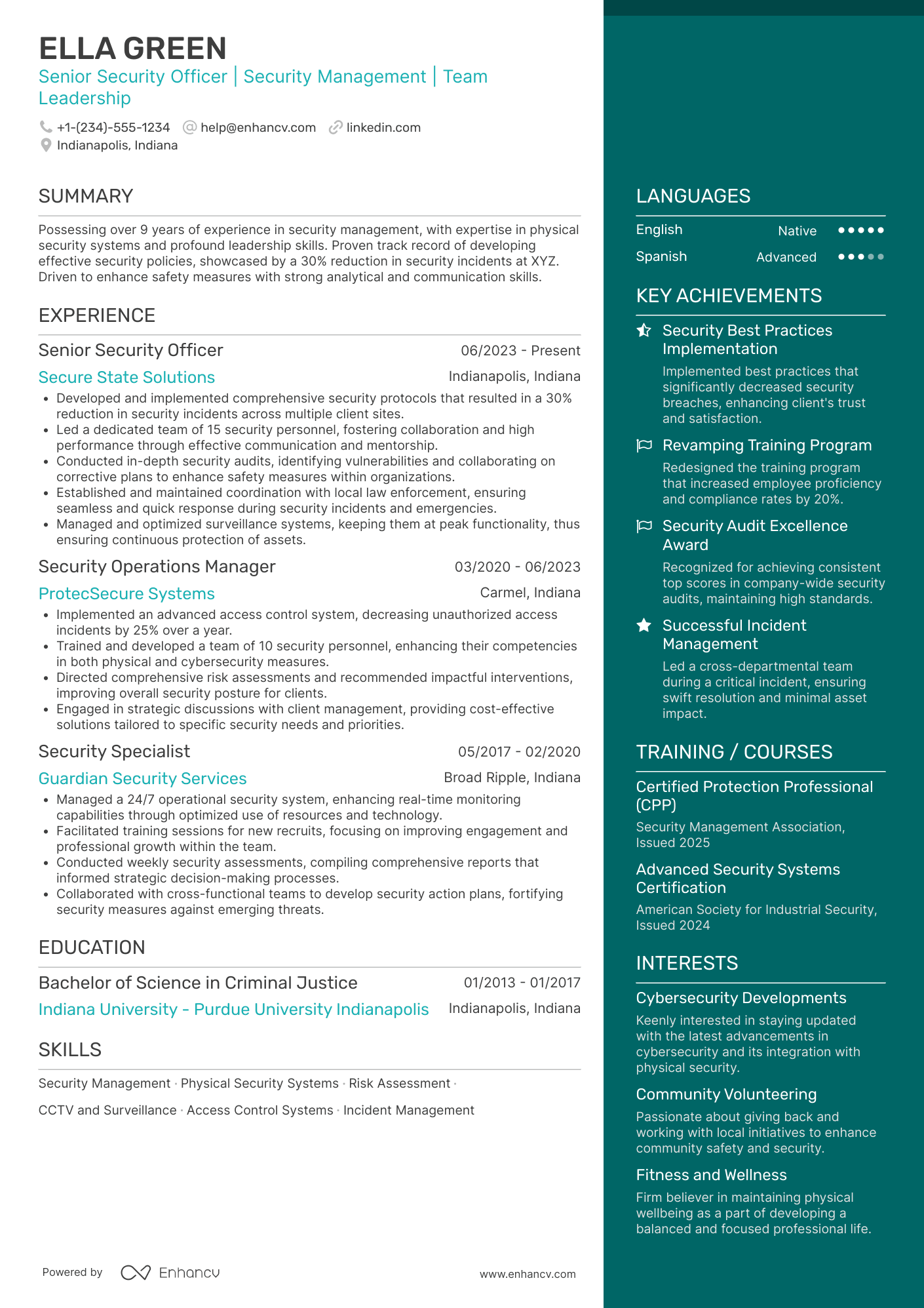
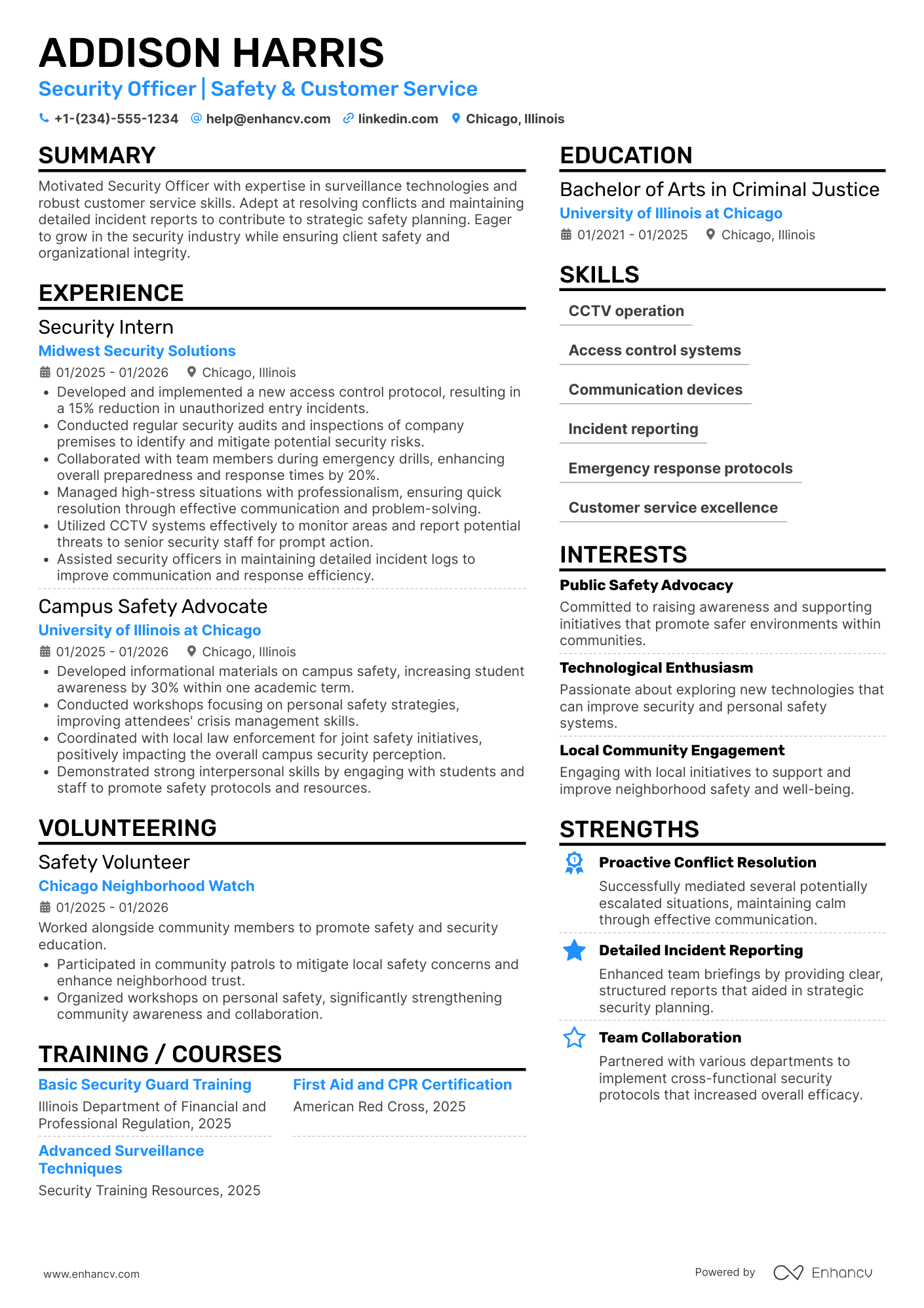
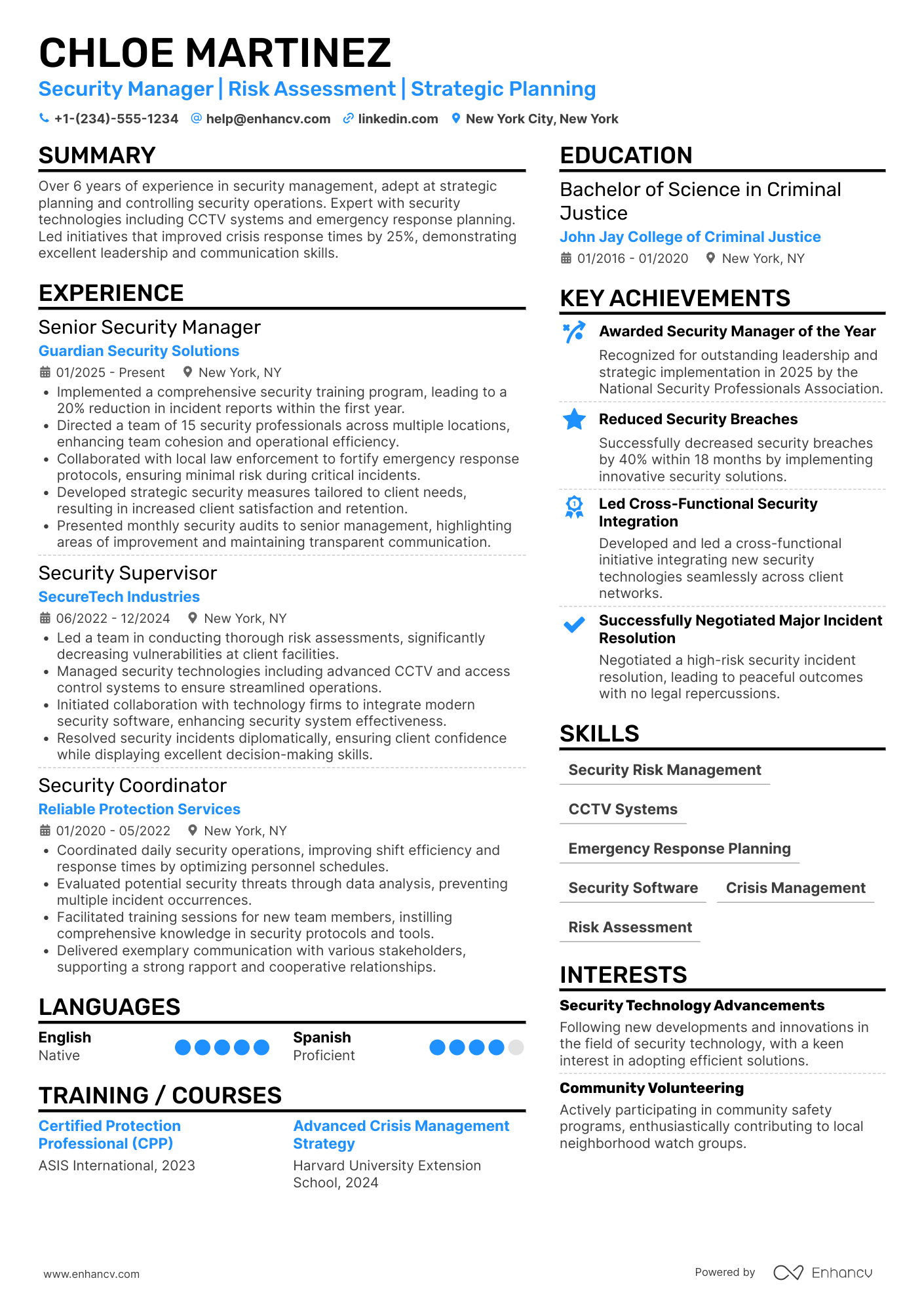
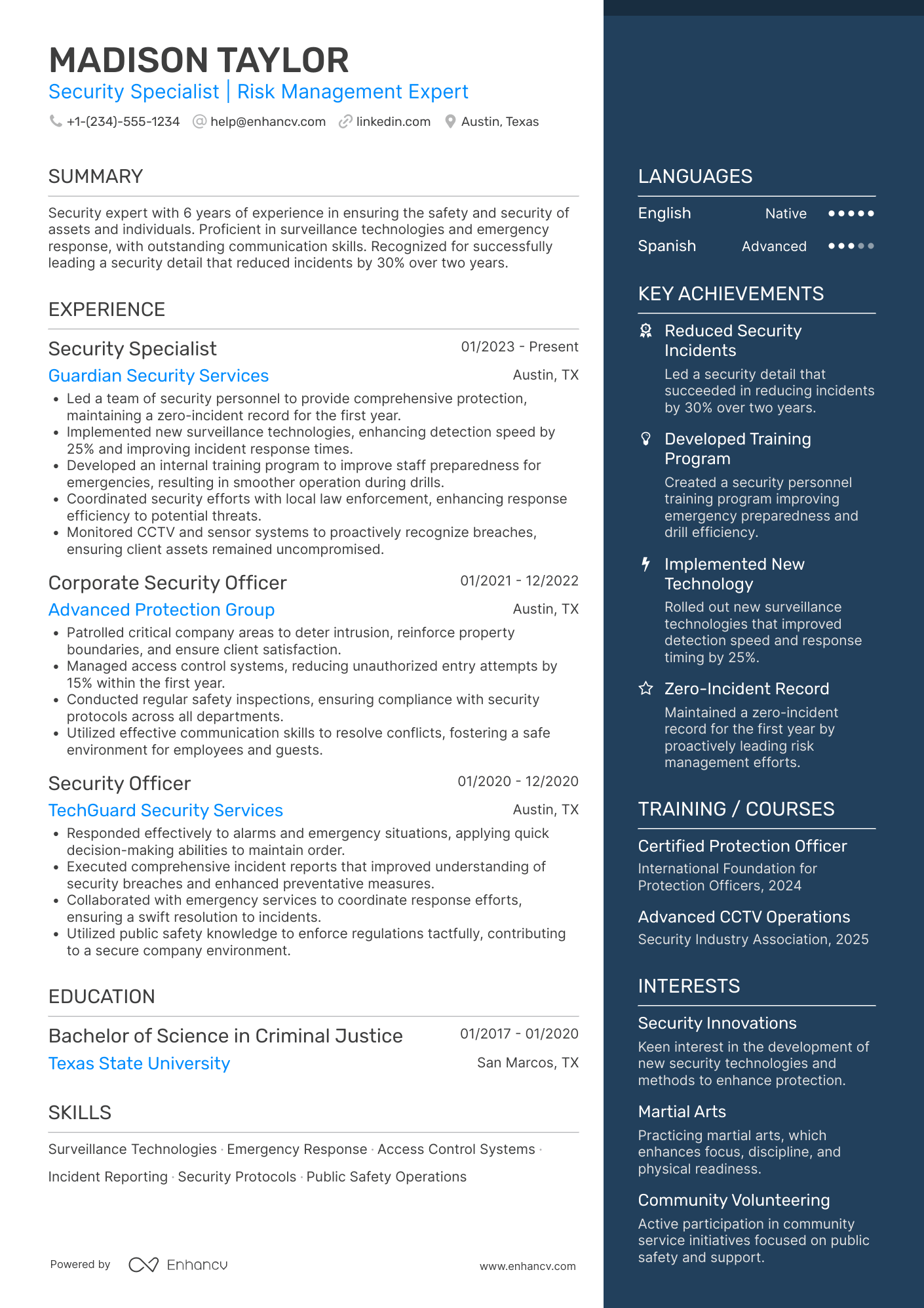
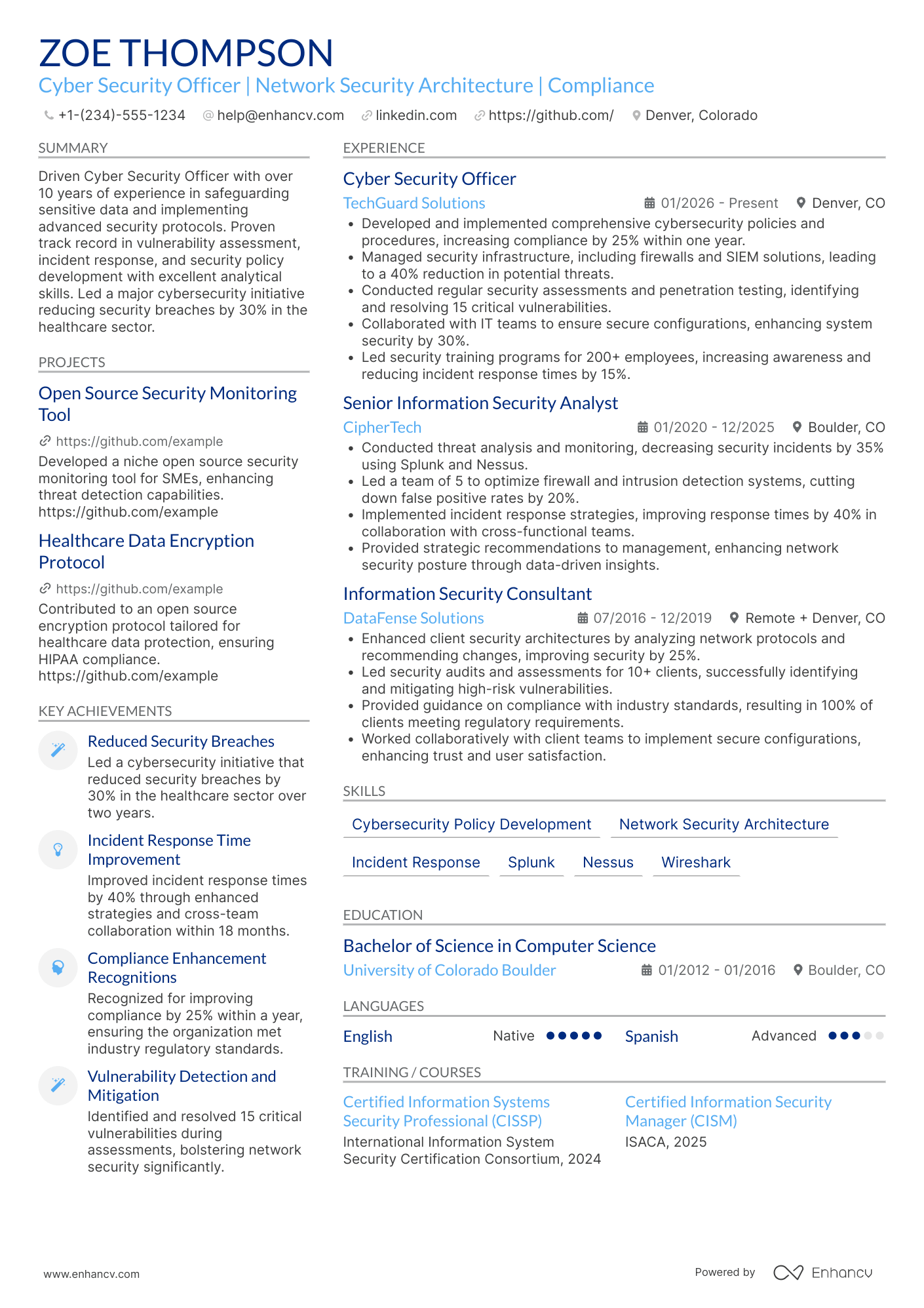
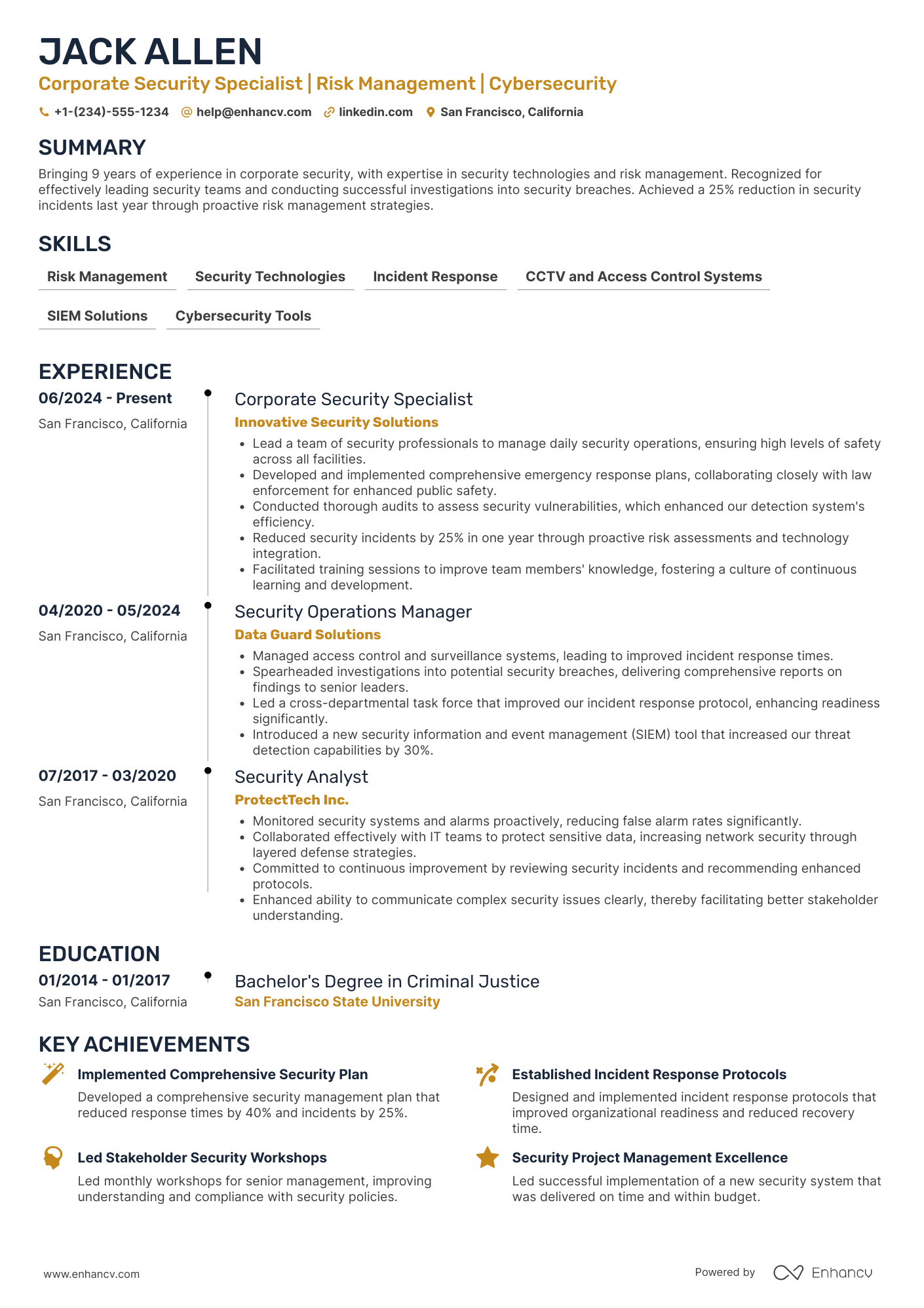
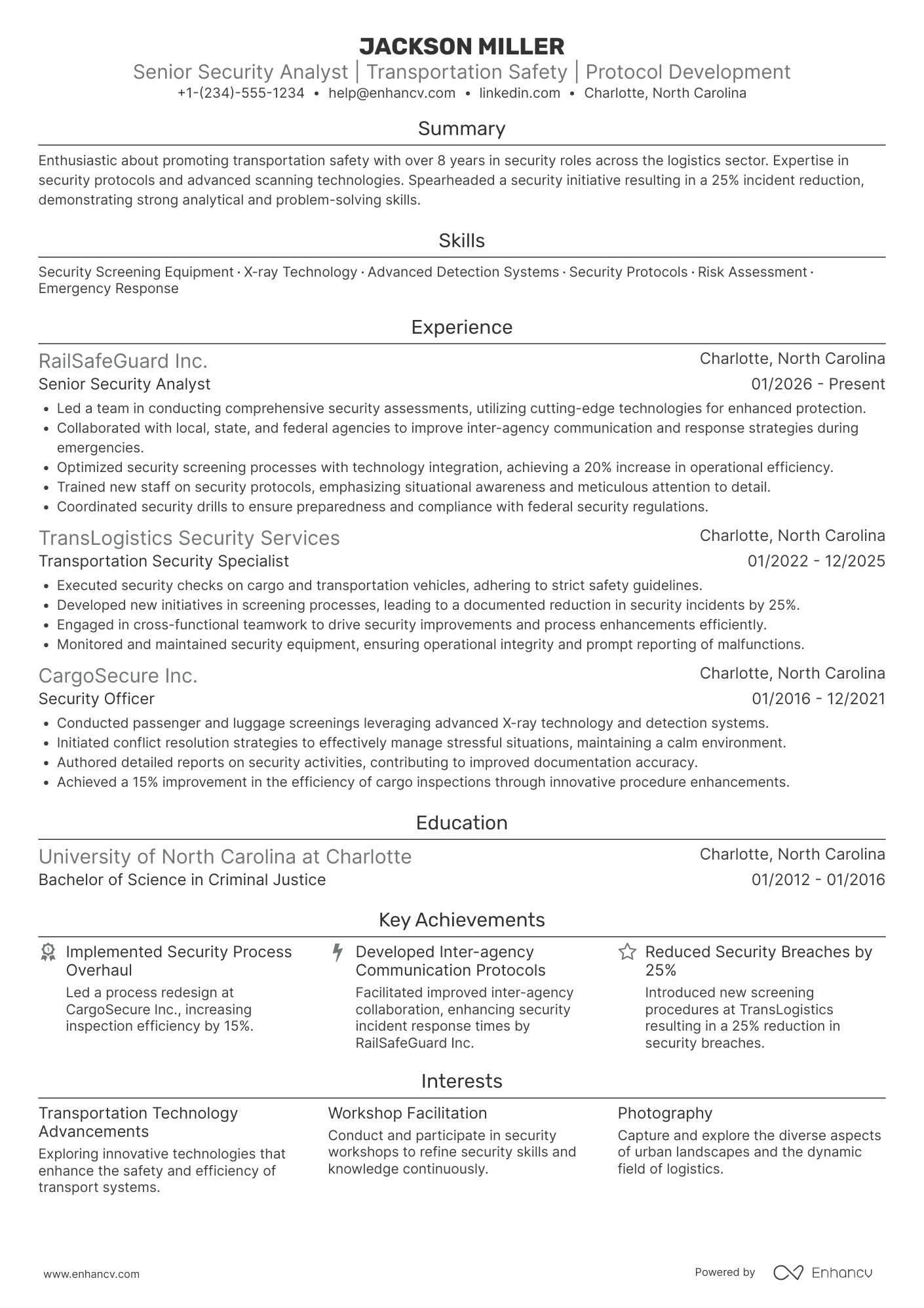
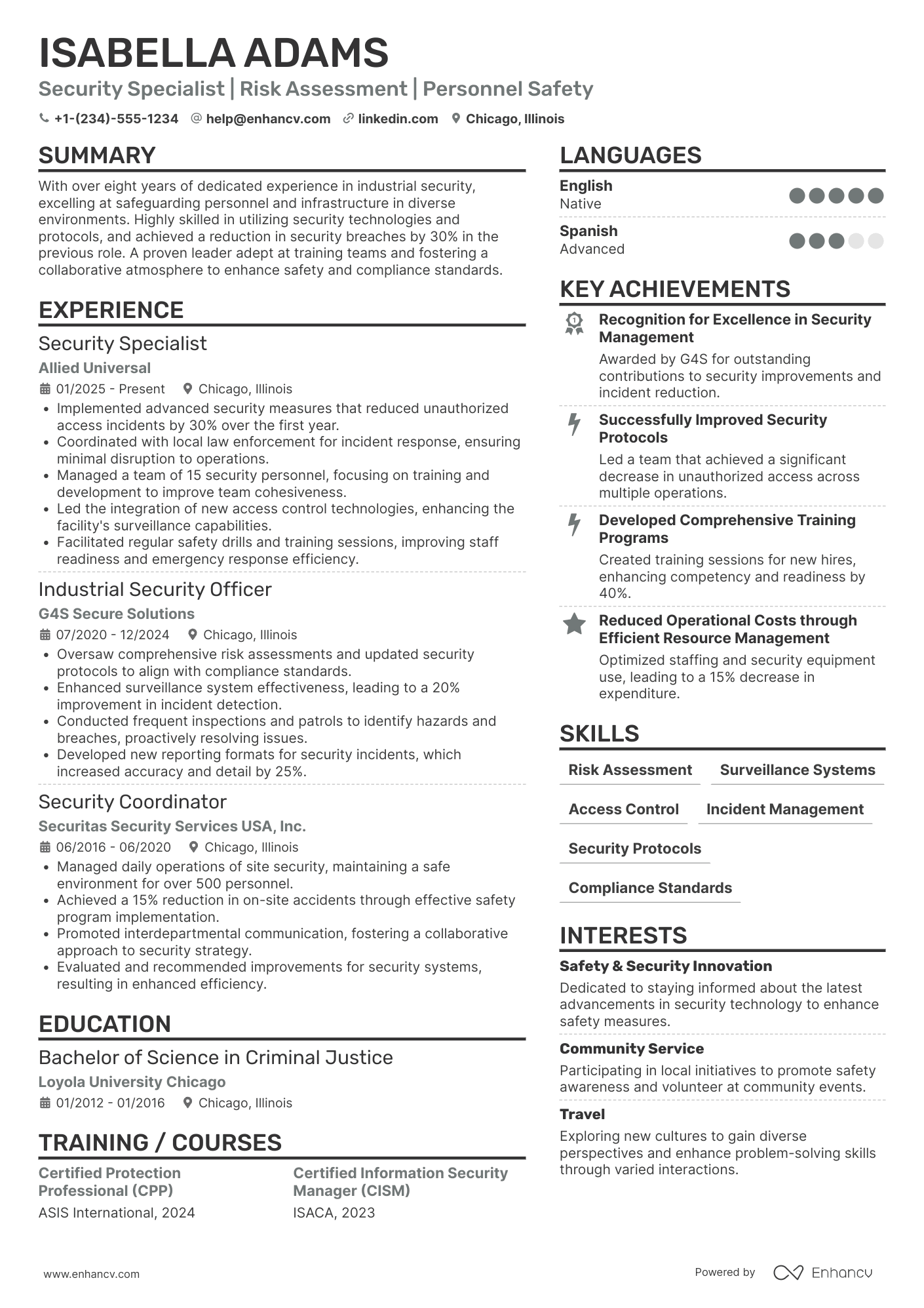
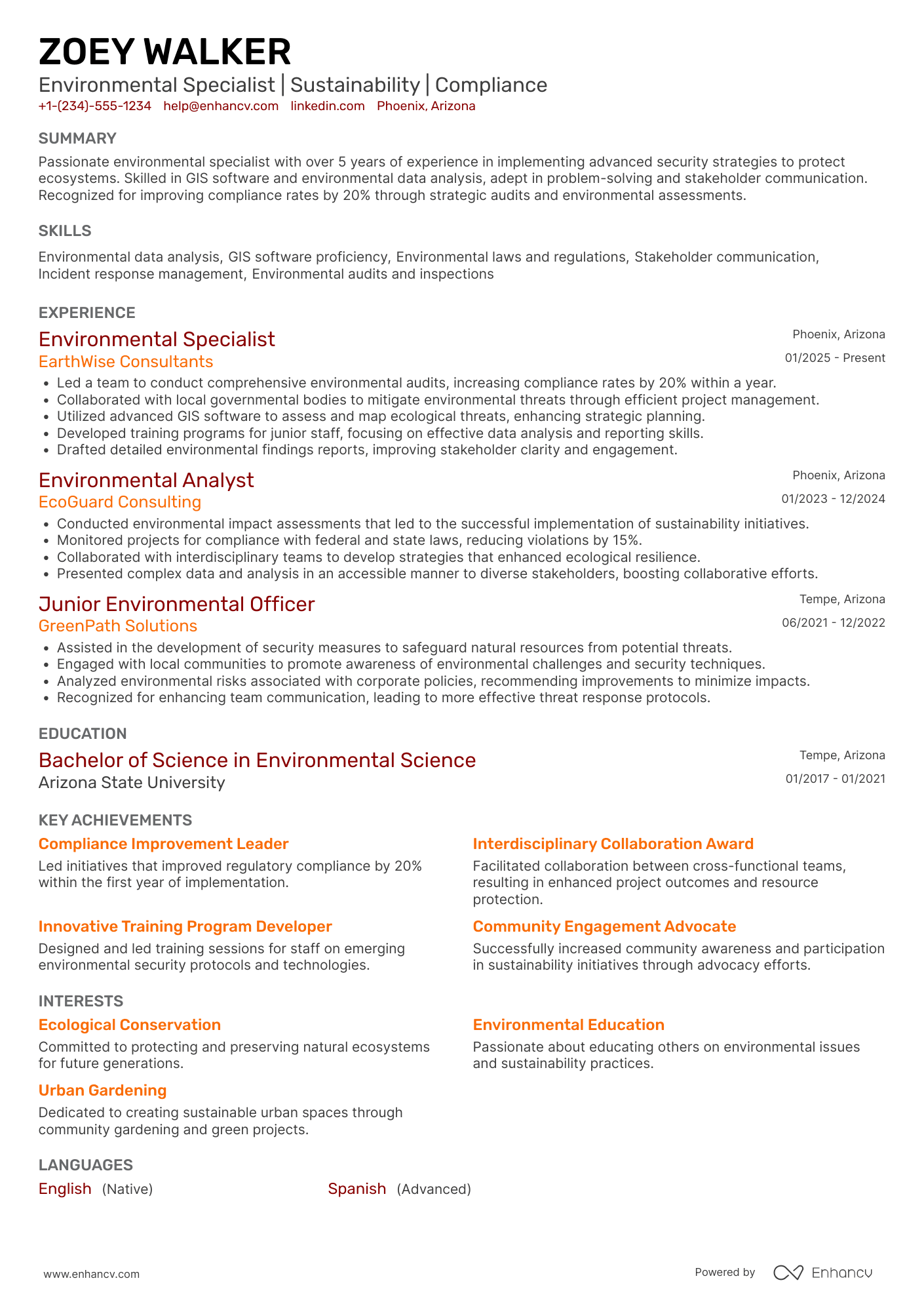
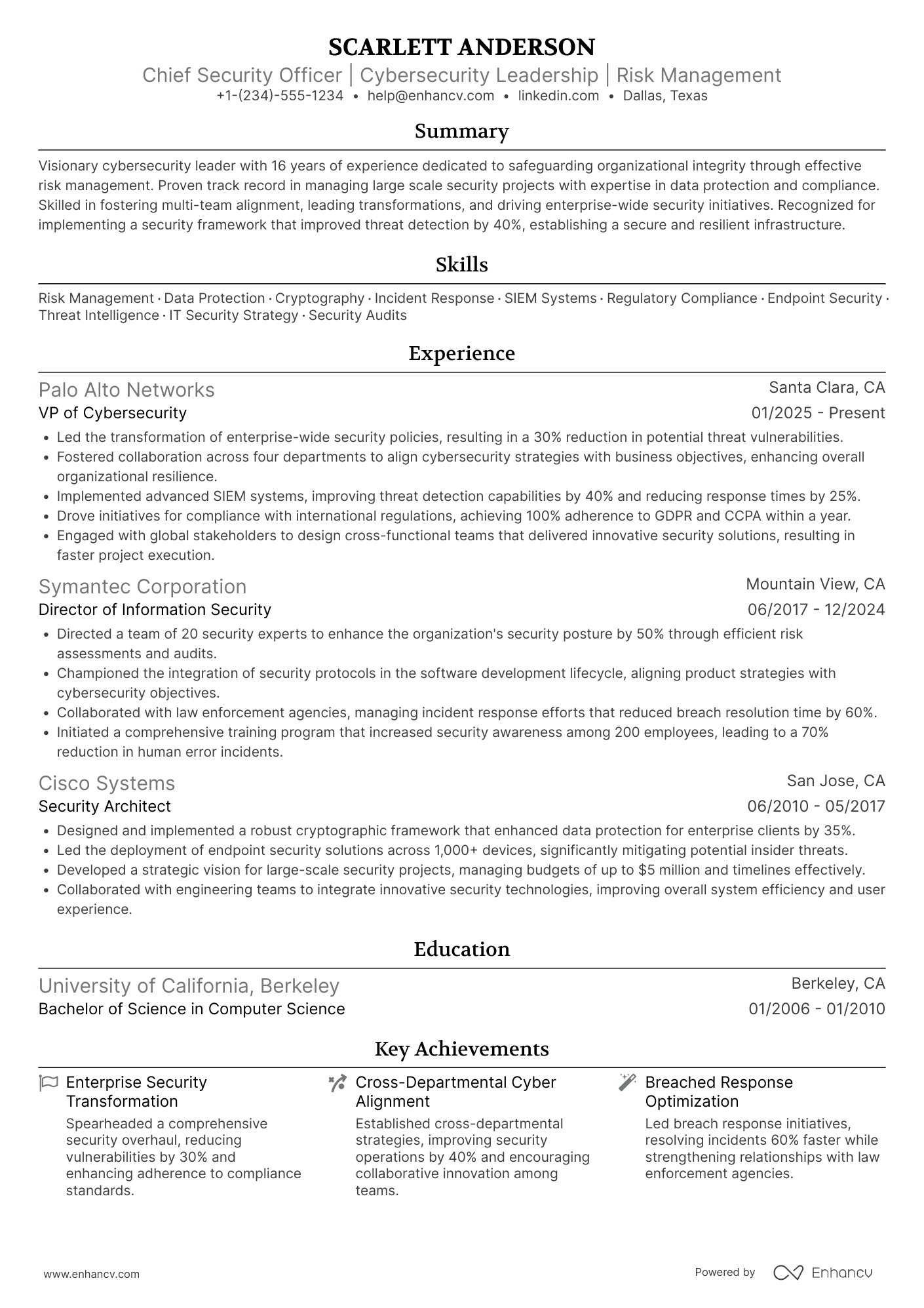
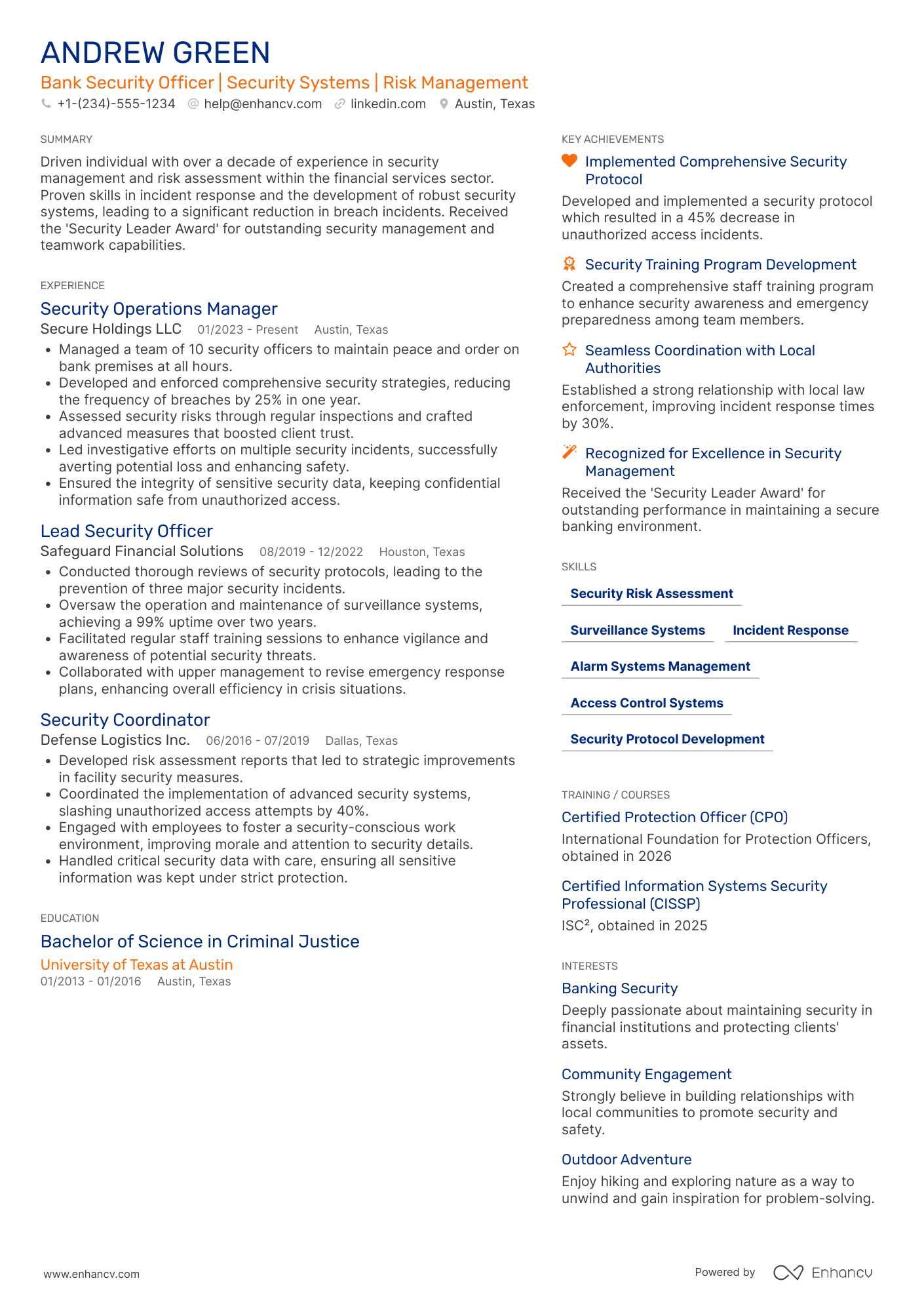
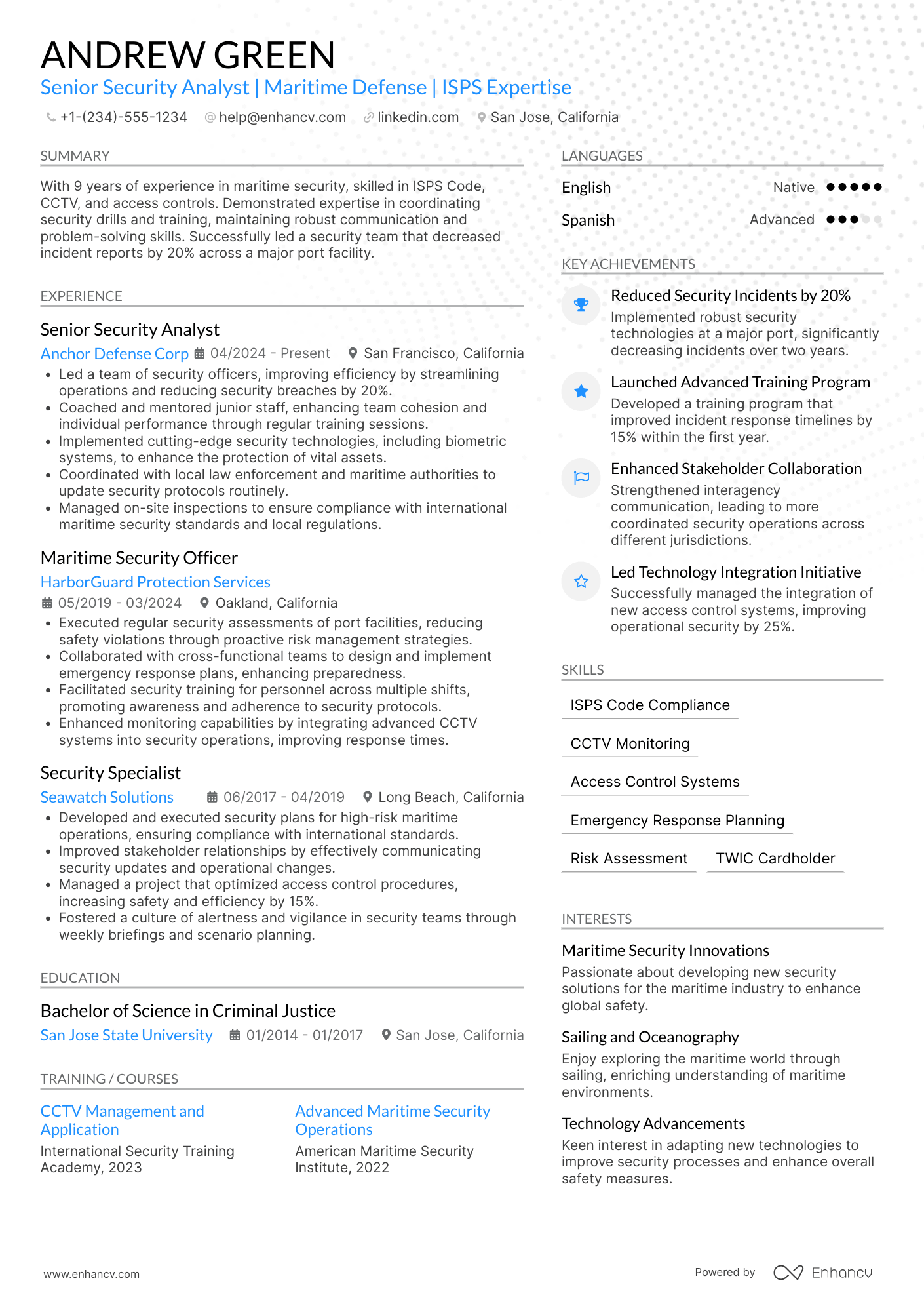
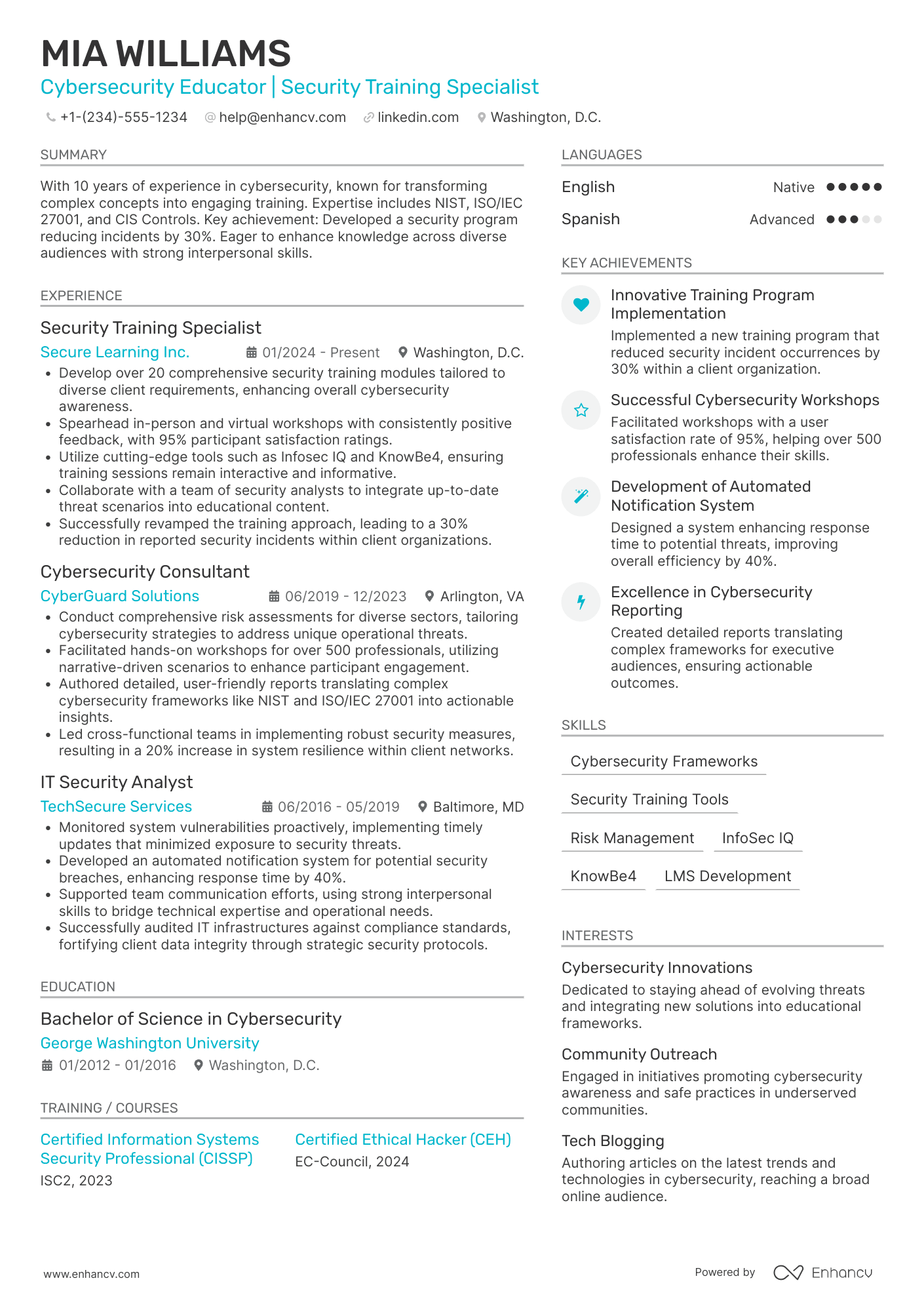
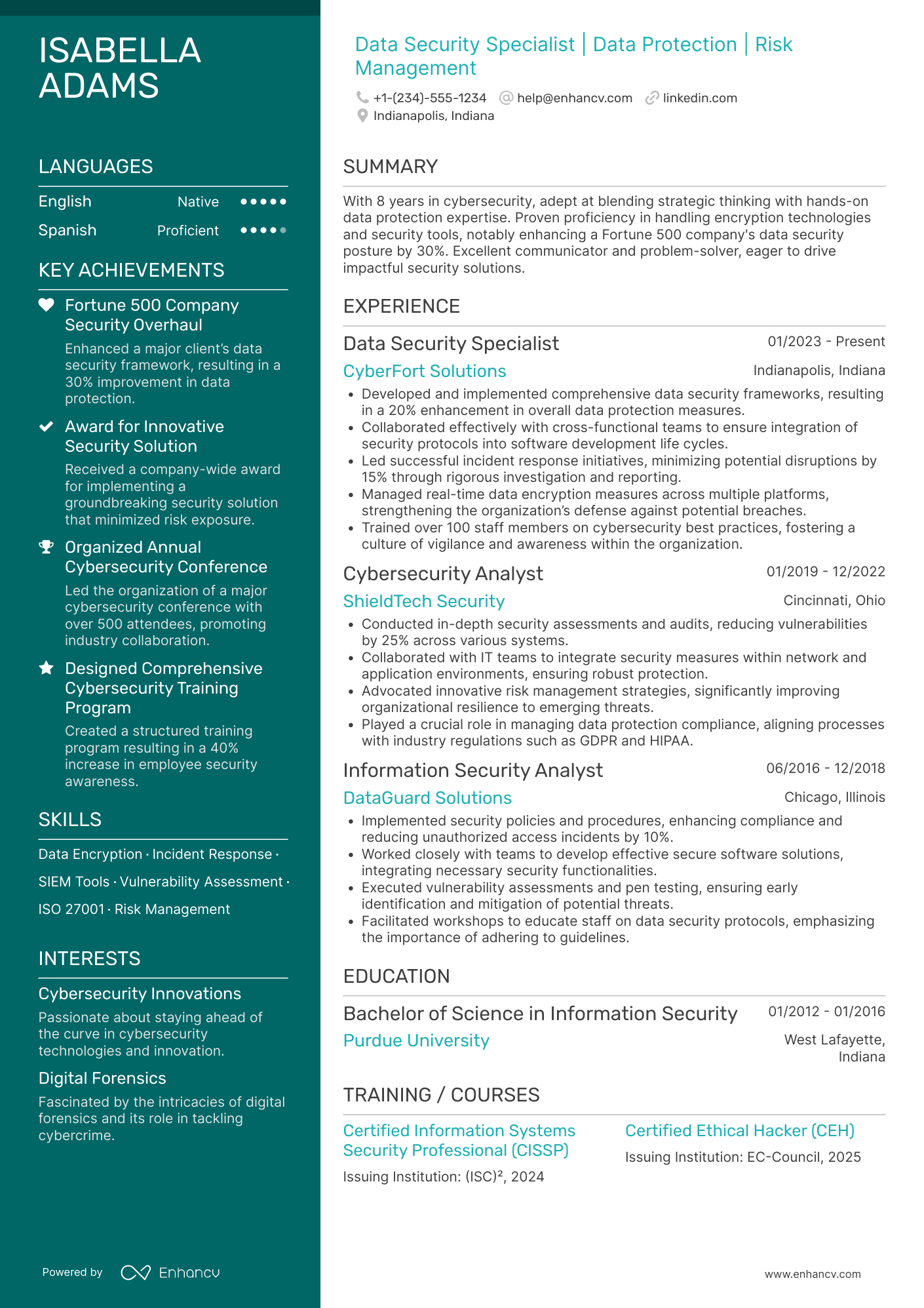
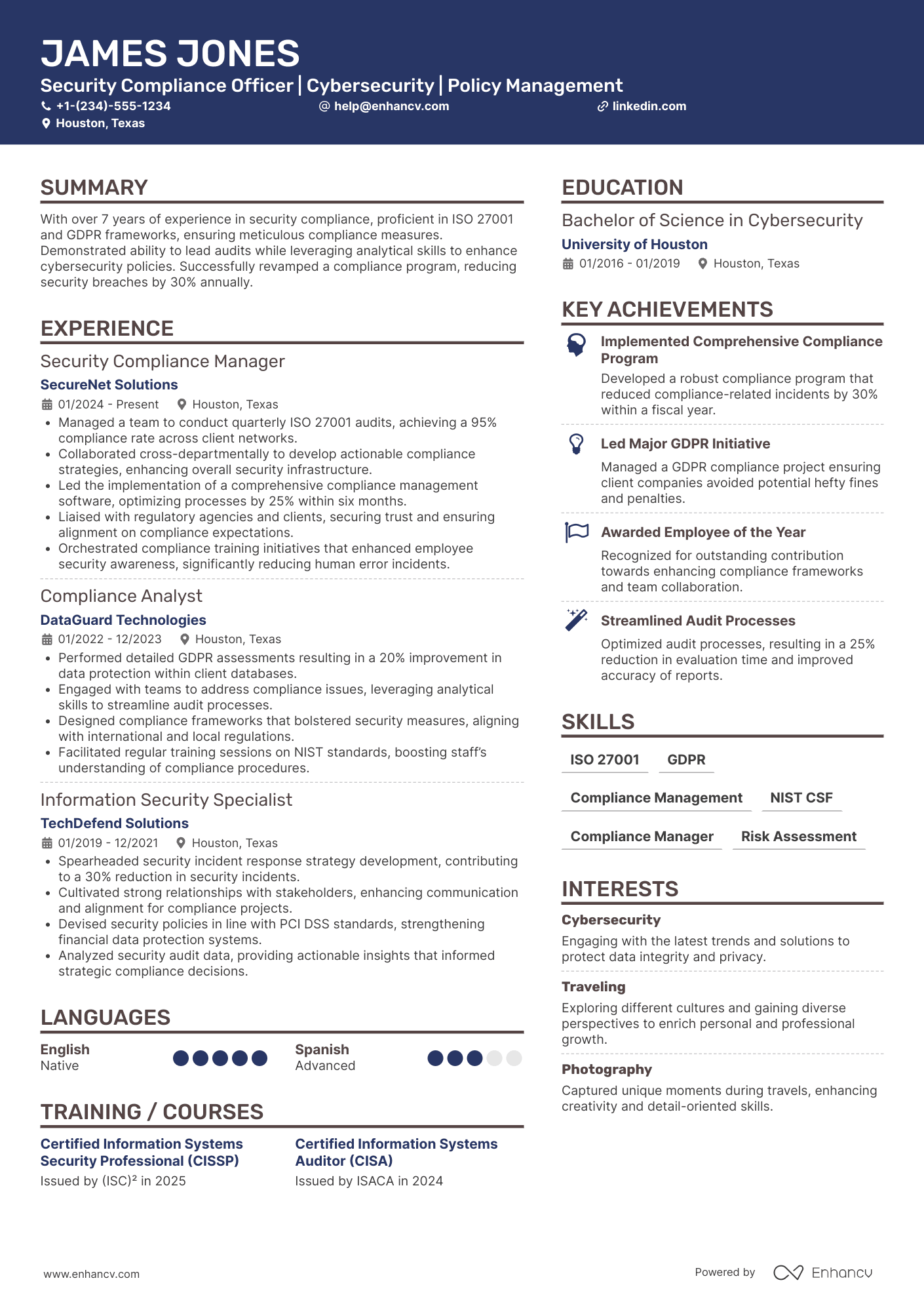
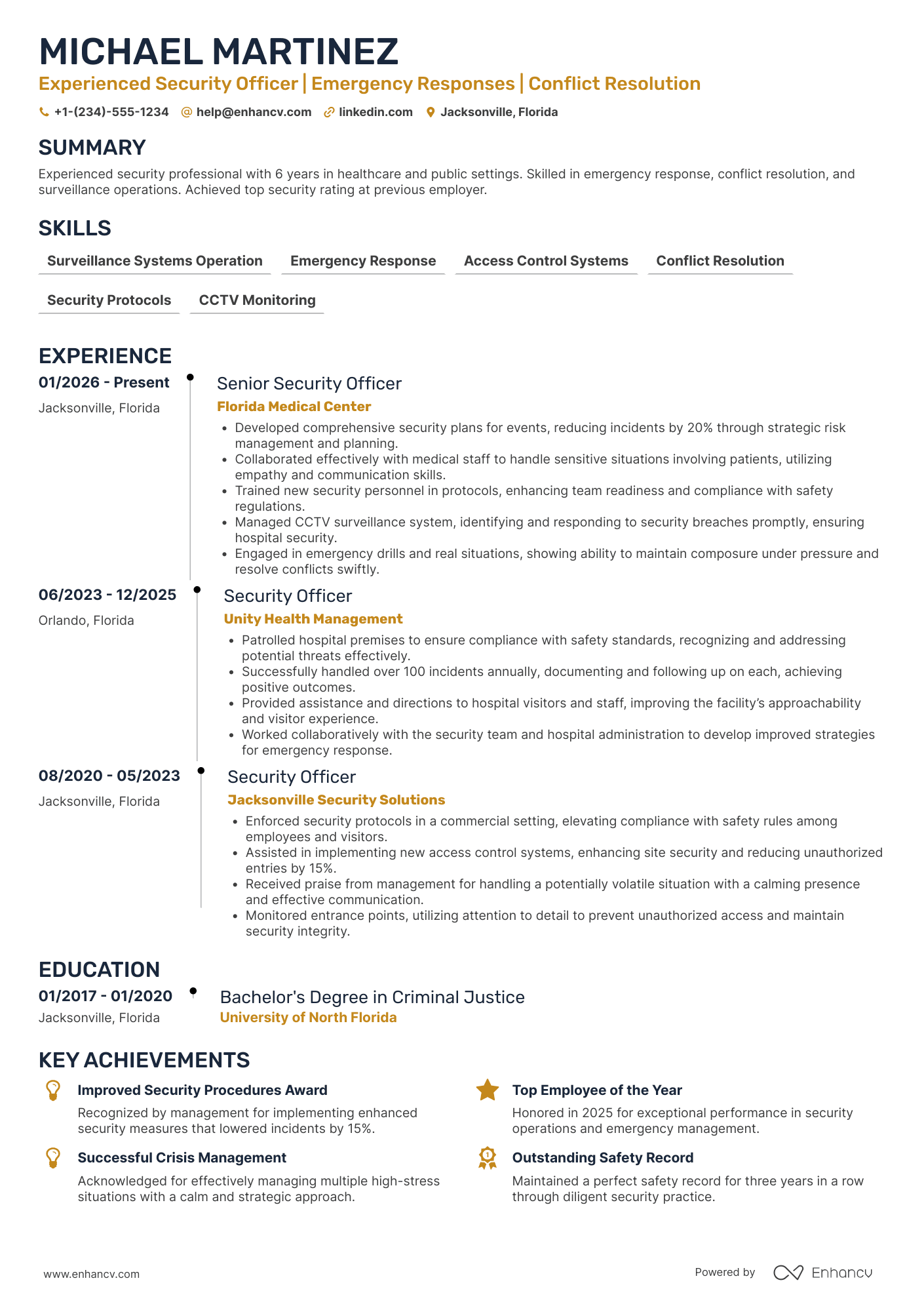
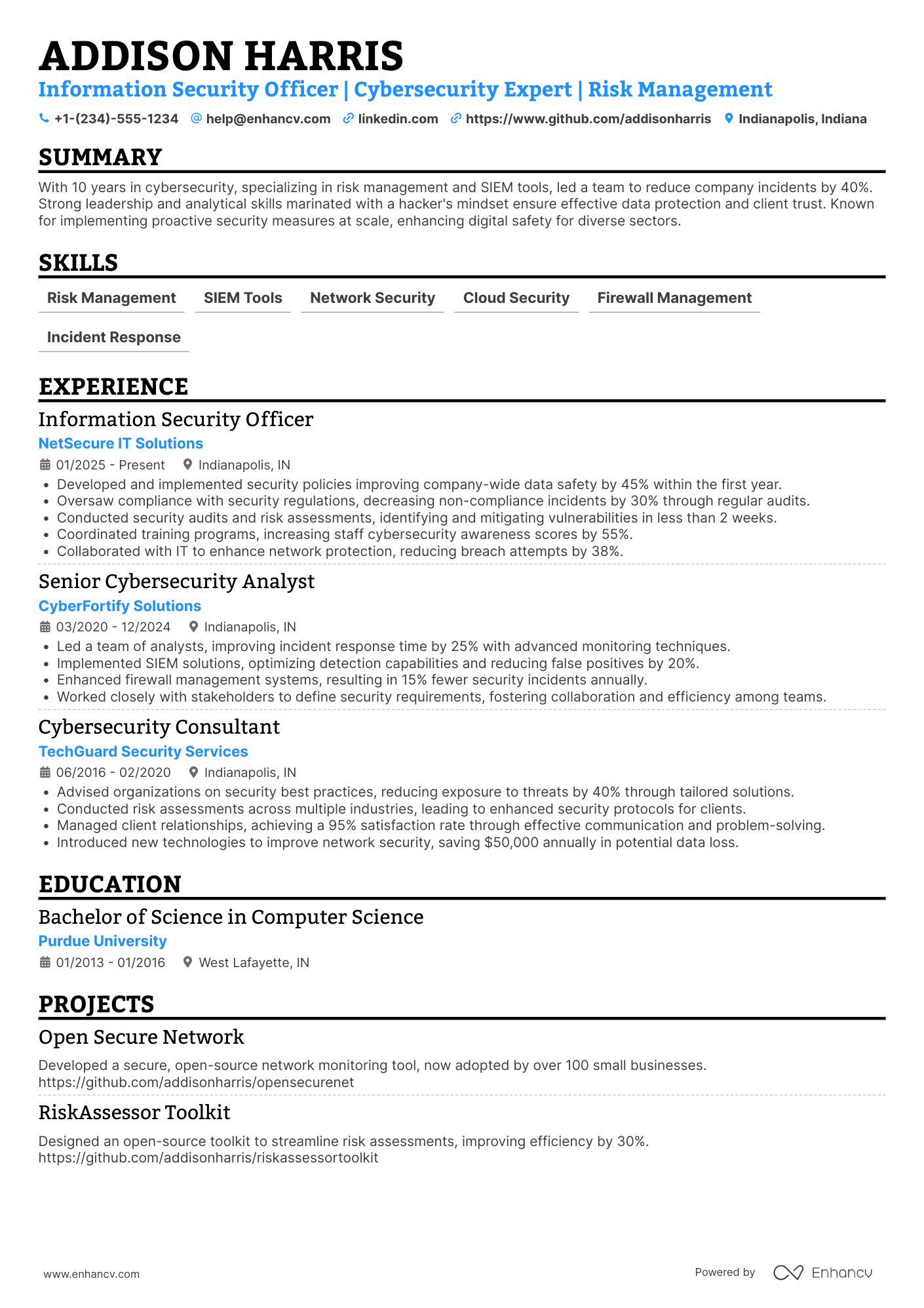
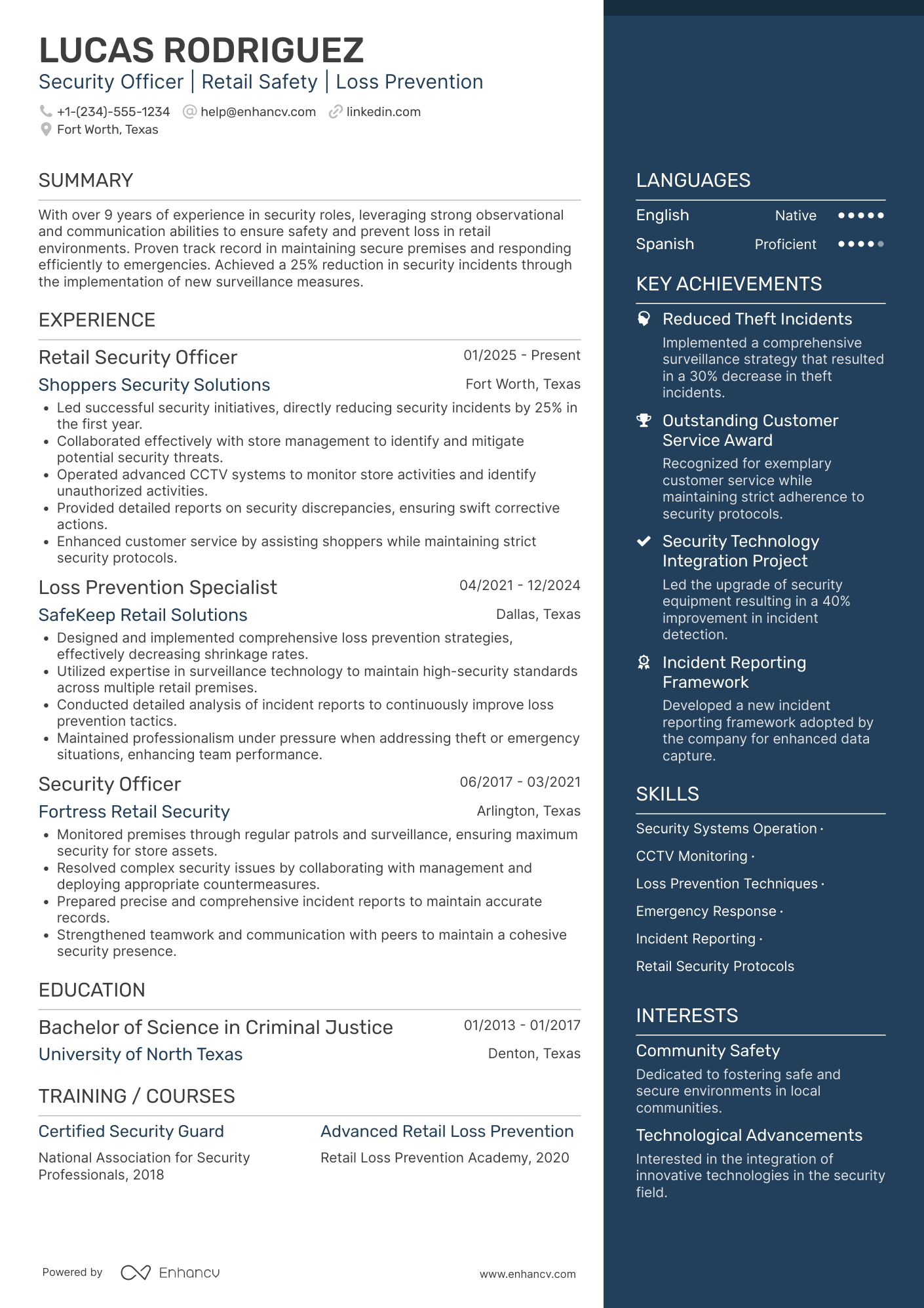
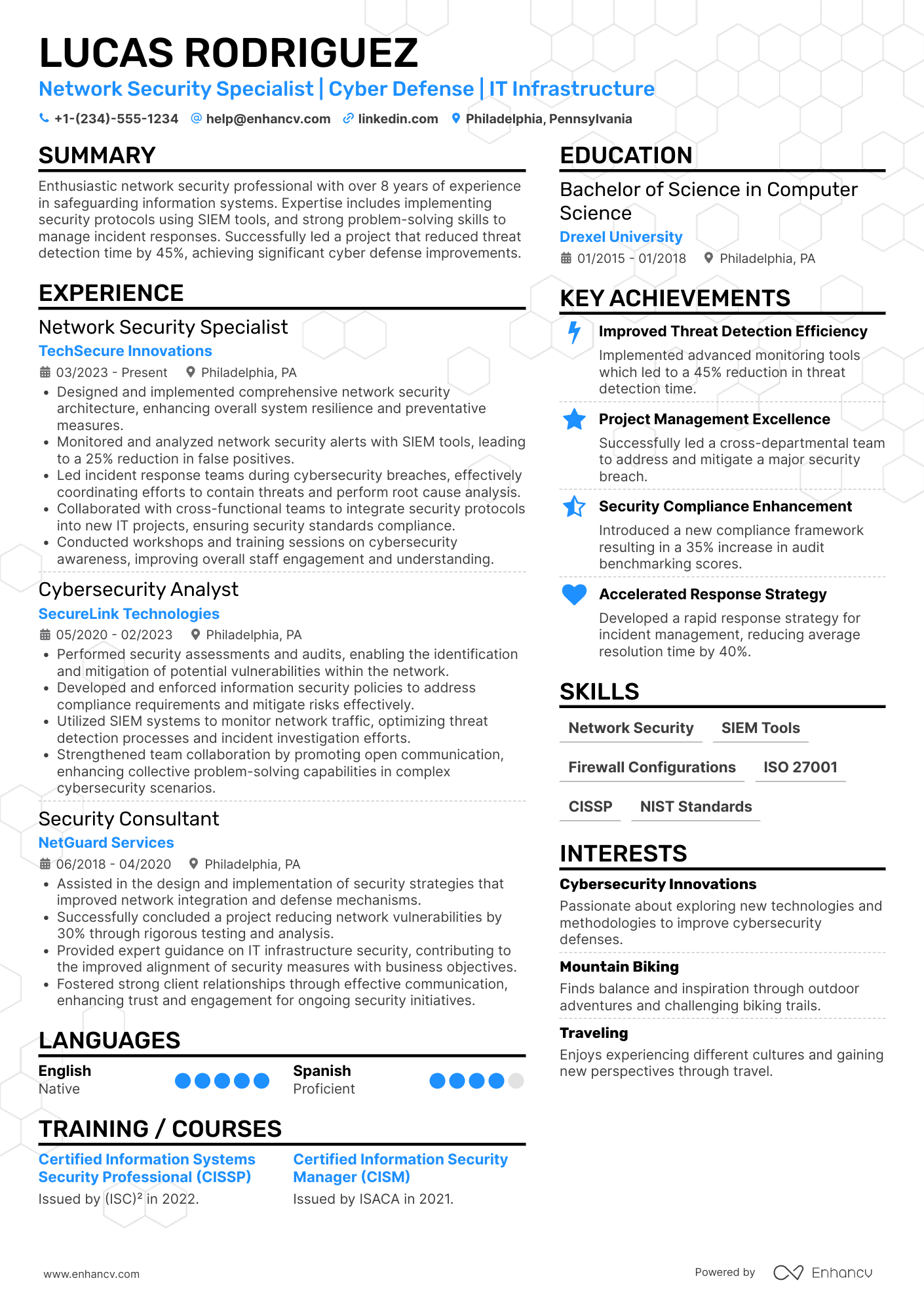
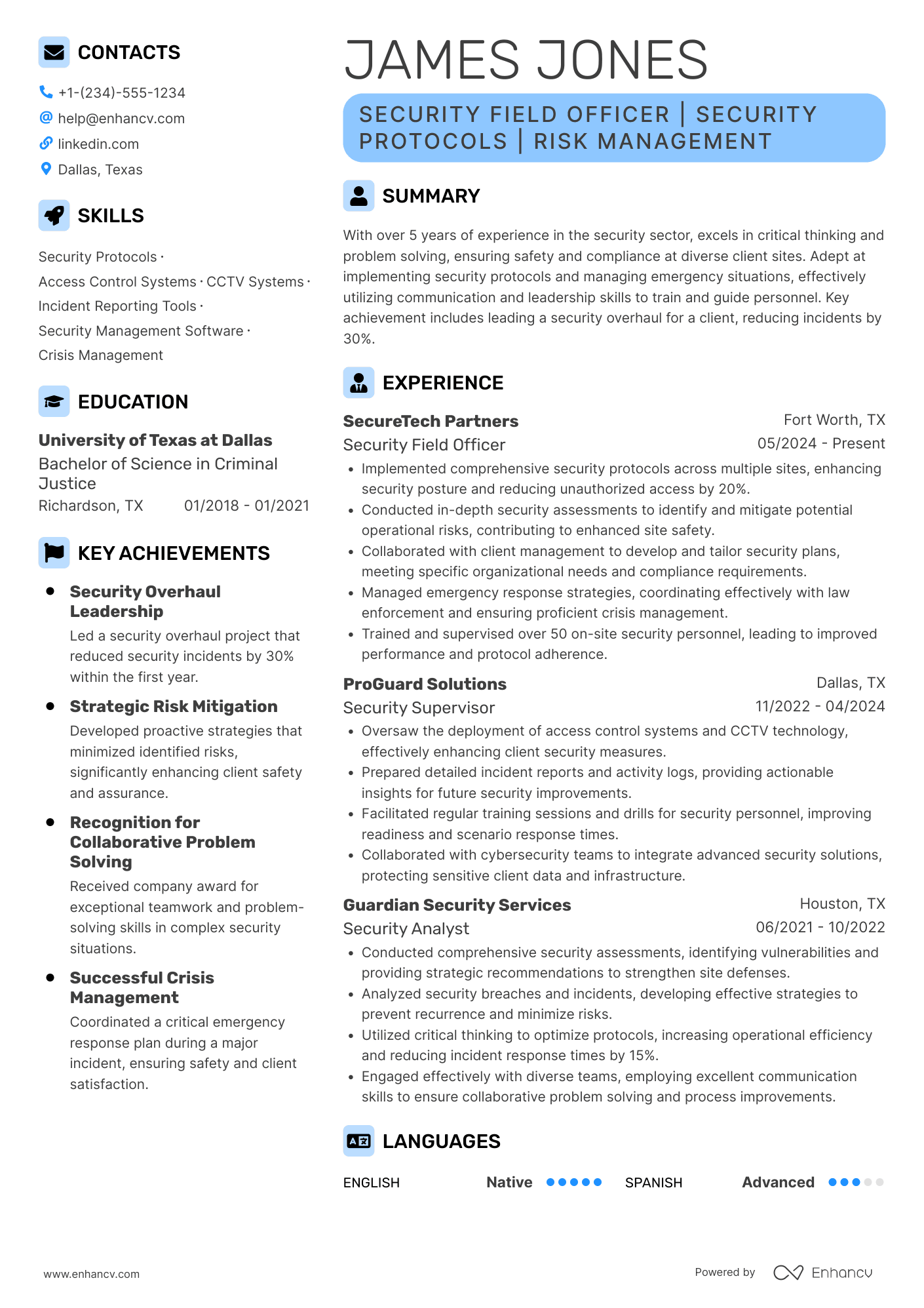
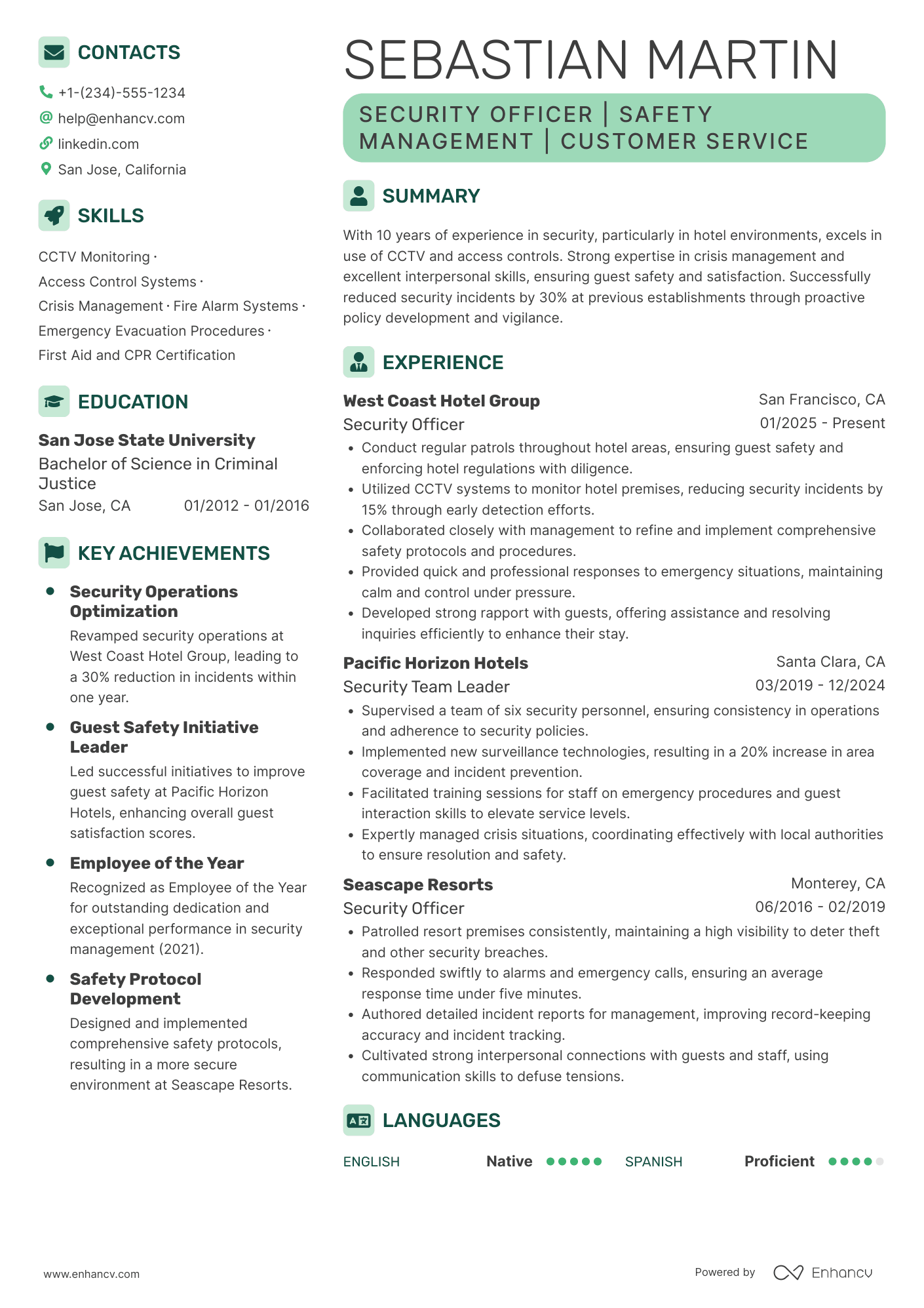
Most security officer resume drafts fail because they list posts and duties without proving control of access, incident response, or risk reduction. That format gets filtered by ATS rules and missed in fast recruiter scans.
A strong resume shows what changed because you were on shift. Knowing how to write a resume that highlights incidents resolved, response times, patrol coverage, access violations prevented, reports completed accurately, and safety improvements across sites is essential. Quantify scope, compliance results, and customer or employee outcomes.

Key takeaways
- Quantify patrol scope, incident reductions, and response times instead of listing routine duties.
- Tailor every resume to the job posting by mirroring specific tools, systems, and compliance standards.
- Use reverse-chronological format with experience; use hybrid format when switching careers.
- Place certifications above education when they're recent or required for the post.
- Tie every listed skill to a measurable outcome in your experience or summary section.
- Enhancv can help you turn vague security duties into focused, results-driven bullet points.
- Stop using AI once your resume accurately reflects real experience without inflated claims.
Job market snapshot for security officers
We analyzed 14,513 recent security officer job ads across major US job boards. These numbers help you understand salary landscape, employer expectations, skills in demand at a glance.
What level of experience employers are looking for security officers
| Years of Experience | Percentage found in job ads |
|---|---|
| 1–2 years | 9.3% (1353) |
| 3–4 years | 0.8% (115) |
| 5–6 years | 0.6% (93) |
| 7–8 years | 0.2% (29) |
| 9–10 years | 0.2% (27) |
| 10+ years | 61.9% (8977) |
| Not specified | 27.1% (3931) |
Security officer ads by area of specialization (industry)
| Industry (Area) | Percentage found in job ads |
|---|---|
| Finance & Banking | 77.2% (11202) |
| Healthcare | 12.7% (1839) |
| Education | 3.7% (534) |
| Retail & E-commerce | 3.3% (477) |
| Government | 1.4% (210) |
| Media & Entertainment | 0.9% (126) |
| Manufacturing | 0.3% (47) |
| Other | 0.2% (26) |
| Real Estate & Construction | 0.2% (22) |
| Travel & Hospitality | 0.1% (18) |
Top companies hiring security officers
| Company | Percentage found in job ads |
|---|---|
| Allied Universal Security | 62.6% (9090) |
| Securitas Inc. | 6.5% (947) |
| GardaWorld | 5.2% (748) |
| Metro One | 2.0% (296) |
| St. Moritz Security Service | 1.1% (159) |
| HSS | 1.1% (154) |
| Walden Security | 0.7% (103) |
| Andy Frain | 0.7% (101) |
| Per Mar Security Services | 0.5% (68) |
| Department Of Homeland Security | 0.4% (61) |
Role overview stats
These tables show the most common responsibilities and employment types for security officer roles. Use them to align your resume with what employers expect and to understand how the role is structured across the market.
Day-to-day activities and top responsibilities for a security officer
| Responsibility | Percentage found in job ads |
|---|---|
| Access control | 10.4% (1509) |
| Computer | 9.8% (1418) |
| Customer service | 9.4% (1368) |
| Tablet | 9.4% (1362) |
| First aid | 4.8% (700) |
| Report writing | 4.8% (695) |
| Cpr | 4.7% (684) |
| Cctv | 3.5% (506) |
| Reporting | 3.3% (479) |
| Incident reporting | 2.8% (413) |
| Computer skills | 2.8% (411) |
| Driver's license | 2.5% (366) |
How to format a security officer resume
Recruiters evaluating security officer candidates prioritize situational awareness, reliability, and hands-on patrol or access-control experience—often scanning for certifications, site types, and incident-response history within seconds. A clean, well-structured resume format ensures these signals surface immediately, both for human reviewers and applicant tracking systems.

I have significant experience in this role—which format should I use?
Use a reverse-chronological format to lead with your most recent and relevant security postings, giving recruiters a clear timeline of your growing responsibilities. Do:
- Highlight the scope and ownership of each role—site size, team size, and the types of facilities you protected (commercial, industrial, healthcare, event venues).
- Feature role-specific tools and domains such as CCTV monitoring systems, access-control platforms, incident-reporting software, and CPR/AED or state guard card certifications.
- Quantify outcomes and business impact wherever possible, including reductions in incidents, response-time improvements, or shrinkage decreases.
I'm junior or switching into this role—what format works best?
A hybrid format works best, letting you lead with a focused skills section while still showing relevant employment or volunteer history in chronological order. Do:
- Place core security competencies—surveillance, conflict de-escalation, emergency response, report writing—near the top of the resume so ATS software and recruiters find them immediately.
- Include projects or transitional experience such as military service, loss-prevention volunteering, campus safety roles, or relevant coursework and certifications (guard card, first aid, OSHA training).
- Connect every action to a clear result, even in non-security roles, to demonstrate transferable judgment and accountability.
Why not use a functional resume?
A functional format buries your work timeline and strips away the site-specific context recruiters need to verify you can handle real-world security environments, making your application look incomplete or evasive. A functional resume may be acceptable if you're entering security from an unrelated field, have a significant employment gap, or hold limited formal work history—but only if you anchor every listed skill to a specific project, certification, or measurable outcome rather than presenting abilities in the abstract.
Now that you've established a clean, readable structure for your resume, it's time to fill each part with the right content—starting with the key sections every security officer resume needs.
What sections should go on a security officer resume
Recruiters expect a security officer resume to show clear proof you can protect people, property, and assets while following procedures and documenting incidents accurately. Understanding which resume sections to include ensures you present that proof in the right order.
Use this structure for maximum clarity:
- Header
- Summary
- Experience
- Skills
- Projects
- Education
- Certifications
- Optional sections: Awards, Volunteering, Languages
Your strongest experience bullets should emphasize incident prevention and response outcomes, patrol and access control scope, compliance with protocols, and measurable results.
Is your resume good enough?
Drop your resume here or choose a file. PDF & DOCX only. Max 2MB file size.
Once you’ve organized your resume with the right core components, the next step is to write the experience section so it supports those elements with clear, relevant details.
How to write your security officer resume experience
The experience section of your security officer resume is where you prove you've protected people, property, and assets—not just describe daily rounds. Hiring managers prioritize demonstrated impact over descriptive task lists, so focus on work you delivered, security tools or methods you applied, and measurable outcomes tied to safety and risk reduction. Building a targeted resume that aligns each bullet with the employer's priorities makes your experience section far more effective.
Each entry should include:
- Job title
- Company and location (or remote)
- Dates of employment (month and year)
Three to five concise bullet points showing what you owned, how you executed, and what outcomes you delivered:
- Ownership scope: the facilities, zones, access points, surveillance systems, or security teams you were directly accountable for as a security officer.
- Execution approach: the patrol protocols, monitoring technologies, incident response frameworks, or threat assessment methods you used to make decisions and carry out security operations.
- Value improved: changes to incident rates, response times, compliance levels, emergency preparedness, or overall site safety that resulted from your work.
- Collaboration context: how you coordinated with law enforcement, facility management, emergency services, or internal departments to maintain a secure environment.
- Impact delivered: outcomes expressed through reduced risk, strengthened access control, improved regulatory compliance, or enhanced safety culture rather than routine activity descriptions.
Experience bullet formula
A security officer experience example
✅ Right example - modern, quantified, specific.
Security Officer
Riverside Medical Center | Austin, TX
2022–Present
Two-hundred-bed hospital campus with a twenty-four-seven emergency department and high-traffic public entrances.
- Led daily patrols and access control using LenelS2 OnGuard and HID badge systems, reducing unauthorized entry incidents by 38% year over year.
- Investigated and documented incidents in i-Sight case management, cutting report completion time by 25% and improving evidence quality for HR and legal reviews.
- Coordinated with facilities and information technology to expand CCTV coverage using Genetec Security Center, increasing camera uptime to 99.5% and reducing blind spots by 30%.
- De-escalated high-risk situations using Crisis Prevention Institute techniques and partnered with nursing leadership to implement response scripts, lowering use-of-force escalations by 22%.
- Conducted monthly safety drills with emergency management and local law enforcement, improving average response time to Code Silver events by one minute and forty seconds across three buildings.
Now that you've seen how a strong experience section looks in practice, let's explore how to customize yours to match a specific security officer job posting.
How to tailor your security officer resume experience
Recruiters evaluate your security officer resume through both manual review and applicant tracking systems (ATS), so tailoring your resume to the job description is essential. Tailoring ensures the skills, tools, and responsibilities you highlight directly reflect what the employer is looking for.
Ways to tailor your security officer experience:
- Match surveillance systems and access control platforms named in the posting.
- Mirror the exact terminology used for patrol procedures or protocols.
- Reflect specific compliance standards like OSHA or state licensing requirements.
- Highlight incident reporting methods or documentation tools the employer references.
- Include relevant industry experience such as healthcare or corporate environments.
- Emphasize emergency response frameworks or de-escalation techniques when mentioned.
- Align your metrics with the KPIs or performance benchmarks they prioritize.
- Reference collaboration with law enforcement or facility management if specified.
Tailoring means aligning your real accomplishments with the role's stated requirements, not forcing keywords where they don't naturally belong.
Resume tailoring examples for security officer
| Job description excerpt | Untailored | Tailored |
|---|---|---|
| "Conduct regular foot and vehicle patrols of a 500,000 sq. ft. commercial property, monitoring CCTV systems and responding to alarms using C-CURE 9000 access control." | Patrolled property and monitored security cameras on a daily basis. | Conducted scheduled foot and vehicle patrols across a 500,000 sq. ft. commercial facility, monitored 75+ CCTV feeds, and managed alarm response through C-CURE 9000 access control, reducing unauthorized entry incidents by 30%. |
| "Write detailed daily activity reports (DARs) and incident reports in compliance with ASIS International guidelines, coordinating with local law enforcement as needed." | Wrote reports and communicated with team members about security issues. | Authored detailed daily activity reports and incident reports following ASIS International standards, coordinating directly with local law enforcement on 12+ incidents per quarter to ensure timely resolution and regulatory compliance. |
| "Screen visitors and employees at entry points using X-ray machines and magnetometers, enforcing facility access policies for a Level III federal building." | Checked IDs and managed building access for visitors and staff. | Screened an average of 400 daily visitors and employees at federal building entry points using X-ray machines and walk-through magnetometers, enforcing Level III facility access policies with a 100% compliance rate during annual audits. |
Once you’ve aligned your experience with the role’s priorities, the next step is to quantify your security officer achievements so employers can quickly see your impact.
How to quantify your security officer achievements
Quantifying your achievements proves you reduce risk, protect people, and keep operations moving. Focus on incident volume, response time, compliance results, loss prevention, and screening accuracy across your assigned site and shifts.
Quantifying examples for security officer
| Metric | Example |
|---|---|
| Incident response time | "Cut average response time from six minutes to three minutes by tightening radio protocols and post orders across a 450,000-square-foot facility." |
| Loss prevention | "Reduced monthly shrink by $18,000 by increasing dock patrol frequency, sealing blind spots, and coordinating CCTV reviews with AP using Genetec." |
| Compliance audits | "Maintained 100% pass rate across six client audits by enforcing badge checks, completing daily log reviews, and correcting post order gaps within 24 hours." |
| Access control accuracy | "Lowered visitor check-in errors by 35% by standardizing ID verification and using HID badge logs to reconcile entries for 200-plus daily visitors." |
| Screening throughput | "Improved lobby screening throughput by 22% by reorganizing stanchions and retraining staff on handheld metal detector procedures during peak shift changes." |
Turn vague job duties into measurable, recruiter-ready resume bullets in seconds with Enhancv's Bullet Point Generator.
Once you've crafted strong bullet points for your experience section, the next step is ensuring your resume also highlights the right hard and soft skills employers look for in a security officer.
How to list your hard and soft skills on a security officer resume
Your skills section shows recruiters and an ATS (applicant tracking system) you can prevent incidents, respond fast, and document accurately—so match the job post with role-specific hard skills and job-ready soft skills, usually weighted slightly toward hard skills. security officer roles require a blend of:
- Product strategy and discovery skills.
- Data, analytics, and experimentation skills.
- Delivery, execution, and go-to-market discipline.
- Soft skills.
Your skills section should be:
- Scannable (bullet-style grouping).
- Relevant to the job post.
- Backed by proof in experience bullets.
- Updated with current tools.
Place your skills section:
- Above experience if you're junior or switching careers.
- Below experience if you're mid/senior with strong achievements.

Hard skills
- Access control systems, badge readers
- CCTV monitoring, video management systems
- Alarm monitoring, intrusion detection
- Incident reporting, daily activity logs
- Patrol operations, checkpoint systems
- Emergency response, evacuation procedures
- De-escalation techniques, use-of-force policy
- OSHA compliance, hazard identification
- Fire watch, life safety systems
- Evidence preservation, chain of custody
- Radio communications, dispatch protocols
- Visitor management systems, ID verification
Soft skills
- Stay calm under pressure
- De-escalate conflict quickly
- Make rapid, sound decisions
- Communicate clearly on radio
- Write precise incident narratives
- Enforce policies consistently
- Maintain situational awareness
- Coordinate with law enforcement
- Escalate issues at the right time
- Protect confidential information
- Follow post orders exactly
- Manage multiple priorities on shift
How to show your security officer skills in context
Skills shouldn't live only in a bulleted list on your resume. Explore resume skills examples to see how top candidates weave competencies into every section.
They should be demonstrated in:
- Your summary (high-level professional identity)
- Your experience (proof through outcomes)
Here's what that looks like in practice.
Summary example
Senior security officer with 12 years in corporate facility protection. Skilled in access control systems, CCTV monitoring, and emergency response planning. Reduced unauthorized entry incidents by 38% through proactive patrol strategies and cross-departmental safety training programs.
- Reflects senior-level experience clearly
- Names specific tools and methods
- Leads with a measurable outcome
- Highlights training as a soft skill
Experience example
Senior Security Officer
Greystone Property Group | Chicago, IL
March 2018–Present
- Implemented a Genetec-based access control upgrade across four buildings, cutting unauthorized entries by 41% within six months.
- Collaborated with facilities management to redesign emergency evacuation procedures, improving drill completion times by 27%.
- Led a team of nine officers using incident reporting software, reducing average response time from 8 minutes to under 5.
- Every bullet includes measurable proof
- Skills appear naturally through real outcomes
Once you’ve tied your relevant strengths to real tasks and outcomes, the next step is applying that same approach to build a security officer resume with no experience, so you can demonstrate fit without a work history.
How do I write a security officer resume with no experience
Even without full-time experience, you can demonstrate readiness through building a resume without work experience that leverages transferable activities such as:
- Campus security volunteer shifts
- Event security and crowd control
- Neighborhood watch patrol participation
- Customer service incident documentation
- First aid and CPR certification
- Access control desk coverage
- Safety inspections and hazard reporting
- Fire watch and evacuation drills
Focus on:
- Incident reports with clear details
- Access control and visitor logs
- Patrols, rounds, and checklists
- Training, licenses, and compliance
Resume format tip for entry-level security officer
Use a combination resume format because it highlights relevant skills and training first, then supports them with projects, volunteering, or part-time work. Do:
- Add a "Training and certifications" section.
- Include tools: radios, CCTV, badge systems.
- Write bullets with actions and results.
- Quantify: rounds, incidents, response time.
- Mirror keywords from the job posting.
- Completed twelve event security shifts using radio protocols, bag checks, and incident logs, reducing entry delays by 20% and escalating zero incidents incorrectly.
Even without direct experience, your education section can demonstrate relevant knowledge and training that strengthens your candidacy—here's how to present it effectively.
How to list your education on a security officer resume
Your education section helps hiring teams confirm you have the foundational knowledge needed for the role. It validates training in areas like criminal justice, public safety, and emergency response.
Include:
- Degree name
- Institution
- Location
- Graduation year
- Relevant coursework (for juniors or entry-level candidates)
- Honors & GPA (if 3.5 or higher)
Skip month and day details—list the graduation year only.
Here's a strong education entry tailored for a security officer resume.
Example education entry
Bachelor of Science in Criminal Justice
Metro State University, Denver, CO
Graduated 2021
GPA: 3.7/4.0
- Relevant coursework: Introduction to Law Enforcement, Emergency Management, Surveillance Systems, Conflict Resolution
- Honors: Dean's List, 2019–2021
How to list your certifications on a security officer resume
Certifications on your resume show your commitment to learning, your proficiency with security tools, and your relevance to current security officer standards. They also help hiring teams verify you meet site and contract requirements.
Include:
- Certificate name
- Issuing organization
- Year
- Optional: credential ID or URL
- Place certifications below education when they're older, less relevant to the role, or secondary to your degree or training.
- Place certifications above education when they're recent, required for the post, or directly tied to your daily security officer duties.
Best certifications for your security officer resume
- Security Guard License (State-Issued)
- CPR and AED Certification
- First Aid Certification
- OSHA 10-Hour General Industry
- FEMA IS-100: Introduction to Incident Command System
- FEMA IS-700: National Incident Management System
- TASER Conducted Energy Weapon Certification
Once you’ve placed your credentials where hiring managers can spot them quickly, use your security officer resume summary to reinforce their relevance and value upfront.
How to write your security officer resume summary
Your resume summary is the first thing a recruiter reads. A strong one immediately signals you're qualified and worth interviewing for a security officer role.
Keep it to three to four lines, with:
- Your title and total years of security experience.
- The domain you've worked in, such as corporate, retail, or event security.
- Core skills like access control, surveillance systems, and incident reporting.
- One or two measurable achievements, such as reducing incidents or improving response times.
- Soft skills tied to real outcomes, like communication that resolved conflicts without escalation.

PRO TIP
At the entry or mid-level, emphasize relevant certifications, hands-on skills, and early wins that show reliability. Avoid vague phrases like "hardworking team player" or "passionate about safety." Instead, ground every claim in something specific and measurable.
Example summary for a security officer
Security officer with three years of experience in corporate facility protection. Skilled in CCTV monitoring, access control, and emergency response. Reduced after-hours incidents by 30% through improved patrol scheduling.
Optimize your resume summary and objective for ATS
Drop your resume here or choose a file.
PDF & DOCX only. Max 2MB file size.
Now that your summary is ready to showcase your qualifications, make sure the header above it presents your contact details correctly so recruiters can actually reach you.
What to include in a security officer resume header
Your resume header lists your key identifying and contact details, and it boosts visibility, credibility, and recruiter screening for a security officer role.
Essential resume header elements
- Full name
- Tailored job title and headline
- Location
- Phone number
- Professional email
- GitHub link
- Portfolio link
A LinkedIn link helps recruiters confirm your experience fast and supports screening.
Don't include a photo on a security officer resume unless the role is explicitly front-facing or appearance-dependent.
Keep your header consistent with your certifications and shift availability, and match the exact job title used in the posting.
Example
Security officer resume header
Jordan Taylor
Security Officer | Access Control, Patrols, Incident Reporting
Dallas, TX
(469) 555-01XX
jordan.taylor@enhancv.com
github.com/jordantaylor
jordantaylorsecurity.com
linkedin.com/in/jordantaylor
Once your contact details and key identifiers are in place, you can strengthen your application with additional sections for security officer resumes that add relevant context and support your qualifications.
Additional sections for security officer resumes
When your core qualifications match other candidates, additional resume sections can set you apart by showcasing role-specific credibility and depth. For example, listing language skills on your resume can be a strong differentiator for security roles at multilingual sites or international facilities.
- Languages
- Certifications and licenses
- Volunteer experience
- Military service
- Professional affiliations
- Hobbies and interests
- Awards and commendations
Once you've strengthened your resume with relevant extra sections, the next step is pairing it with a cover letter that gives your application a competitive edge.
Do security officer resumes need a cover letter
A cover letter isn't required for a security officer, but it helps in competitive roles or when employers expect one. If you're unsure where to start, understanding what a cover letter is and how it complements your resume can clarify its value. It can make a difference when your resume doesn't clearly show fit, scope, or context.
Use a cover letter to add details your security officer resume can't:
- Explain role and team fit by matching your experience to the site, shift, post orders, and reporting expectations.
- Highlight one or two relevant outcomes, such as reducing incident rates, improving patrol coverage, or strengthening access control compliance.
- Show you understand the product, users, or business context, including customer traffic patterns, high-risk assets, and service standards.
- Address career transitions or non-obvious experience by connecting prior roles to security officer tasks, tools, and decision-making.
Drop your resume here or choose a file.
PDF & DOCX only. Max 2MB file size.
Whether you include a cover letter depends on the role and employer expectations, and AI tools can help you tailor your security officer resume to match those requirements quickly and accurately.
Using AI to improve your security officer resume
AI can sharpen your resume's clarity, structure, and overall impact. It helps you phrase achievements more precisely and align content with job requirements. However, overusing AI can strip away your authentic voice. Once your resume reads clearly and fits the role, step back. If you're looking for specific guidance, explore ChatGPT resume writing prompts tailored for resume improvement.
Here are 10 practical prompts you can copy and paste to strengthen specific sections of your security officer resume:
- Strengthen your summary: "Rewrite my security officer resume summary to highlight my top three qualifications in under four sentences."
- Quantify experience bullets: "Add measurable results to each of my security officer experience bullet points using numbers, percentages, or timeframes."
- Align skills with the job: "Compare my security officer skills section against this job description and suggest missing relevant skills."
- Tighten wordy bullets: "Shorten each of my security officer experience bullets to one concise line without losing key details."
- Improve action verbs: "Replace weak or repetitive verbs in my security officer experience section with strong, specific action verbs."
- Clarify certifications: "Reorganize my security officer certifications section so the most relevant credentials appear first with clear formatting."
- Tailor to a posting: "Rewrite my security officer resume summary and experience bullets to match this specific job posting."
- Refine project descriptions: "Make my security officer project descriptions more results-focused by emphasizing outcomes over responsibilities."
- Enhance education relevance: "Highlight coursework and training in my education section that directly supports a security officer role."
- Remove filler language: "Identify and remove vague or unnecessary phrases across my entire security officer resume."
Stop using AI once your resume sounds accurate, specific, and aligned with real experience. AI should never invent experience or inflate claims—if it didn't happen, it doesn't belong here.
Conclusion
A strong security officer resume proves impact with measurable outcomes, role-specific skills, and a clean structure. Lead with results like incident reductions, response times, patrol coverage, and compliance rates. Support them with clear experience, relevant certifications, and consistent formatting.
Keep every section easy to scan, with focused bullets and straightforward job titles. This approach shows you can protect people and property today and adapt to evolving risks. It also helps hiring teams quickly match you to current and near-future needs.
Security Officer resume examples
By Experience
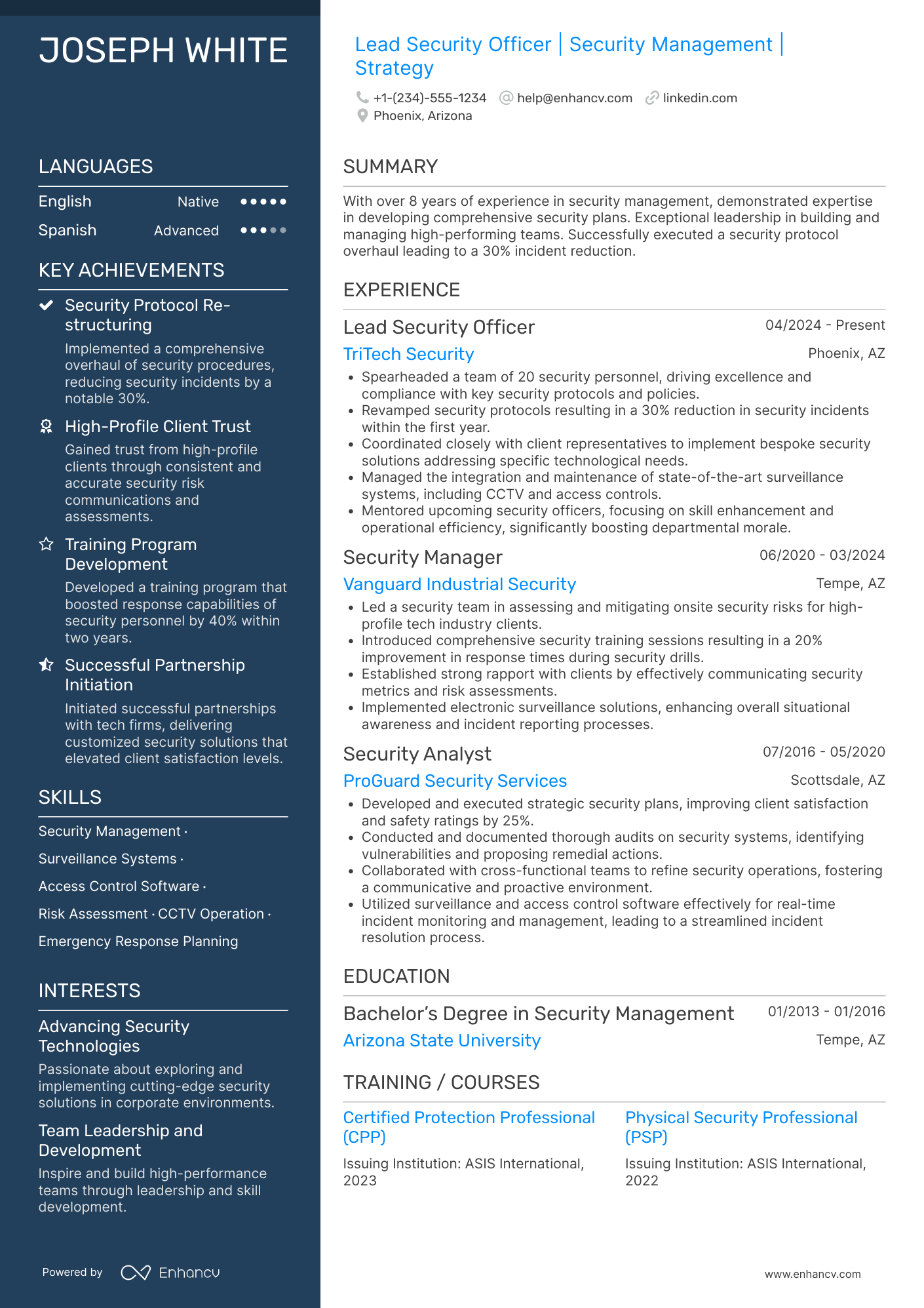
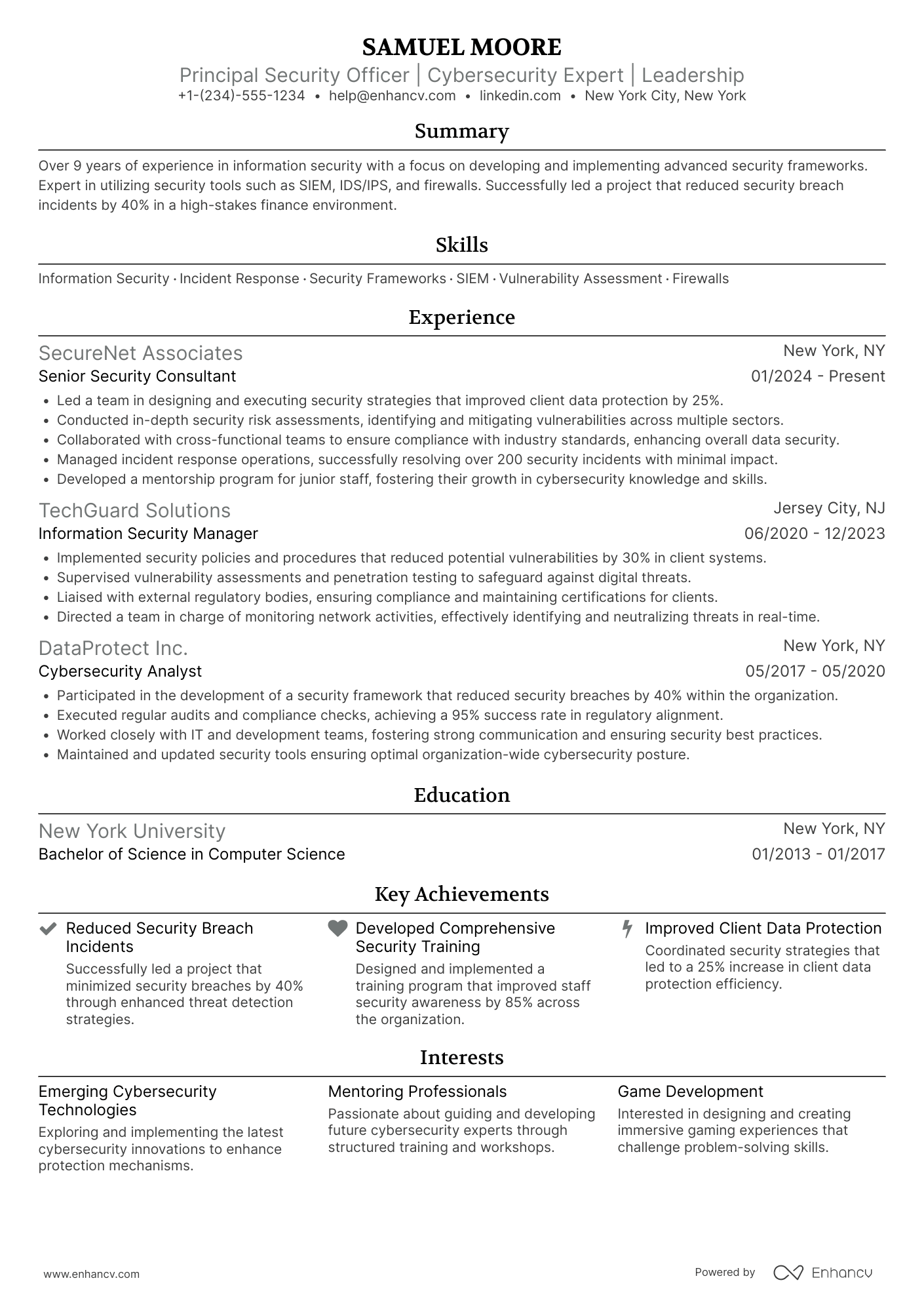
By Role