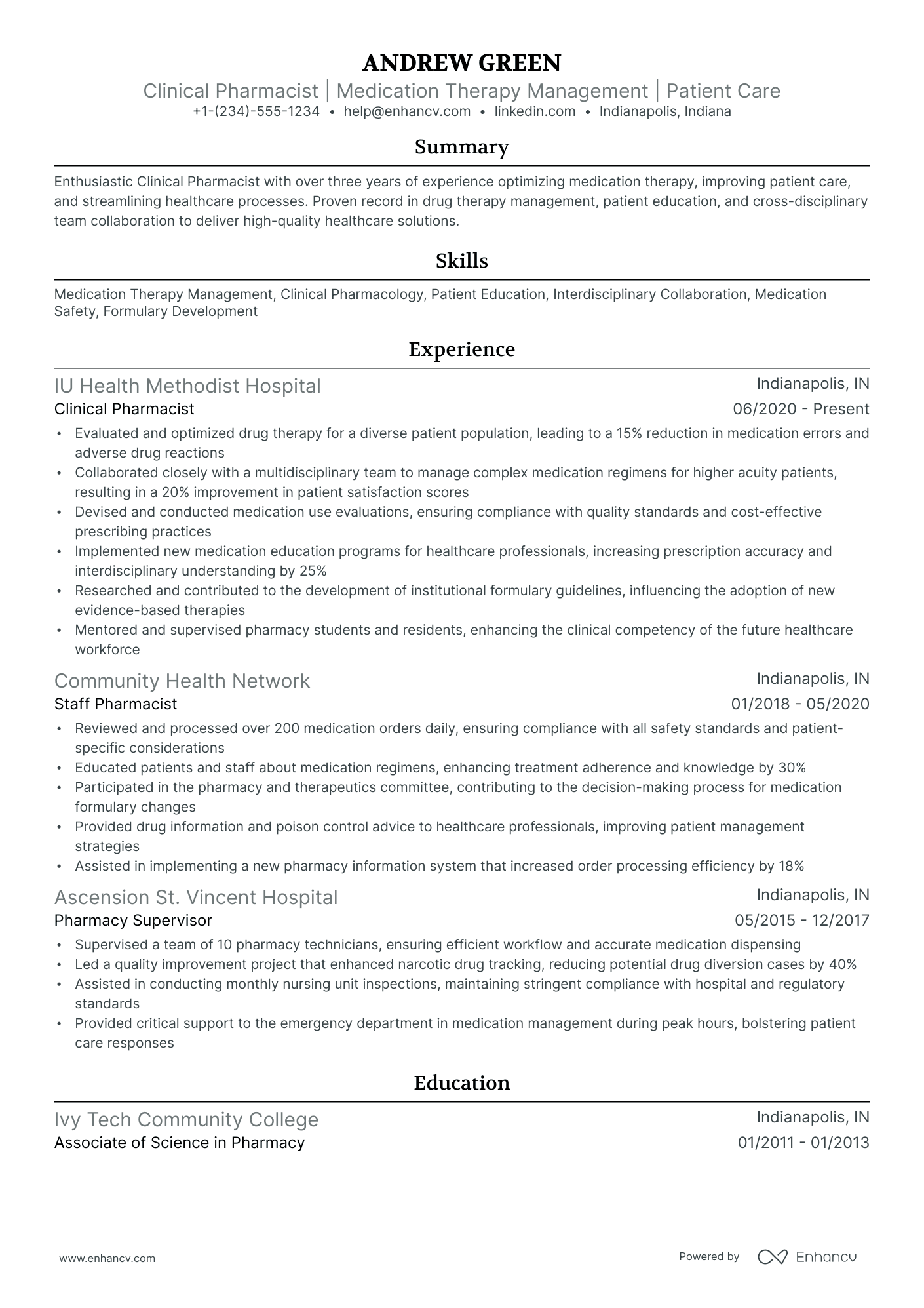
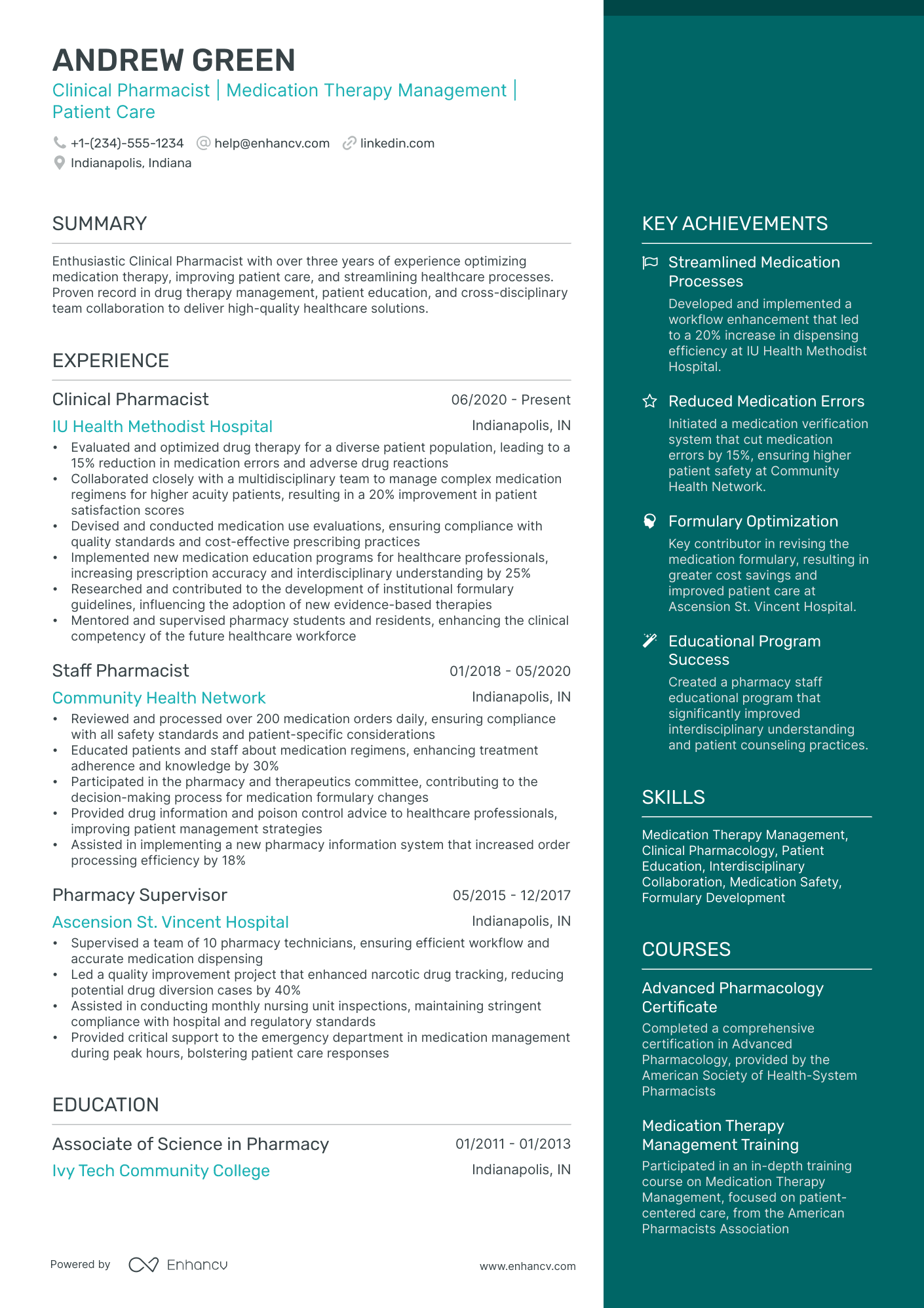
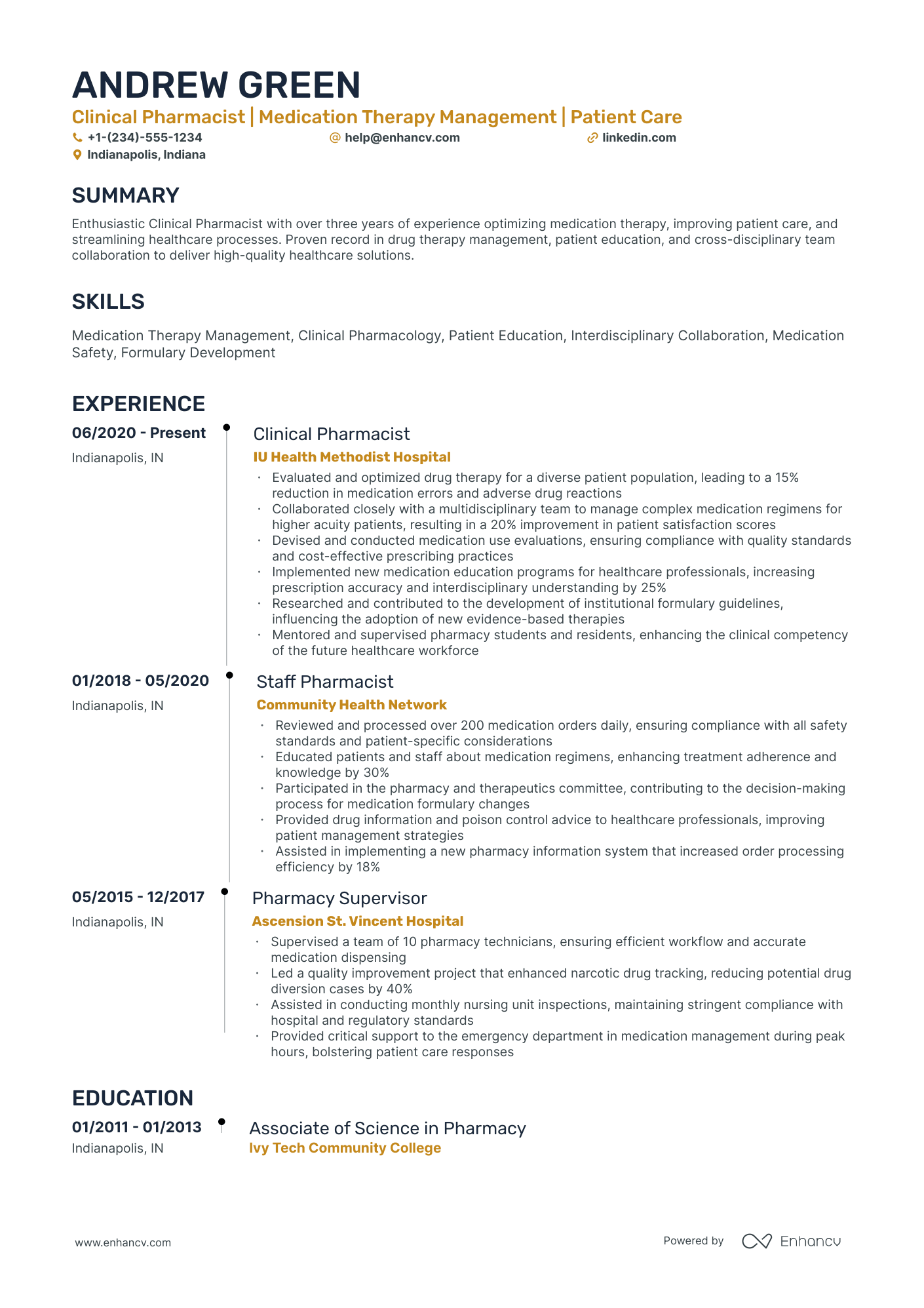
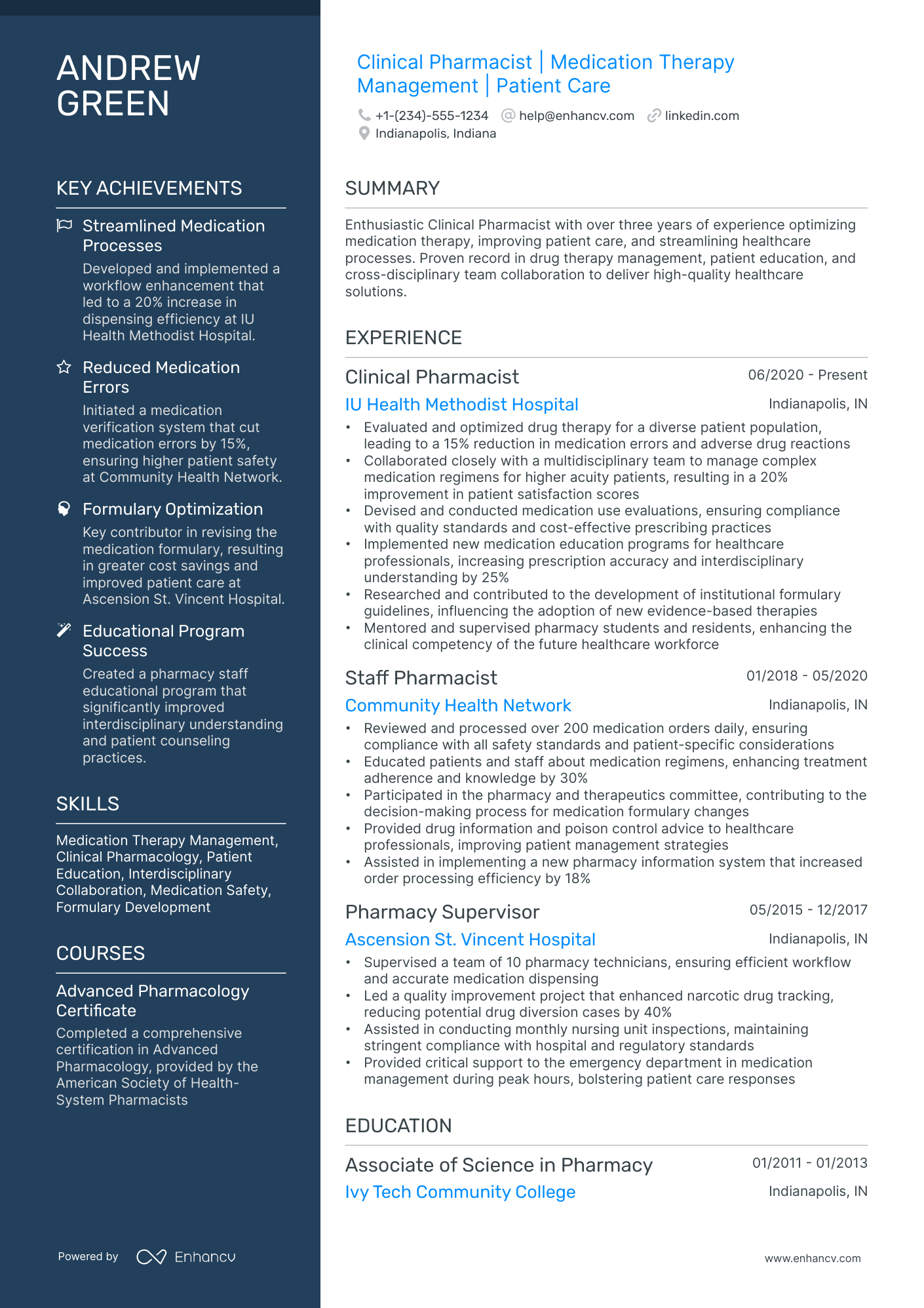
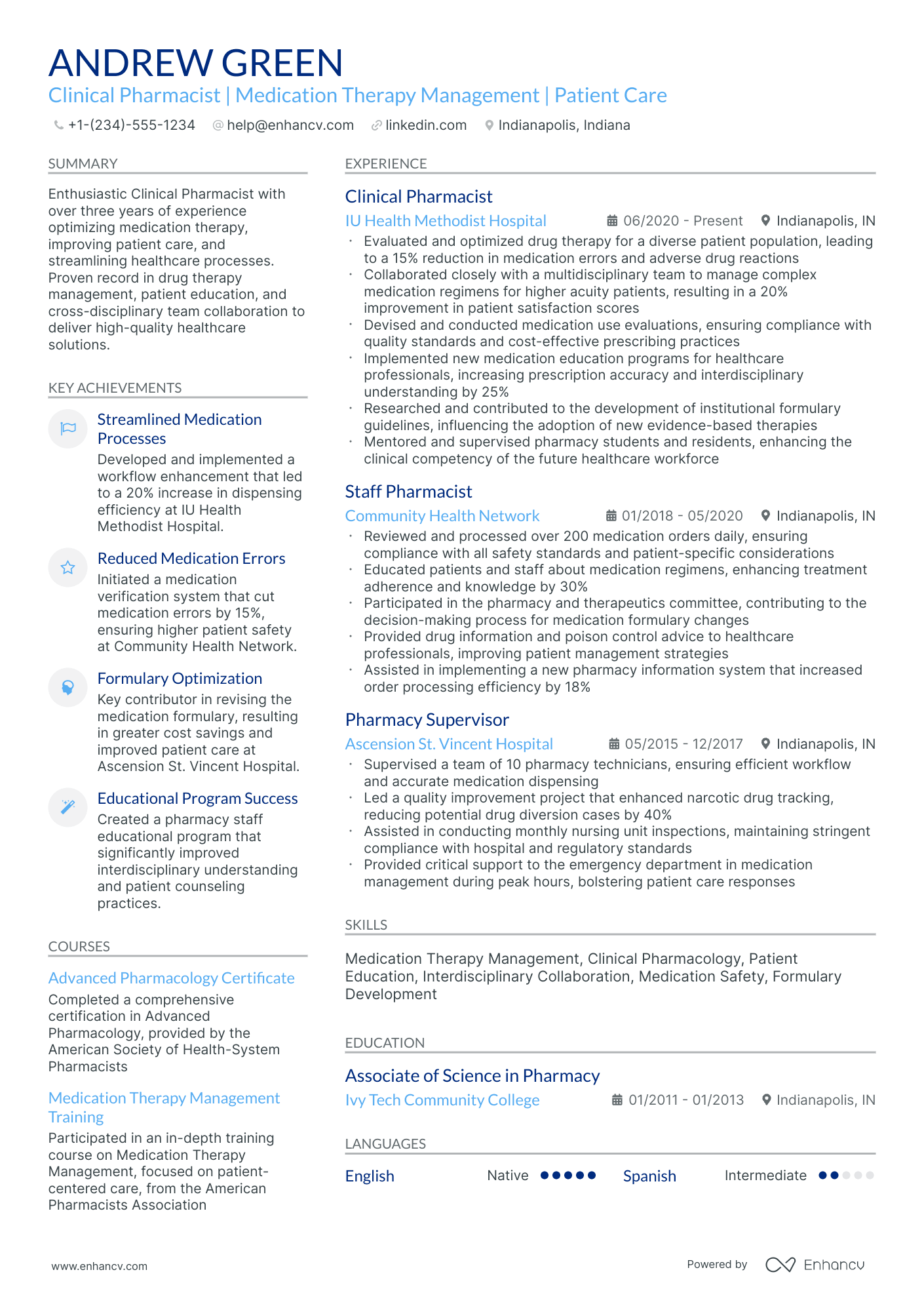
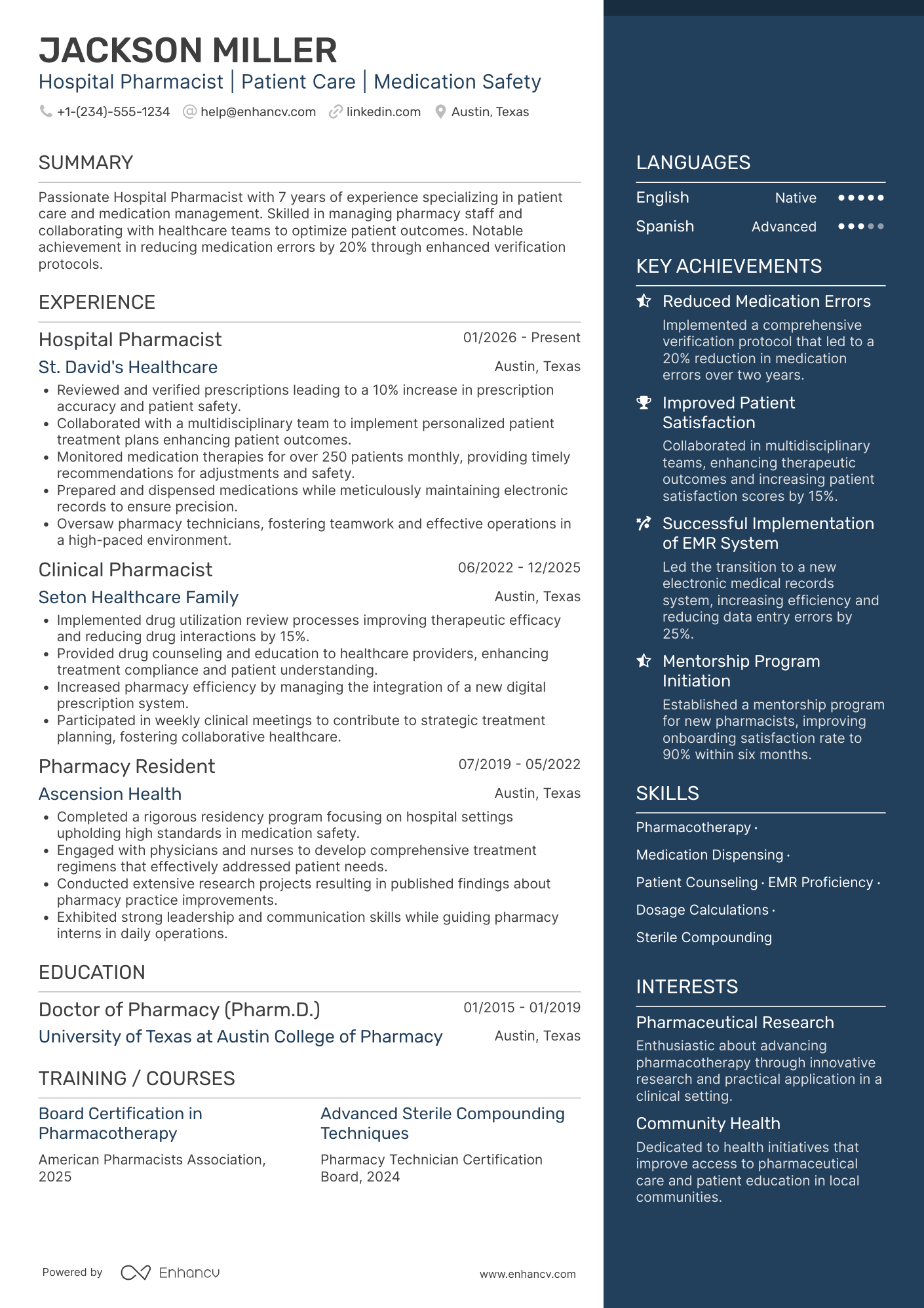
Hospital pharmacist resume drafts often fail because they read like task lists and bury patient safety impact under dense jargon. That hurts in ATS screening and rapid recruiter scans, where high competition rewards clear, measurable value fast.
A strong resume shows outcomes you delivered, not just systems you used. Knowing how to make your resume stand out means highlighting error reductions, order verification volume, turnaround time improvements, antimicrobial stewardship wins, audit readiness, cost savings, and measurable patient safety gains across units.

Key takeaways
- Quantify patient safety, cost savings, and turnaround improvements instead of listing routine duties.
- Use reverse-chronological format for experienced pharmacists and hybrid format for career changers.
- Mirror the job posting's exact terminology for systems, protocols, and clinical programs.
- Place skills above experience if you're entry-level; below it if you're senior.
- Back every listed skill with a measurable outcome in your experience bullets.
- Pair your resume with a cover letter when the posting is competitive or expects one.
- Use Enhancv's tools to turn vague pharmacy duties into specific, recruiter-ready bullet points.
How to format a hospital pharmacist resume
Recruiters reviewing hospital pharmacist resumes prioritize clinical competencies, medication safety expertise, and direct patient care experience within an inpatient or health-system setting. A clean, well-structured resume format ensures these signals—along with licensure, certifications, and quantified outcomes—are immediately visible to both applicant tracking systems and hiring managers scanning for role-specific qualifications.

I have significant experience in this role—which format should I use?
Use a reverse-chronological format to present your hospital pharmacy career with the most recent and relevant positions first. Do:
- Lead each role entry with your scope of responsibility, such as formulary management oversight, interdisciplinary committee participation, or supervision of pharmacy technicians and residents.
- Highlight hospital-specific tools and domains, including electronic health record systems (Epic, Cerner), clinical decision support platforms, USP 797/800 compliance, and therapeutic drug monitoring protocols.
- Quantify outcomes tied to patient safety, cost savings, or operational efficiency to demonstrate measurable impact.
I'm junior or switching into this role—what format works best?
A hybrid format works best, allowing you to feature relevant clinical skills and certifications at the top while still showing your work history in chronological order. Do:
- Place a dedicated skills section near the top of your resume that includes core hospital pharmacy competencies such as IV admixture preparation, pharmacokinetic dosing, and sterile compounding.
- Include APPE rotations, residency training, pharmacy internships, or related clinical projects that demonstrate hands-on inpatient experience, even if your formal employment history is limited.
- Connect each action to a clear result so hiring managers can assess your potential contributions: skill → action → result.
Why not use a functional resume?
A functional format strips away the clinical context and timeline that hospital pharmacy hiring managers rely on to verify where, when, and how you applied your skills in a regulated inpatient environment. Avoid a functional format unless you have no other way to present your qualifications coherently.
- Edge-case exception: A functional resume may be acceptable if you're transitioning from retail or specialty pharmacy into a hospital setting with no inpatient work history, or if you're re-entering the workforce after a significant gap—but even then, tie every listed skill to a specific project, rotation, or measurable outcome to maintain credibility with recruiters and ATS filters.
Once you've established a clean, professional format, the next step is deciding which sections to include and how to organize them on the page.
What sections should go on a hospital pharmacist resume
Recruiters expect a hospital pharmacist resume to show clinical expertise, inpatient workflow experience, and measurable contributions to patient safety and medication outcomes. Understanding what to put on a resume helps you prioritize the right content. Use this structure for maximum clarity:
- Header
- Summary
- Experience
- Skills
- Projects
- Education
- Certifications
- Optional sections: Publications, Research, Leadership
Strong experience bullets should emphasize your impact on medication safety, clinical outcomes, compliance, turnaround times, and the scope of services you supported.
Is your resume good enough?
Drop your resume here or choose a file. PDF & DOCX only. Max 2MB file size.
Now that you’ve organized the key resume components, the next step is writing your hospital pharmacist experience section so your work history aligns with that structure.
How to write your hospital pharmacist resume experience
The experience section is where you prove you've delivered real results in clinical pharmacy—through the medications you've managed, the protocols you've implemented, and the patient outcomes you've improved. Hiring managers prioritize demonstrated impact over descriptive task lists, so every line should reflect what you accomplished rather than what your job description said.
Each entry should include:
- Job title
- Company and location (or remote)
- Dates of employment (month and year)
Three to five concise bullet points showing what you owned, how you executed, and what outcomes you delivered:
- Ownership scope: the formulary categories, clinical service lines, patient populations, medication-use systems, or pharmacy teams you were directly accountable for within the hospital setting.
- Execution approach: the clinical decision-support tools, electronic health record platforms, pharmacokinetic models, evidence-based guidelines, or compounding techniques you used to guide therapeutic recommendations and deliver patient care.
- Value improved: changes to medication safety, therapeutic efficacy, formulary cost-effectiveness, regulatory compliance, turnaround times, or adverse event reduction that resulted from your interventions.
- Collaboration context: how you partnered with physicians, nurses, infection control specialists, pharmacy technicians, or hospital administration to coordinate interdisciplinary care and advance institutional pharmacy initiatives.
- Impact delivered: outcomes expressed through patient safety improvements, formulary optimization results, clinical program growth, or cost savings rather than routine dispensing activities or standard duty descriptions.
Experience bullet formula
A hospital pharmacist experience example
✅ Right example - modern, quantified, specific.
Clinical Pharmacist (Inpatient)
Mercy General Hospital | St. Louis, MO
2021–Present
Four hundred-bed acute care hospital with a Level I trauma center and EPIC (electronic health record) across inpatient services.
- Led antimicrobial stewardship using EPIC (electronic health record) reporting and culture data; reduced broad-spectrum antibiotic days of therapy by 14% and cut hospital-onset Clostridioides difficile infections by 11% in twelve months.
- Verified and optimized three hundred to three hundred fifty medication orders per shift in EPIC (electronic health record) with barcode medication administration; improved first-dose turnaround time from fifty-five to forty-one minutes and reduced dispensing errors by 22%.
- Implemented high-alert medication safeguards for heparin, insulin, and opioids by standardizing smart pump (Alaris) libraries and order sets with nursing leadership; decreased infusion-related safety events by 18% and eliminated concentrated electrolyte overrides in non-intensive care units.
- Collaborated with physicians, nursing, and case management on discharge medication reconciliation and prior authorizations; increased discharge prescription fill rate from 72% to 84% and reduced thirty-day readmissions for heart failure by 6%.
- Built automated Pyxis (automated dispensing cabinet) and EPIC (electronic health record) inventory alerts for critical shortages; reduced stockouts by 33% and saved eight hours per week in manual cycle counts for pharmacy technicians.
Now that you've seen how a strong experience section comes together, let's look at how to adapt yours to match a specific job posting.
How to tailor your hospital pharmacist resume experience
Recruiters evaluate hospital pharmacist resumes through both applicant tracking systems and human review, so tailoring your resume to the job description increases your chances at every stage. Tailoring means adjusting how you present real accomplishments to reflect the exact language and priorities each employer uses.
Ways to tailor your hospital pharmacist experience:
- Match pharmacy information systems like Epic or Cerner named in the posting.
- Mirror the job description's terminology for clinical intervention documentation.
- Reflect specific formulary management processes the employer references.
- Highlight USP 797 and USP 800 compliance if the posting requires it.
- Emphasize interdisciplinary rounding or care team collaboration models mentioned.
- Include antimicrobial stewardship program involvement when the role specifies it.
- Align your metrics with the KPIs the employer uses for medication safety.
- Reference relevant accreditation standards like Joint Commission or ASHP requirements.
Tailoring means aligning the achievements you already have with what each employer prioritizes rather than forcing keywords where they don't belong.
Resume tailoring examples for hospital pharmacist
| Job description excerpt | Untailored | Tailored |
|---|---|---|
| "Manage antimicrobial stewardship program, collaborate with infectious disease team, and monitor antibiotic utilization metrics across all inpatient units" | Helped manage pharmacy programs and worked with other departments on medication use. | Co-led antimicrobial stewardship program alongside the infectious disease team, reducing broad-spectrum antibiotic utilization by 18% across six inpatient units over 12 months through prospective audit and feedback. |
| "Perform pharmacokinetic dosing for vancomycin, aminoglycosides, and warfarin using Clinical Pharmacokinetics Service (CPKS) protocols and document interventions in Epic" | Monitored drug levels and adjusted doses for patients as needed. | Performed pharmacokinetic dosing for vancomycin, aminoglycosides, and warfarin for 30+ patients daily, documenting all clinical interventions and dose adjustments in Epic per CPKS protocols. |
| "Participate in interdisciplinary ICU rounds, provide evidence-based drug therapy recommendations, and support code blue response as the designated pharmacist" | Attended team meetings and gave drug information when asked by doctors. | Served as the designated pharmacist on interdisciplinary ICU rounds, delivering evidence-based drug therapy recommendations that contributed to a 12% reduction in preventable adverse drug events, and responded to an average of three code blue events per week. |
Once you’ve aligned your experience with the hospital’s needs, quantify your hospital pharmacist achievements to show the impact of that work.
How to quantify your hospital pharmacist achievements
Quantifying your achievements shows how your work improves safety, speed, and cost across medication-use processes. Focus on order volume, turnaround time, medication error rates, formulary savings, compliance outcomes, and interventions accepted by prescribers.
Quantifying examples for hospital pharmacist
| Metric | Example |
|---|---|
| Turnaround time | "Cut STAT order verification time from 18 to 10 minutes by standardizing Pyxis overrides and using Epic workqueue filters across a 650-bed hospital." |
| Safety rate | "Reduced high-alert medication errors by 32% in six months by implementing smart pump drug library updates and independent double-checks for insulin and heparin." |
| Cost savings | "Delivered $185K annual drug spend savings by converting eight agents to formulary-preferred biosimilars and tightening restricted-use criteria with P&T approval." |
| Compliance | "Improved Joint Commission medication management audit pass rate from 90% to 99% by closing 120 controlled-substance discrepancies and retraining three units." |
| Clinical impact | "Completed 540 antimicrobial stewardship interventions in one year, with 78% acceptance, reducing broad-spectrum days of therapy by 14% in the ICU." |
Turn vague job duties into measurable, recruiter-ready resume bullets in seconds with Enhancv's Bullet Point Generator.
With strong bullet points in place, the next step is ensuring your hospital pharmacist resume highlights the right mix of hard and soft skills.
How to list your hard and soft skills on a hospital pharmacist resume
Your skills section shows how you keep patients safe and workflows compliant, and recruiters and applicant tracking systems scan it to match you to inpatient needs—aim for a balance of role-specific hard skills and job-critical soft skills. hospital pharmacist roles require a blend of:
- Product strategy and discovery skills.
- Data, analytics, and experimentation skills.
- Delivery, execution, and go-to-market discipline.
- Soft skills.
Your skills section should be:
- Scannable (bullet-style grouping).
- Relevant to the job post.
- Backed by proof in experience bullets.
- Updated with current tools.
Place your skills section:
- Above experience if you're junior or switching careers.
- Below experience if you're mid/senior with strong achievements.

Hard skills
- Epic Willow, Cerner PharmNet
- Computerized provider order entry verification
- Medication reconciliation
- Sterile compounding, USP <797>, USP <800>
- Total parenteral nutrition dosing
- Pharmacokinetics dosing, vancomycin, aminoglycosides
- Antimicrobial stewardship interventions
- Renal and hepatic dose adjustment
- High-alert medication safeguards
- Intravenous to oral conversion protocols
- Drug information, literature evaluation
- Controlled substance auditing, diversion monitoring
Soft skills
- Clarify orders with prescribers
- Deliver concise clinical recommendations
- De-escalate medication-related conflicts
- Prioritize verification under pressure
- Escalate safety risks quickly
- Coordinate with nursing on administration issues
- Document interventions with clear rationale
- Lead handoffs across shifts
- Coach technicians on workflow and quality
- Align decisions with formulary policy
- Communicate empathetically with patients and families
- Own follow-through on pending consults
How to show your hospital pharmacist skills in context
Skills shouldn't live only in a bulleted list on your resume. Explore resume skills examples to see how pharmacists present competencies effectively.
They should be demonstrated in:
- Your summary (high-level professional identity)
- Your experience (proof through outcomes)
Here's what this looks like in practice.
Summary example
Senior hospital pharmacist with 10 years in critical care, skilled in IV compounding, Epic Willow, and antimicrobial stewardship. Led a formulary optimization initiative that reduced medication costs by 18% while mentoring a team of six staff pharmacists.
- Reflects senior-level expertise clearly
- Names role-relevant tools and methods
- Includes a measurable cost-reduction outcome
- Highlights mentorship as a soft skill
Experience example
Senior Clinical Pharmacist
Mercy General Hospital | Sacramento, CA
March 2019–Present
- Implemented barcode medication verification using BD Pyxis, reducing dispensing errors by 32% across four inpatient units within one year.
- Collaborated with infectious disease physicians to refine vancomycin dosing protocols, improving therapeutic target attainment rates by 21%.
- Trained 12 pharmacy residents on sterile compounding standards using USP 797 guidelines, achieving a 100% compliance rate during state inspections.
- Every bullet includes measurable proof.
- Skills surface naturally through real outcomes.
Once you’ve tied your pharmacy strengths to real clinical and operational examples, the next step is applying that same approach when you write a hospital pharmacist resume with no experience.
How do I write a hospital pharmacist resume with no experience
Even without full-time experience, you can demonstrate readiness through clinical training and academic work. Our guide on writing a resume without work experience covers this approach in depth. Consider highlighting:
- Hospital pharmacy rotations (inpatient).
- Medication reconciliation practicums.
- Sterile compounding lab training.
- Antimicrobial stewardship shadowing hours.
- Clinical interventions documented in rotations.
- Medication safety audits or projects.
- Pharmacy informatics coursework projects.
- Residency showcase poster presentation.
Focus on:
- Inpatient workflow and order verification.
- Sterile compounding and USP compliance.
- Medication safety and error prevention.
- Evidence-backed clinical interventions.
Resume format tip for entry-level hospital pharmacist
Use a hybrid resume format because it highlights clinical projects and rotations upfront while still showing education and licensure progress clearly. Do:
- Put rotations first with setting, dates.
- Quantify interventions, doses, or time saved.
- List tools: Epic, Pyxis, IV room.
- Add certifications: immunization, BLS, ACLS.
- Include sterile compounding competencies and standards.
- Documented forty medication reconciliation interventions during inpatient rotation using Epic, reducing admission discrepancies by twenty-five percent per preceptor audit.
Since your education and clinical rotations often serve as your strongest qualifications when you lack professional experience, presenting them effectively on your resume is essential.
How to list your education on a hospital pharmacist resume
Your education section lets hiring teams quickly confirm you hold the required pharmacy degree. It validates foundational clinical knowledge essential for any hospital pharmacist role.
Include:
- Degree name
- Institution
- Location
- Graduation year
- Relevant coursework (for juniors or entry-level candidates)
- Honors & GPA (if 3.5 or higher)
Skip month and day details—list the graduation year only.
Here's a strong education entry tailored to the hospital pharmacist role.
Example education entry
Doctor of Pharmacy (PharmD)
University of North Carolina at Chapel Hill, Chapel Hill, NC
Graduated 2021
GPA: 3.8/4.0
- Relevant Coursework: Advanced Pharmacotherapy, Sterile Compounding, Clinical Pharmacokinetics, Critical Care Pharmacology
- Honors: Summa Cum Laude, Rho Chi Pharmacy Honor Society
How to list your certifications on a hospital pharmacist resume
Certifications on your resume show a hospital pharmacist's commitment to continuous learning, proficiency with clinical tools and systems, and alignment with current hospital practice standards.
Include:
- Certificate name
- Issuing organization
- Year
- Optional: credential ID or URL
- List certifications below education when they are older, less relevant to inpatient care, or you already have strong, recent hospital pharmacist experience.
- List certifications above education when they are recent, highly relevant to hospital pharmacist duties, or help offset limited inpatient experience.
Best certifications for your hospital pharmacist resume
- Board Certified Pharmacotherapy Specialist (BCPS)
- Board Certified Critical Care Pharmacist (BCCCP)
- Board Certified Oncology Pharmacist (BCOP)
- Board Certified Infectious Diseases Pharmacist (BCIDP)
- Advanced Cardiovascular Life Support (ACLS)
- Basic Life Support (BLS)
- Immunization Certification
Once you’ve clearly presented your credentials and licenses, move on to your hospital pharmacist resume summary to highlight how those qualifications translate into value for the role.
How to write your hospital pharmacist resume summary
Your resume summary is the first thing a recruiter reads. A strong one instantly signals you're qualified for the hospital pharmacist role.
Keep it to three to four lines, with:
- Your title and total years of hospital pharmacy experience.
- Clinical setting or specialty area, such as acute care or oncology.
- Core skills like medication therapy management, IV admixture, or Epic proficiency.
- One or two measurable wins, such as reducing medication errors or improving turnaround times.
- Soft skills tied to real outcomes, like interdisciplinary collaboration that improved patient safety.

PRO TIP
At this level, focus on clinical competencies, relevant certifications, and specific contributions you've made in hospital settings. Highlight tools you've mastered and measurable improvements you've driven. Avoid vague phrases like "passionate pharmacist" or "team player" without evidence backing them up.
Example summary for a hospital pharmacist
Hospital pharmacist with four years of acute care experience in a 350-bed facility. Reduced medication reconciliation errors by 28% through standardized verification protocols using Epic Willow.
Optimize your resume summary and objective for ATS
Drop your resume here or choose a file.
PDF & DOCX only. Max 2MB file size.
Now that you've crafted a summary that highlights your clinical expertise and value, make sure the header above it presents your professional contact details accurately and consistently.
What to include in a hospital pharmacist resume header
A resume header lists your key identifying and contact details, helping hospital pharmacist candidates stay visible, credible, and easy to screen quickly.
Essential resume header elements
- Full name
- Tailored job title and headline
- Location
- Phone number
- Professional email
- GitHub link
- Portfolio link
A LinkedIn link helps recruiters verify your experience quickly and supports screening.
Do not include photos on a hospital pharmacist resume unless the role is explicitly front-facing or appearance-dependent.
Match your header job title to the hospital pharmacist posting and keep every link and contact detail current and professional.
Hospital pharmacist resume header
Jordan Patel
Hospital Pharmacist | Inpatient Sterile Compounding and Medication Safety
Chicago, IL
(312) 555-78XX
jordan.patel@enhancv.com github.com/jordanpatel yourwebsite.com linkedin.com/in/jordanpatel
Once your contact details and professional identifiers are clearly presented at the top, you can strengthen the rest of your application by adding additional sections for hospital pharmacist resumes that support your qualifications.
Additional sections for hospital pharmacist resumes
Beyond core qualifications, additional sections help you stand out when multiple candidates share similar credentials and clinical experience.
- Languages
- Publications and research
- Professional affiliations
- Certifications and board specializations
- Continuing education
- Volunteer clinical experience
Once you've strengthened your resume with relevant additional sections, pair it with a tailored cover letter to give hiring managers a fuller picture of your qualifications.
Do hospital pharmacist resumes need a cover letter
A cover letter isn't required for every hospital pharmacist role, but it often helps in competitive postings or systems that expect one. If you're unsure what a cover letter is or when to use one, it can make a difference when multiple candidates meet the same baseline credentials.
Use these tips to decide when to include one and what to say:
- Explain role and team fit: Match your experience to the unit, shift model, and collaboration style with physicians, nurses, and pharmacy technicians.
- Highlight one or two outcomes: Describe a medication safety, stewardship, or workflow project with a clear result, such as fewer errors or faster verification.
- Show context awareness: Reference the hospital's patient population, formulary goals, or quality metrics, and connect them to how you practice as a hospital pharmacist.
- Address transitions or gaps: Clarify moves from retail, residency, or industry, and translate non-obvious experience into inpatient impact.
Drop your resume here or choose a file.
PDF & DOCX only. Max 2MB file size.
Whether you include a cover letter or not, the next step is strengthening your hospital pharmacist resume itself—using AI can help you do that faster and more precisely.
Using AI to improve your hospital pharmacist resume
AI can sharpen your resume's clarity, structure, and impact. It helps refine language and highlight measurable results. But overuse strips authenticity. For practical guidance, explore these ChatGPT resume writing prompts tailored to pharmacy professionals. Once your content reads clearly and fits the role, step away from AI.
Here are 10 practical prompts to strengthen specific sections of your hospital pharmacist resume:
Strengthen your summary
Quantify experience bullets
Tailor skills to the role
Improve action verbs
Refine certification details
Clarify project contributions
Tighten education entries
Remove filler language
Align with job posting
Sharpen clinical impact
Conclusion
A strong hospital pharmacist resume shows measurable outcomes, role-specific skills, and a clear structure. It highlights clinical impact, medication safety, and collaboration with care teams. It uses clean headings, focused bullets, and consistent formatting to improve scanning.
This approach shows you’re ready for today’s hospital pharmacist hiring market and what comes next. It makes your value easy to confirm through metrics, scope, and results. It also supports faster screening and stronger interviews.