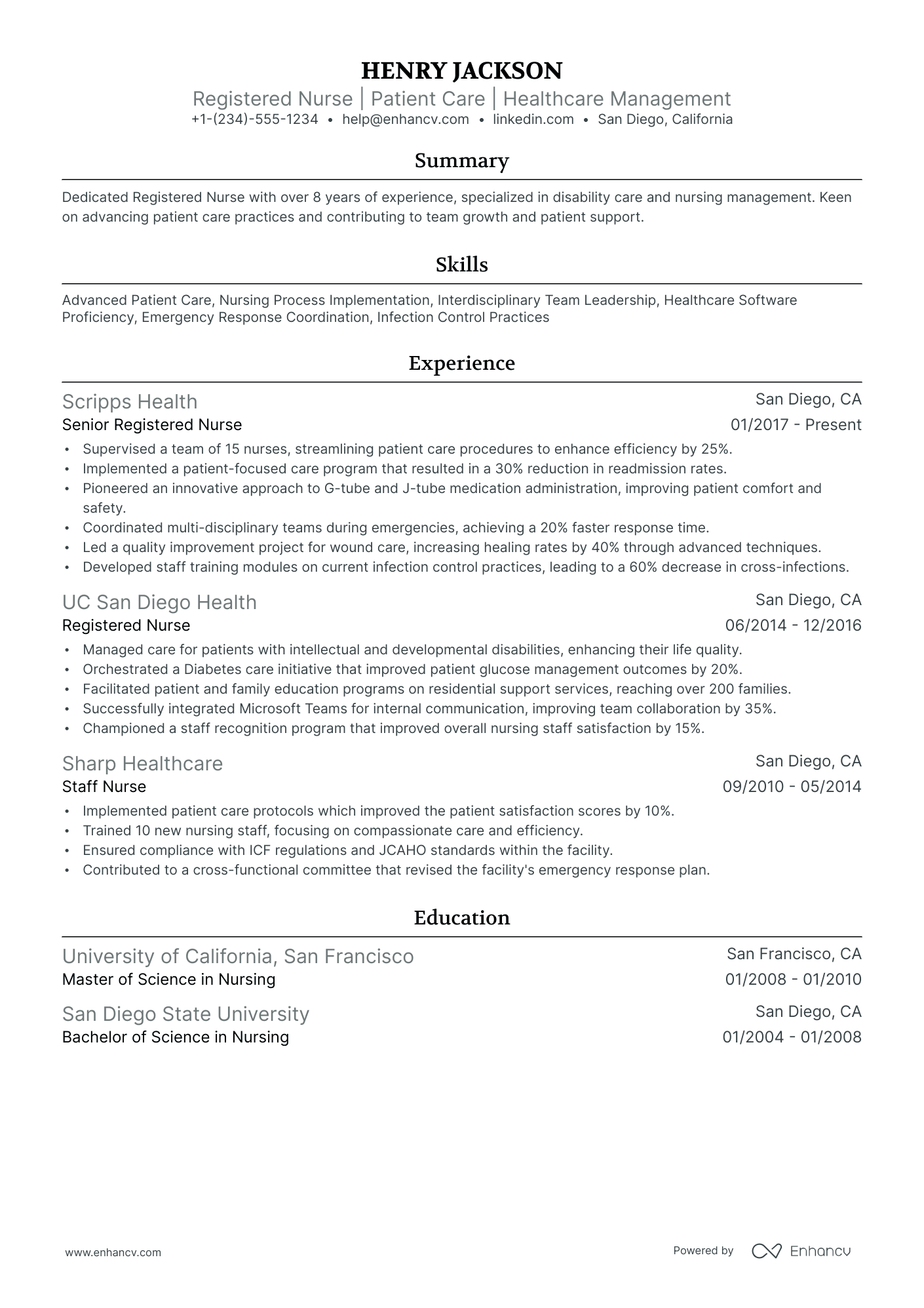
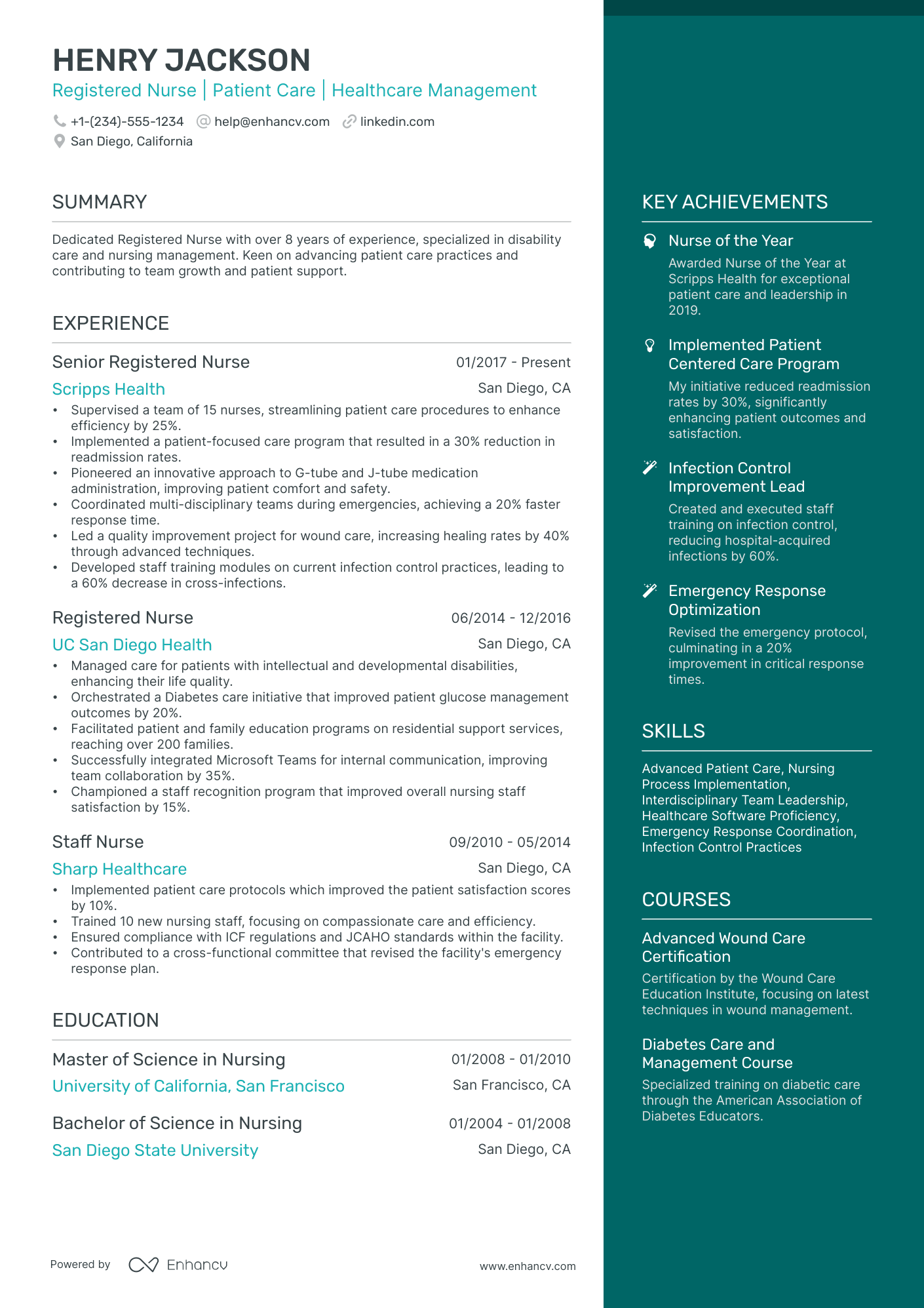
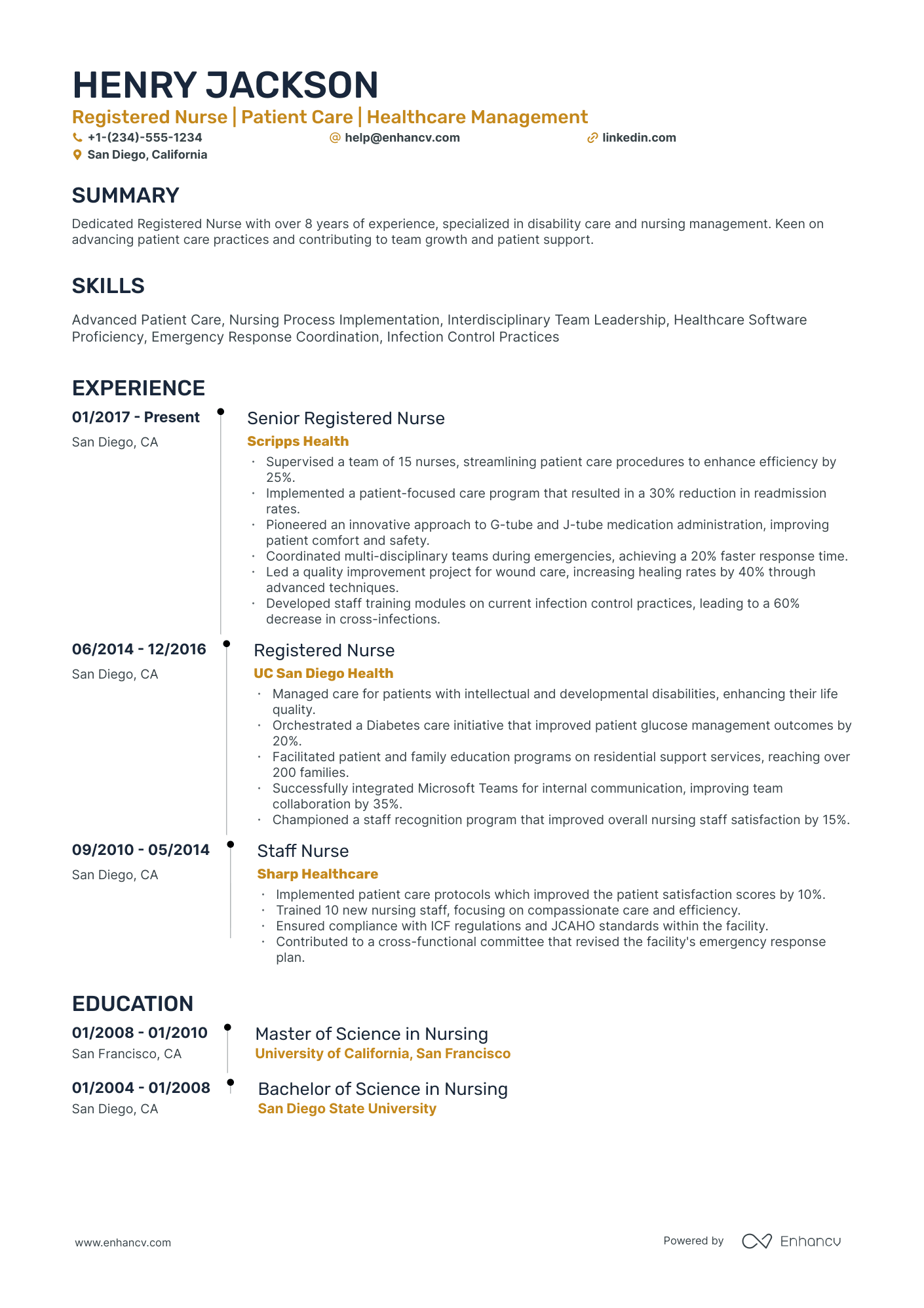
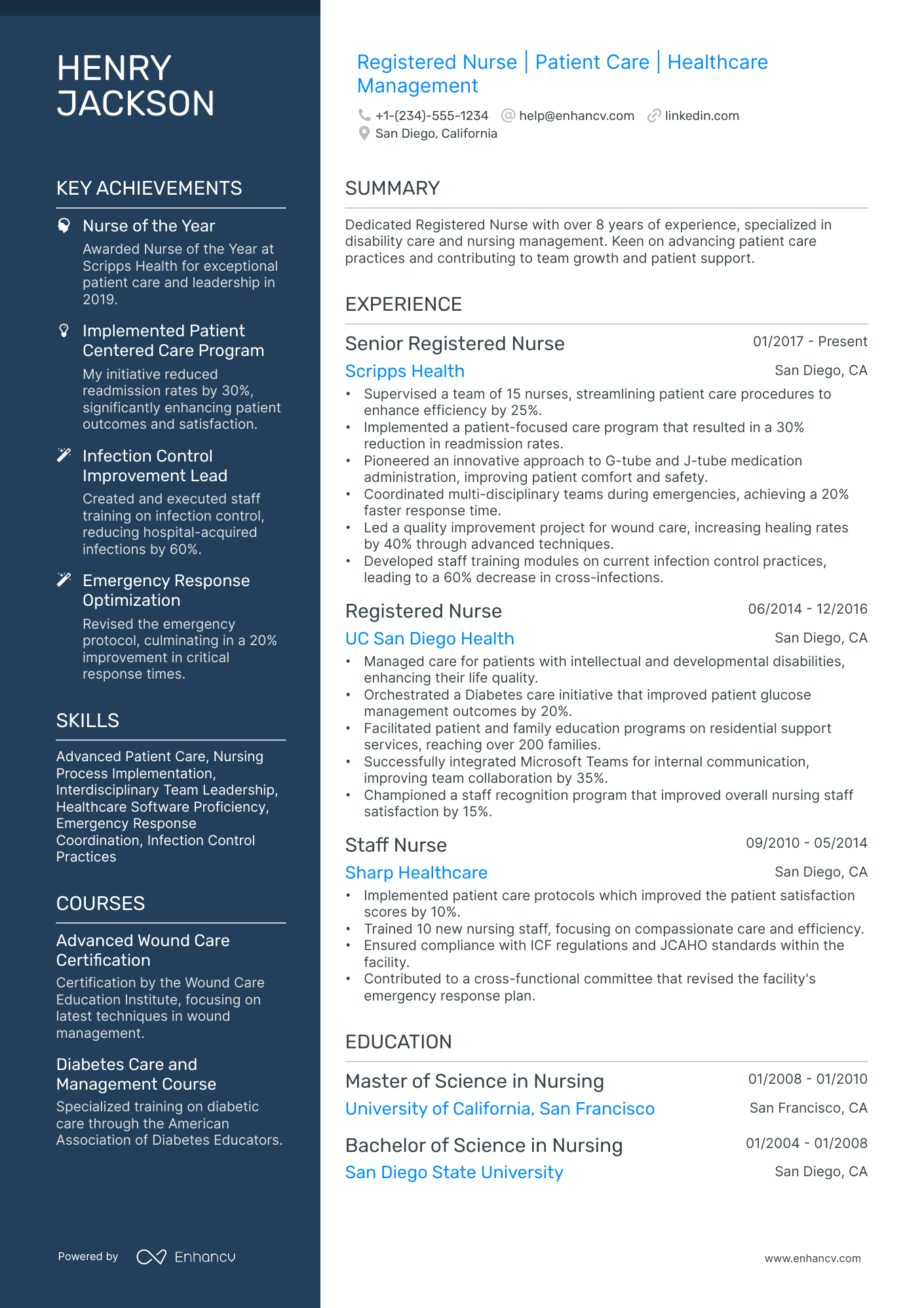
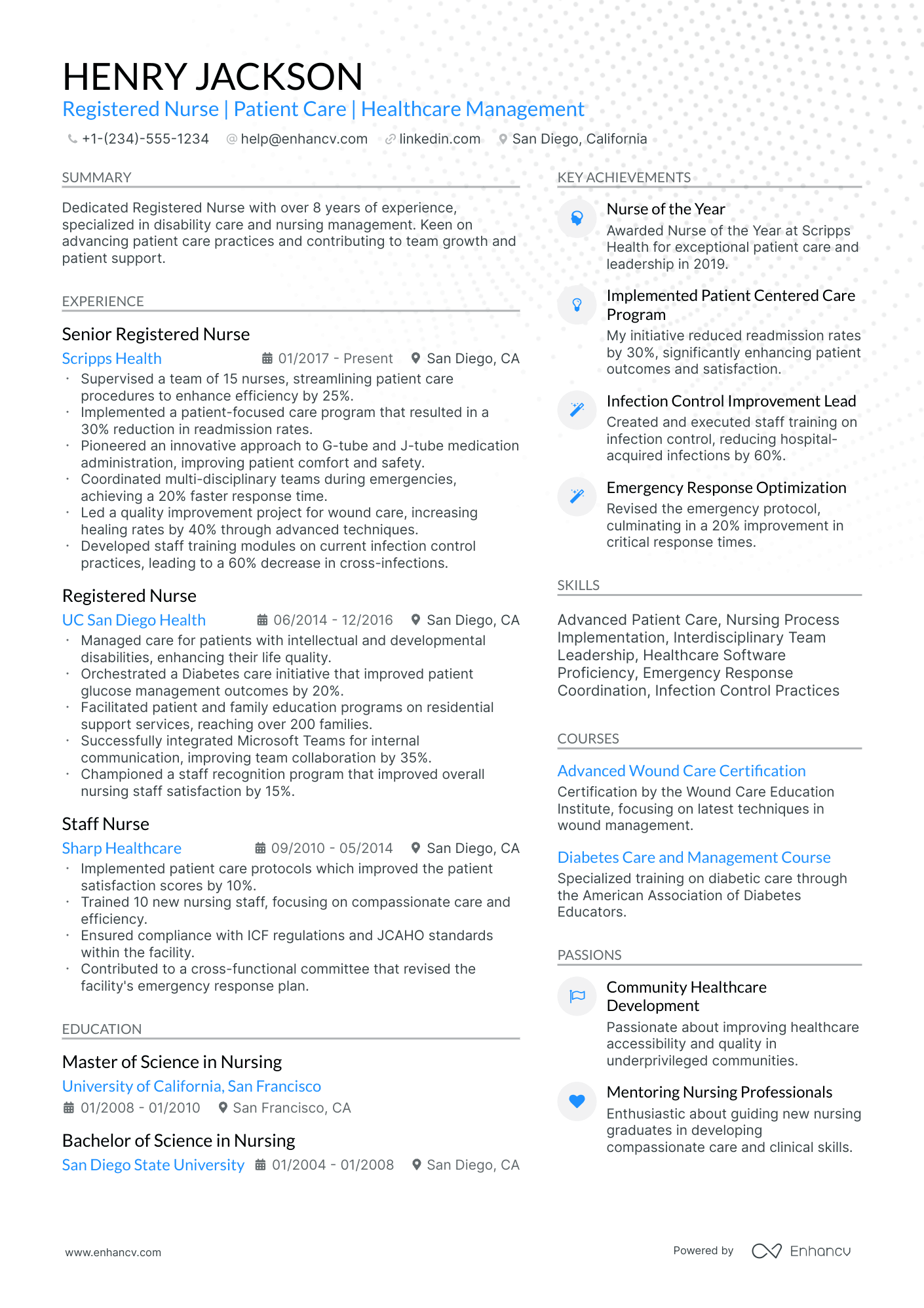
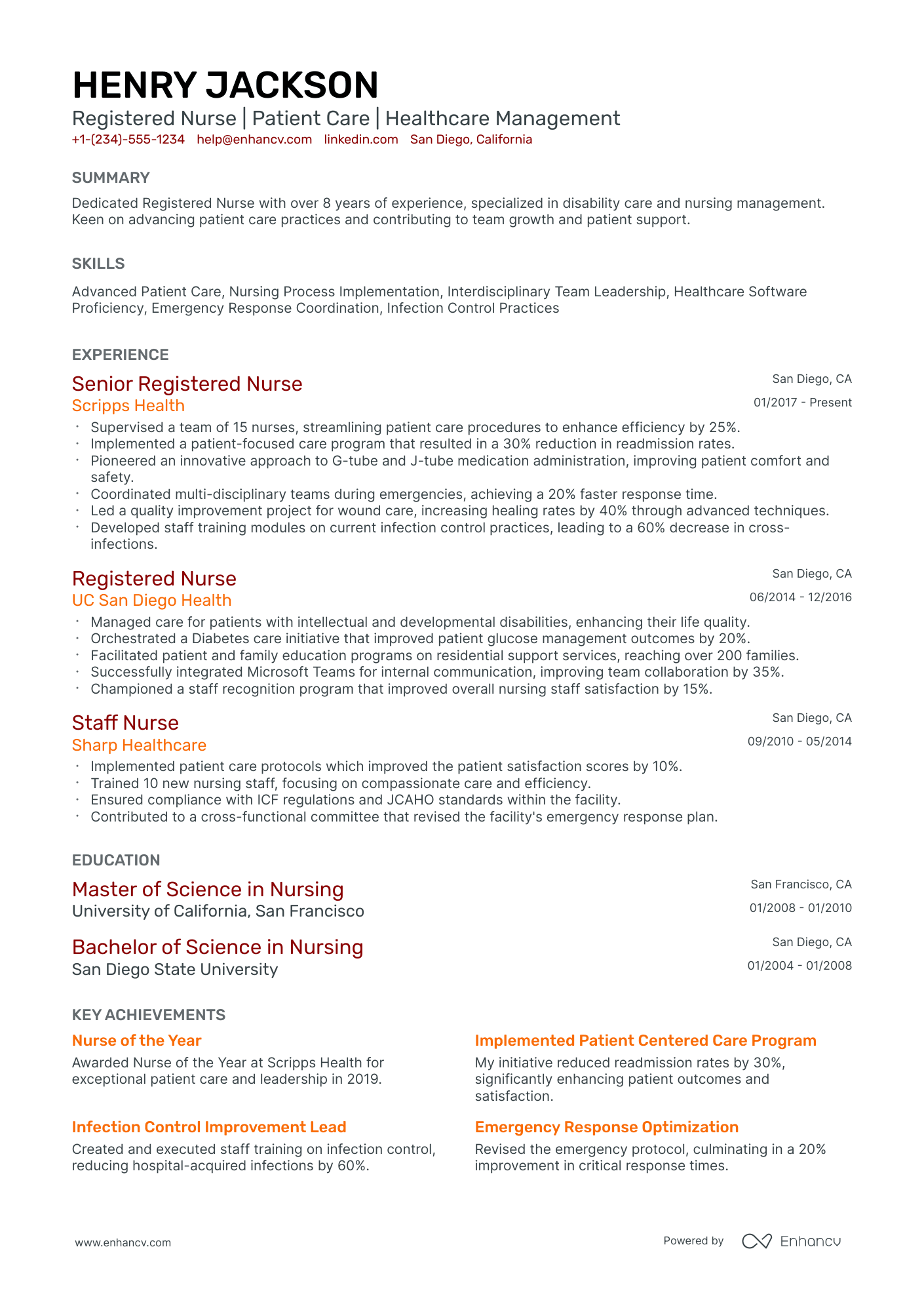
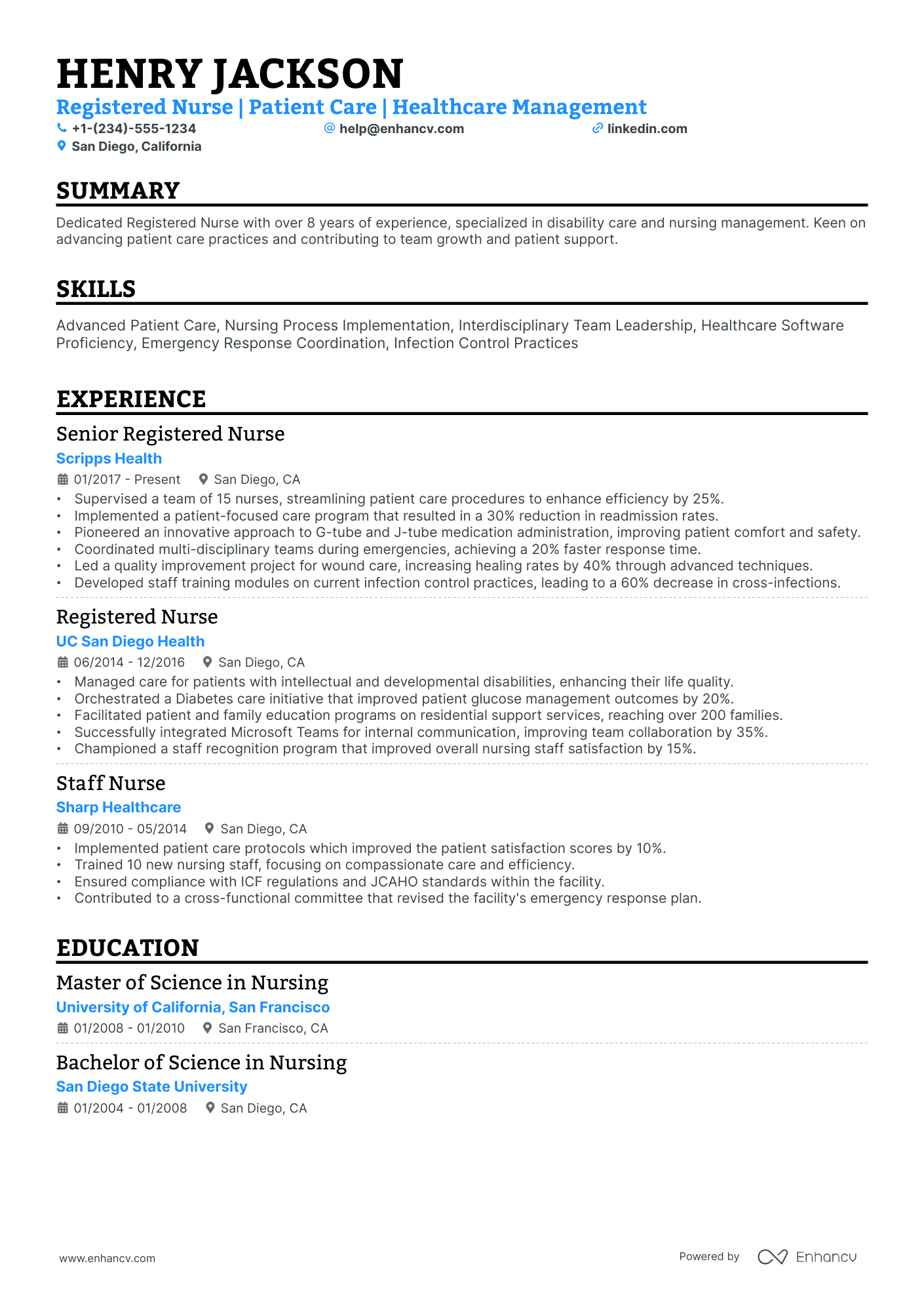
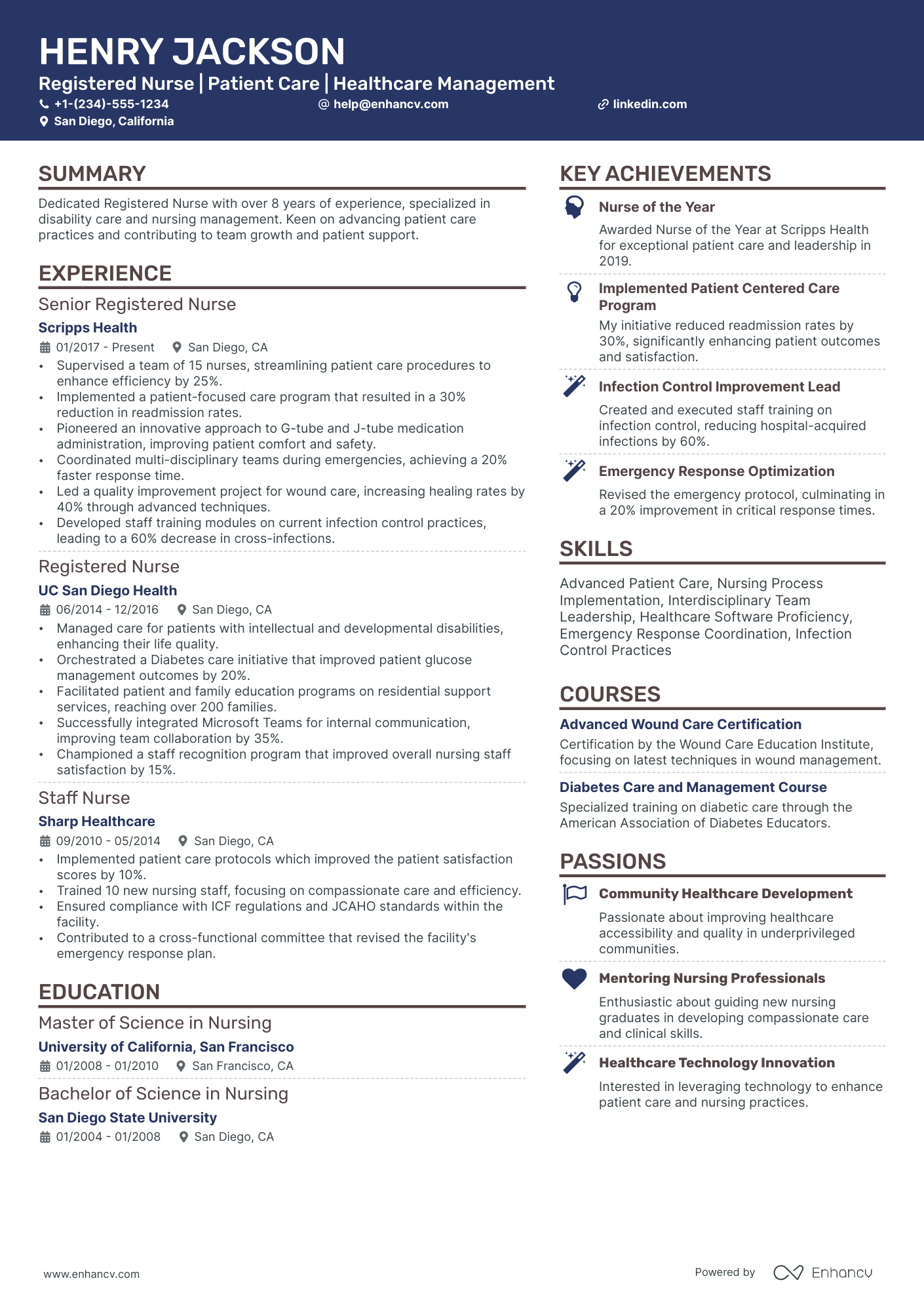
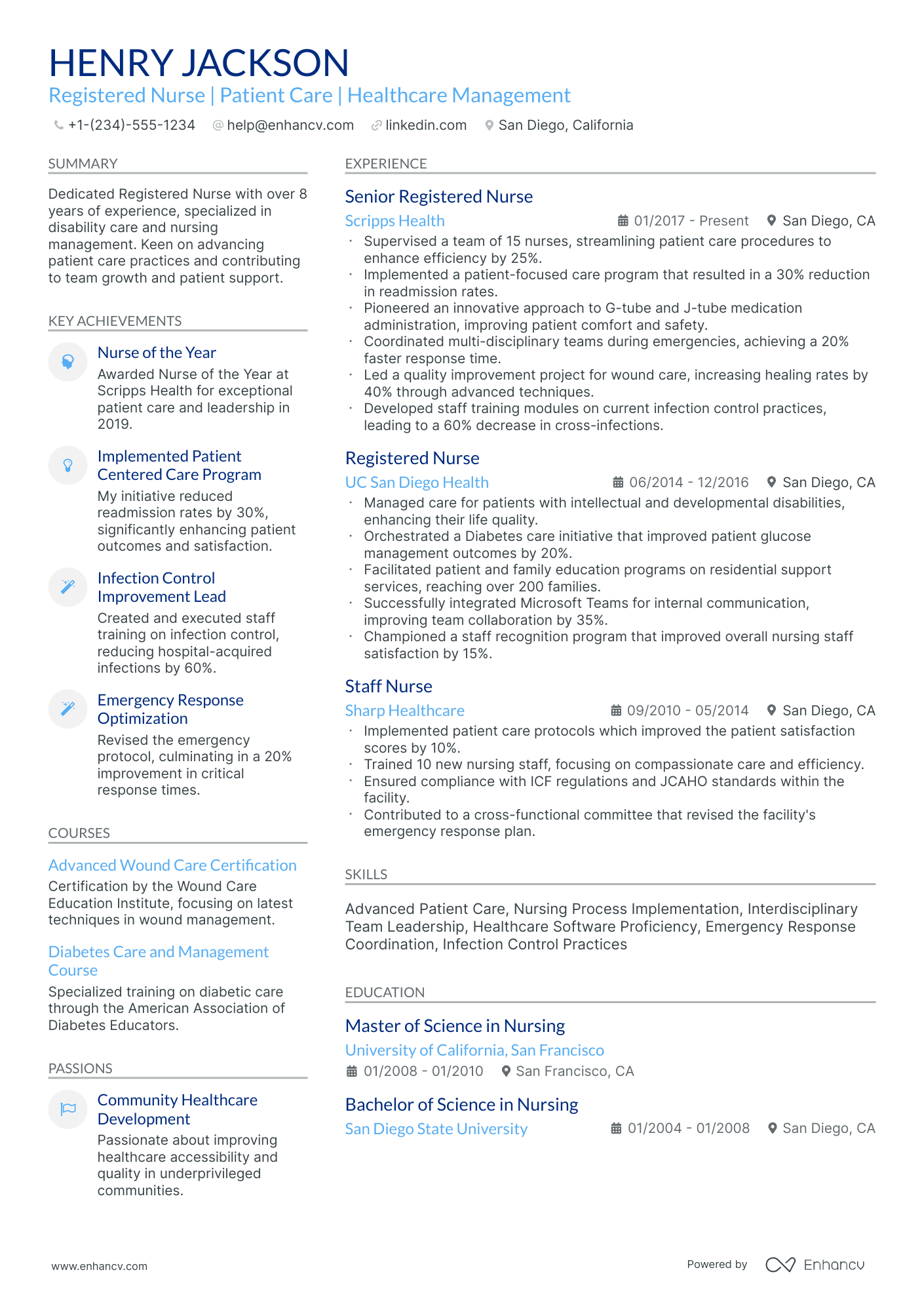
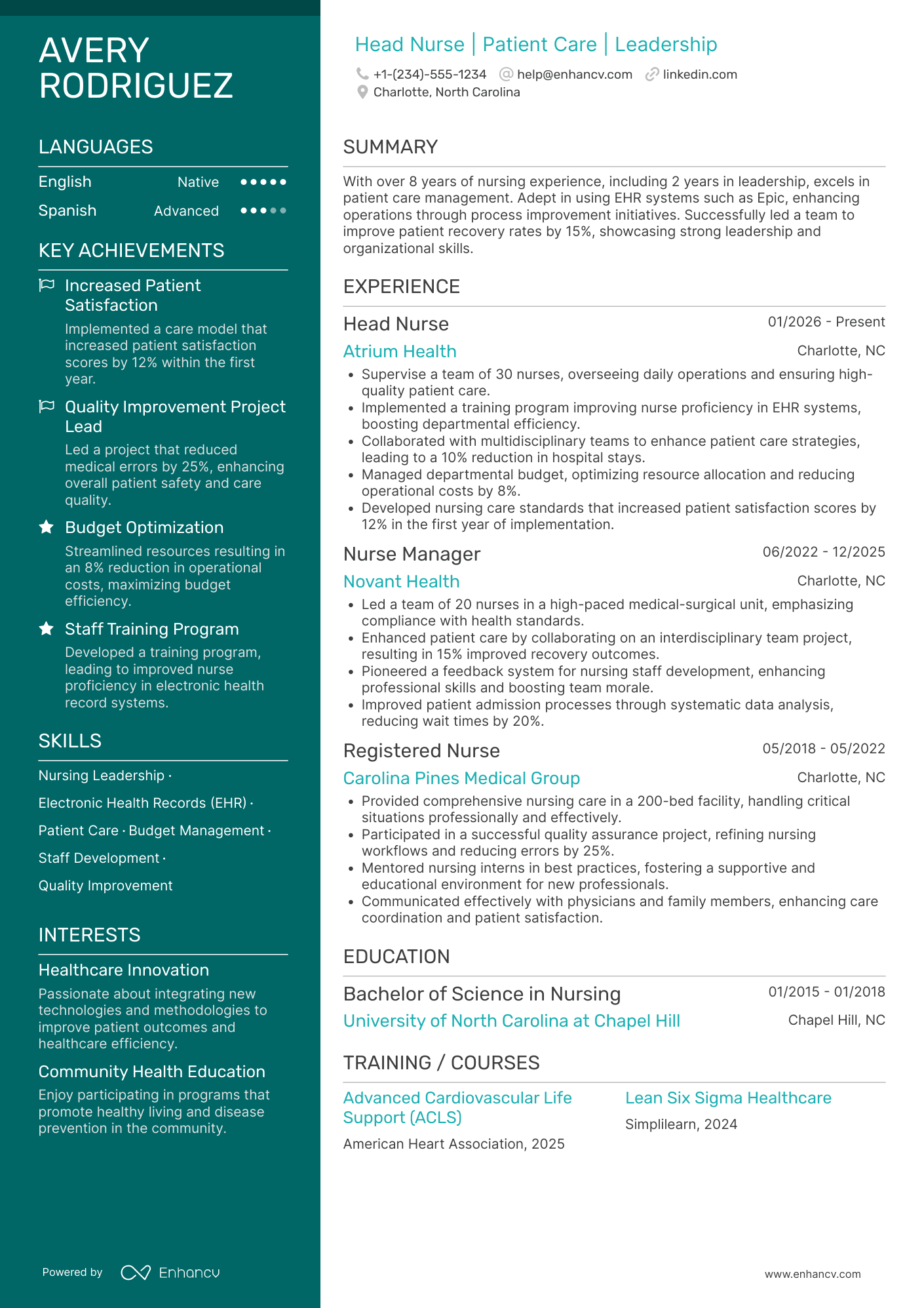
Head nurse resume drafts often fail because they read like shift logs, burying leadership impact under task lists and unit jargon. That hurts when an applicant tracking system filters keywords and recruiters scan fast in a crowded field.
A strong resume shows how you led outcomes, not what you touched. Knowing how to make your resume stand out means you should highlight reduced falls, improved HCAHPS scores, cut overtime hours, stabilized staffing, accelerated discharges, raised audit compliance, and delivered onboarding that shortened time-to-competency.

Key takeaways
- Lead every experience bullet with a measurable outcome, not a task description.
- Use reverse-chronological format to show progressive clinical leadership at a glance.
- Mirror the job posting's exact terminology for systems, protocols, and compliance frameworks.
- Quantify patient safety, staffing efficiency, throughput, and satisfaction results with specific numbers.
- Pair hard clinical skills with soft leadership skills demonstrated through real achievements.
- Enhancv can help you turn routine duties into recruiter-ready, metric-driven bullet points.
- Stop using AI once your resume accurately reflects real experience—never inflate claims.
How to format a head nurse resume
Recruiters evaluating head nurse candidates prioritize evidence of clinical leadership scope, unit management accountability, staff oversight, and measurable improvements in patient outcomes or operational efficiency. A reverse-chronological format ensures these signals are immediately visible, presenting a clear trajectory of increasing responsibility that hiring managers can verify at a glance. Choosing the right resume format is one of the most important decisions you'll make before writing a single bullet point.

I have significant experience in this role—which format should I use?
Use a reverse-chronological format—it's the strongest choice for a head nurse with substantial leadership experience. Do:
- Lead with your most senior role first, emphasizing unit size, number of direct reports, and scope of clinical oversight and decision ownership.
- Highlight domain-specific expertise such as electronic health records systems (Epic, Cerner), regulatory compliance (Joint Commission, CMS), staffing models, and quality improvement frameworks.
- Quantify outcomes tied to your leadership—think patient safety metrics, staff retention rates, budget management, or process improvements you initiated.
Why hybrid and functional resumes don't work for senior roles
Hybrid and functional formats fragment or bury the career progression that validates a head nurse's readiness for senior clinical leadership—recruiters can't easily trace how your accountability, unit scope, and decision-making authority expanded over time. Functional formats are especially problematic because they strip leadership accomplishments from the roles where they occurred, diluting the impact of staffing decisions, budget ownership, and quality outcomes that define head nurse performance. Avoid hybrid and functional formats entirely when applying for head nurse or nurse manager positions where demonstrating a sustained record of progressive clinical leadership is a baseline expectation.
- A functional format may be acceptable only if you're transitioning into a head nurse role from a non-clinical leadership background (e.g., healthcare administration) or returning after an extended career gap—but even then, every skill listed must be anchored to a specific project, unit outcome, or measurable result.
Now that you've established a clean, readable layout, it's time to fill it with the right sections that highlight your qualifications as a head nurse.
What sections should go on a head nurse resume
Recruiters expect to see a clear snapshot of your leadership, clinical oversight, and measurable patient care outcomes. Understanding which resume sections to include ensures nothing critical gets overlooked.
Use this structure for maximum clarity:
- Header
- Summary
- Experience
- Skills
- Projects
- Education
- Certifications
- Optional sections: Awards, Leadership, Languages
Your experience bullets should emphasize outcomes, patient safety and quality metrics, team scope, and operational results you delivered.
Is your resume good enough?
Drop your resume here or choose a file. PDF & DOCX only. Max 2MB file size.
With your resume structure in place, the next step is to write your head nurse experience section so each role clearly supports the information you’ve organized.
How to write your head nurse resume experience
The experience section of your head nurse resume should highlight the clinical leadership, patient care initiatives, and operational improvements you've delivered across nursing units. Hiring managers prioritize demonstrated impact—staffing outcomes you drove, protocols you implemented, quality metrics you improved—over descriptive task lists that simply catalog daily responsibilities.
Each entry should include:
- Job title
- Company and location (or remote)
- Dates of employment (month and year)
Three to five concise bullet points showing what you owned, how you executed, and what outcomes you delivered:
- Ownership scope: the nursing units, patient populations, staff teams, budgets, or care programs you were directly accountable for as head nurse.
- Execution approach: the clinical frameworks, electronic health record systems, evidence-based protocols, staffing models, or quality improvement methodologies you used to guide decisions and deliver care.
- Value improved: changes to patient outcomes, care quality, staff retention, unit efficiency, regulatory compliance, infection rates, or patient satisfaction tied to your leadership.
- Collaboration context: how you coordinated with physicians, hospital administrators, allied health professionals, patients' families, or external regulatory bodies to advance unit-wide or facility-wide goals.
- Impact delivered: outcomes expressed through measurable results—such as reductions in adverse events, improvements in accreditation readiness, or gains in nurse engagement—rather than routine activity descriptions.
Experience bullet formula
A head nurse experience example
✅ Right example - modern, quantified, specific.
Head Nurse (Unit Nurse Manager)
Riverview Medical Center | Columbus, OH
2021–Present
Three-hundred-bed acute care hospital with a thirty-two-bed medical-surgical unit serving high-acuity patients.
- Led a team of forty-two registered nurses and ten nursing assistants across day and night shifts; improved nurse retention by eighteen percent and reduced agency labor spend by twenty-two percent using Kronos scheduling and acuity-based staffing.
- Implemented Epic workflows and standardized SBAR handoffs; cut medication administration errors by twenty-eight percent and reduced average shift-change report time by twelve minutes per nurse.
- Partnered with infection prevention, physicians, and environmental services to deploy CLABSI and CAUTI bundles tracked in NHSN (National Healthcare Safety Network); lowered device-associated infection rates by thirty-five percent over twelve months.
- Built a real-time quality dashboard in Power BI using EHR extracts; increased on-time discharge order completion from sixty-eight percent to eighty-four percent and improved bed turnaround time by nineteen percent.
- Coordinated rapid-cycle Plan-Do-Study-Act (PDSA) projects with pharmacy and respiratory therapy; reduced thirty-day readmissions for heart failure patients by nine percent through teach-back education and post-discharge follow-up calls logged in Epic.
Now that you've seen how a strong experience section comes together, let's look at how to adapt yours to match the specific job you're applying for.
How to tailor your head nurse resume experience
Recruiters evaluate head nurse resumes through both human review and applicant tracking systems, so tailoring your resume to the job description increases your chances of advancing. Tailoring means adjusting how you present your background to reflect the specific language and priorities each employer uses.
Ways to tailor your head nurse experience:
- Mirror the exact clinical documentation systems named in the posting.
- Match terminology for patient care standards or nursing methodologies referenced.
- Highlight unit-specific leadership scope such as ICU or surgical wards.
- Reflect staffing models or nurse-to-patient ratios the employer prioritizes.
- Emphasize regulatory compliance frameworks like Joint Commission or CMS.
- Include quality improvement initiatives aligned with stated performance goals.
- Incorporate infection control or patient safety protocols the role requires.
- Reference interdisciplinary collaboration structures described in the listing.
Tailoring your resume means framing real accomplishments in language that directly reflects what the employer is asking for, not forcing keywords where they don't belong.
Resume tailoring examples for head nurse
| Job description excerpt | Untailored | Tailored |
|---|---|---|
| "Oversee daily operations of a 40-bed medical-surgical unit, ensuring compliance with Joint Commission standards and maintaining patient satisfaction scores above the 90th percentile." | Managed nursing staff and handled daily unit tasks. | Directed daily operations of a 42-bed medical-surgical unit, achieving 93rd-percentile patient satisfaction scores and maintaining full Joint Commission accreditation across three consecutive survey cycles. |
| "Lead interdisciplinary care coordination using Epic EHR, reduce hospital-acquired infections through evidence-based protocols, and mentor new graduate nurses during their residency period." | Coordinated patient care and helped train new employees. | Led interdisciplinary care coordination in Epic EHR for a team of 35 nurses and 12 allied health professionals, implementing AHRQ evidence-based bundles that reduced CLABSI rates by 28% and mentoring 15 new graduate nurses through a 12-month residency program. |
| "Develop and manage the unit's annual operating budget, optimize nurse-to-patient staffing ratios using predictive scheduling tools, and drive quality improvement initiatives aligned with Magnet Recognition Program goals." | Assisted with budgeting and staffing decisions for the department. | Managed a $4.2M annual operating budget, implemented predictive scheduling through ShiftWizard to maintain a 1:4 nurse-to-patient ratio on a 30-bed cardiac unit, and led two quality improvement initiatives that contributed to the facility's successful Magnet redesignation. |
Once you’ve aligned your experience with the role’s priorities, quantify your head nurse achievements to show the measurable impact of that work.
How to quantify your head nurse achievements
Quantifying your achievements shows how your leadership improved patient outcomes and unit operations. Focus on safety events, patient satisfaction, staffing efficiency, throughput, and compliance results tied to your unit's volume.
Quantifying examples for head nurse
| Metric | Example |
|---|---|
| Patient safety | "Cut medication administration errors 28% in six months by standardizing barcode scanning audits and retraining twenty-eight nurses across a thirty-two-bed med-surg unit." |
| Patient experience | "Raised HCAHPS nurse communication score from 71% to 83% in two quarters using hourly rounding scripts and leader rounding on high-risk rooms." |
| Staffing efficiency | "Reduced agency nurse hours 35% while holding overtime under 2% by rebuilding schedules in UKG and cross-training eight float nurses." |
| Throughput | "Decreased emergency department-to-bed transfer time 18 minutes on average by revising bed huddle cadence and implementing a real-time bed status board." |
| Compliance | "Improved hand hygiene compliance from 86% to 96% within twelve weeks by launching weekly observation audits and coaching repeat offenders." |
Turn vague job duties into measurable, recruiter-ready resume bullets in seconds with Enhancv's Bullet Point Generator.
With strong, well-crafted bullet points in place, the next step is making sure your head nurse resume highlights the right mix of hard and soft skills.
How to list your hard and soft skills on a head nurse resume
Your skills section shows you can lead safe, efficient patient care, and recruiters and an ATS (applicant tracking system) scan this section to confirm role fit fast; aim for a balanced mix of clinical operations hard skills and leadership-focused soft skills. head nurse roles require a blend of:
- Product strategy and discovery skills.
- Data, analytics, and experimentation skills.
- Delivery, execution, and go-to-market discipline.
- Soft skills.
Your skills section should be:
- Scannable (bullet-style grouping).
- Relevant to the job post.
- Backed by proof in experience bullets.
- Updated with current tools.
Place your skills section:
- Above experience if you're junior or switching careers.
- Below experience if you're mid/senior with strong achievements.

Hard skills
- EHR documentation, Epic, Cerner
- Nurse staffing, acuity-based scheduling
- Patient throughput, bed management
- Clinical policy and SOP development
- Infection prevention, isolation protocols
- Medication administration oversight
- Joint Commission readiness, audits
- Quality improvement, PDSA cycles
- Incident reporting, RCA, CAPA
- Sepsis, stroke, rapid response protocols
- IV therapy, central line care
- Budgeting, labor cost control
Soft skills
- Shift leadership and accountability
- Escalation and rapid prioritization
- Clear handoffs and briefings
- Coaching and performance feedback
- Conflict resolution on the unit
- Cross-functional coordination with providers
- Patient and family de-escalation
- Delegation aligned to scope of practice
- Calm decision-making under pressure
- Change adoption and staff buy-in
- Documentation discipline and follow-through
- Mentoring charge nurses and preceptors
How to show your head nurse skills in context
Skills shouldn't live only in a bulleted list on your resume. Explore curated resume skills examples to see how top candidates present their competencies.
They should be demonstrated in:
- Your summary (high-level professional identity)
- Your experience (proof through outcomes)
Here's what both look like in practice.
Summary example
Head nurse with 12 years in critical care, skilled in Epic EHR, staff scheduling, and interdisciplinary rounding. Led a unit-wide sepsis protocol that cut mortality rates by 18%. Passionate about mentoring new graduate nurses.
- Reflects senior-level career depth
- Names role-relevant tools and methods
- Anchors value with a clear metric
- Highlights mentorship as a soft skill
Experience example
Head Nurse
Lakewood Regional Medical Center | Denver, CO
March 2018–Present
- Supervised 32 nursing staff using Epic EHR and centralized scheduling, reducing overtime costs by 22% within one fiscal year.
- Collaborated with physicians and respiratory therapists to redesign ventilator weaning protocols, improving patient discharge rates by 15%.
- Implemented bedside shift reporting in partnership with quality assurance, raising patient satisfaction scores from 78% to 91%.
- Every bullet contains a measurable outcome.
- Skills surface naturally through real achievements.
Once you’ve framed your leadership and clinical strengths through specific examples, the next step is applying that same approach to a head nurse resume with no experience so you can demonstrate readiness without relying on prior head nurse roles.
How do I write a head nurse resume with no experience
Even without full-time experience, you can demonstrate readiness through clinical leadership activities. Our guide on writing a resume without work experience covers strategies that apply directly to aspiring head nurses.
- Charge nurse shifts during clinicals
- Senior practicum unit leadership role
- Precepting new nursing students
- Quality improvement capstone project
- Patient safety committee participation
- Electronic health record super-user training
- Staffing and assignment simulations
Focus on:
- Leadership scope and unit outcomes
- Patient safety metrics and audits
- Staffing, scheduling, and delegation
- Electronic health record documentation accuracy
Resume format tip for entry-level head nurse
Use a combination resume format because it highlights leadership skills and clinical outcomes before limited work history. Do:
- Lead with a head nurse summary.
- Add a leadership skills section.
- Quantify outcomes from clinical projects.
- List rotations with unit, hours.
- Include tools: electronic health record.
- Led a quality improvement capstone using SBAR and incident report reviews, cutting medication administration errors by 15% across a six-week clinical rotation.
Even without direct experience, your education section can demonstrate the clinical knowledge and qualifications that position you as a strong head nurse candidate.
How to list your education on a head nurse resume
Your education section lets hiring teams confirm you hold the clinical and leadership foundations a head nurse role demands. It validates your qualifications quickly.
Include:
- Degree name
- Institution
- Location
- Graduation year
- Relevant coursework (for juniors or entry-level candidates)
- Honors & GPA (if 3.5 or higher)
Skip month and day details—list the graduation year only.
Here's a strong education entry tailored for a head nurse resume.
Example education entry
Bachelor of Science in Nursing
University of Pennsylvania, Philadelphia, PA
Graduated 2016
GPA: 3.8/4.0
- Relevant Coursework: Nursing Leadership, Healthcare Administration, Advanced Pathophysiology, and Evidence-Based Practice
- Honors: Magna Cum Laude, Dean's List (all semesters)
How to list your certifications on a head nurse resume
Certifications on a resume show a head nurse's commitment to ongoing learning, proficiency with clinical tools and standards, and alignment with current healthcare requirements.
Include:
- Certificate name
- Issuing organization
- Year
- Optional: credential ID or URL
- List certifications below education when your degree is recent and your certifications support it, but do not define your head nurse specialty.
- List certifications above education when they are recent, highly relevant to head nurse duties, or required for your unit, role, or employer.
Best certifications for your head nurse resume
- Nurse Executive, Board Certified (NE-BC)
- Certified Nurse Manager and Leader (CNML)
- Basic Life Support (BLS)
- Advanced Cardiovascular Life Support (ACLS)
- Pediatric Advanced Life Support (PALS)
- Certified Emergency Nurse (CEN)
- Certification in Infection Control (CIC)
Once you’ve presented your credentials in a clear, easy-to-scan format, shift to writing your head nurse resume summary so employers immediately see how those qualifications support your leadership and clinical impact.
How to write your head nurse resume summary
Your resume summary is the first thing a recruiter reads, so it must immediately signal leadership credibility. A strong opening positions you as a decision-maker who drives clinical outcomes at scale.
Keep it to three to four lines, with:
- Your title and total years of nursing leadership experience.
- The clinical domain, facility type, or patient population you specialize in.
- Core competencies such as staff development, regulatory compliance, or quality improvement.
- One or two quantified achievements that reflect operational or patient care impact.
- Soft skills like cross-functional collaboration or mentorship tied to measurable results.

PRO TIP
At the head nurse level, lead with scope of oversight, team size, and outcomes you owned. Emphasize process improvements, staff retention, or quality metrics you directly influenced. Avoid vague descriptors like "passionate" or "dedicated." Skip motivational language and focus on what changed because of your leadership.
Example summary for a head nurse
Head nurse with 12 years of experience leading 40-member teams in acute care. Reduced patient readmission rates by 18% through evidence-based protocol redesign and targeted staff training programs.
Optimize your resume summary and objective for ATS
Drop your resume here or choose a file.
PDF & DOCX only. Max 2MB file size.
Now that your summary captures your leadership strengths and clinical expertise, make sure the header framing it presents your contact details correctly so recruiters can reach you without hesitation.
What to include in a head nurse resume header
A resume header is the top section with your identifying details, and it boosts visibility, credibility, and recruiter screening for a head nurse role.
Essential resume header elements
- Full name
- Tailored job title and headline
- Location
- Phone number
- Professional email
- GitHub link
- Portfolio link
A LinkedIn link lets recruiters verify your experience quickly and supports faster screening.
Don't include a photo on a head nurse resume unless the role is explicitly front-facing or appearance-dependent.
Keep the header to one or two lines per item, match the job title to the posting, and use consistent formatting across all links.
Example
Head nurse resume header
Jordan Taylor
Head nurse — Med-Surg Unit Leadership | Staffing, Quality, and Patient Safety
Chicago, IL
(312) 555-01XX
jordan.taylor@enhancv.com github.com/jordantaylor jordantaylorcare.com linkedin.com/in/jordantaylor
Once your contact details and role identifiers are set at the top, add the following optional sections to round out your head nurse resume with supporting information.
Additional sections for head nurse resumes
When your core qualifications match other candidates, well-chosen additional sections can set your head nurse resume apart with unique credibility. For example, listing language skills on your resume can be especially valuable in diverse patient care settings.
- Languages
- Publications
- Professional affiliations
- Volunteer experience
- Awards and recognitions
- Continuing education
- Conference presentations
Once you've strengthened your resume with these supplementary sections, the next step is pairing it with a well-crafted cover letter to make an even stronger impression.
Do head nurse resumes need a cover letter
A cover letter isn't required for a head nurse, but it often helps. If you're unsure what a cover letter is or when to use one, it matters most for competitive roles, internal promotions, and hospitals that expect leadership context. It can make the difference when your resume needs a clear story.
Use a cover letter to add context your head nurse resume can't show:
- Explain role and team fit: Match your leadership style to the unit's needs, staffing model, and patient population.
- Highlight one or two outcomes: Choose projects with measurable results, such as reducing falls, improving throughput, or raising patient satisfaction scores.
- Show business and user understanding: Connect your approach to patient safety, nurse retention, budget constraints, and quality metrics.
- Address transitions or non-obvious experience: Explain specialty changes, gaps, travel work, or stepping from charge nurse to head nurse responsibilities.
Drop your resume here or choose a file.
PDF & DOCX only. Max 2MB file size.
Even if you decide a cover letter won’t add value to your application, using AI to improve your head nurse resume helps you strengthen the document employers review first.
Using AI to improve your head nurse resume
AI can sharpen your resume's clarity, structure, and impact. It helps tighten language and highlight achievements that matter to hiring managers. But overuse strips authenticity fast. Once your content feels clear and aligned with the role, step away from AI. If you're curious about which AI is best for writing resumes, choose tools that help you refine rather than fabricate.
Here are 10 practical prompts you can copy and paste to strengthen specific sections of your head nurse resume:
- Strengthen summary focus: "Rewrite my head nurse resume summary to emphasize leadership scope, unit size, and patient outcome improvements in three sentences or fewer."
- Quantify experience bullets: "Review my head nurse experience bullets and suggest where I can add measurable results like percentage improvements or patient volume numbers."
- Tighten action verbs: "Replace weak or passive verbs in my head nurse experience section with strong, specific action verbs relevant to nursing leadership."
- Align skills with job posting: "Compare my head nurse skills section against this job description and identify missing keywords I should add."
- Clarify certification relevance: "Reorder and briefly describe my certifications to show which ones are most relevant for a head nurse position."
- Refine project descriptions: "Rewrite my head nurse quality improvement project descriptions to clearly state my role, the problem, the action taken, and the outcome."
- Remove redundant phrasing: "Identify and remove filler words or redundant phrases across my entire head nurse resume without changing the meaning."
- Improve education section: "Restructure my education section to highlight clinical leadership coursework and honors relevant to a head nurse role."
- Tailor bullets to specialty: "Adjust my head nurse experience bullets to better reflect the priorities of a [insert specialty] unit hiring manager."
- Check tone consistency: "Review my head nurse resume for inconsistent tone or tense shifts and correct them to maintain a confident, professional voice throughout."
Stop using AI once your resume sounds accurate, specific, and aligned with real experience. AI should never invent experience or inflate claims—if it didn't happen, it doesn't belong here.
Conclusion
A strong head nurse resume highlights measurable outcomes, role-specific skills, and clear structure. Lead with patient safety, staffing results, and quality metrics. Support your impact with numbers, then show clinical leadership, communication, and compliance strengths.
Keep each section easy to scan and focused on head nurse responsibilities. This approach matches today’s hiring market and supports near-future expectations. It helps employers quickly see your readiness to lead teams and improve patient care.