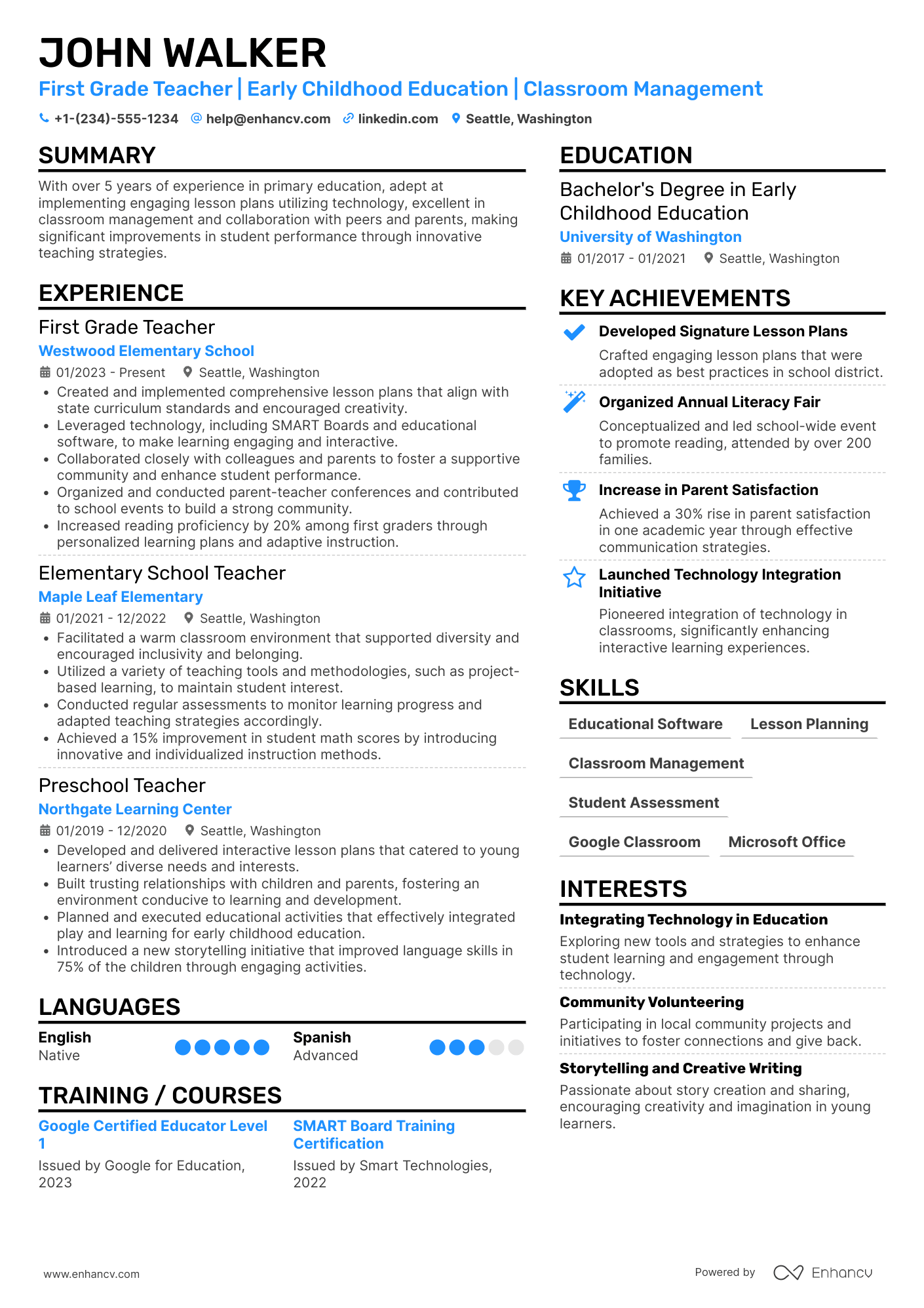


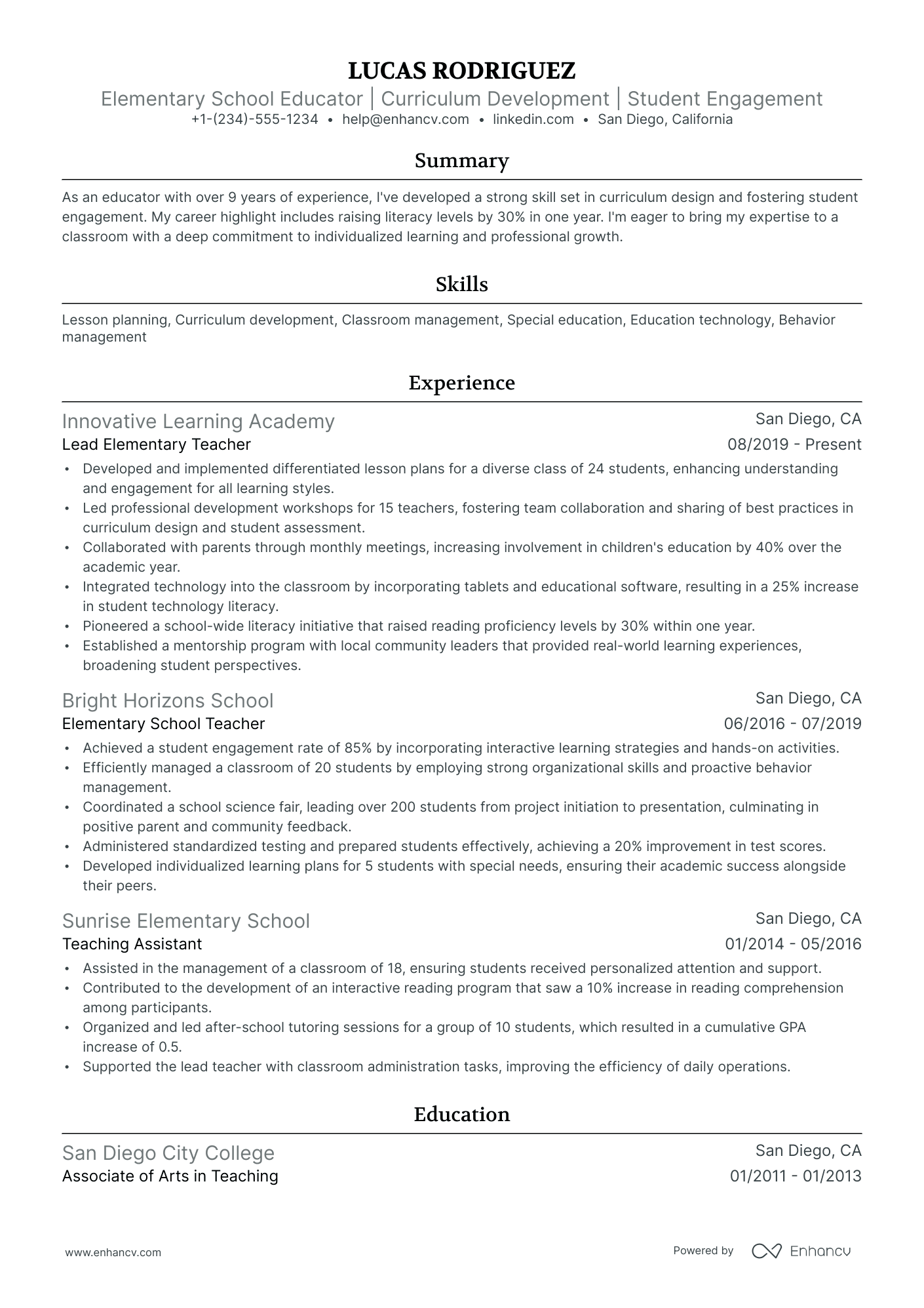
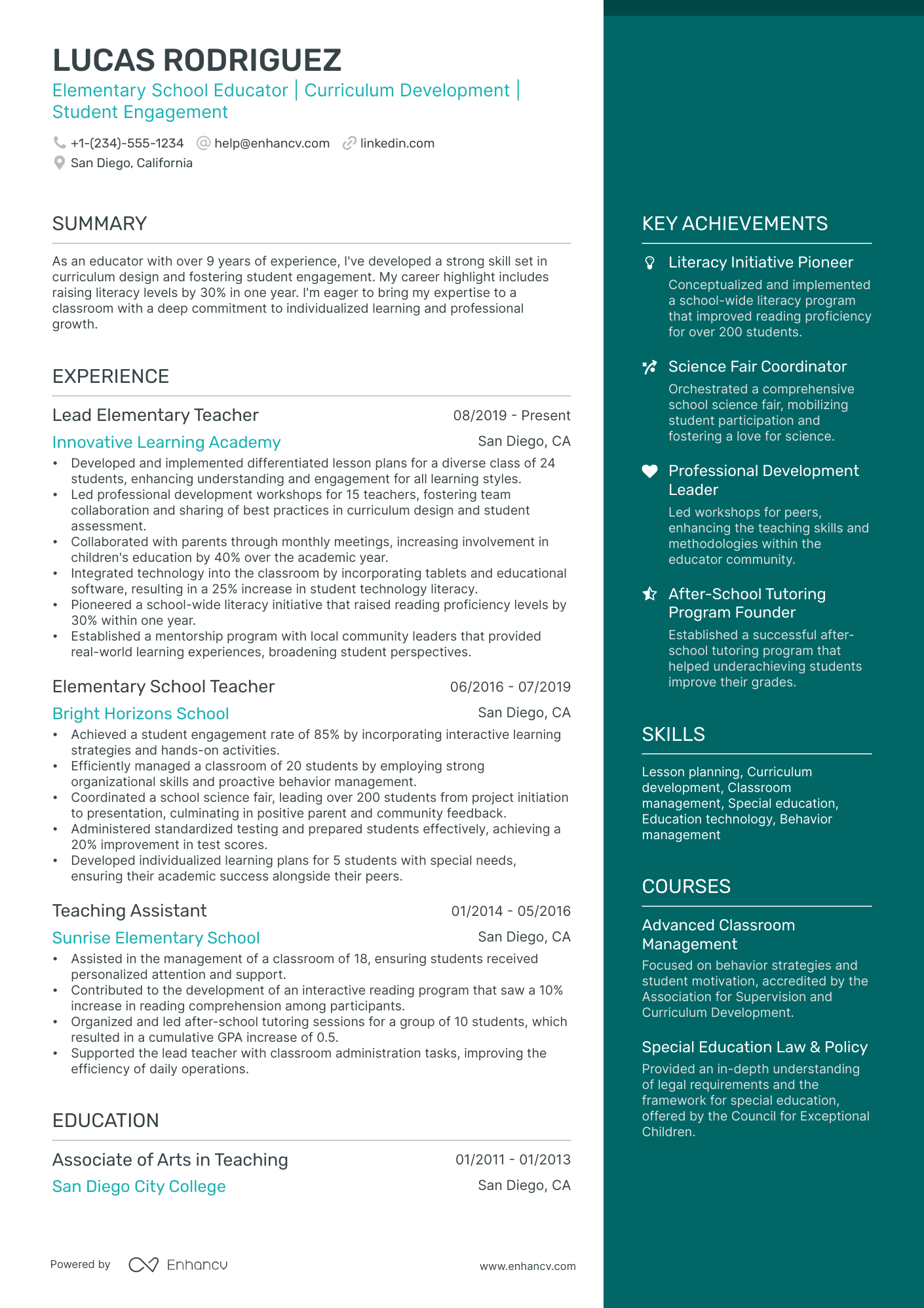
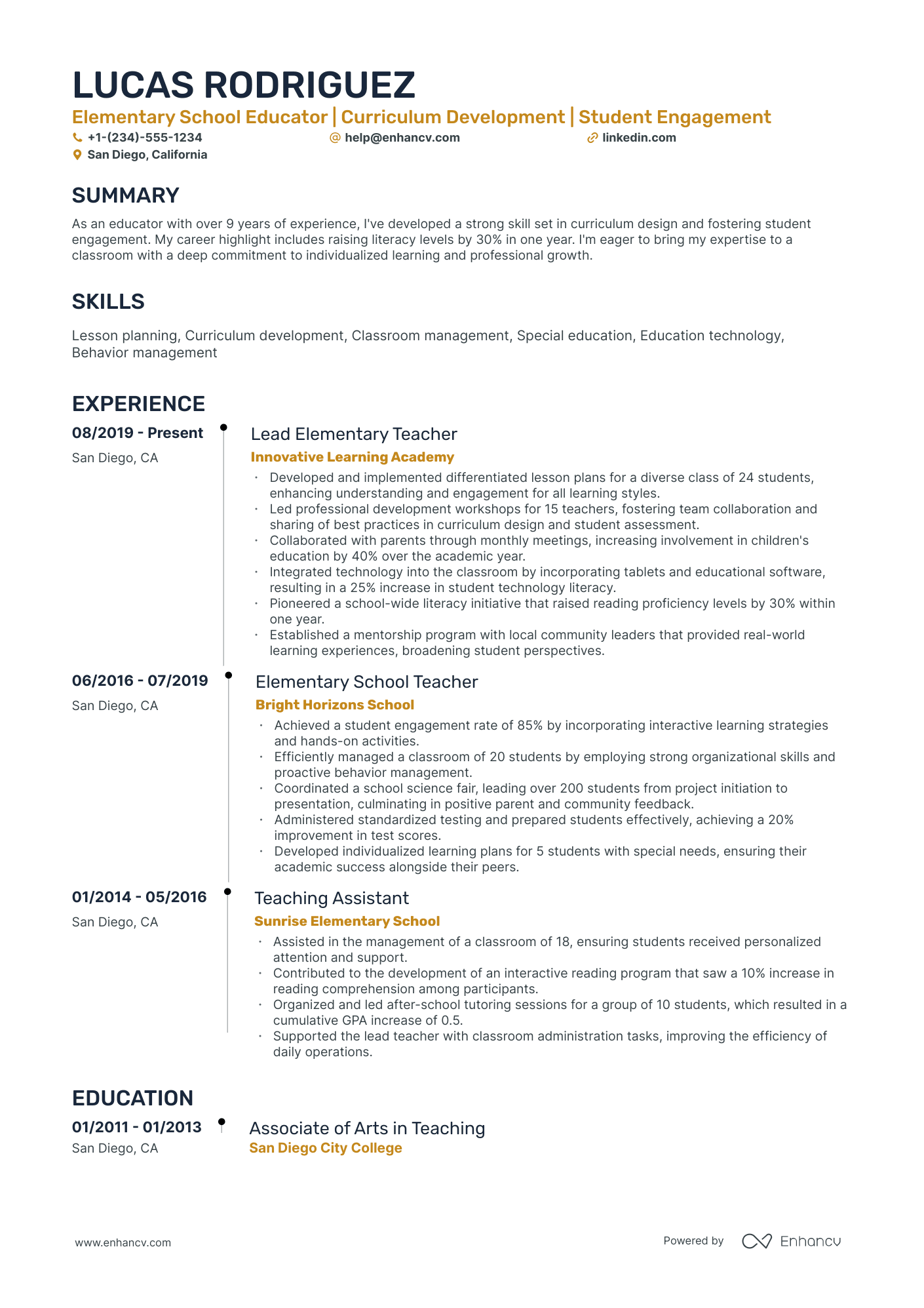
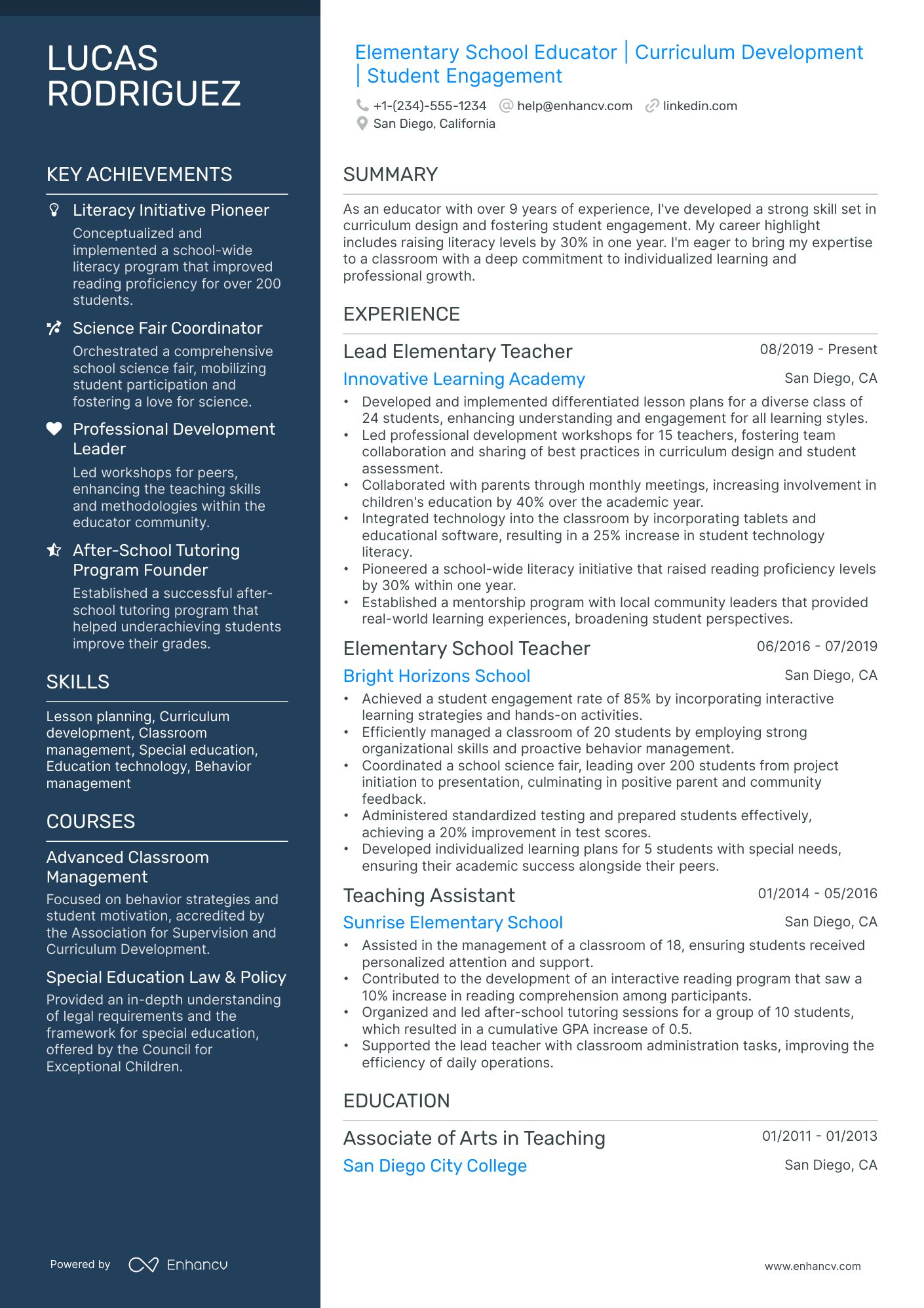
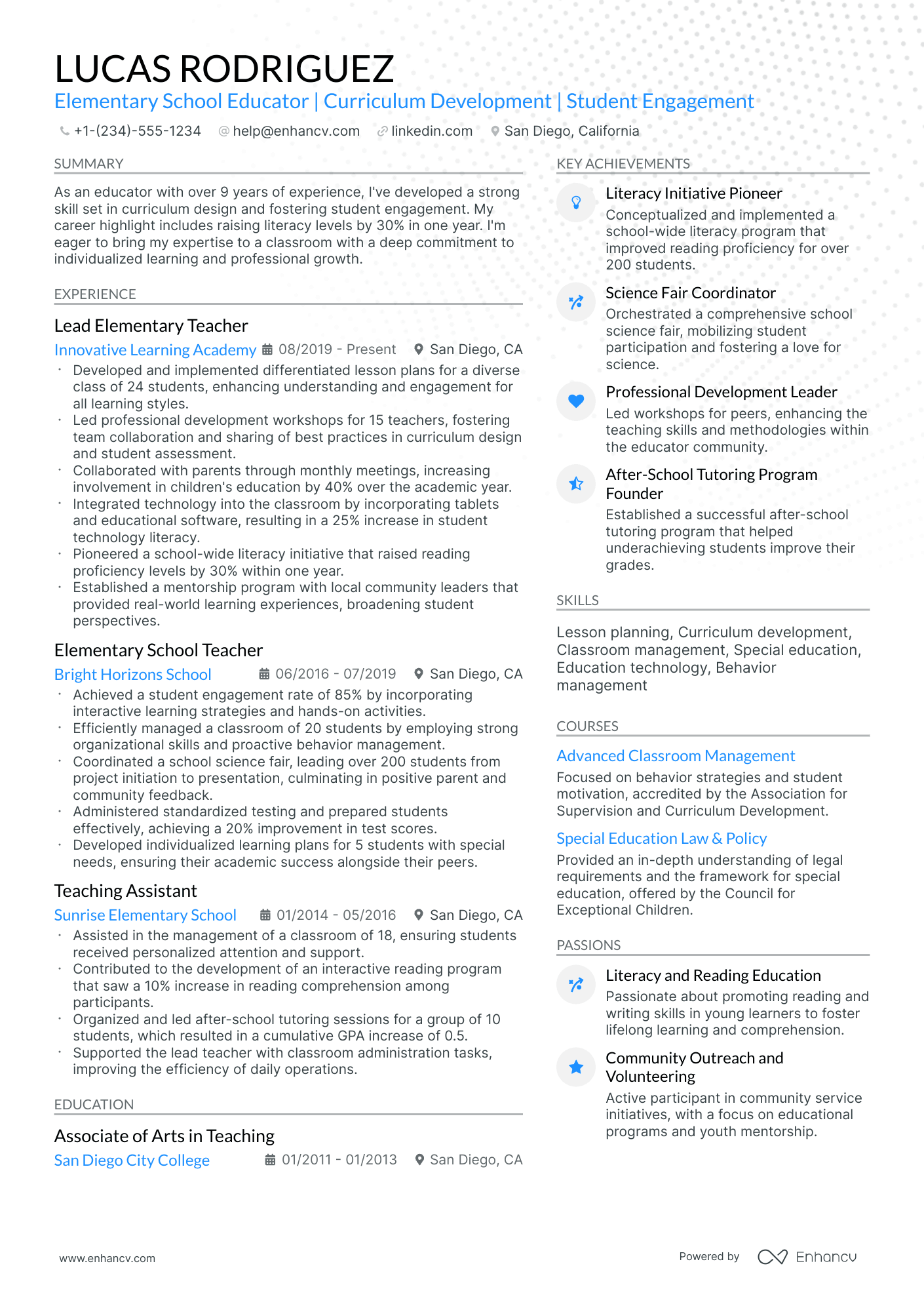
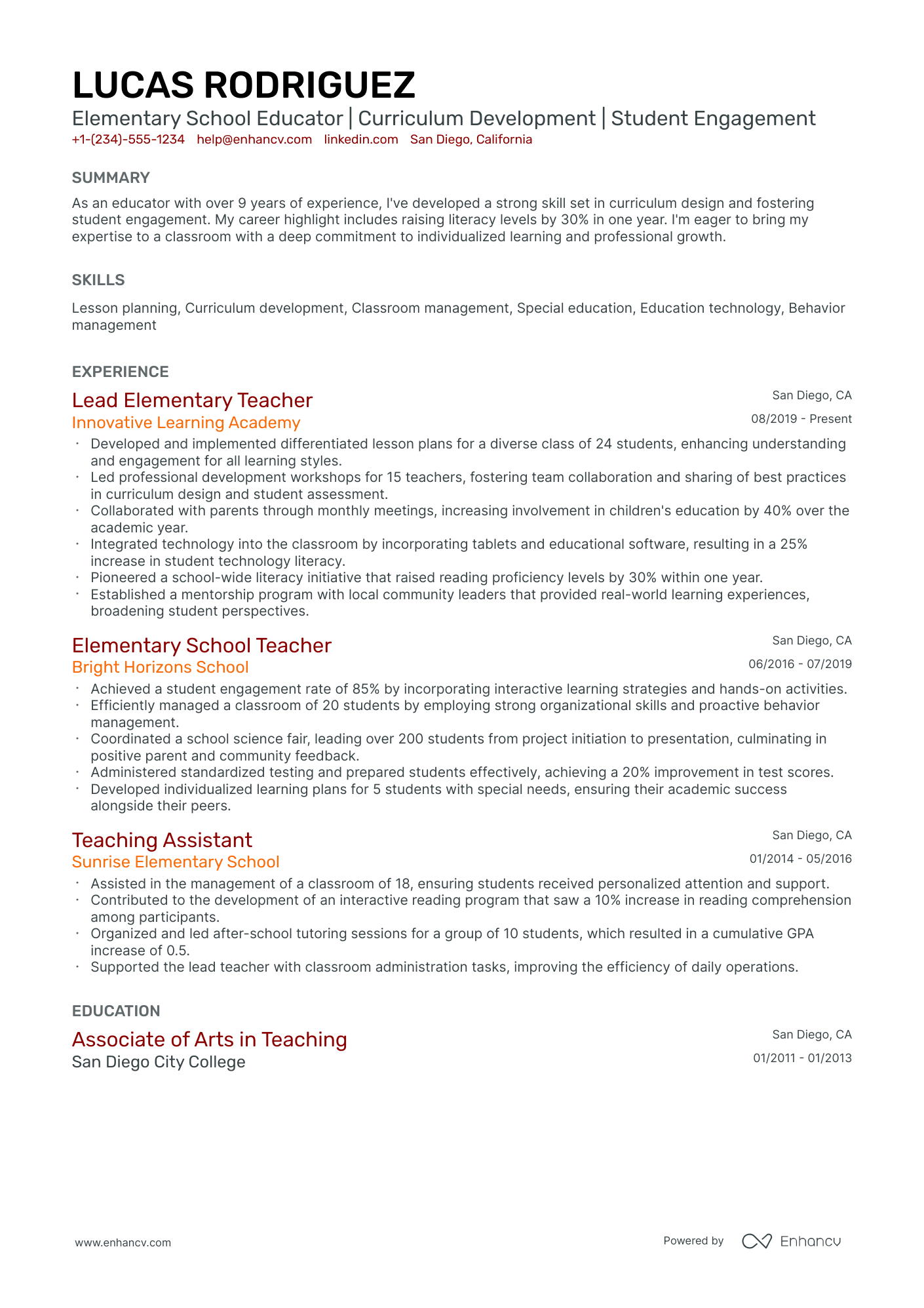
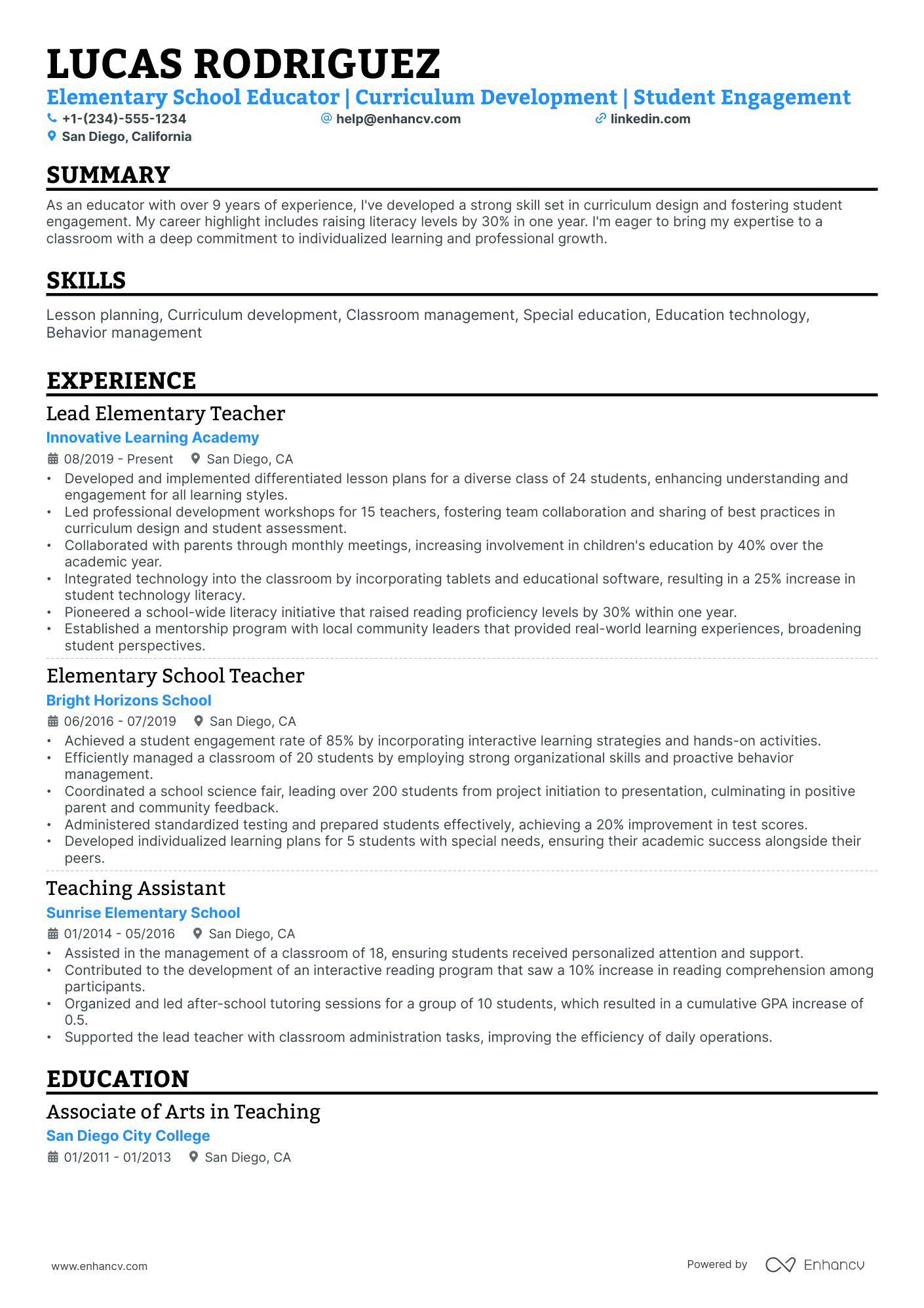
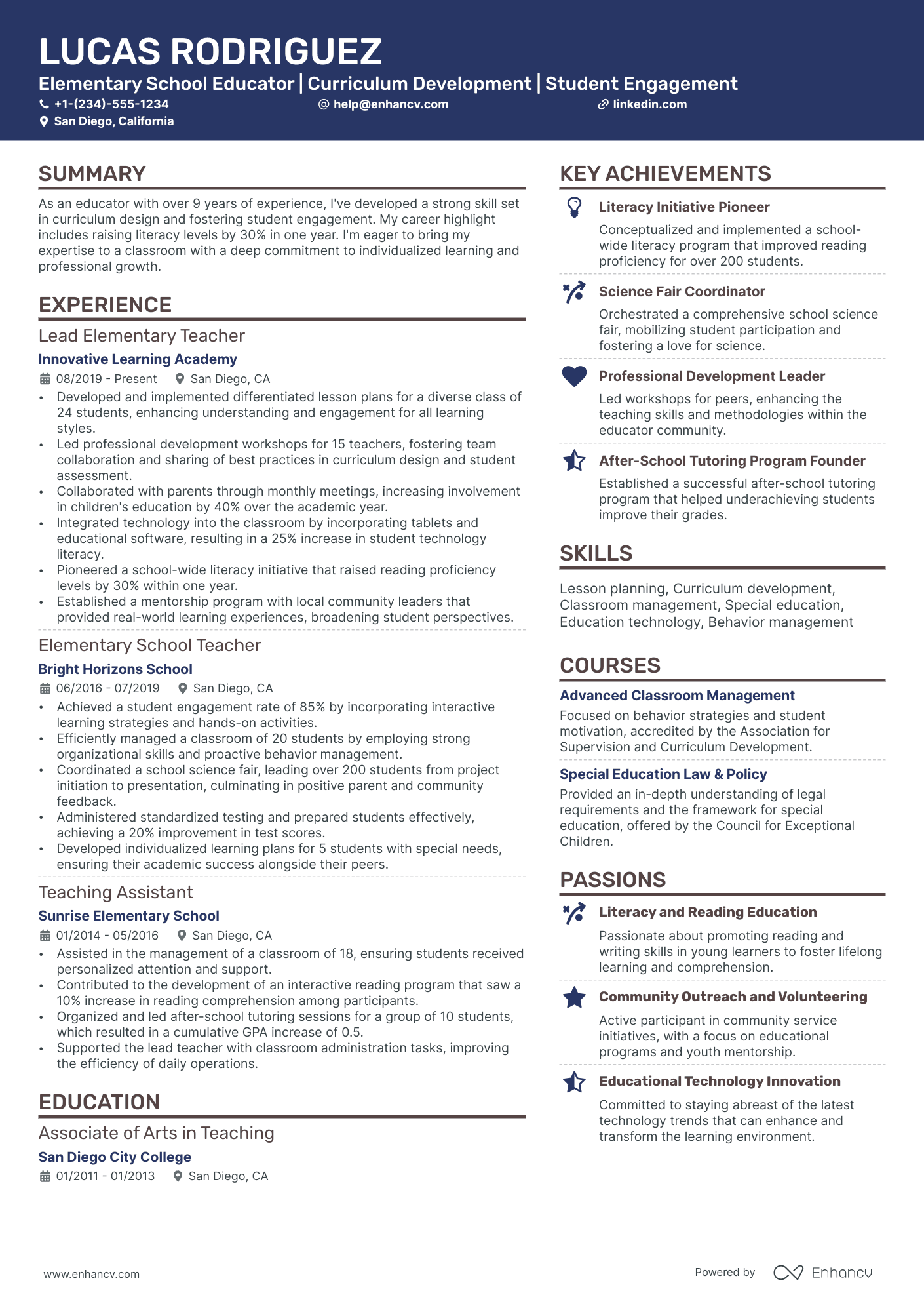
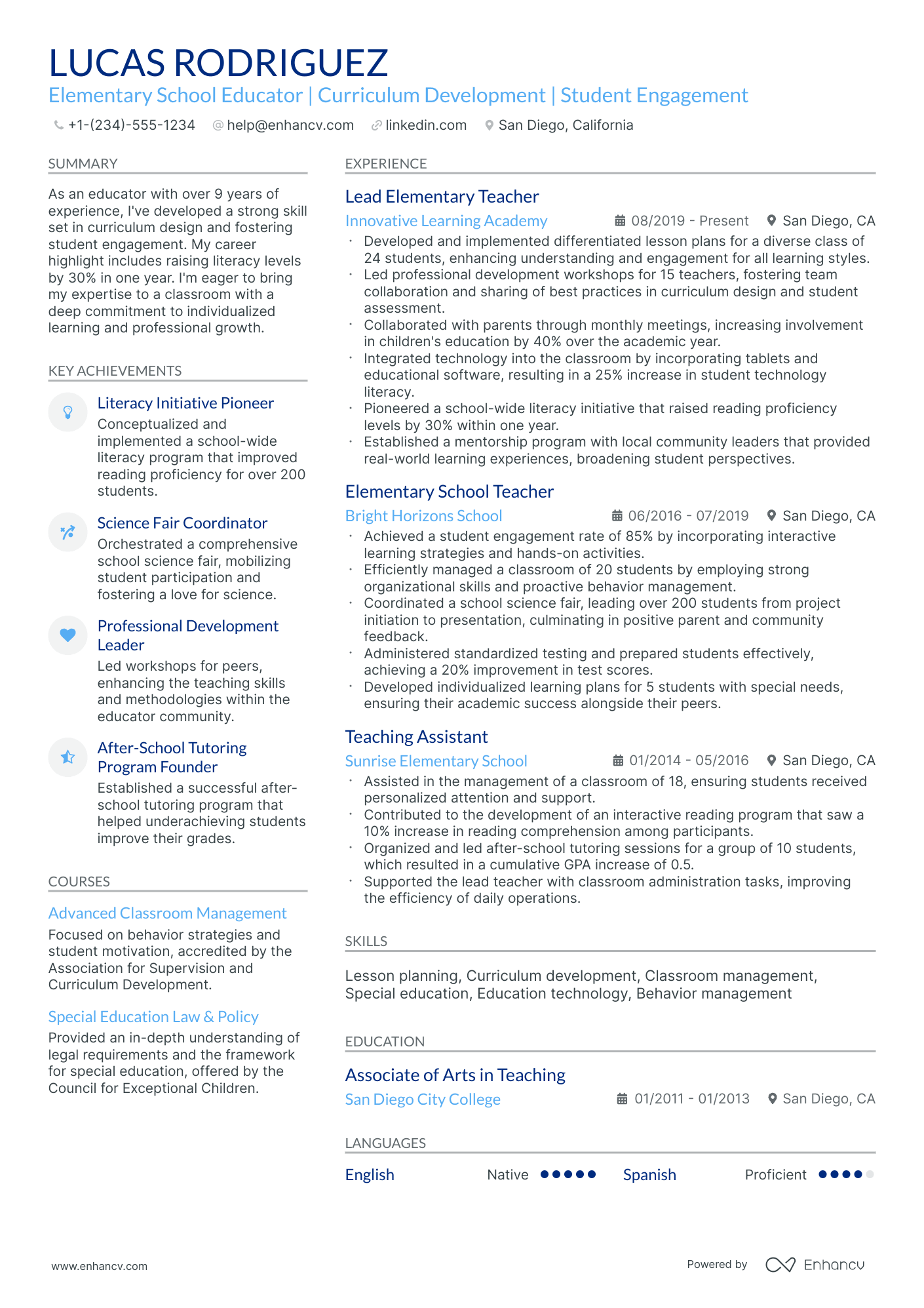
Many first grade teacher resume drafts fail because they read like duty lists and bury proof of student growth. That hurts when an applicant tracking system filters keywords and recruiters scan fast in a crowded applicant pool. If you're unsure where to begin, understanding how to write a resume from the ground up can set the right foundation.
A strong resume shows what changed because of your teaching. You should highlight reading gains, math benchmark improvements, class size, behavior incident reductions, family engagement participation, and stronger attendance after your interventions. Focus on measurable results, not tools.

Key takeaways
- Quantify student growth in reading, math, behavior, and attendance instead of listing duties.
- Tailor every experience bullet to match the specific job posting's language and priorities.
- Use reverse-chronological format with teaching experience; switch to hybrid if you're entry-level.
- Demonstrate skills inside your experience bullets, not only in a standalone skills section.
- Include certifications, state licensure, and endorsements directly after your education section.
- Write a three- to four-line summary with your title, grade level, and one measurable result.
- Use Enhancv to turn routine classroom tasks into clear, results-driven resume bullets.
How to format a first grade teacher resume
Recruiters hiring for first grade teacher positions prioritize classroom management skills, literacy and numeracy instruction methods, differentiated learning approaches, and evidence of positive student outcomes. A clear, well-organized resume format ensures these signals are immediately visible and pass through applicant tracking systems without losing critical details.

I have significant experience as a first grade teacher—which format should I use?
Use a reverse-chronological format to present your teaching career in a clear, progressive timeline that highlights growing classroom expertise and instructional impact. Do:
- Lead each role entry with your scope of responsibility, including grade level, class size, and any leadership duties such as mentoring student teachers or leading curriculum committees.
- Feature role-specific skills and tools prominently—phonics programs (Fundations, Wilson Reading), learning management systems (Seesaw, Google Classroom), and standards alignment (Common Core, state frameworks).
- Quantify student outcomes and instructional impact wherever possible, using assessment data, reading level growth, or parent engagement metrics.
- "Implemented a structured phonics intervention program for 22 first graders, increasing the percentage of students reading at or above grade level from 58% to 84% within one academic year."
I'm junior or switching into a first grade teaching role—what format works best?
Use a hybrid format to lead with relevant teaching skills and certifications while still providing a chronological record of your experience, including student teaching, tutoring, or related roles. Do:
- Place a dedicated skills section near the top of your resume featuring early childhood pedagogy, classroom management techniques, and any state teaching certifications or endorsements.
- Include student teaching placements, volunteer work, after-school program experience, or paraprofessional roles as substantive experience entries with specific responsibilities described.
- Connect every action to a clear outcome so hiring managers can see your potential classroom impact, even without years of lead teaching experience.
- Differentiated instruction (skill) → designed tiered literacy centers for diverse learner groups during a student teaching placement (action) → helped 90% of students meet end-of-unit reading benchmarks (result).
Why not use a functional resume?
A functional resume strips away the classroom context and timeline that principals need to evaluate your teaching readiness, making it harder for them to assess where, when, and how you developed your instructional skills.
- A functional format may be acceptable if you're transitioning into teaching from a related field (such as childcare, speech-language pathology, or library science), have a gap in your work history due to personal leave, or hold limited formal classroom experience but have completed relevant coursework and certifications—provided you still tie every listed skill to a specific project, practicum, or measurable outcome.
Once you've established a clean, readable format, the next step is deciding which sections to include and how to arrange them for maximum impact.
What sections should go on a first grade teacher resume
Recruiters expect to see a clear snapshot of your classroom impact, instructional strengths, and credentials for teaching early elementary learners. Knowing which resume sections to include helps you organize that information effectively. Use this structure for maximum clarity:
- Header
- Summary
- Experience
- Skills
- Projects
- Education
- Certifications
- Optional sections: Awards, Leadership, Volunteering
Strong experience bullets should emphasize student growth outcomes, classroom scope, instructional strategies used, and measurable results in learning, behavior, and family engagement.
Is your resume good enough?
Drop your resume here or choose a file. PDF & DOCX only. Max 2MB file size.
With your resume’s key components in place, the next step is to write the experience section so it supports each element with clear, relevant proof.
How to write your first grade teacher resume experience
The work experience section is where you prove you've delivered meaningful learning outcomes, not just managed a classroom. Hiring managers prioritize demonstrated impact—how you've used instructional methods, assessment tools, and differentiated strategies to move students forward—over descriptive task lists.
Each entry should include:
- Job title
- Company and location (or remote)
- Dates of employment (month and year)
Three to five concise bullet points showing what you owned, how you executed, and what outcomes you delivered:
- Ownership scope: the classrooms, grade-level curricula, student caseloads, intervention programs, or parent communication channels you were directly accountable for as a first grade teacher.
- Execution approach: the instructional frameworks, literacy and numeracy programs, classroom management systems, assessment platforms, or differentiation methods you used to guide daily teaching decisions and deliver developmentally appropriate instruction.
- Value improved: changes to student reading proficiency, math fluency, behavioral engagement, classroom accessibility, or early intervention effectiveness that resulted from your teaching practices.
- Collaboration context: how you partnered with grade-level teams, special education staff, reading specialists, school administrators, or families to align on individualized learning plans and student support strategies.
- Impact delivered: outcomes expressed through student growth, learning milestones reached, retention improvements, or program-level results rather than routine teaching activities.
Experience bullet formula
A first grade teacher experience example
✅ Right example - modern, quantified, specific.
First Grade Teacher
Maple Grove Elementary School | Columbus, OH
2021–Present
K–Five public elementary school serving 520 students with a focus on literacy growth and inclusive instruction.
- Designed and delivered standards-aligned literacy and math instruction using Google Classroom, Seesaw, and i-Ready, increasing the percentage of students meeting grade-level reading benchmarks from 58% to 81% in one school year.
- Implemented a multi-tiered system of supports (MTSS) with weekly progress monitoring in DIBELS and Excel trackers, cutting the number of students requiring Tier Three interventions from 12 to five by spring.
- Differentiated small-group instruction using Heggerty phonemic awareness routines, decodable texts, and guided reading, improving average oral reading fluency by 18 words correct per minute across the class.
- Partnered with special education teachers, speech-language pathologists, and English as a second language staff to deliver and document individualized education program goals and accommodations, achieving 95% on-time compliance for service minutes and documentation audits.
- Streamlined family communication and conferences using ClassDojo, Google Forms, and translated newsletters, raising conference participation from 72% to 93% and reducing behavior referrals by 28% through consistent home-school plans.
Now that you've seen what a strong experience section looks like in practice, let's break down how to tailor each element to match the specific first grade teaching role you're applying for.
How to tailor your first grade teacher resume experience
Recruiters evaluate your first grade teacher resume through both human review and applicant tracking systems. Tailoring your resume to the job description ensures you pass both screenings.
Ways to tailor your first grade teacher experience:
- Mirror the specific curriculum frameworks named in the posting.
- Match literacy instruction methods the school district prioritizes.
- Reference the exact classroom management model the job describes.
- Highlight experience with assessment tools listed in the requirements.
- Include state learning standards the district follows for first grade.
- Emphasize differentiated instruction strategies the posting calls for.
- Align your technology skills with platforms the school uses.
- Mention parent communication practices the job description values.
Tailoring means aligning your real classroom achievements with the job's stated requirements, not inserting keywords where they don't belong.
Resume tailoring examples for first grade teacher
| Job description excerpt | Untailored | Tailored |
|---|---|---|
| "Implement Fundations phonics program to support early literacy development in alignment with district reading benchmarks for grades K–2." | Taught reading and writing to young students using various classroom methods. | Delivered daily Fundations phonics instruction to 22 first graders, contributing to 85% of students meeting district reading benchmarks by end of year. |
| "Use formative assessments such as DIBELS and running records to monitor student progress and differentiate instruction for diverse learners." | Assessed students regularly and adjusted teaching as needed. | Administered DIBELS and running records on a six-week cycle to track fluency and comprehension, using results to form three differentiated reading groups across skill levels. |
| "Collaborate with special education staff to implement IEP accommodations and support inclusive classroom practices for students with learning differences." | Worked with other teachers to help all students succeed in the classroom. | Partnered with two special education teachers to implement IEP accommodations for six students, including modified assignments and visual schedules, maintaining full inclusion in classroom activities. |
Once you’ve aligned your experience with the role’s priorities, the next step is to quantify your first grade teacher achievements so hiring managers can see the impact behind those choices.
How to quantify your first grade teacher achievements
Quantifying your achievements shows how you improved learning, behavior, and family engagement. Focus on growth scores, reading levels, attendance, behavior incidents, and assessment turnaround time across your classroom and reporting cycles.
Quantifying examples for first grade teacher
| Metric | Example |
|---|---|
| Reading growth | "Moved 18 of 22 students up at least one guided reading level in 12 weeks using Fountas & Pinnell running records and small-group rotations." |
| Math proficiency | "Raised end-of-unit mastery from 62% to 84% across four units by reteaching with manipulatives and weekly exit tickets in Google Forms." |
| Behavior reduction | "Cut classroom disruptions by 35% in one semester by implementing ClassDojo points, clear routines, and weekly SEL mini-lessons." |
| Attendance improvement | "Improved average daily attendance from 93% to 96% by launching a family text reminder plan and coordinating with the attendance team." |
| Assessment turnaround | "Returned and analyzed weekly spelling and phonics checks within 24 hours for 25 students using Seesaw, then regrouped instruction the next day." |
Turn your everyday tasks into measurable, recruiter-ready resume bullets in seconds with Enhancv's Bullet Point Generator.
Once you've crafted strong bullet points for your experience section, the next step is ensuring your skills section effectively showcases the hard and soft skills that make you a standout first grade teacher.
How to list your hard and soft skills on a first grade teacher resume
Your skills section shows you can deliver safe, standards-aligned learning, and recruiters and an ATS (applicant tracking system) scan them to confirm fit fast; aim for a balanced mix of classroom hard skills and job-critical soft skills.
first grade teacher roles require a blend of:
- Product strategy and discovery skills.
- Data, analytics, and experimentation skills.
- Delivery, execution, and go-to-market discipline.
- Soft skills.
Your skills section should be:
- Scannable (bullet-style grouping).
- Relevant to the job post.
- Backed by proof in experience bullets.
- Updated with current tools.
Place your skills section:
- Above experience if you're junior or switching careers.
- Below experience if you're mid/senior with strong achievements.

Hard skills
- Standards-aligned lesson planning
- Literacy instruction: phonics, guided reading
- Math instruction: number sense, manipulatives
- Classroom management systems
- Individualized Education Program implementation
- Multi-tiered system of supports
- Behavior intervention plans
- Formative assessment design
- Data-driven small-group instruction
- Google Classroom, Google Workspace for Education
- Seesaw, ClassDojo, i-Ready
- Family communication logs, progress reports
Soft skills
- Give clear, age-appropriate directions
- Build routines and reinforce expectations
- Collaborate with special education and support staff
- Communicate progress with families
- De-escalate conflict and reset behavior
- Adjust instruction in real time
- Prioritize safety and student supervision
- Document concerns and follow escalation steps
- Lead productive grade-level team meetings
- Manage time across centers and transitions
- Maintain confidentiality and professionalism
- Advocate for student needs with evidence
How to show your first grade teacher skills in context
Skills shouldn't live only in a bulleted list on your resume. Browse resume skills examples to see how other educators present their competencies effectively.
They should be demonstrated in:
- Your summary (high-level professional identity)
- Your experience (proof through outcomes)
Here are examples that put this into practice.
Summary example
First grade teacher with 12 years of experience using guided reading, phonics-based instruction, and Seesaw to build foundational literacy. Raised classroom reading proficiency rates by 30% through differentiated small-group lessons and consistent family engagement.
- Reflects senior-level experience clearly
- Names specific tools and methods
- Includes a measurable student outcome
- Highlights communication and collaboration
Experience example
First Grade Teacher
Maplewood Elementary School | Austin, TX
August 2016–June 2024
- Implemented Fundations phonics curriculum across three classrooms, improving first-grade decoding scores by 25% within one academic year.
- Collaborated with special education staff using ClassDojo and IEP tracking tools to support 14 students with individualized learning plans.
- Designed weekly STEM-integrated lessons with parent volunteers, boosting student engagement survey results by 18% over two semesters.
- Every bullet includes measurable proof.
- Skills appear naturally within achievements.
Once you’ve tied your teaching strengths to real classroom examples, the next step is learning how to write a first grade teacher resume with no experience so those examples still land effectively.
How do I write a first grade teacher resume with no experience
Even without full-time experience, you can demonstrate readiness through practicum work, tutoring, and volunteering. Our guide on writing a resume without work experience covers strategies that apply directly to new teachers. Consider the following:
- Student teaching placements in first grade
- Classroom aide or paraprofessional work
- Literacy tutoring for early readers
- Lesson plans from education coursework
- Teaching practicum classroom observations
- Volunteer reading groups at libraries
- After-school enrichment for young learners
- Childcare leading structured learning activities
Focus on:
- Grade-level lesson planning artifacts
- Classroom management evidence and routines
- Early literacy and math instruction
- Family communication samples and logs
Resume format tip for entry-level first grade teacher
Use a combination resume format because it highlights teaching skills and training first, while still showing relevant experience substitutes in a clear timeline. Do:
- Lead with certification status and endorsements.
- Add a "Teaching Experience" section for practicums.
- Quantify outcomes: growth, attendance, accuracy.
- List tools: Seesaw, Google Classroom, i-Ready.
- Attach lesson plans and assessments as links.
- Designed and taught five phonics small-group lessons during a first grade practicum, raising letter-sound accuracy from 60% to 85% for six students.
Once you've built a strong resume foundation despite limited classroom experience, presenting your education effectively becomes the next essential step—since your academic background will carry even more weight with hiring managers.
How to list your education on a first grade teacher resume
Your education section lets hiring teams confirm you hold the degrees and training required for a first grade teacher role. It validates your foundational knowledge quickly.
Include:
- Degree name
- Institution
- Location
- Graduation year
- Relevant coursework (for juniors or entry-level candidates)
- Honors & GPA (if 3.5 or higher)
Skip month and day details—list the graduation year only.
Here's a strong education entry tailored for a first grade teacher resume:
Example education entry
Bachelor of Science in Elementary Education
University of North Carolina at Charlotte, Charlotte, NC
Graduated 2021
GPA: 3.8/4.0
- Relevant Coursework: Early Childhood Literacy, Foundations of Mathematics Instruction, Child Development, and Classroom Management Strategies
- Honors: Magna Cum Laude, Dean's List (six semesters)
How to list your certifications on a first grade teacher resume
Certifications on a resume show a first grade teacher's commitment to learning, proficiency with classroom tools, and alignment with current education standards and practices.
Include:
- Certificate name
- Issuing organization
- Year
- Optional: credential ID or URL
- Place certifications below education when they're older, less role-specific, or secondary to your degree and teacher licensure.
- Place certifications above education when they're recent, highly relevant to first grade teaching, or required for your target role.
Best certifications for your first grade teacher resume
- State Teaching Certification (Elementary Education)
- Reading Specialist Endorsement
- English as a Second Language (ESL) Endorsement
- Special Education Endorsement
- Google Certified Educator Level 1
- CPR and First Aid Certification
- Orton-Gillingham Classroom Educator Training
Once you’ve clearly presented your credentials and required licenses, shift to your first grade teacher resume summary to show how those qualifications translate into classroom impact.
How to write your first grade teacher resume summary
Your resume summary is the first thing a recruiter reads. A strong one immediately signals you're qualified to lead a first grade classroom.
Keep it to three to four lines, with:
- Your title and total years of teaching experience.
- Grade level, subject focus, or school type.
- Core skills like differentiated instruction, classroom management, or literacy programs.
- One or two measurable results, such as improved reading levels or test scores.
- Soft skills tied to outcomes, like parent communication that boosted family engagement.

PRO TIP
At this level, emphasize hands-on classroom skills, relevant certifications, and early wins with students. Highlight specific curricula or tools you've used. Avoid vague phrases like "passionate educator" or "dedicated team player." Replace them with concrete results that show your impact on student growth.
Example summary for a first grade teacher
First grade teacher with three years of experience in Title I schools. Skilled in guided reading, phonics-based instruction, and positive behavior interventions. Improved student reading proficiency by 20% through small-group literacy rotations and data-driven lesson planning.
Optimize your resume summary and objective for ATS
Drop your resume here or choose a file.
PDF & DOCX only. Max 2MB file size.
Now that your summary captures your teaching strengths at a glance, make sure your header presents the essential contact details hiring managers need to reach you.
What to include in a first grade teacher resume header
A resume header is the contact and identity block at the top, and it boosts visibility, credibility, and recruiter screening for a first grade teacher.
Essential resume header elements
- Full name
- Tailored job title and headline
- Location
- Phone number
- Professional email
- GitHub link
- Portfolio link
A LinkedIn link helps recruiters verify experience quickly and supports screening.
Don't include a photo on a first grade teacher resume unless the role is explicitly front-facing or appearance-dependent.
Keep the header scannable by using one line per contact item and matching your job title to the posting.
First grade teacher resume header
Jordan M. Rivera
First grade teacher | Early literacy, classroom management, family communication
Austin, TX
(512) 555-01XX
your.name@enhancv.com
github.com/yourname
yourwebsite.com
linkedin.com/in/yourname
Once your contact details and credentials are clearly presented at the top, add targeted additional sections to strengthen the rest of your first grade teacher resume.
Additional sections for first grade teacher resumes
When your core qualifications match other applicants, additional sections help you stand out by showcasing unique strengths relevant to teaching first graders. For example, listing language skills on your resume can be especially valuable in diverse school communities.
- Languages
- Certifications and endorsements
- Volunteer experience with children
- Professional development and workshops
- Hobbies and interests
- Awards and honors
- Professional memberships
Once you've rounded out your resume with the right supplementary sections, it's worth pairing it with a strong cover letter to make an even bigger impression.
Do first grade teacher resumes need a cover letter
A cover letter isn't always required for a first grade teacher, but it often helps. If you're wondering what a cover letter is and when it matters, it can make the biggest difference in competitive districts, selective schools, or roles with strict hiring expectations. It also helps when your resume doesn't clearly show fit.
Use a cover letter to add details your resume can't:
- Explain role or team fit: Connect your teaching style to the grade-level team, curriculum approach, and classroom routines the school uses.
- Highlight one or two relevant projects or outcomes: Share a specific literacy or math intervention and the result, using simple numbers or clear before-and-after details.
- Show understanding of the school's context: Reference the student community, family engagement needs, and key priorities, then explain how you support them.
- Address career transitions or non-obvious experience: Clarify a move from another grade, a gap, or related work, and translate it into first grade teacher strengths.
Drop your resume here or choose a file.
PDF & DOCX only. Max 2MB file size.
Even when you decide that a separate letter won’t add value to your application, using AI to improve your first grade teacher resume helps you strengthen the document hiring teams will focus on most.
Using AI to improve your first grade teacher resume
AI can sharpen your resume's clarity, structure, and impact. It helps you find stronger verbs and tighten wordy bullets. But overuse strips authenticity fast. Once your content feels clear and role-aligned, step away from AI entirely. For specific ideas, explore these ChatGPT resume writing prompts tailored to different resume sections.
Here are 10 practical prompts you can copy and paste to strengthen specific sections of your resume:
- Strengthen summary focus: "Rewrite my first grade teacher resume summary to highlight classroom management skills and measurable student literacy outcomes in under four sentences."
- Quantify experience bullets: "Add specific metrics to these first grade teacher experience bullets showing student reading level growth and parent engagement improvements."
- Tighten action verbs: "Replace weak verbs in my first grade teacher experience section with strong, specific action verbs that reflect hands-on classroom instruction."
- Align skills section: "Review my first grade teacher skills section and remove irrelevant entries, keeping only skills that match early childhood education job postings."
- Clarify project descriptions: "Rewrite my first grade teacher classroom project descriptions to clearly state objectives, my role, and measurable student outcomes."
- Improve education details: "Refine the education section of my first grade teacher resume to emphasize relevant coursework, honors, and early literacy training."
- Highlight certification value: "Rewrite my first grade teacher certifications section to clearly connect each credential to specific classroom competencies employers prioritize."
- Remove redundant phrasing: "Identify and cut redundant or filler phrases across my entire first grade teacher resume without losing any meaningful content."
- Tailor to job posting: "Compare my first grade teacher resume against this job description and suggest targeted edits to improve keyword alignment."
- Sharpen bullet structure: "Restructure my first grade teacher experience bullets into consistent 'Action + Task + Result' format with measurable outcomes where possible."
Stop using AI once your resume sounds accurate, specific, and aligned with real experience. AI should never invent experience or inflate claims—if it didn't happen, it doesn't belong here.
Conclusion
A strong first grade teacher resume highlights measurable outcomes, role-specific skills, and a clear structure. Use numbers to show growth, attendance, behavior gains, and family engagement. Match your strengths to the role, and keep every section easy to scan.
Today’s hiring market rewards clarity, consistency, and evidence of impact. A focused first grade teacher resume shows you can teach, manage routines, and collaborate with families and staff. With clean formatting and results, you’re ready for current and near-future expectations.