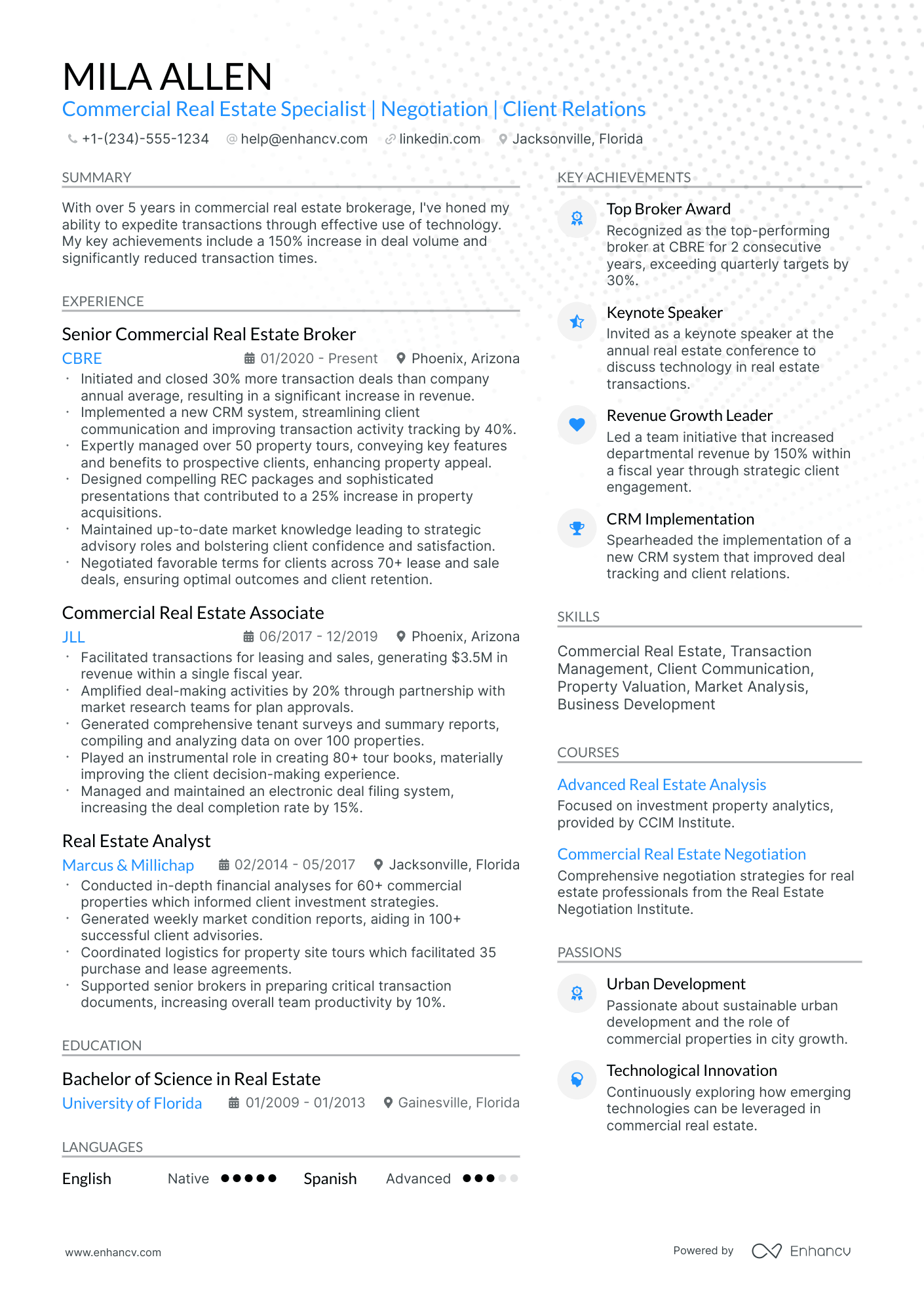
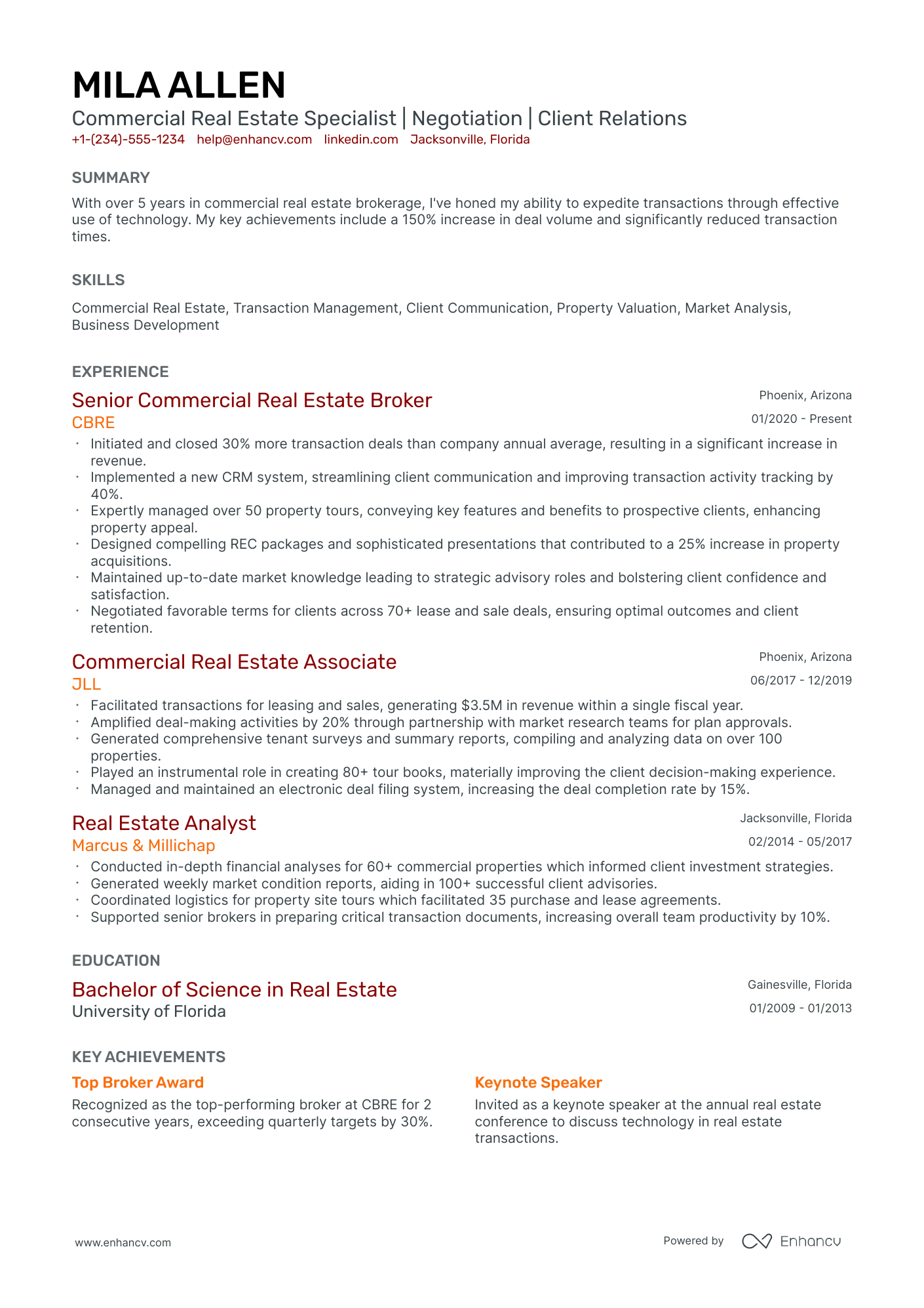
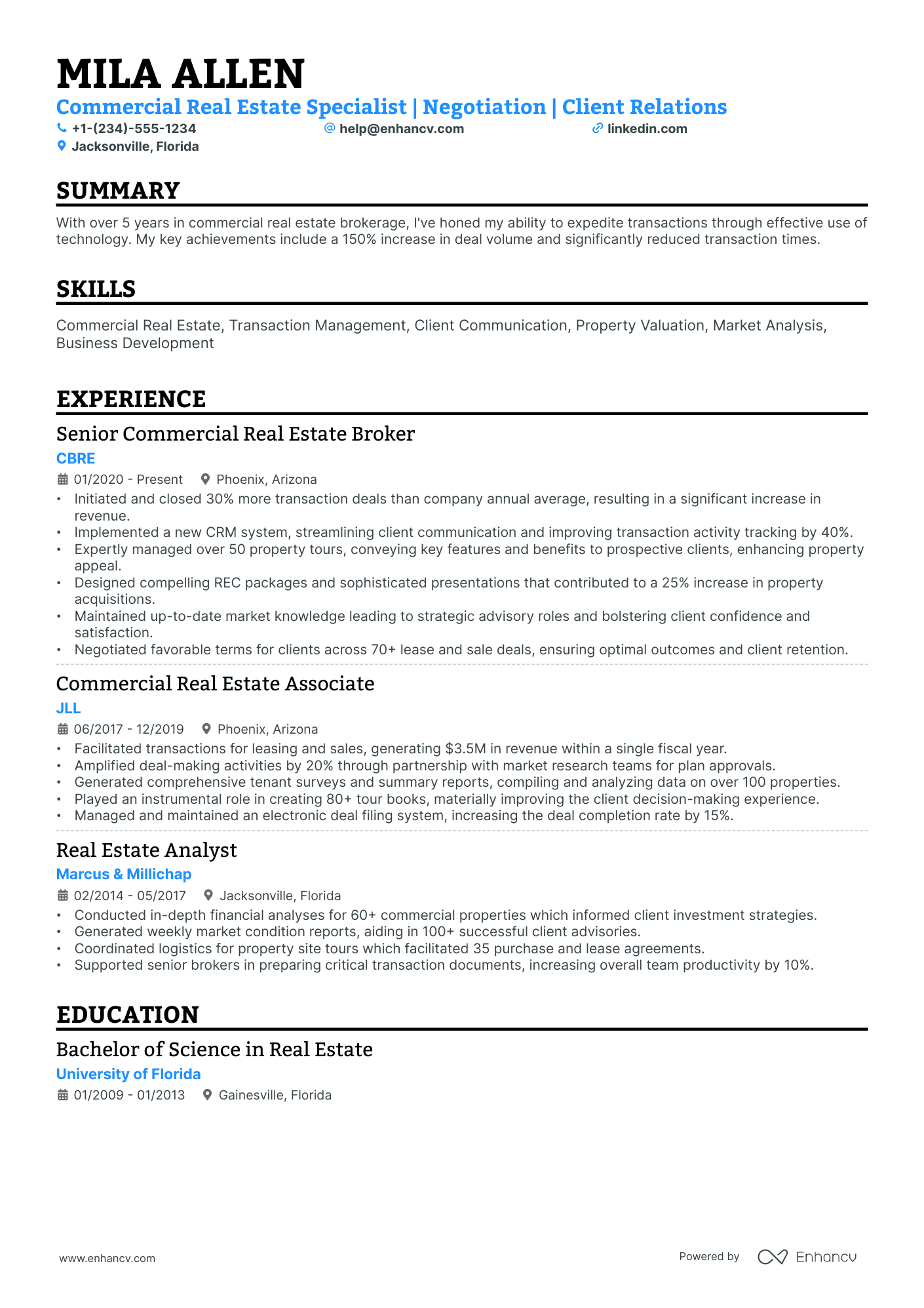
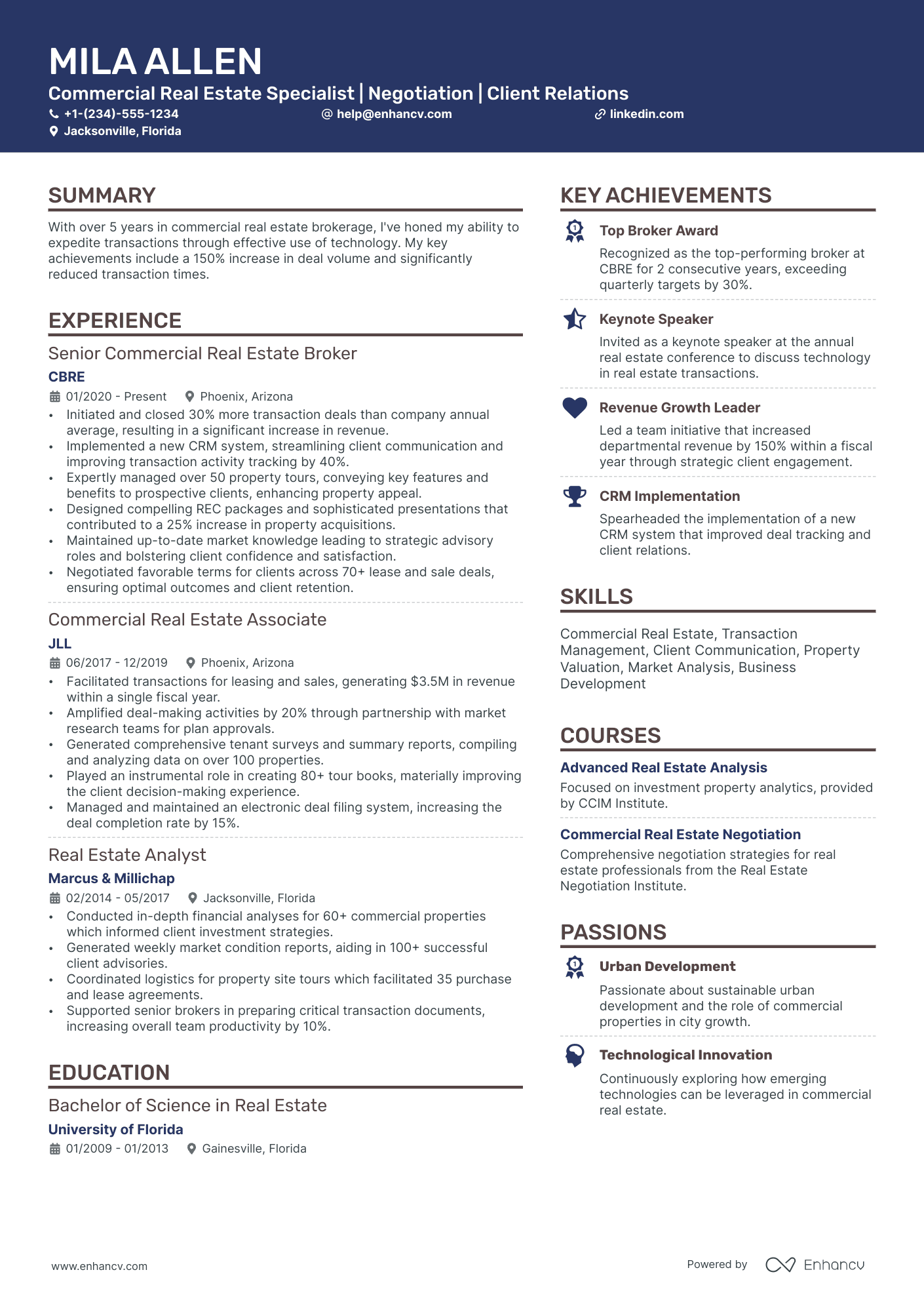
A retail salesperson resume often fails because it reads like a task list and buries results under tools, store jargon, and long job descriptions. That hurts when an ATS filters keywords and recruiters scan fast in a crowded applicant pool.
This guide shows you how to write a resume that leads with outcomes proving you can sell and retain customers. Highlight conversion rate gains, average order value growth, units per transaction, loyalty sign-ups, shrink reduction, and consistent upsell results. Show impact across peak shifts, high-traffic departments, and new product launches.

Key takeaways
- Lead every experience bullet with a measurable result, not a task description.
- Use reverse-chronological format if you have retail experience; use hybrid if you're switching careers.
- Tailor your resume to each job posting by mirroring its exact tools, KPIs, and terminology.
- Quantify sales impact through revenue growth, conversion rates, average transaction value, and loyalty sign-ups.
- Demonstrate skills in your summary and experience bullets, not just in a standalone skills list.
- Use AI to sharpen phrasing and add metrics, but stop before it invents or inflates your claims.
- Build your retail salesperson resume faster with Enhancv to keep every section scannable and results-focused.
Job market snapshot for retail salespersons
We analyzed 228 recent retail salesperson job ads across major US job boards. These numbers help you understand salary landscape, skills in demand, career growth patterns at a glance.
What level of experience employers are looking for retail salespersons
| Years of Experience | Percentage found in job ads |
|---|---|
| Not specified | 100.0% (228) |
Retail salesperson ads by area of specialization (industry)
| Industry (Area) | Percentage found in job ads |
|---|---|
| Healthcare | 99.6% (227) |
Top companies hiring retail salespersons
| Company | Percentage found in job ads |
|---|---|
| Bridgestone Corporation | 100.0% (228) |
How to format a retail salesperson resume
Recruiters evaluating retail salesperson resumes prioritize customer service skills, sales performance metrics, and product knowledge—often deciding within seconds whether a candidate fits. Choosing the right resume format ensures these signals surface immediately rather than getting buried under unnecessary structure.

I have significant experience in this role—which format should I use?
Use a reverse-chronological format to put your strongest and most recent retail sales experience front and center. Do:
- Lead with your most recent role and highlight scope of responsibility, such as department coverage, team size, or store volume.
- Feature retail-specific skills and tools—point-of-sale (POS) systems, inventory management platforms, CRM software, and visual merchandising expertise.
- Quantify sales outcomes and business impact with concrete numbers tied to revenue, conversion, or customer satisfaction.
I'm junior or switching into this role—what format works best?
A hybrid format works best because it lets you lead with transferable skills while still showing a clear work history. Do:
- Place a dedicated skills section near the top of your resume, spotlighting customer-facing abilities, product knowledge, and communication strengths relevant to retail sales.
- Include projects, volunteer work, or part-time roles that demonstrate direct interaction with customers, handling transactions, or meeting goals.
- Connect every action to a result so hiring managers see practical impact, not just responsibilities.
Why not use a functional resume?
A functional resume strips away the timeline and context that retail hiring managers rely on to verify consistent customer interaction, sales performance, and reliability—making it harder for them to trust your candidacy. Avoid a functional format entirely if you have any relevant retail, customer service, or sales experience you can place in a chronological or hybrid structure.
- Edge-case exception: A functional resume may be acceptable if you're entering retail sales with no prior work history, are navigating a significant career change from an unrelated field, or are addressing a lengthy resume gap—but even then, tie every listed skill to a specific project, volunteer role, or measurable outcome to maintain credibility.
Once your format establishes a clean, readable structure, the next step is filling it with the right sections to showcase your qualifications effectively.
What sections should go on a retail salesperson resume
Recruiters expect to see clear proof that you can drive sales, deliver great customer service, and hit store goals. Knowing what to put on a resume for a retail salesperson role helps you prioritize the right details.
Use this structure for maximum clarity:
- Header
- Summary
- Experience
- Skills
- Projects
- Education
- Certifications
- Optional sections: Awards, volunteering, languages
Strong experience bullets should emphasize measurable sales impact, customer outcomes, and the scope of your responsibilities.
Is your resume good enough?
Drop your resume here or choose a file. PDF & DOCX only. Max 2MB file size.
Once you’ve organized your resume with the right key sections, the next step is to write your retail salesperson experience so each role supports that structure with relevant, results-focused details.
How to write your retail salesperson resume experience
Your experience section should spotlight the work you've shipped—sales targets you've hit, customer relationships you've built, and measurable outcomes you've driven on the floor. Hiring managers prioritize demonstrated impact over descriptive task lists, so every bullet should prove you delivered results rather than simply occupied a role. Building a targeted resume for each application ensures your experience aligns with what each employer values most.
Each entry should include:
- Job title
- Company and location (or remote)
- Dates of employment (month and year)
Three to five concise bullet points showing what you owned, how you executed, and what outcomes you delivered:
- Ownership scope: the product categories, floor sections, customer segments, or inventory areas you were directly accountable for as a retail salesperson.
- Execution approach: the point-of-sale systems, CRM tools, upselling techniques, visual merchandising strategies, or clienteling methods you used to drive sales and serve customers.
- Value improved: changes to conversion rates, average transaction size, customer satisfaction, stock accuracy, shrinkage reduction, or return rate performance tied to your daily retail work.
- Collaboration context: how you partnered with store management, loss prevention teams, merchandising coordinators, warehouse staff, or vendor representatives to meet shared goals.
- Impact delivered: outcomes framed as revenue growth, loyalty program enrollment gains, repeat customer increases, or operational improvements rather than routine duties you performed.
Experience bullet formula
A retail salesperson experience example
✅ Right example - modern, quantified, specific.
Retail Sales Associate
Allbirds | Austin, TX
2022–2025
Sustainable footwear retailer in a high-traffic store averaging 1,200+ weekly transactions.
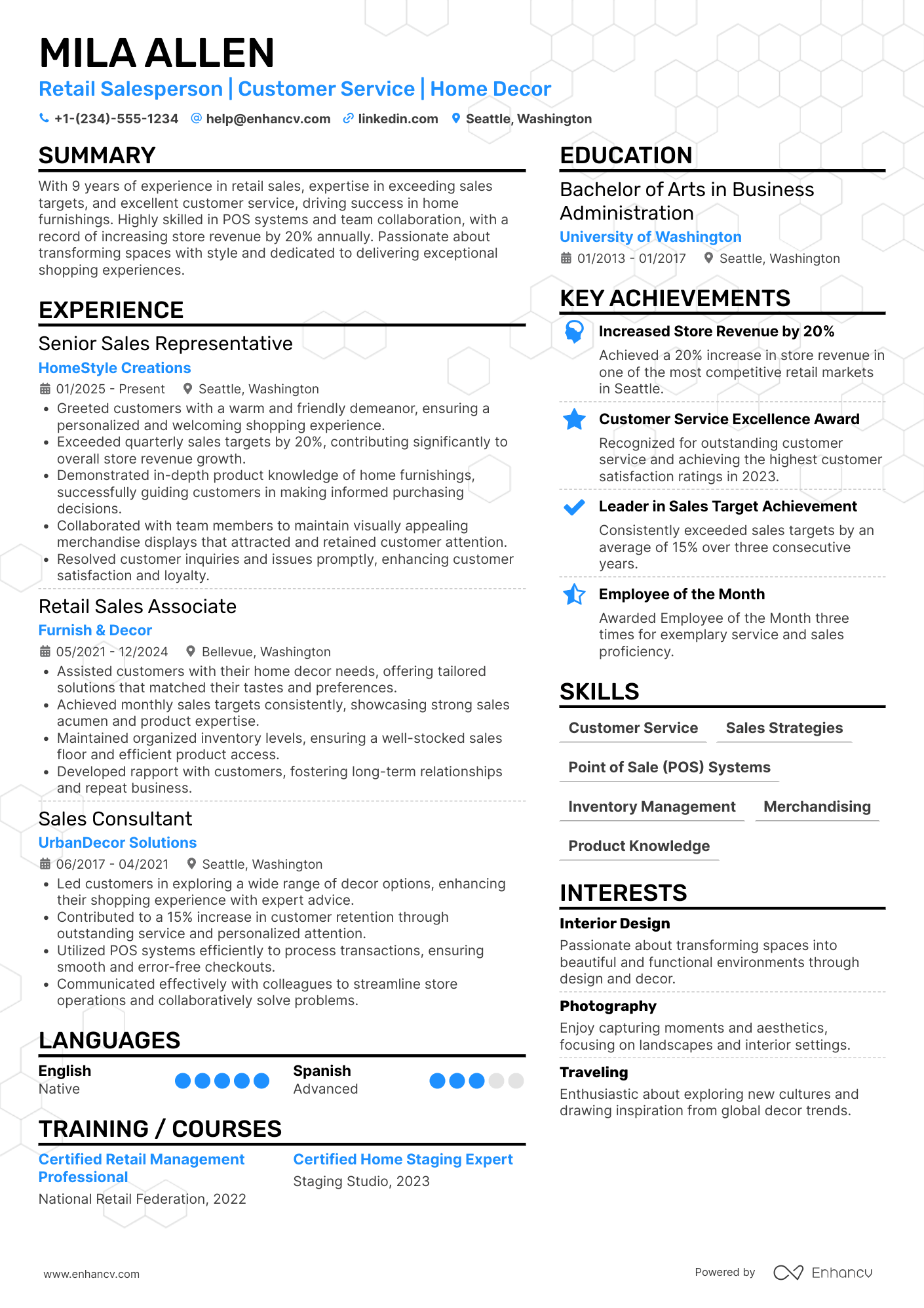
- Increased monthly revenue 14% by using Shopify point-of-sale (POS) upsell prompts and customer profiling to convert add-on socks and care kits.
- Improved conversion rate from 21% to 27% by applying consultative selling scripts in Salesforce (customer relationship management) and tailoring recommendations based on fit, use case, and prior purchases.
- Reduced checkout time 18% by optimizing mobile POS workflows, troubleshooting barcode scanner issues, and training five teammates on split-tender and returns processing.
- Cut return rate 9% by standardizing sizing guidance with Brannock device measurements and documenting fit notes in the customer relationship management system for repeat shoppers.
- Partnered with the store manager and visual merchandising team to refresh weekly displays using sales dashboards and heat-map observations, lifting featured product sell-through 11%.
Now that you've seen what a strong experience section looks like in practice, let's break down how to customize yours for each specific retail salesperson role you're targeting.
How to tailor your retail salesperson resume experience
Recruiters evaluate your retail salesperson resume through both human review and applicant tracking systems. Tailoring your resume to the job description increases your chances of passing both screenings.
Ways to tailor your retail salesperson experience:
- Match the POS systems or retail platforms named in the posting.
- Mirror the sales methodologies or upselling techniques the employer references.
- Use the exact terminology for customer service standards they describe.
- Reflect the KPIs or sales targets outlined in the job description.
- Highlight experience in the specific retail domain or product category listed.
- Emphasize loss prevention or compliance responsibilities when the role requires them.
- Incorporate team collaboration or floor coverage models the employer mentions.
- Align your visual merchandising or inventory skills with stated expectations.
Tailoring means translating your real accomplishments into the language of the job posting, not forcing in keywords where they don't belong.
Resume tailoring examples for retail salesperson
| Job description excerpt | Untailored | Tailored |
|---|---|---|
| "Greet customers, assess needs, and recommend products using our clienteling app to drive repeat purchases and meet monthly sales goals of $15K+" | Helped customers find products and made sales on the floor. | Greeted and assessed customer needs using a clienteling app to recommend targeted products, consistently exceeding monthly sales goals of $15K by 12%. |
| "Process transactions through Square POS, handle returns and exchanges per company policy, and maintain cash drawer accuracy within $0.50 variance" | Handled register duties and processed customer payments. | Processed 80+ daily transactions through Square POS, managed returns and exchanges per company policy, and maintained cash drawer accuracy within $0.50 variance across all shifts. |
| "Execute seasonal visual merchandising plans, restock shelves using FIFO inventory rotation, and keep the sales floor organized to company planogram standards" | Kept the store looking neat and restocked items when needed. | Executed seasonal visual merchandising plans and restocked shelves using FIFO inventory rotation, maintaining full planogram compliance across a 4,000 sq. ft. sales floor. |
Once you’ve aligned your experience with the role’s priorities, quantify your retail salesperson achievements to show the impact behind those responsibilities.
How to quantify your retail salesperson achievements
Quantifying your achievements shows how you drive revenue, loyalty, and smooth store operations. Focus on sales volume, conversion rate, average transaction value, loyalty sign-ups, and customer satisfaction scores.
Quantifying examples for retail salesperson
| Metric | Example |
|---|---|
| Revenue growth | "Increased monthly sales from $38K to $52K in three months by upselling add-ons and bundling top sellers at checkout." |
| Conversion rate | "Improved conversion from 18% to 24% over eight weeks by using a needs-based script and live product demos on the floor." |
| Average transaction | "Raised average transaction value from $47 to $58 by recommending complementary items and promoting seasonal multi-buy offers." |
| Loyalty enrollment | "Averaged 35 loyalty sign-ups per week, ranking top three on a 12-person team, using POS prompts and quick benefit summaries." |
| Customer satisfaction | "Maintained a 4.8/5 customer satisfaction score across 60+ post-purchase surveys by resolving issues on the spot and setting clear expectations." |
Turn your everyday tasks into measurable, recruiter-ready resume bullets in seconds with Enhancv's Bullet Point Generator.
Once you've crafted strong bullet points for your experience section, the next step is making sure your skills section highlights the right mix of hard and soft skills that retail employers are looking for.
How to list your hard and soft skills on a retail salesperson resume
Your skills section shows you can drive sales, deliver strong customer experiences, and follow store processes—recruiters and an ATS (applicant tracking system) scan this section for job-match keywords, so aim for a balance of hard skills in selling and operations plus role-specific soft skills. retail salesperson roles require a blend of:
- Product strategy and discovery skills.
- Data, analytics, and experimentation skills.
- Delivery, execution, and go-to-market discipline.
- Soft skills.
Your skills section should be:
- Scannable (bullet-style grouping).
- Relevant to the job post.
- Backed by proof in experience bullets.
- Updated with current tools.
Place your skills section:
- Above experience if you're junior or switching careers.
- Below experience if you're mid/senior with strong achievements.

Hard skills
- Point-of-sale systems, cash handling
- Mobile POS, endless aisle ordering
- Inventory management, cycle counts
- Omnichannel fulfillment: BOPIS, curbside
- Returns, exchanges, loss prevention
- Merchandising standards, planogram resets
- Product demonstrations, upselling, cross-selling
- Customer relationship management tools
- Loyalty program enrollment, retention offers
- Sales metrics: conversion, units per transaction
- Scheduling and timeclock systems
- Gift card, store credit processing
Soft skills
- Ask targeted discovery questions
- Match benefits to customer needs
- Handle objections with clarity
- De-escalate upset customers
- Communicate product tradeoffs
- Prioritize customers during rushes
- Coordinate handoffs with teammates
- Follow through on customer requests
- Adapt pitch to shopper cues
- Take ownership of store standards
- Escalate issues with context
- Learn new products fast
How to show your retail salesperson skills in context
Skills shouldn't live only in a dedicated skills list. Browse resume skills examples to see how top candidates weave abilities into every section.
They should be demonstrated in:
- Your summary (high-level professional identity)
- Your experience (proof through outcomes)
Here's what strong, skill-rich entries look like in practice.
Summary example
Senior retail salesperson with 10+ years in consumer electronics, skilled in consultative selling, Salesforce POS, and visual merchandising. Grew average transaction value by 34% through targeted upselling and client relationship strategies.
- Reflects senior-level expertise clearly
- Names specific tools and methods
- Leads with a measurable outcome
- Signals strong interpersonal skills
Experience example
Senior Retail Salesperson
TechVault Electronics | Austin, TX
March 2019–January 2024
- Increased monthly revenue by 27% by implementing consultative selling techniques and leveraging Shopify POS analytics to optimize product recommendations.
- Collaborated with the visual merchandising team to redesign floor layouts, boosting accessory attachment rates by 19% over two quarters.
- Mentored four junior associates on CRM workflows and clienteling strategies, improving team customer satisfaction scores from 82% to 94%.
- Every bullet includes measurable proof
- Skills surface naturally through outcomes
Once you’ve demonstrated your retail strengths through specific, results-focused examples, the next step is learning how to build a retail salesperson resume with no experience by applying that same approach to your coursework, projects, and transferable skills.
How do I write a retail salesperson resume with no experience
Even without full-time experience, you can demonstrate readiness through:
- School store or fundraiser sales
- Volunteer cashiering at events
- Customer service in clubs
- Inventory counts for organizations
- Merchandising displays for activities
- POS practice in coursework
- E-commerce listings and fulfillment
- Product demos for school projects
If you're starting out, learn how to build a resume without work experience that still shows hiring managers you're ready to contribute.
Focus on:
- POS accuracy and cash handling
- Sales results with clear numbers
- Inventory, stocking, and shrink control
- Customer issue resolution outcomes
Resume format tip for entry-level retail salesperson
Use a hybrid resume format because it highlights skills and projects first, while still showing reliable work history, coursework, and volunteering. Do:
- Add a Skills section with tools.
- Write bullets with numbers and outcomes.
- Include projects, volunteering, and coursework.
- Mirror keywords from the job posting.
- List POS systems and cash totals.
- Ran POS practice for school store fundraiser, processed 85 transactions with zero cash variances, and increased add-on sales by 12% using suggestive selling scripts.
Even without formal work history, your education section can demonstrate relevant knowledge and transferable skills that strengthen your candidacy.
How to list your education on a retail salesperson resume
Your education section helps hiring managers confirm you have foundational knowledge in communication, business, or customer service. It quickly validates your qualifications for a retail salesperson role.
Include:
- Degree name
- Institution
- Location
- Graduation year
- Relevant coursework (for juniors or entry-level candidates)
- Honors & GPA (if 3.5 or higher)
Avoid listing specific months or days for your graduation. Use the year only to keep things clean.
Here's a strong education entry tailored for a retail salesperson resume.
Example education entry
Bachelor of Science in Business Administration
University of North Texas, Denton, TX
Graduated 2022
GPA: 3.7/4.0
- Relevant Coursework: Consumer Behavior, Retail Management, Sales Strategy, Business Communication
- Honors: Dean's List (six semesters), Magna Cum Laude
How to list your certifications on a retail salesperson resume
Certifications on your resume show your commitment to learning, prove tool proficiency, and highlight industry relevance for a retail salesperson. They also help you stand out when experience levels look similar.
Include:
- Certificate name
- Issuing organization
- Year
- Optional: credential ID or URL
- Place certifications below education when they're older, broad, or less relevant to your current retail salesperson goals.
- Place certifications above education when they're recent, highly relevant, or required for the retail salesperson role you want.
Best certifications for your retail salesperson resume
- National Professional Certification in Customer Service (NCP-CS)
- National Professional Certification in Retail Sales (NCP-RS)
- NRF Customer Service and Sales Certification
- ServSafe Food Handler
- TIPS Alcohol Seller-Server Training
- OSHA 10-Hour General Industry
- Microsoft Office Specialist (MOS)
Once you’ve added your relevant credentials in the right place, use your retail salesperson resume summary to highlight them upfront and show how they strengthen your fit for the role.
How to write your retail salesperson resume summary
Your resume summary is the first thing a recruiter reads. A strong one instantly signals you're the right fit for a retail salesperson role.
Keep it to three to four lines, with:
- Your title and total years of retail sales experience.
- The retail domain or product category you specialize in.
- Core skills like POS systems, inventory management, or CRM software.
- One or two measurable wins, such as sales targets exceeded or revenue generated.
- Soft skills tied to real results, like customer engagement that improved retention rates.

PRO TIP
At this level, emphasize relevant skills, product knowledge, and early sales results. Show recruiters you can drive revenue and deliver great customer experiences. Avoid vague phrases like "hard worker" or "passionate team player." Replace them with specific contributions and numbers.
Example summary for a retail salesperson
Retail salesperson with two years of experience in consumer electronics. Skilled in POS systems and upselling techniques. Exceeded quarterly sales targets by 18% through personalized product recommendations and proactive customer follow-ups.
Optimize your resume summary and objective for ATS
Drop your resume here or choose a file.
PDF & DOCX only. Max 2MB file size.
Now that your summary captures your strongest selling points, make sure the header above it presents your contact details clearly so recruiters can reach you without hesitation.
What to include in a retail salesperson resume header
A well-structured resume header lists your key contact and professional links, which boosts visibility, builds credibility, and speeds recruiter screening for a retail salesperson.
Essential resume header elements
- Full name
- Tailored job title and headline
- Location
- Phone number
- Professional email
- GitHub link
- Portfolio link
A LinkedIn link helps recruiters verify experience quickly and supports screening.
Do not include photos on a retail salesperson resume unless the role is explicitly front-facing or appearance-dependent.
Keep your header on one or two lines, match the job title to the posting, and use links that open to complete, up-to-date profiles.
Example
Retail salesperson resume header
Jordan Taylor
Retail Salesperson | Customer Service, POS, and Upselling
Austin, TX
(512) 555-01XX
jordan.taylor@enhancv.com
github.com/jordantaylor yourwebsite.com linkedin.com/in/jordantaylor
Once your contact details and role information are set, add relevant additional sections to strengthen your retail salesperson resume and support the header information.
Additional sections for retail salesperson resumes
Adding extra sections helps you stand out when your core experience looks similar to other candidates applying for the same retail salesperson role.
Choose sections that reinforce your customer-facing strengths, product knowledge, or cultural fit. For example, listing language skills on your resume can highlight your ability to serve diverse customer bases:
- Languages
- Certifications
- Volunteer experience
- Hobbies and interests
- Awards and achievements
- Professional development and training
Once you've rounded out your resume with the right supplementary sections, pair it with a cover letter to give hiring managers even more reason to call you in.
Do retail salesperson resumes need a cover letter
A cover letter isn't required for a retail salesperson, but it helps in competitive roles or stores with strict hiring expectations. If you're unsure where to start, learn what a cover letter is and when it makes sense to include one. It can make a difference when your resume needs context, or when you want to stand out in a crowded applicant pool.
Use a cover letter to add context your resume can't show:
- Explain role fit by naming the team's priorities and matching them to your strengths, such as upselling, returns handling, or high-traffic service.
- Highlight one or two outcomes, like improving conversion rate, growing loyalty sign-ups, or reducing shrink through better floor routines.
- Show you understand the product, customers, and business goals by referencing the store's core categories, typical shoppers, and sales approach.
- Address career transitions or non-obvious experience by connecting past work to retail salesperson tasks, like service recovery, visual standards, or point-of-sale accuracy.
Drop your resume here or choose a file.
PDF & DOCX only. Max 2MB file size.
Once you’ve decided whether to include a cover letter based on the role and employer expectations, you can use AI to improve your retail salesperson resume faster and more precisely.
Using AI to improve your retail salesperson resume
AI can sharpen your resume's clarity, structure, and impact. It helps you find stronger phrasing and highlight measurable results. But overuse strips authenticity fast. Once your content is clear and role-aligned, step away from AI. If you're wondering which AI is best for writing resumes, focus on tools that help you refine rather than fabricate.
Here are 10 practical prompts to strengthen specific sections of your retail salesperson resume:
Strengthen your summary
Quantify experience bullets
Tighten action verbs
Align skills section
Improve project descriptions
Clarify education relevance
Refine certification entries
Remove filler language
Target job descriptions
Check overall consistency
Conclusion
A strong retail salesperson resume shows measurable outcomes, role-specific skills, and a clear structure. It highlights sales results, conversion gains, and customer satisfaction, along with product knowledge, point-of-sale accuracy, and calm problem-solving.
Keep each section easy to scan and focused on impact. This approach shows you can perform now and adapt as hiring expectations shift in today’s and near-future market.