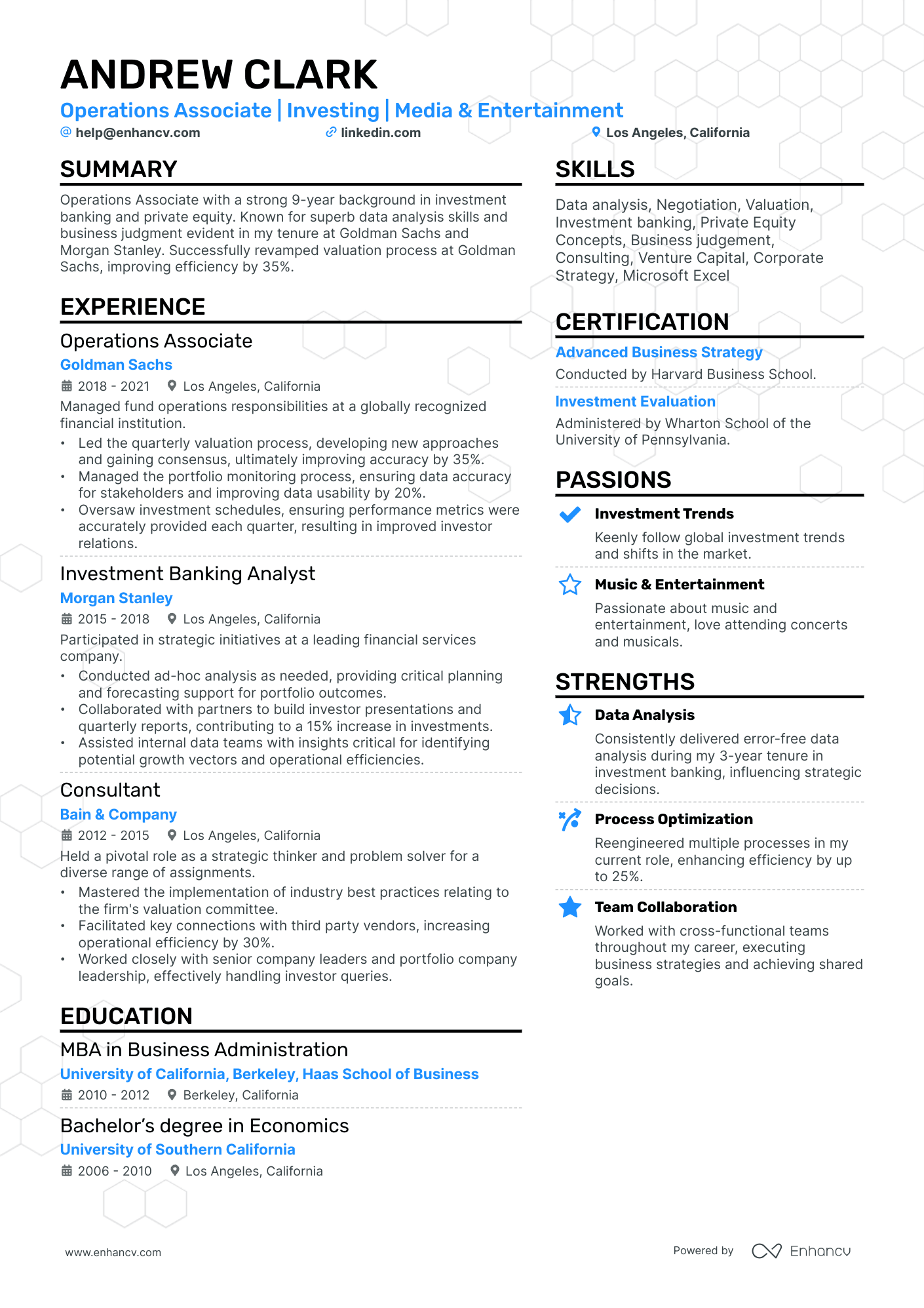
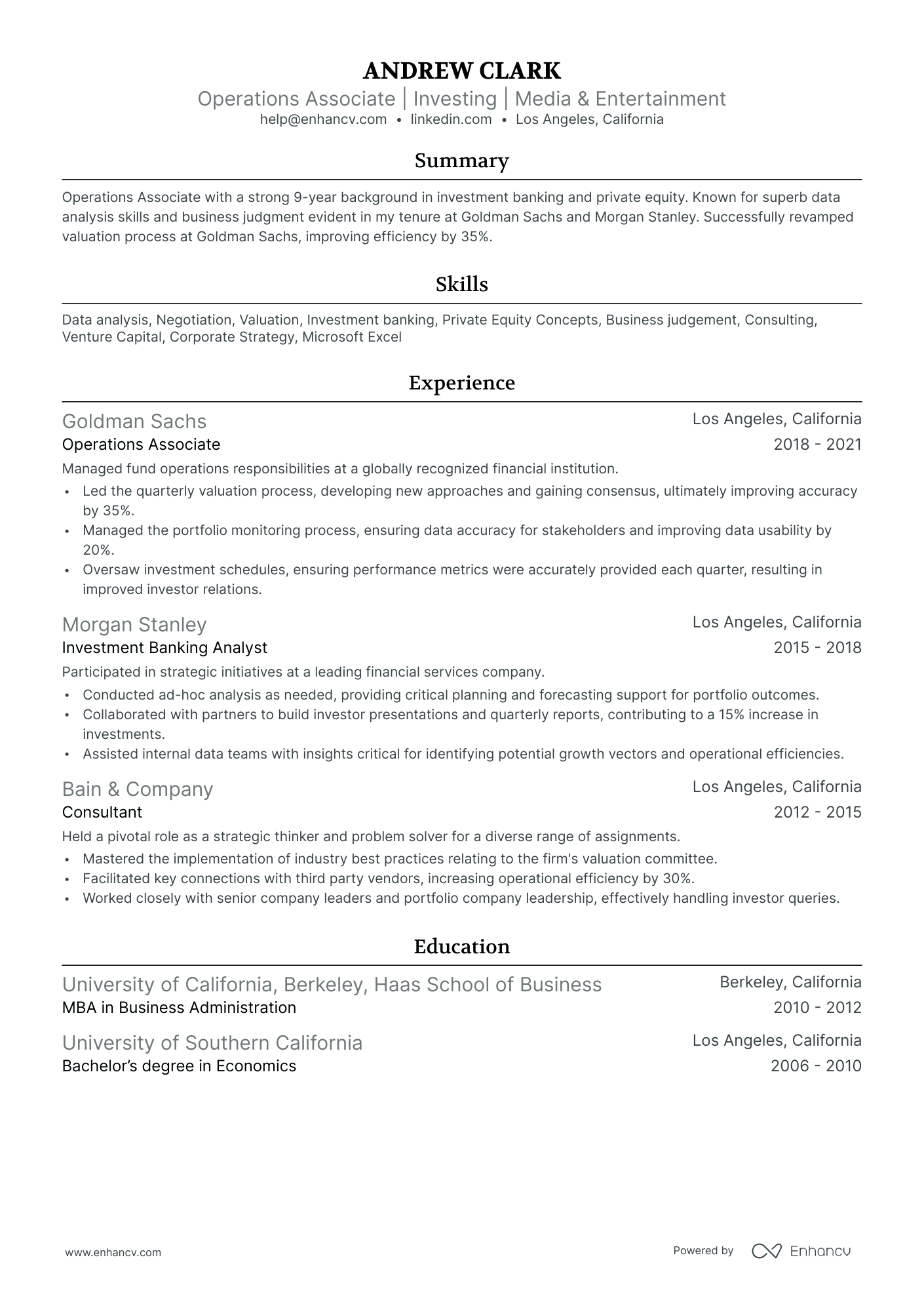
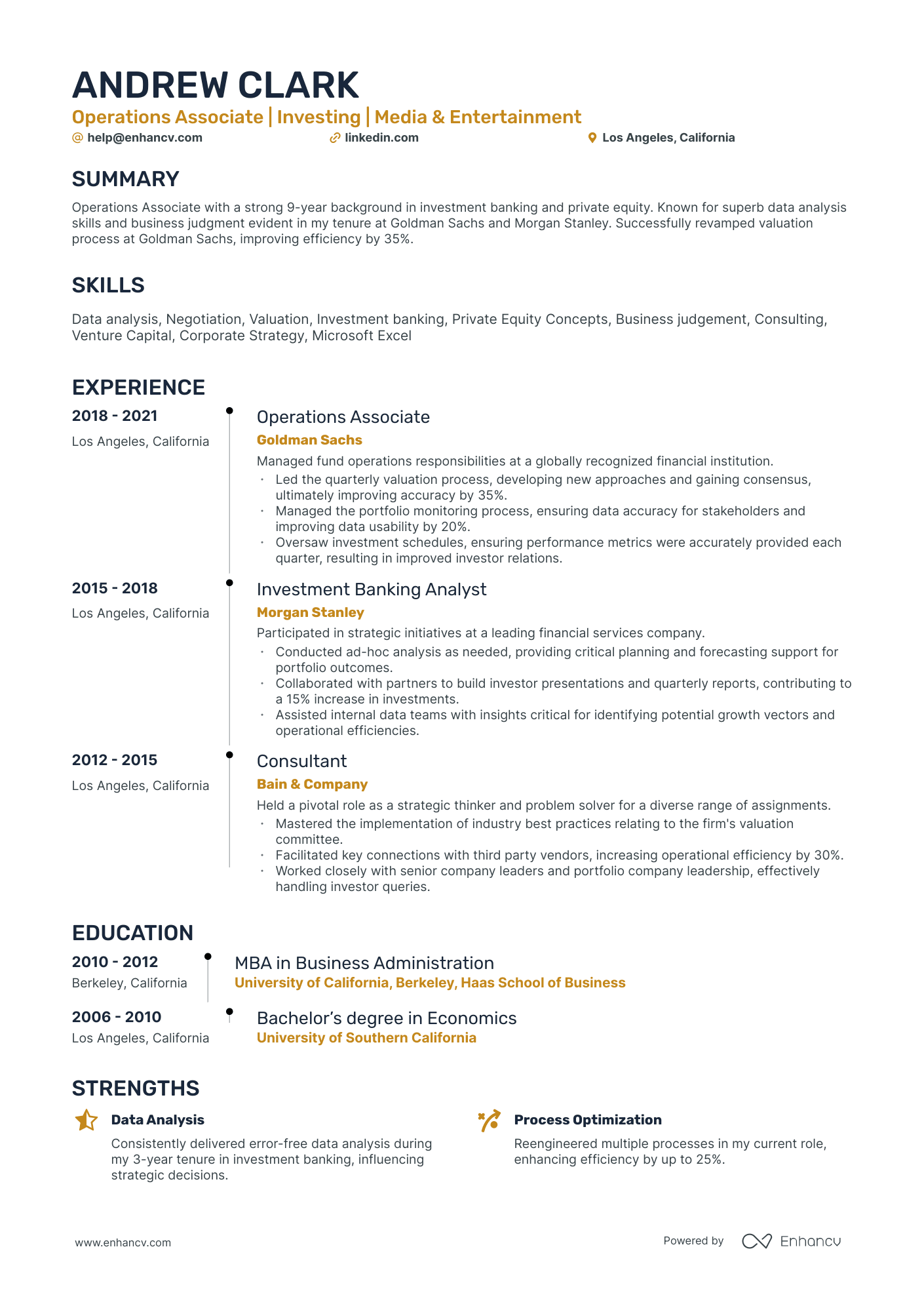
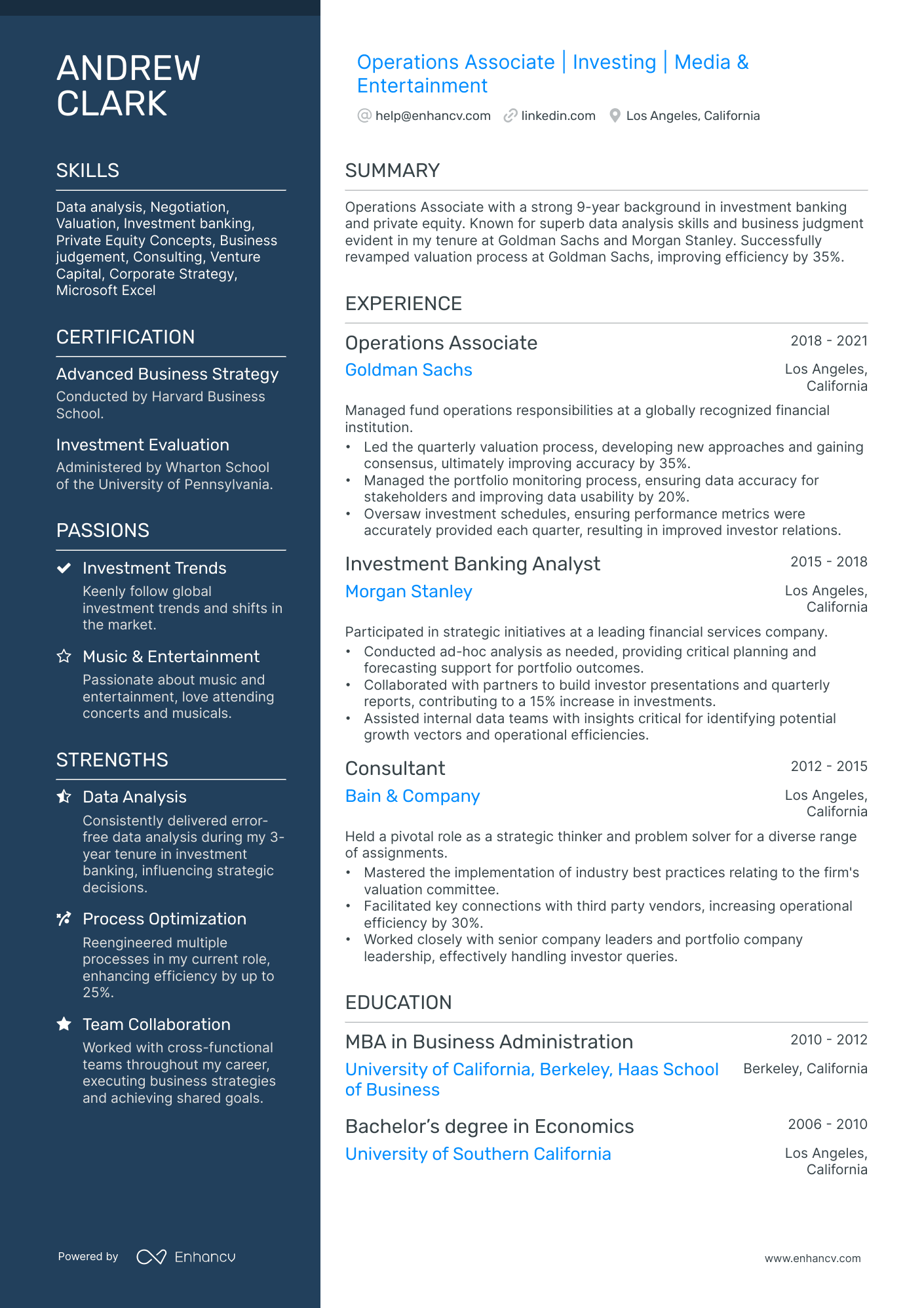
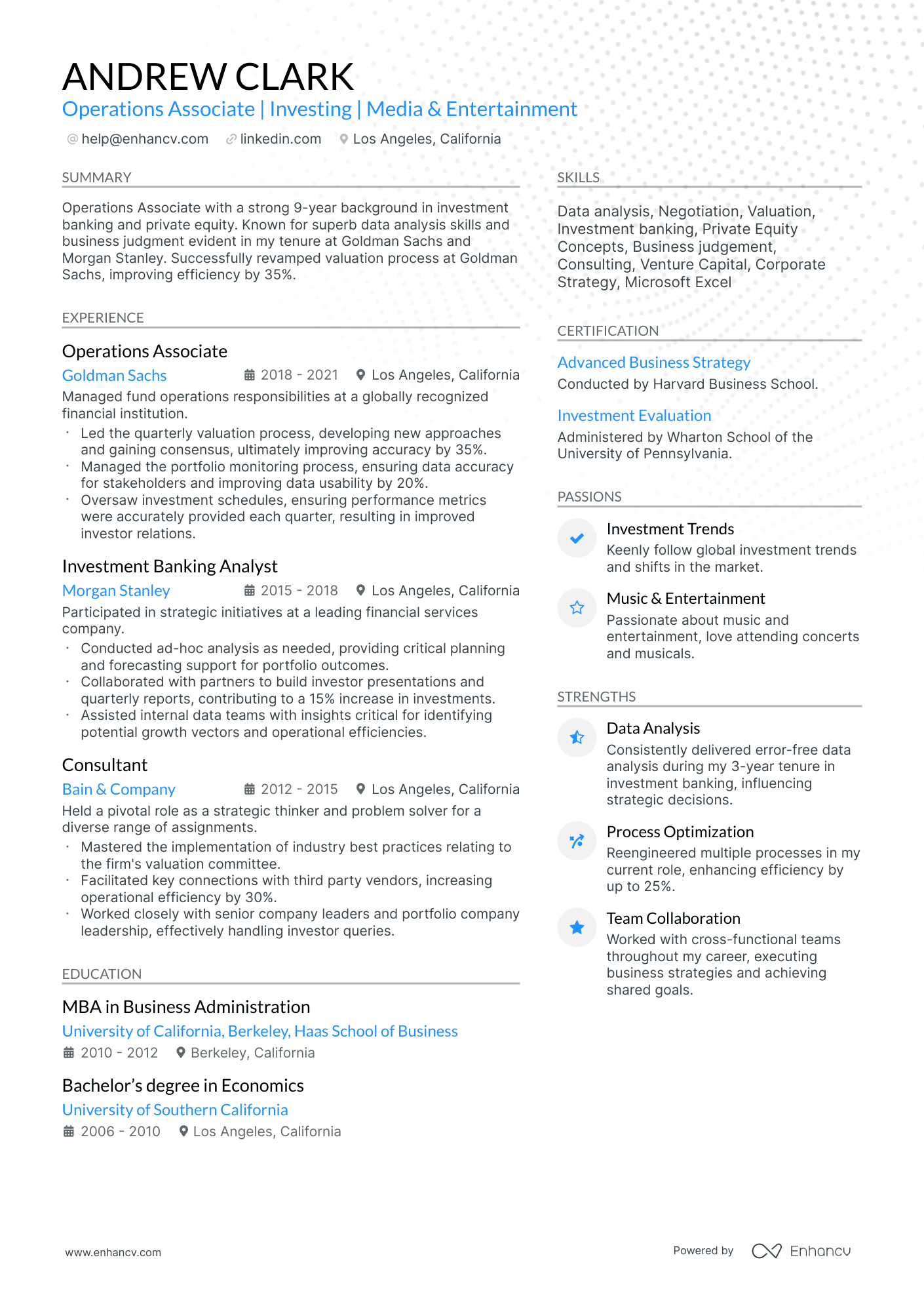
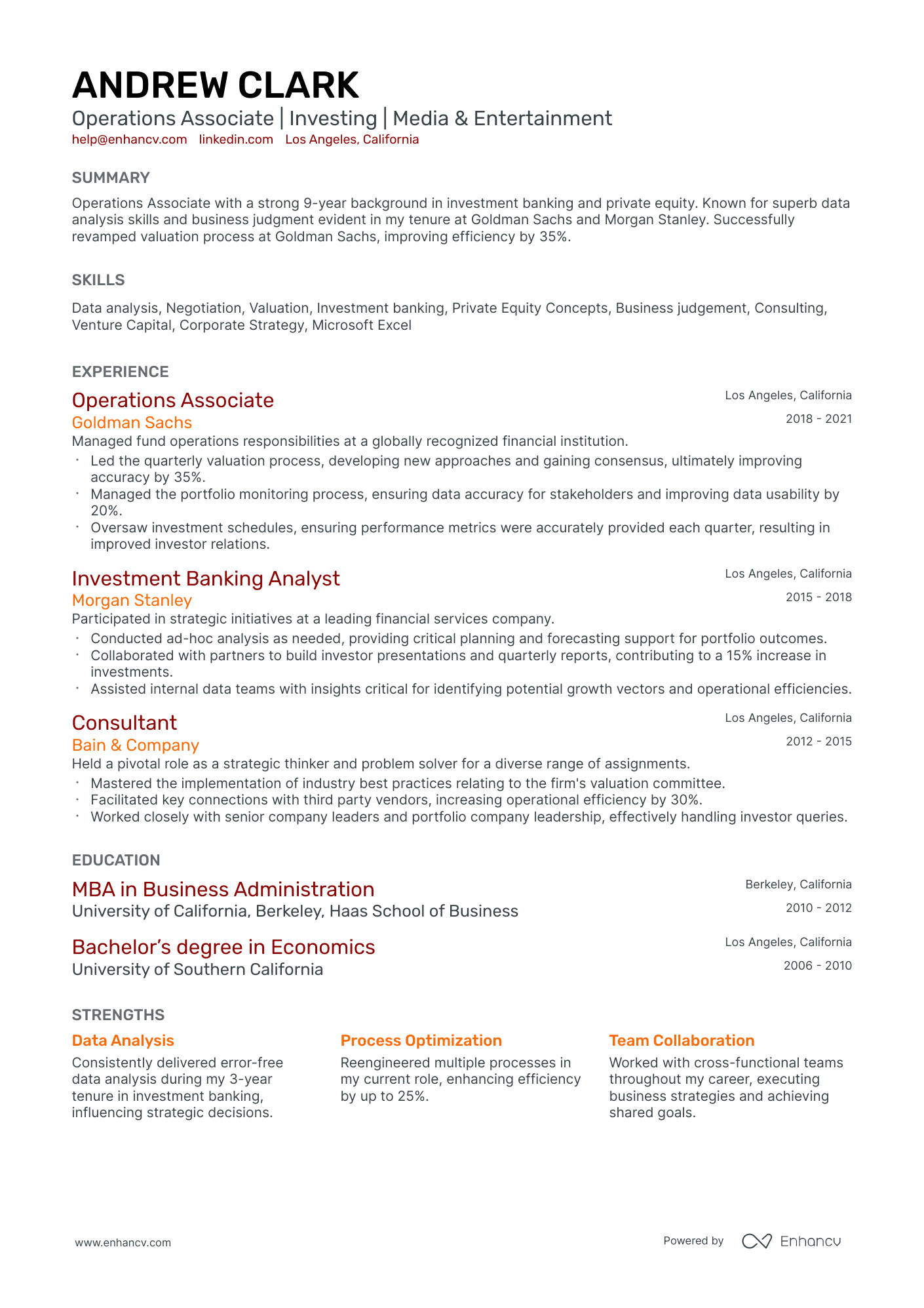
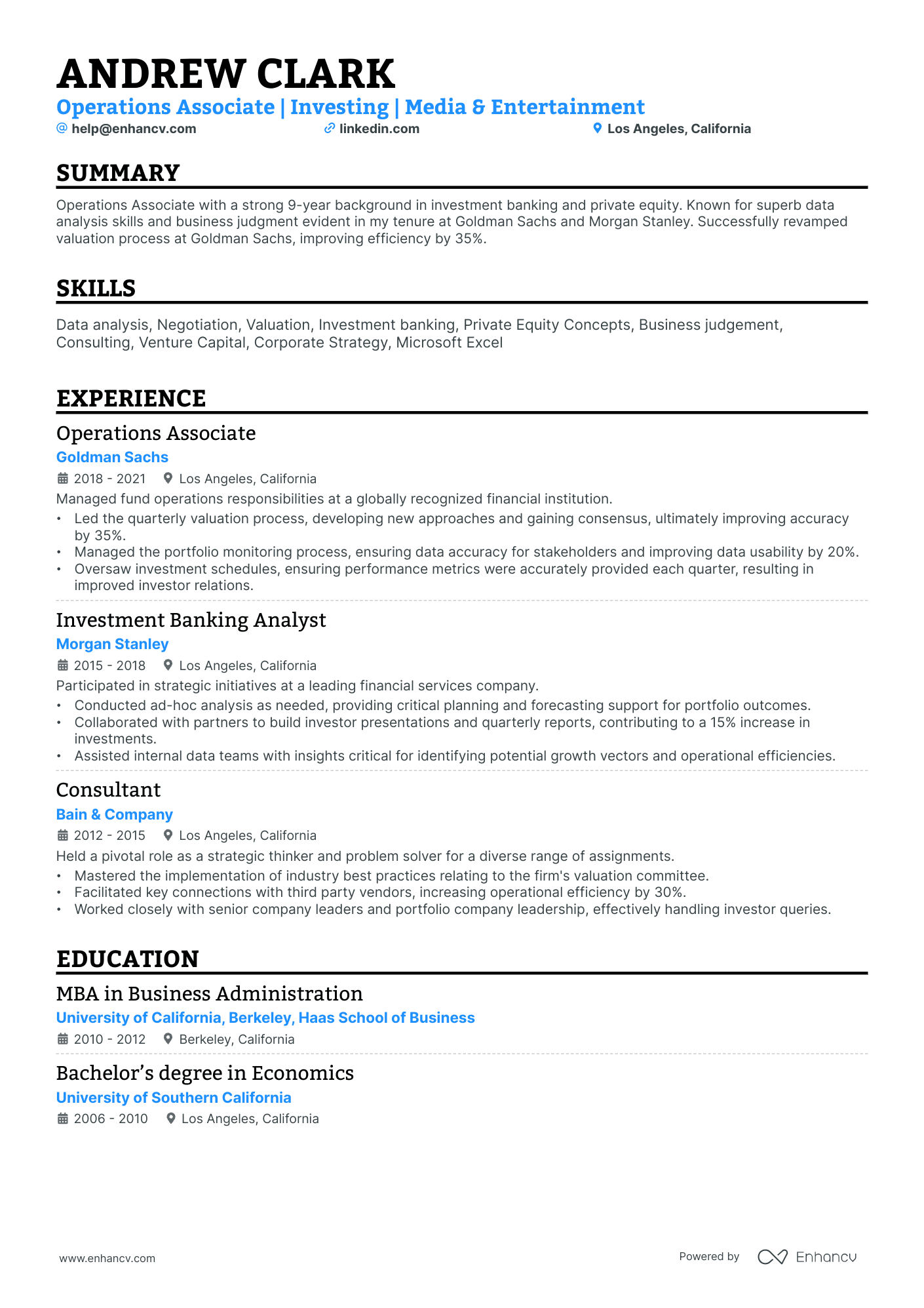
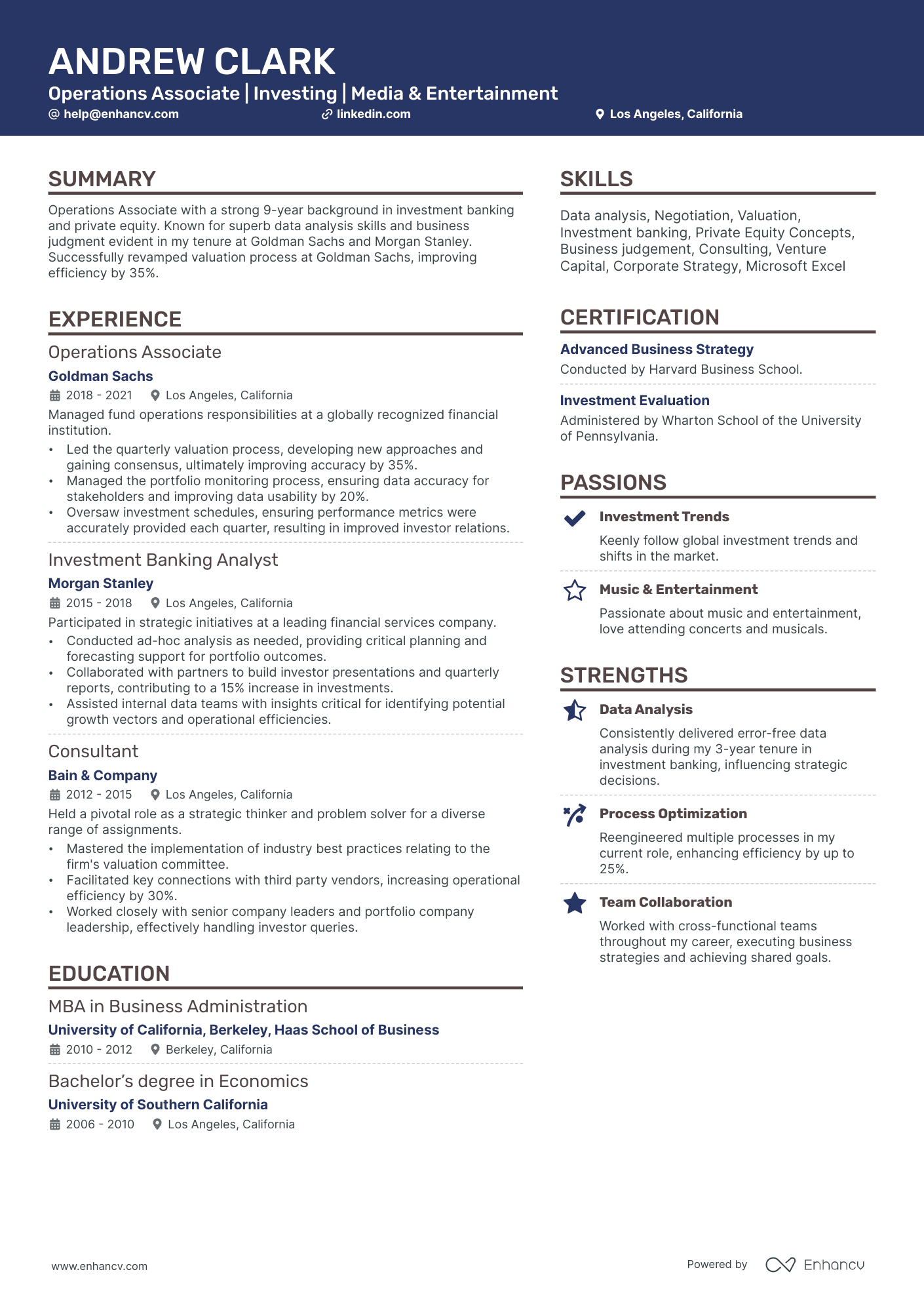
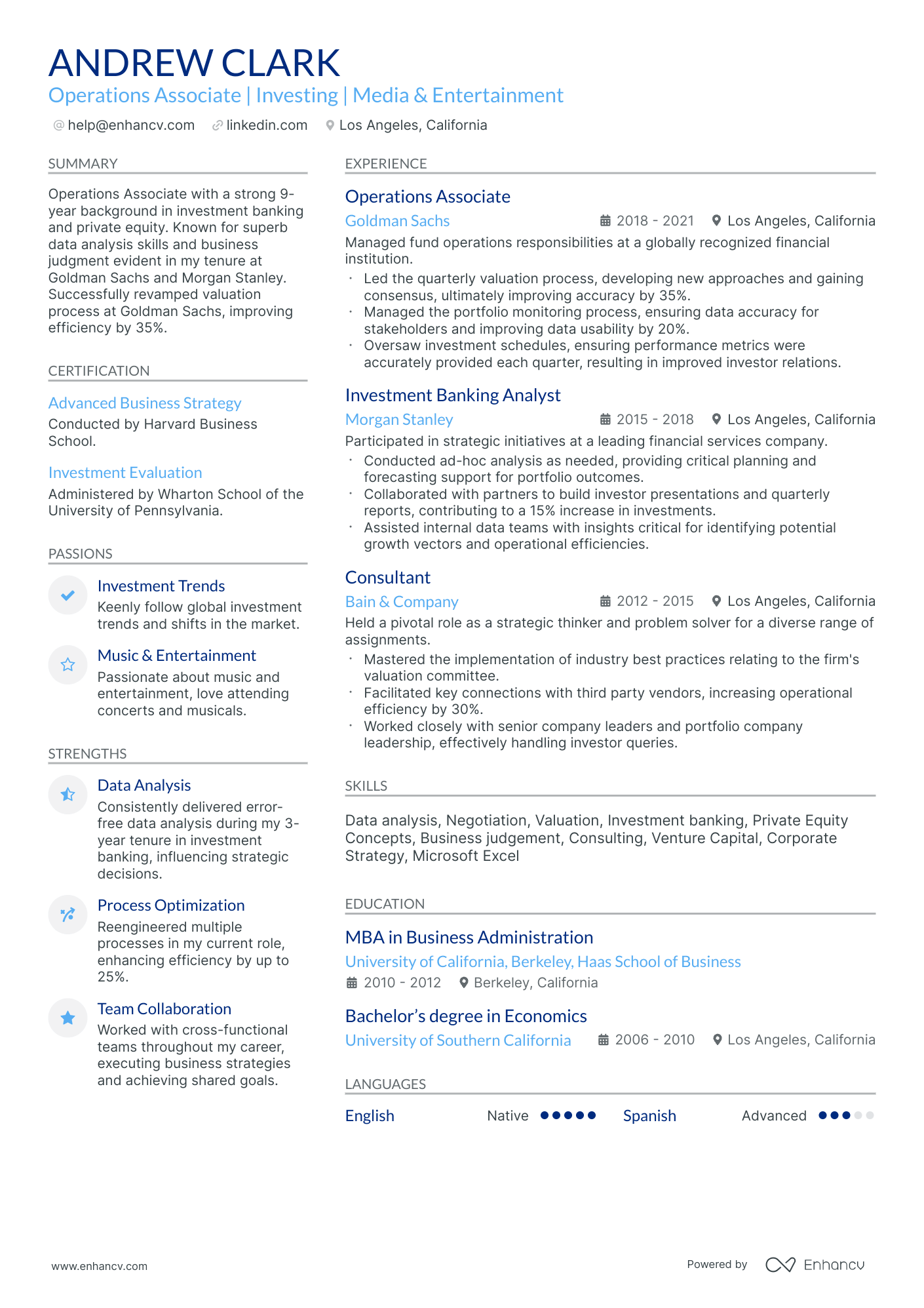
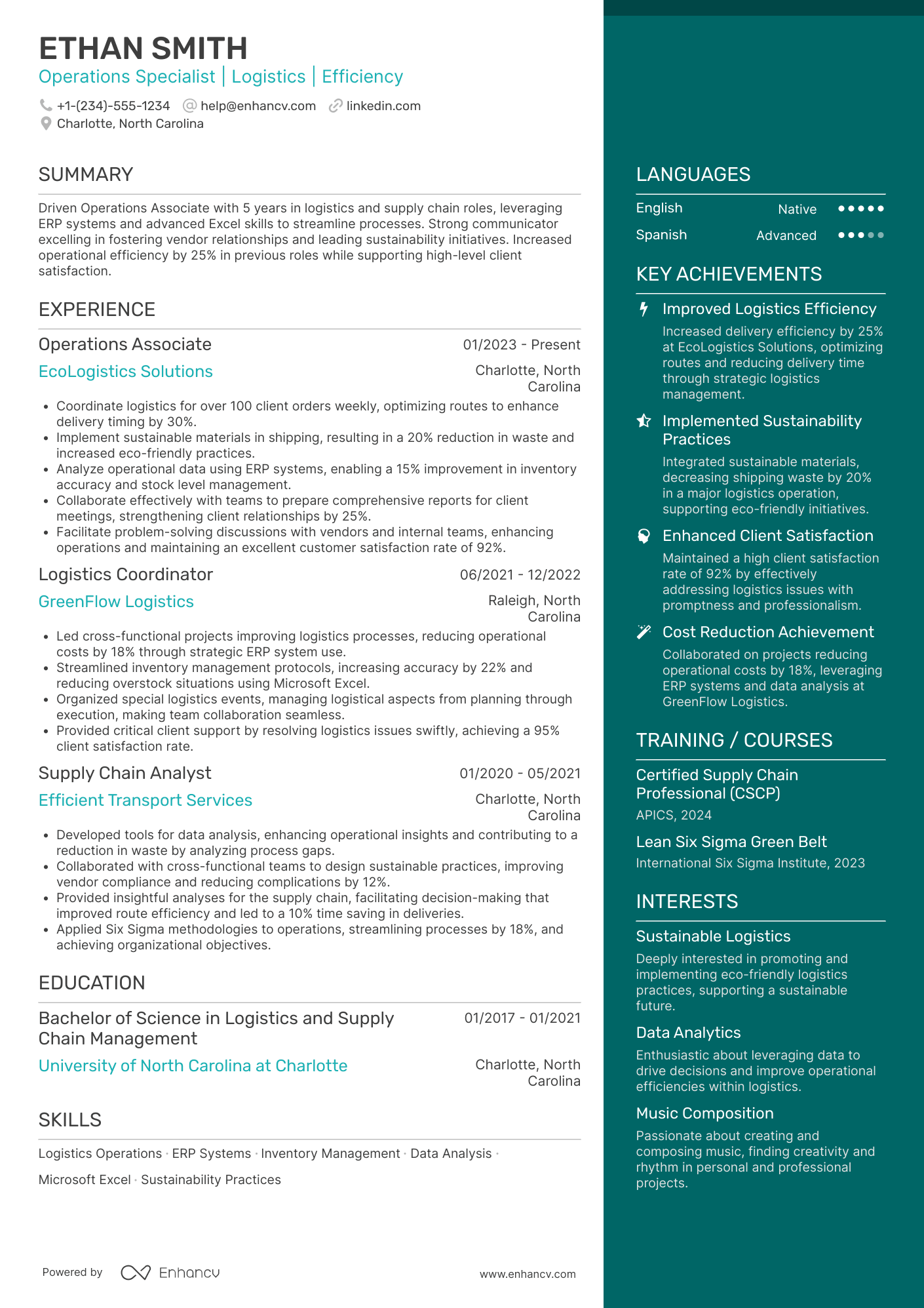
Many operations associate resume drafts fail because they list tasks and tools instead of showing measurable process impact. That hurts in ATS screening and fast recruiter scans, where high competition rewards clear evidence of operational results.
A strong resume shows what changed because of your work. Knowing how to make your resume stand out means highlighting cycle-time reductions, on-time delivery rates, error and rework drops, cost savings, ticket backlog cleared, vendor issues resolved, and audit or quality pass rates.

Key takeaways
- Quantify every experience bullet with metrics like cycle time, cost savings, or error reductions.
- Use reverse-chronological format if you have operations experience; use hybrid if switching careers.
- Tailor resume language to mirror the exact tools, KPIs, and terminology in each job posting.
- Place skills above experience when junior, and below experience when you have strong achievements.
- Prove skills in your summary and experience bullets—don't rely on a standalone skills list alone.
- Add certifications like Lean Six Sigma or CPIM to signal specialized, verifiable operations expertise.
- Use Enhancv to turn vague task descriptions into measurable, recruiter-ready resume bullets faster.
Job market snapshot for operations associates
We analyzed 1,037 recent operations associate job ads across major US job boards. These numbers help you understand experience requirements, regional hotspots, role specialization trends at a glance.
What level of experience employers are looking for operations associates
| Years of Experience | Percentage found in job ads |
|---|---|
| 1–2 years | 35.2% (365) |
| 3–4 years | 9.1% (94) |
| 5–6 years | 2.5% (26) |
| 7–8 years | 0.2% (2) |
| 9–10 years | 0.4% (4) |
| 10+ years | 3.8% (39) |
| Not specified | 47.6% (494) |
Operations associate ads by area of specialization (industry)
| Industry (Area) | Percentage found in job ads |
|---|---|
| Finance & Banking | 50.6% (525) |
| Healthcare | 33.6% (348) |
| Education | 6.7% (69) |
| Retail & E-commerce | 2.9% (30) |
| Manufacturing | 2.5% (26) |
| Media & Entertainment | 1.2% (12) |
| Government | 1.1% (11) |
Top companies hiring operations associates
| Company | Percentage found in job ads |
|---|---|
| Sephora | 14.5% (150) |
| JC Penney | 6.2% (64) |
| Guitar Center, Inc. | 5.8% (60) |
| Minnesota Judicial Branch | 3.0% (31) |
| Alo Yoga | 2.6% (27) |
| Wells Fargo | 2.4% (25) |
| Kohl's Corp. | 2.2% (23) |
| Jerry | 1.9% (20) |
| Uber | 1.9% (20) |
| JPMorgan Chase & Co. | 1.4% (15) |
Role overview stats
These tables show the most common responsibilities and employment types for operations associate roles. Use them to align your resume with what employers expect and to understand how the role is structured across the market.
Day-to-day activities and top responsibilities for a operations associate
| Responsibility | Percentage found in job ads |
|---|---|
| Excel | 18.9% (196) |
| Microsoft office | 12.2% (127) |
| Word | 9.4% (97) |
| Outlook | 8.2% (85) |
| Powerpoint | 7.9% (82) |
| Cash handling | 7.1% (74) |
| Customer service | 6.4% (66) |
| Sql | 5.2% (54) |
| Microsoft excel | 4.8% (50) |
| Salesforce | 3.6% (37) |
| Data analysis | 3.2% (33) |
| Microsoft word | 3.2% (33) |
Type of employment (remote vs on-site vs hybrid)
| Employment type | Percentage found in job ads |
|---|---|
| On-site | 81.9% (849) |
| Hybrid | 14.0% (145) |
| Remote | 4.1% (43) |
How to format a operations associate resume
Recruiters evaluating operations associate candidates prioritize process improvement skills, cross-functional coordination ability, and evidence of measurable efficiency gains. A clean, well-structured resume format ensures these signals surface quickly during both automated screening and the initial recruiter scan.

I have significant experience in this role—which format should I use?
Use a reverse-chronological format to present your deepening expertise in operations workflows, tools, and results in a clear timeline. Do:
- Lead each role entry with your scope of responsibility—number of processes managed, teams supported, or departments coordinated.
- Highlight proficiency in role-specific tools and domains such as ERP systems, inventory management platforms, supply chain software, or data reporting dashboards.
- Quantify outcomes tied to cost reduction, cycle time improvement, error rate decrease, or throughput increases.
I'm junior or switching into this role—what format works best?
A hybrid format works best because it lets you lead with transferable operations skills while still showing a concise work history. Do:
- Place a dedicated skills section near the top of your resume featuring competencies like data analysis, process documentation, logistics coordination, and ERP proficiency.
- Include academic projects, internships, or cross-functional assignments that demonstrate hands-on operations experience—even if they weren't formal operations roles.
- Connect every listed skill or project to a concrete action and a visible result so recruiters can assess your real-world impact.
Why not use a functional resume?
A functional format strips away the timeline and context recruiters need to evaluate how you applied operations skills in real work settings, which weakens your candidacy even at the entry or mid level.
- Career changers with no operations work history: If your prior roles had no overlap with operations tasks, a functional format can group transferable skills—like process documentation or vendor communication—at the top, provided each skill links to a specific project or outcome.
- Candidates with significant resume gaps: If gaps make a chronological layout distracting, a functional format can redirect focus to relevant coursework, freelance projects, or volunteer operations work.
Once your resume's format establishes a clean, readable foundation, the next step is filling it with the right sections to showcase your qualifications effectively.
What sections should go on a operations associate resume
Recruiters expect to see a clean, results-focused resume that shows how you improved processes, supported cross-functional teams, and kept operations running smoothly. Understanding what to put on a resume helps you prioritize the most impactful information.
Use this structure for maximum clarity:
- Header
- Summary
- Experience
- Skills
- Projects
- Education
- Certifications
- Optional sections: Awards, Leadership, Languages
Your experience bullets should emphasize measurable impact, operational scope, and outcomes such as cycle time reductions, cost savings, error rate improvements, and service-level performance.
Is your resume good enough?
Drop your resume here or choose a file. PDF & DOCX only. Max 2MB file size.
Once you’ve organized your resume with the right components, focus next on writing your operations associate experience section to show how you’ve applied those elements in your day-to-day work.
How to write your operations associate resume experience
Your work experience section should highlight the operational work you've shipped—process improvements, system implementations, and workflow optimizations—using the specific tools and methods that drove measurable results. Hiring managers prioritize demonstrated impact over descriptive task lists, so every bullet should connect what you did to a tangible outcome for the business.
Each entry should include:
- Job title
- Company and location (or remote)
- Dates of employment (month and year)
Three to five concise bullet points showing what you owned, how you executed, and what outcomes you delivered:
- Ownership scope: the processes, workflows, vendor relationships, inventory systems, or operational functions you were directly accountable for as an operations associate.
- Execution approach: the tools, platforms, frameworks, or methods you relied on—such as ERP systems, project management software, data analysis techniques, or standard operating procedures—to organize work and drive decisions.
- Value improved: the specific operational dimensions you strengthened, whether that meant faster turnaround times, fewer errors, lower costs, stronger compliance, or more reliable supply chain performance.
- Collaboration context: how you coordinated with cross-functional partners—logistics, finance, procurement, customer service, or external vendors—to keep operations running smoothly and resolve bottlenecks.
- Impact delivered: the business-level results your work produced, framed through scale, efficiency gains, cost reductions, or service-level improvements rather than a list of daily activities.
Experience bullet formula
A operations associate experience example
✅ Right example - modern, quantified, specific.
Operations Associate
BrightCart | Austin, TX
2022–2025
High-volume e-commerce marketplace supporting 3,000+ sellers and 250,000 monthly orders.
- Streamlined order exception workflows in Zendesk and Shopify using SLA queues and macros, cutting average resolution time 34% (from 18 hours to 12 hours) while maintaining a 96% customer satisfaction score.
- Built weekly performance dashboards in Looker and Google Sheets (pivot tables, SQL extracts), improving on-time delivery from 92% to 97% across five carrier partners and reducing late-shipment penalties by $180K annually.
- Automated inventory reconciliation using Airtable, Zapier, and standardized barcode scan audits, lowering stockout incidents 21% and reducing manual checks by eight hours per week for the operations team.
- Led root-cause analyses for returns and damage claims with logistics partners and finance, tightening quality checks and reducing return rate from 6.4% to 5.3% over two quarters.
- Partnered with product managers and engineers to launch a self-serve seller onboarding flow with documented processes in Confluence and tracked in Jira, shortening time-to-first-sale from fourteen days to nine days.
Now that you've seen how a strong experience section comes together, let's look at how to adjust those details to match the specific role you're applying for.
How to tailor your operations associate resume experience
Recruiters evaluate your operations associate resume through both human review and applicant tracking systems (ATS), so tailoring your resume to the job description is essential. Aligning your experience with the specific job posting ensures the skills, tools, and processes you highlight match what the hiring team actually wants to see.
Ways to tailor your operations associate experience:
- Match ERP or inventory management systems named in the job description.
- Mirror the exact terminology used for workflow or process improvement.
- Reflect KPIs like order accuracy or fulfillment speed the posting prioritizes.
- Highlight supply chain or logistics experience when the role requires it.
- Emphasize compliance and quality assurance duties if the posting mentions them.
- Use the same language for cross-functional collaboration or stakeholder coordination.
- Include vendor management or procurement tasks referenced in the listing.
- Align your data reporting tools with those specified in the requirements.
Tailoring means connecting your real accomplishments to the job's stated needs rather than forcing keywords where they don't belong.
Resume tailoring examples for operations associate
| Job description excerpt | Untailored | Tailored |
|---|---|---|
| "Manage daily order fulfillment workflows using NetSuite, ensuring 99% on-time shipping across three regional warehouses." | Helped with daily operations and made sure orders were shipped on time. | Coordinated daily order fulfillment workflows in NetSuite across three regional warehouses, maintaining a 99.2% on-time shipping rate for 1,200+ weekly orders. |
| "Collaborate with procurement and finance teams to reconcile vendor invoices, resolve discrepancies, and maintain accurate records in SAP." | Worked with different departments to handle invoices and keep records updated. | Partnered with procurement and finance to reconcile 300+ monthly vendor invoices in SAP, resolving billing discrepancies within 48 hours and reducing outstanding payables by 15%. |
| "Develop and maintain SOPs for inventory management, conduct weekly cycle counts, and report shrinkage metrics to the operations manager." | Created procedures and tracked inventory levels for the team. | Built and maintained 12 SOPs for inventory management, led weekly cycle counts covering 5,000+ SKUs, and reported shrinkage metrics that drove a 9% reduction in quarterly inventory loss. |
Once you’ve aligned your experience with the role’s day-to-day priorities, quantify your achievements to show the measurable impact of that work.
How to quantify your operations associate achievements
Quantifying your achievements proves you improved speed, accuracy, and risk control. Focus on cycle time, volume processed, error rates, compliance outcomes, cost savings, and on-time delivery across the workflows you support.
Quantifying examples for operations associate
| Metric | Example |
|---|---|
| Cycle time | "Cut vendor onboarding from eight days to four by standardizing intake in Google Forms and tracking approvals in Asana." |
| Accuracy rate | "Reduced order entry errors from 2.1% to 0.6% by adding validation checks in Excel and a two-step QA checklist." |
| Compliance | "Maintained 100% audit-ready documentation across 120 monthly transactions by aligning files to the new human resources policy checklist." |
| Cost savings | "Saved $18,000 annually by consolidating three shipping vendors and renegotiating rate tiers based on monthly volume reports." |
| Volume handled | "Processed 1,450 customer refunds per month with a 24-hour turnaround by batching cases in Zendesk and using macros for standard responses." |
Turn vague job duties into measurable, recruiter-ready resume bullets in seconds with Enhancv's Bullet Point Generator.
Once you've crafted strong bullet points that highlight your achievements, the next step is ensuring your resume also presents the right mix of hard and soft skills employers expect from an operations associate.
How to list your hard and soft skills on a operations associate resume
Your skills section shows how you run day-to-day operations, and recruiters and ATS scan it to confirm tool fit and execution strengths, so aim for a balanced mix of role-specific hard skills and job-relevant soft skills. operations associate roles require a blend of:
- Product strategy and discovery skills.
- Data, analytics, and experimentation skills.
- Delivery, execution, and go-to-market discipline.
- Soft skills.
Your skills section should be:
- Scannable (bullet-style grouping).
- Relevant to the job post.
- Backed by proof in experience bullets.
- Updated with current tools.
Place your skills section:
- Above experience if you're junior or switching careers.
- Below experience if you're mid/senior with strong achievements.

Hard skills
- Microsoft Excel, Google Sheets
- SQL reporting
- Tableau, Looker dashboards
- Salesforce, HubSpot CRM
- Jira, Asana workflows
- Zendesk ticketing
- SOP documentation, knowledge bases
- Process mapping, swimlane diagrams
- KPI tracking, OKR reporting
- Root cause analysis, 5 Whys
- Inventory and order management systems
- Data quality audits, reconciliation
Soft skills
- Prioritize high-impact work
- Communicate status and risks
- Own tasks end-to-end
- Coordinate cross-functional handoffs
- Write clear SOPs and updates
- Escalate issues early
- Make data-informed decisions
- Manage stakeholders and expectations
- Resolve blockers fast
- Improve processes continuously
- Handle sensitive information discreetly
- Follow through on commitments
How to show your operations associate skills in context
Skills shouldn't live only in a bulleted list on your resume. Explore examples of resume skills to see how top candidates present their competencies effectively.
They should be demonstrated in:
- Your summary (high-level professional identity)
- Your experience (proof through outcomes)
Here's what that looks like in practice.
Summary example
Operations associate with eight years in healthcare logistics, skilled in SAP, demand forecasting, and cross-functional coordination. Redesigned vendor intake workflows, cutting procurement cycle times by 30% and saving $140K annually.
- Reflects senior-level experience clearly
- Names specific, relevant tools
- Leads with a measurable outcome
- Signals strong collaboration skills
Experience example
Senior Operations Associate
Brevett Health Partners | Richmond, VA
June 2019–Present
- Streamlined inventory replenishment using SAP MM, reducing stockouts by 42% across three regional distribution centers.
- Partnered with finance and procurement teams to build a vendor scorecard system, improving supplier reliability ratings by 27%.
- Designed a weekly KPI dashboard in Power BI, giving leadership real-time visibility into fulfillment accuracy and order cycle times.
- Every bullet includes measurable proof.
- Skills appear naturally within achievements.
Once you’ve tied your operations associate strengths to real responsibilities and outcomes, the next step is applying that same approach to writing an operations associate resume when you don’t have direct experience.
How do I write a operations associate resume with no experience
Even without full-time experience, you can demonstrate readiness through:
- Inventory counts for student organization
- Campus event logistics coordination
- Retail or food service operations
- Spreadsheet-based process tracking project
- Volunteer scheduling and shift coverage
- Shipping, receiving, or stocking tasks
- Data entry with quality checks
- Coursework in supply chain basics
If you're building a resume without work experience, focus on:
- Process improvements with measurable results
- Accurate data tracking and reporting
- Inventory, orders, and fulfillment exposure
- Tools: Excel, Google Sheets, Asana
Resume format tip for entry-level operations associate
Use a combination resume format because it highlights relevant skills and projects first, while still showing your work history and education clearly. Do:
- Start with a skills summary tied to tools.
- Add two to three project bullets.
- Quantify results: time, errors, volume.
- Mirror operations associate keywords from postings.
- List tools used in each project.
- Built a Google Sheets inventory tracker for a campus club, standardized item IDs, and reduced stock-out incidents by 30% over eight weeks.
Even without direct work experience, your education section can serve as the foundation of your resume by showcasing relevant coursework, academic achievements, and transferable skills that align with the operations associate role.
How to list your education on a operations associate resume
Your education section helps hiring teams confirm you have the foundational knowledge needed for the role. It quickly validates relevant training in business, analytics, or logistics.
Include:
- Degree name
- Institution
- Location
- Graduation year
- Relevant coursework (for juniors or entry-level candidates)
- Honors & GPA (if 3.5 or higher)
Skip month and day details—list the graduation year only.
Here's a strong education entry tailored for an operations associate resume.
Example education entry
Bachelor of Science in Business Administration
University of Wisconsin–Madison, Madison, WI
Graduated 2022
GPA: 3.7/4.0
- Relevant coursework: Supply Chain Management, Data Analytics, Operations Strategy, and Process Improvement
- Honors: Dean's List (six semesters), Beta Gamma Sigma Honor Society
How to list your certifications on a operations associate resume
Certifications on your resume show your commitment to learning, prove tool proficiency, and signal industry relevance as an operations associate. They also help employers trust your process, accuracy, and readiness to support daily operations.
Include:
- Certificate name
- Issuing organization
- Year
- Optional: credential ID or URL
- Place certifications below education when they are older, less role-relevant, or you have a recent degree that matches the operations associate role.
- Place certifications above education when they are recent, highly role-relevant, or they show current skills you use as an operations associate.
Best certifications for your operations associate resume
Lean Six Sigma Yellow Belt Lean Six Sigma Green Belt APICS Certified in Planning and Inventory Management (CPIM) Project Management Professional (PMP) Certified Associate in Project Management (CAPM) Microsoft Office Specialist (MOS): Excel Associate Google Data Analytics Professional Certificate
Once you’ve positioned your credentials where hiring managers can spot them quickly, shift to writing your operations associate resume summary to connect those qualifications to the value you deliver.
How to write your operations associate resume summary
Your resume summary is the first thing a recruiter reads, so it sets the tone for everything that follows. A strong summary tailored to an operations associate role signals relevance and readiness immediately.
Keep it to three to four lines, with:
- Your title and total years of relevant operations experience.
- The domain or industry you've worked in, such as logistics, e-commerce, or SaaS.
- Core tools and skills like Excel, ERP systems, process mapping, or data analysis.
- One or two measurable achievements that show your early impact.
- Soft skills tied to real outcomes, such as cross-team coordination or problem-solving under deadlines.

PRO TIP
At this level, emphasize specific skills, tools, and tangible contributions over broad claims. Show recruiters you can execute processes and support operations reliably. Avoid vague phrases like "passionate team player" or "driven self-starter." Replace them with concrete results and relevant competencies.
Example summary for a operations associate
Operations associate with two years of experience in e-commerce fulfillment. Streamlined order processing workflows using Excel and NetSuite, reducing fulfillment errors by 18%. Skilled in inventory tracking, vendor coordination, and cross-functional reporting.
Optimize your resume summary and objective for ATS
Drop your resume here or choose a file.
PDF & DOCX only. Max 2MB file size.
Now that your summary is ready to showcase your qualifications, make sure the header framing it presents your contact details correctly so recruiters can actually reach you.
What to include in a operations associate resume header
A resume header lists your key contact and role details, helping operations associate candidates improve visibility, build credibility, and pass recruiter screening faster.
Essential resume header elements
- Full name
- Tailored job title and headline
- Location
- Phone number
- Professional email
- GitHub link
- Portfolio link
A LinkedIn link helps recruiters verify experience quickly and supports screening.
Do not include photos on a operations associate resume unless the role is explicitly front-facing or appearance-dependent.
Match your header title to the job posting and keep every contact detail current, consistent, and easy to scan.
Example
Operations associate resume header
Jordan Taylor
Operations Associate | Order Processing, Inventory Support, and Reporting
Austin, TX
(512) 555-01XX
your.name@enhancv.com
github.com/yourname
yourwebsite.com
linkedin.com/in/yourname
With your contact details and role identifiers set up to make a strong first impression, you can now add additional sections to round out your operations associate resume with relevant supporting information.
Additional sections for operations associate resumes
When your core qualifications match other candidates, additional sections can set you apart by showcasing relevant skills and interests. For example, listing language skills can highlight your ability to coordinate with global vendors and cross-regional teams.
- Languages
- Certifications (Lean Six Sigma, PMP, APICS)
- Volunteer experience
- Professional affiliations
- Hobbies and interests
- Technical proficiencies
- Awards and recognition
Once you've rounded out your resume with the right supplementary sections, it's worth pairing it with a strong cover letter to make an even greater impact.
Do operations associate resumes need a cover letter
A cover letter isn't required for an operations associate, but it helps in competitive roles or when hiring managers expect one. If you're unsure what a cover letter is or how it supports your application, it can make a difference when your resume needs context, or when you want to show clear fit fast.
Use a cover letter when it adds information your resume can't:
- Explain role or team fit: Connect your strengths to the team's workflows, tools, and operating rhythm.
- Highlight one or two relevant projects or outcomes: Share a specific improvement you drove, with a metric, timeline, and your exact role.
- Show understanding of the product, users, or business context: Reference what the team supports and how your work reduces risk, cost, or cycle time.
- Address career transitions or non-obvious experience: Translate past work into operations associate skills, and clarify why the move makes sense now.
Drop your resume here or choose a file.
PDF & DOCX only. Max 2MB file size.
Once you’ve decided how to handle a cover letter for your operations associate application, you can use AI to strengthen your resume by refining your wording and tailoring it to the role.
Using AI to improve your operations associate resume
AI can sharpen your resume's clarity, structure, and impact. It helps refine wording and highlight measurable results. But overuse strips authenticity. Once your content feels clear and role-aligned, step away from AI. If you're wondering which AI is best for writing resumes, focus on tools that help you edit rather than generate content from scratch.
Here are 10 prompts you can copy and paste to strengthen specific sections of your operations associate resume:
- Strengthen summary focus: "Rewrite my operations associate resume summary to emphasize process improvement skills and measurable efficiency gains in two to three sentences."
- Quantify experience bullets: "Add specific metrics like percentages, dollar amounts, or time saved to each experience bullet on my operations associate resume."
- Tighten action verbs: "Replace weak or passive verbs in my operations associate experience section with strong, industry-relevant action verbs."
- Align skills section: "Compare my operations associate skills section against this job description and flag missing keywords or irrelevant entries."
- Clarify project descriptions: "Simplify the project descriptions on my operations associate resume so each one states the goal, my role, and the outcome."
- Refine education details: "Rewrite my education section to highlight coursework and achievements most relevant to an operations associate role."
- Improve certification phrasing: "Rephrase my certifications section on my operations associate resume to clearly state each credential's relevance to daily operations tasks."
- Remove redundant phrasing: "Identify and eliminate repetitive language across all sections of my operations associate resume without losing key details."
- Target bullet relevance: "Flag any experience bullets on my operations associate resume that don't directly relate to operations workflows, logistics, or process coordination."
- Boost readability: "Shorten any sentence on my operations associate resume longer than twenty words while preserving its original meaning and impact."
Stop using AI once your resume sounds accurate, specific, and aligned with real experience. AI should never invent experience or inflate claims—if it didn't happen, it doesn't belong here.
Conclusion
A strong operations associate resume proves impact with measurable outcomes, role-specific skills, and a clear structure. Use metrics that show speed, accuracy, cost control, and service levels. Highlight tools, process improvement, reporting, and cross-team coordination.
Keep each section easy to scan, with focused bullets and consistent formatting. This approach matches how hiring teams review candidates now and will keep working as expectations evolve. It shows you can deliver results and support reliable day-to-day operations.