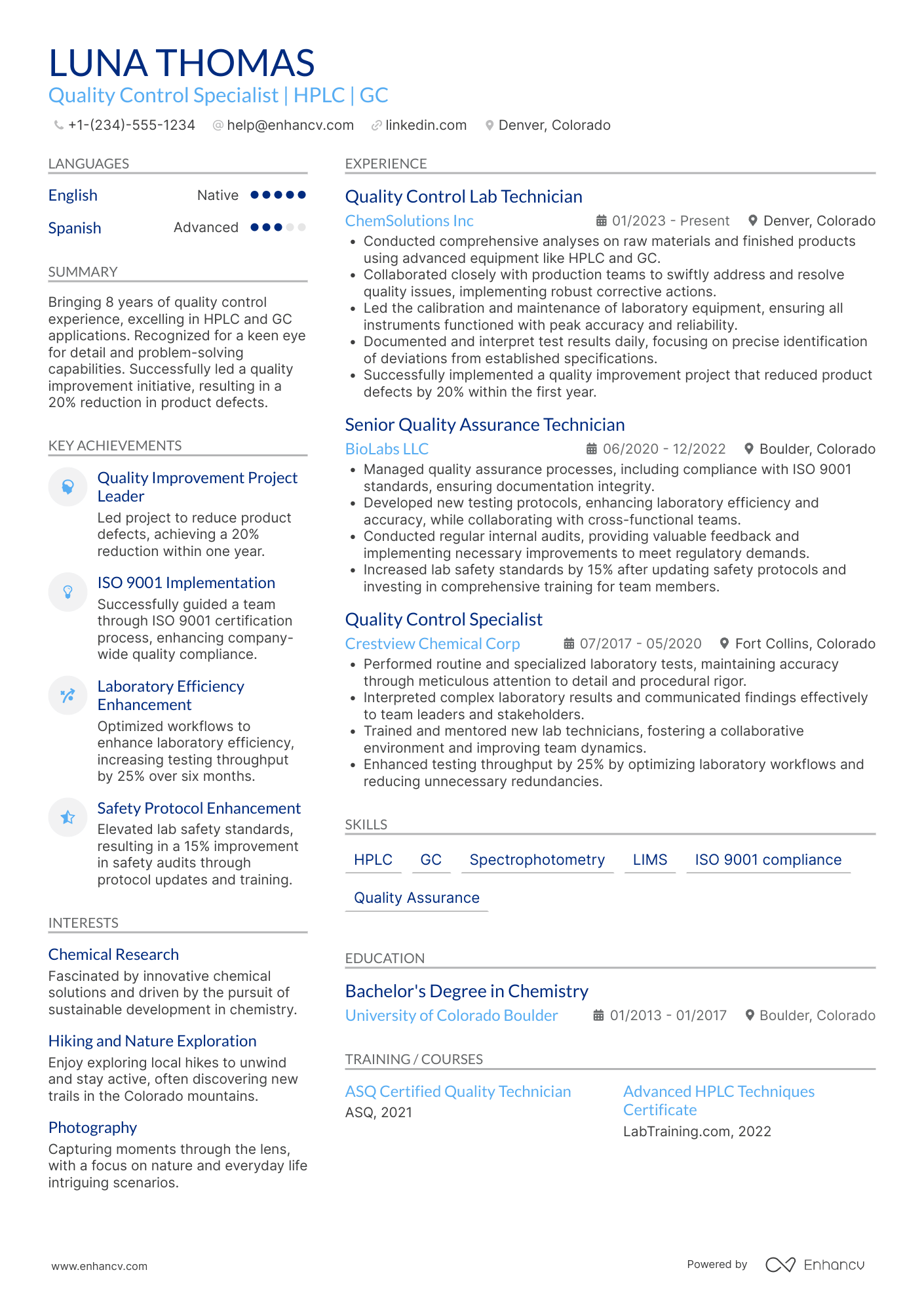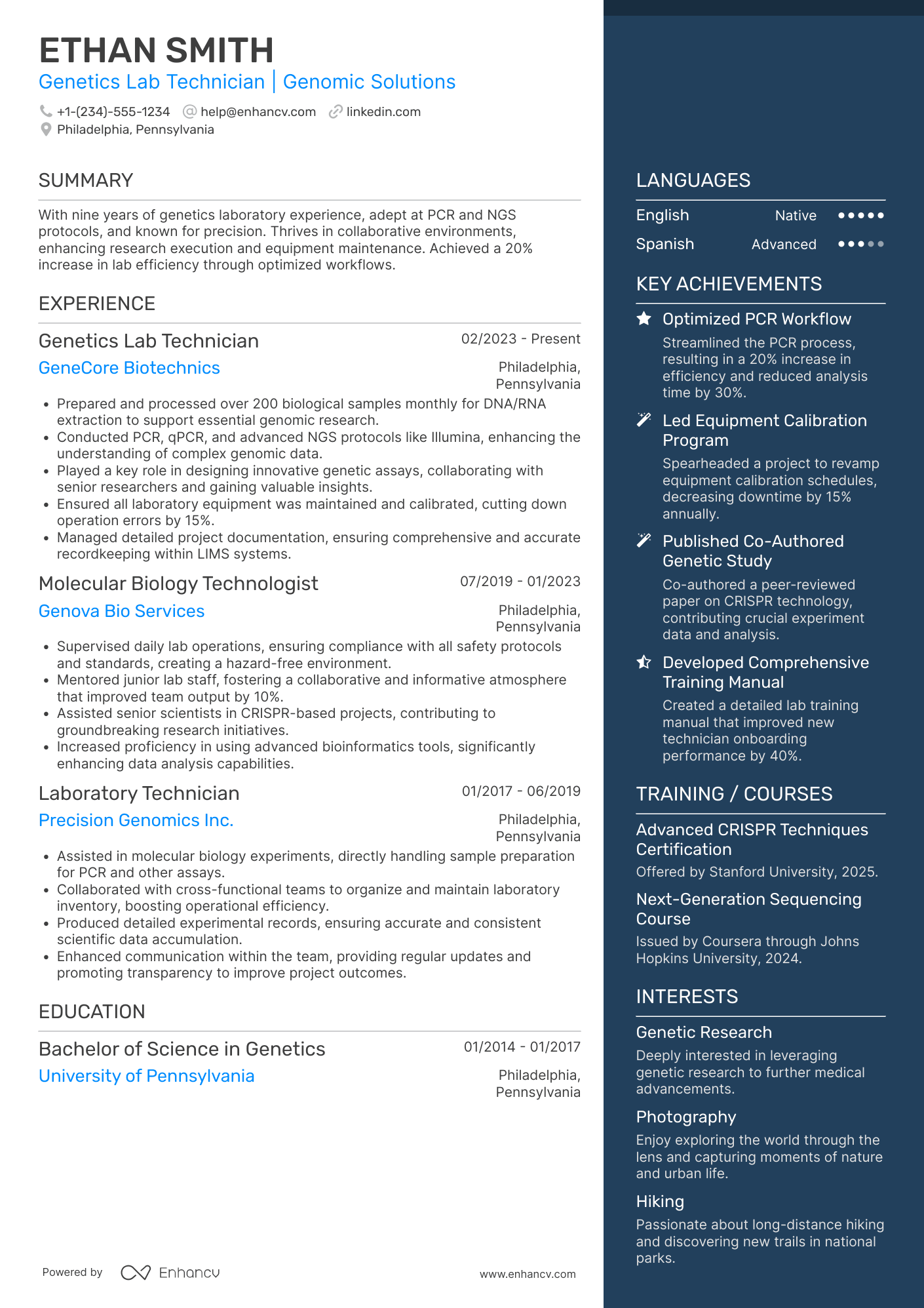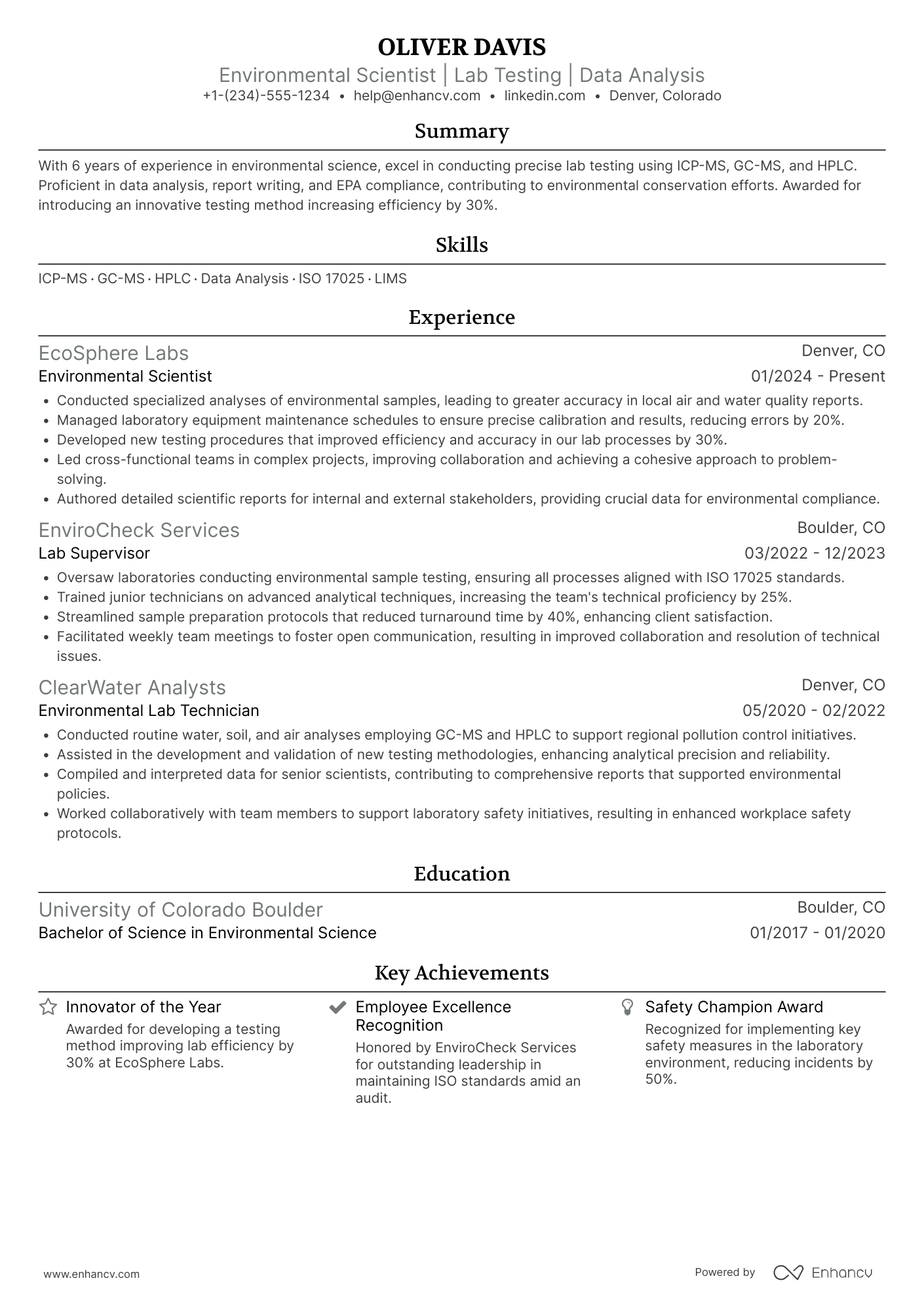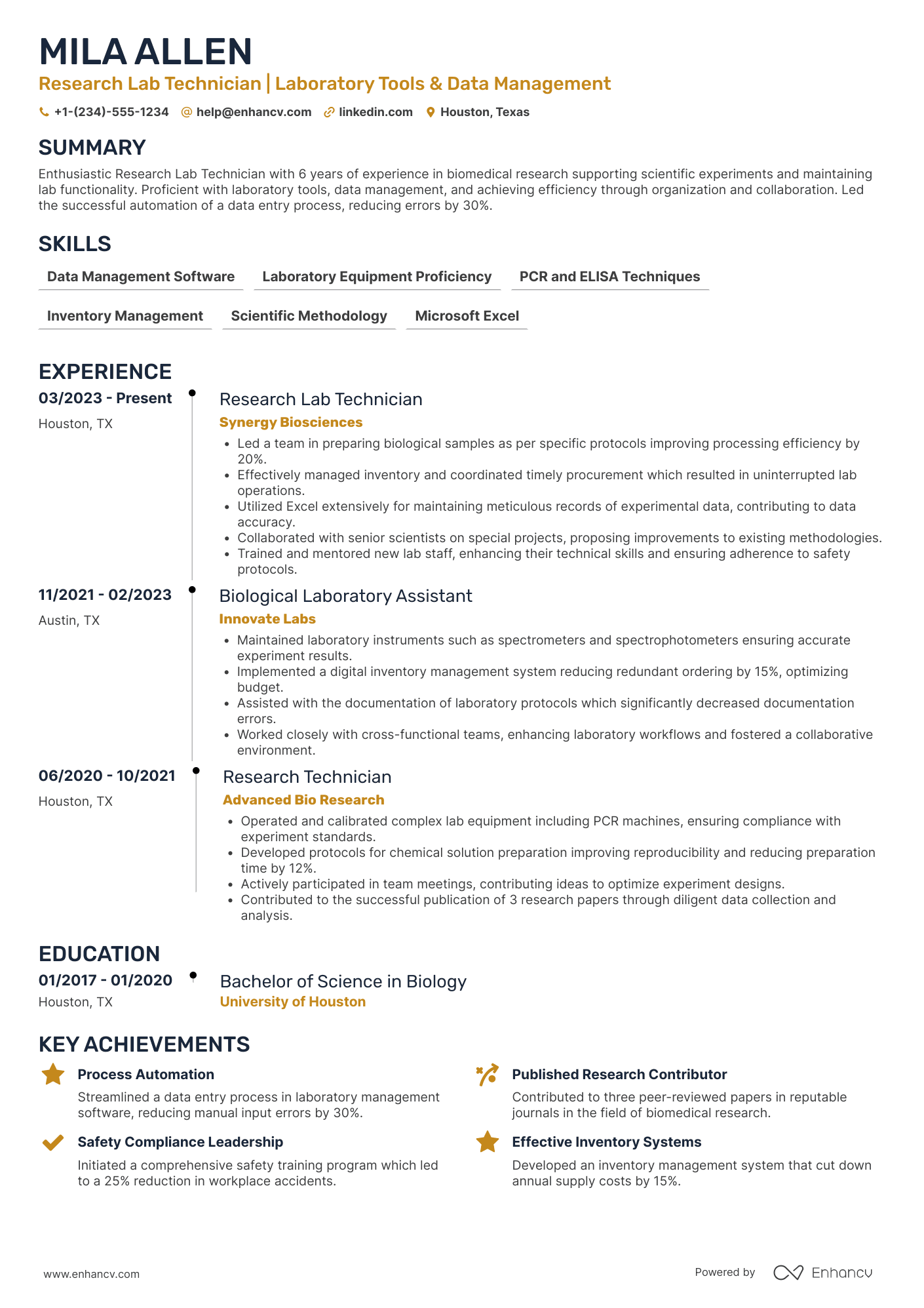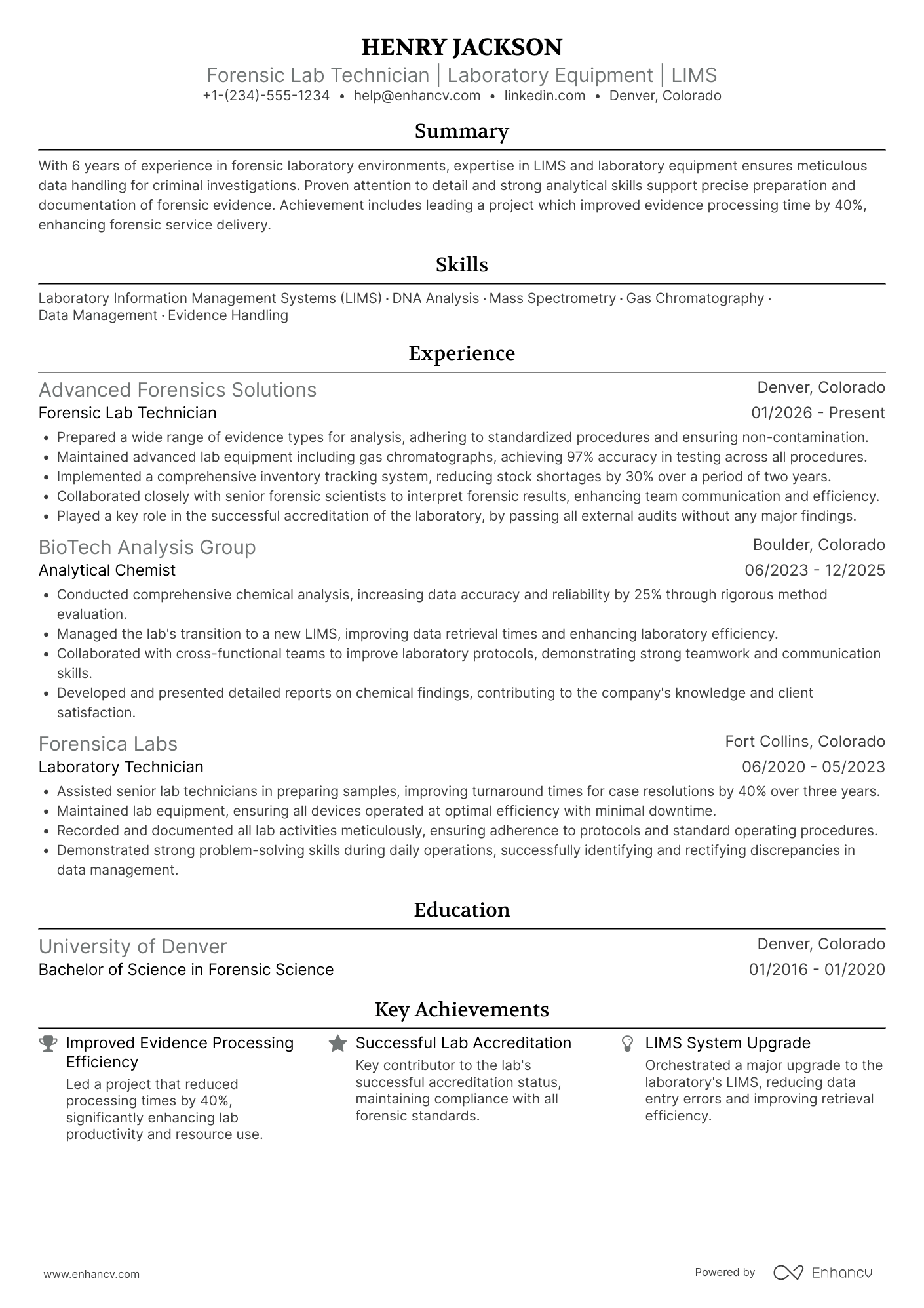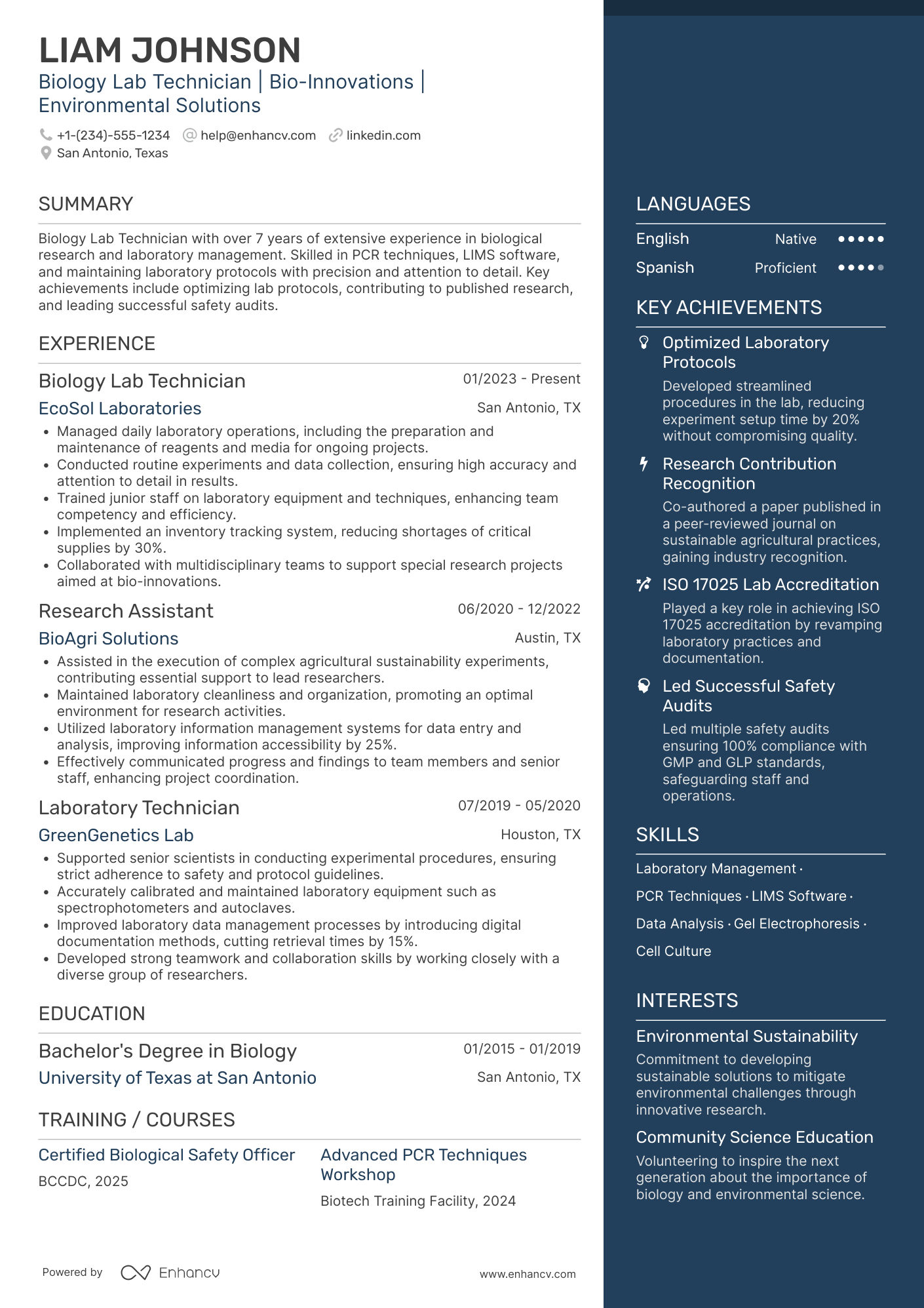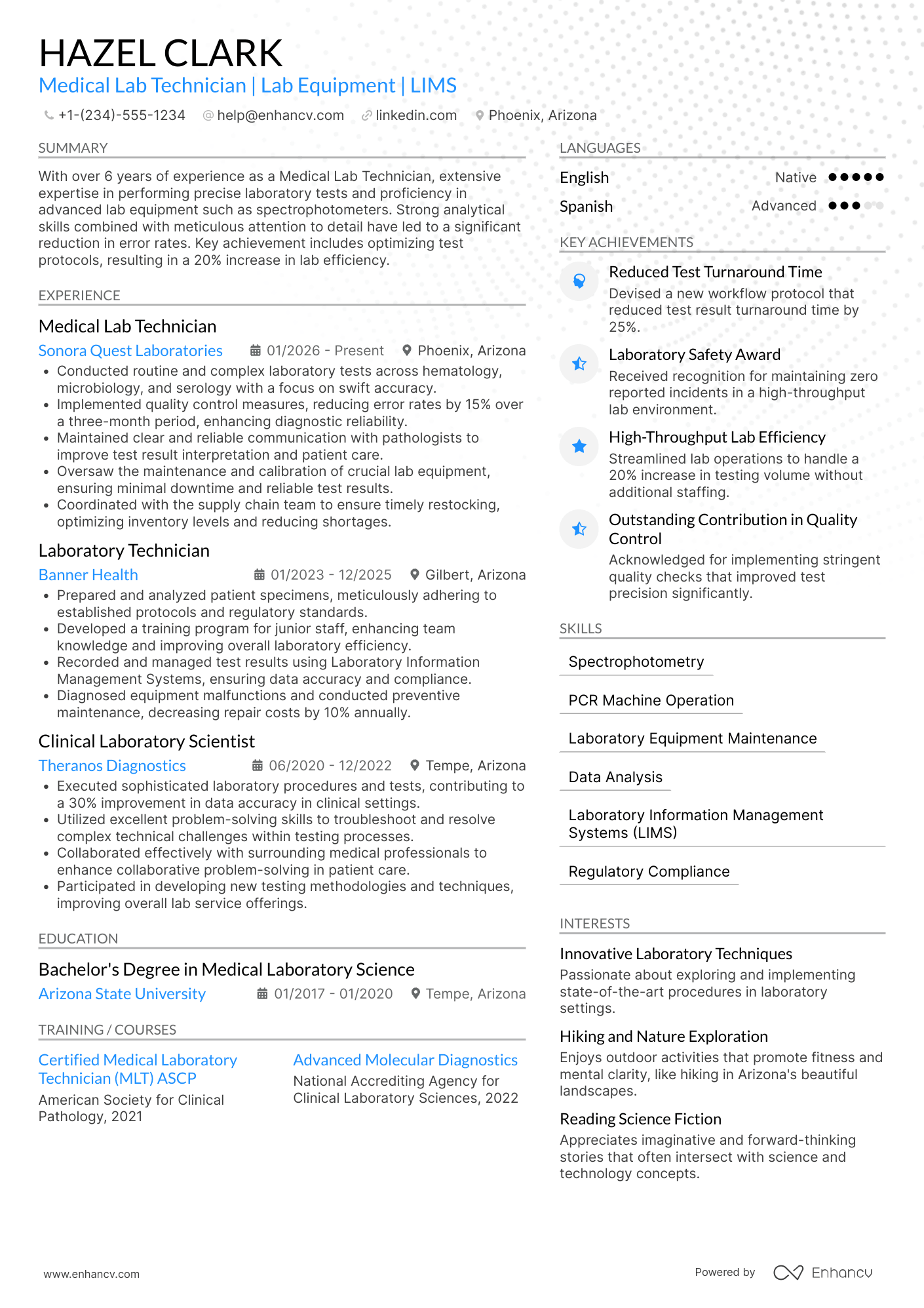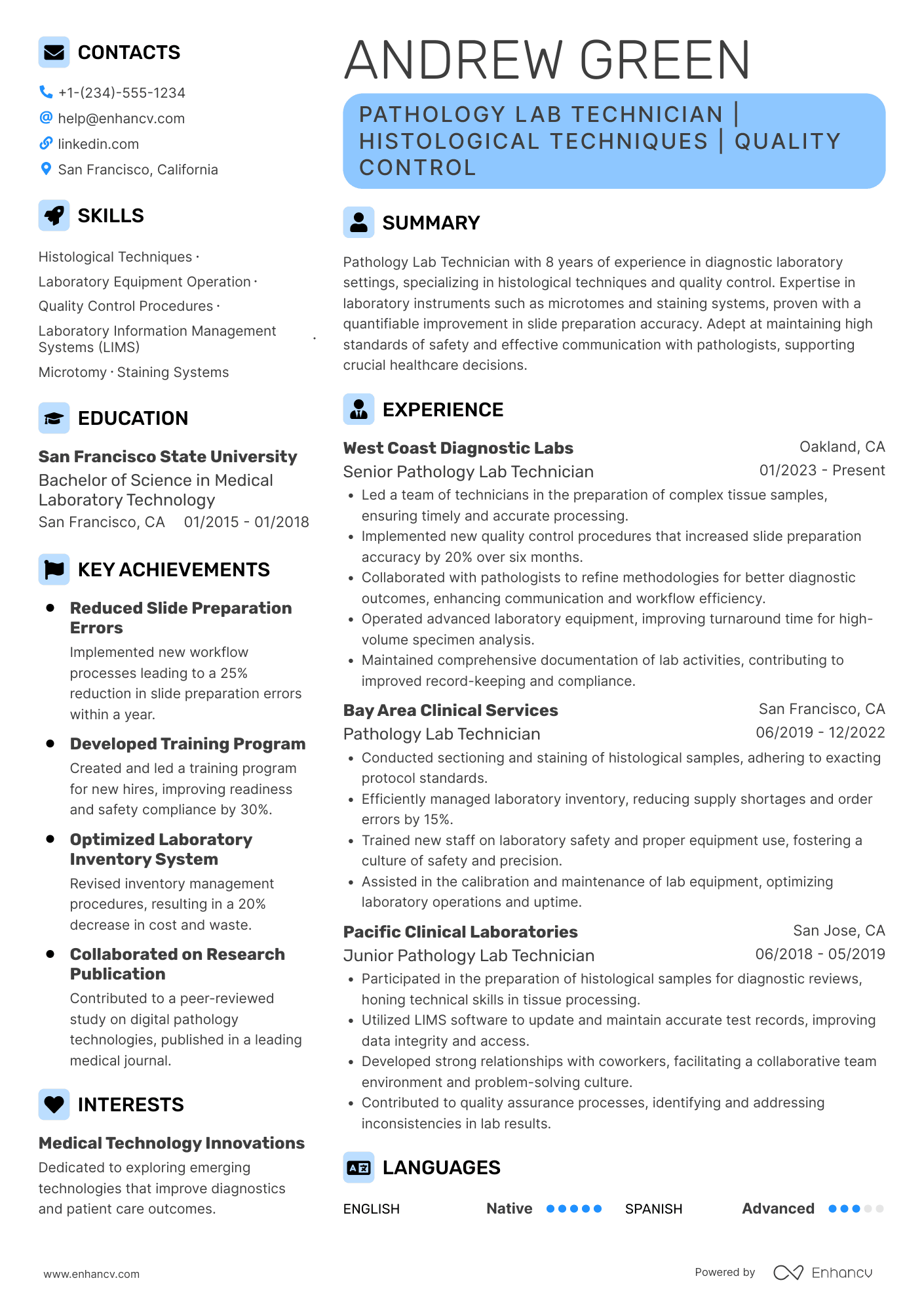
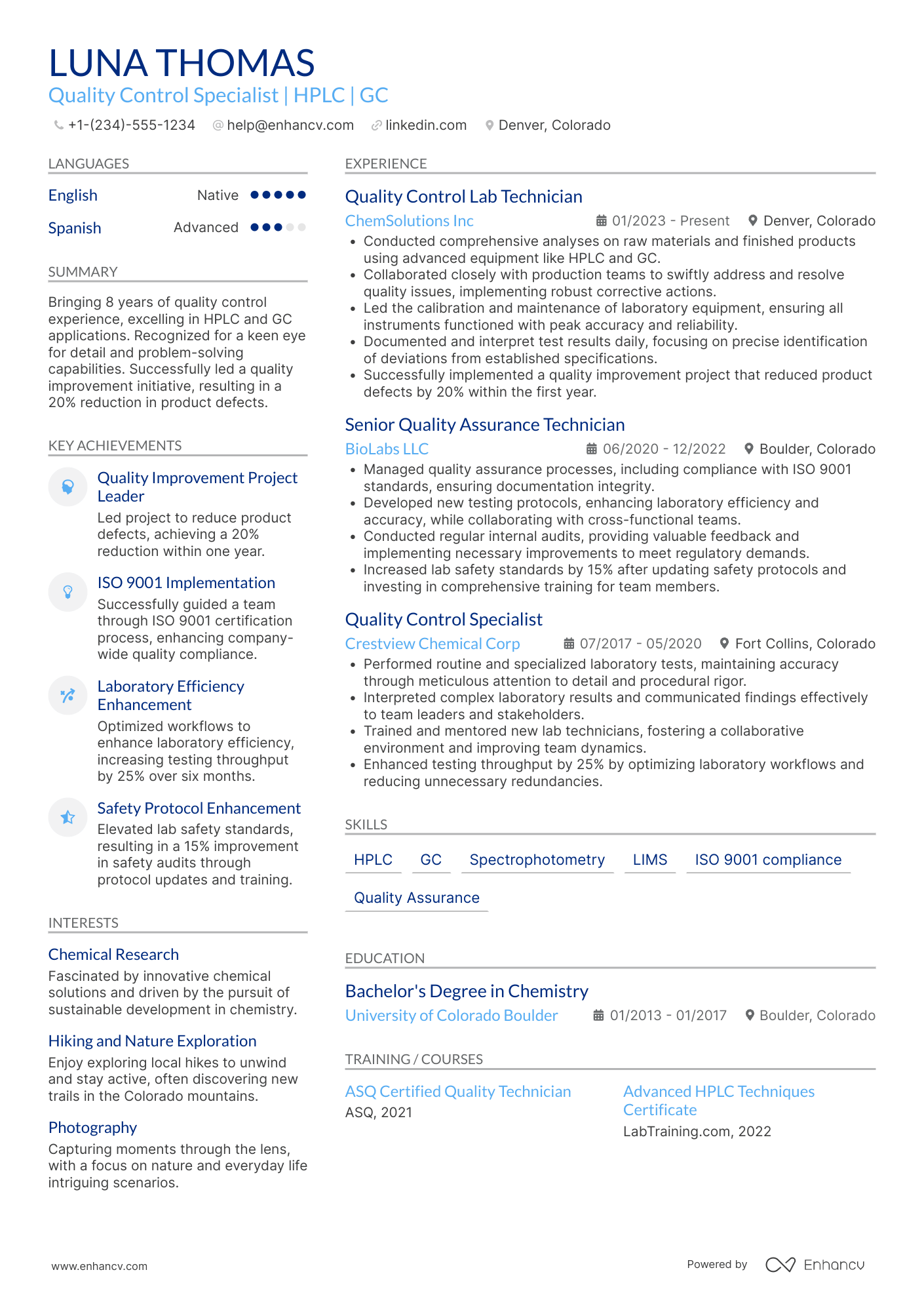
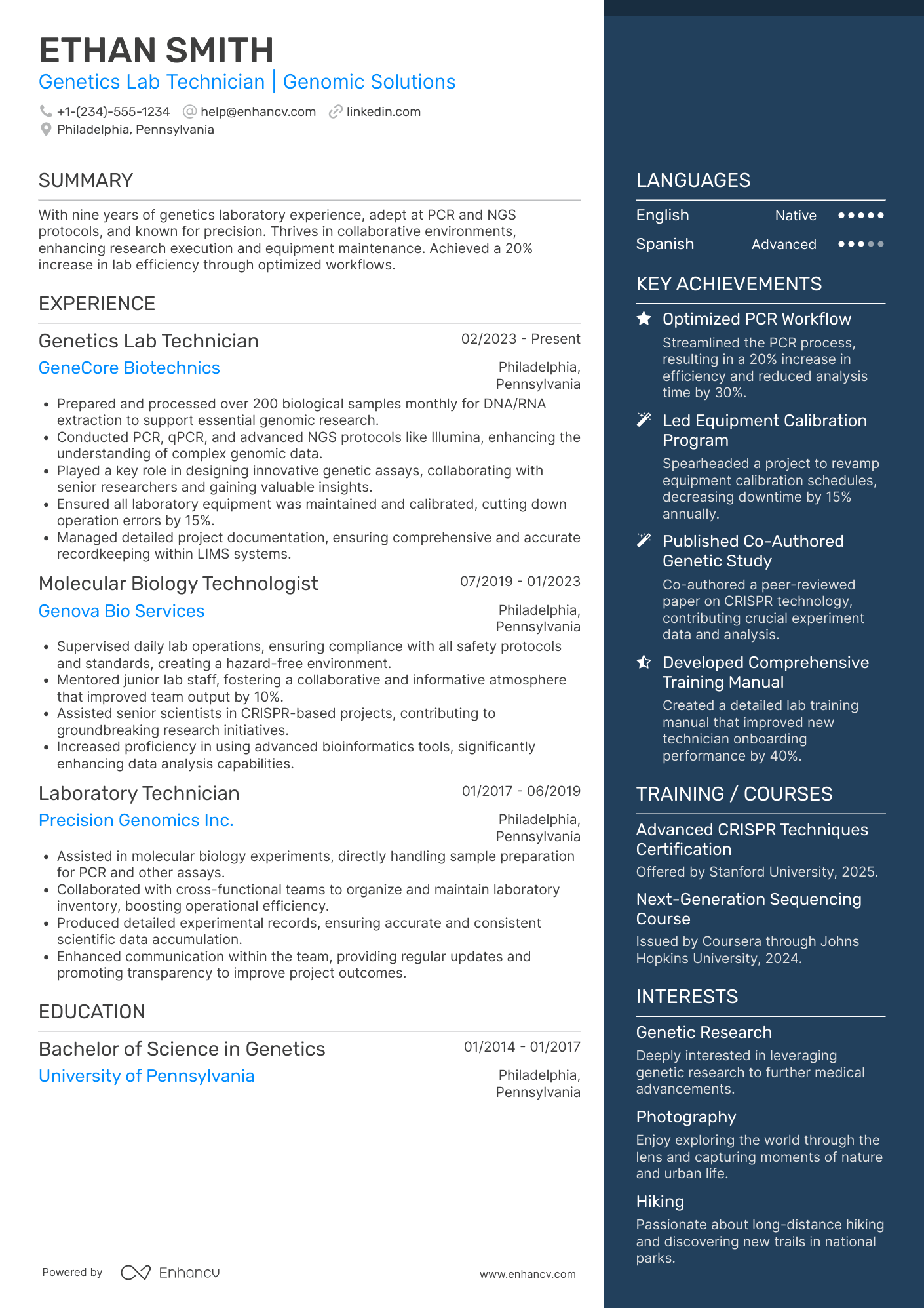
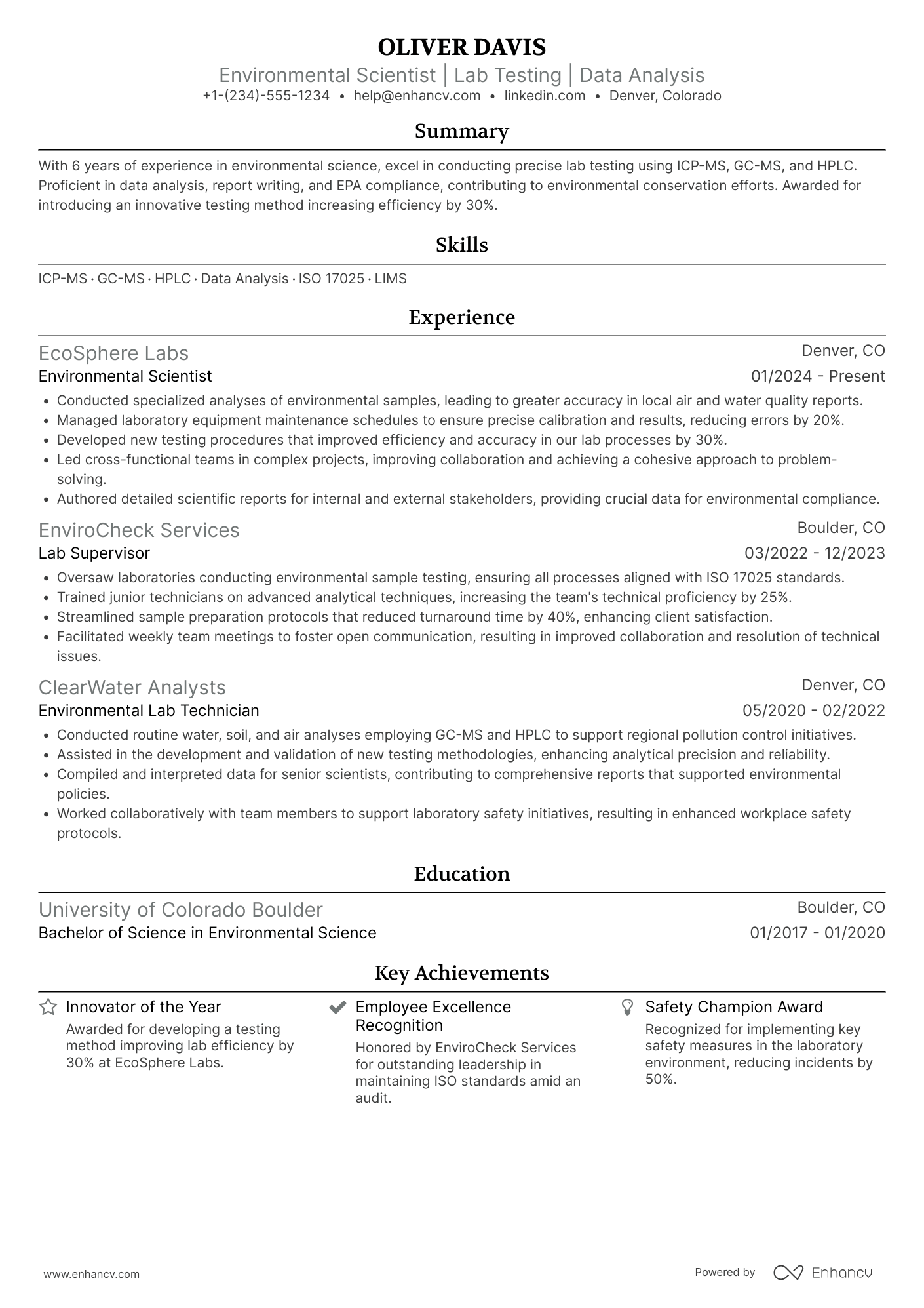
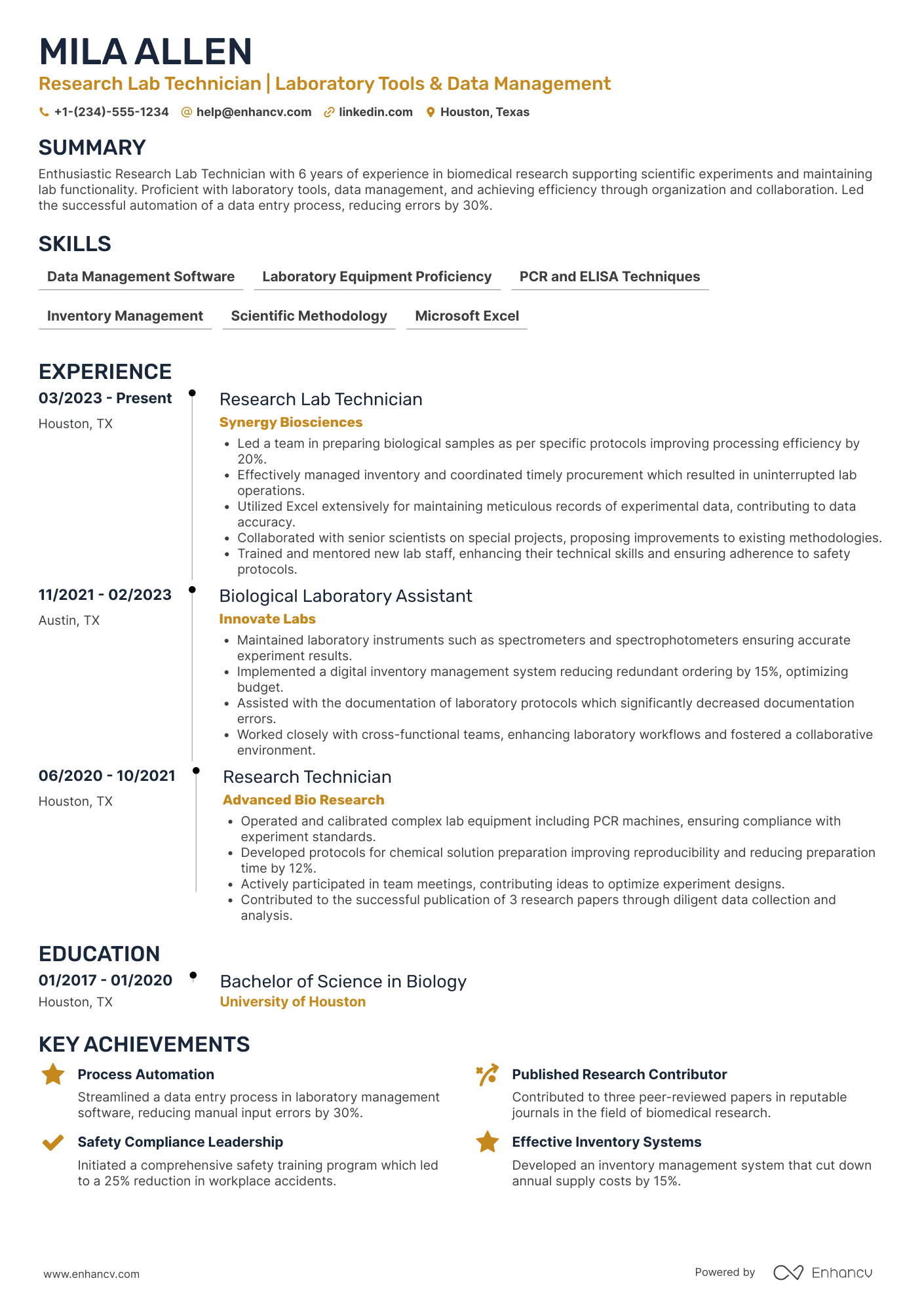
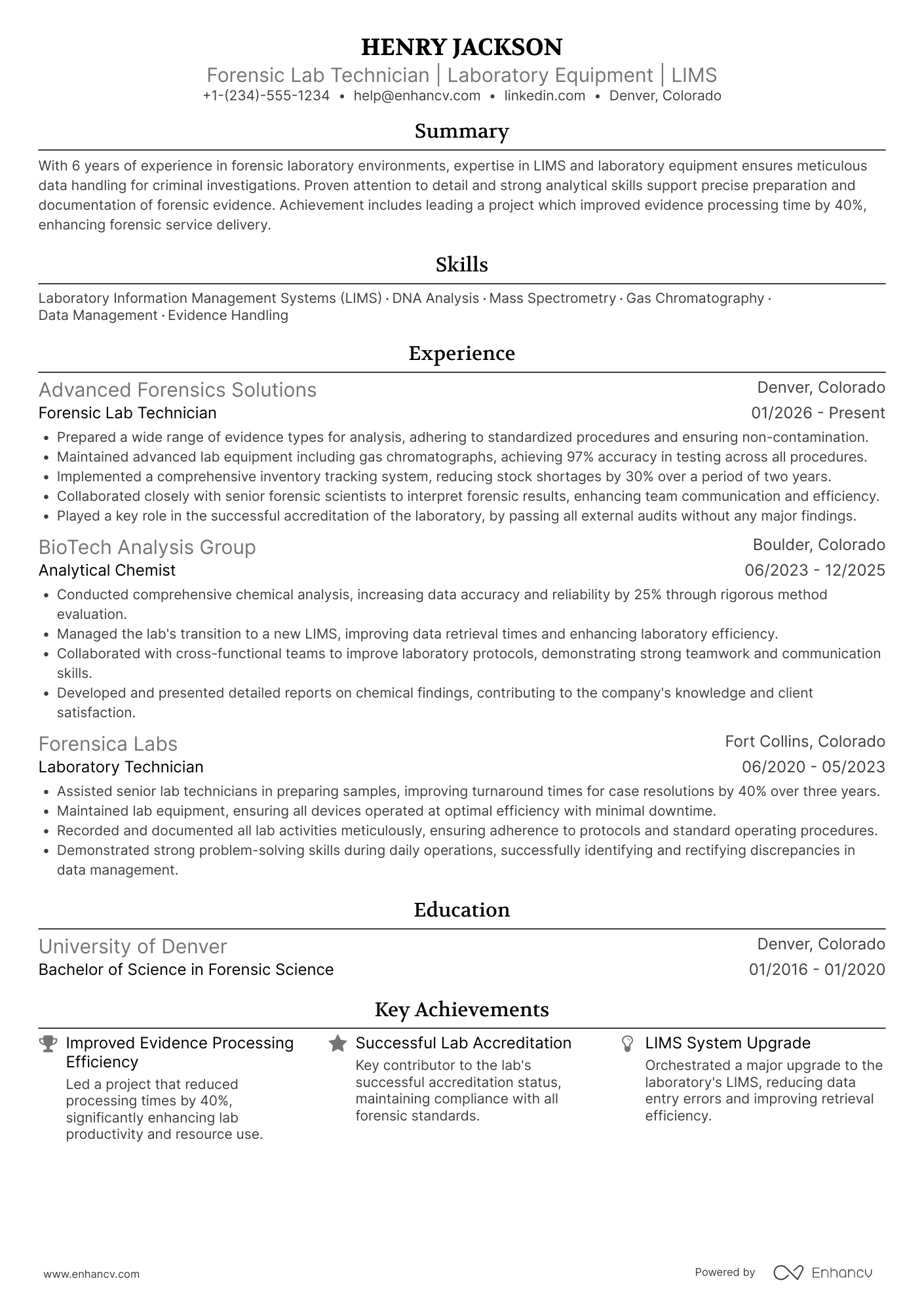
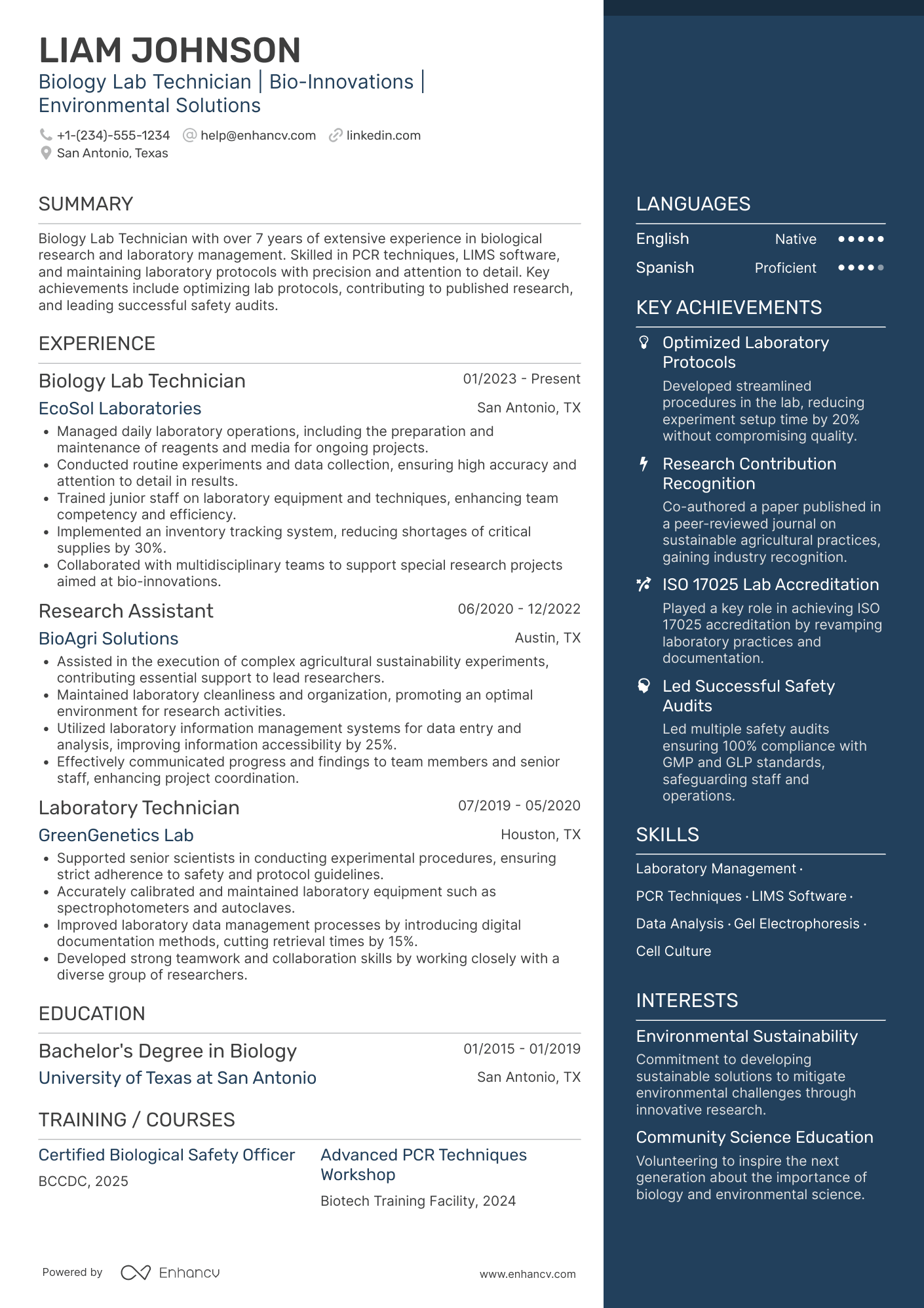
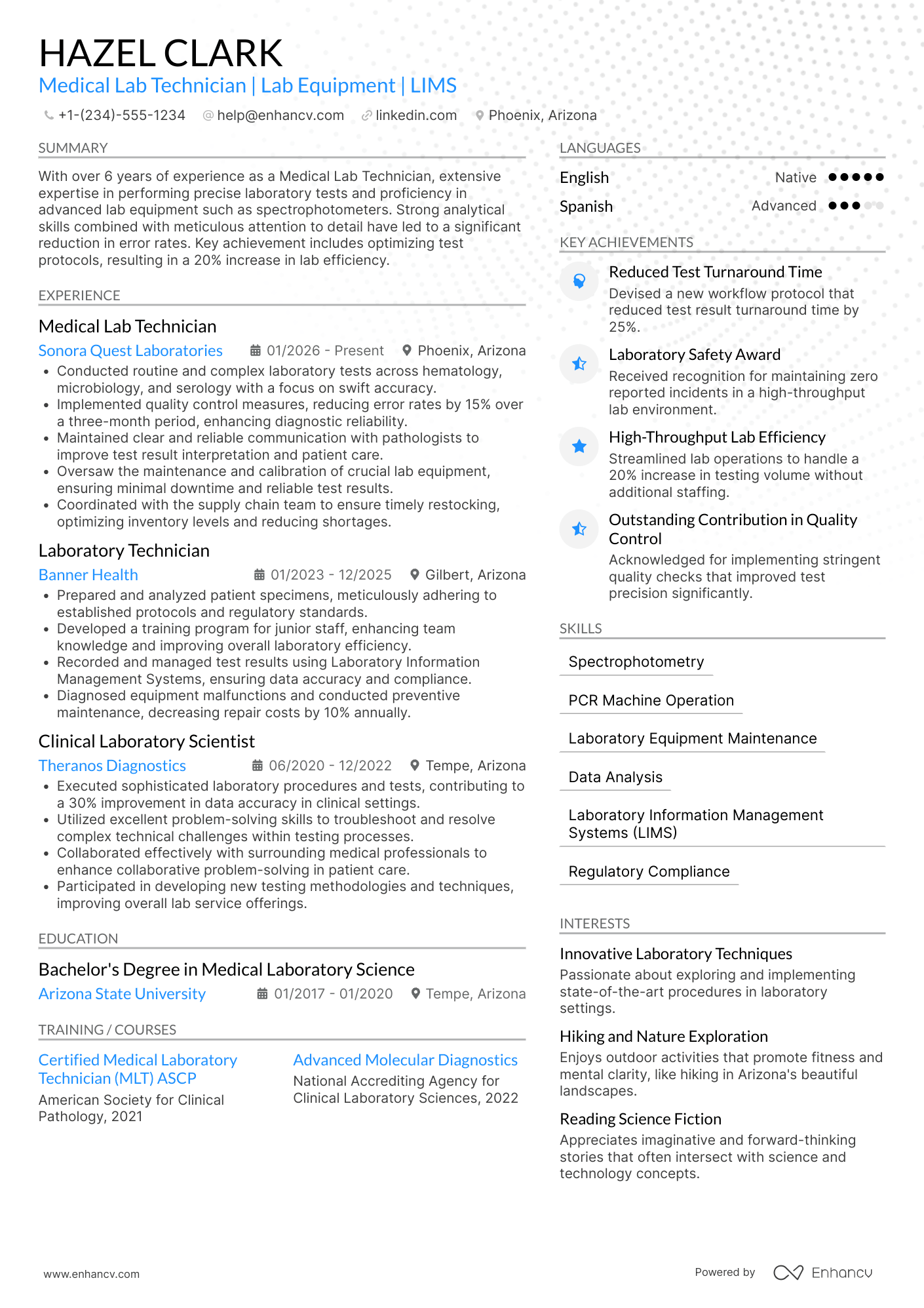
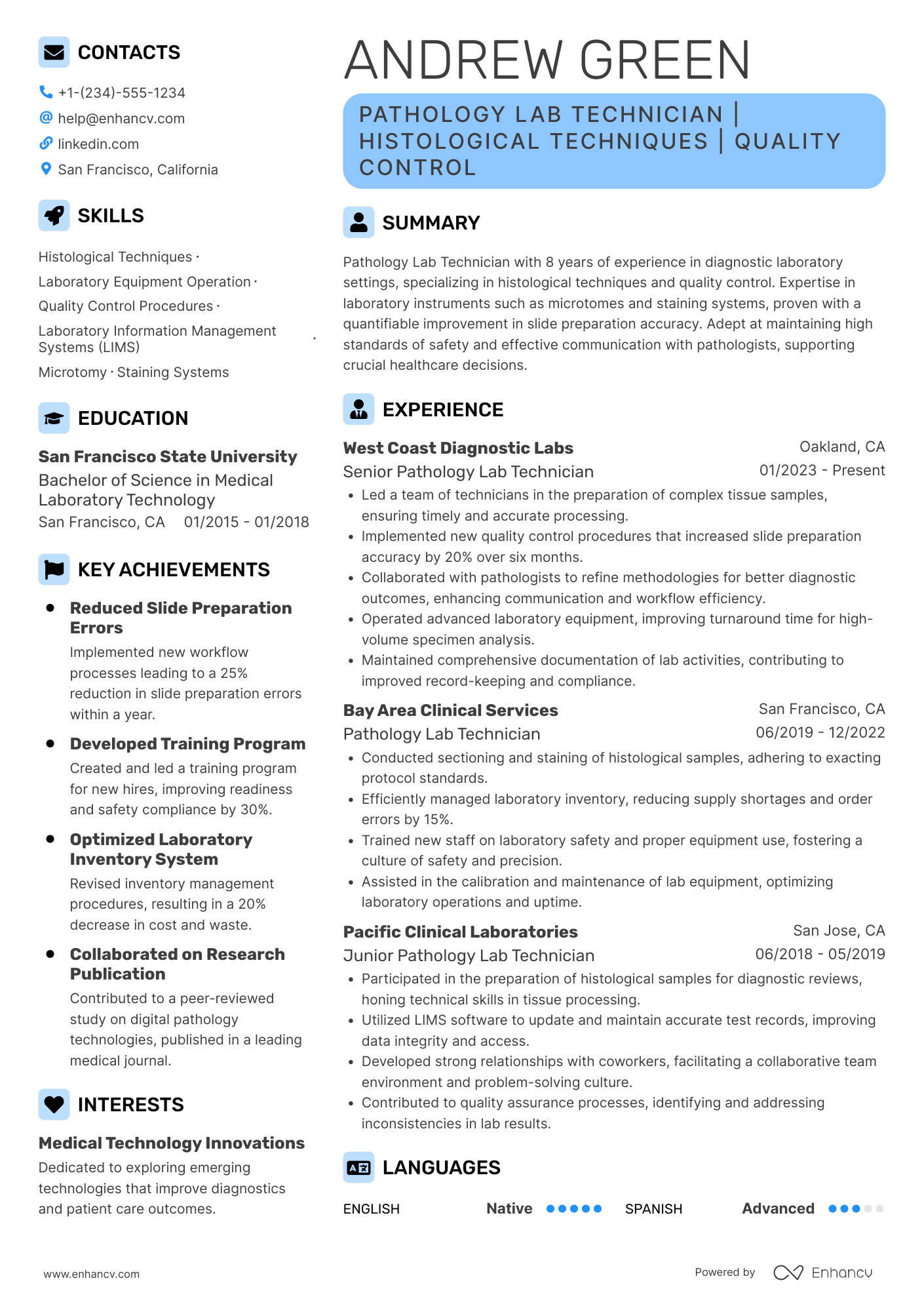
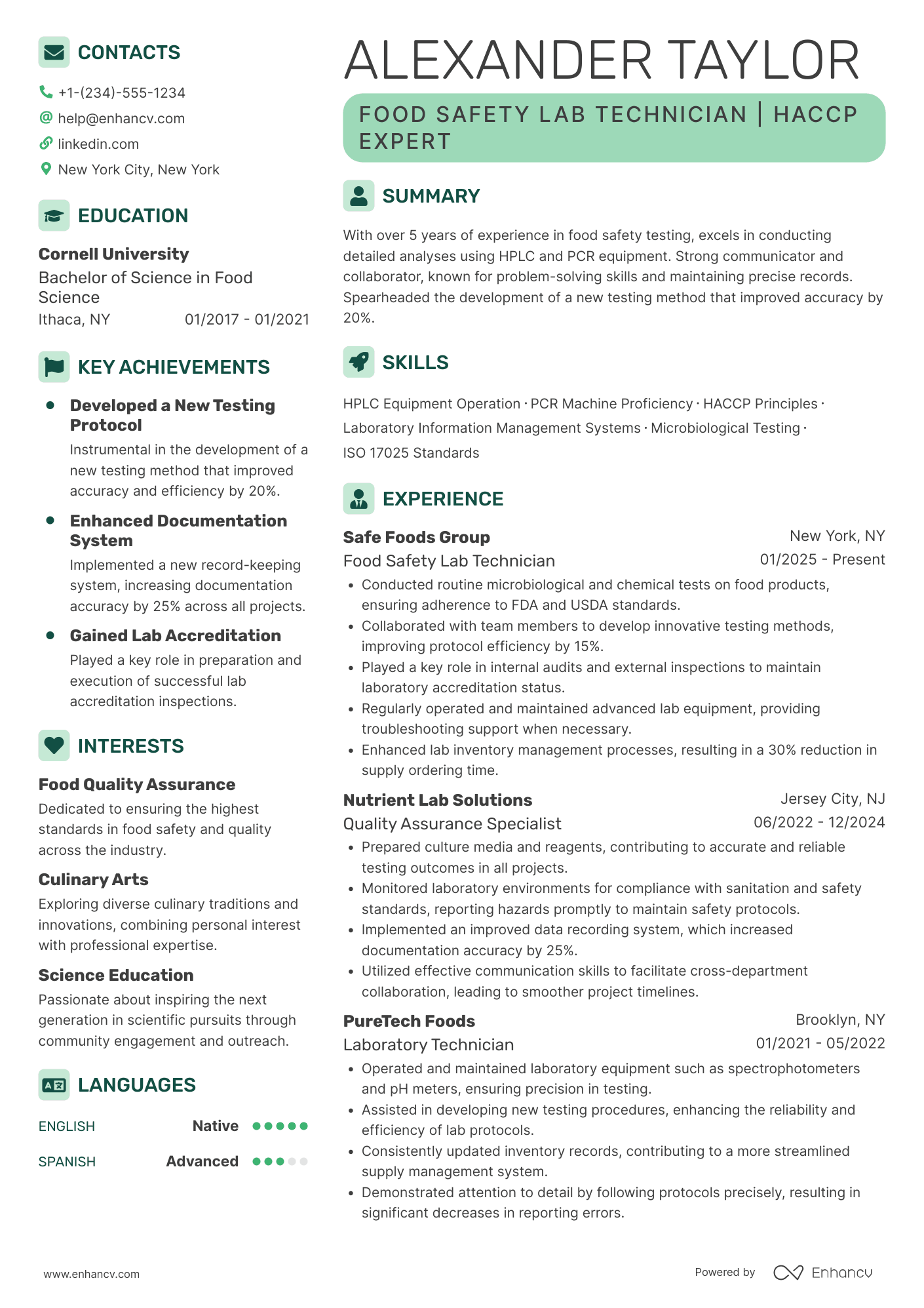
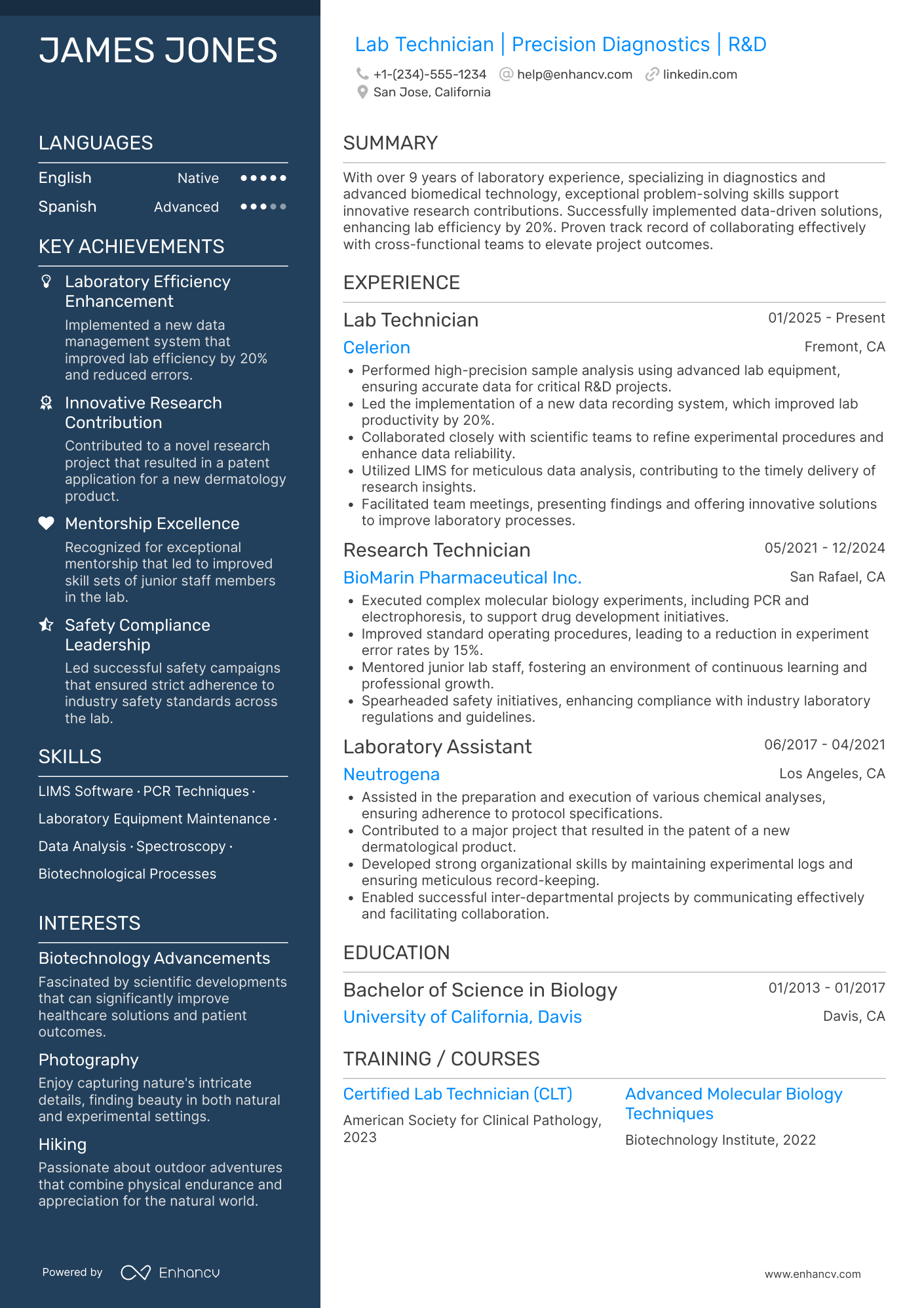
Many lab technician resumes fail because they list tests and instruments without linking them to validated results, compliance, or turnaround time. That hurts during ATS screening and rapid recruiter scans, where high-volume competition rewards clear, outcome-driven evidence. This lab technician resume guide shows what to change.
A strong resume shows what improved because of your work, not just what you ran. Knowing how to make your resume stand out means highlighting reduced sample rework, faster result reporting, higher assay accuracy, clean audit outcomes, and safer handling with fewer incidents. Show volumes processed, error rates, and on-time delivery.

Key takeaways
- Link every test and instrument to a measurable result like accuracy, throughput, or turnaround time.
- Use reverse-chronological format for experienced candidates and hybrid format for career changers.
- Tailor each resume to the job posting's exact instruments, protocols, and compliance standards.
- Quantify achievements with specific metrics such as error rates, sample volumes, and audit outcomes.
- Demonstrate skills in your experience bullets, not just in an isolated skills list.
- Place certifications above or below education based on their relevance to the target role.
- Use Enhancv to turn routine lab tasks into concise, metric-driven resume bullets faster.
Job market snapshot for lab technicians
We analyzed 1,117 recent lab technician job ads across major US job boards. These numbers help you understand industry demand, employer expectations, experience requirements at a glance.
What level of experience employers are looking for lab technicians
| Years of Experience | Percentage found in job ads |
|---|---|
| 1–2 years | 16.0% (179) |
| 3–4 years | 4.0% (45) |
| 5–6 years | 2.0% (22) |
| 7–8 years | 0.4% (4) |
| 9–10 years | 0.4% (5) |
| 10+ years | 3.0% (33) |
| Not specified | 72.2% (807) |
Lab technician ads by area of specialization (industry)
| Industry (Area) | Percentage found in job ads |
|---|---|
| Finance & Banking | 39.3% (439) |
| Healthcare | 38.0% (425) |
| Education | 11.0% (123) |
| Manufacturing | 6.4% (71) |
| Retail & E-commerce | 2.9% (32) |
| Government | 1.1% (12) |
Top companies hiring lab technicians
| Company | Percentage found in job ads |
|---|---|
| Actalent | 20.7% (231) |
| Eyemart Express | 2.5% (28) |
| Aspen Dental | 2.2% (25) |
| University of California System | 1.8% (20) |
| Cleveland Clinic | 1.6% (18) |
| Martin Midstream Partners L.P. | 1.4% (16) |
| Novant Health | 1.4% (16) |
| CRH Plc. | 1.2% (13) |
| Belcan | 0.9% (10) |
| Eurofins Scientific | 0.9% (10) |
Role overview stats
These tables show the most common responsibilities and employment types for lab technician roles. Use them to align your resume with what employers expect and to understand how the role is structured across the market.
Day-to-day activities and top responsibilities for a lab technician
| Responsibility | Percentage found in job ads |
|---|---|
| Quality control | 23.5% (262) |
| Chemistry | 11.5% (128) |
| Microsoft office | 10.9% (122) |
| Quality assurance | 8.8% (98) |
| Wet chemistry | 8.8% (98) |
| Excel | 8.4% (94) |
| Gmp | 8.4% (94) |
| Microbiology | 8.2% (92) |
| Data entry | 6.9% (77) |
| Biology | 5.8% (65) |
| Phlebotomy | 5.5% (61) |
| Word | 5.5% (61) |
How to format a lab technician resume
Recruiters hiring lab technicians prioritize technical proficiency, attention to detail, and hands-on experience with laboratory procedures, instruments, and safety protocols. Choosing the right resume format ensures these signals are immediately visible and pass through an applicant tracking system (ATS) without formatting errors stripping away critical content. A clean, well-structured resume layout makes all the difference in high-volume hiring pipelines.

I have significant experience in this role—which format should I use?
Use a reverse-chronological format to present your laboratory experience in a clear, linear timeline that highlights growing responsibility and technical depth. Do:
- Lead with your most recent position and emphasize the scope of your duties—types of labs, team size, and level of independent work or oversight.
- List role-specific instruments, techniques, and software (e.g., HPLC, PCR, spectrophotometry, LIMS) within each job entry so recruiters can match your skills to the requisition.
- Quantify your contributions with measurable outcomes tied to accuracy, throughput, or compliance.
I'm junior or switching into this role—what format works best?
A hybrid format works best because it lets you lead with a focused skills section while still providing a timeline of relevant experience or education. Do:
- Place a technical skills section near the top of your resume, grouping laboratory techniques, instruments, and safety certifications (e.g., OSHA, BSL-2) so they're the first things a recruiter sees.
- Include academic lab work, internships, clinical rotations, or volunteer research projects as experience entries—these demonstrate hands-on competence even without formal employment.
- Connect every skill or project to a concrete action and a visible result so hiring managers understand what you can do, not just what you've studied.
Why not use a functional resume?
A functional resume strips away the timeline and context that hiring managers rely on to verify your actual laboratory experience, making it harder for them to trust your qualifications.
- A functional format may be acceptable if you're entering lab work after a career change, returning from an extended gap, or have limited formal work history—but only if you anchor every listed skill to a specific project, coursework, or certification outcome rather than presenting skills in isolation.
Now that you've established a clean, readable layout, it's time to fill each part of your resume with the right content.
What sections should go on a lab technician resume
Recruiters expect to see clear proof that you can run lab procedures accurately, document results, and follow safety and quality standards. Understanding which resume sections to include helps you present that proof effectively.
Use this structure for maximum clarity:
- Header
- Summary
- Experience
- Skills
- Projects
- Education
- Certifications
- Optional sections: Publications, Research, Languages
Strong experience bullets should emphasize measurable impact, error reduction, throughput, compliance, and the scope of instruments, assays, and protocols you supported.
Is your resume good enough?
Drop your resume here or choose a file. PDF & DOCX only. Max 2MB file size.
Once you’ve organized your resume with the right foundational elements, focus next on how to write your lab technician resume experience so your work history aligns with that structure.
How to write your lab technician resume experience
Your work experience section should demonstrate the laboratory work you've delivered, the instruments and methodologies you've applied, and the measurable outcomes you've produced. Hiring managers prioritize demonstrated impact—improved accuracy, faster turnaround, tighter compliance—over descriptive task lists.
Each entry should include:
- Job title
- Company and location (or remote)
- Dates of employment (month and year)
Three to five concise bullet points showing what you owned, how you executed, and what outcomes you delivered:
- Ownership scope: the specific laboratory functions, testing workflows, sample pipelines, equipment sets, or quality systems you were directly accountable for as a lab technician.
- Execution approach: the analytical instruments, assay techniques, standard operating procedures, or regulatory frameworks you used to carry out testing and generate reliable data.
- Value improved: the changes you drove in areas such as result accuracy, sample throughput, turnaround time, contamination rates, equipment uptime, or regulatory compliance relevant to laboratory operations.
- Collaboration context: how you coordinated with scientists, quality assurance teams, vendors, clinical staff, or regulatory bodies to advance shared laboratory objectives.
- Impact delivered: the outcomes your work produced, expressed through measurable results, operational scale, or contributions to broader organizational goals rather than a list of daily activities.
Experience bullet formula
A lab technician experience example
✅ Right example - modern, quantified, specific.
Laboratory Technician
NorthRiver Diagnostics | Columbus, OH
2022–Present
High-volume clinical diagnostics lab processing over 1,200 patient samples per day in a College of American Pathologists-accredited environment.
- Executed polymerase chain reaction (PCR) and enzyme-linked immunosorbent assay (ELISA) workflows using Thermo Fisher QuantStudio and BioTek microplate readers, improving first-pass yield by 12% and reducing reruns by 18% through tighter control of critical steps.
- Validated and maintained calibration for pipettes, centrifuges, and analytical balances using manufacturer protocols and traceable standards, cutting instrument-related nonconformances by 35% and avoiding two potential audit findings.
- Implemented barcode-based sample accessioning in the laboratory information management system (LIMS) and optimized chain-of-custody checks, reducing specimen mislabeling from 0.8% to 0.2% and saving six technician hours per week.
- Performed daily quality control (QC) and Westgard rule reviews for three assay panels, partnering with the quality manager and medical technologists to tighten control limits and reduce out-of-control events by 22%.
- Prepared reagents and managed inventory in compliance with good laboratory practice (GLP) and safety data sheets, improving on-time reagent availability to 98% and cutting expired stock write-offs by $14K annually.
Now that you've seen how a strong experience entry comes together, let's look at how to adjust yours to match specific job postings.
How to tailor your lab technician resume experience
Recruiters evaluate lab technician resumes through both human review and applicant tracking systems. Tailoring your resume to the job description ensures your qualifications stand out in both screening methods.
Ways to tailor your lab technician experience:
- Match specific instruments and equipment listed in the job description.
- Mirror the exact terminology used for laboratory procedures and protocols.
- Reflect quality assurance standards or compliance frameworks the posting names.
- Highlight relevant specimen handling or sample preparation techniques mentioned.
- Include industry experience such as clinical pharmaceutical or environmental settings.
- Use the same language for safety and regulatory requirements referenced.
- Align your results with the KPIs or success criteria described.
- Emphasize collaboration with cross-functional teams or departments when specified.
Tailoring means aligning your real accomplishments with what the role requires, not forcing keywords where they don't belong.
Resume tailoring examples for lab technician
| Job description excerpt | Untailored | Tailored |
|---|---|---|
| Perform HPLC and GC-MS analysis on pharmaceutical samples to ensure compliance with FDA regulations | Ran tests on samples using lab equipment. | Conducted HPLC and GC-MS analyses on 30+ pharmaceutical samples weekly, ensuring full compliance with FDA purity and potency regulations. |
| Maintain and calibrate laboratory instruments, including spectrophotometers and pH meters, following SOPs | Helped keep lab instruments in working order. | Calibrated and maintained spectrophotometers and pH meters on a monthly schedule, documenting all procedures per established SOPs to achieve 100% audit readiness. |
| Prepare chemical reagents and culture media for microbiology testing in a BSL-2 environment | Prepared solutions and materials for lab experiments. | Prepared chemical reagents and culture media for microbiology testing across 12 active projects, following BSL-2 safety protocols and reducing preparation errors by 15%. |
Once you’ve aligned your experience with the role’s requirements, the next step is to quantify your lab technician achievements so hiring managers can see the impact of that work.
How to quantify your lab technician achievements
Quantifying your achievements shows how your work improves accuracy, turnaround time, and compliance. Track sample volume, turnaround time, rework rates, quality control pass rates, instrument uptime, and safety incidents to prove impact.
Quantifying examples for lab technician
| Metric | Example |
|---|---|
| Throughput | "Processed 120 to 150 clinical specimens per shift using a Laboratory Information System (LIS), maintaining full chain-of-custody documentation." |
| Turnaround time | "Cut average sample-to-result turnaround from 18 hours to 12 hours by batching centrifuge runs and standardizing pipetting workflows." |
| Quality accuracy | "Reduced sample relabeling errors from 1.8% to 0.6% by adding two-point identifier checks and LIS barcode verification." |
| Equipment reliability | "Improved analyzer uptime from 92% to 97% by implementing a weekly preventive maintenance checklist for two chemistry analyzers." |
| Compliance risk | "Passed two Clinical Laboratory Improvement Amendments (CLIA) audits with zero major findings by tightening temperature logs and quality control documentation." |
Turn your everyday tasks into measurable, recruiter-ready resume bullets in seconds with Enhancv's Bullet Point Generator.
Once you've crafted strong bullet points for your experience section, you'll want to apply that same precision to presenting your hard and soft skills.
How to list your hard and soft skills on a lab technician resume
Your skills section shows you can run tests accurately and safely, and recruiters and an ATS (applicant tracking system) use them to quickly match you to methods, instruments, and compliance needs—aim for a mix heavy on hard skills with a focused set of role-specific soft skills. lab technician roles require a blend of:
- Product strategy and discovery skills.
- Data, analytics, and experimentation skills.
- Delivery, execution, and go-to-market discipline.
- Soft skills.
Your skills section should be:
- Scannable (bullet-style grouping).
- Relevant to the job post.
- Backed by proof in experience bullets.
- Updated with current tools.
Place your skills section:
- Above experience if you're junior or switching careers.
- Below experience if you're mid/senior with strong achievements.

Hard skills
- Good Laboratory Practice (GLP)
- Standard operating procedures (SOPs)
- Sample collection, chain of custody
- Pipetting, serial dilutions
- Centrifugation, filtration, aliquoting
- Polymerase chain reaction (PCR), gel electrophoresis
- Microscopy, slide preparation, staining
- Spectrophotometry, plate readers
- High-performance liquid chromatography (HPLC)
- Quality control, calibration, maintenance logs
- Laboratory information management systems (LIMS)
- Biosafety, chemical hygiene, waste disposal
Soft skills
- Follow protocols without shortcuts
- Document work in real time
- Flag out-of-spec results fast
- Troubleshoot and retest systematically
- Prioritize samples by turnaround time
- Communicate results to supervisors
- Coordinate handoffs across shifts
- Ask clarifying questions early
- Maintain focus during repetitive tasks
- Protect confidentiality and data integrity
- Collaborate with quality and safety teams
- Take ownership of equipment readiness
How to show your lab technician skills in context
Skills shouldn't live only in a bulleted list on your resume. Explore resume skills examples to see how top candidates weave their abilities into every section.
They should be demonstrated in:
- Your summary (high-level professional identity)
- Your experience (proof through outcomes)
Here's what that looks like in practice.
Summary example
Senior lab technician with 10+ years in pharmaceutical quality control. Skilled in HPLC, GC-MS, and method validation. Reduced sample turnaround time by 22% through optimized workflows. Known for mentoring junior analysts and maintaining strict GMP compliance.
- Signals senior-level expertise immediately
- Names industry-standard analytical tools
- Quantifies a process improvement
- Highlights mentorship as a soft skill
Experience example
Senior Laboratory Technician
Meridian Biopharma | San Diego, CA
March 2019–Present
- Performed 1,200+ HPLC and GC-MS analyses annually, maintaining a 99.4% first-pass accuracy rate across stability and release testing.
- Collaborated with R&D scientists to validate three new analytical methods, cutting method transfer timelines by 30%.
- Trained and mentored a team of four junior technicians on SOP compliance, reducing documentation errors by 18% within six months.
- Every bullet includes measurable proof.
- Skills surface naturally through real outcomes.
Once you’ve tied your technical abilities to specific tasks and results, the next step is to apply the same approach to building a lab technician resume with no experience so your strengths still come through clearly.
How do I write a lab technician resume with no experience
Even without full-time experience, you can demonstrate readiness. If you're building a resume without work experience, focus on these areas:
- Chemistry or biology lab coursework
- Capstone or independent lab project
- Research assistant or lab volunteer work
- Instrument training labs (pipettes, centrifuge)
- Quality control lab simulations
- Safety training and incident drills
- Data analysis assignments (Excel, R)
- Sample prep practice and documentation
Focus on:
- Documented lab methods and protocols
- Instrument handling and maintenance logs
- Quality control checks and results
- Safety compliance and training records
Resume format tip for entry-level lab technician
Use a skills-based resume format because it highlights lab techniques, instruments, and coursework when your work history is limited. Do:
- Lead with a Skills section listing instruments.
- Add a Projects section with metrics.
- Include relevant coursework with lab methods.
- Quantify accuracy, throughput, or error rate.
- List certifications and safety training dates.
- Completed quality control lab simulation by calibrating a spectrophotometer and running twenty samples with 98% within-range results, documented in a compliant lab notebook.
Once you've structured your resume around transferable skills and relevant coursework, the next step is ensuring your education section reinforces your qualifications effectively.
How to list your education on a lab technician resume
Your education section lets hiring teams confirm you hold the scientific foundation a lab technician needs. It validates your training in laboratory methods, safety protocols, and analytical techniques.
Include:
- Degree name
- Institution
- Location
- Graduation year
- Relevant coursework (for juniors or entry-level candidates)
- Honors & GPA (if 3.5 or higher)
Skip month and day details—list the graduation year only.
Here's a strong education entry for a lab technician resume:
Example education entry
Bachelor of Science in Biology
University of Wisconsin–Madison, Madison, WI
Graduated 2022
GPA: 3.7/4.0
- Relevant Coursework: Organic Chemistry, Microbiology, Analytical Instrumentation, Laboratory Safety, and Molecular Biology Techniques
- Honors: Dean's List (six semesters), Summa Cum Laude
How to list your certifications on a lab technician resume
Certifications on a resume show a lab technician's commitment to learning, proficiency with essential tools, and alignment with industry standards that employers trust.
Include:
- Certificate name
- Issuing organization
- Year
- Optional: credential ID or URL
- Place certifications below education when your degree is recent and your certifications support it rather than replace missing experience.
- Place certifications above education when they are recent, highly relevant to the job, or required for the lab technician role.
Best certifications for your lab technician resume
- ASCP Medical Laboratory Technician (MLT) Certification
- AMT Medical Laboratory Technician (MLT) Certification
- ASCP Phlebotomy Technician (PBT) Certification
- ASCP Histotechnician (HT) Certification
- ASQ Certified Quality Improvement Associate (CQIA)
- OSHA 10-Hour General Industry Safety and Health
Once you’ve positioned your credentials where hiring managers can spot them quickly, shift to your lab technician resume summary to highlight the value those certifications add right away.
How to write your lab technician resume summary
Your resume summary is the first thing a recruiter reads, so it needs to earn their attention fast. A sharp, specific summary signals you're qualified and worth a closer look.
Keep it to three to four lines, with:
- Your title and total years of relevant lab experience.
- The type of lab, industry, or research domain you've worked in.
- Core technical skills, instruments, or methodologies you use daily.
- One or two measurable results that show your contributions.
- A practical soft skill tied to a real workplace outcome.

PRO TIP
At this level, emphasize hands-on technical skills, relevant coursework, and any early impact you've made. Highlight specific instruments and protocols you know well. Avoid vague phrases like "passionate team player" or "eager to learn." Replace them with concrete abilities and results.
Example summary for a lab technician
Detail-oriented lab technician with two years of experience in clinical diagnostics. Proficient in HPLC, spectrophotometry, and sample preparation. Reduced sample processing errors by 18% through improved documentation workflows.
Optimize your resume summary and objective for ATS
Drop your resume here or choose a file.
PDF & DOCX only. Max 2MB file size.
Now that you've crafted a summary that highlights your qualifications, make sure the header above it presents your contact details correctly so recruiters can actually reach you.
What to include in a lab technician resume header
A resume header lists your key contact details and role focus, boosting visibility, credibility, and fast recruiter screening for a lab technician.
Essential resume header elements
- Full name
- Tailored job title and headline
- Location
- Phone number
- Professional email
- GitHub link
- Portfolio link
A LinkedIn link helps recruiters verify experience quickly and supports screening.
Do not include photos on a lab technician resume unless the role is explicitly front-facing or appearance-dependent.
Keep the header to two lines, use consistent formatting, and match your job title and headline to the lab technician posting.
Example
Lab technician resume header
Jordan Lee
Lab Technician | Clinical Chemistry, Sample Processing, Quality Control
Boston, MA | (617) 555-01XX | jordan.lee@enhancv.com github.com/jordanlee yourwebsite.com linkedin.com/in/jordanlee
Once your contact details and professional identifiers are in place at the top of your resume, add relevant additional sections to provide supporting context that strengthens the rest of your application.
Additional sections for lab technician resumes
When your core qualifications match other candidates, additional resume sections help you stand out with role-specific credibility and depth. For example, listing language skills on your resume can be valuable in labs serving diverse patient populations or international research teams.
- Languages
- Publications and research contributions
- Laboratory safety training and certifications
- Professional affiliations and memberships
- Conferences and continuing education
- Volunteer lab work or community health initiatives
Once you've rounded out your resume with the right supplementary sections, it's worth pairing it with a cover letter to strengthen your overall application.
Do lab technician resumes need a cover letter
A cover letter isn't required for a lab technician, but it helps when roles are competitive or employers expect one. If you're unsure where to start, learn what a cover letter is and when it adds value. It can make a difference when your resume needs context, or when you want to show clear fit for the team.
Use a cover letter when it adds specific, job-relevant detail:
- Explain role and team fit: Match your lab environment experience to their workflows, instruments, shift needs, and quality expectations.
- Highlight one or two relevant projects or outcomes: Share a concrete result, such as improved turnaround time, reduced errors, or stronger documentation compliance.
- Show understanding of the product, users, or business context: Connect your work to patient care, research goals, manufacturing release, or regulatory requirements.
- Address career transitions or non-obvious experience: Clarify gaps, field changes, or transferable skills from adjacent lab work, such as sample handling or quality control.
Drop your resume here or choose a file.
PDF & DOCX only. Max 2MB file size.
Even if you decide a cover letter adds value for your application, AI tools can help you strengthen your lab technician resume faster and more consistently.
Using AI to improve your lab technician resume
AI can sharpen your resume's clarity, structure, and impact. It helps refine wording and highlight measurable results. But overuse makes resumes sound robotic. If you're curious about which AI is best for writing resumes, the key is knowing when to step back. Once your content is clear and role-aligned, step away from AI.
Here are 10 practical prompts to strengthen specific sections of your lab technician resume:
Strengthen your summary
Quantify experience bullets
Tailor skills placement
Tighten bullet phrasing
Align with job posting
Clarify certifications
Improve education details
Refine project descriptions
Remove filler language
Check role consistency
Conclusion
A strong lab technician resume proves impact with measurable outcomes, highlights role-specific skills, and follows a clear structure. Use targeted metrics, precise methods, and relevant tools to show accuracy, throughput, and quality.
Keep each section easy to scan, with consistent formatting and focused bullet points. This approach shows you’re ready for today’s hiring market and prepared for evolving lab workflows.
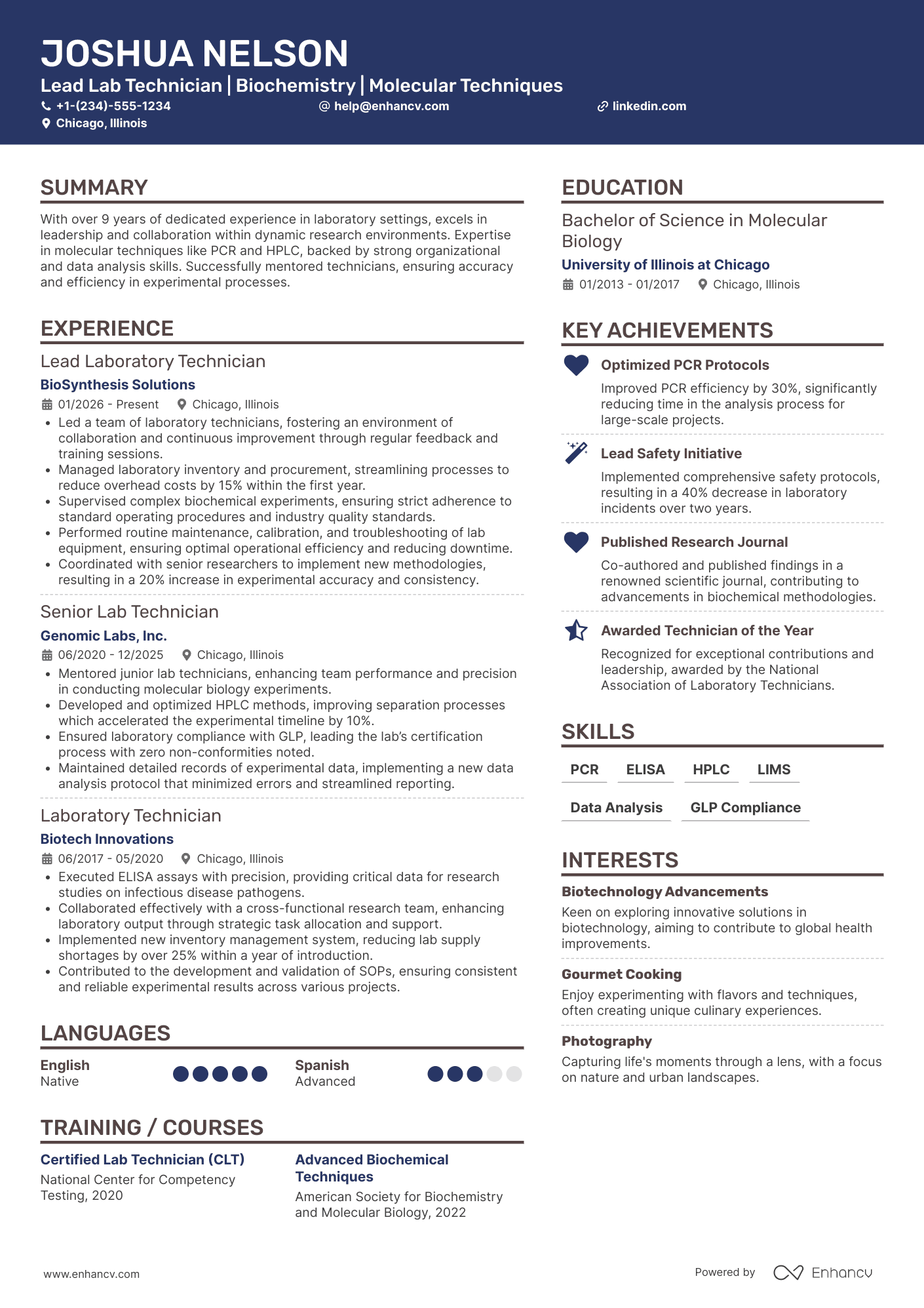
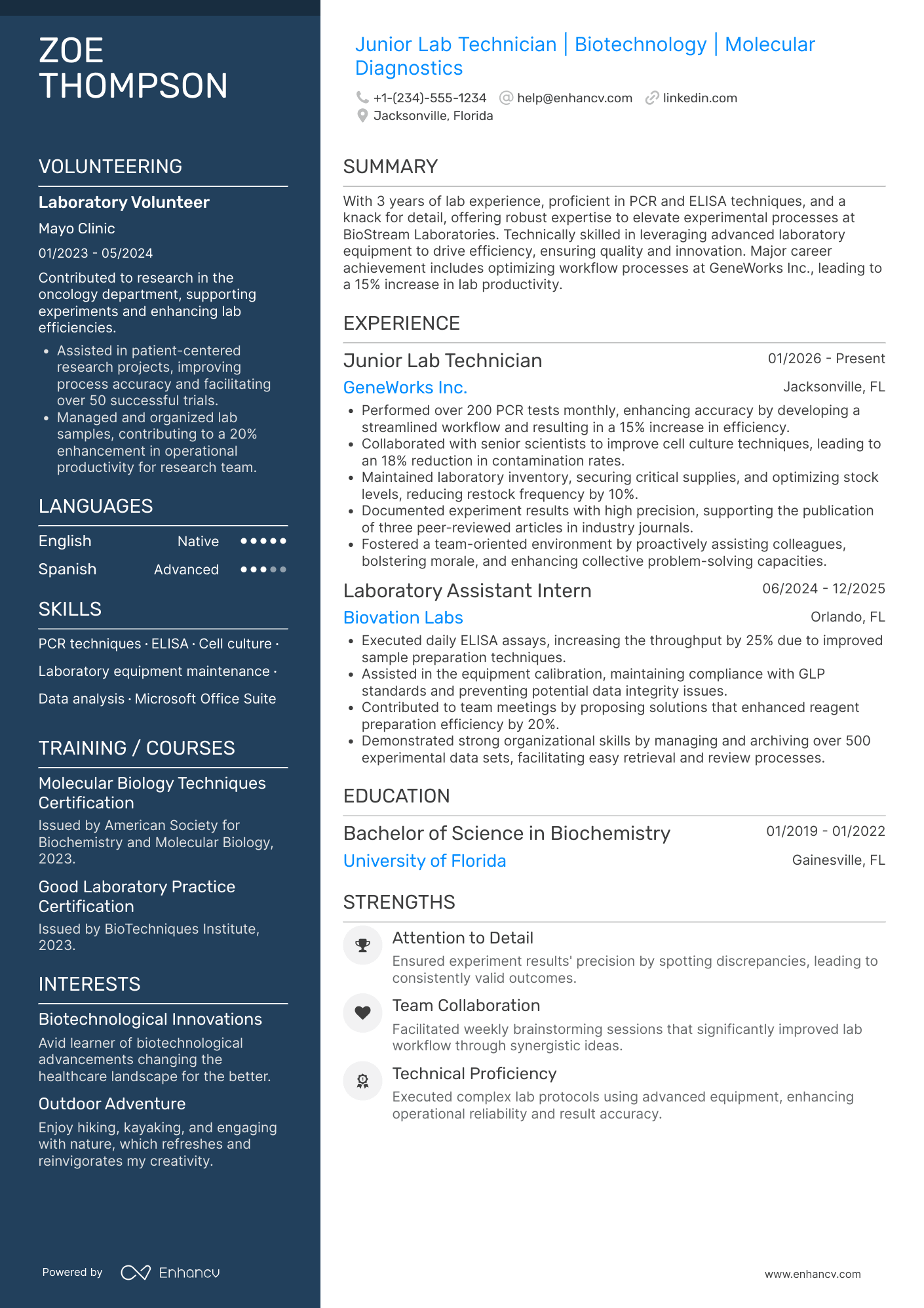
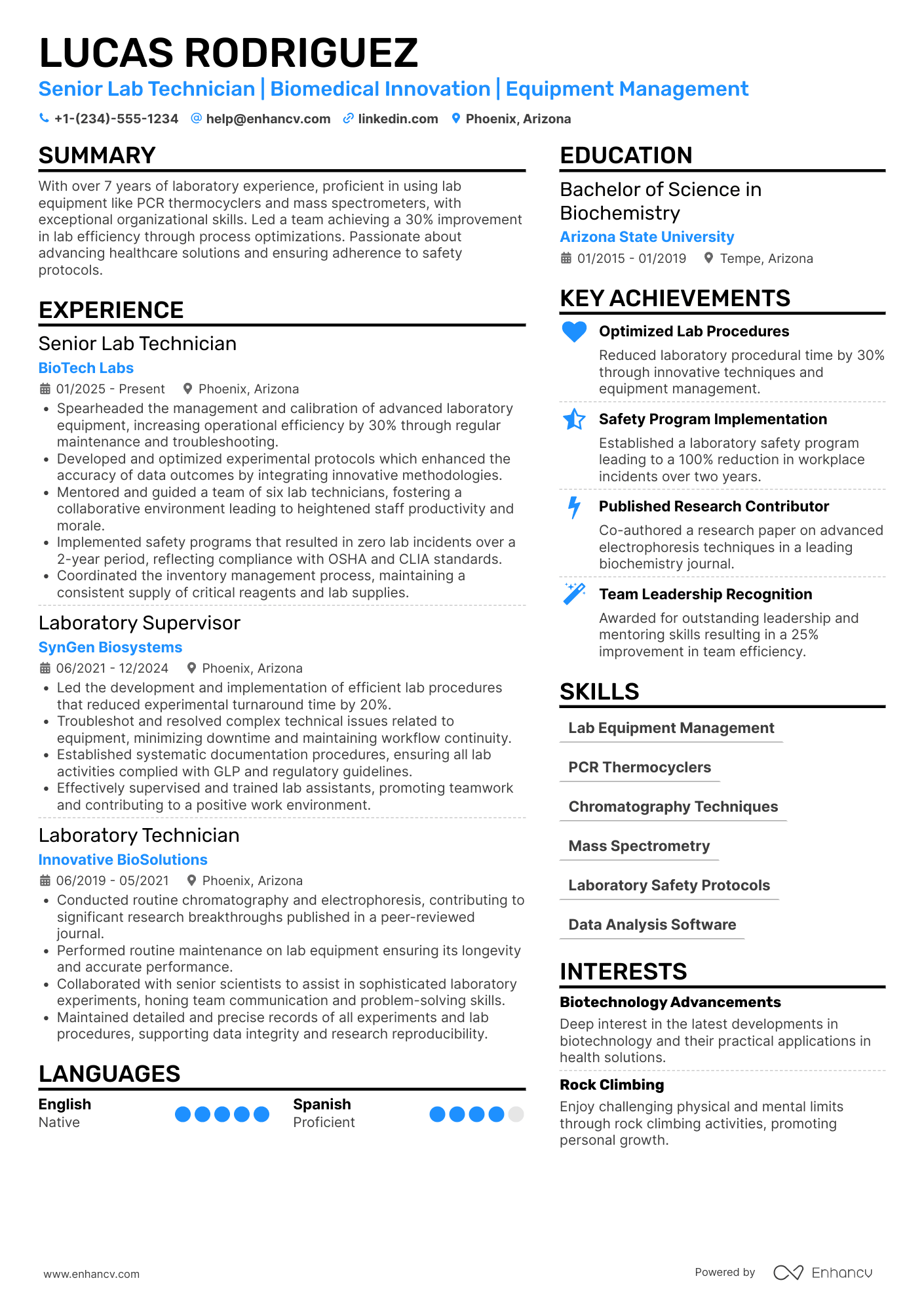
Lab Technician resume examples
By Experience
By Role