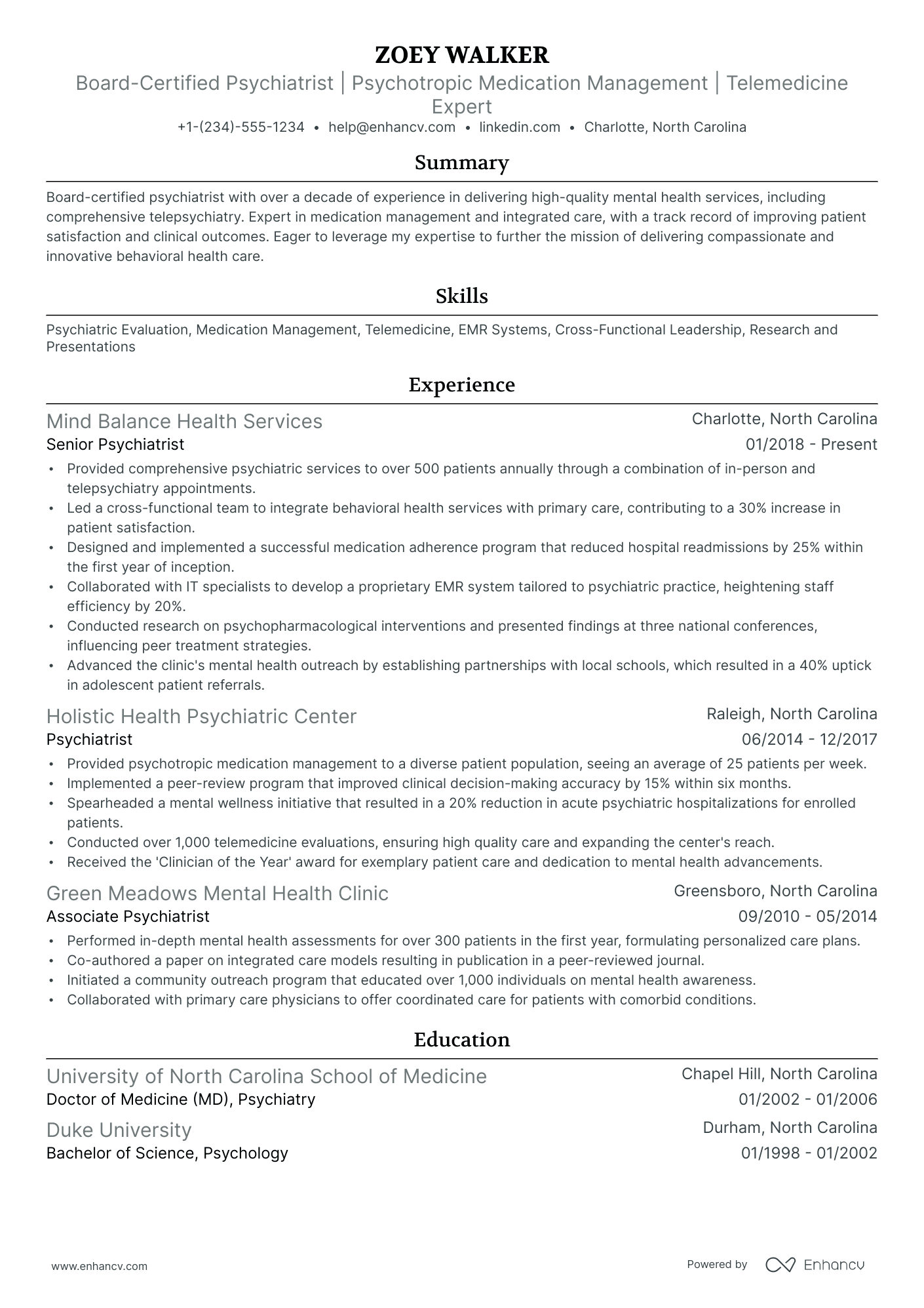
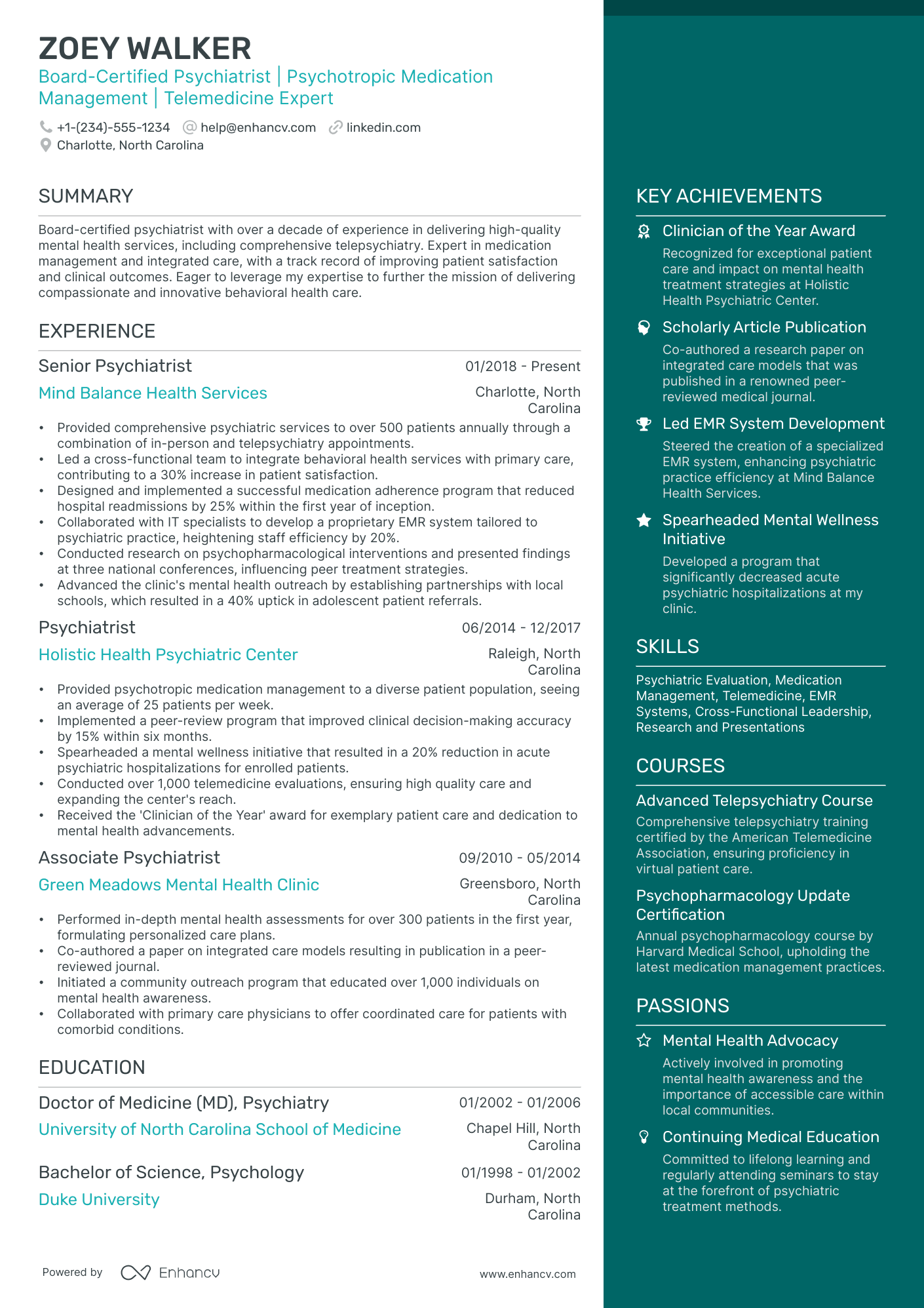
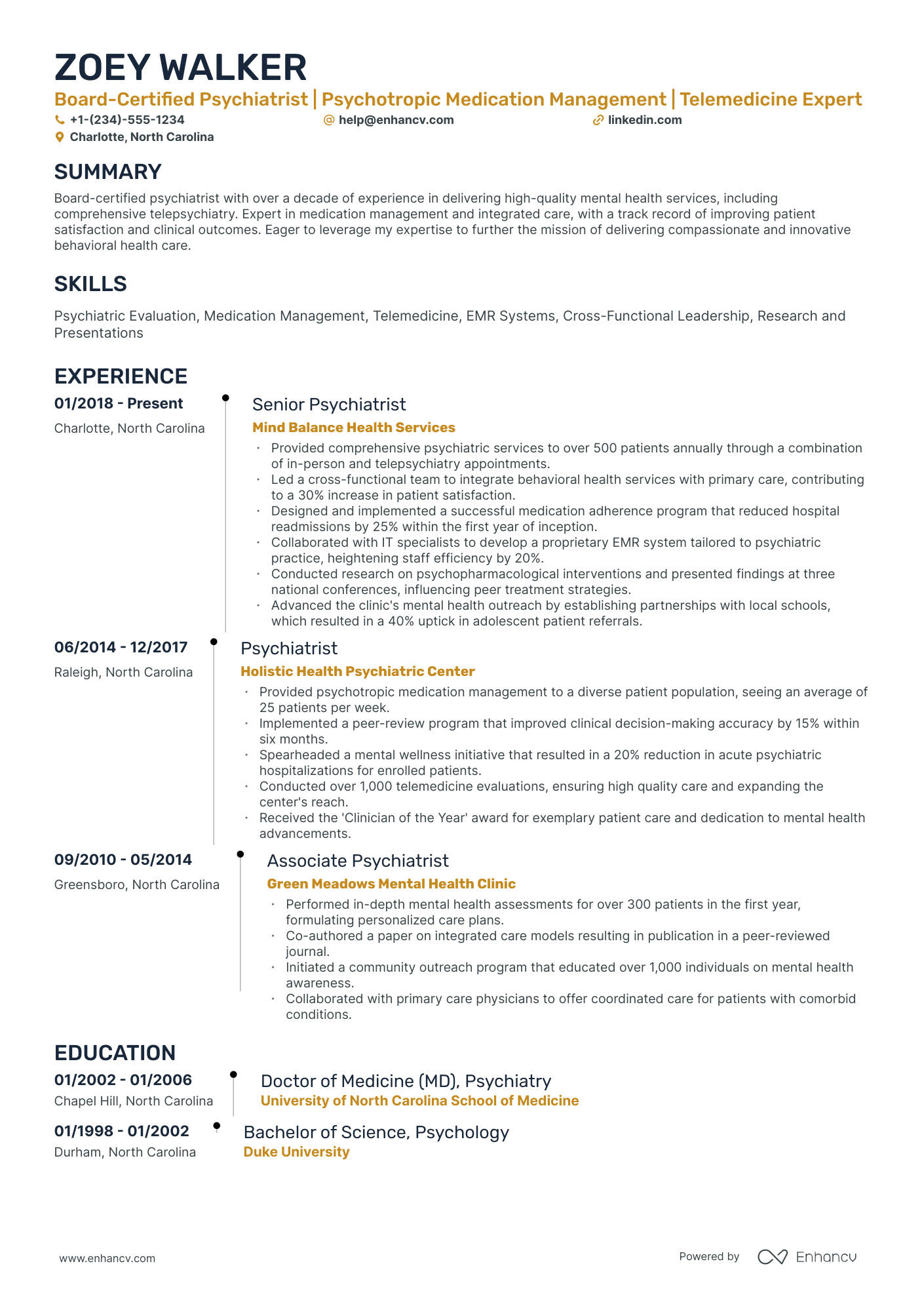
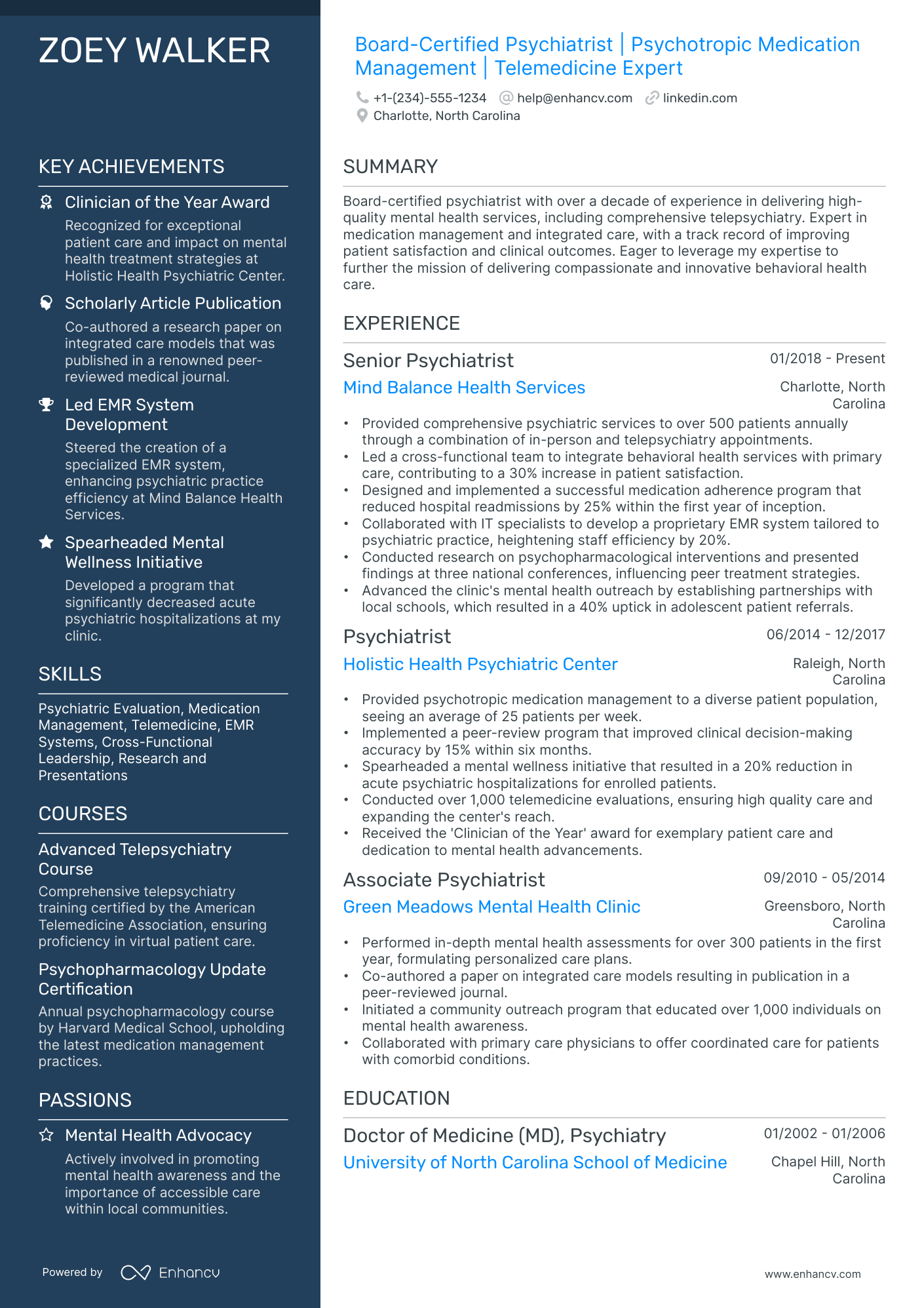
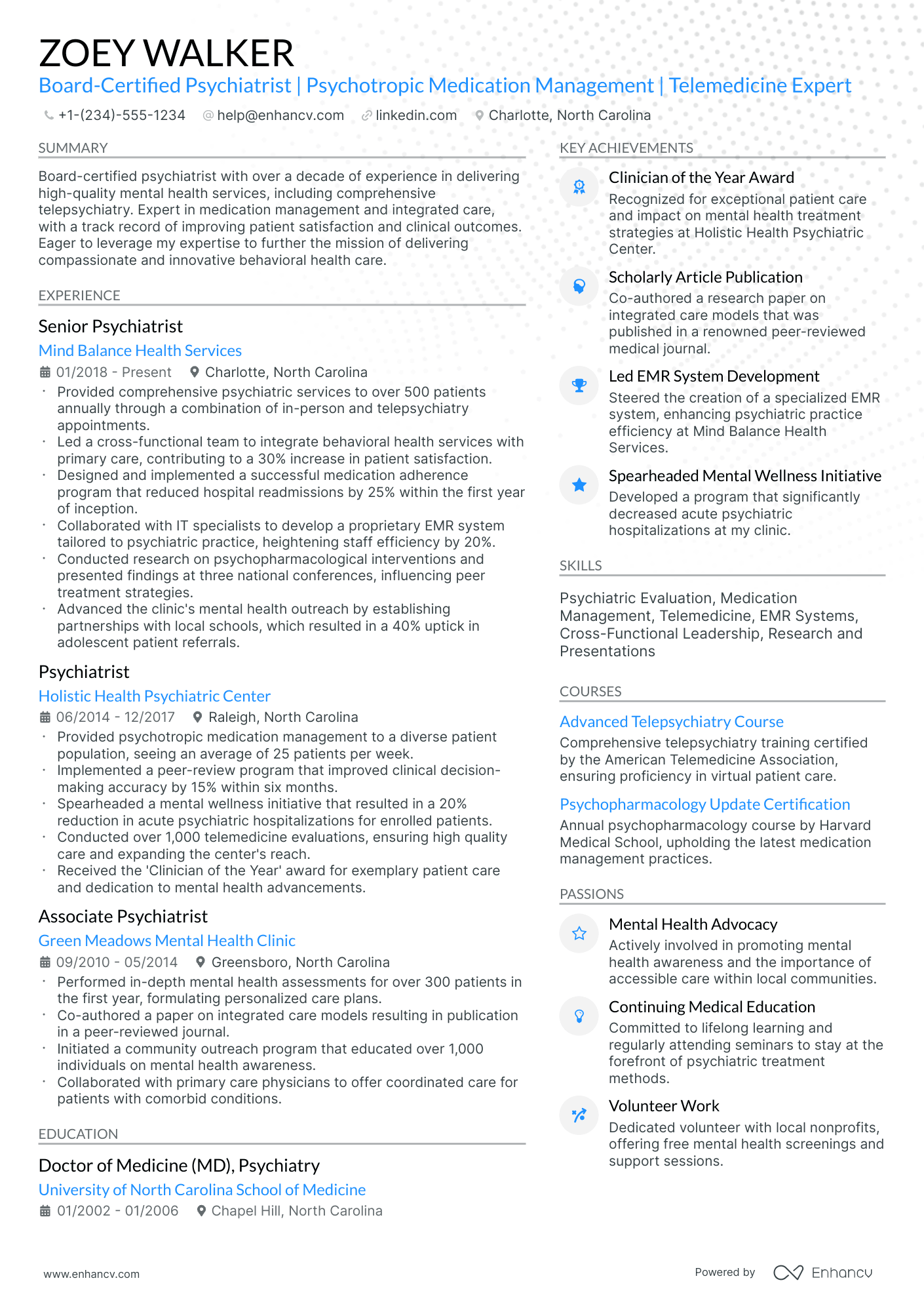
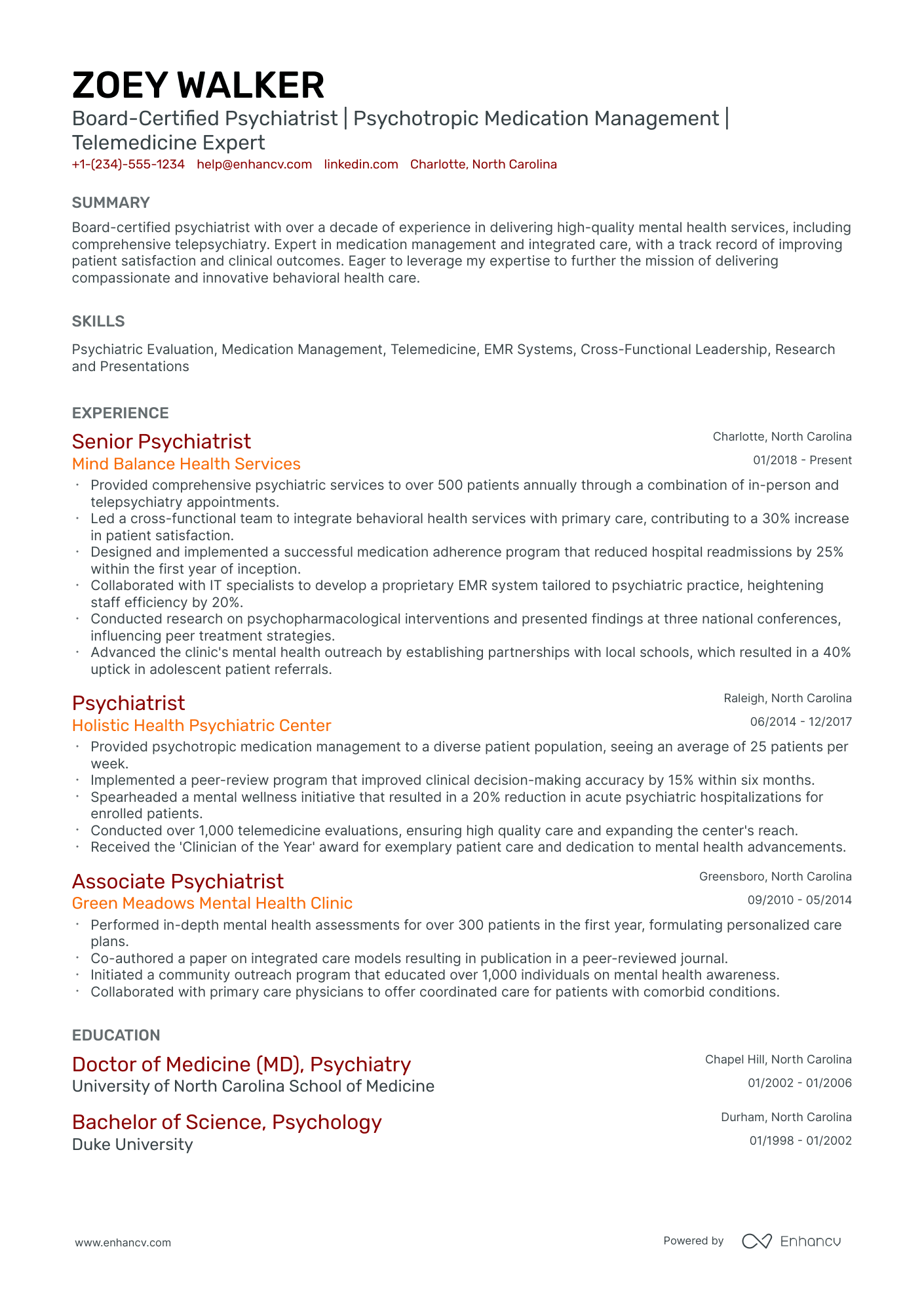
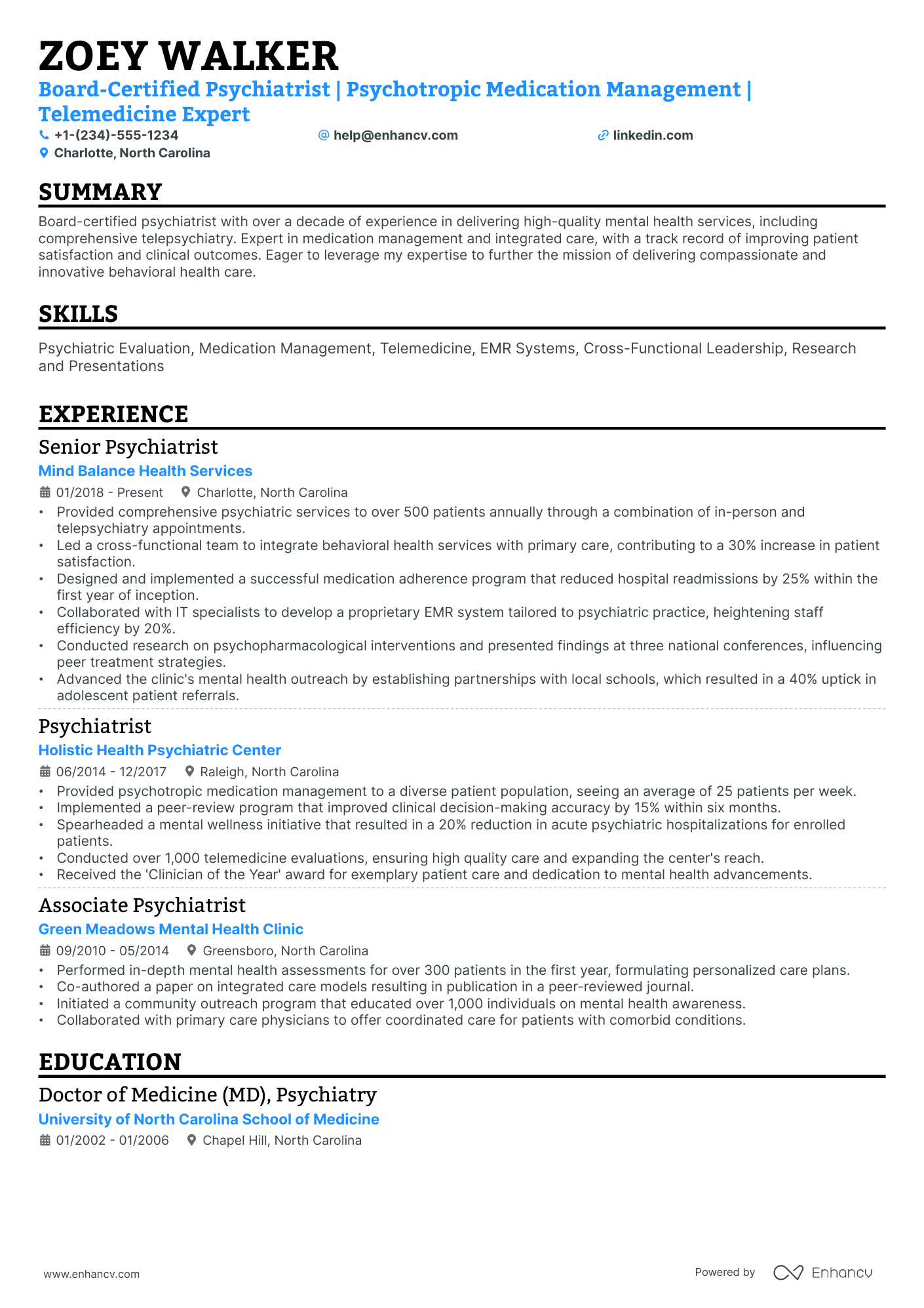
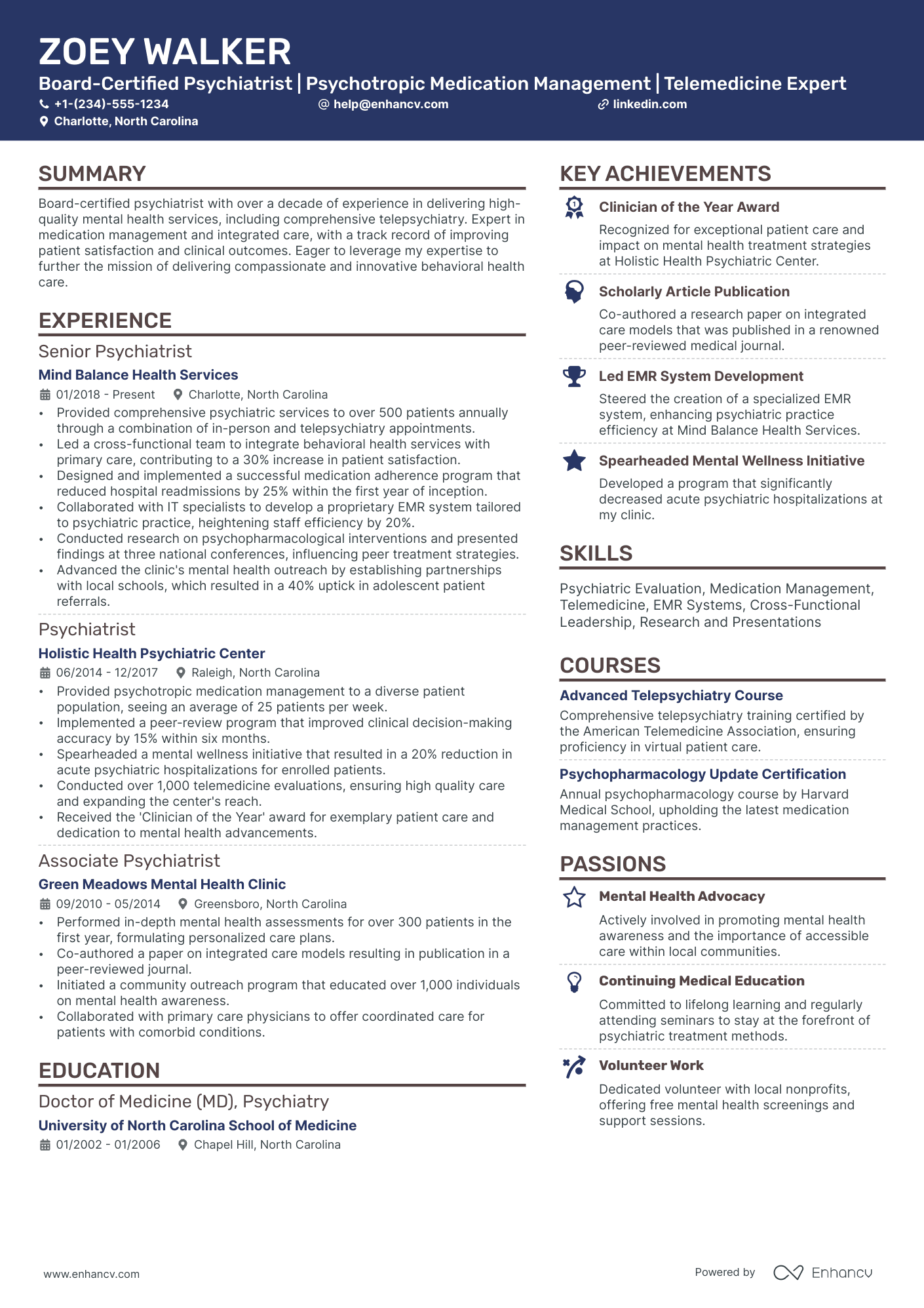
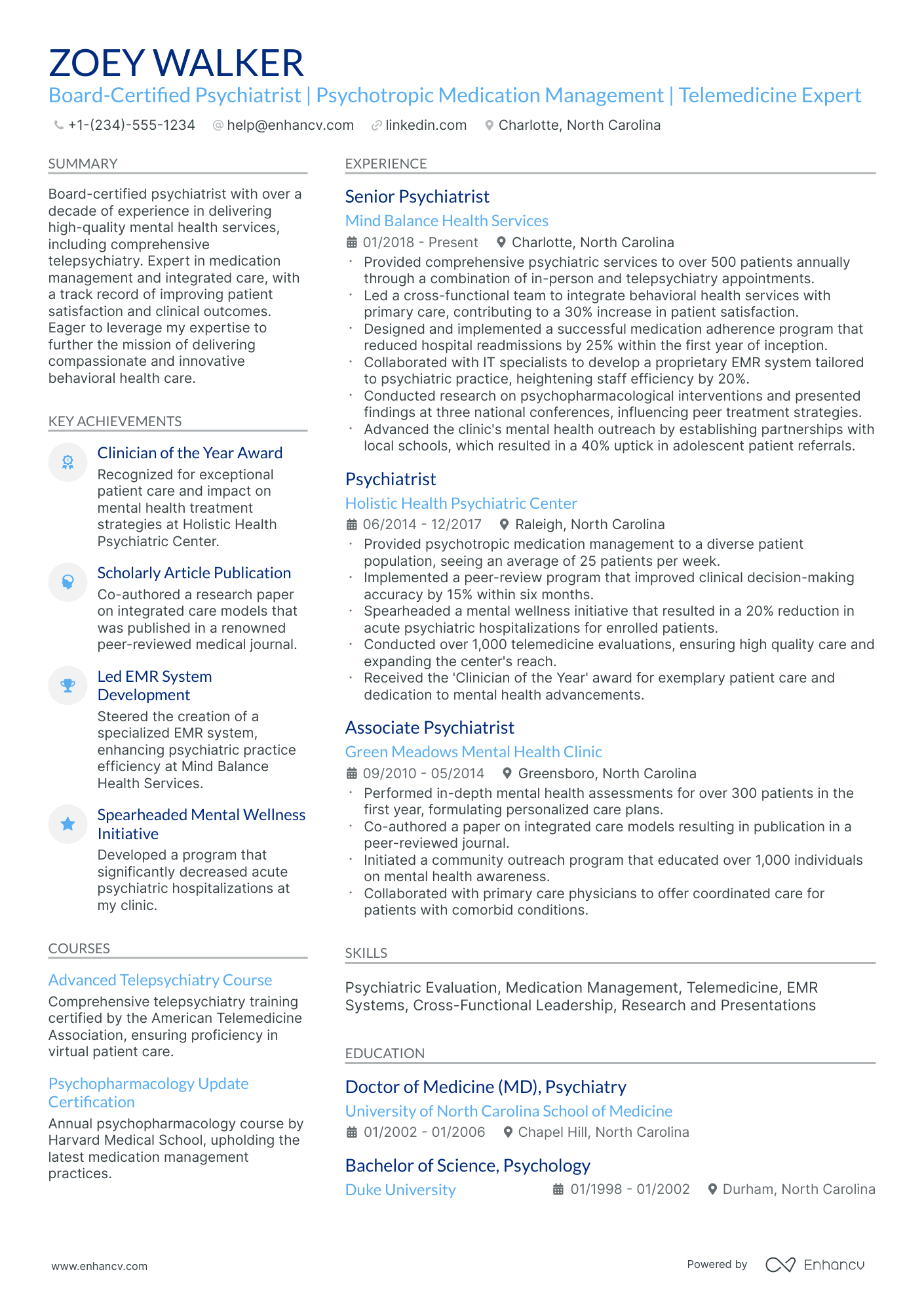
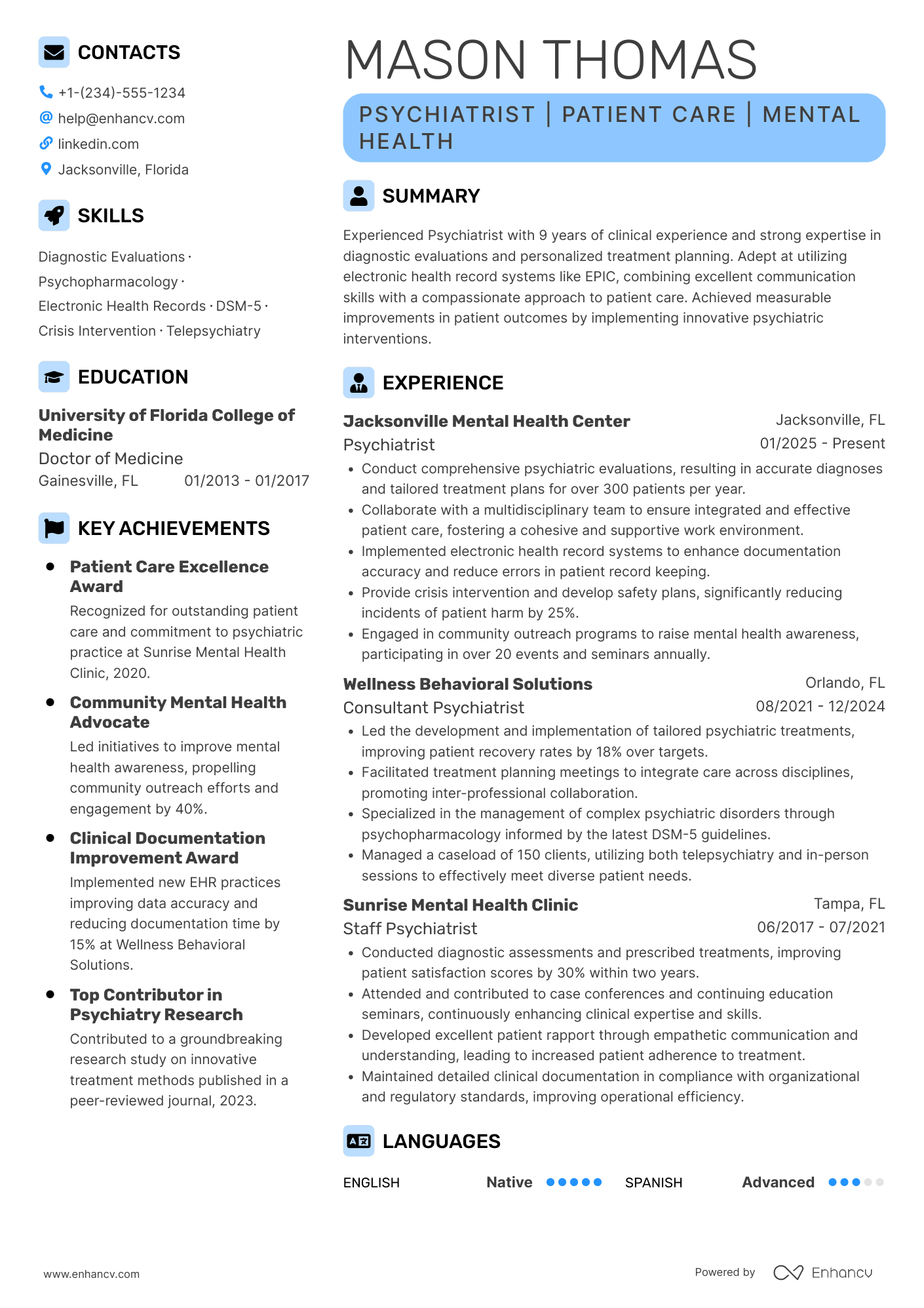
Many psychiatrist resumes fail because they read like clinical job descriptions and bury measurable impact. That hurts during psychiatrist resume screening, where applicant tracking systems filter keywords and recruiters scan fast in a crowded field.
Once the resume backs the measurable clinical impact, pair it with a matching psychiatrist cover letter so the medical director reading both pages gets the practice philosophy behind the readmission and adherence numbers.
A strong resume shows what changed because of your work. Learning how to make your resume stand out starts with highlighting reduced readmissions, shorter time to stabilization, higher follow-up adherence, improved symptom scores, and safe caseload growth across inpatient and outpatient settings. Quantify consult volume, turnaround time, and quality outcomes.

Key takeaways
- Quantify clinical outcomes like readmission rates, symptom scores, and follow-up adherence in every experience bullet.
- Use reverse-chronological format for experienced psychiatrists and hybrid format for career changers or juniors.
- Tailor each resume to the job posting by mirroring its diagnostic tools, treatment modalities, and terminology.
- Anchor skills to measurable results in your summary and experience sections, not just a standalone list.
- Place certifications above or below education based on their relevance to the target psychiatrist role.
- Use Enhancv's tools to turn routine clinical tasks into concise, recruiter-ready achievement bullets.
- Write a cover letter when the posting is competitive or your background needs additional context.
Job market snapshot for psychiatrists
We analyzed 814 recent psychiatrist job ads across major US job boards. These numbers help you understand industry demand, employer expectations, top companies hiring at a glance.
What level of experience employers are looking for psychiatrists
| Years of Experience | Percentage found in job ads |
|---|---|
| 1–2 years | 1.5% (12) |
| 3–4 years | 1.8% (15) |
| 5–6 years | 1.5% (12) |
| 7–8 years | 0.1% (1) |
| 10+ years | 2.0% (16) |
| Not specified | 93.1% (758) |
Psychiatrist ads by area of specialization (industry)
| Industry (Area) | Percentage found in job ads |
|---|---|
| Healthcare | 43.7% (356) |
| Government | 42.5% (346) |
| Finance & Banking | 10.2% (83) |
| Education | 3.3% (27) |
Top companies hiring psychiatrists
| Company | Percentage found in job ads |
|---|---|
| Department of Veterans Affairs | 17.2% (140) |
| LifeStance Health | 13.0% (106) |
| State of California | 11.7% (95) |
| State of Virginia | 4.9% (40) |
| SonderMind Inc. | 4.2% (34) |
| State of New York | 3.9% (32) |
| Acadia Healthcare Inc. | 2.5% (20) |
| CoreCivic | 1.7% (14) |
| Universal Health Services | 1.6% (13) |
| NaphCare | 1.2% (10) |
Role overview stats
These tables show the most common responsibilities and employment types for psychiatrist roles. Use them to align your resume with what employers expect and to understand how the role is structured across the market.
Day-to-day activities and top responsibilities for a psychiatrist
| Responsibility | Percentage found in job ads |
|---|---|
| Psychiatry | 24.0% (195) |
| Psychotherapy | 9.2% (75) |
| Medication management | 8.0% (65) |
| Clinical documentation | 5.3% (43) |
| Ehr | 5.0% (41) |
| Crisis intervention | 4.5% (37) |
| Treatment planning | 4.2% (34) |
| Dea registration | 4.1% (33) |
| Supervision | 4.1% (33) |
| Cerner | 3.9% (32) |
| Telemedicine | 3.8% (31) |
| Psychopharmacologic management | 3.7% (30) |
Type of employment (remote vs on-site vs hybrid)
| Employment type | Percentage found in job ads |
|---|---|
| On-site | 68.3% (556) |
| Hybrid | 28.3% (230) |
| Remote | 3.4% (28) |
How to format a psychiatrist resume
Recruiters evaluating psychiatrist resumes prioritize clinical expertise, board certifications, patient population experience, and evidence-based treatment outcomes. A clear, well-structured resume format ensures these credentials surface immediately, both for human reviewers and applicant tracking systems (ATS).

I have significant experience as a psychiatrist—which format should I use?
Use a reverse-chronological format to present your clinical career in a clear, progression-driven timeline that highlights growing responsibility and specialization. Do:
- Lead with your most recent role and emphasize scope: patient volume, supervisory duties, and departmental or programmatic oversight.
- Feature core competencies such as psychopharmacology, diagnostic evaluation (DSM-5-TR), specific therapeutic modalities, and EHR platforms like Epic or Cerner.
- Quantify clinical and operational outcomes wherever possible, including treatment efficacy, patient retention, or cost-reduction contributions.
I'm junior or switching into psychiatry—what format works best?
A hybrid format works best, allowing you to spotlight relevant clinical skills and training at the top while still providing a chronological account of your experience. Do:
- Place a dedicated skills section near the top featuring psychiatric assessment techniques, pharmacotherapy knowledge, and relevant certifications (e.g., board eligibility, DEA license).
- Highlight rotations, residency work, research projects, or transitional clinical roles that demonstrate direct psychiatric patient care.
- Connect each experience entry to a measurable outcome or observable clinical contribution.
Why not use a functional resume?
A functional format strips away the clinical timeline recruiters rely on to verify your training progression, licensure milestones, and hands-on patient care experience—making it harder to assess your readiness for a psychiatrist role. Avoid a functional format unless you have a specific, unavoidable reason to deviate from a chronological or hybrid structure.
- A functional resume may be acceptable if you're transitioning into psychiatry from another medical specialty or re-entering clinical practice after a significant career gap, but only if you anchor every listed skill to a specific project, rotation, or patient care outcome rather than presenting skills in isolation.
Once your layout and formatting choices are in place, the next step is determining which sections to include so each one serves a clear purpose on your resume.
What sections should go on a psychiatrist resume
Recruiters expect to see clear evidence you can deliver safe, effective patient care and collaborate across clinical teams. Understanding what to put on a resume helps you prioritize the right content for psychiatric hiring managers.
Use this structure for maximum clarity:
- Header
- Summary
- Experience
- Skills
- Projects
- Education
- Certifications
- Optional sections: Publications, Research, Languages
Strong experience bullets should emphasize measurable patient outcomes, caseload scope, treatment approaches used, and improvements in safety, access, or care quality.
Is your resume good enough?
Drop your resume here or choose a file. PDF & DOCX only. Max 2MB file size.
Once you’ve organized the right resume components, focus next on writing your psychiatrist resume experience section to show how you’ve applied them in practice.
How to write your psychiatrist resume experience
Your work experience section should prove you've delivered meaningful clinical outcomes, applied evidence-based psychiatric methods, and improved patient care through measurable results. Hiring managers prioritize demonstrated impact—diagnostic accuracy, treatment efficacy, patient volume managed—over descriptive task lists that simply restate job duties.
Each entry should include:
- Job title
- Company and location (or remote)
- Dates of employment (month and year)
Three to five concise bullet points showing what you owned, how you executed, and what outcomes you delivered:
- Ownership scope: the patient populations, clinical programs, psychiatric units, or treatment protocols you were directly accountable for managing and advancing.
- Execution approach: the diagnostic frameworks, pharmacological strategies, therapeutic modalities, electronic health record systems, or clinical assessment tools you used to guide treatment decisions and deliver patient care.
- Value improved: changes to treatment adherence, diagnostic accuracy, patient stabilization rates, readmission frequency, care accessibility, or risk mitigation relevant to your psychiatric practice.
- Collaboration context: how you worked with multidisciplinary care teams, primary care physicians, psychologists, social workers, case managers, or external agencies to coordinate comprehensive treatment plans.
- Impact delivered: outcomes expressed through patient recovery benchmarks, program growth, reduced crisis interventions, or improved continuity of care rather than routine clinical activity.
Experience bullet formula
A psychiatrist experience example
✅ Right example - modern, quantified, specific.
Staff Psychiatrist
Riverside Community Health Network | Portland, OR
2021–Present
Integrated behavioral health network serving eight outpatient clinics and one inpatient unit focused on access, outcomes, and coordinated care.
- Led diagnostic evaluations and medication management for a panel of 320 patients using DSM-5-TR criteria, structured interviews (MINI), and Epic electronic health record workflows, improving PHQ-9 remission by 18% over twelve months.
- Implemented measurement-based care with PHQ-9, GAD-7, and Columbia-Suicide Severity Rating Scale in Epic SmartForms and dashboards, increasing documented outcome capture from 42% to 91% and reducing high-risk follow-up time from seventy-two hours to twenty-four hours.
- Collaborated with primary care physicians, therapists, and care managers to standardize stepped-care protocols and warm handoffs, cutting psychiatric referral wait time from twenty-six days to fourteen days across five clinics.
- Optimized psychopharmacology regimens using pharmacogenomic results (GeneSight), drug interaction checks (Lexicomp), and lithium/valproate monitoring pathways, reducing adverse medication events by 22% and emergency department psychiatric visits by 9%.
- Partnered with quality, compliance, and information technology teams to deploy telepsychiatry via Zoom for Healthcare and Doxy.me with e-prescribing (Surescripts), increasing kept-appointment rate by 12% and lowering no-shows by 19%.
Now that you've seen how a strong experience section comes together, let's look at how to adjust yours to match a specific job posting.
How to tailor your psychiatrist resume experience
Recruiters evaluate your psychiatrist resume through both human review and applicant tracking systems (ATS), so tailoring your resume to the job description is essential. Aligning your experience with the specific job posting ensures your clinical background directly reflects what each employer prioritizes.
Ways to tailor your psychiatrist experience:
- Match diagnostic tools and assessment instruments named in the posting.
- Mirror the exact treatment modalities or therapeutic frameworks referenced.
- Use the same terminology for electronic health record systems required.
- Reflect patient population demographics or specialty areas specified.
- Emphasize compliance with regulatory standards or accreditation bodies mentioned.
- Highlight collaborative care models or multidisciplinary workflows described.
- Include relevant metrics like patient caseload volume or outcome measures.
- Address quality improvement or evidence-based practice initiatives referenced.
Tailoring means aligning your genuine clinical achievements with stated job requirements rather than forcing unrelated keywords into your experience section.
Resume tailoring examples for psychiatrist
| Job description excerpt | Untailored | Tailored |
|---|---|---|
| Provide comprehensive psychiatric evaluations and medication management for adults with treatment-resistant depression using evidence-based protocols, including esketamine (Spravato) administration | Performed psychiatric assessments and prescribed medications for patients with various mental health conditions. | Conducted 15+ comprehensive psychiatric evaluations weekly for adults with treatment-resistant depression, administering and monitoring esketamine (Spravato) therapy under REMS protocol with a 72% patient response rate over 12 months. |
| Collaborate with a multidisciplinary team including psychologists, social workers, and primary care physicians to develop integrated treatment plans for patients with co-occurring substance use disorders using MAT (medication-assisted treatment) | Worked with other healthcare professionals to create treatment plans for patients. | Partnered with a 12-member multidisciplinary team—psychologists, LCSWs, and primary care physicians—to design integrated treatment plans for 80+ patients with co-occurring substance use disorders, prescribing and monitoring MAT options including buprenorphine and naltrexone. |
| Conduct forensic psychiatric evaluations for civil and criminal court proceedings, including competency-to-stand-trial assessments and involuntary commitment hearings, documenting findings in detailed medicolegal reports | Evaluated patients and wrote reports for legal purposes as needed. | Performed 40+ forensic psychiatric evaluations annually for civil and criminal proceedings, completing competency-to-stand-trial assessments and involuntary commitment evaluations while producing detailed medicolegal reports cited by three county court systems. |
Once you’ve aligned your experience with the role’s clinical focus and setting, quantify your achievements to show the impact of that work in measurable terms.
How to quantify your psychiatrist achievements
Quantifying your achievements shows clinical impact beyond duties. Focus on access, outcomes, safety, adherence, and throughput—like reduced wait times, symptom score improvements, fewer adverse events, better follow-up rates, and higher visit completion.
Quantifying examples for psychiatrist
| Metric | Example |
|---|---|
| Access time | "Cut new-patient wait time from 28 days to 12 days by adding a triage protocol and using telepsychiatry for medication follow-ups." |
| Clinical outcomes | "Improved average PHQ-9 scores by 6 points over 12 weeks across 85 patients using measurement-based care and treatment algorithms." |
| Safety risk | "Reduced high-risk medication interactions by 35% by standardizing reconciliation in the electronic health record and auditing monthly prescribing reports." |
| Follow-up adherence | "Raised seven-day post-discharge follow-up completion from 62% to 84% for 120 patients by implementing reminder calls and same-week slots." |
| Throughput volume | "Increased completed visits from 18 to 24 per week while maintaining 60-minute intakes by streamlining documentation with templates and dictation." |
Turn your everyday tasks into measurable, recruiter-ready resume bullets in seconds with Enhancv's Bullet Point Generator.
Once you've crafted strong bullet points to showcase your experience, the next step is ensuring your resume also highlights the right combination of hard and soft skills that psychiatric employers look for.
How to list your hard and soft skills on a psychiatrist resume
Skills matter because psychiatrists must deliver safe, evidence-based care and coordinate across teams; recruiters and an ATS (applicant tracking system) scan this section for role-fit keywords, and strong resumes balance clinical hard skills with job-relevant soft skills. psychiatrist roles require a blend of:
- Product strategy and discovery skills.
- Data, analytics, and experimentation skills.
- Delivery, execution, and go-to-market discipline.
- Soft skills.
Your skills section should be:
- Scannable (bullet-style grouping).
- Relevant to the job post.
- Backed by proof in experience bullets.
- Updated with current tools.
Place your skills section:
- Above experience if you're junior or switching careers.
- Below experience if you're mid/senior with strong achievements.

Hard skills
- Psychiatric diagnostic evaluation
- Mental status examination
- DSM-5-TR diagnosis
- Differential diagnosis
- Psychopharmacology, medication management
- Controlled substance prescribing, PDMP
- Suicide risk assessment, safety planning
- Involuntary hold criteria, commitment evaluations
- Evidence-based psychotherapy: CBT, DBT
- Trauma-informed care
- Electronic health records, e-prescribing
- CPT coding, documentation compliance
Soft skills
- Build therapeutic alliance quickly
- Deliver difficult diagnoses clearly
- De-escalate agitation and crises
- Use shared decision-making
- Set boundaries and expectations
- Coordinate care with multidisciplinary teams
- Consult primary care and specialists
- Communicate risk and safety plans
- Prioritize caseload and follow-ups
- Make timely decisions under uncertainty
- Document clinically sound rationales
- Maintain confidentiality and trust
How to show your psychiatrist skills in context
Skills shouldn't live only in a bulleted list on your resume. Explore common resume skills to see how psychiatrists present their competencies effectively.
They should be demonstrated in:
- Your summary (high-level professional identity)
- Your experience (proof through outcomes)
Here's how that looks in practice.
Summary example
Board-certified psychiatrist with 12 years treating complex mood and psychotic disorders. Skilled in CBT, psychopharmacology, and motivational interviewing. Reduced 30-day readmission rates by 22% through collaborative, evidence-based treatment planning across multidisciplinary teams.
- Reflects senior-level clinical expertise
- Names specific therapeutic tools and methods
- Quantifies a meaningful patient outcome
- Highlights collaboration as a soft skill
Experience example
Senior Staff Psychiatrist
Lakeview Behavioral Health | Portland, OR
March 2018–Present
- Managed a caseload of 85+ patients using psychopharmacology and CBT, improving symptom remission rates by 31% over two years.
- Partnered with social workers and primary care physicians to build integrated care plans, cutting emergency psychiatric visits by 19%.
- Implemented structured PHQ-9 screening protocols across the outpatient clinic, increasing early depression detection by 27%.
- Every bullet includes a measurable outcome.
- Skills appear naturally within real achievements.
Once you’ve tied your clinical strengths to real outcomes and responsibilities, the next step is to apply that same approach to building a psychiatrist resume with no experience so your capabilities still come through clearly.
How do I write a psychiatrist resume with no experience
How do I write a psychiatrist resume with no experience? Even without full-time experience, you can demonstrate readiness through clinical training and academic work. Our guide on writing a resume without work experience covers foundational strategies that apply directly to early-career psychiatrists.
- Psychiatry residency rotations
- Supervised outpatient clinic sessions
- Inpatient psychiatric unit shadowing
- Telepsychiatry supervised consultations
- Case presentations at grand rounds
- Quality improvement chart audits
- Research poster or manuscript
- Crisis intervention hotline shifts
Focus on:
- Patient volumes and settings handled
- Diagnostic assessments and documentation
- Evidence-based treatment planning
- Research output and quality metrics
Resume format tip for entry-level psychiatrist
Use a reverse-chronological resume to spotlight recent clinical rotations, supervised care, and research that match the psychiatrist role. Do:
- Lead with education, licensure status, and training.
- Turn rotations into quantified experience bullets.
- List assessment tools and documentation systems used.
- Include evidence-based therapies and prescribing exposure.
- Add research, posters, and quality metrics.
- Completed quality improvement chart audits on fifty inpatient cases, improving Columbia Suicide Severity Rating Scale documentation from sixty-two percent to ninety-one percent in four weeks.
Even without hands-on experience, your academic background can demonstrate the clinical knowledge and training employers look for—making your education section one of the most important parts of your resume.
How to list your education on a psychiatrist resume
Your education section lets hiring teams confirm you hold the medical training psychiatrists need. It validates your foundational clinical knowledge and academic preparation for the role.
Include:
- Degree name
- Institution
- Location
- Graduation year
- Relevant coursework (for juniors or entry-level candidates)
- Honors & GPA (if 3.5 or higher)
Skip month and day details—list the graduation year only.
Here's a strong education entry tailored to a psychiatrist resume:
Example education entry
Doctor of Medicine (MD)
Johns Hopkins University School of Medicine, Baltimore, MD
Graduated 2019
GPA: 3.8/4.0
- Relevant Coursework: Clinical Neuroscience, Psychopharmacology, Behavioral Health Assessment, Addiction Medicine
- Honors: Alpha Omega Alpha Honor Medical Society, Dean's List (all semesters)
How to list your certifications on a psychiatrist resume
Certifications on a resume show a psychiatrist's commitment to ongoing learning, proficiency with clinical tools, and alignment with current standards across mental health care.
Include:
- Certificate name
- Issuing organization
- Year
- Optional: credential ID or URL
- List certifications below education when your degree and residency are recent, and certifications add secondary support rather than core qualification.
- List certifications above education when they are highly relevant, recently earned, or required for your target psychiatrist role and clinical focus.
Best certifications for your psychiatrist resume
- American Board of Psychiatry and Neurology (ABPN) Board Certification in Psychiatry
- American Board of Psychiatry and Neurology (ABPN) Subspecialty Certification in Child and Adolescent Psychiatry
- American Board of Psychiatry and Neurology (ABPN) Subspecialty Certification in Addiction Psychiatry
- American Board of Psychiatry and Neurology (ABPN) Subspecialty Certification in Geriatric Psychiatry
- American Board of Psychiatry and Neurology (ABPN) Subspecialty Certification in Consultation-Liaison Psychiatry
- American Board of Psychiatry and Neurology (ABPN) Subspecialty Certification in Forensic Psychiatry
- American Board of Psychiatry and Neurology (ABPN) Subspecialty Certification in Sleep Medicine
Once you’ve placed your credentials where hiring teams can verify them quickly, shift to your psychiatrist resume summary to highlight the value those qualifications bring at a glance.
How to write your psychiatrist resume summary
Your resume summary is the first thing a recruiter reads. A strong one instantly positions you as a qualified psychiatrist worth interviewing.
Keep it to three to four lines, with:
- Your title and total years of clinical psychiatry experience.
- Practice setting or specialty area, such as inpatient, outpatient, or addiction psychiatry.
- Core competencies like psychopharmacology, diagnostic evaluation, or CBT.
- One or two measurable achievements, such as patient outcomes or caseload volume.
- Interpersonal strengths tied to results, like collaborative care coordination or patient engagement.

PRO TIP
As a psychiatrist, focus on clinical skills, relevant certifications, and early patient care contributions. Highlight specific treatment modalities you've used and measurable outcomes. Avoid vague phrases like "passionate about helping people" or "dedicated professional." Recruiters want concrete evidence of your clinical competence.
Example summary for a psychiatrist
Licensed psychiatrist with three years of experience in outpatient adult care. Skilled in psychopharmacology and CBT, managing 60+ patients monthly. Improved treatment adherence rates by 22% through structured follow-up protocols.
Optimize your resume summary and objective for ATS
Drop your resume here or choose a file.
PDF & DOCX only. Max 2MB file size.
Now that your summary effectively communicates your clinical expertise and value, make sure your header presents the essential contact and credential details recruiters need to reach you.
What to include in a psychiatrist resume header
A resume header lists your key identifiers and contact details, helping your psychiatrist application stay visible, credible, and easy to screen quickly.
Essential resume header elements
- Full name
- Tailored job title and headline
- Location
- Phone number
- Professional email
- GitHub link
- Portfolio link
Including a LinkedIn link helps recruiters verify your experience quickly and supports screening.
Do not include photos on a psychiatrist resume unless the role is explicitly front-facing or appearance-dependent.
Match your header title to the psychiatrist job posting and keep every detail consistent with your licensing and work history.
Example
Psychiatrist resume header
Jordan Lee, MD
Psychiatrist | Adult Outpatient Psychiatry, Mood Disorders
Boston, MA
(617) 555-01XX
jordan.lee@enhancv.com
github.com/jordanlee
yourwebsite.com
linkedin.com/in/jordanlee
Once your name, credentials, and contact details are clearly presented at the top, add targeted additional sections to provide supporting context that reinforces your fit for the role.
Additional sections for psychiatrist resumes
Beyond core credentials, additional sections can highlight specialized expertise and personal strengths that set you apart from other psychiatrist candidates. For example, listing language skills on your resume can demonstrate your ability to serve diverse patient populations.
- Languages
- Publications and research
- Professional affiliations and memberships
- Conferences and presentations
- Hobbies and interests
- Volunteer experience
- Awards and honors
Once you've rounded out your resume with the right supplementary sections, it's worth turning your attention to the cover letter—a separate document that can reinforce and contextualize everything your resume presents.
Do psychiatrist resumes need a cover letter
A cover letter isn't required for most psychiatrist roles, but it helps in competitive postings or systems with strict hiring expectations. If you're unsure where to start, understanding what a cover letter is and how it complements your resume can clarify its value. It can make a difference when your resume needs context or when the team wants clear fit.
Use a cover letter to add details your resume can't show:
- Explain role and team fit: Match your clinical focus to the setting, patient population, and care model.
- Highlight one or two relevant outcomes: Summarize a quality improvement project, access initiative, or measurable treatment program impact.
- Show context awareness: Reference the organization's service lines, referral patterns, and documentation or compliance needs.
- Address transitions or non-obvious experience: Connect research, leadership, telepsychiatry, or a specialty shift to the psychiatrist role.
Drop your resume here or choose a file.
PDF & DOCX only. Max 2MB file size.
Whether you include a cover letter depends on the role and employer expectations, and the next section shows how AI can help you strengthen your psychiatrist resume efficiently.
Using AI to improve your psychiatrist resume
AI can sharpen your resume's clarity, structure, and impact. It helps tighten language and highlight measurable results. But overuse strips authenticity fast. If you're exploring this approach, our guide on ChatGPT resume writing prompts offers practical starting points. Once your content is clear and role-aligned, step away from AI entirely.
Here are 10 practical prompts to strengthen specific sections of your psychiatrist resume:
- Sharpen your summary: "Rewrite my psychiatrist resume summary to emphasize clinical specialties, patient population focus, and years of experience in under four sentences."
- Quantify patient outcomes: "Add measurable outcomes to these psychiatrist experience bullets, such as caseload size, symptom reduction rates, or treatment adherence improvements."
- Strengthen action verbs: "Replace weak or passive verbs in my psychiatrist experience section with strong, clinical action verbs like diagnosed, prescribed, or implemented."
- Tailor skills section: "Reorganize my psychiatrist skills section to prioritize competencies listed in this job description, removing irrelevant or redundant entries."
- Refine certification details: "Reformat my psychiatrist certifications section for consistency, including board certification name, issuing body, and active status dates."
- Clarify treatment approaches: "Rewrite these psychiatrist experience bullets to clearly specify therapeutic modalities used, such as CBT, DBT, or psychopharmacology protocols."
- Improve education formatting: "Standardize my psychiatrist education section to list degree, institution, residency program, and fellowship details in reverse chronological order."
- Highlight leadership experience: "Identify and strengthen any leadership contributions in my psychiatrist resume, including supervision of residents, program development, or committee roles."
- Tighten project descriptions: "Condense my psychiatrist research and quality improvement project descriptions to focus on objectives, methods, and measurable clinical impact."
- Remove redundant content: "Flag repetitive or vague phrases across my psychiatrist resume and suggest concise, specific replacements grounded in clinical language."
Stop using AI once your resume sounds accurate, specific, and aligned with real experience. AI should never invent experience or inflate claims—if it didn't happen, it doesn't belong here.
Conclusion
A strong psychiatrist resume shows measurable outcomes, role-specific skills, and a clear structure. It highlights patient volume, reduced readmissions, improved adherence, and timely documentation. It also reflects strong diagnostic judgment, medication management, risk assessment, and collaborative care.
Keep each section easy to scan, with consistent titles and focused bullets. This format shows readiness for today’s hiring process and near-future expectations. It helps employers quickly confirm your impact, clinical strengths, and fit for the role.