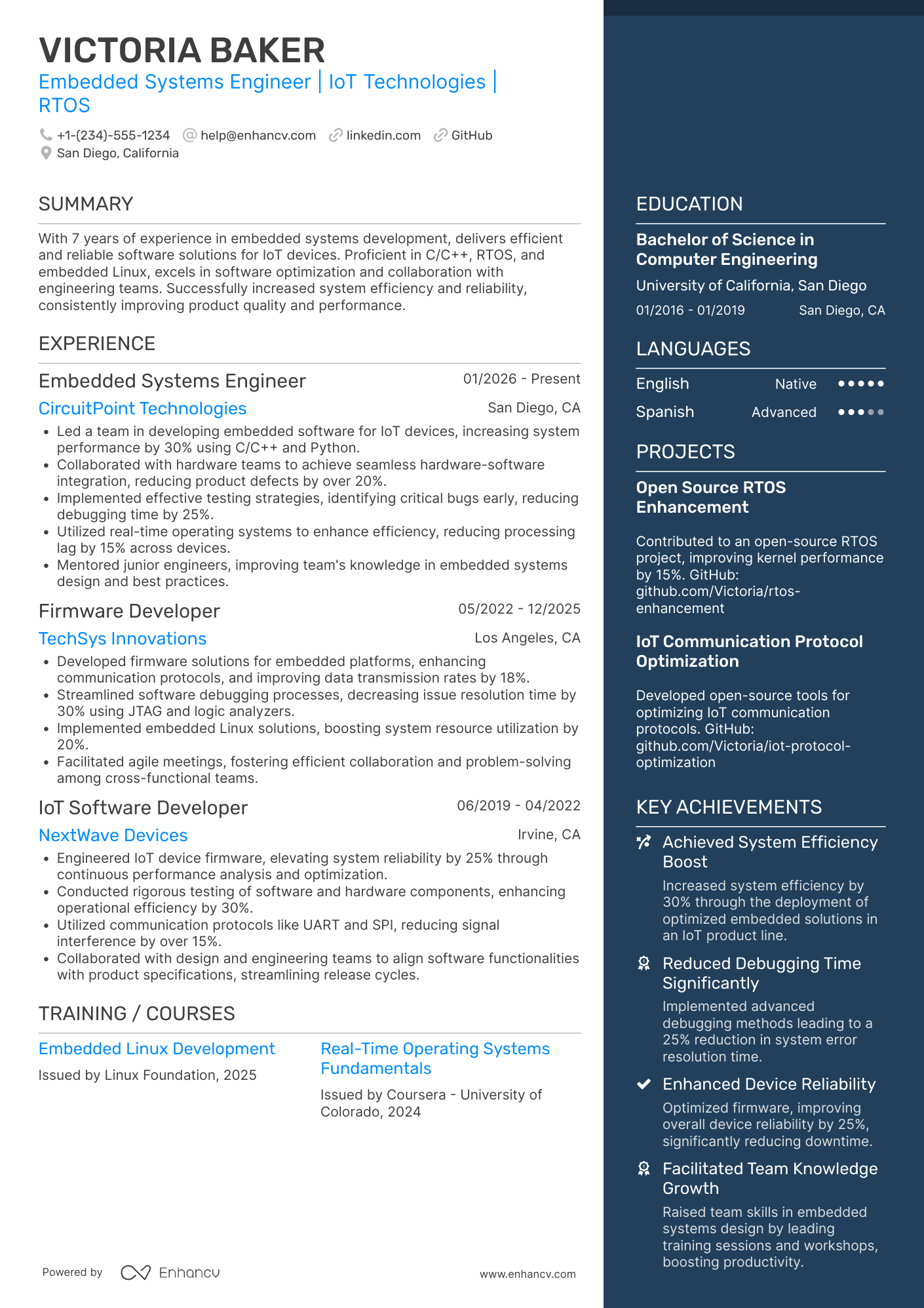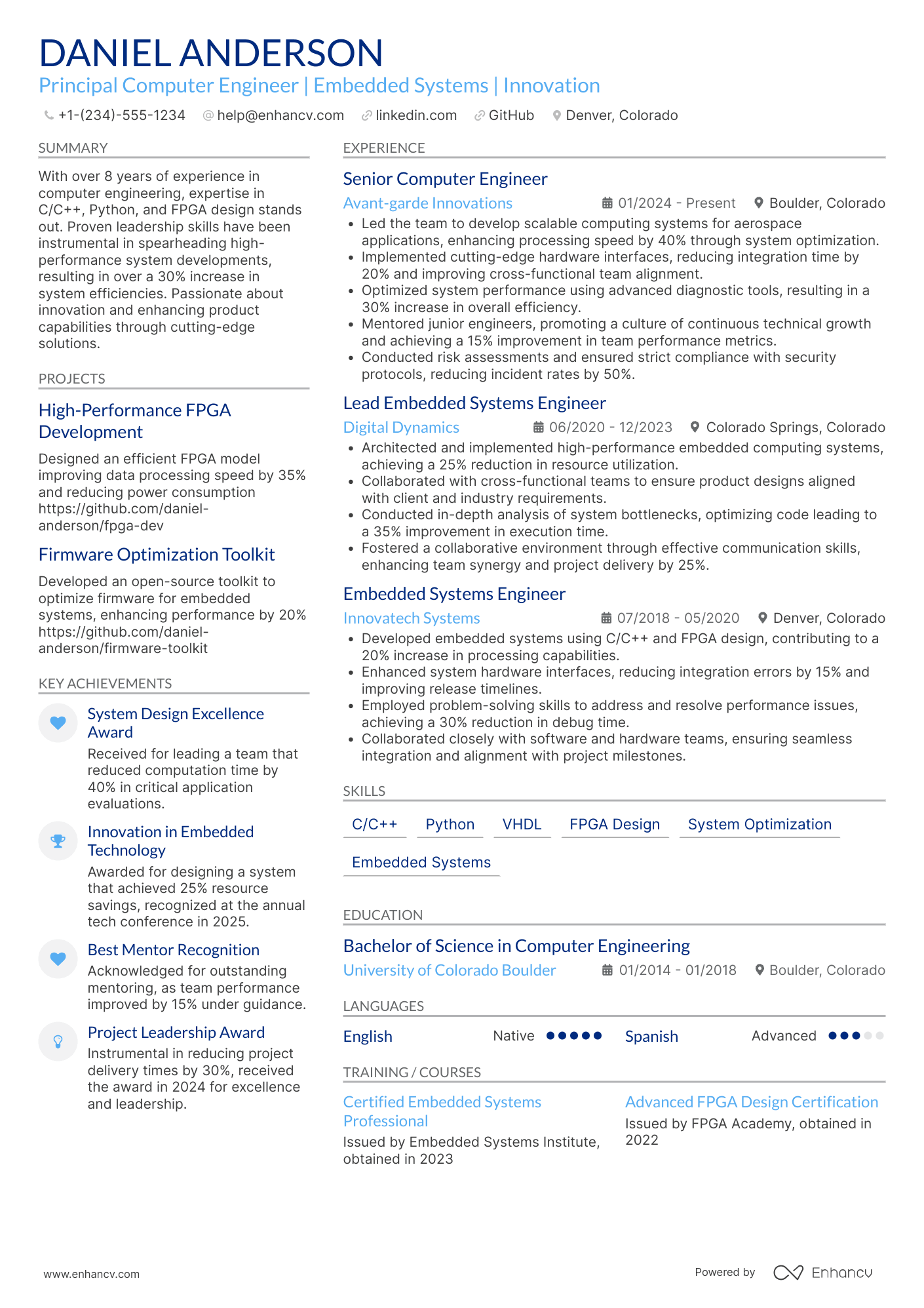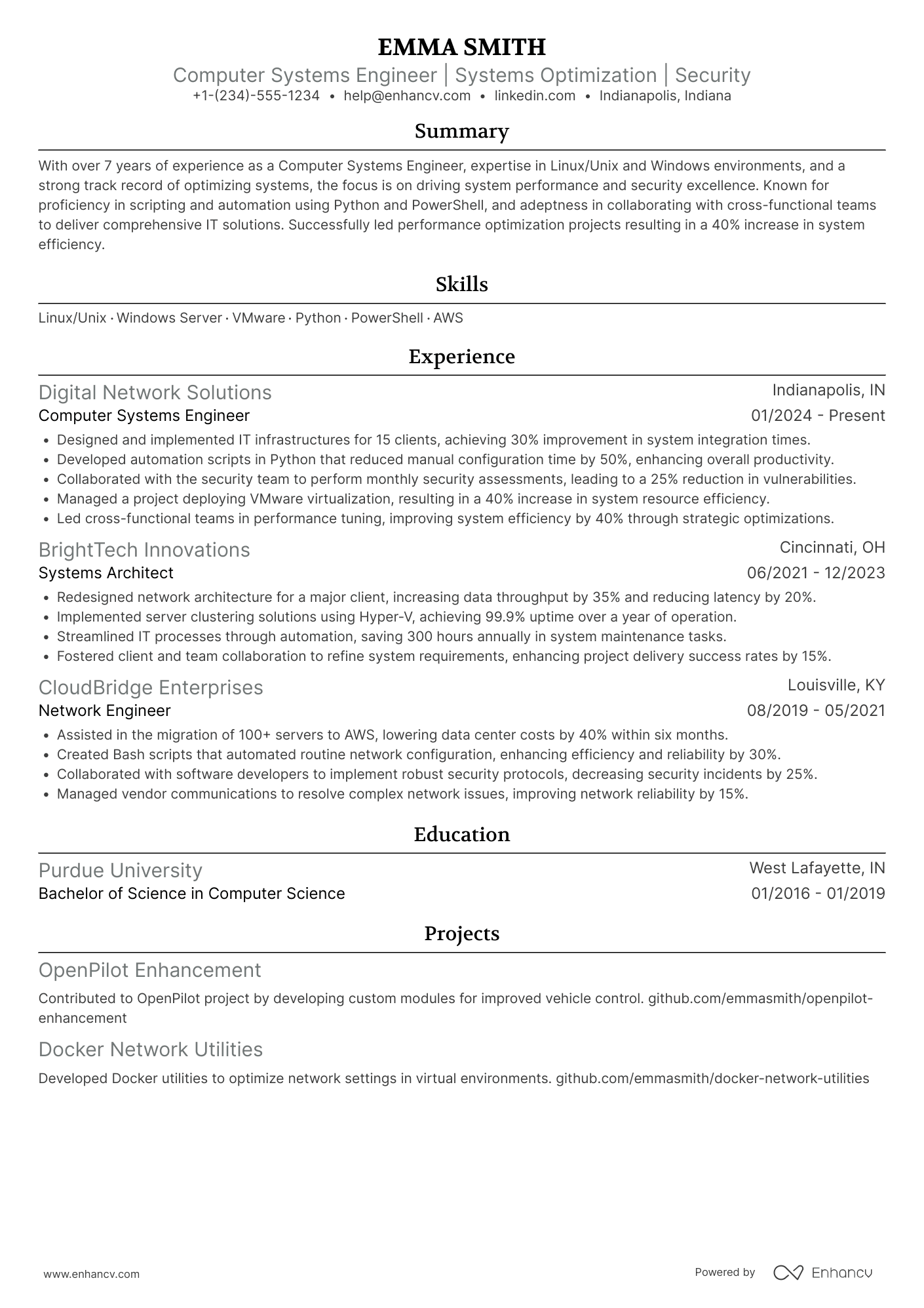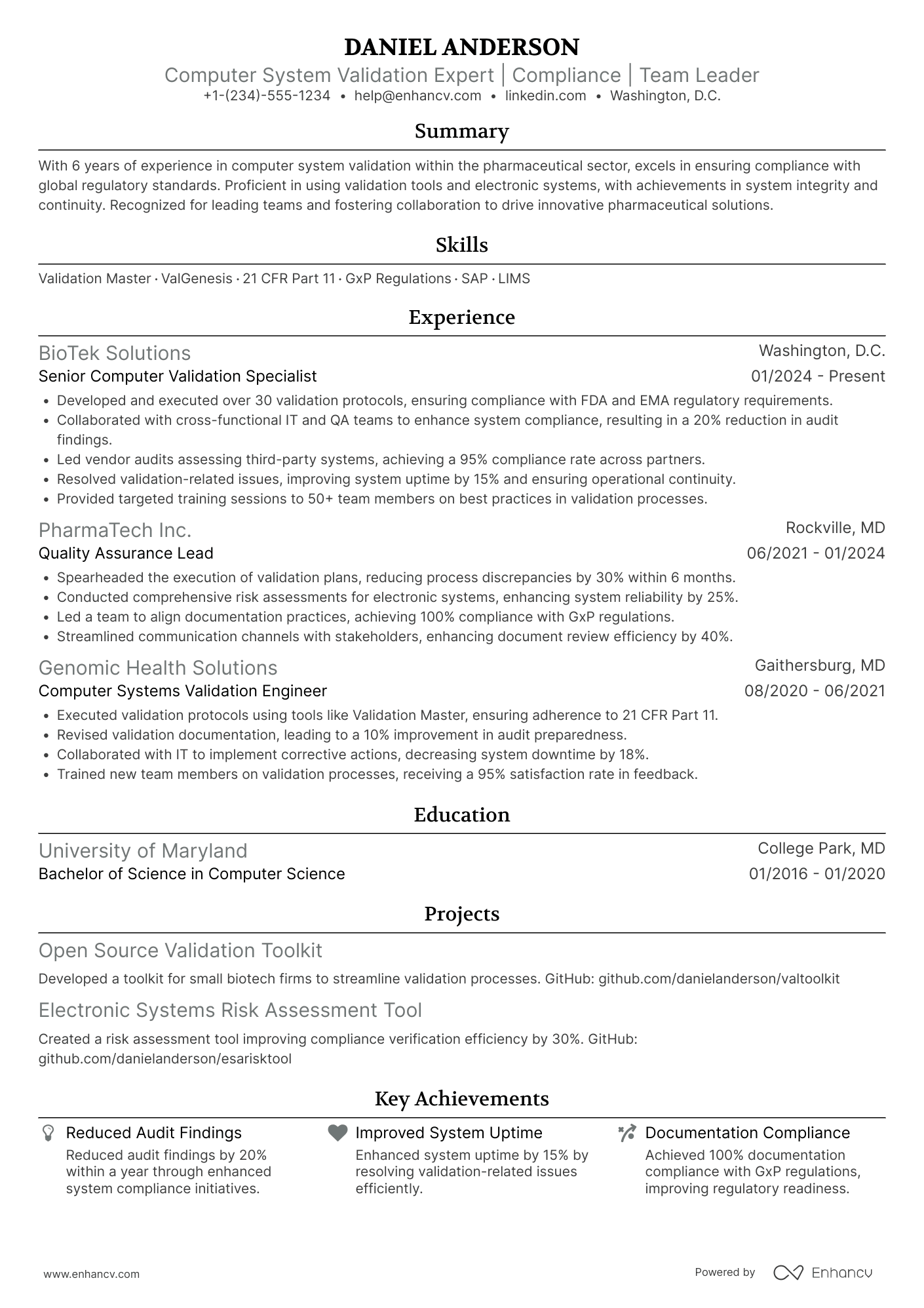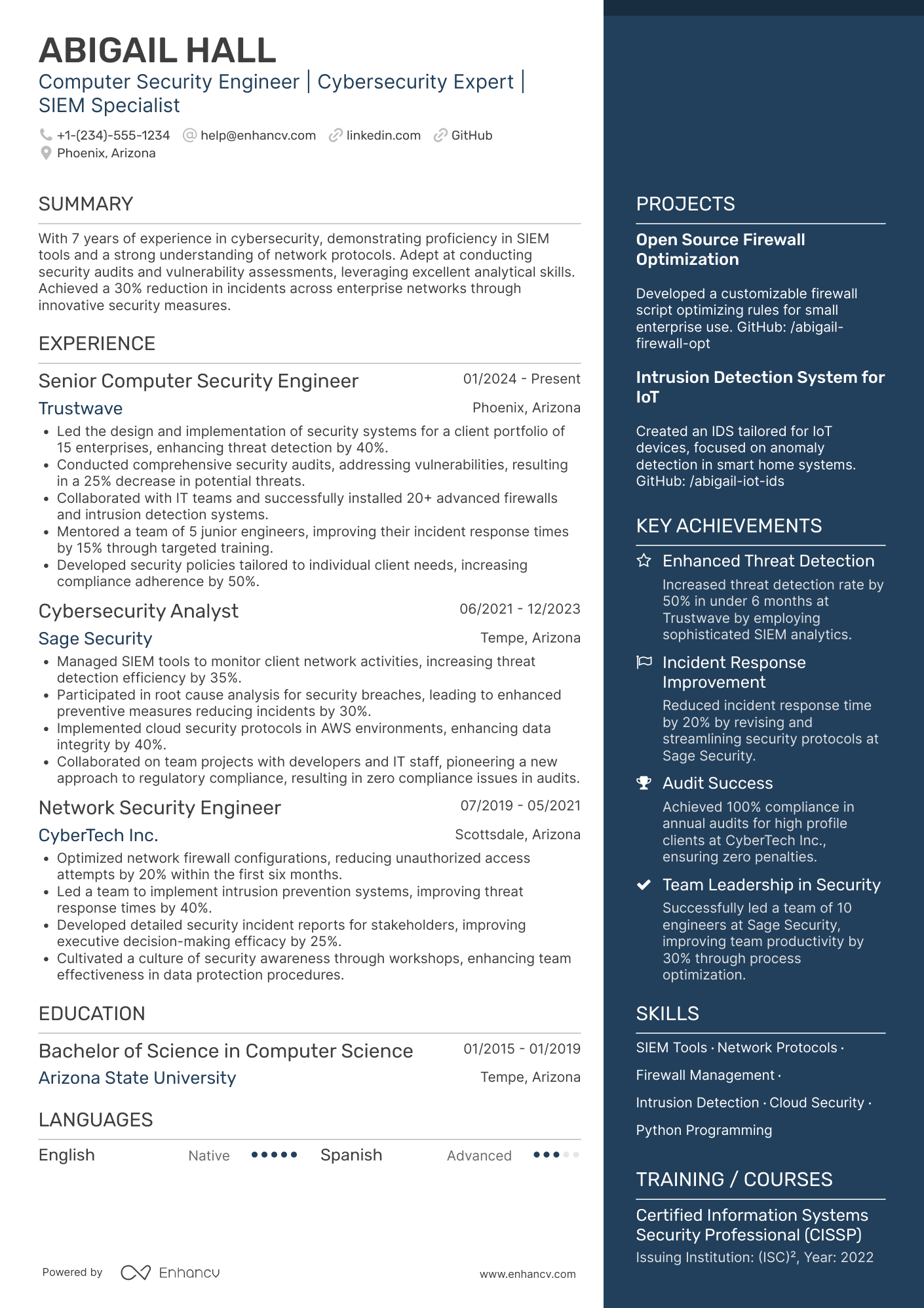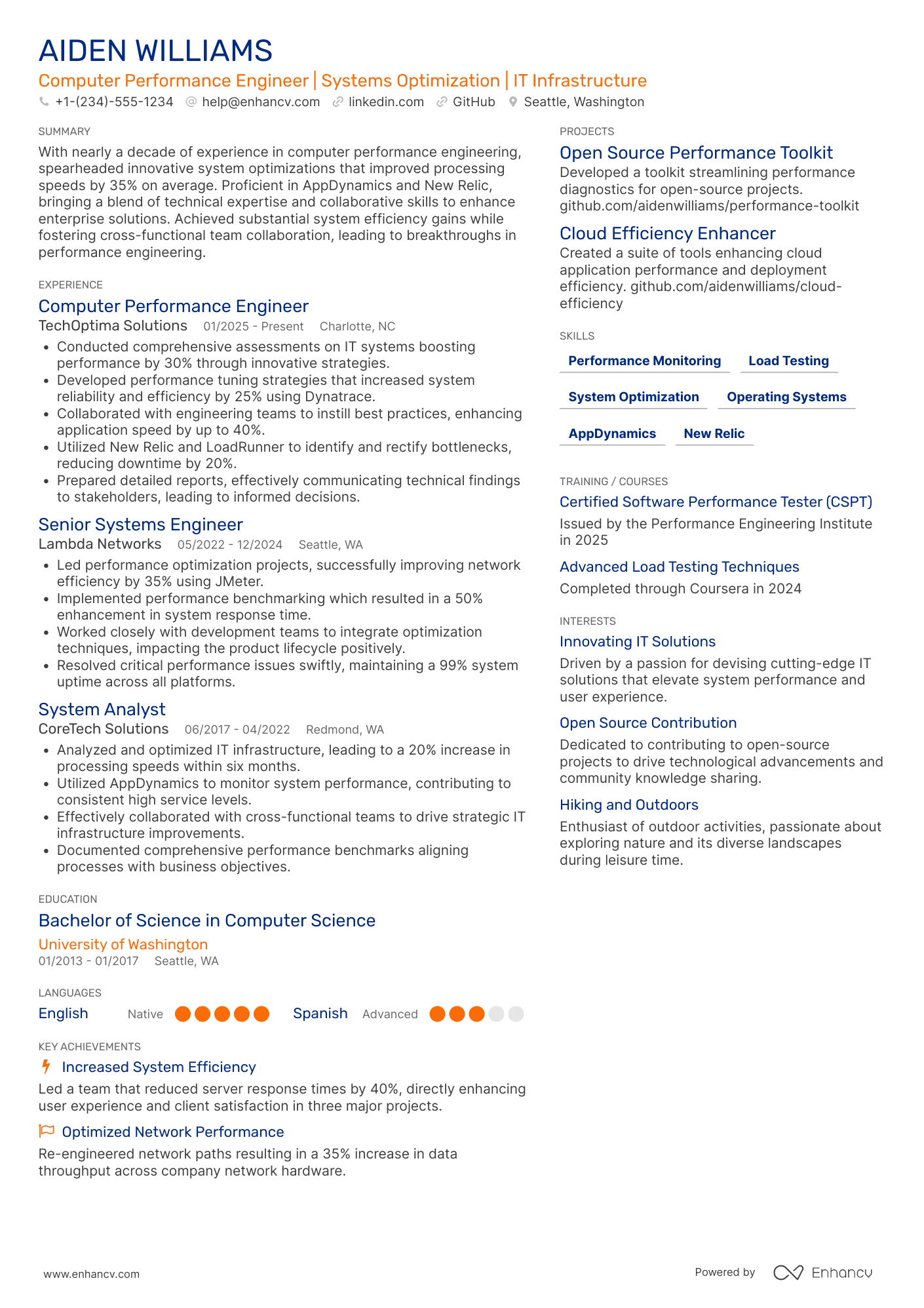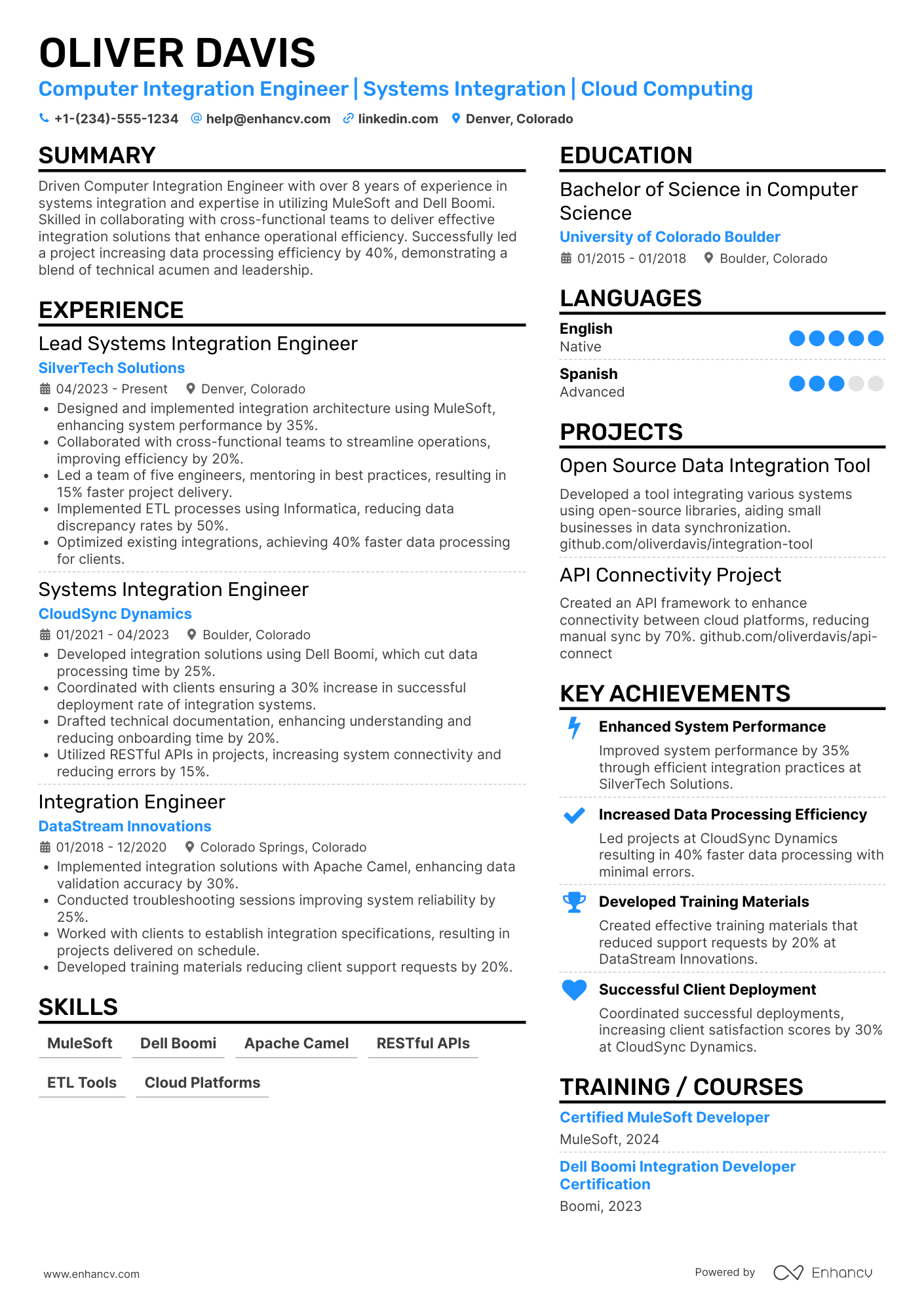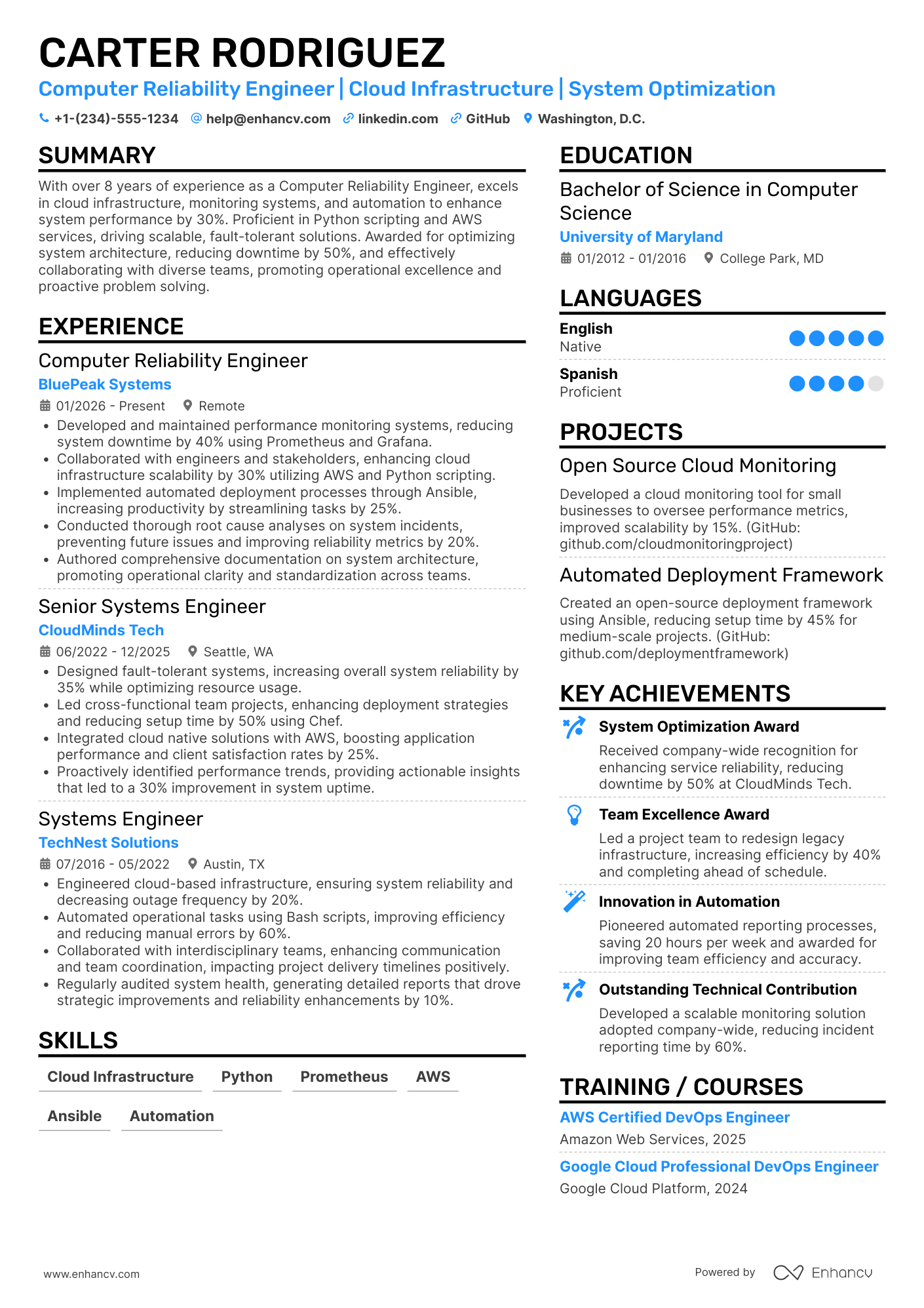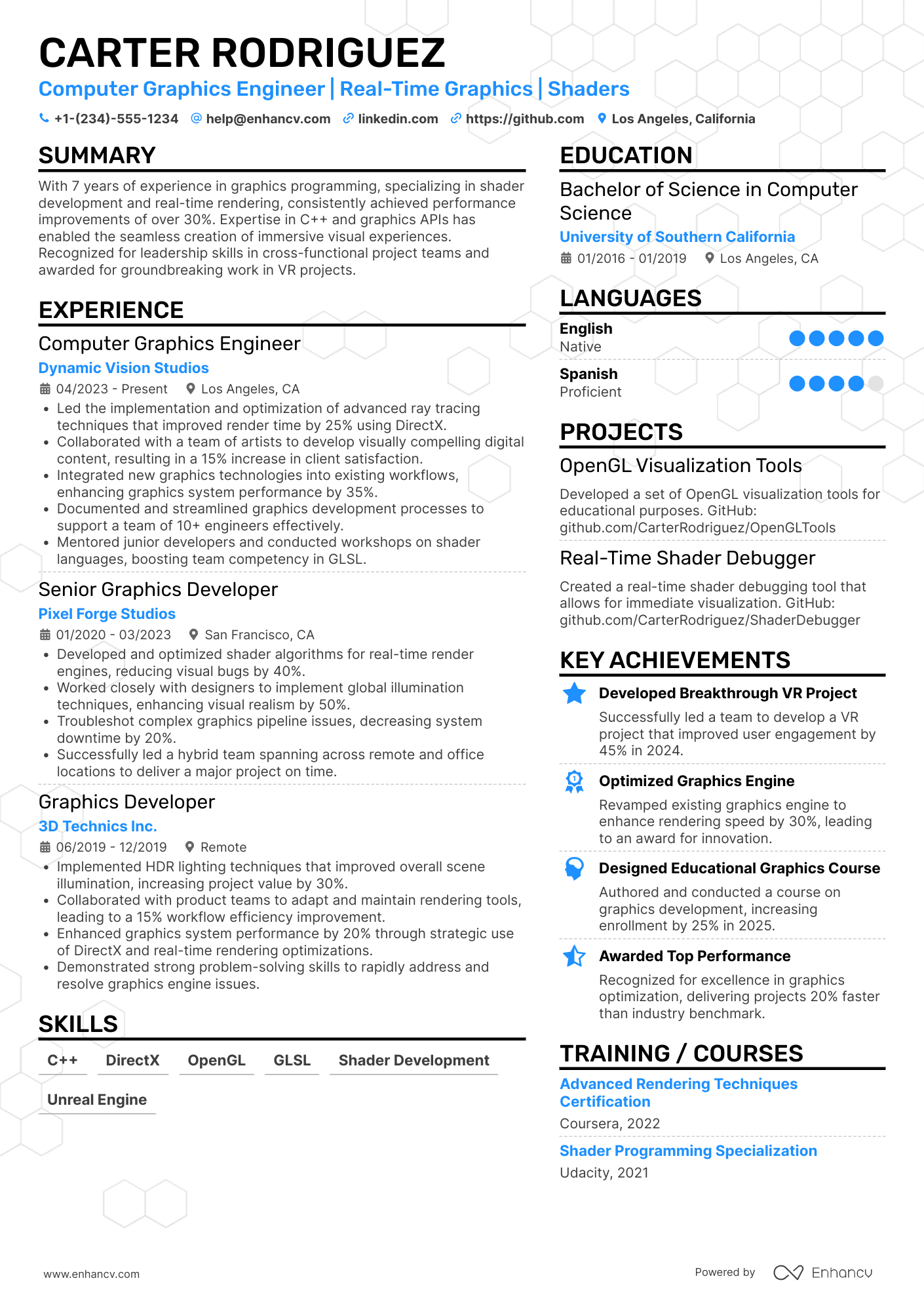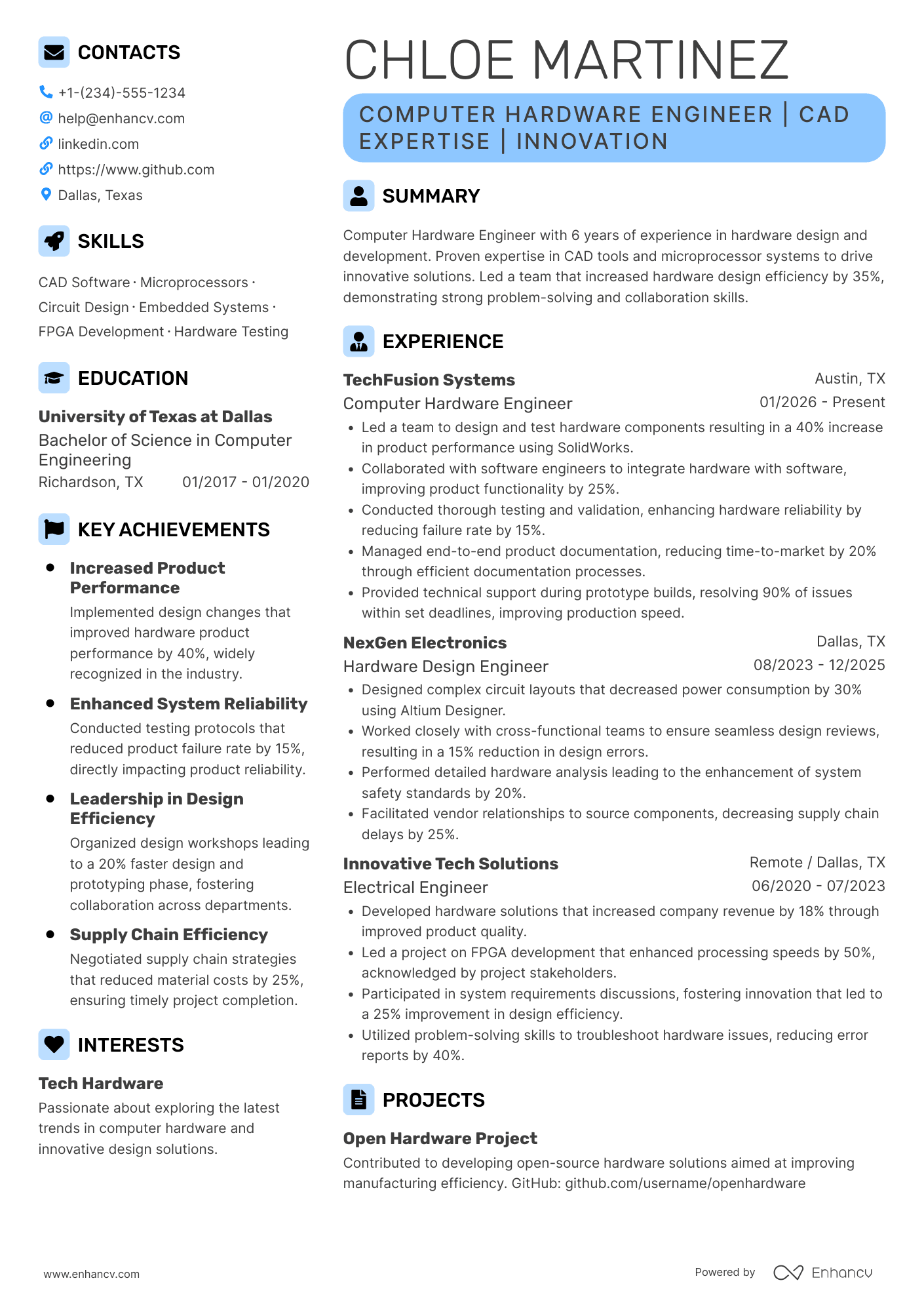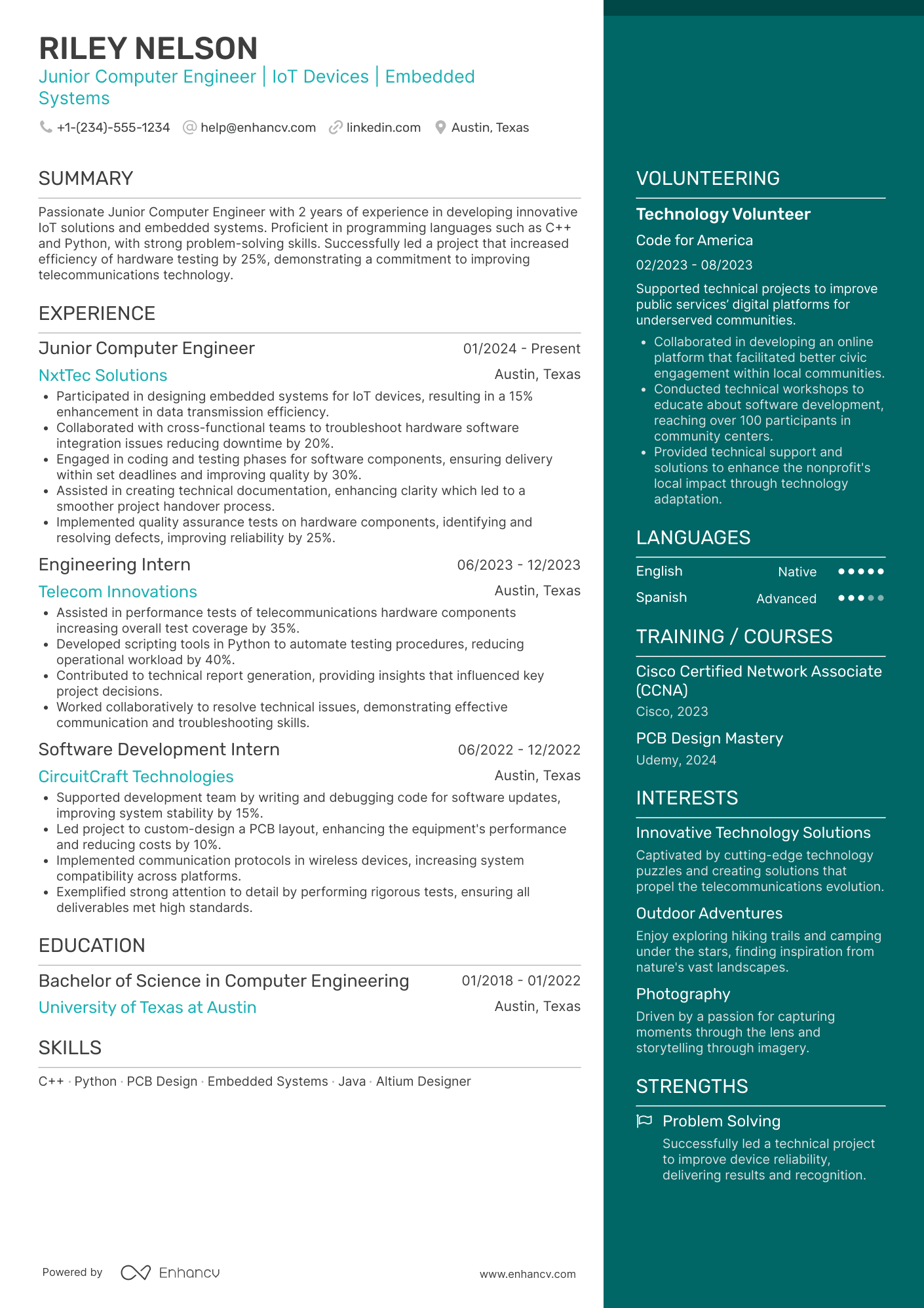
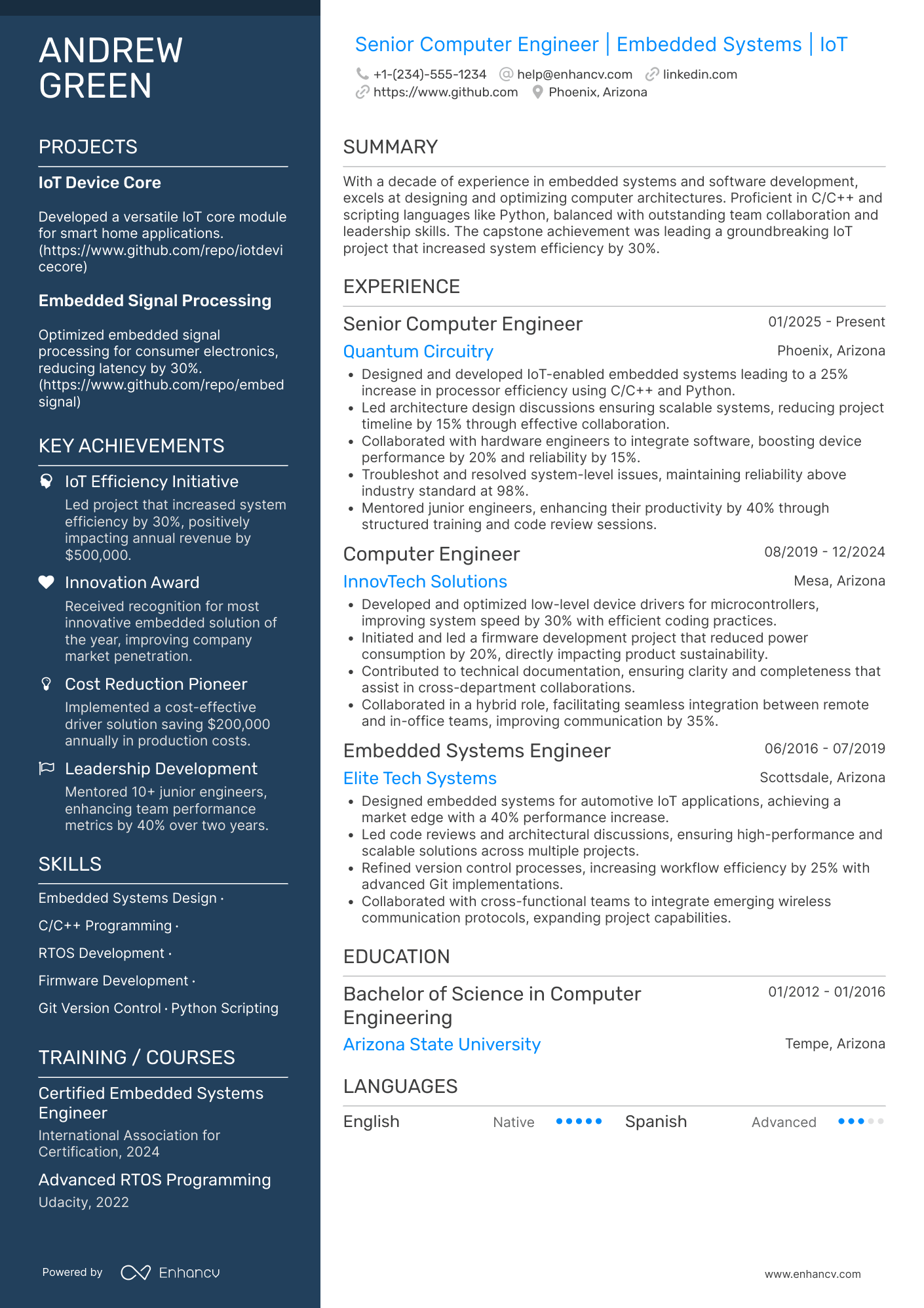
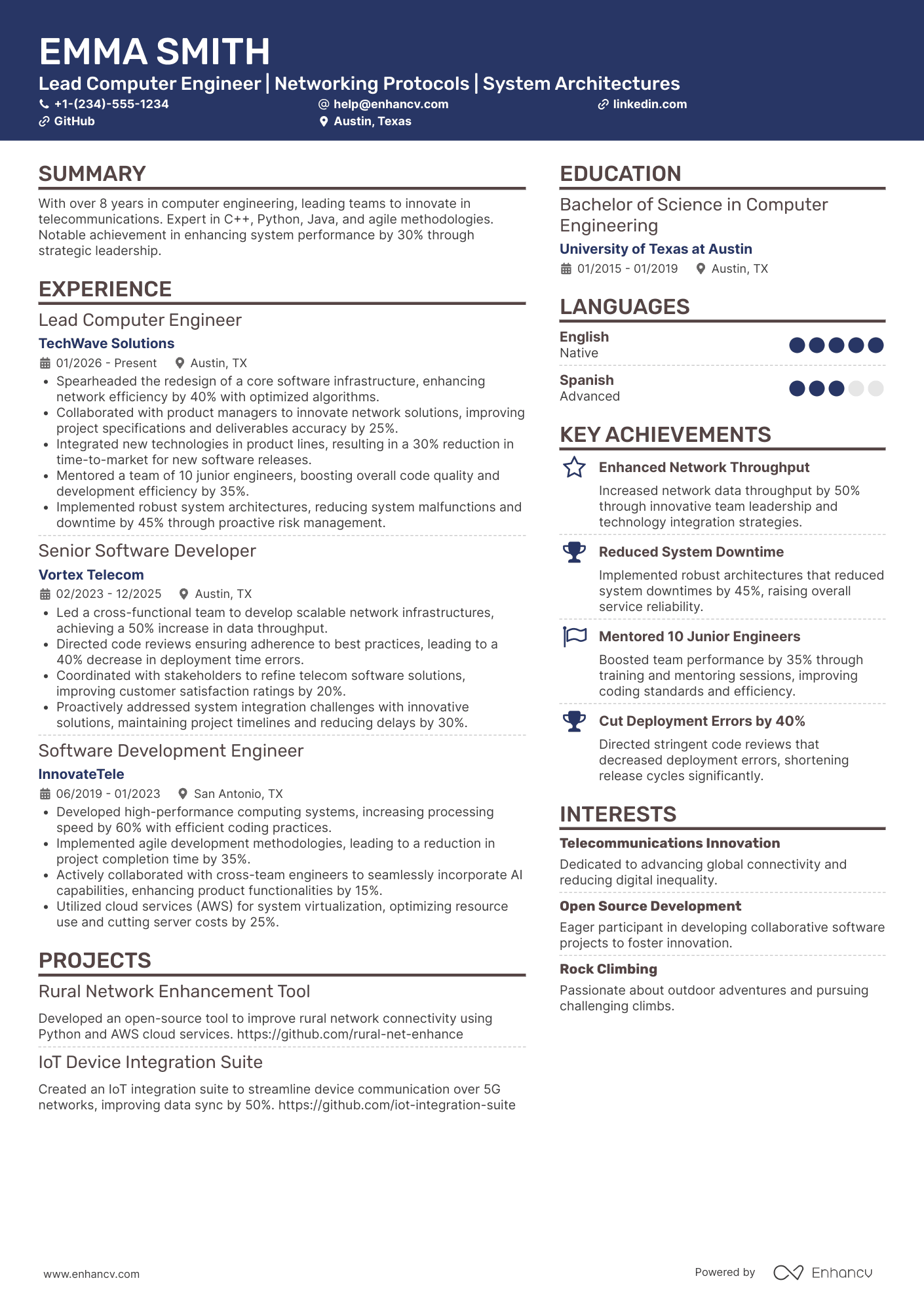
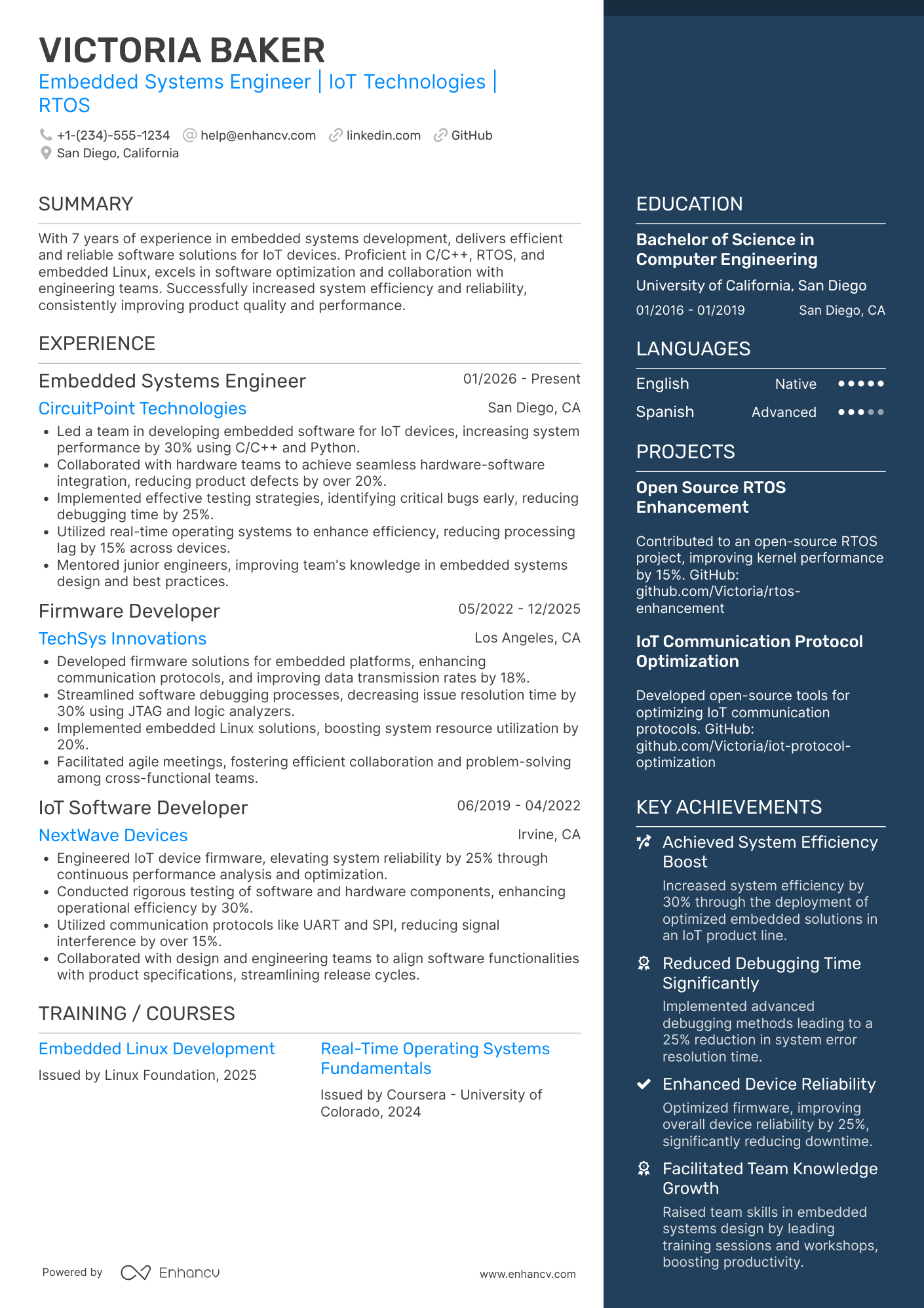
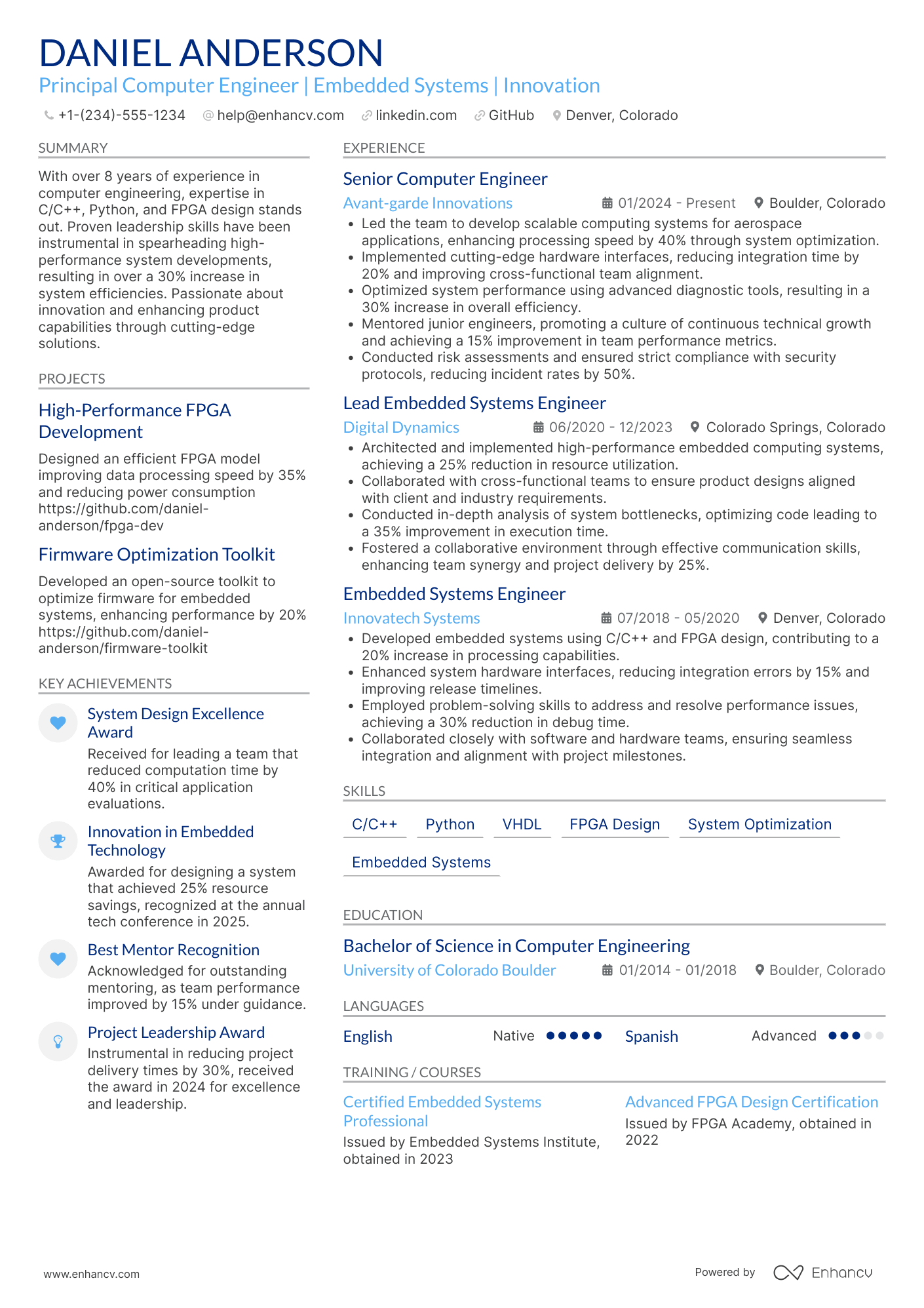
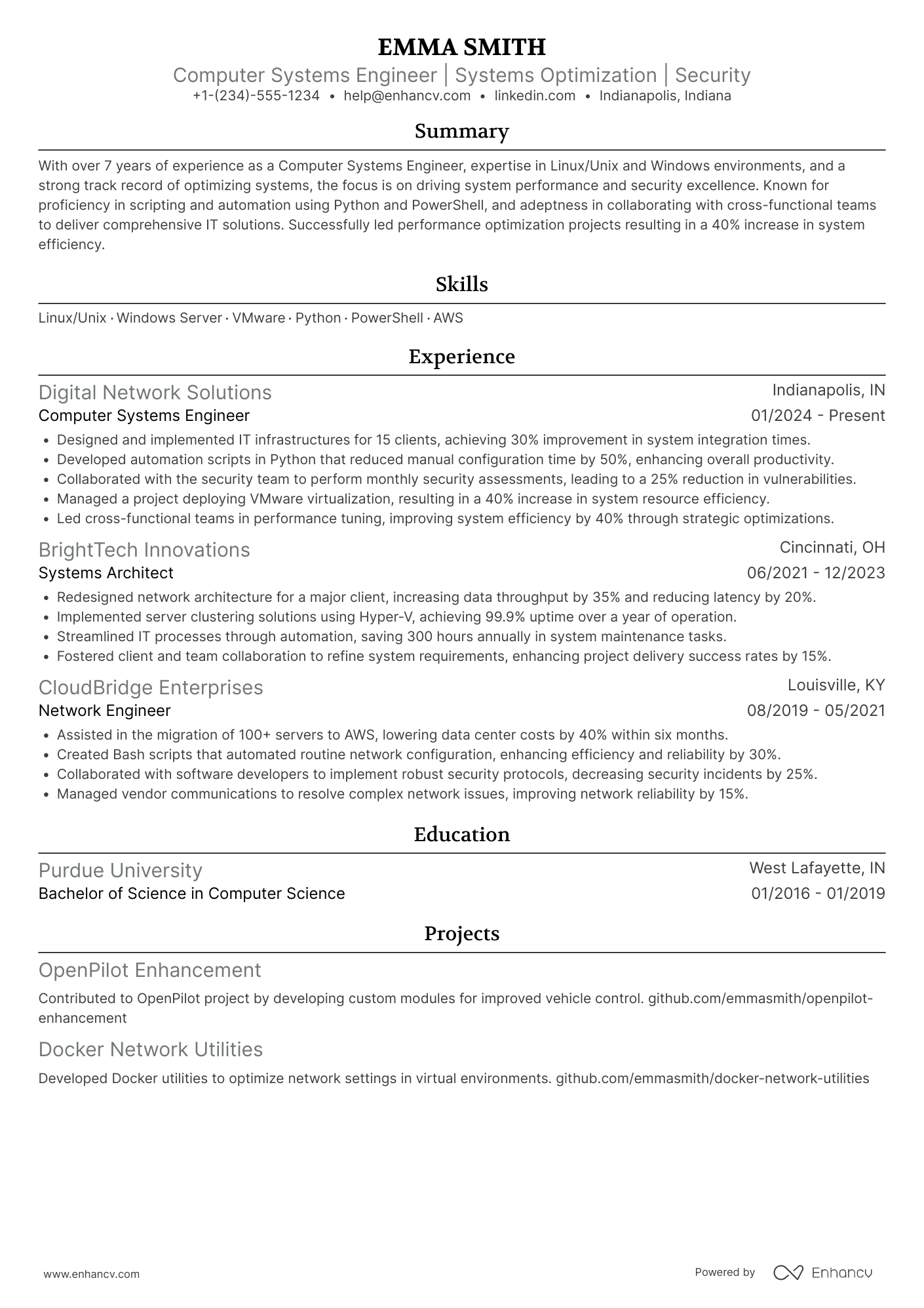
Many computer engineer resume drafts fail because they list tools and coursework but skip measurable impact and system-level context. That hurts in ATS screening and fast recruiter scans, where high competition rewards clear signals of ownership and results.
A strong resume shows what you delivered and why it mattered. If you're unsure where to begin, learning how to write a resume from the ground up can help you build that foundation. You'll highlight latency reductions, throughput gains, defect-rate drops, on-time releases for multi-team programs, power savings, uptime improvements, and user or revenue impact. You'll connect each win to scope, constraints, and decisions.

Key takeaways
- Quantify every achievement with metrics like latency, uptime, cost savings, or defect reduction.
- Tailor experience bullets to mirror the exact tools and terminology in each job posting.
- Use reverse-chronological format for experienced engineers and hybrid format for career changers.
- Anchor every listed skill to a specific project, outcome, or professional context.
- Place your skills section above experience if you're junior or switching careers.
- Write a three- to four-line summary that names your domain, tools, and a measurable win.
- Use Enhancv to turn vague job duties into quantified, recruiter-ready resume bullets faster.
Job market snapshot for computer engineers
We analyzed 104 recent computer engineer job ads across major US job boards. These numbers help you understand salary landscape, employer expectations, role specialization trends at a glance.
What level of experience employers are looking for computer engineers
| Years of Experience | Percentage found in job ads |
|---|---|
| 1–2 years | 5.8% (6) |
| 3–4 years | 2.9% (3) |
| 5–6 years | 2.9% (3) |
| 10+ years | 5.8% (6) |
| Not specified | 81.7% (85) |
Computer engineer ads by area of specialization (industry)
| Industry (Area) | Percentage found in job ads |
|---|---|
| Education | 50.0% (52) |
| Finance & Banking | 18.3% (19) |
| Healthcare | 12.5% (13) |
Top companies hiring computer engineers
| Company | Percentage found in job ads |
|---|---|
| University of Missouri System | 9.6% (10) |
Role overview stats
These tables show the most common responsibilities and employment types for computer engineer roles. Use them to align your resume with what employers expect and to understand how the role is structured across the market.
Day-to-day activities and top responsibilities for a computer engineer
| Responsibility | Percentage found in job ads |
|---|---|
| Python | 23.1% (24) |
| Computer engineering | 21.2% (22) |
| Electrical engineering | 14.4% (15) |
| C++ | 9.6% (10) |
| Linux | 8.7% (9) |
| Embedded systems | 7.7% (8) |
| Fpga | 7.7% (8) |
| Artificial intelligence | 6.7% (7) |
| Machine learning | 6.7% (7) |
| C | 5.8% (6) |
| Control system security | 4.8% (5) |
| Control theory | 4.8% (5) |
How to format a computer engineer resume
Recruiters evaluating computer engineer resumes prioritize hands-on technical depth—hardware/software integration, embedded systems, FPGA design, firmware development—alongside measurable project outcomes and clear career progression. Your resume format determines how quickly a hiring manager can identify these signals, so choosing the right structure directly affects whether your application advances past both automated screening and human review.

I have significant experience in this role—which format should I use?
Use a reverse-chronological format to give recruiters a clear timeline of your engineering growth, project scope, and increasing technical ownership. Do:
- Lead each role entry with your scope of ownership—team size, product lines, hardware/software domains, and cross-functional responsibilities.
- Highlight core tools and domains relevant to the position, such as VHDL/Verilog, embedded C/C++, RTOS, PCB design, SoC architecture, or ASIC development.
- Quantify outcomes tied to performance, cost, reliability, or time-to-market improvements.
I'm junior or switching into this role—what format works best?
Use a hybrid format that leads with a focused technical skills section, then supports it with project-based or work experience in reverse-chronological order. Do:
- Place a skills section near the top, organized by category (programming languages, hardware tools, protocols, platforms), so recruiters and applicant tracking systems can match your qualifications immediately.
- Feature academic projects, capstone work, internships, or open-source contributions that demonstrate applied computer engineering knowledge.
- Connect every listed skill to a concrete action and a visible result.
Why not use a functional resume?
A functional format strips away the project timelines, employment context, and progression signals that hiring managers rely on to evaluate a computer engineer's hands-on capability and growth trajectory.
- Career changers moving into computer engineering from adjacent fields like electrical engineering or software development, where technical skills overlap but job titles don't reflect CE work.
- Recent graduates with limited formal work history who need to foreground lab projects, research, or freelance hardware/software work.
- Candidates with extended resume gaps due to personal circumstances, where a skills-first layout prevents the gap from dominating the narrative.
Once you've locked in a clean, readable format, the next step is filling it with the right sections to give your resume a strong, complete structure.
What sections should go on a computer engineer resume
Recruiters expect to see clear evidence of your engineering impact across hardware, firmware, and system-level work. Knowing what to put on a resume helps you prioritize the right content for maximum clarity. Use this structure:
- Header
- Summary
- Experience
- Skills
- Projects
- Education
- Certifications
- Optional sections: Open-source work, Publications, Research
Strong experience bullets should emphasize measurable results, system scope, reliability or performance gains, and your ownership of design, implementation, and validation.
Is your resume good enough?
Drop your resume here or choose a file. PDF & DOCX only. Max 2MB file size.
Now that you’ve organized the key resume elements employers expect, the next step is to write your computer engineer resume experience section so those details show clear impact.
How to write your computer engineer resume experience
Your experience section should highlight shipped products, deployed systems, and engineering work you delivered using role-relevant tools, languages, and methodologies. Hiring managers reviewing computer engineer resumes prioritize demonstrated impact—measurable improvements to performance, reliability, or scalability—over descriptive task lists. Building a targeted resume ensures each entry speaks directly to the role you're pursuing.
Each entry should include:
- Job title
- Company and location (or remote)
- Dates of employment (month and year)
Three to five concise bullet points showing what you owned, how you executed, and what outcomes you delivered:
- Ownership scope: the hardware platforms, embedded systems, software modules, firmware components, or full-stack products you were directly accountable for as a computer engineer.
- Execution approach: the programming languages, development environments, processor architectures, testing frameworks, or design methodologies you applied to solve engineering problems and deliver working systems.
- Value improved: the gains you drove in system performance, power efficiency, latency reduction, code reliability, thermal management, or security posture relevant to your computer engineering responsibilities.
- Collaboration context: how you partnered with hardware designers, software developers, QA teams, product managers, vendors, or manufacturing engineers to move projects from concept through production.
- Impact delivered: the outcomes your work produced, expressed through production readiness, system-level improvements, cost reductions, or deployment scale rather than a summary of daily activities.
Experience bullet formula
A computer engineer experience example
✅ Right example - modern, quantified, specific.
Embedded Systems Engineer
Orion Mobility | Austin, TX
2022–Present
Built safety-critical embedded compute for electric delivery vehicles operating at fleet scale across North America.
- Architected and shipped a Cortex-M7 real-time firmware stack in C/C++ with FreeRTOS, reducing boot time by 38% and cutting field resets by 41% across 12,000 vehicles.
- Optimized CAN FD and Ethernet telemetry pipelines using DMA, ring buffers, and protobuf serialization, increasing sustained throughput 2.6x while lowering CPU utilization by 22%.
- Implemented secure boot and over-the-air updates with TPM-backed key storage, AES-GCM signing, and rollback protection, reducing firmware-related security risk by 60% and improving update success rate from 96.1% to 99.4%.
- Built hardware-in-the-loop test automation in Python with PyTest, Jenkins, and oscilloscope-instrumented fixtures, cutting regression cycles from five days to two days and raising test coverage from 62% to 85%.
- Partnered with electrical engineers, product managers, and manufacturing to root-cause power-rail brownouts using logic analyzers and failure-mode analysis, reducing warranty returns by 17% quarter over quarter.
Now that you've seen how a strong experience section comes together, let's look at how to adjust those details to match the specific job you're targeting.
How to tailor your computer engineer resume experience
Recruiters evaluate your computer engineer resume through both human review and applicant tracking systems (ATS). Tailoring your resume to the job description ensures your qualifications register with both.
Ways to tailor your computer engineer experience:
- Match the specific programming languages and tools listed in the posting.
- Use the exact terminology for development methodologies the employer references.
- Mirror performance benchmarks or success criteria described in the role.
- Include relevant domain experience such as embedded systems or IoT.
- Emphasize security or reliability work when the posting highlights those priorities.
- Align your descriptions with the collaboration models or team structures mentioned.
- Reference the same hardware platforms or architectures the job description names.
- Highlight compliance with industry standards or quality frameworks they specify.
Tailoring means aligning your real accomplishments with what the role demands, not forcing keywords where they don't belong.
Resume tailoring examples for computer engineer
| Job description excerpt | Untailored | Tailored |
|---|---|---|
| "Design and verify RTL modules for high-speed SoC architectures using SystemVerilog and UVM-based testbenches" | Worked on chip design and ran tests for hardware projects. | Designed and verified 12 RTL modules for a high-speed SoC using SystemVerilog, building UVM-based testbenches that achieved 96% functional coverage across three tape-outs. |
| "Develop embedded firmware in C/C++ for ARM Cortex-M microcontrollers, optimizing power consumption and real-time performance" | Wrote code for embedded systems and helped improve device performance. | Developed embedded firmware in C/C++ for ARM Cortex-M4 microcontrollers, reducing power consumption by 30% while maintaining sub-2ms interrupt latency for real-time sensor processing. |
| "Collaborate with cross-functional teams to integrate FPGA-based signal processing pipelines using Xilinx Vivado and MATLAB for radar applications" | Helped integrate hardware components and supported team projects. | Collaborated with RF and software teams to integrate FPGA-based signal processing pipelines in Xilinx Vivado, using MATLAB simulations to validate radar waveform accuracy within 0.5 dB across five operational modes. |
Once you’ve aligned your experience with the role’s priorities, the next step is to quantify your achievements so hiring teams can quickly see the impact you delivered.
How to quantify your computer engineer achievements
Numbers prove your work improved speed, reliability, quality, cost, security, or delivery. Track latency, throughput, defect rates, availability, power use, vulnerability counts, build times, and on-time milestones across real systems and releases. For more guidance on quantifying achievements, see how other engineers turn vague duties into concrete metrics.
Quantifying examples for computer engineer
| Metric | Example |
|---|---|
| Performance | "Reduced FPGA signal-processing latency from 18 ms to 6 ms by optimizing pipelining and BRAM access in Verilog, sustaining 200 kS/s throughput." |
| Reliability | "Improved embedded device uptime from 99.2% to 99.95% by adding watchdog recovery, brownout handling, and crash logging across 1,200 deployed units." |
| Quality | "Cut production test failures from 3.4% to 0.9% by tightening boundary-scan coverage, adding 42 automated tests, and fixing two PCB layout issues." |
| Cost efficiency | "Lowered cloud compute cost 28% by moving batch simulation jobs to spot instances and right-sizing Kubernetes nodes for a 60-node CI pipeline." |
| Delivery speed | "Shortened firmware release cycle from six weeks to three by implementing GitHub Actions, static analysis, and automated hardware-in-the-loop tests for three boards." |
Turn vague job duties into measurable, recruiter-ready resume bullets in seconds with Enhancv's Bullet Point Generator.
Once you've crafted strong bullet points for your experience section, the next step is ensuring your skills section effectively showcases the right mix of hard and soft skills.
How to list your hard and soft skills on a computer engineer resume
Your skills section shows how you build reliable systems, and recruiters and ATS scan it to match your fit to the job post, so aim for a balanced mix of role-specific hard skills and execution-focused soft skills. computer engineer roles require a blend of:
- Product strategy and discovery skills.
- Data, analytics, and experimentation skills.
- Delivery, execution, and go-to-market discipline.
- Soft skills.
Your skills section should be:
- Scannable (bullet-style grouping).
- Relevant to the job post.
- Backed by proof in experience bullets.
- Updated with current tools.
Place your skills section:
- Above experience if you're junior or switching careers.
- Below experience if you're mid/senior with strong achievements.

Hard skills
- C, C++, Rust
- Python, Bash
- Linux, embedded Linux
- TCP/IP, UDP, DNS
- ARM Cortex-M, x86
- RTOS: FreeRTOS, Zephyr
- Firmware debugging, JTAG, SWD
- FPGA design, Verilog, VHDL
- PCB bring-up, SPI, I2C, UART
- Git, CI/CD, GitHub Actions
- Docker, Kubernetes
- AWS, Terraform
Soft skills
- Translate requirements into specs
- Write clear design documents
- Run effective technical reviews
- Prioritize work by impact and risk
- Communicate tradeoffs to stakeholders
- Own incidents through resolution
- Collaborate across hardware and software
- Debug systematically under pressure
- Mentor engineers through pairing
- Align decisions with customer needs
How to show your computer engineer skills in context
Skills shouldn't live only in a bulleted list on your resume. Browse resume skills examples to see how other engineers weave technical competencies into real achievements.
They should be demonstrated in:
- Your summary (high-level professional identity)
- Your experience (proof through outcomes)
Here's what each looks like in practice.
Summary example
Senior computer engineer with 10+ years designing embedded systems and real-time firmware in C/C++. Led cross-functional hardware-software integration at scale, reducing production defects by 34%. Passionate about mentoring junior engineers and driving continuous improvement.
- Signals senior-level experience immediately
- Names role-relevant tools and methods
- Leads with a measurable outcome
- Highlights mentoring as a soft skill
Experience example
Senior Computer Engineer
Vectron Systems | Austin, TX
March 2018–January 2024
- Architected a real-time embedded control system in C/C++ and FreeRTOS, cutting firmware boot time by 52% across three product lines.
- Collaborated with hardware and QA teams to implement automated regression testing, reducing post-release defects by 29%.
- Optimized memory allocation using custom drivers and JTAG debugging, improving system throughput by 18% under peak load conditions.
- Every bullet includes measurable proof
- Skills appear naturally within real achievements
Once you’ve tied your computer engineering skills to real outcomes and examples, the next step is applying that approach to building a computer engineer resume with no experience.
How do I write a computer engineer resume with no experience
Even without full-time experience, you can demonstrate readiness through:
- Capstone hardware-software integration project
- Personal embedded systems builds
- Open-source firmware contributions
- University research lab assistant role
- Hackathon prototypes with Git history
- Relevant internships or co-ops
- Teaching assistant for computer architecture
- IEEE student branch technical projects
If you're starting from scratch, our guide on writing a resume without work experience walks you through how to turn projects and coursework into compelling resume content.
Focus on:
- Verified projects with measurable results
- Embedded, systems, or hardware skills
- Toolchain proficiency and documentation
- Evidence of testing and debugging
Resume format tip for entry-level computer engineer
Use a skills-forward hybrid resume format because it puts projects, technical skills, and tools above limited work history. Do:
- Put Projects above Work Experience.
- List tools beside each project.
- Quantify results with benchmarks.
- Link to GitHub and schematics.
- Match keywords from the job post.
- Built an STM32-based sensor node in C using FreeRTOS and I2C, added unit tests in Ceedling, and cut packet loss from 8% to 1%.
Even without professional experience, your education section can serve as the foundation of your resume—here's how to present it effectively.
How to list your education on a computer engineer resume
Your education section helps hiring teams confirm you have the foundational knowledge needed for a computer engineer role. It validates your technical training and academic background quickly.
Include:
- Degree name
- Institution
- Location
- Graduation year
- Relevant coursework (for juniors or entry-level candidates)
- Honors & GPA (if 3.5 or higher)
Avoid listing specific months or days for graduation. Use the year only for a cleaner look.
Here's a strong education entry tailored for a computer engineer resume.
Example education entry
Bachelor of Science in Computer Engineering
University of Michigan, Ann Arbor, MI
Graduated 2022
GPA: 3.7/4.0
- Relevant Coursework: Embedded Systems, VLSI Design, Computer Architecture, Digital Signal Processing, Operating Systems
- Honors: Magna Cum Laude, Dean's List (six semesters)
How to list your certifications on a computer engineer resume
Certifications on a resume show a computer engineer's commitment to learning, hands-on tool proficiency, and industry relevance, especially when they align with your target role and tech stack. Include:
- Certificate name
- Issuing organization
- Year
- Optional: credential ID or URL
- Put certifications below education when your degree is recent and directly matches the computer engineer role you want.
- Put certifications above education when they are more recent than your degree and closely match the job's tools or domain.
Best certifications for your computer engineer resume
AWS Certified Solutions Architect – Associate Microsoft Certified: Azure Fundamentals Cisco Certified Network Associate (CCNA) CompTIA Security+ Certified Kubernetes Administrator (CKA) Google Cloud Associate Cloud Engineer Certified Information Systems Security Professional (CISSP)
Once your credentials are placed where hiring managers can quickly verify them, shift to writing your computer engineer resume summary so you can tie those qualifications to the role’s requirements at a glance.
How to write your computer engineer resume summary
Your resume summary is the first thing a recruiter reads. A strong one immediately signals you're qualified for the computer engineer role.
Keep it to three to four lines, with:
- Your title and total years of experience in computer engineering.
- The domain or industry you've worked in, such as embedded systems or IoT.
- Core tools and technologies like C/C++, VHDL, FPGA design, or ARM processors.
- One or two quantified achievements that prove your technical impact.
- Soft skills tied to real outcomes, such as cross-team collaboration that shortened development cycles.

PRO TIP
At the junior level, lead with relevant technical skills, tools, and any early project contributions. Avoid vague descriptors like "passionate" or "hard-working." Instead, anchor every claim to something concrete—a project, a metric, or a specific technology you've used professionally.
Example summary for a computer engineer
Computer engineer with one year of experience designing embedded firmware in C for ARM Cortex-M microcontrollers. Reduced sensor boot time by 18% during a capstone project adopted by the university's robotics lab.
Optimize your resume summary and objective for ATS
Drop your resume here or choose a file.
PDF & DOCX only. Max 2MB file size.
Now that your summary concisely presents your qualifications, make sure the header above it displays accurate, professional contact details so recruiters can actually reach you.
What to include in a computer engineer resume header
A resume header lists your key identifiers and contact details, improving visibility, credibility, and recruiter screening for a computer engineer role.
Essential resume header elements
- Full name
- Tailored job title and headline
- Location
- Phone number
- Professional email
- GitHub link
- Portfolio link
A LinkedIn link helps recruiters verify experience quickly and supports screening.
Do not include a photo on a computer engineer resume unless the role is explicitly front-facing or appearance-dependent.
Keep the header to one or two lines, match your job title to the posting, and use links that open directly to active profiles.
Example
Computer engineer resume header
Jordan Lee
Computer engineer | Embedded systems and firmware development
San Jose, CA
(408) 555-01XX | your.name@enhancv.com | github.com/yourname | yourwebsite.com | linkedin.com/in/yourname
Once your contact details and key identifiers are in place, add optional resume sections to provide relevant supporting information that doesn’t fit in the header.
Additional sections for computer engineer resumes
Extra resume sections help you stand out when your core qualifications match other candidates and you need to showcase unique, role-specific credibility.
- Languages
- Publications
- Patents
- Open-source contributions
- Professional affiliations
- Hobbies and interests
- Awards and honors
Once you've rounded out your resume with the right supplementary sections, it's worth considering whether a cover letter can further strengthen your application.
Do computer engineer resumes need a cover letter
A cover letter isn't required for a computer engineer, but it helps in competitive roles or teams that expect one. If you're wondering what is a cover letter and when it adds value, it can make a difference when your resume needs context, or when hiring managers compare many similar profiles.
Use a cover letter to add context your resume can't show:
- Explain role and team fit by matching your strengths to the stack, collaboration style, and problem scope in the job description.
- Highlight one or two relevant projects with outcomes, including metrics, constraints, and your specific contributions.
- Show you understand the product, users, and business context by naming a real use case, tradeoff, or reliability concern the team likely faces.
- Address career transitions or non-obvious experience by connecting past work to the role's core requirements and tools.
Drop your resume here or choose a file.
PDF & DOCX only. Max 2MB file size.
Even if you choose to submit an accompanying letter, the next step is using AI to improve your computer engineer resume so it communicates your value clearly and efficiently.
Using AI to improve your computer engineer resume
AI can sharpen your resume's clarity, structure, and impact. It helps tighten language and highlight relevant achievements. But overuse strips authenticity fast. Once your content reads clearly and aligns with your target role, step away from AI. If you're curious about which AI is best for writing resumes, start with tools that let you stay in control of the final output.
Here are 10 practical prompts to strengthen specific sections of your computer engineer resume:
- Strengthen your summary. "Rewrite this computer engineer resume summary to emphasize relevant technical expertise and measurable career achievements in under four sentences."
- Quantify experience bullets. "Add specific metrics and measurable outcomes to these computer engineer experience bullets without inventing any data."
- Align skills with job posts. "Compare this computer engineer resume's skills section against the following job description and identify missing relevant keywords."
- Tighten project descriptions. "Rewrite this computer engineer project section to clearly state the problem solved, technologies used, and measurable results delivered."
- Remove filler language. "Identify and remove vague or redundant phrases from this computer engineer resume while preserving all factual content."
- Improve action verbs. "Replace weak or repetitive action verbs in these computer engineer experience bullets with stronger, more precise alternatives."
- Refine education details. "Restructure this computer engineer education section to highlight relevant coursework, honors, and technical research contributions."
- Optimize certification placement. "Reorganize this computer engineer resume's certifications section to prioritize the most role-relevant and current credentials first."
- Clarify technical scope. "Rewrite these computer engineer experience entries to clearly distinguish individual contributions from broader team accomplishments."
- Tailor for specific roles. "Adjust this computer engineer resume's summary and experience sections to better target a embedded systems engineering position."
Stop using AI once your resume sounds accurate, specific, and aligned with real experience. AI should never invent experience or inflate claims—if it didn't happen, it doesn't belong here.
Conclusion
A strong computer engineer resume shows measurable outcomes, role-specific skills, and a clear structure. It highlights impact with numbers, names the tools you used, and connects your work to real system needs.
Keep each section easy to scan and focused on results. This approach shows you’re ready for today’s hiring market and the near-future skills employers need from a computer engineer.
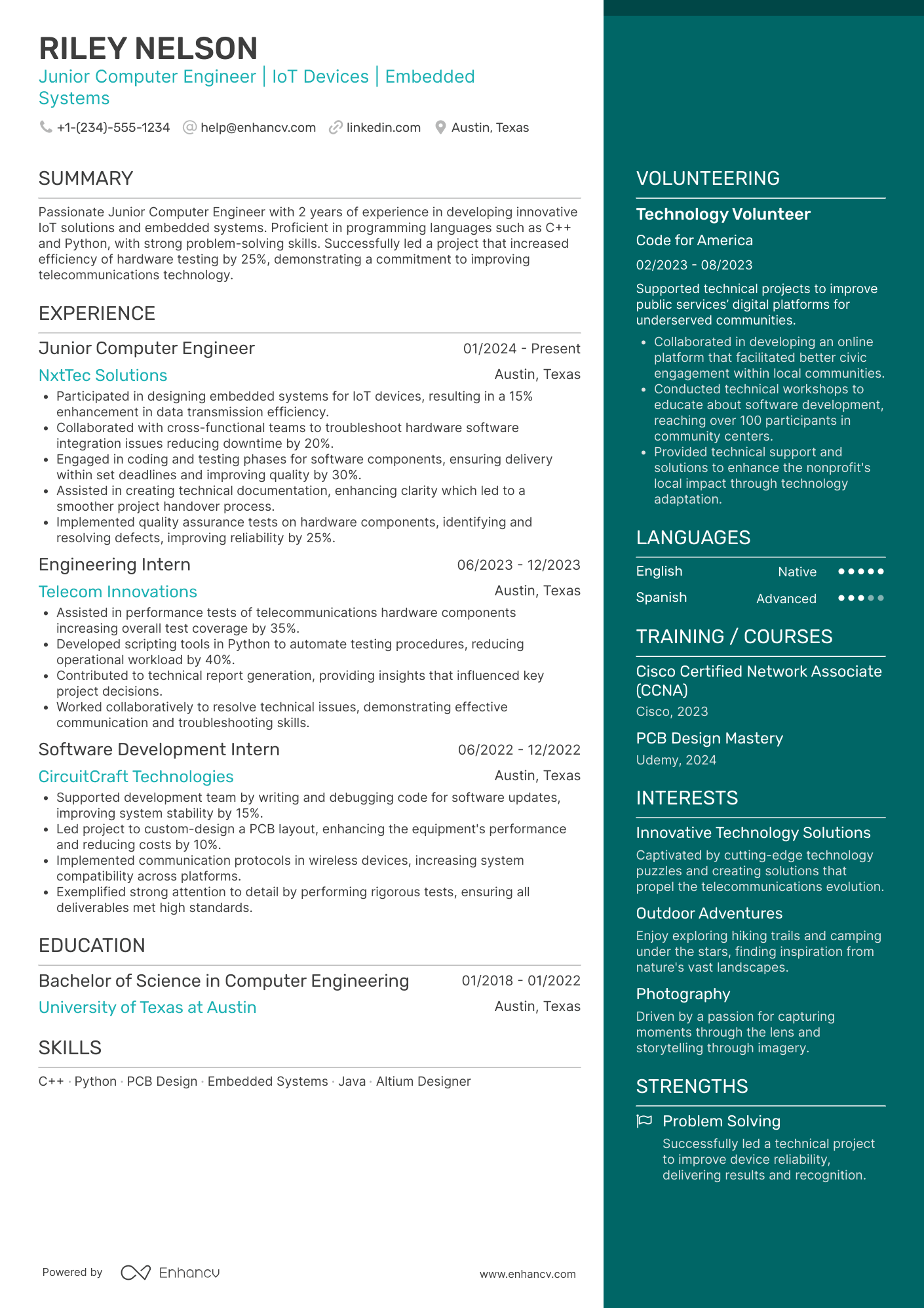
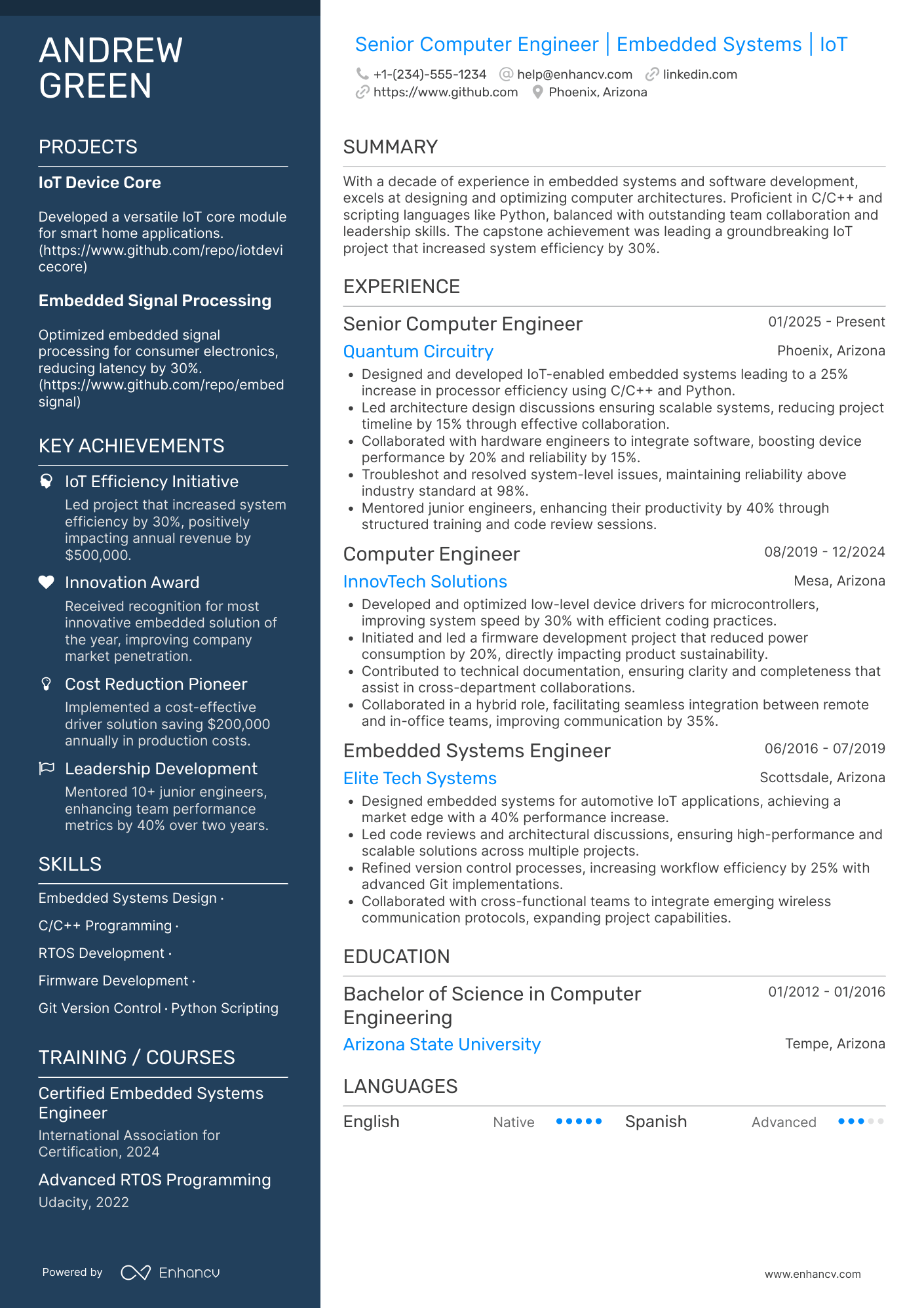
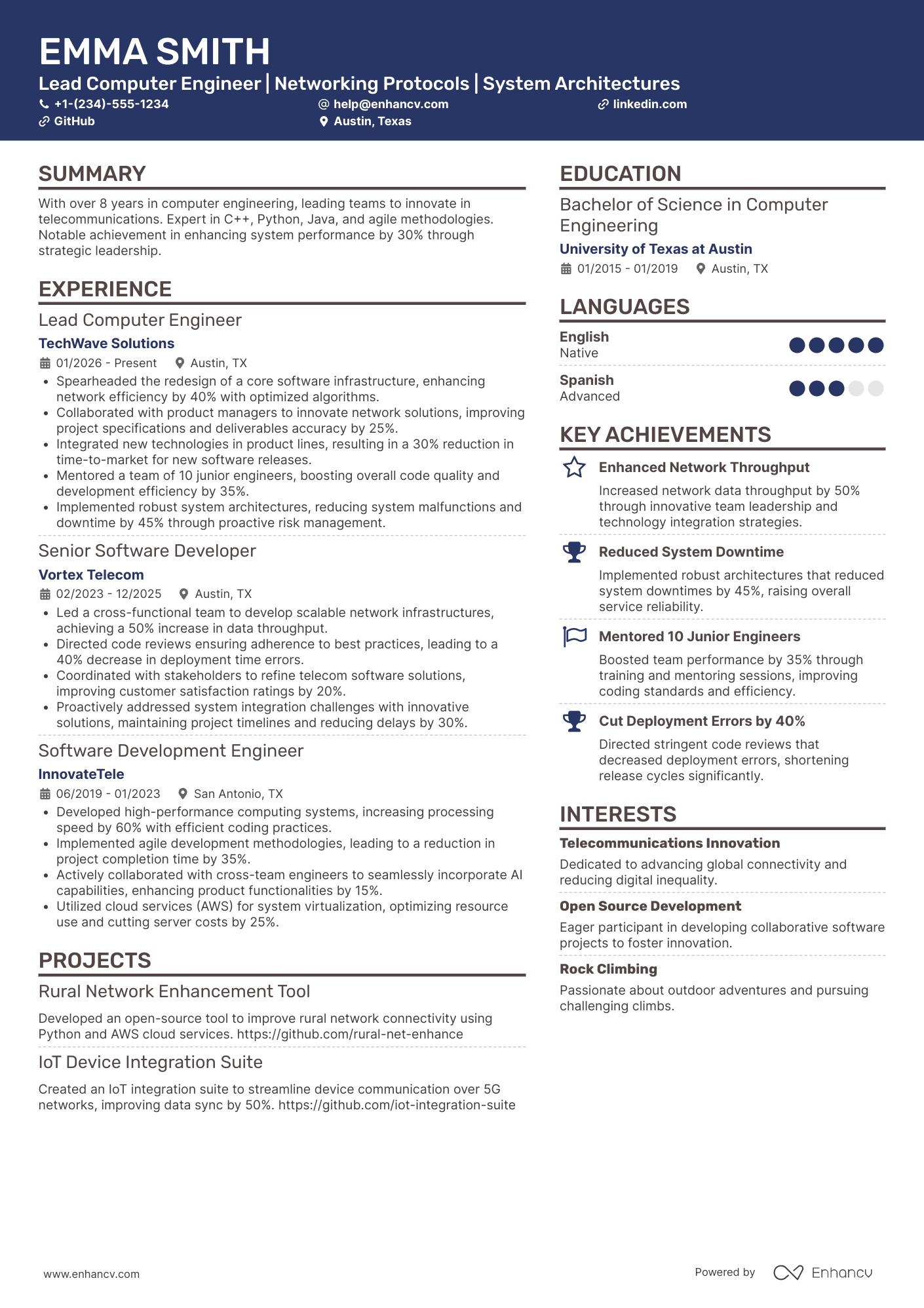
Computer Engineer resume examples
By Experience
By Role