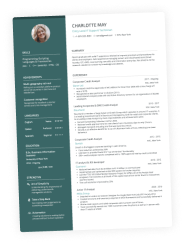
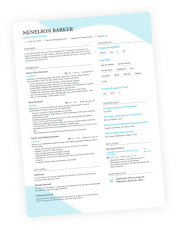
After testing Rezi with a senior-level resume, my takeaway is simple: Rezi isn’t trying to help you express yourself. It’s trying to make sure your application survives the hiring software. It enforces strict structure, conservative templates, and constant feedback to reduce ATS-related failure risks.
The result is a resume that may look boring, but feels safe to submit. For experienced professionals who value confidence and compliance over visual freedom, Rezi does exactly what it promises.

Key takeaways
- Rezi is built for ATS safety first, prioritizing strict structure and conservative templates over design freedom.
- Its strongest value lies in reducing technical rejection risk, not in visual differentiation or personal branding.
- The Rezi Score and real-time feedback provide useful validation and help remove guesswork before applying.
- Keyword targeting and ATS checks work best as diagnostic tools, not as guarantees of success.
- AI writing and interview tools can speed up preparation but require active oversight to avoid generic or inflated output.
- The Lifetime plan is appealing for periodic job seekers, but refund and downgrade policies require careful review.
- Rezi is best suited for experienced professionals who value confidence, compliance, and consistency over customization.
What Rezi is—and what it is not
Rezi positions itself as an ATS-first resume builder, and unlike many tools, it actually commits to that philosophy.
It isn’t a design canvas. You’re not encouraged to experiment with layouts, spacing, or visual hierarchy. Instead, you’re guided into predefined structures that are known to parse correctly across common applicant tracking systems.
This means Rezi actively prevents you from making certain choices. You can’t freely move sections around, introduce unconventional formatting, or treat the resume as a creative artifact. That rigidity is intentional. The tool assumes that most users hurt their chances by over-designing rather than under-designing.

PRO TIP
What Rezi is not is equally important. It’s not a brand storytelling tool. It’s not a portfolio builder. And it’s not meant to replace judgment with automation. Rezi’s promise is protection, not personalization.
Onboarding and first impressions
The onboarding experience makes Rezi’s philosophy clear almost immediately.
You either start from scratch or import an existing resume or LinkedIn profile. From there, everything happens inside structured fields. There’s no blank page moment. You’re never asked, “What do you want this to look like?”
At first, this feels restrictive—especially if you’re used to tools where you can instinctively rearrange sections or tweak spacing. I caught myself trying to make changes out of habit, only to realize the tool simply wouldn’t allow them.
That friction is deliberate. Rezi is opinionated from the start, and it doesn’t hide that. The onboarding experience communicates one message very clearly: this tool values correctness over flexibility.
How Rezi works
Once content is in place, the workflow becomes straightforward.
You paste a job description for the role you’re targeting. Rezi analyzes it and highlights missing or underused keywords. As you edit, the platform provides continuous feedback through its scoring system, pointing out issues related to bullet structure, verb usage, quantification, tense consistency, and formatting.
Instead of asking you to make design decisions, Rezi asks you to improve substance within fixed constraints. When the score stabilizes and the warnings disappear, you export an ATS-compatible PDF or DOC file and apply.
The experience feels less like designing a document and more like preparing a submission that can’t fail technically.
Core features
What stood out to me most is how every core feature in Rezi exists to answer one question: “Will this resume pass the system before a human ever sees it?”

At a high level, Rezi’s core tools are designed to:
- Identify role-specific gaps (keyword targeting)
- Validate readiness (Rezi Score)
- Reduce ATS-formatting risk (resume checker and templates)
- Speed up drafting (AI writing tools)
- Extend confidence beyond the document (AI interview practice)
- Add convenience for iterative editing (AI agent)
- Offer human QA when needed (resume review)
AI Keyword Targeting
Rezi’s Keyword Targeting is its strongest feature.
By comparing your resume to a specific job description, it surfaces skills and terminology that matter for that role. This is particularly effective for hard skills and role-specific language that ATS systems rely on.
In practice, it works best as a diagnostic tool. It shows you what you’re missing, not how to lie.
- Best for: uncovering missing hard skills and terminology from the job description.
- Watch for: forcing keywords into bullets where they don’t belong.
Rezi Score and real-time feedback
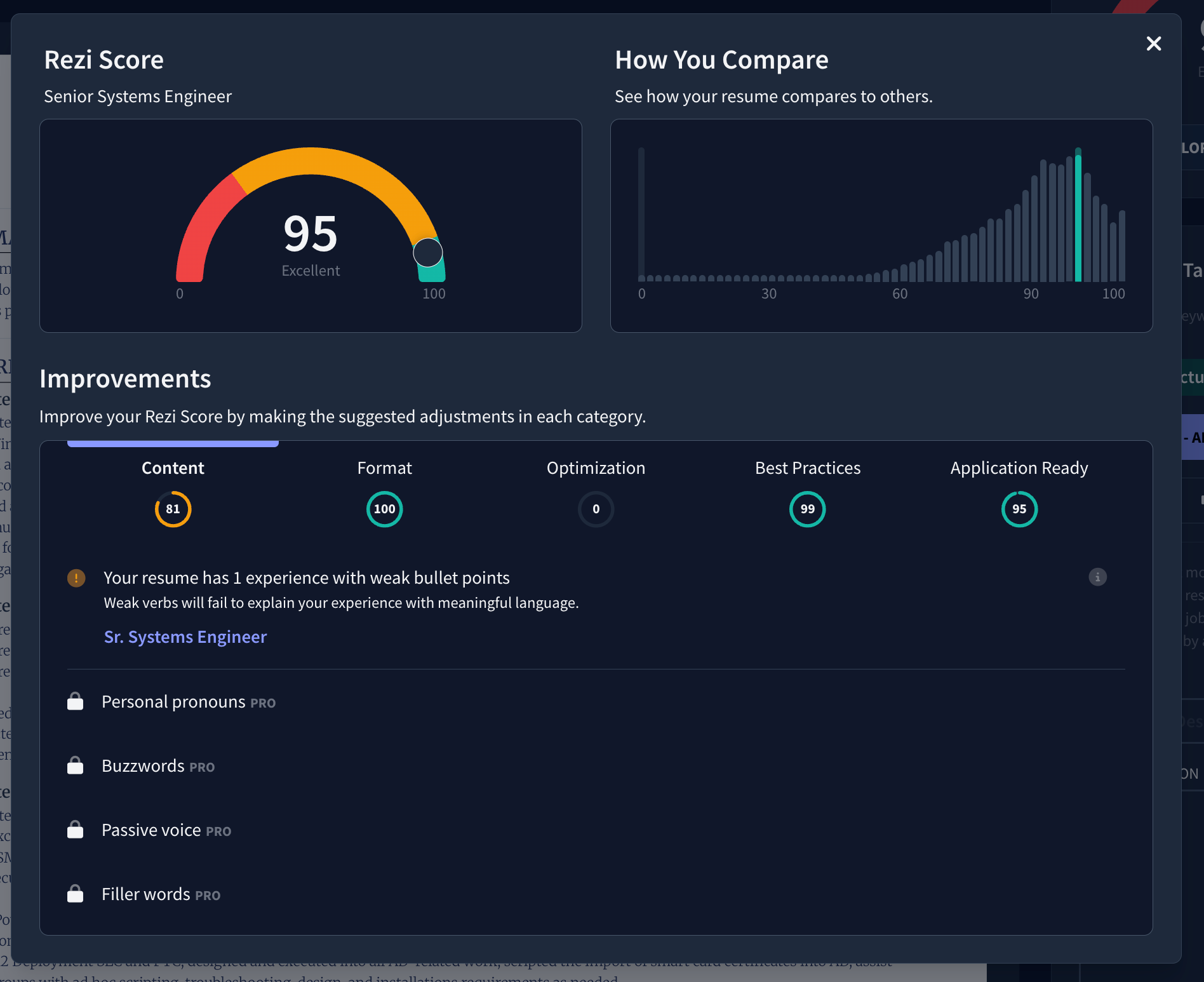
Rezi’s scoring system provides continuous validation, highlighting both overall readiness and specific areas for improvement before you apply.
The Rezi Score rates your resume from 0 to 100 based on roughly two dozen criteria. These include bullet length, active verbs, quantification, filler language, and formatting consistency.
The psychological impact is real. Editing toward a clear numerical goal removes uncertainty and creates a sense of readiness. Still, the score is a guardrail, not a stamp of approval.
- Best for: knowing what to fix next without guessing
- Watch for: optimizing for the score instead of strengthening substance
ATS Resume Checker
The Resume Checker allows you to upload an existing file and receive feedback on ATS-related risks. It flags common issues such as columns, headers, footers, inconsistent section labels, and formatting anomalies.
It’s most useful as a sanity check when migrating from a visually complex resume. Like all scanners, it can produce false positives, so interpret the output with care.
- Best for: catching formatting patterns that often break parsing.
- Watch for: treating the results as a guarantee.
AI writing tools
Rezi includes AI-generated bullet points, sentence rewrites, and resume summaries. These are helpful for breaking writer’s block and accelerating drafts.
However, they require supervision. The AI can invent metrics or overstate responsibilities if you let it run unchecked.
- Best for: quick first drafts and rewrites when you’re stuck.
- Watch for: hallucinated numbers, tools, or scope.
LinkedIn Import
The LinkedIn Import feature works reliably, pulling roles, dates, and skills into the correct sections. It tends to import more content than most users want, so editing is required.
As a starting point, it’s efficient. As a final product, it’s incomplete without refinement.
- Best for: reducing manual entry time.
- Watch for: overlong role descriptions and clutter.
AI Interview Practice
Rezi also includes AI Interview Practice that uses your resume as context to generate role-relevant questions. It’s best understood as a warm-up tool: useful for rehearsing your story out loud and identifying weak spots in how you frame scope, decisions, and outcomes.
It isn’t a replacement for mock interviews with a human. Questions and feedback can feel generic, and the value drops if you overuse it.
- Best for: improving fluency and recall before interviews.
- Watch for: generic feedback and diminishing returns.
AI Resume Agent
The AI Resume Agent adds a conversational layer on top of Rezi’s tools. You can ask it to rewrite sections, tailor content, or explain suggestions without hunting through menus.
For experienced users, it’ll feel optional. For users who prefer guided prompts, it’s a convenience feature that keeps momentum.
- Best for: quick edits and guided rewrites in one place.
- Watch for: redundant output that you could achieve through manual tools.
Human resume review
Rezi offers optional human resume reviews with relatively fast turnaround times. Feedback focuses on clarity, wording, and structure.
One nuance matters: ongoing reviews are typically tied to subscription plans and aren’t included with Lifetime access.
- Best for: a final quality check before applying.
- Watch for: assuming it’s included on all plans.
Rezi templates review
This focus on "safety" leads me directly to the resume templates. Rezi currently offers a small library of strictly standardized designs (Standard, Compact, Bold, Harvard, etc.). They’re undeniably "boring"—a description Rezi wears as a badge of honor.
Unlike creative builders that prioritize aesthetics, Rezi’s designs prioritize parsing reliability. They feature single-column layouts, standard fonts, and predictable hierarchies that ensure machines can read every word.
However, my testing revealed that this reliability comes at the cost of visual personality.
Template selection based on "safety"
Most resume builders let you choose a template based on style (e.g., "Modern," "Creative"). Rezi guides your choice based on density and standardization.
- Standard/ATS-first: The default choice. A rigid, single-column layout that is practically guaranteed to parse correctly.
- Compact: Designed specifically for senior professionals who need to fit 10+ years of experience onto one or two pages without fighting the margins.
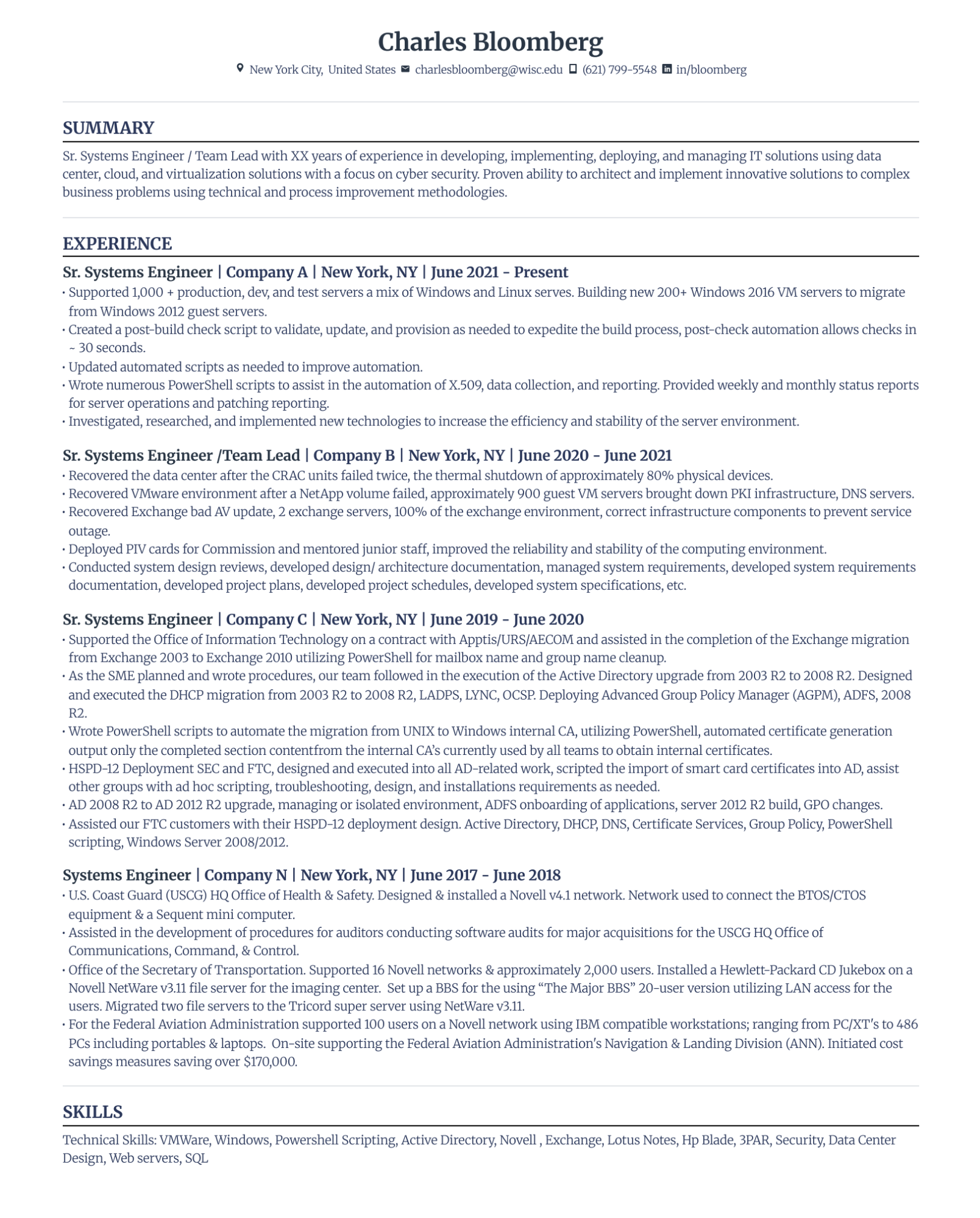
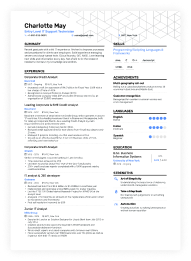
Rezi’s "Standard" template in action: It’s not flashy, but it effectively packs a Senior Systems Engineer’s 15+ year history into a clean, single-column format that ATS parsers love.
During my test, I tried to force a "Creative" look by adjusting margins and moving the skills section to a sidebar.
I quickly learned that Rezi doesn't allow "drag-and-drop." You can’t move a section by clicking and dragging it. You can only reorder sections in a list view. The tool treats the resume as a database entry, not a canvas. If you want to move your "Skills" to the left column, you can't—because Rezi’s safest templates don't have a left column.
Author’s take
Limitations in design variety
While the templates are ATS-proof, they suffer from extreme uniformity.
- Zero layout freedom: You’re locked into the structure of the template. You can’t adjust column widths or create custom text boxes.
- Strict "one-way" formatting: You can change the font size and line height, but you can’t change where things go on the page.
- Visual monotony: To a human recruiter, a Rezi resume looks like a plain text document. It lacks the "pop" of a two-column design, which makes it excellent for the initial screen but less memorable in a final interview stack.
Handling senior-level content
I tested the templates with a senior-level profile containing 15+ years of experience to see how the layout handled text density.
Here’s what I found:
- Excellent density control: Unlike other builders that spill over to a second page awkwardly, Rezi’s templates tightened the spacing effectively to fit the content.
- The Rezi score: The real-time scoring system flagged "fluff" in my senior bullets, encouraging me to cut generic adjectives to save space.
Rezi’s templates are the gold standard for engineers, developers, and federal applicants who need to cram technical skills into a readable format. However, marketing or design professionals may find them "ugly" and lacking the personal brand element required for creative roles.
Rezi customization and download options
Once you’ve selected a template, the "Free" vs. "Paid" restrictions become clear.
- Customization: You can rename sections (e.g., change "Experience" to "Work History") and toggle sections on/off, but you can’t fundamentally alter the structure.
- Downloads: The Free Plan allows you to download your resume, but you are limited to a specific number of downloads or resumes before you must upgrade.
- DOCX export: Uniquely, Rezi allows you to export a .docx file. This is a massive advantage over competitors who only give you a PDF, as it allows you to manually tweak the final document in Word if you find their editor too restrictive.
Rezi allows .docx export on its ATS-friendly templates. This lets you use Rezi to generate the content and structure, then finish the styling in Microsoft Word if you find the Rezi editor too restrictive.
ATS claims vs. reality
Rezi does not beat ATS systems. It does not hack them. And it does not guarantee interviews.
What it does is eliminate common failure points. By enforcing structure, limiting formatting freedom, and encouraging keyword alignment, Rezi significantly reduces the risk of technical rejection.
Its value lies in prevention, not promises.
Pricing, plans, and refunds
Rezi offers three plans: a limited Free tier, a Pro subscription, and a one-time Lifetime plan.
Pricing Structure
| Tier | Price | Key Features |
|---|---|---|
| Free | 0$ | Create 1 resume, limited downloads, limited AI credits. Good for testing the UI. |
| Pro | $29 / mo | Unlimited resumes, unlimited AI generation, full ATS keyword targeting. |
| Lifetime | $149 (One-time) | The Fan Favorite. One payment for permanent access to all Pro features. |
The Lifetime option is a major draw for users who job hunt periodically and want to avoid recurring subscriptions. However, pricing transparency cuts both ways. Canceling a subscription doesn’t automatically trigger a refund, and Lifetime downgrades are irreversible.
The policies are clear, but users should read them carefully before committing.
What real users say
To sanity-check my own impressions, I looked at user feedback across review platforms and forums.
On Trustpilot, sentiment centers on relief rather than excitement. Users appreciate the structure, the scoring system, and the feeling that their resume is “safe.” Customer support is frequently praised.
Before taking Reddit sentiment at face value, it’s worth noting that Rezi has run a promotion offering some Reddit users a free Lifetime plan in exchange for leaving a review, which is generous but likely to skew the neutrality of those posts.
On Reddit, the tone is blunter. Rezi is often described as “ugly but effective.” Users acknowledge the lack of visual appeal while crediting the platform for improved response rates. Common warnings include the need to verify AI-generated content and the limited usefulness of the free tier.
Pros and cons of Rezi
| ✅ Pros | ❌ Cons |
|---|---|
| Strong ATS-safe formatting by default. | Minimal design flexibility. |
| Clear structure that prevents common mistakes. | AI content requires careful review. |
| Keyword alignment that actually matters. | Free tier is highly restrictive. |
| Gamified feedback that reduces anxiety. | Rigid structure may frustrate users who want control. |
| Conservative templates that inspire confidence |
Who Rezi is best for
Rezi is best suited for experienced professionals who value confidence, compliance, and efficiency. Engineers, analysts, product managers, and senior corporate candidates applying through ATS-heavy pipelines will benefit most.
It’s less suitable for creative professionals or anyone who wants their resume to function as a personal brand statement.
Final verdict
Rezi isn’t inspirational. It’s intentional.
It trades freedom for certainty and aesthetics for protection. If confidence means knowing your resume will be parsed correctly and evaluated on content rather than formatting quirks, Rezi delivers exactly that.
For many senior professionals, that trade-off isn’t a compromise—it’s the point.
Rezi vs Enhancv
Rezi is the ATS-first, “safety-proof” resume builder. It’s ideal if you want strict structure, conservative templates, and a process that minimizes formatting mistakes. If your goal is to submit something that’ll parse cleanly and look consistent every time, Rezi does that well.
However, if you felt restricted by the rigidity—if you wanted more control over layout, hierarchy, or how your senior experience is framed—Enhancv is the better fit. Enhancv gives you the freedom to move sections, adjust spacing, and craft a resume that adapts to your career story instead of forcing it into a fixed template.
Why Enhancv is the professional choice
- You control the layout with drag-and-drop and flexible spacing.
- You can present senior, multi-page experience without fighting page breaks.
- You get stronger tailoring tools and Enhancv’s Free ATS Checker, so customization doesn’t cost confidence.
Is your resume good enough?
Drop your resume here or choose a file. PDF & DOCX only. Max 2MB file size.
Make one that's truly you.