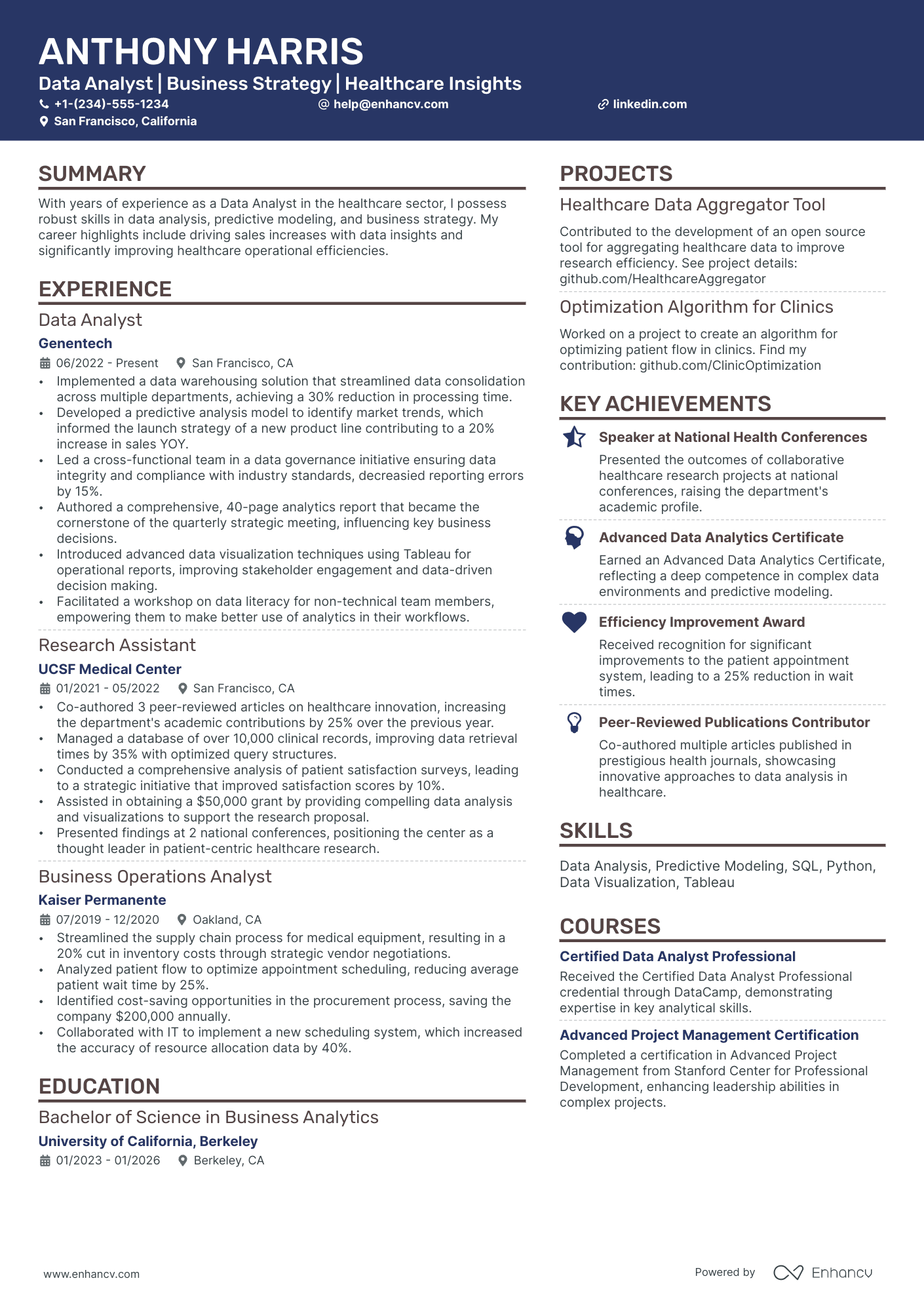
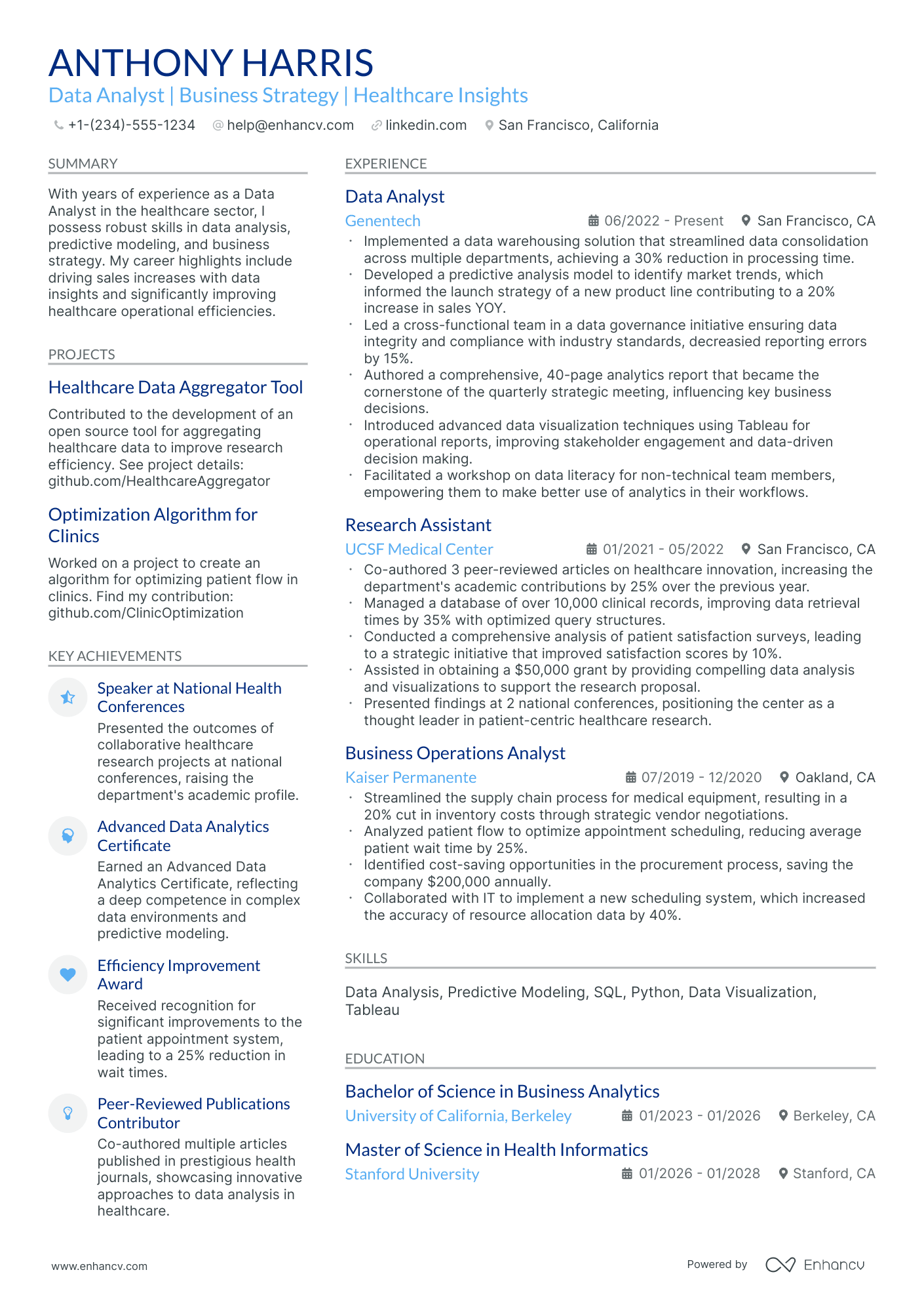
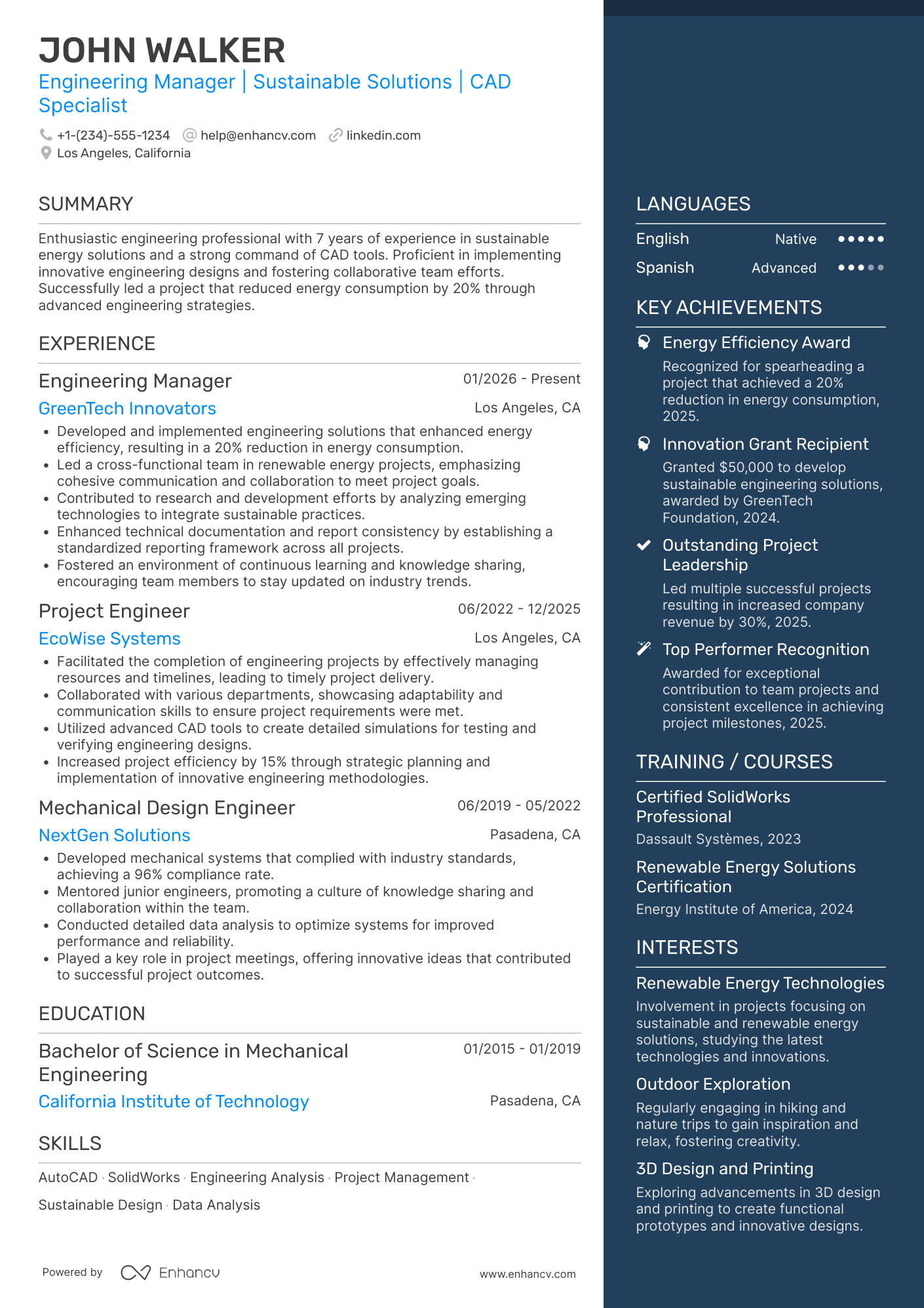
Many sophomore engineering resume submissions fail because they list coursework and tools without showing what you built or improved. A sophomore engineering resume must earn attention fast through ATS screening and quick recruiter scans in a crowded applicant pool.
A strong resume shows outcomes and proof of engineering impact, not task lists. Knowing how to make your resume stand out starts with highlighting measurable results like latency reduced by 18%, a prototype delivered two weeks early, test coverage raised to 85%, or a design change that cut defects and improved user retention.

Key takeaways
- Quantify every experience bullet with metrics like latency, error rates, or delivery time.
- Use a hybrid format if you lack internships—lead with skills, then projects.
- Tailor resume language to match each job posting's exact tools and terminology.
- Replace vague task descriptions with specific outcomes you owned and delivered.
- Place projects and coursework above work history when professional experience is limited.
- Support every listed skill with proof in your experience or project bullets.
- Use Enhancv's Bullet Point Generator to turn generic duties into measurable, recruiter-ready statements.
How to format a sophomore engineering resume
Recruiters reviewing sophomore engineering resumes prioritize technical skills, relevant coursework, and project experience that demonstrate applied problem-solving ability. Choosing the right resume format ensures these signals appear early and clearly, improving both human readability and applicant tracking system (ATS) compatibility.

I have significant experience in this role—which format should I use?
Use a reverse-chronological format to place your most recent and relevant engineering experience at the top of the page. Do:
- Lead with your most substantial internship, co-op, or lab position to establish scope and ownership of engineering tasks.
- Highlight role-specific tools, languages, and domains—such as MATLAB, SolidWorks, Python, or circuit analysis—within each experience entry.
- Quantify outcomes wherever possible, tying your contributions to measurable results like efficiency gains, cost reductions, or project deliverables.
I'm junior or switching into this role—what format works best?
Use a hybrid format that leads with a focused skills section followed by project and experience entries in reverse-chronological order. Do:
- Place a technical skills section near the top of your resume so recruiters and ATS software can immediately identify relevant competencies like CAD, programming languages, or lab techniques.
- Feature academic projects, personal builds, or hackathon contributions as standalone entries to compensate for limited professional experience.
- Connect every action to a clear outcome so each bullet demonstrates impact, not just participation.
Why not use a functional resume?
A functional format strips away the timeline and context recruiters need to evaluate how your engineering skills were developed and applied, making it harder to assess growth, consistency, and hands-on experience.
- A functional format may be acceptable if you're transitioning into engineering from a different discipline and have no internships or co-ops yet—but only if you anchor every listed skill to a specific project, coursework deliverable, or measurable outcome rather than presenting skills in isolation.
Now that you've established a clean, readable layout, it's time to fill it with the right sections to highlight your engineering background effectively.
What sections should go on a sophomore engineering resume
Recruiters expect you to show clear engineering fundamentals, hands-on technical work, and evidence you can contribute on day one. Understanding what to put on a resume helps you prioritize the details that matter most.
Use this structure for maximum clarity:
- Header
- Summary
- Experience
- Skills
- Projects
- Education
- Certifications
- Optional sections: Awards, Leadership, Research
Write strong experience bullets that emphasize technical impact, measurable outcomes, and the scope of what you built, improved, or shipped.
Is your resume good enough?
Drop your resume here or choose a file. PDF & DOCX only. Max 2MB file size.
Once you’ve chosen the right categories to include, the next step is writing your sophomore engineering resume experience so each entry clearly supports those sections.
How to write your sophomore engineering resume experience
The experience section of your sophomore engineering resume should highlight work you've shipped or delivered, the technical tools and methods you applied, and the measurable outcomes you produced. Hiring managers prioritize demonstrated impact over descriptive task lists, so every bullet should prove you contributed something concrete—not just participated.
Each entry should include:
- Job title
- Company and location (or remote)
- Dates of employment (month and year)
Three to five concise bullet points showing what you owned, how you executed, and what outcomes you delivered:
- Ownership scope: the specific systems, components, codebases, test suites, or features you were directly accountable for during internships, co-ops, or project-based engineering work.
- Execution approach: the programming languages, development frameworks, engineering tools, simulation software, or design methodologies you used to complete your assigned work and solve technical problems.
- Value improved: the changes you drove in system performance, code quality, process efficiency, product reliability, or technical documentation relevant to your engineering discipline.
- Collaboration context: how you coordinated with senior engineers, product managers, QA teams, faculty advisors, or cross-functional stakeholders to move engineering deliverables forward.
- Impact delivered: the tangible results of your contributions expressed through project completion, error reduction, build improvements, or user-facing functionality rather than a summary of daily tasks.
Experience bullet formula
A sophomore engineering experience example
✅ Right example - modern, quantified, specific.
Software Engineering Intern (Sophomore)
Campus Eats | Madison, WI
2025–Present
Student-led startup building a mobile ordering platform used by ten campus dining partners and thousands of weekly users.
- Built and shipped a React Native “reorder” flow backed by Node.js and PostgreSQL, cutting repeat-order time from ninety seconds to thirty-five seconds and increasing reorder conversion by 12%.
- Implemented Redis caching and optimized REST endpoints with pagination and indexes, reducing p95 API latency from 420 ms to 180 ms under a 300 requests-per-second load test in k6.
- Added CI checks in GitHub Actions (linting, unit tests, and TypeScript builds) and raised automated test coverage from 38% to 62%, reducing production regressions by 25% month over month.
- Partnered with a product manager and designer to run two usability tests, then iterated on accessibility and error states, lowering checkout drop-off by 9% and improving App Store rating from 4.2 to 4.5.
- Instrumented key funnels with Firebase Analytics and created a Looker Studio dashboard for stakeholders, enabling weekly KPI reviews and identifying a payment failure issue that cut failed transactions by 18%.
Now that you've seen how a sophomore engineering experience section comes together, let's look at how to tailor it for specific roles and industries.
How to tailor your sophomore engineering resume experience
Recruiters evaluate your sophomore engineering resume through both human review and applicant tracking systems. Tailoring your resume to the job description ensures your relevant work stands out in both screening methods.
Ways to tailor your sophomore engineering experience:
- Match specific programming languages and tools named in the job description.
- Mirror the exact terminology used for design or testing methodologies.
- Highlight relevant lab or project work in the posted industry domain.
- Emphasize compliance or safety standards referenced in the listing.
- Reflect the collaboration models or team structures the role describes.
- Align your metrics with the KPIs or success criteria they prioritize.
- Include version control or workflow platforms specified in requirements.
- Reference quality assurance or reliability practices when the posting mentions them.
Tailoring means aligning your real accomplishments with what the role demands, not forcing disconnected keywords into your experience bullets.
Resume tailoring examples for sophomore engineering
| Job description excerpt | Untailored | Tailored |
|---|---|---|
| "Assist in designing and testing mechanical components using SolidWorks and conduct FEA simulations to validate structural integrity." | Helped with engineering projects and used CAD software for various tasks. | Designed and tested three mechanical bracket assemblies in SolidWorks, running FEA simulations that confirmed each component met a minimum 2.5x factor of safety. |
| "Support the development team in writing and debugging embedded C firmware for microcontroller-based sensor systems." | Worked on coding projects and fixed bugs in software programs. | Wrote and debugged embedded C firmware for an ATmega328P-based temperature sensor system, reducing data-read errors by 40% during bench testing. |
| "Collaborate with civil engineering teams to perform site surveying, AutoCAD drafting, and stormwater drainage calculations per local municipal codes." | Assisted the team with drawings and calculations for construction-related work. | Drafted 12 site plans in AutoCAD and performed stormwater drainage calculations using the Rational Method, ensuring compliance with county municipal stormwater codes. |
Once you’ve aligned your experience with the role’s requirements, the next step is to quantify your achievements so hiring managers can see the impact behind each bullet point.
How to quantify your sophomore engineering achievements
Quantifying your achievements proves you drove real outcomes, not just tasks. For sophomore engineering, focus on performance, reliability, quality, throughput, security risk, and delivery speed—measured in latency, error rates, test coverage, incidents, and cycle time.
Quantifying examples for sophomore engineering
| Metric | Example |
|---|---|
| Performance | "Reduced API p95 latency from 420 ms to 260 ms by adding Redis caching and query indexes in PostgreSQL for a Node.js service." |
| Reliability | "Cut production errors by 38% by adding retries, timeouts, and circuit breakers, and setting up Datadog alerts for five critical endpoints." |
| Quality | "Increased unit test coverage from 45% to 72% using Jest and GitHub Actions, reducing escaped bugs from eight to three per sprint." |
| Throughput | "Improved batch job throughput by 1.8x by parallelizing a Python ETL pipeline with Airflow, processing 1.2 million rows nightly." |
| Delivery speed | "Shortened code review cycle time from three days to one day by introducing pull request templates and a linting gate with ESLint." |
Turn vague job duties into measurable, recruiter-ready resume bullets in seconds with Enhancv's Bullet Point Generator.
Once you've crafted strong bullet points for your experience, you'll want to apply that same precision to presenting your hard and soft skills effectively.
How to list your hard and soft skills on a sophomore engineering resume
Your skills section shows recruiters and an ATS (applicant tracking system) how you'll contribute fast, so list role-matched tools and behaviors, then support them in your bullets; aim for a skills mix that's roughly two-thirds hard skills and one-third soft skills. sophomore engineering roles require a blend of:
- Product strategy and discovery skills.
- Data, analytics, and experimentation skills.
- Delivery, execution, and go-to-market discipline.
- Soft skills.
Your skills section should be:
- Scannable (bullet-style grouping).
- Relevant to the job post.
- Backed by proof in experience bullets.
- Updated with current tools.
Place your skills section:
- Above experience if you're junior or switching careers.
- Below experience if you're mid/senior with strong achievements.

Hard skills
- Python, NumPy, pandas
- MATLAB, Simulink
- C, C++
- Git, GitHub
- Linux command line
- SQL, PostgreSQL
- Excel, pivot tables
- CAD: SolidWorks, AutoCAD
- Finite element analysis (ANSYS)
- Test planning, DOE
- Requirements, user stories
- Jira, Confluence
Soft skills
- Write clear technical updates
- Ask sharp clarifying questions
- Turn feedback into iterations
- Collaborate in code reviews
- Estimate work and tradeoffs
- Document decisions and risks
- Prioritize tasks under deadlines
- Communicate blockers early
- Align on requirements with stakeholders
- Own tasks end-to-end
How to show your sophomore engineering skills in context
Skills shouldn't live only in a bullet list on your resume. Browse resume skills examples to see how other engineers present their technical abilities effectively.
They should be demonstrated in:
- Your summary (high-level professional identity)
- Your experience (proof through outcomes)
Here's what that looks like in practice.
Summary example
Sophomore engineer with three years in geotechnical site analysis, skilled in PLAXIS modeling and subsurface investigation coordination. Led foundation assessments across 12 commercial projects, reducing design revision cycles by 30% through early-phase collaboration with structural teams.
- Reflects a credible experience level
- Names role-specific tools and methods
- Includes a concrete, measurable outcome
- Highlights collaboration as a soft skill
Experience example
Sophomore Geotechnical Engineer
Terrafirm Consulting Group | Denver, CO
June 2021–Present
- Performed bearing capacity analyses using PLAXIS 2D for 15 foundation projects, cutting estimated settlement errors by 22%.
- Coordinated with structural engineers and environmental scientists to streamline subsurface investigation timelines by two weeks per project.
- Authored 40+ geotechnical reports incorporating SPT and CPT data, improving client review approval rates by 18%.
- Every bullet includes measurable proof.
- Skills appear naturally within real outcomes.
Once you’ve demonstrated your engineering abilities through relevant coursework, projects, and outcomes, the next step is to structure those details into a sophomore engineering resume even if you don’t have formal experience.
How do I write a sophomore engineering resume with no experience
Even without full-time experience, you can demonstrate readiness through projects and academic work. Our guide on building a resume without work experience walks through this approach in detail. Consider including:
- Course projects with deliverables
- Design team or club builds
- Research assistant tasks and results
- Lab reports and test data
- Hackathon prototypes and demos
- Personal engineering portfolio projects
- Volunteer technical builds for nonprofits
- Engineering competitions and placements
Focus on:
- Quantified results from technical work
- Tools, methods, and standards used
- Clear scope, role, and deliverables
- Evidence of problem solving outcomes
Resume format tip for entry-level sophomore engineering
Use a reverse chronological resume with projects and coursework above work history. It highlights recent, relevant engineering output when you have limited professional experience. Do:
- Lead with a projects section.
- Quantify outcomes with numbers and units.
- List tools next to each project.
- Use action verbs and results.
- Add links to a portfolio.
- Built a MATLAB control model for a DC motor in a course project, reducing steady-state error from 12% to 3% through PID tuning.
Now that you've established a strategy for building your resume around skills and projects rather than job history, let's focus on your education section—often the strongest asset on a sophomore engineering resume.
How to list your education on a sophomore engineering resume
Your education section helps hiring teams confirm you have the foundational technical knowledge needed for a sophomore engineering role. It validates your academic preparation quickly.
Include:
- Degree name
- Institution
- Location
- Graduation year
- Relevant coursework (for juniors or entry-level candidates)
- Honors & GPA (if 3.5 or higher)
Avoid listing specific months or days for your graduation. Use the year only to keep things clean.
Here's a strong education entry tailored to a sophomore engineering resume.
Example education entry
Bachelor of Science in Mechanical Engineering
University of Michigan, Ann Arbor, MI
2026 | GPA: 3.7/4.0
- Relevant Coursework: Thermodynamics, Statics, Dynamics, Materials Science, Engineering Design, Fluid Mechanics
- Honors: Dean's List (four consecutive semesters), Tau Beta Pi Engineering Honor Society
How to list your certifications on a sophomore engineering resume
Certifications show your commitment to learning, prove tool proficiency, and signal industry relevance for a sophomore engineering resume, even before you have extensive project experience.
Include:
- Certificate name
- Issuing organization
- Year
- Optional: credential ID or URL
- Put certifications below education when they're older, less relevant, or you want your degree progress to lead the page.
- Put certifications above education when they're recent, highly relevant to the role, or required for the internships you target.
Best certifications for your sophomore engineering resume
- Certified SolidWorks Associate (CSWA)
- Autodesk Certified User (Fusion 360)
- Siemens NX Associate Certification
- OSHA 10-Hour General Industry
- AWS Certified Cloud Practitioner
- Cisco Certified Network Associate (CCNA)
- Lean Six Sigma Yellow Belt
Once you’ve added your credentials in a way that highlights their relevance, you can use that same focus to write a sophomore engineering resume summary that quickly communicates your value to employers.
How to write your sophomore engineering resume summary
Your resume summary is the first thing a recruiter reads. A strong one immediately signals you have the right skills and early experience for a sophomore engineering role.
Keep it to three to four lines, with:
- Your title and relevant years of experience, including internships or co-ops.
- The domain or product type you've worked in, such as web applications or embedded systems.
- Core tools and technologies you use, like Python, React, or AWS.
- One or two quantified achievements that show real contributions.
- Soft skills tied to real outcomes, such as collaboration that shortened a sprint cycle.

PRO TIP
At this level, emphasize technical skills, relevant coursework, and measurable early impact. Show recruiters you can contribute from day one. Avoid vague phrases like "passionate self-starter" or "fast learner." Replace them with specific tools you've used and results you've delivered.
Example summary for a sophomore engineering
Sophomore software engineer with one year of internship experience building REST APIs in Python and Django. Reduced API response times by 30% through query optimization. Collaborated across two cross-functional teams to ship features on schedule.
Optimize your resume summary and objective for ATS
Drop your resume here or choose a file.
PDF & DOCX only. Max 2MB file size.
Now that your summary captures your engineering strengths at a glance, make sure your header presents the essential contact details recruiters need to reach you.
What to include in a sophomore engineering resume header
A resume header lists your key identifying and contact details, and it improves visibility, credibility, and recruiter screening for a sophomore engineering resume.
Essential resume header elements
- Full name
- Tailored job title and headline
- Location
- Phone number
- Professional email
- GitHub link
- Portfolio link
A LinkedIn link helps recruiters verify experience quickly and supports screening.
Don't include a photo on a sophomore engineering resume unless the role is explicitly front-facing or appearance-dependent.
Keep the header to one or two lines, match it to the role, and use links that open directly to your best work.
Sophomore engineering resume header
Jordan Kim
Sophomore Engineering Student | Mechanical Engineering Intern Candidate
Austin, TX | (512) 555-01XX | your.name@enhancv.com github.com/yourname yourwebsite.com linkedin.com/in/yourname
With your contact details and key identifiers clearly set at the top, the next step is to add optional sections that strengthen your sophomore engineering resume and support the information in your header.
Additional sections for sophomore engineering resumes
When your core sections look similar to every other applicant's, well-chosen additional sections help you stand out with role-specific credibility. For example, listing language skills can differentiate you for roles with global teams or international project work.
- Languages
- Hobbies and interests
- Publications
- Volunteer experience
- Awards and honors
- Professional affiliations
- Hackathons and competitions
Once you've rounded out your resume with the right supporting sections, it's worth knowing whether a cover letter should accompany it.
Do sophomore engineering resumes need a cover letter
A cover letter isn't required for a sophomore engineering in most applications. If you're unsure what a cover letter is or when it matters, it helps when roles are competitive or when hiring teams expect a narrative beyond the resume. It can make a difference when your fit or experience isn't obvious.
Use a cover letter when it can add context fast:
- Explain role or team fit by naming the team's goals and matching them to your skills and interests.
- Highlight one or two relevant projects or outcomes, including scope, tools, and measurable results.
- Show understanding of the product, users, or business context by referencing a real feature, customer need, or metric.
- Address career transitions or non-obvious experience by connecting coursework, research, or part-time work to the role's requirements.
Drop your resume here or choose a file.
PDF & DOCX only. Max 2MB file size.
Once you’ve decided whether to include a cover letter based on the role and employer expectations, using AI to improve your sophomore engineering resume helps you strengthen the document you’ll submit either way.
Using AI to improve your sophomore engineering resume
AI can sharpen clarity, tighten structure, and boost impact across your sophomore engineering resume. It helps you say more with fewer words. But overuse kills authenticity fast. Once your content feels clear and role-aligned, step away from AI entirely. For more ideas, explore ChatGPT resume writing prompts tailored to different resume sections.
Here are 10 practical prompts you can copy and paste to strengthen specific sections of your resume:
- Strengthen summary focus: "Rewrite this sophomore engineering resume summary to highlight my strongest technical skills and relevant coursework in under three sentences."
- Quantify experience bullets: "Add measurable outcomes to these sophomore engineering resume experience bullets using numbers, percentages, or timeframes where possible."
- Tighten project descriptions: "Shorten each project entry on my sophomore engineering resume to two concise lines while keeping technical details intact."
- Align skills section: "Reorganize the skills section of my sophomore engineering resume to prioritize tools and languages listed in this job description."
- Improve action verbs: "Replace weak or repeated verbs in my sophomore engineering resume experience section with specific, high-impact engineering action verbs."
- Refine education details: "Rewrite the education section of my sophomore engineering resume to emphasize relevant coursework, honors, and GPA clearly."
- Clarify certification entries: "Format the certifications on my sophomore engineering resume so each entry includes the issuing body, date, and relevance."
- Remove filler language: "Identify and remove vague or unnecessary words from every section of my sophomore engineering resume without losing meaning."
- Tailor for relevance: "Flag any bullets on my sophomore engineering resume that don't connect to this specific mechanical engineering internship posting."
- Check consistency: "Review my sophomore engineering resume for inconsistent tense, formatting, punctuation, and date styles across all sections."
Stop using AI once your resume sounds accurate, specific, and aligned with real experience. AI should never invent experience or inflate claims—if it didn't happen, it doesn't belong here.
Conclusion
A strong sophomore engineering resume shows measurable outcomes, role-specific skills, and a clear structure that’s easy to scan. It highlights impact with numbers, names the tools you used, and connects your experience to the role.
This approach signals readiness for today’s hiring market and near-future hiring market. Keep your sophomore engineering resume focused, consistent, and results-driven, and you’ll make it easy for recruiters to trust your fit.