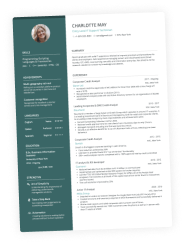
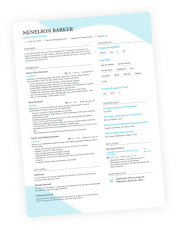
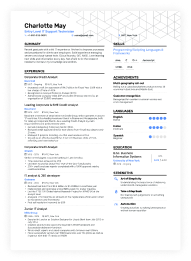
Yes—you can send a resume instead of a CV in many cases.
But whether you should depends on the job, the country, and the expectations of the employer. This guide breaks down the key differences, when each format is required, and how to convert between them so you never send the wrong document again.

Key takeaways
- You can send a resume instead of a CV for most corporate, non-academic roles, especially in the U.S., Canada, and parts of Europe.
- Follow the employer’s instructions: if they request a resume, send a resume—if they request a CV, send a CV.
- Academic, research, and scientific roles require a full CV with publications and research experience.
- Expectations vary across regions—when unclear, ask the recruiter what they prefer.
- If you’re switching formats or unsure, you can submit both a resume and a CV to cover all bases.
Is your resume good enough?
Drop your resume here or choose a file. PDF & DOCX only. Max 2MB file size.
What’s the difference between a resume and a CV?
The main difference between a resume and a CV comes down to how long they are, how much detail they include, and when employers expect to see each one.
Resume
A resume is a one to two-page, skills- and achievements-focused document tailored for a specific job. It highlights your work experience, strengths, and results.
CV (Curriculum Vitae)
A CV is a multi-page, comprehensive document that outlines your entire academic and professional history. It includes research experience, publications, presentations, teaching work, and awards.

Quick summary
- Resume → short, tailored, results-focused
- CV → long, detailed, academic-focused
When you can send a resume instead of a CV
You can send a resume instead of a CV in several common situations, especially depending on the role and the region you’re applying in.
1. Corporate roles in the U.S. and Canada
For business, tech, marketing, office, hospitality, or service jobs, a resume is the standard. Recruiters expect a short, tailored document—not an academic CV.
2. When the job posting explicitly requests a resume
If the description says “resume,” follow the instructions. If you only have a CV, convert it or submit both (resume first).
3. Countries where “CV” means “resume”
In places like the UK, Ireland, the EU, and New Zealand, “CV” commonly refers to the American-style resume. If the role is not academic, you can send your resume even if the listing uses the term “CV.”
4. When the application doesn’t specify
If the role isn’t academic or research-based and the upload field just says “CV,” a resume is almost always acceptable.
But while a resume works in many cases, there are important situations where it should not replace a CV.
Here’s the truth: you can absolutely send a resume instead of a CV—if the role isn’t academic, most employers won’t blink. Recruiters care far more about clarity and relevance than document labels.
If your resume tells your story better, send it. And if you’re really unsure, attach both and let the hiring manager decide—no one ever lost an interview for giving too much useful information.
Author’s take
When you should not replace a CV with a resume
Some roles require a full CV, and sending a resume instead can leave out critical information employers expect to see.
1. Academic, research, or scientific roles
Universities, labs, scientific organizations, and graduate programs require a full CV—including your academic achievements, research projects, teaching experience, and publications.
2. Postings that clearly request a CV
If the employer asks for a CV, follow the instructions closely. A resume alone will look incomplete.
3. Countries with mixed terminology (Australia, India, South Africa)
Since expectations vary, ask the recruiter which document they prefer.

Not sure which to use? Do this!
A quick, professional message can save you guesswork:
“Could you confirm whether you prefer a short resume or a full academic CV for this role?”
If the posting requests a resume but you have a CV prepared, you can submit both:
- Resume → for relevance
- CV → for additional context
If the posting requests a CV and you only have a resume, expand it using the guide below.
How to convert between resumes and CVs (step-by-step)
Converting between formats is about adjusting length, focus, and detail—not rewriting your entire professional history.
Converting a resume into a CV
Here, you’re expanding your document.
Add or enhance sections such as:
- Academic experience and teaching roles
- Research experience
- Publications and presentations
- Awards and academic honors
- Professional associations
- Volunteer experience related to your discipline
- Work samples
- References (if requested)
A CV doesn’t need to be optimized for applicant tracking systems (ATS)—its purpose is completeness, not brevity.
Converting a CV into a resume
Here, you’re editing down to highlight the value for a specific employer.
Remove or trim
- Long lists of publications
- Extensive research projects
- Old or irrelevant academic work
- References (unless explicitly asked for)
Strengthen
- A results-driven work experience section
- Skills aligned with the job description
- Volunteer experience that supports your profile
- ATS-friendly sections and formatting
A resume’s goal is clarity and relevance—not full history.
International and academic considerations
Resume and CV expectations change depending on where you're applying. Knowing these differences can help you avoid common mistakes.
Geographic usage
- U.S. and Canada: Resume for corporate roles—CV only for academic, medical, and scientific positions.
- UK, Ireland, Europe, New Zealand: “CV” usually means resume.
- Australia, India, South Africa: Mixed usage—best to confirm.
- International roles: Consider whether a curriculum vitae translation or cultural formatting is appropriate.
Applying for academic roles or graduate school
Academic applications require a full CV including:
- Academic achievements
- Research projects
- Publications and presentations
- Honors and awards
- Education background
- Academic positions
Graduate schools and postsecondary institutions often provide their own CV guidelines—follow them closely.
Applicant tracking systems (ATS)
For non-academic, corporate roles, ensure your resume is ATS-friendly:
- Standard headings
- Strong keywords
- Clean structure
- No complex design elements
CVs, however, are almost always reviewed manually.
At their core, resumes and CVs serve different purposes—and knowing how they differ makes your choice much easier.
Key differences between resumes and CVs
| Category | Resumes | CVs |
|---|---|---|
| Length | One to two pages | Multi-page, no length limit |
| Primary Purpose | Tailored snapshot of skills and achievements | Comprehensive record of academic and professional history |
| Content Emphasis | Customization | relevant work experience | results | role-specific skills | Academic accomplishments | research | publications | honors | awards | teaching | professional associations |
| Industry Usage | Business, tech, marketing, hospitality, office roles | Academia, scientific fields, research, medicine |
| Personal Information | Minimal—rarely includes personal details or references | May include references and limited personal details depending on the country |
Conclusion
Choosing between a resume and a CV is easier once you know what each document is meant to do. Use a resume for most corporate roles and a CV for academic or research paths. If expectations aren’t clear, ask—or send both to cover your bases.
The goal is simple: send the format that best supports your strengths (and meets the requirements).
Make one that's truly you.