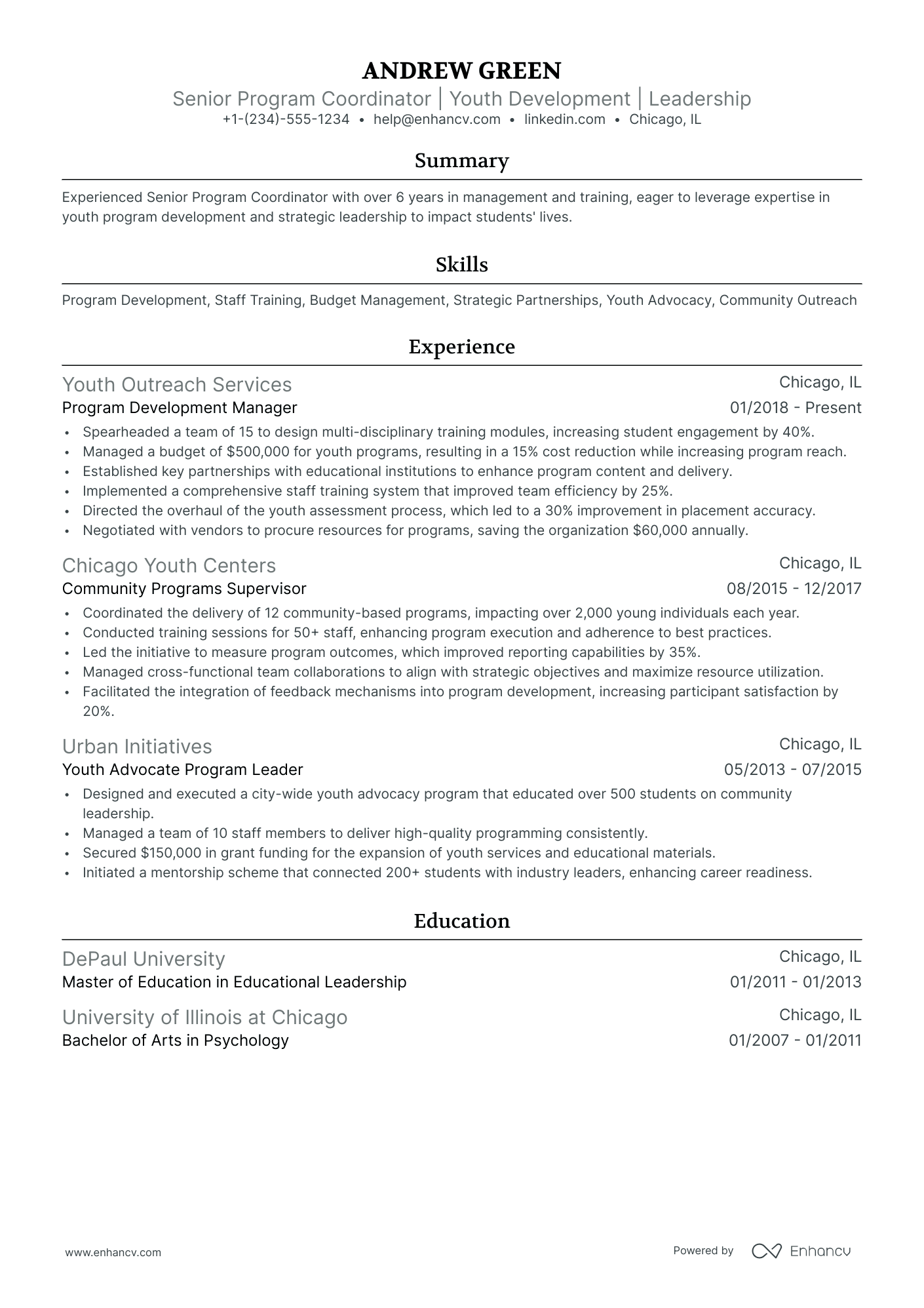
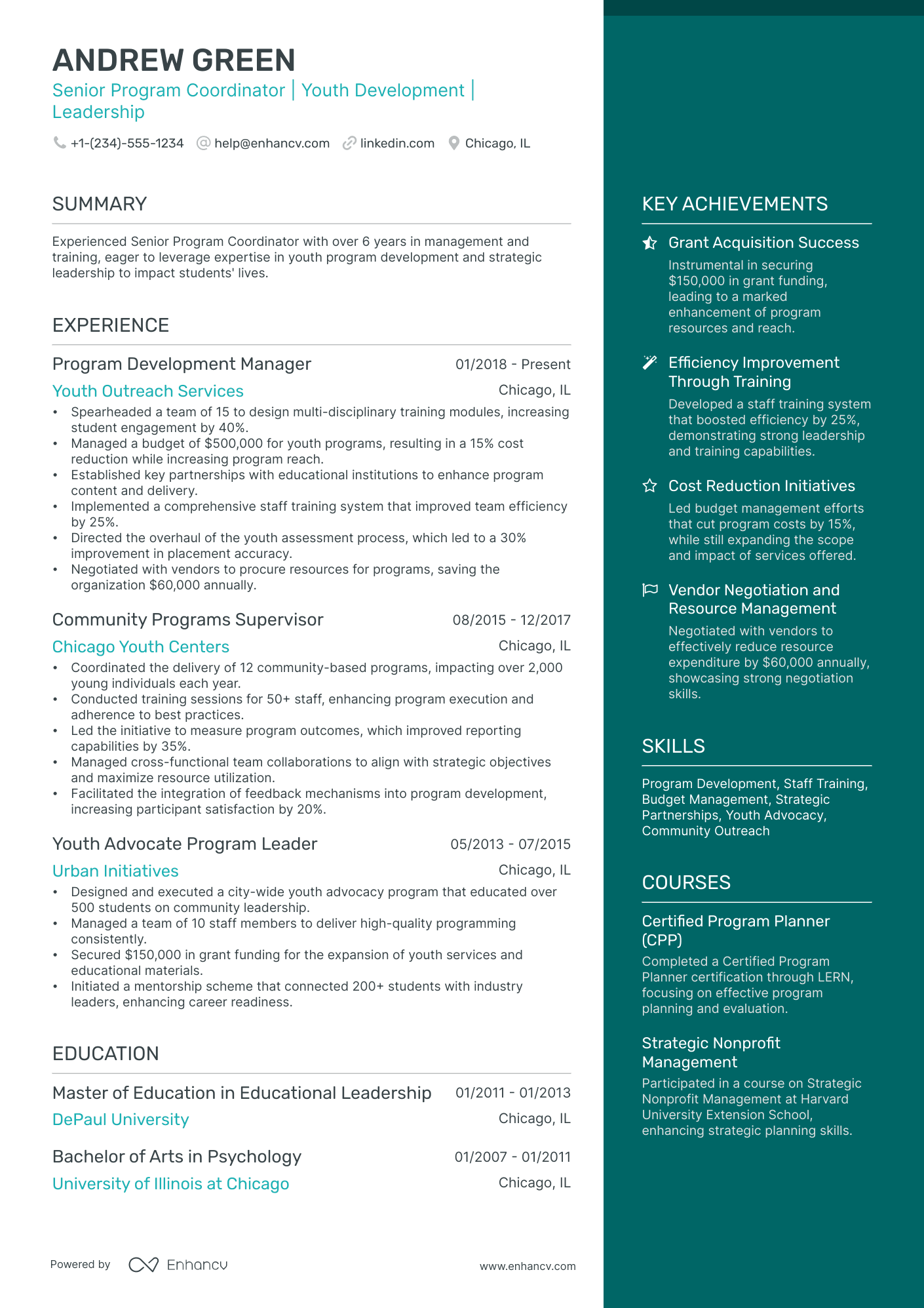
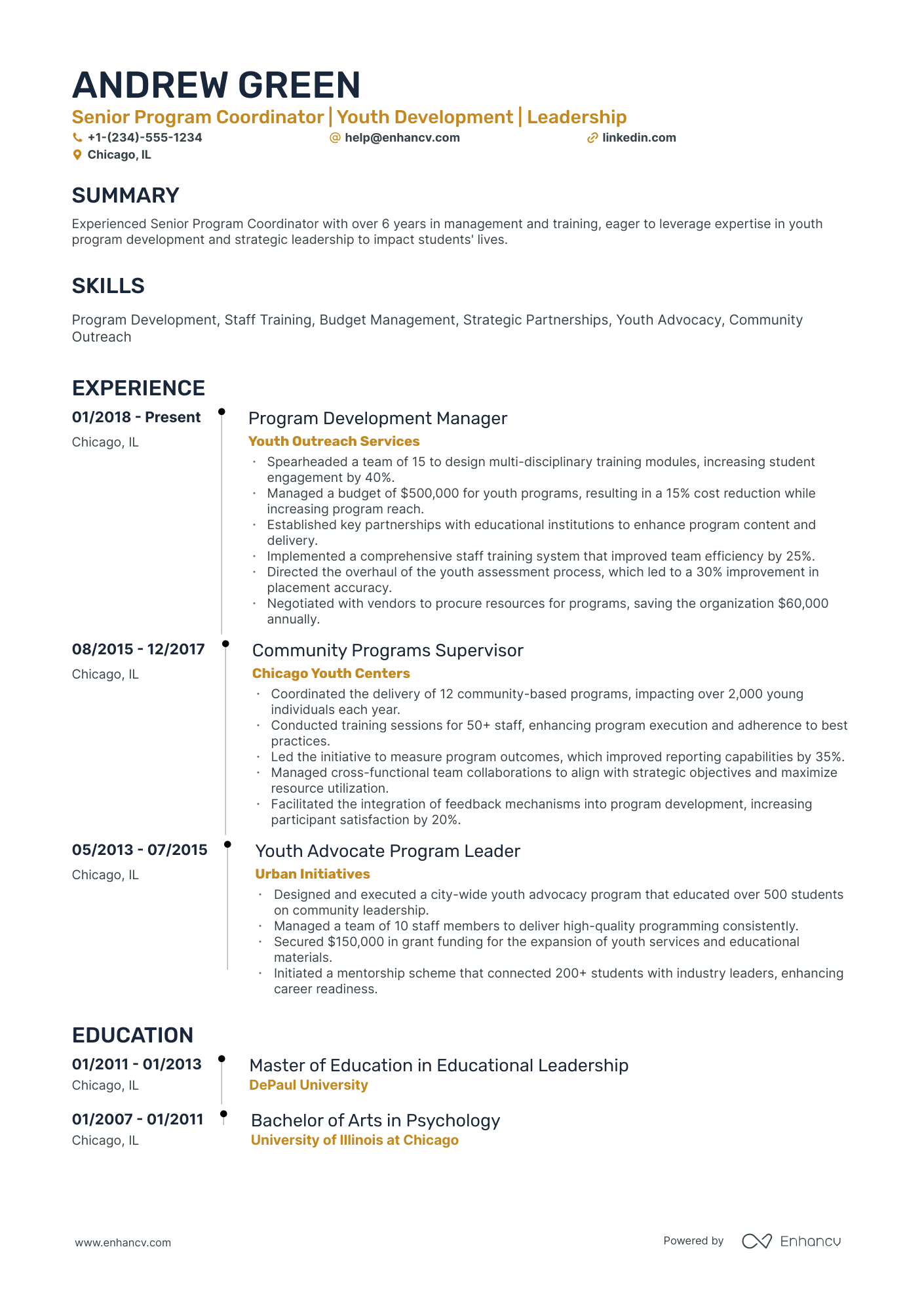
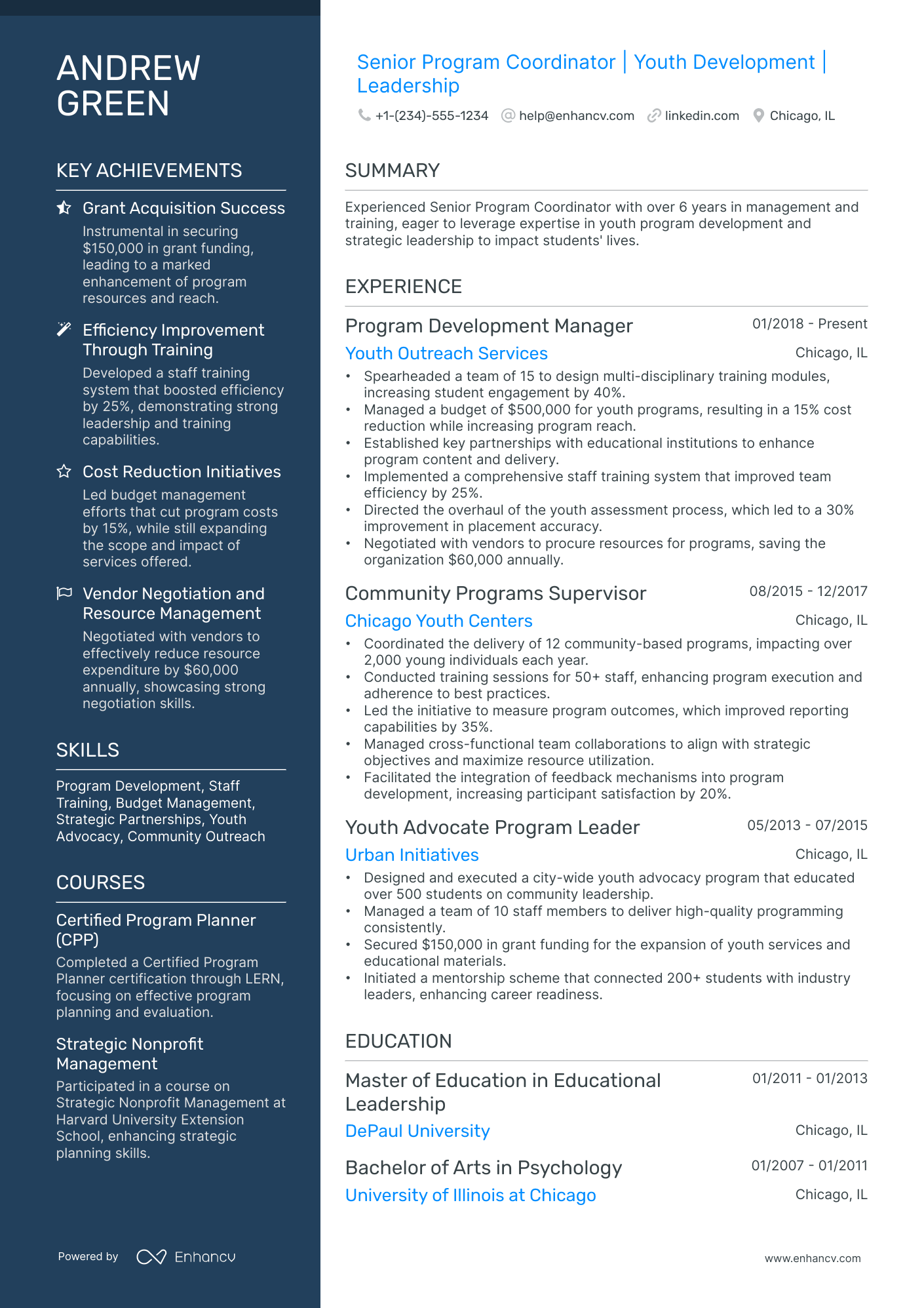
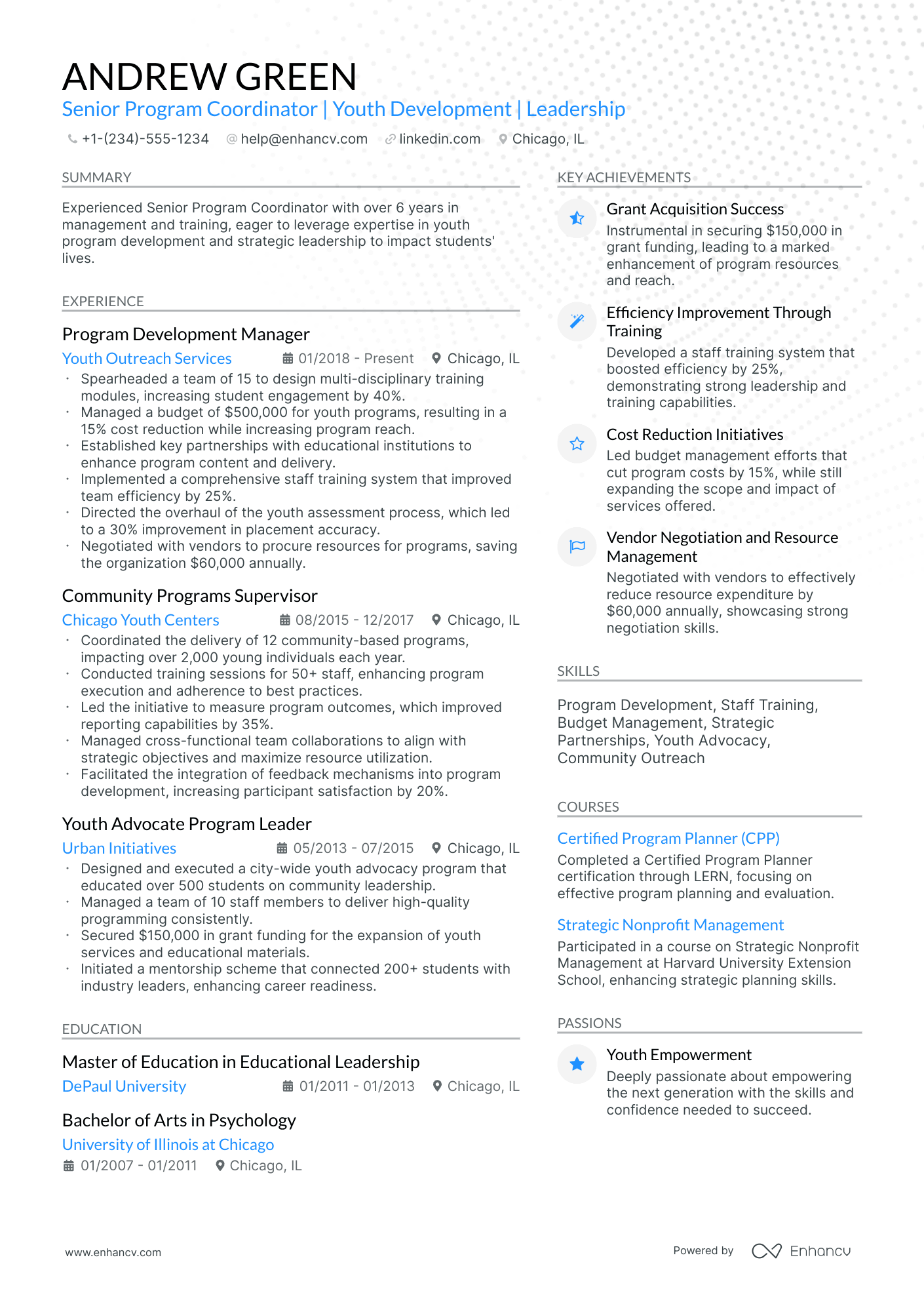
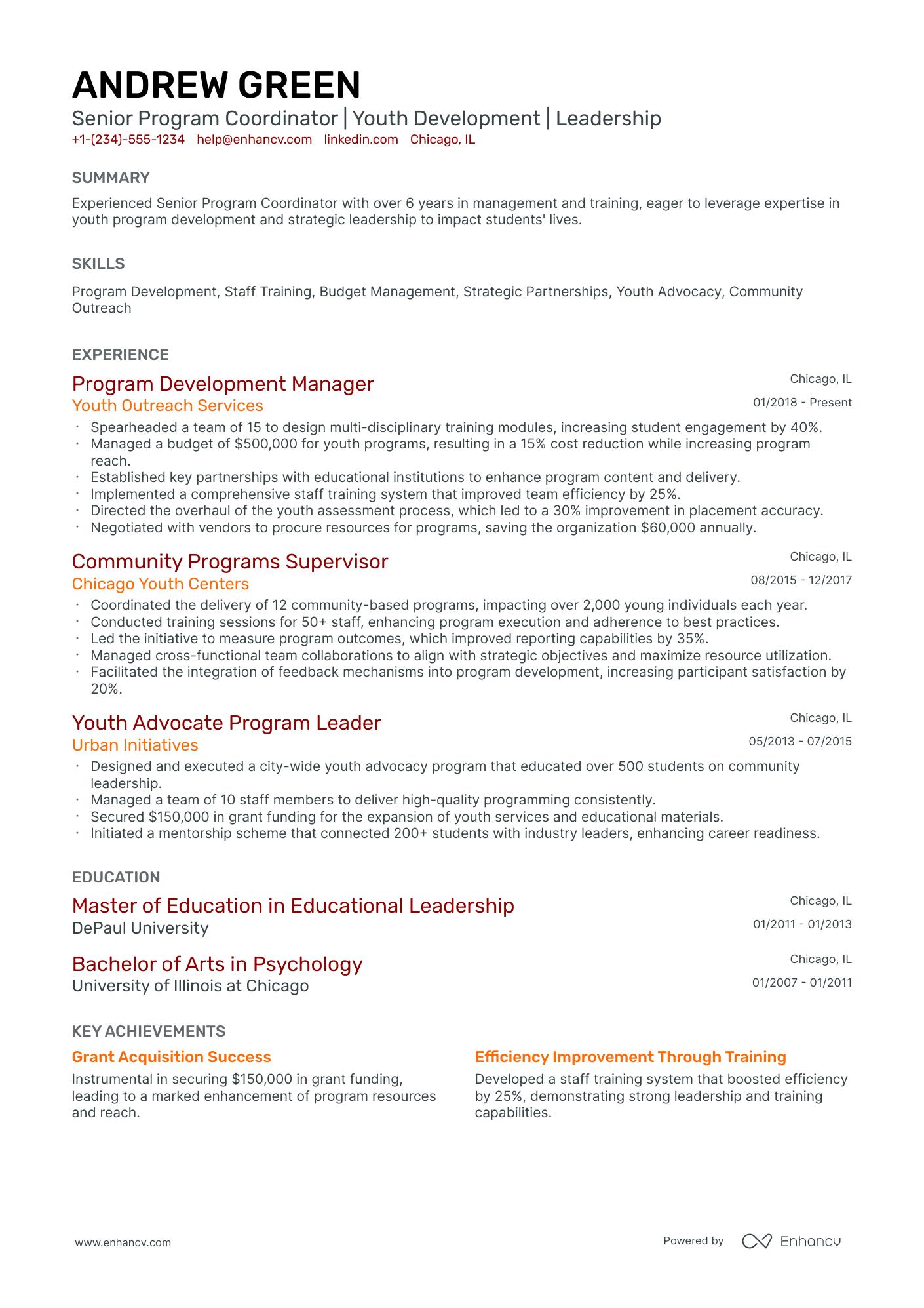
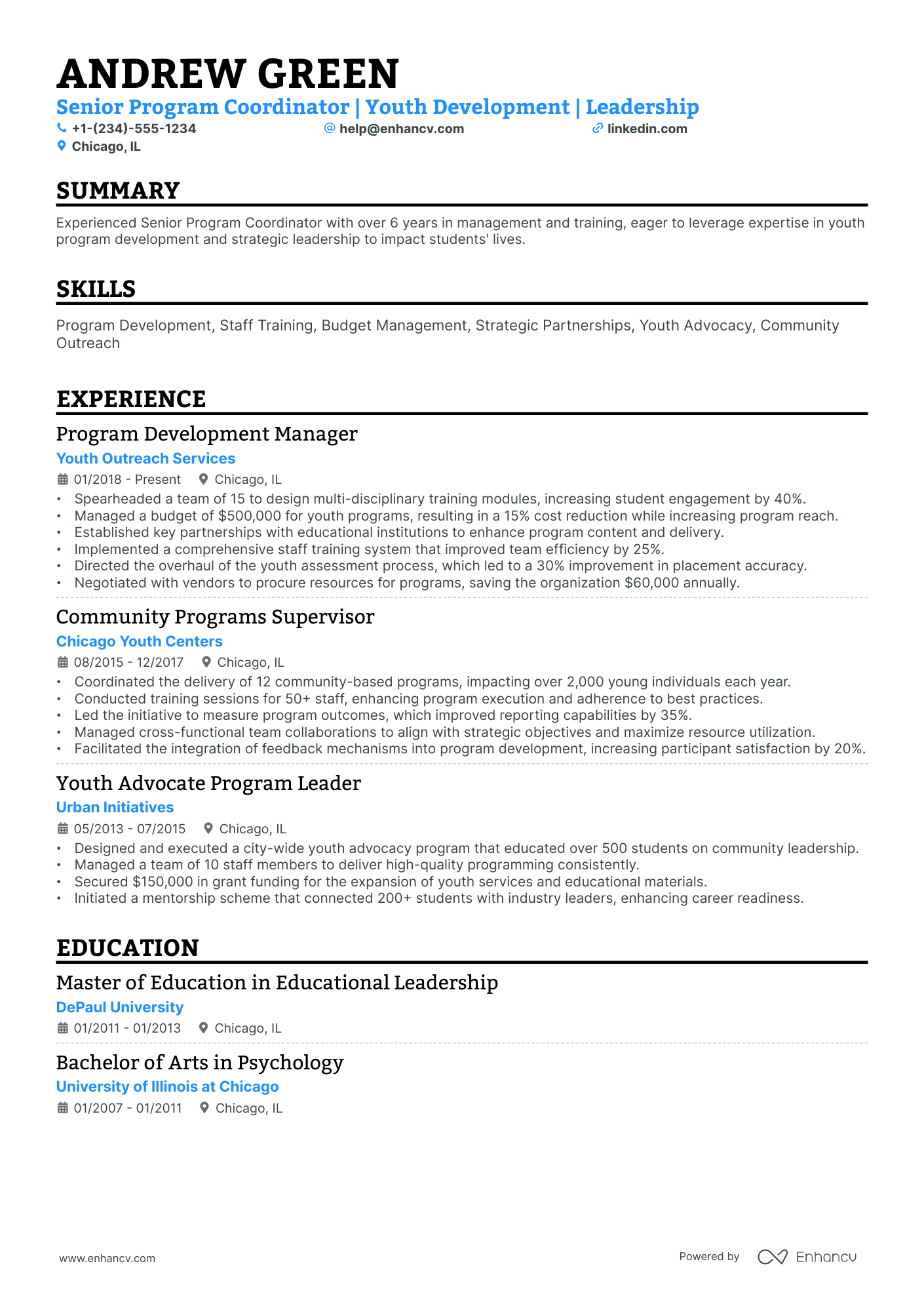
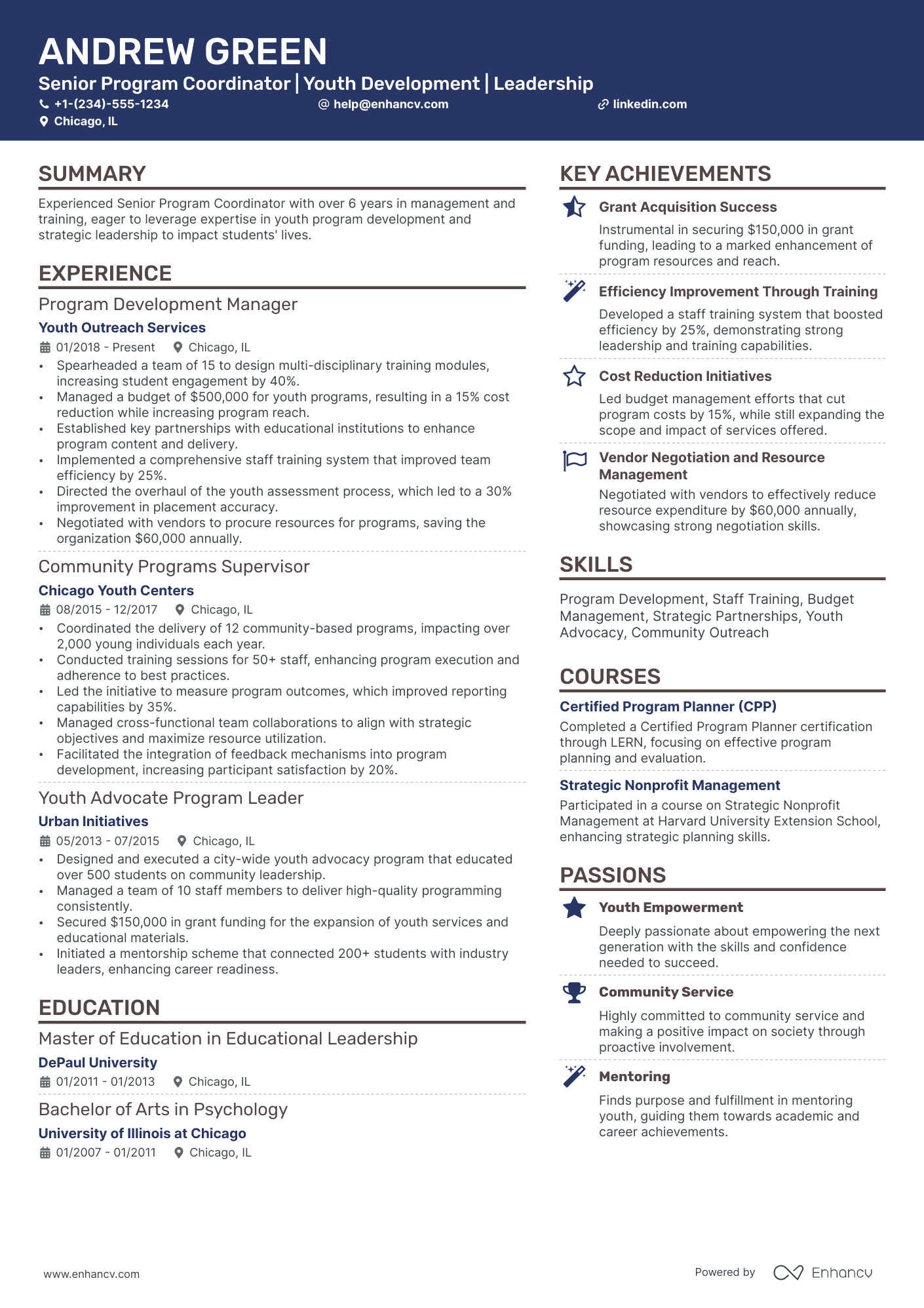
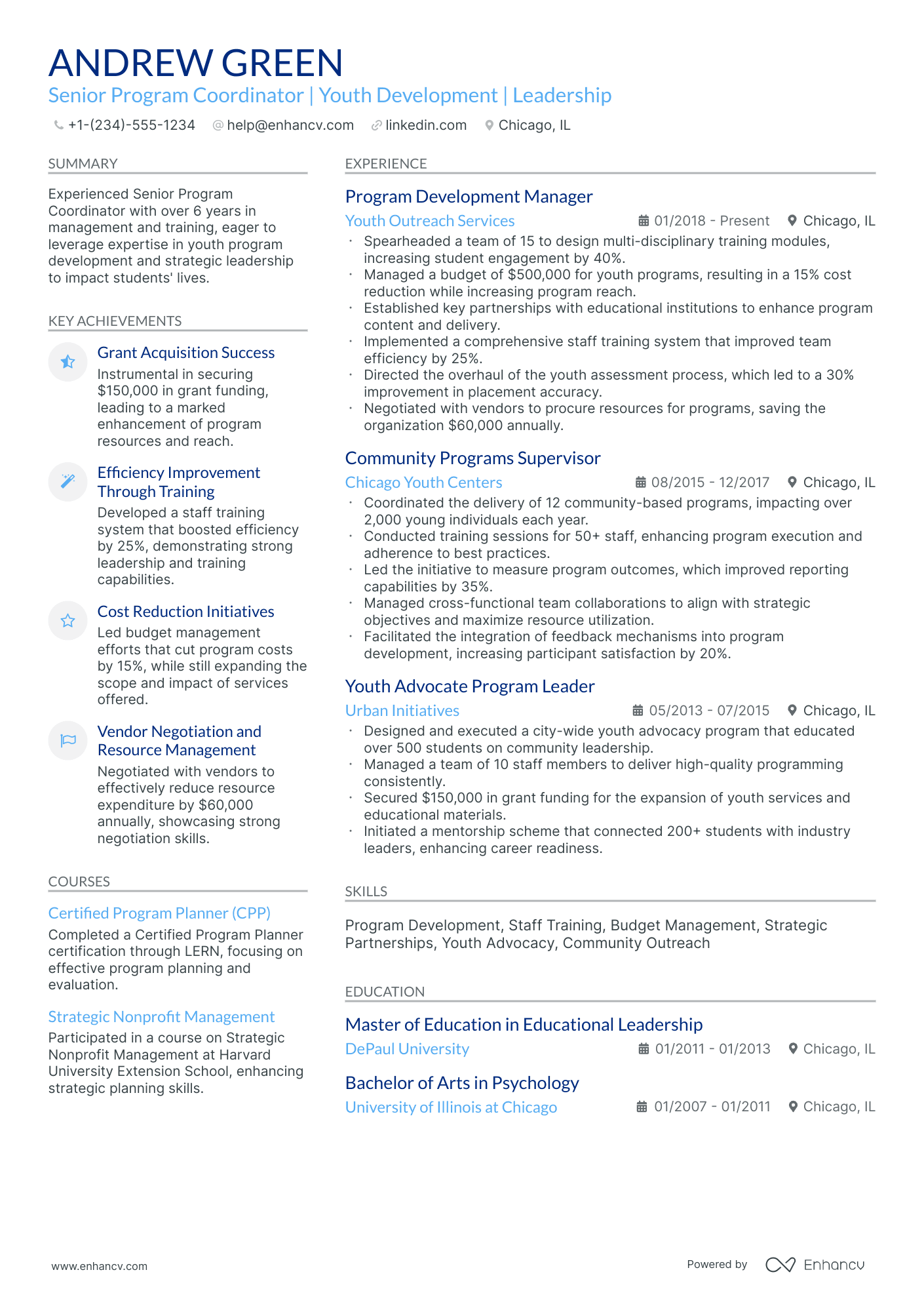
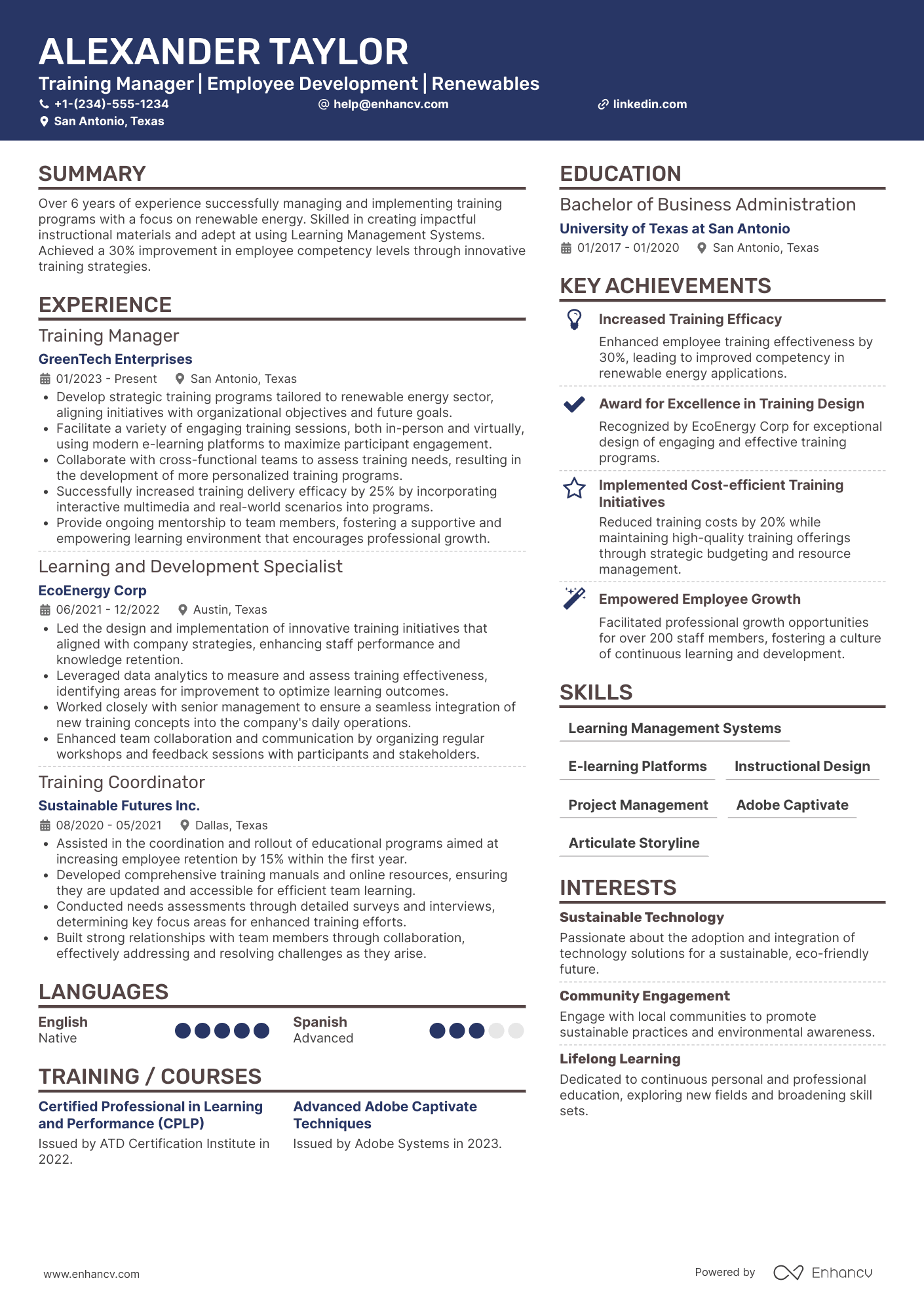
Many training manager resume drafts fail because they describe courses and tools but don't show business impact, so they look generic. In today's hiring flow, a training manager resume must win ATS screening and fast recruiter scans in a crowded field. Knowing how to make your resume stand out is essential when competing against dozens of similarly qualified candidates.
A strong resume shows what changed because of your programs. You should highlight reduced time-to-productivity, higher assessment pass rates, improved compliance audit results, faster onboarding across regions, stronger manager adoption, and measurable performance gains tied to retention or revenue.

Key takeaways
- Quantify training outcomes like ramp time, pass rates, and compliance completion on every resume.
- Use reverse-chronological format if you have experience; use hybrid format when switching careers.
- Tailor each experience bullet to match the job posting's tools, frameworks, and KPIs.
- Embed skills in your summary and experience sections, not just in a standalone list.
- Write a three- to four-line summary that names your industry, tools, and a measurable win.
- Place certifications above education when they're recent or required for the target role.
- Use Enhancv to turn routine training tasks into concise, metric-driven resume bullets.
Job market snapshot for training managers
We analyzed 353 recent training manager job ads across major US job boards. These numbers help you understand regional hotspots, employer expectations, skills in demand at a glance.
What level of experience employers are looking for training managers
| Years of Experience | Percentage found in job ads |
|---|---|
| 1–2 years | 29.7% (105) |
| 3–4 years | 5.9% (21) |
| 5–6 years | 11.0% (39) |
| 7–8 years | 3.1% (11) |
| 9–10 years | 0.3% (1) |
| 10+ years | 0.8% (3) |
| Not specified | 49.3% (174) |
Training manager ads by area of specialization (industry)
| Industry (Area) | Percentage found in job ads |
|---|---|
| Finance & Banking | 48.4% (171) |
| Healthcare | 27.5% (97) |
| Retail & E-commerce | 14.4% (51) |
| Education | 5.1% (18) |
Top companies hiring training managers
| Company | Percentage found in job ads |
|---|---|
| Crunch | 25.2% (89) |
| FASTSIGNS | 20.4% (72) |
Role overview stats
These tables show the most common responsibilities and employment types for training manager roles. Use them to align your resume with what employers expect and to understand how the role is structured across the market.
Day-to-day activities and top responsibilities for a training manager
| Responsibility | Percentage found in job ads |
|---|---|
| Sales | 20.4% (72) |
| Communication | 17.3% (61) |
| Coaching | 16.7% (59) |
| Personal training | 16.4% (58) |
| Leadership | 14.7% (52) |
| Dotfit | 13.0% (46) |
| Vfp | 12.5% (44) |
| Abc/datatrak | 12.2% (43) |
| Styku | 12.2% (43) |
| Cpr | 11.3% (40) |
| Personal training certification | 11.0% (39) |
| Program design | 10.2% (36) |
Type of employment (remote vs on-site vs hybrid)
| Employment type | Percentage found in job ads |
|---|---|
| On-site | 85.8% (303) |
| Hybrid | 9.3% (33) |
| Remote | 4.8% (17) |
How to format a training manager resume
Recruiters evaluating training manager resumes look for evidence of program design expertise, learner engagement metrics, and the ability to align training initiatives with business objectives. A clean, well-organized resume format ensures these signals surface quickly during both automated screening and manual review.

I have significant experience in this role—which format should I use?
Use a reverse-chronological format to present your training management career in a clear, progression-driven timeline. Do:
- Lead with your most recent role and emphasize scope: team size, budget ownership, number of programs managed, and departments served.
- Highlight domain-specific expertise such as learning management systems (LMS), instructional design frameworks, needs assessments, and compliance training development.
- Quantify business impact through metrics like employee performance improvements, training completion rates, cost savings, or time-to-competency reductions.
I'm junior or switching into this role—what format works best?
A hybrid format works best, allowing you to lead with relevant training skills and certifications while still showing a concise work history. Do:
- Place a targeted skills section near the top featuring competencies like curriculum development, adult learning theory, facilitation, and LMS administration.
- Include projects, volunteer facilitation work, or cross-functional training initiatives that demonstrate hands-on instructional experience, even if they weren't your primary job responsibility.
- Connect every listed skill to a specific action and outcome so recruiters can see practical application, not just knowledge.
Why not use a functional resume?
A functional format strips away the timeline context that recruiters need to evaluate how your training skills developed and where you applied them, making it harder to verify your hands-on experience.
- A functional resume may be acceptable if you're transitioning from a related field like teaching, HR, or instructional design and have limited corporate training history—but only if every listed skill is tied to a specific project, deliverable, or measurable outcome.
With your format established, the next step is filling it with the right sections to present your qualifications effectively.
What sections should go on a training manager resume
Recruiters expect a training manager resume to clearly show how you design, deliver, and scale training programs that improve performance and business results. Understanding which resume sections to include helps you present your qualifications in the right order.
Use this structure for maximum clarity:
- Header
- Summary
- Experience
- Skills
- Projects
- Education
- Certifications
- Optional sections: Awards, Leadership, Languages
Strong experience bullets should emphasize measurable impact, outcomes, program scope, stakeholder alignment, and results such as performance gains, completion rates, and time-to-productivity improvements.
Is your resume good enough?
Drop your resume here or choose a file. PDF & DOCX only. Max 2MB file size.
Now that you’ve organized the key parts of your resume, the next step is to write your training manager experience section so each role supports that structure with clear, relevant details.
How to write your training manager resume experience
The experience section is where you prove you can design, deliver, and scale training programs that drive real organizational change. Hiring managers prioritize demonstrated impact—curriculum launches, adoption rates, performance lifts, and retention improvements—over generic descriptions of daily responsibilities.
Each entry should include:
- Job title
- Company and location (or remote)
- Dates of employment (month and year)
Three to five concise bullet points showing what you owned, how you executed, and what outcomes you delivered:
- Ownership scope: the training programs, learning platforms, onboarding systems, compliance curricula, or learner populations you were directly accountable for as a training manager.
- Execution approach: the instructional design frameworks, learning management systems, needs-assessment methods, or facilitation techniques you used to build and deliver training initiatives.
- Value improved: changes to employee performance, knowledge retention, onboarding speed, compliance rates, skill gaps, or learner satisfaction that resulted from your training programs.
- Collaboration context: how you partnered with department heads, subject-matter experts, HR business partners, or external vendors to align training content with business priorities.
- Impact delivered: outcomes expressed through program reach, certification completion, productivity gains, reduced time-to-competency, or measurable shifts in workforce capability rather than a list of sessions facilitated.
Experience bullet formula
A training manager experience example
✅ Right example - modern, quantified, specific.
Training Manager
Apex Health Systems | Austin, TX
2021–Present
Mid-market healthcare software company supporting 1,200+ clinic customers across the United States.
- Built a role-based onboarding program in Docebo and Articulate 360, cutting new-hire time-to-proficiency from eight to five weeks and improving ninety-day retention by 12%.
- Launched a blended learning curriculum (virtual instructor-led training, microlearning, and simulations) and raised customer implementation certification pass rates from 78% to 92% across 300+ learners per quarter.
- Partnered with product managers, support leaders, and engineers to convert top twenty support drivers into in-app walkthroughs and knowledge base content in Salesforce Service Cloud and Confluence, reducing ticket volume by 18% and saving 240 support hours per month.
- Implemented Kirkpatrick Level 1–3 evaluation with pre- and post-assessments in Google Workspace and Power BI dashboards, increasing average post-training performance scores by 22% and standardizing reporting for six stakeholder groups.
- Led a team of four trainers and two instructional designers, establishing a content governance process and style guide in SharePoint, cutting course update cycle time by 35% while maintaining 98% compliance completion for annual regulatory training.
Now that you've seen how a strong experience section comes together, let's look at how to adjust yours based on the specific role you're targeting.
How to tailor your training manager resume experience
Recruiters evaluate your training manager resume through both human review and applicant tracking systems (ATS), so tailoring your resume to the job description is essential. Tailoring ensures the skills, tools, and accomplishments you highlight directly match what the employer is looking for.
Ways to tailor your training manager experience:
- Match the LMS platforms or authoring tools named in the posting.
- Mirror the exact training methodologies or frameworks the employer references.
- Use the same terminology for onboarding or development processes listed.
- Reflect specific KPIs or success metrics the job description prioritizes.
- Include relevant industry or domain experience when the role requires it.
- Emphasize compliance or regulatory training if the posting mentions standards.
- Highlight cross-functional collaboration models referenced in the description.
- Align your curriculum design approach with their stated learning strategy.
Tailoring means connecting your real accomplishments to the role's stated requirements, not forcing keywords where they don't belong.
Resume tailoring examples for training manager
| Job description excerpt | Untailored | Tailored |
|---|---|---|
| "Design and deliver leadership development programs for mid-level managers using blended learning approaches, including instructor-led training and LMS-based e-learning modules." | Helped create training programs for employees across the company. | Designed and delivered a blended leadership development program for 45 mid-level managers, combining instructor-led workshops with e-learning modules built in the company's LMS, resulting in a 30% improvement in internal promotion rates within 12 months. |
| "Conduct training needs assessments across departments and use data-driven insights to align learning initiatives with organizational performance goals." | Worked with teams to identify areas where training was needed. | Conducted quarterly training needs assessments across six departments using performance data, engagement surveys, and manager interviews, then aligned learning initiatives to close skill gaps tied to three organizational KPIs—reducing onboarding time by 18 days. |
| "Manage a team of four instructional designers and coordinate with subject matter experts to develop compliance training programs in a regulated healthcare environment." | Supervised team members and helped develop training content for compliance topics. | Managed a team of four instructional designers and coordinated with clinical subject matter experts to develop 12 HIPAA and OSHA compliance training programs, achieving a 98% completion rate across 1,200 healthcare staff before regulatory audit deadlines. |
Once you’ve aligned your experience with the role’s priorities, quantify your training manager achievements to show the measurable impact behind that fit.
How to quantify your training manager achievements
Quantifying your achievements proves your training changed behavior and business results. Focus on ramp time, completion and pass rates, post-training performance, compliance risk reduction, and cost per learner across cohorts, programs, and regions.
Quantifying examples for training manager
| Metric | Example |
|---|---|
| Ramp time | "Cut new-hire ramp time from eight to five weeks by redesigning onboarding in an LMS (learning management system) and adding manager-led checklists." |
| Training quality | "Raised post-training assessment pass rate from 78% to 92% by rewriting question banks and adding scenario-based evaluations in Google Forms." |
| Compliance risk | "Achieved 99% on-time completion for annual compliance training across 1,200 employees by automating reminders and escalation in Workday." |
| Cost efficiency | "Reduced training cost per learner by 22% by converting three instructor-led courses to blended learning and standardizing templates in Articulate 360." |
| Performance lift | "Improved customer support first-contact resolution by 9 points within sixty days by launching a coaching program with QA (quality assurance) scorecards." |
Turn your everyday tasks into measurable, recruiter-ready resume bullets in seconds with Enhancv's Bullet Point Generator.
Once you've crafted strong bullet points to showcase your experience, the next step is ensuring your resume also highlights the right hard and soft skills that define an effective training manager.
How to list your hard and soft skills on a training manager resume
Your skills section shows your ability to design, deliver, and measure training outcomes, and recruiters and applicant tracking systems scan this section to match role requirements, so aim for a balanced mix of role-specific hard skills and execution-focused soft skills. training manager roles require a blend of:
- Product strategy and discovery skills.
- Data, analytics, and experimentation skills.
- Delivery, execution, and go-to-market discipline.
- Soft skills.
Your skills section should be:
- Scannable (bullet-style grouping).
- Relevant to the job post.
- Backed by proof in experience bullets.
- Updated with current tools.
Place your skills section:
- Above experience if you're junior or switching careers.
- Below experience if you're mid/senior with strong achievements.

Hard skills
- Learning needs analysis
- Instructional design, ADDIE
- Curriculum and program design
- Learning management systems (LMS)
- Articulate 360, Rise, Storyline
- Adobe Captivate
- Virtual facilitation, Zoom, Teams
- Train-the-trainer programs
- Kirkpatrick evaluation model
- SCORM, xAPI
- Learning analytics, Excel, Power BI
- Change management, adoption planning
Soft skills
- Stakeholder alignment across teams
- Clear facilitation and moderation
- Executive-ready communication
- Coaching and feedback delivery
- Prioritization under constraints
- Data-informed decision-making
- Cross-functional collaboration
- Ownership of program outcomes
- Conflict resolution in workshops
- Risk escalation and mitigation
- Managing up and influencing
- Continuous improvement mindset
How to show your training manager skills in context
Skills shouldn't live only in a dedicated skills list. Explore resume skills examples to see how top candidates weave competencies throughout their documents.
They should be demonstrated in:
- Your summary (high-level professional identity)
- Your experience (proof through outcomes)
Here's what that looks like in practice.
Summary example
Training manager with 10+ years in healthcare L&D, skilled in curriculum design, Articulate 360, and needs analysis. Led enterprise onboarding redesign that cut new-hire ramp-up time by 35% while strengthening cross-departmental stakeholder alignment.
- Signals senior-level expertise immediately
- Names industry-relevant tools and methods
- Leads with a measurable outcome
- Highlights collaboration as a soft skill
Experience example
Senior Training Manager
Brevian Health Partners | Remote
June 2019–March 2024
- Redesigned clinical onboarding using Articulate 360 and blended learning, reducing ramp-up time by 35% across four regional offices.
- Partnered with HR and department leads to launch a competency-based leadership program that improved internal promotion rates by 22%.
- Built an LMS reporting dashboard in Absorb that tracked completion rates, helping stakeholders identify skill gaps 40% faster.
- Every bullet includes measurable proof.
- Skills appear naturally within achievements.
Once you’ve demonstrated your training manager capabilities through specific results and examples, the next step is to apply that same approach to a training manager resume when you lack formal experience.
How do I write a training manager resume with no experience
Even without full-time experience, you can demonstrate readiness through the strategies outlined in our guide on writing a resume without work experience:
- Facilitated employee onboarding sessions.
- Built slide decks and job aids.
- Designed microlearning in learning platforms.
- Coordinated workshops for student groups.
- Created quizzes and knowledge checks.
- Analyzed survey results and feedback.
- Managed training calendars and logistics.
- Documented standard operating procedures.
Focus on:
- Training needs analysis and scope.
- Learning design artifacts and samples.
- Metrics: completion, scores, adoption.
- Tools: learning platforms, authoring tools.
Resume format tip for entry-level training manager
Use a combination resume format because it highlights training manager projects and tools before limited work history. Do:
- Add a "Training Projects" section.
- Link to a small training portfolio.
- List tools with proficiency levels.
- Quantify outcomes with clear metrics.
- Align keywords to the job post.
- Built a five-module onboarding course in TalentLMS, added quizzes and job aids, and increased new-hire quiz scores from 68% to 86% in two weeks.
Even without direct experience, your educational background can strengthen your candidacy—here's how to present it effectively.
How to list your education on a training manager resume
Your education section helps hiring teams confirm you have the foundational knowledge needed for the training manager role. It validates your academic background quickly and efficiently.
Include:
- Degree name
- Institution
- Location
- Graduation year
- Relevant coursework (for juniors or entry-level candidates)
- Honors & GPA (if 3.5 or higher)
Skip month and day details—list the graduation year only.
Here's a strong education entry tailored to the training manager role:
Example education entry
Bachelor of Science in Human Resource Development
University of Georgia, Athens, GA
Graduated 2019
GPA: 3.7/4.0
- Relevant Coursework: Instructional Design, Organizational Behavior, Adult Learning Theory, Workforce Development Strategies
- Honors: Magna Cum Laude, Dean's List (six consecutive semesters)
How to list your certifications on a training manager resume
Certifications on a resume show a training manager's commitment to continuous learning, proficiency with learning tools, and alignment with industry standards that employers trust.
Include:
- Certificate name
- Issuing organization
- Year
- Optional: credential ID or URL
- Place certifications below education when your degree is recent and your certifications are older or less central to the training manager role.
- Place certifications above education when they are recent, highly relevant, or required for the training manager role you target.
Best certifications for your training manager resume
- Certified Professional in Talent Development (CPTD)
- Associate Professional in Talent Development (APTD)
- SHRM Certified Professional (SHRM-CP)
- Certified Professional in Training Management (CPTM)
- Prosci Certified Change Practitioner
- Certified ScrumMaster (CSM)
- Kirkpatrick Four Levels Evaluation Certification
Once you’ve positioned your certifications to reinforce your qualifications, move on to your training manager resume summary to highlight those strengths upfront.
How to write your training manager resume summary
Your resume summary is the first thing a recruiter reads, so it must immediately prove you're qualified. A strong training manager summary connects your experience directly to the role's core demands.
Keep it to three to four lines, with:
- Your title and total years of experience in training, learning, or development roles.
- The industry or domain where you've built expertise, such as corporate, healthcare, or tech.
- Core skills and tools like LMS platforms, instructional design, or needs analysis.
- One or two measurable achievements, such as completion rates, cost savings, or performance gains.
- Soft skills tied to real outcomes, like cross-functional collaboration that improved onboarding efficiency.

PRO TIP
At the mid-level training manager stage, emphasize program ownership, team coordination, and measurable training outcomes. Show you can design and scale initiatives, not just deliver content. Avoid vague phrases like "passionate leader" or "results-driven professional." Replace them with specific results.
Example summary for a training manager
Training manager with six years of experience designing corporate L&D programs across SaaS and fintech. Built a blended learning curriculum that boosted employee certification rates by 34% while reducing onboarding time by two weeks.
Optimize your resume summary and objective for ATS
Drop your resume here or choose a file.
PDF & DOCX only. Max 2MB file size.
Now that your summary effectively communicates your value, make sure the header above it presents your contact details correctly so recruiters can actually reach you.
What to include in a training manager resume header
A resume header is the top section with your key identifiers, and it boosts visibility, credibility, and recruiter screening for a training manager role.
Essential resume header elements
- Full name
- Tailored job title and headline
- Location
- Phone number
- Professional email
- GitHub link
- Portfolio link
A LinkedIn link helps recruiters verify experience quickly and supports screening.
Do not include photos on a training manager resume unless the role is explicitly front-facing or appearance-dependent.
Match your header title and headline to the training manager job posting, and keep every detail consistent across your resume and profiles.
Training manager resume header
Jordan Lee
Training manager | Employee onboarding and leadership development
Chicago, IL
(312) 555-01XX
your.name@enhancv.com
github.com/yourname
yourwebsite.com
linkedin.com/in/yourname
Once your header clearly identifies you and makes it easy for employers to contact you, you can strengthen your application with additional sections that provide relevant supporting details.
Additional sections for training manager resumes
Extra resume sections help you stand out when your core qualifications match other candidates—showcasing unique strengths that reinforce your training expertise. For example, listing language skills on your resume can be a differentiator if the role involves training across multilingual teams or global regions.
- Languages
- Certifications and professional development
- Conference presentations and speaking engagements
- Publications
- Professional affiliations
- Volunteer training and mentorship experience
- Awards and recognition
Once you've rounded out your resume with the right supplementary sections, it's worth pairing it with a cover letter to strengthen your overall application.
Do training manager resumes need a cover letter
A cover letter isn't required for a training manager, but it often helps in competitive searches or at companies with strict hiring expectations. If you're unfamiliar with the format, start by learning what a cover letter is and how it complements your resume. It can make a difference when your resume needs context or when fit matters as much as results.
Use a cover letter to add context your resume can't:
- Explain role and team fit by tying your training approach to the org structure, stakeholders, and delivery model.
- Highlight one or two projects with outcomes, including adoption, time-to-competency, performance metrics, or reduced support tickets.
- Show you understand the product, users, and business context by referencing workflows, audiences, and the problems training must solve.
- Address career transitions or non-obvious experience by mapping past work to training manager responsibilities and measurable impact.
Drop your resume here or choose a file.
PDF & DOCX only. Max 2MB file size.
Whether you include a cover letter or rely on your resume alone, using AI to improve your training manager resume helps you strengthen the document employers will review first.
Using AI to improve your training manager resume
AI can sharpen your resume's clarity, structure, and impact. It helps you find stronger words and tighter phrasing. But overuse dulls authenticity. Once your content is clear and role-aligned, step away from AI. If you're wondering which AI is best for writing resumes, start with tools that focus on structure and phrasing rather than generating content from scratch.
Here are 10 prompts you can copy and paste to strengthen specific sections of your training manager resume:
- Strengthen summary focus: "Rewrite my training manager resume summary to emphasize leadership in employee development and measurable program outcomes in under four sentences."
- Quantify experience bullets: "Add specific metrics to these training manager experience bullets, focusing on completion rates, cost savings, and productivity improvements."
- Tighten skills relevance: "Review my training manager skills section and remove any entries that don't directly relate to corporate learning or team development."
- Align with job posting: "Compare my training manager experience bullets against this job description and flag any gaps in required qualifications or responsibilities."
- Clarify project impact: "Rewrite this training manager project description to clearly state the business problem, my role, the approach, and the measurable result."
- Improve action verbs: "Replace weak or repetitive verbs in my training manager experience section with strong, specific alternatives that convey leadership and initiative."
- Refine education section: "Edit my training manager education section to highlight coursework, honors, or research directly relevant to instructional design or adult learning."
- Spotlight certifications value: "Rewrite my training manager certifications section to briefly explain how each credential applies to designing or managing corporate training programs."
- Eliminate filler language: "Identify and remove vague or redundant phrases from my training manager resume that add length without adding meaning."
- Sharpen accomplishment statements: "Restructure each training manager accomplishment bullet using a clear challenge-action-result format with concrete numbers where possible."
Stop using AI once your resume sounds accurate, specific, and aligned with real experience. AI should never invent experience or inflate claims—if it didn't happen, it doesn't belong here.
Conclusion
A strong training manager resume proves impact with measurable outcomes, highlights role-specific skills, and uses a clear structure that’s easy to scan. Lead with results, then show how you built programs, coached teams, and improved performance through data.
Hiring managers want training manager candidates who can deliver fast, repeatable results and adapt as tools and needs change. Keep each section focused, quantify your wins, and connect your experience to business goals with clean, consistent formatting.