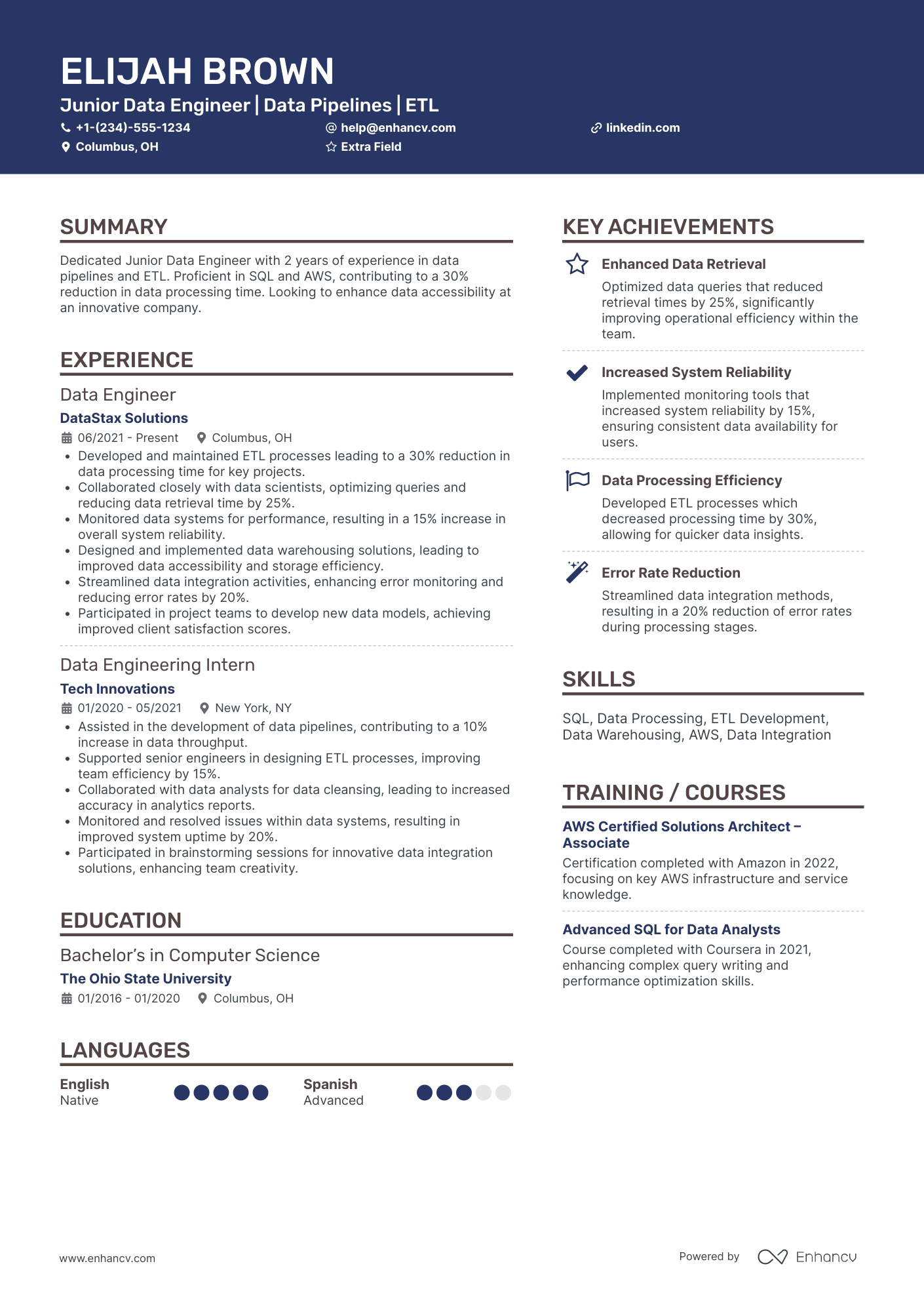
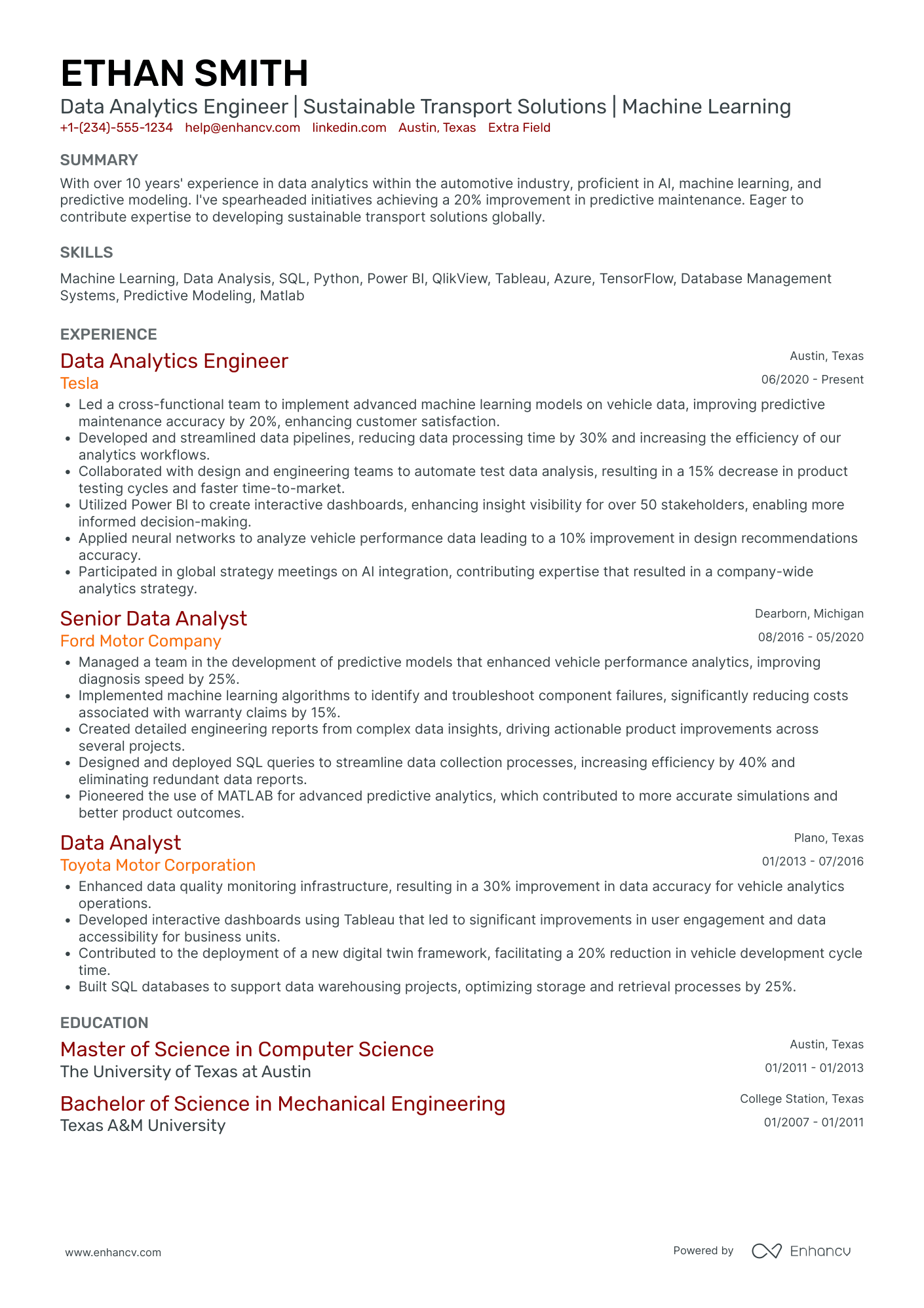
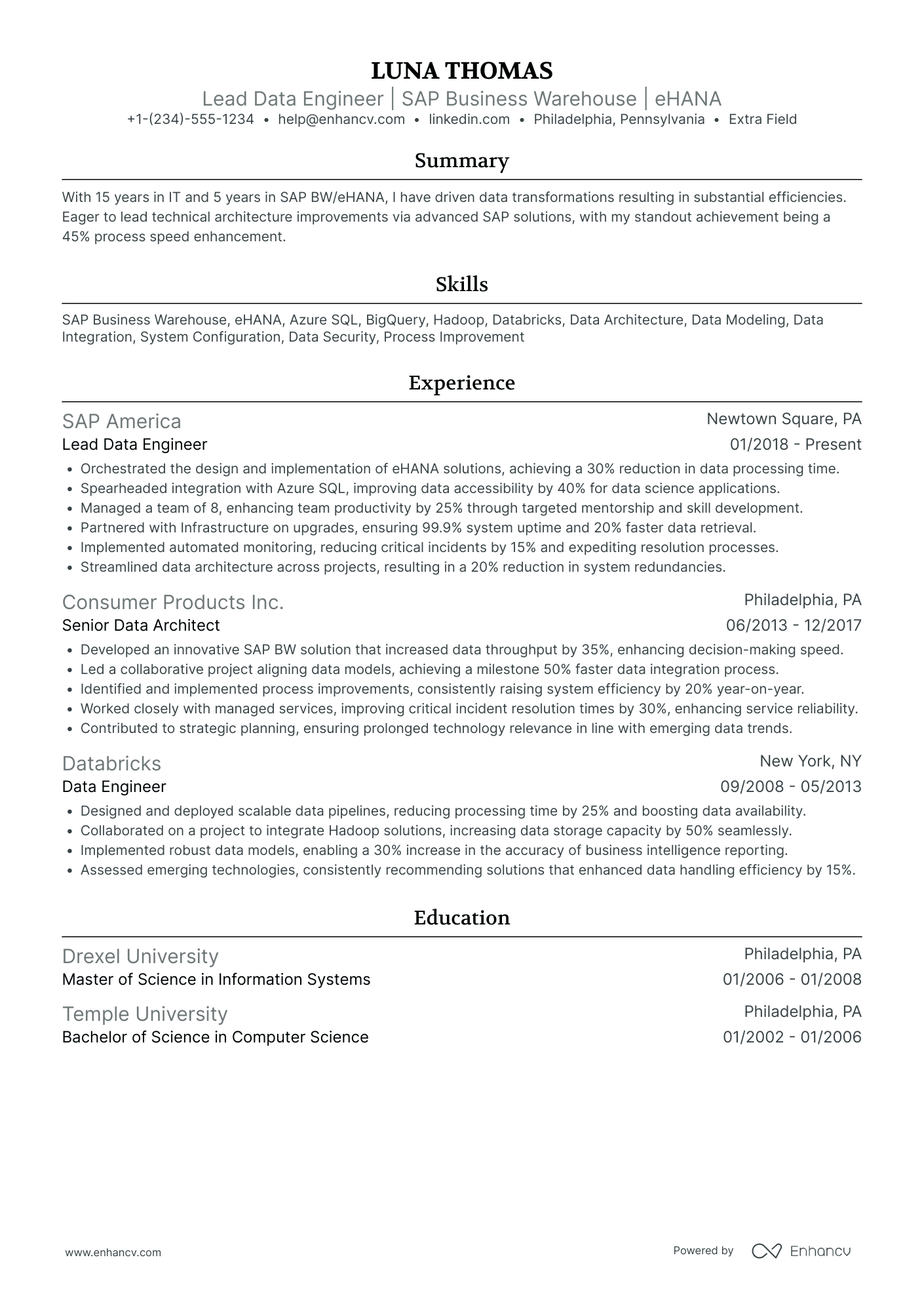
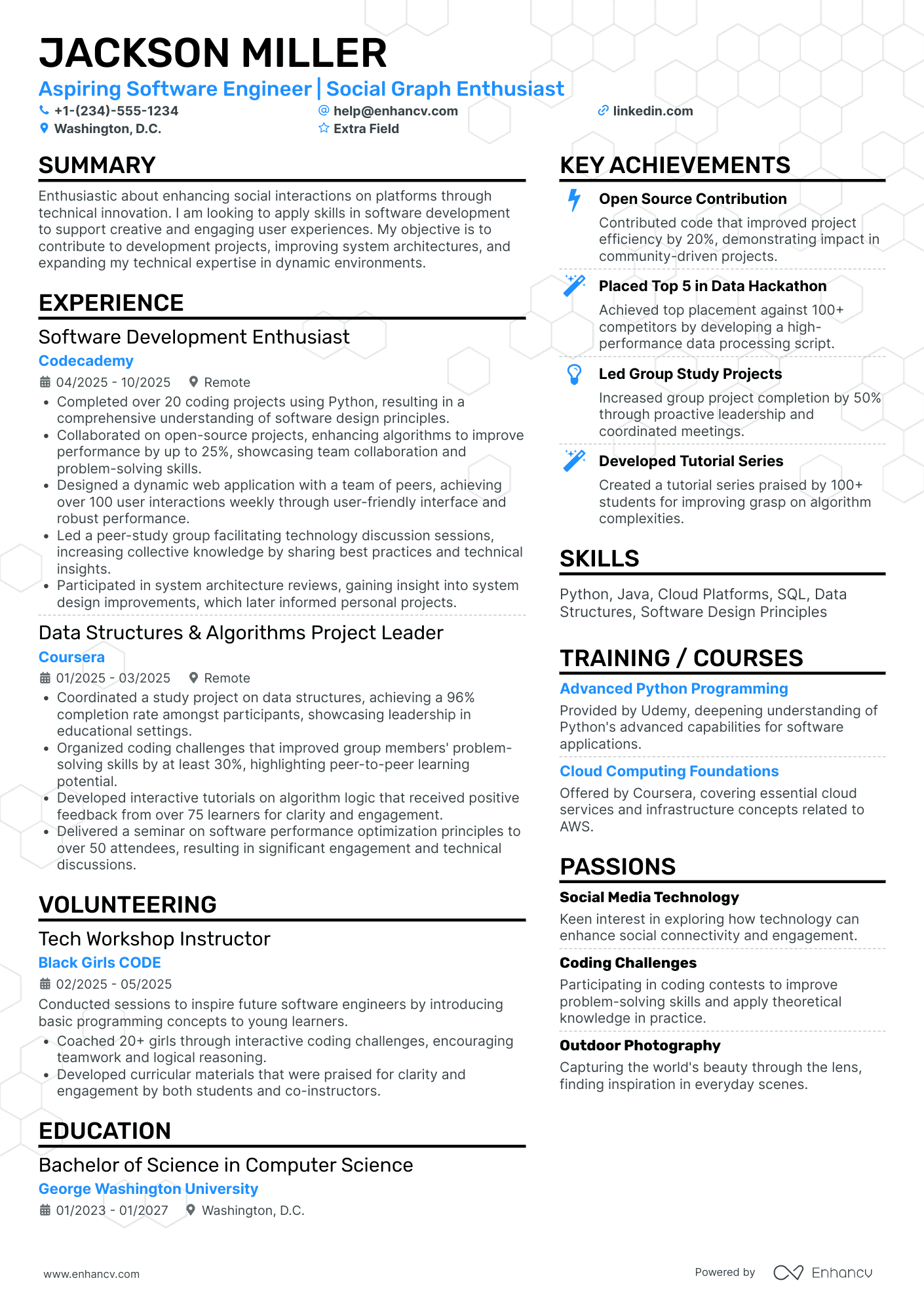
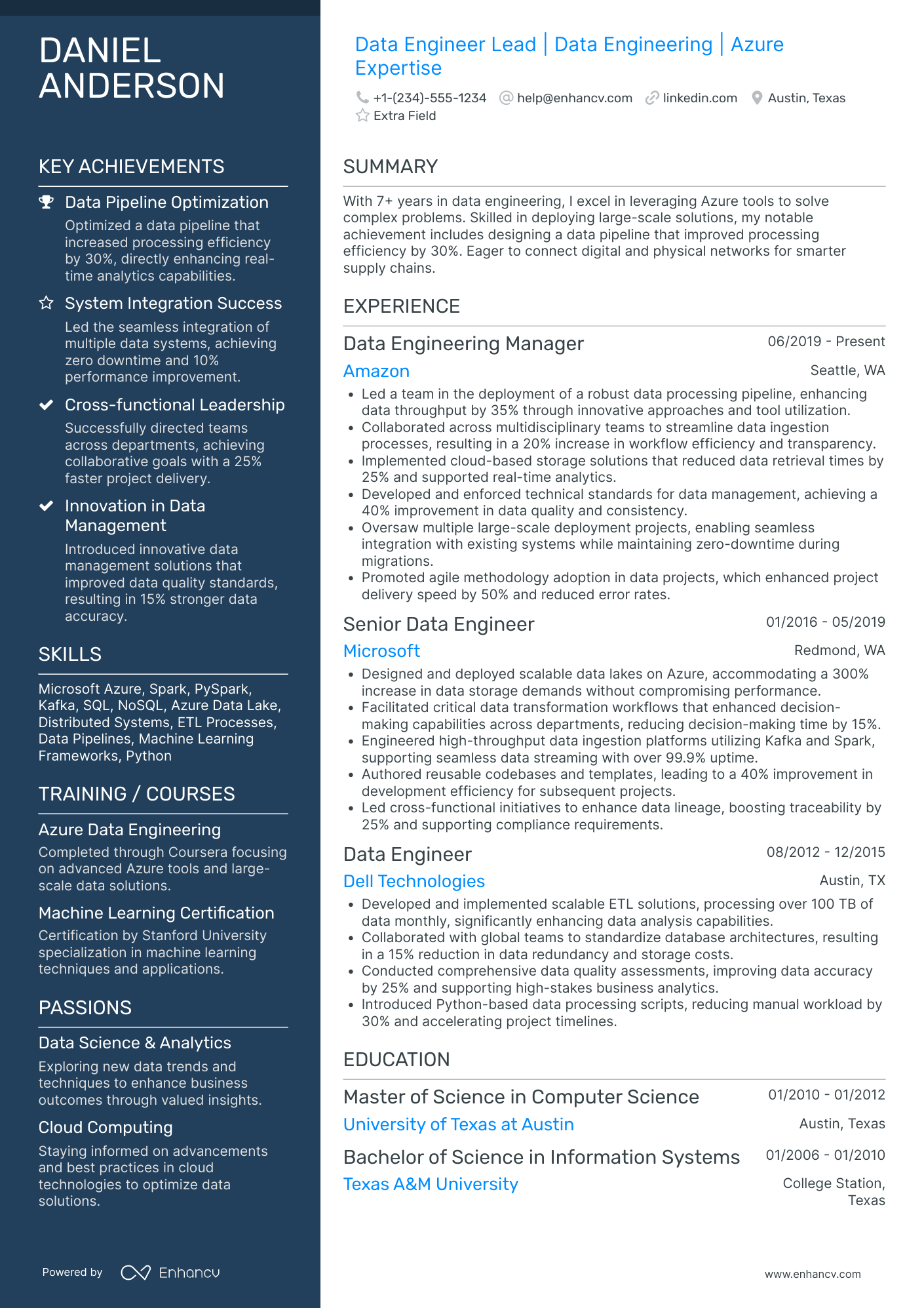
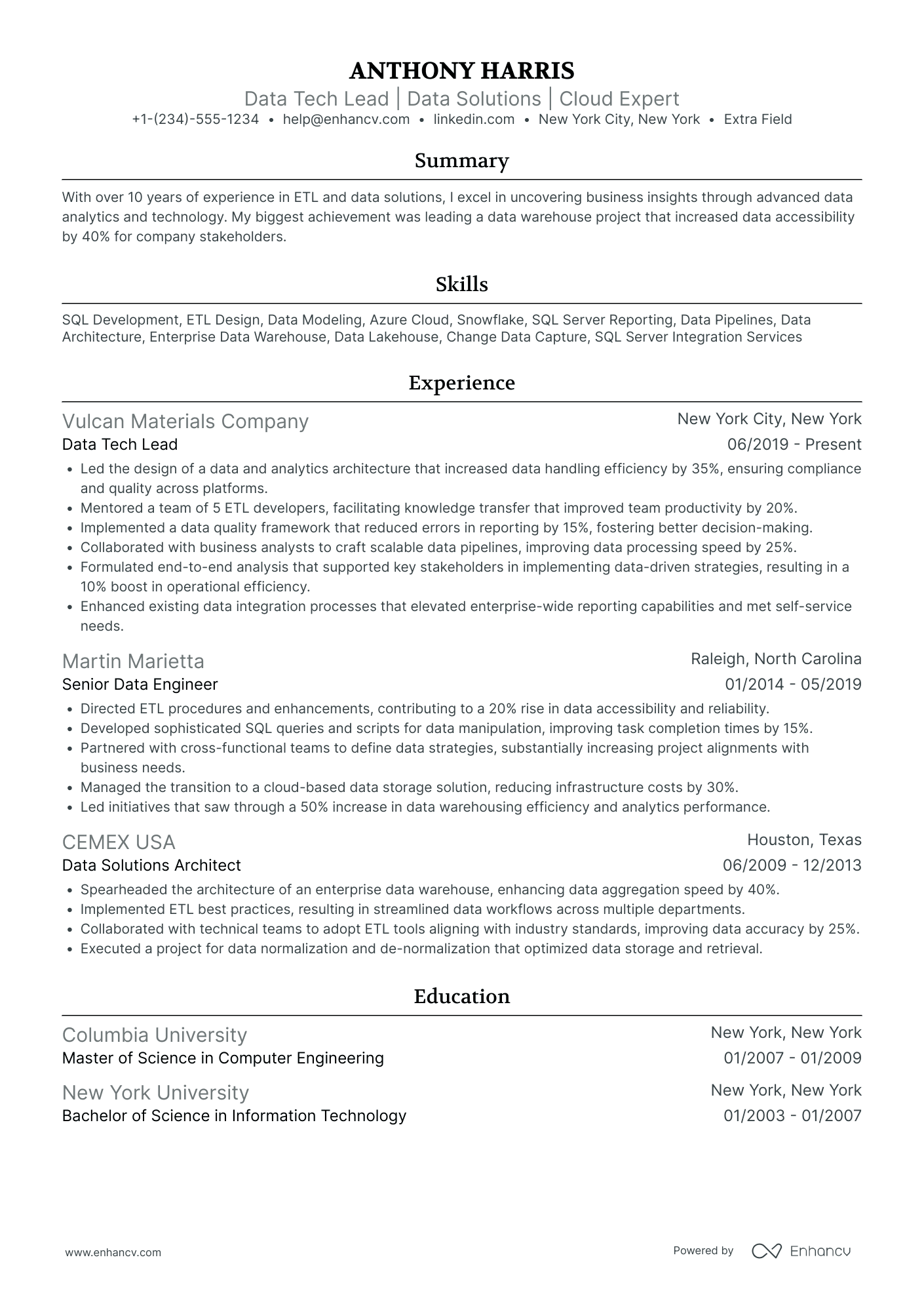
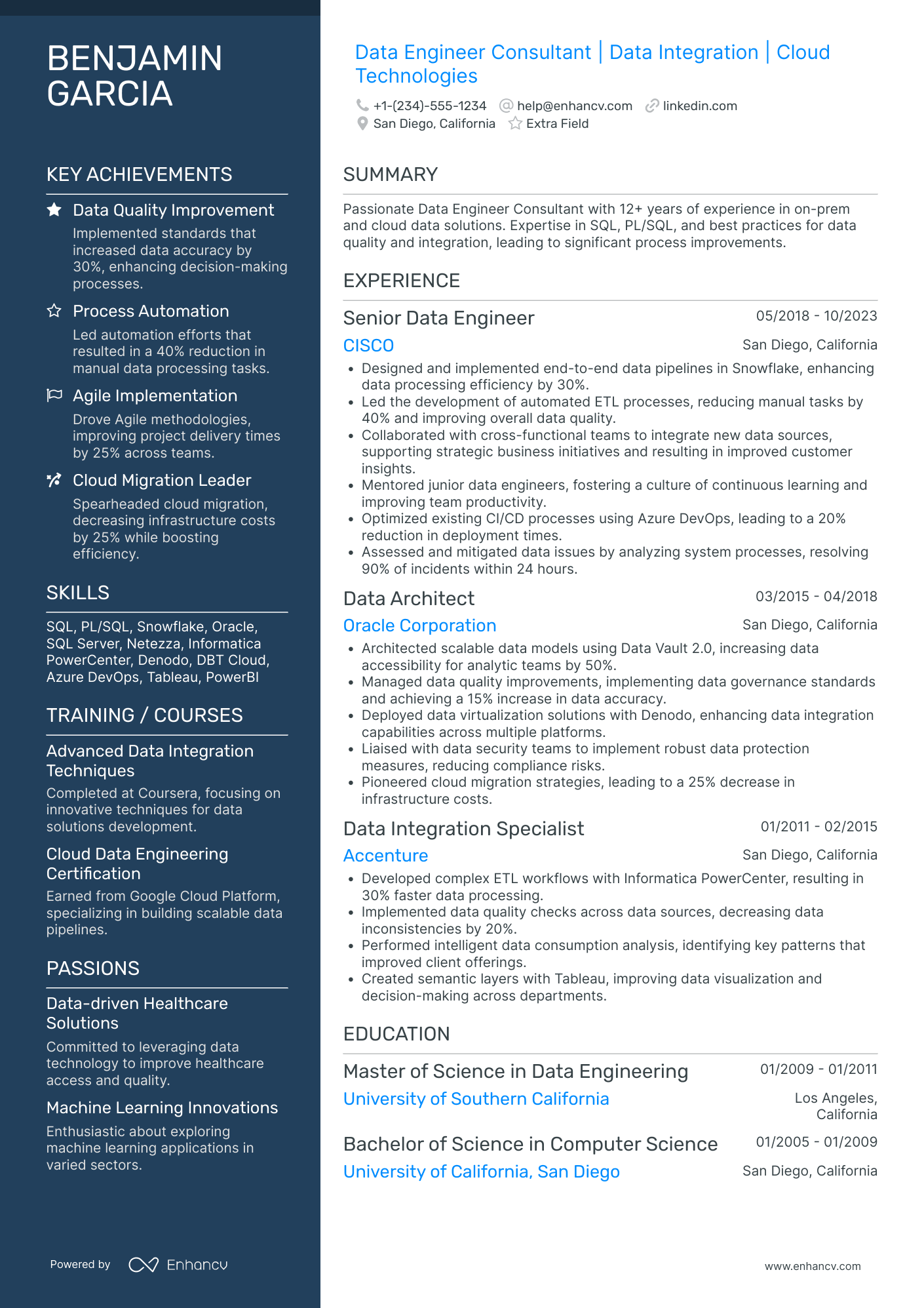
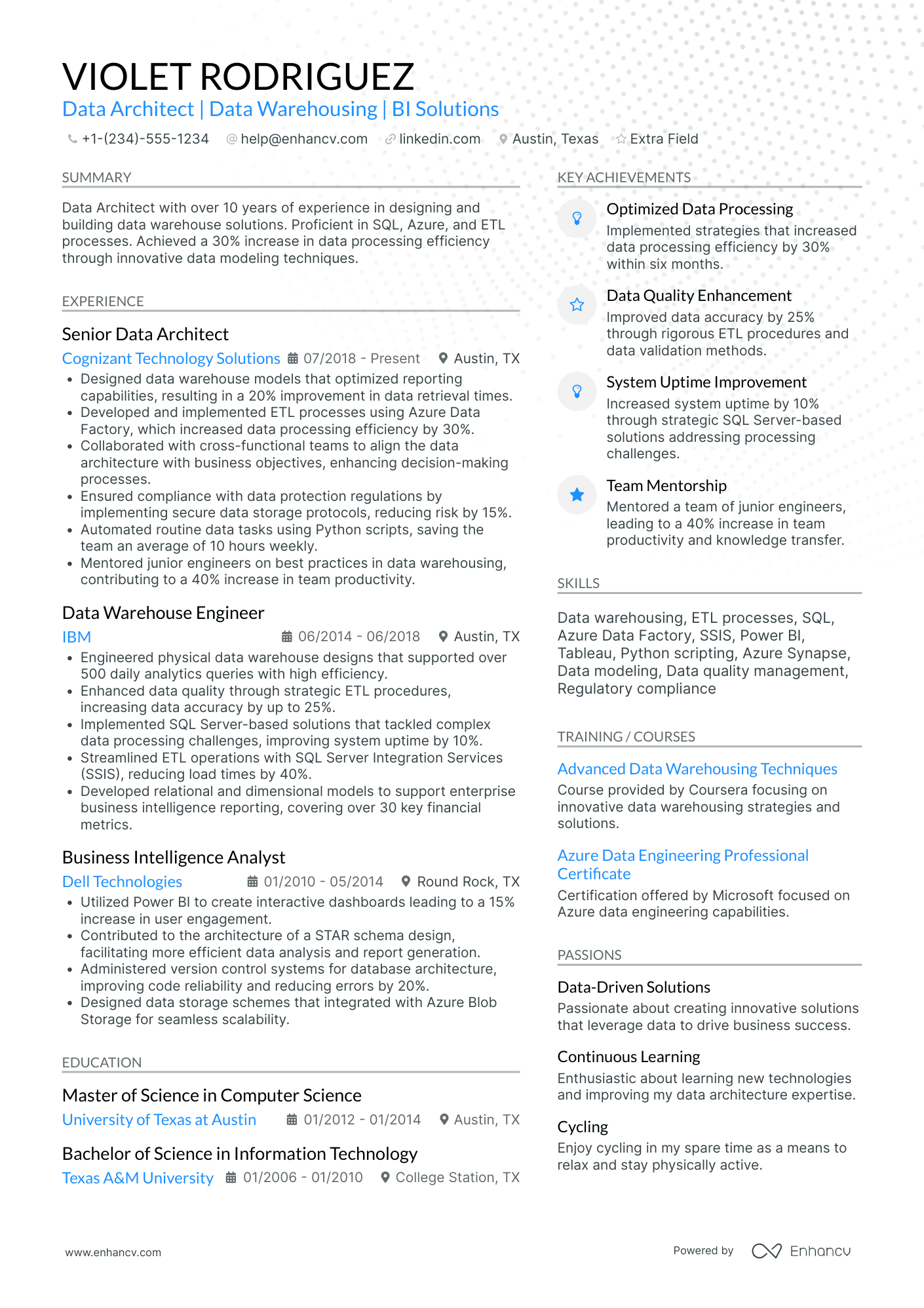
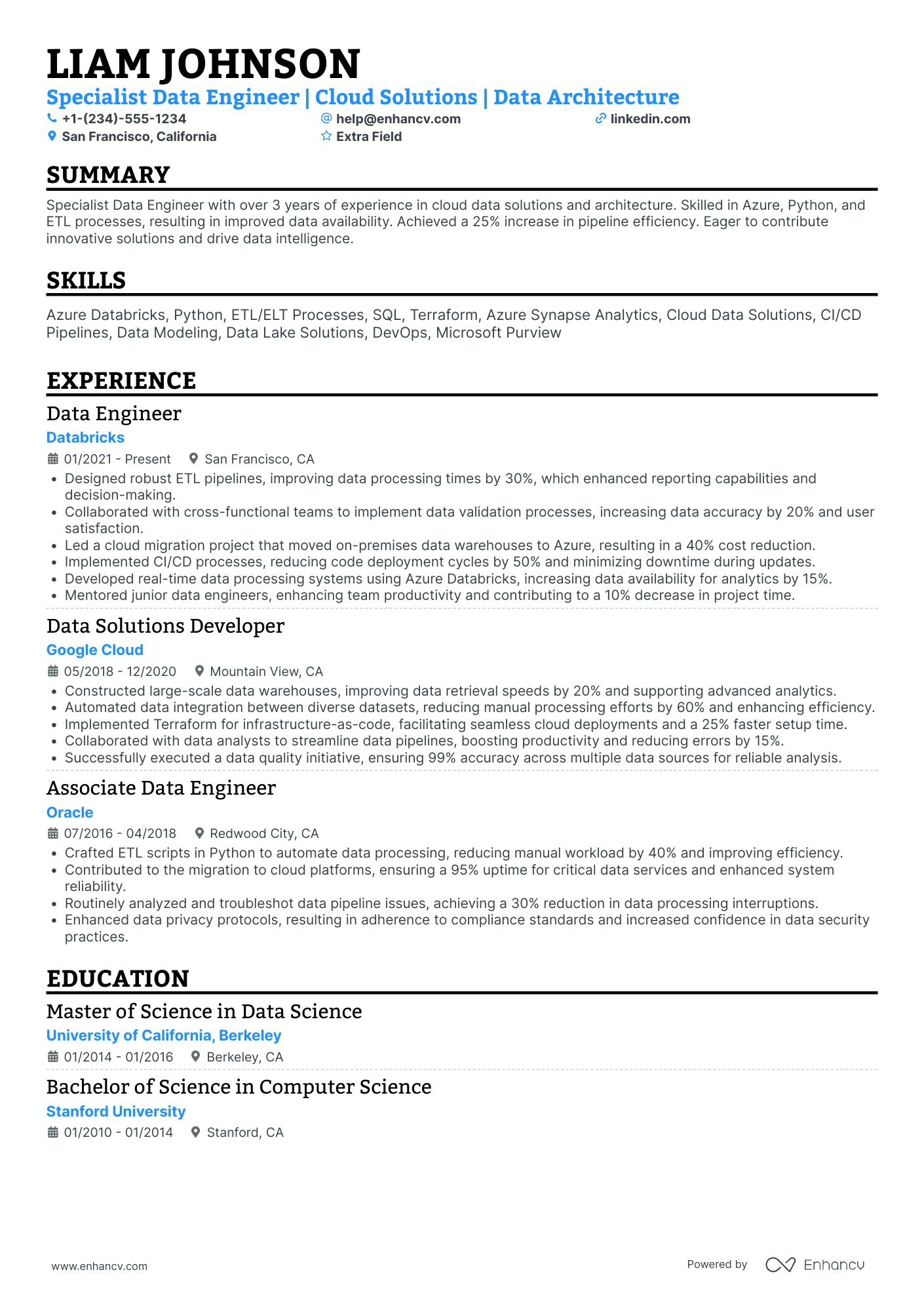
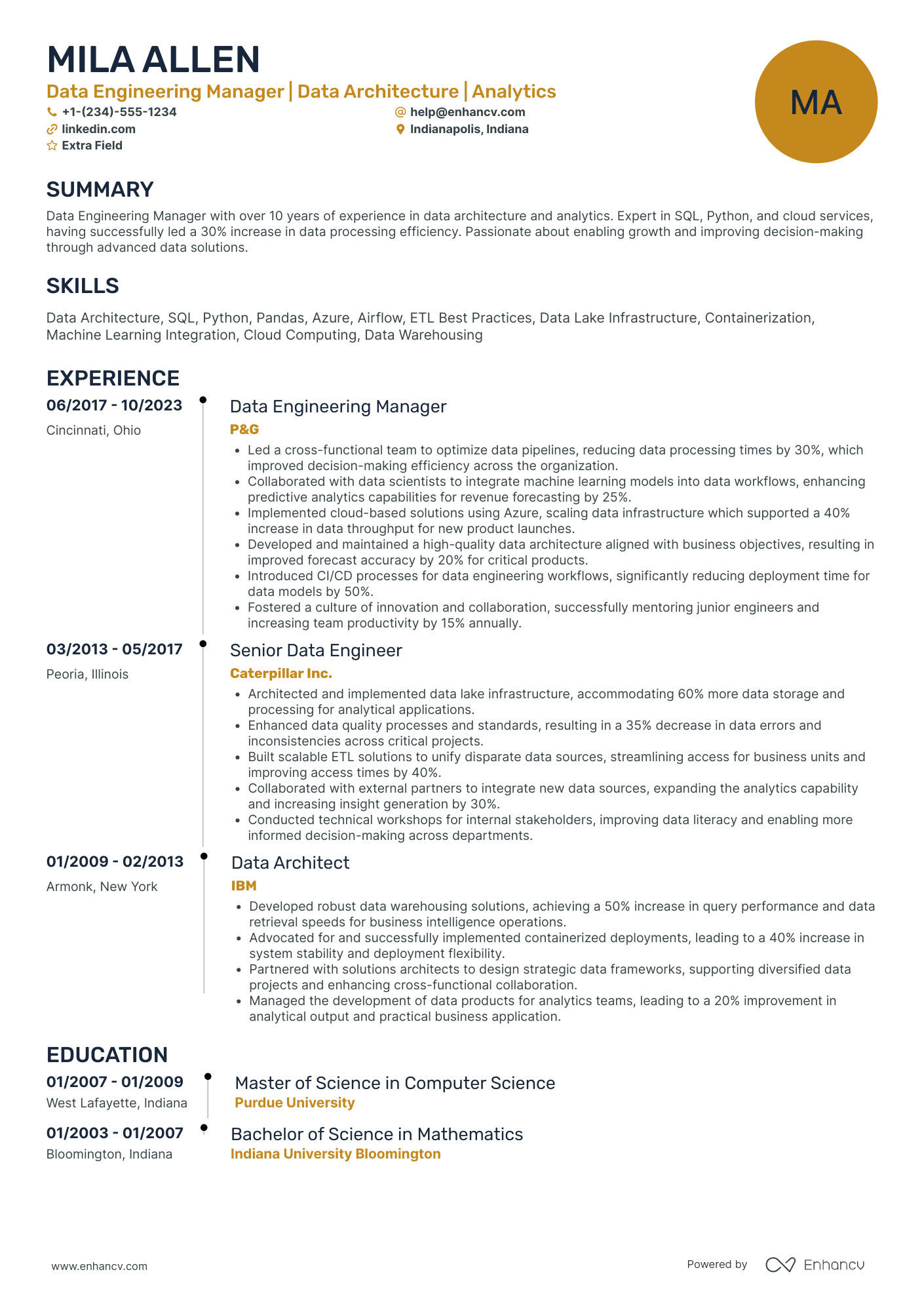
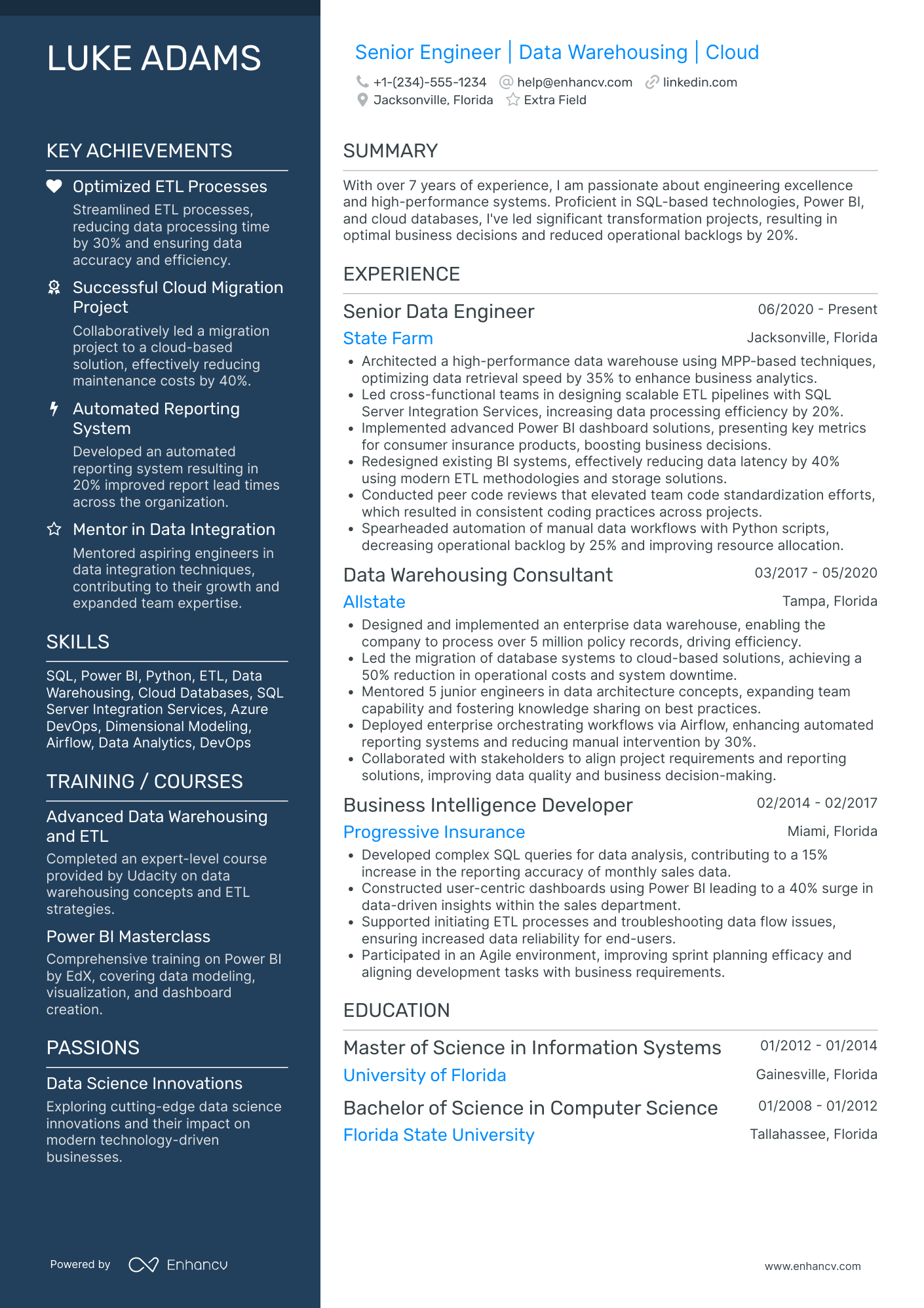
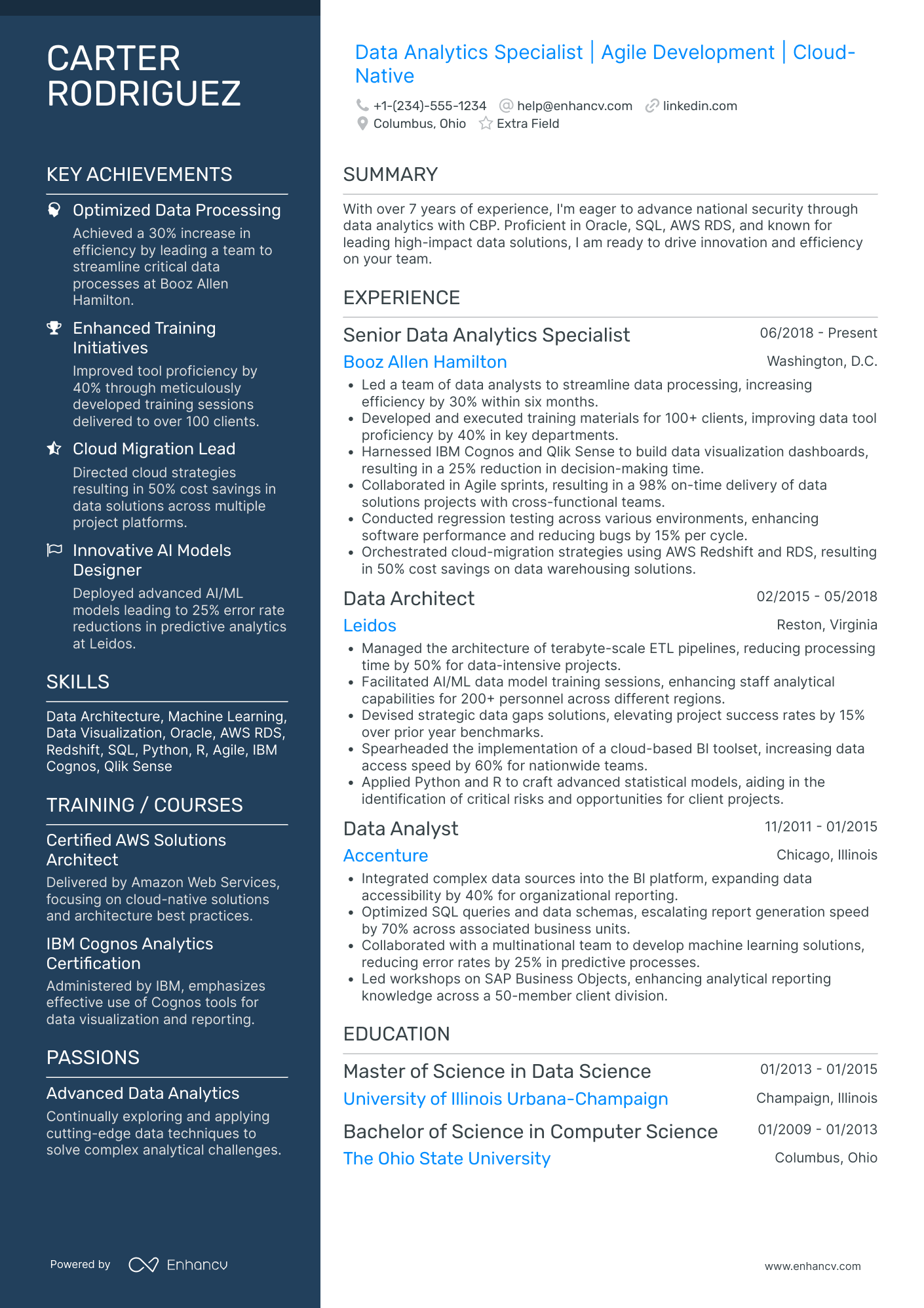
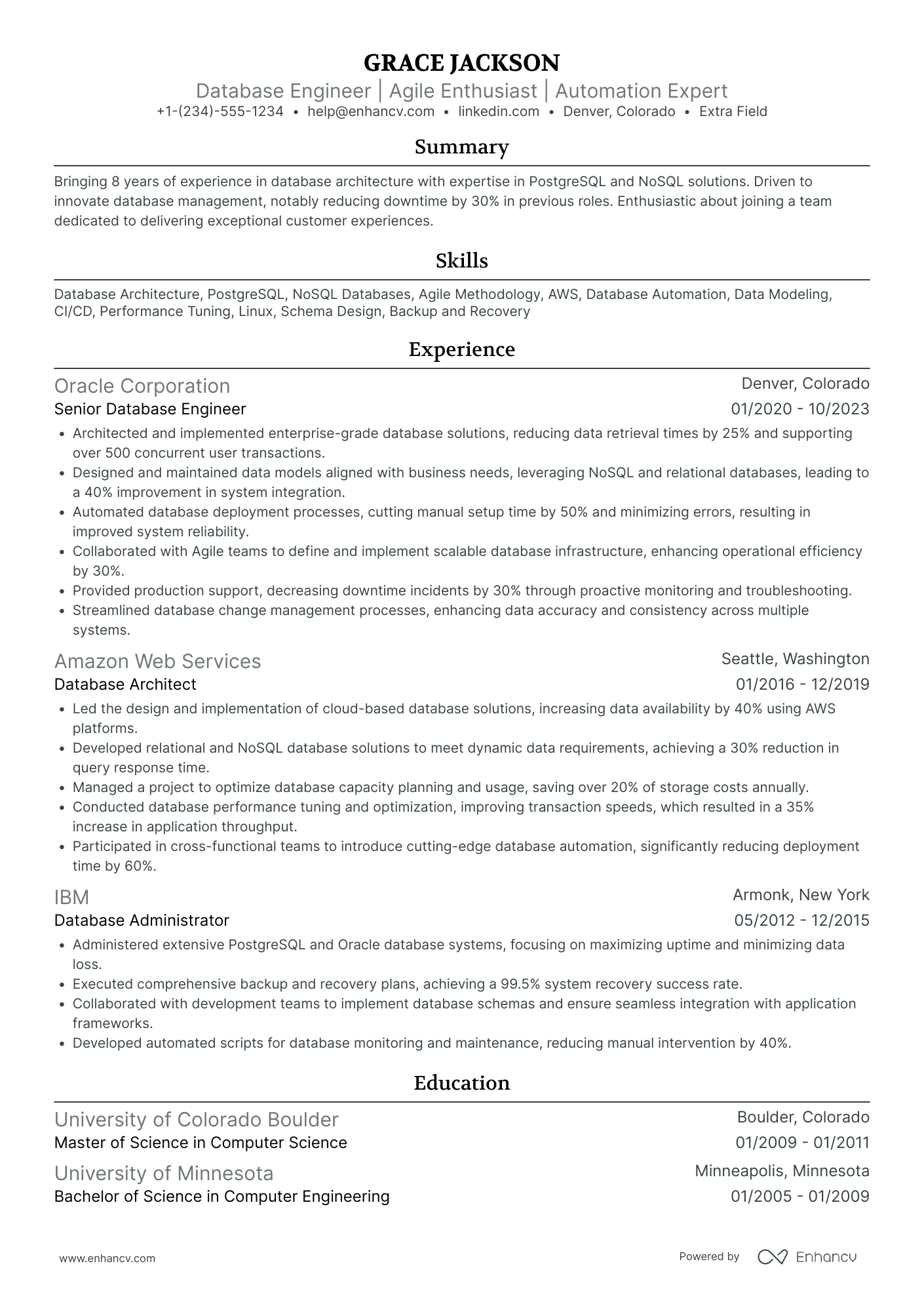
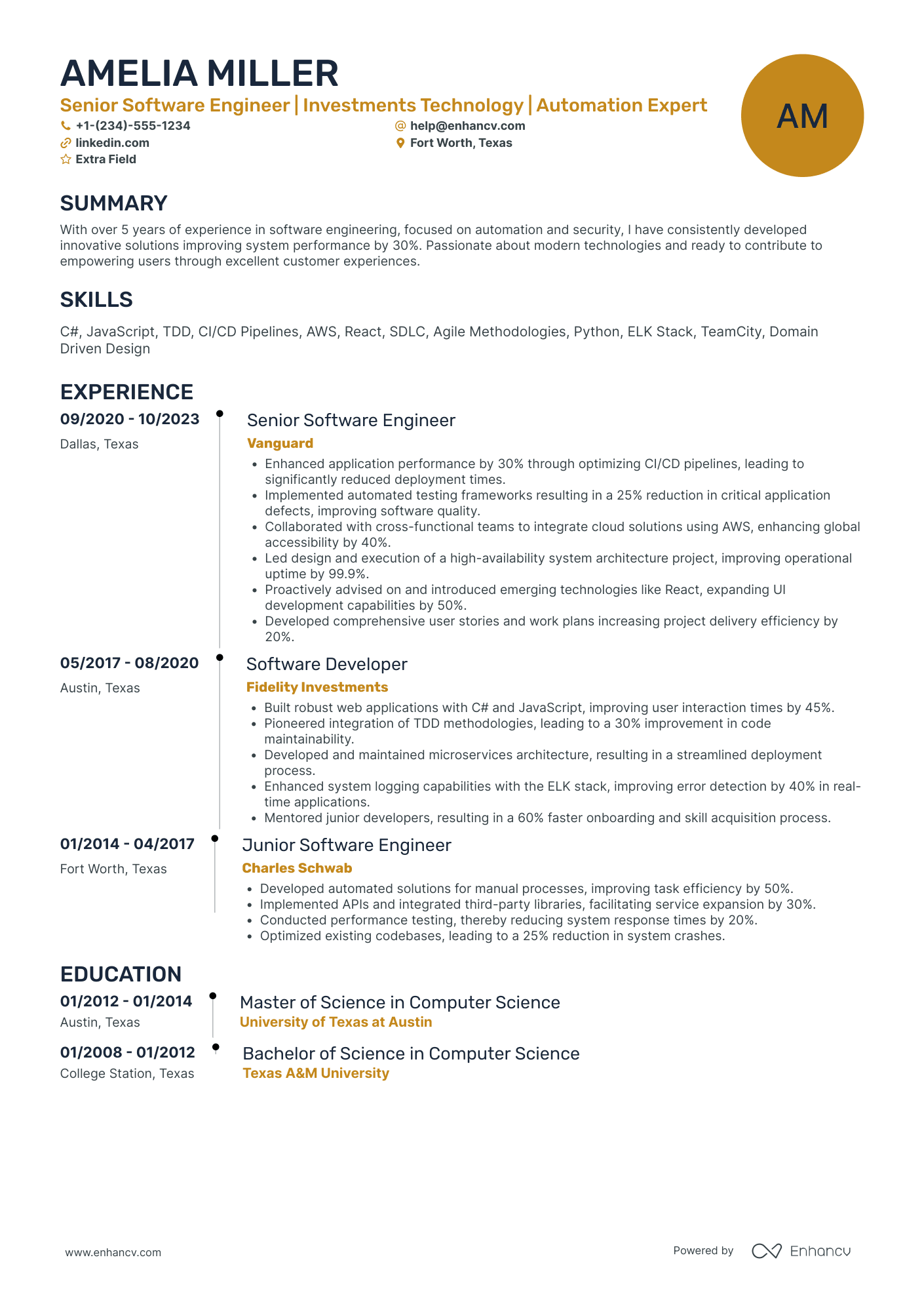
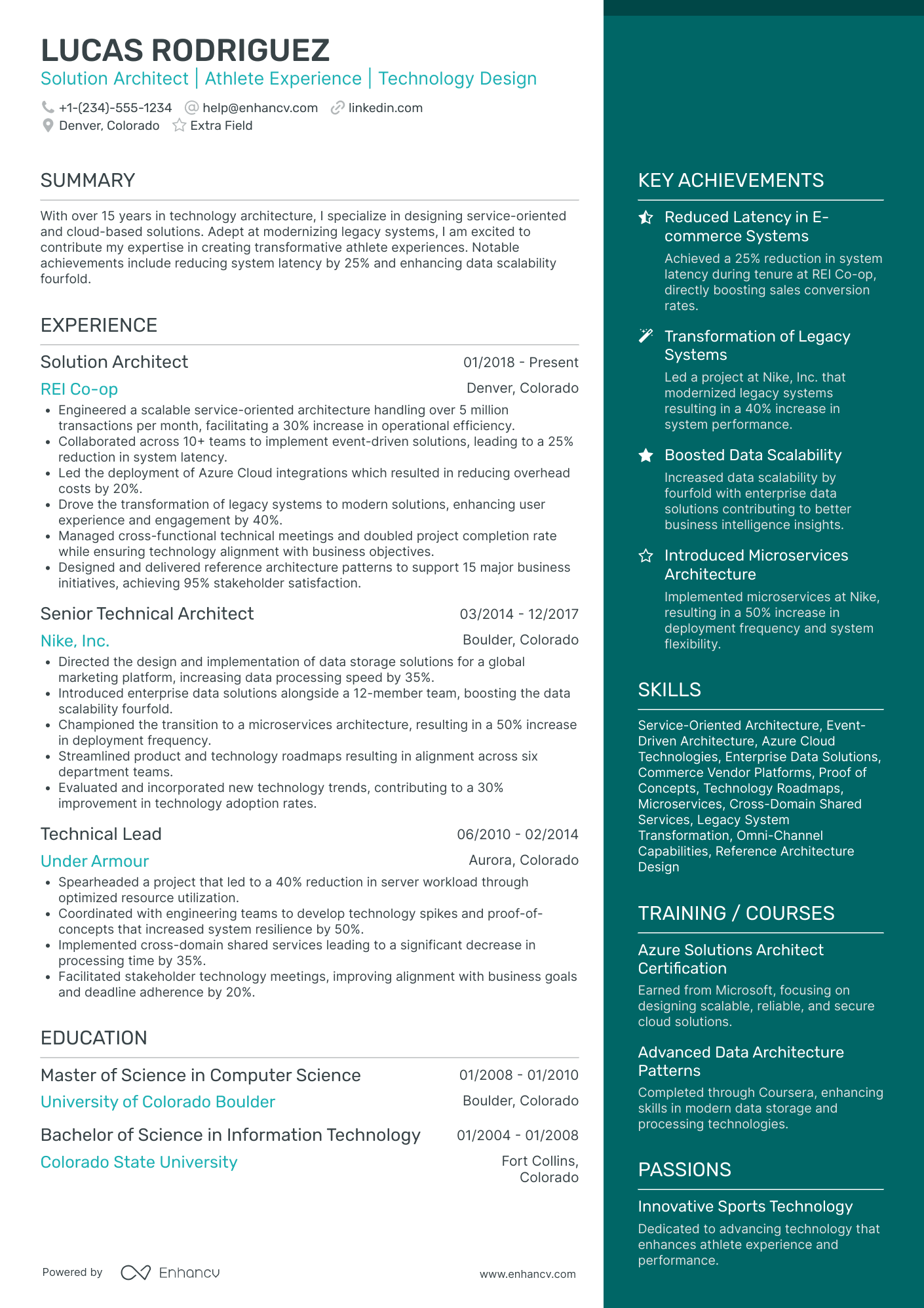
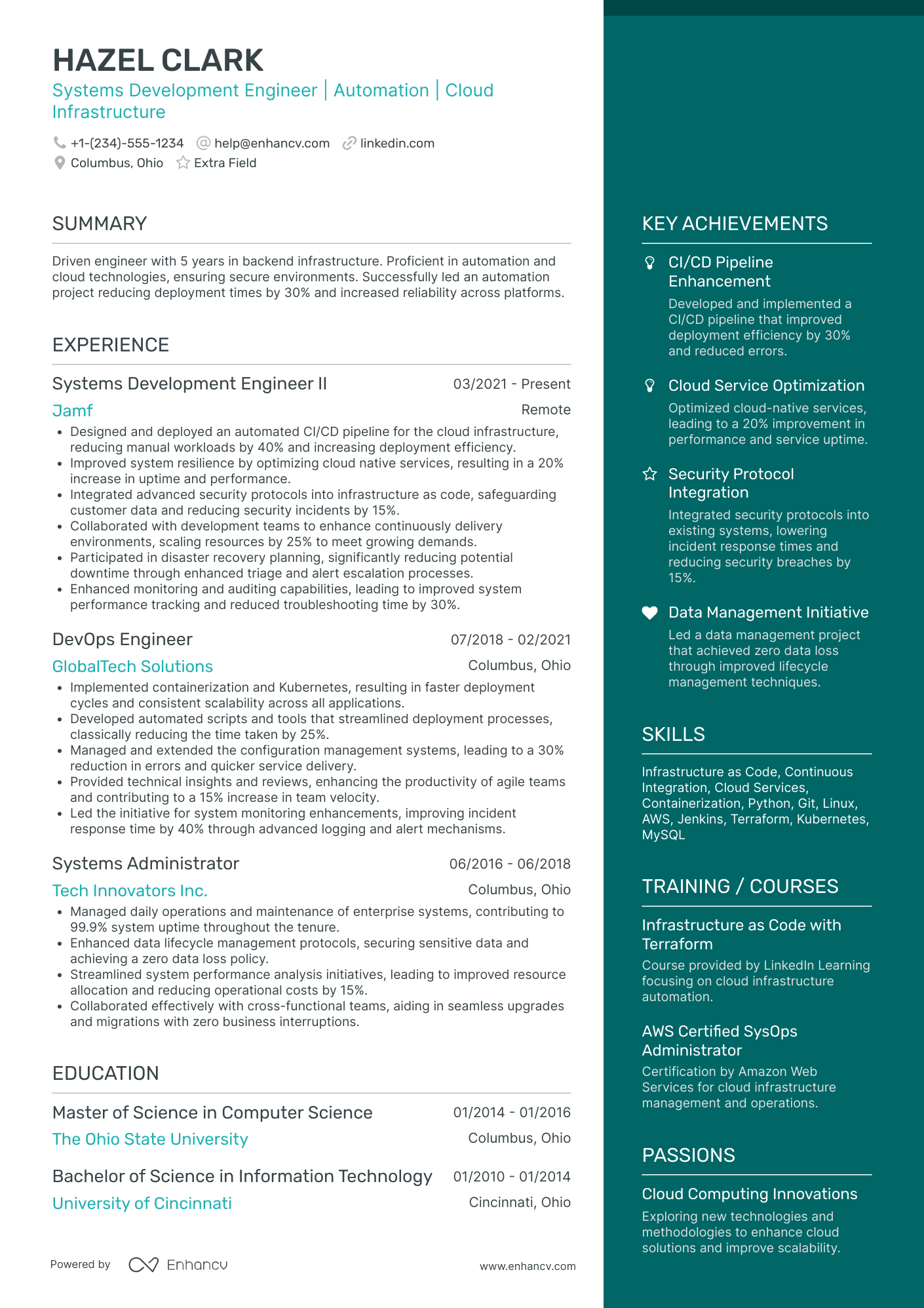
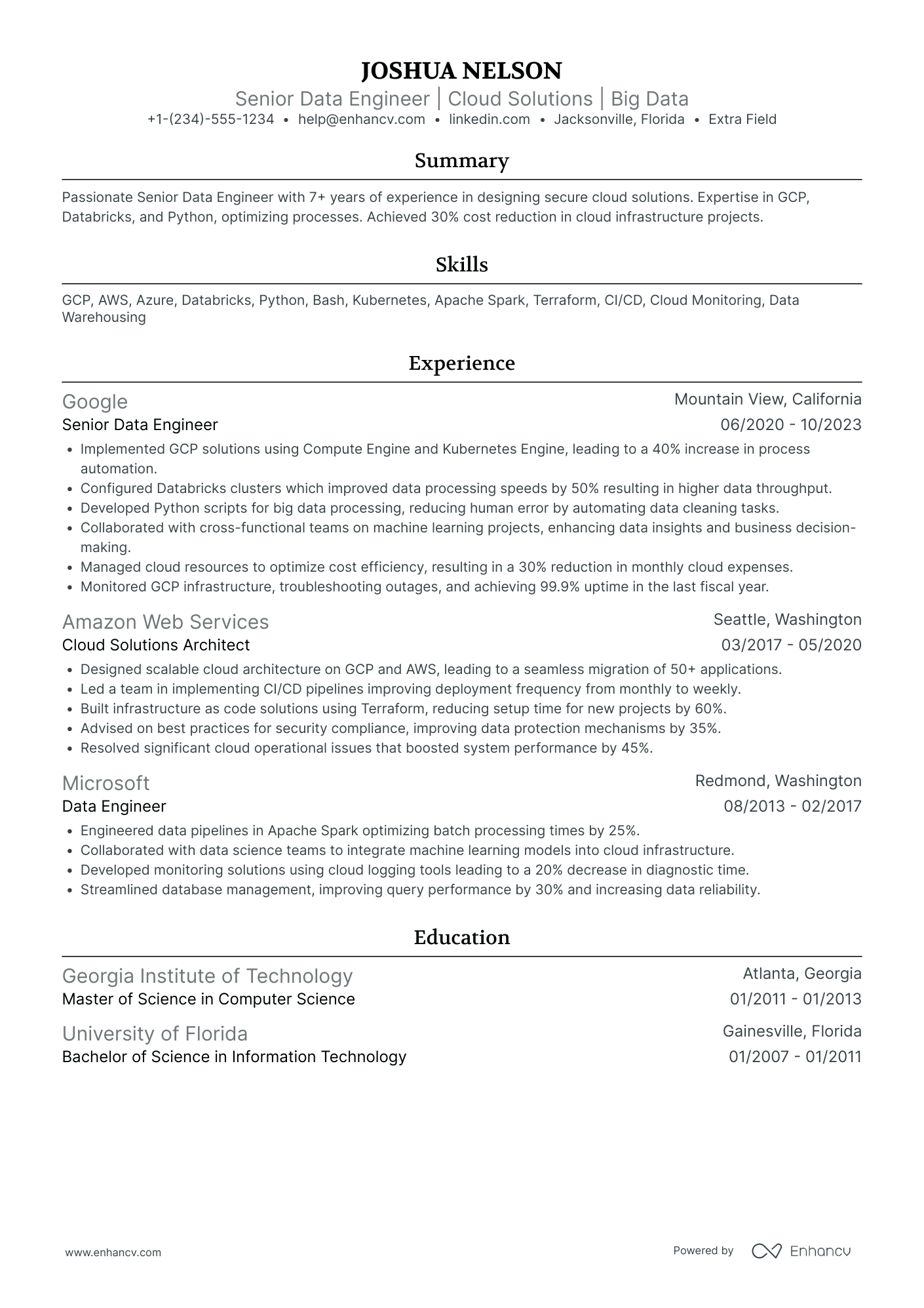
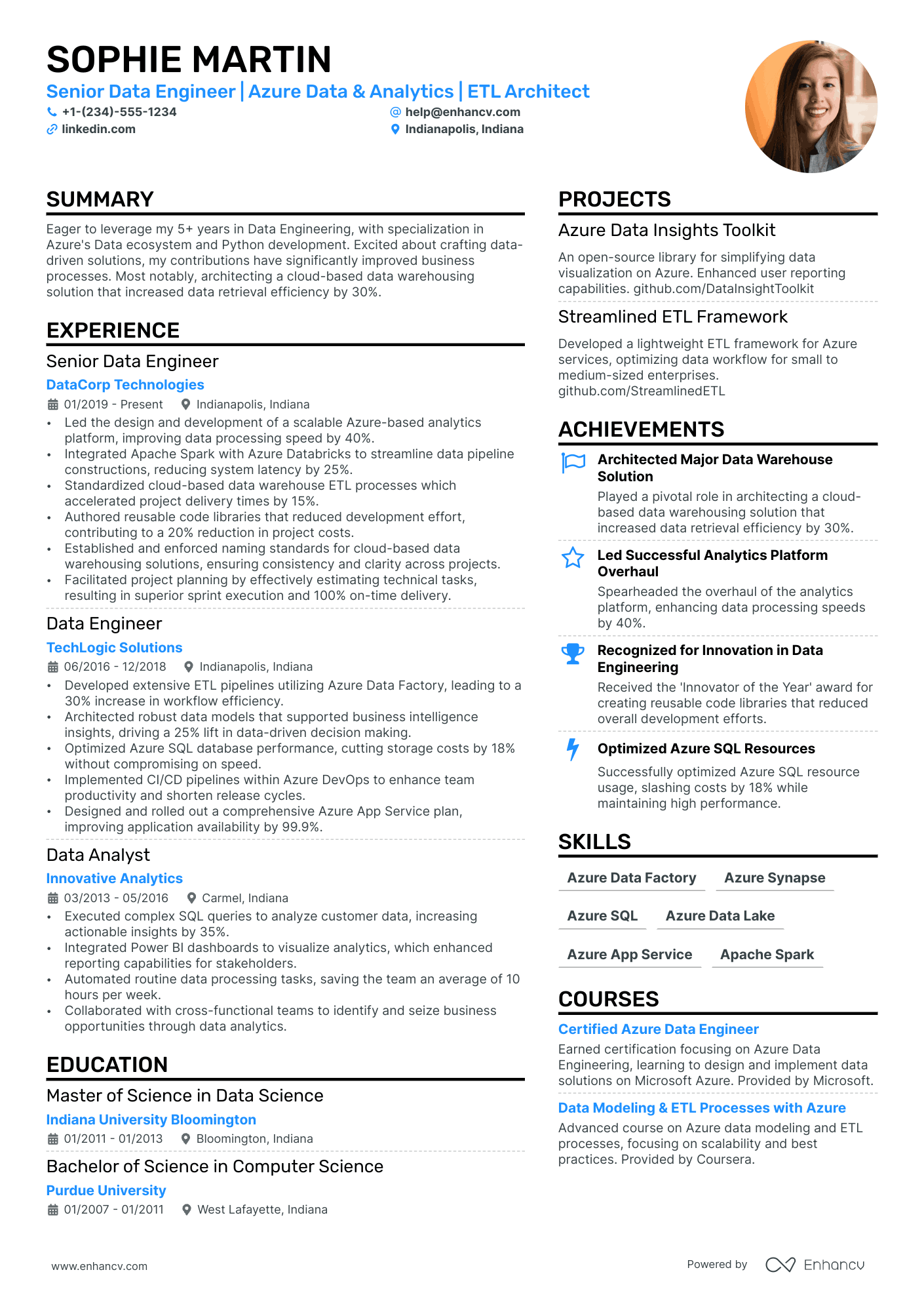
Many Azure data engineer resumes fail because they read like tool inventories, not evidence of impact. In today's hiring process, an ATS filters for relevance, and recruiters scan fast amid heavy competition.
A strong resume shows what you delivered and why it mattered. Knowing how to make your resume stand out starts with highlighting pipeline reliability gains, cost reductions, faster batch or streaming loads, improved data quality, and analytics adoption across teams. Quantify throughput, latency, uptime, and business outcomes.

Key takeaways
- Quantify pipeline performance, cost savings, and reliability gains in every experience bullet.
- Tailor your resume to each job posting's specific Azure services and terminology.
- Use reverse-chronological format for senior roles to show clear career progression.
- Lead with a skills section and projects if you lack full-time Azure experience.
- Tie every listed skill to a specific project, tool, and measurable outcome.
- Place certifications like DP-203 prominently—they carry as much weight as degrees.
- Use Enhancv to turn vague job duties into measurable, recruiter-ready resume bullets.
Job market snapshot for Azure data engineers
We analyzed 65 recent Azure data engineer job ads across major US job boards. These numbers help you understand top companies hiring, employer expectations, salary landscape at a glance.
What level of experience employers are looking for Azure data engineers
| Years of Experience | Percentage found in job ads |
|---|---|
| 1–2 years | 1.5% (1) |
| 3–4 years | 67.7% (44) |
| 5–6 years | 3.1% (2) |
| 7–8 years | 4.6% (3) |
| 9–10 years | 1.5% (1) |
| 10+ years | 1.5% (1) |
| Not specified | 21.5% (14) |
Azure data engineer ads by area of specialization (industry)
| Industry (Area) | Percentage found in job ads |
|---|---|
| Manufacturing | 70.8% (46) |
| Finance & Banking | 15.4% (10) |
Top companies hiring Azure data engineers
| Company | Percentage found in job ads |
|---|---|
| Accenture | 69.2% (45) |
Role overview stats
These tables show the most common responsibilities and employment types for Azure data engineer roles. Use them to align your resume with what employers expect and to understand how the role is structured across the market.
Day-to-day activities and top responsibilities for a Azure data engineer
| Responsibility | Percentage found in job ads |
|---|---|
| Python | 89.2% (58) |
| Azure data factory | 87.7% (57) |
| Sql | 84.6% (55) |
| Pyspark | 80.0% (52) |
| Databricks | 78.5% (51) |
| Azure devops | 76.9% (50) |
| Cosmos db | 67.7% (44) |
| Azure function apps | 66.2% (43) |
| Azure logic apps | 66.2% (43) |
| Synapse dedicated sql pool | 64.6% (42) |
| Data engineering | 43.1% (28) |
| Dlt | 41.5% (27) |
Type of employment (remote vs on-site vs hybrid)
| Employment type | Percentage found in job ads |
|---|---|
| On-site | 80.0% (52) |
| Remote | 13.8% (9) |
How to format a Azure data engineer resume
Recruiters evaluating Azure data engineer resumes prioritize hands-on experience with Azure data services (Data Factory, Synapse Analytics, Databricks, Data Lake Storage), pipeline architecture at scale, and measurable improvements to data reliability or processing efficiency. A clean, well-structured resume format ensures these technical signals and project outcomes surface quickly during both automated screening and human review.

I have significant experience in this role—which format should I use?
Use a reverse-chronological format to present your Azure data engineering career with clear progression, increasing scope, and ownership of complex data platforms. Do:
- Lead each role entry with your scope of responsibility—number of pipelines managed, data volume processed, team size, or cross-functional stakeholder groups you supported.
- Highlight specific Azure services and complementary tools (e.g., Data Factory, Synapse Analytics, Databricks, Delta Lake, Event Hubs, Terraform, Python, SQL) in the context of real project work.
- Quantify business impact through metrics like reduced processing time, improved data freshness, cost savings on cloud infrastructure, or increased pipeline uptime.
I'm junior or switching into this role—what format works best?
Use a hybrid format that leads with a focused Azure data engineering skills section, followed by reverse-chronological experience entries that demonstrate applied technical work. Do:
- Place your Azure certifications (e.g., DP-203, AZ-900) and core platform skills—Data Factory, Synapse, Databricks, Data Lake Storage, SQL, Python—in a prominent skills section near the top of your resume.
- Feature academic projects, personal data engineering builds, freelance work, or bootcamp capstones that involved designing or maintaining data pipelines on Azure.
- Connect every technical action to a concrete result, even at small scale, to show you understand why data engineering work matters to the business.
Why hybrid and functional resumes don't work for senior roles
Hybrid formats push your work history below a skills summary, which obscures the career progression, escalating ownership, and leadership accountability that hiring managers need to see from experienced Azure data engineers. Functional formats strip away timeline context entirely, making it impossible to evaluate how your architectural decisions, team leadership, and platform-scale impact evolved across roles. Avoid both formats if you have three or more years of progressive Azure data engineering experience, as they'll weaken your candidacy at the screening stage.
- A functional resume may be acceptable only if you're transitioning into Azure data engineering from a related field (e.g., on-premises ETL development, database administration, or cloud infrastructure) with limited Azure-titled roles—but even then, every listed skill must be tied to a specific project, tool, and measurable outcome.
Once your resume's format establishes a clean, readable structure, the next step is filling it with the right sections to showcase your qualifications effectively.
What sections should go on a Azure data engineer resume
Recruiters expect to see clear evidence that you can build and operate reliable, secure, cost-efficient data pipelines and platforms in Azure. Understanding which resume sections to include helps you organize that evidence effectively.
Use this structure for maximum clarity:
- Header
- Summary
- Experience
- Skills
- Projects
- Education
- Certifications
- Optional sections: Open-source work, publications, languages
Strong experience bullets should emphasize measurable impact, end-to-end scope, performance and reliability gains, cost reductions, and business outcomes delivered in Azure.
Is your resume good enough?
Drop your resume here or choose a file. PDF & DOCX only. Max 2MB file size.
Once you’ve organized your resume with the right components, the next step is writing your Azure data engineer experience section so it supports those components with clear, role-relevant detail.
How to write your Azure data engineer resume experience
Your experience section should highlight the data pipelines, cloud architectures, and engineering solutions you've shipped—not just the tasks you performed day to day. Hiring managers prioritize demonstrated impact over descriptive task lists, so focus on role-relevant tools, delivered projects, and measurable outcomes that prove your value as an Azure data engineer. Building a targeted resume for each application ensures your experience aligns with what the hiring team is looking for.
Each entry should include:
- Job title
- Company and location (or remote)
- Dates of employment (month and year)
Three to five concise bullet points showing what you owned, how you executed, and what outcomes you delivered:
- Ownership scope: the data platforms, pipelines, lakehouse architectures, or Azure environments you were directly accountable for—including the datasets, business domains, or engineering teams you supported as an Azure data engineer.
- Execution approach: the specific Azure services, frameworks, and methods you used to design, build, and optimize data solutions—such as Azure Data Factory, Databricks, Synapse Analytics, Event Hubs, or infrastructure-as-code tooling relevant to your engineering workflow.
- Value improved: the changes you drove in data pipeline performance, processing reliability, query efficiency, storage cost optimization, data quality, or system uptime within Azure-based environments.
- Collaboration context: how you partnered with analytics engineers, data scientists, DevOps teams, platform architects, or business stakeholders to align data infrastructure with organizational priorities and downstream consumption needs.
- Impact delivered: the tangible results your work produced—expressed through scale of data processed, reduction in pipeline failures, faster time to insight, cost savings, or improvements to data availability—rather than a description of routine activities.
Experience bullet formula
A Azure data engineer experience example
✅ Right example - modern, quantified, specific.
Azure Data Engineer
Cardinal Health | Remote
2022–Present
Supported a Fortune 500 healthcare supply chain platform processing billions of records across regulated data domains.
- Architected a medallion lakehouse on Azure Data Lake Storage Gen2 and Azure Databricks using Delta Lake, cutting end-to-end pipeline runtime by 38% and lowering compute costs by 22%.
- Built and orchestrated 60+ ELT pipelines in Azure Data Factory ingesting SAP, Salesforce, and IoT feeds (1.8 TB/day), improving data freshness from 6 hours to 45 minutes.
- Implemented data quality checks with Great Expectations and Delta Live Tables, reducing critical data incidents by 41% and raising curated-layer completeness to 99.6%.
- Hardened security and governance with Microsoft Purview, Azure Key Vault, and role-based access control, passing two audits with zero high-severity findings and cutting access-request turnaround by 55%.
- Partnered with analytics engineers and product managers to publish 25+ Power BI datasets via Azure Synapse Analytics, improving dashboard query performance by 47% and enabling $3.2M in inventory optimization savings.
Now that you've seen how a strong experience section comes together, let's look at how to adjust yours to match the specific job posting you're targeting.
How to tailor your Azure data engineer resume experience
Recruiters evaluate your Azure data engineer resume through both applicant tracking systems and manual review. Tailoring your resume to the job description ensures your qualifications stand out in both screening methods.
Ways to tailor your Azure data engineer experience:
- Match Azure services like Data Factory or Synapse Analytics listed in the posting.
- Mirror the job description's terminology for ETL or ELT processes.
- Reflect specific data governance or compliance standards the employer requires.
- Highlight experience with the exact programming languages the role specifies.
- Incorporate pipeline performance or data quality KPIs the posting references.
- Emphasize collaboration with data science or analytics teams when mentioned.
- Include industry-specific data engineering work that aligns with the employer's domain.
- Reference DevOps or CI/CD frameworks for data pipelines if the role requires them.
Tailoring means aligning your real accomplishments with the job's stated requirements, not forcing keywords where they don't belong.
Resume tailoring examples for Azure data engineer
| Job description excerpt | Untailored | Tailored |
|---|---|---|
| Design and implement data pipelines using Azure Data Factory and Azure Databricks to support real-time analytics across multiple business units | Built data pipelines to move data between systems and databases. | Designed and deployed 15+ Azure Data Factory pipelines integrated with Azure Databricks, enabling real-time analytics for four business units and reducing data latency by 68%. |
| Develop and optimize data models in Azure Synapse Analytics, ensuring scalability and performance for enterprise-level reporting | Worked with databases and helped improve query performance. | Built dimensional data models in Azure Synapse Analytics serving enterprise reporting for 2,000+ users, tuning dedicated SQL pool distributions to cut average query runtime from 12 minutes to 90 seconds. |
| Implement data governance and security frameworks using Microsoft Purview and Azure Key Vault to ensure compliance with HIPAA regulations | Helped maintain data security and followed company policies. | Implemented a data governance framework using Microsoft Purview for lineage tracking and classification across 120+ datasets, integrating Azure Key Vault for secrets management to maintain full HIPAA compliance during two consecutive audits. |
Once you’ve aligned your experience with the role’s requirements and Azure stack, the next step is to quantify your achievements so hiring managers can see the impact behind that fit.
How to quantify your Azure data engineer achievements
Quantifying your achievements proves business impact beyond "built pipelines." Focus on performance, reliability, cost, data quality, and delivery speed—especially for Azure Data Factory, Synapse, Databricks, and Delta Lake workloads.
Quantifying examples for Azure data engineer
| Metric | Example |
|---|---|
| Pipeline performance | "Cut Azure Data Factory pipeline runtime from 95 minutes to 28 minutes by tuning Spark partitions in Azure Databricks and optimizing PolyBase loads into Synapse." |
| Reliability | "Improved daily load success rate from 97.8% to 99.95% by adding retry policies, idempotent writes, and Azure Monitor alerts for 40+ pipelines." |
| Data quality | "Reduced duplicate customer records by 62% using Delta Lake MERGE logic, Great Expectations checks, and quarantine tables across three source systems." |
| Cost efficiency | "Lowered monthly Azure compute spend by $18,400 by enabling Databricks autoscaling, job clusters, and Synapse workload management for peak ETL windows." |
| Delivery speed | "Shortened new dataset onboarding from ten days to three by templatizing Terraform modules, CI/CD in Azure DevOps, and reusable ADF pipeline patterns." |
Turn vague job duties into measurable, recruiter-ready resume bullets in seconds with Enhancv's Bullet Point Generator.
With your bullet points clearly articulating your accomplishments, the next step is ensuring your skills section effectively showcases the technical and interpersonal strengths that define you as an Azure data engineer.
How to list your hard and soft skills on a Azure data engineer resume
Your skills section shows you can build reliable Azure data platforms, and recruiters and ATS scan this section for exact tool and method matches; aim for a skills mix weighted toward hard skills with a smaller set of role-specific soft skills. Azure data engineer roles require a blend of:
- Product strategy and discovery skills.
- Data, analytics, and experimentation skills.
- Delivery, execution, and go-to-market discipline.
- Soft skills.
Your skills section should be:
- Scannable (bullet-style grouping).
- Relevant to the job post.
- Backed by proof in experience bullets.
- Updated with current tools.
Place your skills section:
- Above experience if you're junior or switching careers.
- Below experience if you're mid/senior with strong achievements.

Hard skills
- Azure Data Factory, Synapse pipelines
- Azure Databricks, Spark
- Delta Lake, lakehouse design
- Azure Synapse Analytics, dedicated SQL pools
- Azure Data Lake Storage Gen2
- SQL performance tuning
- Python for data engineering
- Data modeling, star schemas
- ETL and ELT orchestration
- CI/CD with Azure DevOps
- Terraform infrastructure as code
- Monitoring with Azure Monitor, Log Analytics
Soft skills
- Translate requirements into data contracts
- Partner with analysts and data scientists
- Communicate trade-offs and risks early
- Drive alignment on definitions and metrics
- Lead incident response and postmortems
- Prioritize work by business impact
- Document pipelines and runbooks clearly
- Review code and enforce standards
- Manage stakeholders and expectations
- Own delivery from design to support
- Ask targeted questions to unblock work
- Coordinate releases across teams
How to show your Azure data engineer skills in context
Skills shouldn't live only in a bulleted list on your resume. Explore resume skills examples to see how top candidates weave technical abilities into their narratives.
They should be demonstrated in:
- Your summary (high-level professional identity)
- Your experience (proof through outcomes)
Here's what strong, context-driven examples look like in practice.
Summary example
Senior Azure data engineer with eight years in healthcare data platforms. Skilled in Azure Data Factory, Databricks, and Synapse Analytics. Architected a HIPAA-compliant lakehouse that cut reporting latency by 60%, partnering cross-functionally with analytics and compliance teams.
- Signals senior-level expertise immediately
- Names role-critical Azure tools
- Leads with a measurable outcome
- Highlights cross-functional collaboration
Experience example
Senior Data Engineer
Meridian Health Systems | Remote
March 2020–Present
- Built an end-to-end Azure Data Factory pipeline ingesting 12M daily patient records, reducing data processing time by 45% across three departments.
- Partnered with data science and DevOps teams to deploy a Databricks-based transformation layer, improving model-ready data availability by 30%.
- Designed a Synapse Analytics warehouse supporting real-time dashboards, cutting executive reporting turnaround from five days to eight hours.
- Every bullet proves impact with metrics.
- Skills appear naturally within real achievements.
Once you’ve tied your Azure data engineering abilities to real outcomes and tools, the next step is applying that same approach to structuring a resume when you don’t have formal experience.
How do I write a Azure data engineer resume with no experience
Even without full-time experience, you can demonstrate readiness through building a strong resume without work experience that highlights projects, certifications, and applied skills:
- Azure data engineering capstone project
- GitHub portfolio with pipelines
- Microsoft Learn Azure modules
- Azure Data Factory practice pipelines
- Synapse SQL and Spark labs
- Databricks notebooks with ETL
- Data modeling and star schemas
- Volunteer analytics for nonprofits
Focus on:
- Azure data engineer tool stack
- Production-like ETL and orchestration
- Data quality checks with metrics
- Security, governance, and cost basics
Resume format tip for entry-level Azure data engineer
Use a hybrid resume format because it highlights projects and skills first while still showing education and any related work history. Do:
- Lead with a Projects section.
- List Azure services used per project.
- Quantify throughput, latency, and cost.
- Link to GitHub and documentation.
- Mirror keywords from job postings.
- Built an Azure Data Factory pipeline loading five million rows into Azure Synapse Analytics, cutting refresh time from forty minutes to twelve with incremental loads.
Since your education and certifications carry extra weight when you lack professional experience, presenting them effectively is essential.
How to list your education on a Azure data engineer resume
Your education section helps hiring teams confirm you have the foundational knowledge in data systems, cloud computing, and engineering principles that Azure data engineer roles demand.
Include:
- Degree name
- Institution
- Location
- Graduation year
- Relevant coursework (for juniors or entry-level candidates)
- Honors & GPA (if 3.5 or higher)
Skip month and day details—list the graduation year only.
Here's a strong education entry tailored for an Azure data engineer resume:
Example education entry
Bachelor of Science in Computer Science
University of Illinois Urbana-Champaign, Champaign, IL
Graduated 2021
GPA: 3.7/4.0
- Relevant Coursework: Distributed Systems, Cloud Computing Architecture, Database Design, Data Engineering Fundamentals, Applied Statistics
- Honors: Dean's List (six semesters), Graduated Magna Cum Laude
How to list your certifications on a Azure data engineer resume
Certifications on your resume show your commitment to learning, your proficiency with Azure tools, and your alignment with current industry needs for an Azure data engineer.
Include:
- Certificate name
- Issuing organization
- Year
- Optional: credential ID or URL
- Place certifications below education when your degree is recent and certifications add supporting value.
- Place certifications above education when they are recent, highly relevant, or required for the Azure data engineer roles you target.
Best certifications for your Azure data engineer resume
Microsoft Certified: Azure Data Engineer Associate (DP-203) Microsoft Certified: Azure Fundamentals (AZ-900) Microsoft Certified: Azure Administrator Associate (AZ-104) Microsoft Certified: Azure Solutions Architect Expert (AZ-305) Databricks Certified Data Engineer Associate Microsoft Certified: Fabric Analytics Engineer Associate (DP-600) Microsoft Certified: Azure AI Fundamentals (AI-900)
Once you’ve positioned your credentials to validate your expertise, shift to writing your Azure data engineer resume summary so you can reinforce that value in a clear, top-level statement.
How to write your Azure data engineer resume summary
Your resume summary is the first thing a recruiter reads. A strong one immediately signals you have the right skills and experience for an Azure data engineer role.
Keep it to three to four lines, with:
- Your title and relevant years of experience in data engineering.
- The domain or industry you've worked in, such as finance, healthcare, or e-commerce.
- Core tools like Azure Data Factory, Databricks, Synapse Analytics, or Azure SQL.
- One or two quantified achievements that show your impact on pipelines, costs, or performance.
- Soft skills tied to real outcomes, such as collaboration that improved delivery timelines.

PRO TIP
At this level, focus on clarity, relevant technical skills, and any early measurable impact. Highlight specific Azure services you've used and projects you've contributed to. Avoid vague phrases like "passionate self-starter" or "eager to learn." Replace them with concrete tools, tasks, and results.
Example summary for a Azure data engineer
Azure data engineer with two years of experience building pipelines using Data Factory and Databricks. Reduced ETL processing time by 35% for a healthcare analytics platform through query optimization and partitioning strategies.
Optimize your resume summary and objective for ATS
Drop your resume here or choose a file.
PDF & DOCX only. Max 2MB file size.
Now that your summary captures your strongest qualifications, make sure recruiters can actually reach you by setting up a clear, complete header.
What to include in a Azure data engineer resume header
A resume header lists your key identifiers and contact details, helping Azure data engineer candidates boost visibility, build credibility, and pass recruiter screening fast.
Essential resume header elements
- Full name
- Tailored job title and headline
- Location
- Phone number
- Professional email
- GitHub link
- Portfolio link
A LinkedIn link helps recruiters verify your experience quickly and supports screening.
Do not include photos on a Azure data engineer resume unless the role is explicitly front-facing or appearance-dependent.
Use a clear job title aligned to the posting and include working links to Azure data engineer projects that match the role's tools and scope.
Azure data engineer resume header
Jordan Lee
Azure Data Engineer | Azure Data Factory, Databricks, Synapse Analytics
Austin, TX
(512) 555-01XX
jordan.lee@enhancv.com
github.com/jordanlee
jordanlee.dev
linkedin.com/in/jordanlee
Once your contact details and key identifiers are in place at the top, you can strengthen the rest of your application by adding relevant additional sections for Azure data engineer resumes.
Additional sections for Azure data engineer resumes
When your core qualifications match other candidates, additional sections help you stand out with unique, role-specific credibility.
- Azure and data engineering certifications
- Technical publications or blog posts
- Open-source contributions and GitHub projects
- Languages
- Conference presentations or speaking engagements
- Professional memberships and data engineering communities
- Hobbies and interests
Once you've rounded out your resume with the right supplementary sections, it's worth considering whether a cover letter can further strengthen your application.
Do Azure data engineer resumes need a cover letter
A cover letter isn't required for an Azure data engineer role, but it helps in competitive searches or teams that expect one. If you're unsure where to start, understanding what a cover letter is and how it complements your resume can clarify when to include one. It can make a difference when your resume needs context, or when you want to show clear fit.
Use a cover letter when it adds specific context:
- Explain role and team fit: Connect your experience to the team's stack, data maturity, and delivery style.
- Highlight one or two outcomes: Name a project and quantify impact, such as pipeline reliability, cost reduction, or faster analytics delivery.
- Show business understanding: Reference the product, users, and key metrics your data platform supports.
- Address transitions or gaps: Clarify a career change, contract work, or non-obvious experience that maps to Azure data engineer work.
Drop your resume here or choose a file.
PDF & DOCX only. Max 2MB file size.
Even when you decide a cover letter won’t add value, using AI to improve your Azure data engineer resume helps you sharpen the document that hiring teams review first.
Using AI to improve your Azure data engineer resume
AI can sharpen your resume's clarity, structure, and impact. It helps refine phrasing and highlight measurable results. But overuse creates generic, robotic-sounding content. If you're wondering which AI is best for writing resumes, focus on tools that help you edit rather than generate from scratch. Once your resume is clear and role-aligned, step away from AI tools.
Here are 10 practical prompts to strengthen specific sections of your Azure data engineer resume:
- Strengthen your summary. "Rewrite my resume summary to highlight my top three Azure data engineer skills and years of relevant experience in two sentences."
- Quantify experience bullets. "Add specific metrics like data volume, pipeline count, or processing time to each of my Azure data engineer experience bullet points."
- Align skills to job posts. "Compare my skills section against this Azure data engineer job description and suggest missing technical keywords I should add."
- Tighten project descriptions. "Shorten each Azure data engineer project description to two concise sentences focused on tools used and business outcomes delivered."
- Improve action verbs. "Replace weak or repetitive verbs in my Azure data engineer experience bullets with stronger, more specific alternatives."
- Clarify certifications impact. "Rewrite my certifications section to briefly explain how each credential applies to Azure data engineer responsibilities."
- Refine education relevance. "Edit my education section to emphasize coursework and achievements most relevant to an Azure data engineer role."
- Remove filler language. "Identify and remove vague or unnecessary words from every section of my Azure data engineer resume."
- Tailor for ATS systems. "Restructure my Azure data engineer resume bullets to naturally incorporate keywords from this specific job listing."
- Spotlight pipeline work. "Rewrite my data pipeline experience bullets to clearly show scale, technologies, and performance improvements as an Azure data engineer."
Stop using AI once your resume sounds accurate, specific, and aligned with real experience. AI should never invent experience or inflate claims—if it didn't happen, it doesn't belong here.
Conclusion
A strong resume for an Azure data engineer highlights measurable outcomes, role-specific skills, and a clear structure. It shows how you improved reliability, reduced costs, increased throughput, or shortened delivery times using Azure services and modern data practices.
Keep each section scannable, consistent, and focused on impact. When your resume ties results to the Azure data engineer role, it signals readiness for today’s hiring market and the skills teams need next.