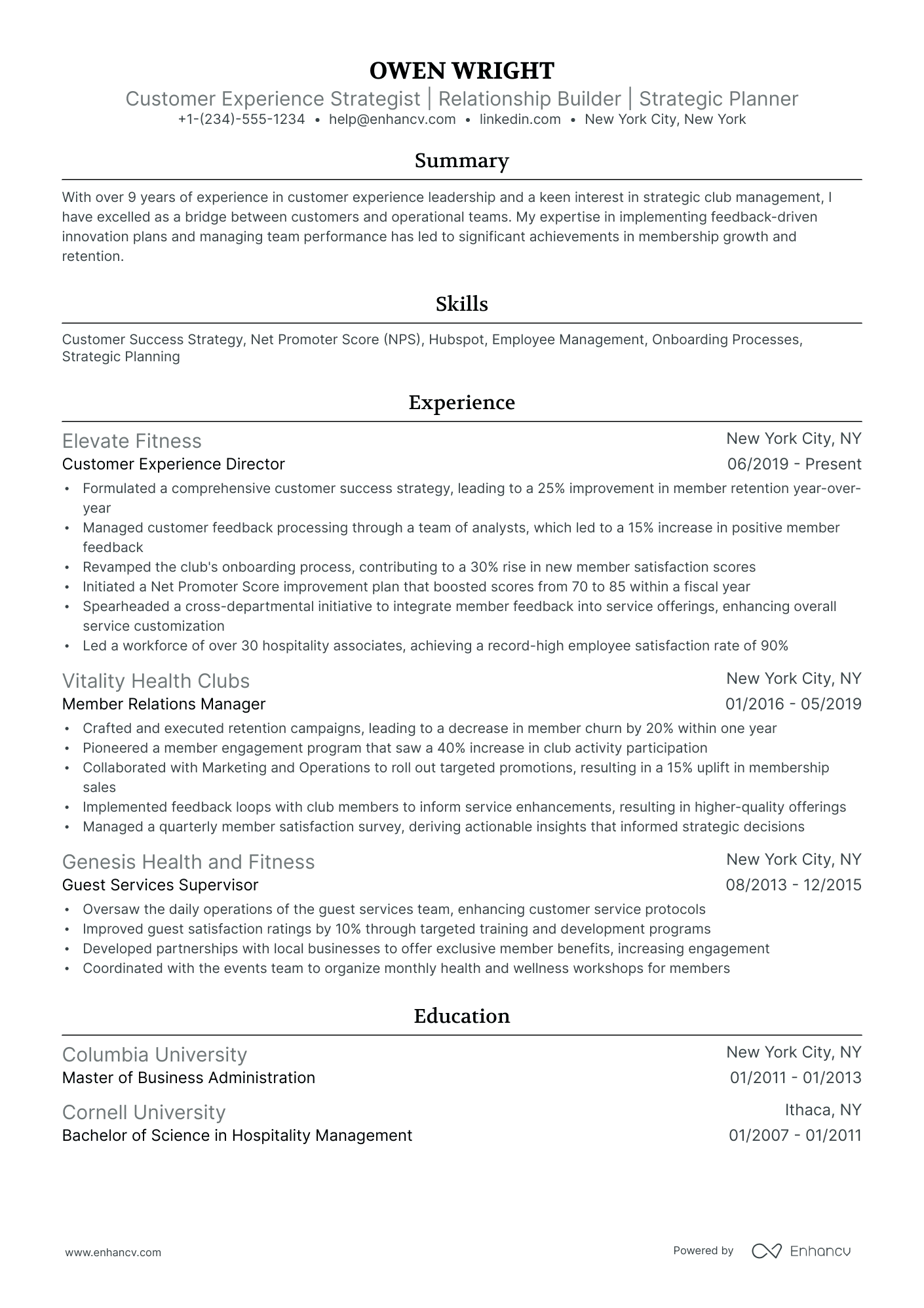
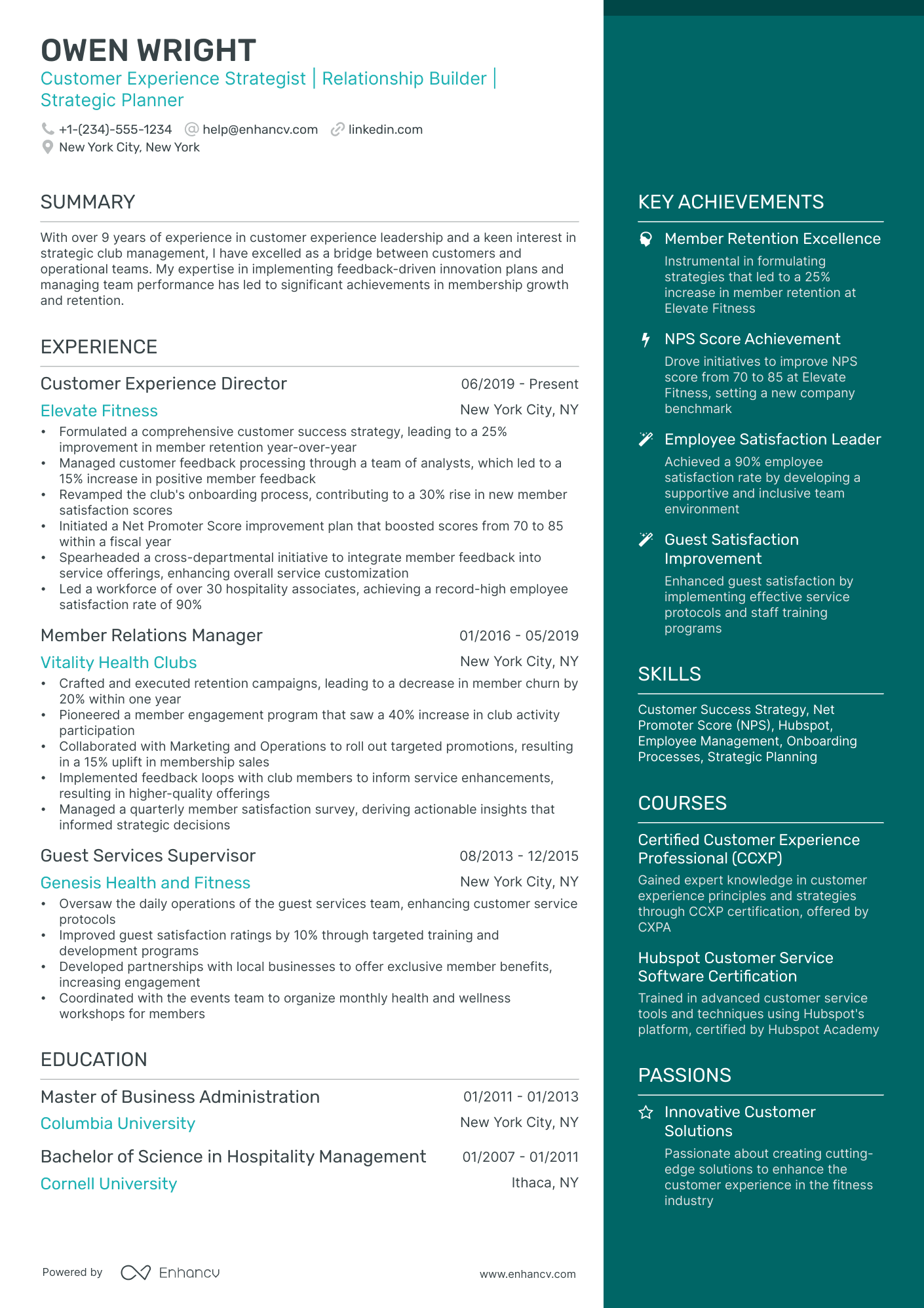
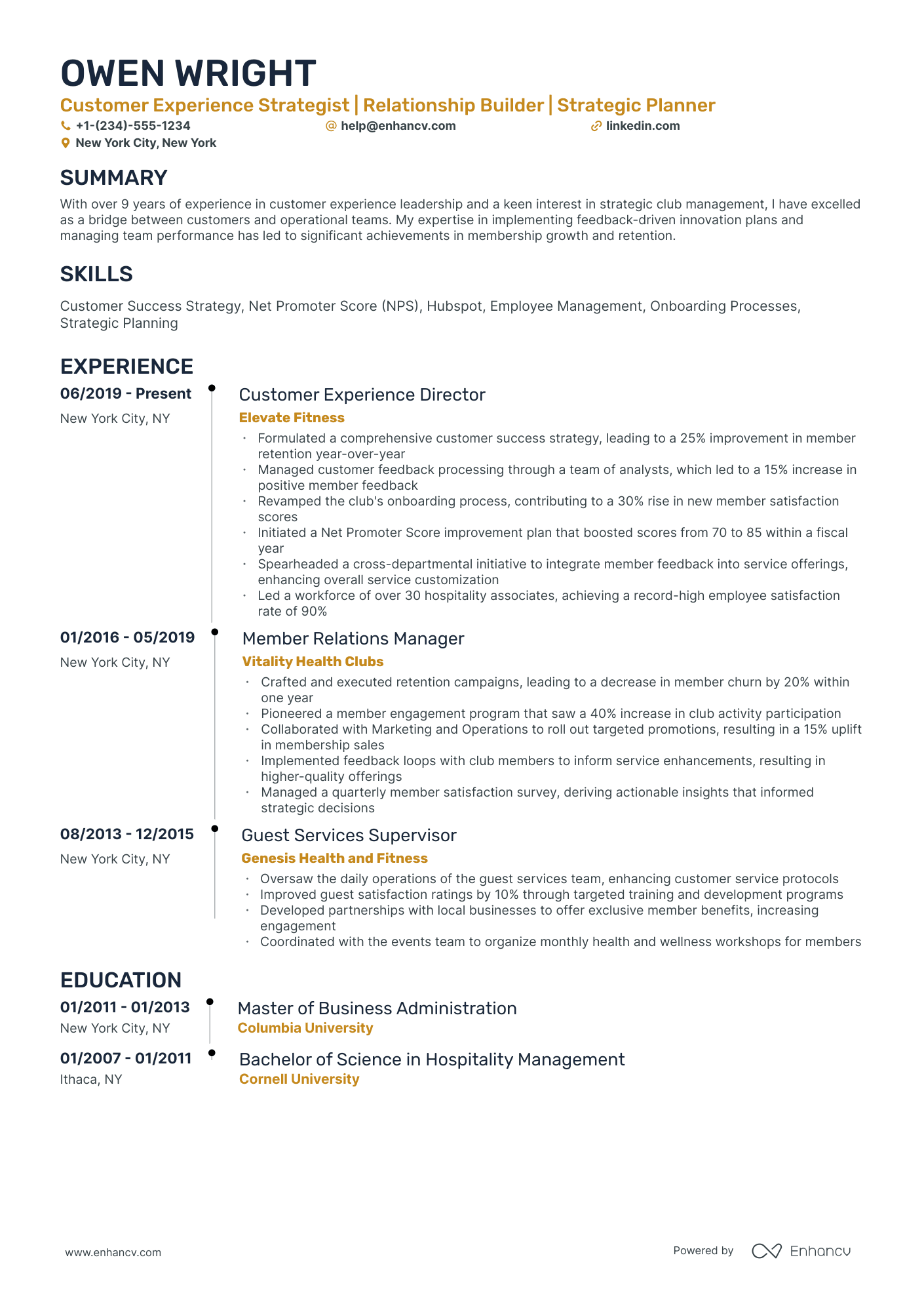
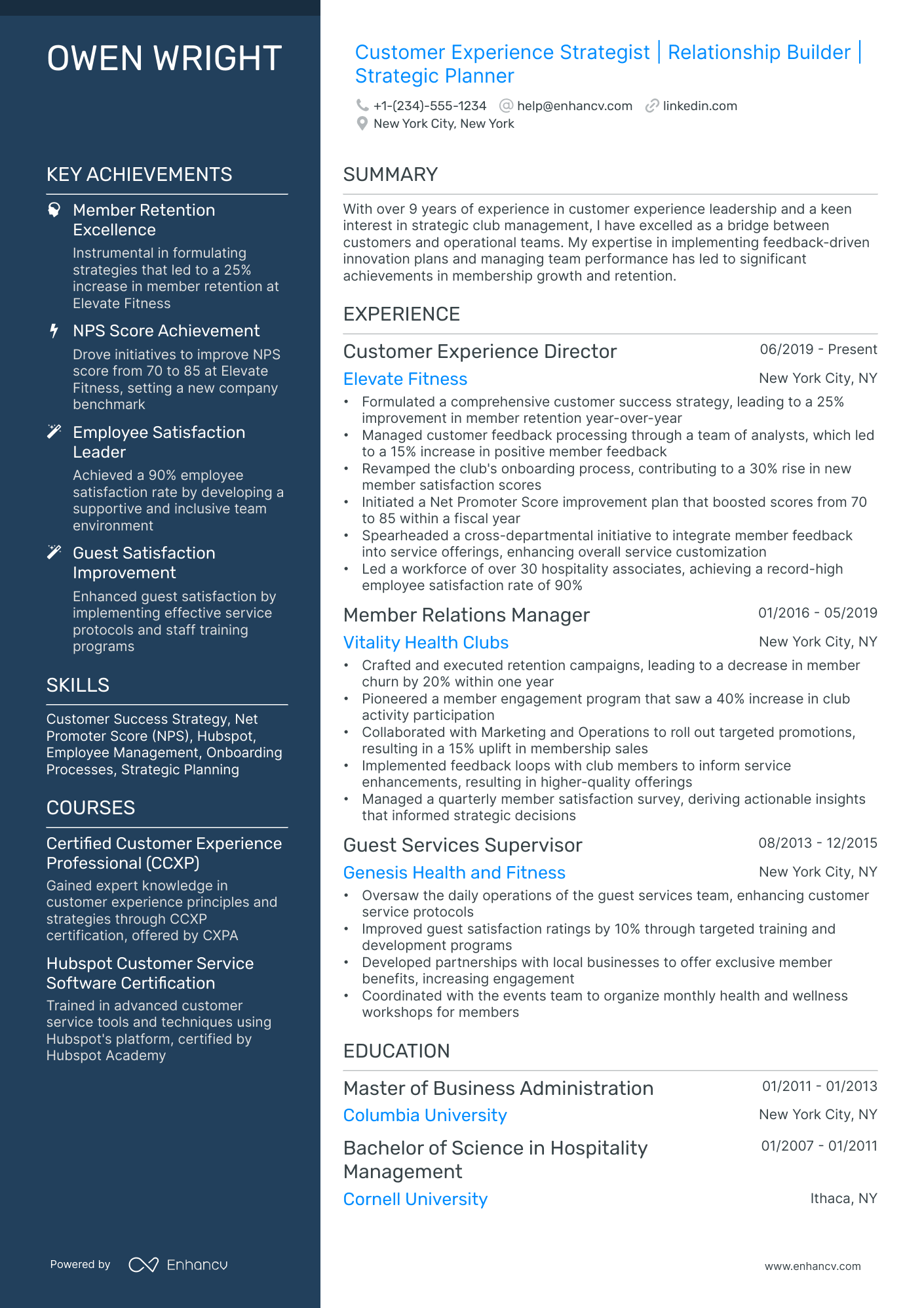
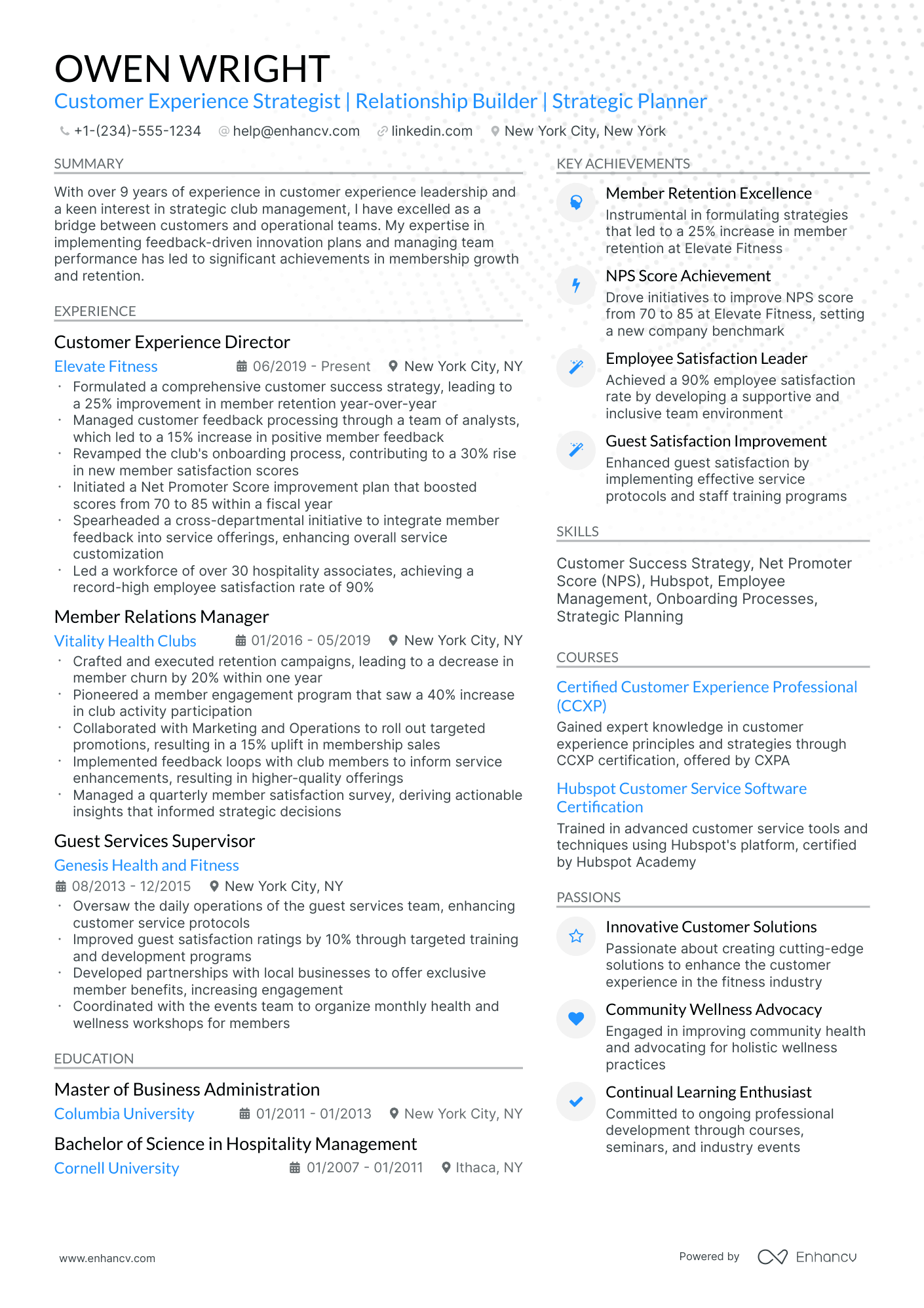
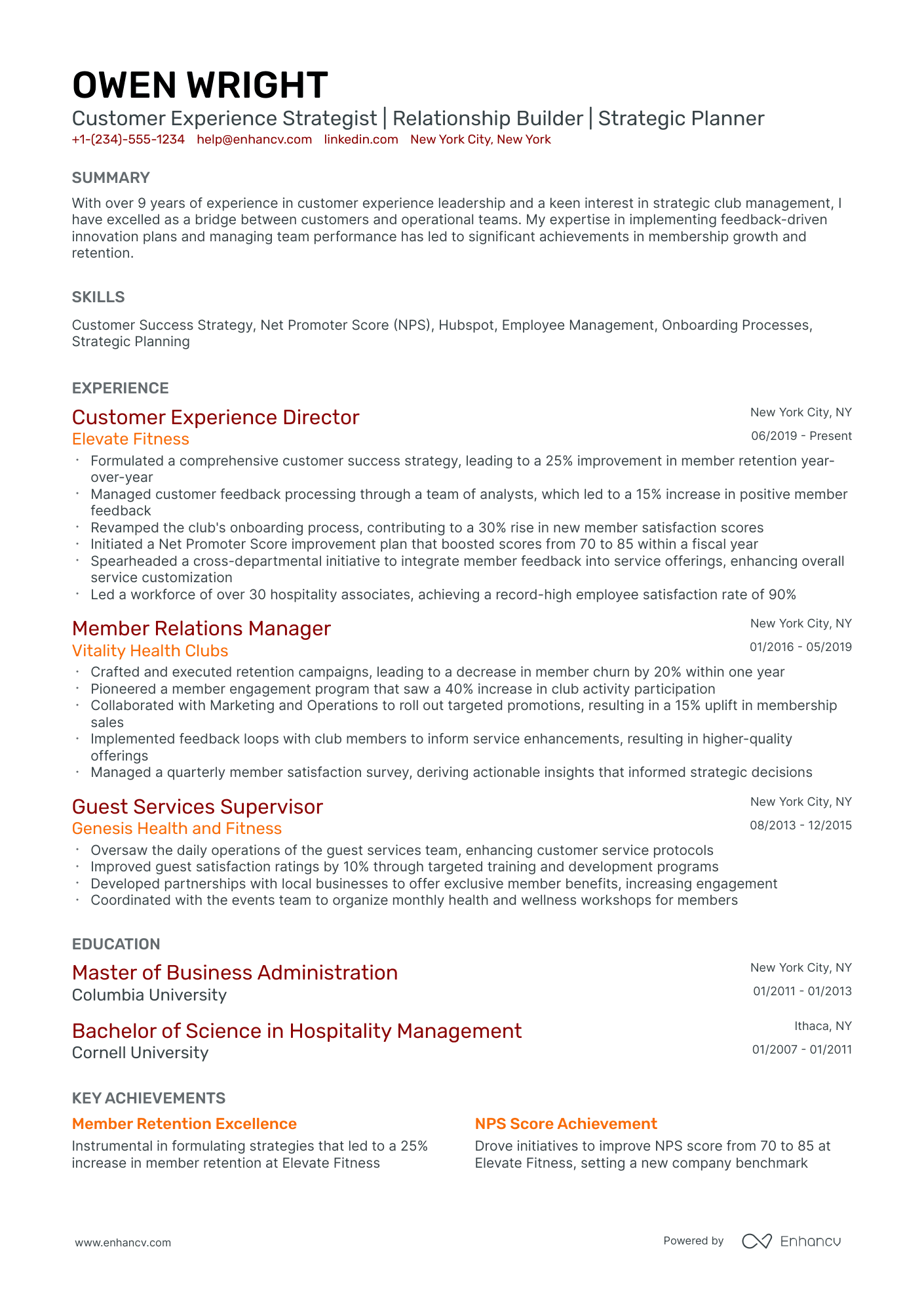
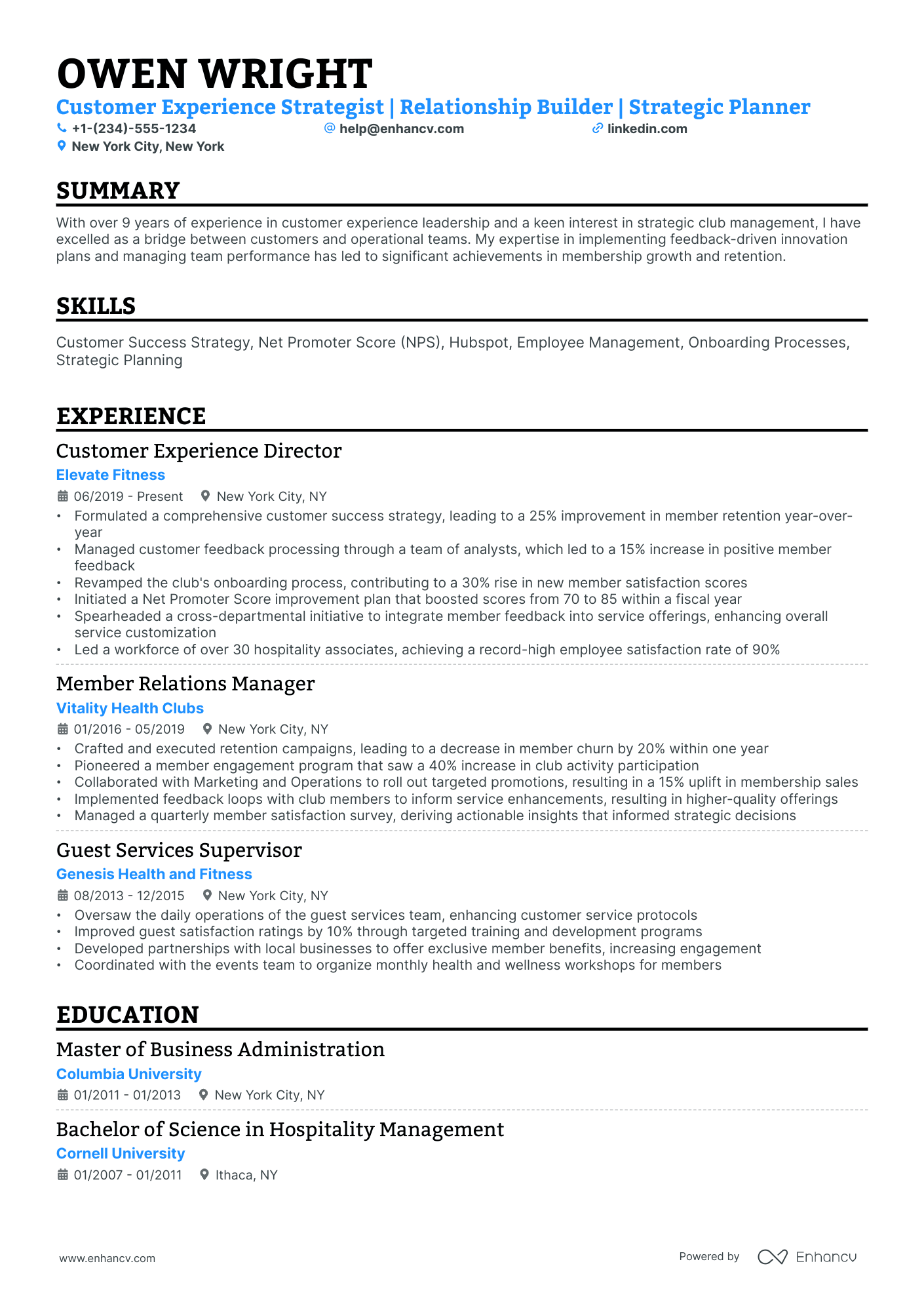
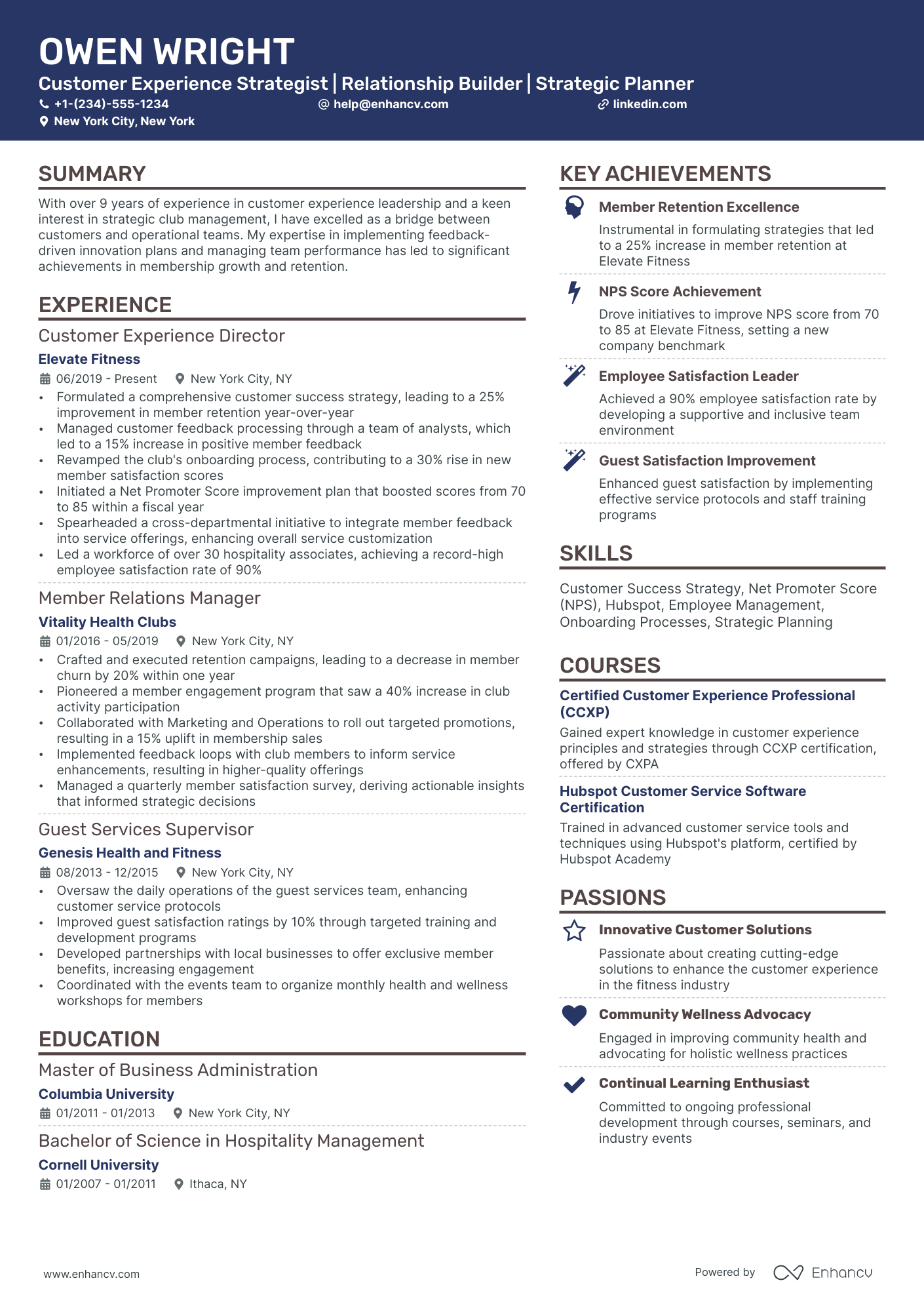
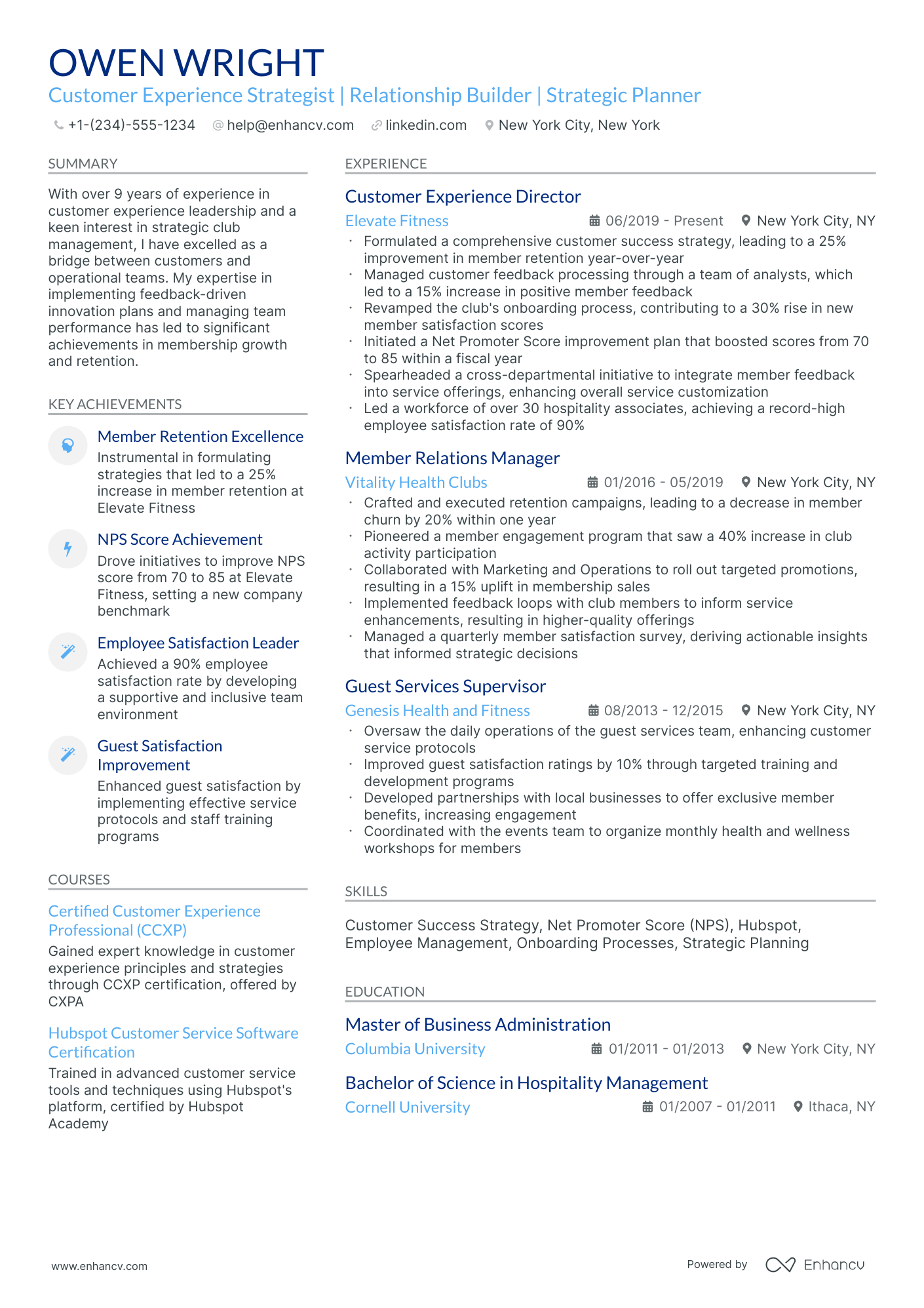
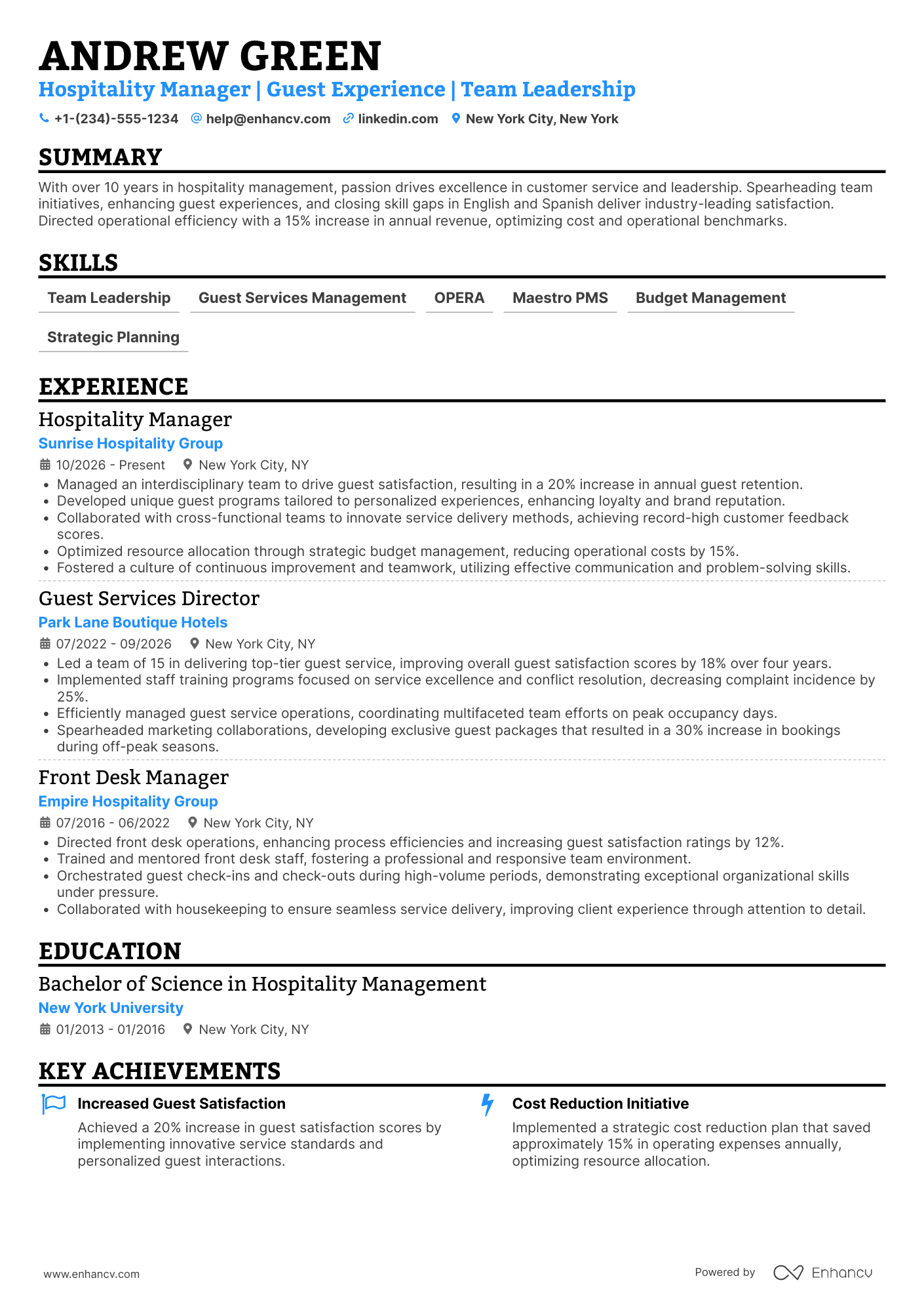
Most hospitality manager resume drafts fail because they read like task lists and bury measurable impact. That hurts when an ATS filters for targeted keywords and recruiters scan in seconds amid heavy applicant volume.
A strong resume shows what you improved and how you led. If you're unsure where to begin, understanding how to write a resume that communicates value is the essential first step. You should highlight revenue growth, cost control, guest satisfaction scores, audit results, event volume managed, and turnover reductions. Show scope like room count, headcount, budget size, and service standards delivered.

Key takeaways
- Quantify every achievement with metrics like revenue growth, guest satisfaction scores, and turnover reductions.
- Use reverse-chronological format for experienced candidates and hybrid format for career changers.
- Tailor each resume to the job posting's systems, KPIs, and property type.
- Connect every listed skill to a specific action and measurable outcome in your experience section.
- Place certifications above or below education based on which is more relevant to the role.
- Write a three-to-four-line summary that leads with scope, results, and operational strengths.
- Use Enhancv to turn vague duties into focused, recruiter-ready bullet points faster.
Job market snapshot for hospitality managers
We analyzed 189 recent hospitality manager job ads across major US job boards. These numbers help you understand employment type trends, experience requirements, salary landscape at a glance.
What level of experience employers are looking for hospitality managers
| Years of Experience | Percentage found in job ads |
|---|---|
| 1–2 years | 2.6% (5) |
| 3–4 years | 2.1% (4) |
| 5–6 years | 4.2% (8) |
| 10+ years | 1.6% (3) |
| Not specified | 89.4% (169) |
Hospitality manager ads by area of specialization (industry)
| Industry (Area) | Percentage found in job ads |
|---|---|
| Finance & Banking | 59.3% (112) |
| Healthcare | 31.7% (60) |
| Education | 5.8% (11) |
Top companies hiring hospitality managers
| Company | Percentage found in job ads |
|---|---|
| Golden Corral | 37.0% (70) |
| TopGolf | 12.7% (24) |
| Mission Pet Health | 12.2% (23) |
| National Veterinary Associates | 5.3% (10) |
Role overview stats
These tables show the most common responsibilities and employment types for hospitality manager roles. Use them to align your resume with what employers expect and to understand how the role is structured across the market.
Day-to-day activities and top responsibilities for a hospitality manager
| Responsibility | Percentage found in job ads |
|---|---|
| Microsoft office | 5.8% (11) |
| Inventory management | 5.3% (10) |
| Communication | 4.2% (8) |
| Excel | 4.2% (8) |
| Leadership | 3.7% (7) |
| Budgeting | 3.2% (6) |
| Customer service | 2.6% (5) |
| Learning management systems | 2.6% (5) |
| Outlook | 2.6% (5) |
| Computer applications | 2.1% (4) |
| Hospitality management | 2.1% (4) |
| Interpersonal skills | 2.1% (4) |
How to format a hospitality manager resume
Recruiters evaluating hospitality manager candidates prioritize operational efficiency, guest satisfaction metrics, team leadership, and revenue impact. A clean, well-structured resume format ensures these signals surface quickly during the six-to-ten-second initial scan and passes applicant tracking system (ATS) filters without formatting errors.

I have significant experience in this role—which format should I use?
Use a reverse-chronological format to showcase your progression through hospitality operations and increasing management responsibility. Do:
- Lead with your most recent role, emphasizing scope of ownership—property size, team headcount, number of departments managed, and budget authority.
- Highlight domain-specific expertise such as property management systems (PMS), revenue management, food and beverage operations, guest experience platforms, and compliance with health and safety regulations.
- Quantify outcomes tied to occupancy rates, guest satisfaction scores, cost reductions, staff retention, and revenue growth.
I'm junior or switching into this role—what format works best?
A hybrid format works best, letting you lead with relevant hospitality skills and certifications while still showing your work history in chronological order. Do:
- Place a focused skills section near the top, featuring competencies such as guest relations, point-of-sale systems, inventory management, and team coordination.
- Include internships, practicum placements, volunteer event coordination, or food service roles that demonstrate transferable hospitality management experience.
- Connect every skill to a specific action and its outcome so recruiters see practical application, not just a keyword list.
Why not use a functional resume?
A functional format strips away the timeline and context recruiters need to evaluate how you built your hospitality management skills, making it harder to verify your readiness for day-to-day operational accountability. Avoid functional formats entirely if you have any relevant hospitality or service-industry work history, even if your experience is limited.
- Edge-case exception: A functional resume may be acceptable if you're entering hospitality management from an unrelated industry with no prior service-sector roles, or if you're returning after an extended career gap—but only if every listed skill is tied to a specific project, certification, or measurable outcome rather than presented as a standalone keyword.
Once your layout and formatting choices are in place, the next step is deciding which sections to include so each one reinforces your qualifications effectively.
What sections should go on a hospitality manager resume
Recruiters expect a hospitality manager resume that quickly shows your ability to lead teams, run smooth operations, and improve guest satisfaction and revenue. Knowing what to put on a resume ensures you include the right details without cluttering your document. Use this structure for maximum clarity:
- Header
- Summary
- Experience
- Skills
- Projects
- Education
- Certifications
- Optional sections: Awards, Leadership, Languages
Strong experience bullets should emphasize measurable results, operational scope, and guest, cost, and revenue outcomes you delivered.
Is your resume good enough?
Drop your resume here or choose a file. PDF & DOCX only. Max 2MB file size.
Once you’ve organized your resume with the right core components, the next step is to write the hospitality manager experience section, since it’s where those details show your impact on operations and guest satisfaction.
How to write your hospitality manager resume experience
Your work experience section should prove you've delivered real results—through guest service systems, revenue strategies, staff leadership, and operational improvements that moved the business forward. Hiring managers in hospitality prioritize demonstrated impact over descriptive task lists, so every bullet should connect what you did to a measurable outcome.
Each entry should include:
- Job title
- Company and location (or remote)
- Dates of employment (month and year)
Three to five concise bullet points showing what you owned, how you executed, and what outcomes you delivered:
- Ownership scope: the properties, departments, service programs, or front- and back-of-house teams you were directly accountable for as a hospitality manager.
- Execution approach: the property management systems, scheduling platforms, quality assurance frameworks, or guest feedback tools you used to drive decisions and deliver consistent service standards.
- Value improved: changes to guest satisfaction scores, occupancy rates, service turnaround times, compliance benchmarks, or operational efficiency that resulted from your leadership.
- Collaboration context: how you coordinated with housekeeping, food and beverage, sales, maintenance, vendors, or corporate stakeholders to align on service delivery and property goals.
- Impact delivered: outcomes framed as business results—such as revenue growth, cost reductions, improved retention, or elevated brand reputation—rather than a summary of daily responsibilities.
Experience bullet formula
A hospitality manager experience example
✅ Right example - modern, quantified, specific.
Hospitality Manager
Harborview Hotel & Conference Center | Boston, MA
2021–Present
Two hundred twenty-room waterfront hotel with a twelve-thousand-square-foot events venue serving corporate and leisure guests.
- Led daily operations across front office, housekeeping, and banquets using Opera Property Management System (property management system) and HotSOS, improving guest satisfaction scores from 4.3 to 4.7 and reducing average check-in time by 22 percent.
- Optimized revenue and inventory controls in STR and Duetto, increasing average daily rate by 9 percent and revenue per available room by 11 percent while maintaining occupancy above 84 percent.
- Implemented labor forecasting and scheduling in UKG, cutting overtime costs by 18 percent and improving schedule adherence by 14 percent through weekly reviews with department heads.
- Partnered with sales, culinary, and event clients to standardize banquet event orders in Delphi.fdc, reducing event change orders by 31 percent and increasing on-time event starts to 96 percent.
- Strengthened service recovery and risk controls by auditing incident logs and guest feedback in Medallia, lowering complaint escalation rate by 27 percent and improving issue resolution within twenty-four hours from 68 percent to 90 percent.
Now that you've seen how a strong experience section comes together, let's look at how to adjust yours to match the specific hospitality manager role you're targeting.
How to tailor your hospitality manager resume experience
Recruiters evaluate your hospitality manager resume through both human review and applicant tracking systems. Tailoring your resume to the job description increases your chances of passing both.
Ways to tailor your hospitality manager experience:
- Match property management systems and booking platforms named in the posting.
- Mirror the exact service standards or quality frameworks the employer references.
- Reflect guest satisfaction KPIs or revenue metrics the job description prioritizes.
- Highlight food safety and health compliance certifications the role requires.
- Use the employer's terminology for front office or back-of-house operations.
- Emphasize cross-departmental coordination models described in the listing.
- Include experience with the specific hospitality segment such as luxury or resort.
- Align staff training or workforce development methods with stated expectations.
Tailoring means aligning your real achievements with what the role demands, not forcing keywords where they don't belong.
Resume tailoring examples for hospitality manager
| Job description excerpt | Untailored | Tailored |
|---|---|---|
| "Oversee daily front desk, housekeeping, and F&B operations to maintain a 4.5+ guest satisfaction rating on TripAdvisor and ensure compliance with brand standards." | Managed hotel operations and helped improve guest satisfaction. | Directed front desk, housekeeping, and F&B teams across a 200-room property, maintaining a 4.7 TripAdvisor rating and achieving 98% brand-standard compliance during quarterly audits. |
| "Develop and manage an annual operating budget of $2M+, control labor costs, and identify revenue opportunities through upselling programs and event bookings." | Responsible for budgeting and finding ways to increase revenue. | Managed a $2.4M annual operating budget, reduced labor costs by 12% through optimized scheduling in Opera PMS, and launched a front-desk upselling program that generated $180K in additional room-upgrade revenue. |
| "Recruit, train, and retain a team of 40+ staff using LMS onboarding platforms, conduct quarterly performance reviews, and reduce annual turnover below 30%." | Hired and trained hospitality staff and conducted performance reviews. | Recruited and onboarded 45+ front-of-house and back-of-house employees using the Wisetail LMS platform, led quarterly performance reviews tied to service KPIs, and lowered annual turnover from 38% to 24% within one year. |
Once you’ve aligned your experience with the role’s priorities, quantify your hospitality manager achievements to show the impact behind those choices.
How to quantify your hospitality manager achievements
Quantifying your achievements shows how you improved guest experience and business results. Focus on revenue per available room, guest satisfaction, labor and turnover, service speed, compliance scores, and incident rates.
Quantifying examples for hospitality manager
| Metric | Example |
|---|---|
| Revenue growth | "Increased revenue per available room by 9% in six months by optimizing pricing, upsell scripts, and group booking blocks across a 120-room property." |
| Guest satisfaction | "Raised guest satisfaction score from 4.2 to 4.6 by retraining front desk staff, revising recovery steps, and tracking issues in Medallia." |
| Labor efficiency | "Cut labor cost from 28% to 25% of revenue by rebuilding schedules in HotSchedules and cross-training five supervisors for peak coverage." |
| Compliance quality | "Improved health inspection score from 88 to 96 by tightening temperature logs, vendor checks, and weekly audits across kitchen and bar." |
| Risk reduction | "Reduced guest incident reports by 30% after updating security rounds, retraining on de-escalation, and coordinating with night audit and local police." |
Turn vague job duties into measurable, recruiter-ready resume bullets in seconds with Enhancv's Bullet Point Generator.
Once you've crafted strong bullet points for your experience section, you'll want to apply the same precision to presenting your hard and soft skills.
How to list your hard and soft skills on a hospitality manager resume
Your skills section shows you can run daily operations, protect guest experience, and hit revenue targets, and recruiters and applicant tracking systems scan this section to match you to job requirements—aim for a balanced mix of role-specific hard skills and execution-focused soft skills. hospitality manager roles require a blend of:
- Product strategy and discovery skills.
- Data, analytics, and experimentation skills.
- Delivery, execution, and go-to-market discipline.
- Soft skills.
Your skills section should be:
- Scannable (bullet-style grouping).
- Relevant to the job post.
- Backed by proof in experience bullets.
- Updated with current tools.
Place your skills section:
- Above experience if you're junior or switching careers.
- Below experience if you're mid/senior with strong achievements.

Hard skills
- Property management systems (Opera PMS, Cloudbeds)
- Revenue management and forecasting
- Rate strategy, yield management
- Channel managers, online travel agencies
- Group sales and event operations
- Budgeting, labor cost control
- Food safety compliance (HACCP)
- Point-of-sale systems (Toast, Micros)
- Guest recovery workflows, service standards
- Inventory, vendor, purchase order management
- Scheduling and timekeeping systems
- Audit readiness, cash handling controls
Soft skills
- Lead shift execution
- Coach and performance-manage staff
- De-escalate guest complaints
- Set priorities during peak periods
- Coordinate across front desk, housekeeping, food and beverage
- Make fast, policy-aligned decisions
- Hold teams accountable to standards
- Communicate updates across shifts
- Run effective pre-shift briefings
- Negotiate with vendors and partners
- Resolve conflicts between departments
- Own outcomes and follow through
How to show your hospitality manager skills in context
Skills shouldn't live only in a dedicated skills list. Browse examples of how other professionals present their resume skills for inspiration on effective formatting and phrasing.
They should be demonstrated in:
- Your summary (high-level professional identity)
- Your experience (proof through outcomes)
Here's what that looks like in practice.
Summary example
Hospitality manager with 12 years leading luxury resort operations, skilled in Opera PMS, revenue optimization, and guest relations. Drove a 22% increase in guest satisfaction scores while reducing staff turnover through mentorship-driven team development.
- Signals senior-level expertise immediately
- Names an industry-standard tool
- Quantifies a guest satisfaction outcome
- Highlights leadership as a soft skill
Experience example
Senior Hospitality Manager
The Linden Collection | Savannah, GA
March 2019–Present
- Implemented a new Opera PMS workflow that cut front-desk check-in times by 34%, improving guest satisfaction survey scores across three properties.
- Partnered with the culinary and events teams to redesign the banquet operations process, increasing event revenue by $280K annually.
- Trained and mentored a 45-person front-of-house team using service excellence frameworks, reducing annual staff turnover from 38% to 19%.
- Every bullet includes measurable proof
- Skills surface naturally through achievements
Once you’ve tied your hospitality management strengths to real examples, the next step is applying that same approach to a hospitality manager resume when you don’t have direct experience.
How do I write a hospitality manager resume with no experience
Even without full-time experience, you can demonstrate readiness through:
- Student-run restaurant shift supervisor
- Volunteer event check-in lead
- Campus housing front desk lead
- Part-time server closing duties
- Retail assistant manager scheduling
- Catering setup and breakdown lead
- Hotel shadowing or job observation
If you're starting out, our guide on building a resume without work experience walks you through how to position transferable skills effectively.
Focus on:
- Scheduling, labor, and coverage plans
- Cash handling and reconciliation accuracy
- Service recovery with documented outcomes
- Inventory counts and shrink control
Resume format tip for entry-level hospitality manager
Use a combination resume format because it highlights relevant skills and projects first, while still showing work history and responsibilities. Do:
- Add a "Projects" section with metrics.
- List tools: point of sale, spreadsheets.
- Translate tasks into manager outcomes.
- Quantify volume, time, and accuracy.
- Match keywords from the job post.
- Led volunteer event check-in using a point of sale-style ticketing system, processed 300 guests in 90 minutes, and cut average wait time by 25%.
Once you've shaped your resume around transferable skills and relevant experiences, presenting your education strategically becomes the next way to strengthen your candidacy.
How to list your education on a hospitality manager resume
Your education section helps hiring teams confirm you have the foundational knowledge needed for success. It validates training in operations, guest services, and business management relevant to the hospitality manager role.
Include:
- Degree name
- Institution
- Location
- Graduation year
- Relevant coursework (for juniors or entry-level candidates)
- Honors & GPA (if 3.5 or higher)
Skip month and day details—list the graduation year only.
Here's a strong education entry tailored for a hospitality manager resume.
Example education entry
Bachelor of Science in Hospitality Management
Cornell University, Ithaca, NY
2019
GPA: 3.7/4.0
- Relevant coursework: Revenue Management, Hotel Operations, Food & Beverage Planning, Guest Experience Strategy
- Honors: Dean's List, Magna Cum Laude
How to list your certifications on a hospitality manager resume
Certifications on a resume show a hospitality manager's commitment to learning, proficiency with key tools, and up-to-date industry knowledge that supports stronger guest and business outcomes.
Include:
- Certificate name
- Issuing organization
- Year
- Optional: credential ID or URL
- Place certifications below education when your degree is recent and more relevant than older or general certificates.
- Place certifications above education when they are recent and directly match the hospitality manager role or the job's core requirements.
Best certifications for your hospitality manager resume
ServSafe Food Protection Manager Certification Certified Hospitality Supervisor (CHS) Certified Hotel Administrator (CHA) Certified Hospitality Revenue Manager (CHRM) Certified Meeting Professional (CMP) Wine & Spirit Education Trust (WSET) Level 2 Award in Wines American Hotel & Lodging Educational Institute (AHLEI) Hospitality Management Certificate
Once you’ve placed your credentials where hiring managers can spot them quickly, shift to your hospitality manager resume summary to connect those qualifications to the value you deliver.
How to write your hospitality manager resume summary
Your resume summary is the first thing a recruiter reads, so it needs to earn their attention fast. A strong opening positions you as a capable hospitality manager worth interviewing.
Keep it to three to four lines, with:
- Your title and total years of hospitality management experience.
- The type of property, venue, or hospitality segment you specialize in.
- Core skills such as staff scheduling, budgeting, POS systems, or guest relations platforms.
- One or two measurable wins, like improved guest satisfaction scores or reduced turnover.
- Soft skills tied to real outcomes, such as team leadership that cut onboarding time.

PRO TIP
At the mid-level hospitality manager stage, emphasize operational results and team leadership over basic duties. Highlight metrics like revenue growth, satisfaction ratings, or efficiency gains. Avoid vague phrases like "passionate leader" or "dedicated professional." Show what you've done, not what you aspire to be.
Example summary for a hospitality manager
Hospitality manager with six years of experience in full-service hotel operations. Led a 30-member team, boosting guest satisfaction scores by 18% while reducing staff turnover by 22% through structured training programs.
Optimize your resume summary and objective for ATS
Drop your resume here or choose a file.
PDF & DOCX only. Max 2MB file size.
Now that your summary captures your strongest qualifications, make sure the header framing it presents your contact details correctly so recruiters can actually reach you.
What to include in a hospitality manager resume header
A resume header is the top section with your key identifiers, and it matters for a hospitality manager because it boosts visibility, credibility, and recruiter screening speed.
Essential resume header elements
- Full name
- Tailored job title and headline
- Location
- Phone number
- Professional email
- GitHub link
- Portfolio link
A LinkedIn link helps recruiters verify your experience quickly and supports screening.
Don't include a photo on a hospitality manager resume unless the role is explicitly front-facing or appearance-dependent.
Match your header job title to the posting and keep formatting consistent so recruiters can scan it in seconds.
Example
Hospitality manager resume header
Jordan Taylor
Hospitality manager | Hotel operations, guest experience, team leadership
Austin, TX
(512) 555-01XX
jordan.taylor@enhancv.com
github.com/jordantaylor
jordantaylor.com
linkedin.com/in/jordantaylor
Once your contact details and role identifiers are clear at the top, add additional sections to highlight relevant strengths and credentials that don’t fit in the header.
Additional sections for hospitality manager resumes
When your core qualifications align closely with other candidates, well-chosen additional sections can set your hospitality manager resume apart. For example, listing language skills on your resume can be a strong differentiator in guest-facing hospitality roles.
- Languages
- Certifications and licenses
- Volunteer experience
- Awards and recognition
- Professional affiliations
- Hobbies and interests
- Publications
Once you've strengthened your resume with relevant additional sections, pairing it with a well-crafted cover letter can further set your application apart.
Do hospitality manager resumes need a cover letter
A cover letter isn't required for a hospitality manager, but it helps in competitive roles or when hiring managers expect one. If you're unsure about the format, learning what a cover letter is and how it complements your resume can clarify when it's worth writing one. It can make a difference when your resume needs context or when you're targeting a specific property.
Use a cover letter to add details your hospitality manager resume can't show:
- Explain role and team fit: connect your leadership style to the property type, service model, and staffing structure.
- Highlight one or two outcomes: describe a project that improved guest scores, reduced turnover, or increased revenue, with clear metrics.
- Show business understanding: reference the property's guests, seasonality, and operational constraints, and how you'd prioritize daily decisions.
- Address transitions or non-obvious experience: clarify a move across segments, a gap, or transferable management work that supports hospitality manager responsibilities.
Drop your resume here or choose a file.
PDF & DOCX only. Max 2MB file size.
Even if you decide a cover letter won’t add value for this application, using AI to improve your hospitality manager resume helps you strengthen the document hiring teams will review first.
Using AI to improve your hospitality manager resume
AI can sharpen your resume's clarity, structure, and impact. It helps tighten language and highlight results. But overuse strips authenticity. Once your content is clear and role-aligned, step away from AI. If you're exploring tools, this guide on which AI is best for writing resumes can help you choose the right one.
Here are 10 prompts to strengthen specific sections of your hospitality manager resume:
Strengthen your summary
Quantify experience bullets
Tighten action verbs
Align skills section
Refine certification details
Improve project descriptions
Trim redundant content
Tailor education entries
Fix inconsistent formatting
Sharpen role-specific language
Conclusion
A strong hospitality manager resume highlights measurable outcomes, role-specific skills, and a clear structure. Lead with results like revenue growth, cost control, guest satisfaction scores, and staff retention. Support them with skills in operations, service recovery, scheduling, training, and compliance.
Keep each section easy to scan, with consistent formatting and focused bullet points. This approach shows you can deliver steady performance in today’s market and adapt to hiring needs that keep evolving. Your hospitality manager resume should read like a plan you can execute.