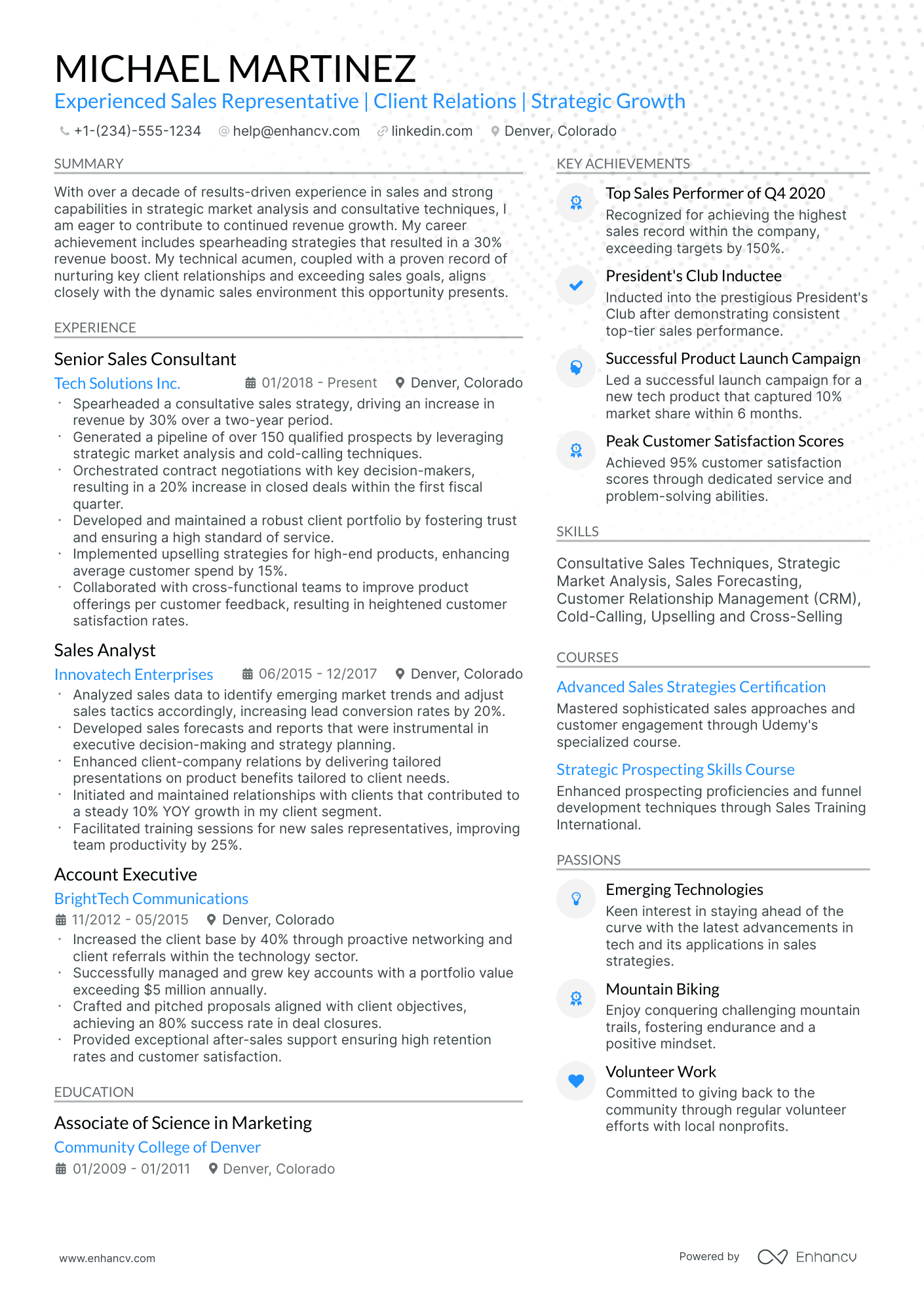
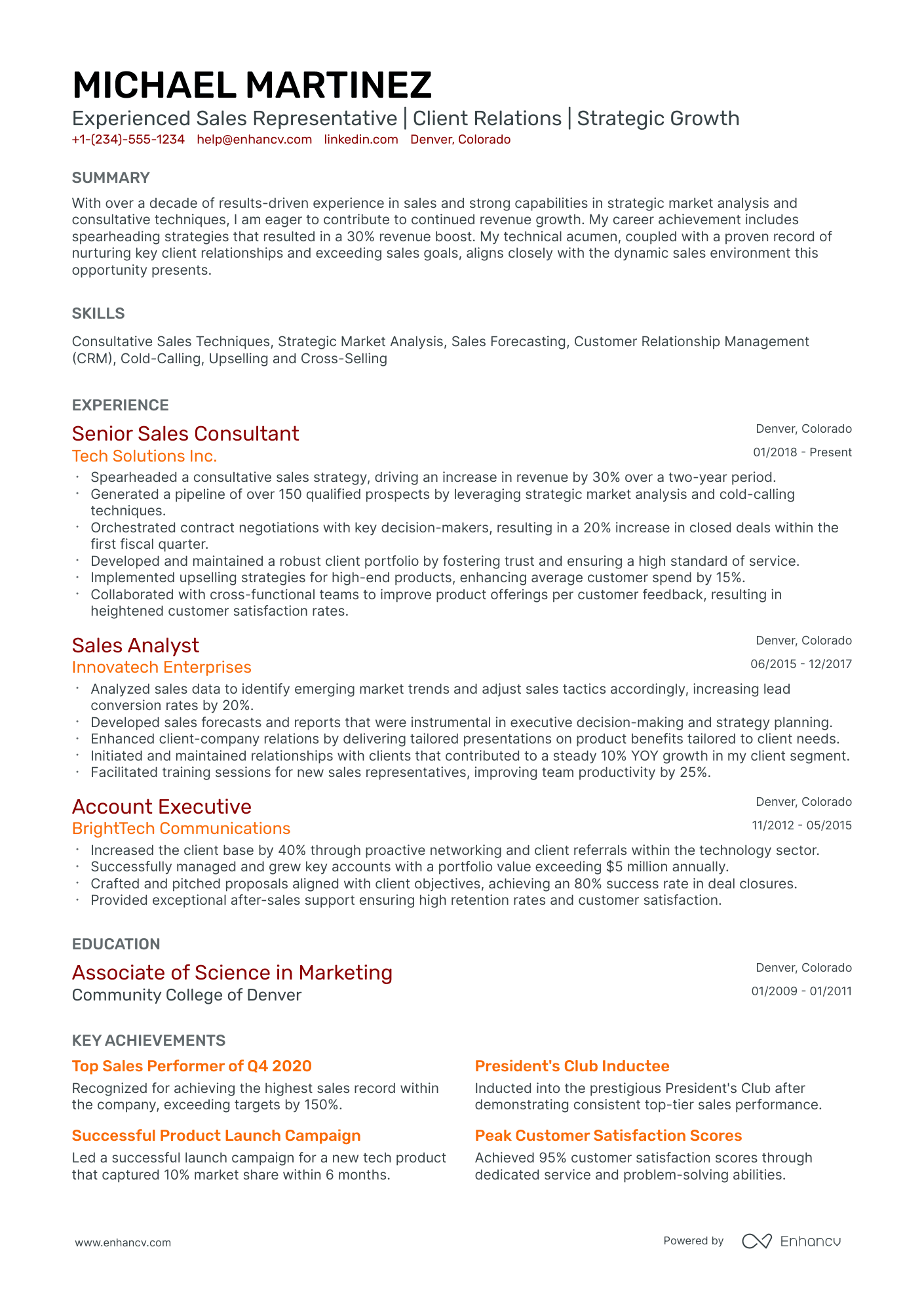
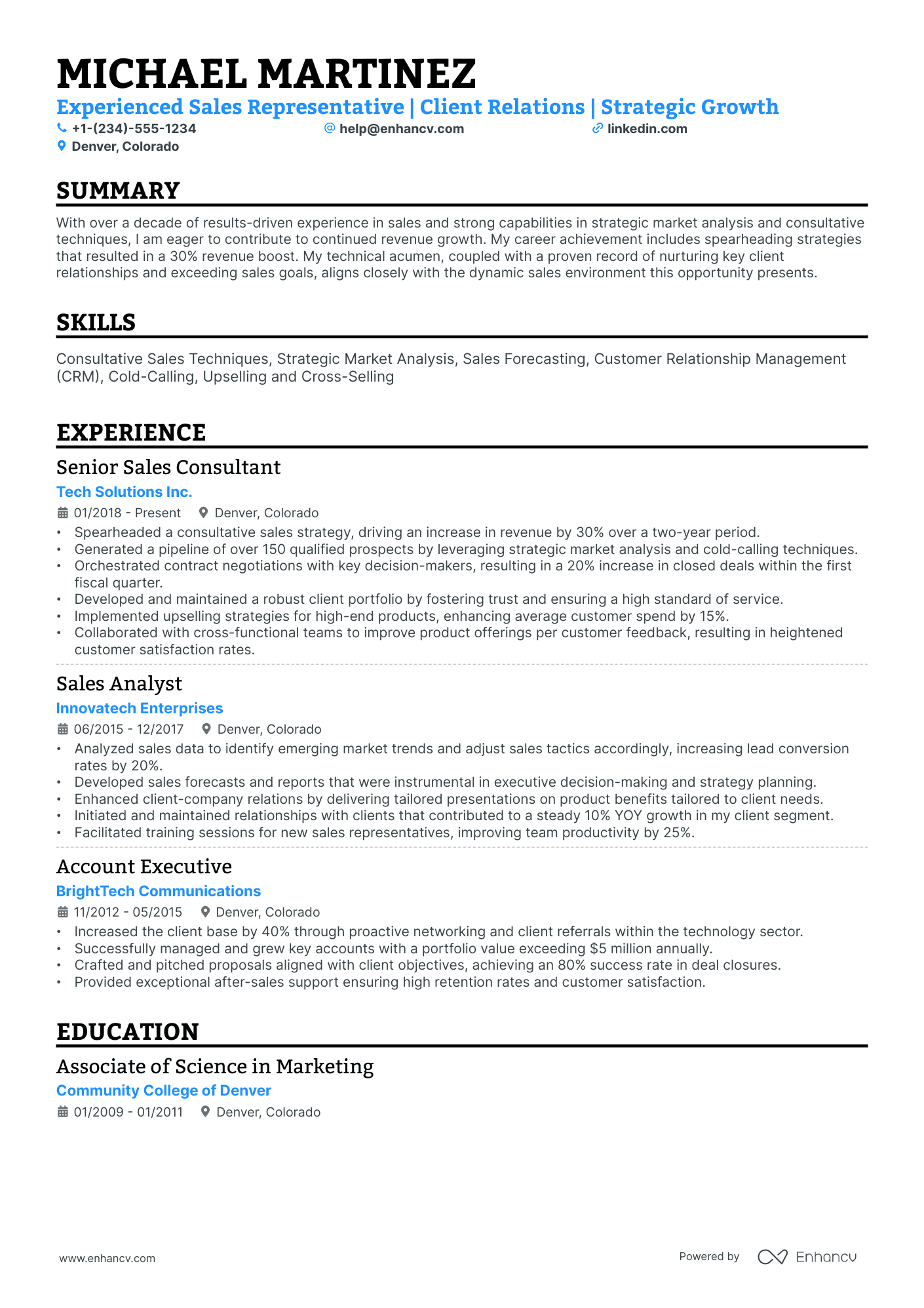
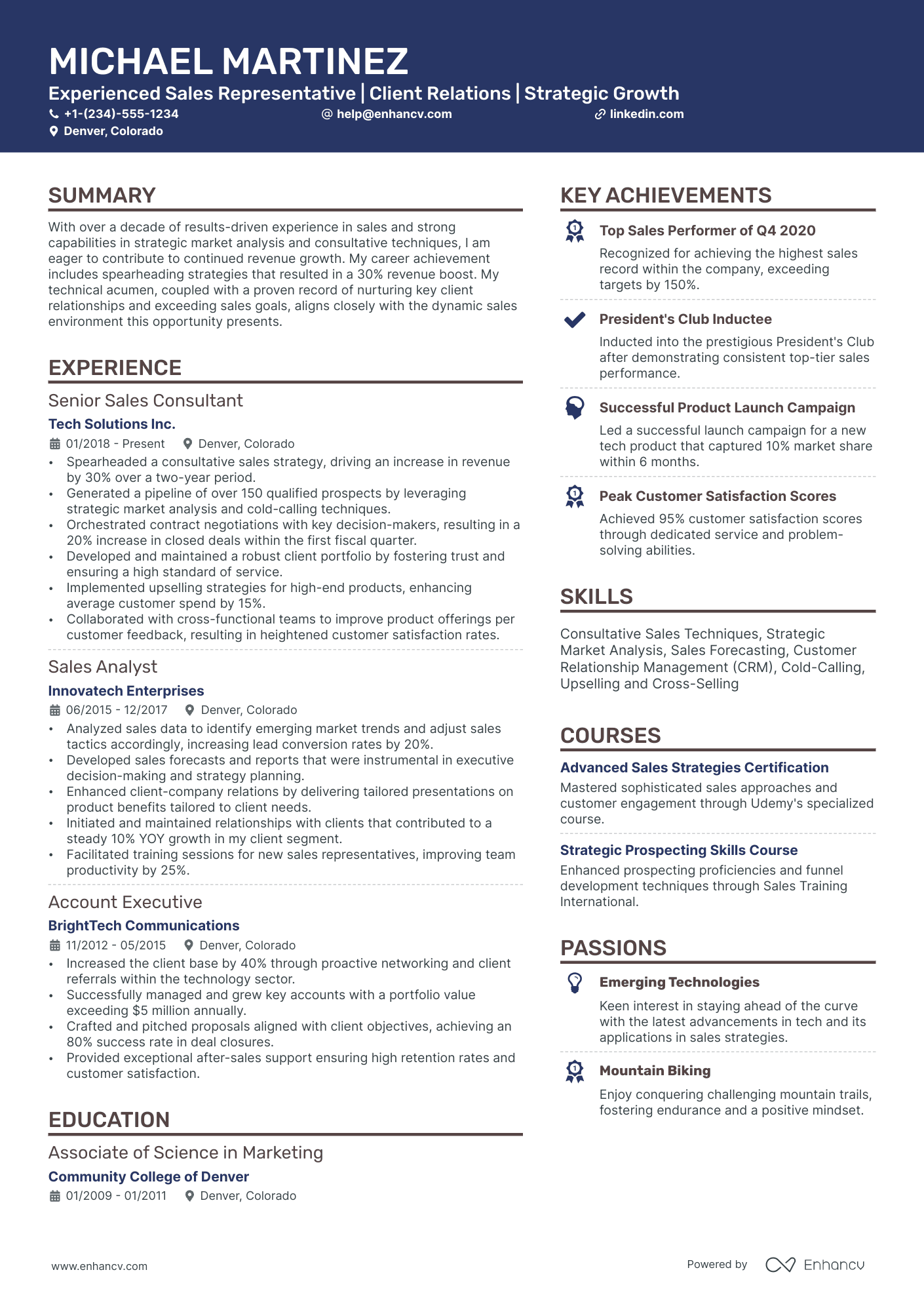
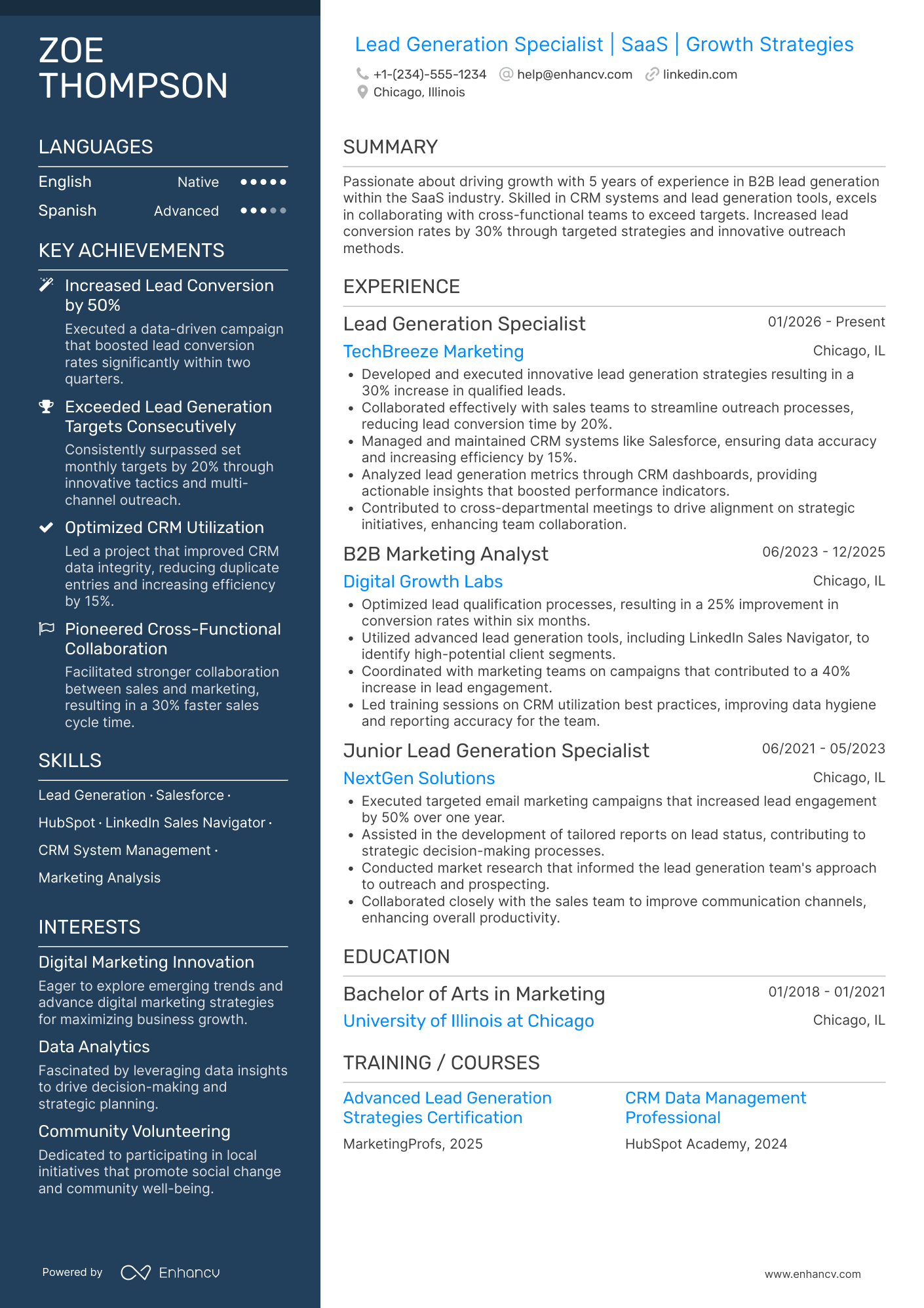
Most lead generation resume drafts fail because they list tools and tasks, not pipeline impact. A lead generation specialist resume has seconds to pass ATS filters and recruiter scans in a crowded market. Knowing how to make your resume stand out is essential in this competitive field.
This guide shows you how to lead with outcomes. You'll highlight qualified leads generated, conversion rate lifts, cost per lead reductions, pipeline influenced, revenue attributed, and campaign turnaround time improvements. You'll show scale, consistency, and measurable business results.

Key takeaways
- Lead with pipeline metrics, conversion rates, and revenue impact—not task lists.
- Use reverse-chronological format for deep experience and hybrid format for career switchers.
- Tailor every experience bullet to mirror the job posting's tools and terminology.
- Quantify achievements using cost per lead, lead volume, and qualification speed.
- Demonstrate skills in context through your summary and experience, not just a skills list.
- Anchor entry-level resumes in projects, CRM tools, and measurable outreach results.
- Use Enhancv to turn vague duties into specific, metric-driven resume bullets faster.
Job market snapshot for lead generations
We analyzed 336 recent lead generation job ads across major US job boards. These numbers help you understand salary landscape, role specialization trends, experience requirements at a glance.
What level of experience employers are looking for lead generations
| Years of Experience | Percentage found in job ads |
|---|---|
| 1–2 years | 4.8% (16) |
| 3–4 years | 4.5% (15) |
| 5–6 years | 2.7% (9) |
| 7–8 years | 1.2% (4) |
| 10+ years | 35.1% (118) |
| Not specified | 51.8% (174) |
Lead generation ads by area of specialization (industry)
| Industry (Area) | Percentage found in job ads |
|---|---|
| Real Estate & Construction | 65.2% (219) |
| Finance & Banking | 18.2% (61) |
| Education | 6.3% (21) |
| Retail & E-commerce | 4.2% (14) |
| Healthcare | 3.3% (11) |
Top companies hiring lead generations
| Company | Percentage found in job ads |
|---|---|
| American Residential Services | 64.9% (218) |
| Acosta, Inc. | 6.3% (21) |
| Great Day Improvements | 4.5% (15) |
Role overview stats
These tables show the most common responsibilities and employment types for lead generation roles. Use them to align your resume with what employers expect and to understand how the role is structured across the market.
Day-to-day activities and top responsibilities for a lead generation
| Responsibility | Percentage found in job ads |
|---|---|
| Crm | 12.2% (41) |
| Salesforce | 5.4% (18) |
| Data analysis | 3.3% (11) |
| Marketing automation | 2.7% (9) |
| Seo | 2.7% (9) |
| Business development | 2.1% (7) |
| Email marketing | 2.1% (7) |
| Machine learning | 2.1% (7) |
| Inventory management system | 1.8% (6) |
| Material handling equipment | 1.8% (6) |
| Partnerships | 1.5% (5) |
| Project management | 1.5% (5) |
Type of employment (remote vs on-site vs hybrid)
| Employment type | Percentage found in job ads |
|---|---|
| On-site | 88.4% (297) |
| Remote | 6.8% (23) |
| Hybrid | 4.8% (16) |
How to format a lead generation resume
Recruiters evaluating lead generation resumes prioritize pipeline metrics, conversion data, channel expertise, and demonstrated ability to drive revenue through strategic prospecting. Choosing the right resume format ensures these signals surface quickly—both for human reviewers scanning in under 10 seconds and for applicant tracking systems parsing your content into structured fields.

I have significant experience in lead generation—which format should I use?
Use a reverse-chronological format to put your deepest and most relevant lead generation experience front and center. Do:
- Lead each role entry with scope and ownership—team size managed, channels owned, budget controlled, and pipeline volume overseen.
- Highlight proficiency with role-specific tools and domains such as Salesforce, HubSpot, LinkedIn Sales Navigator, ZoomInfo, marketing automation platforms, and ABM strategies.
- Quantify outcomes tied directly to business impact, including cost per lead, SQL-to-close ratios, pipeline revenue generated, and conversion rate improvements.
I'm junior or switching into lead generation—what format works best?
A hybrid format works best because it lets you lead with transferable lead generation skills while still providing a concise timeline of relevant experience. Do:
- Place a focused skills section near the top of your resume featuring prospecting tools, CRM platforms, data enrichment software, and outreach methodologies.
- Include projects, freelance work, internships, or adjacent roles (such as sales support, marketing coordination, or customer research) that demonstrate hands-on lead generation activity.
- Connect every action to a clear outcome so recruiters can see the link between what you did and the results it produced.
Why not use a functional resume?
A functional format strips away the timeline and context recruiters need to verify where, when, and how you developed your lead generation capabilities, making it harder to assess your growth and reliability.
- When a functional resume might be acceptable: If you're making a career change from an unrelated field, have a limited work history, or are addressing significant resume gaps, a functional format can work—but only if every listed skill is anchored to a specific project, campaign, or measurable outcome rather than presented as a standalone claim.
Once your layout and formatting choices support easy readability, the next step is deciding which sections to include so every part of your resume serves a clear purpose.
What sections should go on a lead generation resume
Recruiters expect you to present clear proof that you can generate qualified leads and move them through the funnel. Understanding what to put on a resume for lead generation roles helps you prioritize the right content.
Use this structure for maximum clarity:
- Header
- Summary
- Experience
- Skills
- Projects
- Education
- Certifications
- Optional sections: Awards, leadership, languages
Strong experience bullets should emphasize lead volume and quality, conversion rates, pipeline impact, revenue influence, and measurable results across channels and tools.
Is your resume good enough?
Drop your resume here or choose a file. PDF & DOCX only. Max 2MB file size.
Once you’ve organized your resume with the right structure and essential components, focus on writing your lead generation experience section to show how you delivered results in each role.
How to write your lead generation resume experience
The experience section is where you prove you can actually generate, qualify, and convert leads—not just describe daily tasks. Hiring managers prioritize demonstrated impact, so every bullet should highlight shipped campaigns, role-relevant tools or methods you applied, and measurable outcomes tied to pipeline growth or revenue.
Each entry should include:
- Job title
- Company and location (or remote)
- Dates of employment (month and year)
Three to five concise bullet points showing what you owned, how you executed, and what outcomes you delivered:
- Ownership scope: the lead generation channels, campaigns, market segments, CRM databases, or outreach programs you were directly accountable for.
- Execution approach: the tools, frameworks, and methods you used to identify prospects, nurture pipelines, and optimize conversion—such as marketing automation platforms, cold outreach sequences, lead scoring models, or A/B testing workflows.
- Value improved: changes to lead quality, conversion rates, pipeline velocity, cost per lead, response rates, or sales-readiness that resulted from your work.
- Collaboration context: how you partnered with sales teams, marketing, content creators, revenue operations, or external vendors to align lead generation efforts with broader business goals.
- Impact delivered: outcomes expressed through pipeline contribution, revenue influence, lead volume growth, or improvements to qualification accuracy rather than a list of activities performed.
Experience bullet formula
A lead generation experience example
✅ Right example - modern, quantified, specific.
Demand Generation Manager, Lead Generation
AtlasGuard Cybersecurity | Austin, TX (Remote)
2022–Present
B2B software-as-a-service cybersecurity platform serving mid-market IT teams across North America.
- Built and optimized a HubSpot lead capture and nurture engine—forms, landing pages, scoring, and lifecycle stages—raising marketing-qualified lead volume by 38% and improving lead-to-sales-qualified lead conversion from 14% to 22%.
- Launched LinkedIn Ads and Google Ads campaigns using UTM governance, Looker Studio dashboards, and weekly creative testing with design—cut cost per lead by 24% and increased demo-request rate by 31% over two quarters.
- Implemented intent-based routing and enrichment with Clearbit and Salesforce—standardized firmographic fields, reduced duplicate records by 41%, and improved sales acceptance rate by 18% through tighter lead quality controls.
- Partnered with product marketing and sales development to run account-based marketing plays in Outreach—sequenced email and retargeting for 150 target accounts—driving $1.6M in influenced pipeline and shortening median time-to-first-meeting by nine days.
- Automated lead handoff and service level agreement monitoring across HubSpot and Salesforce using workflow rules and alerts—cut response time from twelve hours to two hours and increased contacted-within-one-hour rate to 67%.
Now that you've seen how to structure a strong experience entry, let's focus on adjusting it to match the specific lead generation role you're targeting.
How to tailor your lead generation resume experience
Recruiters evaluate your lead generation resume through both human review and applicant tracking systems, so alignment with the job posting is critical. Tailoring your resume to the job description ensures the right skills, tools, and results surface immediately.
Ways to tailor your lead generation experience:
- Match CRM platforms and outreach tools named in the job description.
- Mirror the exact pipeline stages or funnel terminology the posting uses.
- Reflect lead scoring models or qualification frameworks the employer references.
- Include industry verticals or market segments relevant to the role.
- Highlight conversion KPIs or revenue targets that align with stated goals.
- Emphasize multichannel prospecting methods when the posting prioritizes outreach diversity.
- Reference sales and marketing alignment workflows the job description describes.
- Incorporate data enrichment or analytics platforms the employer specifically requires.
Tailoring means anchoring your real accomplishments in the language and priorities of each job posting, not forcing disconnected keywords into your experience.
Resume tailoring examples for lead generation
| Job description excerpt | Untailored | Tailored |
|---|---|---|
| "Build and manage outbound prospecting campaigns using HubSpot and LinkedIn Sales Navigator to drive qualified pipeline for our B2B SaaS sales team." | Helped generate leads for the sales team using various tools and strategies. | Built and managed outbound prospecting campaigns in HubSpot and LinkedIn Sales Navigator, generating 3,200+ marketing-qualified leads quarterly for a B2B SaaS sales team. |
| "Develop and optimize landing pages and lead capture forms to increase conversion rates across paid search and paid social channels." | Created landing pages and forms to support marketing efforts. | Designed and A/B tested 15 lead capture landing pages across Google Ads and Meta campaigns, increasing form submission conversion rates from 4.1% to 7.8% over six months. |
| "Partner with SDRs to define lead scoring criteria in Marketo, segment inbound leads by intent signals, and reduce time-to-contact for high-priority prospects." | Worked with the sales development team to qualify and prioritize incoming leads. | Collaborated with a 12-person SDR team to build lead scoring models in Marketo based on behavioral intent signals, reducing average time-to-contact for high-priority inbound leads from 48 hours to under four hours. |
Once you’ve aligned your experience with the role’s lead generation priorities, the next step is to quantify your lead generation achievements so hiring managers can see the impact you delivered.
How to quantify your lead generation achievements
Quantifying your achievements proves business impact and separates you from "task doers." Focus on conversion rate, pipeline value, cost per lead, speed to qualify, and lead quality across channels, tools, and campaigns.
Quantifying examples for lead generation
| Metric | Example |
|---|---|
| Conversion rate | "Improved landing page conversion from 2.3% to 3.6% by A/B testing headlines in Unbounce and refining targeting in Google Ads." |
| Pipeline revenue | "Generated $1.2M in qualified pipeline in one quarter by launching three partner webinars and routing leads through HubSpot workflows." |
| Cost per lead | "Reduced cost per lead from $68 to $49 by pausing low-intent keywords, adding negative keywords, and reallocating budget across top-performing ad groups." |
| Speed to qualify | "Cut lead-to-first-contact time from 14 hours to 2 hours by implementing automated lead assignment and sales alerts in Salesforce." |
| Lead quality | "Increased marketing-qualified lead to sales-qualified lead rate from 28% to 41% by tightening scoring rules and validating emails with Clearbit." |
Turn vague job duties into measurable, recruiter-ready resume bullets in seconds with Enhancv's Bullet Point Generator.
Once you've crafted strong bullet points for your experience section, the next step is ensuring your resume also highlights the right hard and soft skills that lead generation employers are looking for.
How to list your hard and soft skills on a lead generation resume
Your skills section shows how you source, qualify, and convert leads, and recruiters and ATS scan it to match keywords fast; aim for a balanced mix of hard skills like tools and analytics and soft skills like cross-team execution.
lead generation roles require a blend of:
- Product strategy and discovery skills.
- Data, analytics, and experimentation skills.
- Delivery, execution, and go-to-market discipline.
- Soft skills.
Your skills section should be:
- Scannable (bullet-style grouping).
- Relevant to the job post.
- Backed by proof in experience bullets.
- Updated with current tools.
Place your skills section:
- Above experience if you're junior or switching careers.
- Below experience if you're mid/senior with strong achievements.

Hard skills
- Customer relationship management systems: Salesforce, HubSpot
- Marketing automation: Marketo, HubSpot
- Lead scoring models
- Lead routing, territory rules
- Email sequencing: Outreach, Salesloft
- Data enrichment: ZoomInfo, Clearbit
- Prospecting: LinkedIn Sales Navigator
- Search engine optimization keyword research
- Landing page optimization, A/B testing
- Google Analytics 4 (GA4)
- Conversion rate optimization
- UTM tracking, attribution
Soft skills
- Qualify leads with clear criteria
- Write high-converting outreach copy
- Align on definitions with sales and marketing
- Present pipeline insights to stakeholders
- Prioritize accounts by impact
- Run tight handoffs to sales
- Follow up consistently and on time
- Diagnose funnel issues and act
- Push for clean, usable data
- Manage multiple campaigns without drops
- Document processes for repeatability
- Negotiate timelines and expectations
How to show your lead generation skills in context
Skills shouldn't live only in a bulleted list on your resume. Explore resume skills examples to see how top candidates weave competencies throughout their documents.
They should be demonstrated in:
- Your summary (high-level professional identity)
- Your experience (proof through outcomes)
Here's how that looks in practice.
Summary example
Senior lead generation strategist with eight years in B2B SaaS, skilled in HubSpot, LinkedIn Sales Navigator, and ABM campaigns. Built a pipeline worth $4.2M annually by refining scoring models and aligning cross-functional outreach strategies.
- Signals senior-level expertise immediately
- Names specific, role-relevant tools
- Leads with a measurable revenue outcome
- Highlights strategic and collaborative thinking
Experience example
Senior Lead Generation Specialist
BrightPath Solutions | Remote
March 2019–January 2024
- Partnered with sales and content teams to launch ABM campaigns in HubSpot, generating 2,800 marketing-qualified leads in 12 months.
- Redesigned lead scoring criteria using Salesforce analytics, improving sales acceptance rate by 34%.
- Developed LinkedIn Sales Navigator outreach sequences with the SDR team, shortening the average sales cycle by 18 days.
- Every bullet includes measurable proof
- Skills appear naturally within achievements
Once you’ve demonstrated your ability to drive leads through real examples, the next step is structuring a lead generation resume with no experience so you can present those same strengths without relying on formal roles.
How do I write a lead generation resume with no experience
Even without full-time experience, you can demonstrate readiness through:
- Campus club outreach campaigns
- Volunteer event registration follow-ups
- Personal cold email prospecting sprints
- Internship admin CRM data cleanup
- Freelance list building for nonprofits
- Retail customer email capture program
- Course project pipeline tracking
Writing a resume without work experience means focusing on transferable activities that prove lead generation capability.
Focus on:
- Clear lead generation metrics
- Tool use: HubSpot, Salesforce
- Prospecting methods: email, calls
- Clean data and compliance
Resume format tip for entry-level lead generation
Use a combination resume format to spotlight lead generation projects and tools first, then list education and any work history to support credibility. Do:
- Add a "Projects" section first.
- List lead generation tools you used.
- Quantify outreach volume and results.
- Show your lead sources and criteria.
- Include a simple, relevant portfolio link.
- Ran a four-week cold email lead generation sprint using HubSpot CRM, sourced 120 prospects, booked six discovery calls, and created a reusable outreach sequence.
Even without professional experience, your education section can demonstrate the analytical and communication skills that hiring managers look for in lead generation roles.
How to list your education on a lead generation resume
Your education section helps hiring teams confirm you have foundational knowledge in marketing, communications, or business principles essential to lead generation success.
Include:
- Degree name
- Institution
- Location
- Graduation year
- Relevant coursework (for juniors or entry-level candidates)
- Honors & GPA (if 3.5 or higher)
Skip month and day details—list the graduation year only.
Here's a strong education entry tailored to a lead generation resume:
Example education entry
Bachelor of Science in Marketing
University of South Florida, Tampa, FL
Graduated 2021
GPA: 3.7/4.0
- Relevant coursework: Digital Marketing Strategy, Consumer Behavior, Data Analytics, and Business Communications.
- Honors: Magna Cum Laude, Dean's List (six consecutive semesters).
How to list your certifications on a lead generation resume
Certifications on your resume show your commitment to learning, confirm tool proficiency, and signal industry relevance for lead generation roles. They also help recruiters trust your ability to execute campaigns and manage data.
Include:
- Certificate name
- Issuing organization
- Year
- Optional: credential ID or URL
- Place certifications below education when they're older, less relevant to lead generation, or you already have strong, recent education credentials.
- Place certifications above education when they're recent, highly relevant to lead generation, or they showcase in-demand tools you use daily.
Best certifications for your lead generation resume
- HubSpot Inbound Marketing Certification
- HubSpot Sales Software Certification
- Google Analytics Certification
- Salesforce Certified Administrator
- LinkedIn Marketing Labs Certification
- Google Ads Search Certification
- Meta Certified Digital Marketing Associate
Once you’ve positioned your credentials where recruiters can quickly verify them, you can write a lead generation resume summary that reinforces those qualifications upfront.
How to write your lead generation resume summary
Your resume summary is the first thing a recruiter reads. A strong one instantly connects your skills and results to the lead generation role you're targeting.
Keep it to three to four lines, with:
- Your title and relevant years of experience in lead generation or demand generation.
- The industry or domain you've worked in, such as B2B SaaS, e-commerce, or financial services.
- Core tools and skills like CRM platforms, marketing automation, prospecting frameworks, or data enrichment.
- One or two quantified achievements, such as pipeline growth, conversion rate improvements, or lead volume increases.
- Soft skills tied to real outcomes, like cross-functional collaboration that shortened sales cycles or communication that improved lead handoff quality.

PRO TIP
At the junior level, lead with the specific tools you know and the campaigns you've supported. Show early wins with numbers, even small ones. Avoid vague phrases like "passionate self-starter" or "results-driven professional." Recruiters want proof, not personality descriptors.
Example summary for a lead generation
Lead generation specialist with two years of experience in B2B SaaS. Skilled in HubSpot, LinkedIn Sales Navigator, and outbound prospecting. Grew qualified pipeline by 35% through targeted email sequences and improved lead scoring workflows.
Optimize your resume summary and objective for ATS
Drop your resume here or choose a file.
PDF & DOCX only. Max 2MB file size.
Now that your summary captures the value you bring, make sure your header presents the essential contact and professional details recruiters need to reach you.
What to include in a lead generation resume header
A resume header is the top section with your identity and contact details, and it boosts visibility, credibility, and recruiter screening for lead generation roles.
Essential resume header elements
- Full name
- Tailored job title and headline
- Location
- Phone number
- Professional email
- GitHub link
- Portfolio link
A LinkedIn link helps recruiters verify experience quickly and supports screening.
Do not include photos on a lead generation resume unless the role is explicitly front-facing or appearance-dependent.
Keep your header scannable by using one line per detail and matching your job title to the exact wording in the job posting.
Example
Lead generation resume header
Jordan Lee
Lead generation specialist | B2B outbound prospecting and pipeline support
Austin, TX
(512) 555-01XX
your.name@enhancv.com
github.com/yourname
yourwebsite.com
linkedin.com/in/yourname
Once your header clearly establishes your role and value, the next step is to add additional sections that reinforce those strengths with supporting details.
Additional sections for lead generation resumes
When your core sections don't fully capture your value, additional sections can set you apart from other lead generation candidates.
Choose sections that reinforce your prospecting skills, industry knowledge, or measurable impact on pipeline growth. For example, listing language skills can be a differentiator when targeting international markets or multilingual prospect segments.
- Languages
- Certifications (HubSpot, Salesforce, Google Ads)
- Industry conferences and events
- Publications or thought leadership
- Awards and sales achievements
- Volunteer experience in outreach or fundraising
- Professional associations (AMA, AA-ISP)
Once you've strengthened your resume with relevant additional sections, the next step is pairing it with a cover letter that reinforces your lead generation expertise and gives hiring managers a fuller picture of your value.
Do lead generation resumes need a cover letter
A cover letter isn't required for lead generation roles, but it helps in competitive searches or when hiring managers expect one. If you're unsure where to start, understanding what a cover letter is and how it complements your resume can clarify when it's worth writing one. It can make a difference when your resume needs context, your fit isn't obvious, or the role demands tight collaboration.
Use a cover letter to add detail your resume can't:
- Explain role or team fit: connect your workflow to their sales motion, tools, and handoff process with sales development and account executives.
- Highlight one or two relevant projects or outcomes: name a campaign, channel, or funnel change and the measurable result you drove.
- Show understanding of the product, users, or business context: reference their buyer, use case, and how lead generation supports revenue goals.
- Address career transitions or non-obvious experience: translate adjacent work into lead generation skills, such as targeting, testing, and pipeline reporting.
Drop your resume here or choose a file.
PDF & DOCX only. Max 2MB file size.
Once you’ve decided whether a cover letter adds value for the role, the next step is using AI to improve your lead generation resume so it better matches the job requirements.
Using AI to improve your lead generation resume
AI can sharpen your resume's clarity, structure, and overall impact. It helps you find stronger phrasing and highlight measurable results. But overuse makes resumes sound robotic. Once your content is clear and role-aligned, step away from AI. For practical prompt ideas, check out this guide on ChatGPT resume writing.
Here are 10 prompts you can copy and paste to strengthen specific sections of your lead generation resume:
- Strengthen your summary: "Rewrite my resume summary to highlight my lead generation experience, core skills, and measurable pipeline contributions in three sentences or fewer."
- Quantify experience bullets: "Add specific metrics like conversion rates, lead volume, or revenue impact to these lead generation experience bullet points."
- Tighten action verbs: "Replace weak or passive verbs in my lead generation experience section with strong, results-driven action verbs."
- Align skills strategically: "Compare my skills section against this lead generation job description and suggest missing keywords I should add."
- Refine project descriptions: "Rewrite this lead generation project description to emphasize strategy, tools used, and measurable outcomes."
- Improve education relevance: "Highlight coursework or academic achievements in my education section that directly relate to lead generation."
- Showcase certifications clearly: "Reformat my certifications section so each entry clearly connects to lead generation tools or methodologies."
- Eliminate filler language: "Remove vague or redundant phrasing from my lead generation resume without losing any meaningful detail."
- Tailor for specific roles: "Adjust my lead generation experience bullets to better match the priorities described in this job posting."
- Clarify campaign contributions: "Rewrite these bullet points to clearly define my individual role and results within each lead generation campaign."
Stop using AI once your resume sounds accurate, specific, and aligned with real experience. AI should never invent experience or inflate claims—if it didn't happen, it doesn't belong here.
Conclusion
A strong lead generation resume proves impact with measurable outcomes, like qualified leads, conversion rates, and pipeline value. It highlights role-specific skills, including prospecting, list building, outreach, and lead qualification. It stays easy to scan with clear sections and consistent formatting.
This structure shows you can deliver results now and adapt to today’s and near-future hiring market. When your lead generation resume is specific, measurable, and well organized, hiring teams can quickly see your fit and readiness.