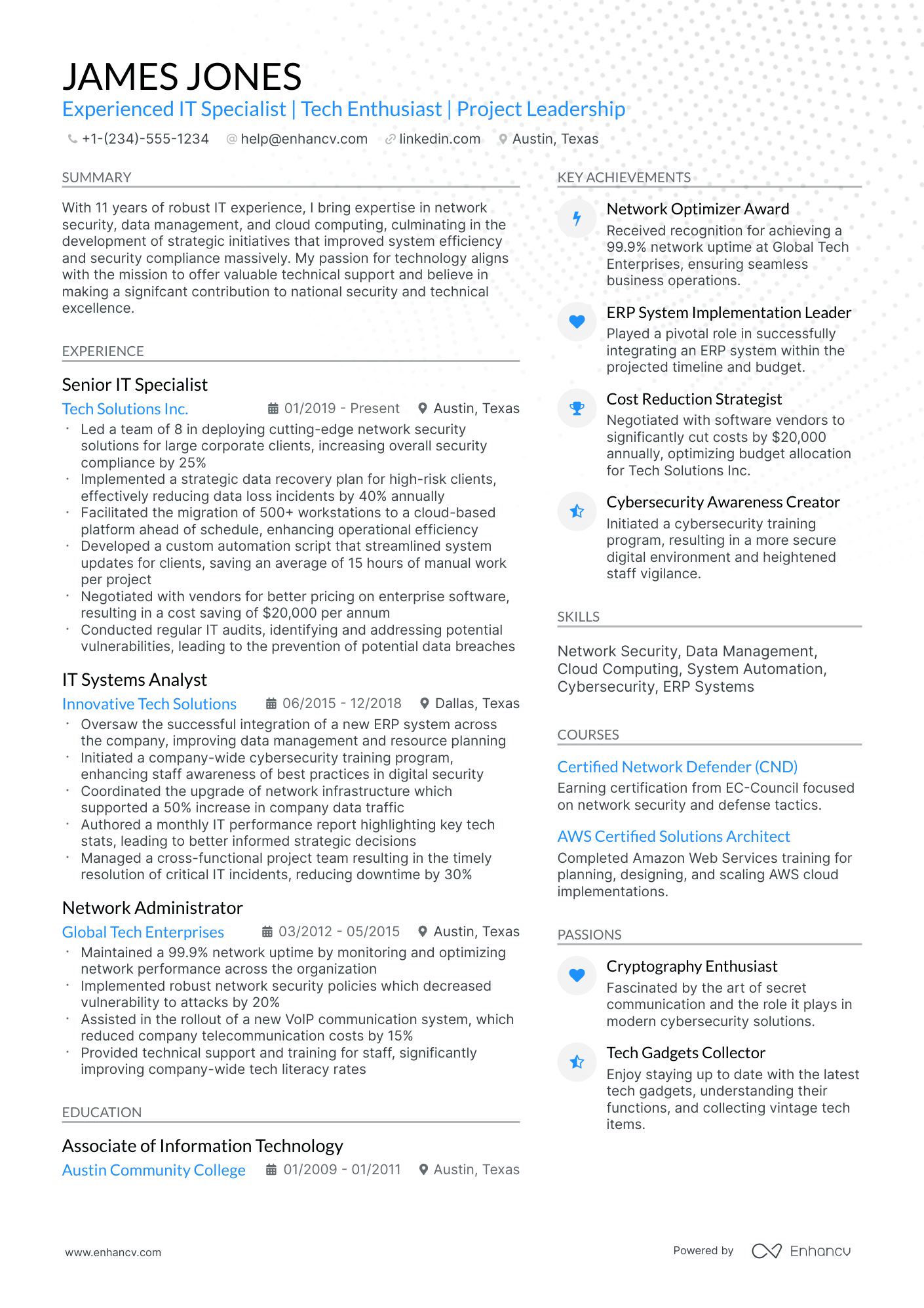
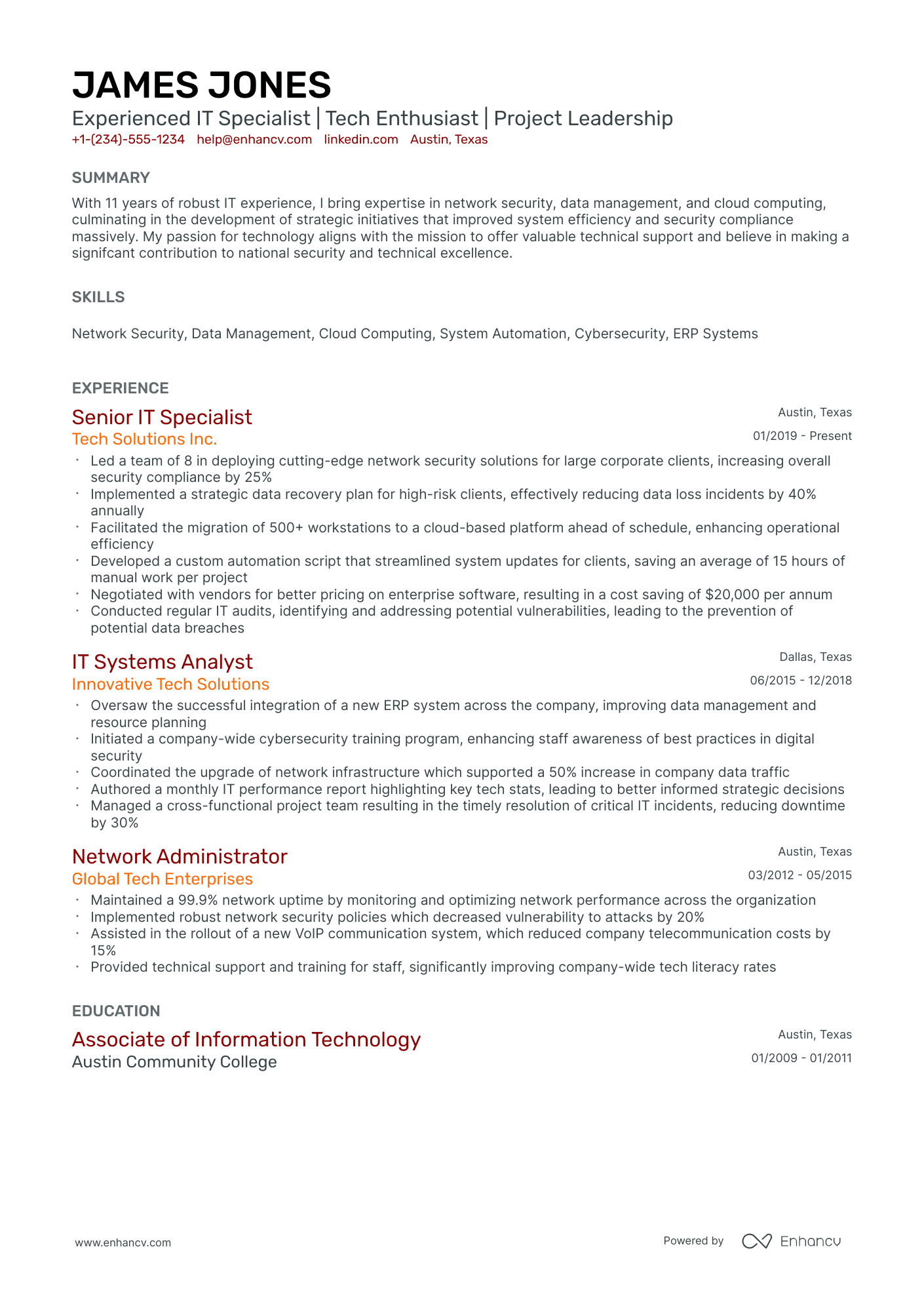
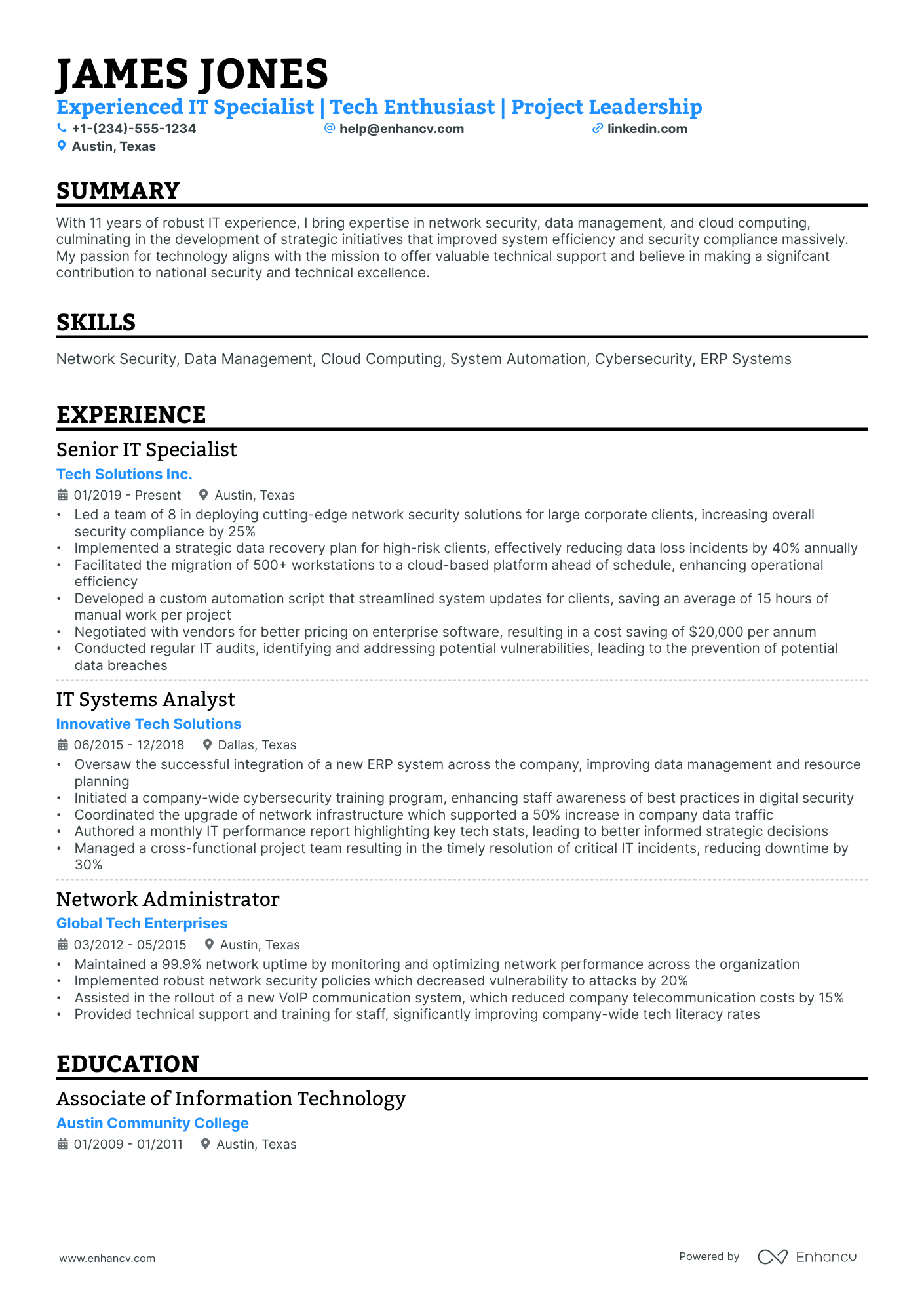
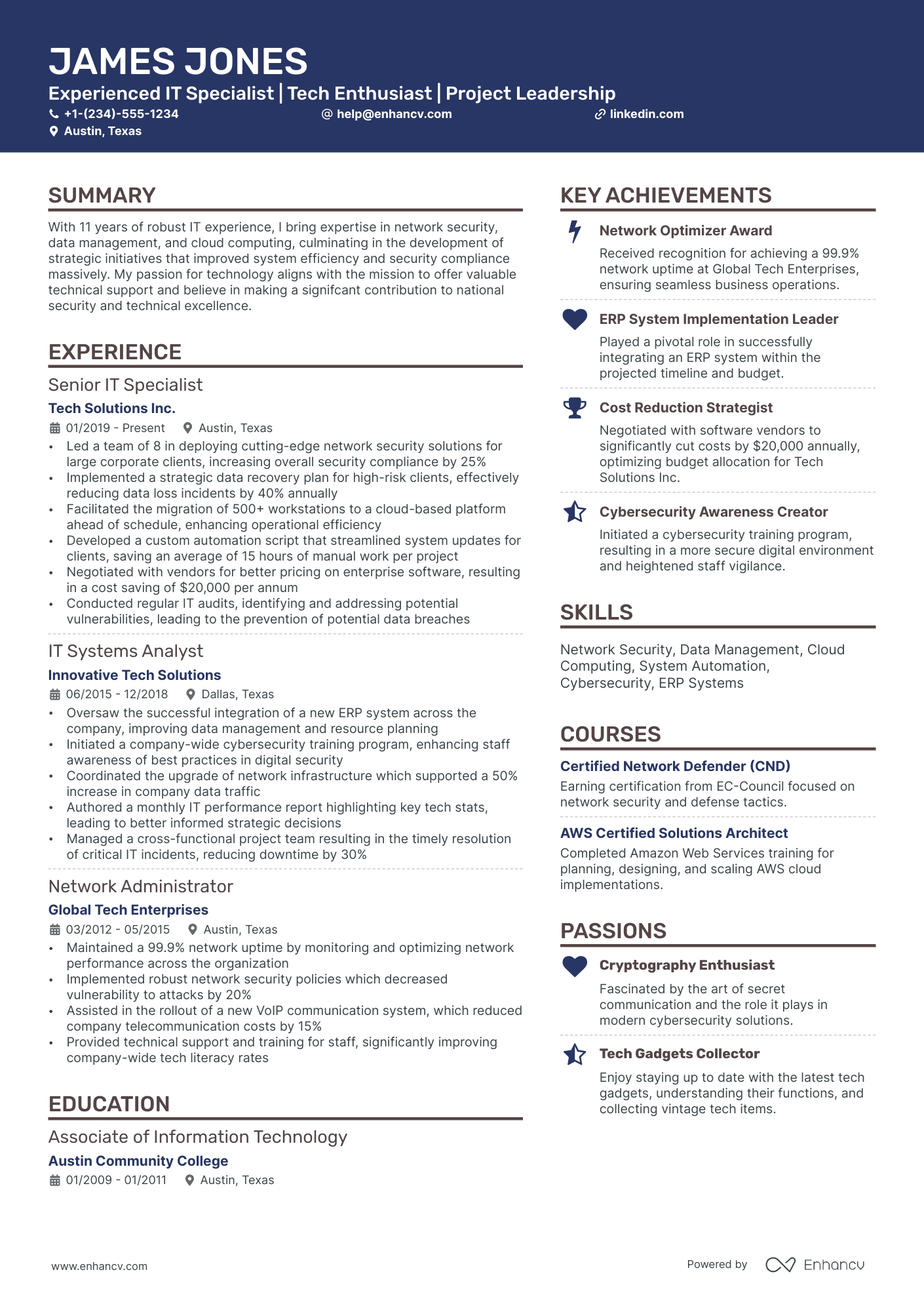
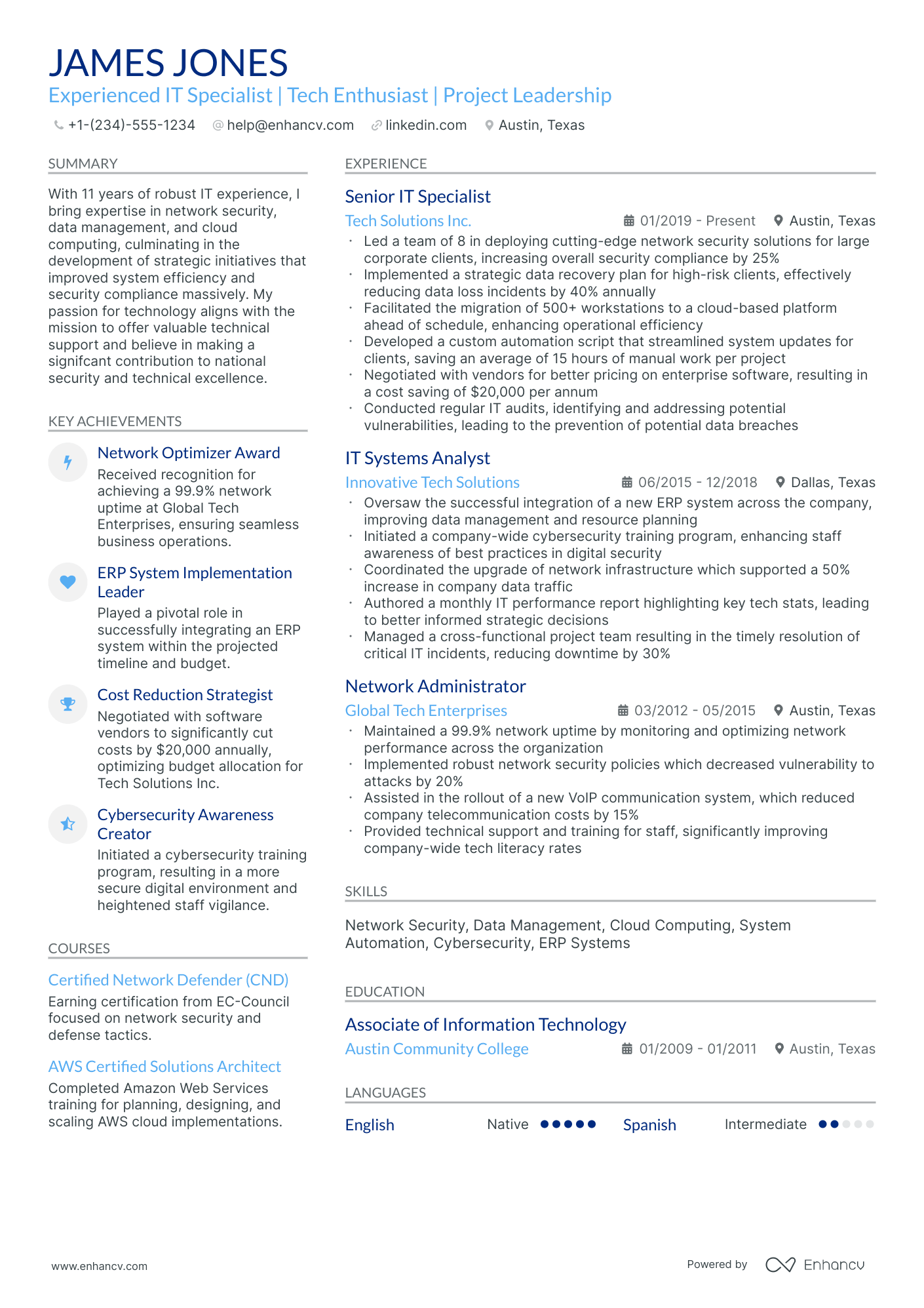
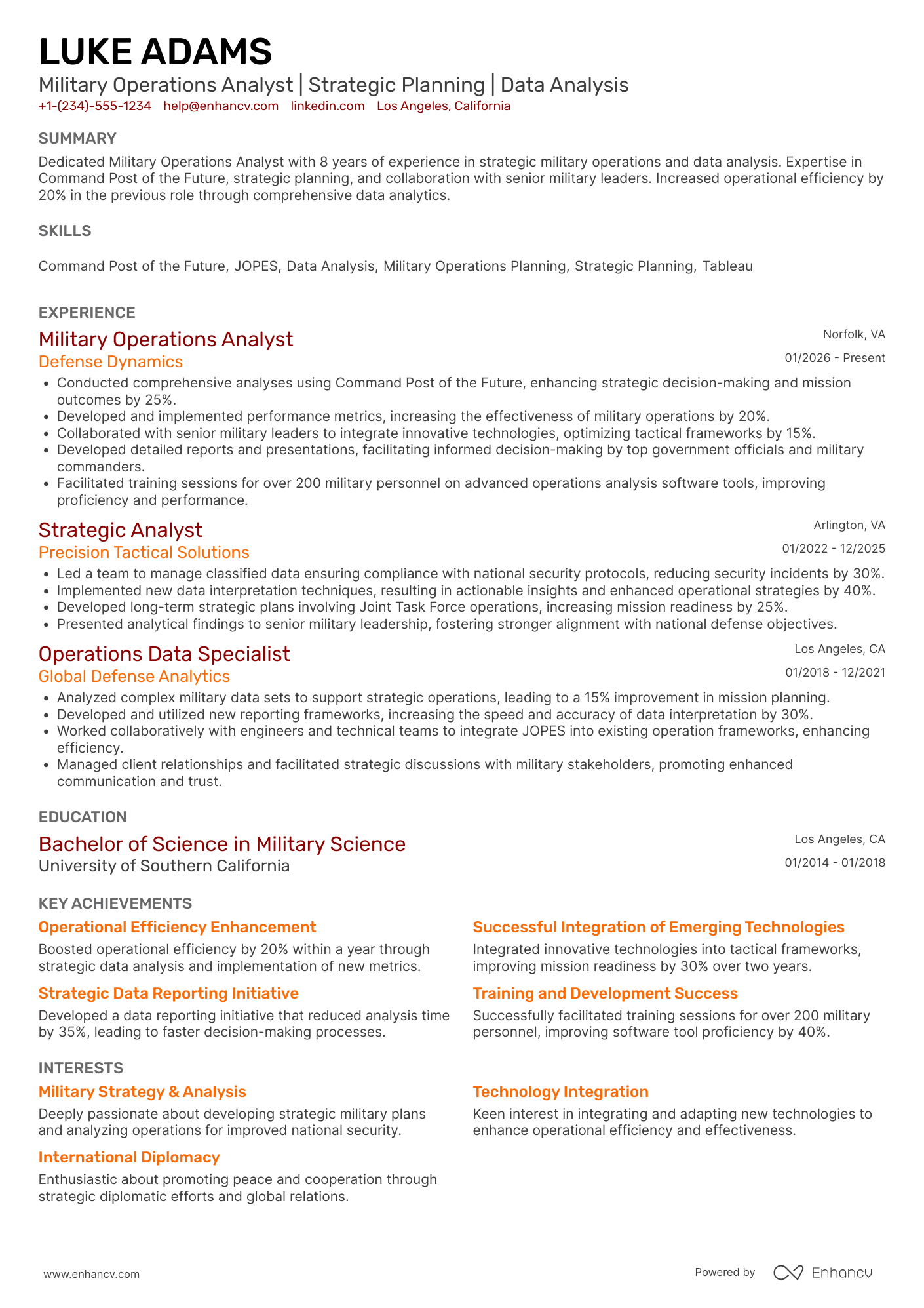
Most military resume submissions fail because they translate service into duty lists, not market-ready achievements. That causes the military resume to miss ATS keywords and get skimmed past in seconds. Competition is tight, and recruiters need proof fast.
A strong resume shows what you improved, delivered, or prevented, with context and results. Understanding how to make your resume stand out is critical when transitioning from military to civilian roles. You'll highlight readiness gains, cost savings, audit outcomes, training throughput, incident reductions, equipment uptime, mission success rates, and teams led across sites.

Key takeaways
- Translate military duties into civilian language with measurable outcomes to pass ATS screening.
- Use reverse-chronological format for deep experience and hybrid format for career transitions.
- Quantify every achievement with readiness rates, cost savings, or process improvements.
- Tailor each resume to the job posting by mirroring its terminology and requirements.
- Pair hard skills with proof in your experience bullets—don't rely on a standalone list.
- Add certifications like Security+ or PMP to bridge military training and civilian credentials.
- Use Enhancv's tools to turn vague service duties into focused, results-driven resume bullets.
Job market snapshot for militaries
We analyzed 852 recent military job ads across major US job boards. These numbers help you understand employer expectations, salary landscape, career growth patterns at a glance.
What level of experience employers are looking for militaries
| Years of Experience | Percentage found in job ads |
|---|---|
| 1–2 years | 8.8% (75) |
| 3–4 years | 3.5% (30) |
| 5–6 years | 4.9% (42) |
| 7–8 years | 1.4% (12) |
| 9–10 years | 0.9% (8) |
| 10+ years | 3.3% (28) |
| Not specified | 77.1% (657) |
Military ads by area of specialization (industry)
| Industry (Area) | Percentage found in job ads |
|---|---|
| Finance & Banking | 35.1% (299) |
| Government | 22.5% (192) |
| Education | 20.1% (171) |
| Healthcare | 12.7% (108) |
| Manufacturing | 5.0% (43) |
| Retail & E-commerce | 2.5% (21) |
| Travel & Hospitality | 1.3% (11) |
Top companies hiring militaries
| Company | Percentage found in job ads |
|---|---|
| Builders Firstsource, Inc. | 15.4% (131) |
| Army National Guard | 10.8% (92) |
| Magellan Health Services | 7.3% (62) |
| Parker-Hannifin, Corporation | 5.6% (48) |
| Leidos Holdings Inc. | 4.8% (41) |
| U.S. Xpress | 4.8% (41) |
| Department of the Air Force | 3.4% (29) |
| Domino's Pizza | 2.6% (22) |
| GE Aerospace | 2.6% (22) |
| Sierra Nevada Corporation | 2.5% (21) |
Role overview stats
These tables show the most common responsibilities and employment types for military roles. Use them to align your resume with what employers expect and to understand how the role is structured across the market.
Day-to-day activities and top responsibilities for a military
| Responsibility | Percentage found in job ads |
|---|---|
| Microsoft office | 20.4% (174) |
| Outlook | 16.8% (143) |
| Military laws | 8.9% (76) |
| Crowd control | 8.8% (75) |
| Law enforcement | 8.8% (75) |
| Traffic control | 8.8% (75) |
| Civil laws | 8.7% (74) |
| Firearms | 8.6% (73) |
| Evidence collection | 8.0% (68) |
| Investigating | 6.9% (59) |
| Microsoft suite | 6.5% (55) |
| Crime scene security | 4.6% (39) |
How to format a military resume
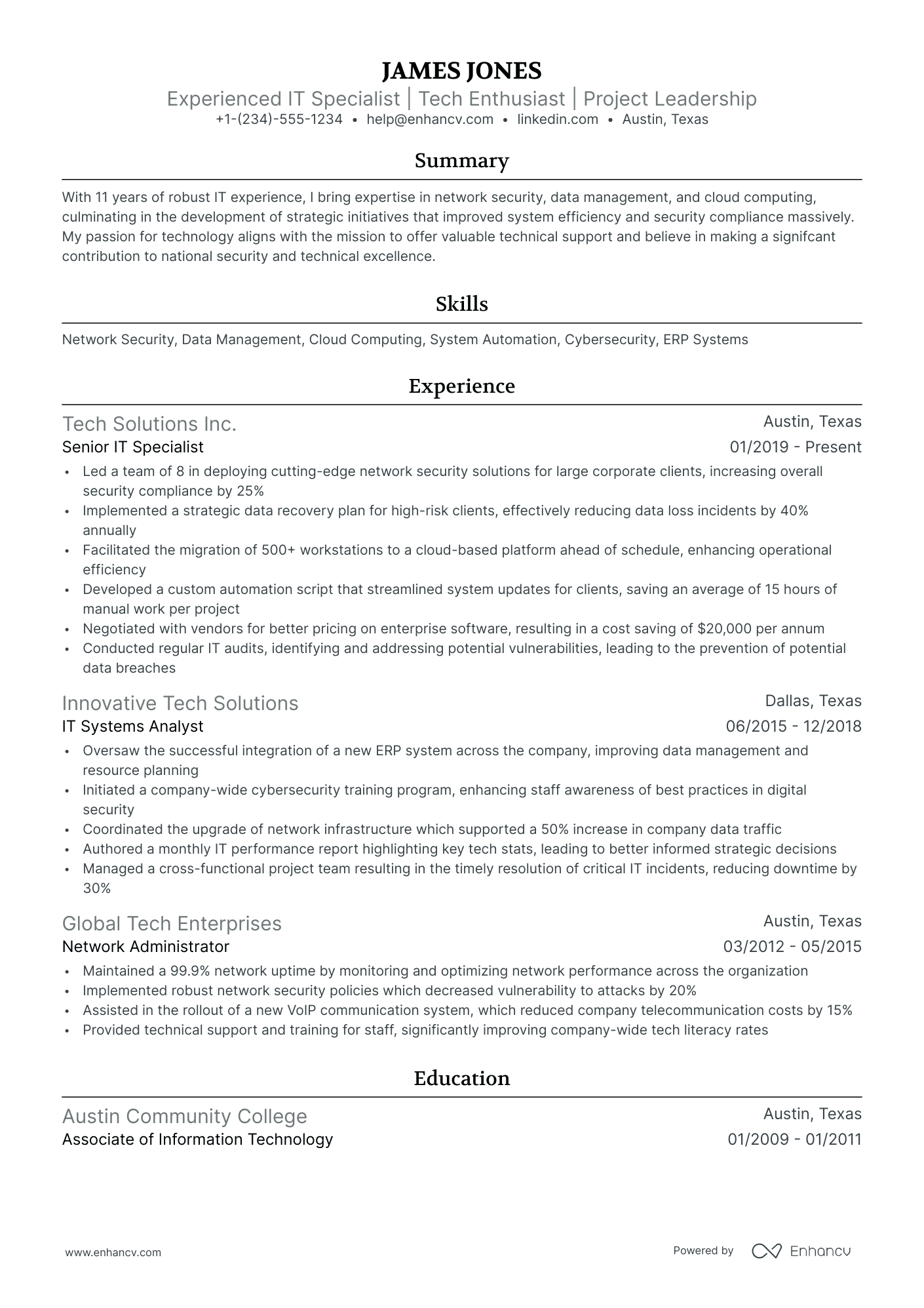
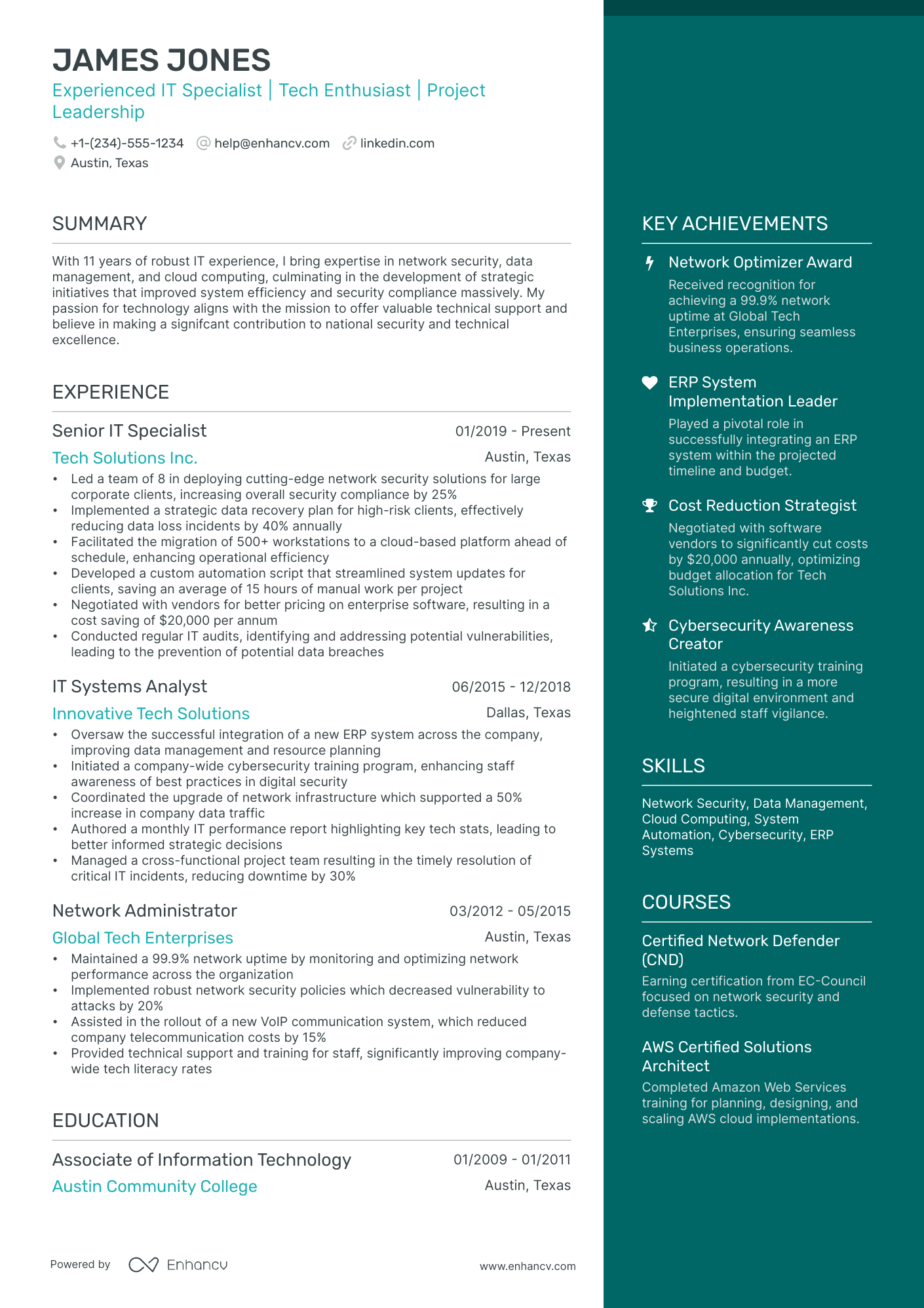
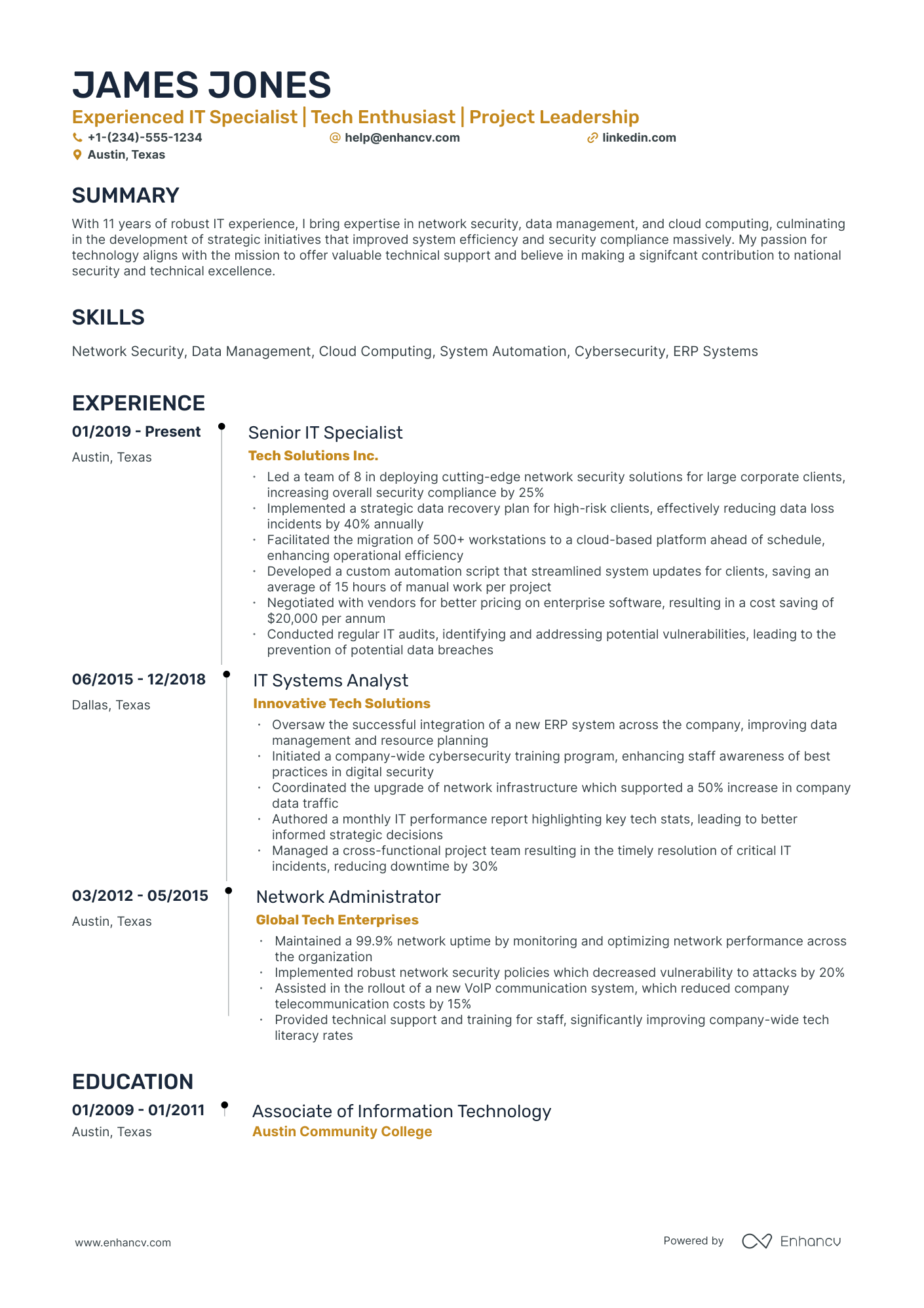
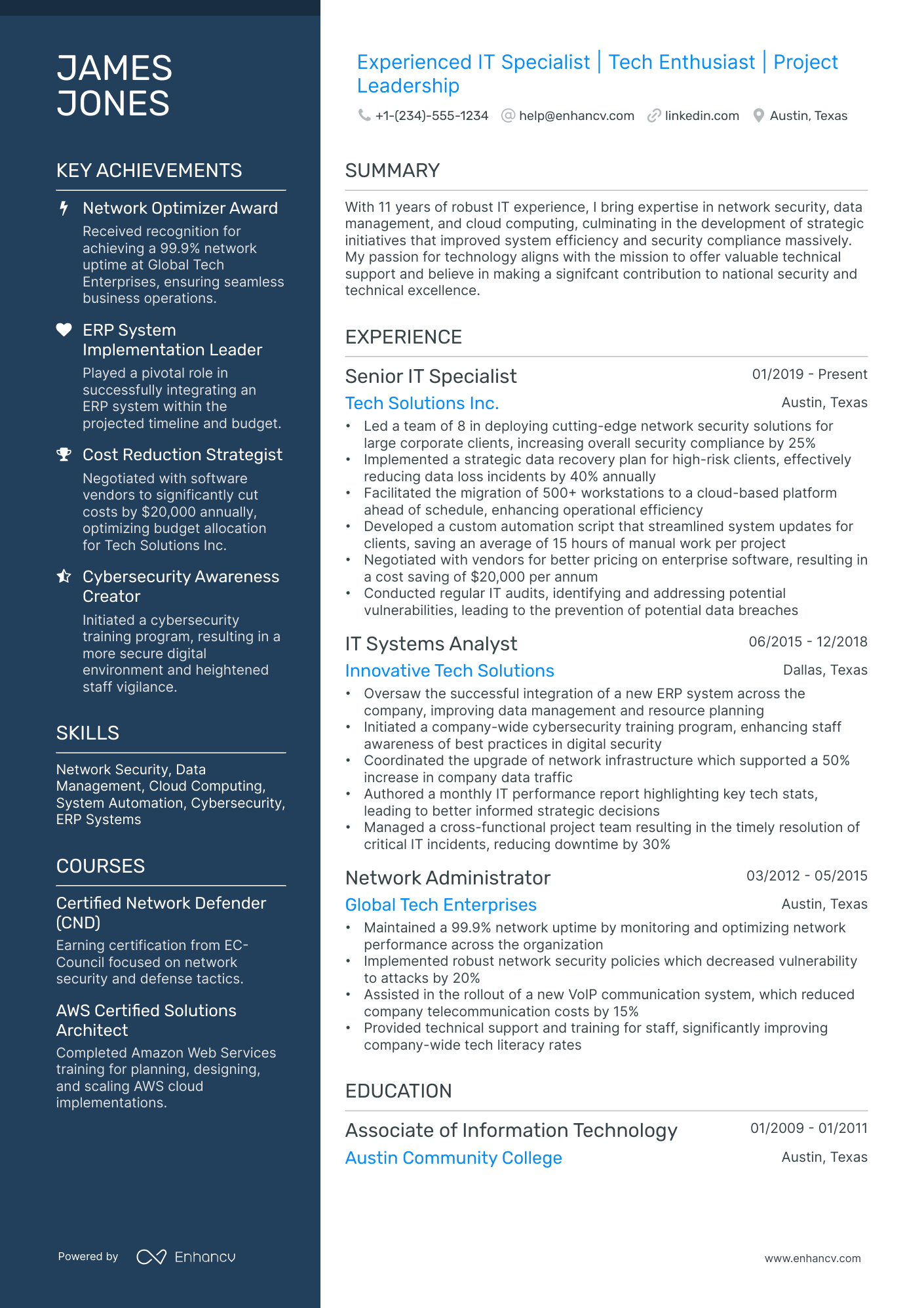
Recruiters reviewing military resumes prioritize clear evidence of leadership, mission planning, operational accountability, and the ability to translate defense-sector experience into civilian business impact. Your resume format determines how quickly a hiring manager can identify those signals—choosing the wrong structure can bury critical qualifications and break applicant tracking system (ATS) parsing. A clean resume layout also ensures your content is easy to scan and visually organized for both human reviewers and automated systems.

I have significant experience in this role—which format should I use?
Use a reverse-chronological format—it's the strongest structure for showcasing military career depth, progressive responsibility, and command-level impact. Do:
- Lead each role entry with scope of authority: personnel count, budget oversight, operational jurisdiction, and decision-making ownership.
- Translate military-specific tools, frameworks, and domains into civilian equivalents (e.g., logistics management systems, risk assessment protocols, strategic planning methodologies).
- Quantify every outcome in terms of measurable business or mission impact—cost savings, efficiency gains, readiness improvements, or risk reductions.
I'm junior or switching into this role—what format works best?
A hybrid format works best, letting you feature transferable military skills prominently while still providing a clear timeline of service and relevant experience. Do:
- Place a dedicated skills section near the top of your resume, grouping translated military competencies (project management, team leadership, security clearance levels) into civilian-friendly categories.
- Highlight projects, deployments, or training programs as structured experience entries, even if your formal job history is limited or concentrated in one branch.
- Connect every action to a result—show how your military training produced outcomes that apply to civilian roles.
Why not use a functional resume?
A functional resume strips away the timeline and context that make military experience credible to civilian hiring managers, making it nearly impossible to verify leadership progression, deployment history, or scope of responsibility.
- A functional format may be acceptable if you're transitioning from military to an entirely unrelated civilian career with no overlapping job history, or if you have significant service gaps—but even then, every skill listed must be tied to a specific project, mission, or measurable outcome.
Once you've settled on the right format, the next step is filling it with the sections that best showcase your military experience to civilian employers.
What sections should go on a military resume
Recruiters expect to see a clean, role-aligned snapshot of your service, responsibilities, and measurable results translated into civilian terms. Knowing what to put on a resume helps you prioritize the right content for military-to-civilian transitions.
Use this structure for maximum clarity:
- Header
- Summary
- Experience
- Skills
- Projects
- Education
- Certifications
- Optional sections: Awards, Leadership, Languages
Your experience bullets should emphasize mission impact, measurable outcomes, scope of responsibility, and results delivered under operational constraints.
Is your resume good enough?
Drop your resume here or choose a file. PDF & DOCX only. Max 2MB file size.
Now that you’ve identified the key parts to include on your military resume, the next step is to write your experience section in a way that fits those components and supports your overall structure.
How to write your military resume experience
The experience section of your military resume should highlight the work you delivered, the tools and methods you applied, and the measurable outcomes you achieved in each role. Hiring managers prioritize demonstrated impact over descriptive task lists, so every bullet should prove what you accomplished rather than catalog what you were assigned. Building a targeted resume ensures each entry speaks directly to the role you're pursuing.
Each entry should include:
- Job title
- Company and location (or remote)
- Dates of employment (month and year)
Three to five concise bullet points showing what you owned, how you executed, and what outcomes you delivered:
- Ownership scope: the units, operations, equipment systems, logistics networks, or personnel groups you were directly accountable for during your military service.
- Execution approach: the doctrine, standard operating procedures, technical systems, planning frameworks, or decision-making methods you used to carry out missions and deliver results.
- Value improved: the changes you drove in operational readiness, mission effectiveness, safety compliance, resource efficiency, or risk reduction within your military role.
- Collaboration context: how you coordinated with joint-service teams, allied forces, civilian agencies, contractors, or cross-functional military units to accomplish shared objectives.
- Impact delivered: the outcomes you produced expressed through mission results, operational scale, or organizational impact rather than a list of duties performed.
Experience bullet formula
A military experience example
✅ Right example - modern, quantified, specific.
Cyber Operations Specialist (17C)
U.S. Army | Fort Meade, MD
2019–2024
Supported national defense missions in a 24/7 Security Operations Center (SOC) environment protecting enterprise networks and mission systems.
- Led incident response for over 180 security events using Splunk, CrowdStrike Falcon, and Wireshark, cutting mean time to contain by 34% and reducing repeat incidents by 22% through tuned detections and playbooks.
- Hardened Windows and Linux endpoints with Security Technical Implementation Guides (STIGs) and Group Policy Objects (GPOs), improving compliance from 86% to 98% across 1,200 assets and lowering critical findings by 41% in quarterly inspections.
- Built and maintained Python and PowerShell automation for log enrichment and alert triage, saving 12 analyst hours per week and improving alert fidelity by 18% through standardized parsing and correlation.
- Partnered with network engineers and system owners to segment high-risk enclaves and remediate vulnerabilities via Tenable Nessus and ACAS workflows, reducing exploitable critical vulnerabilities by 53% within 90 days.
- Briefed commanders and cross-functional stakeholders using MITRE ATT&CK mapping and after-action reports, accelerating authorization-to-operate decisions by 20% and improving mission risk acceptance documentation accuracy to 100%.
Now that you've seen how military experience looks on a resume, here's how to tailor that section to match the specific job you're applying for.
How to tailor your military resume experience
Recruiters evaluate military resumes through both human review and applicant tracking systems (ATS), so alignment with the job posting matters. Tailoring your resume to the job description ensures your qualifications register with both screening methods.
Ways to tailor your military experience:
- Match specific equipment platforms or systems named in the posting.
- Mirror the exact terminology used for operational procedures.
- Align your leadership scope with the role's supervisory requirements.
- Reflect compliance standards or regulatory frameworks the employer references.
- Emphasize mission-critical metrics that parallel the posted KPIs.
- Incorporate domain experience such as logistics intelligence or cybersecurity.
- Highlight readiness inspection or quality assurance processes when relevant.
- Reference collaboration structures like joint operations or cross-functional teams.
Tailoring means connecting your real accomplishments to what the employer needs—not forcing mismatched keywords into your experience section.
Resume tailoring examples for military
| Job description excerpt | Untailored | Tailored |
|---|---|---|
| "Plan and execute combined arms operations using MDMP; coordinate with joint and coalition forces across brigade-level formations." | Led team operations and helped plan missions in a military environment. | Planned and executed combined arms operations for a 3,500-soldier brigade using the Military Decision-Making Process (MDMP), coordinating joint and coalition force integration across three multinational task forces. |
| "Manage unit supply accountability using GCSS-Army; maintain 100% property book accuracy for equipment valued over $10M." | Responsible for tracking supplies and keeping inventory organized for the unit. | Maintained 100% property book accuracy for 2,400 line items valued at $14.2M using GCSS-Army, passing two consecutive command supply discipline program inspections with zero discrepancies. |
| "Supervise intelligence collection and analysis using DCGS-A and TIGR; produce threat assessments supporting battalion-level operational planning." | Gathered and reviewed intelligence information to support leadership decisions. | Supervised a six-analyst intelligence section using DCGS-A and TIGR to produce daily threat assessments, directly informing battalion operational planning across a 1,200 km² area of operations during a nine-month deployment. |
Once you’ve aligned your service experience with the role’s requirements, the next step is to quantify your military achievements so hiring managers can quickly see the scope and impact of your work.
How to quantify your military achievements
Quantifying your achievements turns mission work into measurable outcomes hiring teams trust. Focus on readiness, safety, delivery speed, accuracy, cost control, and risk reduction—numbers tied to your unit's mission, equipment, and operational tempo.
Quantifying examples for military
| Metric | Example |
|---|---|
| Readiness rate | "Raised vehicle readiness from 78% to 92% in six months by enforcing weekly preventive maintenance checks and updating the dispatch tracker in Excel." |
| Safety compliance | "Cut reportable safety incidents 40% year over year by leading monthly risk briefs, standardizing lockout-tagout steps, and auditing 120 work orders." |
| Process cycle time | "Reduced supply request turnaround from five days to two by triaging priorities, pre-building common kits, and coordinating daily with the warehouse NCO." |
| Cost avoidance | "Avoided $180K in replacement costs by repairing and recertifying forty-two communications cables using a Fluke tester and updated handling procedures." |
| Training throughput | "Qualified twenty-eight new team members in four weeks by building a skills checklist, running two daily drills, and tracking pass rates in SharePoint." |
Turn vague job duties into measurable, recruiter-ready resume bullets in seconds with Enhancv's Bullet Point Generator.
Once you've crafted strong bullet points, the next step is ensuring your resume effectively showcases both the hard and soft skills military employers value most.
How to list your hard and soft skills on a military resume
Your skills section shows how you execute missions, maintain readiness, and lead teams, and recruiters and an ATS (applicant tracking system) scan them to match job requirements; aim for a balanced mix of role-specific hard skills and execution-focused soft skills. military roles require a blend of:
- Product strategy and discovery skills
- Data, analytics, and experimentation skills
- Delivery, execution, and go-to-market discipline
- Soft skills
Your skills section should be:
- Scannable (bullet-style grouping).
- Relevant to the job post.
- Backed by proof in experience bullets.
- Updated with current tools.
Place your skills section:
- Above experience if you're junior or switching careers.
- Below experience if you're mid/senior with strong achievements.

Hard skills
- Operational planning, MDMP
- Risk management, ORM
- Intelligence preparation of the battlefield
- Mission command systems, C2
- Communications, SINCGARS, SATCOM
- Incident command, ICS
- Weapons systems qualification
- Maintenance management, PMCS
- Supply chain, GCSS-Army
- Logistics, convoy operations
- Security operations, access control
- Training management, METL
Soft skills
- Lead under pressure
- Make time-critical decisions
- Execute commander's intent
- Communicate up and down chain
- Coordinate cross-unit operations
- Manage conflict and discipline
- Maintain accountability for equipment
- Coach and certify teammates
- Deliver clear briefs and debriefs
- Adapt plans to changing conditions
- Enforce standards and compliance
- Own outcomes and follow-through
How to show your military skills in context
Skills shouldn't live only in a bulleted list. Explore resume skills examples to see how military competencies translate into civilian language.
They should be demonstrated in:
- Your summary (high-level professional identity)
- Your experience (proof through outcomes)
Here's how that looks in practice.
Summary example
Senior operations leader with 15 years of military logistics experience. Skilled in supply chain optimization, SAP, and cross-functional team leadership. Directed distribution networks across three continents, reducing transit delays by 32% while managing $48M in annual assets.
- Reflects senior-level career scope
- Names real tools like SAP
- Quantifies impact with clear metrics
- Signals leadership and collaboration strengths
Experience example
Director of Logistics Operations
Northbridge Defense Solutions | San Antonio, TX
March 2019–August 2024
- Redesigned warehouse workflows using Lean Six Sigma methods, cutting order fulfillment time by 27% across four regional sites.
- Partnered with procurement and IT teams to implement Oracle TMS, lowering freight costs by $1.2M annually.
- Led a 40-person operations unit through two facility consolidations, maintaining 99.4% on-time delivery during transitions.
- Every bullet includes measurable proof.
- Skills surface naturally through real outcomes.
Once you’ve tied your service capabilities to specific duties and outcomes, the next step is learning how to write a military resume with no experience so you can present that same value without relying on a civilian work history.
How do I write a military resume with no experience
Even without full-time experience, you can demonstrate readiness through training, qualifications, and early accomplishments. If you're building a resume without work experience, focus on translating military activities into civilian-readable achievements:
- Unit training and field exercises
- Security clearance eligibility documentation
- Weapons safety and qualification records
- Military volunteer roles and duties
- Leadership in cadet organizations
- Logistics and inventory accountability tasks
- Emergency response and first aid training
- Physical fitness test results
Focus on:
- Clear, transferable job titles and tasks
- Measurable outcomes and tracked metrics
- Technical tools, systems, and procedures
- Compliance, safety, and risk controls
Resume format tip for entry-level military
Use a combination resume format. It highlights skills and training first, while still showing a clear timeline of military activities. Do:
- Translate military duties into job tasks.
- Add metrics to every key bullet.
- List training with dates and hours.
- Include tools, systems, and protocols.
- Keep bullets to one line.
- Completed unit training and field exercises, applied land navigation and radio procedures, and achieved one hundred percent accountability across four equipment checks.
Even without direct experience, your education section can demonstrate the discipline, training, and qualifications that make you a strong candidate—so presenting it effectively is essential.
How to list your education on a military resume
Your education section helps hiring teams confirm you have the foundational knowledge military roles demand. It validates academic preparation tied to defense operations, leadership, and technical competencies.
Include:
- Degree name
- Institution
- Location
- Graduation year
- Relevant coursework (for juniors or entry-level candidates)
- Honors & GPA (if 3.5 or higher)
Skip month and day details—list the graduation year only.
Here's a strong education entry tailored for a military resume:
Example education entry
Bachelor of Science in Strategic Studies and Defense Analysis
Norwich University, Northfield, VT
Graduated 2021
GPA: 3.7/4.0
- Relevant Coursework: Military Leadership, National Security Policy, Counterterrorism Strategy, Geospatial Intelligence Analysis
- Honors: Magna Cum Laude, Dean's List (six consecutive semesters)
How to list your certifications on a military resume
Certifications on your resume show your commitment to learning, confirm tool proficiency, and signal industry relevance for military experience in civilian hiring. They also help translate military skills into recognized credentials.
Include:
- Certificate name
- Issuing organization
- Year
- Optional: credential ID or URL
- Place certifications below education when they are older, less relevant, or supplemental to your military training and degree.
- Place certifications above education when they are recent, role-critical, or required for the job you want after military service.
Best certifications for your military resume
- CompTIA Security+
- CompTIA Network+
- Certified Information Systems Security Professional (CISSP)
- Project Management Professional (PMP)
- Lean Six Sigma Green Belt
- ITIL 4 Foundation
- Certified ScrumMaster (CSM)
Once you’ve placed your credentials where recruiters can verify them quickly, you can write your military resume summary to highlight those qualifications upfront and tie them to the role.
How to write your military resume summary
Your resume summary is the first thing a recruiter reads. A strong opening tied to the military role instantly signals you're the right fit.
Keep it to three to four lines, with:
- Your target title and total years of military or defense-related experience.
- The domain you specialize in, such as logistics, intelligence, or cybersecurity operations.
- Core skills like mission planning, threat assessment, or personnel management.
- One or two measurable achievements, such as cost savings or readiness improvements.
- Soft skills tied to outcomes, like cross-functional coordination that reduced response times.

PRO TIP
At the junior level, focus on relevant skills, certifications, and early wins that show initiative. Avoid vague phrases like "hard worker" or "passionate team player." Lead with what you did and the result it produced.
Example summary for a military
Logistics coordinator with three years of experience managing supply chain operations across two overseas deployments. Reduced equipment turnaround time by 22% through improved inventory tracking using GCSS-Army.
Optimize your resume summary and objective for ATS
Drop your resume here or choose a file.
PDF & DOCX only. Max 2MB file size.
Now that your summary captures the value you bring, make sure the header above it presents your contact details correctly so recruiters can actually reach you.
What to include in a military resume header
Your resume header lists your key identifiers and contact details, boosting visibility, credibility, and recruiter screening speed for military candidates.
Essential resume header elements
- Full name
- Tailored job title and headline
- Location
- Phone number
- Professional email
- GitHub link
- Portfolio link
A LinkedIn link helps recruiters verify experience quickly and supports screening across roles, dates, and endorsements.
Don't include a photo on a military resume unless the role is explicitly front-facing or appearance-dependent.
Match your job title and headline to the target posting and translate military terms into civilian language recruiters recognize.
Example
Military resume header
Jordan M. Taylor
Logistics Specialist | Military Supply Chain, Inventory Control, and Fleet Readiness
San Diego, CA
(619) 555-12XX
your.name@enhancv.com github.com/yourname yourwebsite.com linkedin.com/in/yourname
Once your header clearly identifies you and your service background, the next step is to add the additional sections that strengthen the rest of your military resume.
Additional sections for military resumes
Extra sections can set you apart when they highlight specialized training, global experience, or mission-relevant expertise that standard sections don't capture.
- Security clearances
- Languages
- Military awards and decorations
- Professional affiliations and veteran organizations
- Volunteer experience and community service
- Publications and technical reports
- Relevant training and professional development courses
Once you've strengthened your resume with relevant additional sections, pairing it with a cover letter can further contextualize your military experience for civilian hiring managers.
Do military resumes need a cover letter
A cover letter isn't required for a military resume, but it helps in competitive roles or when hiring teams expect one. If you're unsure where to start, learning what a cover letter is and how it complements your resume can clarify when it's worth including. It can make a difference when your experience needs context or when you need to show clear fit fast.
Use a cover letter to add details your resume can't:
- Explain role and team fit: Connect your strengths to the role's priorities, workflows, and success metrics.
- Highlight one or two relevant projects or outcomes: Share a specific result, your role, and what changed because of your work.
- Show product, users, or business understanding: Reference the customer, mission, and constraints, and how you'll support them.
- Address transitions or non-obvious experience: Translate military experience into the role's language and explain gaps, moves, or shifts directly.
Drop your resume here or choose a file.
PDF & DOCX only. Max 2MB file size.
Once you’ve decided whether to include a cover letter based on the role and your experience, you can use AI to improve your military resume by quickly tailoring and strengthening the content.
Using AI to improve your military resume
AI can sharpen your resume's clarity, structure, and impact. It's useful for translating military experience into civilian language. If you're wondering which AI is best for writing resumes, start with tools that let you control the output and edit freely. But overuse strips authenticity. Once your content is clear and role-aligned, step away from AI.
Here are 10 practical prompts you can copy and paste to strengthen specific sections of your resume:
- Translate military jargon: "Rewrite these military experience bullets using civilian-friendly language while preserving their original meaning and scope."
- Strengthen summary impact: "Revise my resume summary to highlight leadership and operational skills gained during my military service."
- Quantify accomplishments: "Add measurable results—numbers, percentages, or dollar amounts—to these military experience bullets where possible."
- Align skills to role: "Compare my military skills section against this job description. Remove irrelevant skills and suggest matching replacements."
- Clarify project descriptions: "Rewrite this military project description so a civilian hiring manager can immediately understand the scope and outcome."
- Tighten bullet structure: "Shorten these military experience bullets to one line each. Start every bullet with a strong action verb."
- Reformat education details: "Reorganize my military education and training entries to follow a standard civilian resume format."
- Map certifications clearly: "Rewrite my military certifications section so each entry clearly states the civilian-equivalent credential or relevance."
- Remove redundant language: "Identify and cut repeated words or phrases across all sections of my military resume."
- Focus experience on results: "Restructure these military experience bullets to follow a clear action-context-result format for each entry."
Stop using AI once your resume sounds accurate, specific, and aligned with real experience. AI should never invent experience or inflate claims—if it didn't happen, it doesn't belong here.
Conclusion
A strong military resume shows measurable outcomes, role-specific skills, and a clear structure. It connects your military experience to the job, using plain language and consistent formatting.
Hiring teams want proof you can deliver now and adapt next. Keep each bullet focused on results, skills, and scope, so your military resume reads fast and supports confident decisions.