Interpersonal Skills for a Resume: The Ultimate List & Examples
Turn your natural "people skills" into a hiring advantage
Turn your natural "people skills" into a hiring advantage



Drop your resume here or upload a file to find out if the skills in your resume are readable by an ATS.
You’ve got the technical know-how to do the job. But in a modern workplace, that’s only half the battle. You also need strong interpersonal skills—often called "people skills"—to truly stand out.
These traits determine how you connect, collaborate, and resolve conflict with your team. The problem is that it’s tough to list them on a resume without sounding like a generic buzzword machine.
We’re here to fix that. Here's your guide to identifying your best interpersonal skills and proving them to recruiters.
Interpersonal skills are a core soft skill covering the specific behaviors and tactics you use to communicate and interact with others. They determine how effectively you exchange information, handle conflict, and build relationships in the workplace. Think of them as the "mechanics" of social interaction.
People skills usually refer to your innate personality or "vibe"—like being naturally friendly. Interpersonal skills are the professional, learnable techniques you apply, such as active listening or negotiation.
While often used interchangeably, there’s a difference in context. “People skills” is a colloquial term that sounds more casual. Interpersonal skills are the professional competencies recruiters ask for in job ads and interviews.
In this guide, we'll be treating them as the same, but on your resume, phrasing matters. Always choose "interpersonal skills" in the resume content. It’s the standard professional term hiring managers look for, whereas "people skills" can sound too informal.
Now that we’ve defined the term, let’s look at the specific skills that will help your application get noticed.
Here are the best interpersonal skills to highlight, categorized by how they help you function in a workplace.

These are the foundation of all office interactions. They ensure messages are sent and received without confusion.
EQ helps you read the room and connect with colleagues on a human level.
Disagreements happen. Skills like conflict resolution prove you can turn friction into productive solutions.
No one works in a silo. Teamwork skills show you lift others up rather than just focusing on yourself.
Not every skill on that list belongs on your resume. The "best" interpersonal skills for you depend entirely on where you are in your career path.
Employers expect different social traits from an intern versus a director. Tailor your resume to match the expectations of your seniority level.
At this stage, hiring managers want to know you’re teachable, reliable, and easy to work with.
Once you manage people, your focus shifts from "doing the work" to "influencing the people doing the work."
Knowing what the skills are is only step one. Now, you need to place them strategically so they get noticed.
You have the list, but you can’t use them all. You need to choose the right ones and place them where they count.
Recruiters want to know you fit their specific team.
Here’s how to pick the keywords:
Once you determine your winners, you need to add them strategically. Each resume section puts different weight on a given skill.

Avoid creating a dedicated section simply titled Interpersonal Skills filled with generic words like “nice” or “punctual.” It looks like fluff to a recruiter. Instead, you should prove these traits exist by weaving them into your content.
Use strong adjectives, precise verbs, and context to provide real evidence. Don't just claim you’re "reliable"—describe how you consistently met tight deadlines during a crisis.
Work Experience is your powerhouse section because context is king. Listing communication implies you can talk, but describing a negotiation implies you can win business.
Here’s how this works in practice:
Wrong: "Used conflict resolution skills to fix team issues."
Right: "Mediated a stalled contract dispute between two vendors, securing a 10% discount and restoring the project timeline."
Why choose the latter? Because you didn't just resolve a conflict—you saved money and time.
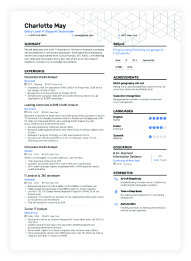
The resume summary is another excellent place for your interpersonal skills. You have three to four lines to set the vibe before the recruiter looks at your history.
Look at an example:
Optimize your resume summary and objective for ATS
Drop your resume here or choose a file.
PDF & DOCX only. Max 2MB file size.
Here’s something you might not have expected: Avoid including interpersonal skills in a dedicated skill section.
While job ads often list soft skills as "preferred," they fall flat when simply dropped into a bulleted list. Anyone can type "good communicator" or "empathetic," but that doesn't make it true. Without context, these are just empty buzzwords that waste valuable space.
Struggling to frame these skills without sounding boastful or generic? You don’t have to do it alone.
If you’re staring at a blank page, try Enhancv’s Bullet Point Generator. It automatically suggests impactful, results-driven phrasing tailored to your specific job title. It takes the guesswork out of writing and ensures your interpersonal skills land with authority.
If you’re using AI tools, the output is only as good as the input. As Certified Professional Résumé Writers (CPRW), we understand the nuance between algorithms and human recruiters. We’ve designed these prompts to bridge that gap and generate results that work.
Use the three prompts below to pinpoint the right interpersonal skills for your resume and take full control of your narrative.
"I’m applying for a [job title] role at a company that values [company Value, e.g., innovation/speed]. Based on the following job description [paste job description], which top 3 interpersonal skills should I prioritize on my resume to show I’m a strong culture fit?"
"I want to prove my conflict resolution skills in my experience section. Rewrite the following bullet point to include a quantifiable result (like time saved, retention, or output increase) using the STAR method: '[insert your basic sentence, e.g., ‘Resolved a disagreement between designers’]."
"I have an anecdote where I [describe situation, e.g., stayed late to help a new hire learn the software so they wouldn't quit]. Turn this into a professional resume bullet point highlighting 'mentoring' and 'empathy' that sounds active and authoritative."
Want to skip the manual prompting? Enhancv’s AI Resume Builder instantly notifies you if your content sounds vague and helps you rewrite bullets effortlessly.
Including interpersonal skills can backfire if done poorly.
Avoid these common missteps to ensure your resume remains professional and impactful.
Don't dump a block of 10+ adjectives into your skills section. A long list of words like "motivated," "friendly," and "dedicated" looks like filler.
Recruiters see the phrase "people person" or "hard worker" hundreds of times a day. These terms are subjective and impossible to prove.
Listing "leadership" is meaningless if you’ve never led anyone. If a recruiter looks at your skill list and can't find evidence of it in your experience section, they won't believe you.
Being "funny" or "outgoing" helps you make friends, but it doesn't necessarily help you do the job.
Drop your resume here or choose a file. PDF & DOCX only. Max 2MB file size.
Ultimately, hiring managers aren't just looking for a worker—they're looking for a team member. Demonstrating strong people skills on your resume proves you’ll solve problems, not create them.
Technical skills might get you the interview, but interpersonal skills are what secure the job. Move away from generic lists of "people skills" and instead weave proven examples of leadership, empathy, and communication into your experience section. This way, you demonstrate value beyond the job description.
Ultimately, showing these skills effectively proves to hiring managers that you’re not just a worker, but a collaborative team member who solves problems rather than creating them.