

Greenhouse is a structured-hiring applicant tracking system used by many tech and high-growth companies. It organizes your application into data, screens it against the role's requirements, and gives interviewers a shared scorecard. A person makes the call.
Plenty of advice treats Greenhouse as a bot to outsmart, and that framing makes applicants anxious. The picture is far calmer than most ATS scare stories suggest. Greenhouse documents most of how it works in its own help center and developer docs, so this guide explains how it handles your resume, step by step, and what to do at each stage.

Key takeaways
- Greenhouse parses your resume into structured fields, stores you in a database, and lets recruiters search and rate you.
- Early filtering comes from application rules tied to screening questions. The same rules that auto-reject can also auto-advance a strong answer to a later stage.
- Greenhouse runs on scorecards. Interviewers rate you against a defined interview kit on a four-point scale, from "Definitely Not" to "Strong Yes." There's no universal resume score.
- It accepts .pdf, .docx, .doc, .rtf, and .txt files up to 100 MB, so file type is rarely the problem.
- Greenhouse's newer AI tools (Real Talent match scores, fraud detection, scorecard summaries) sort and flag, and Greenhouse states they never advance or reject anyone on their own.
- The same clean, well-matched resume that works in Greenhouse works in every other ATS. Confirm your file parses cleanly with the Resume Checker before you apply.
What is Greenhouse?
Greenhouse is recruiting software built around a method its makers call structured hiring. Companies use it to post jobs, collect applications, screen candidates, run interviews on a consistent rubric, and track everyone through the pipeline.
You'll find it most often at technology companies, startups, and high-growth firms, where consistent, comparable hiring is the selling point. Greenhouse's own customer roster includes HubSpot, HelloFresh, DoorDash, and Trivago. When you apply through a Greenhouse-hosted job post, your application lands in that company's Greenhouse account for its recruiters to work through.
For a wider view of how any applicant tracking system fits together, start with our guide to what an ATS is and how it works. This article zooms into Greenhouse specifically.
How does Greenhouse handle your application?
Four stages, in order, each doing a separate job.
1. You apply through a Greenhouse job post
You submit your resume and answer the job's questions on a Greenhouse application form. Those questions matter a lot more than most applicants realize, which is the next stage.
2. Greenhouse parses your resume into fields
Greenhouse turns your file into structured data. Its developer documentation shows exactly what the system stores about a candidate.
Your name and contact details go in first. An employments array holds each role's title, company, start_date, and end_date, and an educations array does the same for your schooling. Your resume is saved as an attachment, and an answers array records your responses to the application's questions.

What Greenhouse structures your resume into
{
  "first_name": "...", "last_name": "...",
  "email_addresses": [ ... ], "phone_numbers": [ ... ],
  "employments":  [ { "title": "...", "company_name": "...",
                      "start_date": "...", "end_date": "..." } ],
  "educations":   [ { "school_name": "...", "degree": "...", "discipline": "..." } ],
  "attachments":  [ { "filename": "resume.pdf", "type": "resume" } ],
  "applications": [ { "answers": [ { "question": "...", "answer": "..." } ],
                      "status": "active", "current_stage": { ... } } ]
}
Source: Greenhouse developer docs. This is the data your resume becomes.
Read that field list closely, because it tells you what to optimize for. The system wants your titles, companies, dates, and education in places it can recognize. Clear, standard sections give it clean fields. A title hidden in a graphic gives it nothing to store.
3. Recruiters search and filter the pool
Once you're stored, recruiters search the database by title, skill, and keyword, and they filter by the answers you gave. Strong, relevant content surfaces you. Vague content buries you, even when you're qualified.
4. Greenhouse ranks, and a human decides
Greenhouse tracks your application with a status field (active, rejected, hired) and a current_stage, and it records a rejection_reason for anyone who stops advancing. That reason comes from a recruiter, or from an application rule a recruiter set up in advance. The software organizes and surfaces, and a person owns the decision.
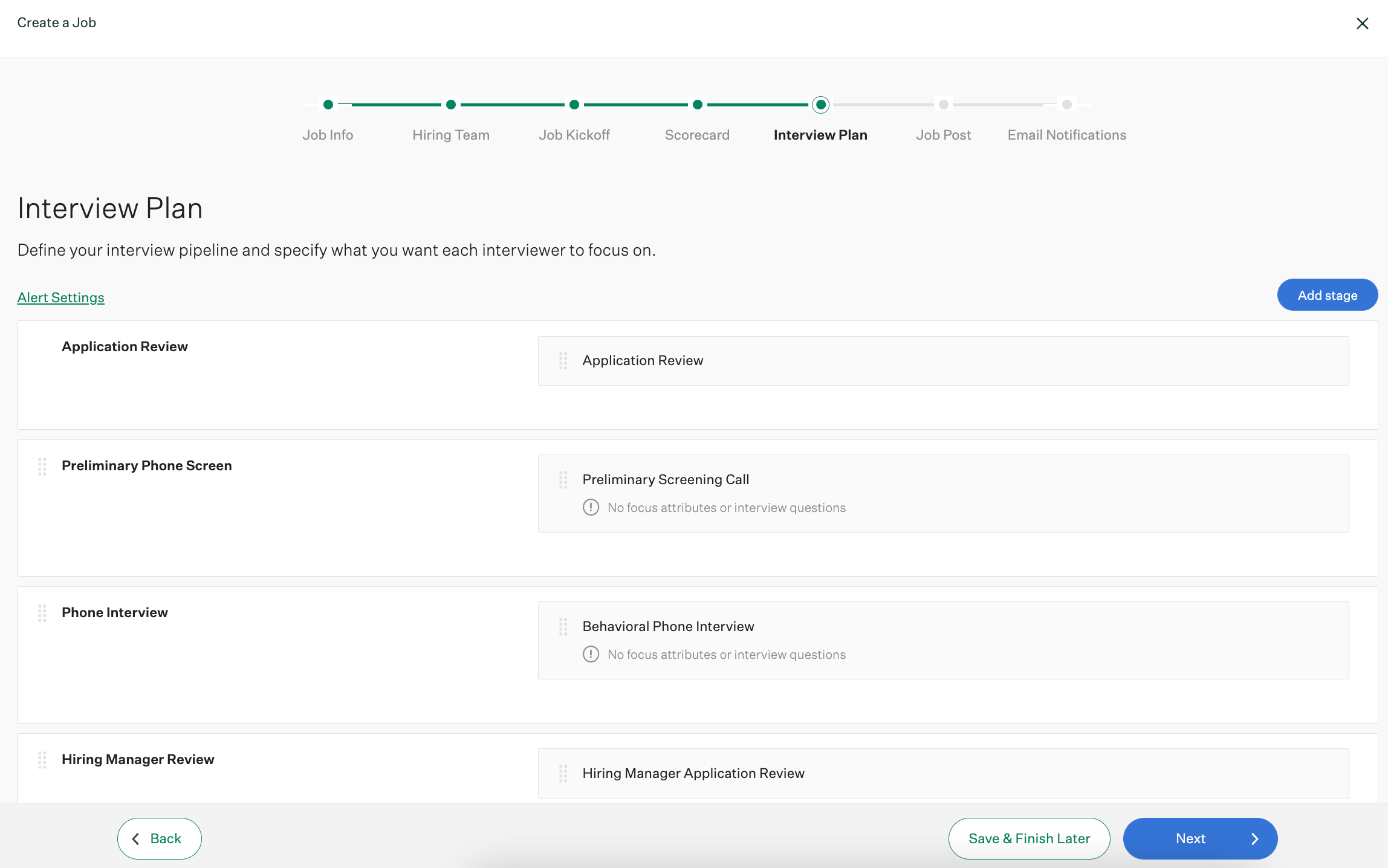
As you progress, Greenhouse moves you through stages, from application review to phone screen to onsite interviews to offer. A person reviews your profile at each one, so you get looked at again and again rather than ranked once and filed away.
How does Greenhouse evaluate candidates? Scorecards and structured hiring
Structured hiring and scorecards shape how Greenhouse evaluates every candidate.
Greenhouse is built around scorecards. Its support docs explain that interviewers use a scorecard to rate you on the skills, traits, and qualifications the role calls for. Those scorecards sit inside an interview kit, where, per Greenhouse's own guidance, every interviewer asks the same core questions so the scoring stays comparable across candidates.
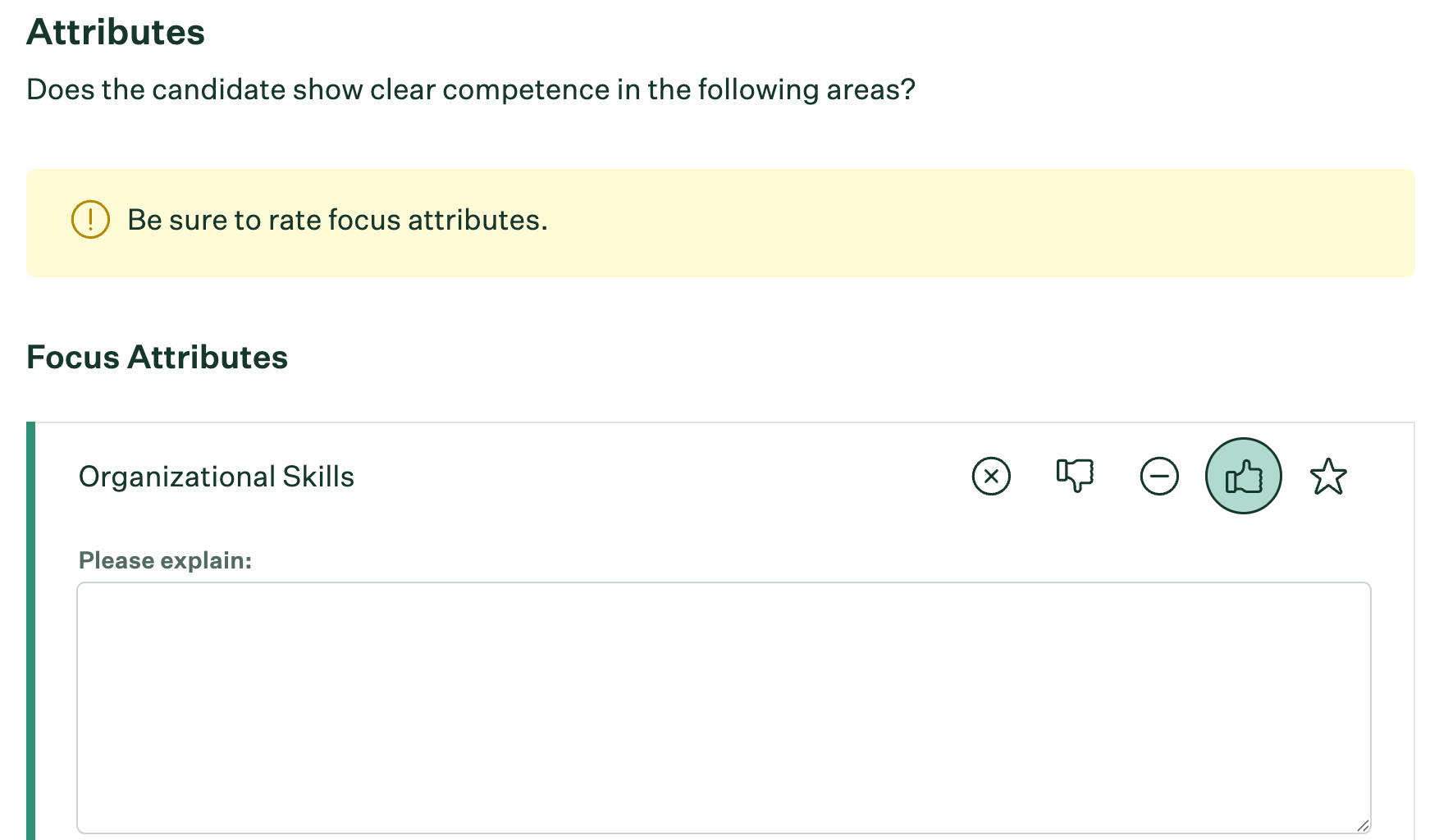
After each interview, the interviewer records key takeaways, rates the attributes, and gives an overall recommendation on a four-point scale: "Definitely Not," "No," "Yes," or "Strong Yes."
The hiring team then reviews everyone's scorecards together in what Greenhouse calls a candidate roundup.
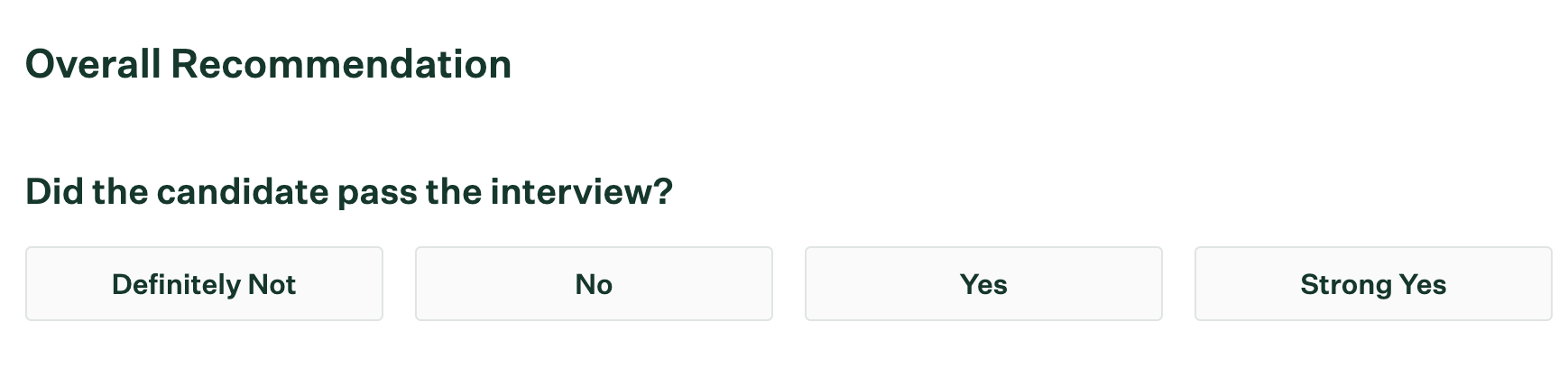
So when people imagine an ATS assigning their resume a secret number, Greenhouse works the opposite way. The evaluation is a person's, written on a structured scorecard, measured against the role's criteria. There's no universal resume score to chase.
How does Greenhouse filter applications early?
If Greenhouse rejects an application quickly, the cause is almost always an application rule tied to a screening question. Greenhouse offers three rules: Auto-Tag labels your profile based on an answer, Auto-Reject filters out anyone who misses a non-negotiable requirement (work authorization, location, a required license), and Auto-Advance moves a strong answer straight to a later stage, like a phone screen.
That last one deserves more attention than it gets. The same screening questions that can reject you can also skip you past the queue, so treat them as part of your application rather than a formality. Auto-Reject and Auto-Advance are only available on Greenhouse's Plus and Pro tiers, which means plenty of employers run no automatic rejection at all.
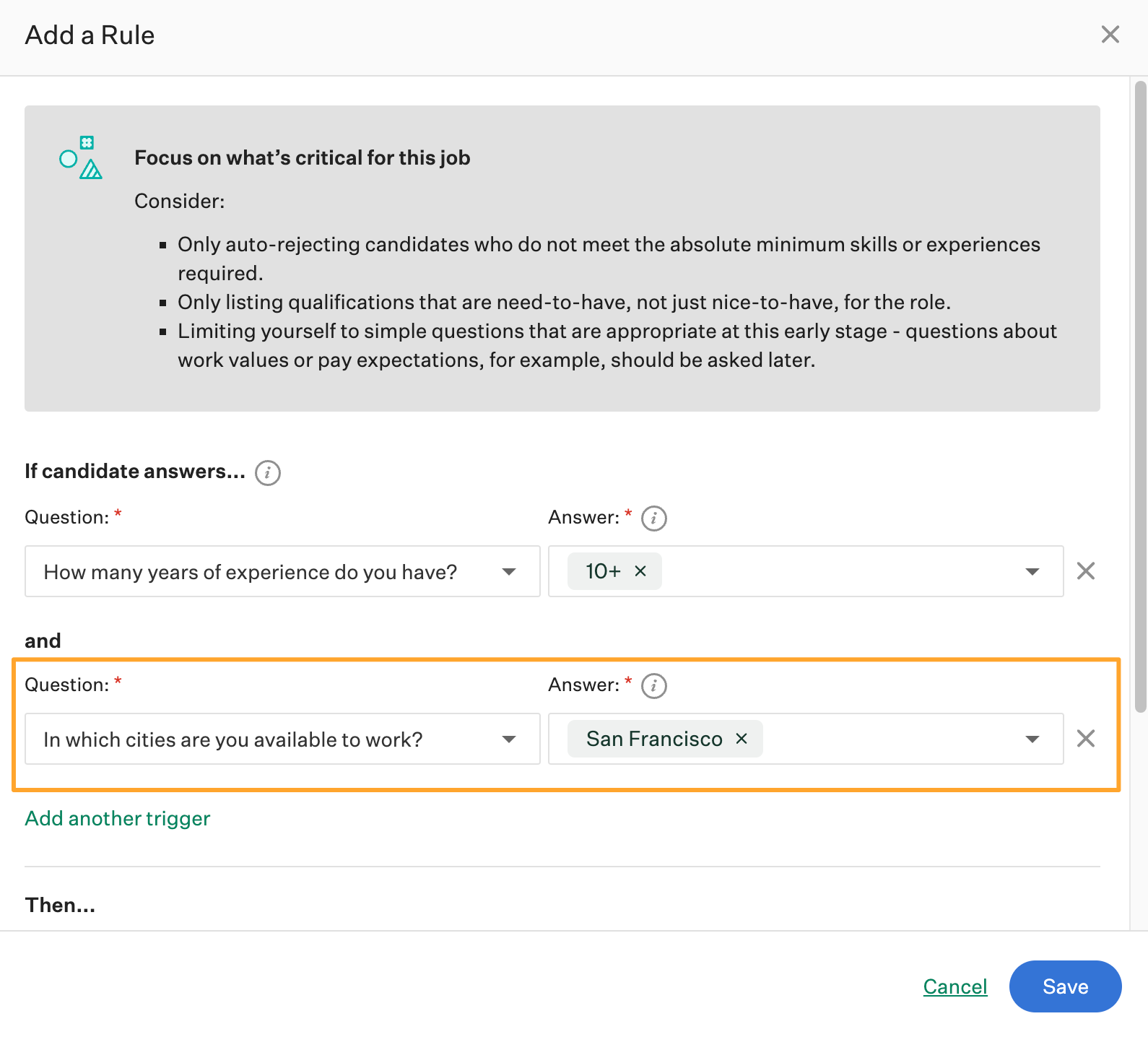
This matches what we found outside Greenhouse too. In our interviews with 25 U.S. recruiters, 23 (92%) said their systems leave formatting alone. The instant rejection that feels like a robot judging your template is usually a knockout answer instead. So answer the screening questions carefully and honestly, and meet the hard requirements before you worry about anything else.
Does Greenhouse auto-reject your resume?
Greenhouse rarely rejects a resume on its own, and almost never for how it looks. Automatic rejection (the rejection_reason) runs on your answers to recruiter-configured screening rules rather than your design, and every other rejection is a person's call.
What actually screens qualified people out is the match to the role's stated criteria. In Harvard Business School and Accenture's study of 2,275 executives, 88% admitted that qualified candidates get screened out for missing the job's exact requirements. Greenhouse's structured-hiring model leans into that: it scores you against defined criteria, so the way to advance is to match them on paper.
Does Greenhouse use AI to screen you?
Greenhouse now ships AI across the recruiter's workflow, and it publishes five AI principles that keep the hiring decision with a person. Its AI drafts job descriptions, summarizes scorecards, transcribes interviews with a notetaker, forecasts offer timing, and can even anonymize your resume so interviewers review your qualifications with identifying details redacted.
The piece that touches candidates most directly is Real Talent, a 2026 addition with three layers:
- Fraud detection flags suspicious applications by analyzing signals like phone number, email, IP address, and location. Apply with real, consistent contact details, and it never concerns you.
- Talent matching shows recruiters match scores against the job criteria they defined and weighted themselves, with an explanation for every recommendation. Greenhouse states the matching never advances or rejects candidates on its own, so a score orders the review queue while a person still reads your resume.
- Identity verification confirms you're a real person at key moments, like before an interview or offer, through a fast check in the MyGreenhouse candidate portal.
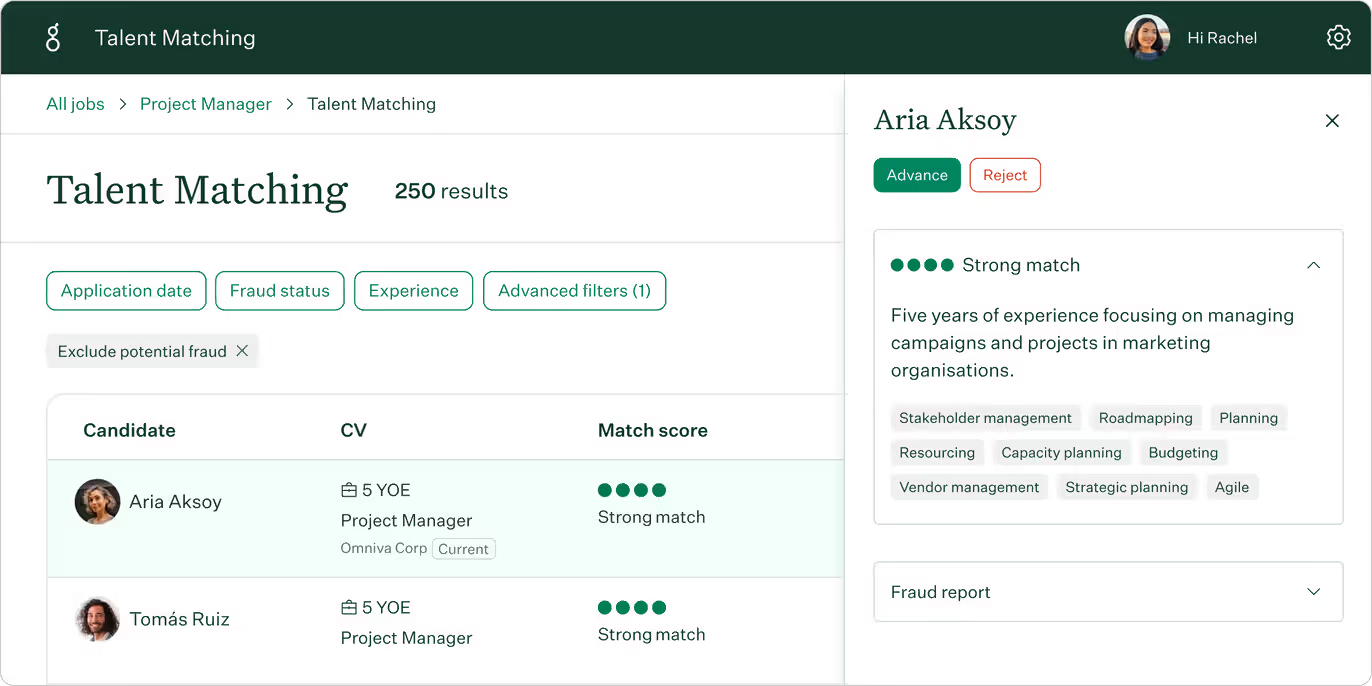
Greenhouse holds ISO 42001 certification for AI governance and runs monthly third-party bias audits. For you, the takeaway is practical: the match score reads the same titles, skills, and keywords a recruiter searches for, so a resume tailored to the posting wins with both readers at once.
How do you make your resume work in Greenhouse?
Greenhouse rewards a clean, well-matched resume.
A short checklist:
- Use real, selectable text. Greenhouse stores your experience and education as structured fields, so keep everything as text the parser can read rather than an image.
- Use standard section headings. Plain labels like "Experience" and "Education" map cleanly to the
employmentsandeducationsfields the system expects. - Match the role's criteria. Mirror the title, skills, and keywords from the posting where they fit you, since recruiters score, and now match on exactly those.
- Apply with consistent contact details. Fraud detection reads signals like your email and phone number, and real information passes without a second look.
- Send a supported file. Greenhouse accepts .pdf, .doc, .docx, .rtf, and .txt up to 100 MB. A text-based PDF is a safe default.
For the full build, read our guide on how to create an ATS-friendly resume. For the columns question specifically, see whether two-column resumes are ATS-friendly.
Is your resume good enough?
Drop your resume here or choose a file. PDF & DOCX only. Max 2MB file size.
Myths about Greenhouse
Greenhouse attracts the same folklore as every ATS, so here's what the documentation actually supports.
"Greenhouse scores my resume and auto-rejects me." The scoring that decides anything in Greenhouse is a human's, written on a scorecard against the role's criteria. The early filter is your screening answers, and while Real Talent accounts show recruiters a match score, Greenhouse states the matching never rejects anyone on its own.
"A creative or two-column resume breaks in Greenhouse." Greenhouse stores your resume into fields and keeps your original file. Across the ATS parsers we tested, two-column resumes scored 98% versus 95% for single-column on parse accuracy, so column count is rarely what breaks an application. Keep the text real and selectable.
"I need a special resume just for Greenhouse." One clean, well-matched resume works across Greenhouse and every other system.
Why does structured hiring work in your favor?
Structured hiring sounds corporate, yet it tilts toward the candidate. Every applicant for a role faces the same interview kit and the same scorecard, so you're measured against the job's criteria rather than an interviewer's mood that day. Greenhouse's own guidance frames the goal as consistent, comparable data for the hiring decision.
For you, the lever is clear. Match the role on paper, prepare for the questions every candidate gets asked, and your case rests on evidence rather than guesswork.

What Greenhouse manages behind the scenes
Reading resumes is one piece of a bigger tool. Greenhouse's developer docs show the full set of objects it manages for a hiring team:
- Job posts that publish a role to career sites and job boards.
- Applications that link each candidate to a job and track status through the pipeline.
- Scorecards that hold every interviewer's structured rating.
- Scheduled interviews that coordinate the logistics.
- Offers that move an approved candidate to a written, approved offer.
Your resume search is a small slice of a system built to run the whole hiring process. The gatekeeper image misses most of what Greenhouse is for.
Where does Greenhouse fit with every other ATS?
Greenhouse is one of several systems you'll meet, alongside Workday, Taleo, iCIMS, and Lever. They differ in interface and in how each employer configures the filters. Under the hood, they all do the same core job: parse your resume into data, let recruiters search and rank, and hand the decision to a person.
So you don't need a different resume per system. Build one clean, well-matched file, tailor the content to each role, and it travels across all of them. For the bigger picture, see what an ATS is and how it works.
Frequently asked questions
The questions that come up every time someone spots a greenhouse.io application link.
Can Greenhouse read a PDF?
Greenhouse reads a PDF without trouble, as long as the text is selectable rather than saved as an image. It also accepts .doc, .docx, .rtf, and .txt files up to 100 MB.
Does Greenhouse automatically reject resumes?
Greenhouse rarely rejects on its own, and almost never for formatting. Automatic rejections come from screening-question rules on the role's hard requirements, which are only available on Greenhouse's higher subscription tiers, and a recruiter owns every rejection after that.
Does Greenhouse give my resume a score?
The score that decides your fate in Greenhouse is an interviewer's scorecard rating, on a scale from "Definitely Not" to "Strong Yes," against defined criteria. Employers using Real Talent also see an AI match score against the job's requirements, though Greenhouse states it only orders the review and never rejects anyone.
Can Greenhouse read a two-column resume?
A well-built two-column resume parses fine. Greenhouse stores your resume into fields and keeps your original file, and across the ATS parsers we tested, two-column layouts came through as cleanly as single-column. Keep the text real and selectable, and column count is rarely what breaks the read.
Why did I get rejected from a Greenhouse job so fast?
A fast rejection usually means you missed a knockout requirement, like work authorization or a required certification, rather than a problem with your layout.
Does Greenhouse use AI?
Yes, on the recruiter's side. Greenhouse's newer AI, branded Real Talent, can show recruiters a match score against the role and flag suspicious applications, and its published AI principles keep the hiring decision with a person. Greenhouse states the matching never advances or rejects candidates on its own, so a person still reads your resume.
Does Greenhouse rank candidates against each other?
Employers using Real Talent see match scores that order candidates against the role's criteria, and interviewers rate each person on a scorecard. Greenhouse states the matching never advances or rejects anyone, so the real comparison still happens through people reading those scorecards.
Does it matter whether I apply on the company site or through Greenhouse?
Most company career pages on Greenhouse feed the same system, so your application lands in the same place. Apply wherever the employer directs you.
How long does my application stay in Greenhouse?
Your record often stays in the company's Greenhouse account for months or longer, and Real Talent's rediscovery tools resurface past applicants when a new role opens. A strong profile keeps working after the rejection email.
Can I see my status in Greenhouse?
More than you used to. Greenhouse's MyGreenhouse candidate portal gives you real-time application updates and surfaces new roles, where the employer has it enabled. Otherwise, you see the updates the employer chooses to send, and the detailed pipeline view stays on the recruiter's side.
How do I know a company uses Greenhouse?
The application URL often shows it, since Greenhouse-hosted job posts run on a greenhouse.io address. The fix is the same regardless: a clean, well-matched resume.
The bottom line on Greenhouse
The companies on Greenhouse picked it because they want structured, comparable hiring. That works in your favor. You're rated by people against a clear rubric, so the move is to match the role on paper and answer the screening questions straight. There's no robot to outsmart.
Greenhouse is a search-and-scorecard tool, not a gatekeeper. Match the role, keep your file clean, answer the questions honestly, and you put yourself in front of the people who actually decide.
Author's Take
Make one that's truly you.