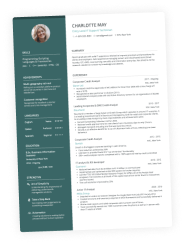
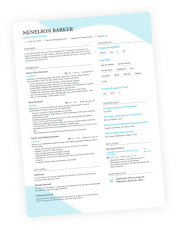
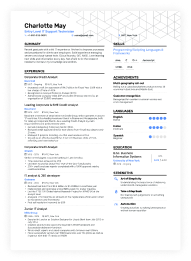
The advice you find online on using a two-column resume is nearly unanimous: don’t do it. The reasoning behind this notion is the belief that applicant tracking systems (ATS) aren’t capable of parsing them correctly because of the complex layout.
This idea is especially persistent in resume subreddits where the vast majority of users think they’ill be filtered out if they apply for a job using a resume with two columns. I know this because I’m quite active on Reddit as u/volendoesresumes, and I’ve had countless online debates about this.
The problem is that these beliefs don’t match the reality of the situation. So let’s take an objective look at the state of resume parsing so you can decide on your own resume.

Key takeaways
- All modern applicant tracking systems read two-column resumes correctly.
- Reading order is a solved problem, with two decades of research backing up the current technology.
- The myth against complex resume layouts survives because a minority of older, rule-based engines are still used inside legacy government and enterprise systems.
- Single-column is the safer default mainly for government roles, Taleo, and older enterprise setups, while Greenhouse, Lever, Ashby, and most modern platforms handle columns fine.
- Enhancv’s internal data consistently shows our users get interviews using two-column resumes.
What resume parsing actually is
Resume parsing is the process where dedicated software turns your file into structured data. A parser has to read your document and sort its contents before an ATS can search, score, and filter your application.
It can be broken down into three major steps:
- Text extraction pulls the content from the PDF or Word file.
- Reading-order detection determines the sequence of the text.
- The information is sorted in dedicated fields (applicant’s name, contacts, experience, skills, etc.)
Most vendors license their parsing engine rather than building one in-house. For example, Affinda, and Textkernel, are some of the companies that have developed such parsers used in a wide range of ATS.
When two-column parsing was solved
Parsers don’t read documents in a “mindless” left-to-right, top-to-bottom pattern. At least not anymore. Reading multi-column documents is something that the industry solved. Over 20 years ago.
The reading order of a page is determined by the so-called XY-Cut algorithm. It was formalized back in 2005 but researchers updated it to XY-Cut++ as recently as 2025. It works by splitting a page into blocks and arranging them in a way that a person would read them.
If you’re curious what that looks like, go ahead and upload a resume in Enhancv.
Is your resume good enough?
Drop your resume here or choose a file. PDF & DOCX only. Max 2MB file size.
Then switch to one of our two-column resumes templates. On the right, you’ll see a small button with an eye icon. Use it toggle between what a recruiter sees when they review the resume, and what the ATS sees.
Here’s an example.
This is a real resume of an Enhancv user who landed an interview at Amazon and eventually got hired. As you can see, they used a double-column layout.
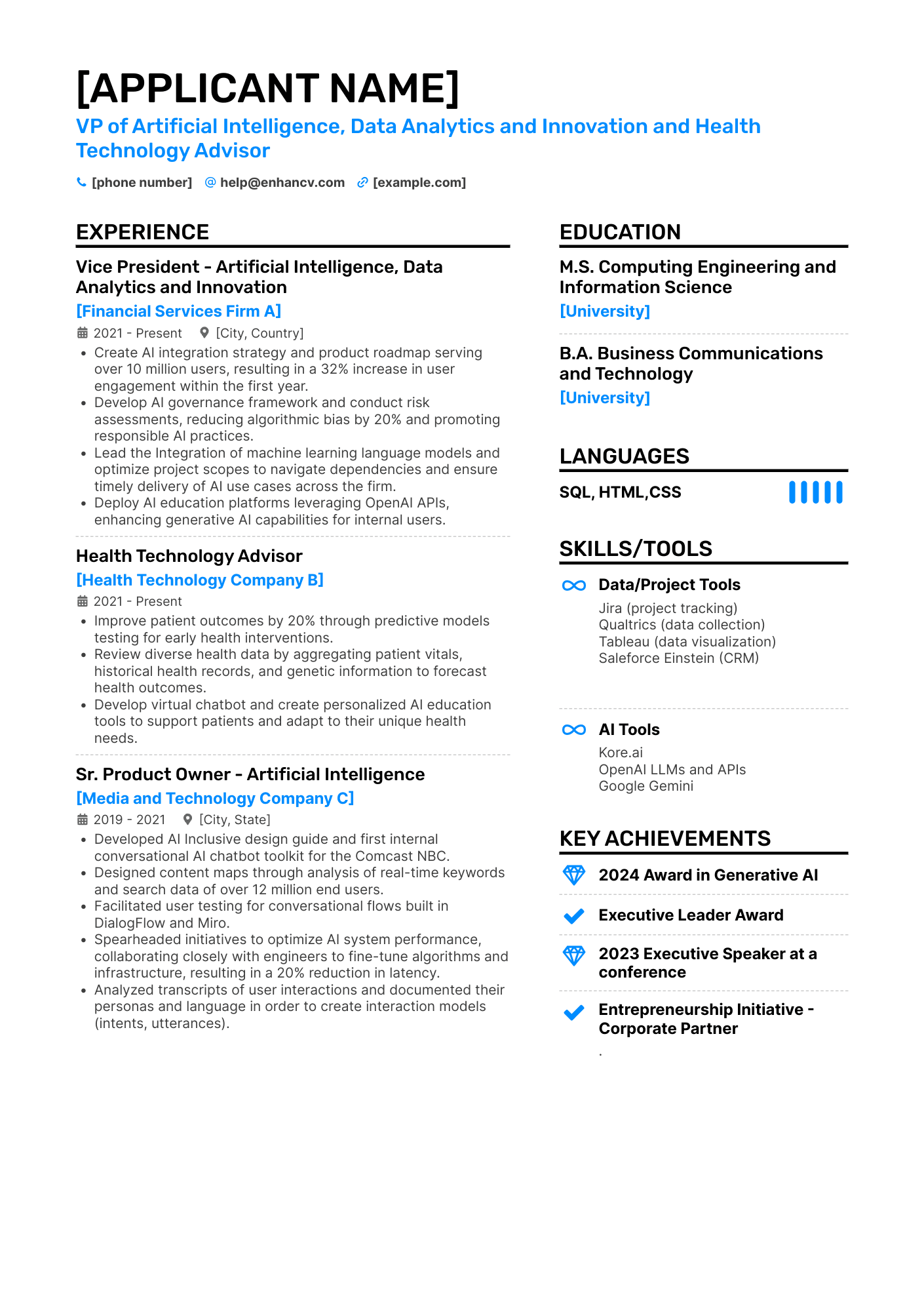
(Note: I have redacted the Key Achievements section to further anonymize the resume.)
Now let’s switch to the ATS view of the document.
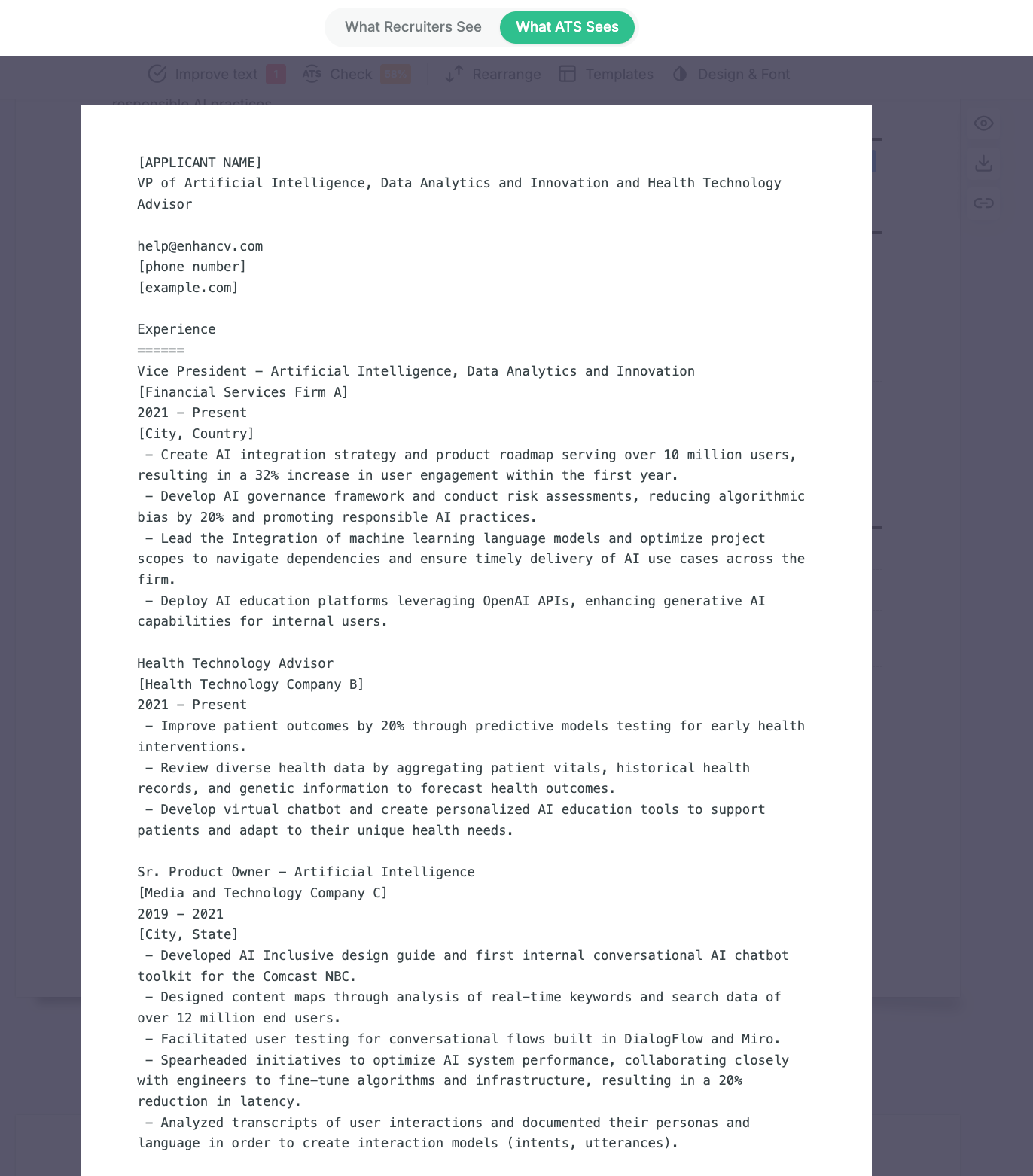
As you can see, it looks like a plain single-column document. Every section is clearly separated by spacing and headings.

Public resources destroy the myth
- In 2021, Microsoft Research published a model trained on ReadingBank called LayoutReader. It’s a benchmark of half a million document images, built specifically for detecting reading order.
- In 2023, Textkernel published a detailed explanation of how their parser handles multi-column resumes. Essentially, it identifies columns to render a page but it deliberately avoids treating visual gaps as column breaks. This way, the key-and-value layouts are maintained.
- In early 2026, we went “undercover” to explore the biggest job board in the world and conducted numerous tests with various resumes. Even the most complex multi-column resume which had graphic elements like pie charts and (I kid you not) actual embedded book covers was parsed perfectly.
All the evidence suggests that this is a well-trodden field with public benchmarks and competing methods. It’s something that’s actively being supported and worked on. Without question, the strongest parsers handle two columns cleanly.
Why does the advice against two-column resumes persist?
Speaking from anecdotal experience, I would say that online forums where resume discussions happen have become echo chambers where the same dogmatic advice is being perpetuated.
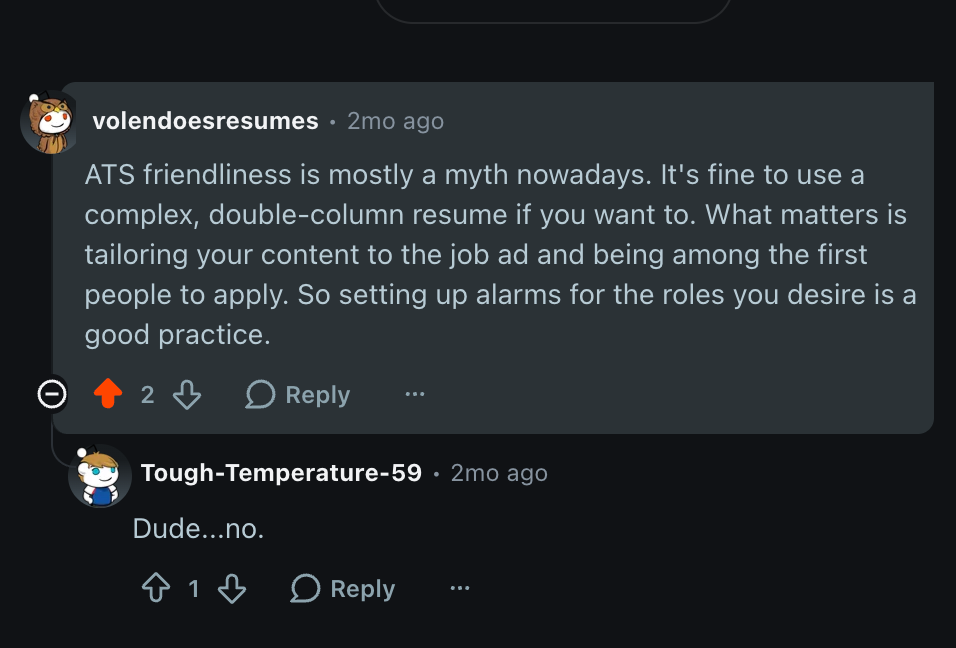
Loud voices against two-column resumes say that some enterprise-level and government platforms use older rule-based systems that can’t parse resumes with complex layouts.
If this is indeed the case, then the parsing concern is real in those instances. Rule-based engines from earlier generations can have lower field-level accuracy. If you run a resume with a complex layout through a decade-old configuration, then it will probably trip.
It should be mentioned that there are other failure modes. But they have little to do with how many columns are in your resume. For example, using a corrupted file or a downright flat image of a resume.
What people who got interviews used
The number of people who use Enhancv isn’t small. This gives us access to some unique data. Our Success Stories initiative records people who reported landing a job, the employer who hired them, and the resume they used to get there.

Success Stories (June 2026 group)
We looked at a small sample of 60 successful applications. Some of the notable employers who hired the applicants include Amazon, Metalab, PwC, FedEx, and Dell.
Of the 60 resumes that got these people to the interview stage, 44 used a double-column layout.
That’s 73%.
I acknowledge that this is a sample of people who got hired, not a controlled experiment, so it can't prove that two columns improve your chances. But what it does show, at scale, is that a two-column resume doesn't stop you from getting interviewed, including at large, established employers with modern hiring systems.
In other words, we know for a fact that the layout that so much advice treats as disqualifying is sitting in the files of people who just got the offer.
What this means for your resume
Layouts and readability matter when your resume reaches the recruiter. Having the option to use a double-column template unlocks all kinds of customization possibilities to build a standout resume.
I would argue that limiting ourselves to single-column templates because of the ATS boogeyman feels like a step in the opposite direction of progress. Especially now when the technology is so advanced.
Still, there are instances where it’s best to play it safe just in case. Single-column is the safer pick when you know you're applying through an older enterprise or government system.
For easy reference, here’s a breakdown.
When it’s safe to use two columns
| Where you're applying | ATS used? | Two-column resume? | What to do |
|---|---|---|---|
| Government agencies (federal, state, local) | USA Staffing, Monster Government Solutions, Taleo | Play it safe | Default to single-column. These run older, standardized parsers and often re-key your data into a form anyway. |
| Large enterprises and Fortune 500 (5,000+ staff) | Oracle Taleo, Workday, SAP SuccessFactors, iCIMS | Mixed, verify first | Single-column is the safer default on Taleo and older SuccessFactors. Newer configurations usually parse two columns fine, so run a parse check before you send. |
| Regulated, legacy-heavy fields (banking, insurance, healthcare, defense, universities) | Taleo, SuccessFactors, iCIMS (often older configurations) | Verify first | Lean single-column for senior roles or old-line employers. Run a parse check if you want the two-column layout. |
| Mid-market and growth-stage companies | Greenhouse, Lever, SmartRecruiters | Fine | Two-column parses cleanly. Keep your sections clearly labeled and you're set. |
| Startups and tech companies | Greenhouse, Lever, Ashby | Fine | Modern parsers handle columns without trouble. Use the layout that reads best. |
| LinkedIn, Indeed, or applying straight to a person by email | LinkedIn, Indeed, or no ATS at all | Fine | No column problem here. Just keep your contact details in the body of the resume, not in the file's header. |
If you’re one of those applicants who fixates too much on ATS, then you need to keep both readers in mind. The parser routes your resume, but the one who makes the decision to call you for an interview is the recruiter.
Frequently asked questions about ATS and resume parsing
For the sake of clarity, let’s go over the main points and take a firm stance.
Can an ATS read a two-column resume?
Virtually all modern applicant tracking systems read two-column resumes correctly. There’s a small number of legacy government and enterprise systems that read top to bottom. So if you know you're applying through one, choose a single-column layout. For the rest, go with whatever allows you to best present your experience and skills.
Do recruiters prefer single-column resumes?
Recruiters care about clarity more than anything. A clean two-column layout can be quicker to scan in some cases. What matters the most is whether your most important information is easy to find on the document during the first few seconds of reading it.
Will a PDF resume parse correctly?
PDF file is the safe default and is accepted by all modern ATS. Send a Word document only when the posting asks for one. You may treat this as a sign to go for a single-column template just in case. The file type to avoid is a flat image, which gives the parser no text to read.
Conclusion
The myth that double-column resumes break the ATS isn’t entirely baseless. But it has outlived the problem and it doesn’t accurately reflect the current state of ATS technology. So stop worrying about resume columns and focus on writing a compelling career narrative, that’s what will land you the next interview.
Make one that's truly you.