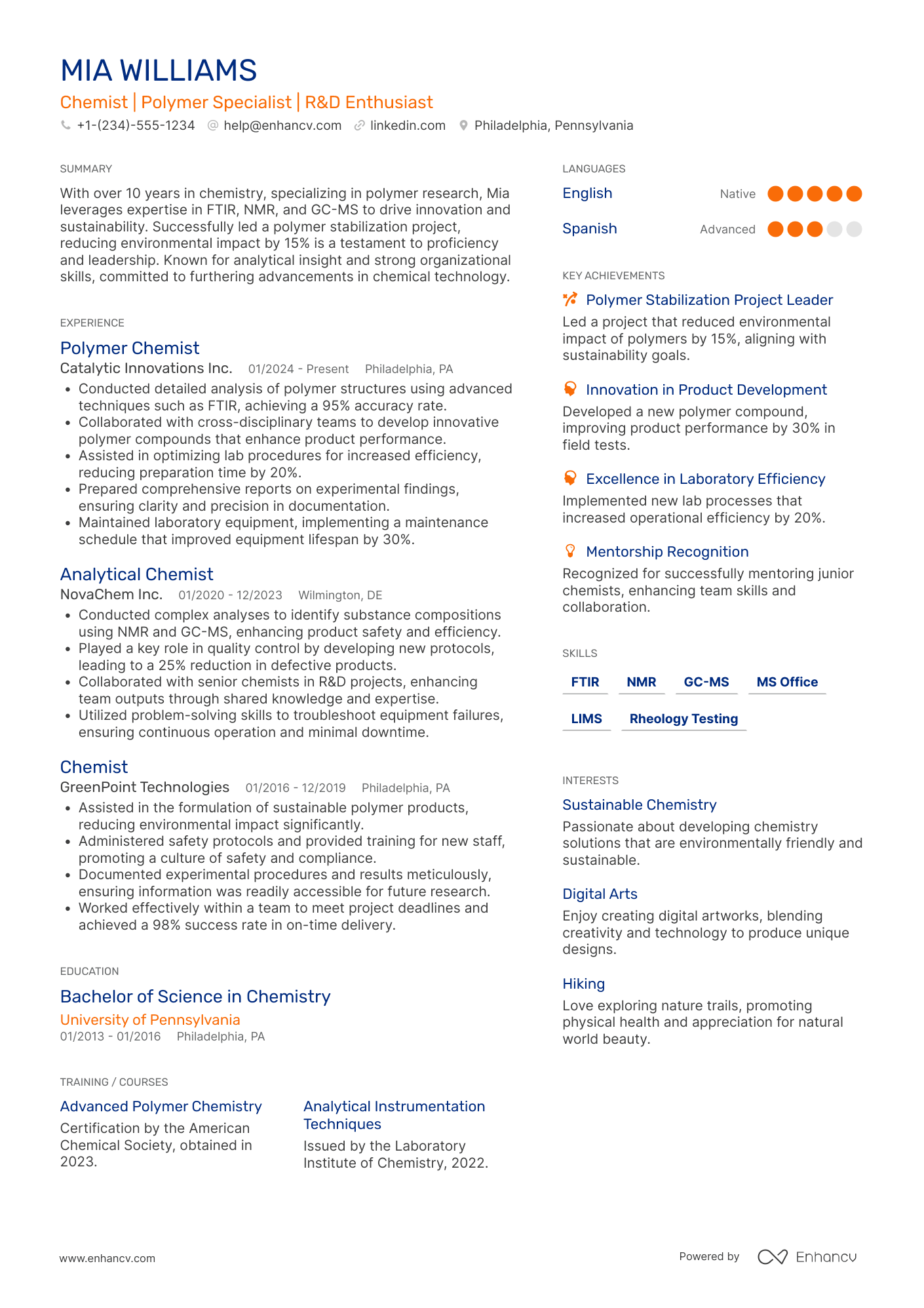
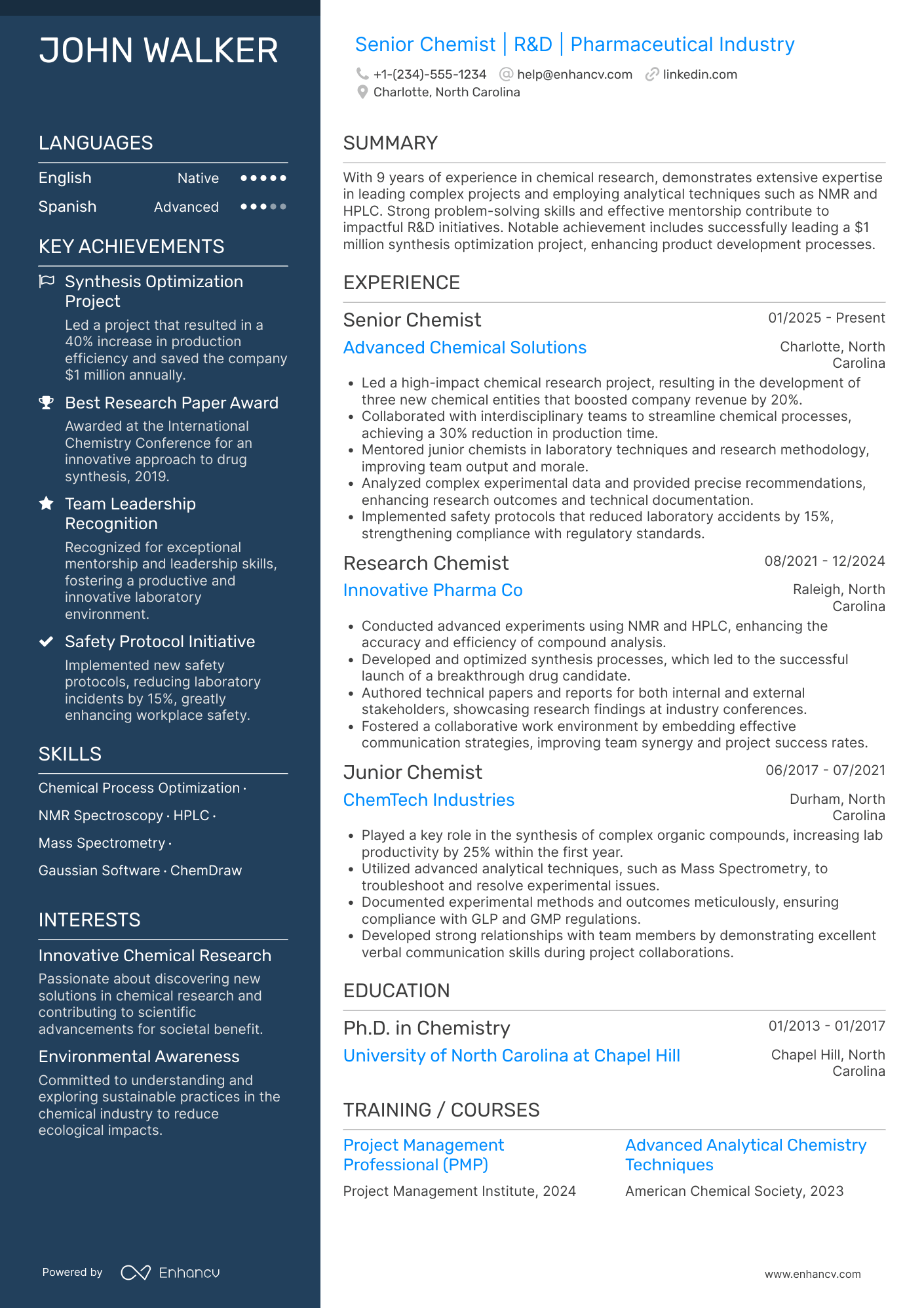
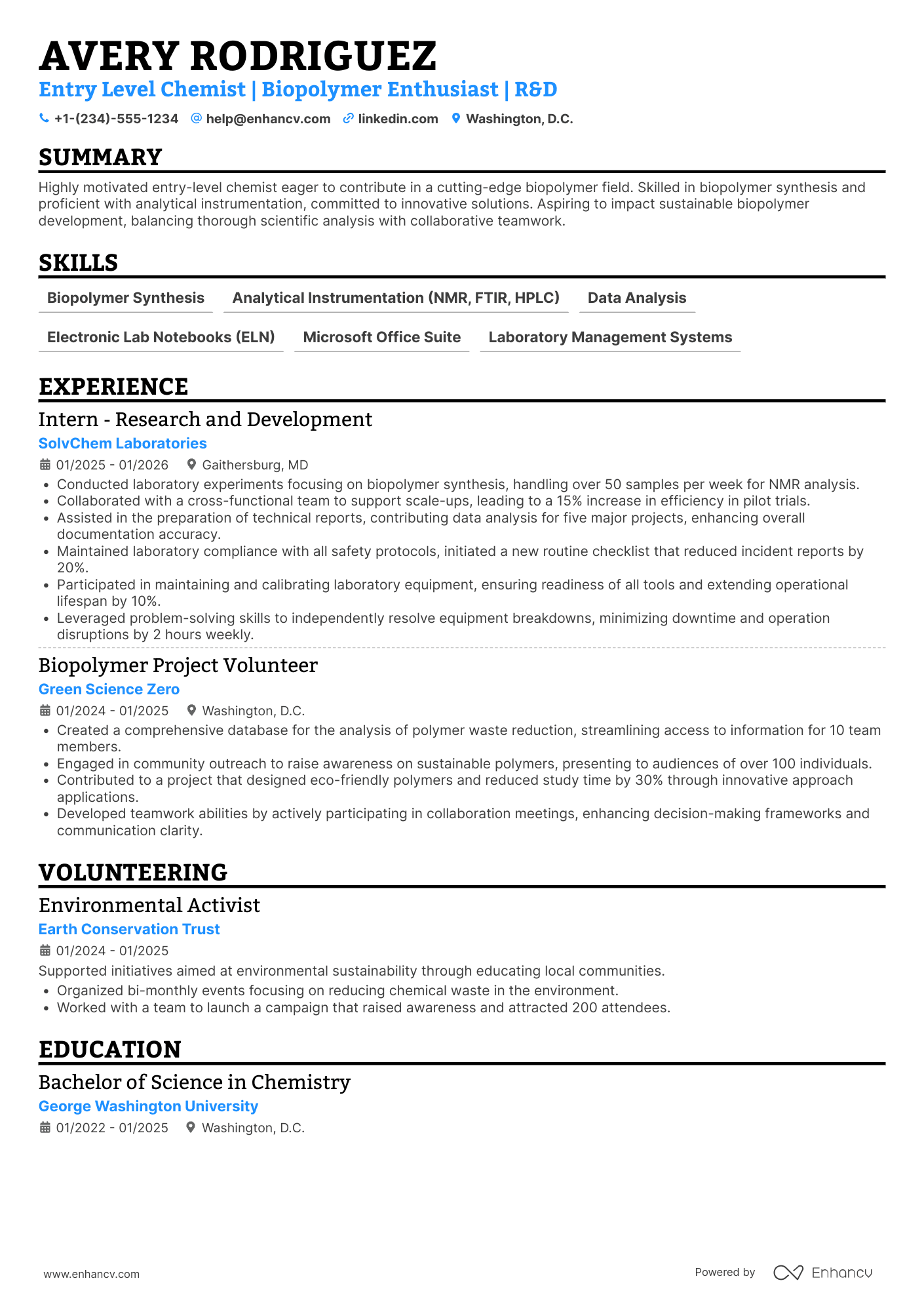
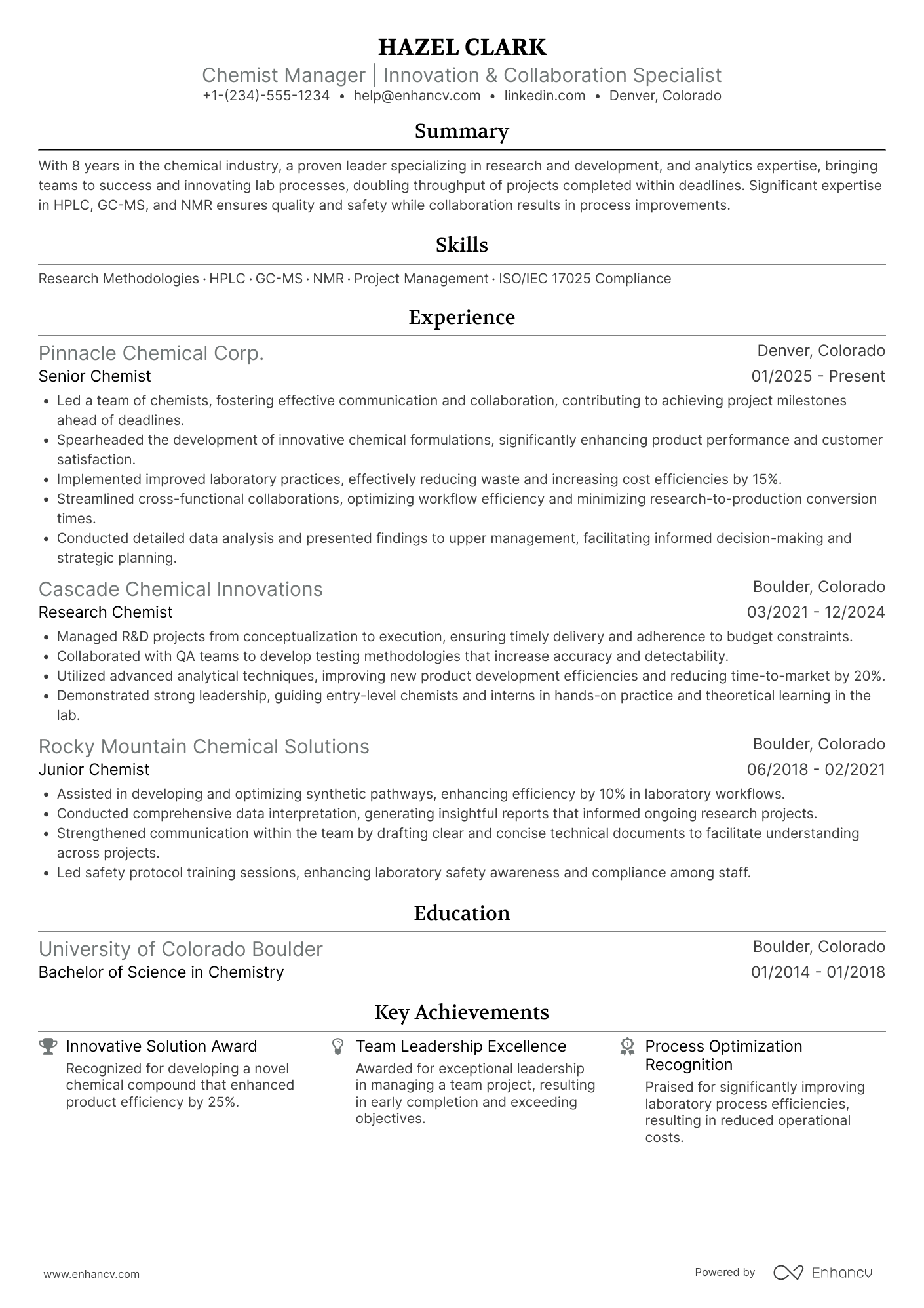
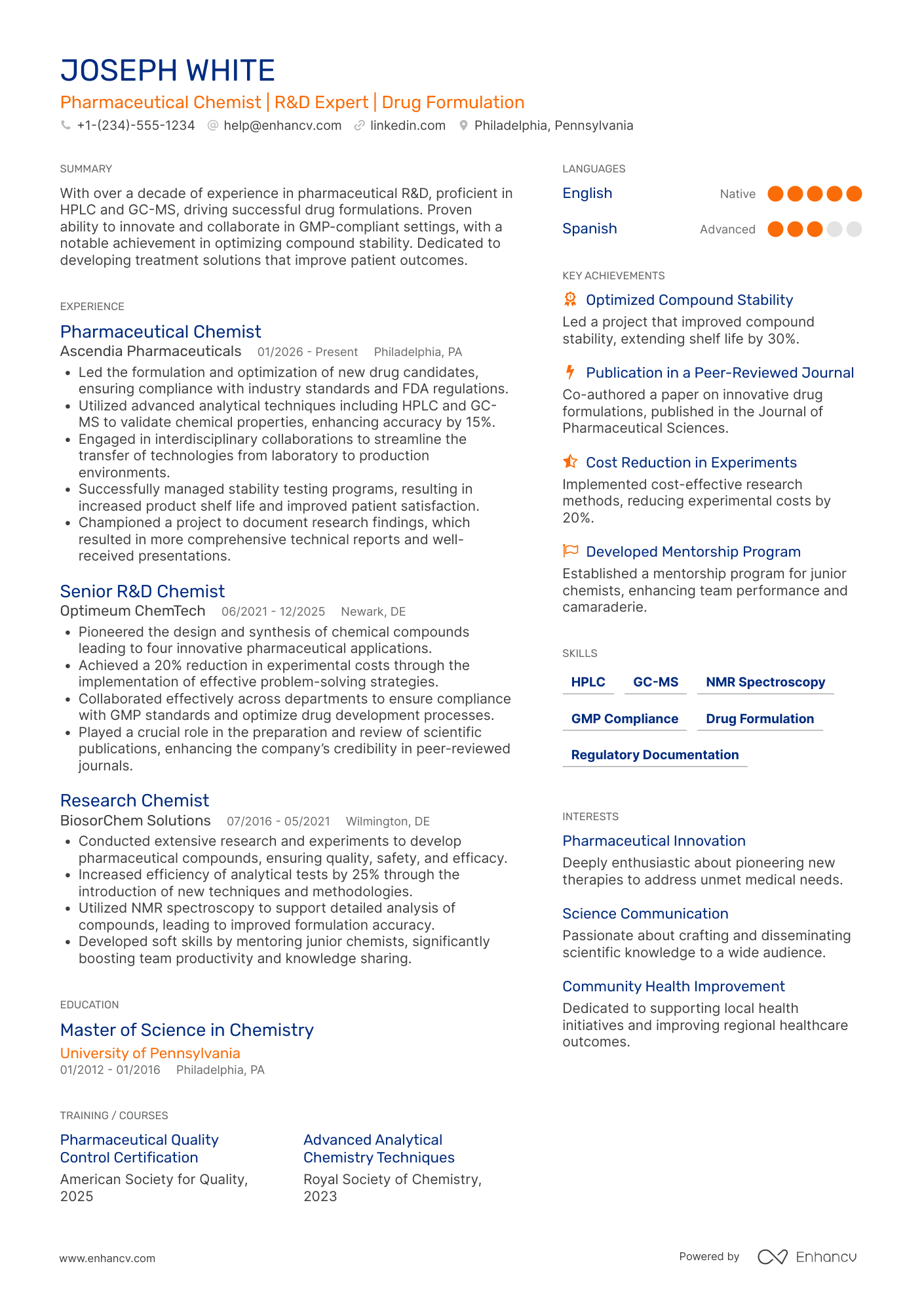
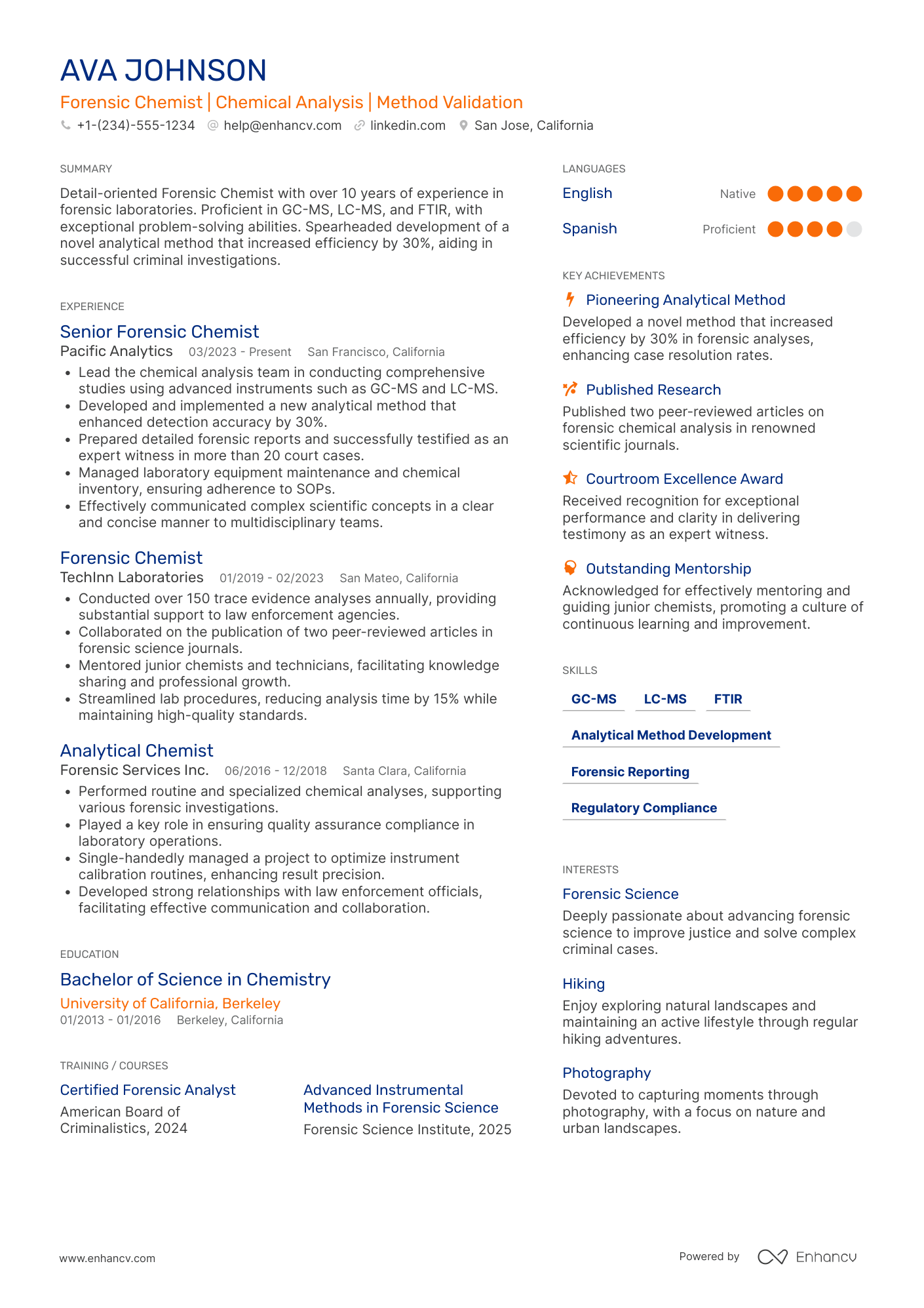
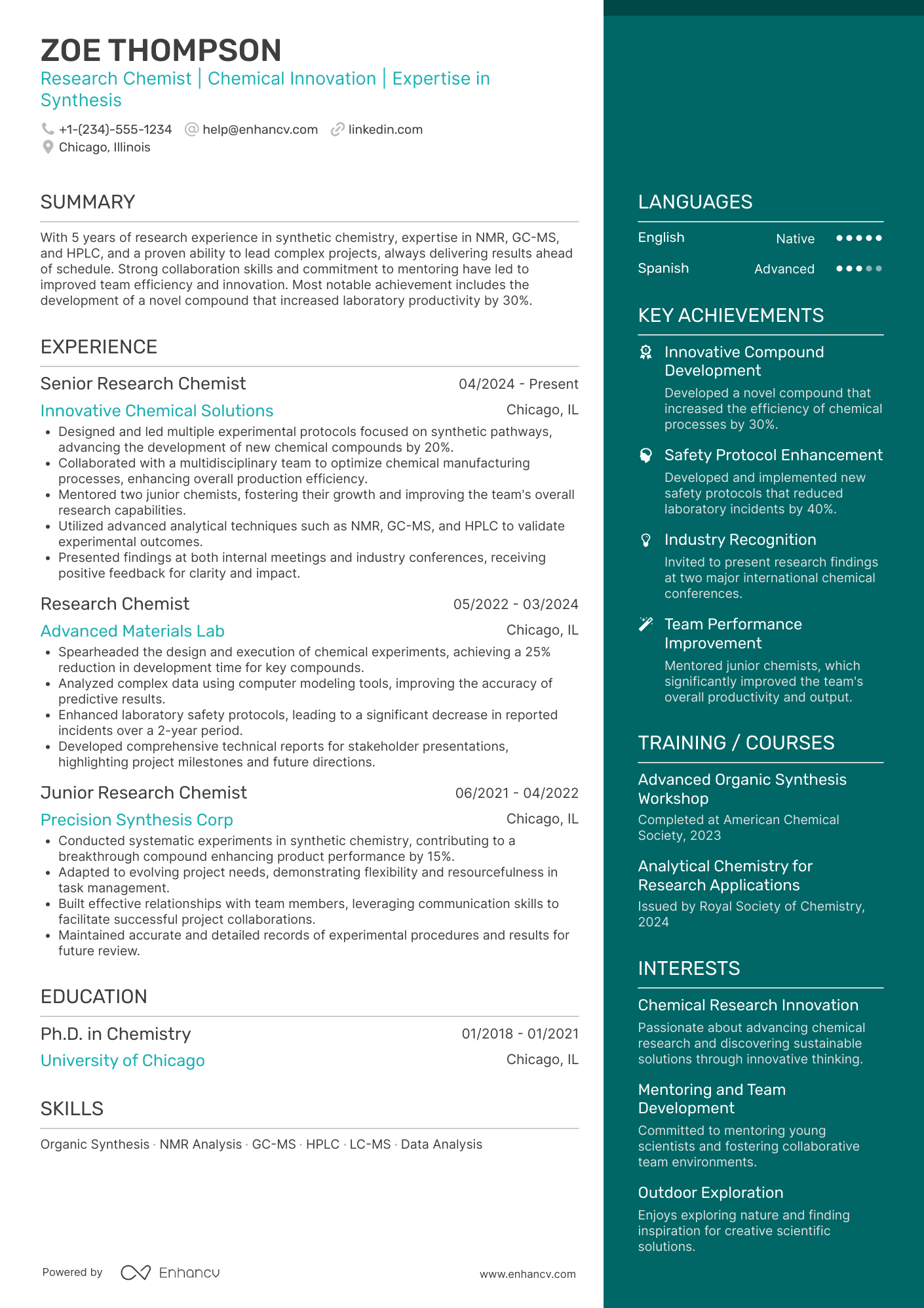
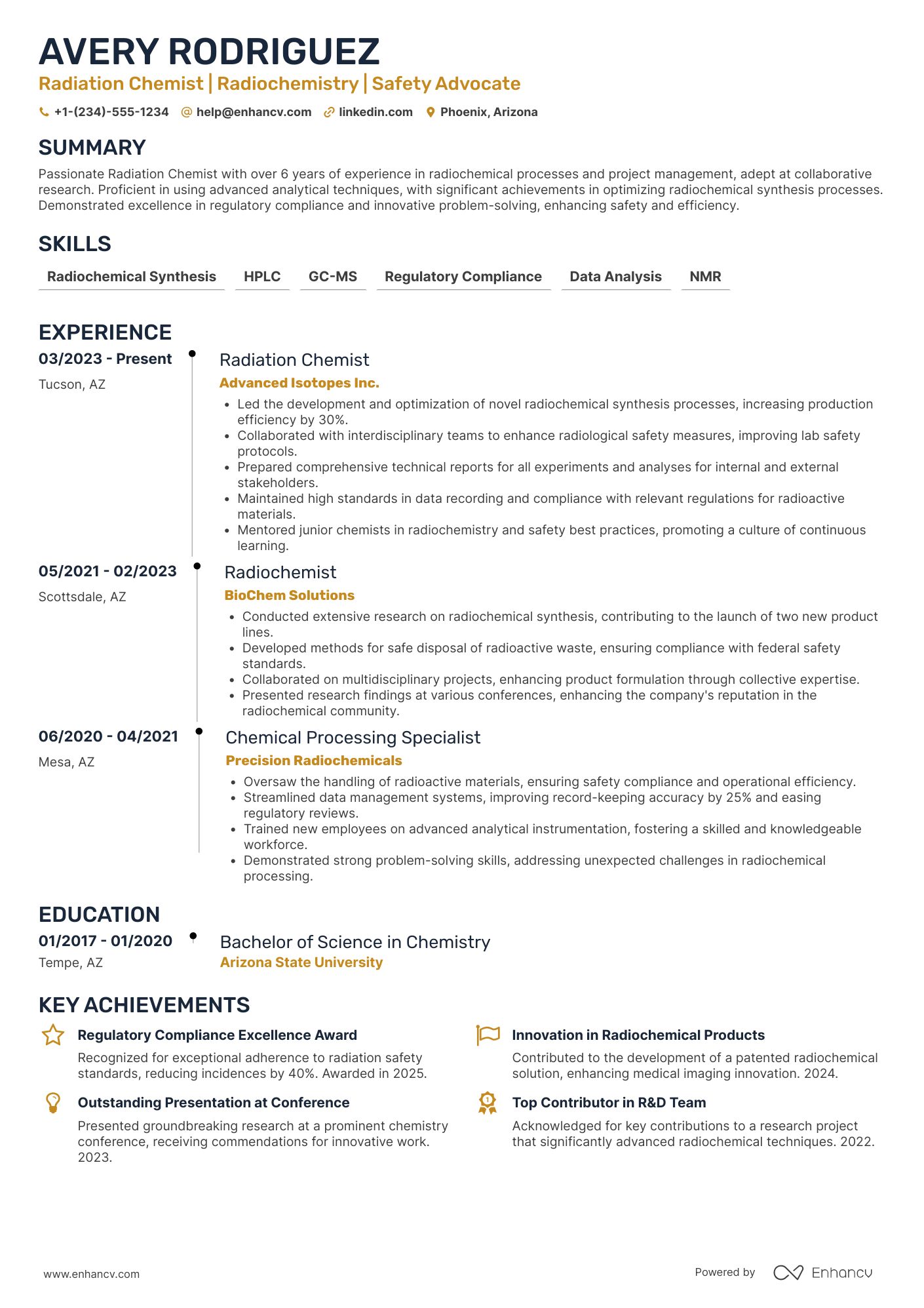
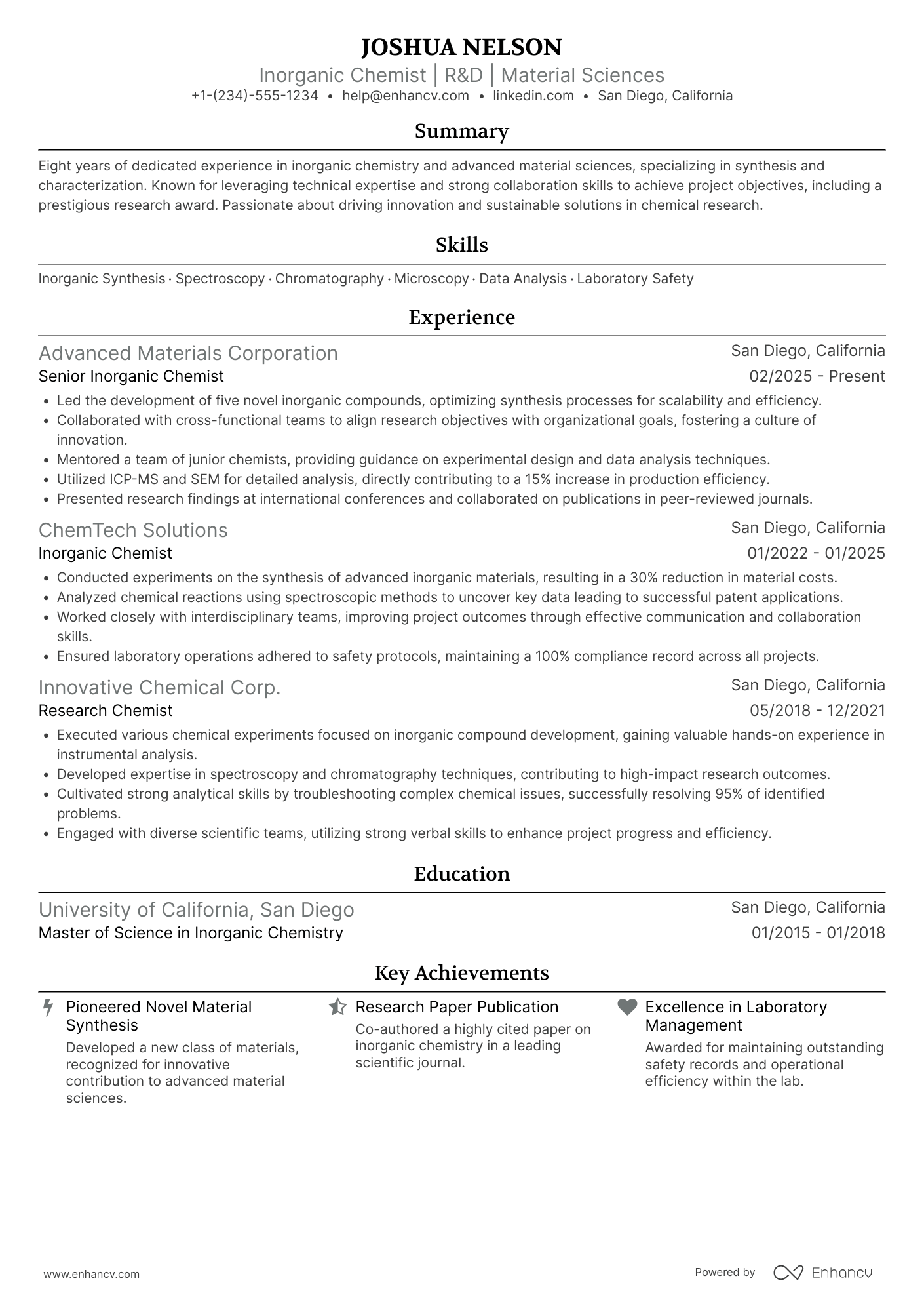
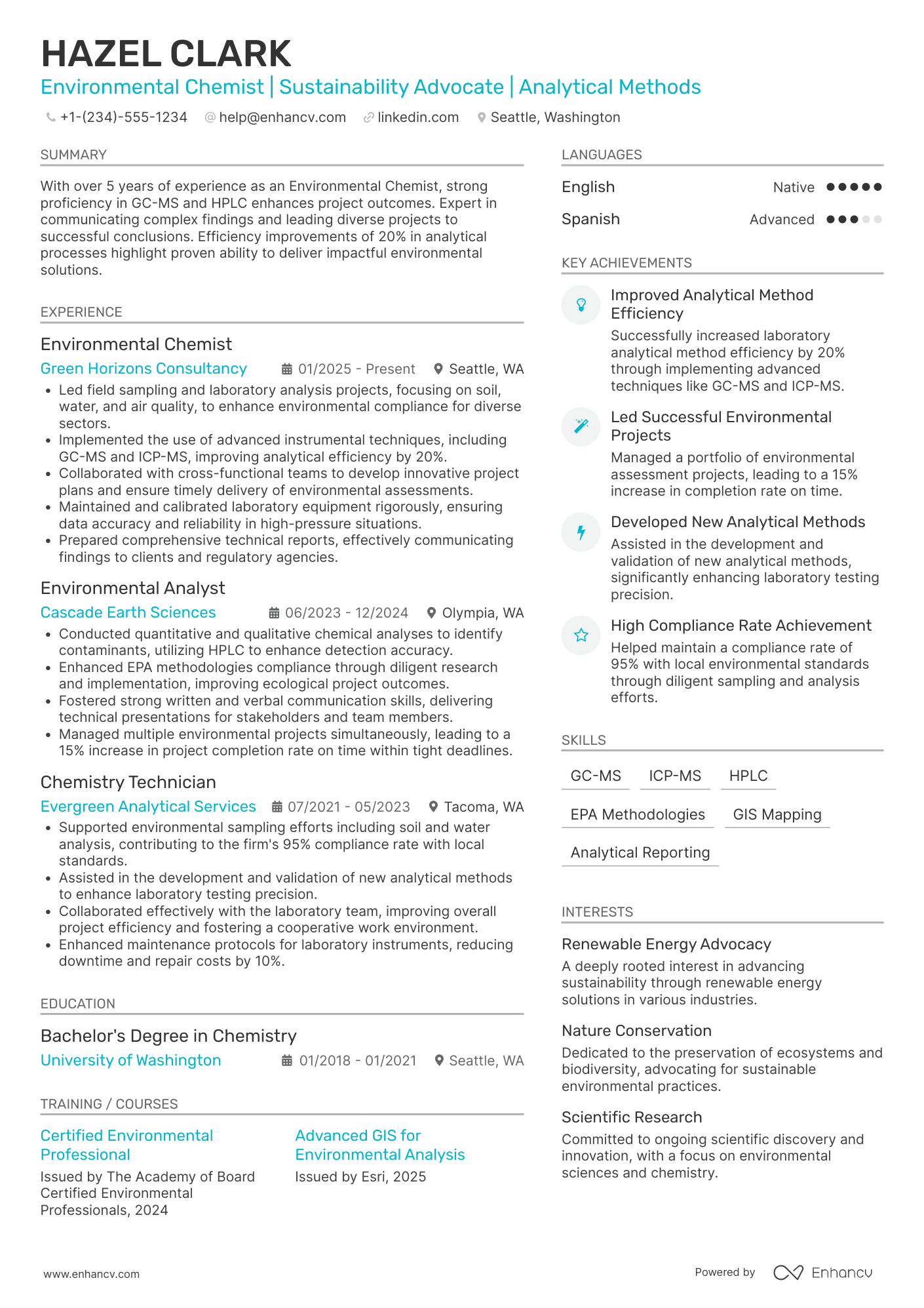
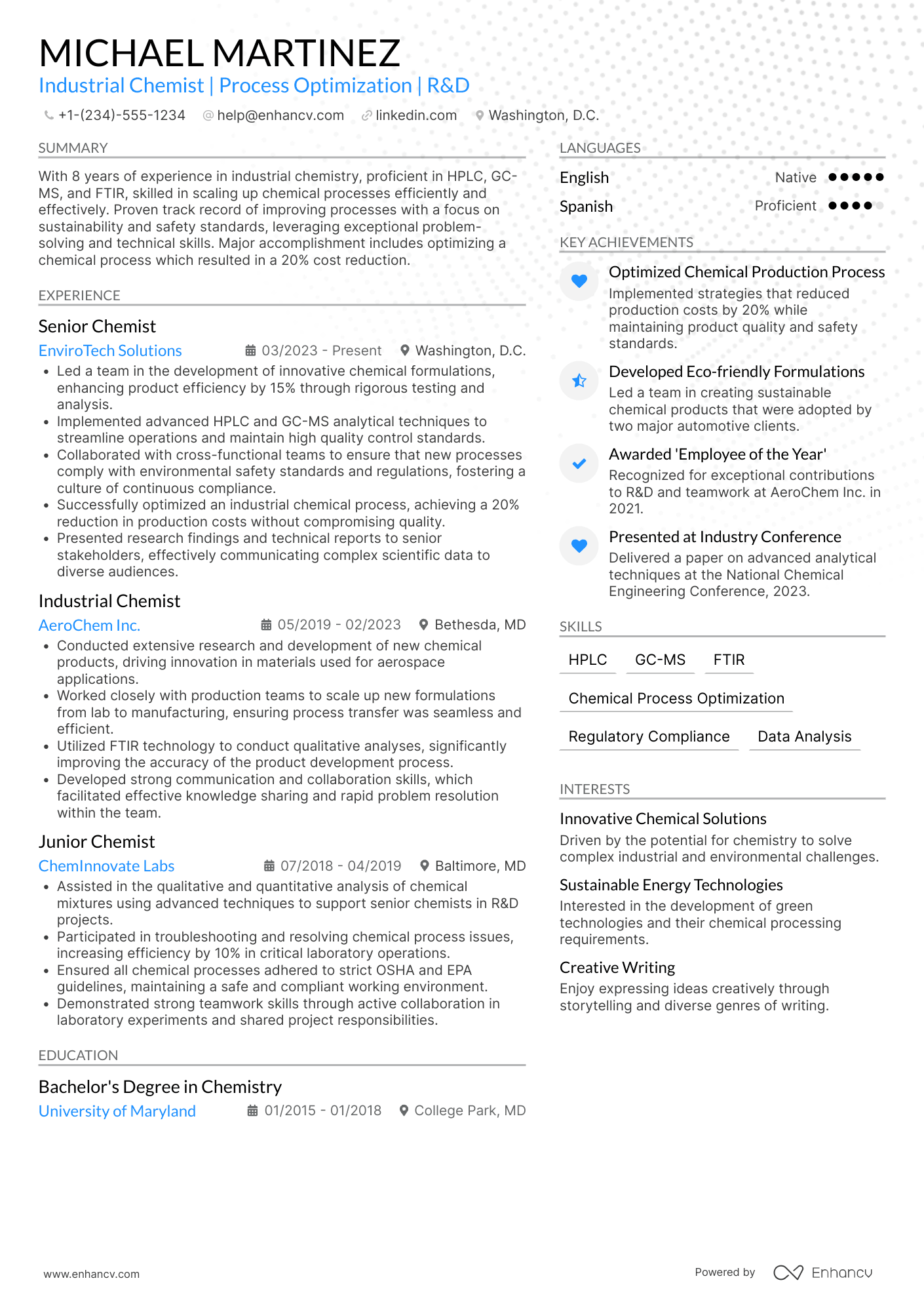
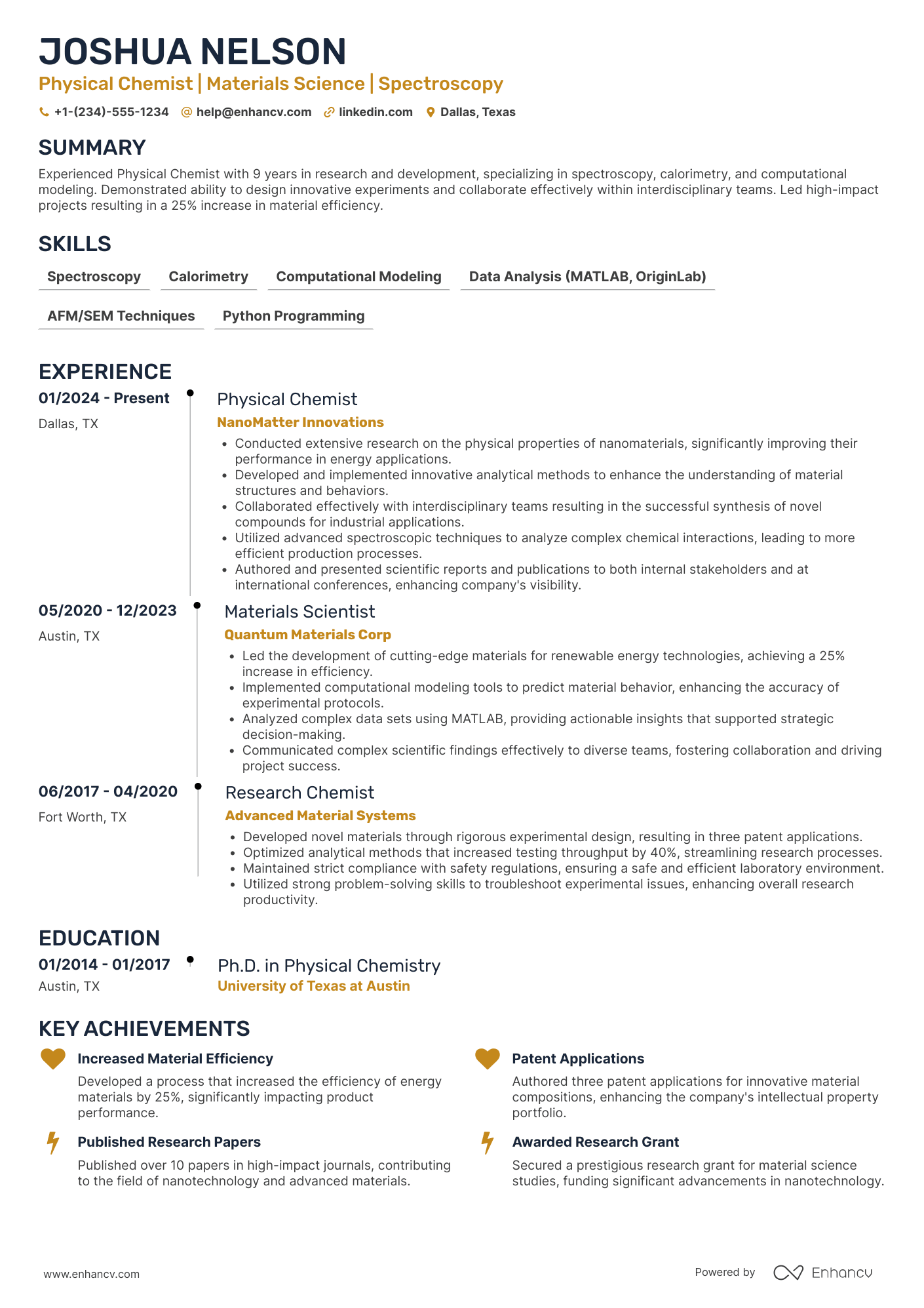
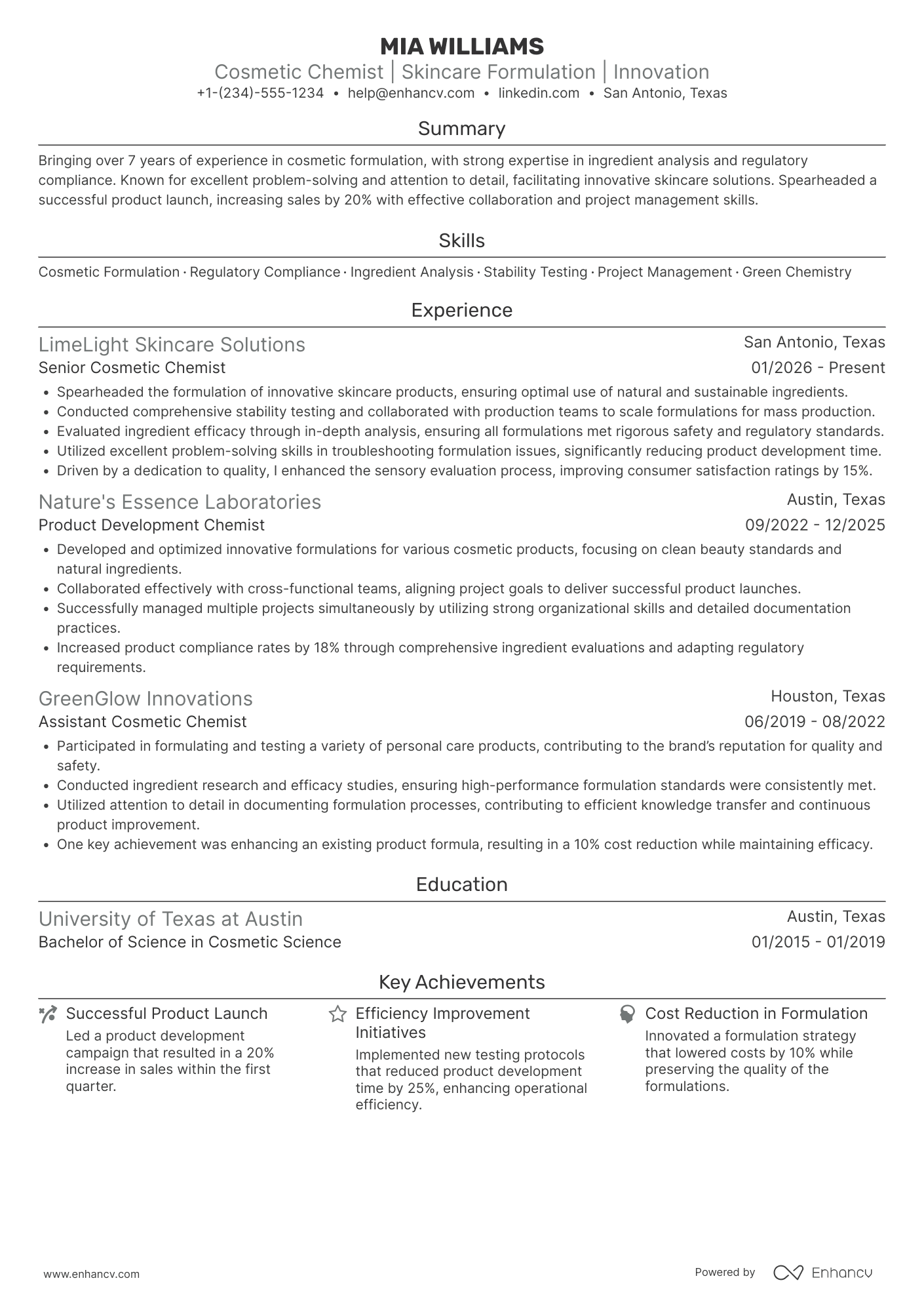
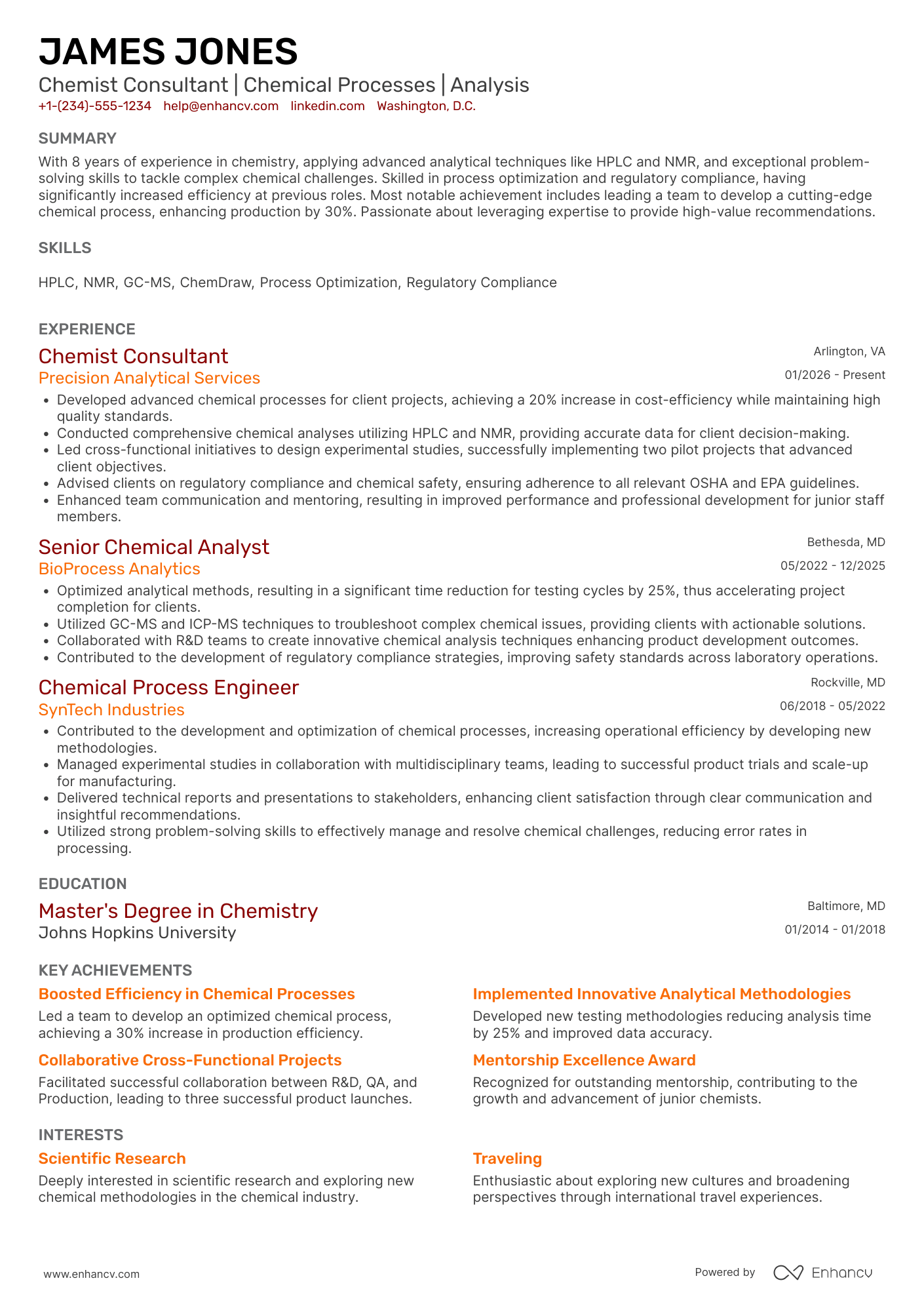
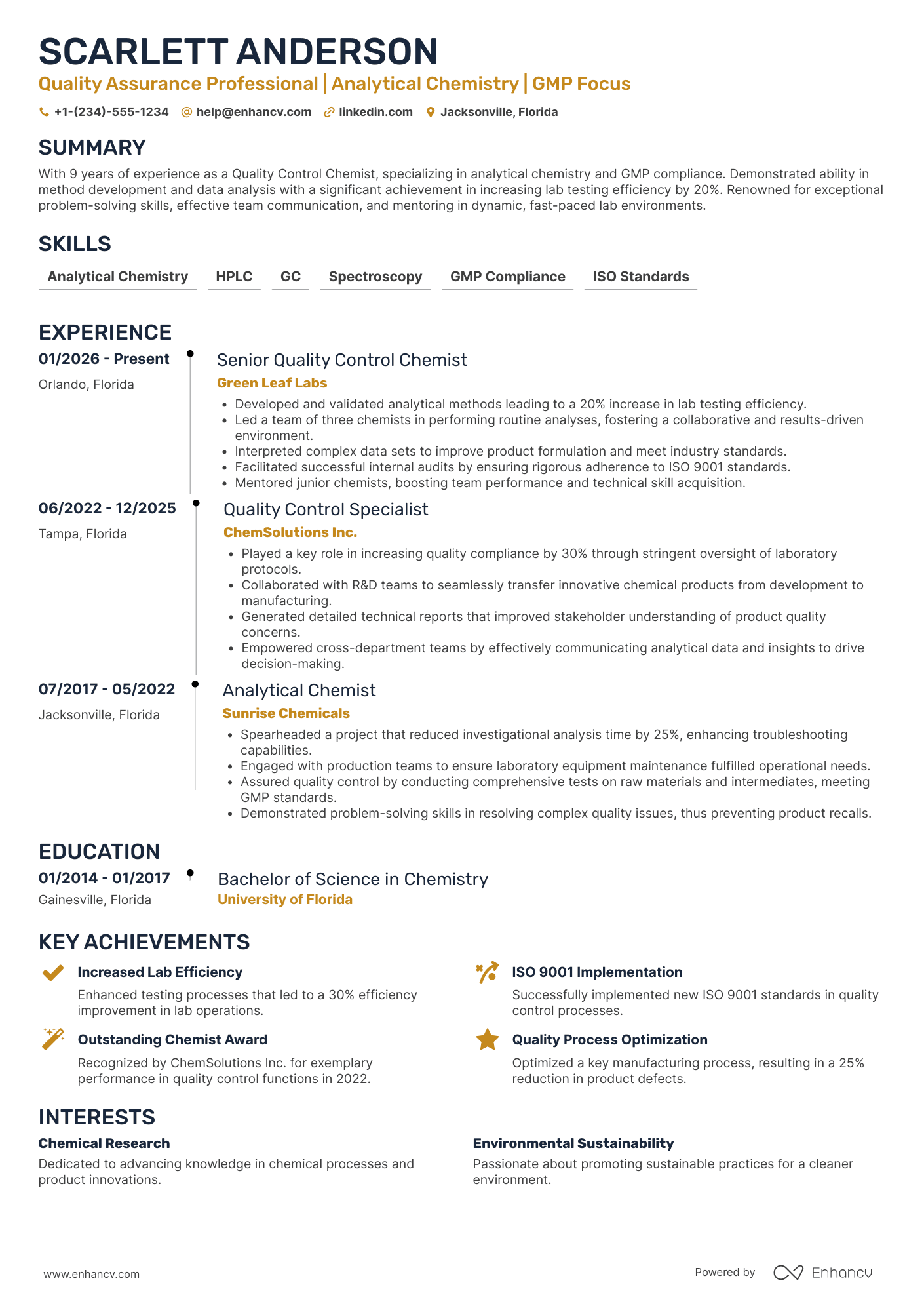
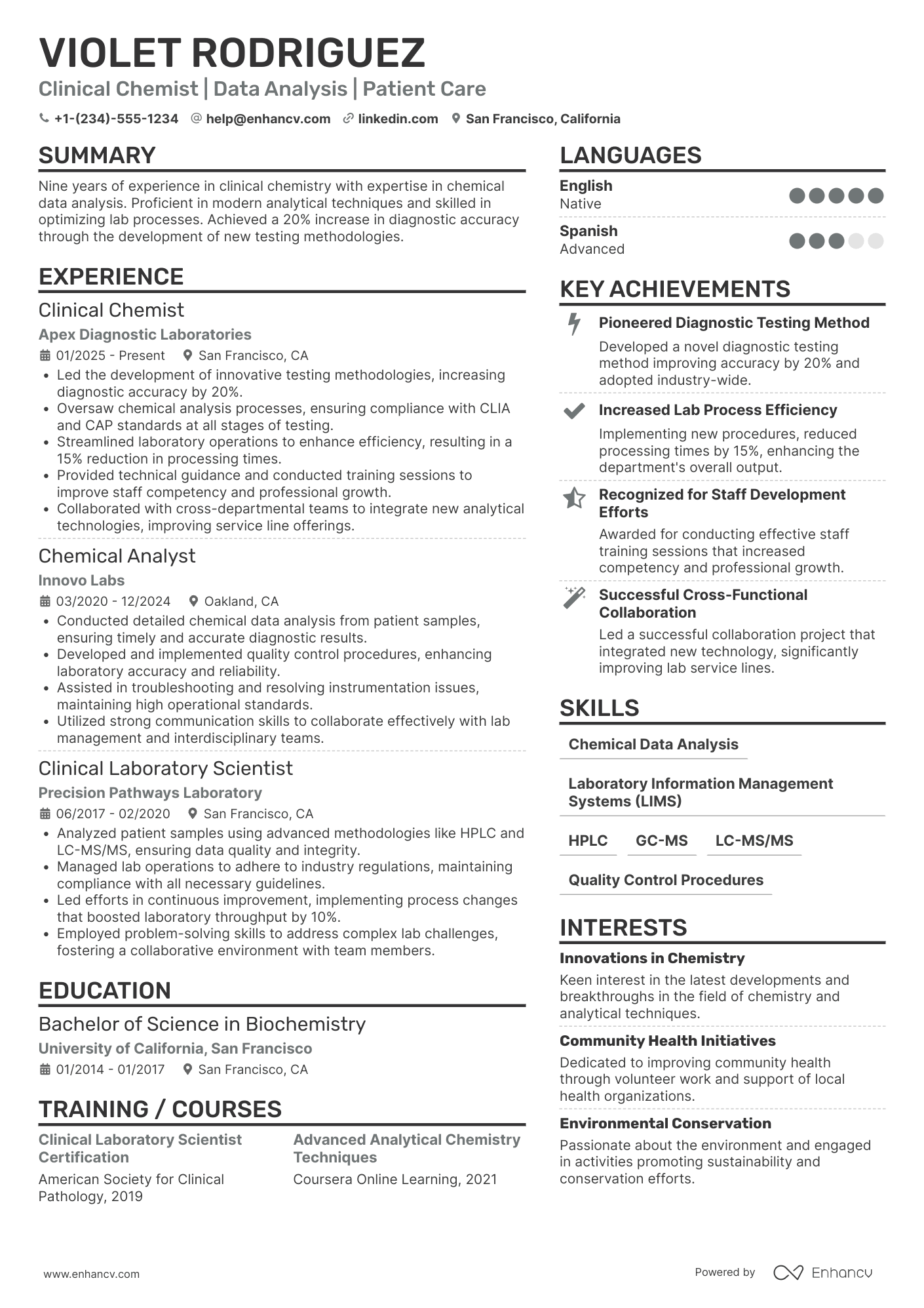
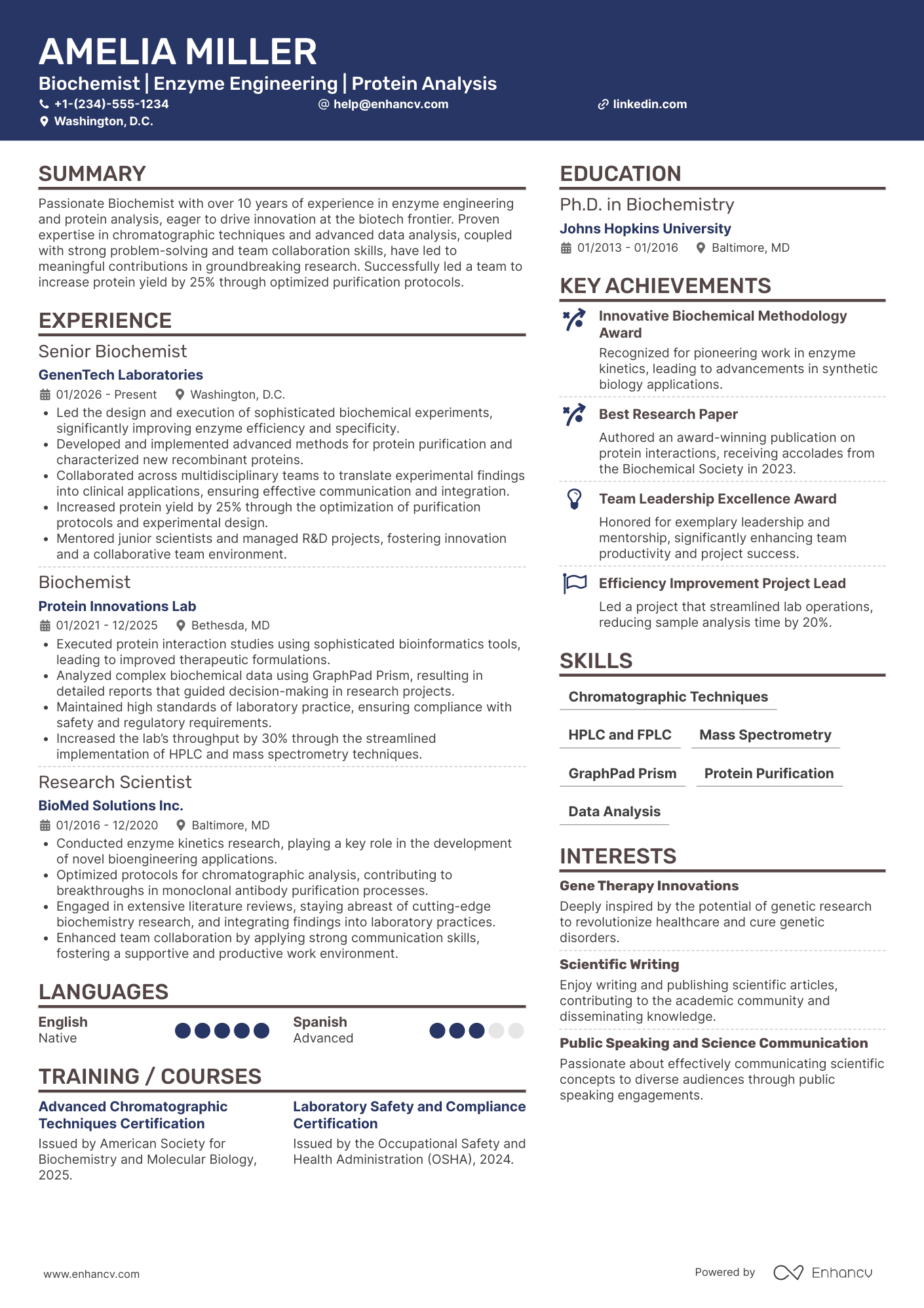
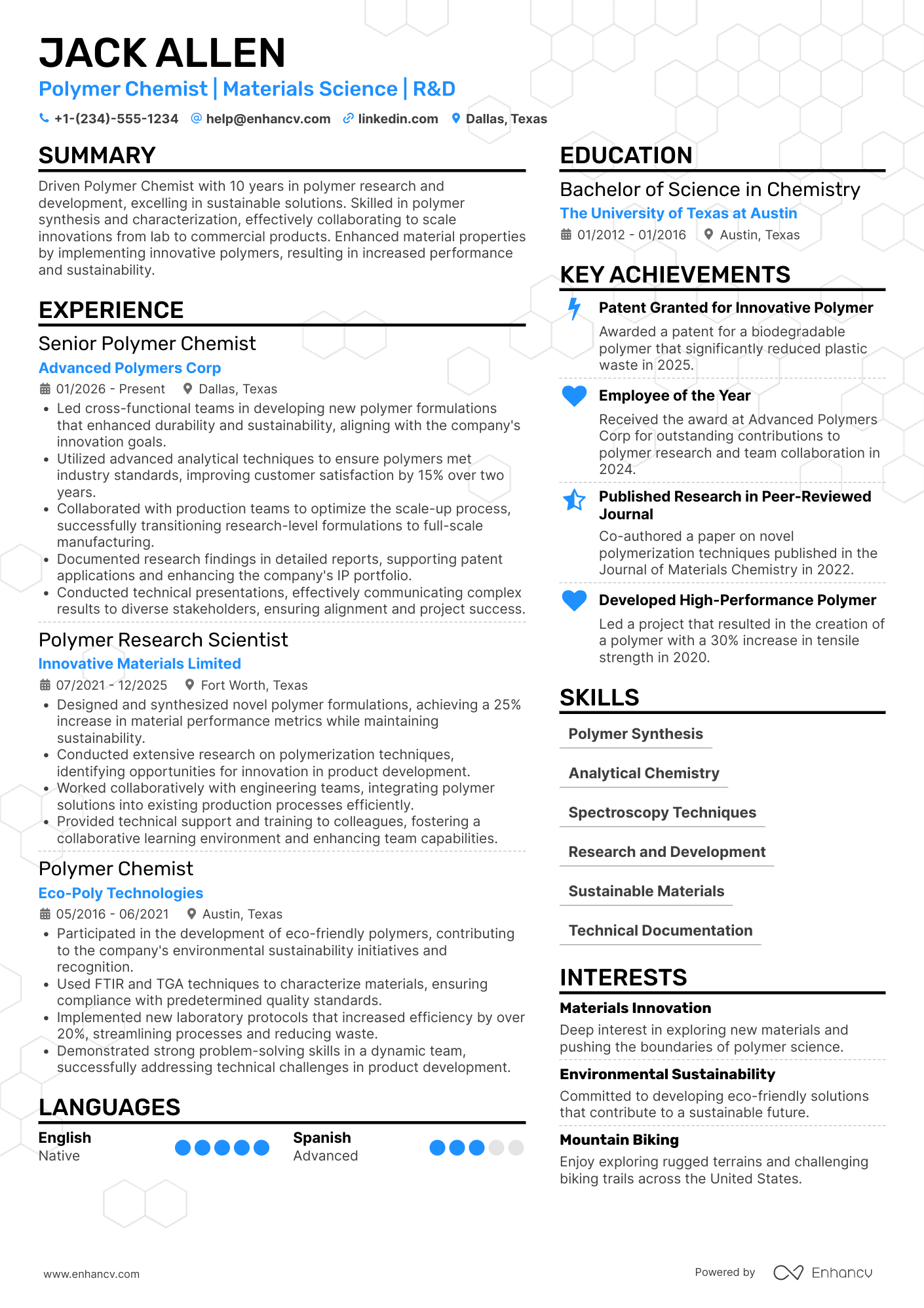
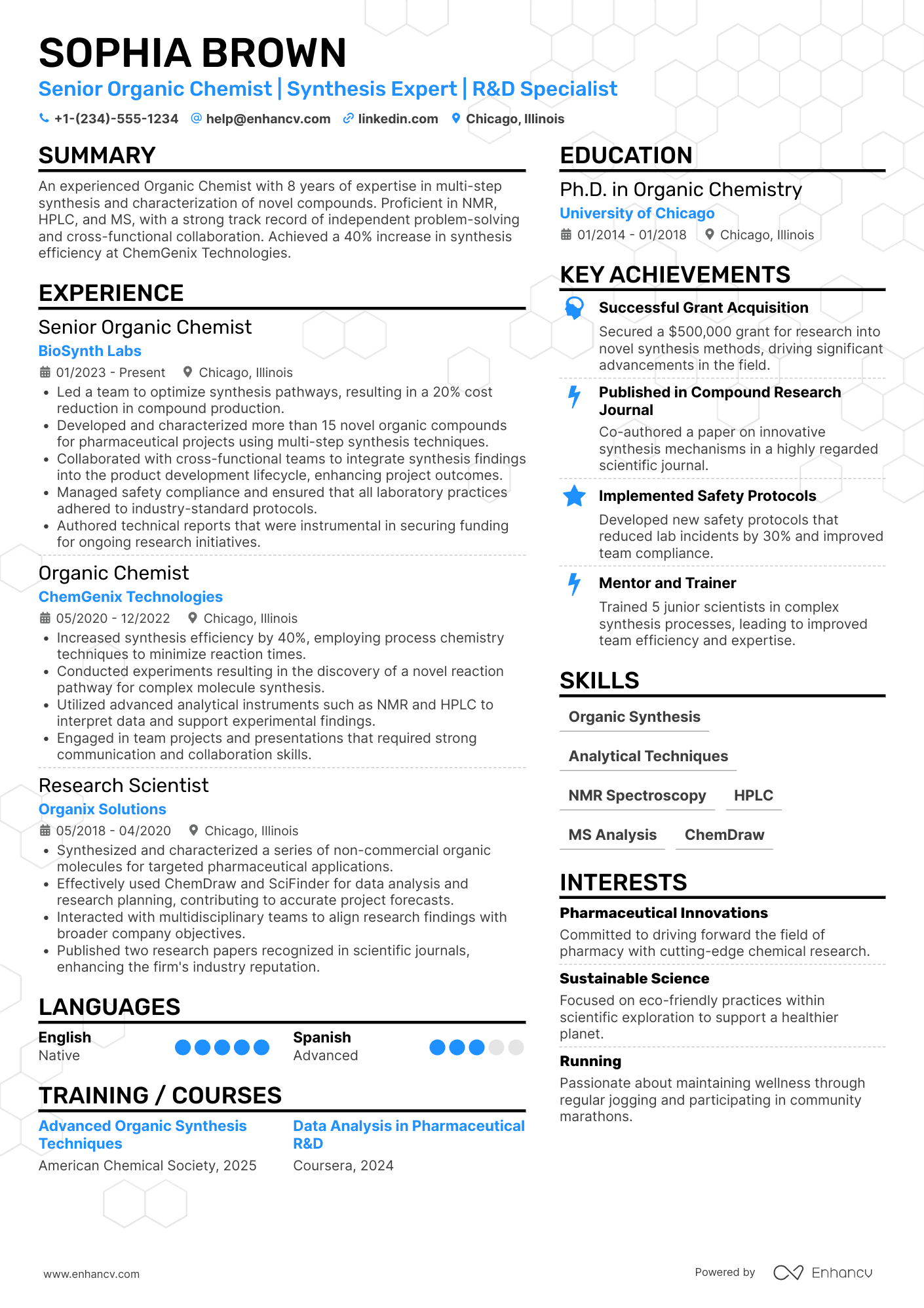
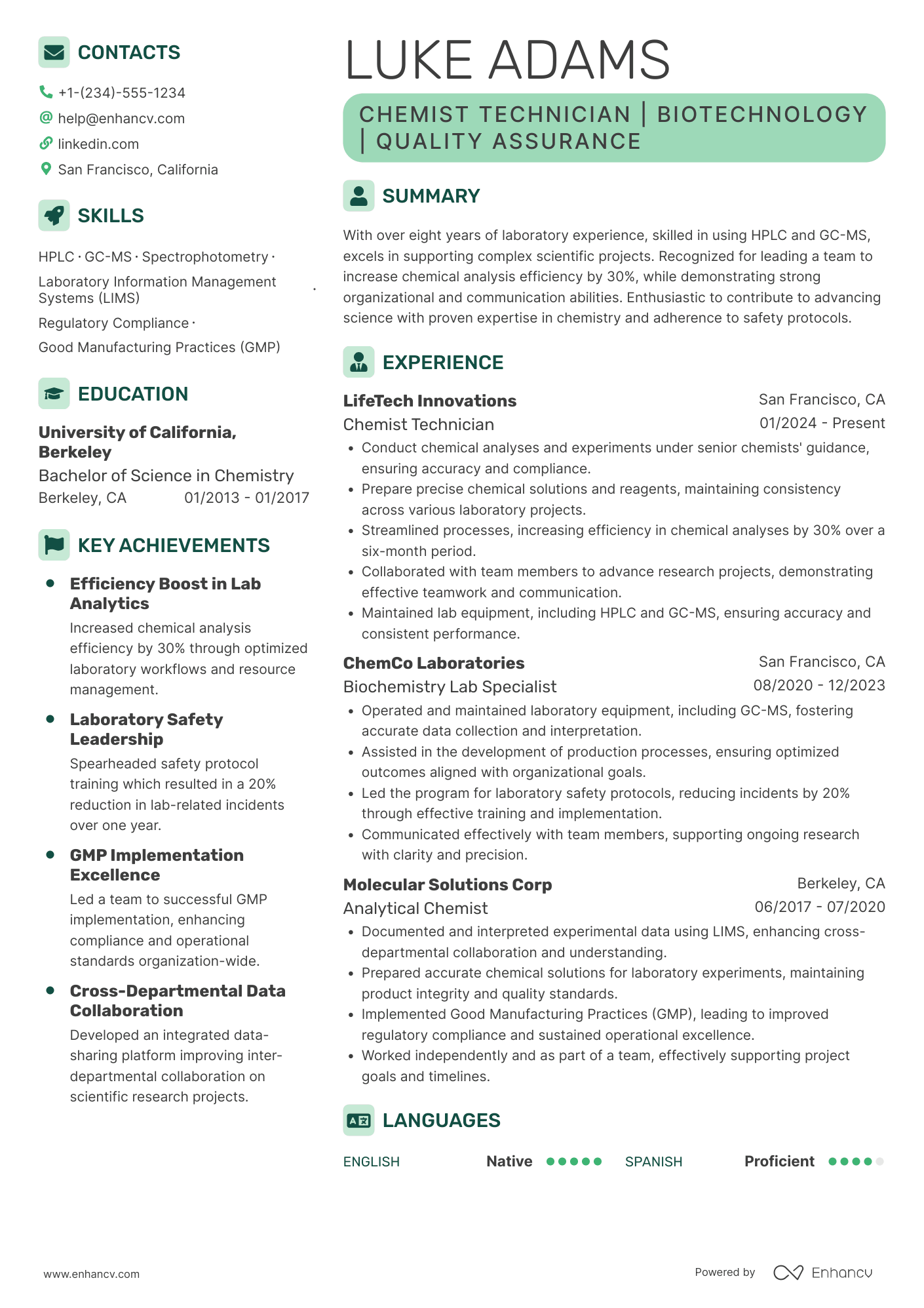
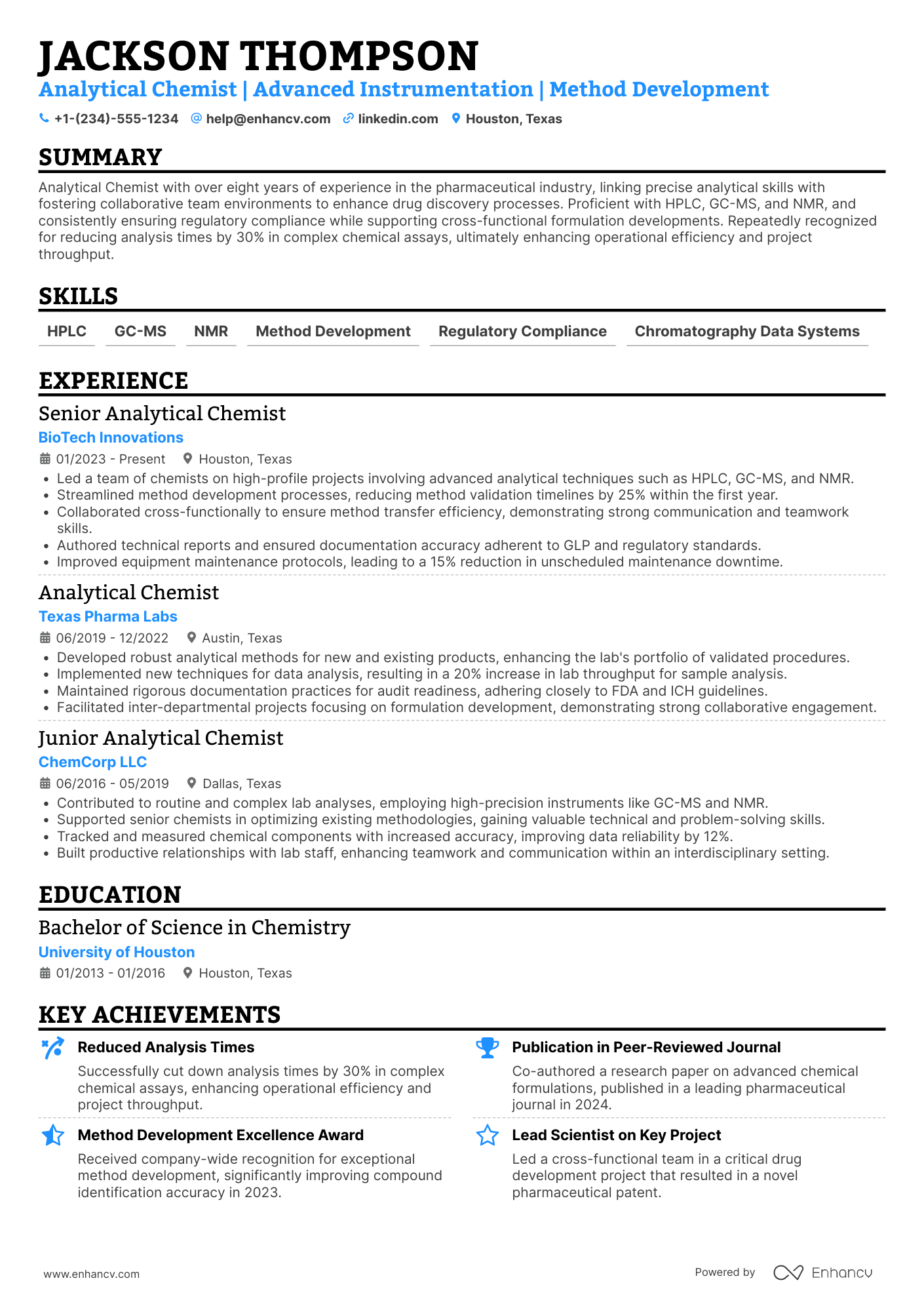
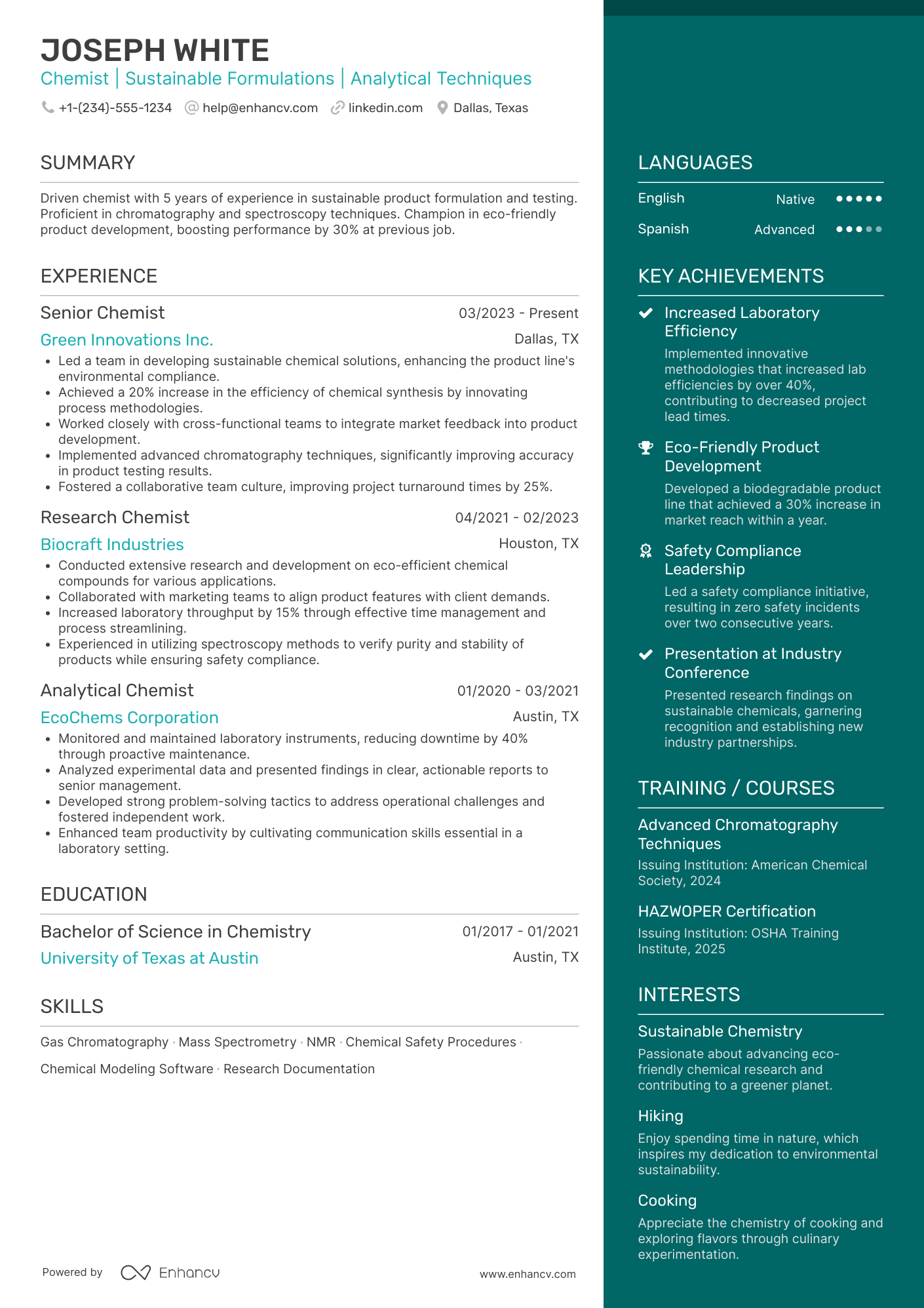
Chemist resume submissions often fail because they read like lab notebooks, burying outcomes under instrument lists and dense methods. That hurts when an ATS filters for fit and recruiters scan in seconds amid heavy competition.
When the resume is locked, our chemist cover letter examples walk through how to give a lab director the methodology context behind those yield and validation numbers.
A strong resume shows what you delivered, not just what you used. You should quantify yield gains, reduced batch failures, shortened method validation timelines, improved assay precision, supported regulatory submissions, and cut deviations through tighter controls.

Key takeaways
- Quantify lab outcomes like yield gains, cycle time, and cost savings in every experience bullet.
- Use reverse-chronological format for senior roles and hybrid format for career changers or juniors.
- Tailor instrument names, methods, and compliance standards to match each job posting's language.
- Anchor every listed skill to a specific result in your experience or project sections.
- Place certifications above education when they're recent or required for the target role.
- Write a three- to four-line summary featuring your specialty, core tools, and a measurable achievement.
- Use Enhancv to turn routine lab duties into focused, metric-driven resume bullets faster.
Job market snapshot for chemists
We analyzed 544 recent chemist job ads across major US job boards. These numbers help you understand top companies hiring, experience requirements, employment type trends at a glance.
What level of experience employers are looking for chemists
| Years of Experience | Percentage found in job ads |
|---|---|
| 1–2 years | 17.3% (94) |
| 3–4 years | 7.2% (39) |
| 5–6 years | 4.2% (23) |
| 7–8 years | 2.9% (16) |
| 9–10 years | 1.1% (6) |
| 10+ years | 2.9% (16) |
| Not specified | 62.3% (339) |
Chemist ads by area of specialization (industry)
| Industry (Area) | Percentage found in job ads |
|---|---|
| Finance & Banking | 50.0% (272) |
| Healthcare | 26.3% (143) |
| Government | 9.4% (51) |
| Manufacturing | 6.6% (36) |
| Retail & E-commerce | 3.7% (20) |
| Education | 2.4% (13) |
Top companies hiring chemists
| Company | Percentage found in job ads |
|---|---|
| Actalent | 20.8% (113) |
| Eurofins Scientific | 7.5% (41) |
| Clean Harbors, Inc. | 6.6% (36) |
| State of Florida | 3.7% (20) |
| Enviri Corporation | 1.8% (10) |
Role overview stats
These tables show the most common responsibilities and employment types for chemist roles. Use them to align your resume with what employers expect and to understand how the role is structured across the market.
Day-to-day activities and top responsibilities for a chemist
| Responsibility | Percentage found in job ads |
|---|---|
| Chemistry | 23.7% (129) |
| Hplc | 23.7% (129) |
| Gmp | 16.4% (89) |
| Quality control | 15.3% (83) |
| Gc | 13.1% (71) |
| Data analysis | 11.6% (63) |
| Analytical chemistry | 11.4% (62) |
| Ftir | 10.1% (55) |
| Microsoft office | 9.7% (53) |
| Icp | 8.8% (48) |
| Quality assurance | 8.8% (48) |
| Glp | 7.5% (41) |
How to format a chemist resume
Recruiters reviewing chemist resumes prioritize technical proficiency in analytical methods, laboratory instrumentation, and regulatory compliance, along with evidence of research contributions or process improvements. A clean, well-structured format ensures these signals surface quickly during both human review and applicant tracking system (ATS) parsing.

I have significant experience in this role—which format should I use?
Use a reverse-chronological format to present your laboratory and research experience in a clear, linear progression that highlights growing technical responsibility. Do:
- Lead with your most recent role and emphasize scope of work—team size, budget oversight, lab operations managed, or cross-functional collaboration with R&D and quality assurance departments.
- Feature role-specific instrumentation (HPLC, GC-MS, ICP-OES, FTIR), software (ChemDraw, LIMS, Empower), and regulatory frameworks (GLP, GMP, FDA, EPA) prominently within each position.
- Quantify outcomes tied to efficiency, accuracy, cost savings, or throughput improvements to demonstrate measurable business or research impact.
I'm junior or switching into this role—what format works best?
A hybrid format works best because it lets you lead with a targeted skills section while still providing a chronological work history that gives context to your qualifications. Do:
- Place a dedicated skills section near the top of your resume, grouping technical competencies by category—analytical techniques, instrumentation, software, and regulatory knowledge—so recruiters and ATS filters can identify relevant qualifications immediately.
- Include academic research projects, internships, co-ops, or capstone work as standalone entries, detailing your specific contributions and the methodologies you applied.
- Connect every listed skill or project to a concrete action and a measurable or observable result so hiring managers can assess your readiness for the role.
Why not use a functional resume?
A functional format strips away the timeline and context that hiring managers need to evaluate where, when, and how you applied your chemistry skills, making it harder to verify hands-on laboratory competence and weakening your candidacy against candidates with clearly documented experience. A functional format may be acceptable if you're transitioning into chemistry from a related scientific field, returning to the workforce after an extended gap, or have limited formal employment history—but only if you anchor every listed skill to a specific project, coursework, or research outcome rather than presenting skills in isolation.
With your format established, the next step is filling it with the right sections to showcase your qualifications effectively.
What sections should go on a chemist resume
Recruiters expect to quickly find your lab expertise, analytical methods, and results in a clean, easy-to-scan format.
Use this structure for maximum clarity:
- Header
- Summary
- Experience
- Skills
- Projects
- Education
- Certifications
- Optional sections: Publications, Awards, Research
Strong experience bullets should emphasize measurable impact, method ownership, instrument proficiency, compliance, and outcomes such as improved yield, reduced turnaround time, or validated results.
Is your resume good enough?
Drop your resume here or choose a file. PDF & DOCX only. Max 2MB file size.
Once you’ve organized your resume with the right components, the next step is to write your chemist experience section so it supports that structure with clear, relevant detail.
How to write your chemist resume experience
Your experience section should spotlight the experiments you've run, the analytical methods you've applied, and the measurable outcomes your work produced in the lab or field. Hiring managers prioritize demonstrated impact—improved formulations, validated compounds, optimized processes—over descriptive task lists that simply catalog daily duties.
Each entry should include:
- Job title
- Company and location (or remote)
- Dates of employment (month and year)
Three to five concise bullet points showing what you owned, how you executed, and what outcomes you delivered:
- Ownership scope: the formulations, assays, research projects, product lines, or laboratory operations you were directly accountable for as a chemist.
- Execution approach: the instrumentation, analytical techniques, synthesis methods, regulatory frameworks, or software platforms you used to design experiments, interpret data, and deliver reliable results.
- Value improved: changes to compound purity, reaction yield, turnaround time, method accuracy, safety compliance, or cost efficiency that resulted from your work.
- Collaboration context: how you partnered with cross-functional teams—quality assurance, regulatory affairs, manufacturing, procurement, or external research partners—to move projects from bench to scale.
- Impact delivered: outcomes framed as tangible results for the organization, such as successful product launches, validated methods, patent contributions, or process improvements, rather than routine activity descriptions.
Experience bullet formula
A chemist experience example
✅ Right example - modern, quantified, specific.
Senior Analytical Chemist
NovaPharm Biologics | Cambridge, MA
2021–Present
Contract development and manufacturing organization supporting late-stage biologics with high-throughput analytical testing in a regulated quality control environment.
- Developed and validated stability-indicating high-performance liquid chromatography and liquid chromatography-mass spectrometry methods (ICH Q2(R2)) for three monoclonal antibody programs, cutting method transfer time by 30% and reducing out-of-specification investigations by 18%.
- Led root cause analysis for recurring impurity spikes using design of experiments and multivariate analysis (JMP), improving batch release first-pass yield from 92% to 97% across eight consecutive lots.
- Implemented automated data workflows in Empower and a laboratory information management system (LIMS), reducing manual transcription errors by 60% and saving ten hours per week across the quality control team.
- Partnered with process engineers and manufacturing to troubleshoot upstream hold-time excursions using Fourier-transform infrared spectroscopy and size-exclusion chromatography, lowering deviation rate by 22% and preventing an estimated $450K in scrap.
- Authored and reviewed 25+ controlled documents (standard operating procedures, protocols, and validation reports) and supported three regulatory audits with zero major findings by strengthening traceability, system suitability, and audit trail review practices.
Now that you've seen how a strong chemist experience section comes together, let's look at how to adapt yours based on the specific role you're targeting.
How to tailor your chemist resume experience
Recruiters evaluate your chemist resume through both human review and applicant tracking systems, so alignment with the job posting matters. Tailoring your experience section ensures the right skills, methods, and accomplishments stand out immediately.
Ways to tailor your chemist experience:
- Match analytical instruments and software named in the job description.
- Mirror the exact terminology used for laboratory techniques or methods.
- Reflect compliance standards like GLP or ISO the employer references.
- Highlight domain experience in the specific industry or research area.
- Emphasize quality control or assurance responsibilities when listed as priorities.
- Align your metrics with the KPIs or outcomes the posting describes.
- Include cross-functional collaboration models or team structures they mention.
- Reference workflows or documentation systems specified in the posting.
Tailoring means connecting your real accomplishments to what the employer asks for, not forcing keywords where they don't belong.
Resume tailoring examples for chemist
| Job description excerpt | Untailored | Tailored |
|---|---|---|
| Perform method development and validation for pharmaceutical compounds using HPLC and GC-MS per FDA guidelines | Assisted with laboratory testing and helped maintain quality standards for various projects. | Developed and validated 12 analytical methods for pharmaceutical compounds using HPLC and GC-MS, ensuring full compliance with FDA 21 CFR Part 211 guidelines. |
| Synthesize and characterize novel organic compounds for agrochemical R&D, documenting results in electronic lab notebooks (ELN) | Conducted chemistry experiments and recorded findings in the lab as part of the research team. | Synthesized and characterized 30+ novel organic compounds for agrochemical applications, documenting all reaction conditions, yields, and spectral data in IDBS E-WorkBook ELN. |
| Troubleshoot formulation stability issues for consumer products using DSC, rheology, and accelerated aging studies | Helped solve product issues and worked with the team to improve formulations when problems came up. | Diagnosed root causes of emulsion instability in three consumer product lines using DSC thermal analysis and rheological profiling, reducing accelerated aging failure rates by 40%. |
Once you’ve aligned your experience with the role’s priorities, the next step is to quantify your chemist achievements so employers can see the measurable impact of that work.
How to quantify your chemist achievements
Quantifying your work proves scientific impact beyond tasks. Focus on assay performance, data quality, throughput, compliance, and cost. Use numbers from validation reports, batch records, stability studies, and instrument logs.
Quantifying examples for chemist
| Metric | Example |
|---|---|
| Method performance | "Improved HPLC method runtime from 18 to 12 minutes by optimizing gradient and column temperature, increasing sample throughput by 50% without losing resolution." |
| Data quality | "Reduced out-of-specification investigations by 35% by tightening sample prep controls and adding system suitability checks in Empower for every sequence." |
| Cost savings | "Cut solvent spend by $28,000 annually by switching to microflow LC for stability assays and reducing acetonitrile use by 22% per batch." |
| Compliance risk | "Closed 12 audit observations in eight weeks by rewriting human resources (HR) training-aligned standard operating procedures and adding deviation trending in TrackWise." |
| Delivery speed | "Delivered five formulation prototypes two weeks early by running parallel DOE in JMP and coordinating daily handoffs with analytical and process teams." |
Turn vague job duties into measurable, recruiter-ready resume bullets in seconds with Enhancv's Bullet Point Generator.
Once you've crafted strong bullet points for your experience section, the next step is ensuring your resume also highlights the right hard and soft skills employers look for in a chemist.
How to list your hard and soft skills on a chemist resume
Skills show you can run experiments, generate defensible data, and operate safely—recruiters scan them to confirm fit fast, and an ATS (applicant tracking system) matches keywords—so aim for a balanced mix of hard skills and job-specific soft skills. chemist roles require a blend of:
- Product strategy and discovery skills.
- Data, analytics, and experimentation skills.
- Delivery, execution, and go-to-market discipline.
- Soft skills.
Your skills section should be:
- Scannable (bullet-style grouping).
- Relevant to the job post.
- Backed by proof in experience bullets.
- Updated with current tools.
Place your skills section:
- Above experience if you're junior or switching careers.
- Below experience if you're mid/senior with strong achievements.

Hard skills
- High-performance liquid chromatography
- Gas chromatography, mass spectrometry
- Nuclear magnetic resonance spectroscopy
- Fourier-transform infrared spectroscopy
- Ultraviolet-visible spectroscopy
- Titration, pH, conductivity methods
- Sample preparation, extraction, filtration
- Method development and validation
- Good laboratory practice, documentation
- Chemical safety, hazard assessment
- Laboratory information management system (LIMS)
- Statistical analysis, Design of Experiments
Soft skills
- Write clear technical reports
- Present results to stakeholders
- Translate requirements into test plans
- Troubleshoot instruments under pressure
- Prioritize experiments by impact
- Maintain rigorous lab notebook habits
- Collaborate across quality and manufacturing
- Challenge assumptions with data
- Make go or no-go decisions
- Own deviations and corrective actions
- Communicate risks and timelines early
- Mentor and train new lab staff
How to show your chemist skills in context
Skills shouldn't live only in a bulleted list on your resume.
They should be demonstrated in:
- Your summary (high-level professional identity)
- Your experience (proof through outcomes)
Here's how that looks in practice.
Summary example
Senior analytical chemist with 12 years in pharmaceutical quality control. Skilled in HPLC, GC-MS, and method validation. Led a cross-functional team that reduced out-of-spec results by 34%, accelerating batch release timelines across three production sites.
- Reflects senior-level expertise immediately
- Names industry-standard analytical tools
- Quantifies a meaningful quality outcome
- Highlights cross-functional leadership ability
Experience example
Senior Analytical Chemist
Vantage Biopharma | Cambridge, MA
June 2018–Present
- Developed and validated 15 HPLC methods for active pharmaceutical ingredients, cutting average method transfer time by 22%.
- Partnered with formulation scientists to troubleshoot stability failures, resolving 96% of investigations within target timelines.
- Implemented a revised SOP framework using LIMS, reducing documentation errors across the QC lab by 40%.
- Every bullet includes a measurable result.
- Skills surface naturally through real accomplishments.
Once you’ve tied your chemistry strengths to specific lab tasks and outcomes, the next step is learning how to write a chemist resume with no experience so you can present those same strengths without a work history.
How do I write a chemist resume with no experience
How do I write a chemist resume with no experience?
Even without full-time experience, you can demonstrate readiness through:
- Undergraduate research lab projects
- Course-based analytical chemistry labs
- Instrument training logs and checklists
- Quality control lab simulations
- Teaching assistant lab supervision
- Poster presentations and abstracts
- Safety training and incident reports
Focus on:
- Analytical methods and instrumentation used
- Documented results, yields, and accuracy
- Safety, compliance, and clean records
- Data analysis and reporting outputs
Resume format tip for entry-level chemist
Use a hybrid resume format because it highlights lab skills and projects first, while still showing education and any work history clearly. Do:
- Put a “Projects” section above experience.
- List instruments, methods, and software used.
- Quantify results: yield, error, throughput.
- Add safety training with dates completed.
- Tailor keywords to each job posting.
- Conducted HPLC assay development in analytical chemistry lab, optimized mobile phase to reduce run time 20% while meeting ±2% precision across five replicates.
Even without professional experience, your academic background can serve as the foundation of your resume—so presenting your education effectively is essential.
How to list your education on a chemist resume
Your education section lets hiring teams confirm you hold the scientific foundation a chemist needs. It validates core training in chemistry, lab methods, and analytical thinking.
Include:
- Degree name
- Institution
- Location
- Graduation year
- Relevant coursework (for juniors or entry-level candidates)
- Honors & GPA (if 3.5 or higher)
Skip month and day details—list the graduation year only.
Here's a strong education entry tailored for a chemist resume:
Example education entry
Bachelor of Science in Chemistry
University of Wisconsin–Madison, Madison, WI
Graduated 2021
GPA: 3.7/4.0
- Relevant Coursework: Organic Chemistry, Analytical Chemistry, Instrumental Analysis, Physical Chemistry, Chemical Thermodynamics
- Honors: Magna Cum Laude, Dean's List (six semesters)
How to list your certifications on a chemist resume
Certifications show a chemist’s commitment to learning, proficiency with lab tools and methods, and alignment with regulated, industry-standard practices.
Include:
- Certificate name
- Issuing organization
- Year
- Optional: credential ID or URL
- Place certifications below education when education is recent and certifications are older or less relevant to the chemist role.
- Place certifications above education when certifications are recent, highly relevant, or required for the chemist job you’re targeting.
Best certifications for your chemist resume
- Certified Chemical Technician (CCT)
- Certified Hazardous Materials Manager (CHMM)
- OSHA 30-Hour General Industry
- HAZWOPER 40-Hour
- Lean Six Sigma Green Belt
- ASQ Certified Quality Improvement Associate (CQIA)
- ISO 17025 Internal Auditor
Once you’ve included your credentials in a clear, easy-to-scan format, shift to writing your chemist resume summary so employers see their relevance at a glance.
How to write your chemist resume summary
Your resume summary is the first thing a recruiter reads. A strong one immediately signals you have the right skills and experience for a chemist role.
Keep it to three to four lines, with:
- Your title and relevant years of experience in chemistry.
- The domain or industry you specialize in, such as pharmaceuticals or materials science.
- Core tools and techniques like HPLC, GC-MS, spectroscopy, or wet chemistry methods.
- One or two quantified achievements that demonstrate your impact.
- Soft skills tied to real outcomes, such as collaboration that shortened project timelines.

PRO TIP
At the entry level, emphasize technical skills, lab proficiency, and early contributions. Highlight relevant coursework or internships if professional experience is limited. Avoid vague traits like "passionate" or "motivated self-starter." Instead, show what you did and what resulted from it.
Example summary for a chemist
Detail-oriented chemist with one year of analytical lab experience. Skilled in HPLC and GC-MS method development. Reduced sample processing time by 15% through improved extraction protocols during a pharmaceutical internship.
Optimize your resume summary and objective for ATS
Drop your resume here or choose a file.
PDF & DOCX only. Max 2MB file size.
Now that your summary captures your professional strengths, make sure the header above it presents your contact details correctly so recruiters can actually reach you.
What to include in a chemist resume header
A resume header lists your key contact and professional details, helping chemist candidates stay visible, credible, and easy to screen in recruiter searches.
Essential resume header elements
- Full name
- Tailored job title and headline
- Location
- Phone number
- Professional email
- GitHub link
- Portfolio link
Including a LinkedIn link helps recruiters verify experience quickly and supports screening.
Don’t include a photo on a chemist resume unless the role is explicitly front-facing or appearance-dependent.
Use the same name and job title across your resume, LinkedIn, and publications to improve match accuracy in recruiter searches.
Example
Chemist resume header
Jordan Lee
Analytical Chemist | HPLC, GC-MS, Method Validation
Boston, MA
(617) 555-12XX
your.name@enhancv.com github.com/yourname yourwebsite.com linkedin.com/in/yourname
Once your contact details and professional identifiers are set, the next step is to add additional sections for chemist resumes to round out the information recruiters need.
Additional sections for chemist resumes
Adding extra sections strengthens your resume when they highlight specialized qualifications that set you apart from other chemists.
- Languages
- Publications and research papers
- Professional affiliations (e.g., American Chemical Society)
- Certifications and licenses
- Conference presentations
- Patents
- Hobbies and interests
Once you've strengthened your resume with relevant additional sections, the next step is pairing it with a cover letter that gives your application even more impact.
Do chemist resumes need a cover letter
A cover letter isn’t required for most chemist roles, but it helps when the role is competitive or the employer expects one. It can make a difference when your resume needs context, or when you need to show clear fit.
Use a cover letter to add details your resume can’t:
- Explain role and team fit: Connect your analytical strengths to the lab’s methods, instruments, documentation standards, and cross-functional partners.
- Highlight one or two relevant projects or outcomes: Name the technique used, the result achieved, and the impact on quality, yield, turnaround time, or cost.
- Show understanding of the product and business context: Reference the product type, users, regulatory needs, and how your work supports reliability, safety, or scale-up.
- Address career transitions or non-obvious experience: Translate adjacent work into chemist tasks, and explain any gaps, relocations, or changes in specialty.
Drop your resume here or choose a file.
PDF & DOCX only. Max 2MB file size.
Once you’ve decided whether an additional letter adds value to your application, you can use AI to improve your chemist resume by strengthening the content that hiring teams and HR prioritize.
Using AI to improve your chemist resume
AI can sharpen your resume's clarity, structure, and overall impact. It's useful for refining language and highlighting measurable results. But overuse can strip away authenticity. Once your content reads clearly and aligns with your target role, step away from AI.
Here are 10 practical prompts you can copy and paste to strengthen specific sections of your chemist resume:
- Strengthen summary focus: "Rewrite my chemist resume summary to highlight my strongest analytical skills and most relevant industry experience in three concise sentences."
- Quantify experience bullets: "Add specific metrics and measurable outcomes to these chemist experience bullets without inventing any data I haven't provided."
- Improve skills relevance: "Review my chemist skills section and remove generic entries, keeping only those directly relevant to this job description."
- Clarify project descriptions: "Simplify these chemist research project descriptions so each one clearly states the goal, method, and result."
- Tighten certification details: "Reformat my chemist certifications section to consistently list credential name, issuing body, and date earned."
- Align education section: "Reorganize my chemist education section to emphasize coursework and thesis work most relevant to this role."
- Eliminate passive voice: "Rewrite these chemist experience bullets using strong action verbs and active voice throughout."
- Reduce redundancy: "Identify and remove repeated or overlapping information across all sections of my chemist resume."
- Tailor to job posting: "Compare my chemist resume against this job description and suggest specific wording changes to improve alignment."
- Sharpen lab techniques: "Refine my chemist skills list to prioritize instrumentation and lab techniques mentioned in this posting."
Stop using AI once your resume sounds accurate, specific, and aligned with real experience. AI should never invent experience or inflate claims—if it didn't happen, it doesn't belong here.
Conclusion
A strong chemist resume highlights measurable outcomes, role-specific skills, and a clear structure. It shows how you improved yield, reduced impurities, shortened cycle time, or strengthened compliance, with numbers that hiring teams can trust.
Keep each section easy to scan and focused on the chemist work you do best. With clear results, relevant technical strengths, and organized content, you’ll show you’re ready for today’s market and near-future needs.