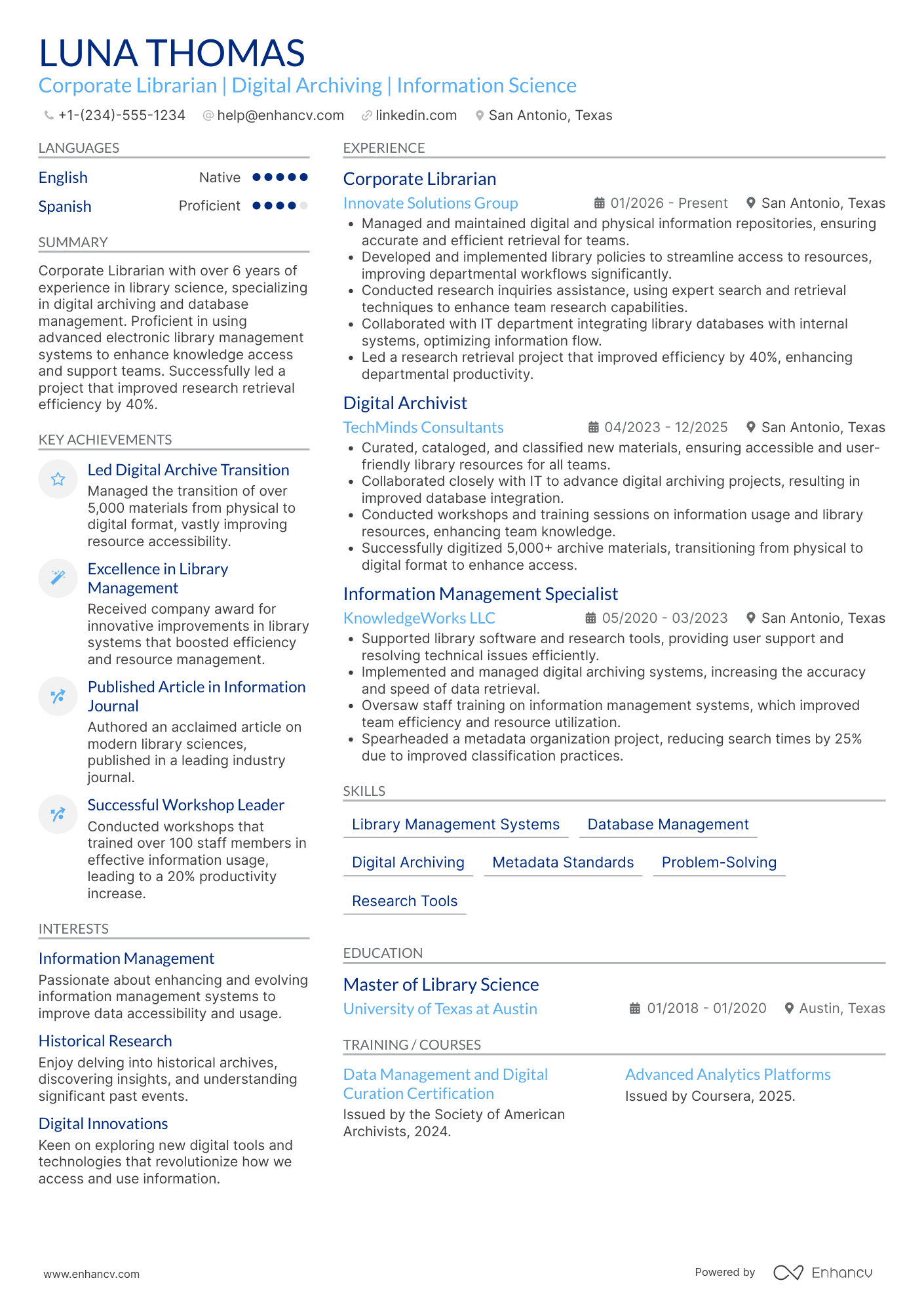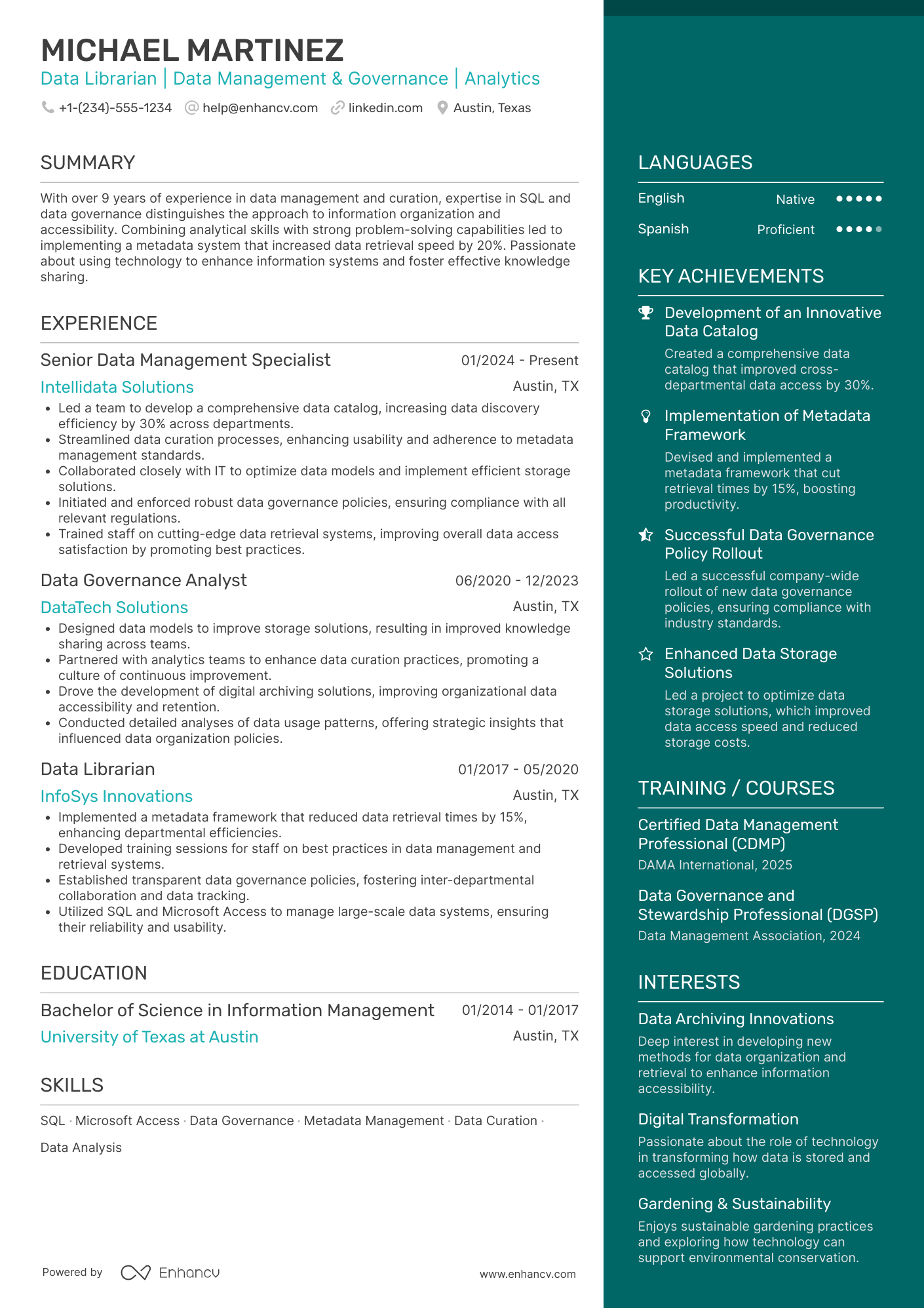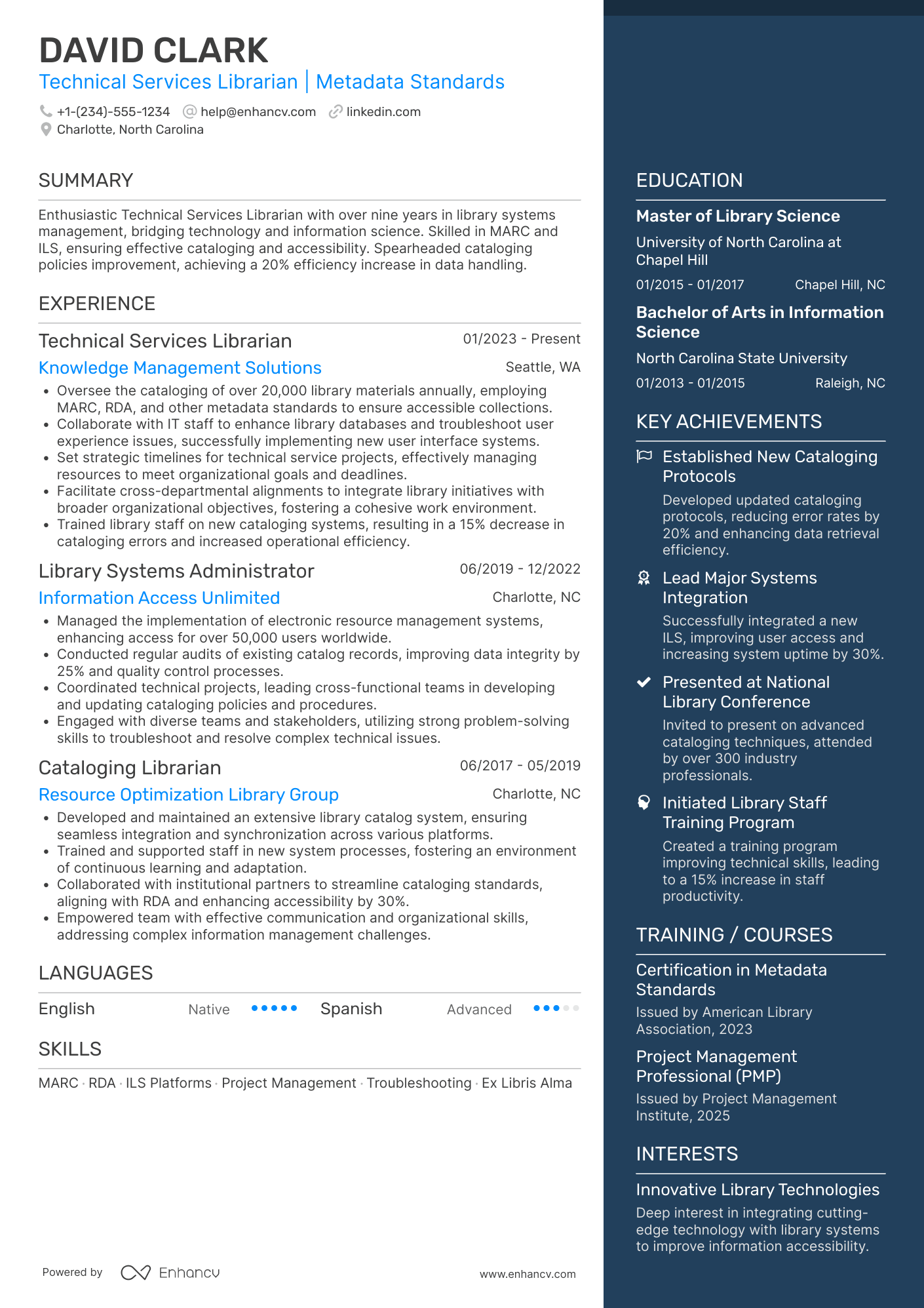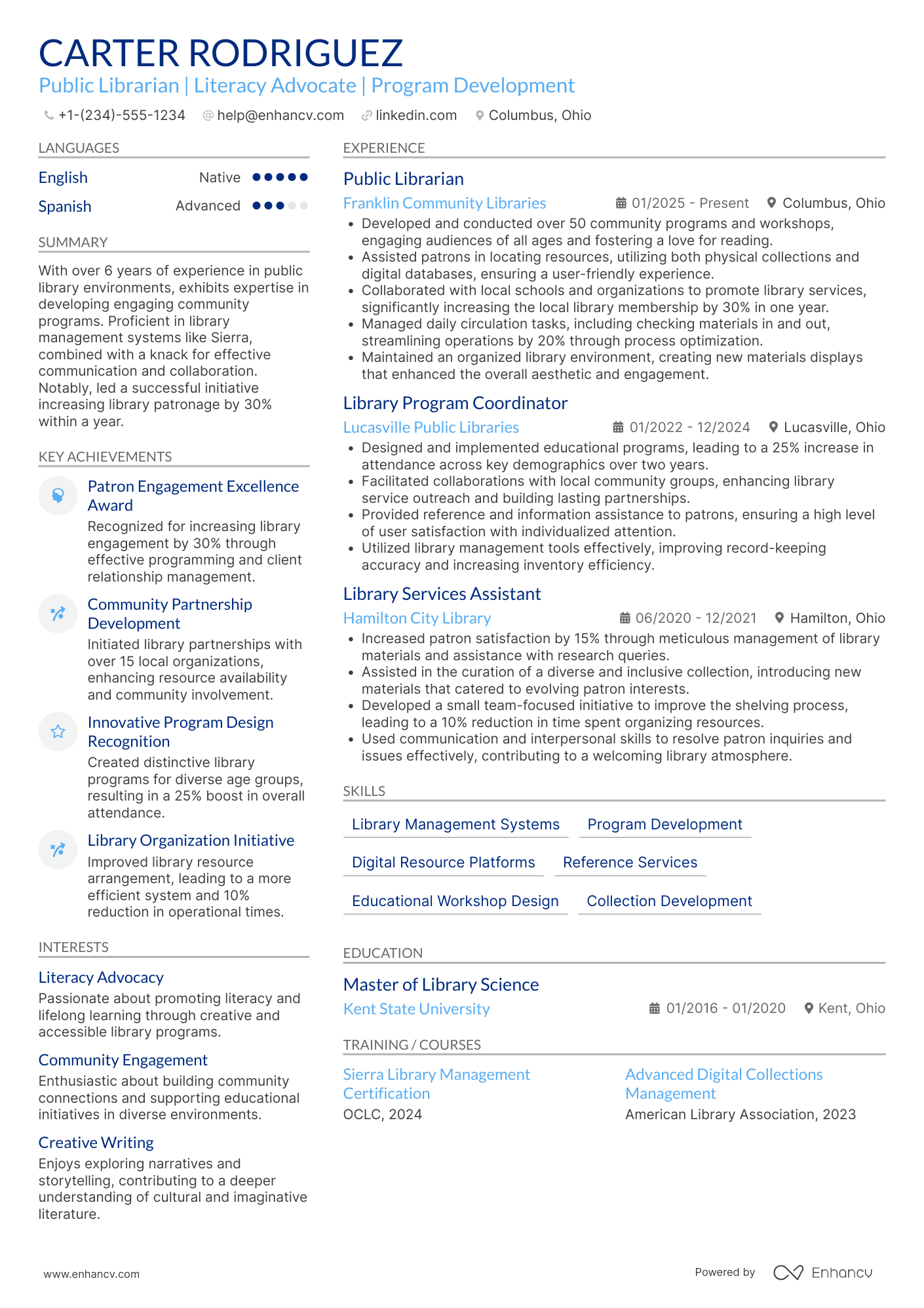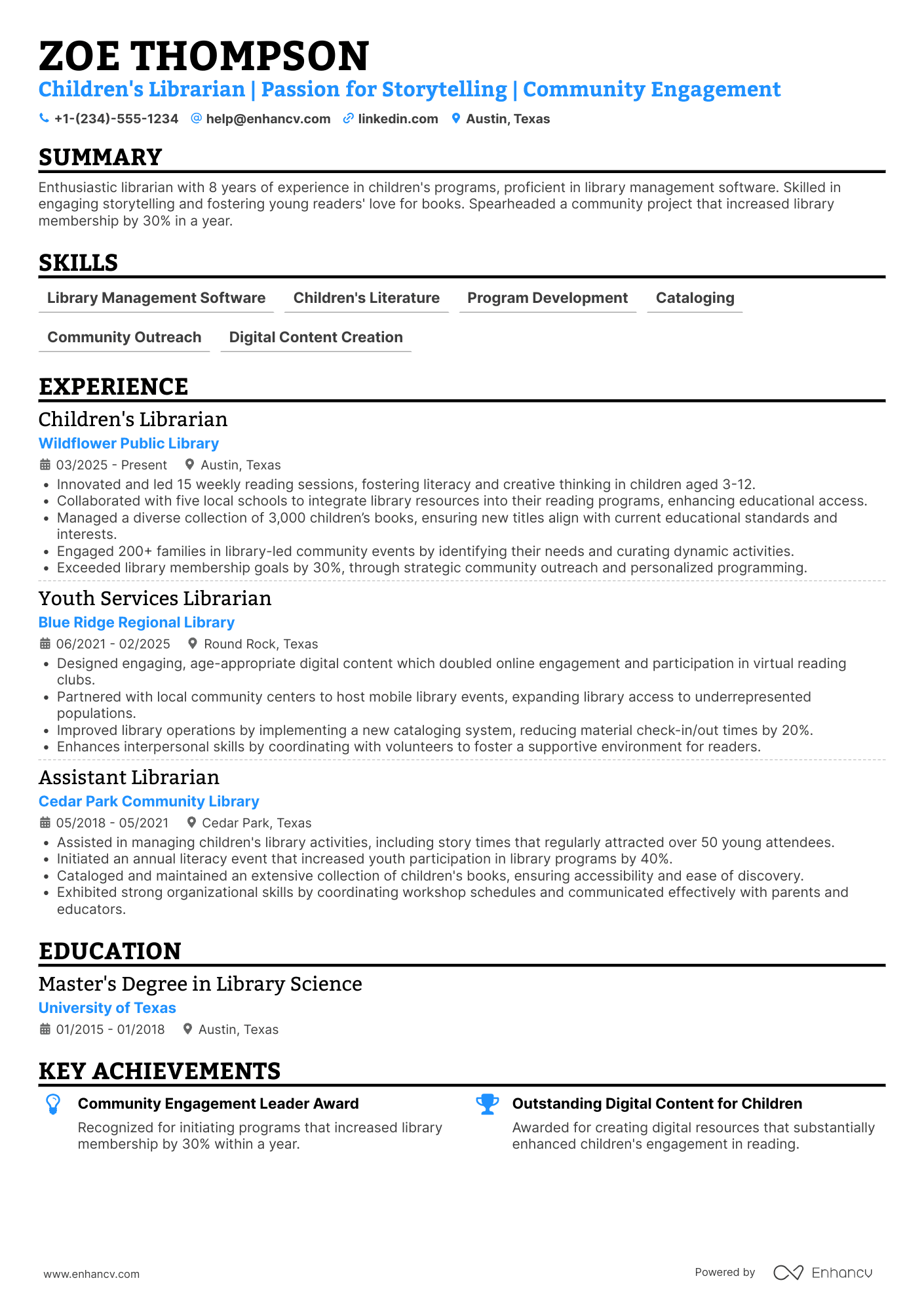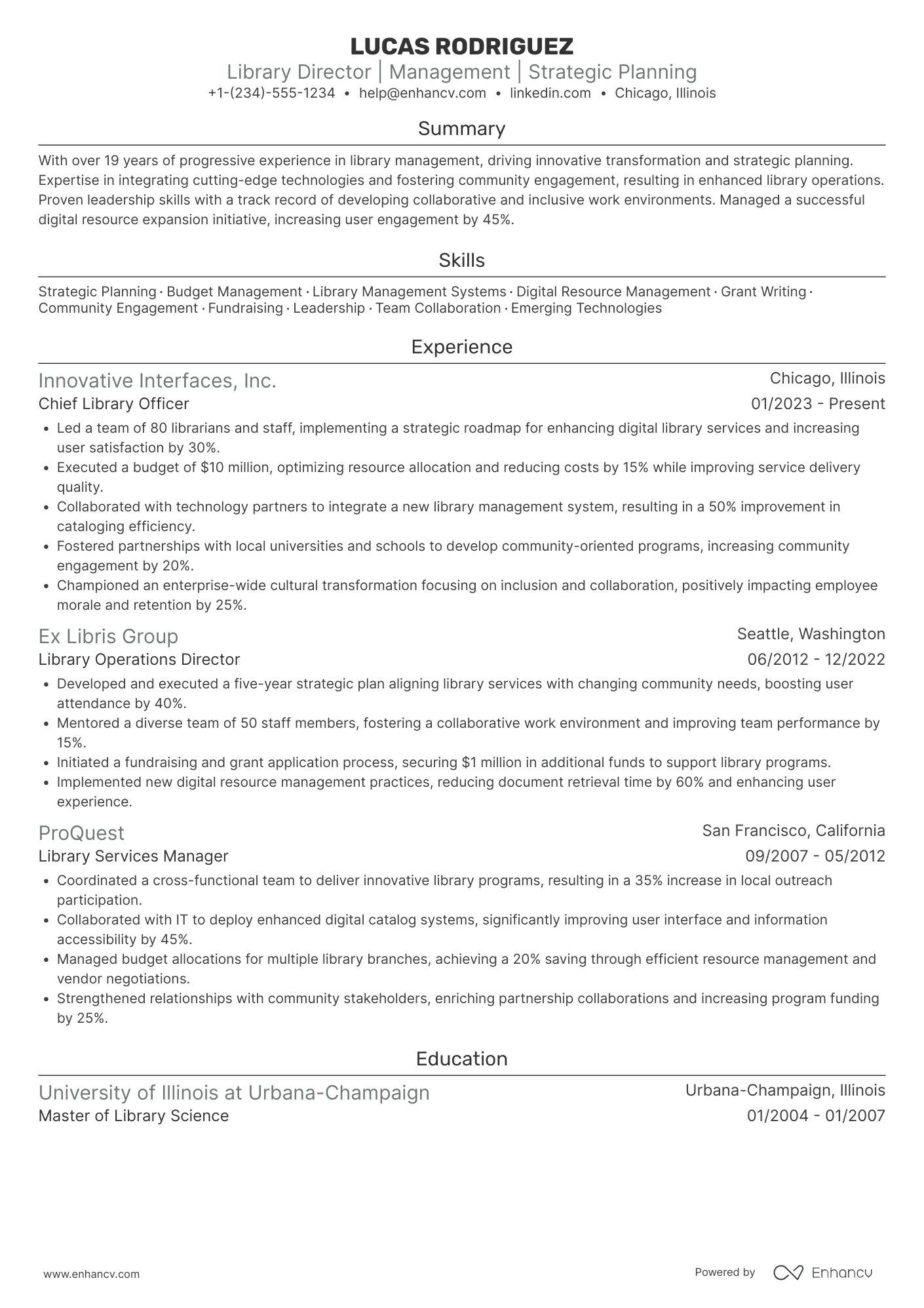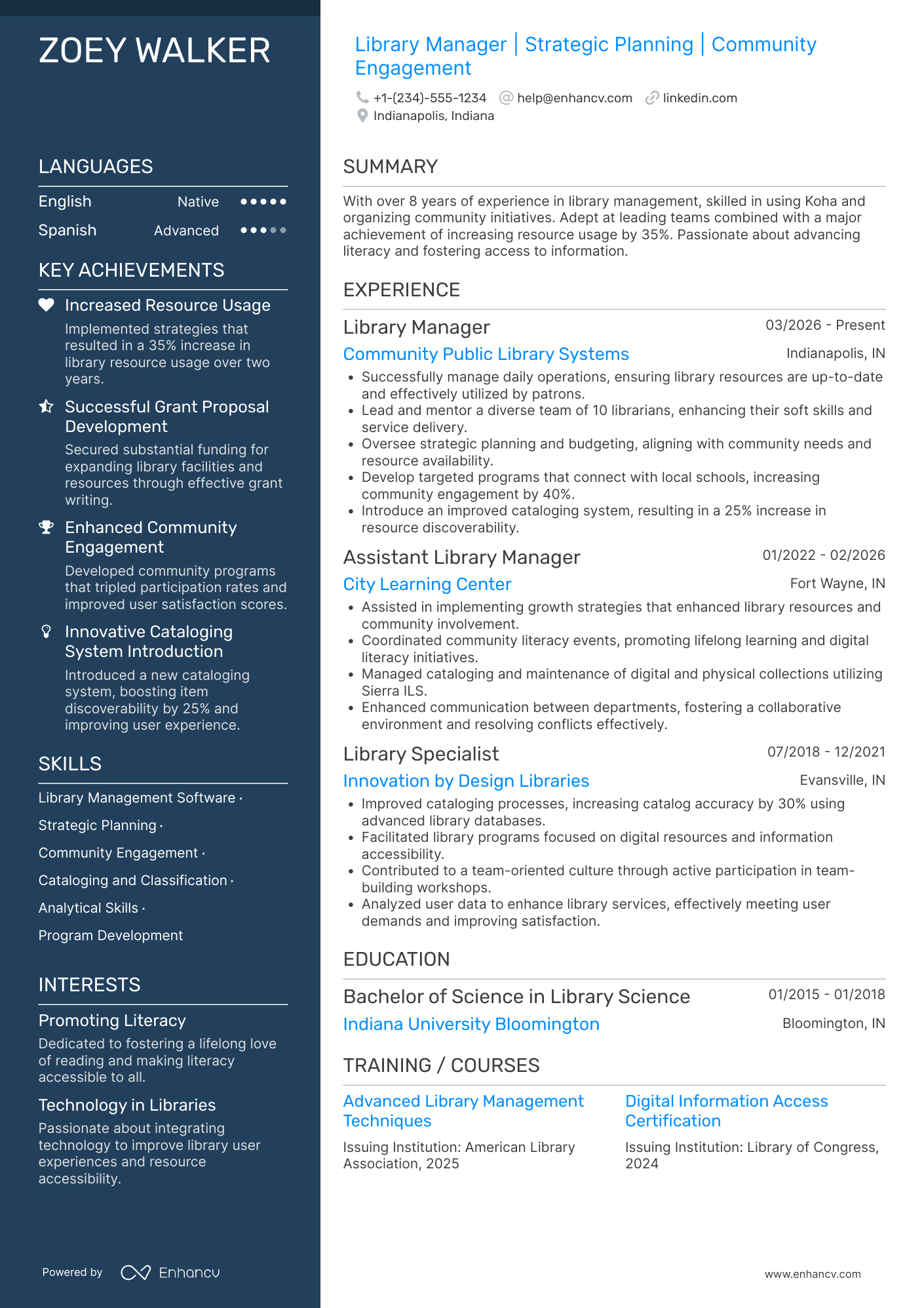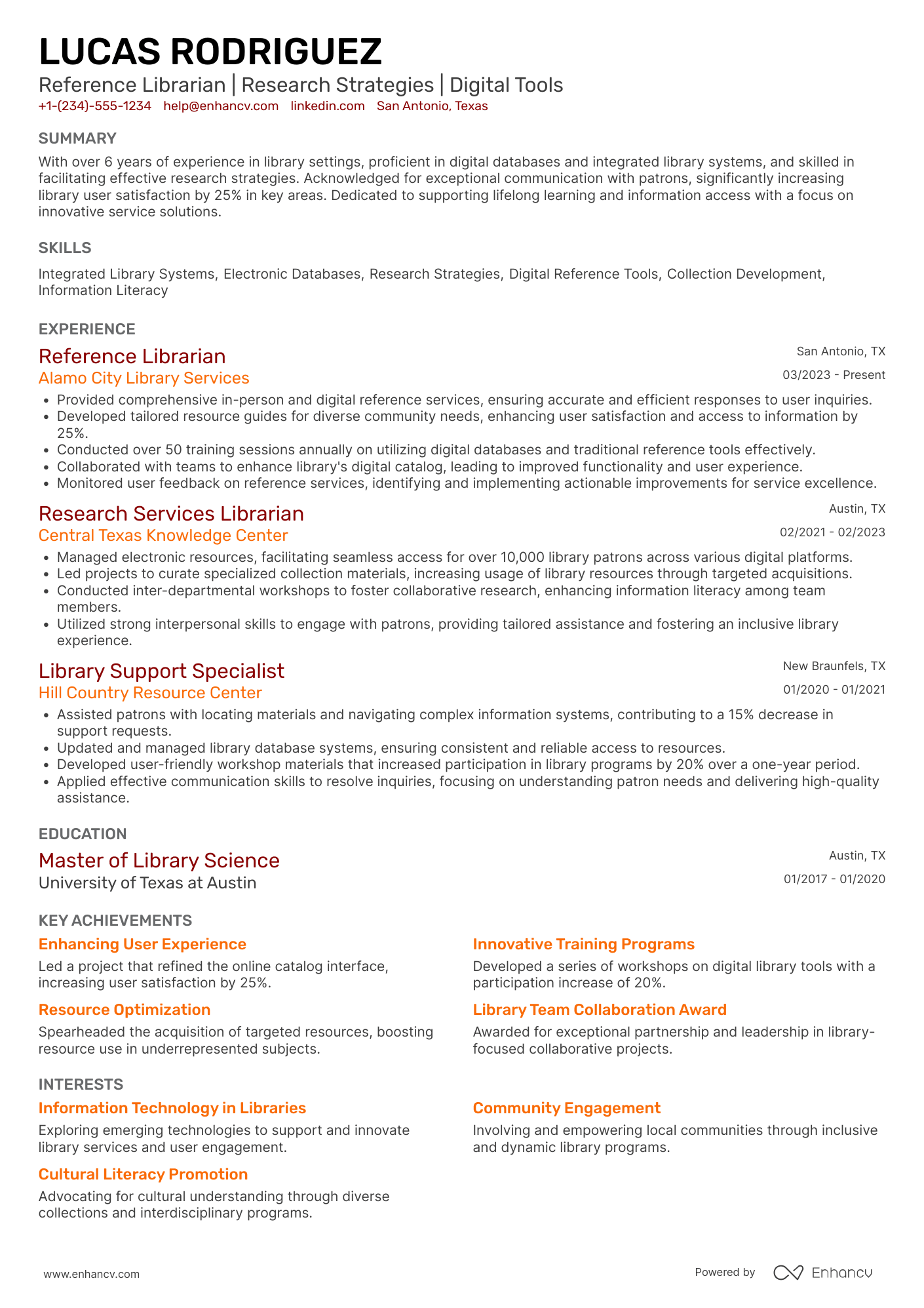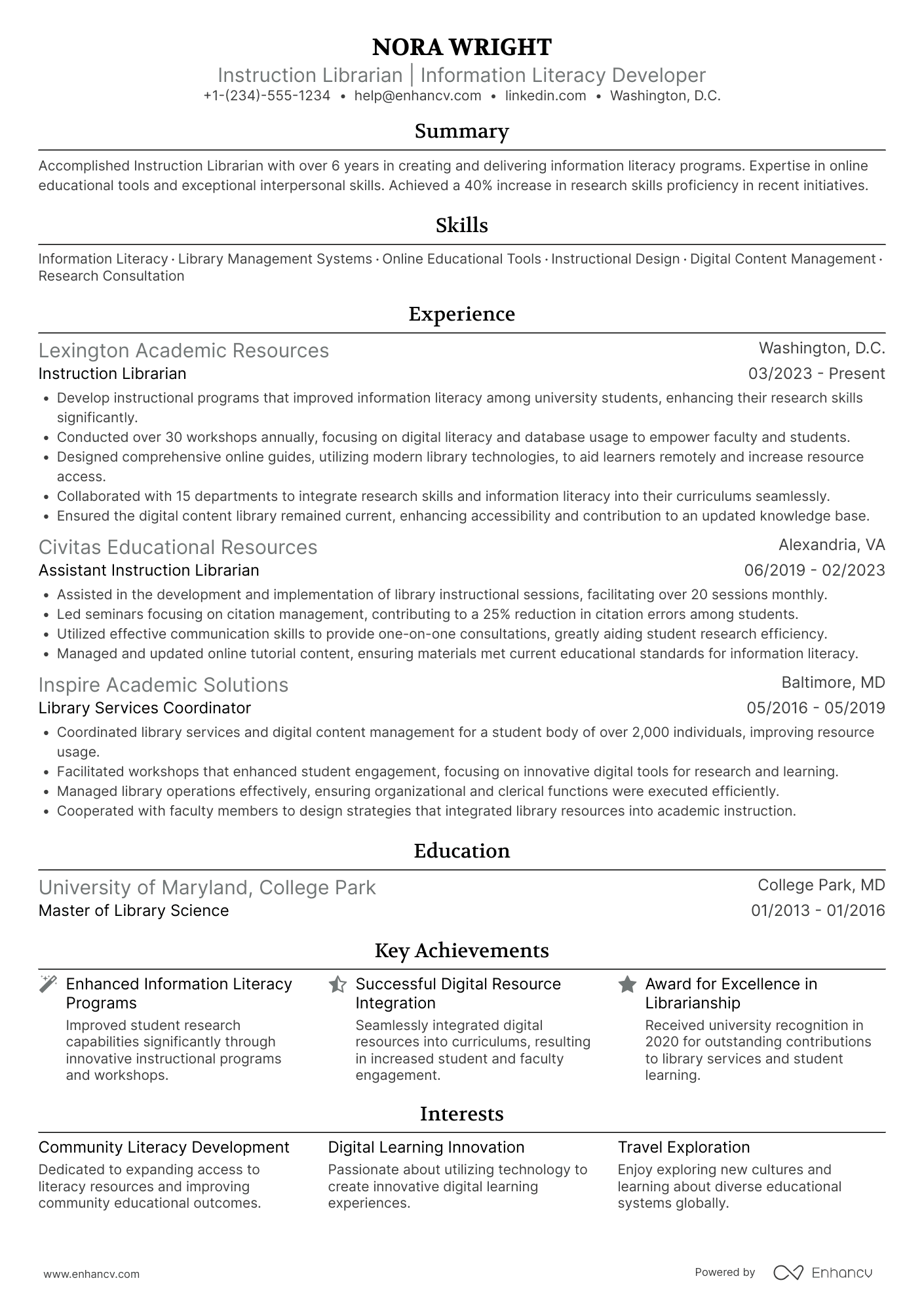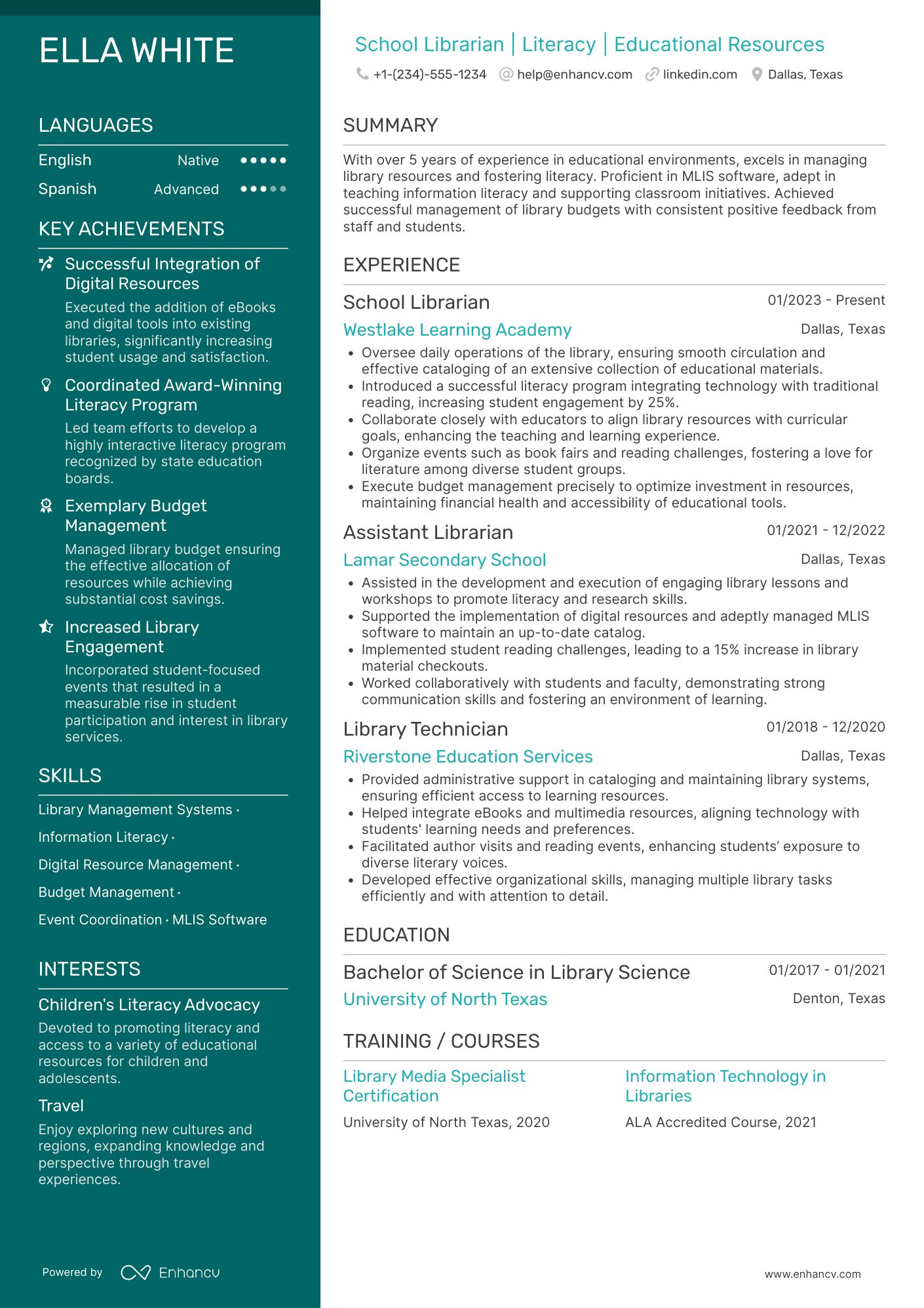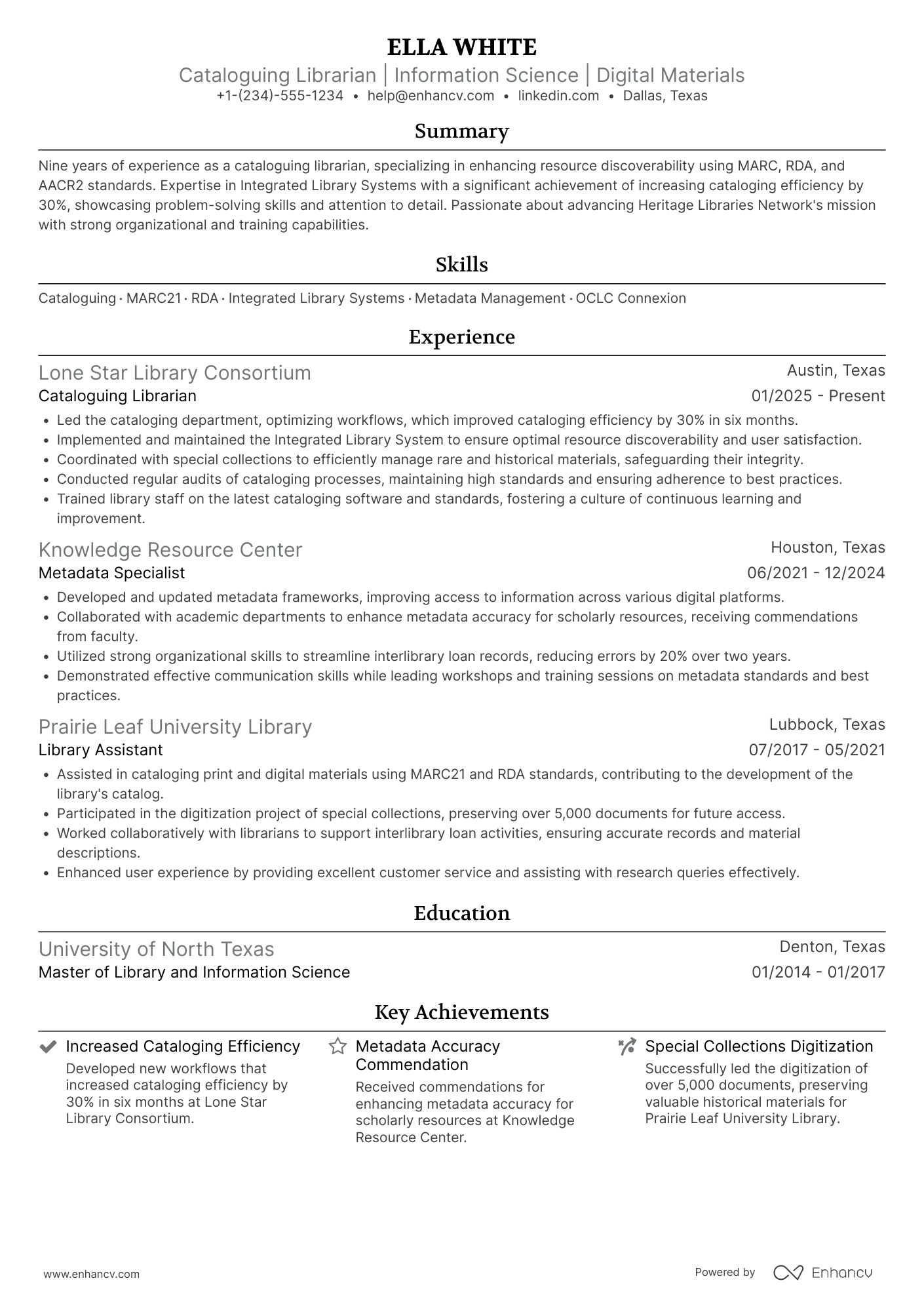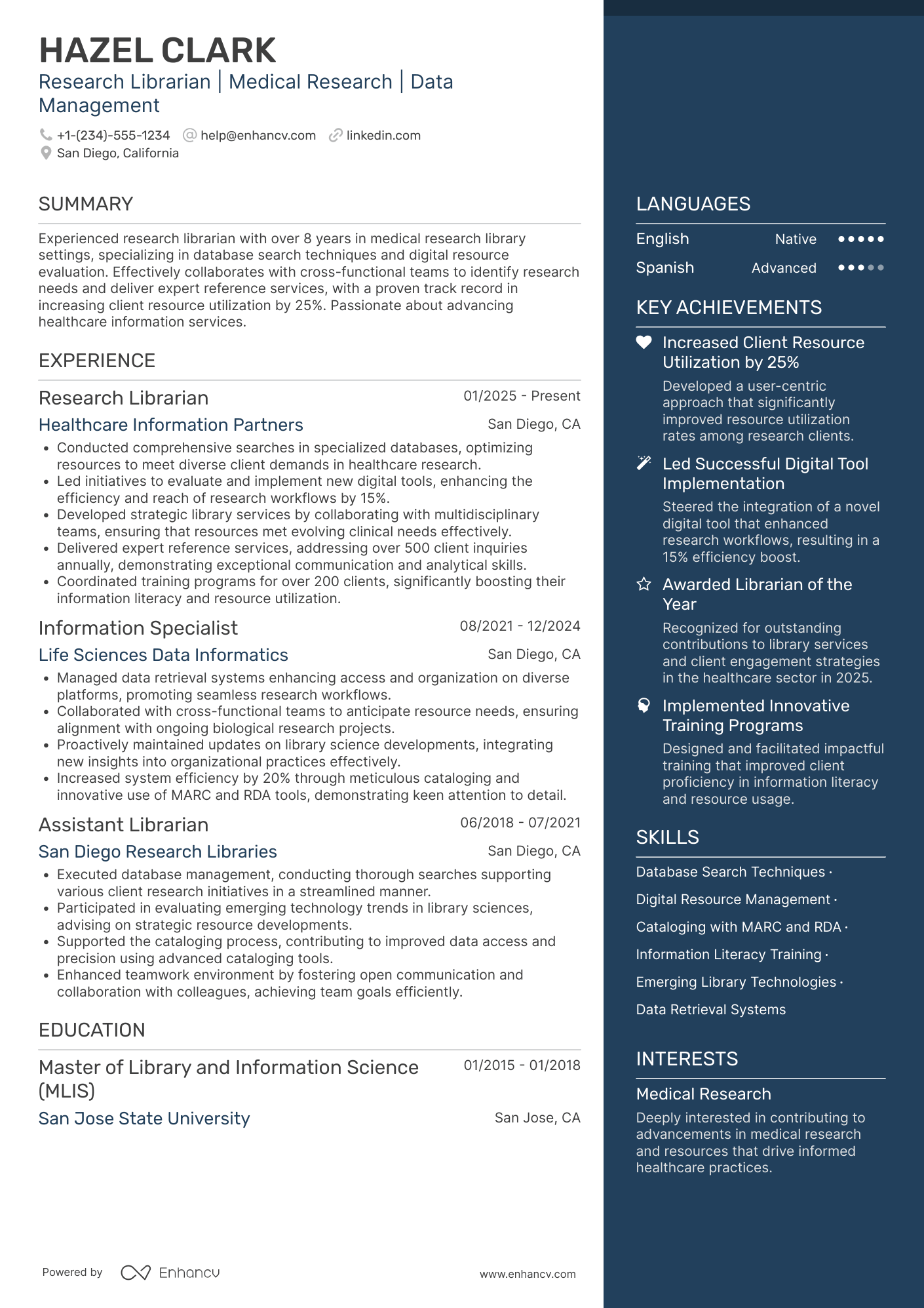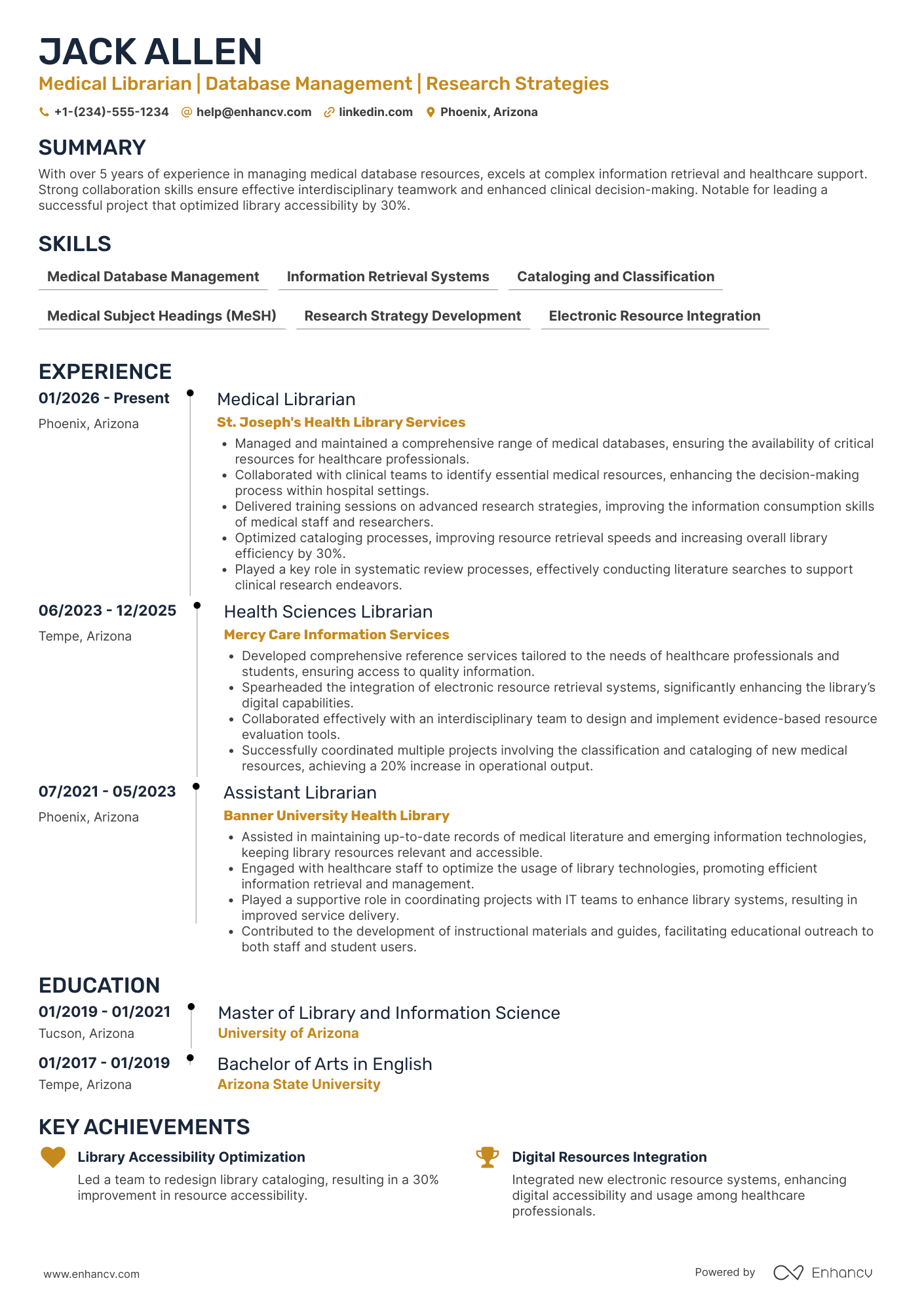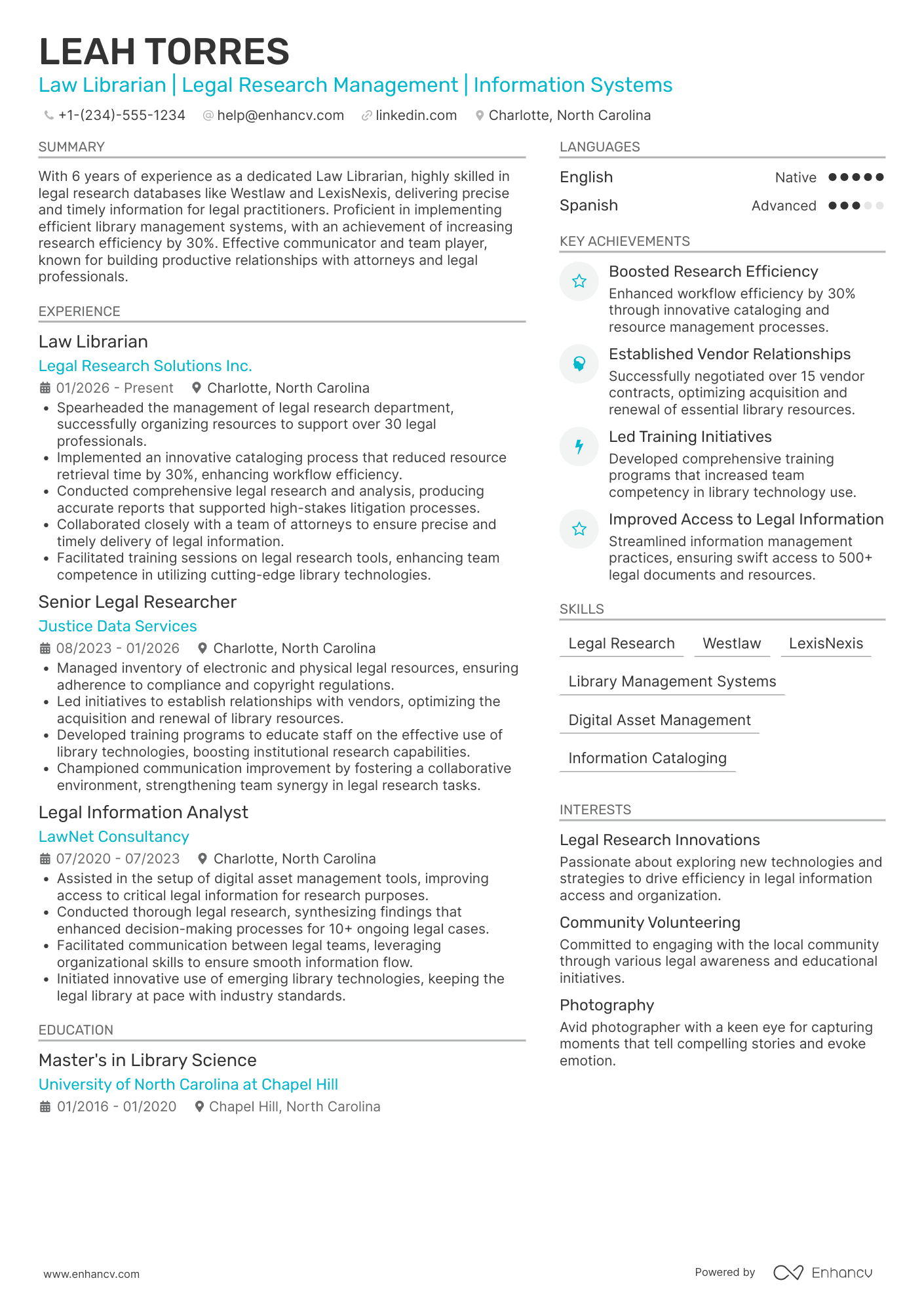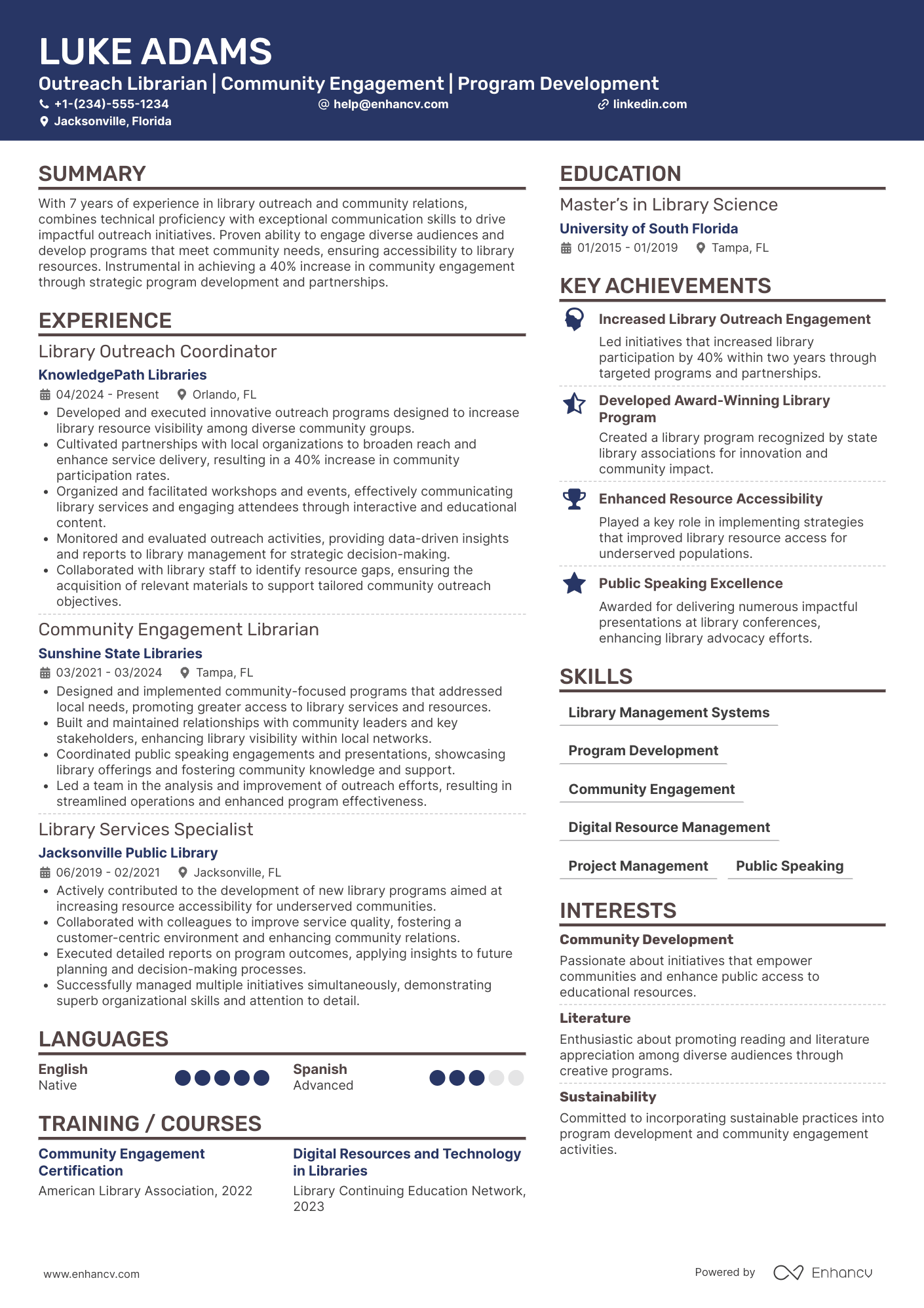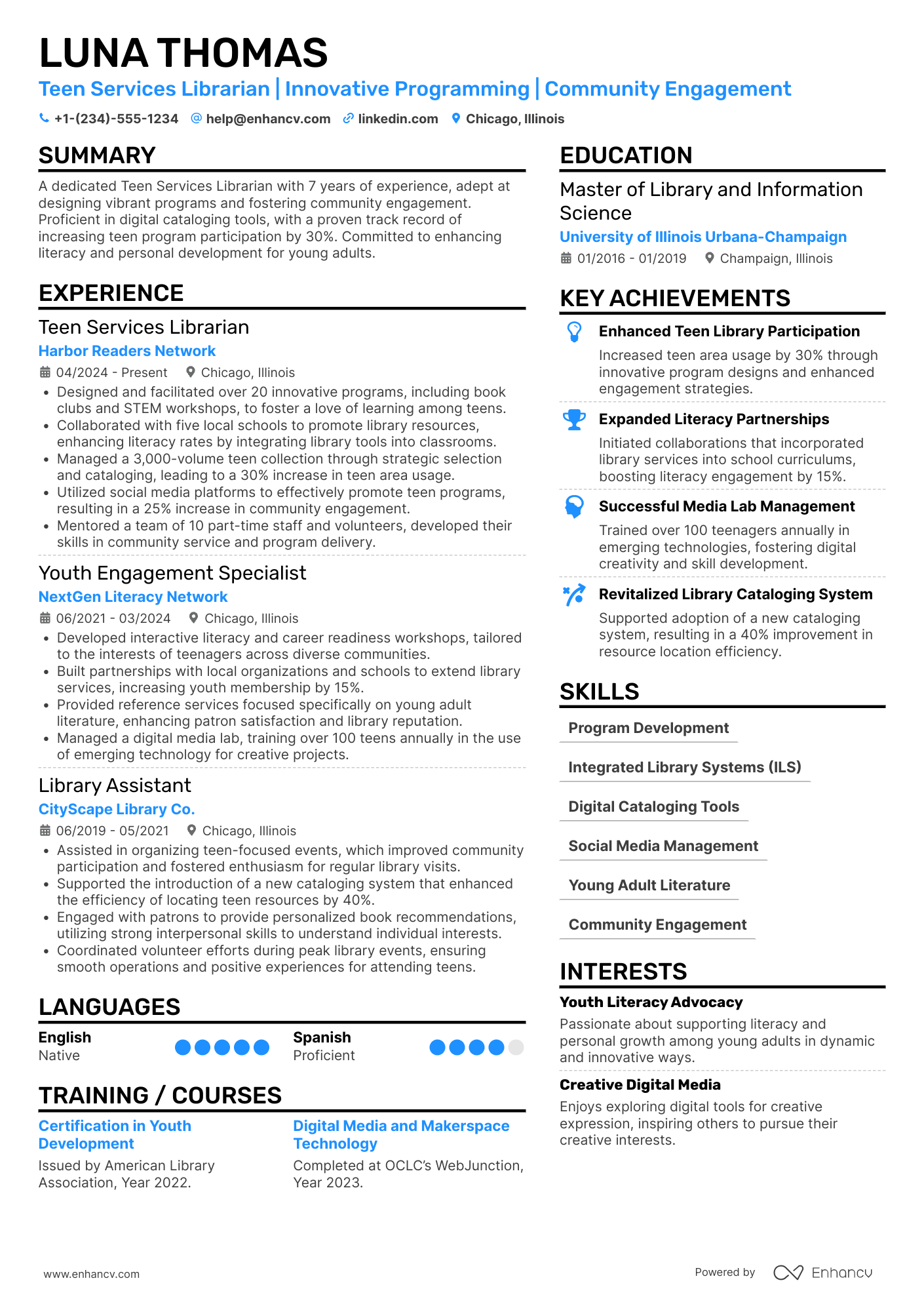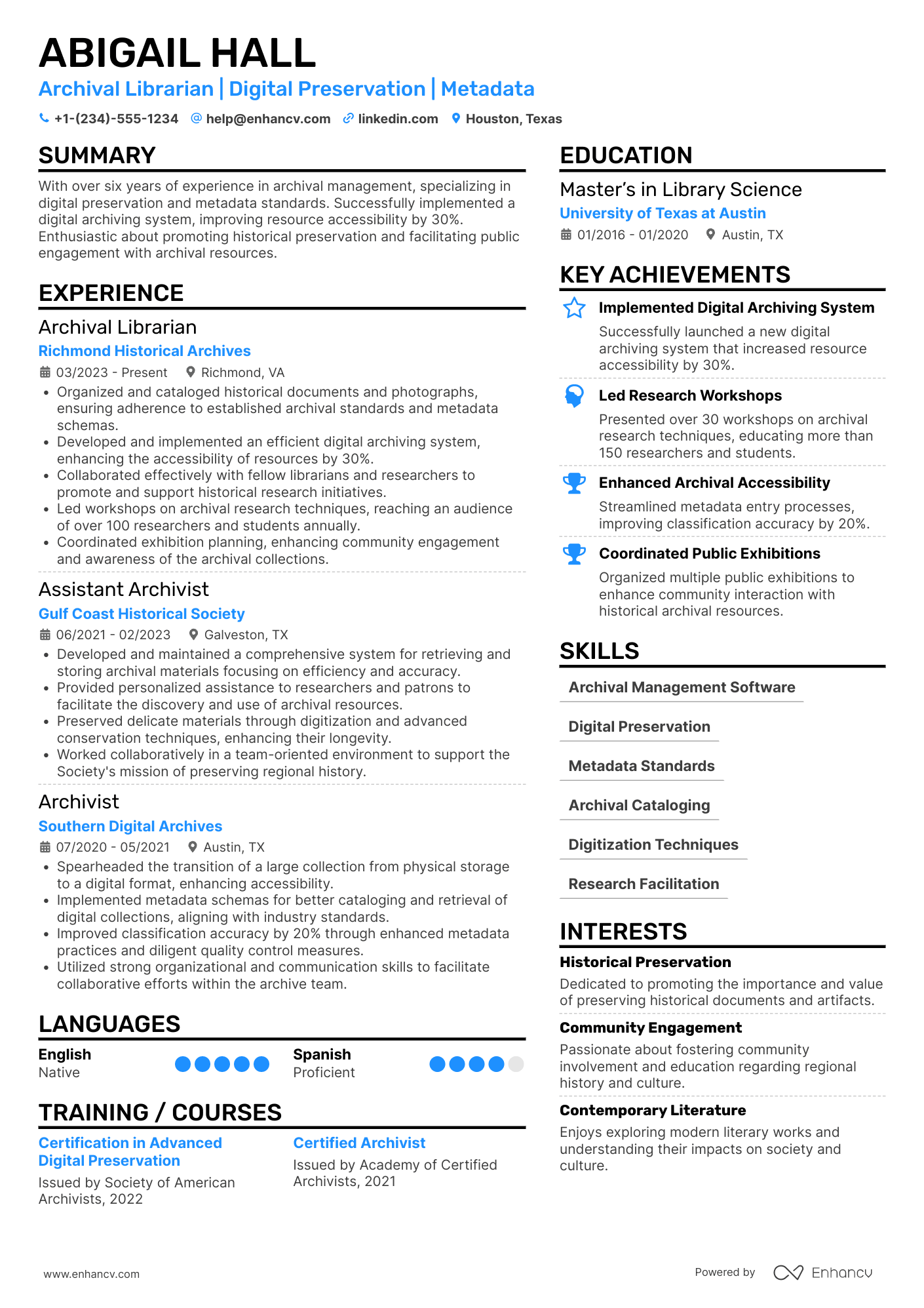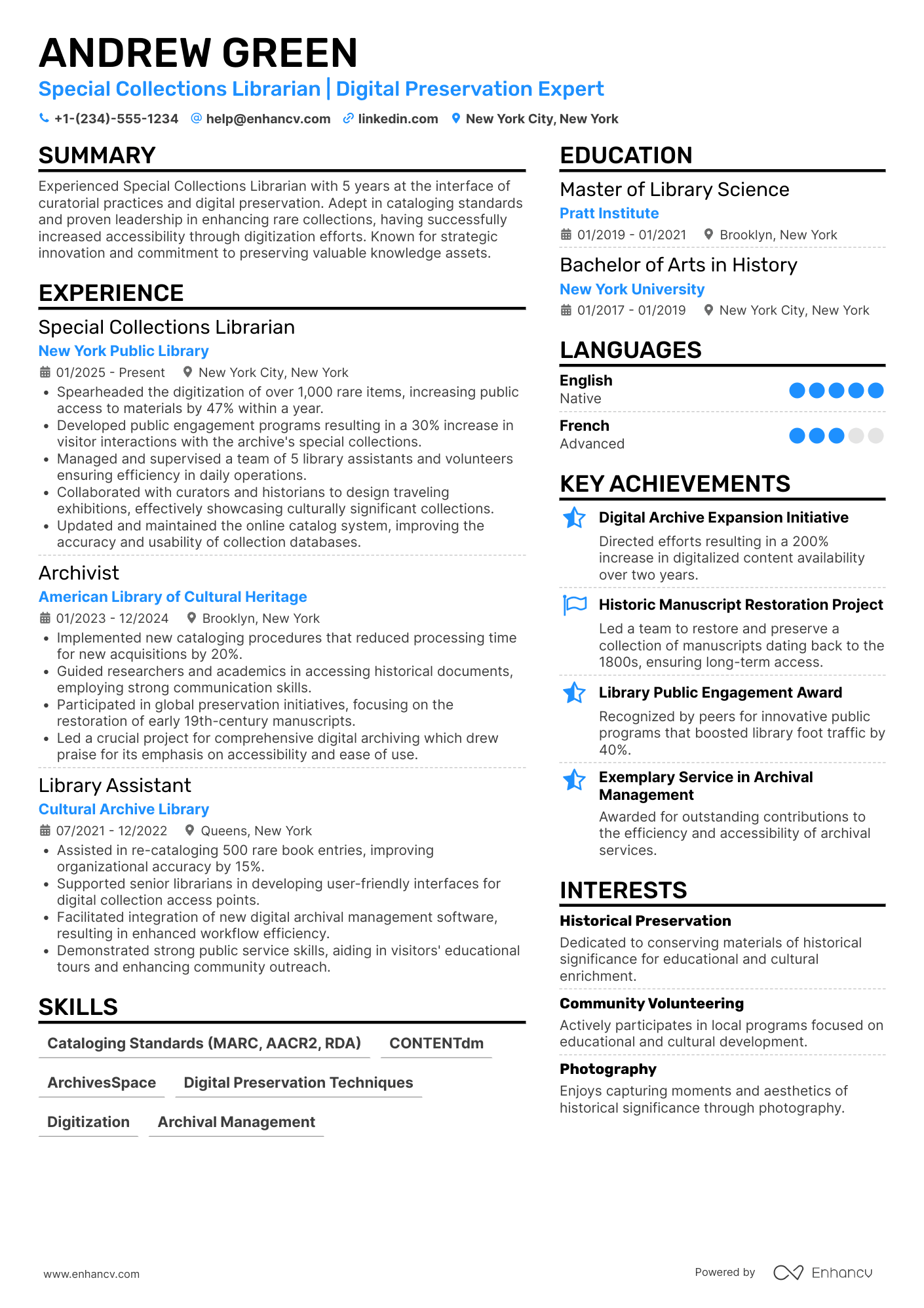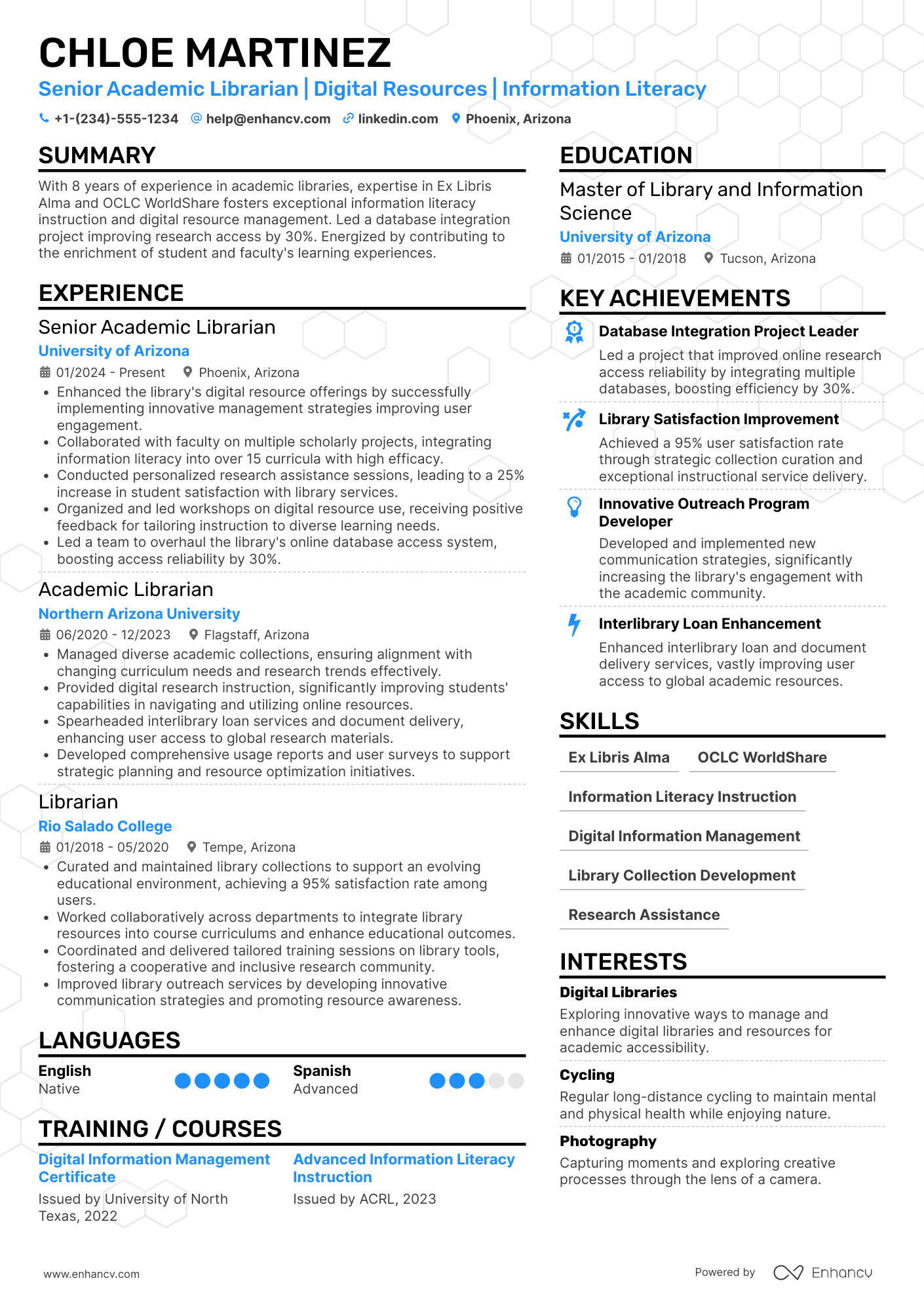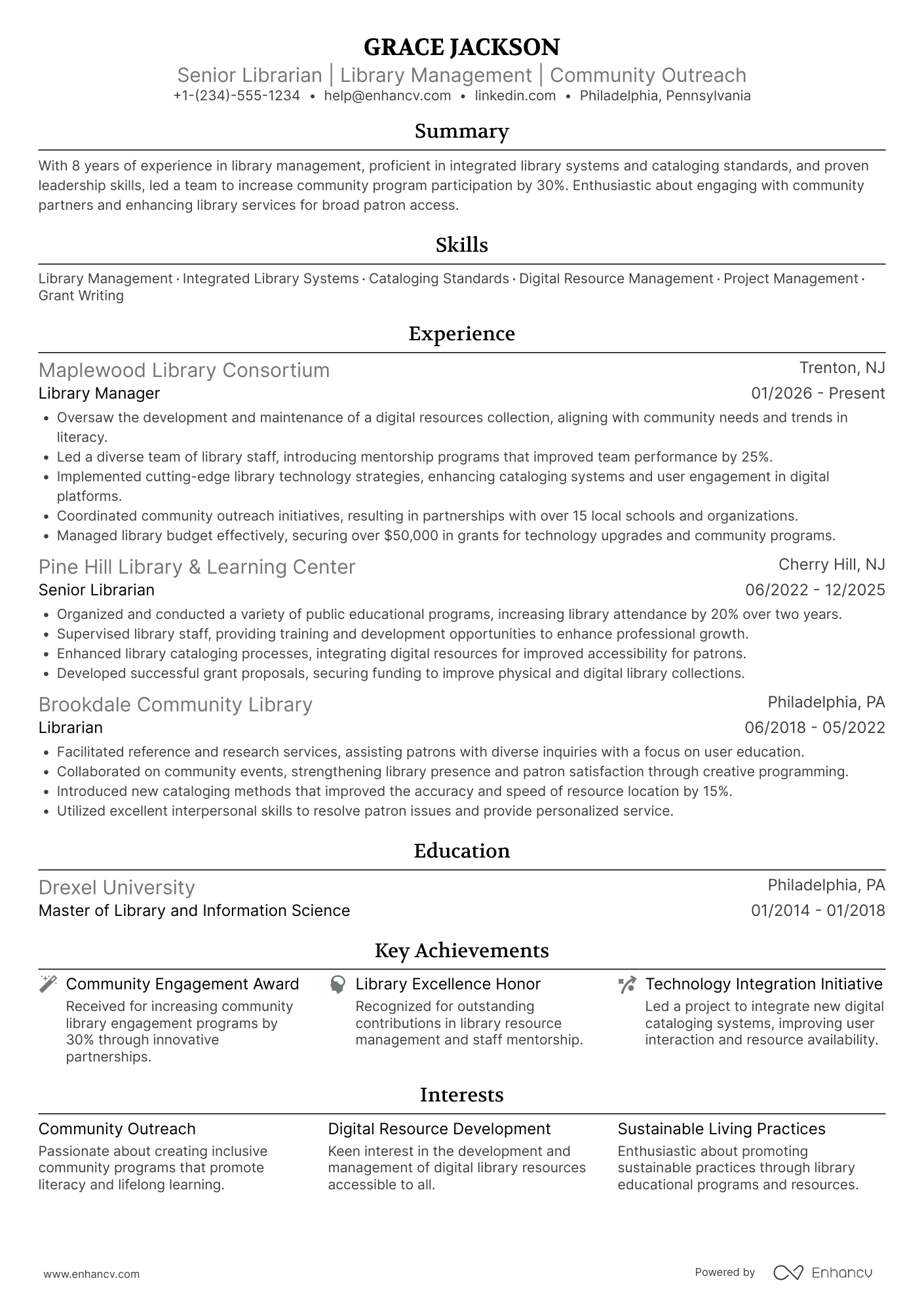
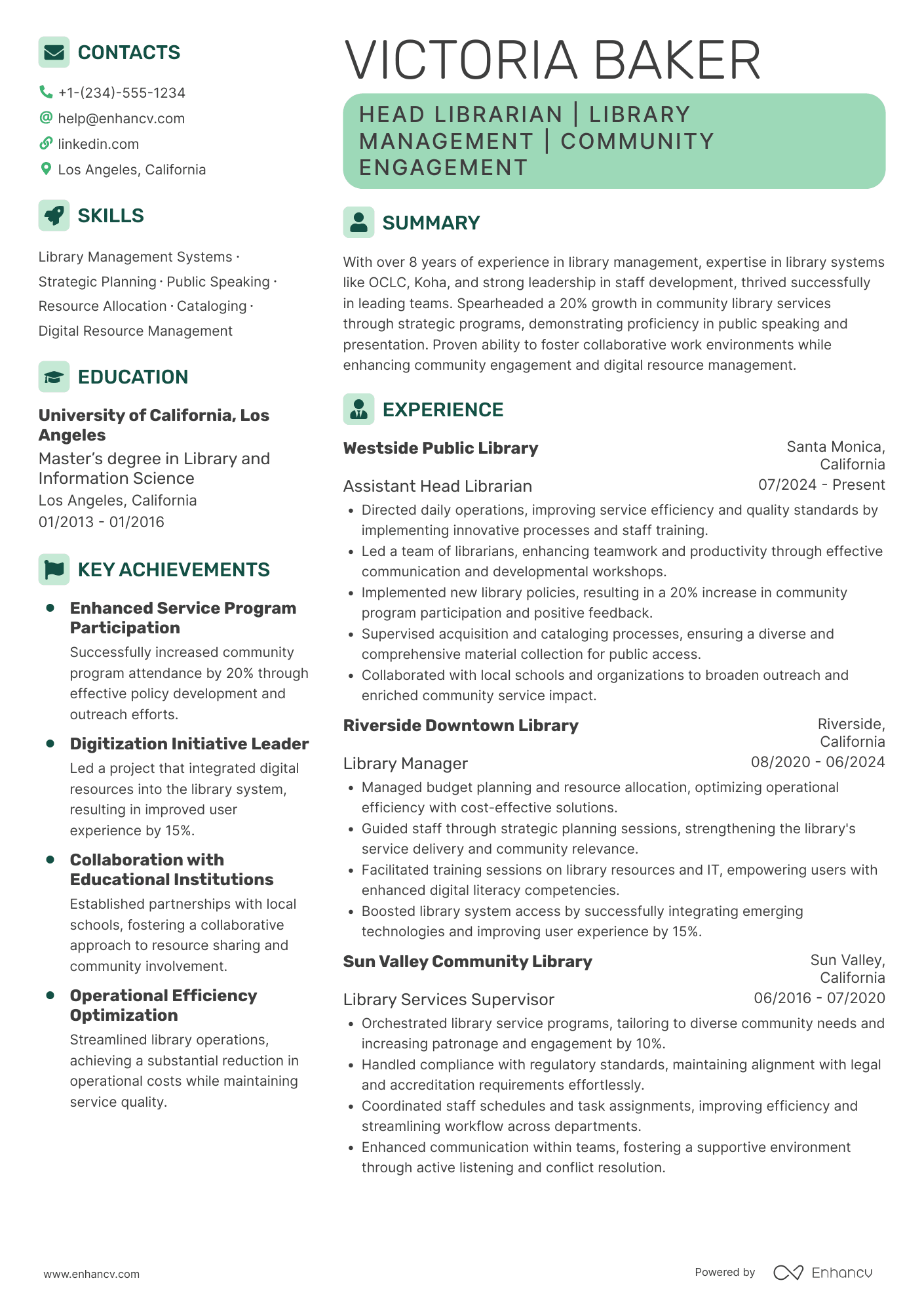
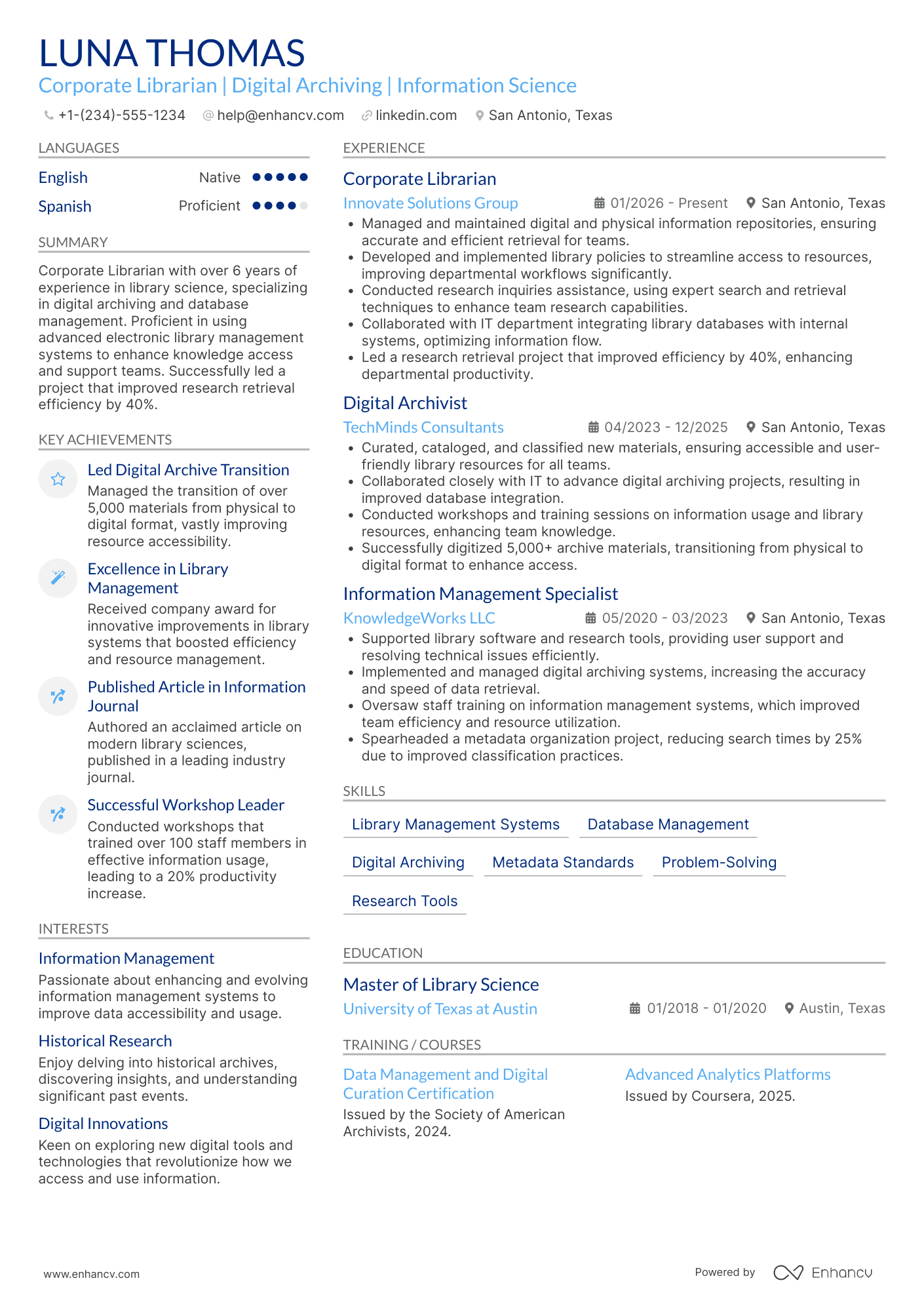
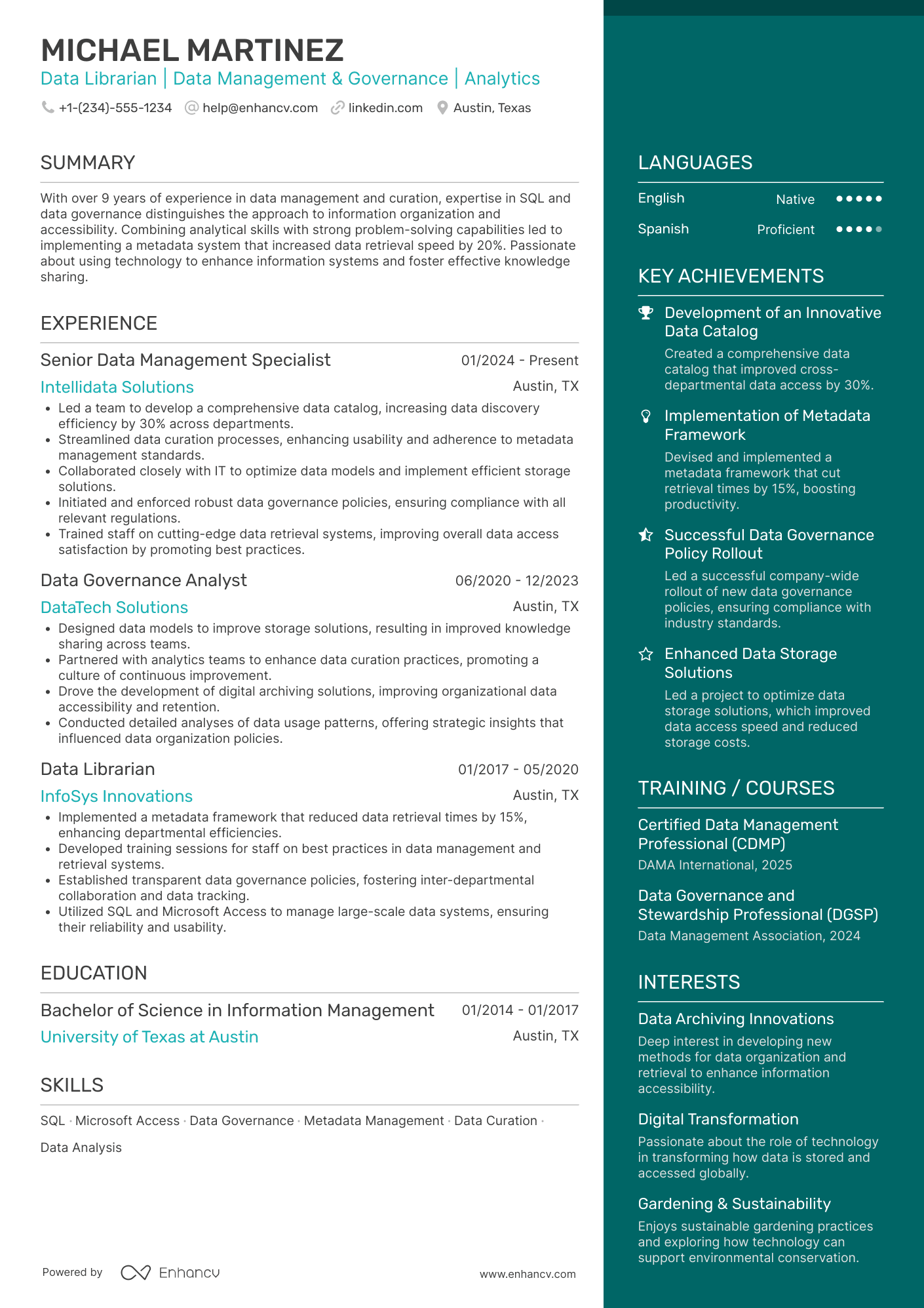
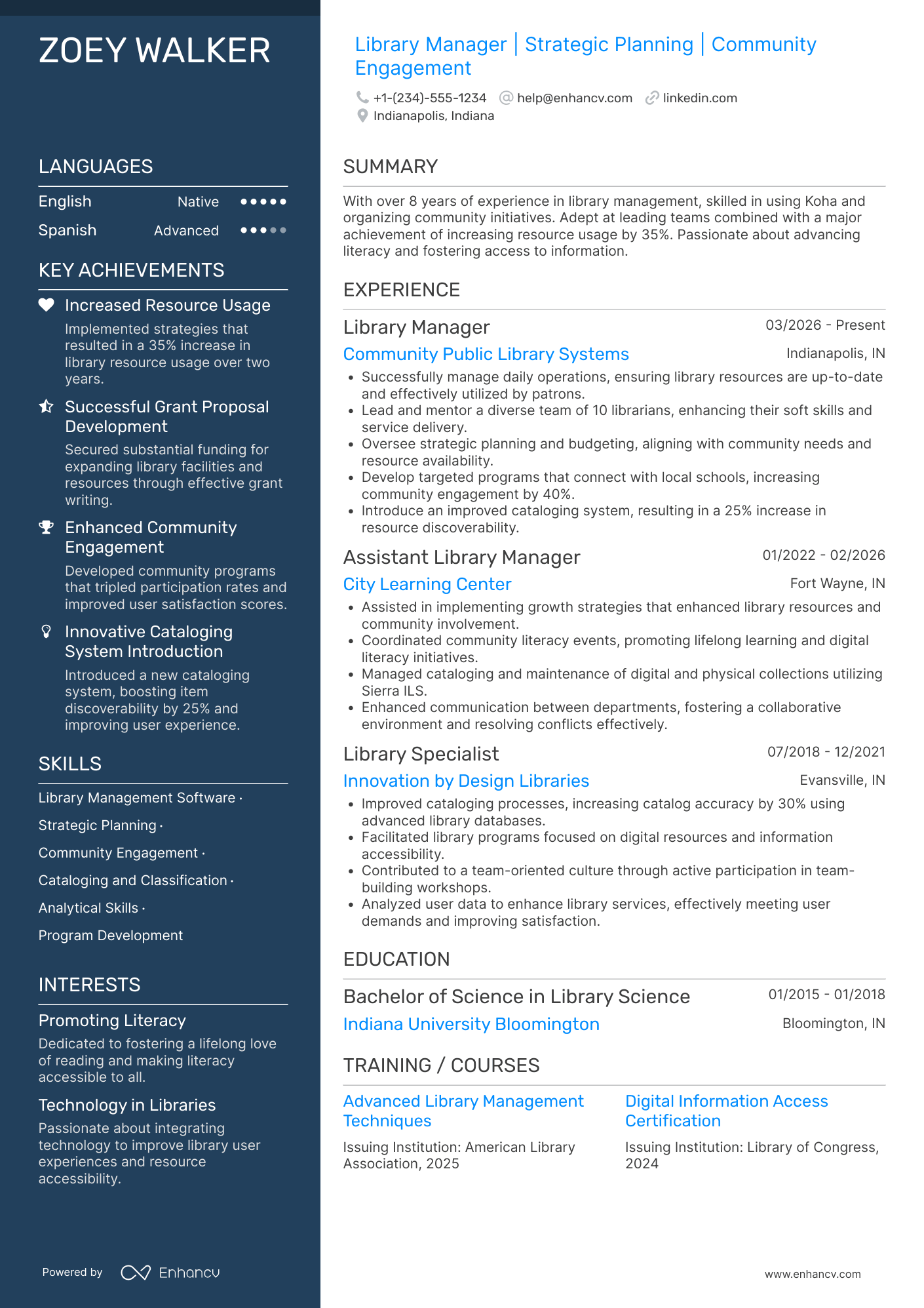
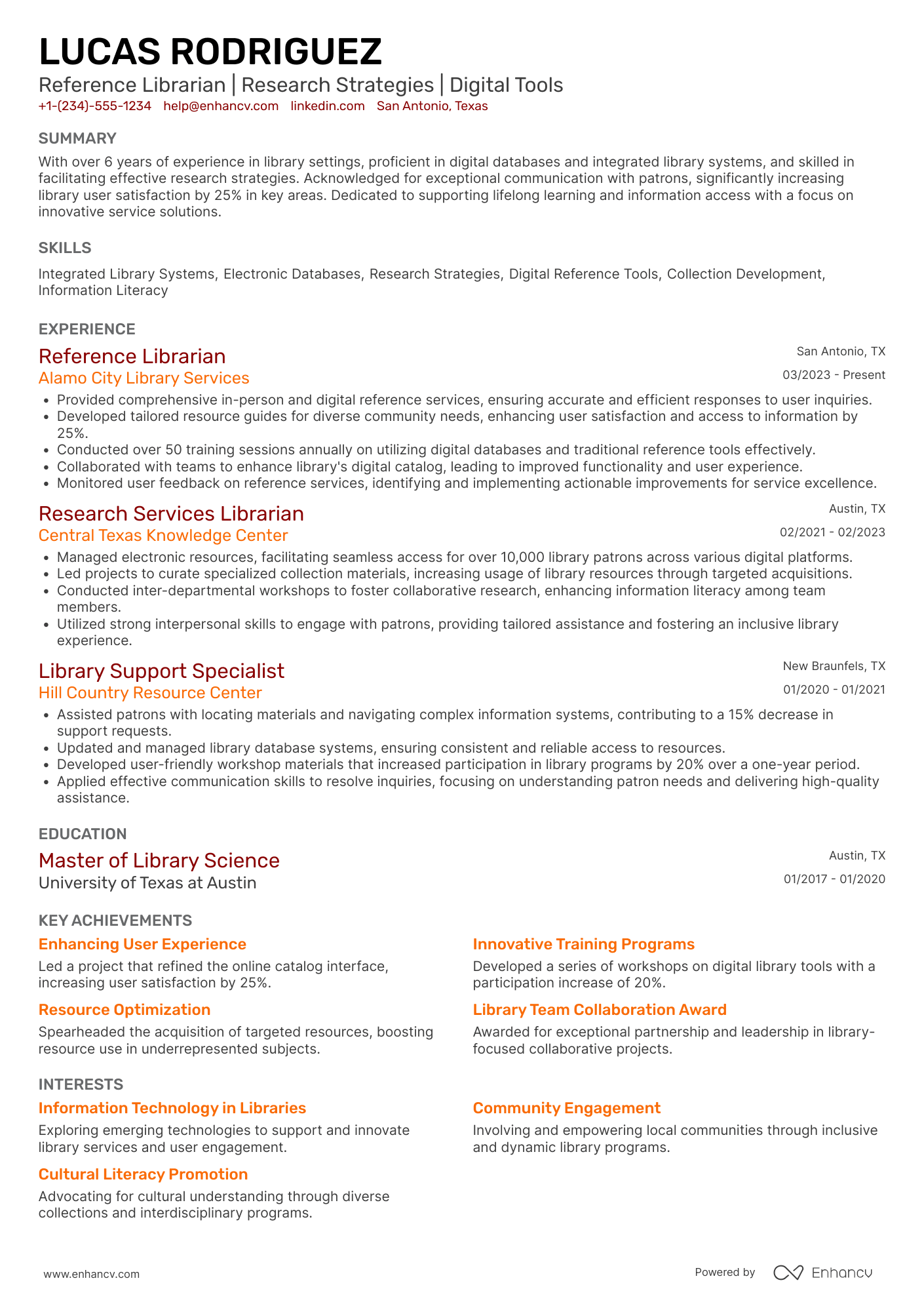
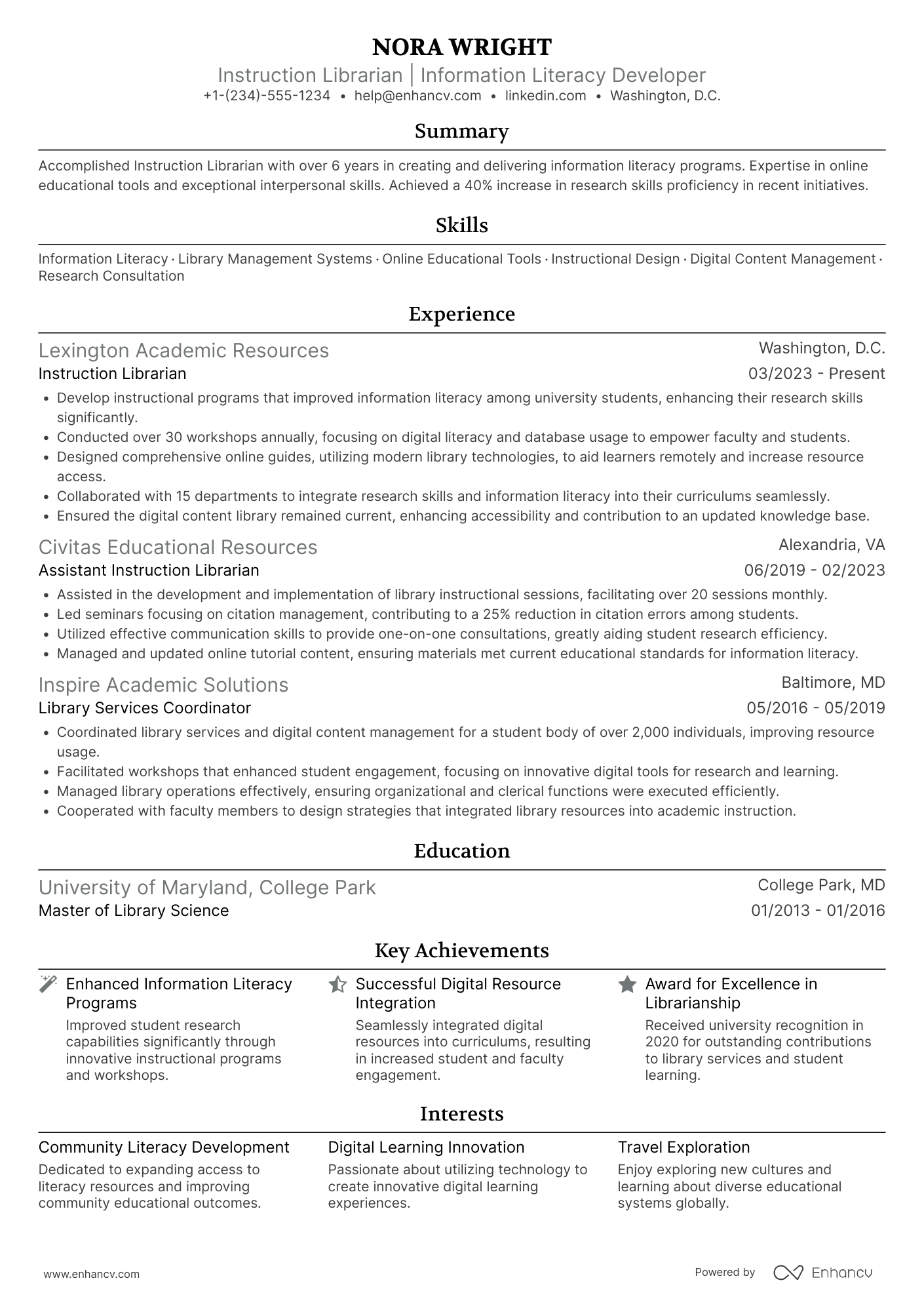
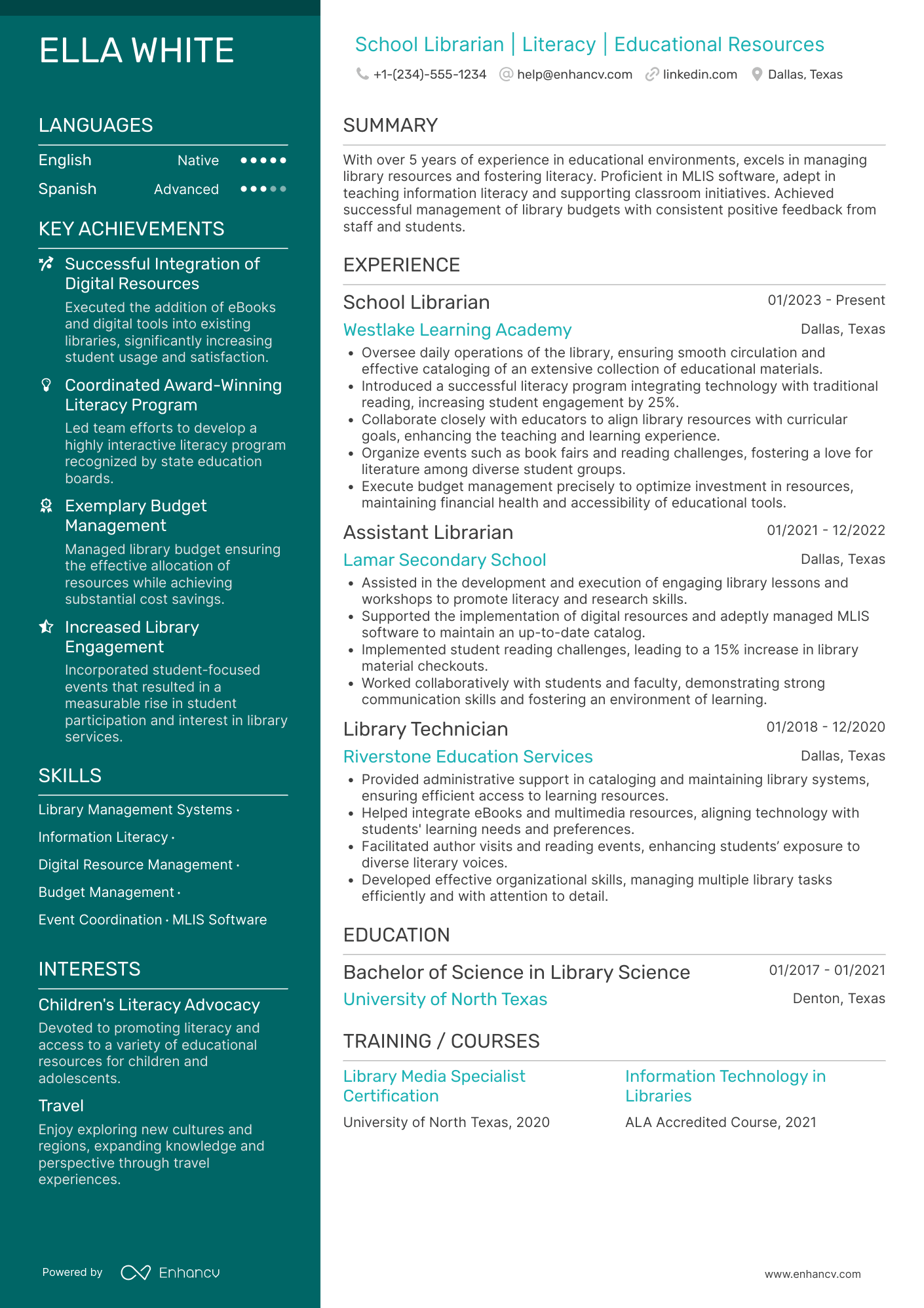
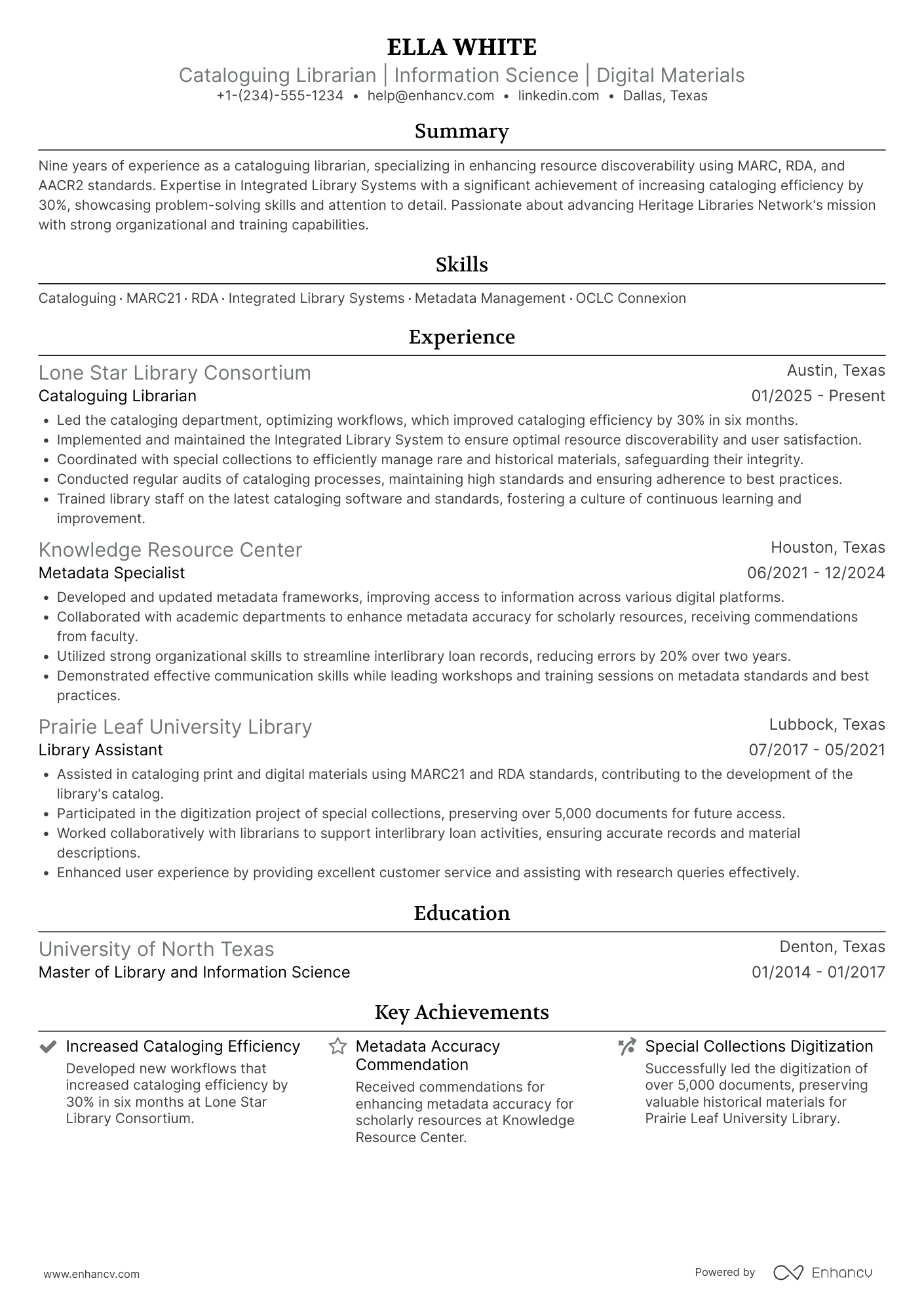
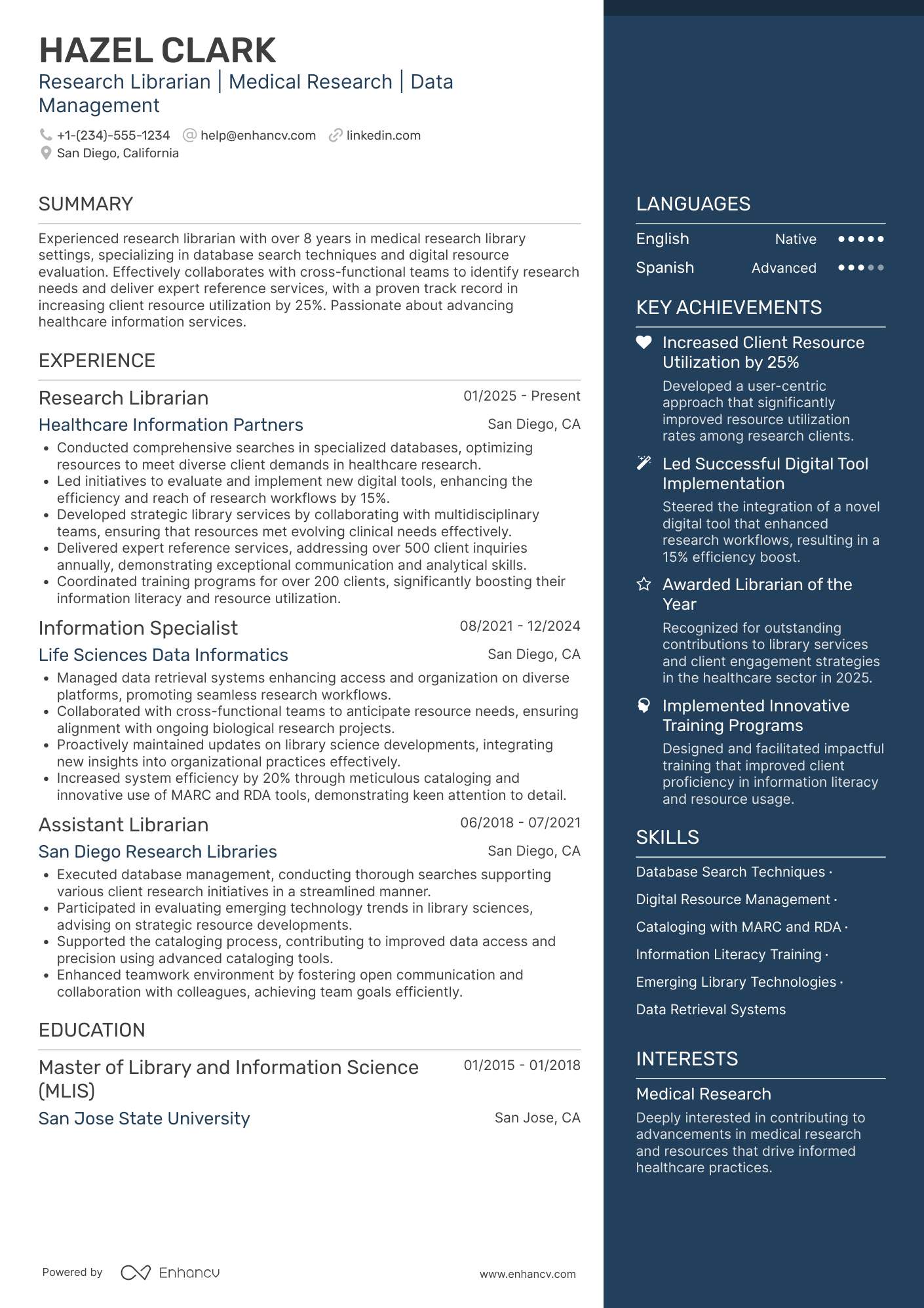
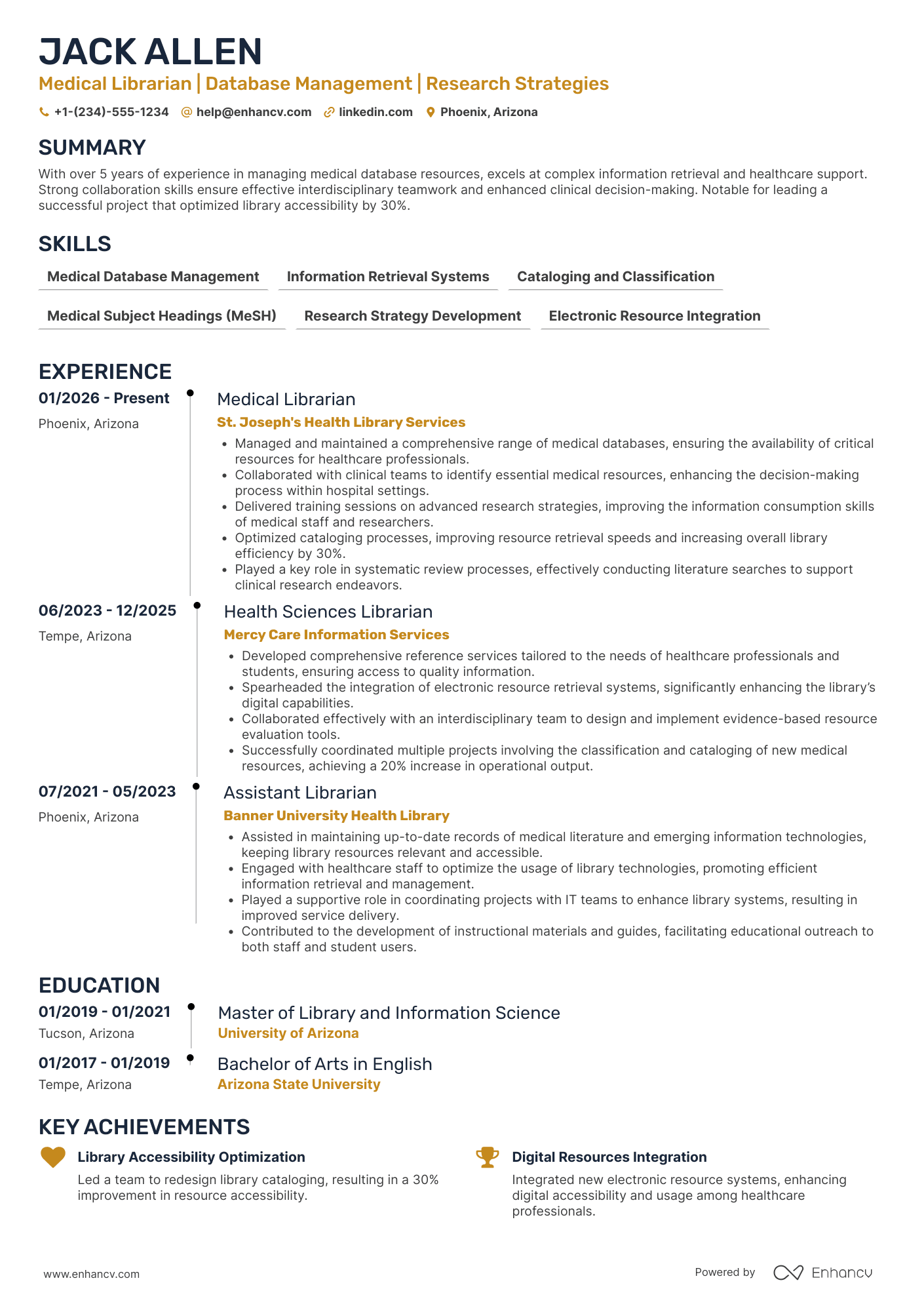
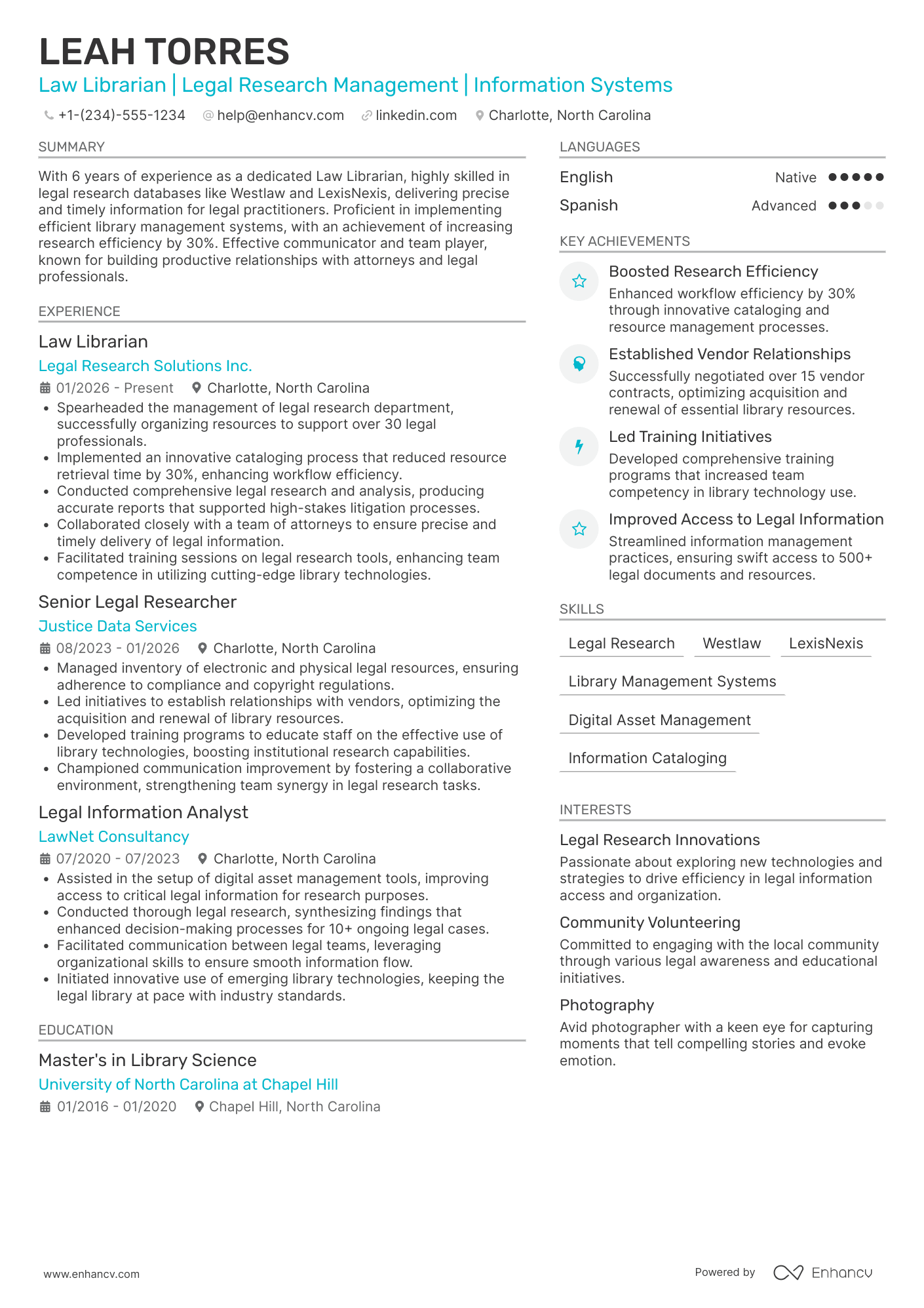
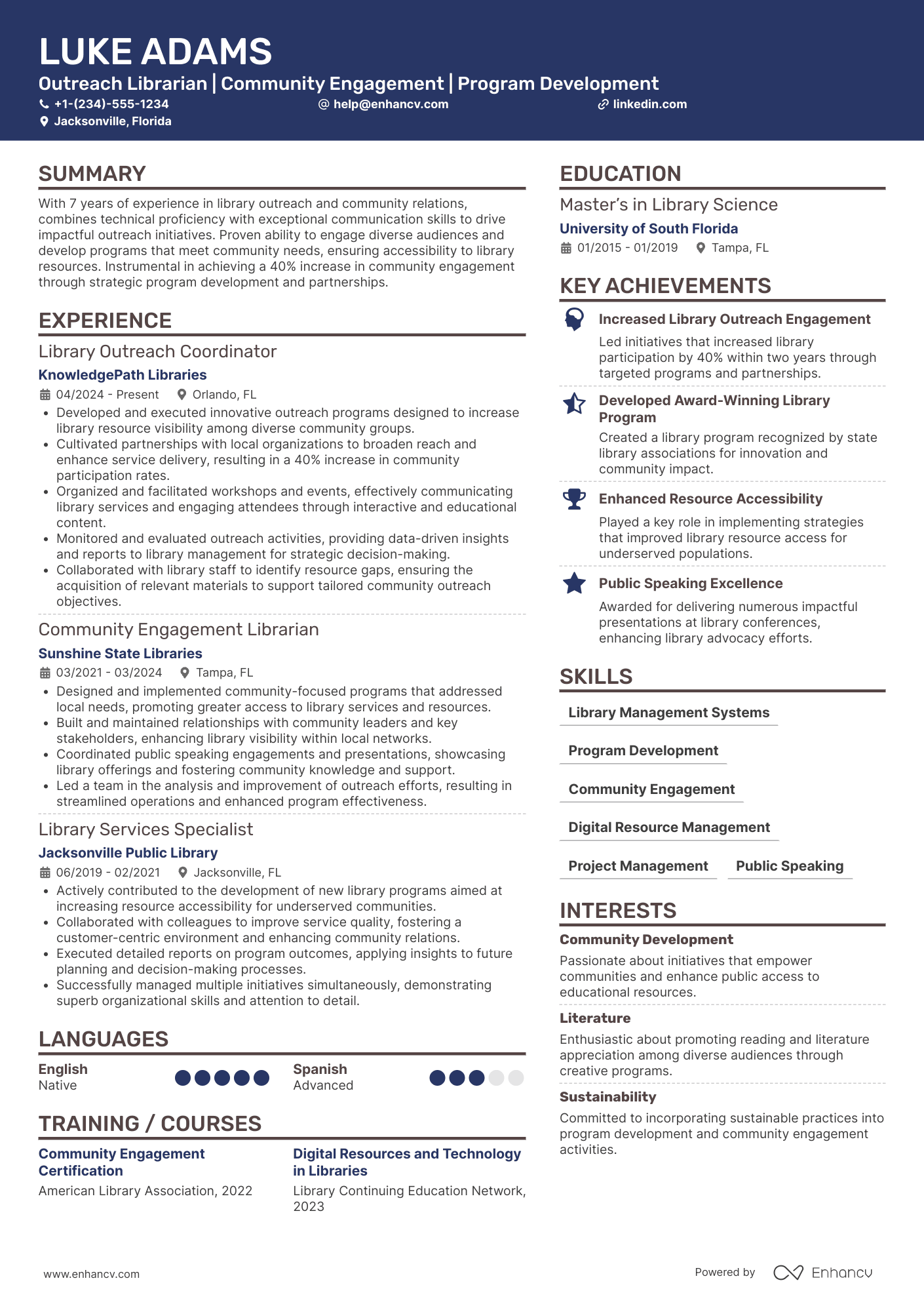
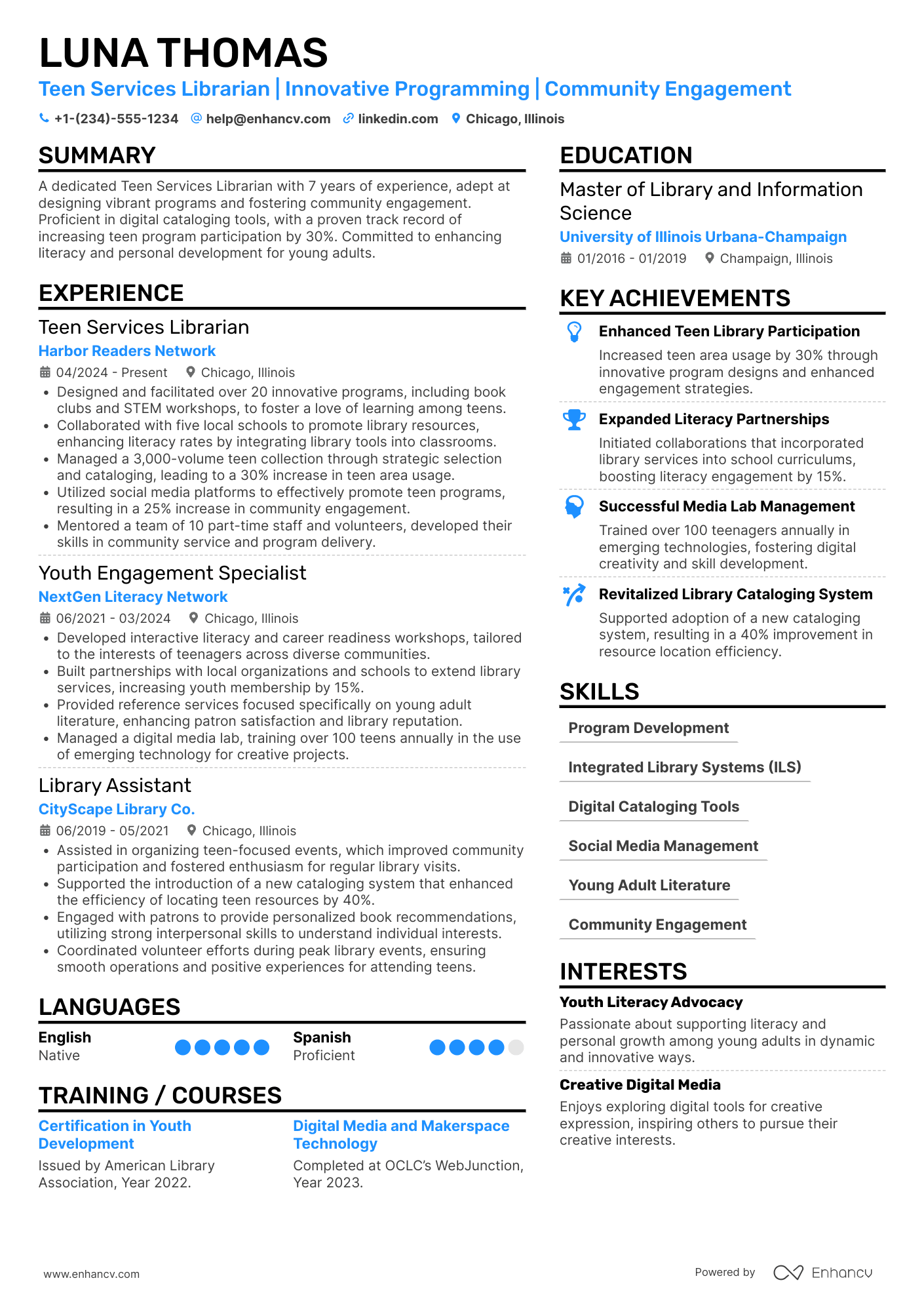
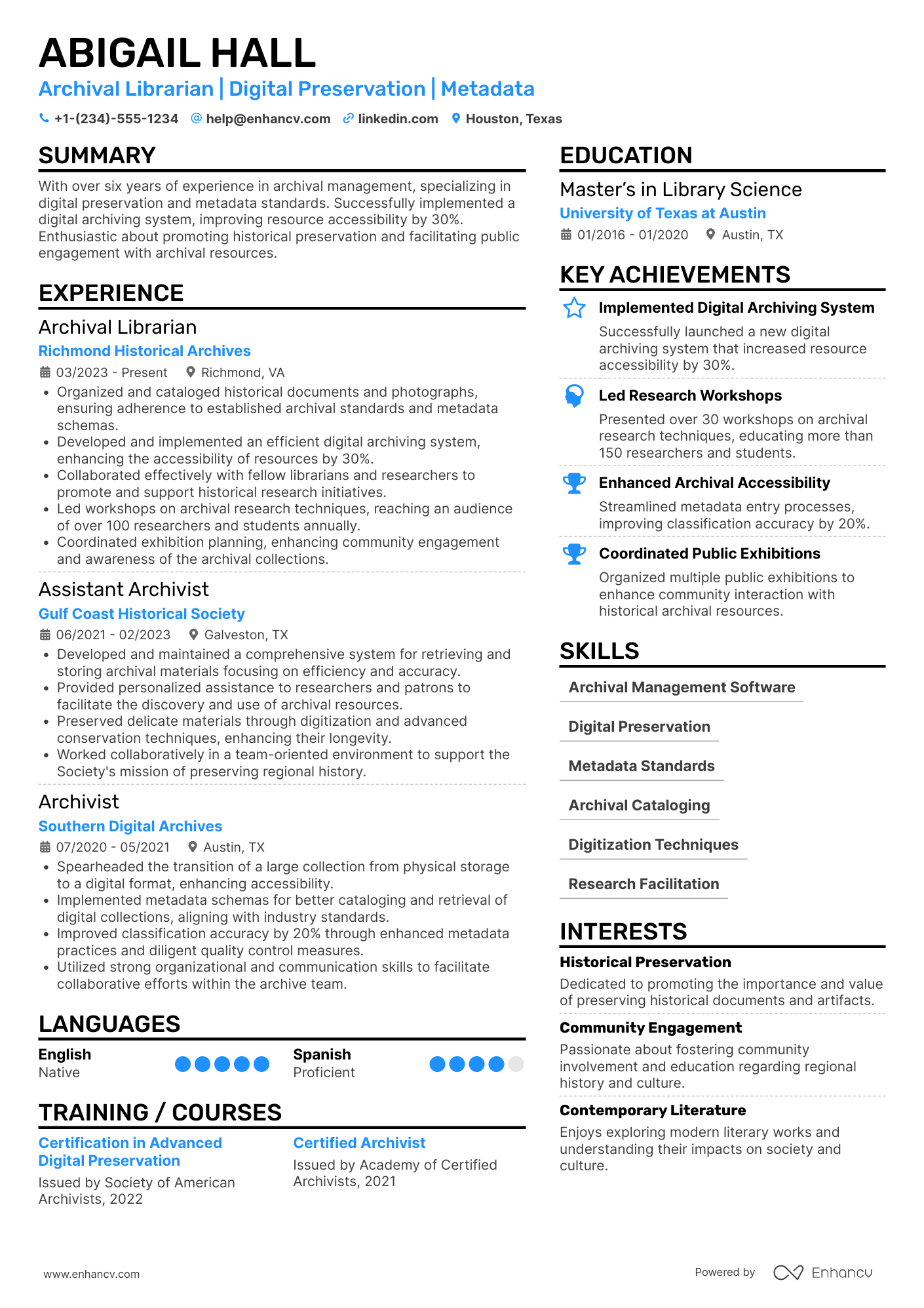
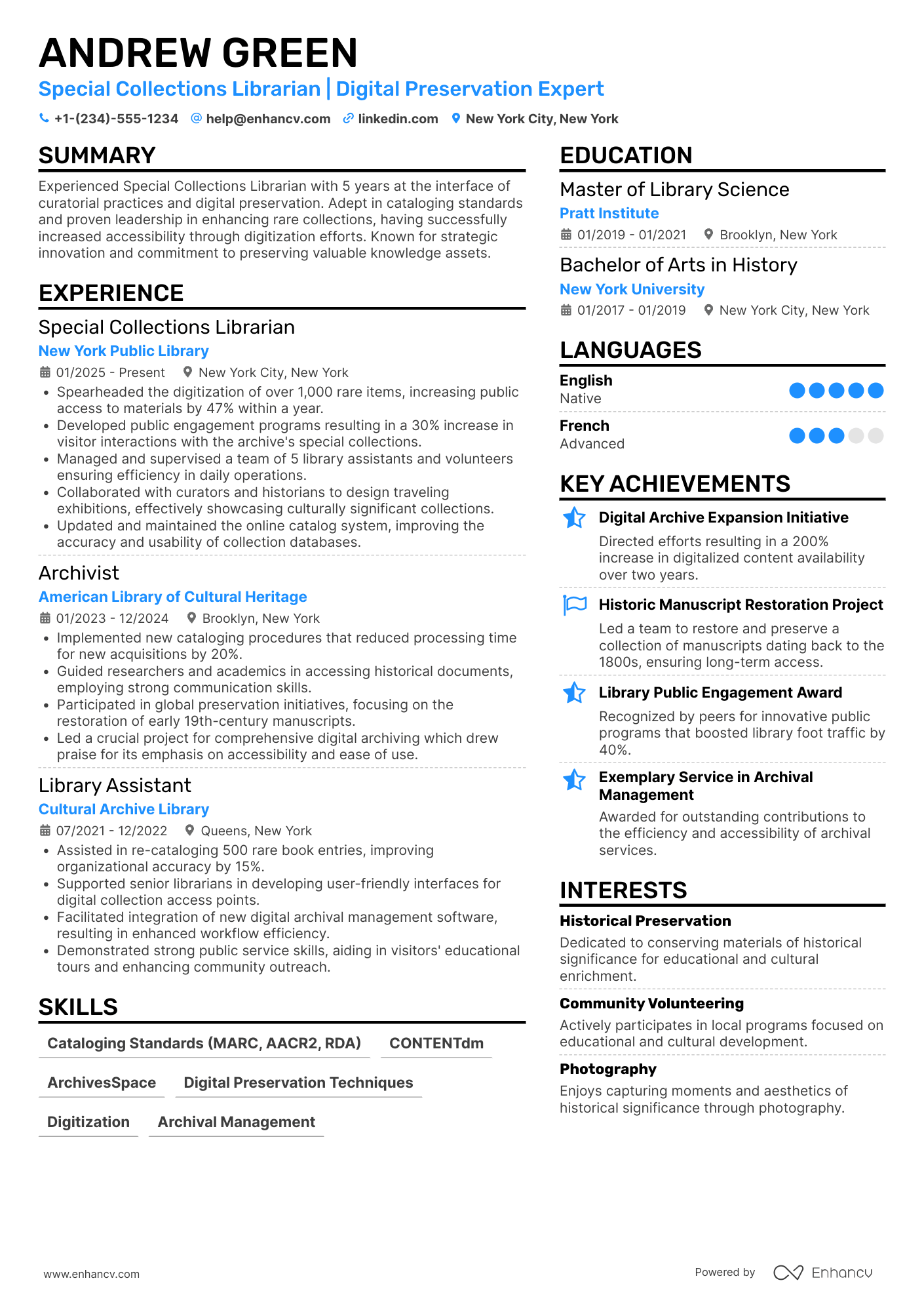
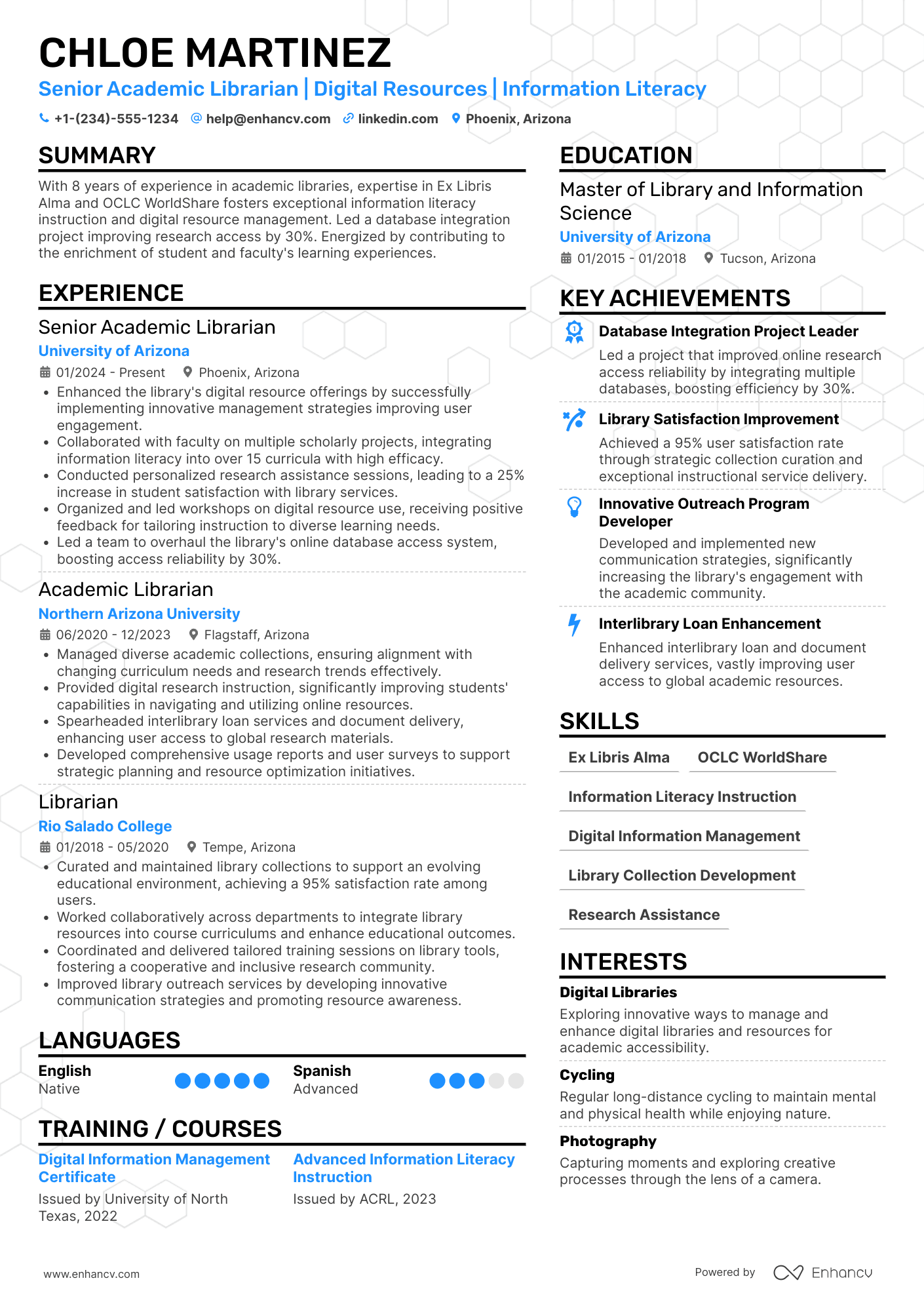
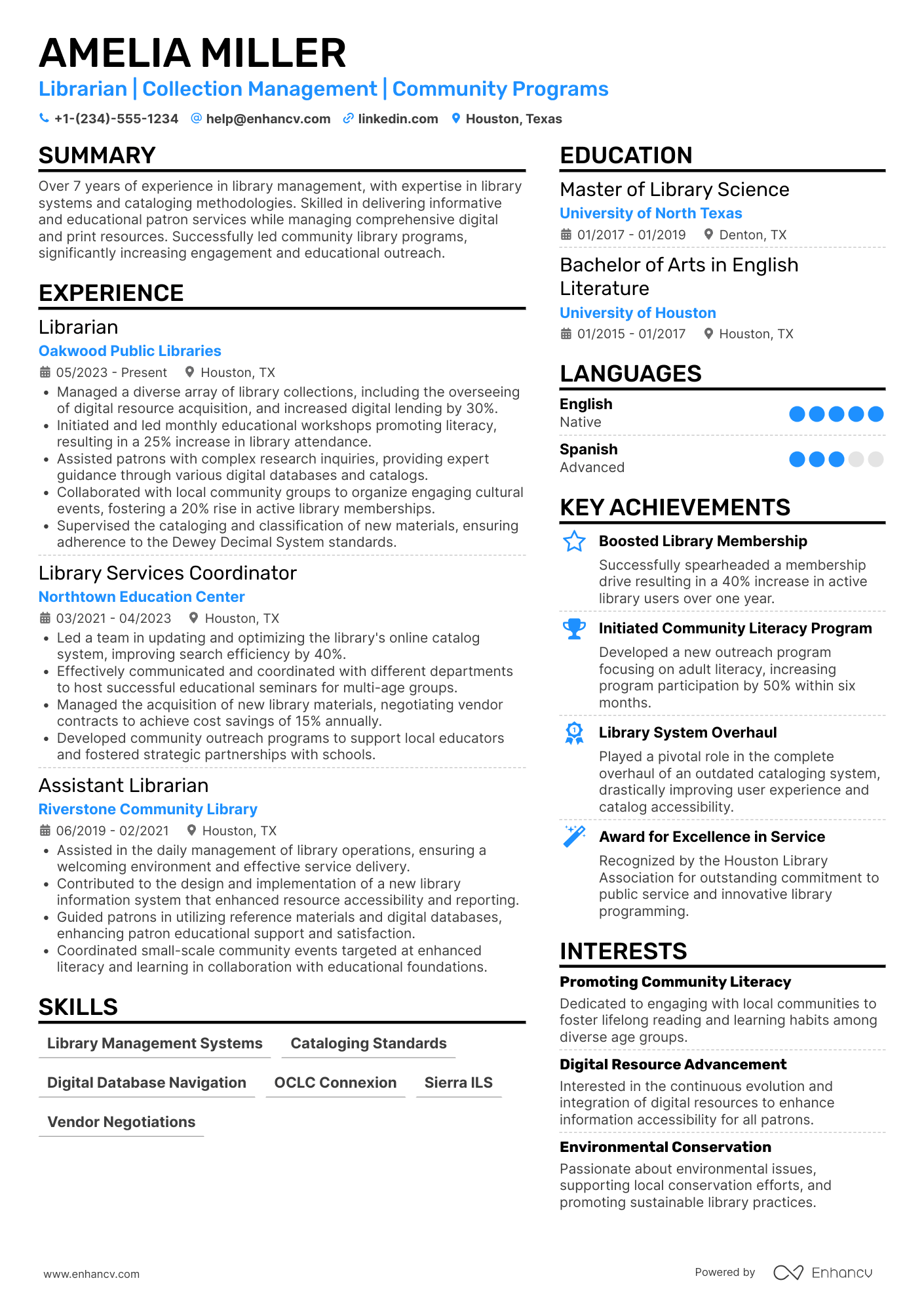
Many librarian resume drafts fail because they list duties and tools without showing measurable impact. That hurts during ATS screening and fast recruiter scans, especially when competition is tight and each opening draws many qualified applicants. Understanding how to make your resume stand out is critical in a field where qualifications often look similar on paper.
A strong resume shows how you improved access, service quality, and collection performance. You should highlight outcomes like increased program attendance, faster reference response times, higher database usage, improved catalog accuracy, reduced processing backlogs, stronger patron satisfaction scores, and successful grant-funded initiatives delivered on time.

Key takeaways
- Quantify librarian achievements using circulation growth, cataloging turnaround, and patron satisfaction metrics.
- Tailor every resume to the job posting by mirroring its systems, standards, and terminology.
- Use reverse-chronological format with experience; use hybrid format when switching careers.
- Demonstrate skills through outcome-driven experience bullets, not isolated keyword lists.
- Lead your summary with years of experience, library type, and one measurable achievement.
- Enhancv's Bullet Point Generator helps turn vague duties into specific, recruiter-ready statements.
- Stop using AI once your resume accurately reflects real experience without inflated claims.
Job market snapshot for librarians
We analyzed 373 recent librarian job ads across major US job boards. These numbers help you understand employment type trends, industry demand, regional hotspots at a glance.
What level of experience employers are looking for librarians
| Years of Experience | Percentage found in job ads |
|---|---|
| 1–2 years | 4.0% (15) |
| 3–4 years | 3.8% (14) |
| 5–6 years | 13.4% (50) |
| 7–8 years | 1.3% (5) |
| 10+ years | 0.8% (3) |
| Not specified | 76.1% (284) |
Librarian ads by area of specialization (industry)
| Industry (Area) | Percentage found in job ads |
|---|---|
| Education | 60.1% (224) |
| Finance & Banking | 20.6% (77) |
| Government | 11.3% (42) |
| Healthcare | 5.6% (21) |
Top companies hiring librarians
| Company | Percentage found in job ads |
|---|---|
| Freese and Nichols, Inc. | 9.1% (34) |
| Princeton University | 3.8% (14) |
Role overview stats
These tables show the most common responsibilities and employment types for librarian roles. Use them to align your resume with what employers expect and to understand how the role is structured across the market.
Day-to-day activities and top responsibilities for a librarian
| Responsibility | Percentage found in job ads |
|---|---|
| Cataloging | 10.7% (40) |
| Sharepoint | 9.9% (37) |
| Library science | 9.4% (35) |
| Accuris engineering workbench | 9.1% (34) |
| Asce | 9.1% (34) |
| Asme | 9.1% (34) |
| Astm | 9.1% (34) |
| Ieee | 9.1% (34) |
| Madcad | 9.1% (34) |
| Collection development | 5.6% (21) |
| Excel | 5.4% (20) |
| Information literacy | 5.1% (19) |
Type of employment (remote vs on-site vs hybrid)
| Employment type | Percentage found in job ads |
|---|---|
| On-site | 79.9% (298) |
| Hybrid | 19.3% (72) |
How to format a librarian resume
Recruiters evaluating librarian candidates prioritize cataloging and classification expertise, patron service skills, collection development experience, and familiarity with integrated library systems. A clean, well-structured resume format ensures these qualifications surface quickly during both human review and applicant tracking system (ATS) scans.

I have significant experience in this role—which format should I use?
Use a reverse-chronological format to present your deepest and most relevant library experience at the top of your work history. Do:
- Lead with your most recent position and highlight the scope of your responsibilities, such as managing a branch collection, supervising circulation staff, or overseeing programming budgets.
- Feature role-specific tools and domains prominently—integrated library systems (ILS) like Sierra or Koha, metadata standards like MARC and Dublin Core, and reference database platforms.
- Quantify outcomes wherever possible, including circulation increases, program attendance growth, grant funding secured, or cataloging throughput improvements.
I'm junior or switching into this role—what format works best?
A hybrid format works well because it lets you lead with transferable skills and relevant coursework while still showing a clear employment timeline. Do:
- Place a skills section near the top of your resume, featuring competencies like reference services, digital literacy instruction, cataloging standards, and patron engagement.
- Include academic projects, practicums, internships, or volunteer work that demonstrate hands-on library experience—such as organizing a community archive, running a literacy outreach event, or completing a cataloging practicum.
- Connect every action to a clear result so hiring managers can see your potential impact, not just your task list.
Why not use a functional resume?
A functional format strips away the timeline context that hiring managers rely on to verify where and when you applied your library skills, making it harder to assess your readiness for the role.
- A functional format may be appropriate if you're transitioning into librarianship from a related field (such as education, archival work, or publishing), have limited formal library employment, or need to address a significant gap in your work history—but only if you tie every listed skill directly to a specific project, practicum, or measurable outcome.
Once you've established a clean, readable format, the next step is deciding which sections to include and how to organize them for maximum impact.
What sections should go on a librarian resume
Recruiters expect a librarian resume to quickly show your ability to manage collections, support patrons, and deliver measurable service improvements. Knowing which resume sections to include and how to organize them makes a significant difference. Use this structure for maximum clarity:
- Header
- Summary
- Experience
- Skills
- Projects
- Education
- Certifications
- Optional sections: Awards, Publications, Volunteering
Strong experience bullets should emphasize your impact on patron outcomes, service quality, collection performance, program reach, and operational results.
Is your resume good enough?
Drop your resume here or choose a file. PDF & DOCX only. Max 2MB file size.
Once you’ve organized your resume with the right categories and supporting details, you can focus on writing your librarian resume experience to show impact within that structure.
How to write your librarian resume experience
The experience section is where you prove you've delivered meaningful results—through collection development, information literacy instruction, cataloging systems, and patron services that moved the needle for your library or institution. Hiring managers prioritize demonstrated impact over descriptive task lists, so every bullet should connect what you did to a measurable or observable outcome.
Each entry should include:
- Job title
- Company and location (or remote)
- Dates of employment (month and year)
Three to five concise bullet points showing what you owned, how you executed, and what outcomes you delivered:
- Ownership scope: the collections, programs, digital repositories, branch operations, or patron populations you were directly accountable for as a librarian.
- Execution approach: the integrated library systems, cataloging standards, database platforms, instructional design methods, or community outreach strategies you used to make decisions and deliver work.
- Value improved: changes to collection accessibility, patron engagement, research support quality, cataloging accuracy, program attendance, or operational efficiency within your library environment.
- Collaboration context: how you worked with faculty, school administrators, IT departments, community organizations, volunteers, or consortia partners to advance library services and programming.
- Impact delivered: outcomes expressed through patron satisfaction improvements, circulation growth, program reach, grant funding secured, or resource accessibility gains rather than routine duties performed.
Experience bullet formula
A librarian experience example
✅ Right example - modern, quantified, specific.
Digital Services Librarian
Riverton Public Library | Riverton, IL
2021–Present
Mid-sized public library system serving 85,000 residents with a focus on equitable access to digital and community resources.
- Implemented a discovery layer in Ex Libris Primo integrated with Alma and OCLC WorldCat, improving search-to-hold conversion by 18% and reducing “no results” sessions by 22%.
- Streamlined cataloging workflows using MARC 21, RDA, Library of Congress Subject Headings, and authority control in Alma, cutting average time-to-shelf from nine days to five days and reducing duplicate records by 31%.
- Built monthly circulation and e-resource dashboards in Power BI using integrated library system exports and COUNTER 5 reports, enabling collection decisions that reduced cost per use by 14% across top databases.
- Led a cross-functional migration of 120,000 bibliographic and item records from Sierra to Alma with the vendor and IT, achieving 99.6% data integrity and resolving 430 exceptions before go-live.
- Launched an online research help service using LibAnswers and Springshare guides, collaborating with youth services and community partners to increase virtual reference volume by 27% and raise patron satisfaction to 4.7 out of 5.
Now that you've seen how a strong experience section comes together, let's look at how to adjust yours to match the specific librarian role you're targeting.
How to tailor your librarian resume experience
Recruiters evaluate your librarian resume through both human review and applicant tracking systems, so tailoring your resume to the job description increases your chances of advancing. Tailoring means adjusting how you present your real work to reflect the language and priorities each employer uses.
Ways to tailor your librarian experience:
- Mirror the exact catalog systems or databases named in the posting.
- Match terminology for collection development standards or acquisition workflows.
- Highlight circulation metrics or patron engagement KPIs the employer values.
- Reference specific literacy programs or outreach models they describe.
- Emphasize compliance with ADA accessibility or archival preservation guidelines mentioned.
- Include experience with the library management software they require.
- Align your collaboration language with cross-departmental or community frameworks listed.
- Showcase relevant domain expertise such as academic or public library settings.
Tailoring means aligning your genuine accomplishments with what the employer asks for, not forcing keywords where they don't belong.
Resume tailoring examples for librarian
| Job description excerpt | Untailored | Tailored |
|---|---|---|
| Manage cataloging and metadata creation using MARC records and the Integrated Library System (ILS) to ensure accurate resource discovery. | Helped organize library materials and kept records up to date. | Created and maintained over 12,000 MARC records in Sierra ILS, improving catalog accuracy and reducing resource discovery errors by 30%. |
| Develop and lead community literacy programs for diverse populations, including ESL learners and senior patrons. | Assisted with library programs and events for the public. | Designed and facilitated weekly literacy workshops for 40+ ESL learners and senior patrons, increasing program enrollment by 25% over two years. |
| Provide reference and research assistance using databases such as EBSCO, JSTOR, and ProQuest, supporting academic and public inquiries. | Helped patrons find books and answered questions at the front desk. | Delivered reference and research support using EBSCO, JSTOR, and ProQuest, handling an average of 60 patron inquiries per week with a 95% satisfaction rate. |
Once you’ve aligned your experience with the role’s priorities, the next step is to quantify your librarian achievements so hiring managers can quickly see the impact of that work.
How to quantify your librarian achievements
Quantifying your achievements shows how you improved access, accuracy, and service. Focus on circulation volume, cataloging turnaround time, reference outcomes, program attendance, satisfaction scores, budget savings, and compliance or risk reduction.
Quantifying examples for librarian
| Metric | Example |
|---|---|
| Turnaround time | "Reduced cataloging backlog from 1,200 to 180 items in 10 weeks by batching workflows in OCLC Connexion and refining MARC templates." |
| Accuracy rate | "Improved metadata accuracy from 92% to 99% after auditing 500 records monthly and standardizing Library of Congress Subject Headings." |
| User satisfaction | "Raised patron satisfaction from 4.2 to 4.7 out of 5 by adding LibGuides tutorials and cutting average reference wait time to under four minutes." |
| Program engagement | "Grew monthly workshop attendance from 25 to 70 by partnering with three departments and tracking registrations in Eventbrite and follow-up surveys." |
| Cost savings | "Saved $18,000 annually by renegotiating two database renewals and shifting low-use titles after COUNTER report analysis." |
Turn vague job duties into measurable, recruiter-ready resume bullets in seconds with Enhancv's Bullet Point Generator.
Once you've crafted strong bullet points for your experience section, the next step is ensuring your skills section highlights the right mix of hard and soft skills that librarian roles demand.
How to list your hard and soft skills on a librarian resume
Your skills section shows how you support discovery, access, and instruction, and recruiters and applicant tracking systems scan it for job-matched keywords, so aim for a balanced mix of role-specific hard skills and execution-focused soft skills. librarian roles require a blend of:
- Product strategy and discovery skills.
- Data, analytics, and experimentation skills.
- Delivery, execution, and go-to-market discipline.
- Soft skills.
Your skills section should be:
- Scannable (bullet-style grouping).
- Relevant to the job post.
- Backed by proof in experience bullets.
- Updated with current tools.
Place your skills section:
- Above experience if you're junior or switching careers.
- Below experience if you're mid/senior with strong achievements.

Hard skills
- Cataloging: RDA, MARC 21
- Library of Congress Classification
- Dewey Decimal Classification
- Integrated library systems: Alma, Sierra, Koha
- Discovery layers: Primo, EBSCO Discovery Service
- OCLC WorldCat, Connexion
- Authority control, metadata cleanup
- Digital repositories: DSpace, CONTENTdm
- Archives processing: DACS, EAD
- Database searching: EBSCOhost, ProQuest, JSTOR
- Collection development, acquisitions
- LibGuides, library instruction design
Soft skills
- Conduct reference interviews
- Translate needs into search strategies
- Teach research skills clearly
- Write concise user-facing guides
- Coordinate with faculty and staff
- Prioritize requests under deadlines
- Resolve access and licensing issues
- Apply policy consistently and fairly
- Document workflows and decisions
- Communicate sensitive information discreetly
- Improve services from user feedback
- Lead projects through to completion
How to show your librarian skills in context
Skills shouldn't live only in a bulleted list on your resume. Browse examples of how librarians present resume skills in context to see what works.
They should be demonstrated in:
- Your summary (high-level professional identity)
- Your experience (proof through outcomes)
Here's what this looks like in practice.
Summary example
Senior librarian with 12 years in academic research services. Skilled in collection development, OCLC WorldShare, and information literacy instruction. Redesigned the interlibrary loan workflow, cutting fulfillment time by 30% while mentoring a team of four library associates.
- Reflects senior-level expertise clearly
- Names role-relevant tools and methods
- Includes a measurable operational outcome
- Highlights mentorship as a soft skill
Experience example
Senior Research Librarian
Whitfield University Library | Portland, OR
June 2018–Present
- Migrated 85,000 catalog records to Alma/Primo, collaborating with IT staff to reduce discovery errors by 22%.
- Designed six information literacy workshops with faculty, boosting student research competency scores by 15%.
- Streamlined reserves processing using SpringShare LibGuides, cutting average turnaround from five days to two.
- Every bullet includes a measurable outcome.
- Skills and tools appear through real achievements.
Once you’ve tied your abilities to real tasks and outcomes, the next step is learning how to write a librarian resume with no experience that presents those examples clearly and credibly.
How do I write a librarian resume with no experience
Even without full-time experience, you can demonstrate readiness through:
- Library volunteer desk support
- Cataloging practice using MARC records
- Circulation work in campus library
- Research guide or LibGuides creation
- Archives processing for student collections
- Storytime assistance at public library
- Digitization project with metadata tagging
- Reference help in tutoring center
If you're building your first librarian resume, our guide on writing a resume without work experience walks you through how to present these activities effectively.
Focus on:
- Cataloging and metadata accuracy
- Reference research with documented outcomes
- Circulation systems and patron records
- Collection maintenance and shelving metrics
Resume format tip for entry-level librarian
Use a combination resume format because it highlights relevant projects and skills before limited work history. Do:
- Lead with a targeted summary and keywords.
- Group projects under "Library Projects" section.
- List tools used, including ILS software.
- Quantify outputs: items, hours, patrons.
- Add coursework tied to librarian duties.
- Created a LibGuides research guide for first-year writing, adding twelve vetted sources and improving peer usability scores from 3.2 to 4.4 out of five.
Even without professional experience, your academic background can demonstrate the knowledge and qualifications employers are looking for—making how you present your education especially important.
How to list your education on a librarian resume
Your education section lets hiring teams confirm you hold the foundational knowledge a librarian needs. It validates your academic training in information science, research methods, and library systems.
Include:
- Degree name
- Institution
- Location
- Graduation year
- Relevant coursework (for juniors or entry-level candidates)
- Honors & GPA (if 3.5 or higher)
Skip month and day details—list the graduation year only.
Here's a strong education entry tailored for a librarian resume:
Example education entry
Master of Library and Information Science
University of Illinois at Urbana-Champaign, Champaign, IL
2021 | GPA: 3.8
- Relevant coursework: Cataloging & Metadata, Digital Libraries, Information Organization, Reference Services, Collection Development
- Graduated with honors, Beta Phi Mu International Library Science Honor Society inductee
How to list your certifications on a librarian resume
Certifications show a librarian's commitment to learning, proficiency with modern tools, and alignment with current standards in libraries and information services.
Include:
- Certificate name
- Issuing organization
- Year
- Optional: credential ID or URL
- Place certifications below education when your degree is recent and your certifications support it without adding stronger role relevance.
- Place certifications above education when they are recent, highly relevant to the role, or required by the employer.
Best certifications for your librarian resume
Certified Public Librarian (CPL) Certified Library Support Staff (CLSS) Digital Archives Specialist (DAS) Certified Records Manager (CRM) Project Management Professional (PMP) Certified Information Professional (CIP) Google Data Analytics Professional Certificate
Once you’ve positioned your credentials where hiring managers will notice them, shift to writing your librarian resume summary to connect those qualifications to the value you bring.
How to write your librarian resume summary
Your resume summary is the first thing a recruiter reads, so it needs to earn their attention fast. A strong opening signals you understand the role and bring relevant library experience to the table.
Keep it to three to four lines, with:
- Your title and total years of library experience.
- The type of library or domain you specialize in, such as academic, public, or special collections.
- Core skills like cataloging systems, reference services, or digital resource management.
- One or two measurable achievements, such as circulation increases or program attendance growth.
- Soft skills tied to real outcomes, like patron engagement or cross-department collaboration.

PRO TIP
At the entry level, focus on specific tools you've used and early wins that show initiative. Highlight relevant coursework, practicum results, or volunteer contributions with measurable impact. Avoid vague descriptors like "passionate" or "dedicated." Replace them with concrete skills and outcomes that prove your value.
Example summary for a librarian
Entry-level librarian with two years of public library experience managing circulation and reference services. Increased youth program attendance by 30% through community outreach and redesigned event scheduling using Sierra ILS.
Optimize your resume summary and objective for ATS
Drop your resume here or choose a file.
PDF & DOCX only. Max 2MB file size.
Now that your summary captures your professional value, make sure the header above it presents your contact details correctly so recruiters can actually reach you.
What to include in a librarian resume header
A resume header lists your key identifiers and contact details, helping a librarian stand out in searches, build credibility, and pass recruiter screening fast.
Essential resume header elements
- Full name
- Tailored job title and headline
- Location
- Phone number
- Professional email
- GitHub link
- Portfolio link
A LinkedIn link helps recruiters confirm your titles, dates, and scope quickly, which supports faster screening.
Don't include a photo on a librarian resume unless the role is explicitly front-facing or appearance-dependent.
Use a tailored librarian title that matches the posting, and keep your contact details consistent across your resume and online profiles.
Example
Librarian resume header
Jordan Taylor
Librarian | Academic Research Support and Cataloging
Boston, MA
(617) 555-12XX
jordan.taylor@enhancv.com
github.com/jordantaylor
yourwebsite.com
linkedin.com/in/jordantaylor
Once your contact details and role identifiers are set at the top, add additional sections to highlight relevant qualifications that do not fit in the header.
Additional sections for librarian resumes
Beyond core qualifications, additional sections help you stand out by showcasing unique strengths relevant to library work. For example, listing language skills on your resume can be especially valuable in libraries serving multilingual communities.
- Languages
- Publications
- Professional affiliations
- Volunteer experience
- Conferences and presentations
- Continuing education
- Hobbies and interests
Once you've rounded out your resume with sections that highlight your full range of qualifications, the next step is pairing it with a strong cover letter to make an even greater impact.
Do librarian resumes need a cover letter
A cover letter isn't required for every librarian role, but it often helps. If you're unsure where to start, understanding what a cover letter is and when it adds value can clarify your approach. It matters most for competitive openings or organizations that expect one. It can make a difference when your resume needs context or your fit isn't obvious.
Use a cover letter to add value in these situations:
- Explain how your experience fits the role, the team's workflow, and the service model you'll support.
- Highlight one or two projects with outcomes, such as improved discovery, higher program attendance, or faster response times.
- Show you understand the organization's users, products, or business context, and connect that insight to your approach.
- Address a career transition or non-obvious experience, and translate it into librarian skills the hiring manager can evaluate.
Drop your resume here or choose a file.
PDF & DOCX only. Max 2MB file size.
Whether you include a cover letter or not, the next section shows how to use AI to strengthen your librarian resume so it communicates your value clearly and quickly.
Using AI to improve your librarian resume
AI can sharpen your resume's clarity, structure, and impact. It helps you find stronger phrasing and tighten loose sentences. But overuse strips authenticity fast. Once your content is clear and aligned with the role, step away from AI. For specific prompt ideas, check out our guide on ChatGPT resume writing prompts.
Here are 10 practical prompts you can copy and paste to strengthen specific sections of your librarian resume:
- Strengthen summary focus: "Rewrite my librarian resume summary to highlight my top three qualifications and align them with this job description."
- Quantify experience bullets: "Add measurable outcomes to these librarian experience bullets using patron numbers, collection sizes, or program attendance data."
- Tighten skills section: "Remove generic entries from my librarian skills list and suggest role-specific replacements based on this job posting."
- Improve action verbs: "Replace weak or repetitive verbs in my librarian experience section with precise, active alternatives."
- Refine project descriptions: "Rewrite this librarian project entry to clearly state my role, the tools I used, and the result achieved."
- Align education details: "Adjust my education section to emphasize coursework and achievements most relevant to this librarian position."
- Clarify certification entries: "Reformat my librarian certifications section so each entry includes the credential name, issuing body, and date earned."
- Cut filler language: "Identify and remove vague or redundant phrases from my librarian resume without changing the core meaning."
- Tailor to job posting: "Compare my librarian resume against this job description and flag missing keywords or misaligned bullet points."
- Sharpen accomplishment statements: "Restructure each librarian experience bullet into a clear result-driven statement using a challenge-action-result format."
Stop using AI once your resume sounds accurate, specific, and aligned with real experience. AI should never invent experience or inflate claims—if it didn't happen, it doesn't belong here.
Conclusion
A strong librarian resume shows measurable outcomes, role-specific skills, and a clean structure. It highlights how you improved access, supported patrons, managed collections, and delivered programs. It stays easy to scan, with clear sections and consistent formatting.
Today’s hiring market rewards librarians who prove impact and adapt to changing tools and needs. When your resume ties achievements to numbers and matches the role, it reads as current and job-ready. Keep it focused, and let your results lead.
Librarian resume examples
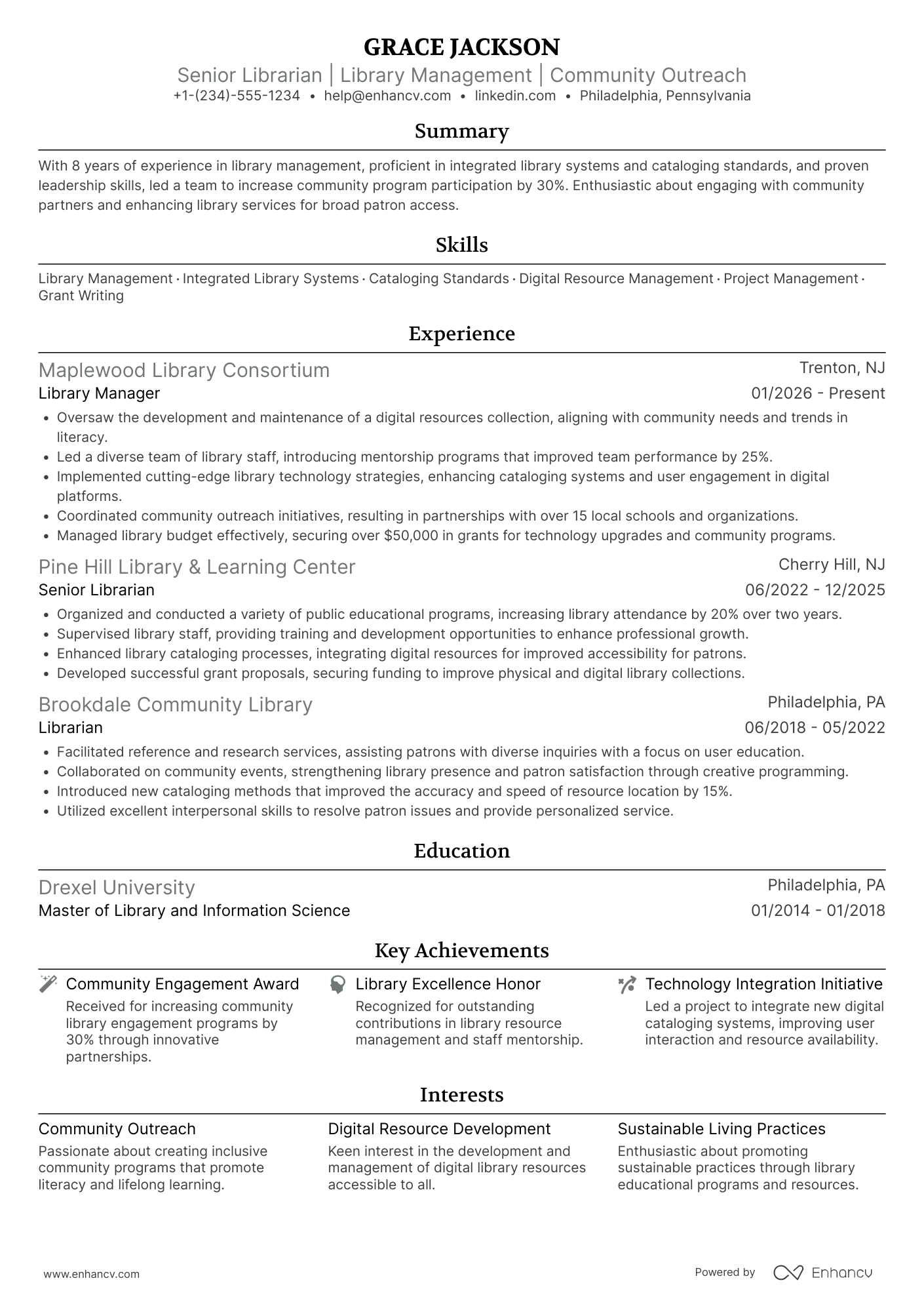
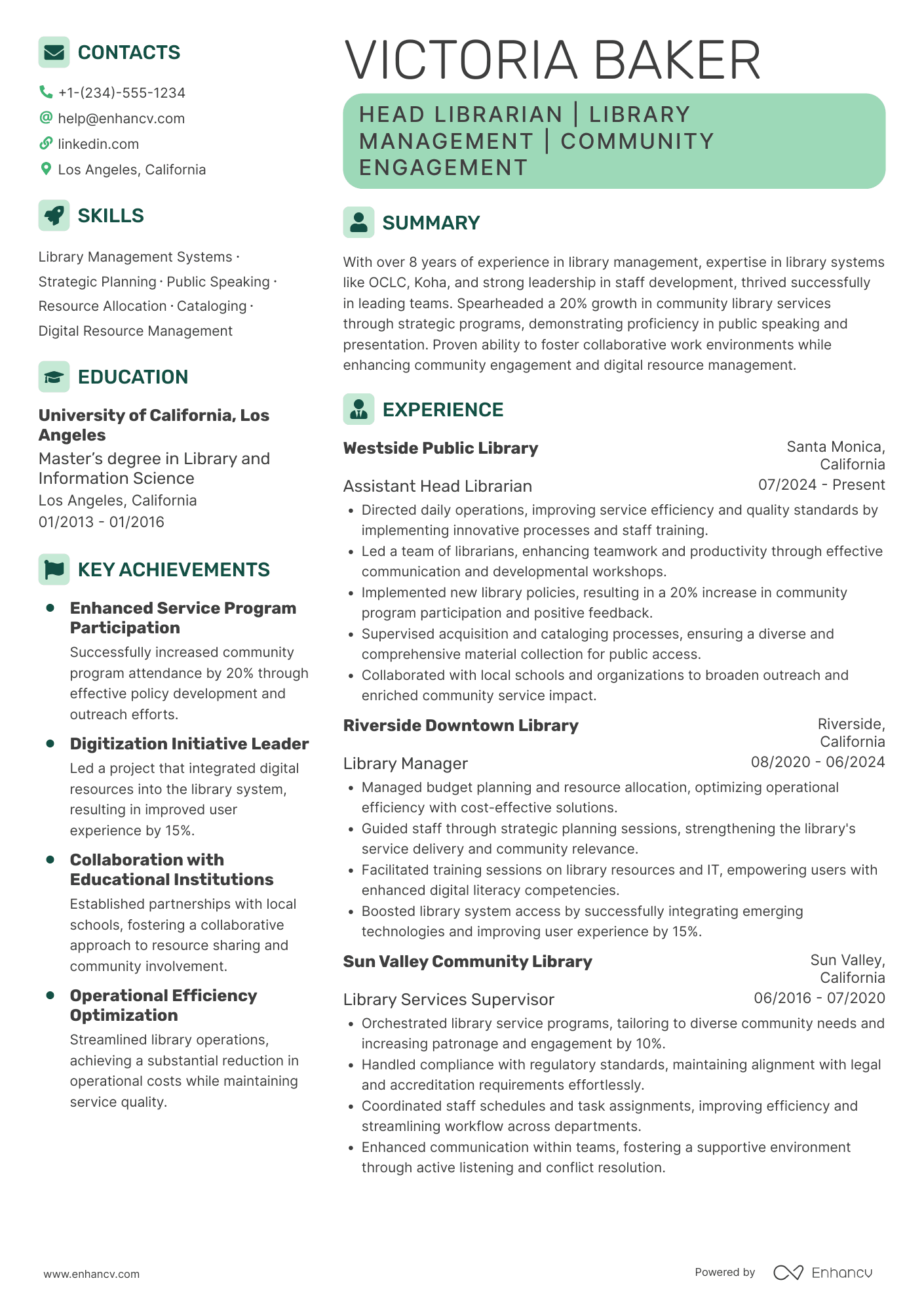
By Role