


Resume Templates That Landed Interviews at Companies Using Greenhouse
See 3 real Enhancv success stories, with verified companies and honest outcomes. In the article below, you'll find 3 real resume templates that either landed an interview or a job at a company using Greenhouse ATS for sorting applicants. We concluded that elements such as two columns, accent colors, icons, and backgrounds don't stop your resume from getting an interview. We created the 3 resumes you see at the top of this page with these conclusions in mind.


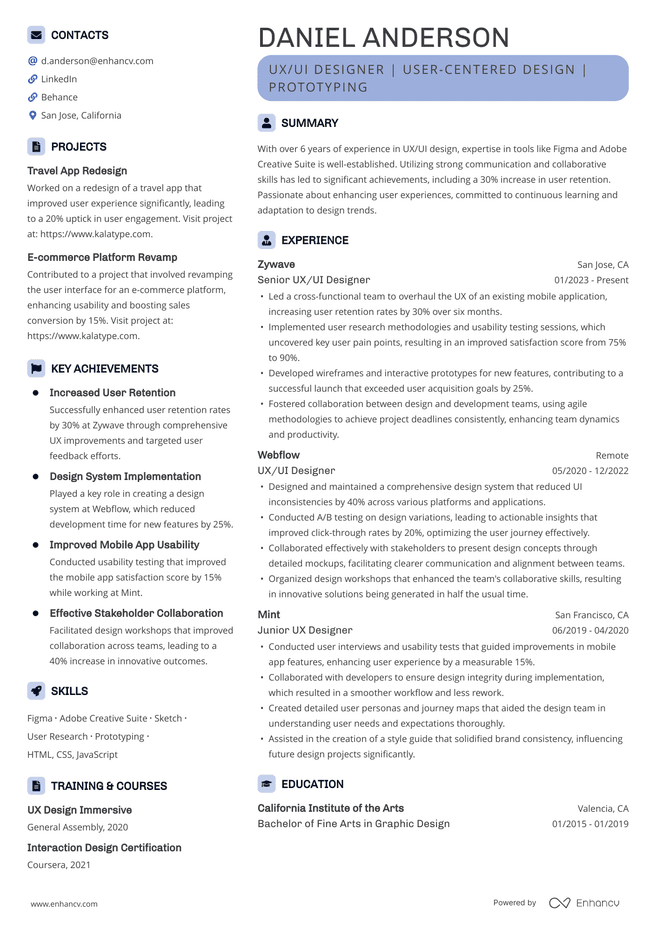
Contemporary
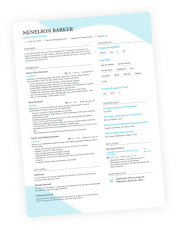
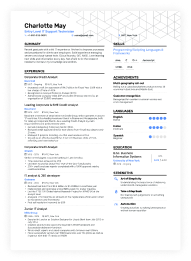
The Contemporary template pairs a compact sidebar with a spacious main column, keeping contacts, projects, and achievements easy to scan. A bold accent color and clean icons guide the eye through your experience and skills.
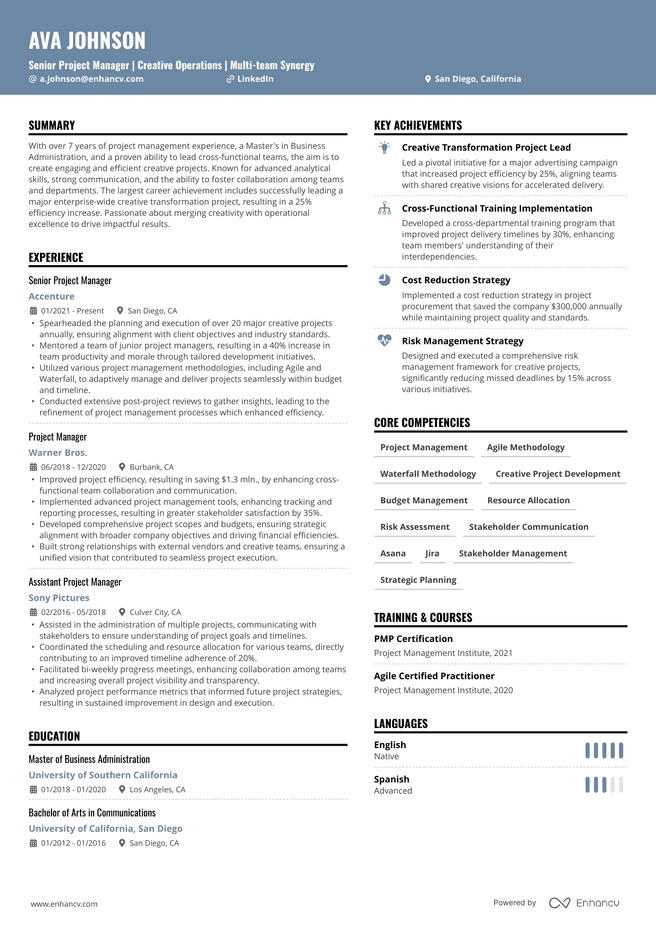
Creative
The Creative template opens with a bold header banner, then splits into two columns: experience on the left, achievements and skills on the right. Icon-led cards make your standout wins easy to spot at a glance.
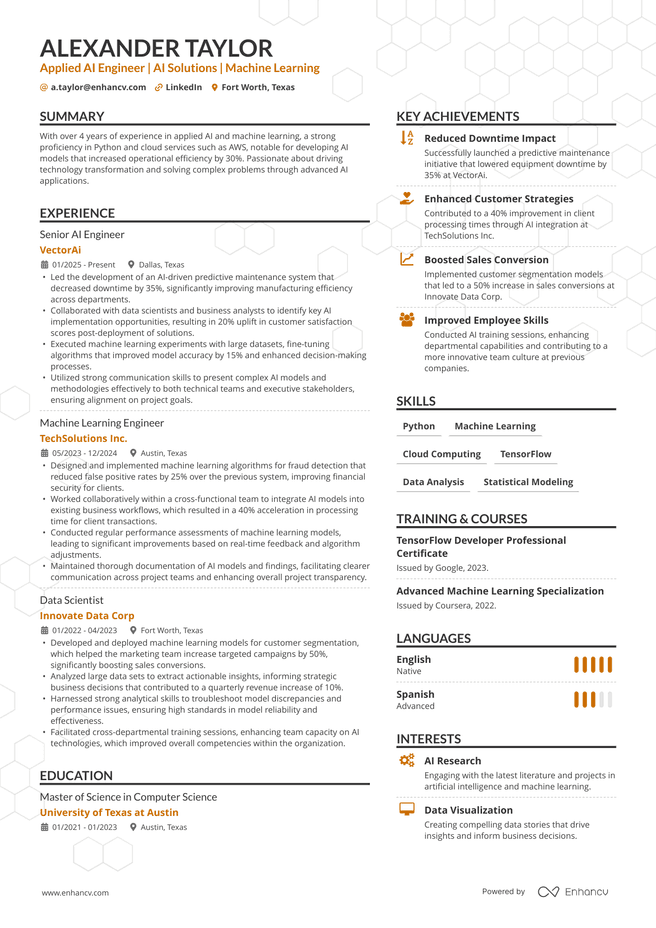
Double Column
The Double Column template balances experience on the left with achievements and skills on the right, so both are easy to scan side by side. A subtle background and accent color add polish without crowding the page.
Lately, all resume builders claim to be ATS-optimized. Most of them do little to nothing to support their claims. They also often repeat the same empty statements, that two-column resumes hinder applicant tracking systems, for example, which is simply untrue.
At Enhancv, we like data and provable outcomes. This is the third and final piece (for now) in a series showing real resumes from real candidates, demonstrating how Enhancv's templates hold up in front of the ATS platforms companies actually use.
We've already covered Workday and SAP SuccessFactors. This round, it's Greenhouse, a hiring platform that, by its own count, supports more than 7,500 companies worldwide.
This is our most compact sample of the series: three real Enhancv success stories from candidates who applied to companies running Greenhouse. One got hired. Two landed interviews.
It's too small a number to draw broad conclusions from, but we can still see what worked. To us at Enhancv, every story is still a real person who built a resume, applied, and moved forward. That's always worth showing.

Key takeaways
- We tracked three real, verified Enhancv success stories at companies using Greenhouse: Metalab, Oliver Agency, and Anthropic.
- One candidate was hired, and two landed interviews, with templates ranging from a single-column layout to a colorful double-column design.
- Every entry here is high-confidence: Greenhouse's job application URLs follow one consistent, easy-to-verify pattern.
- With only three stories, we're treating this as a small, honest showcase, not a statistical claim.
How this data works
These are real Enhancv users who shared their success stories, anonymized to protect their identities. Company names are self-reported, and outcomes reflect whether the candidate was hired or invited to interview
Greenhouse turned out to be the easiest of the three ATSs in this series to verify. Every company that uses it hosts its applications at a job-boards.greenhouse.io/[company] address, a consistent fingerprint with no regional variants or third-party front-ends layered on top.
That's why all three stories here carry high confidence, with no caveats attached.
What Greenhouse actually does
The idea that Greenhouse, or any ATS, will disqualify a resume for using a graphic, an accent color, or a two-column layout doesn't hold up. That's not what the software does.
Greenhouse organizes the information on a resume into structured fields, then surfaces and ranks candidates against a job's criteria. It's a sorting mechanism that helps busy recruiters find the right candidate. It’s not meant to disqualify candidates based on design.
Our own research into recruiter behavior backs this up. In our survey of 25 U.S. recruiters, 92% said their systems don't auto-reject resumes for formatting, content, or design, and only 8% had any content-based screening configured at all.
Same idea, same pattern across all three ATSs in this series: the software decides who gets surfaced. A person still decides who gets called.
Real candidates, real templates, real outcomes
Small sample, real people. Here's what each of these three candidates built and what conclusions we can draw from it.
The hired candidate
Let's start with the one that made it all the way: an offer.
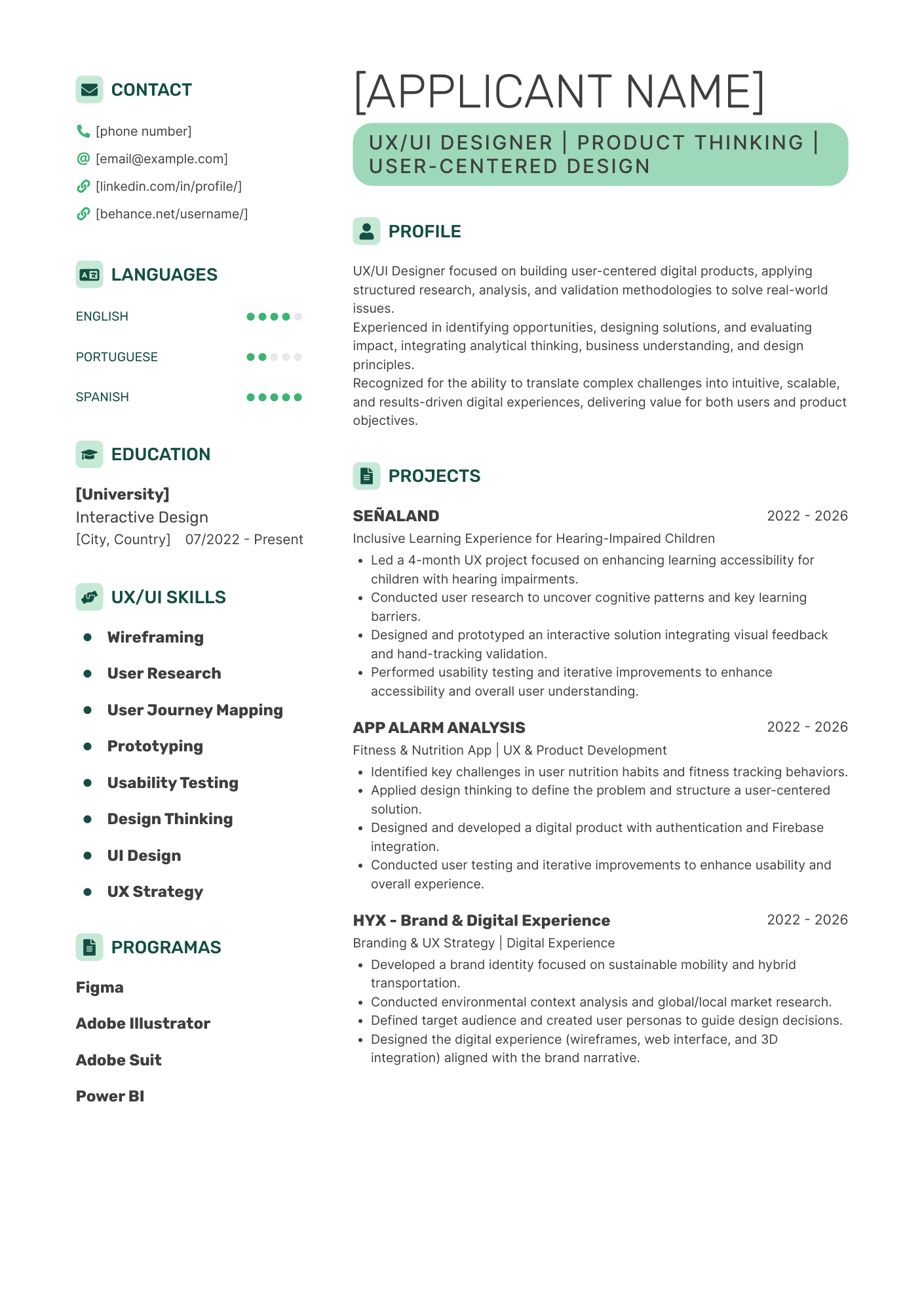
Company: Metalab
Position: UX/UI Designer
Template: Contemporary
Includes: Double columns, accent color, icons, custom font
The candidates who got an interview
And here are the two who made it far enough to be seen, if not yet hired.
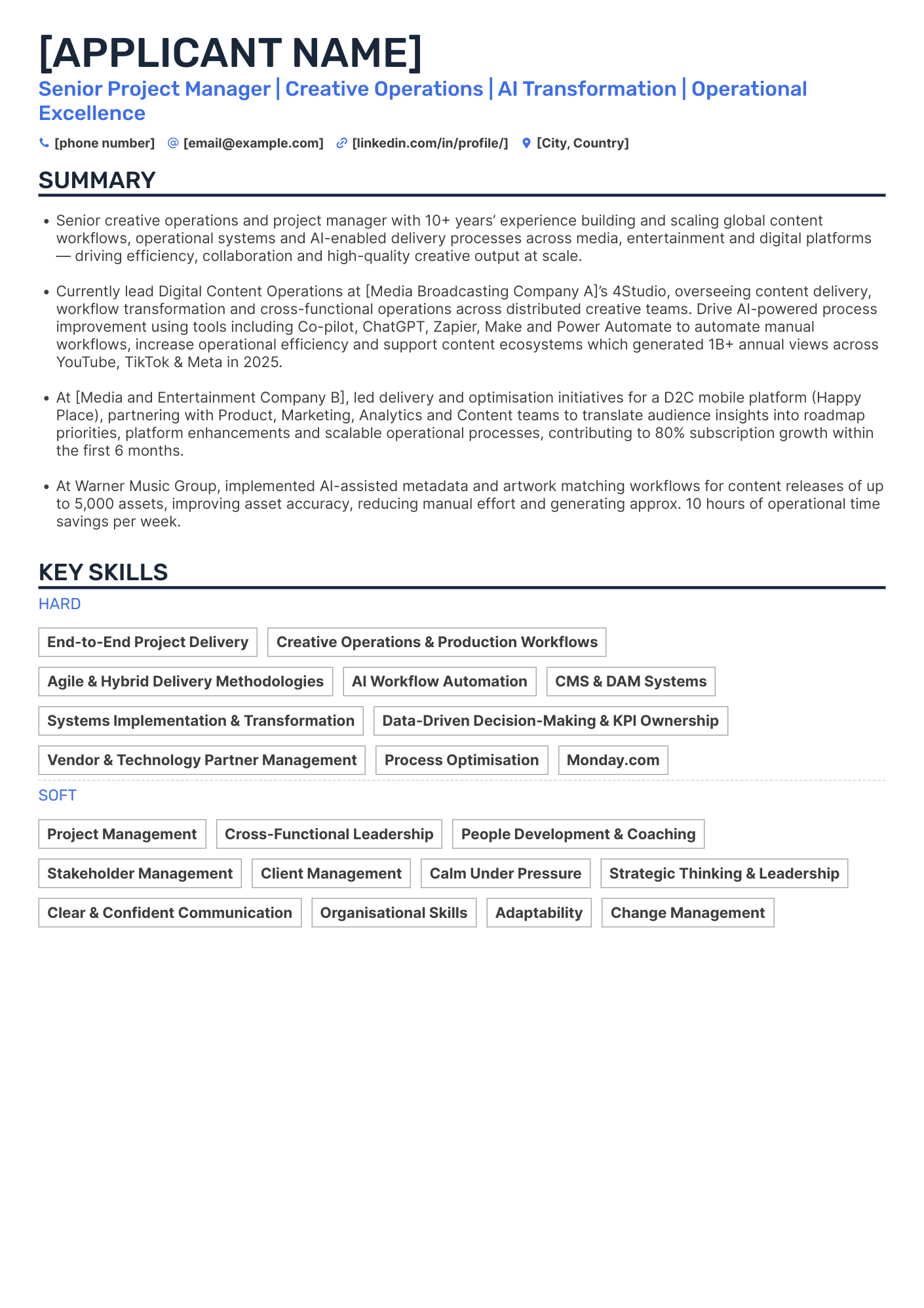
Company: Oliver Agency
Position: Senior Project Manager (Creative Operations)
Template: Single Column
Includes: Single column, accent colors
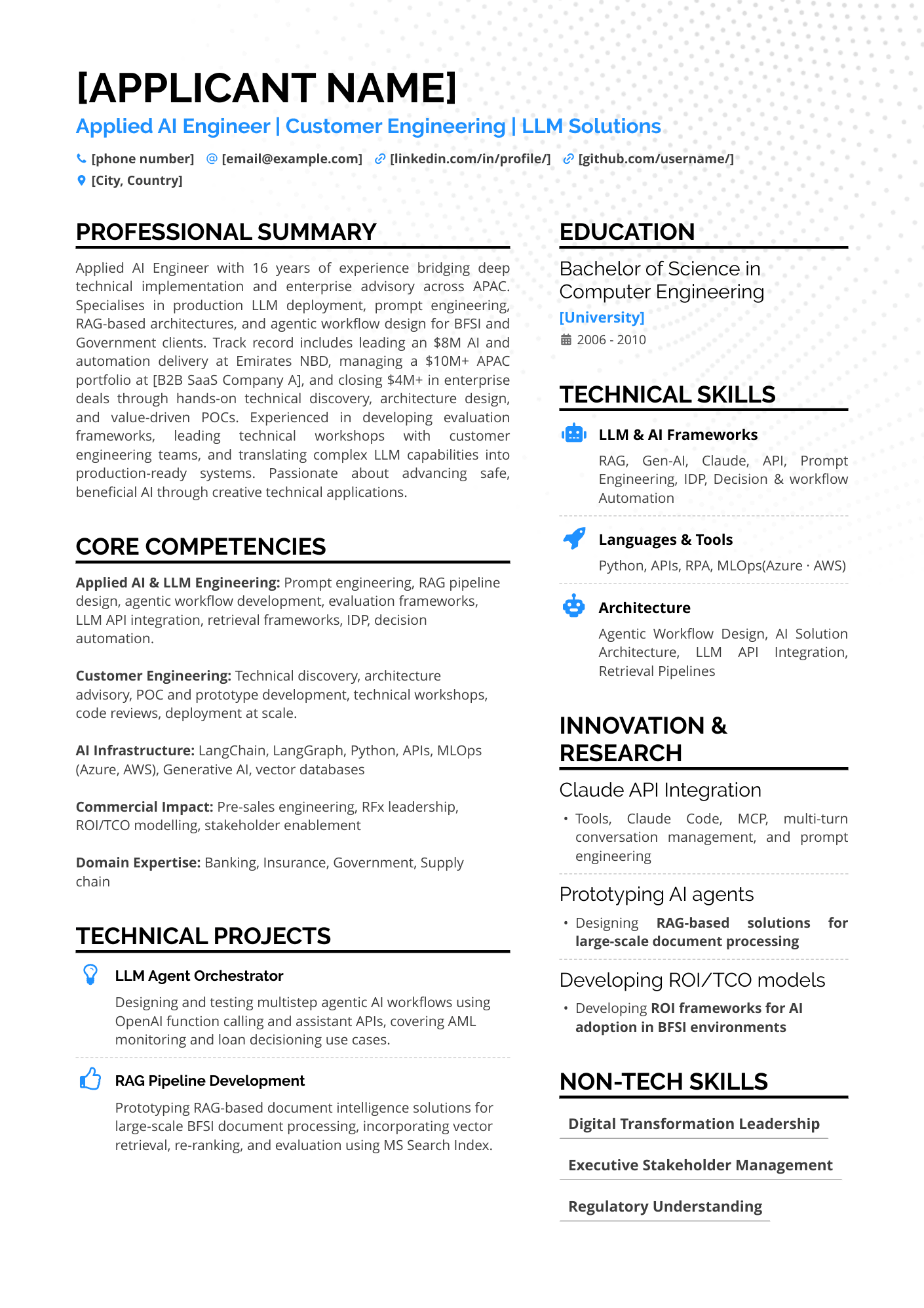
Company: Anthropic
Position: Applied AI Engineer / Customer Engineering
Template: Double Column
Includes: Double columns, color accents, icons, background
What patterns do we observe?
At three stories, there's nothing to responsibly generalize here, and we're not going to pretend otherwise. Three stories can't establish a trend, but they can rule out one myth: formatting alone didn't cost anyone the interview.
Here's what we can say: Metalab's hire used a double-column layout with a green accent. Oliver Agency's interview came from a single-column resume in muted navy and blue. Anthropic's interview used a double-column layout again, this time in a bolder black and blue, with a background included. Between the three, we've got single-column and double-column, muted tones and bold ones, as well as a background.
No layout choice ruled anyone out. No color palette did either. If there's a real takeaway at this scale, it's that the range of what worked is wider than the "safe, minimal, one-column" advice you'll see elsewhere would suggest.
The bottom line
Three stories don't prove Greenhouse "passed" any of these templates. We don't have parsed-output data, here or anywhere else in this series, to make that claim.
What we can show is real: a real designer, a real project manager, a real engineer. Each building a resume that looked like them, applying to a real company, and moving forward in the process.
That's the standard we hold every template in Enhancv’s library to, and it's the same thinking behind our breakdown of the best resume templates: a template earns its place by working for both readers, not just the first one.
Frequently asked questions
Does Greenhouse reject resumes for having a two-column layout?
No. Greenhouse organizes resume content into structured fields and ranks candidates against a job's criteria—it doesn't disqualify a resume based on layout. In our survey of 25 U.S. recruiters, 92% said their systems don't auto-reject resumes for formatting, content, or design choices.
How do I know if a company uses Greenhouse?
Check the URL when you apply. Companies using Greenhouse host their job applications at a job-boards.greenhouse.io/[company] address. If that's what you see in your browser bar, you're applying through Greenhouse.
What resume template should I use for a Greenhouse application?
Any well-built, ATS-compatible template works. The three real success stories show you can use both a single and a double-column structure, backgrounds, icons, or accent colors.
What matters more than layout is clean formatting, no tables, headers, or footers that can confuse the parser, and the right keywords for the role.
Does passing Greenhouse's ATS guarantee an interview?
No, and this piece doesn't claim it does. Getting parsed correctly gets you seen by the platform. Whether you get an interview after that comes down to the recruiter reviewing your experience and fit for the role.
Which companies use Greenhouse?
Greenhouse says it supports more than 7,500 companies worldwide. The two companies in this piece confirmed via their careers page were Oliver Agency and Anthropic. Metalab was the third.