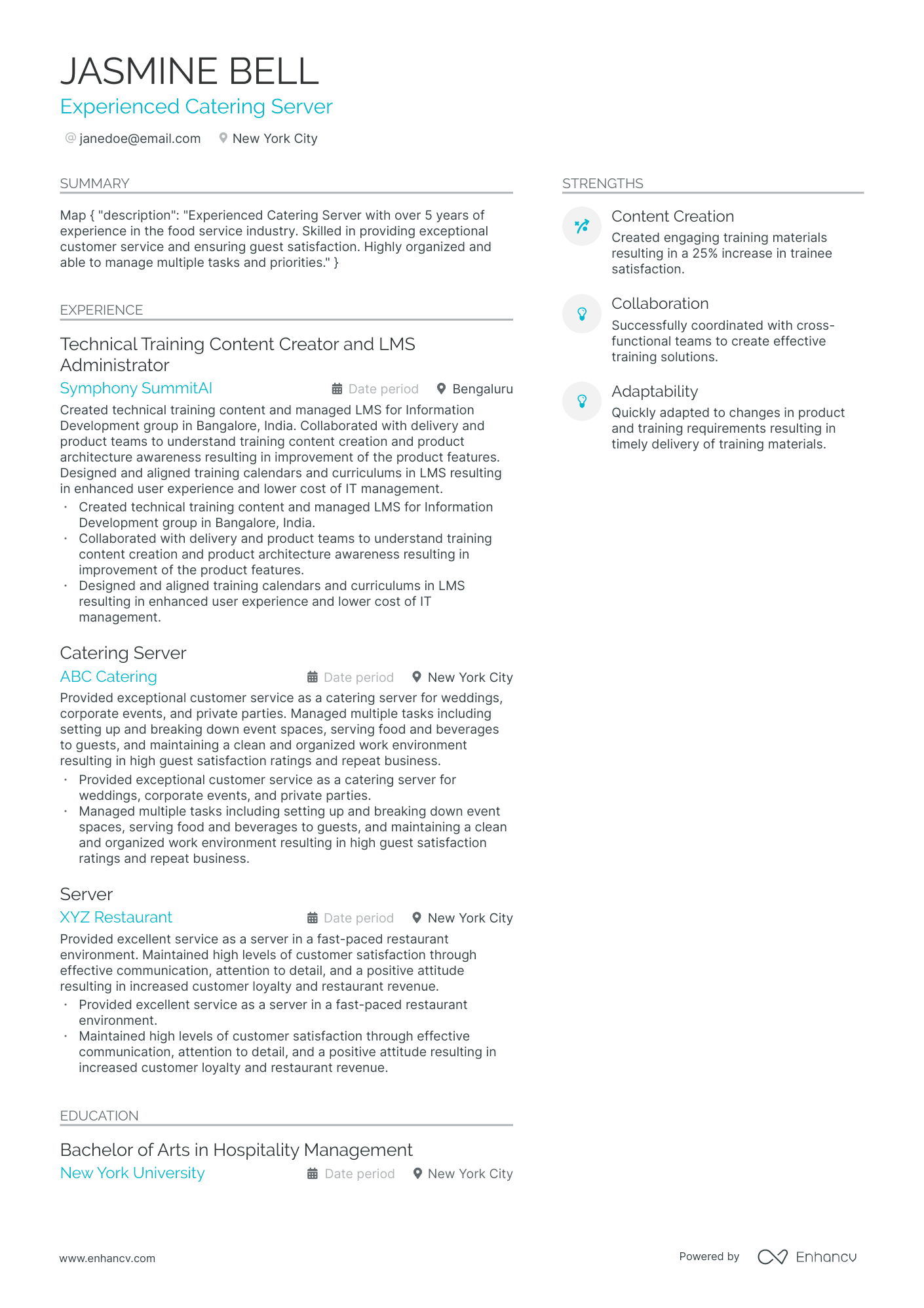
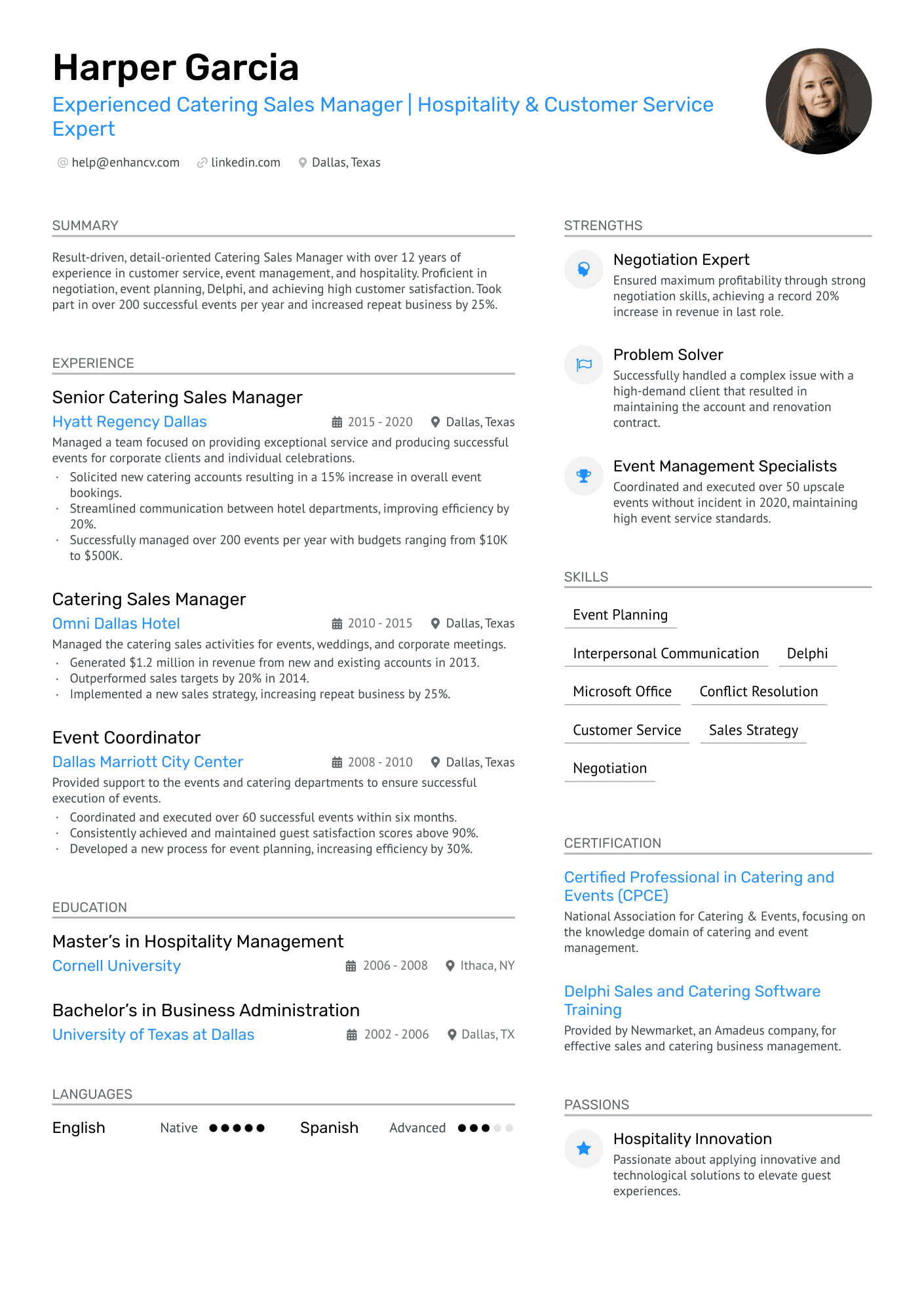
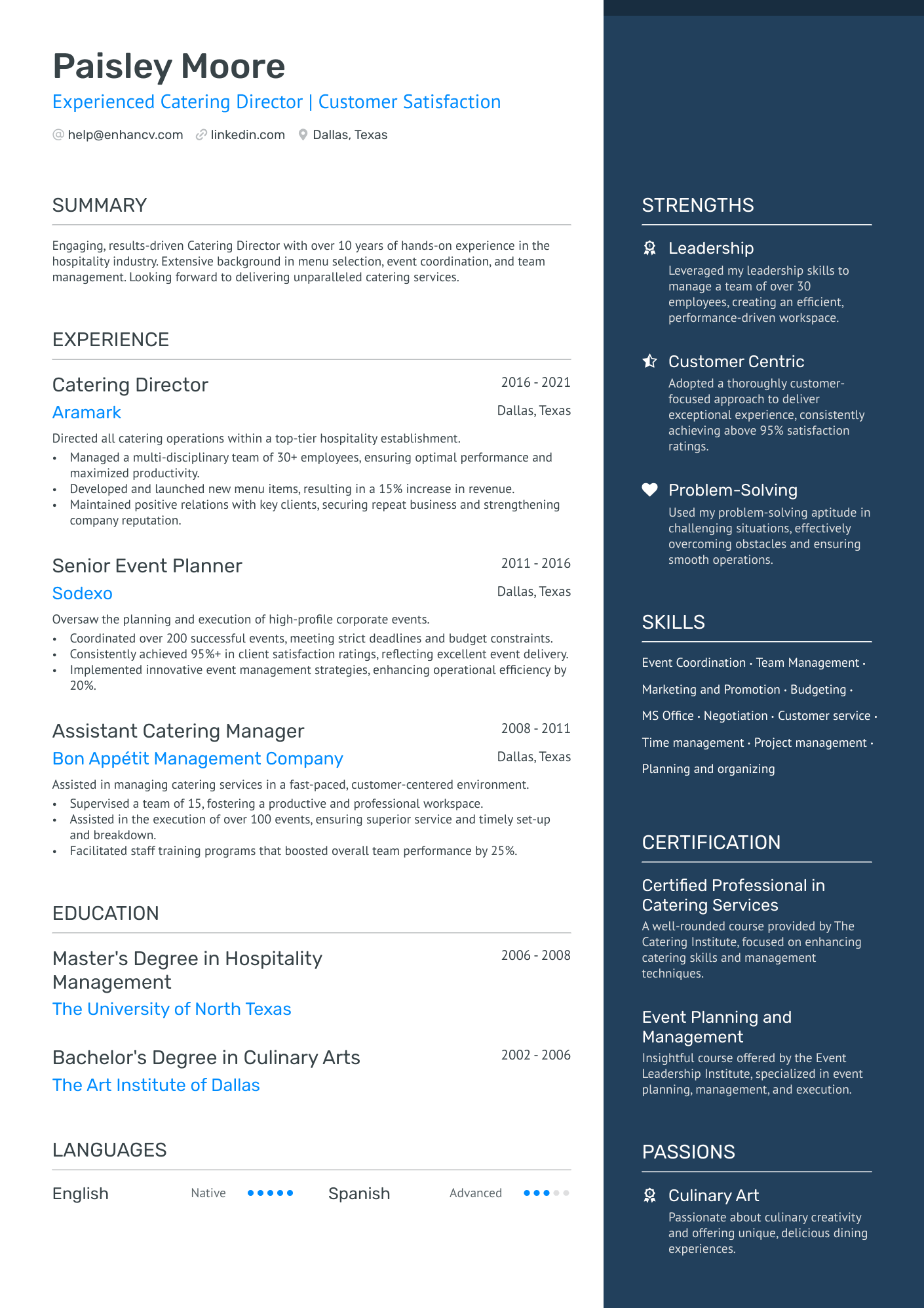
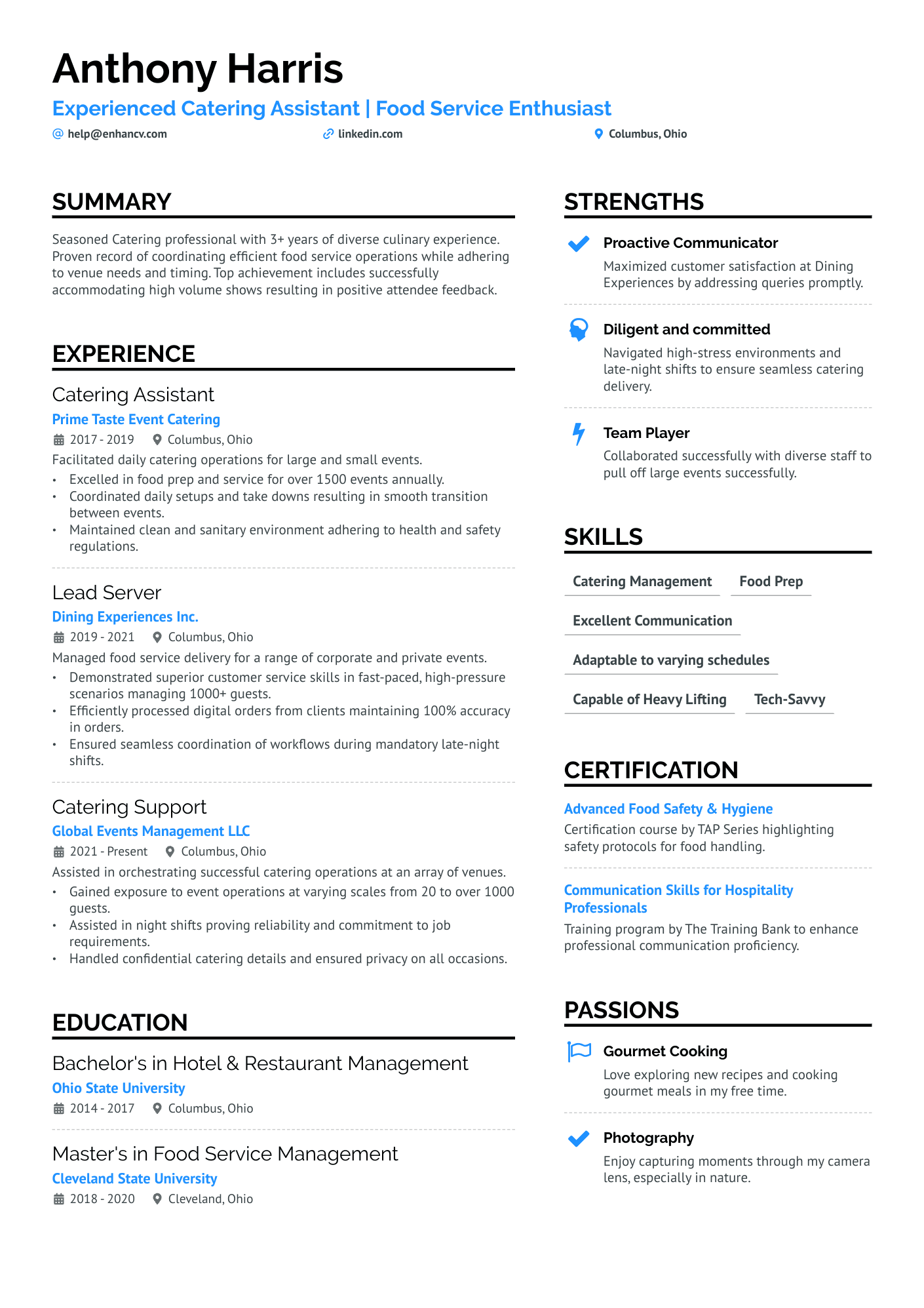
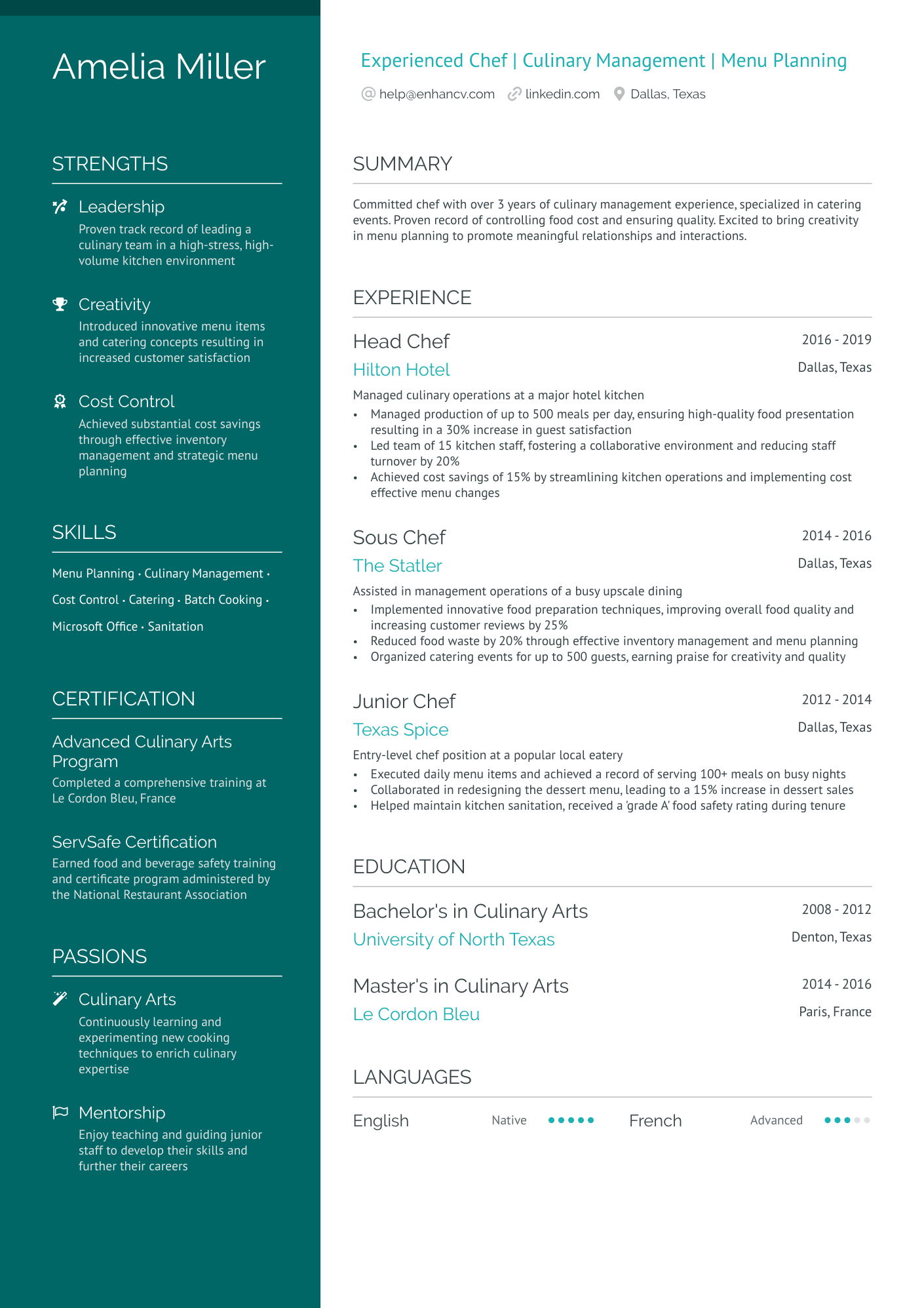
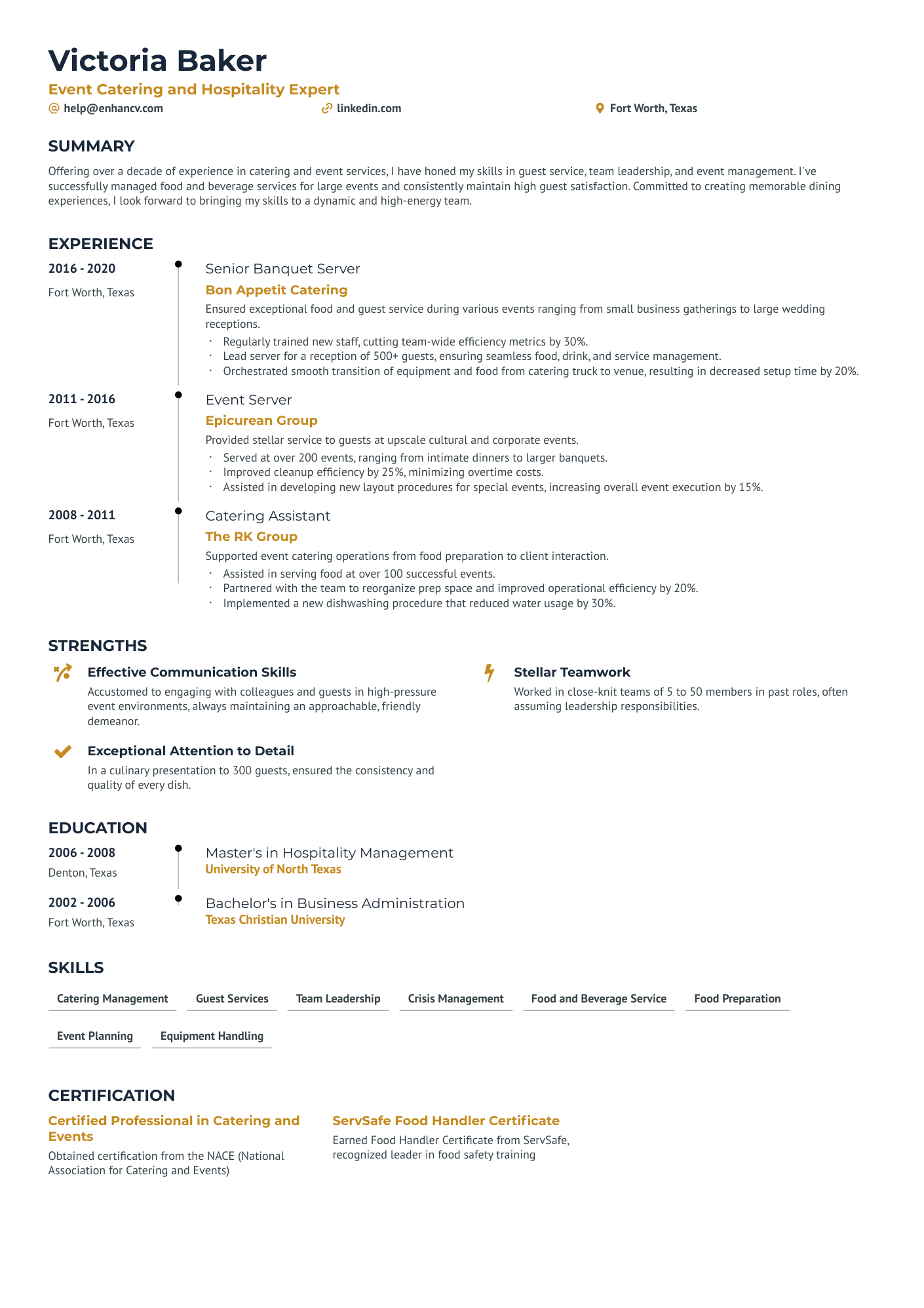
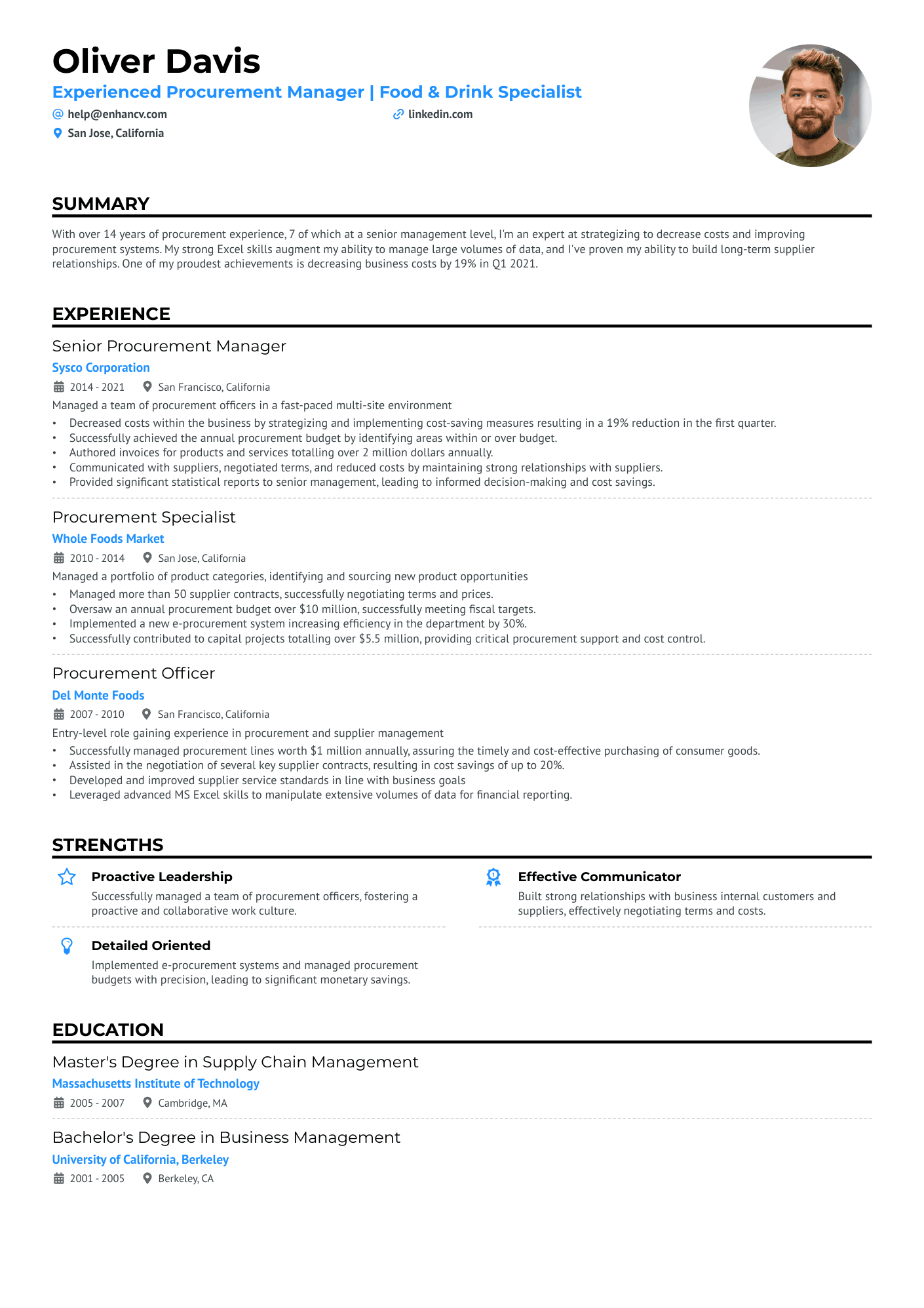
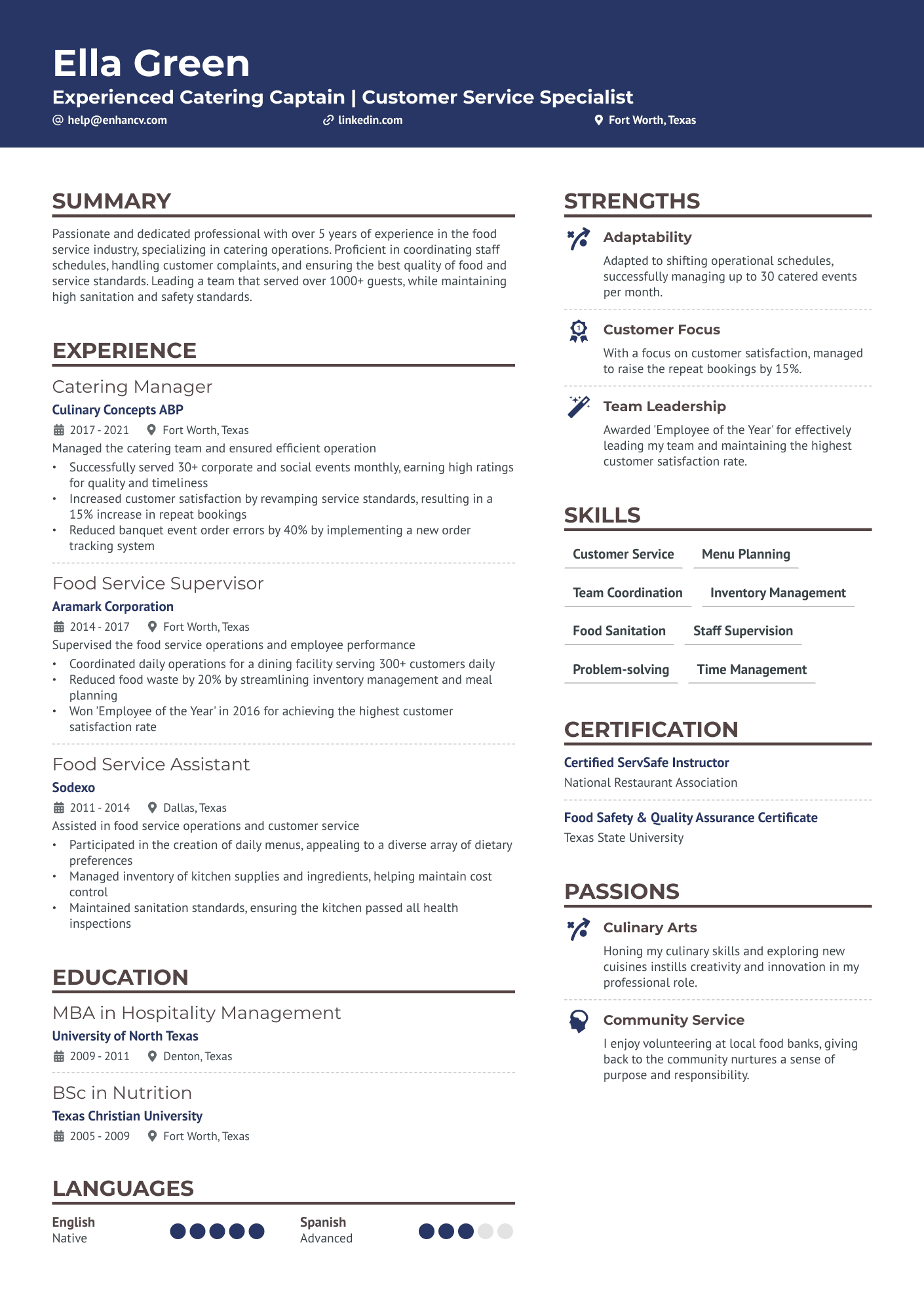
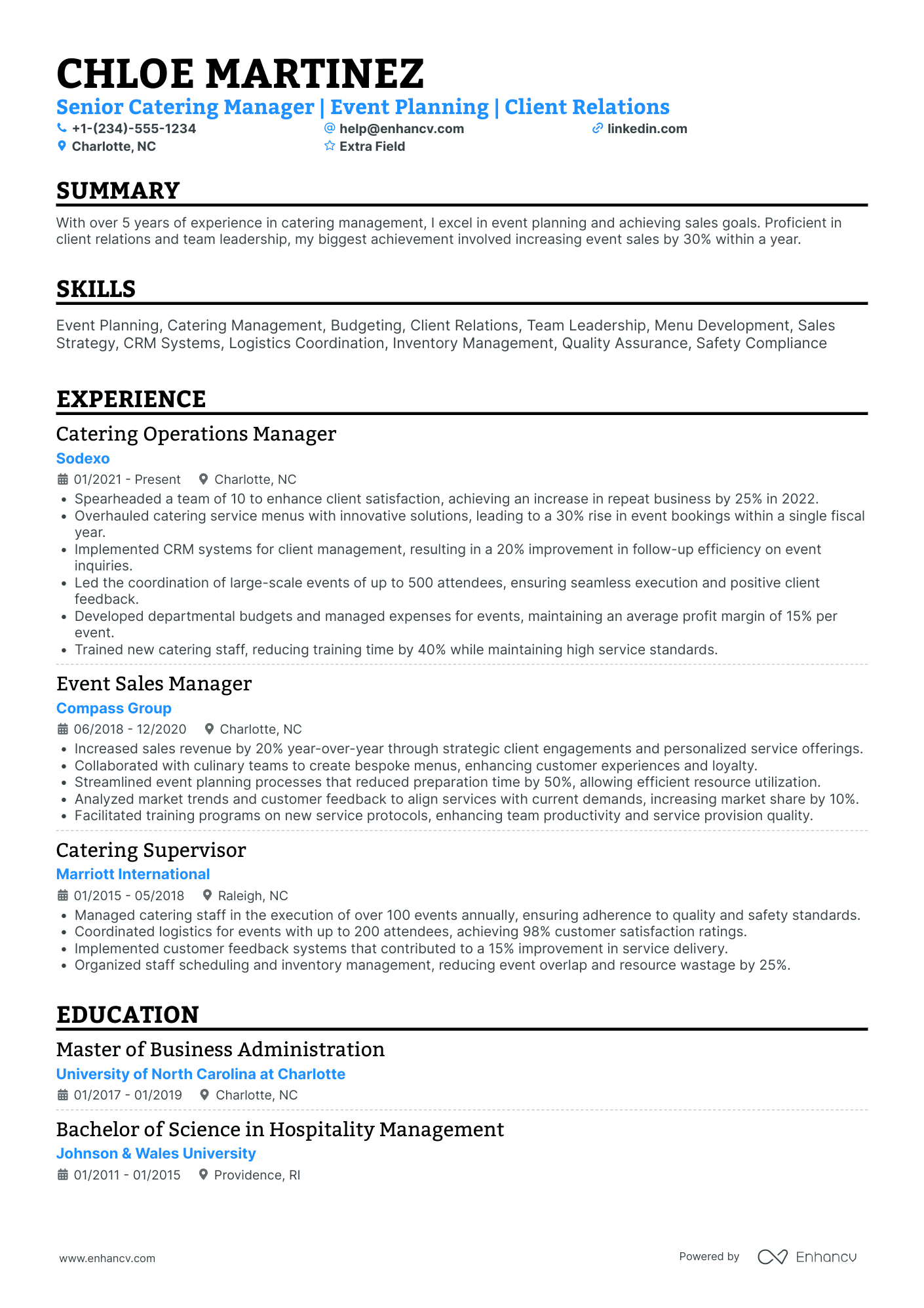
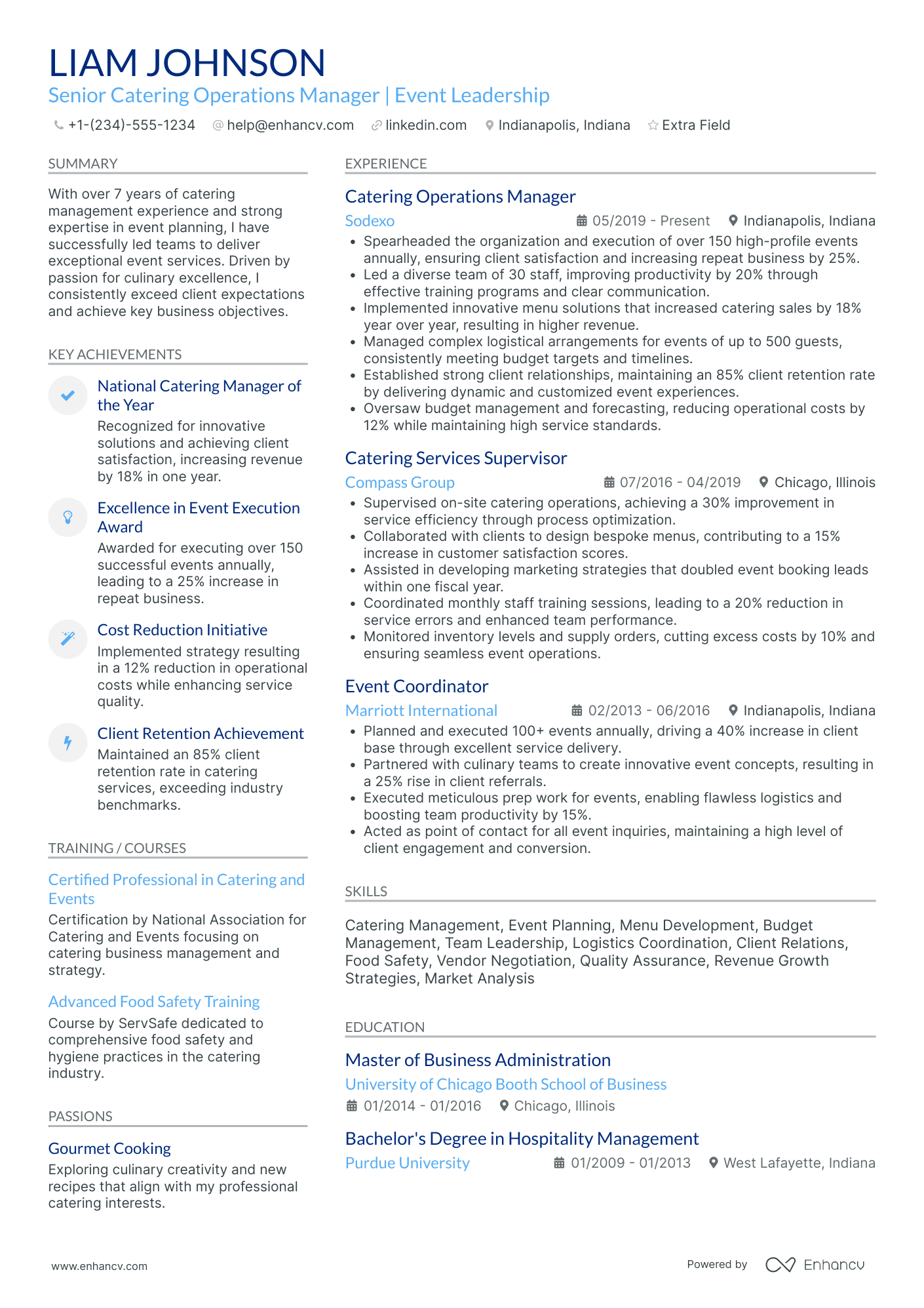
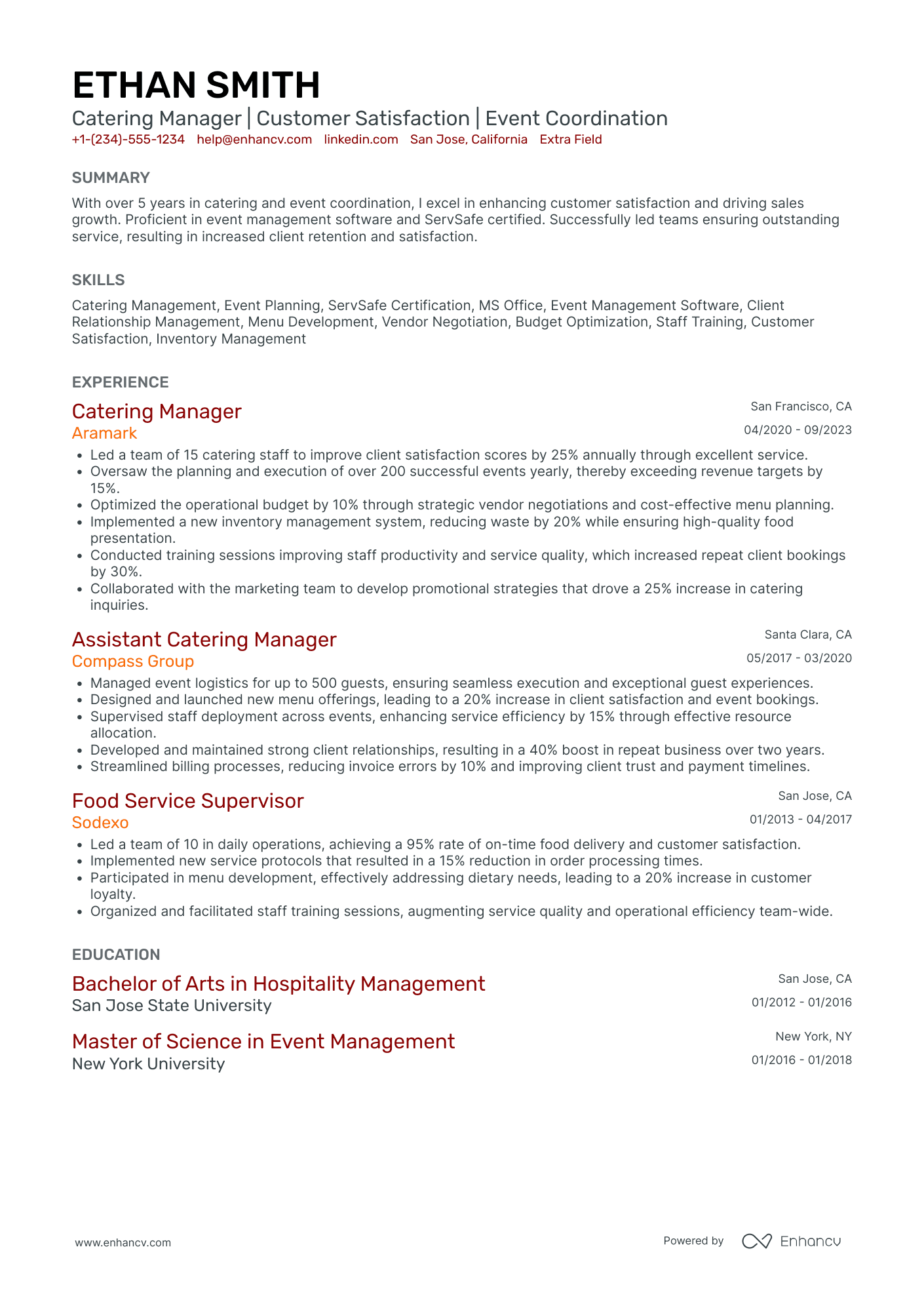
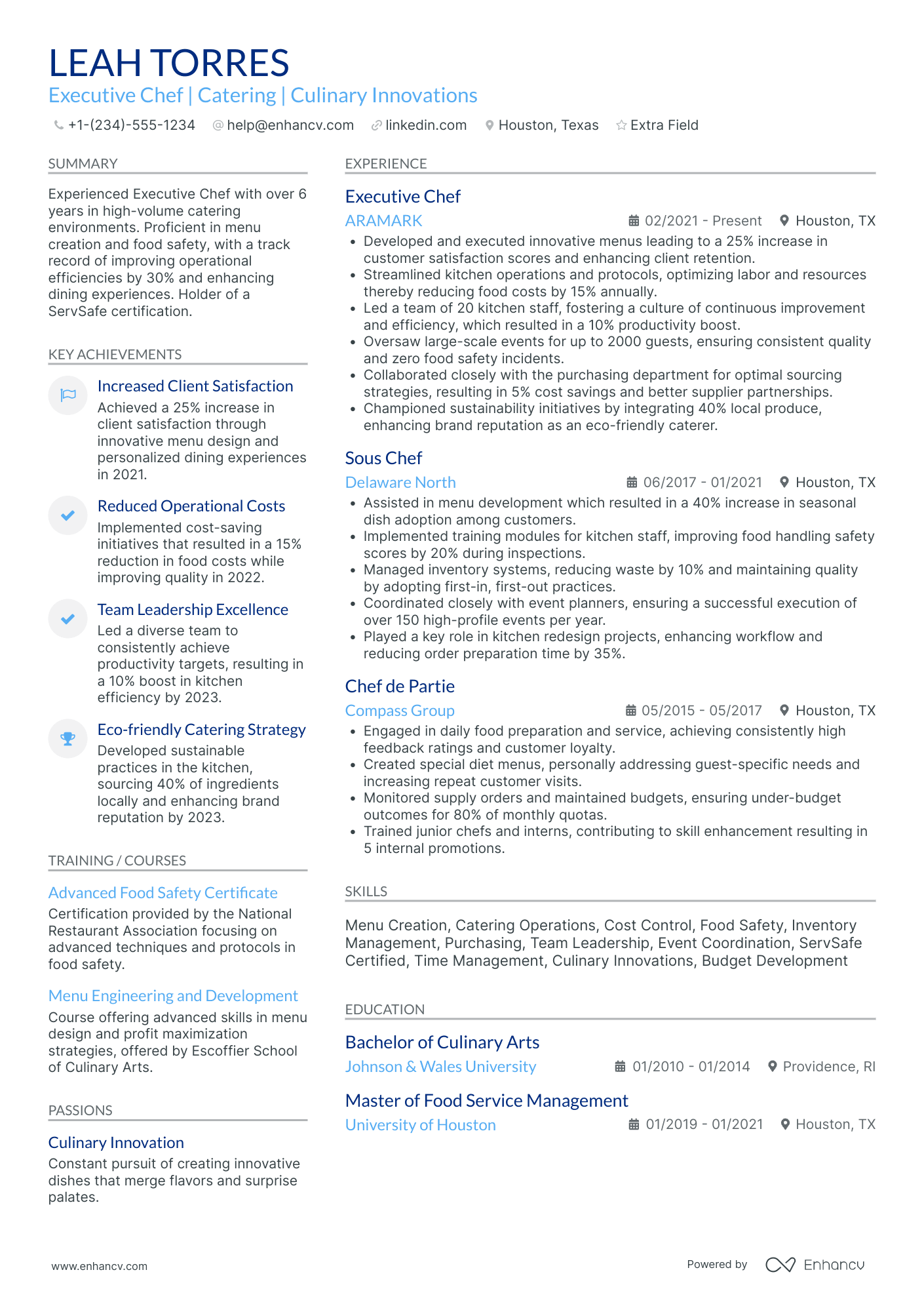
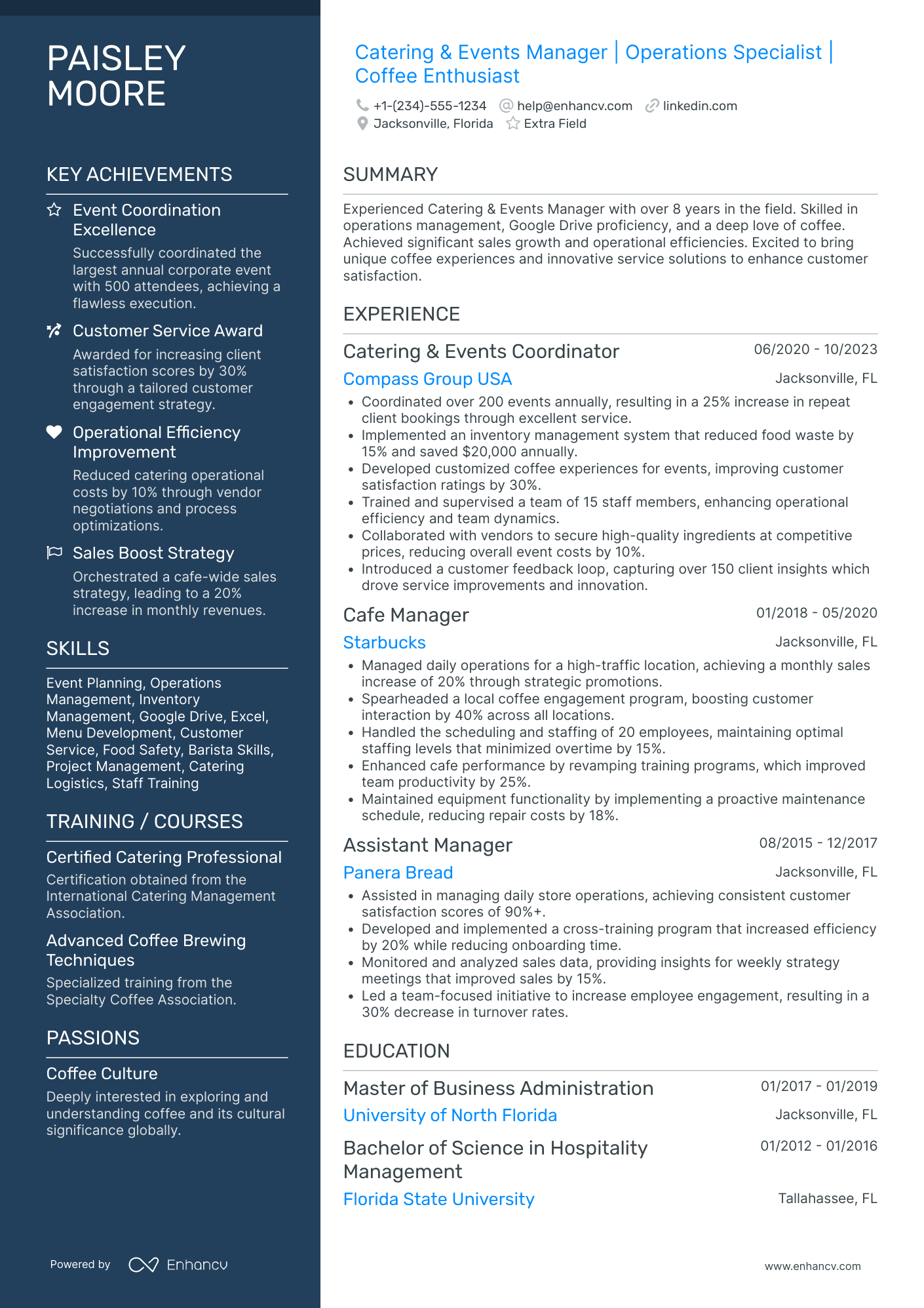
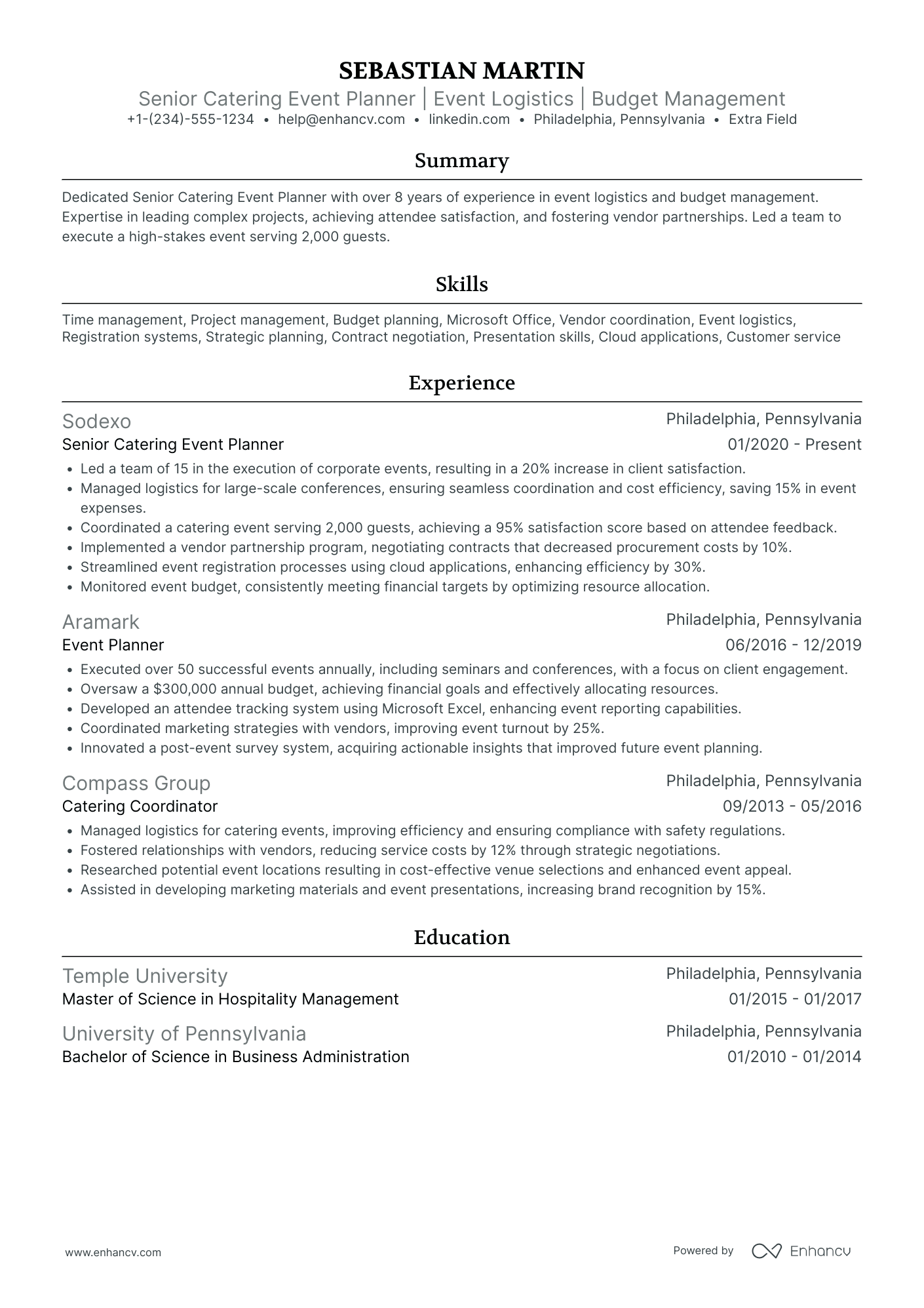

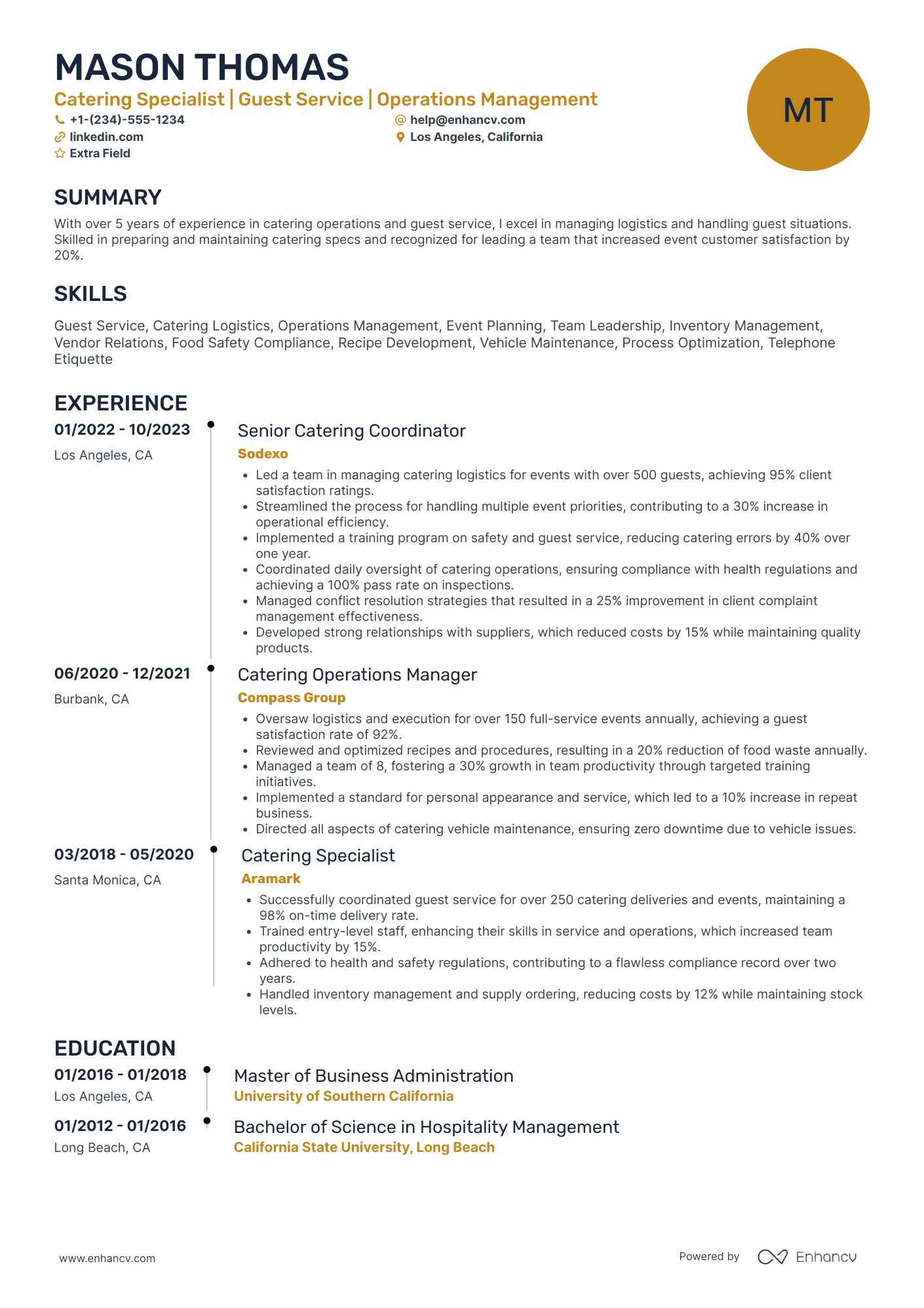
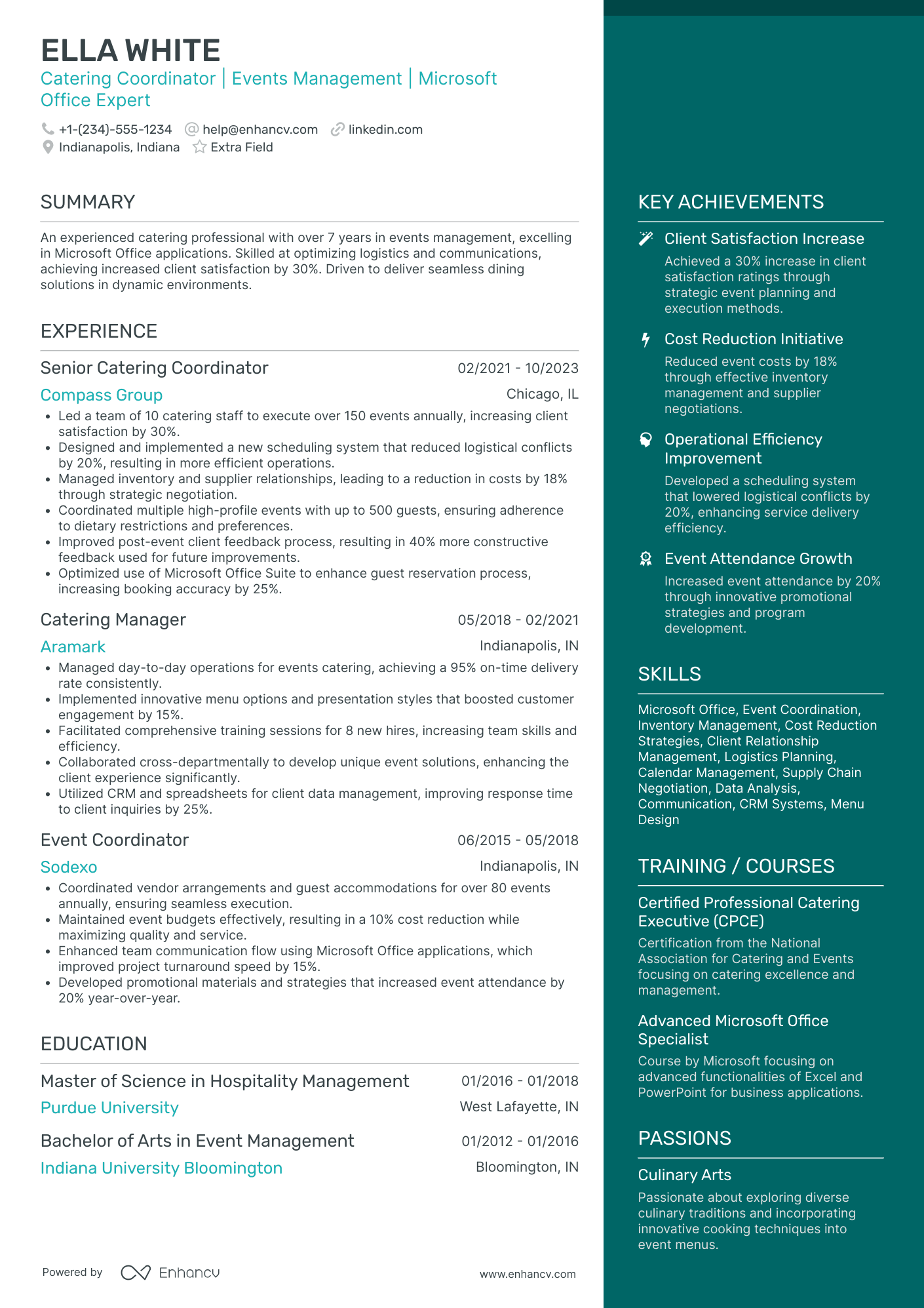
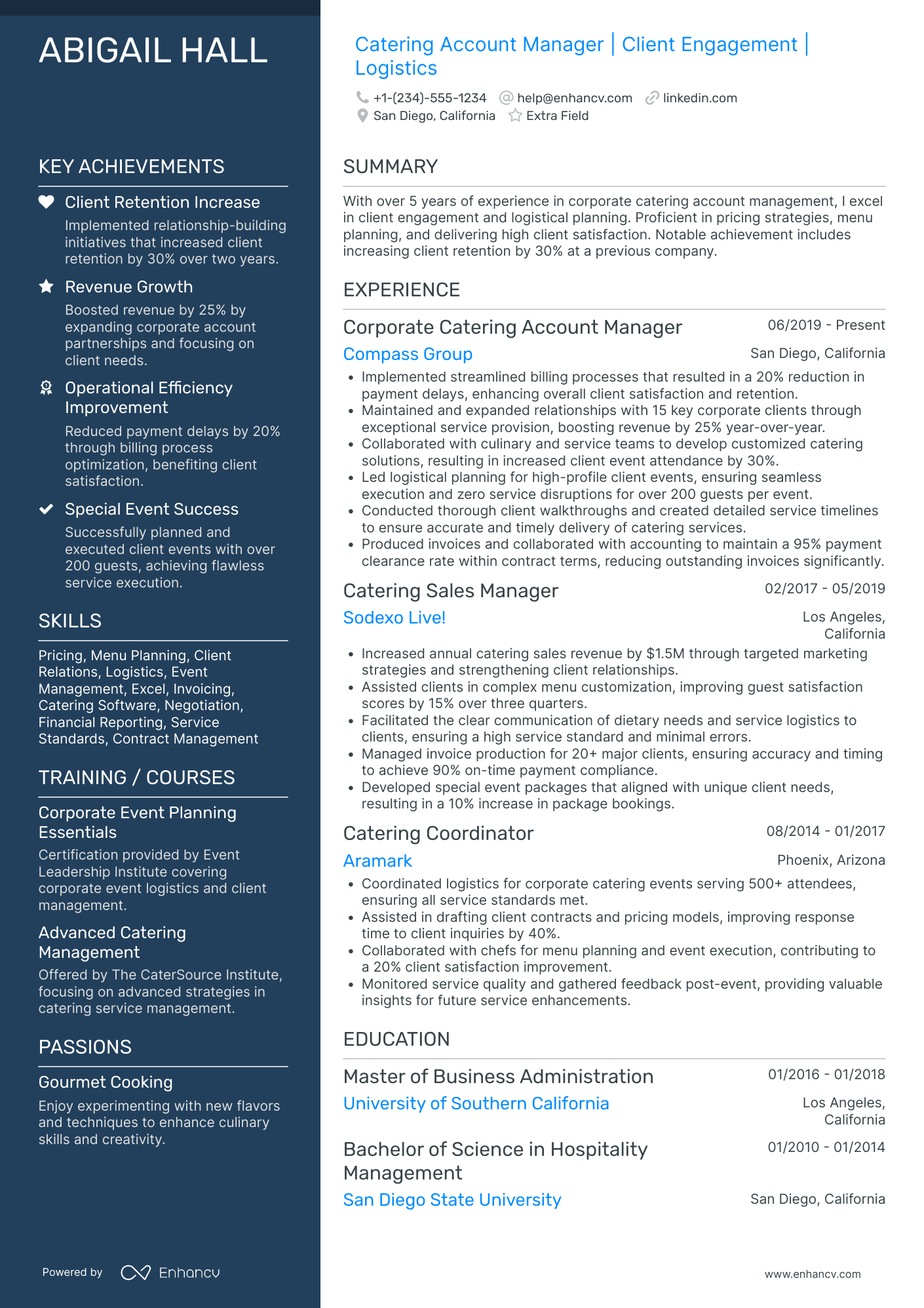
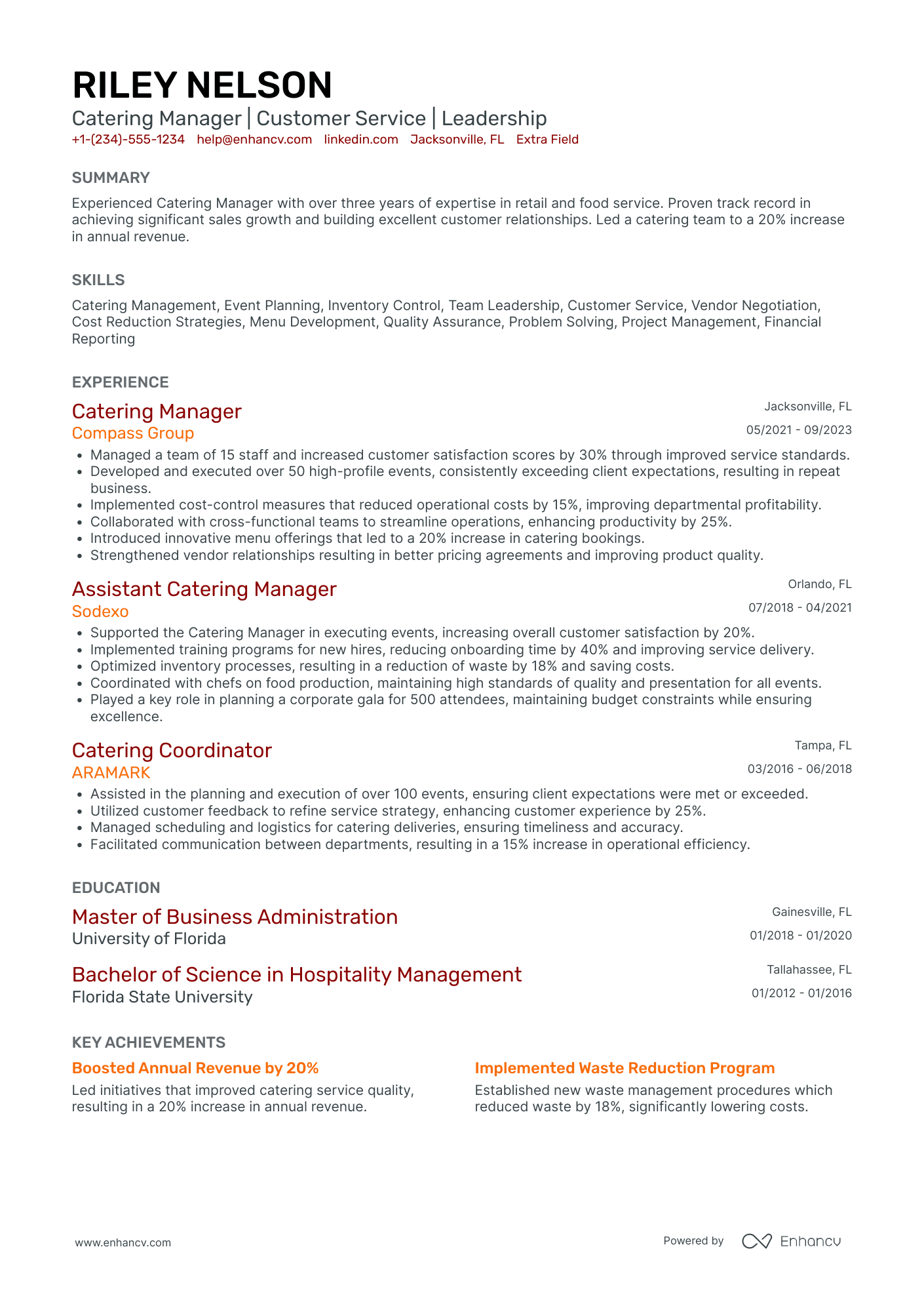
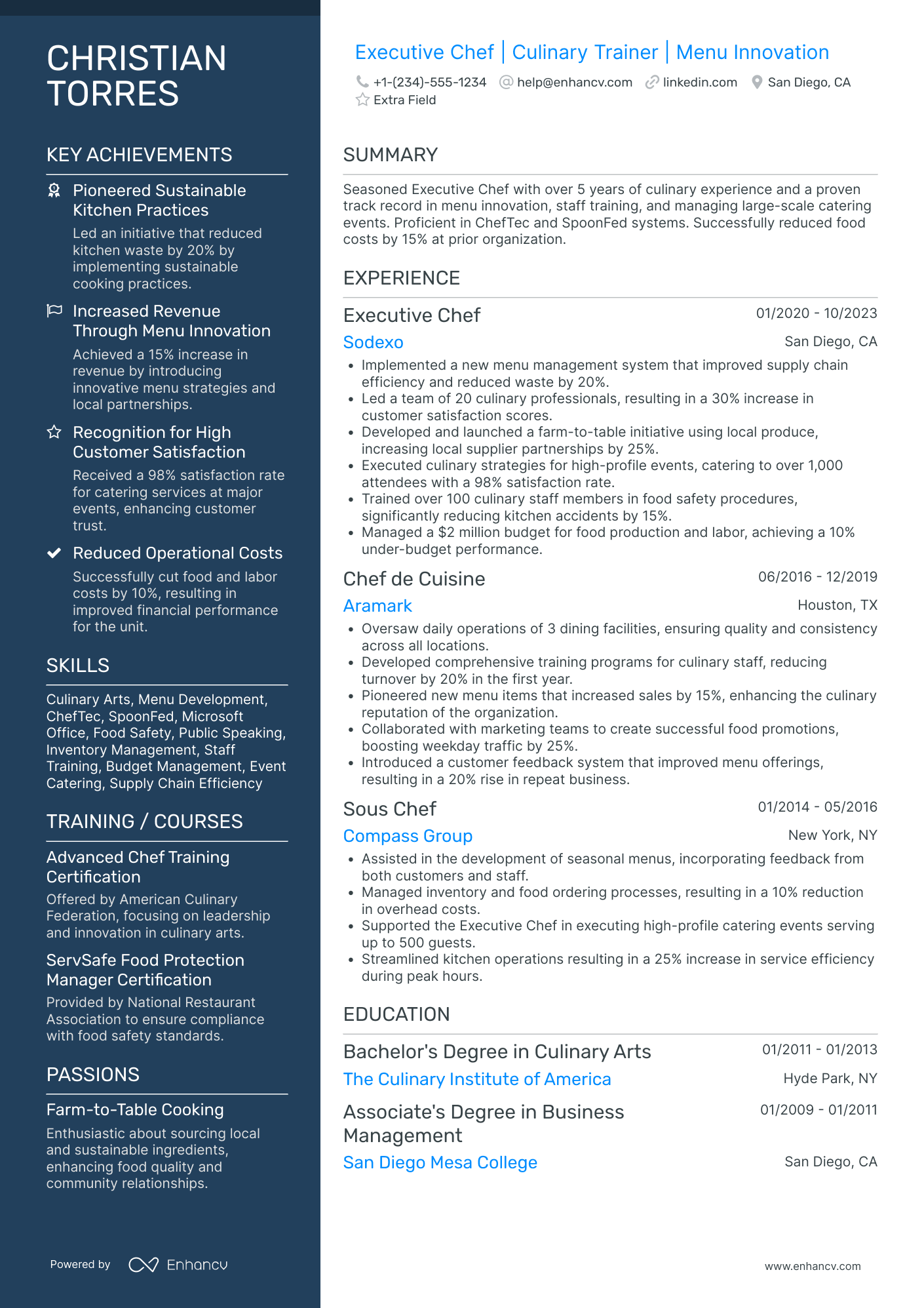
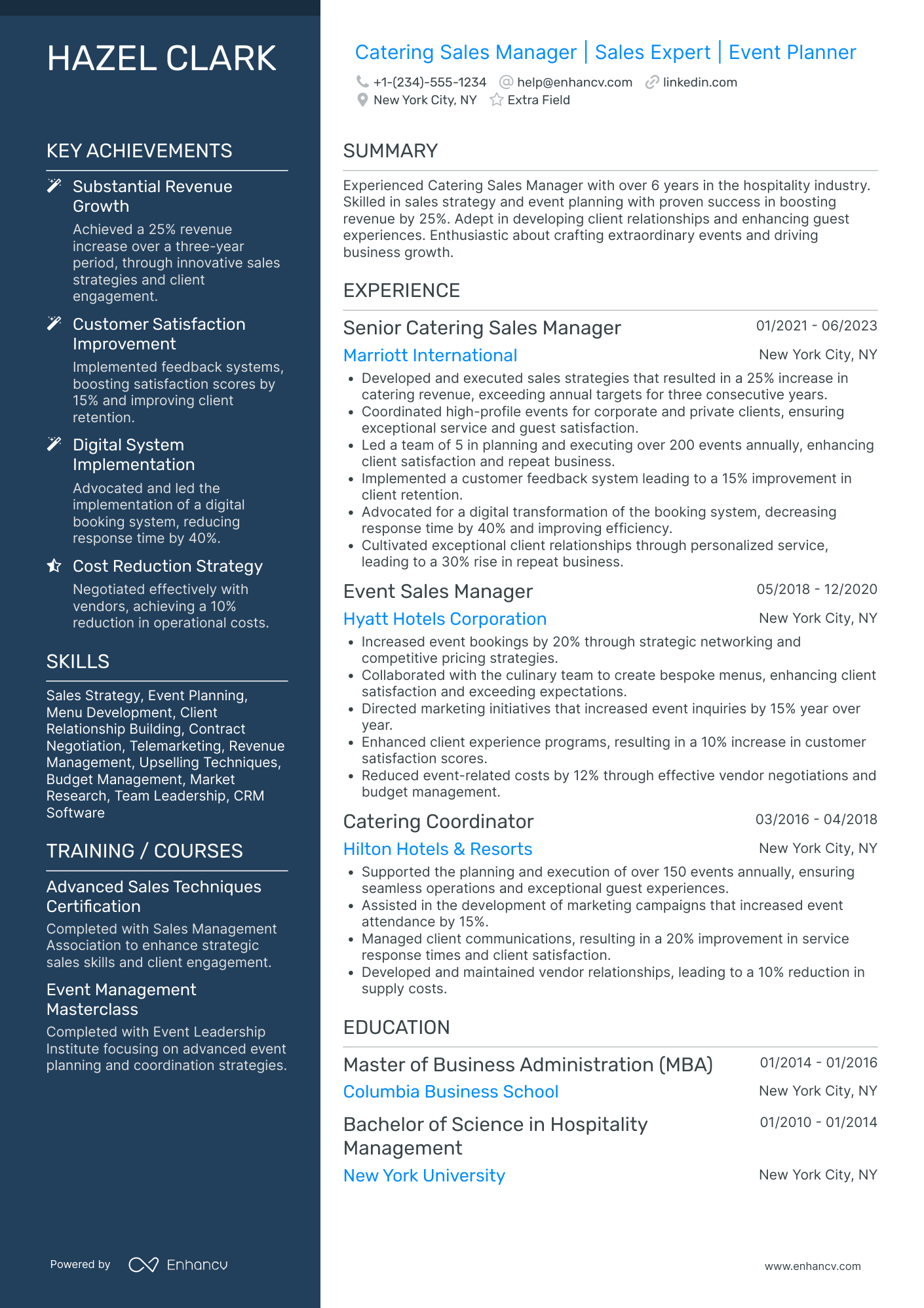
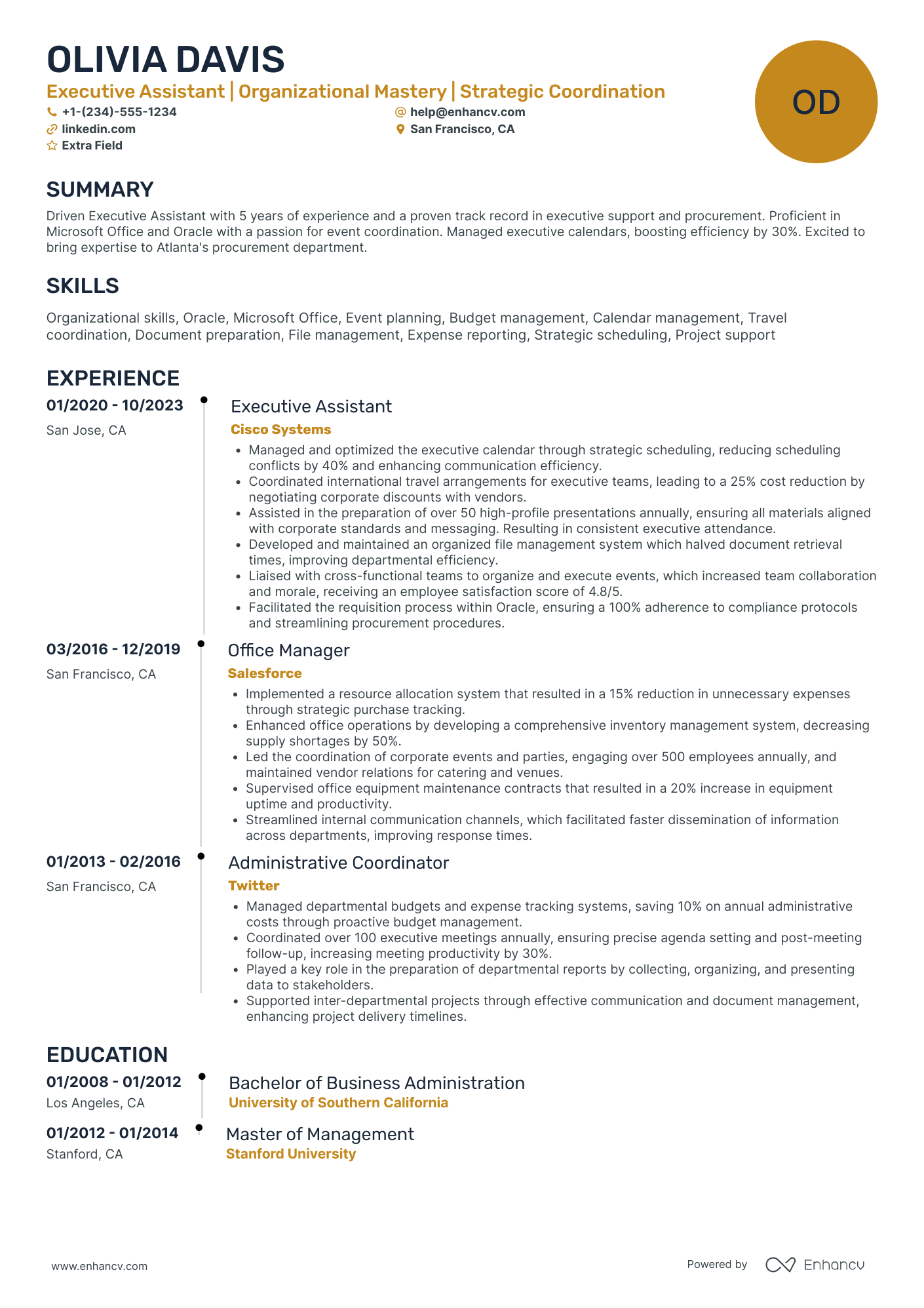
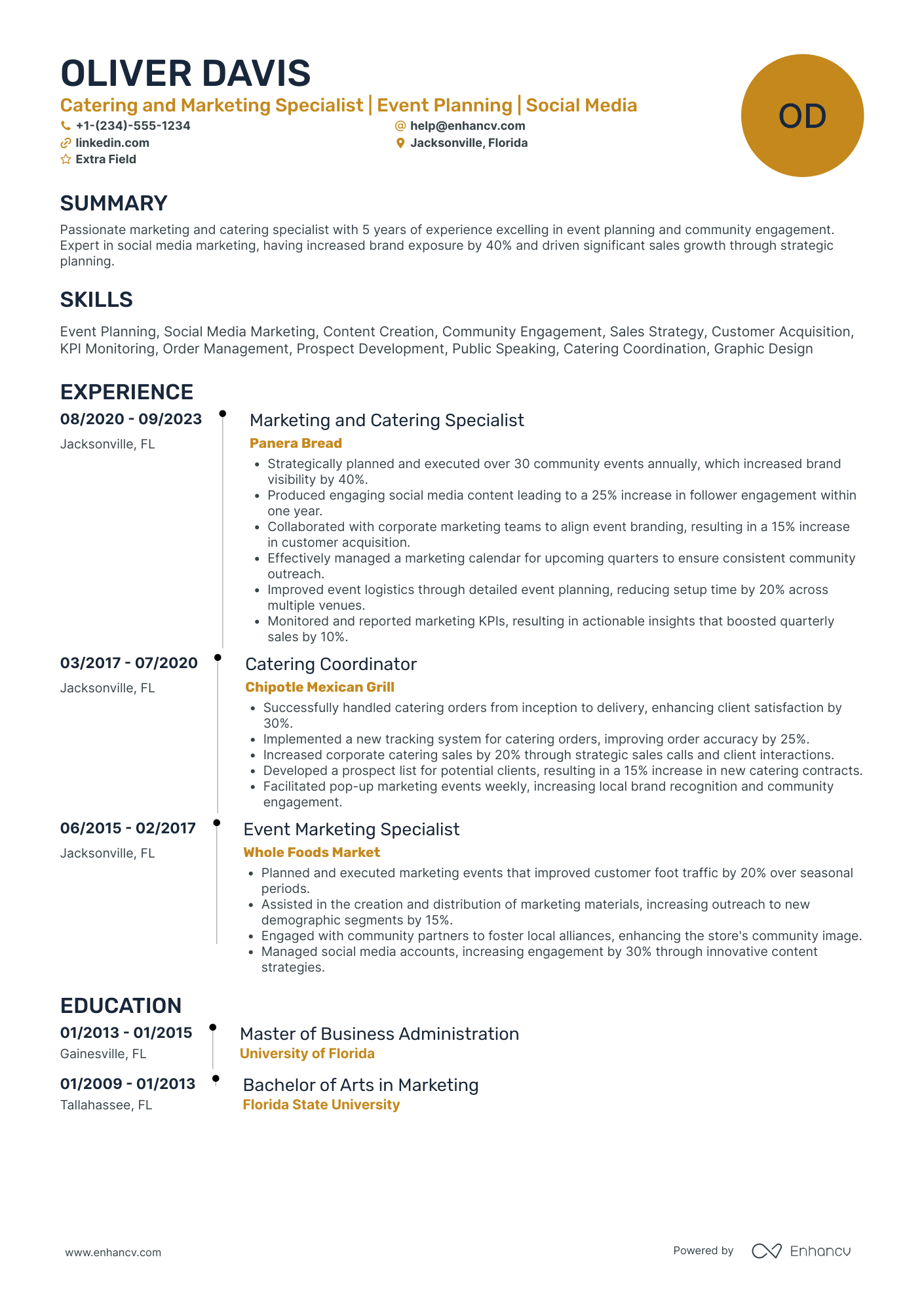
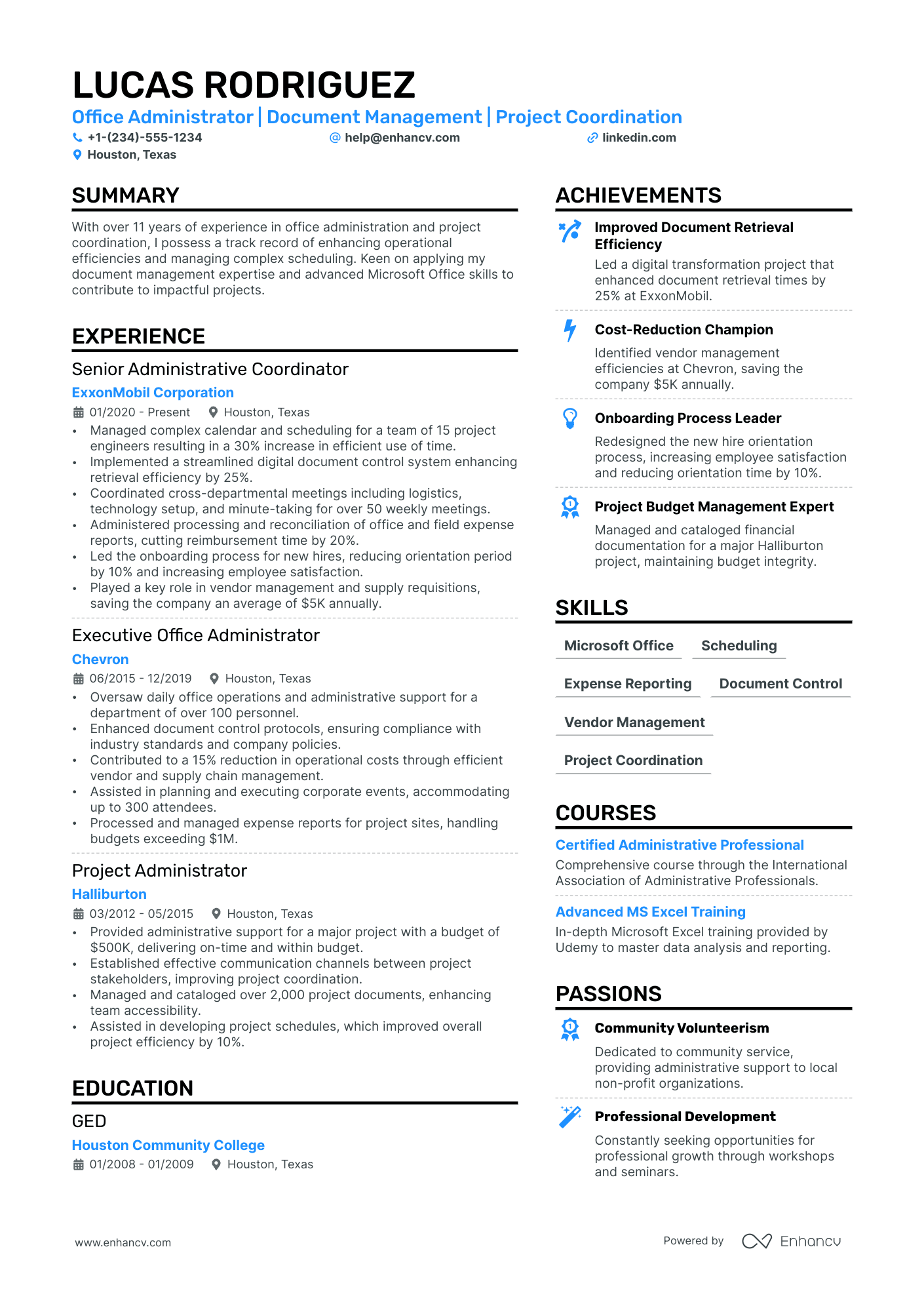
Many catering resume drafts fail because they read like task logs and bury key wins under generic duties. That hurts when an ATS filters fast and recruiters scan in seconds amid heavy competition.
A strong resume shows what you improved and delivered. Knowing how to make your resume stand out is critical—you should highlight on-time service for two hundred guests, cut food waste by twelve percent, raised client satisfaction scores, managed five-event weekends, and maintained zero safety incidents.

Key takeaways
- Quantify catering achievements with guest counts, waste reduction, and on-time service rates.
- Use reverse-chronological format for experienced candidates and hybrid format for career changers.
- Tailor every experience bullet to mirror the job posting's terminology and priorities.
- List more hard skills than soft skills and back each one with proof in your bullets.
- Place certifications like ServSafe above education when they're recent or role-required.
- Write a three- to four-line summary featuring your niche, top metrics, and core skills.
- Use Enhancv's Bullet Point Generator to turn vague duties into measurable, recruiter-ready statements.
Job market snapshot for caterings
We analyzed 1,335 recent catering job ads across major US job boards. These numbers help you understand salary landscape, employment type trends, top companies hiring at a glance.
What level of experience employers are looking for caterings
| Years of Experience | Percentage found in job ads |
|---|---|
| 1–2 years | 7.3% (97) |
| 3–4 years | 6.2% (83) |
| 5–6 years | 1.9% (25) |
| 9–10 years | 0.2% (3) |
| 10+ years | 4.2% (56) |
| Not specified | 73.3% (979) |
Catering ads by area of specialization (industry)
| Industry (Area) | Percentage found in job ads |
|---|---|
| Finance & Banking | 38.7% (517) |
| Healthcare | 34.2% (457) |
| Education | 17.3% (231) |
| Retail & E-commerce | 3.2% (43) |
| Manufacturing | 2.1% (28) |
| Travel & Hospitality | 1.8% (24) |
| Government | 1.1% (15) |
Top companies hiring caterings
| Company | Percentage found in job ads |
|---|---|
| Compass Group USA Inc | 22.0% (294) |
| Aramark Corp. | 21.4% (286) |
| Sodexo S A | 12.9% (172) |
| Chick-fil-A | 4.3% (57) |
| Moe's Southwest Grill | 1.9% (25) |
| Delaware North Companies | 1.3% (17) |
| Hilton Worldwide | 1.2% (16) |
| Panera Bread Co | 1.1% (15) |
| Accor Hotels | 1.0% (14) |
| Marriott International | 1.0% (13) |
Role overview stats
These tables show the most common responsibilities and employment types for catering roles. Use them to align your resume with what employers expect and to understand how the role is structured across the market.
Day-to-day activities and top responsibilities for a catering
| Responsibility | Percentage found in job ads |
|---|---|
| Food safety | 7.1% (95) |
| Customer service | 6.1% (82) |
| Excel | 5.6% (75) |
| Microsoft office | 4.6% (61) |
| Outlook | 4.1% (55) |
| Word | 4.1% (55) |
| Sanitation | 4.0% (54) |
| Food preparation | 3.4% (45) |
| Ppe | 3.4% (45) |
| Ms office | 3.2% (43) |
| Food service | 2.8% (38) |
| Delphi | 2.8% (37) |
How to format a catering resume
Recruiters reviewing catering resumes prioritize hands-on food service skills, event coordination experience, and the ability to manage high-volume operations under tight timelines. A clean, well-structured resume format ensures these signals surface quickly during both ATS parsing and the initial human scan.

I have significant experience in catering—which format should I use?
Use a reverse-chronological format to lead with your strongest and most recent catering roles, placing your experience section front and center. Do:
- Highlight the scope and ownership of each role—team sizes managed, event capacities, and client account responsibilities.
- Feature role-specific skills such as menu planning, food safety compliance (ServSafe), vendor negotiations, and banquet management software.
- Quantify outcomes tied to revenue, client retention, cost savings, or operational efficiency.
I'm junior or switching into catering—what format works best?
A hybrid format works best because it lets you lead with transferable skills while still showing a concise work history that proves reliability. Do:
- Place a skills section near the top featuring food handling certifications, customer service abilities, and event coordination competencies.
- Include relevant projects, volunteer catering work, culinary coursework, or hospitality internships that demonstrate hands-on experience.
- Connect every action to a clear outcome so hiring managers can see the value you delivered, even in non-catering roles.
Why not use a functional resume?
A functional format buries your work timeline and makes it difficult for recruiters to verify where and when you applied your catering skills, which weakens your candidacy even at the entry level.
- Edge-case exception: A functional format may be acceptable if you're making a career change from a related hospitality field, have limited formal work history, or need to address significant resume gaps—but only if every listed skill is tied directly to a specific project, event, or measurable outcome.
With your format set, it's time to fill each part of your resume with the right content—starting with the sections hiring managers expect to see.
What sections should go on a catering resume
Recruiters expect to see clear proof that you can execute high-volume events safely, efficiently, and with consistent guest satisfaction. Understanding what to put on a resume helps you prioritize the right content for catering roles.
Use this structure for maximum clarity:
- Header
- Summary
- Experience
- Skills
- Projects
- Education
- Certifications
- Optional sections: Awards, Volunteering, Languages
Strong experience bullets should emphasize event volume, service standards, food safety compliance, team coordination, and measurable outcomes like on-time service, reduced waste, and higher client satisfaction.
Is your resume good enough?
Drop your resume here or choose a file. PDF & DOCX only. Max 2MB file size.
Once you’ve organized your resume with the right core components, the next step is to write your catering experience section in a way that fits that structure and highlights your impact.
How to write your catering resume experience
Your work experience section should highlight the events you've staffed, the food service methods you've executed, and the measurable results you've delivered in catering environments. Hiring managers prioritize demonstrated impact—like improved guest satisfaction, streamlined kitchen operations, or reduced food waste—over descriptive task lists.
Each entry should include:
- Job title
- Company and location (or remote)
- Dates of employment (month and year)
Three to five concise bullet points showing what you owned, how you executed, and what outcomes you delivered:
- Ownership scope: the types of catering events, menus, service stations, kitchen teams, or client accounts you were directly accountable for managing and delivering.
- Execution approach: the food preparation techniques, service styles, scheduling tools, food safety protocols, or inventory management methods you used to plan and execute catering operations.
- Value improved: changes to food quality, service speed, portion accuracy, health and safety compliance, cost control, or client retention that resulted from your work in catering settings.
- Collaboration context: how you coordinated with chefs, servers, event planners, venue managers, vendors, or clients to ensure seamless event execution and guest satisfaction.
- Impact delivered: outcomes expressed through guest feedback improvements, revenue growth, repeat bookings, waste reduction, or operational efficiency gains rather than routine catering duties.
Experience bullet formula
A catering experience example
✅ Right example - modern, quantified, specific.
Catering Operations Manager
Harbor & Hearth Catering | Austin, TX
2022–Present
Full-service catering company delivering corporate, wedding, and nonprofit events for up to 1,200 guests across Central Texas.
- Led end-to-end execution for 180+ events annually using Caterease and Google Workspace, cutting proposal-to-contract turnaround time by 28% and increasing close rate by 12%.
- Built standardized prep, packing, and load-out checklists in Asana and QR-coded inventory tracking, reducing day-of missing items by 35% and saving 6–8 labor hours per week.
- Partnered with clients, venue coordinators, and culinary leadership to redesign buffet and plated service flows, improving on-time service from 86% to 96% and reducing food waste by 14%.
- Negotiated vendor pricing and implemented portioning controls with recipe costing in MarginEdge, lowering food cost by 2.1 points and protecting an estimated $48K in annual margin.
- Trained and scheduled a 25-person event staff using 7shifts and Toast event reporting, improving labor-to-sales ratio by 9% while maintaining a 4.8/5 average post-event client rating.
Now that you've seen what a strong experience section looks like, let's break down how to customize yours for each catering role you apply to.
How to tailor your catering resume experience
Recruiters evaluate catering resumes through both human review and applicant tracking systems (ATS). Tailoring your resume to the job description ensures your qualifications register with both.
Ways to tailor your catering experience:
- Match specific equipment or service styles named in the posting.
- Mirror the exact food safety certifications the employer requires.
- Use the same terminology for service formats like buffet or plated.
- Reflect event scale or guest count ranges the role demands.
- Highlight dietary accommodation or allergen management if mentioned.
- Emphasize team coordination models referenced in the job description.
- Include relevant cuisine types or menu planning experience they specify.
- Align your quality and sanitation standards with their stated protocols.
Tailoring means aligning your real accomplishments with what the role requires, not forcing disconnected keywords into your experience.
Resume tailoring examples for catering
| Job description excerpt | Untailored | Tailored |
|---|---|---|
| "Plan and execute catering events for 200+ guests using Caterease software, ensuring compliance with local health codes and dietary accommodation requests." | Helped plan and run catering events for various group sizes. | Planned and executed catering events for up to 350 guests using Caterease, coordinating dietary accommodations and maintaining 100% compliance with county health codes across 40+ events annually. |
| "Manage food cost controls to maintain margins at or below 32%, negotiate vendor contracts, and oversee inventory using MarketMan." | Responsible for managing food costs and ordering supplies from vendors. | Reduced food costs from 36% to 30% by renegotiating three vendor contracts and tracking real-time inventory through MarketMan, saving $18,000 in the first quarter. |
| "Coordinate front-of-house catering staff for corporate and wedding events, conduct pre-event briefings, and ensure adherence to BEO specifications." | Supervised catering staff during events and made sure things ran smoothly. | Led pre-event briefings for teams of 12–20 front-of-house staff, ensuring precise execution of banquet event order (BEO) specifications across 15 corporate galas and 30 weddings per season. |
Once you’ve aligned your experience with the role’s priorities, quantify your catering achievements to prove the impact of that work with clear results.
How to quantify your catering achievements
Quantifying your achievements shows the scale, speed, and quality you deliver under pressure. Focus on guests served, on-time delivery, budget and food cost control, quality and safety outcomes, and client satisfaction.
Quantifying examples for catering
| Metric | Example |
|---|---|
| Volume served | "Served eight hundred guests across three concurrent events in one weekend, coordinating twelve staff and two delivery vans without missed service windows." |
| On-time delivery | "Improved on-time drop-offs from eighty-six percent to ninety-eight percent by using Google Sheets run-of-show checklists and tightening load-out sequencing." |
| Food cost control | "Cut food waste by eighteen percent and reduced weekly food cost by $1,200 by standardizing portion scoops and tracking prep yields in a kitchen log." |
| Safety compliance | "Maintained zero health-code violations across six inspections by enforcing temperature logs every two hours and retraining staff on allergen controls." |
| Client satisfaction | "Raised post-event satisfaction from 4.3 to 4.7 out of five across twenty-five events by adding a fifteen-minute service check-in cadence with clients." |
Turn vague job duties into measurable, recruiter-ready resume bullets in seconds with Enhancv's Bullet Point Generator.
Once you've crafted strong bullet points for your experience section, it's equally important to highlight the right hard and soft skills throughout your catering resume.
How to list your hard and soft skills on a catering resume
Your skills section shows you can execute events safely and on time, and recruiters and an ATS (applicant tracking system) scan this section to match you to the job post; aim for more hard skills than soft skills, with role-specific strengths. catering roles require a blend of:
- Product strategy and discovery skills.
- Data, analytics, and experimentation skills.
- Delivery, execution, and go-to-market discipline.
- Soft skills.
Your skills section should be:
- Scannable (bullet-style grouping).
- Relevant to the job post.
- Backed by proof in experience bullets.
- Updated with current tools.
Place your skills section:
- Above experience if you're junior or switching careers.
- Below experience if you're mid/senior with strong achievements.

Hard skills
- Food safety, HACCP
- ServSafe certification
- Allergen labeling compliance
- Banquet Event Orders (BEOs)
- Menu costing, yield calculations
- Inventory control, par levels
- POS systems, Toast, Square
- Event setup, breakdown logistics
- Buffet, plated service standards
- Hot holding, cold chain control
- Vendor sourcing, purchase orders
- Scheduling, labor forecasting
Soft skills
- Prioritize tasks under time pressure
- Coordinate with kitchen and service teams
- Communicate changes to clients fast
- Confirm details with venues and vendors
- Lead pre-shift and event briefings
- Escalate issues early with options
- Maintain calm during guest-facing problems
- Delegate clearly and follow up
- Adapt plans to last-minute changes
- Resolve conflicts with professionalism
- Own setup accuracy and timelines
- Keep teams aligned across locations
How to show your catering skills in context
Skills shouldn't live only in a bulleted list on your resume. Explore resume skills examples to see how top candidates integrate abilities throughout their documents.
They should be demonstrated in:
- Your summary (high-level professional identity)
- Your experience (proof through outcomes)
Here's how that looks in practice.
Summary example
Senior catering manager with 12 years orchestrating high-volume events for up to 800 guests. Skilled in menu development, vendor negotiations, and ServSafe protocols. Reduced food waste by 30% while boosting client satisfaction scores to 97%.
- Reflects senior-level expertise immediately
- Names industry tools and certifications
- Leads with a measurable outcome
- Signals client-focused soft skills
Experience example
Senior Catering Manager
Harvest & Vine Events | Austin, TX
March 2019–Present
- Coordinated 150+ annual events averaging 400 guests, achieving a 98% on-time service rate using BanquetPro scheduling software.
- Partnered with kitchen staff and florists to streamline setup workflows, cutting event prep time by 25% across all venues.
- Managed a $1.2M annual food budget through strategic vendor sourcing, reducing per-event costs by 18% without sacrificing quality.
- Every bullet includes measurable proof.
- Skills appear naturally within achievements.
Once you’ve demonstrated your catering abilities through concrete examples, the next step is to translate that evidence into a resume format when you don’t have direct experience.
How do I write a catering resume with no experience
Even without full-time experience, you can demonstrate readiness through building a resume without work experience that highlights transferable skills:
- Volunteer banquet or fundraiser service
- School event food setup crew
- Restaurant host or busser shifts
- Food safety certification training
- Meal prep for large groups
- Family event catering coordination
- Inventory stocking and labeling
Focus on:
- Food safety training and compliance
- High-volume setup and breakdown
- Order accuracy and labeling systems
- Schedule reliability with documented shifts
Resume format tip for entry-level catering
Use a combination resume format because it highlights catering-relevant skills first while still showing steady school, volunteer, or part-time history. Do:
- Add a "Catering-relevant skills" section.
- List food safety training with dates.
- Quantify guests served and items prepped.
- Name tools used: chafers, cambros.
- Include availability and weekend hours.
- Coordinated family event catering for 60 guests, staged hot-hold with chafers, labeled allergens, and served on schedule with zero reported order errors.
Even without direct catering experience, your education section can strengthen your resume by highlighting relevant coursework, certifications, or training that demonstrate your industry knowledge.
How to list your education on a catering resume
Your education section helps hiring teams confirm you have foundational knowledge in food service, hospitality, or business. It validates your training and readiness for catering roles.
Include:
- Degree name
- Institution
- Location
- Graduation year
- Relevant coursework (for juniors or entry-level candidates)
- Honors & GPA (if 3.5 or higher)
Skip month and day details—list the graduation year only.
Here's a strong education entry tailored to a catering resume:
Example education entry
Bachelor of Science in Hospitality Management
Johnson & Wales University, Providence, RI
Graduated 2022
GPA: 3.7
- Relevant coursework: Event Planning, Food Production Management, Catering Operations, and Food Safety Systems
- Honors: Dean's List, 2020–2022
How to list your certifications on a catering resume
Certifications on your resume show your commitment to learning, prove tool proficiency, and confirm industry relevance for catering roles, especially in food safety, service standards, and event operations. Include:
- Certificate name
- Issuing organization
- Year
- Optional: credential ID or URL
- Place certifications below education when they're older, less relevant to catering, or secondary to your degree or culinary training.
- Place certifications above education when they're recent, required for catering work, or directly tied to food safety, alcohol service, or management.
Best certifications for your catering resume
- ServSafe Food Handler
- ServSafe Manager
- Certified Professional Food Manager (CFPM)
- TIPS (Training for Intervention ProcedureS) Alcohol Certification
- Certified Special Events Professional (CSEP)
- HACCP Certification
Once you’ve placed your credentials where hiring managers can spot them fast, you can write your catering resume summary to reinforce those qualifications upfront.
How to write your catering resume summary
Your resume summary is the first thing a recruiter reads. A strong one instantly signals you have the skills and reliability to thrive in a fast-paced catering environment.
Keep it to three to four lines, with:
- Your title and total years of catering or food service experience.
- The type of catering you know best, such as corporate events, weddings, or large-scale banquets.
- Core skills like food safety compliance, menu planning, portion control, or POS systems.
- One or two measurable wins, such as events served, guest counts, or waste reduction percentages.
- Soft skills tied to real results, like teamwork that improved service speed or communication that reduced order errors.

PRO TIP
At the entry level, focus on relevant skills, certifications like ServSafe, and any early contributions that show dependability. Highlight what you can do, not what you hope to become. Avoid vague phrases like "passionate team player" or "hard-working go-getter." Replace them with specific actions and measurable results from real experience.
Example summary for a catering
Detail-oriented catering professional with two years of experience supporting corporate and wedding events for up to 300 guests. Reduced food waste by 15% through improved portioning and prep workflows.
Optimize your resume summary and objective for ATS
Drop your resume here or choose a file.
PDF & DOCX only. Max 2MB file size.
Now that your summary captures your strongest qualifications, make sure the header above it presents your contact details correctly so recruiters can actually reach you.
What to include in a catering resume header
A resume header is the top section with your key details, and it boosts visibility, credibility, and recruiter screening for catering roles.
Essential resume header elements
- Full name
- Tailored job title and headline
- Location
- Phone number
- Professional email
- GitHub link
- Portfolio link
A LinkedIn link helps recruiters verify your experience fast and supports quick screening.
Don't include a photo on a catering resume unless the role is explicitly front-facing or appearance-dependent.
Match your catering header title to the job posting and include your service niche, such as weddings, corporate events, or fine dining.
Example
Catering resume header
Jordan Taylor
Catering Server | High-volume events, banquet service, and guest experience
Austin, TX
(512) 555-01XX
jordan.taylor@enhancv.com
github.com/jordantaylor
jordantaylor.com
linkedin.com/in/jordantaylor
Once your contact details and role focus are clear at the top, you can strengthen the rest of your application with additional sections that highlight relevant qualifications and experience.
Additional sections for catering resumes
Extra resume sections help you stand out when your core experience looks similar to other catering candidates. They showcase unique qualifications that build credibility. For example, listing language skills on your resume can set you apart when serving diverse clientele.
- Languages
- Certifications and food safety training
- Volunteer experience
- Awards and recognition
- Hobbies and interests
- Professional memberships
Once you've rounded out your resume with the right supplementary sections, it's worth pairing it with a strong cover letter to make an even bigger impact.
Do catering resumes need a cover letter
A cover letter isn't required for most catering roles, but it helps in competitive openings or when hiring managers expect one. If you're unsure what a cover letter is or how it complements your resume, it can make the difference when your catering background needs context or your fit isn't obvious.
Use a cover letter to add details your catering resume can't show:
- Explain role or team fit by matching your catering strengths to the schedule, service style, event volume, and pace.
- Highlight one or two catering outcomes, such as cutting setup time, improving on-time service, or reducing waste for high-guest-count events.
- Show you understand the catering business by referencing the menu style, client types, dietary needs, and service standards.
- Address career transitions or non-obvious experience by connecting past work to catering skills like timing, communication, and food safety.
Drop your resume here or choose a file.
PDF & DOCX only. Max 2MB file size.
Whether you include a cover letter or rely on your resume alone, using AI to improve your catering resume helps you tailor it faster and more precisely to the role.
Using AI to improve your catering resume
AI can sharpen your resume's clarity, structure, and impact. It helps you find stronger words and tighter phrasing. But overuse makes resumes sound robotic. Once your content is clear and role-aligned, step away from AI. If you're wondering which AI is best for writing resumes, start with tools that let you maintain control over your final content.
Here are 10 practical prompts to strengthen specific sections of your catering resume:
- Strengthen your summary. "Rewrite my catering resume summary to highlight leadership, event coordination, and food service expertise in three concise sentences."
- Quantify your experience. "Add measurable results to these catering experience bullets, focusing on guest counts, revenue figures, and efficiency improvements."
- Sharpen action verbs. "Replace weak verbs in my catering resume experience section with strong, industry-specific action verbs."
- Tailor your skills. "Compare my catering skills section against this job description and suggest missing relevant skills to add."
- Refine certification details. "Rewrite my catering certifications section so each entry clearly states the credential name, issuing body, and relevance."
- Improve project descriptions. "Make my catering event project descriptions more specific by emphasizing scale, logistics, and client outcomes."
- Tighten education entries. "Edit my education section to highlight coursework and achievements directly relevant to a catering career."
- Remove filler language. "Identify and remove vague or redundant phrases from my catering resume without losing any meaningful detail."
- Align with job posting. "Adjust my catering resume bullets to mirror the priorities and keywords in this specific job posting."
- Fix inconsistent formatting. "Standardize tense, punctuation, and structure across all bullet points in my catering resume experience section."
Stop using AI once your resume sounds accurate, specific, and aligned with real experience. AI should never invent experience or inflate claims—if it didn't happen, it doesn't belong here.
Conclusion
A strong catering resume shows results, role-specific skills, and clean structure. Use measurable outcomes like guest counts, on-time service rates, upsell totals, and waste reduction. Highlight catering strengths, including setup, food safety, menu knowledge, and calm teamwork.
Keep your catering resume easy to scan with clear headings and focused bullets. Hiring teams want proof you can handle busy events, tight timelines, and changing client needs. With clear metrics and targeted skills, you show you’re ready for today’s market.