Most resumes fail not because candidates lack experience—but because they send the same version to every job. Today, that approach no longer works. Recruiters and ATS systems prioritize relevance, alignment, and clarity—not generic applications.
Using an AI resume writer, generator, or checker allows you to tailor your resume for each role without starting from scratch. The goal isn’t automation—it’s precision.

Key takeaways
- Tailoring your resume increases your chances of getting interviews by aligning your experience with the job description.
- AI resume tools help identify keyword gaps, improve phrasing, and optimize structure.
- The best results come from combining AI suggestions with real, measurable achievements.
- Each section of your resume—summary, experience, and skills—should reflect the target role.
- AI speeds up the process, but human editing ensures accuracy and credibility.
- A tailored, ATS-friendly resume is more likely to pass screening and reach recruiters.
What is AI resume tailoring?
AI resume tailoring is the process of using tools—such as Enhancv’s AI Resume Builder—to adapt your resume for a specific job description. Instead of rewriting your resume manually, AI helps you identify gaps, adjust language, and align your experience with what employers are actively looking for.
These tools analyze three core inputs: the job description, your existing resume, and the overlap between the two. Based on that, they suggest improvements in wording, structure, and keyword alignment.
Why your current resume may not be working
If your resume isn’t landing interviews, the problem isn’t your experience—it’s how you present it. Most candidates send the same generic version to every job, which recruiters filter out almost immediately.
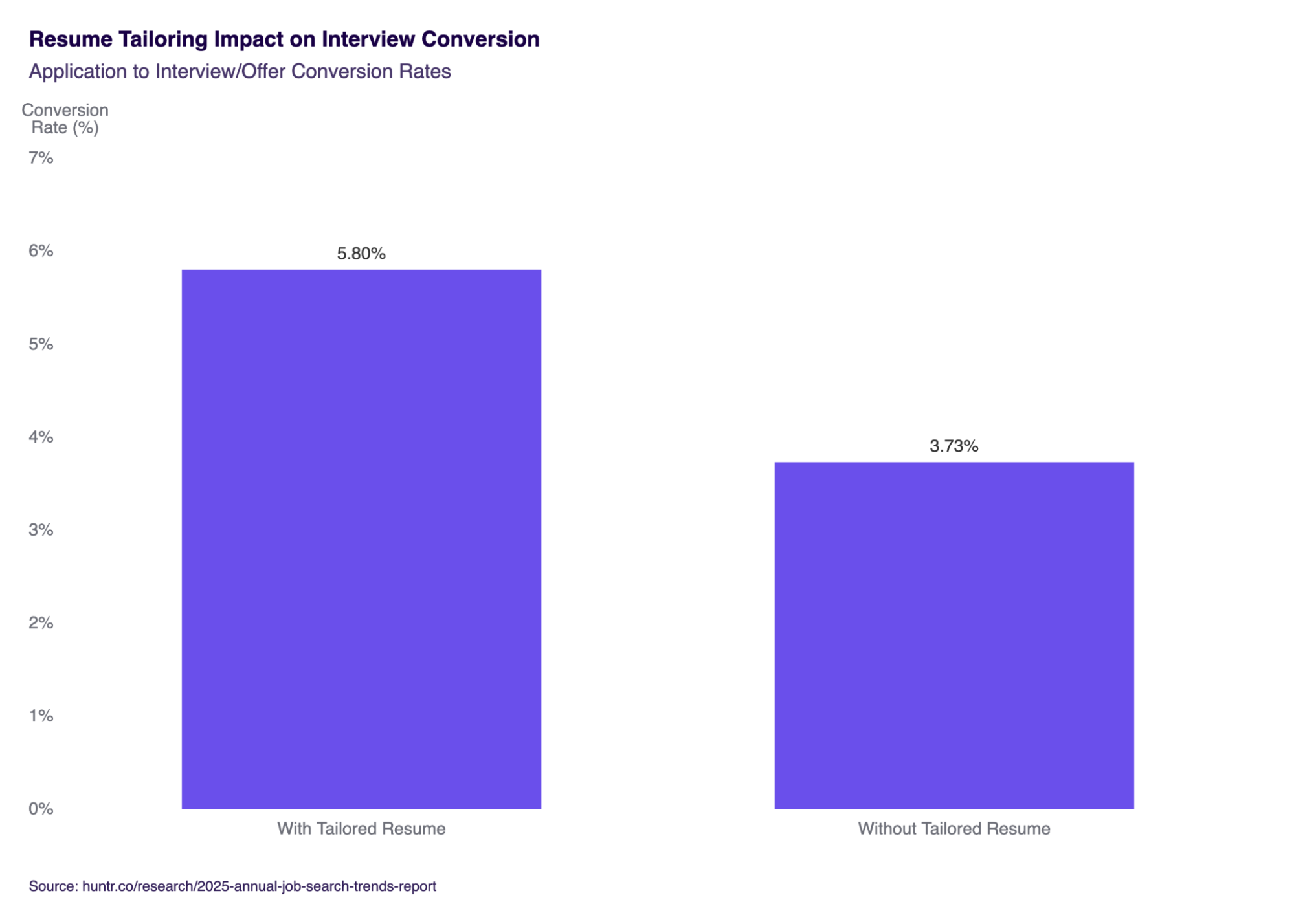
Recent data confirms that tailoring your resume is the single most effective way to improve your outcomes. Research shows that job-tailored resumes are 1.6x more effective than generic ones, with a 5.8% interview conversion rate compared to just 3.7% for untailored applications.

Most resumes fail during the initial screening because they:
- Use generic language: They rely on buzzwords rather than specific, measurable achievements.
- Focus on duties: They list what you were asked to do rather than the impact you delivered.
- Lack job alignment: They fail to mirror the specific skills and terminology found in the job description.
AI solves these issues by forcing alignment and structure. Recruiters spend only a few seconds scanning your document—AI tools ensure your most relevant achievements stand out instantly.
Now that you understand why tailoring works, the next step is identifying how to integrate these tools into your workflow effectively.
When should you tailor your resume?
Tailoring your resume is most effective when you apply to roles where alignment and competition are high. While it’s unrealistic to fully customize every application, strategic tailoring significantly improves your chances of getting interviews.
You should tailor your resume when:
- The job description includes specific tools, skills, or methodologies.
- The role is mid-level, senior, or leadership-focused.
- You’re changing industries or repositioning your experience.
- The company clearly defines success metrics or expectations.
Tailoring matters because both recruiters and ATS systems compare your resume directly to the job description. If your resume reflects the same language, tools, and outcomes, you immediately appear more relevant.
At the same time, simply adding keywords isn’t enough—your content needs to demonstrate real experience and measurable results.
Once you know when tailoring is necessary, the next question becomes practical: how do you actually do it—especially with AI?
How to tailor your resume with AI (step-by-step)
Tailoring a resume used to take hours. With AI, the process becomes faster—but only if you follow a structured approach. The goal isn’t to generate content blindly, but to guide the tool so it produces relevant, accurate improvements.
How to align your resume using AI
- Paste the job description into an AI resume builder.
- Upload or input your existing resume.
- Identify missing keywords and skills.
- Rewrite bullet points to match the job.
- Add measurable results where possible.
- Run your resume through an AI resume checker.
Step 1: Analyze the job description
Before changing anything on your resume, you need to understand what the employer is actually asking for. AI tools help extract key information, but you still need to interpret it correctly.
Most AI resume tools identify:
- Required skills and tools
- Core responsibilities
- Performance expectations
Example
Experience with CRM systems, pipeline management, and revenue growth.
This tells you the employer values systems, process ownership, and measurable impact—not just general sales experience.
A strong, tailored resume reflects these priorities directly.
Step 2: Match keywords naturally
Once you identify the key terms, the next step is integrating them into your resume. The mistake most candidates make is copying keywords without context, which makes the resume feel artificial.
Instead, AI tools should help you rewrite your existing experience using the same language—while keeping it truthful and specific.
Bad example (generic)
Managed customer relationships and sales activities.
Improved (tailored)
Managed CRM pipelines and customer relationships, increasing revenue by 18%.
The difference isn’t just keywords—it’s relevance plus outcome.
Step 3: Rewrite bullet points with AI support
AI resume writers are particularly useful for improving bullet points. They help transform vague responsibilities into clear, results-driven statements.
However, the output is only as good as your input. You need to guide the AI with context—otherwise, it defaults to generic phrasing.
Resume tailoring examples
| Job description excerpt | Untailored bullet | Tailored bullet |
|---|---|---|
| “Lead CRM-driven sales strategy.” | Managed sales activities. | Led CRM-driven sales strategy, increasing pipeline conversion by 22%. |
| “Improve customer retention.” | Worked with clients. | Improved customer retention by 15% through targeted outreach campaigns. |
| “Use data to optimize performance.” | Reviewed reports. | Analyzed sales data to optimize performance, boosting revenue by 12%. |
Step 4: Use an AI resume checker
After rewriting your content, you need to validate it. This is where an AI resume checker becomes essential.
These tools evaluate:
- Keyword alignment with the job description
- ATS readability and structure
- Clarity and grammar
They highlight weak areas and give you a final layer of refinement before submission.
Step 5: Refine tone and accuracy
Even the best AI-generated content needs human editing. AI tends to produce polished but repetitive phrasing, which can make resumes sound generic.
Before applying, review your resume and:
- Replace vague phrases with specific outcomes.
- Remove repetition or filler language.
- Ensure all claims are accurate.
This step is what separates a good AI-assisted resume from a forgettable one.
Once you understand the process, it’s worth looking at the tools themselves—and what each type of AI resume solution actually does.
Best AI tools for resume tailoring
AI resume tools fall into several categories, each designed to solve a specific part of the resume-writing process. Understanding the difference helps you choose the right tool instead of relying on one solution for everything.
Types of AI resume tools
- AI resume builder: Creates structured resumes with tailored suggestions.
- AI resume writer: Generates bullet points and summaries.
- AI resume checker: Scores your resume and highlights issues.
- AI resume generator: Builds a full resume from inputs.
The key difference between tools isn’t whether they use AI—it’s how well they help you align your resume with a specific job.
Enhancv, for example, focuses on structured, ATS-friendly resumes that help experienced professionals tailor content efficiently without overcomplicating the process.
Knowing which tools to use is helpful—but the real impact comes from applying AI strategically across your resume sections.
Is your resume good enough?
Drop your resume here or choose a file. PDF & DOCX only. Max 2MB file size.
Where to apply AI tailoring on your resume
AI tailoring is most effective when applied across multiple sections—not just your experience. Each section plays a different role in reinforcing your relevance for the job.
Resume summary
Your summary is the first section recruiters read, which makes it the most important place to reflect alignment with the role.
Optimize your resume summary and objective for ATS
Drop your resume here or choose a file.
PDF & DOCX only. Max 2MB file size.
Experience section
Your work experience should mirror the job description in both language and outcomes.
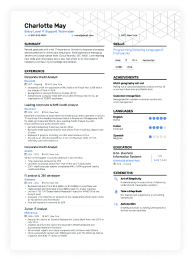
 02/2021 - Present
- •Led CRM-driven pipeline strategy using Salesforce, managing a $3.2M pipeline and increasing quarterly revenue by 18% within 12 months.
- •Designed and implemented targeted customer retention initiatives, reducing churn by 15% and increasing repeat business across key accounts.
- •Coached and mentored a team of 8 sales representatives, improving individual quota attainment from 62% to 85% over two quarters.
- •Collaborated with marketing and product teams to align messaging and campaigns, contributing to a 25% increase in qualified inbound leads.
Achievements section
This example shows how AI-assisted edits turn a generic achievement into a measurable, role-specific impact statement.
At this point, your resume is tailored structurally—but to stand out, you still need to make your impact measurable.
How to quantify AI-tailored resume content
AI helps with structure and phrasing—but numbers make your resume credible. Without quantification, even well-written bullets can feel vague.
Good examples of quantified achievements
- Increased conversion rates by 22% in six months.
- Reduced onboarding time by 30%.
- Managed a $2M pipeline across three regions.
Quantification shows scale, impact, and effectiveness—all of which recruiters prioritize.
With structure, alignment, and metrics in place, the final step is refining your workflow so AI consistently improves your results.
6 tips to improve your resume with AI
Improving your resume with AI is less about the tool and more about how you use it.
These practices help you get consistent, high-quality results:
- Start with a strong base resume.
- Tailor for one job at a time.
- Edit all AI-generated content.
- Focus on measurable outcomes.
- Avoid repetitive or generic phrasing.
- Always run a final check with an AI resume checker.
Frequently asked questions about AI resume tailoring
Even with the right tools, most job seekers still have practical questions about how AI fits into the resume-writing process. Below are clear, direct answers to the most common concerns—from effectiveness to accuracy and time investment—so you can use AI with confidence and avoid common pitfalls.
How to tailor a resume for a specific job?
Match your experience, skills, and language to the job description. AI tools help identify gaps and suggest improvements.
Are AI-generated resumes effective?
They’re effective when edited and validated. Fully automated resumes often lack specificity.
What is the best AI resume builder?
The best tool helps you tailor content quickly, maintain ATS compatibility, and produce structured, readable resumes.
Can I use a free AI resume builder?
Yes, but advanced tailoring features are often limited in free versions.
How long should it take to tailor a resume?
With AI tools, tailoring typically takes 10–20 minutes once you have a solid base resume.
Conclusion
AI has made resume tailoring faster—but not optional. Relevance is now the baseline expectation.
A strong resume is still built on three things:
- Alignment with the job
- Clear structure
- Measurable results
Use AI to accelerate the process—but rely on sound judgment to make it effective.
Make one that's truly you.