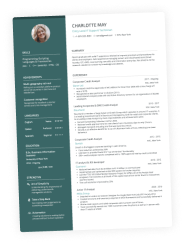
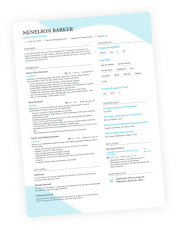
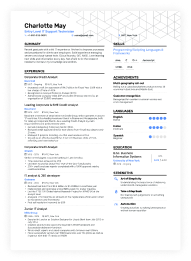
Recruiters make fast decisions. According to eye-tracking data from The Ladders, they spend an average of just 7.4 seconds on their initial screen. This makes the short paragraph at the top of your resume the deciding factor in whether your application gets a closer look. A well-written resume profile gives them a concise, relevant snapshot of your strengths—replacing the outdated objective.
This shift is critical: research from Harvard Business Review (2021) indicates that 88% of qualified candidates are vetted out because they don't match specific job criteria. A gap that a tailored profile is designed to bridge.

Key takeaways
- A resume profile is a short paragraph that summarizes your most relevant experience, skills, and achievements for a specific role.
- Tailoring your profile to the job description signals a clear fit to both recruiters and ATS.
- Strong profiles use measurable results—not vague traits—to show impact.
- Choose the profile format that best matches your experience and career stage.
- Reflecting a company’s values helps your profile feel relevant and aligned.
- Personal traits work best when supported by real examples.
What is a resume profile?
A resume profile is a short section at the top of your resume that highlights your key qualifications.
Instead of saying what you want (“Seeking a challenging position…”), a profile focuses on what you offer: your experience, skills, and impact.
An example from a marketing manager
Results-driven marketing manager with 8+ years of experience in digital strategy, paid media, and brand storytelling. Led cross-functional teams to increase campaign ROI by 25% and grow organic traffic by 40% year-over-year.
This gives a recruiter instant context: your level, your domain, and the kind of results they can expect.
Why many resume profiles fall flat
A weak profile tends to:
- Talk only about career goals, not value.
- Repeat generic responsibilities instead of highlighting outcomes.
If your current profile reads like it could be pasted into anyone’s resume, it isn’t helping you. Treat it as a high-impact mini-pitch, not filler.

Resume summary vs. resume objective vs. resume profile
A resume profile, resume summary, and resume objective all appear at the top of your resume, but they don’t serve the same purpose. In fact, a resume profile and a resume summary are nearly identical in function—both give a quick, value-driven snapshot of your experience, skills, and impact. The strategies in this guide apply equally to either one.
Resume profile
- A broad, value-focused introduction that highlights your strengths, relevant skills, and key achievements.
- Works for most candidates, especially mid-level and senior professionals.
- Best when you want to show what you bring to the role, not what you’re hoping to gain.
Resume summary
- A concise overview of your experience and measurable results, often more tightly focused on accomplishments.
- Ideal for applicants with several years of experience and a clear track record.
- Best when you want to surface scope, impact, and expertise quickly.
In practice, summaries and profiles are interchangeable—just slightly different stylistic choices.
Resume objective
- A brief statement about your career goals and the direction you’re aiming toward.
- Most useful for entry-level candidates, career changers, and those re-entering the workforce.
- Best when you need to explain intent rather than highlight past experience.
Objectives do not follow the same rules as profiles or summaries—they focus less on achievements and more on where you’re heading.
If you’re unsure whether your current version hits the mark, use Enhancv’s Resume Summary AI Generator to get instant guidance and corrections.
Enhance Your Resume Profile Instantly
Drop your resume here or choose a file.
PDF & DOCX only. Max 2MB file size.
What makes a good resume profile?
A good resume profile clearly summarizes your role, key strengths, and measurable achievements in a way that instantly shows your relevance to the job.
States your role and level
- “Senior data analyst”
- “Entry-level nurse”
- “Mid-level product manager”
Summarizes your focus and key skills
“Specializing in SaaS analytics, SQL, and stakeholder reporting”
Mentions one or two quantified achievements
- “Reduced reporting time by 30%”
- “Increased NPS by 12 points”
Signals the type of roles or industries you target
- “FinTech and B2B SaaS”
- “Pediatric care”
- “Consumer e-commerce”
Use an implied first person without pronouns (“Led cross-functional teams…”) to keep your profile professional and concise.
At a glance, a recruiter should understand:
- Who you are professionally
- Where you’ve had the most impact
- Why you’re relevant to their role
If your profile doesn’t do all three, it’s probably too generic or too vague.
With the core elements in place, the next step is choosing the profile style that best highlights your experience.
Types and formats of resume profiles
There isn’t just one “right” way to write a profile. The best format depends on your experience, career stage, and how linear your career path is.
Classic summary profile
This is the most common style: a three to four-sentence summary combining your role, experience, skills, and achievements.
Best for:
- Most mid-career and senior professionals
- Candidates with a fairly straightforward career path
Example
Results-driven HR generalist with 6+ years of experience in recruitment, onboarding, and employee relations across tech and manufacturing. Managed full-cycle hiring for 40+ roles per year, reduced time-to-fill by 18%, and launched engagement initiatives that improved retention by 10%.
Chronological profile (experience-focused)
A chronological profile emphasizes your most recent, relevant experience and aligns naturally with the reverse-chronological resume format. It works best when your latest roles clearly match the job requirements and showcase the achievements recruiters most want to see.
Best for:
- Mid-career professionals with strong recent roles
- Candidates whose current job is closely aligned with their target role
Example
Project manager leading cross-border software implementations for the past 5 years. Most recently managed a $3M SaaS migration for a global retailer, delivering on time and 9% under budget. Previously oversaw three concurrent implementations in healthcare, coordinating teams across engineering, operations, and compliance.
Functional profile (skills-focused)
A functional profile groups your strengths under skill themes rather than job titles, making it a perfect fit for the functional resume format. It highlights your competencies and achievements when your work history is less linear or when transferable skills matter more than past roles.
Best for:
- Career changers
- People with employment gaps
- Candidates with very diverse roles but consistent skills
Example
Customer success and support – Resolved an average of 45+ tickets per day while maintaining a 95% satisfaction score; introduced a new tagging workflow that reduced response time by 20%.
Relationship management – Built long-term relationships with 30+ mid-market accounts, contributing to a 15% uplift in net revenue retention.
Use this format carefully and keep a clear work history so your resume never looks like you’re hiding dates or roles.
Combination profile
A combination profile blends chronological and functional elements, making it a strong match for the hybrid resume format. You open with a brief summary, then reinforce it with a few bullets grouped by skill or achievement to highlight both experience and competency.
Best for:
- Senior-level candidates with broad responsibilities
- Professionals with both deep expertise and leadership experience
For example
Senior finance leader with 12+ years of experience across FP&A, budgeting, and strategic planning in manufacturing and SaaS.
- Led annual budgeting for a $120M business unit; improved forecast accuracy by 14%.
- Implemented new reporting dashboards that cut month-end close time from 10 to 6 days.
- Managed and mentored a team of 7 analysts across two continents.
Adaptive profile (tailored per application)
An adaptive profile isn’t a separate structure—it’s a habit. You adjust your existing profile for each application so it mirrors the most important skills, tools, and outcomes in the job description.
Best for:
- Anyone applying to competitive roles
- Candidates who want to pass applicant tracking systems (ATS) and stand out with relevance
Example: untailored vs. tailored
❌ Untailored:
“Marketing professional with experience in digital campaigns and content creation.”
✅ Tailored to a role emphasizing SEO and lead generation:
“Digital marketing specialist with 5+ years of experience in SEO, content strategy, and lead-generation funnels. Increased organic traffic by 40% and grew marketing-qualified leads by 28% through targeted content and on-page optimization.”
The second version feels like it was written for a specific job—not copied and pasted.
Once you’ve chosen the right profile format, focus on the essential elements that make it clear, relevant, and impactful.
Key elements to include in a resume profile
Think of your profile as a snapshot of your most relevant qualifications.
It usually rests on five pillars:
- A clear professional identity
- Quantifiable achievements
- Targeted technical and soft skills
- Alignment with company culture and industry
- One or two authentic personal traits
Let’s break those down.
1. A compelling opening statement
Start with a line that immediately tells the reader who you are and what you do.
Example openings
- Results-driven marketing manager with over 10 years of experience in digital marketing and brand strategy.
- Detail-oriented staff accountant with 5+ years in corporate finance and regulatory reporting.
- Entry-level data analyst with strong SQL, Excel, and visualization skills, backed by internships and academic projects.
Avoid vague openers like “Hard-working professional seeking an opportunity to grow.” That tells the reader nothing.
2. Quantifiable achievements
Wherever possible, pair responsibilities with outcomes:
Responsibility + outcome
- Led a team of 10 that increased sales by 25% over two years.
- Implemented a CRM system that reduced response times by 30% and increased customer satisfaction by 15%.
- Cut operational costs by 12% by renegotiating vendor contracts and optimizing inventory levels.
If you struggle to find metrics, think in terms of:
- Percentages (growth, savings, efficiency)
- Timeframes (projects delivered ahead of schedule)
- Volumes (number of clients, tickets, campaigns, patients)
3. Skills that match the role
Your profile should highlight skills that are both accurate and relevant to the specific job.
Example for a data analyst
Data analyst skilled in advanced data analysis, SQL, and data visualization tools such as Tableau and Power BI. Known for turning complex datasets into actionable insights for stakeholders.
Mix hard skills (tools, methods) with soft skills (communication, collaboration) that are clearly useful in the role:
- “strong communication” → “clear communicator who translates complex analytics into business language”
- “team collaboration” → “collaborates with cross-functional teams in product, marketing, and sales”
4. Mirroring company culture and values
Research the company’s mission, values, and tone. Then echo what matters most to them—without copying their website.

If the company emphasizes innovation and creativity:
“Creative problem-solver with a passion for designing innovative marketing campaigns in fast-paced environments.”
If the company focuses on stability and compliance:
“Meticulous operations specialist with a strong focus on process reliability, compliance, and risk management.”
5. Personal traits with a professional purpose
Personal traits can help your profile feel human—but only if they support your professional story.
Good examples
- Detail-oriented accountant with a track record of error-free financial reporting.
- Empathetic customer success manager known for building long-term client relationships.
- Curious product designer who tests ideas quickly and iterates based on user feedback.
Avoid traits you cannot support (“visionary,” “genius”) or that sound like empty claims.
The next step is showcasing the achievements and skills that make your profile truly persuasive.
Highlighting key achievements and skills in your resume profile
The profile section is your first chance to showcase your best achievements and skills in a tight space.
Use action verbs and concrete outcomes
| Instead of: | Write: |
|---|---|
| “Was part of a team that increased sales.” | “Led a cross-functional team to generate a 25% increase in sales over six months.” |
| “Responsible for customer support improvements.” | “Implemented a new support workflow that cut average response time by 30% and boosted CSAT scores from 82% to 91%.” |
If the posting emphasizes:
- Leadership: Highlight team size, coaching, and decision-making.
- Technical skills: Mention specific tools, methods, and outcomes.
- Client impact: Show revenue, retention, or satisfaction metrics.
Example tailored achievement for a leadership-heavy role:
“Managed and mentored a team of 12 sales reps, increasing team quota attainment from 78% to 96% in one year.”
Don’t forget awards and recognition
Awards, certifications, and formal recognition immediately boost credibility.
- “Recipient of the 2022 Sales Excellence Award for exceeding quarterly targets by 20%.”
- “Named ‘Employee of the Quarter’ twice for leading process improvements that cut defects by 15%.”
One strong line like this in your profile can set you apart.
After identifying your strongest achievements and skills, refine your profile by aligning it with the priorities and language of the job description.
Tailoring your resume profile to the job description
A tailored profile shows you understand the role and have done your homework.
Step 1: Highlight the job’s priorities
Tailoring isn't just a suggestion—it's a requirement. 83% of recruiters say they’re more likely to hire a candidate who has tailored their resume to the specific job. A tailored profile is your best defense against both.
Read the job ad and underline:
- The top three to five responsibilities
- Any repeated skills, tools, or certifications
- Performance metrics (“conversion,” “uptime,” “churn,” “NPS”)
Step 2: Mirror the language—honestly
If the ad mentions:
- “Project management,” “stakeholder management,” “timeline ownership”
- You might say:
“Project manager with 5+ years of experience owning timelines, coordinating stakeholders, and delivering software projects on schedule.”
Step 3: Include ATS-friendly keywords naturally
Applicant tracking systems often scan for exact or similar phrases from the job description.
If the posting lists “data analysis” and “customer engagement,” your profile might include:
“Experienced in data analysis and customer engagement strategies that increased repeat purchase rate by 18%.”
Avoid keyword stuffing. If your profile reads awkwardly out loud, you have gone too far.
Step 4: Show industry-specific experience
If the role sits in a niche domain (healthcare, fintech, education, manufacturing), mention relevant context:
- “3+ years of experience in hospital-based patient scheduling and EMR systems.”
- “Background in B2B SaaS for financial services, including compliance-sensitive workflows.”
These small references tell the hiring manager you understand their world.
Step 5: Surface transferable skills if you are pivoting
When you are changing industries, emphasize skills that carry over:
- Communication and stakeholder management
- Problem-solving and analysis
- Leadership and team coordination
- Customer-facing experience
Example for a retail-to-customer-success pivot
Customer-focused professional with 4+ years in high-volume retail, skilled in handling complex inquiries, resolving issues under pressure, and building long-term relationships—ready to transition into a customer success role in tech.
With your tailored message in place, reinforce it by highlighting the experience and education that best support your fit for the role.

PRO TIP
Tailoring your resume profile shows you understand the role and strengthens your chances with both ATS software and human recruiters. Instead of rewriting it from scratch each time, you can use Enhancv’s One-Click Tailoring Tool—paste the job description, and it updates your skills, achievements, and profile summary to match the posting.
Showing relevant experience and education in your profile
Your resume profile should preview the experience and education that matter most for the role, not summarize your entire background. Focus on one or two roles, projects, or achievements that directly match the job description.
“Marketing manager with 6+ years leading digital campaigns that increased qualified leads by 30%.”
If you have a relevant certification or degree—such as a BSN for nursing or a Google Data Analytics certificate—mention it briefly to reinforce your credibility.
You can also support your profile with one or two mini bullets when using a combination format, such as:
- “Led a cross-functional team to increase sales by 25%”
- “Graduated top 10% with an MBA in marketing.”
This keeps the section scannable while giving recruiters proof of your core qualifications without repeating information from your full experience section.
Resume profile examples by role and career stage
Here are several examples you can adapt based on your situation.
Entry-level: Marketing coordinator
“Dynamic and creative recent graduate with a bachelor’s degree in marketing and hands-on experience in social media management and content creation. Completed a 6-month internship at XYZ Agency, where I helped execute campaigns that increased Instagram engagement by 22%. Eager to leverage digital marketing skills and a strong foundation in analytics to support a forward-thinking marketing team.”
Why it works:
- Emphasizes education and internship experience.
- Uses one clear metric (22% engagement increase).
- Shows enthusiasm and direction, not just “looking for a first job.”
Mid-career: Marketing manager
“Marketing manager with 7+ years of experience developing and executing digital strategies that drive brand awareness and revenue growth. Proven track record leading cross-functional teams to hit ambitious campaign goals and improve customer engagement across paid, owned, and earned channels. Adept at using data and A/B testing to optimize performance and improve ROI.”
Why it works:
- Focuses on level (manager) + years of experience.
- Highlights leadership and collaboration.
- Mentions data-driven decision-making and ROI.
Executive: Chief technology officer (CTO)
“Chief technology officer with 15 years of experience leading engineering and product teams in high-growth tech environments. Directed development of cloud-based platforms that improved system reliability to 99.9% and reduced infrastructure costs by 18%. Known for fostering innovation, aligning technology roadmaps with business strategy, and building high-performing teams.”
Why it works:
- Demonstrates strategic scope and business impact.
- Uses strong metrics (99.9% reliability, 18% cost reduction).
- Emphasizes leadership, culture, and cross-functional alignment.
Bad vs. good resume profile example
Here is a quick comparison to see how tailoring, clarity, and metrics change the impact of your profile.
Wrong (generic and vague)
Hard-working professional with good communication skills and experience in various roles. Looking for an opportunity to grow in a dynamic company where I can use my skills and learn new things.
Right (specific and value-focused)
“Customer success specialist with 4+ years of experience supporting B2B SaaS clients. Known for resolving complex tickets quickly, improving customer satisfaction scores from 84% to 92%, and partnering with sales to reduce churn by 10%. Looking to help a growth-focused company strengthen relationships and expand its customer base.
The second example tells a recruiter exactly why you matter.
Seeing the difference side by side makes it easier to refine your own approach, and the next step is applying practical tips and best practices to strengthen your profile even further.
Resume profile writing tips and best practices
- Lead with your strongest angle
If your experience is your main asset, start there.
If you are entry-level, lead with education, projects, or internships.
- Use action verbs + metrics
“Drove,” “led,” “implemented,” “optimized,” “launched,” etc.
Pair them with numbers: “increased,” “reduced,” “cut,” “grew.”
- Match the job description language
If a posting mentions “stakeholder management,” use that phrase (truthfully).
If it calls for “cross-functional collaboration,” show where you have done that.
- Keep it concise
Aim for three to five lines of text.
Avoid long, dense paragraphs at the very top of your resume.
- Proofread for clarity and consistency
Check tense (usually present tense for current role, past for past roles).
Remove filler words and clichés that do not add meaning.
- Ask for feedback
Have a colleague or mentor read just your profile and ask: “Would you keep reading this resume? Why or why not?”
- Use tools to polish your wording
Enhancv’s AI Resume Builder can help you rephrase, tailor, and tighten your profile while keeping it ATS-friendly and professional.
It’s just as important to understand the pitfalls that can weaken an otherwise strong resume profile.
Common mistakes to avoid in resume profiles
Even experienced professionals fall into some predictable traps.
Vague buzzword-heavy statements
“Results-driven, dynamic team player with excellent communication skills.”
This could describe anyone. Replace it with specific outcomes and situations.
Irrelevant personal details
Your resume profile isn’t the place for hobbies or unrelated personal facts unless they directly support your candidacy (e.g., relevant volunteer leadership). Focus on your professional value.
Overused clichés and corporate jargon
Words like “synergy,” “rockstar,” and “ninja” add noise, not clarity.
Prefer clean, specific language:
“Led a cross-functional project,” not “created cross-team synergies.”
Generic one-size-fits-all profiles
Using the same profile for every application wastes an opportunity. Tailor it to the role by adjusting keywords, examples, and emphasis.
Negative or apologetic tone
Avoid lines like:
- “Looking to improve my skills.”
- “Trying to overcome past weaknesses in time management.”
Use your profile to highlight what you do well, not what you are fixing.
Frequently asked questions about resume profiles
Here are clear answers to the most common questions job seekers have when writing or refining their resume profile.
Do I need a resume profile at all?
For most roles, yes. A profile helps recruiters quickly see whether you’re relevant and worth a deeper look. It’s especially useful if you have several years of experience or if your job titles alone don’t fully show your strengths.
How long should my resume profile be?
Three to five lines are usually enough. If you go beyond six, it becomes a paragraph that many recruiters will skip.
Where should I put the resume profile on my resume?
Place your resume profile directly under your header and before your work experience. This is where recruiters expect to see a quick summary of who you are and what you offer. And you don’t need to label it—there’s no requirement to title it “Resume Profile.” Its placement makes the purpose clear.
Conclusion: Turn your resume profile into a real advantage
Your resume profile sets the tone for your entire application. When it’s tailored, concise, and supported by real results, it gives recruiters exactly what they need: a clear sense of your strengths and your potential impact. With just a few lines, you can shape how your resume is read—and whether it moves forward.
PRO TIP
To strengthen your profile even further, try Enhancv’s AI Resume Builder. It offers tailored suggestions, clearer phrasing, and formatting improvements to help you present your experience with confidence and precision.
Make one that's truly you.