



Most quality manager CVs list every standard the candidate has audited against and call it experience. Naming ISO 9001 or a stack of methodologies proves you can follow a system, not that you can run one.
What hiring managers screen for is impact: whether you cut defects, closed out audit findings, and moved a real number in the right direction. Lead with that evidence, and if you want the fundamentals first, see how to write a CV.

Key takeaways
- Lead with the skills quality employers repeat: root cause analysis, continuous improvement, ISO 9001, quality assurance, and quality management systems.
- Prove each skill with a number: defect rates cut, audit findings closed, cost of poor quality reduced, first-pass yield lifted.
- Name the standards and methodologies you have actually worked to, then spend your space on what you did with them.
- Most roles sit at lead level, so frame the CV around a quality function you owned, not tasks you supported.
- Quality work is on-site or hybrid because it lives where the product is made, so keep your location visible in the header.
- Two pages, reverse chronological, sent as a PDF unless the advert asks for a Word file.
Top skills for your quality manager CV
Read UK quality manager adverts back to back and the same demands surface. Root cause analysis, continuous improvement, and ISO 9001 recur most often, followed by quality assurance, quality management systems, and auditing, according to Enhancv's internal job feed over the last ~30 days across 59 UK postings.
Build the skills section of your CV around what those adverts repeat, not a generic competency list. List the hard skills in the words the adverts use, then prove the top ones in your experience bullets, because a skill claimed and never evidenced reads as filler to a reviewer.
Split your skills so they can be scanned. A standards and systems cluster covers ISO 9001, quality management systems, auditing, and the sector standard you work to. A methods cluster covers root cause analysis, continuous improvement, Lean, and Six Sigma. A leadership cluster covers the people and process side, from running a quality team to influencing operations and suppliers.
Continuous improvement is the skill that separates a quality manager from a quality inspector. Naming Lean, Six Sigma, Kaizen, or 8D is fine, but only if you can point to an improvement that held after you moved on. One sustained gain beats a wall of methodology acronyms.
Root cause analysis is the other skill a reviewer probes hardest, because it is where a quality manager earns the title. Do not just claim it. Show the tool you used, whether that is 5 Whys, a fishbone, or a full 8D, the problem it cracked, and the corrective action that stopped the fault coming back.
Data has quietly become part of the job. If you run analysis in Excel, Minitab, or Power BI, or you have built statistical process control into a line, name the tool rather than the category, because a quality manager who can interrogate the numbers beats one who waits for a report.
The soft skills that carry weight are the ones tied to holding a standard when the business wants to ship. Communication, influence, and the judgement to stop a line or release a batch are what a hiring manager is really testing. Treat these as claims you back with an example, not adjectives you stack.
Top skills for your quality manager CV:
Quality management systems (ISO 9001)
Root cause analysis
Continuous improvement (Lean, Six Sigma)
Quality assurance
Quality control
Internal and external auditing
Corrective and preventive action (CAPA)
Statistical process control (SPC)
Regulatory and standards compliance
Communication
Influencing operations and suppliers
Leadership
Problem solving
Attention to detail
Sound judgement

Match your skills to the sector
Quality manager means different things across industries, so tune the top of your skills list to the advert. Automotive wants IATF 16949, PPAP, APQP, and core tools. Pharma and medical devices want GMP, ISO 13485, validation, and CAPA. Aerospace wants AS9100 and first article inspection. Food and drink wants BRCGS, HACCP, and food safety. Software and services lean on QA processes, test strategy, and defect management. Keep root cause analysis and continuous improvement constant across all of them, then swap the standard-specific skills to match the sector you are applying into.
What the UK quality manager market looks like
Knowing what employers ask for shapes what you put near the top of the CV. Here is what recent UK postings show.
| What | UK quality manager roles |
|---|---|
| Where the work happens | Split between onsite and hybrid, onsite ahead, fully remote rare (59 UK postings in the last ~30 days, Enhancv's internal job feed) |
| Seniority asked for | Mostly lead level, then mid, few pitched as senior, so you are compared against experienced quality staff |
| Most-listed skills | Root cause analysis, continuous improvement, ISO 9001, quality assurance, quality management systems |
| Pay | Varies widely by sector, standard, and firm size, so check each employer's published band rather than a single headline figure |
Two patterns are worth acting on.
The work splits between onsite and hybrid, with onsite ahead and almost nothing fully remote, because quality lives where the product is made. A recruiter needs to see you can be on site, so keep your base location visible in the header.
Most postings sit at lead level, then mid, with only a handful pitched as senior, so you are measured against experienced quality staff. Lead with a quality function you owned and improvements you drove rather than a list of standards.
The recurring skills tell you which words the parsers and the reviewers are primed to find. Root cause analysis and continuous improvement top the list, which says the role is judged on fixing problems at source and making improvements stick, not just on holding a certificate. Make sure both show up in your evidence.
Formatting your quality manager CV
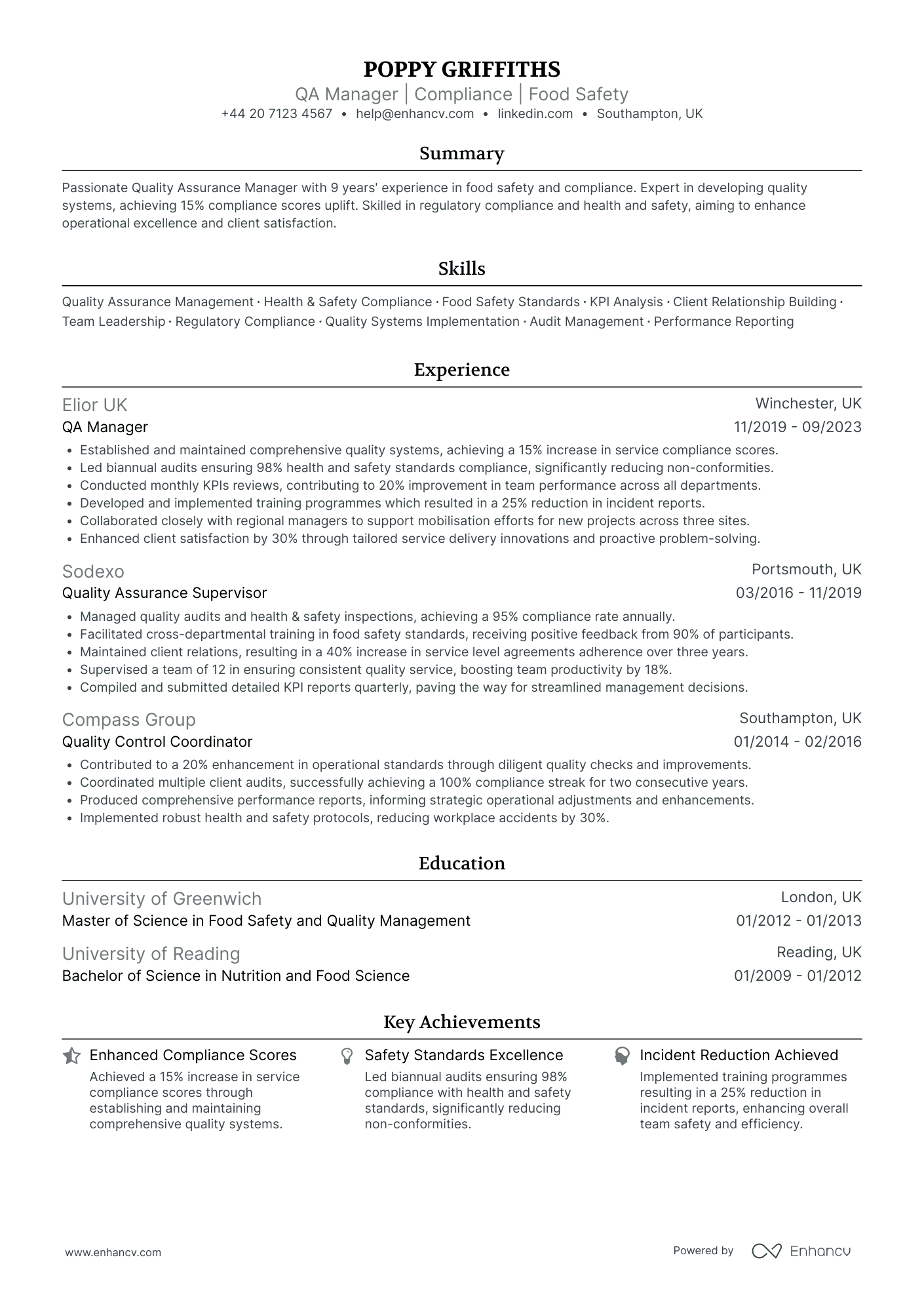
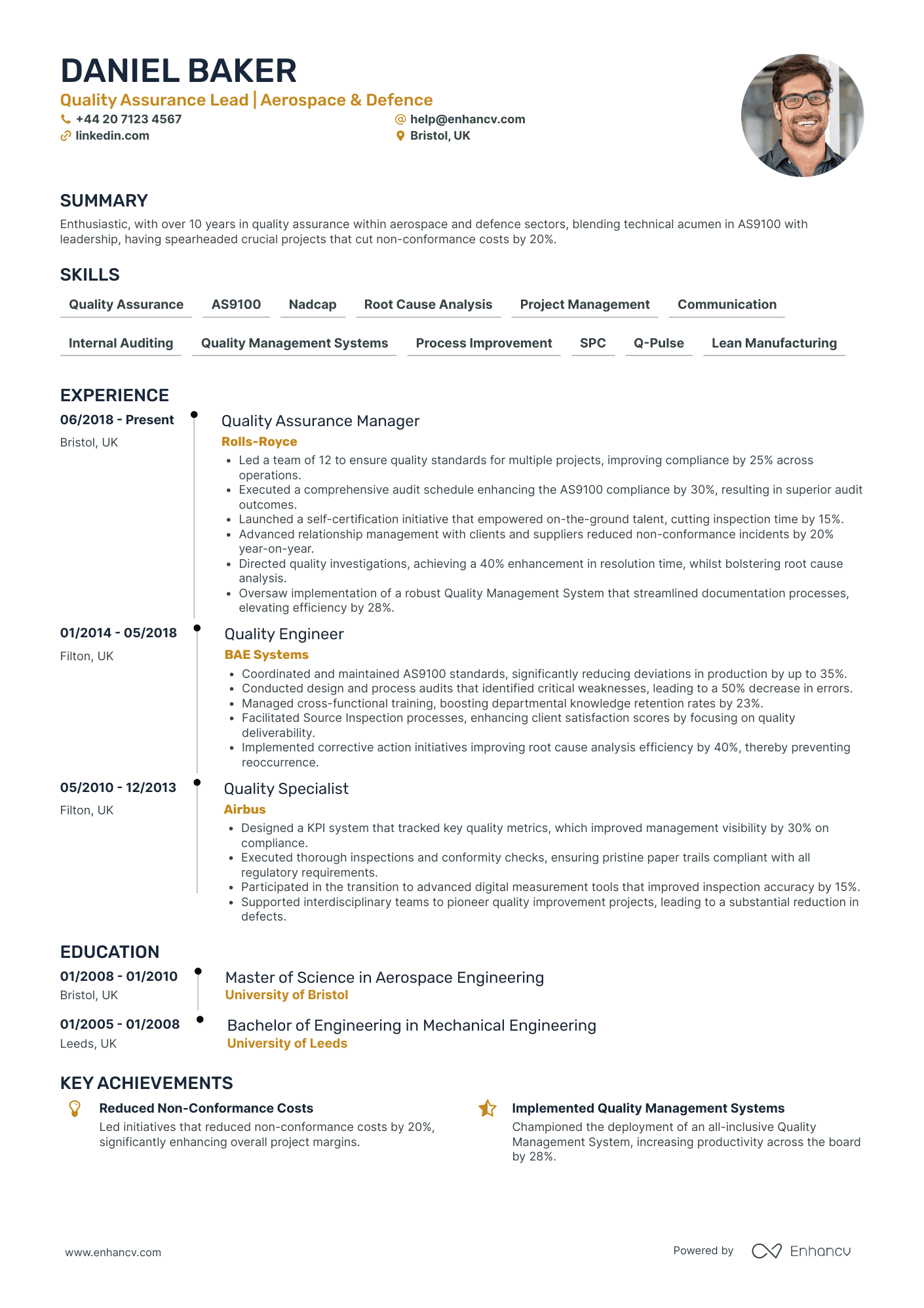
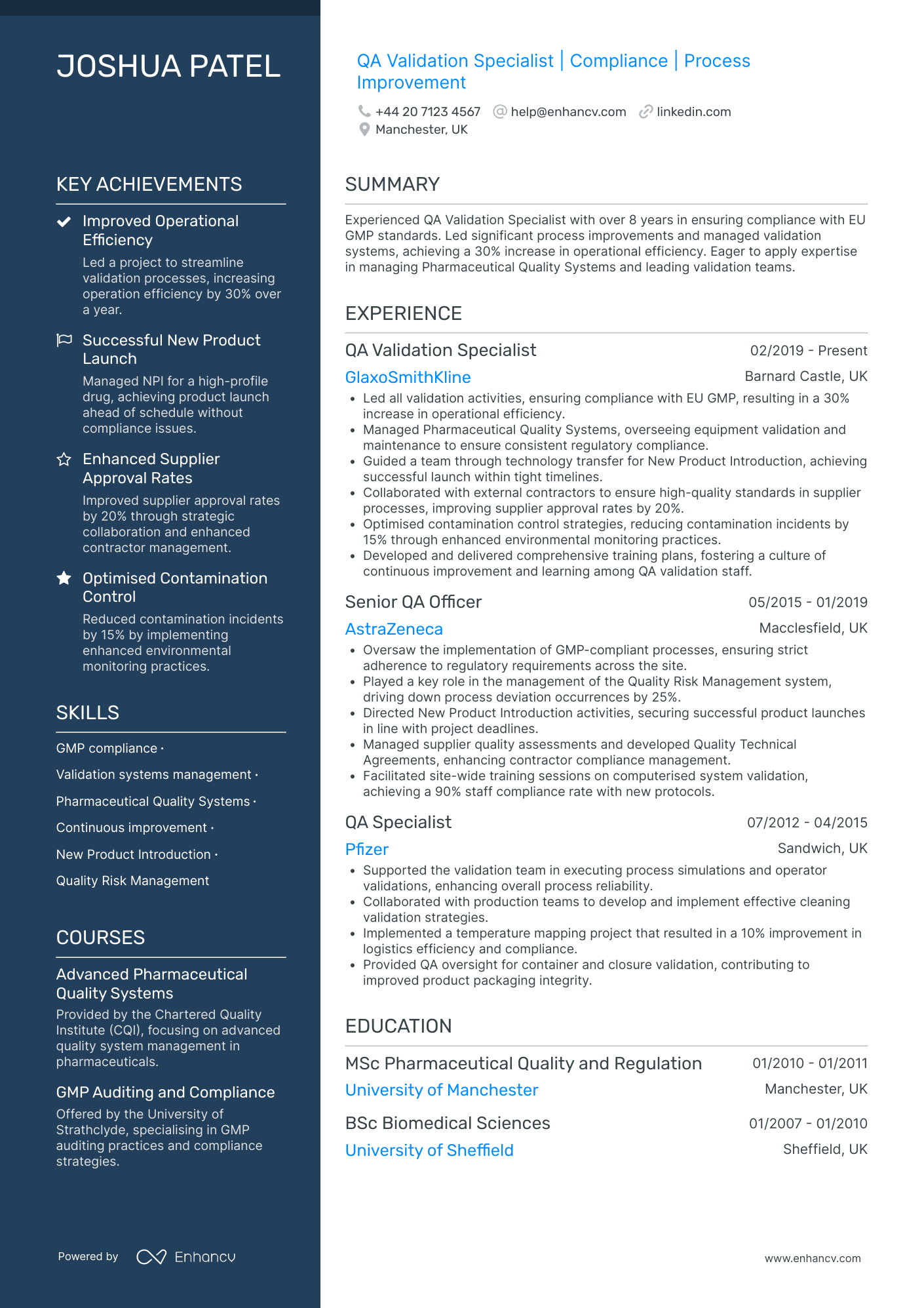
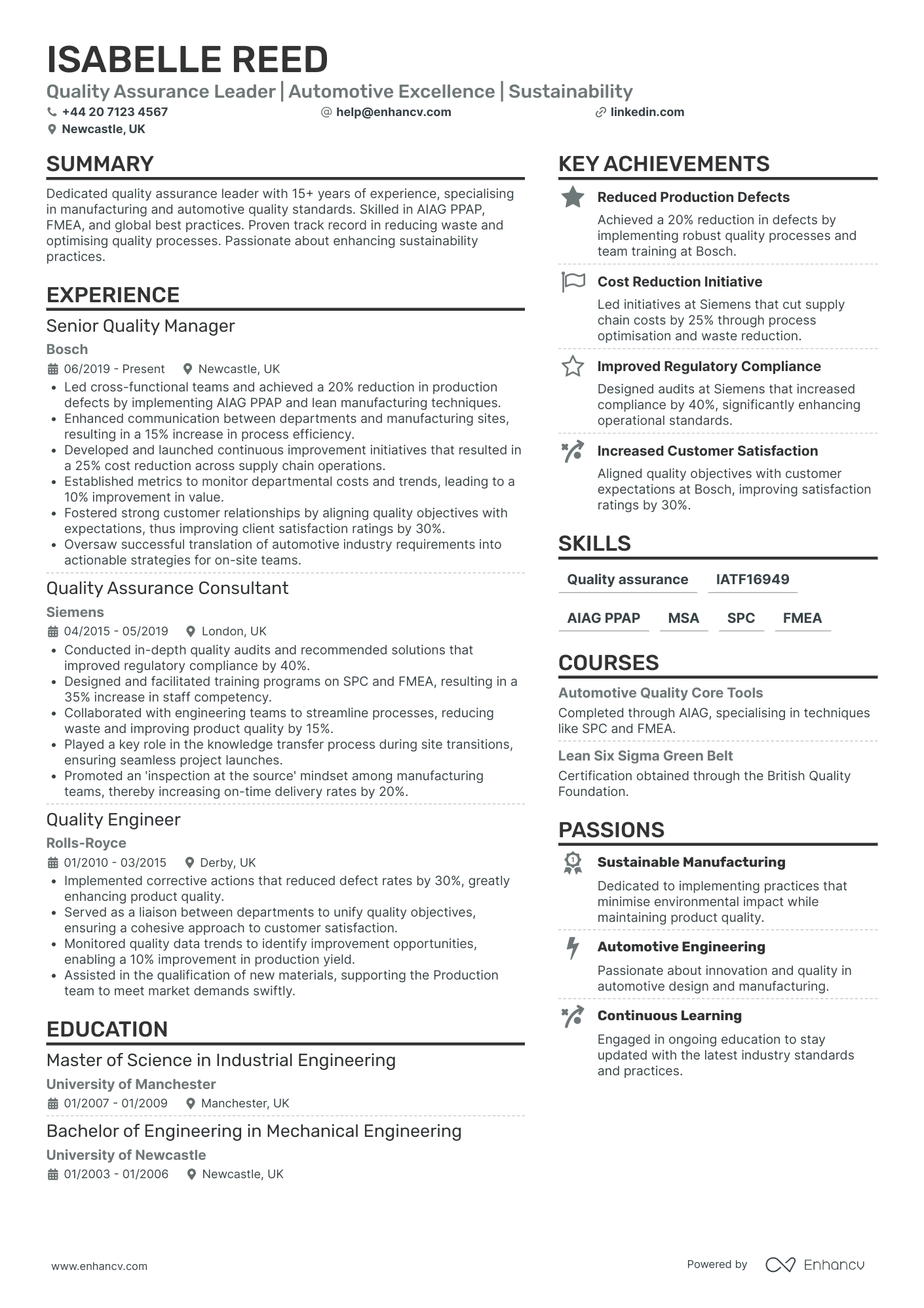
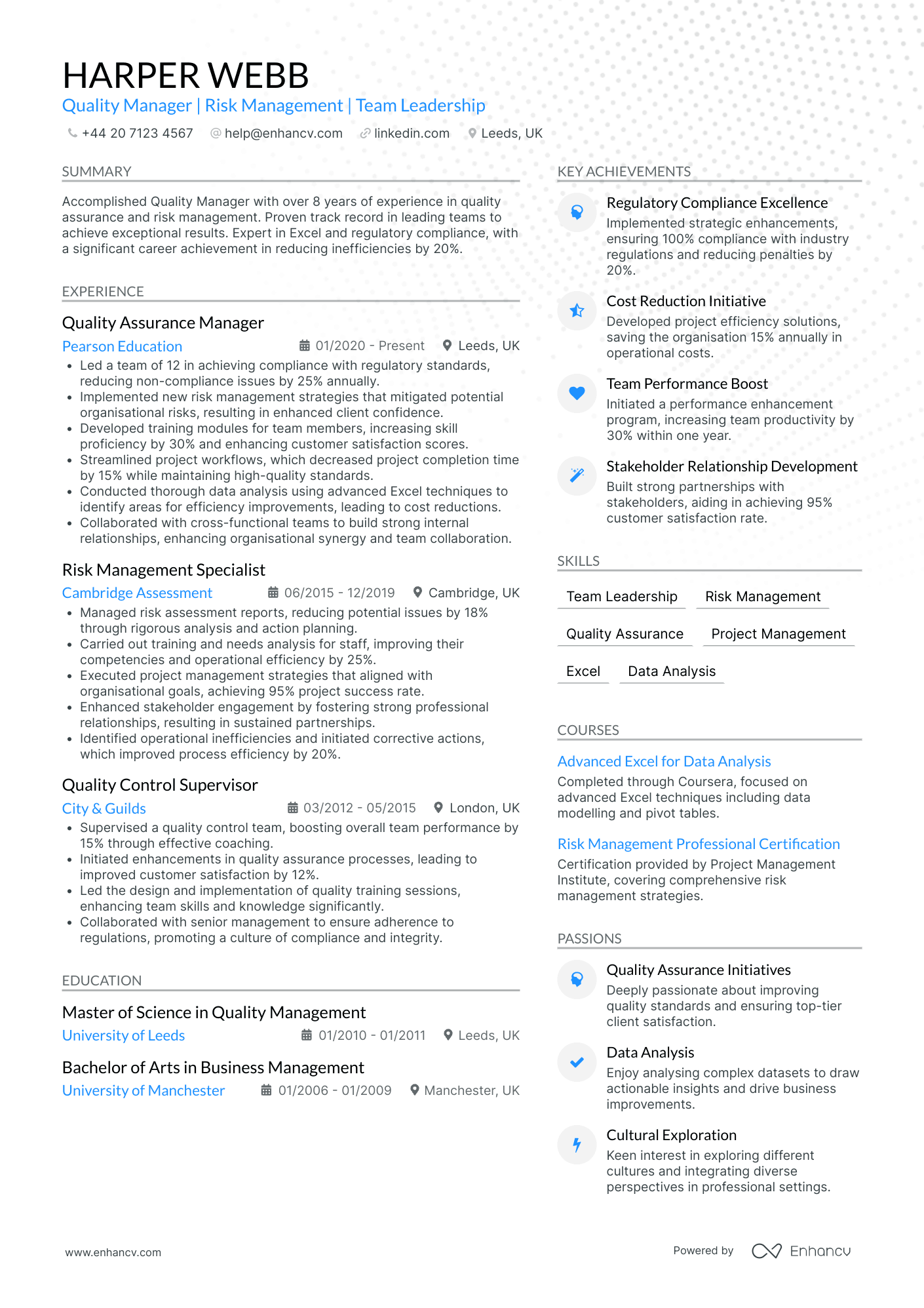
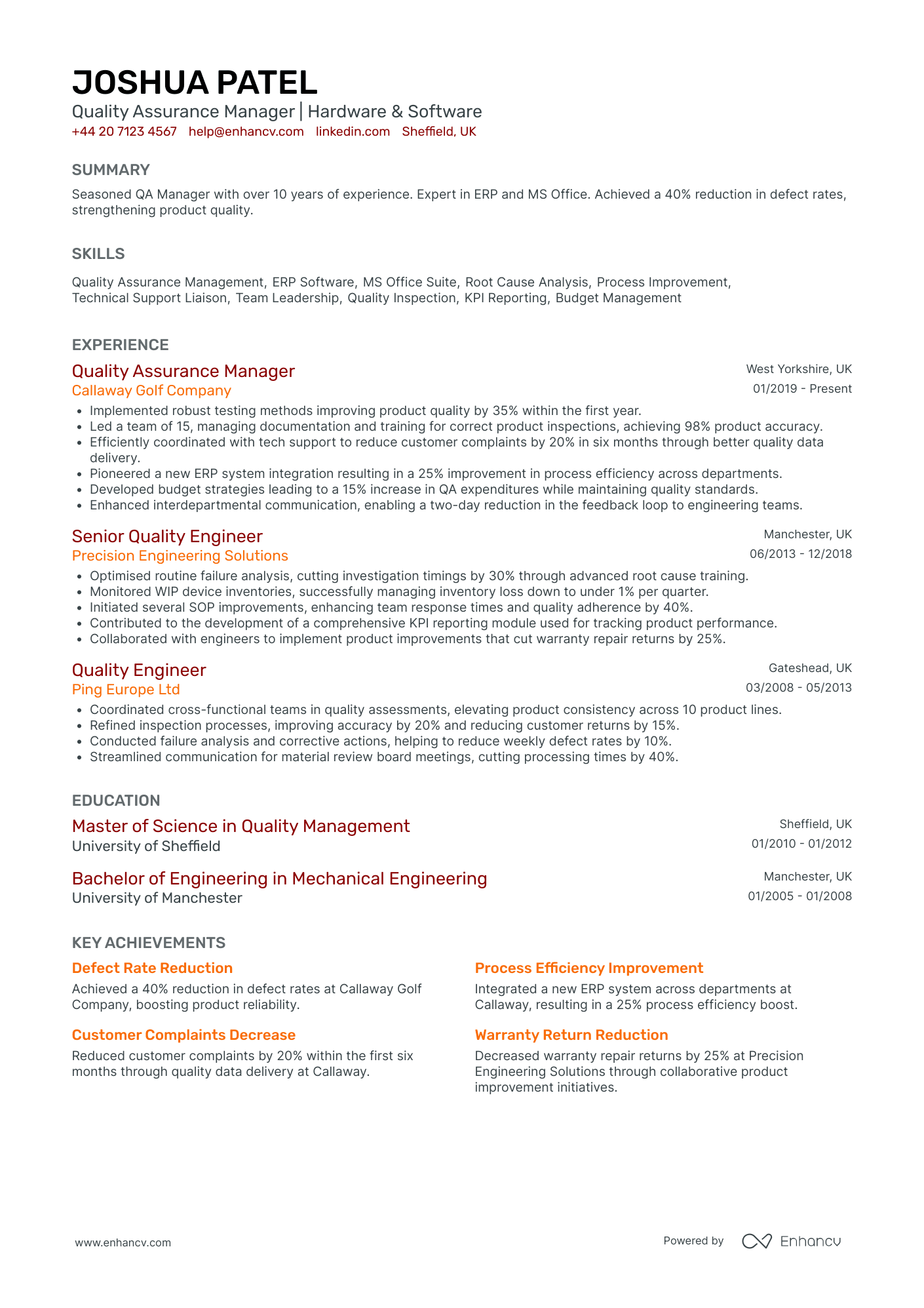
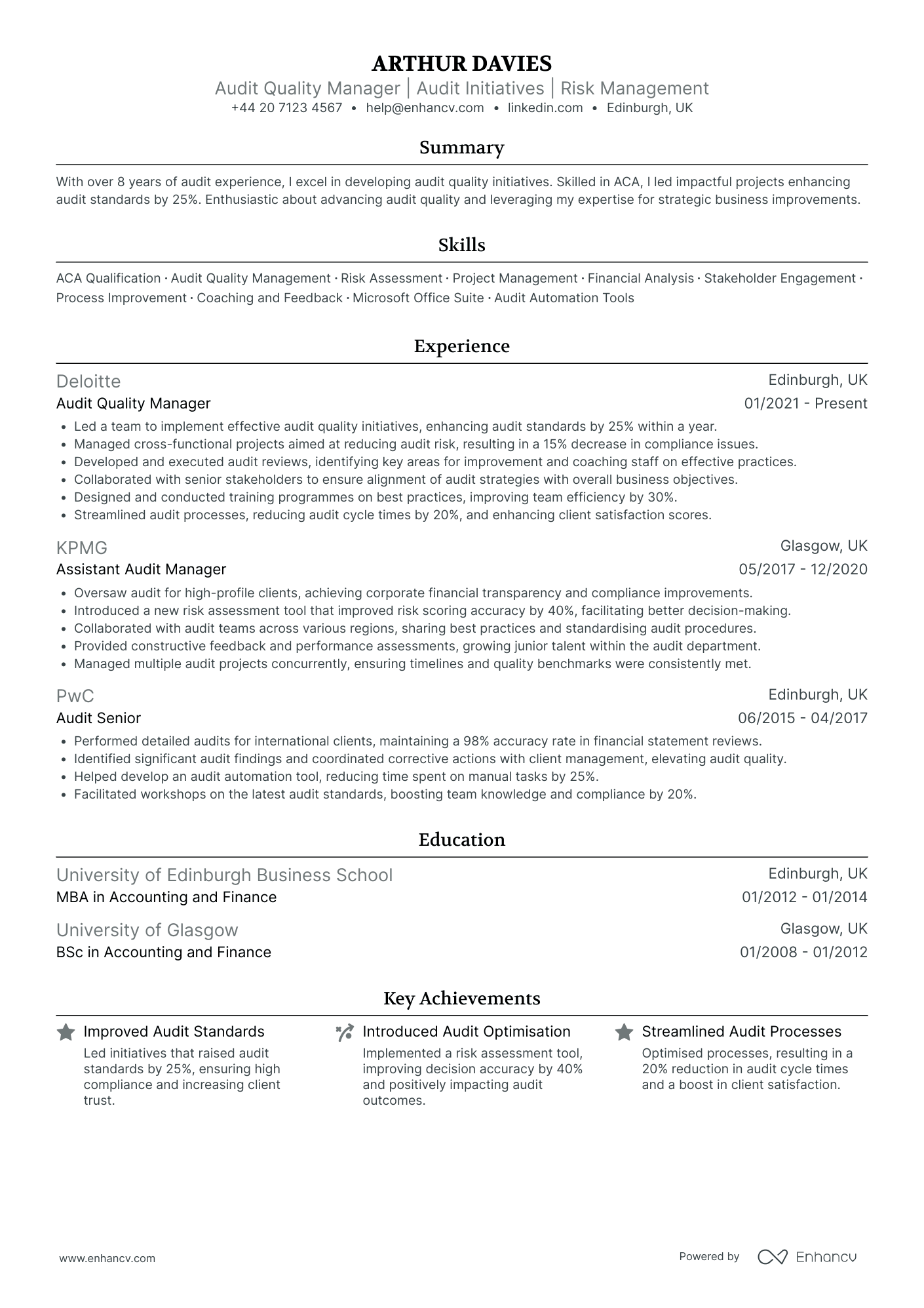
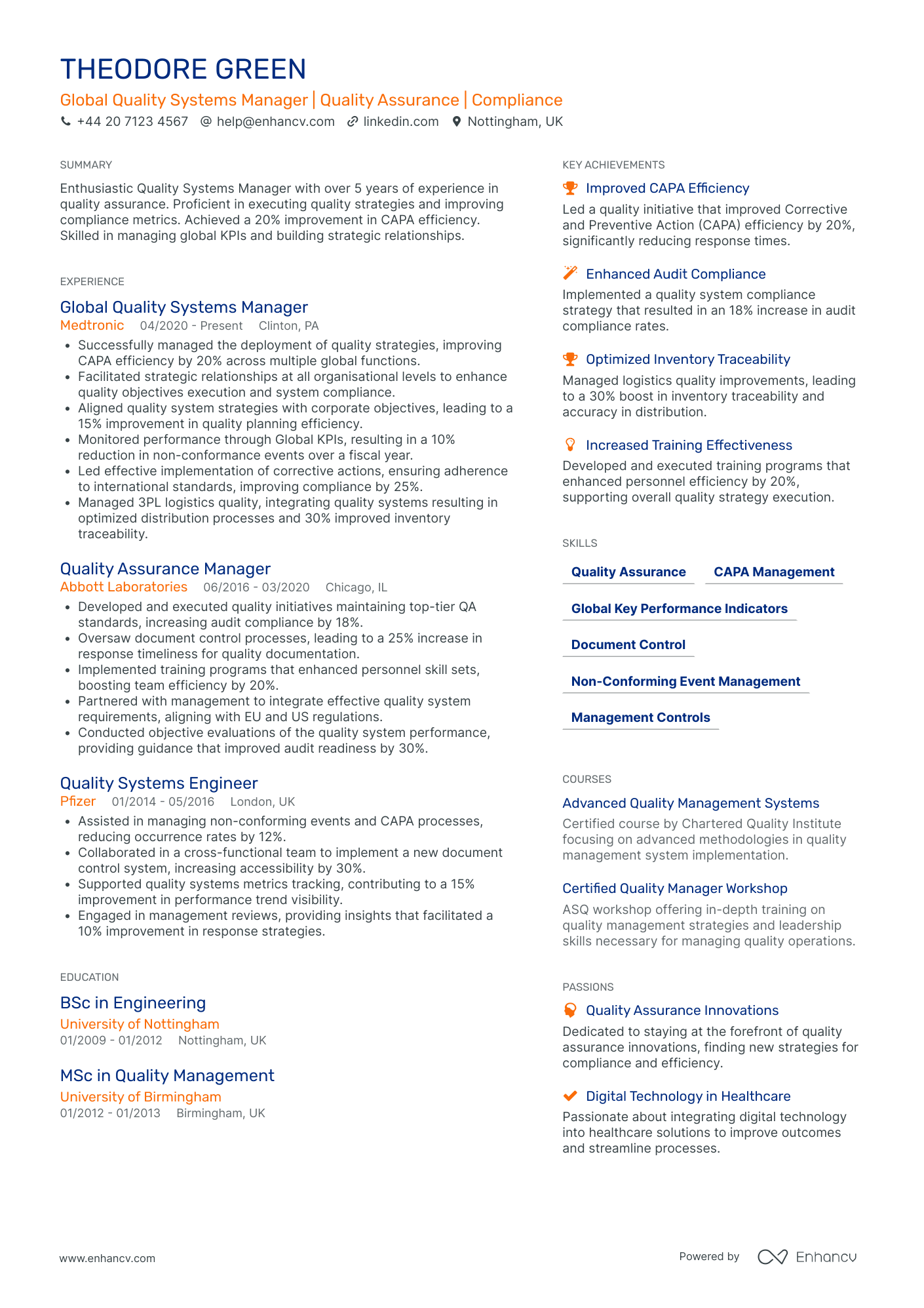
If you have held the title, use a reverse chronological CV so your most recent quality role leads. Once your track record is the strongest thing you have, put it where a reviewer lands first.
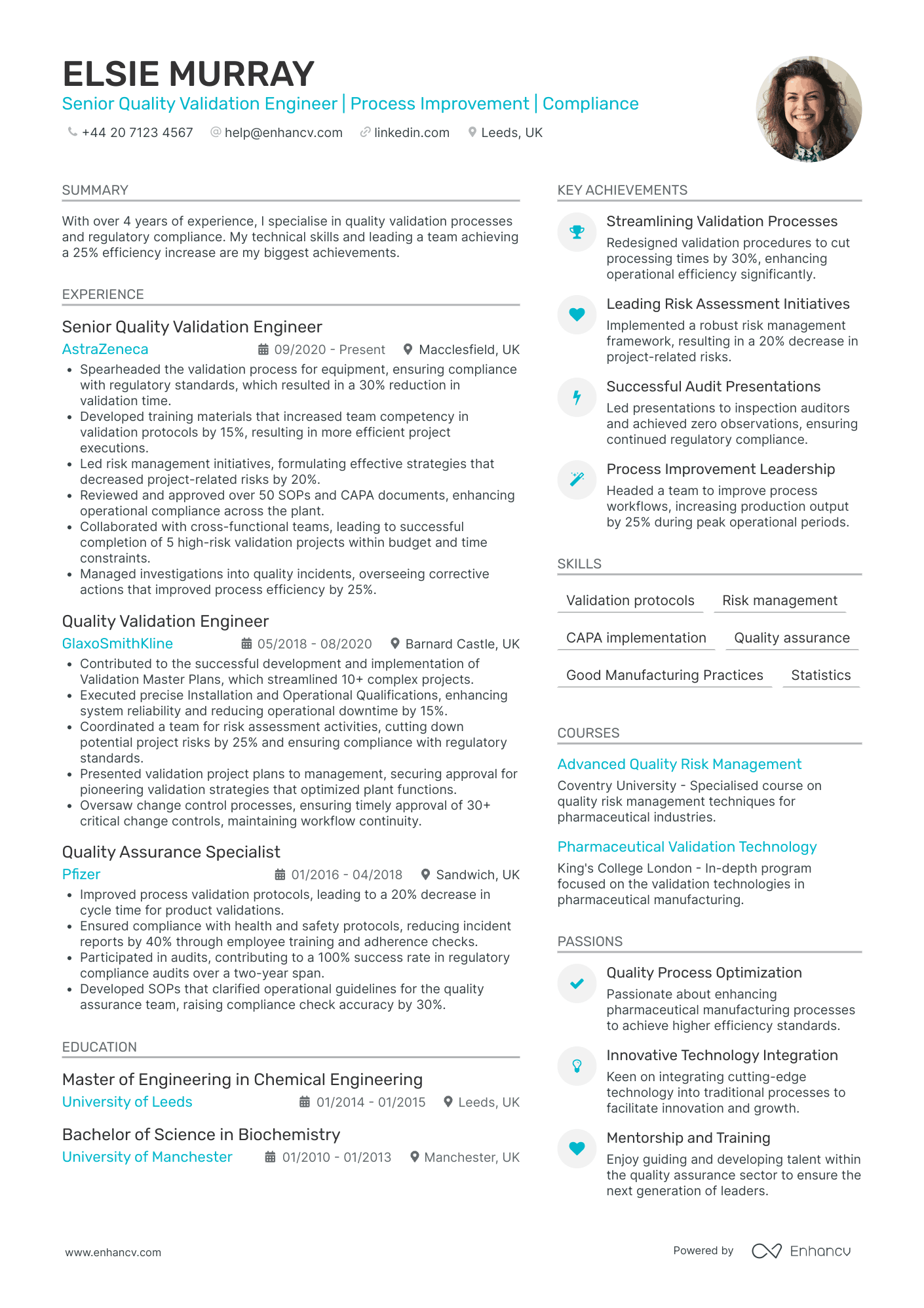
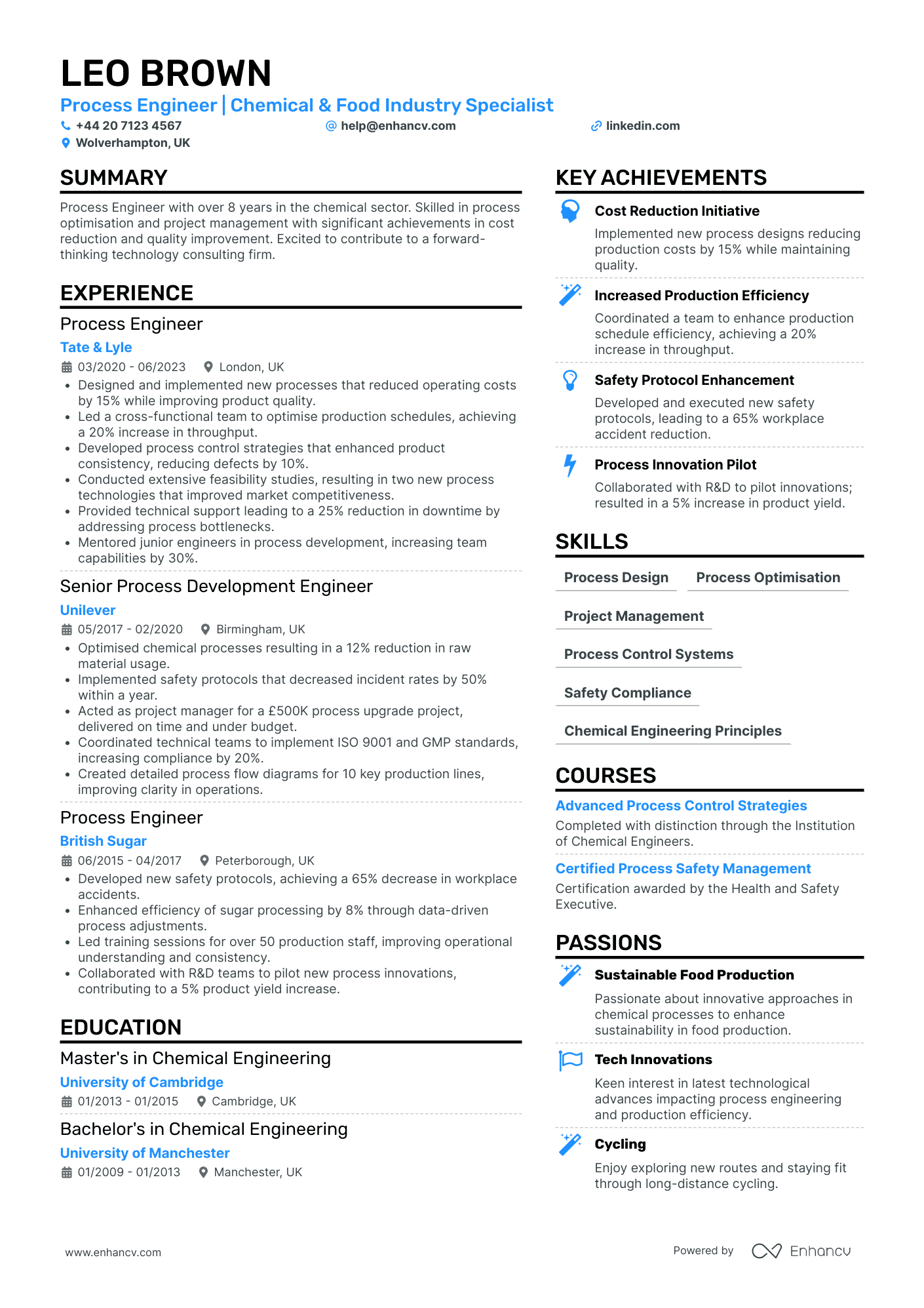
Keep it to two pages, one column, standard headings, and a readable font. A hiring manager running a busy quality function skims fast.
Quality is a numbers discipline, so let the layout get out of the way and put the metrics, standards, and audit results where they are easy to find. Save the design flourishes for another profession.
Send a PDF for direct applications so the layout holds, and keep a Word copy for recruiters who reformat into their own template. If the advert names a file type, follow it.
Quality roles in large manufacturers and regulated firms almost always pass through tracking software before a human sees them, so keep the headings standard and the layout clean for an ATS-friendly CV. Build it from a tested layout rather than a blank page: Enhancv's CV templates export to a clean PDF.
Writing your quality manager personal statement
Four or five sentences at the top: your background and any qualification, the standards and methodologies you know, the quality function you have owned, and the role you want next. Keep it concrete. For more openers, see these personal statement examples.
Skip the adjective pile-up. "Detail-oriented, results-driven quality professional" tells a hiring manager nothing it can check.
Lead with a number instead. One improvement you drove, stated with the before and the after, does more work than a paragraph of standards you can name.
Tailor the opener to the sector each time. An automotive employer wants IATF 16949 and PPAP in the first two lines, a pharma or medical device firm wants GMP and ISO 13485, and a food manufacturer wants BRCGS and HACCP. Change the opener, not the whole CV.
Lead with what you have owned:
Quality manager CV personal statement example
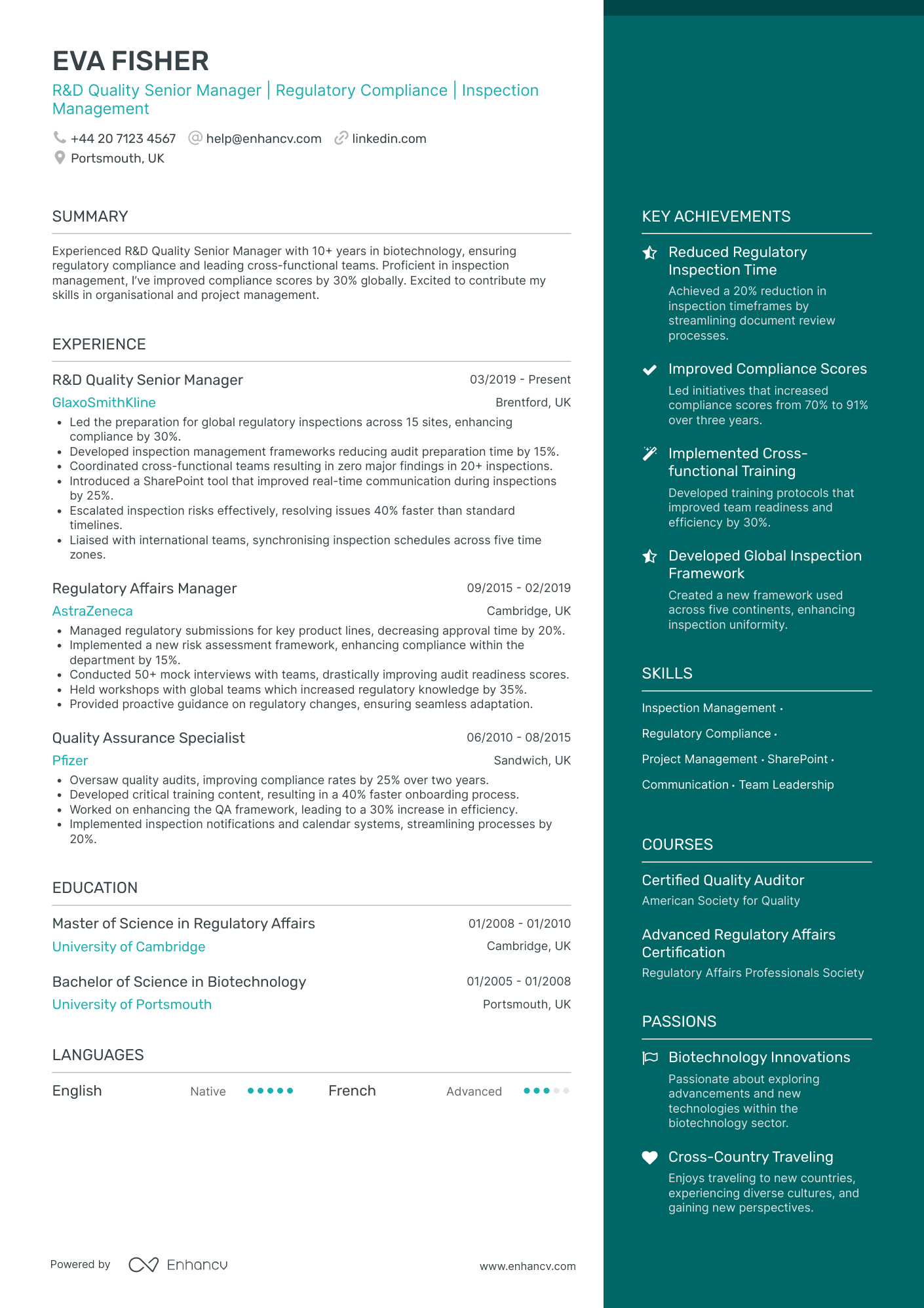
Quality manager with eight years in automotive manufacturing, owning ISO 9001 across two sites. I led the root cause work that cut the customer complaint rate by a third in a year, and I run a Lean and Six Sigma programme that lifted first-pass yield from 88% to 96%. Chartered Quality Professional with the CQI, now looking to take on group-level quality leadership in a regulated manufacturer.
What to avoid
Highly motivated and detail-oriented quality professional with excellent knowledge of quality systems and a passion for continuous improvement. A dedicated team player committed to maintaining the highest standards of quality in a fast-paced environment.
When we read a quality manager CV, we are looking for one thing: proof you moved a number, not just policed one. A line like "cut the customer complaint rate by a third after leading the root cause work" tells us more than a page of standards you can name. Show us a defect you traced to its source, an audit you passed clean, and an improvement that stuck after you left the room. At this grade, ownership of an outcome is what gets shortlisted, not a longer list of methodologies.
Writing your quality manager experience section
Write each role as a dated heading, then bullets that lead with a verb and land on an outcome. For the mechanics, see work experience on a CV.
Quality work is the most measurable job on the shop floor. Use the numbers you already track: defect and scrap rates, first-pass yield, complaint rates, cost of poor quality, audit findings closed, and CAPA actions cleared. Those are your CV achievements.
Frame each bullet around the function you owned, not the tasks you ran. "Owned the ISO 9001 system across two sites" reads stronger than "responsible for quality procedures", and it is the difference a reviewer at lead level is looking for.
Lead each bullet with the standard or the method when it matters to the target role. "Led 8D root cause analysis that cut scrap on the main line by 18%" names the method and the result in one line.
Show progression across your entries. A reviewer wants the scope you owned to widen over time, from auditing one process to owning a site quality system to leading quality across a group.
Give the standards and the numbers room to breathe. A wall of eight identical bullets per role hides your best result, so lead each entry with the two or three outcomes that would make a hiring manager stop, and keep the routine duties short. If a promotion happened inside one firm, split it into two dated roles rather than one block, so the step up is obvious at a glance.
Tailor every application. Pull the standards, methods, and tools from the advert and mirror the ones that are true of you, using the exact keywords for a CV where you can. Enhancv's CV tailoring feature reads the advert and suggests the matching edits, which saves rewriting from scratch for every employer.
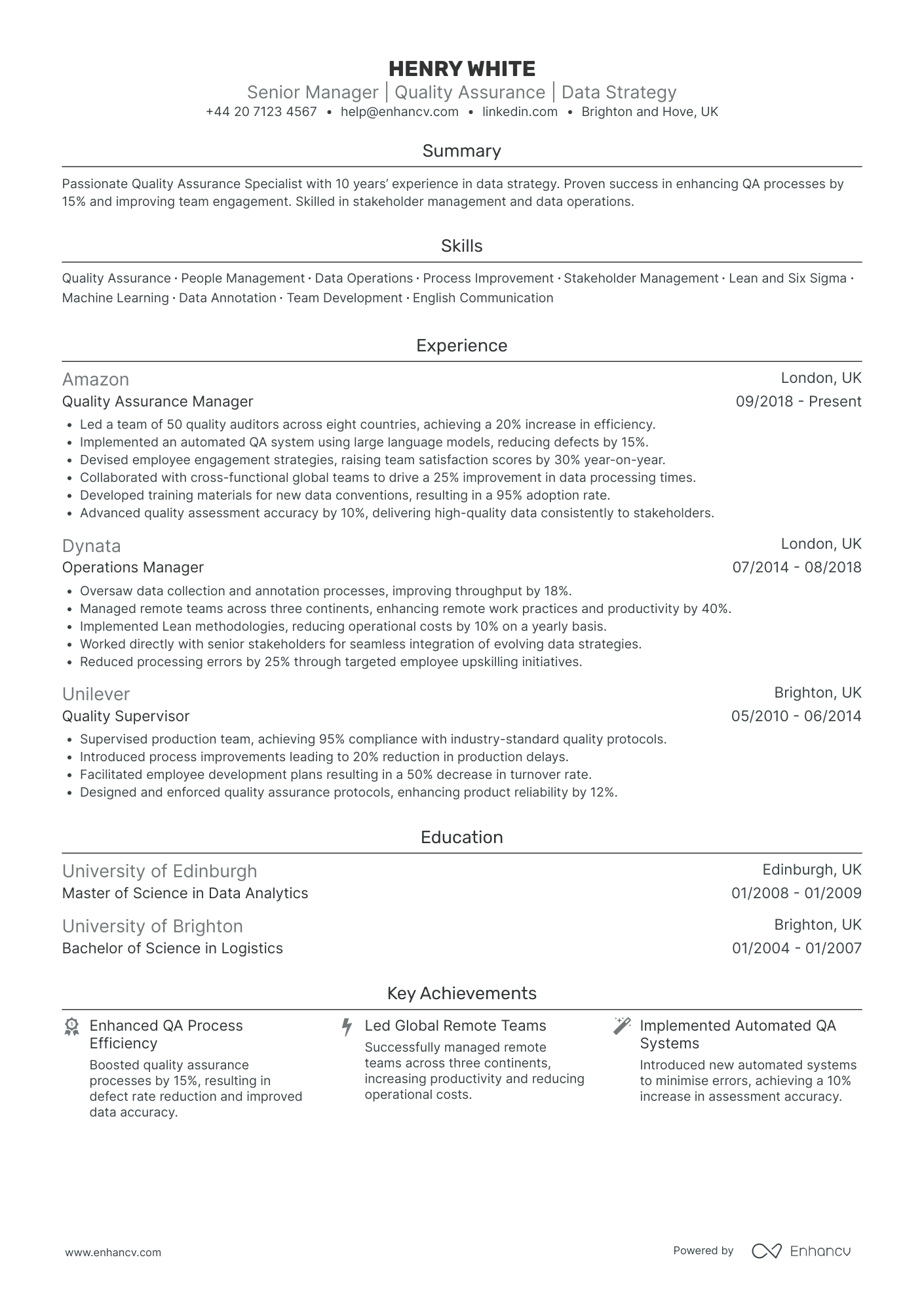
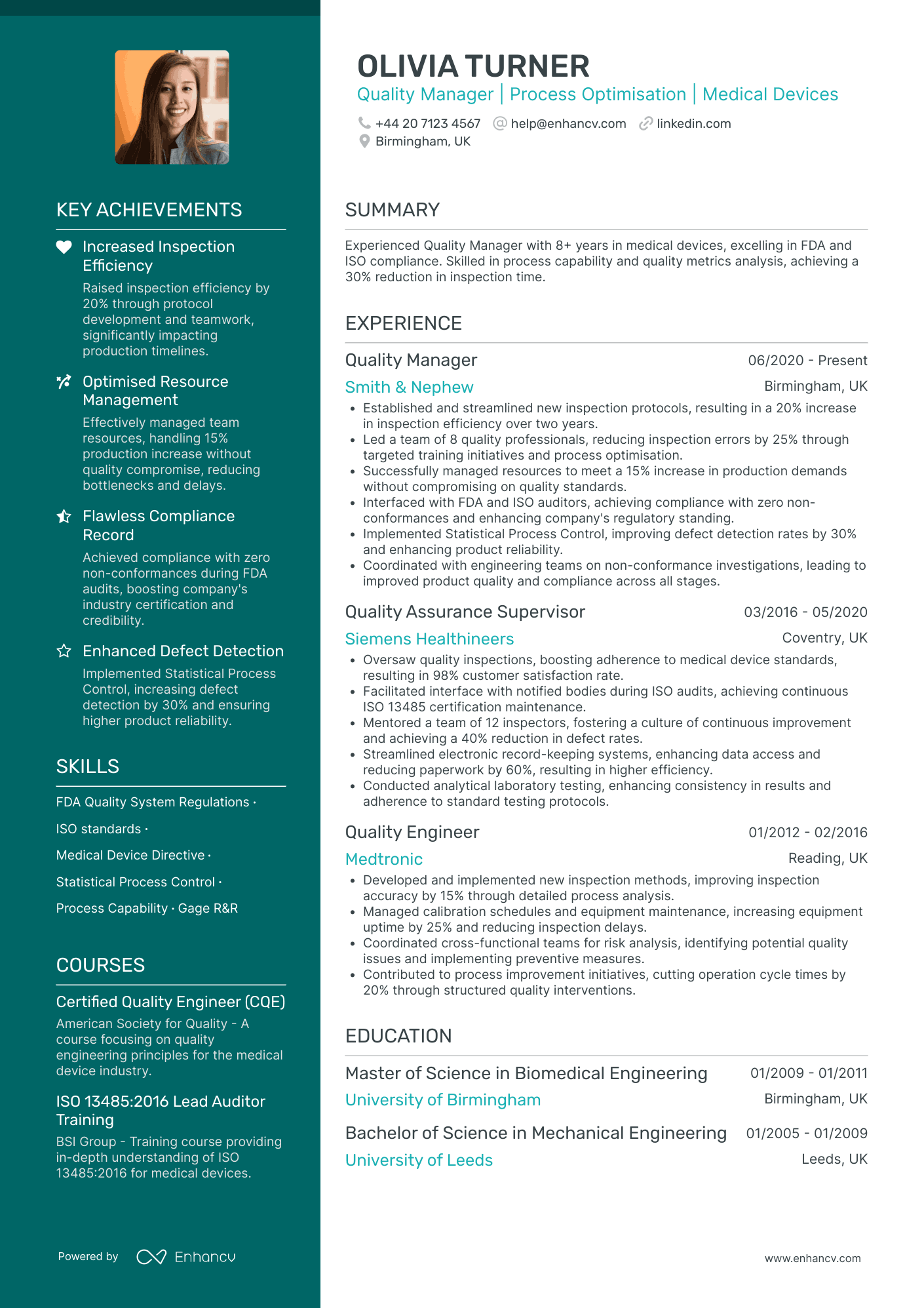
- Own the ISO 9001 quality management system across two sites, and passed the last three external audits with zero major non-conformances
- Led root cause analysis on recurring line defects and cut the customer complaint rate by 32% inside 12 months
- Run a continuous improvement programme using Lean and Six Sigma that lifted first-pass yield from 88% to 96%
- Chair the monthly quality review with operations and engineering, closing 140 CAPA actions across the year
- Investigated non-conformances and led 8D problem solving, reducing scrap on the highest-volume line by 18%
- Wrote and maintained control plans, PFMEAs, and work instructions to IATF 16949
- Ran internal and supplier audits across production, closing every finding to schedule
- Introduced statistical process control on three critical processes, cutting out-of-spec parts and giving operators live feedback

PRO TIP
Quality adverts name the exact standard and sector regime they run under: ISO 9001, IATF 16949, AS9100, ISO 13485, GMP, or BRCGS. Mirror the ones you have genuinely worked to, and put the standard before the task so a reviewer sees the fit in the first three words of the bullet.
Qualifications and certifications UK quality employers check
Quality management has no single mandatory licence, but a recognised professional qualification carries real weight and is often the first thing a reviewer scans for.
The qualifications that stand out are membership of the Chartered Quality Institute (CQI) and the CQP MCQI designation, a Six Sigma Green or Black Belt, and an ISO 9001 Lead Auditor certificate from an IRCA-approved course. List the body, the level, and the year, and mark anything in progress.
A degree in engineering, science, or a technical discipline helps but is rarely decisive once you hold the professional certificates. Keep it to a line unless it is directly relevant to the role.
Name the standard-specific training you hold too: IATF 16949, AS9100, ISO 13485, GMP, or HACCP where a role centres on it. Put these in your education section or a dedicated training block so a reviewer can find them fast.
Recent, relevant continuing professional development is worth a short line as well, especially where a new standard or a sector change sits at the centre of the job you want. It signals you keep pace with a discipline that updates its rulebook often.
Conclusion
Lead with the quality skills employers repeat, prove each one with a number you moved, and name the standards and the qualification behind your work.
Pair the CV with a short cover letter that says why quality and why this employer, and you turn a strong track record into interviews.
Author's take - the Enhancv team
When we read a quality manager CV, we are looking for one thing: proof you moved a number, not just policed one. A line like "cut the customer complaint rate by a third after leading the root cause work" tells us more than a page of standards you can name. Show us a defect you traced to its source, an audit you passed clean, and an improvement that stuck after you left the room. At this grade, ownership of an outcome is what gets shortlisted, not a longer list of methodologies.