



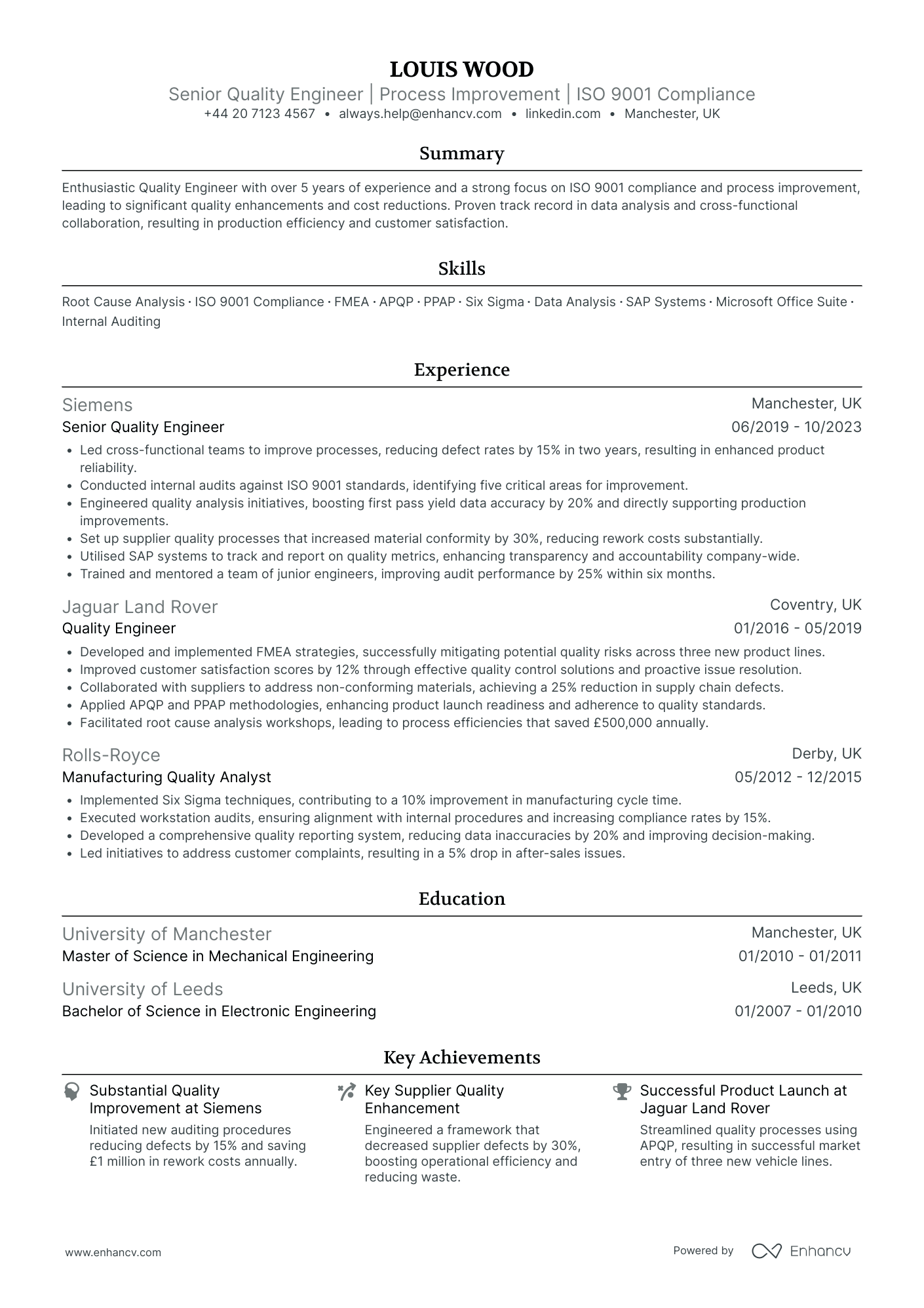
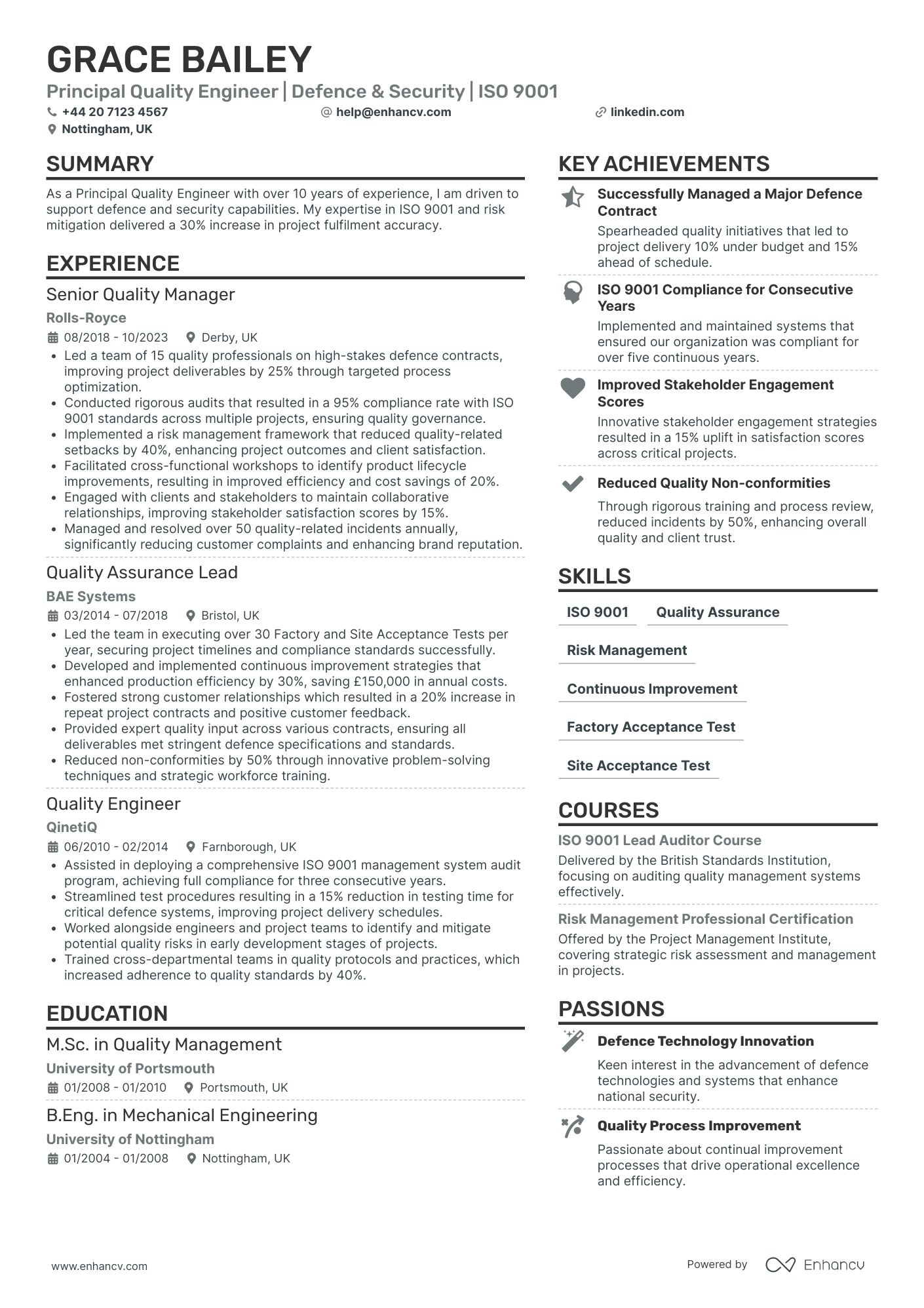
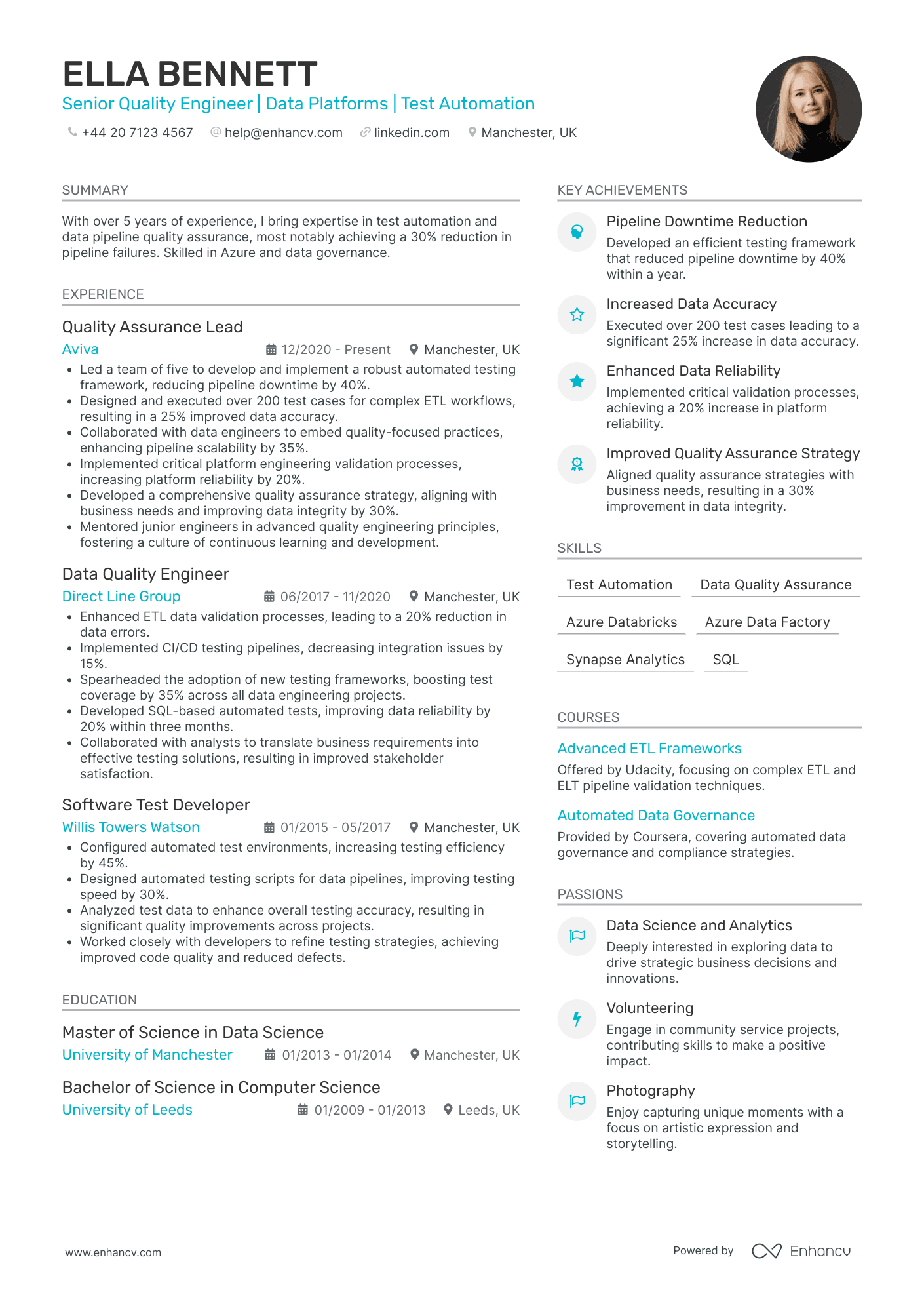
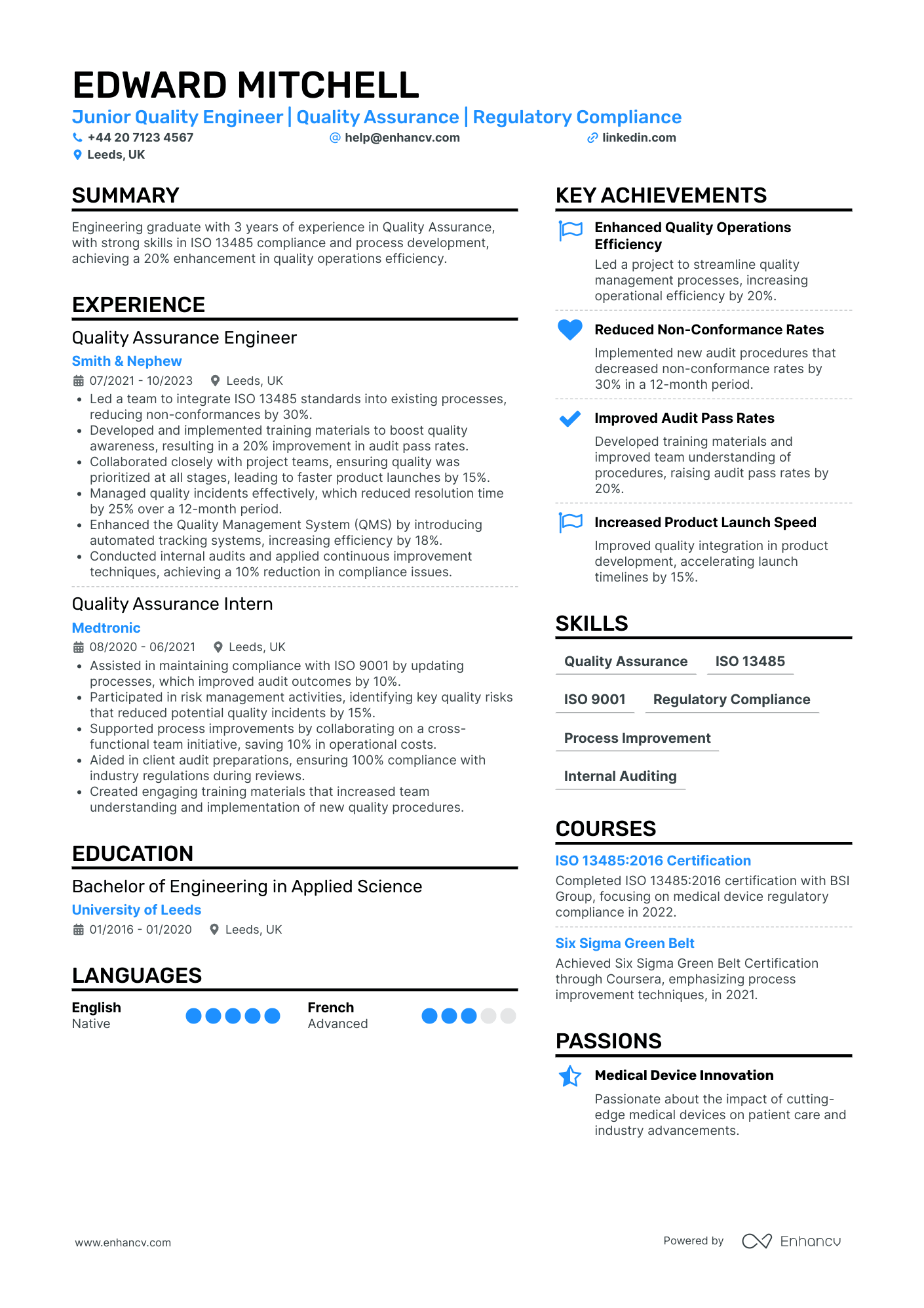
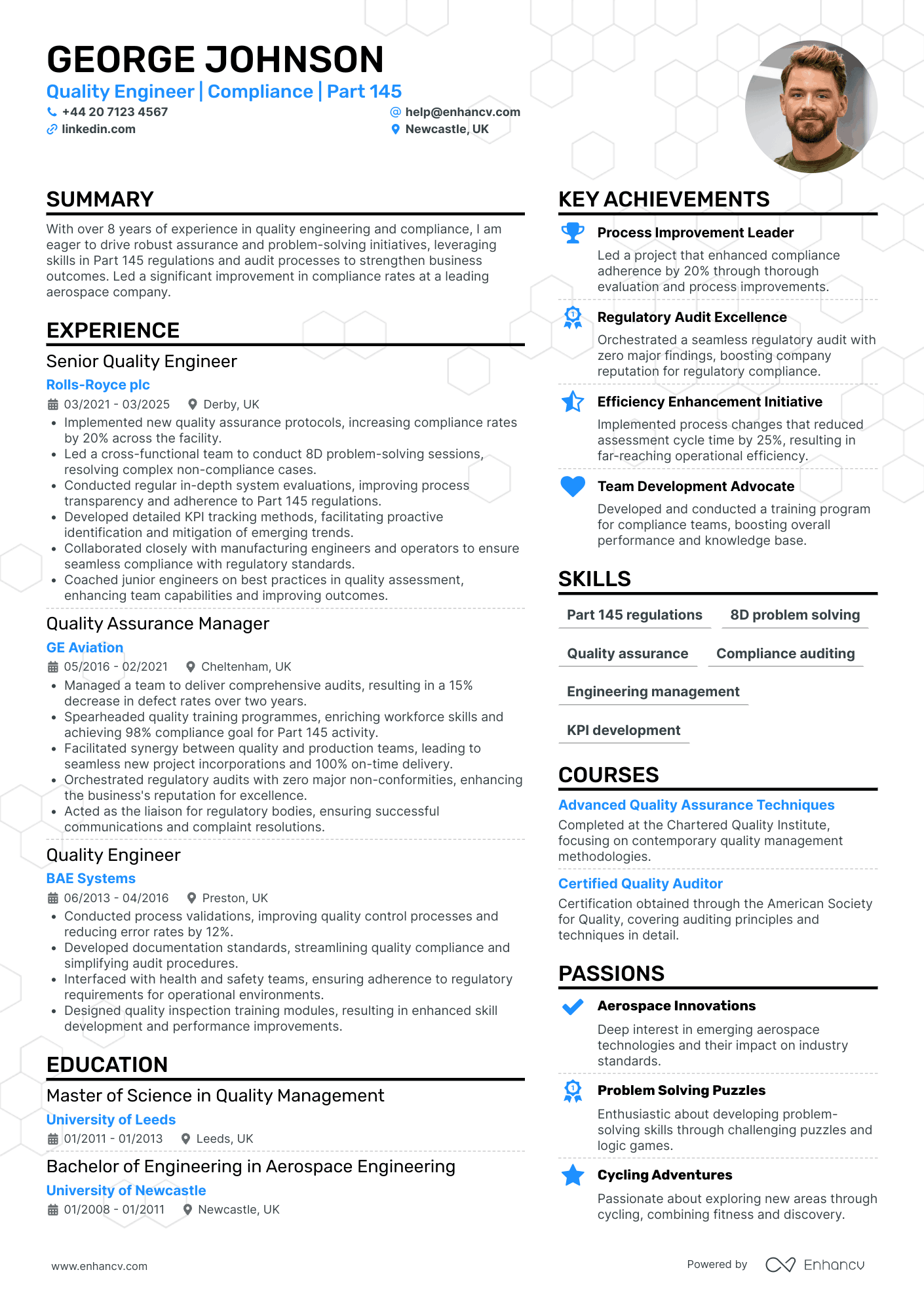
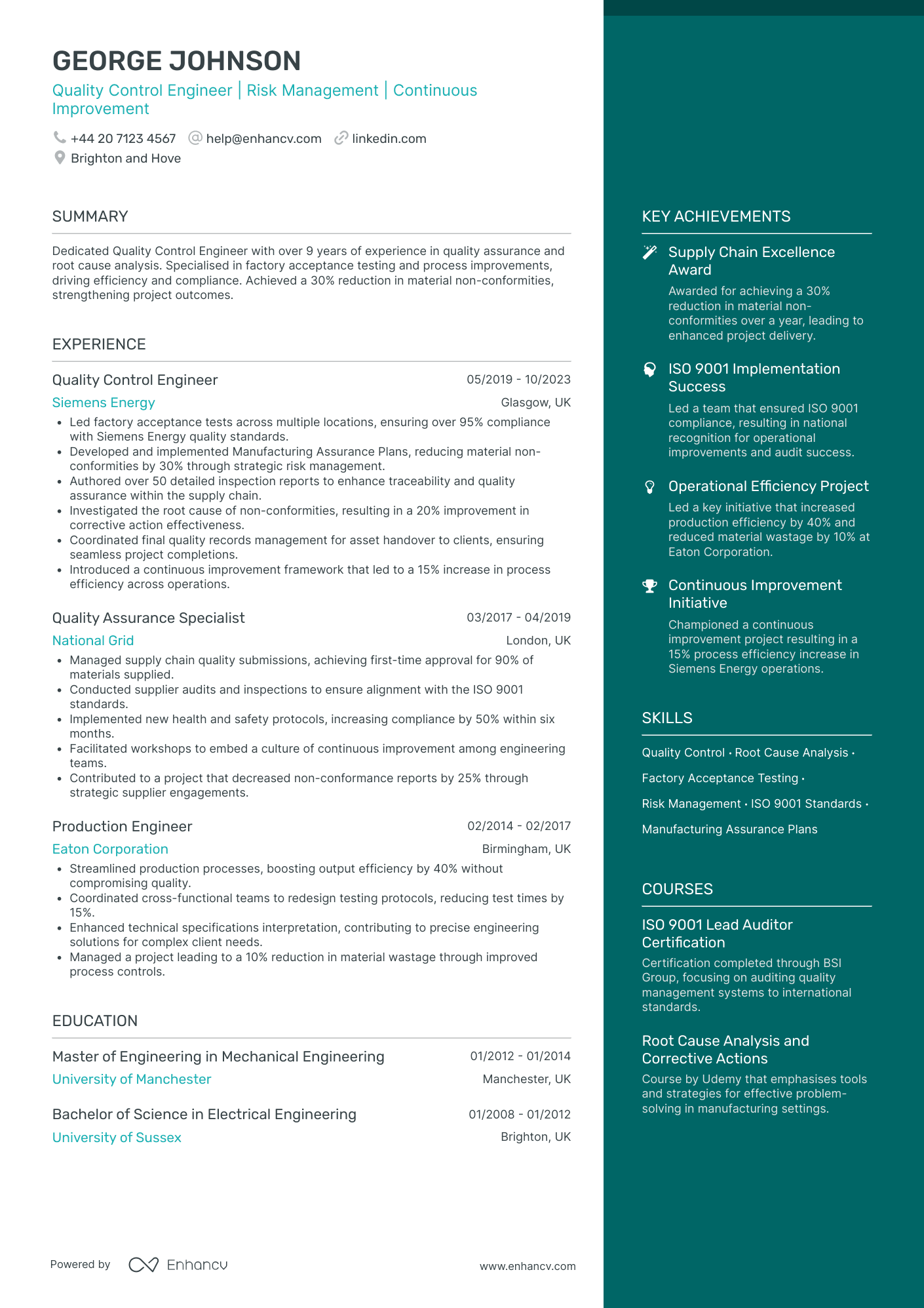
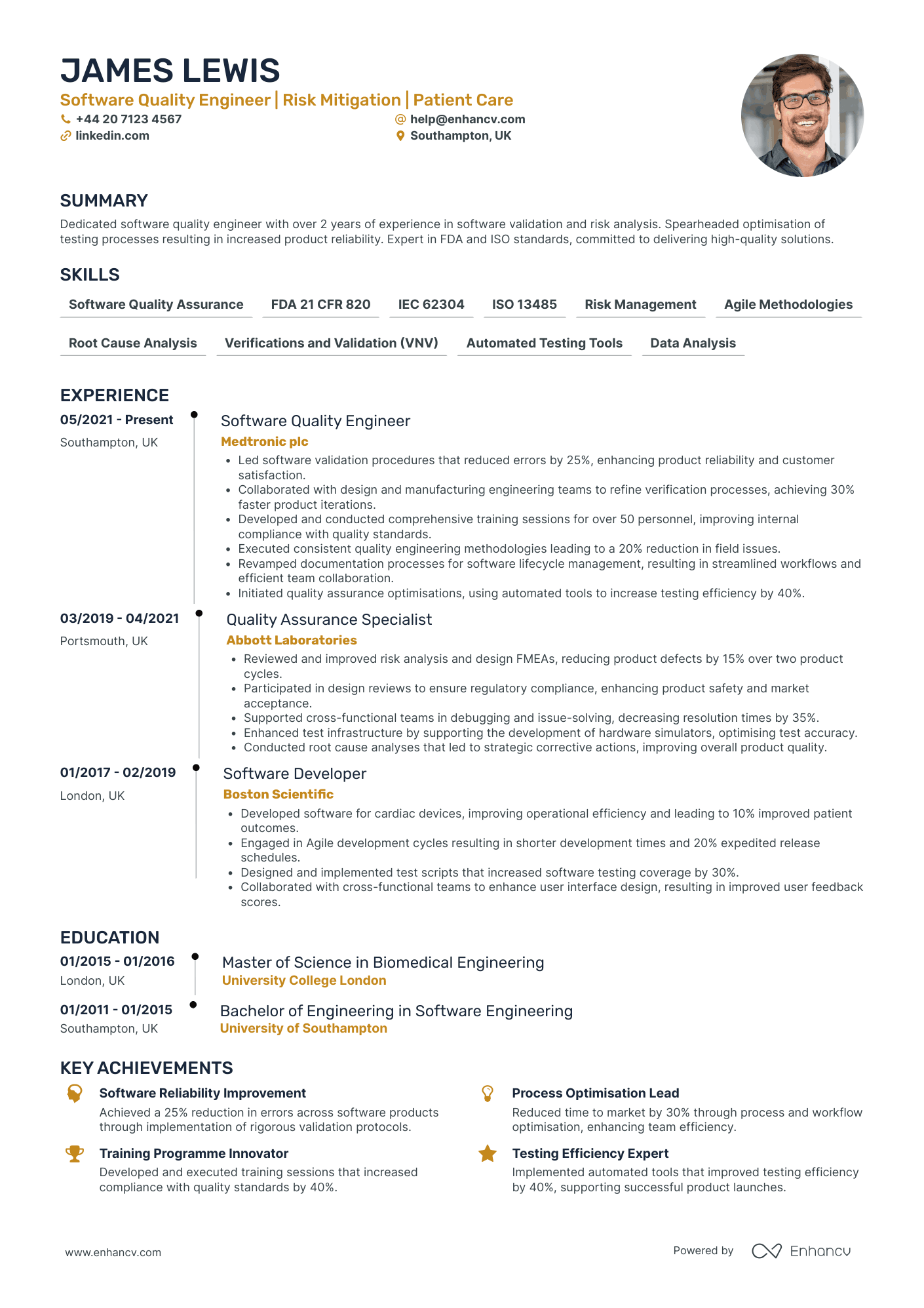
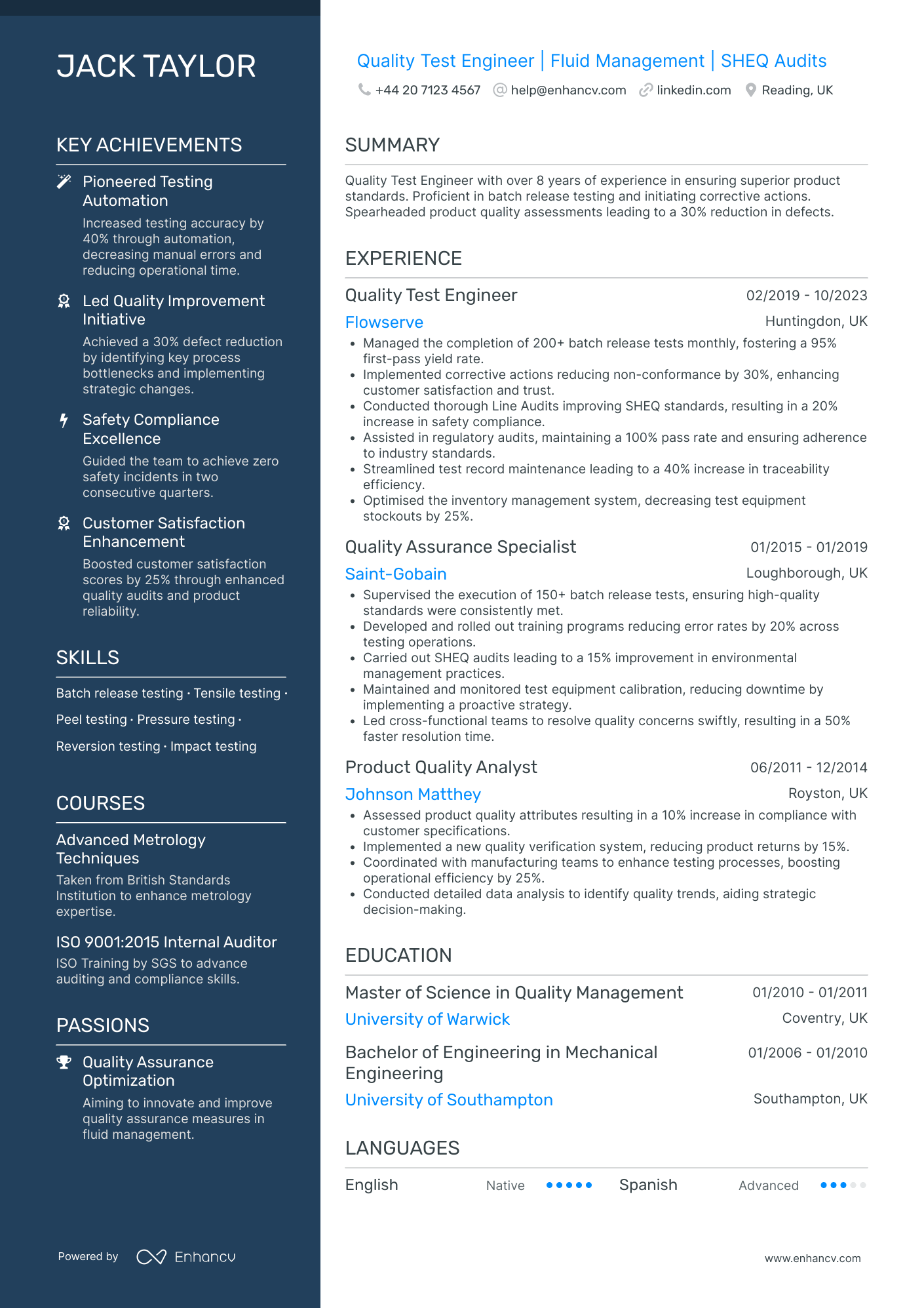
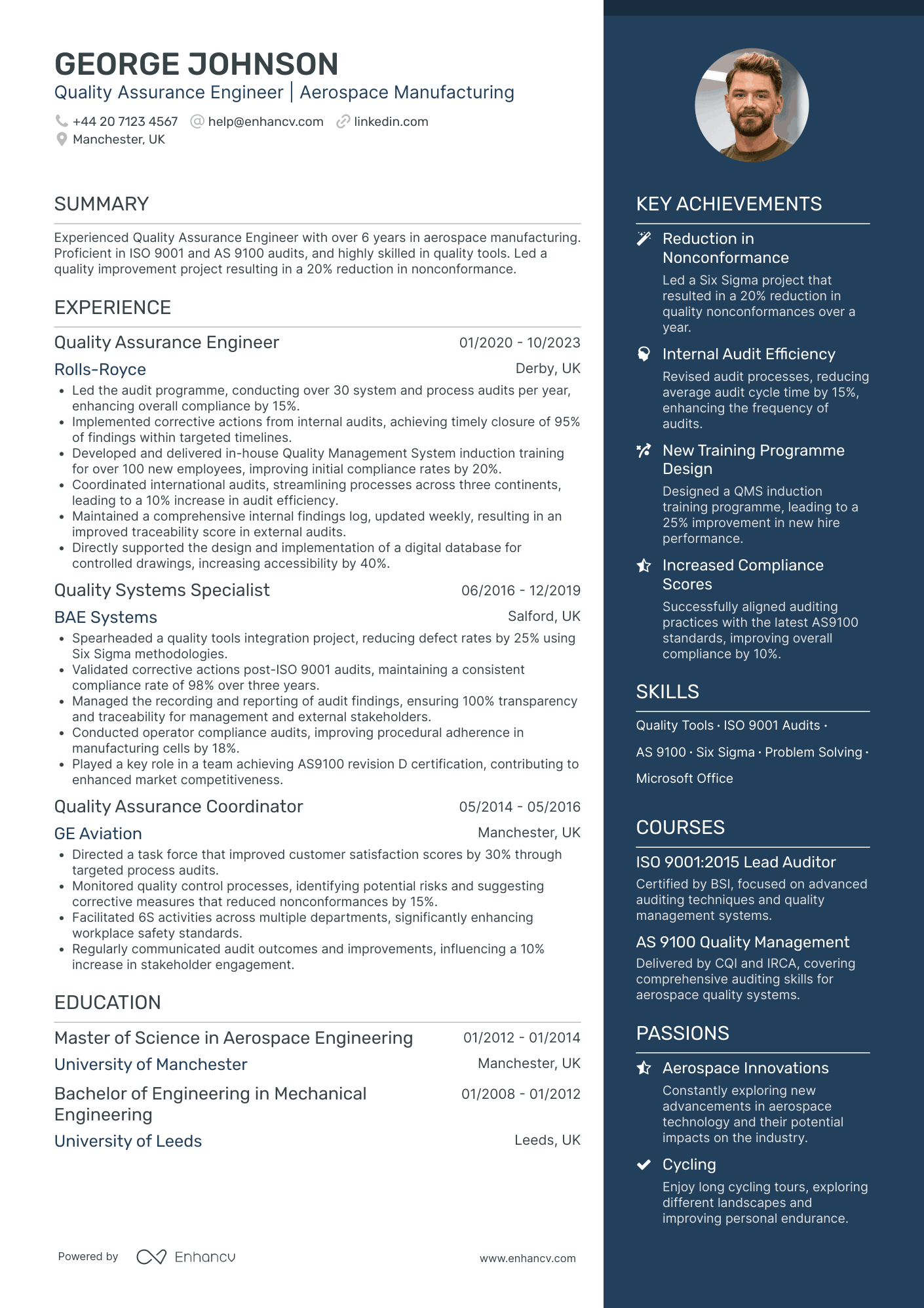
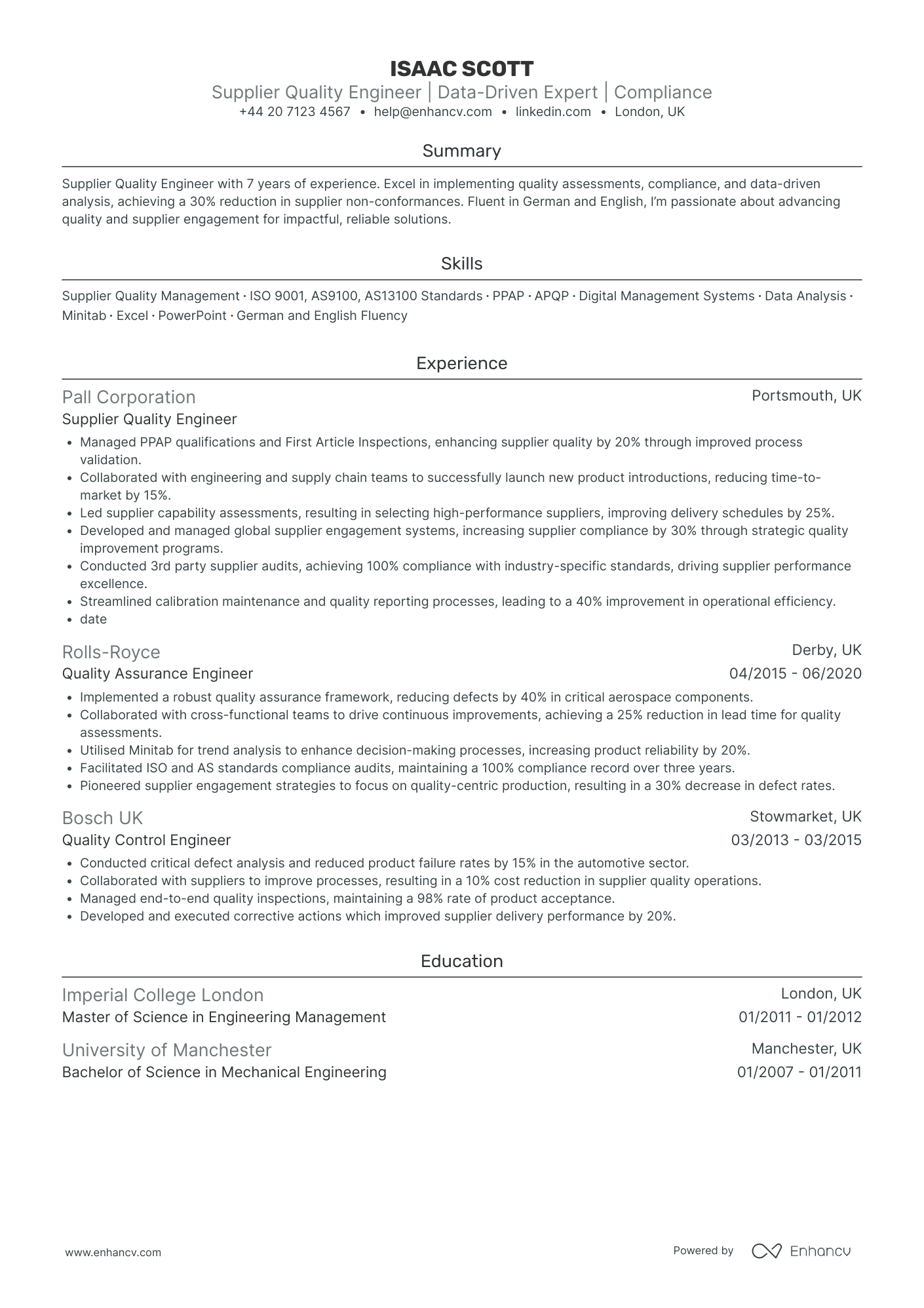
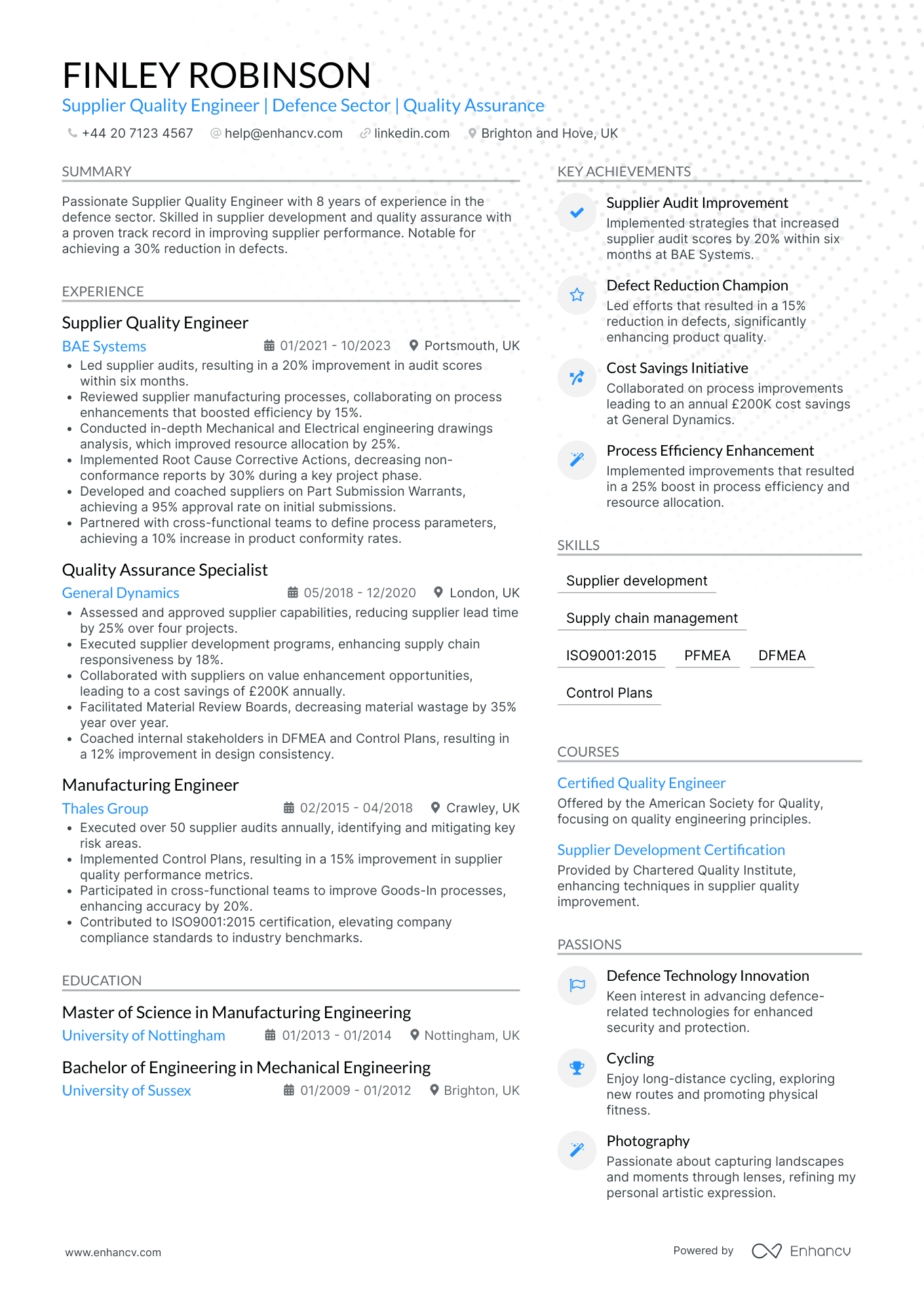
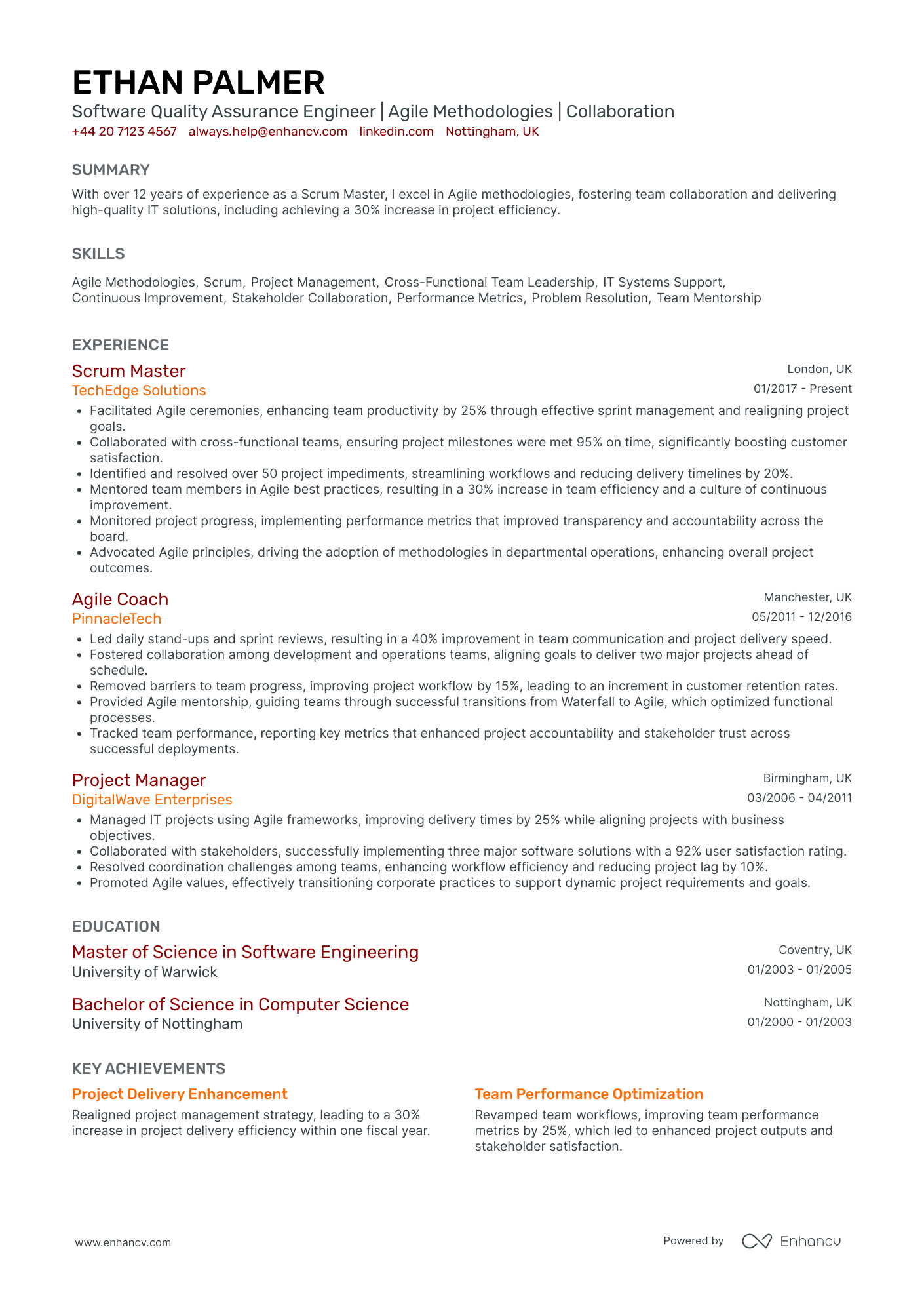
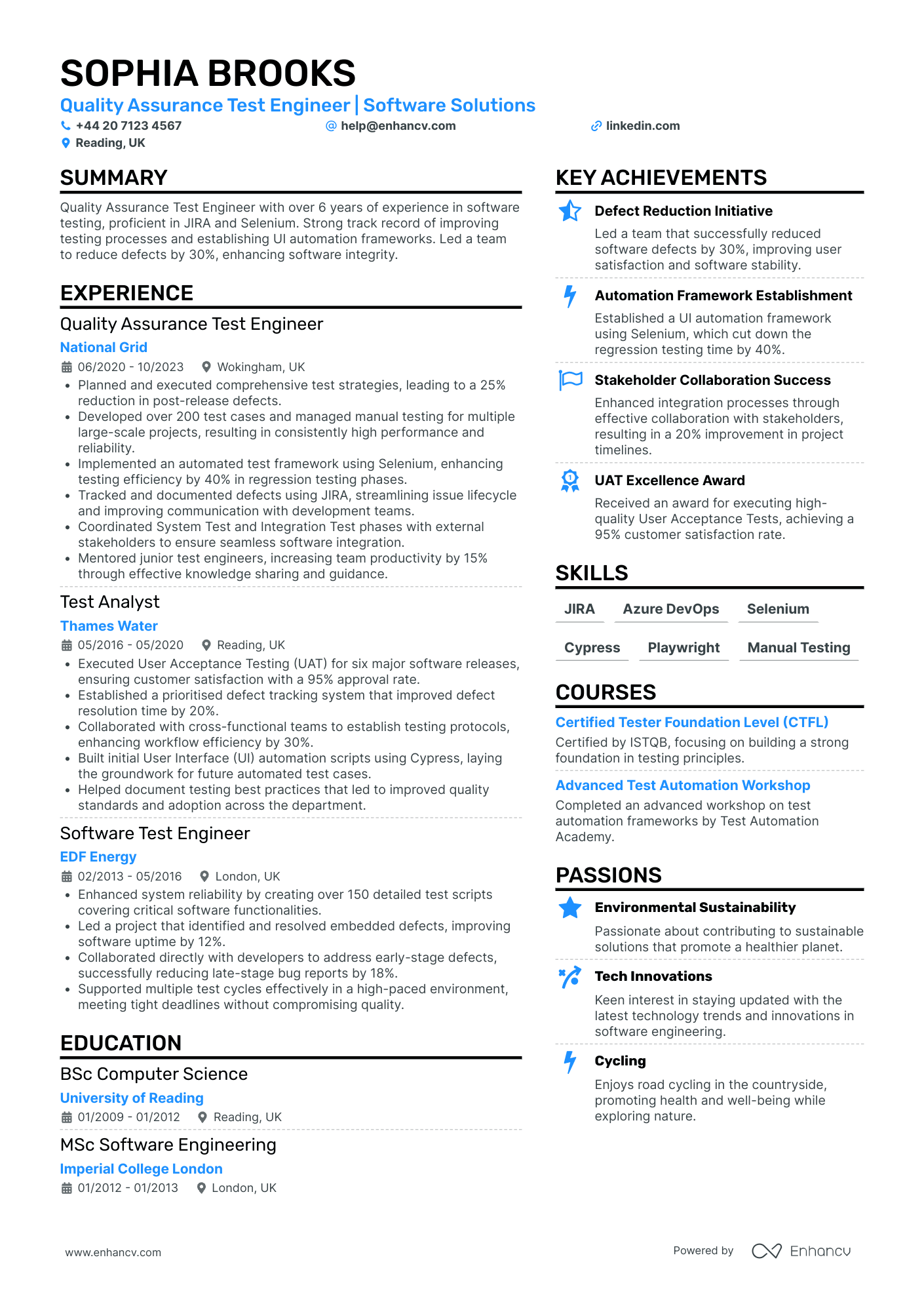
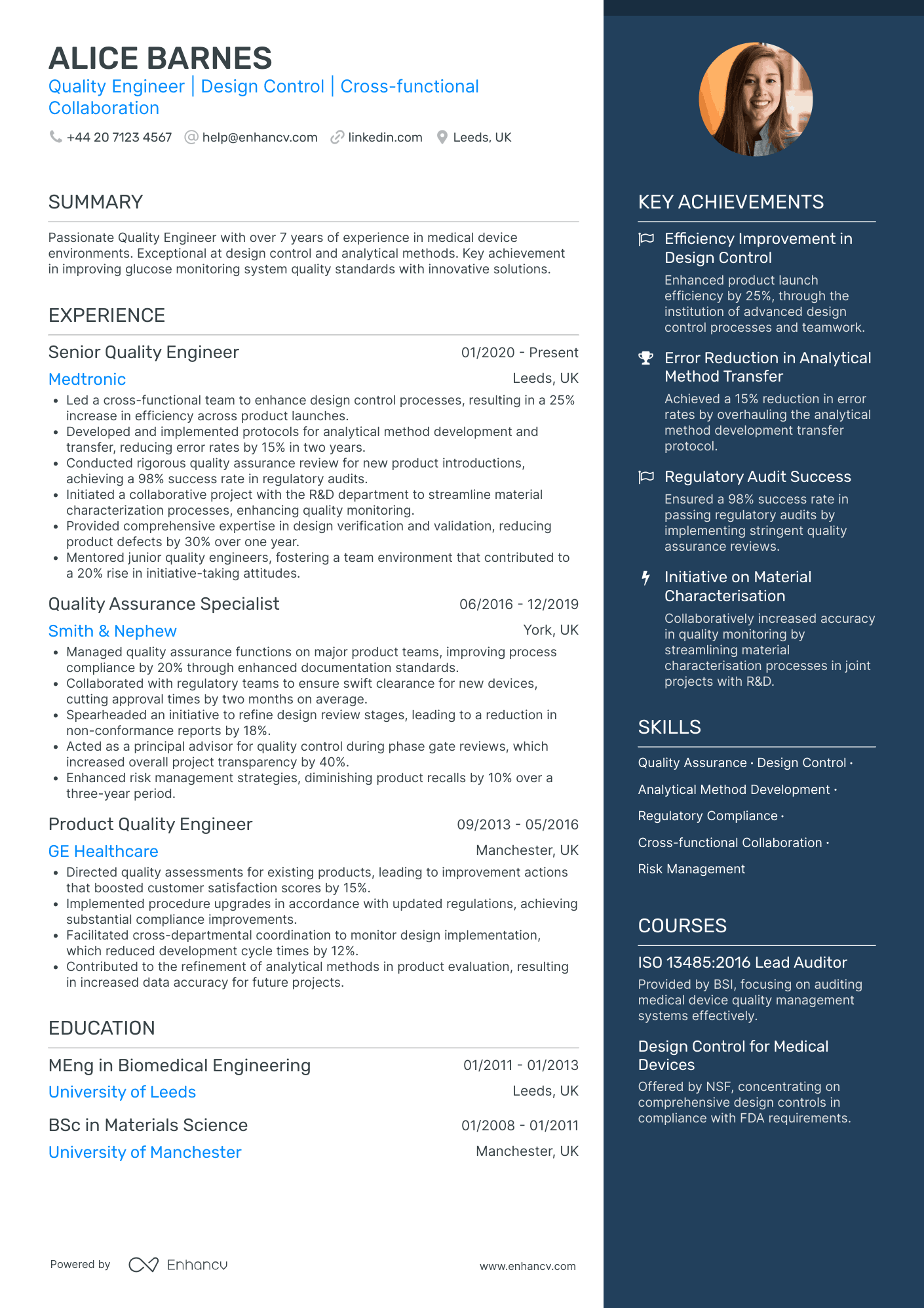
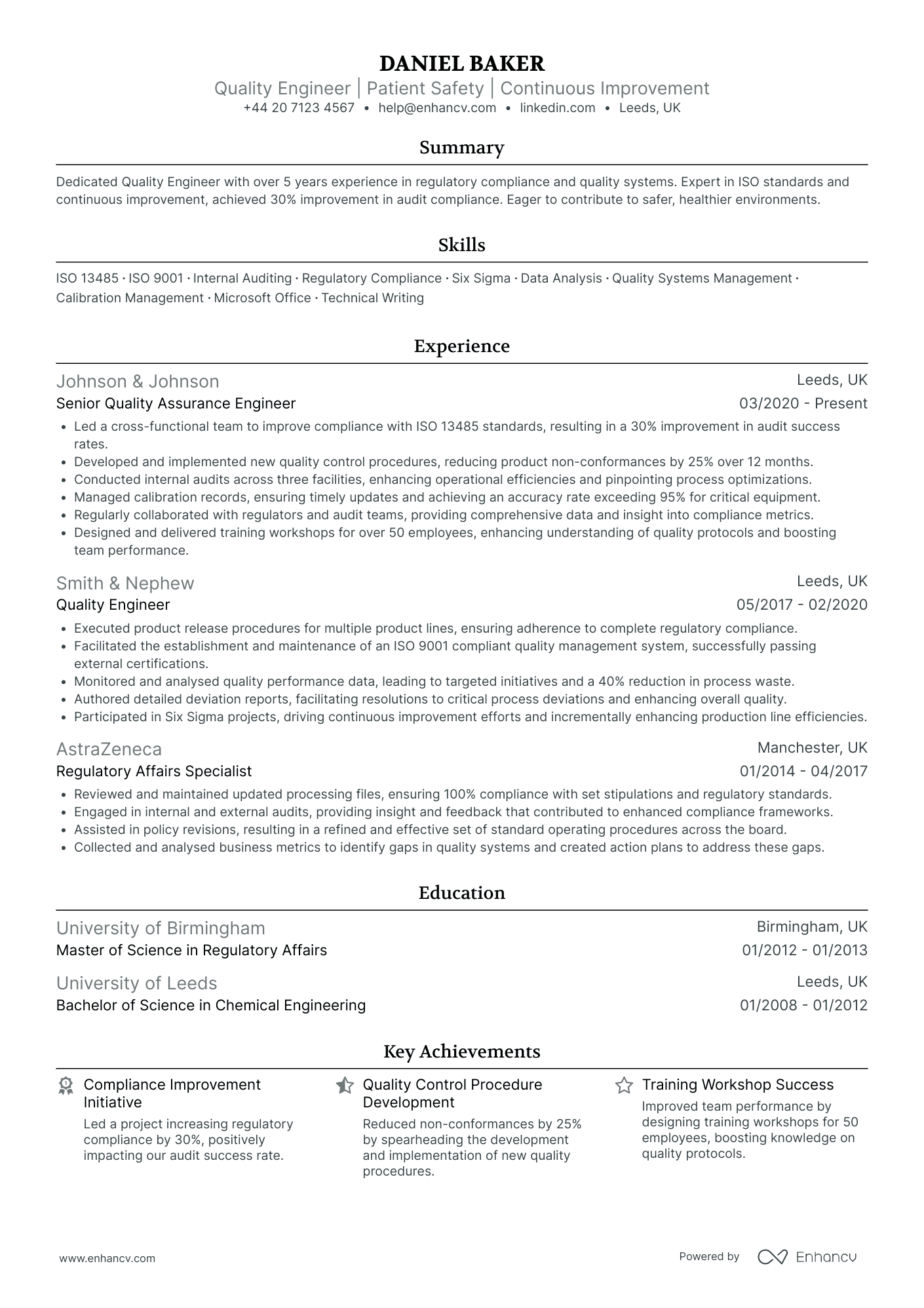
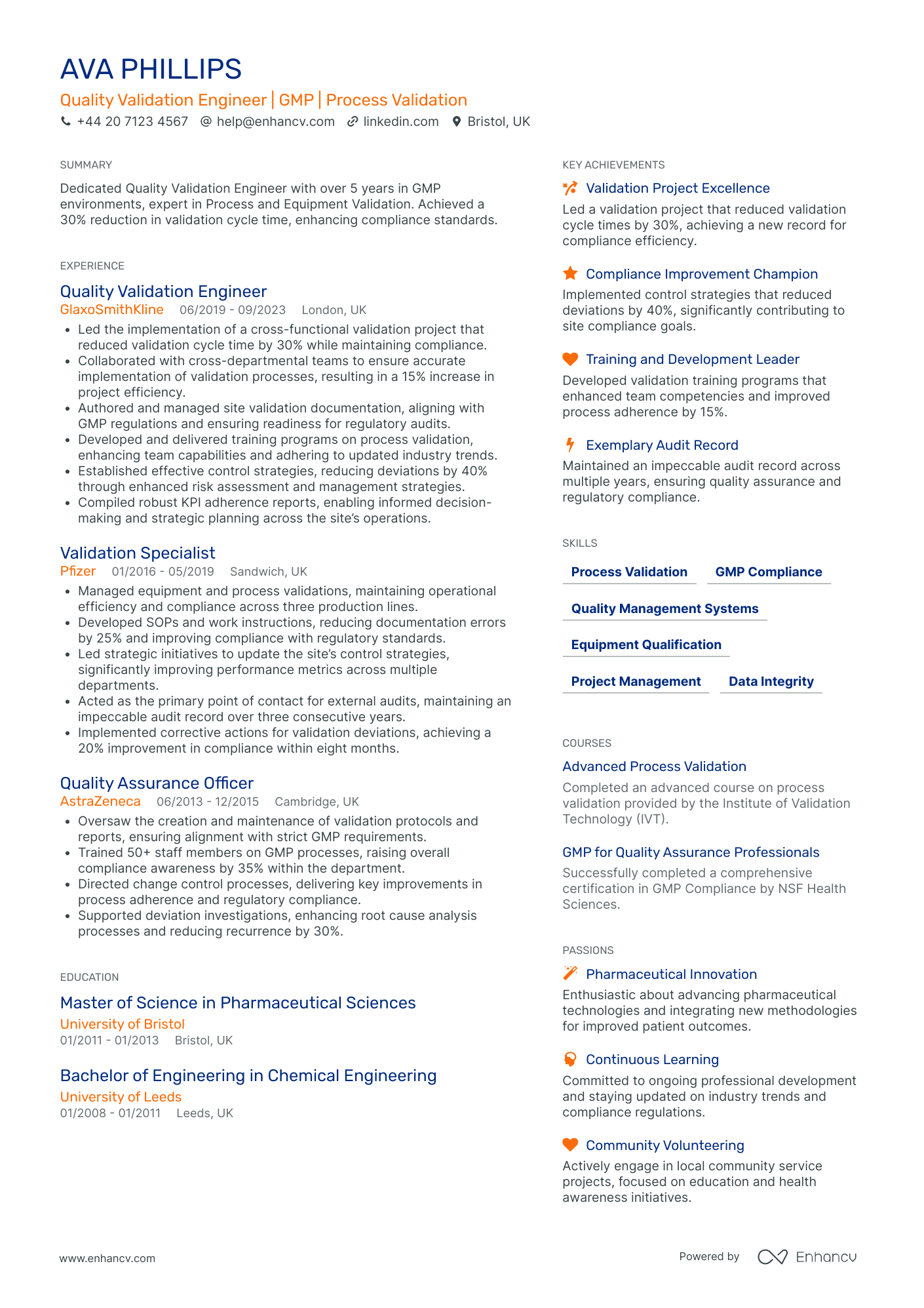
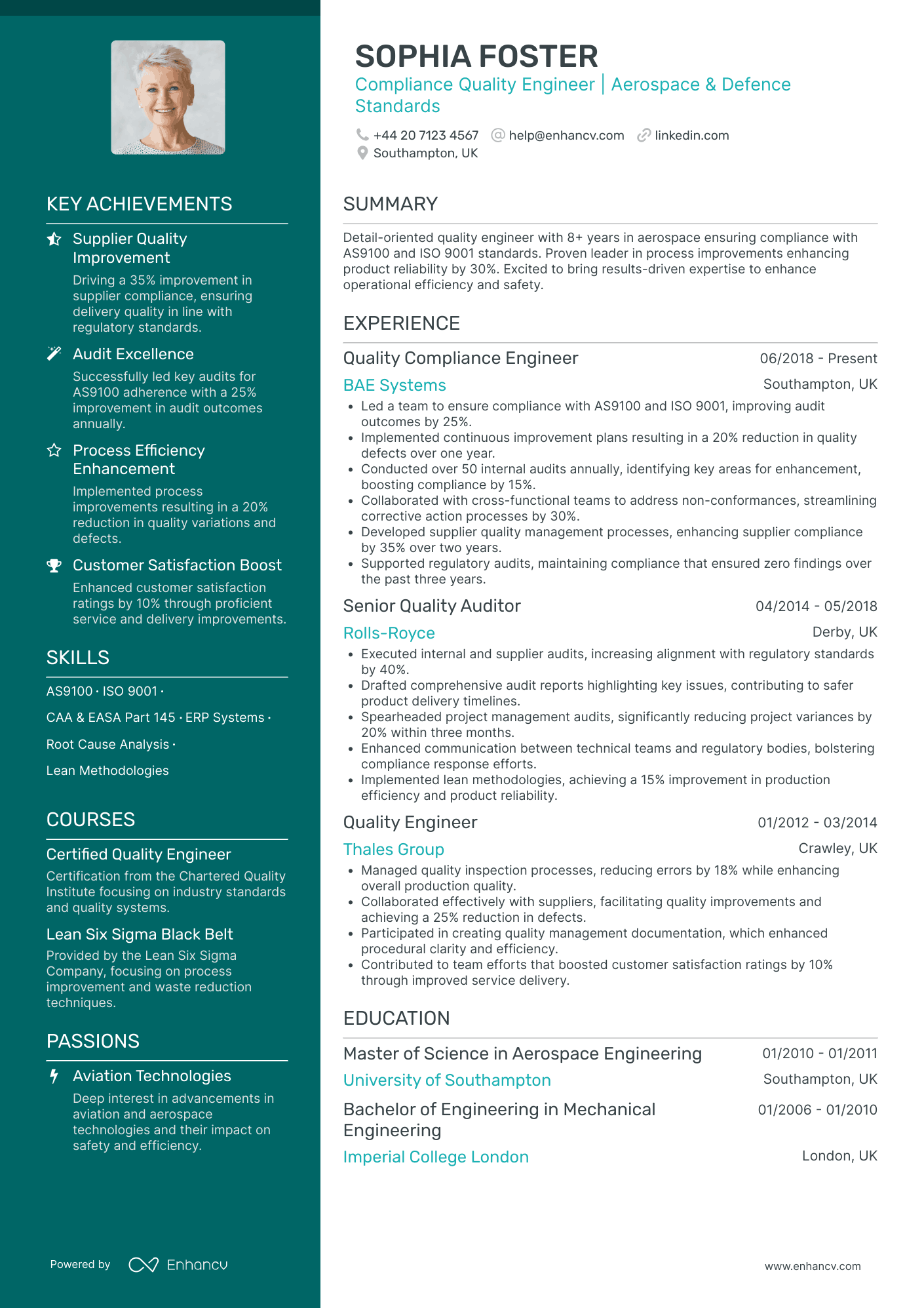
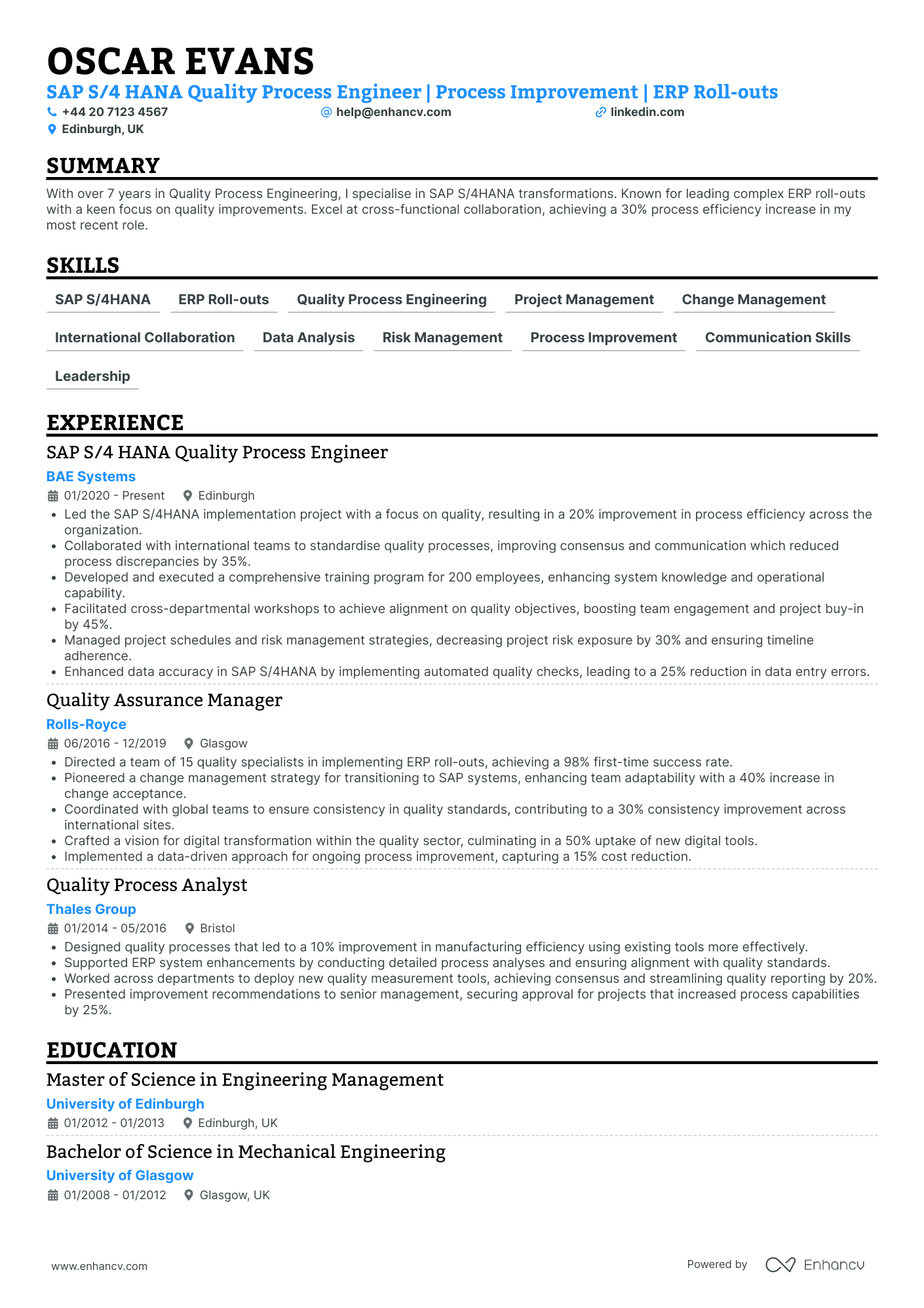
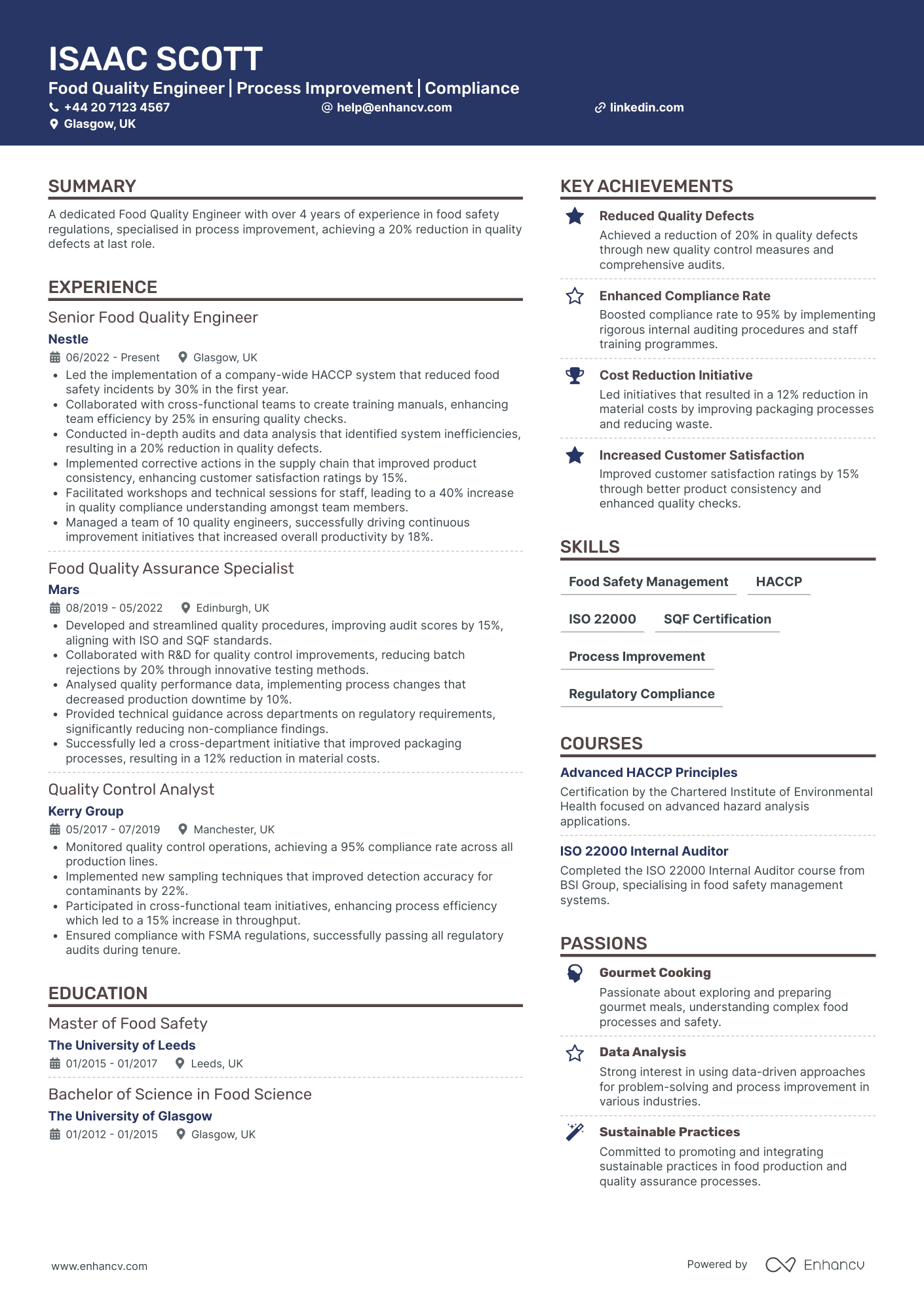
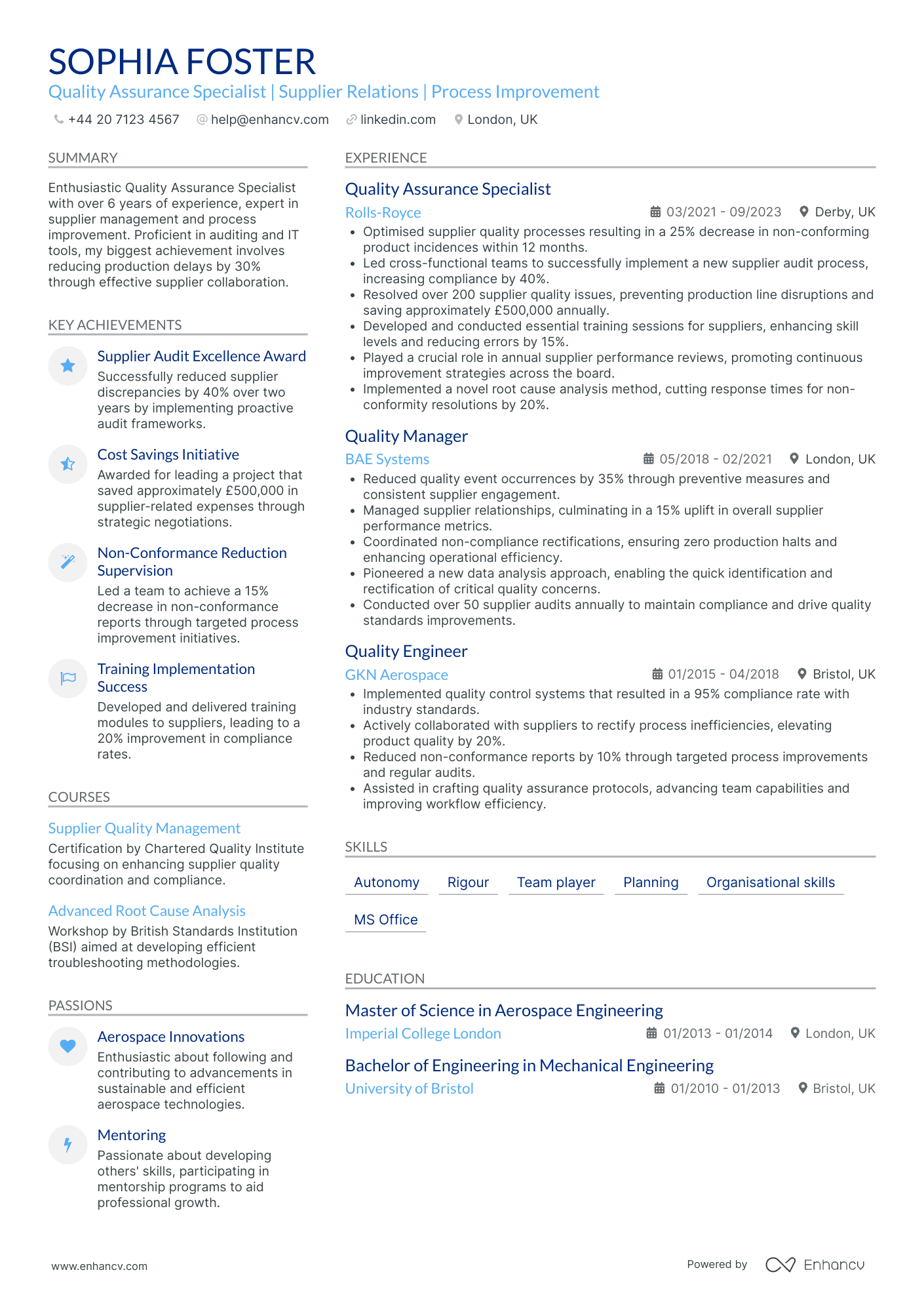
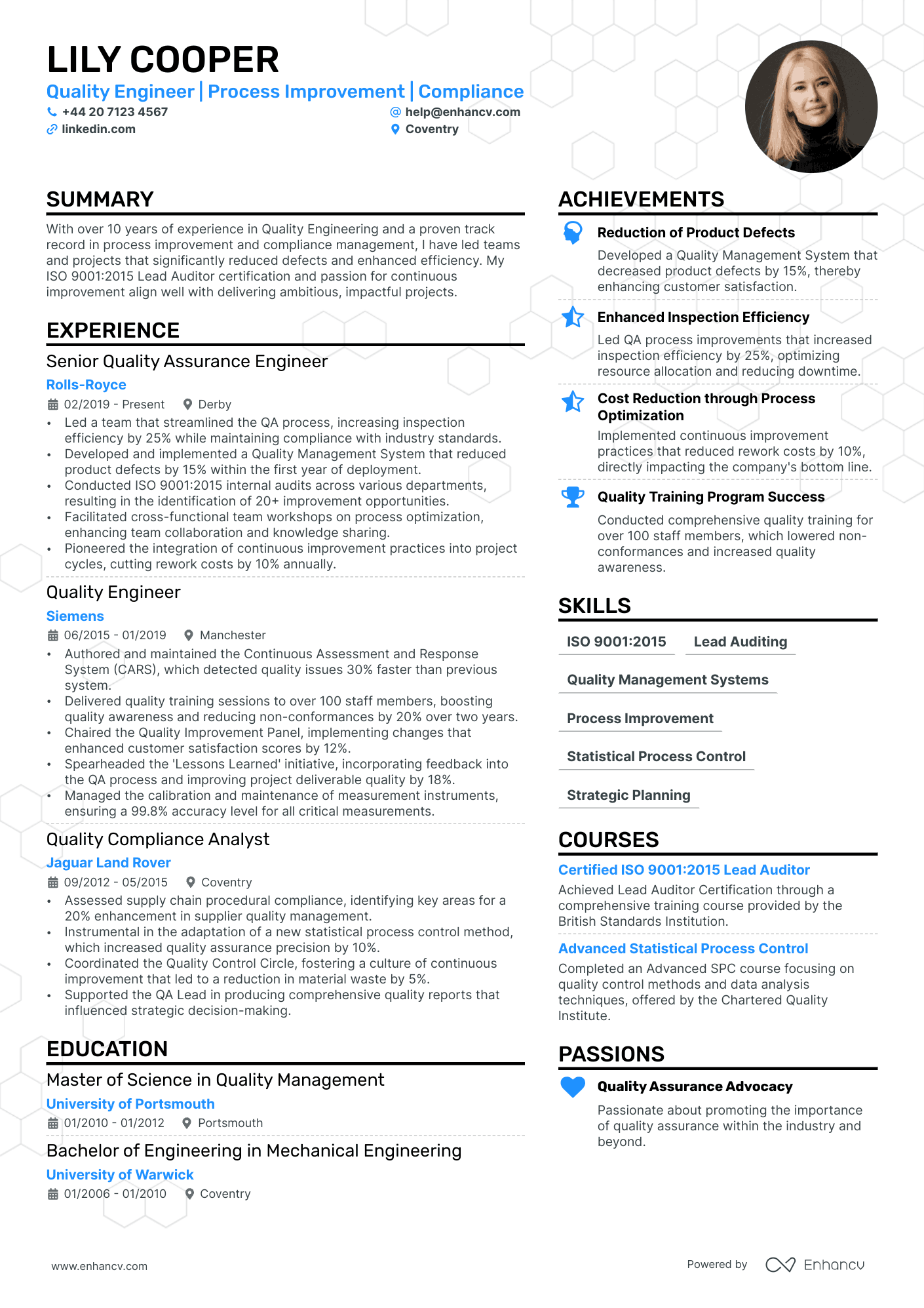
Most quality engineer CVs read like a certificate wall. ISO 9001, Six Sigma, FMEA and 8D all listed, none of them tied to a defect rate that actually fell.
In manufacturing quality, the CV that gets shortlisted names the specialism first and proves it with numbers: parts per million, first-pass yield, cost of poor quality, and audit findings closed. Lead with the method and the measurable result, and the standards read as earned rather than collected. If you want the fundamentals first, see how to write a CV.

Key takeaways
- Lead with your quality specialism: the sector, the process you own, and the standards you work to.
- Name methods exactly as the adverts do: Root Cause Analysis, 8D, FMEA, ISO 9001, APQP, and PPAP.
- Quantify quality. PPM, scrap rate, first-pass yield, and cost of poor quality say more than any adjective.
- Quality engineer roles are on-site or hybrid and rarely remote, so put your location and site near the top.
- Most postings sit at mid to lead level, so show that you own a quality system rather than work inside one.
- List certifications that carry weight: Six Sigma belts, a CQI or IRCA lead auditor qualification, and chartered status if you hold it.
Lead with your manufacturing quality specialism
"Quality engineer" is a family of roles, not one job. Supplier quality, process quality, incoming inspection, and new product introduction all sit under the title, and a recruiter wants to know which one you do.
Supplier quality engineers live in the supply base, running PPAP approvals, supplier audits, and 8D on incoming defects. Process quality engineers own the line, holding Statistical Process Control, control plans, and first-off inspection. New product introduction engineers sit in APQP, closing FMEA actions before launch. Name the one that is your home ground, then show the others as range.
Be clear about quality assurance versus quality control too. Assurance is the system that prevents defects through audits, procedures, and FMEA. Control is the checking that catches them through inspection, gauging, and metrology. Most manufacturers hire for one emphasis or both, so mirror the balance the advert asks for.
Name your sector in the first line, because the standard follows from it. Automotive runs on IATF 16949, aerospace on AS9100, medical devices on ISO 13485, and food on BRC and HACCP. State the one your work is governed by.
Then show the toolkit in the words the adverts use. Root Cause Analysis and 8D for corrective action, FMEA for risk, Statistical Process Control and control plans for process capability, and ISO 9001 for the system that holds it together. Those are your hard skills, listed exactly as a hiring manager searches for them.
On the control side, name the measurement tools by name. Minitab or JMP for the statistics, coordinate measuring machines and gauging for dimensional work, and gauge R&R studies to prove your measurements can be trusted. A quality engineer who can defend their data reads as more credible than one who only quotes standards.
Evidence each method with a result. "Led 8D on a recurring solder defect and cut field returns from 900 to 150 PPM" beats "responsible for root cause analysis" every time.
The soft skills that matter here are checkable too: cross-functional communication, influencing production teams without managing them, and the discipline to follow a problem to its root. Prove each in a bullet rather than claiming it in a list. When you build the skills section, keep it to what you can defend in an interview.
Let the specialism reach your job title too. A headline that reads "Supplier Quality Engineer, Automotive, IATF 16949" tells a recruiter who you are before they read a single bullet, and it matches the exact terms they searched for.
Top skills for your quality engineer CV:
Root Cause Analysis
8D problem solving
FMEA (PFMEA and DFMEA)
ISO 9001 and sector standards
APQP and PPAP
Statistical Process Control (SPC)
Control plans and inspection
CAPA and non-conformance management
Cross-functional communication
Attention to detail
Structured problem solving
Influencing without authority
Auditing mindset

PRO TIP
Name standards precisely. 'IATF 16949' tells an automotive employer far more than 'automotive quality standard', and 'ISO 13485' signals medical devices in a way 'quality systems' never will. Match the exact version and clause language the advert uses.
What the UK quality engineer market looks like
Knowing the market shapes the CV. Here is where the work sits and what employers ask for most.
| What | UK quality engineer roles |
|---|---|
| Where the work happens | On-site 62% and hybrid 38% (88 and 54 of 143 UK postings in the last ~30 days, Enhancv's internal job feed) |
| Experience level asked for | Mid 55% · lead 29% · senior 15% (of 143 UK postings, last ~30 days) |
| Methods that recur most | Root Cause Analysis, 8D, FMEA, ISO 9001, and Quality Assurance |
| Tools that show up often | Jira, SAP, and Agile working |
Two things in that table should shape your CV.
Quality engineering is hands-on with a process, so the work is almost entirely on-site or hybrid. Put your location and your commutable sites in the header, and mention a driving licence if the role covers more than one plant. Remote quality engineering is rare, because the job needs you next to the process, the gauges, and the people running the line, so treat a fully remote posting as the exception rather than the norm.
And most postings sit at mid to lead level, which is why ownership matters more than a task list. A recruiter reading a mid or senior CV wants to see you run a quality system rather than only work inside one. The recurring methods in the table are also your keyword list, so weave Root Cause Analysis, 8D, FMEA, and ISO 9001 into your bullets wherever they are genuinely true of your work.
Formatting your quality engineer CV
For an experienced engineer, use a reverse chronological layout so your most recent quality role leads. Keep it to two pages, one column, standard headings, and a readable font.
Put a short skills or standards block near the top so a reader sees IATF 16949, Six Sigma, and your core methods within seconds. Quality managers skim fast, and the certifications are often the first filter.
If you are early in your career, one page is fine, but most quality engineers with a few years behind them need two. A compact standards-and-tools matrix near the top does more work than a long profile, because it lets a manager match you to the advert at a glance.
Quality applications frequently pass through tracking software, so keep the layout clean and the headings standard for an ATS-friendly CV, and mirror the method names from the advert where they are true of you.
Send a PDF for direct applications so the layout holds, and keep a Word copy for agencies that reformat CVs into their own template. If the advert names a file type, follow it. Build it from a tested layout rather than a blank page, since Enhancv's CV templates export to a clean PDF.
Writing your quality engineer personal statement
Three or four sentences at the top: your sector and specialism, the standards you work to, one quantified win, and the role you want next. Keep it concrete. See more personal statement examples if the opening line is hard to start.
Skip the adjective soup that opens most quality CVs. "Detail-oriented and hard-working quality professional" tells a recruiter nothing they can verify.
A weak opener looks like this:
Quality engineer personal statement to avoid
A detail-oriented, hard-working, and passionate quality professional with excellent communication skills and a proven track record of ensuring quality across a range of manufacturing environments. A dedicated team player seeking a challenging quality engineer role to further develop my skills and grow with a forward-thinking company.
Nothing in that opener is checkable, and it would fit any candidate in any sector. Lead with evidence instead:
Quality engineer CV personal statement example (automotive)
Quality engineer with six years in automotive component manufacturing, working to IATF 16949 and ISO 9001. Led 8D investigations and PFMEA reviews that cut customer PPM from 1,200 to 180 across two production lines, and closed more than 40 supplier corrective actions in a year. Six Sigma Green Belt, now looking to move into a senior supplier quality role in the Midlands automotive supply chain.
The quality engineer CVs that stop us are the ones where every method has a number next to it. Anyone can write "led root cause analysis". The ones that earn the interview write "led the 8D that took a weld defect from 900 to 150 PPM in six weeks". Name the standard, name the tool, then show the defect rate moving. That is the whole job on one line.
Writing your quality engineer experience section
Write each role as a dated heading followed by bullets that lead with a verb and end in an outcome. For the mechanics, see work experience on a CV.
Choose relevance over completeness. Give your most recent quality roles four or five bullets each, and compress older or unrelated jobs to a line or two. A reader deciding in seconds needs your best quality evidence at the top, not an even spread across every job you have held.
Quality work is measurable by design. PPM, scrap rate, first-pass yield, audit findings, and cost of poor quality are all CV achievements waiting to be quantified. Open each bullet with a strong action verb.
Turn cost of poor quality into money wherever you can. A scrap reduction, a warranty saving, or an avoided line stoppage all convert to a pound figure, and a hiring manager reads money faster than percentages. If you only know the percentage, give both the percentage and the base it moved from.
Tailor every application. Pull the standards and methods from the advert and mirror the ones that are true of you, which is exactly what a tailored CV does. Enhancv's CV tailoring feature reads the advert and suggests the matching edits, which saves rewriting from scratch for each role.
- Led 8D and root cause investigations on customer complaints, cutting customer PPM from 1,200 to 180 across two machining lines in 18 months
- Ran PFMEA and control plan reviews for three new product launches under APQP, achieving first-time PPAP sign-off on all three
- Introduced Statistical Process Control on a critical CNC operation, reducing scrap from 4.1% to 1.3% and saving an estimated £68,000 a year in cost of poor quality
- Hosted IATF 16949 surveillance audits with zero major non-conformances for two consecutive years
- Closed 42 supplier corrective actions in a year and cut average containment time from nine days to three
- Managed the quality of 30+ machined and sheet-metal suppliers to AS9100, running annual audits and PPAP approvals
- Cut supplier-caused non-conformances by 34% over two years through structured 8D and supplier development plans
- Built a supplier scorecard tracking PPM, on-time delivery, and CAPA closure, later adopted across three commodity teams
- Resolved a recurring dimensional defect on a flight-critical part, clearing a £250,000 shipment hold in under two weeks
PRO TIP
Every quality metric is a CV number. PPM, DPMO, first-pass yield, scrap percentage, cost of poor quality, on-time CAPA closure, and audit findings all belong in your bullets. If a result changed a number, put the number in.
Education and certifications for a quality engineer CV
A degree in mechanical, manufacturing, or materials engineering is common, but experience and the right certifications carry as much weight. List your education briefly, then give the certifications their own section.
Name the certifications that employers screen for: Six Sigma Green or Black Belt, CQI membership (CQP MCQI), and an IRCA or CQI lead auditor qualification for ISO 9001. Sector auditor training in IATF 16949, AS9100, or ISO 13485 is worth naming where you hold it.
A degree is not essential if the experience is there. Many quality engineers come up through inspection or as technicians, then add a Level 4 or Level 6 quality apprenticeship or an HNC in engineering. List the route you took plainly, because employers value the shop-floor grounding it gives.
If you are chartered, say so. Chartered Engineer (CEng) status through the IMechE or IET signals seniority and, alongside your other qualifications, saves the employer a question. Keep the section current by adding recent continuing professional development, such as a lead auditor refresher or a new belt, with the year attached.
Tailoring for senior and lead quality engineer roles
Nearly a third of UK quality engineer postings are pitched at lead level, so a senior CV has to read differently from a mid-level one. The shift is from doing quality to owning it.
Show scope in numbers: the lines or sites you cover, the size of the team of inspectors or technicians you lead, and the spend or warranty cost you influence. Ownership of the quality management system and the internal audit programme is what separates a lead CV from a mid one.
Name the systems you have implemented, not only the ones you have used. Standing up a quality management system from scratch, moving a site from ISO 9001 to IATF 16949, or leading a certification body audit are the milestones that mark a lead. Quantify the team and the timeline where you can.
Anchor it to business impact. A reduction in cost of poor quality, a better customer scorecard, or a cleaner surveillance audit tells a hiring manager you move the numbers that reach the board. Strong leadership skills matter here, so evidence them with a team you built or a programme you ran.
Show strategy as well as delivery. Leading supplier development across a commodity, standardising quality processes across sites, or setting a plant improvement roadmap all read as lead-level work. Pair each with the outcome it drove, whether that was a lower reject rate, a passed customer audit, or a supplier moved off containment.
Conclusion
Lead with your sector and specialism, attach a number to every method, and keep the format clean and on-site-friendly.
Pair the CV with a short cover letter that names the sector and the standard, and you turn a certificate wall into a CV that gets interviews.

Author's take - The Enhancv team
The quality engineer CVs that stop us are the ones where every method has a number next to it. Anyone can write "led root cause analysis". The ones that earn the interview write "led the 8D that took a weld defect from 900 to 150 PPM in six weeks". Name the standard, name the tool, then show the defect rate moving. That is the whole job on one line.