



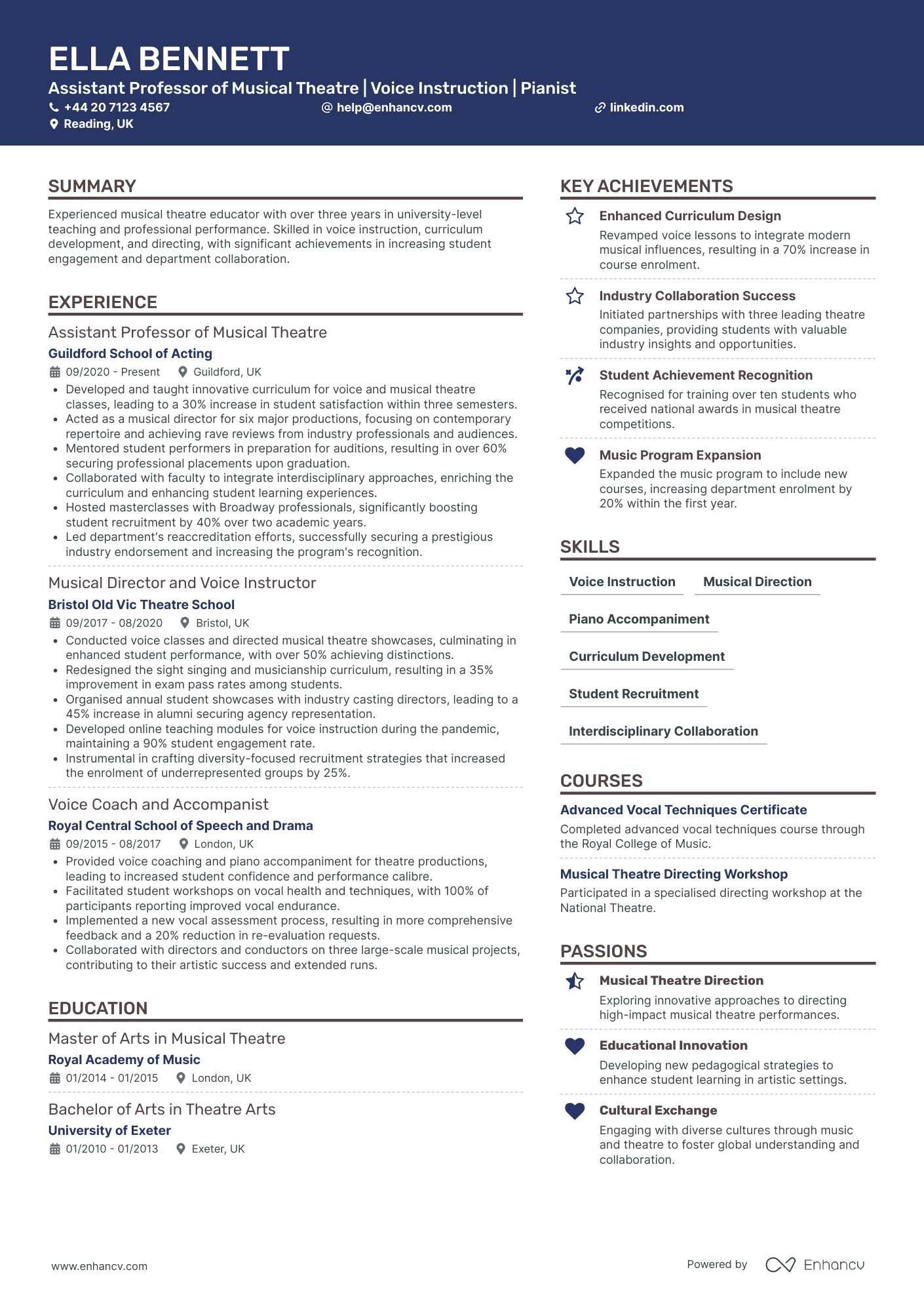
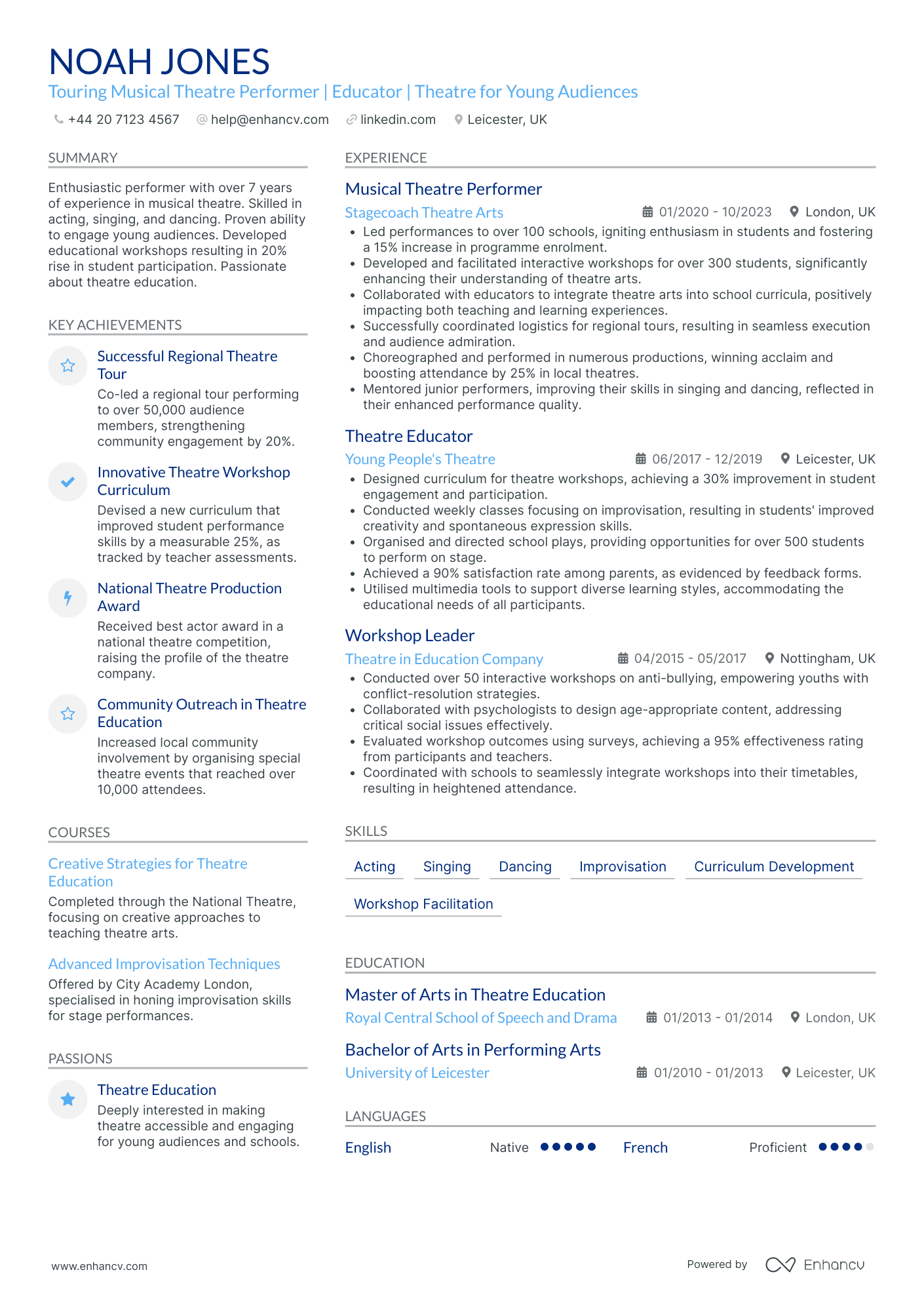
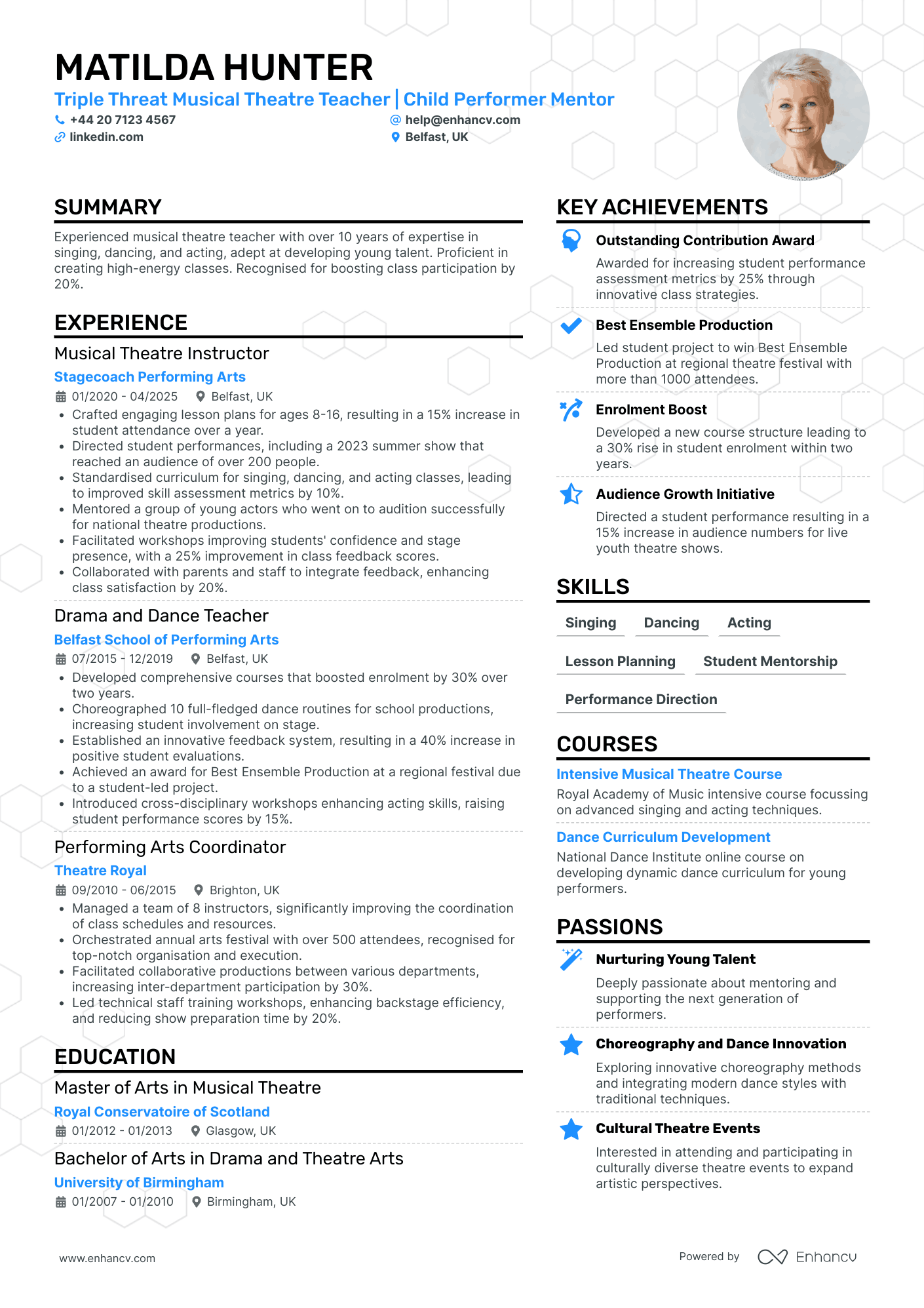
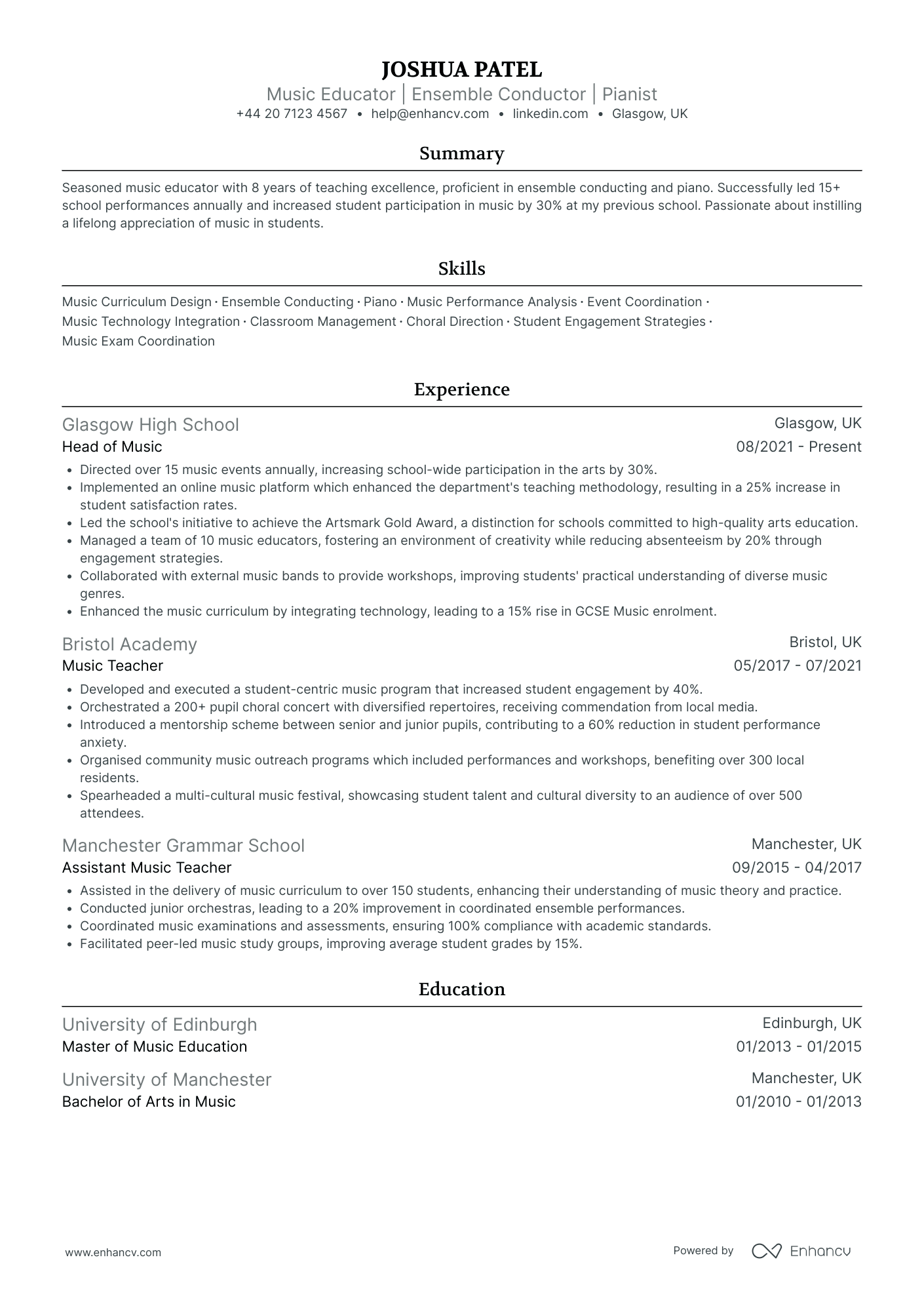
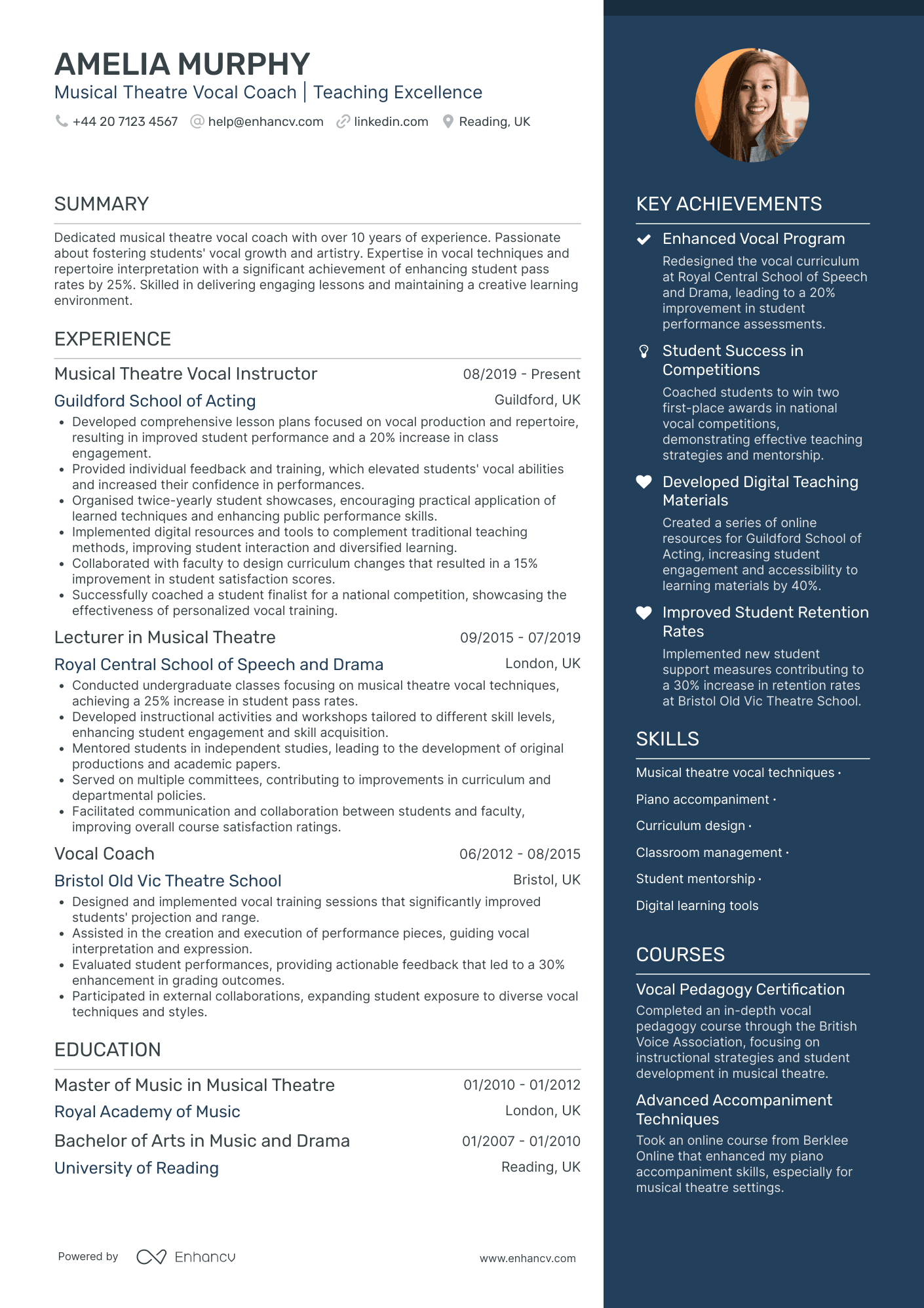
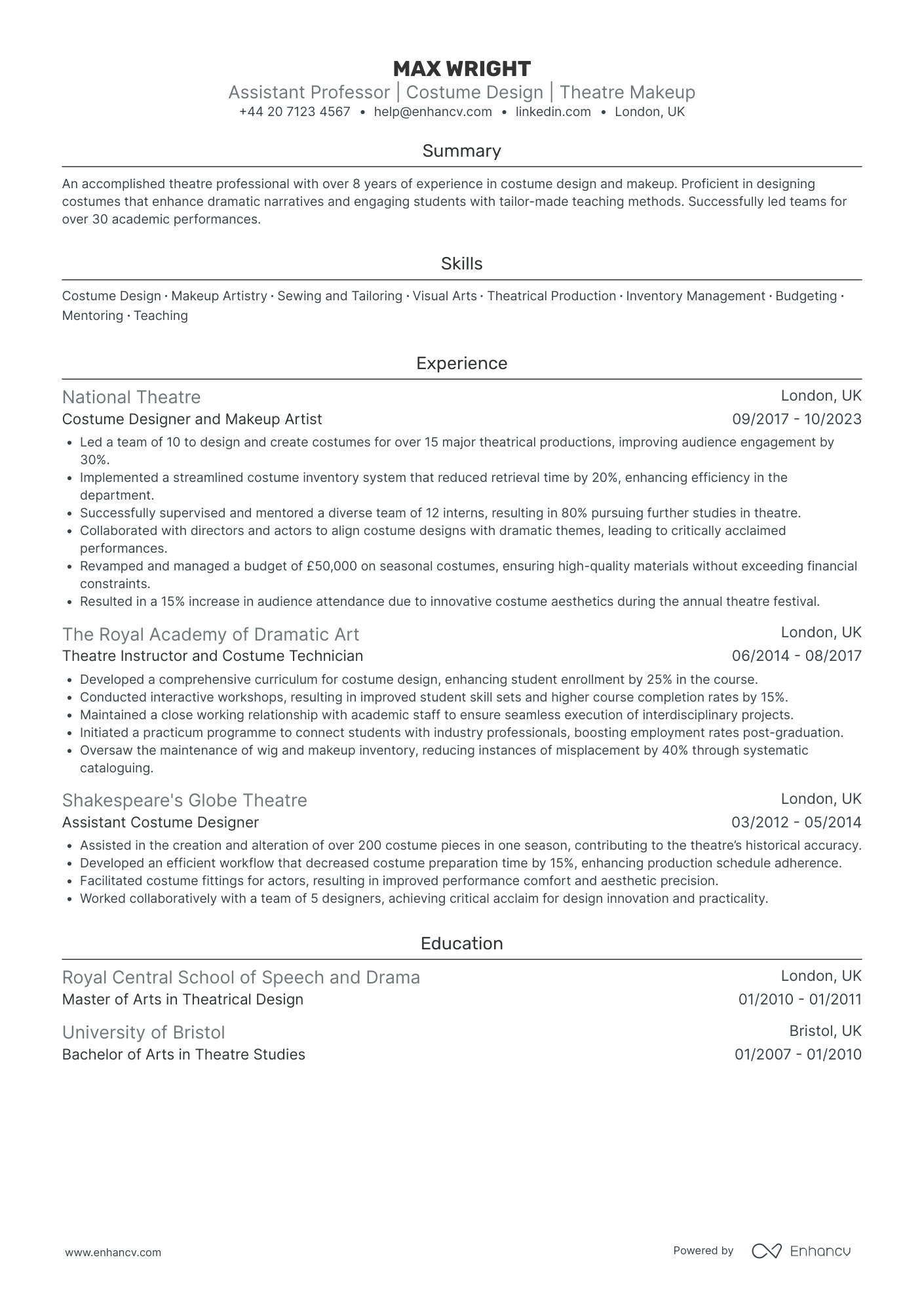
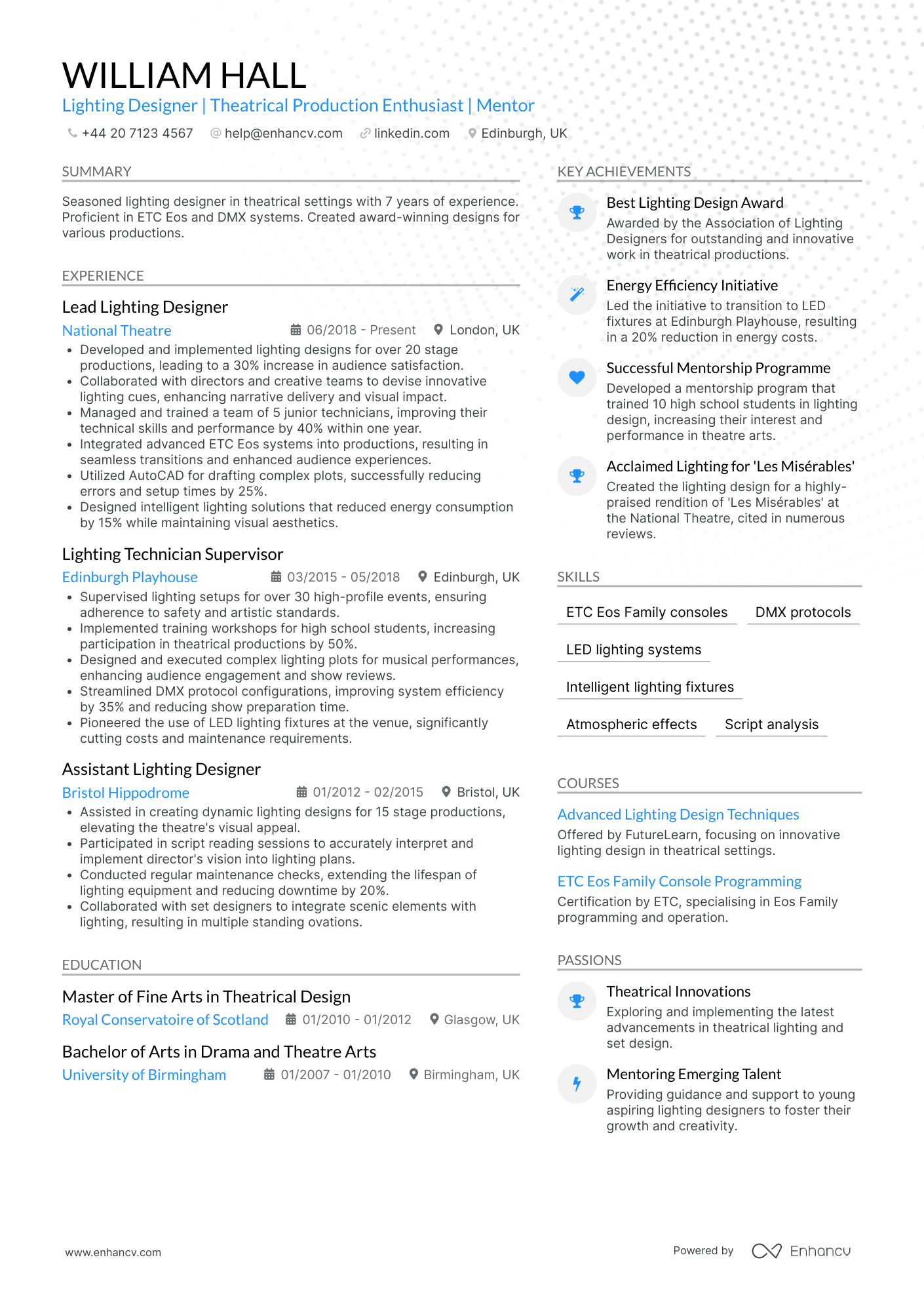
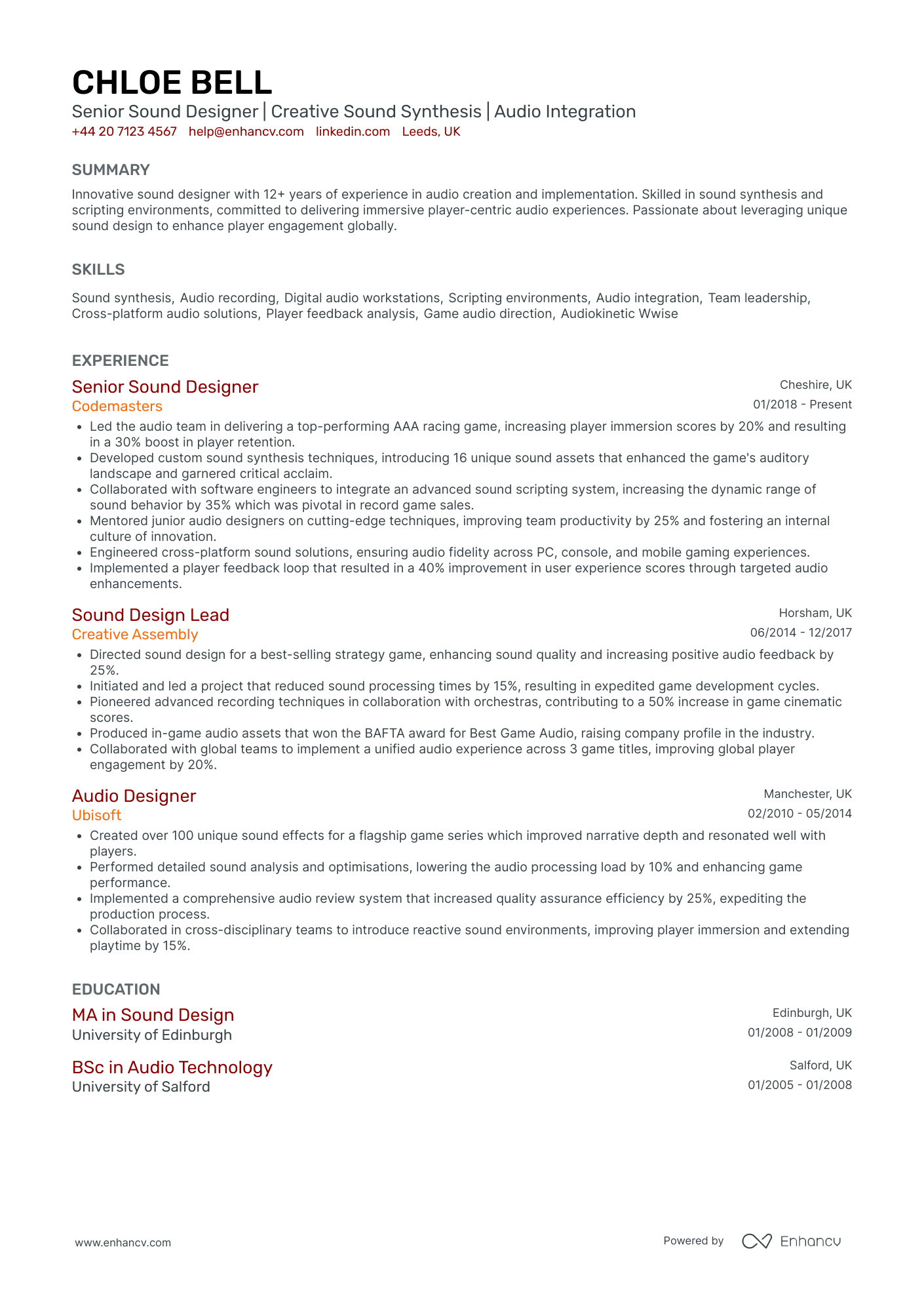
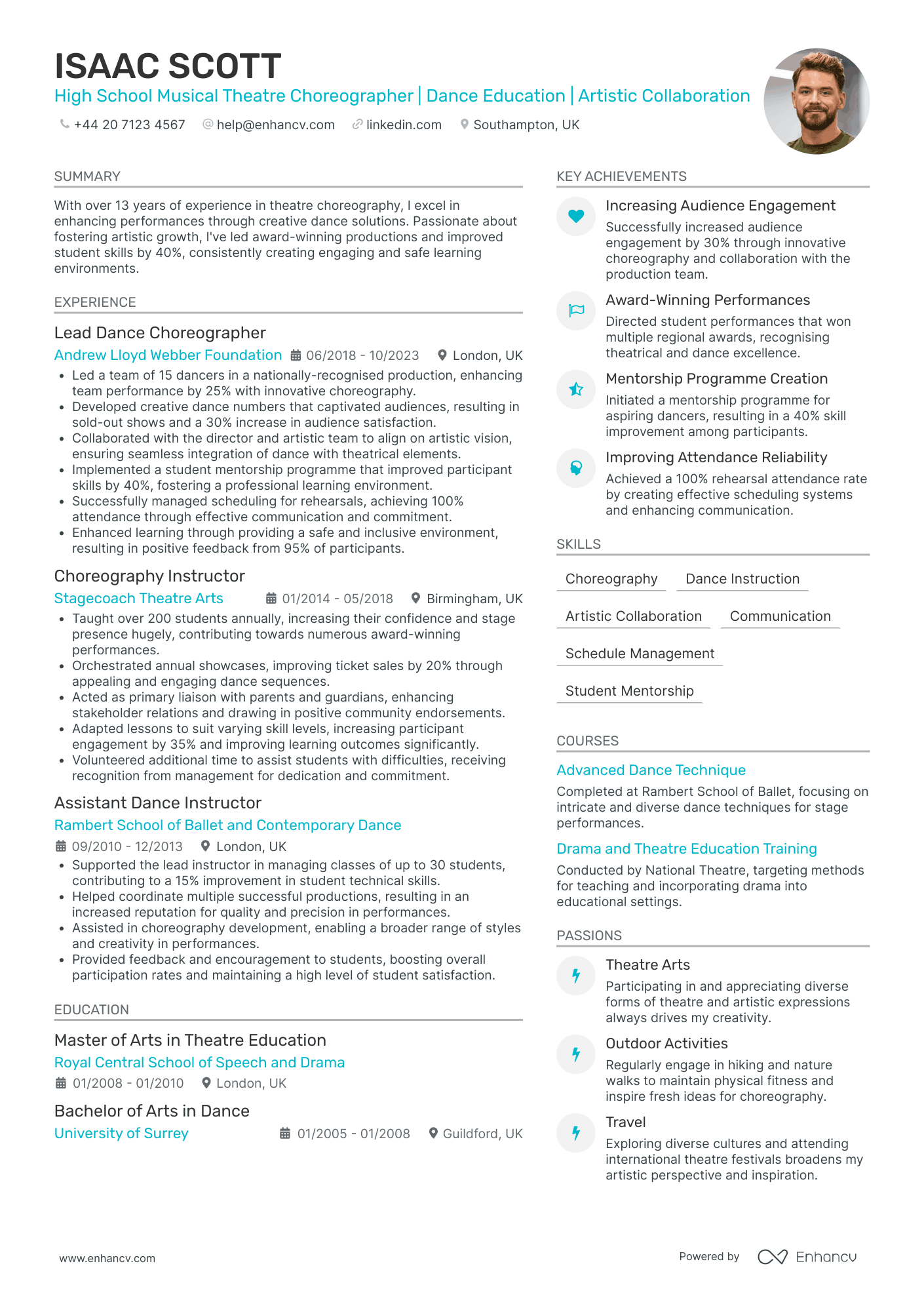
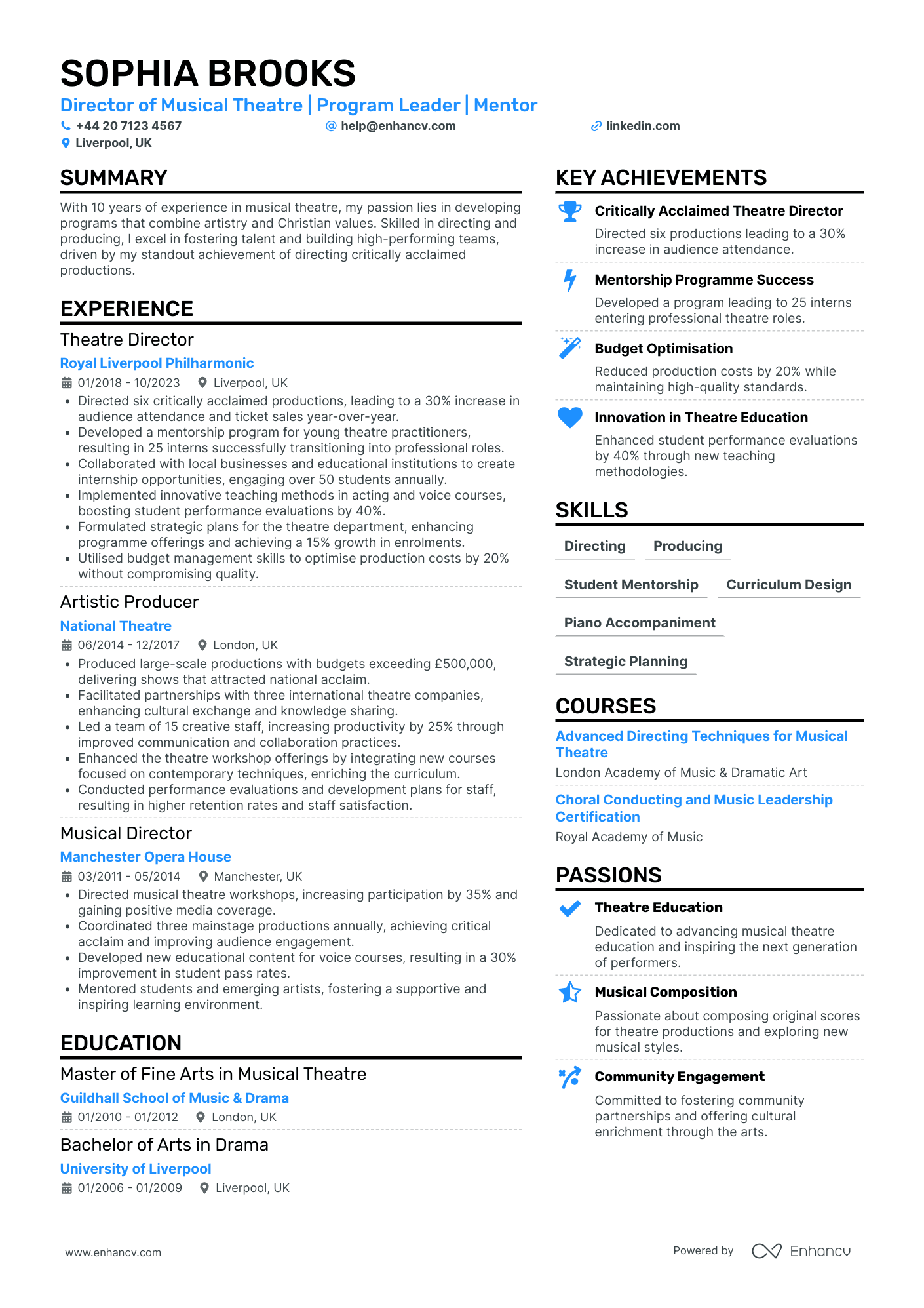
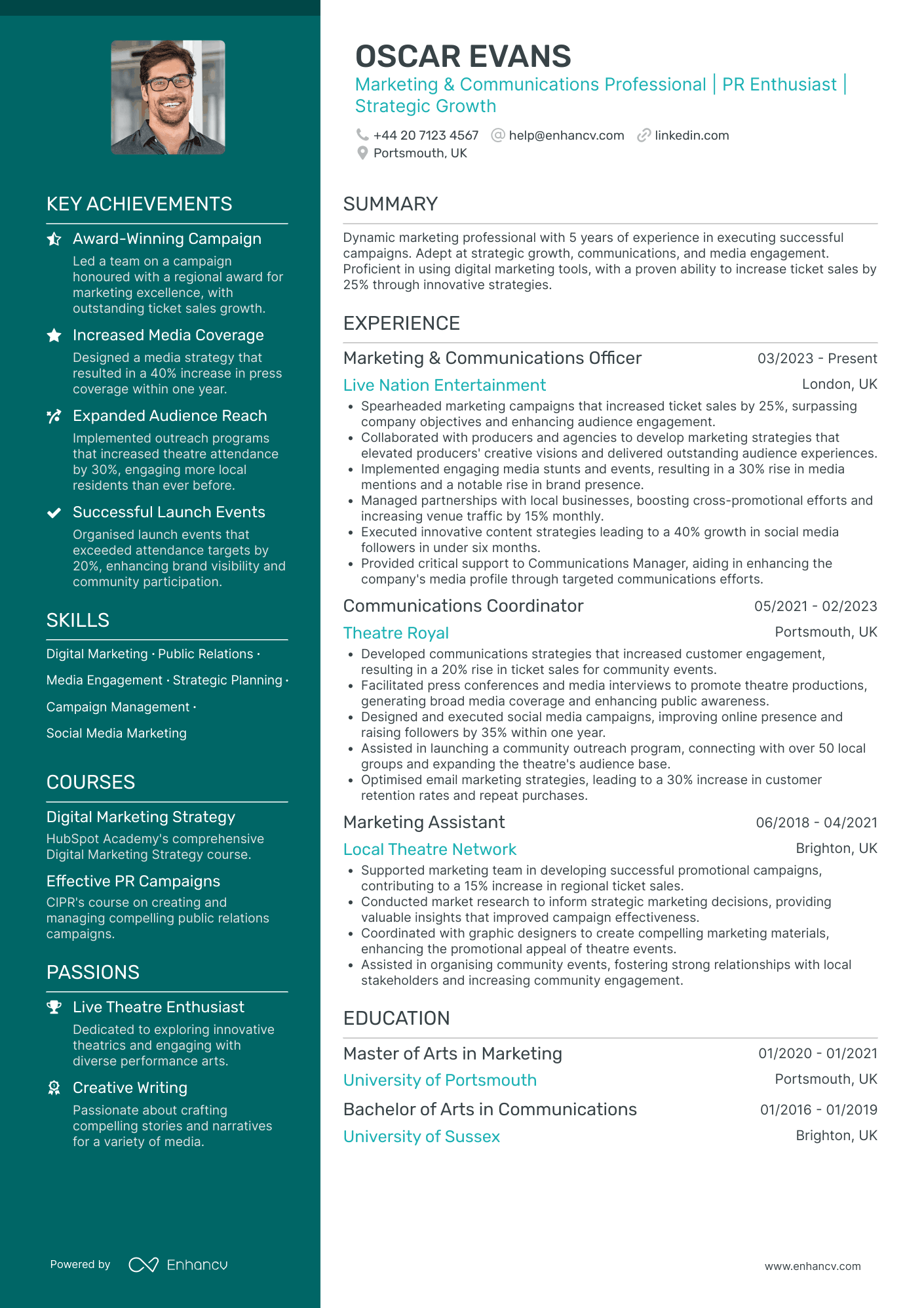
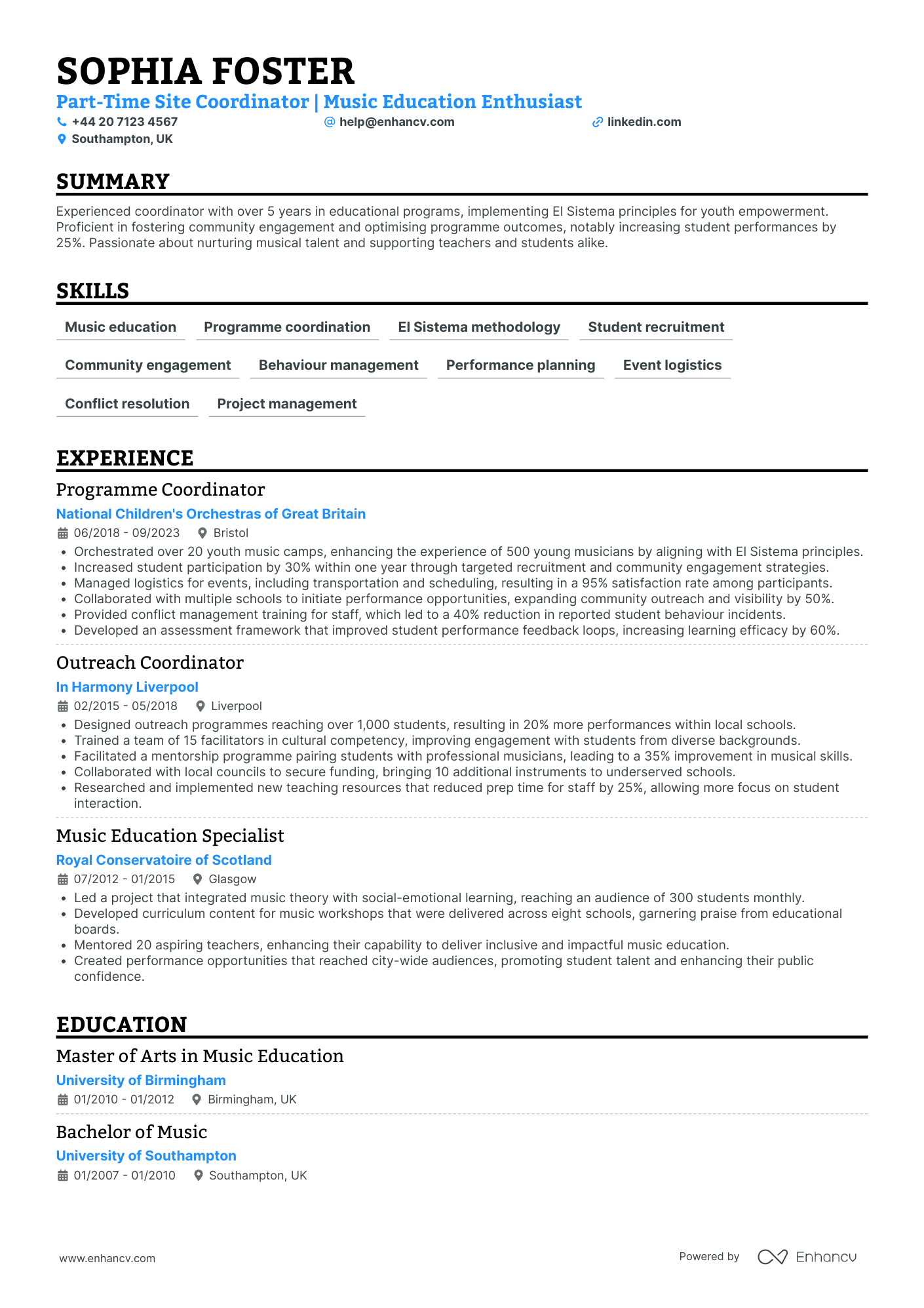
A musical theatre CV is its own format, and the standard careers-service template works against you. It sits behind your headshot, and a panel reads it in seconds, scanning for playing age, vocal range, and credits, in that order.
Get the structure wrong and a strong performer reads as an amateur before a note is sung. One page, a clean credits table, and an honest vocal range do more than any line about your passion for the stage. If you want the underlying mechanics first, see how to write a CV.

Key takeaways
- Keep it to one page and put it behind your headshot. Panels skim fast, so anything on a second page tends to get missed.
- Lead with your casting details: playing age, height, vocal range and type, and dance.
- State your vocal range precisely and keep every credit honest. Both get checked in the room and on Spotlight.
- Group credits by category, most recent first, in a clean four-column table.
- Special skills like tap, stage combat, and accents win close calls, so list only what you can do cold.
- Send a PDF so the layout holds, and include your Spotlight PIN and a showreel link.
Formatting your musical theatre CV
Keep it to one page. A musical theatre CV lives behind your headshot, and casting teams flip through dozens in a sitting, so how long your CV runs matters more here than in almost any other field. Anything that spills onto a second page gets lost.
Print it on A4 with your headshot, or attach the headshot as the first page. Your name and casting details go at the top, then credits, then training and skills.
Most UK performers keep a profile on Spotlight, the industry casting directory, and a strong CV mirrors that layout so a casting director reads something familiar. Match the order and the categories they already expect.
Use a single column, standard headings, and a plain, readable font at 11 or 12 point. A clean layout lets a musical director find your range and your top credit without hunting. Skip logos, borders, and colour blocks that fight with the headshot.
Give it room to breathe. Generous margins and clear space between categories make a dense CV readable at a glance, the same discipline behind sensible CV margins.
Put one clean contact line near the top: your professional name, a phone number, a professional email, and your agent's details if you are represented. That is all a casting office needs to reach you.
List credits in reverse chronological order within each category, most recent first. A credits table keeps roles, venues, and directors aligned so the eye can travel down one column at a time.
Send it as a PDF so the spacing and the table hold on any device. Keep a Word copy for the agents and drama schools that ask for one, and follow the file type a casting call names.
This performance CV is built for a human eye, not a parser, so keep a separate, conventional CV for teaching posts and day jobs, which often run through recruiters and an ATS.
Getting the format right is half the job. Build it from a single-column template rather than a blank page: Enhancv's CV templates export to a clean, one-page PDF.
Your casting details and vocal range
The block under your name does more work than any other part of the CV. It is how a musical director decides in five seconds whether you fit the role.
List the details that get you cast, and keep them honest. A stretched range or an optimistic playing age gets exposed the moment you sing. Treat this as the working part of your CV header.
| Detail | What to put, and why |
|---|---|
| Playing age | The age range you convincingly read as on stage, for example 18 to 25. Lead with this, not your date of birth. |
| Height | Give it in centimetres and feet, for example 168 cm (5 ft 6 in). Ensembles and dance captains are cast on it. |
| Vocal range | State it precisely, for example F3 to A5. A vague 'strong singer' tells a musical director nothing. |
| Voice type and belt | Soprano, mezzo, alto, tenor, baritone, or bass, plus your comfortable belt if you have one. |
| Hair and eyes | Your natural colour, kept consistent with your current headshot. |
| Dance | Your strongest styles and honest level, for example intermediate ballet, strong jazz, and tap. |
| Representation and links | Your agent if you have one, your Spotlight PIN, and a link to a showreel or a singing clip. |
Leave off your home address, date of birth, and marital status. Casting works on playing age and location, and a full address on a CV that circulates this widely is a needless data risk.
Do add your base, London or a named region, and whether you will travel or relocate for a contract. A line on your right to work in the UK is worth including if there could be any doubt.
A 60 to 90 second showreel or one strong singing clip earns more auditions than another paragraph. Link it once, next to your Spotlight PIN, and check that the link actually opens.
Refresh this block whenever your range settles or your look changes, because a casting director works from exactly what is on the page.
Listing your performance credits
Your credits are the CV. Group them by category, Musical Theatre first, then Theatre, then Workshops and Readings, and list the most recent first within each.
Four columns do the job: production, role, company or venue, and director. Name the role and whether it was a lead, a named part, ensemble, or an understudy, because that context is what a panel reads first. This is your version of a work experience section.
Date each credit with the year, or a span for a long tour. A panel wants recency and momentum, not a ten-year-old highlight parked at the top.
Name the role honestly. 'Ensemble, Dance Captain' is a real credit, and so is 'u/s Fantine, played eight performances'. Covers and swings are respected work, so say exactly what you did.
Do not pad. One professional credit written cleanly beats six blurry lines of school productions. Where you add a short note, lead it with a real verb rather than filler, the same discipline behind good CV action verbs.
Be specific about scale. A West End run, a number one tour, a regional producing house, and a fringe transfer are all different signals, so name the venue or the tour and let the reader place it.
Once you have enough work, split the categories into separate short tables so musical theatre, plays, and screen do not blur together. As strong credits arrive, let the weakest amateur lines drop off.
| Production | Role | Company / Venue | Director |
|---|---|---|---|
| Sweeney Todd | Beggar Woman | Curtain Call Productions, Nottingham | R. Coles |
| Made in Dagenham | Beryl | Riverside Musical Co., Leeds | S. Ahmed |
| Into the Woods | Cinderella (u/s) | Bridge House Theatre, London | P. Okafor |
| New musical (workshop) | Ensemble | Development reading, Soho | M. Bianchi |

PRO TIP
Never inflate a credit. Casting directors talk to each other and check Spotlight. 'Understudy Elphaba, played six shows' reads far stronger than a lead credit a panel can quietly disprove.

Anatomy of a strong credit line
Take one line and make it earn its place: 'Beggar Woman, Sweeney Todd, Curtain Call Productions, Nottingham, dir. R. Coles, 2025.' The role tells the panel your casting, the show tells them the level, the company and director tell them it was professional, and the year tells them it is recent. Every credit should carry those four signals.
Writing your musical theatre CV personal statement
A profile is optional on a musical theatre CV, and most working performers skip it. If you are a graduate or changing track, two or three lines at the top can frame the credits that follow. For the mechanics, see these personal statement examples.
Lead with your voice type, range, and standout training or credit. Keep it concrete and skip the adjective soup, because a panel cannot cast an adjective and has read 'passionate triple threat' a thousand times.
Three lines is the ceiling. Name the roles you are right for now, by type or by show, rather than the dream part you are still years from playing.
If in doubt, leave it off and let the casting block and credits speak. An empty profile beats a weak one.
Musical theatre CV profile example (graduate)
Recent musical theatre graduate, mezzo-soprano with a belt to E5 and strong jazz and tap. Played Beggar Woman in a full production of Sweeney Todd and covered Cinderella in a new-writing showcase. London-based, Spotlight-registered, and available for immediate casting.
What to avoid in a musical theatre CV profile
A passionate and versatile triple threat with a lifelong love of performing and a dream of the West End. Hard-working team player who lights up every room and gives 110% to every single role.
When a panel picks up a musical theatre CV, they read three things before they read your name properly: playing age, vocal range, and the top credit. If those are honest and specific, you have their attention. The performers who get called back are not the ones with the longest CV, they are the ones whose casting block matches the role and whose credits stand up when someone checks. Write for the five-second skim, then let the audition do the rest.
Special skills for your musical theatre CV
Special skills win auditions when two performers are otherwise level. They are also searched on, so a team casting a show that needs tap or stage combat looks for exactly those words in your skills section.
Split them into trainable hard skills and the professional habits that keep you cast, the real soft skills of a working performer.
Order them by strength, not by category. The first three special skills get read closely and the rest are scanned, so lead with what makes you castable.
Grade what you can, for example Grade 8 piano or intermediate tap, so a panel can judge the level at a glance. A full, clean UK driving licence is worth a line for touring work.
List accents and languages precisely, and claim only what you can deliver cold in the room. A skill you have to warn a panel about is worse than one you leave off. Keep genuine interests short and relevant rather than a personality essay.
Top skills for your musical theatre CV:
Sight-reading music
Vocal technique (belt and legit)
Ballet, jazz, and tap
Partner and lift work
Stage combat
Accents and dialects
Musical instruments
Aerial or acrobatics
Taking direction
Ensemble teamwork
Resilience
Adaptability
Reliability and professionalism
Tailoring your musical theatre CV to the casting call
Read the casting breakdown before you send anything. It names the playing age, the vocal demands, and the type the creative team is picturing, and your CV should answer it line by line.
Reorder your credits so the most relevant ones sit near the top of their category. A panel casting a big sing wants your belt and legit credits first, not a straight play from three years ago.
Mirror the language of the breakdown wherever it is true of you. If it asks for tap and stage combat, put those exact words high in your special skills so the right CV keywords surface when a casting assistant searches.
Update the profile line and the top credit to face the specific job. A one-line change at the top can reframe the whole page.
Keep one master CV and trim from it for each submission. Cutting is faster than rewriting, and it keeps every version honest and current.
Training and education for a musical theatre CV
Training carries real weight in this industry, so give it a proper education section. List your drama school or conservatoire, the course, and the years, most recent first.
Note whether the course was full-time or part-time and its principal disciplines, for example musical theatre, acting through song, or dance. A one-year foundation and a three-year degree send different signals.
Add masterclasses, singing teachers, and short courses where the name is recognised, and treat formal certificates such as LAMDA grades the same way. A short line for ongoing training shows a voice that is still being looked after.
Academic qualifications sit lower on the page. A panel cares more about who trained your voice than about your A levels.
Keep the list current, dropping the workshops that no longer serve you as stronger training arrives.
Writing a musical theatre CV with no experience
A first musical theatre CV is mostly training and potential, and that is normal for a graduate or a college leaver. Build it like any strong first CV, around what you can already do.
List student and showcase productions like professional ones, with role, venue, and director. A final-year showcase is a credit, so treat it as one.
Add fringe, amateur, and youth theatre work, plus any relevant volunteering, and be clear about which is which. Honesty about the level reads as professionalism, not weakness.
Get seen. Fringe runs, profit-share shows, and open-call auditions build the first real credits, and each one earns a line here.
Chase small parts with intent. A named role in a fringe musical beats ensemble in a school show, and it moves you up the CV faster.
Then lean on skills and training. A precise vocal range, strong dance styles, and a named conservatoire course tell a panel what you bring. An agent will ask for this CV too, so make it strong first, and you can build your CV from a clean single-column layout and export it to PDF in an afternoon.
Conclusion
One page, an honest casting block, and a clean credits table. Get those right and your CV earns the audition that your headshot and your voice have to close.
Keep it current, trim the weakest credits as better ones arrive, and pair it with a short, specific note for each casting call rather than a generic one, the same way a good cover letter earns its place.
Author's take - the Enhancv team
When a panel picks up a musical theatre CV, they read three things before they read your name properly: playing age, vocal range, and the top credit. If those are honest and specific, you have their attention. The performers who get called back are not the ones with the longest CV, they are the ones whose casting block matches the role and whose credits stand up when someone checks. Write for the five-second skim, then let the audition do the rest.